5
Creating
Long-Term Loyalty
Relationships
What is
Customer Perceived Value?
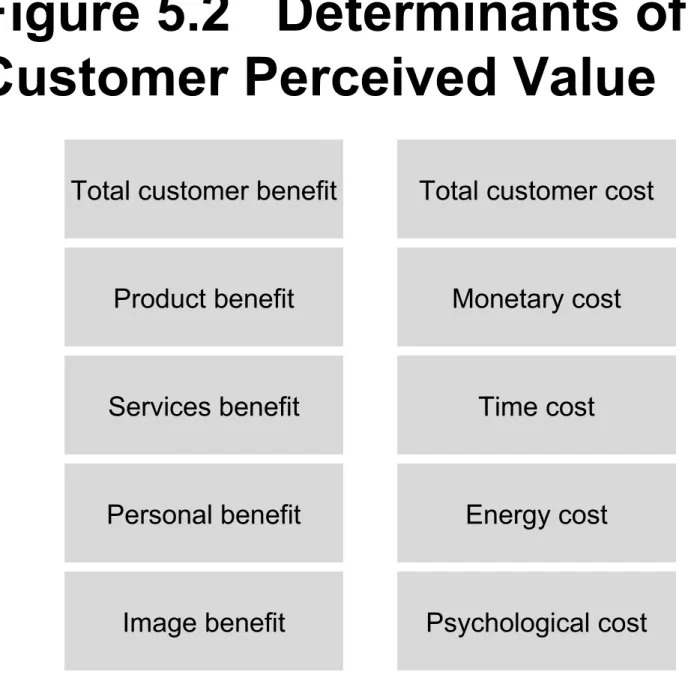
Customer perceived value is the
difference between the prospective
customer’s evaluation of all the benefits and all the costs of an offering and the perceived alternatives.
Figure 5.2 Determinants of
Customer Perceived Value
Image benefit Psychological cost Personal benefit Energy cost
Steps in a
Customer Value Analysis
Identify major attributes and benefits that
customers value
Assess the qualitative importance of different
attributes and benefits
Assess the company’s and competitor’s
performances on the different customer values against rated importance
Examine ratings of specific segments
Monitor customer values over time
What is Loyalty?
Loyalty is a deeply held commitment to re-buy or re-patronize a preferred product or
service in the future despite situational influences and marketing efforts having the
Copyright © 2009 Pearson Education, Inc. Publishing as Prentice Hall 5-7
Measuring Satisfaction
Periodic Surveys Periodic Surveys
Customer Loss Rate Customer Loss Rate
What is Quality?
Quality
is the totality of features and
characteristics of a product or
service that bear on its
ability to satisfy
Copyright © 2009 Pearson Education, Inc. Publishing as Prentice Hall 5-9
Maximizing Customer Lifetime Value
Customer Profitability
Customer Equity
Estimating Lifetime Value
Annual customer revenue: $500
Average number of loyal years: 20
Company profit margin: 10
Copyright © 2011 Pearson Education, Inc. Publishing as Prentice Hall 5-11
What is
Customer Relationship Management?
Framework for CRM
Identify prospects and customers
Differentiate customers by needs and value to company
Interact to improve knowledge
Copyright © 2009 Pearson Education, Inc. Publishing as Prentice Hall 5-13
CRM Strategies
Reduce the rate of defection Reduce the rate of defection
Increase longevity Increase longevity
Enhance “share of wallet” Enhance “share of wallet”
Terminate low-profit customers
Terminate low-profit customers
Customer Retention
Acquisition of customers can cost five times
more than retaining current customers.
The average company loses 10% of its
customers each year.
A 5% reduction to the customer defection rate
can increase profits by 25% to 85%.
The customer profit rate increases over the life