FOREIGN INTERVENTION AND POLITICAL VIOLENCE: EXAMINING THE LOCAL CAUSES OF CONFLICT
Frances Duffy
A dissertation submitted to the faculty at the University of North Carolina at Chapel Hill in partial fulfillment of the requirements for the degree of Doctor of Philosophy in the
Department of Public Policy.
Chapel Hill 2020
ABSTRACT
Frances Duffy: Foreign Intervention and Political Violence: Examining the Local Causes of Conflict
(Under the direction of Patricia L. Sullivan)
During a civil war intervention, understanding the importance of local-level grievances and interactions is crucial for making policy choices that lead to successful outcomes. However, policymakers often disregard the role of local factors in influencing violence, as making sense of their complexity poses a significant challenge. This dissertation proposes an Agent-Based Model (ABM) that captures the complex interactions between civilians and militants during a conflict, demonstrating their aggregate effects on militant strength and the likelihood of violence. The model is then used to simulate the introduction of different diplomatic, economic, and military intervention strategies to the conflict setting, capturing their effects on violence outcomes. These simulations demonstrate how the arrangement of local grievances and affiliations between civilians and militants can have significant and often unexpected impacts on broader conflict outcomes, possibly reducing the success of foreign intervention. The dissertation builds on these findings by performing explorations of conflict intervention cases in Somalia in 1992,
ACKNOWLEDGEMENTS
This dissertation would not have been possible without the guidance and support of numerous individuals throughout its execution. I would first like to thank my outstanding advisor Patricia Sullivan, whose advice, encouragement, and critiques helped me to formulate my
research design and fine-tune the quality of my work. I received invaluable feedback from my committee members, Navin Bapat, Ashu Handa, Brigitte Seim, and David Siegel, who assisted me as I tackled each individual section of the project. Other faculty members at the University of North Carolina at Chapel Hill (UNC-CH) also provided me with feedback as I brainstormed my research interests: Pamela Jagger, Rebecca Kreitzer, Douglas MacKay, and Jeremy Moulton in the Department of Public Policy, Graeme Robertson in the Department of Political Science, and Jeff Terrell in the Department of Computer Science. Members of my Public Policy cohort Todd Burroughs, Andre Assumpcao, and Marlous De Milliano also deserve thanks. They offered moral support as we progressed together through our degree program. Funding received from the UNC-CH Graduate School of Arts and Sciences Initiative for Minority Excellence (IME) and the Druscilla French Graduate Student Excellence Fund facilitated the timely completion of my work.
I have several individuals to thank for inspiring my interest in studying foreign
facilitate my exploration of computational methods for analyzing conflict issues. Finally, Peter Feaver at Duke University’s Department of Public Policy advised me extensively, providing helpful guidance on my work from a U.S. policymaking perspective. His welcoming of me into Duke’s American Grand Strategy program enhanced my overall academic experience and
provided me with opportunities to engage with current and former policymakers, as well as many bright graduate and undergraduate students in my topic of interest.
My participation in several other organizations also helped shape my dissertation project and enhanced my overall research. The Carnegie International Policy Scholars Consortium and Network (IPSCON) instructed me on the topic of integrating academic inquiry with policy practice, through conferences and web seminars organized by the program. James Steinberg, Philip Zelikow, and Pam Hermann deserve special acknowledgement for providing me with constructive feedback on my dissertation plans. Frank Gavin, Bruce Jentleson, Hal Brands, Jeremy Weinstein, and Kathleen Hicks also gave helpful advice, while enthusiastic fellow graduate student participants enhanced my experience through our discussions and debates. In addition, Ambassador Robert Pearson and all of the other Board Members for the American Diplomacy journal encouraged me in my research progress. The Triangle Institute of Security Studies also provided a helpful forum for sharing ideas during its annual New Faces conferences.
I attended other conferences whose organizers and participants deserve recognition for their role in shaping my dissertation. Faculty and graduate student members of my discussion group at the 2018 Boston International Security Graduate Conference helped me to plan my data-gathering efforts and frame my research questions, and I received travel funding from
also deserve thanks, and I greatly appreciate the funding provided by the UNC-CH Department of Public Policy Hammer Fund that paid for my travel expenses. The Bremen International Graduate School of Social Sciences (BIGSSS) 2018 Summer School in Computational Social Science at Jacobs University in Bremen, Germany was particularly critical for helping me
develop the Agent-Based Model presented in this research. The experts who provided instruction deserve my thanks for their methodological and programming lessons, and the conference
organizers generously provided funding to cover the costs of the international flight. The members of my conference research team Gerd Wagner and Kamil Klosek provided insightful guidance, discussion and debate during our development of a model that eventually served as the precursor to the one proposed in this research. In particular, Luis Gustavo Nardin generously reviewed my programming work as my dissertation evolved and contributed on-going constructive feedback.
TABLE OF CONTENTS
LIST OF TABLES………...x
LIST OF FIGURES………...xii
LIST OF GRAPHS………...xiv
LIST OF ABBREVIATIONS………...xv
CHAPTER 1: INTRODUCTION.………...1
1.1 Defining Failed Intervention……….4
1.2 Explanations for Intervention Failures………..7
1.3 The Roots of Civil Conflict and the Impacts of Intervention………..12
1.4 Investigative Road Map………...18
CHAPTER 2: AN AGENT-BASED MODEL OF CIVILIAN AND MILITANT INCENTIVES IN CONFLICT…..……….24
2.1 Relationships Between Civilians and Militants………...24
2.2 Computational Agent-Based Modeling………...26
2.3 Explanation of the Model………...29
2.4 Demonstration of the Model Dynamics………...49
CHAPTER 3: MODELING THE OUTCOMES OF INTERVENTION STRATEGIES…..…...80
3.1 Tools of Foreign Intervention………...81
3.2 Combined Intervention Strategies………...88
3.3 Initial Conditions and Simulation Approach………...95
3.5 Discussion……….128
CHAPTER 4: EXPLORATION OF CONFLICT INTERVENTION CASES.………...145
4.1 Introduction………...145
4.2 Case Exploration………...150
4.3 Militarization of Civilian Grievances and Their Relevance to Intervention……….210
4.4 Policy Analysis and Implications………..217
CHAPTER 5: COMPUTATIONAL MODELING OF EMPIRICAL CASE EXAMPLES…...227
5.1 Introduction………...…227
5.2 Case Simulations……….………..228
5.3 Discussion……….246
CHAPTER 6: RECOMMENDATIONS AND CONCLUSION...……….252
6.1 Summary of Findings………253
6.2 Limitations, Contributions to the Academic Literature, and Future Research …………..………...257
6.3 Policy Recommendations………..261
6.4 Opposition to Foreign Intervention and Conclusion……….276
APPENDIX A: SUPPLEMENTAL TABLES..………..282
APPENDIX B: CASE EXPLORATION REFERENCES………..298
LIST OF TABLES
Table 1: Experiment 1- Variation in Community Grievances With No Militant………..54 Table 2: Experiment 2- Variation in Militant Affiliations With No Community Grievances…...55 Table 3: Experiment 3- Variation in Community Grievances With Opposing
Militant Affiliations……….57 Table 4: Experiment 4- Variation in Community Grievances and Wealth With Opposing
Militant Affiliations……….59 Table 5: Experiment 5- Variation in Grievances and Affiliations in Five-Community Setting…61 Table 6: Experiment 6- Variation in Grievances and Affiliations in Five-Community Setting With Uneven Wealth………...……63 Table 7: Experiment 7- Variation in Grievances and Affiliations in Ten-Community
Setting...282 Table 8: Experiment 8- Variation of Community Grievances With Unaffiliated Third
Militant Group………...283 Table 9: Experiment 9- Variation of Community Grievances With Varied Affiliation of
Third Militant Group……….284 Table 10: Experiment 10- Variation in Community Grievances with Four and Five
Unaffiliated Militant Groups………....285 Table 11: Experiment 11- Variation in Benefits Tradeoff………...286 Table 12: Experiment 12- Variation in Number of Militants Engaging in Terrorism Without Weapons Presence………...287 Table 13: Experiment 13- Variation in Number of Militants Engaging in Terrorism With
Table 18: Change in Outcome Variables Resulting from Intervention Tools 10 – 12…………292 Table 19: Change in Outcome Variables Resulting from Intervention Tools 13 – 15…………293 Table 20: Change in Outcome Variables Resulting from Intervention Strategies 1 – 5……….294 Table 21: Change in Outcome Variables Resulting from Reduced Effectiveness
Interventions………295 Table 22: Change in Outcome Variables Resulting from Short Duration Interventions……….296 Table 23: Change in Outcome Variables Resulting from Intervention Tools 10 & 11
with Extremists Visible………297 Table 24: Incremental Reduced Efficiency of Tool 8- Providing Civilians
LIST OF FIGURES
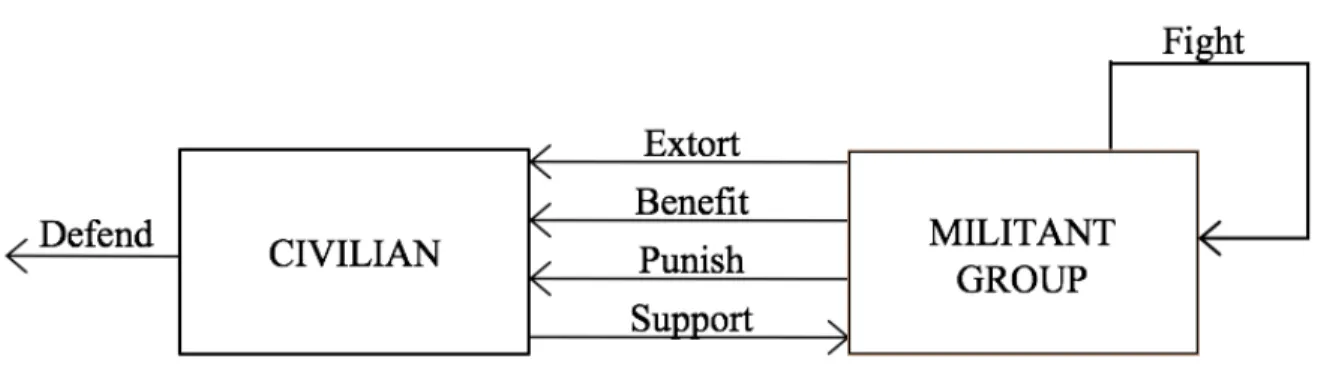
Figure 1: Block Diagram of Agent-Based Model……….30
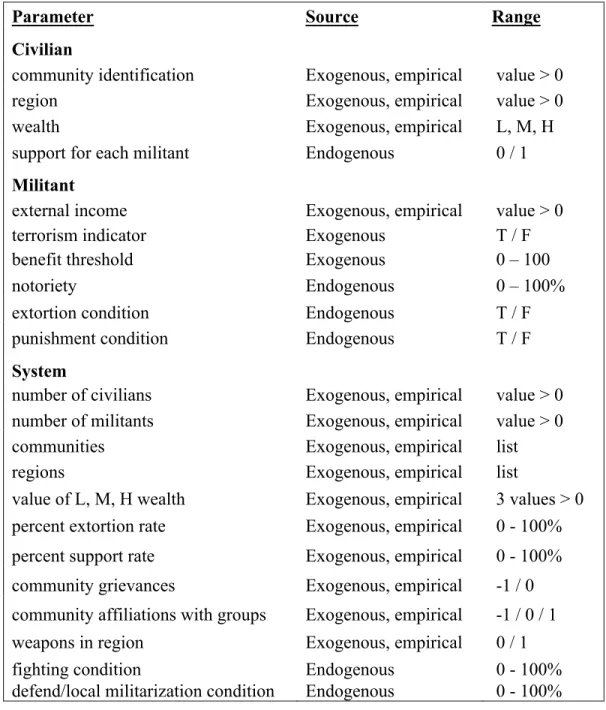
Figure 2: Model Parameters and Variation Range………32
Figure 3: Grievances Matrix Between Four Communities A B C and D……….40
Figure 4: Affiliations Matrix Between Four Communities A B C and D, and Militant Group X………40
Figure 5: Propensities Matrix Between Four Communities A B C and D, and Militant Group X………40
Figure 6: Network Representation of Grievances and Affiliations………...41
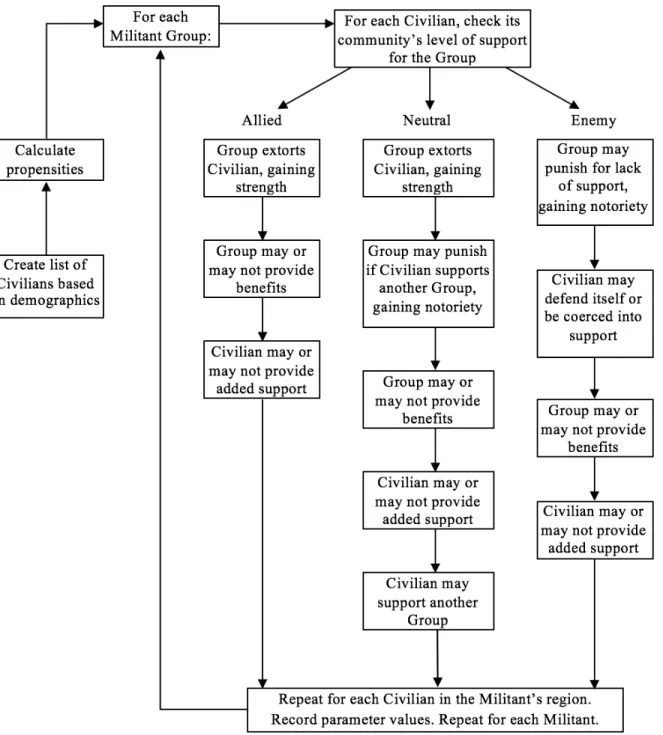
Figure 7: Flow Diagram of the Model Sequence of Events………..42
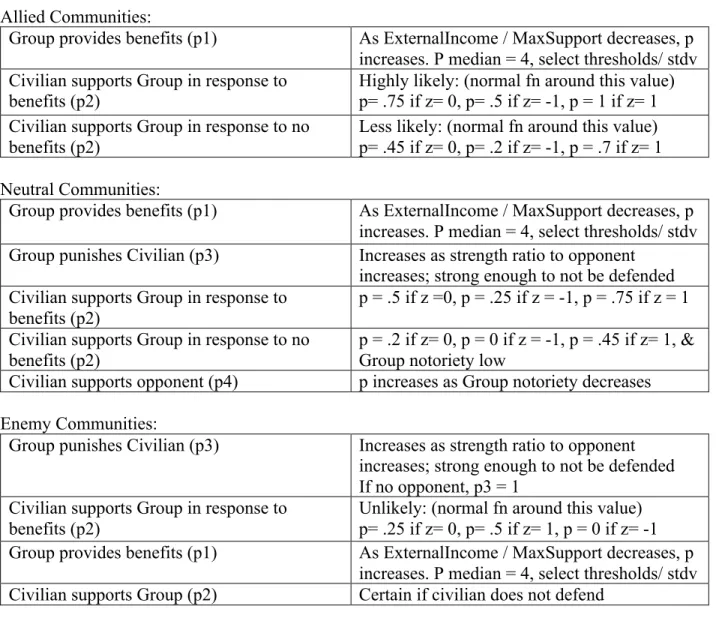
Figure 8: Probabilities and Conditions for Agent Actions………43
Figure 9: Foreign Intervention Tools Represented in the Model………..81
Figure 10: Categories of Impacts of Foreign Policy Tools………...87
Figure 11: Strategy 1- Completely Non-Forceful, Addressing Civilian Grievances…………....89
Figure 12: Strategy 2- Primarily Non-Forceful, Addressing Civilian Grievances…………...90
Figure 13: Strategy 3- Moderately Forceful, Limited Addressing of Civilian Grievances...91
Figure 14: Strategy 4- Completely Forceful, No Addressing of Civilian Grievances...93
Figure 15: Strategy 5- Combined Forceful and Non-Forceful, Addressing Civilian Grievances………...94
Figure 16: Country Parameter Values Used for Hypothetical Conflict Scenario………....100
Figure 17: Parameter Changes Implemented for Each Intervention Tool………...108
Figure 18: Parameter Changes Implemented for Each Intervention Tool at 50% Reduced Efficiency………...110
Figure 19: Reference Key for Numbering Intervention Tools……….112
Figure 21: Effects of Intervention Tools on Fighting at Full Implementation………....118
Figure 22: Effects of Intervention Strategies on Militant 1 Strength at Full Implementation....119
Figure 23: Effects of Intervention Strategies on Fighting at Full Implementation...119
Figure 24: Effects of Intervention Tools on Militant 1 Strength at 50% Efficiency...122
Figure 25: Effects of Intervention Tools on Fighting at 50% Efficiency...122
Figure 26: Effects of Intervention Strategies on Militant 1 Strength at 50% Efficiency...123
Figure 27: Effects of Intervention Strategies on Fighting at 50% Efficiency...124
Figure 28: Effects of Intervention Tools on Militant 1 Strength at Finite Duration...126
Figure 29: Effects of Intervention Tools on Fighting at Finite Duration...127
Figure 30: Effects of Intervention Strategies on Militant 1 Strength at Finite Duration...127
Figure 31: Effects of Intervention Strategies on Fighting at Finite Duration...128
Figure 32: Effects of Alternative Strategies on Militant 1 Strength and Fighting at Full Implementation………...137
Figure 33: Community Grievances As Modeled in the Somalia Simulation……….. 230
Figure 34: Community Affiliations with Militants As Modeled in the Somalia Simulation…...230
Figure 35: Intervention Tools Implemented in the Somalia Simulation………..231
Figure 36: Community Grievances As Modeled in the Afghanistan Simulation………....236
Figure 37: Community Affiliations with Militants As Modeled in the Afghanistan Simulation………...237
Figure 38: Intervention Tools Implemented in the Afghanistan Simulation………...237
Figure 39: Community Grievances As Modeled in the Libya Simulation………..243
Figure 40: Community Affiliations with Militants As Modeled in the Libya Simulation……..243
LIST OF GRAPHS
Graph 1: Strength of Militant Groups Pre-Intervention………...101
Graph 2: Probability of Fighting Between Militant Groups Pre-Intervention……….104
Graph 3: Strength of Militant Groups Pre and Post Tool 8 Implementation………...116
Graph 4: Fighting Between Militant Groups Pre and Post Tool 8 Implementation………118
Graph 5: Strength of Militant Groups Pre and Post Strategy 2 Implementation……….120
LIST OF ABBREVIATIONS
AAA American Anthropological Association AAN Afghan Analysis Network
ABM Agent-Based Modeling ANA Afghan National Army ANP Afghan National Police
AQIM al-Qaeda in the Islamic Maghreb ASL Ansar al-Sharia
BRSC Benghazi Revolutionaries Shura Council CERP Commander’s Emergency Response Program CEW Civilian Expeditionary Workforce
CGRS Office of the Commissioner General for Refugees and Stateless Persons
CIA Central Intelligence Agency
D Diplomatic
DDR Disarmament, Demobilization and Reintegration DIME Diplomatic, Informational, Military, Economic DOD U.S. Department of Defense
DOS U.S. Department of State DRC Democratic Republic of Congo DSF District Stabilization Framework
E Economic
ELN National Liberation Army ETTs Embedded Training Teams
EU European Union
FARC Revolutionary Armed Forced of Colombia FDLR Democratic Forces for the Liberation of Rwanda FMS Foreign Military Sales
GIS Geographic Information Systems GNA Government of National Accord GNA Government of National Authority HoR House of Representatives
HRW Human Rights Watch HTTs Human Terrain Teams ICG International Crisis Group
ICRC International Committee of the Red Cross IMET International Military Education and Training ISAF International Security Assistance Force ISI Inter-Services Intelligence
ITS Interrupted Time Series LARA Land Reform in Afghanistan LIFG Libyan Islamic Fighting Group
LTERA Land Titling and Economic Restructuring in Afghanistan
M Military
MNLA National Movement for the Liberation of Azawad MOD Marehan Ogadeni and Dolbahante
MOD Ministry of Defense
MoDA Ministry of Defense Advisors NATO North Atlantic Treaty Organization NGOs Non-profit organizations
NSC National Security Council NTC National Transitional Council OIG Office of the Inspector General PLO Palestinian Liberation Organization
PMESII-PT Political, Military, Economic, Social, Information, Infrastructure, Physical, Environment, Time
PRTs Provincial Reconstruction Teams R2P Responsibility to Protect
SAIIA South African Institute of International Affairs
SIGAR Special Investigator General for Afghanistan Reconstruction SIKA Stability in Key Areas
SNA Social Network Analysis SNF Somali National Front SNM Somali National Movement
SSDF Somali Salvation Democratic Front Stab-U Stabilization Unit
UAE United Arab Emirates
UN United Nations
UNAMA United Nations Assistance Mission in Afghanistan UNHCR United Nations High Commissioner for Refugees UNISOM United Nations Operation in Somalia
UNITAF United Task Force
UNSMIL United Nations Support Mission in Libya
USAID United States Agency for International Development USC United Somali Congress
USIP United States Institute of Peace VOA Voice of America
CHAPTER 1: INTRODUCTION
The problem of persistent violence in conflict-ridden states has troubled U.S. foreign policymakers for decades. Despite attempts to achieve stability in other countries through various forms of intervention, intrastate conflicts have proven difficult to extinguish. In some cases, weak or collapsing governments create an absence of security in which violent non-state actors proliferate. For example, clan-based militia fighting in Somalia persists despite the 1992 UNITAF (United Task Force) intervention, creating an environment for Qaeda affiliated al-Shabaab to control substantial territory in spite of counterinsurgency operations. In other cases, the U.S. has deposed regimes perceived as threats to national security, only to struggle to
establish a new system. Since the 2001 overthrow of the Taliban regime in Afghanistan, the U.S. has maintained an active military presence, but after 18 years of war the country remains divided and violent, with the Taliban battling for territory and pitting local tribal and religious
communities against one another. In both Somalia and Afghanistan, attempts to undermine these groups and bring an end to violence have largely failed. Instead, conflict between the
government and militants, amongst tribal or clan-based militias, and by terror organizations against civilians continues to persist in regions where the U.S. has spent billions of dollars on varying packages of diplomatic, economic, and military intervention strategies. Why the dismal record?
the perspective of local actors in regions experiencing conflict, and how different strategies or tools impact their incentives. I investigate the dynamics of a system in which non-state armed groups, or militants choose to extort, benefit, or attack local civilian populations based on their own strategies for survival. In turn, civilians may provide support and form alliances with these groups in pursuit of their own interests. The overall lack of control may threaten the national security of outside states through the proliferation of illegal weapons, unrestricted activity of terrorist organizations, and destabilization of foreign allies. Foreign countries may respond with varying strategies of intervention, but these efforts may fail to achieve stability. Intervention fundamentally alters incentives in this system with the introduction of economic resources, political advantages, or military force. In response, armed militants may adjust their strategies, and civilians may shift their support from one group to another in order to reap economic gains or to benefit from external protection (Kalyvas 2006). These shifts could support or undermine the goals of intervention in unanticipated ways. I limit my scope to intrastate conflicts taking place in anarchic or semi-anarchic regions where the government provides little to no local administration. Weak control may be worsened by regime turnover, long histories of territorial contestation, poverty and underdevelopment that limits government capacity, or the sudden decapitation of longstanding regimes with little institutional structure to replace them.
First, I develop a computational agent-based model that simulates the strategic interactions that take place between civilians and militants. I perform initial tests by varying different parameters and make some initial observations about their effects on conflict dynamics. Second, I design a hypothetical conflict environment to simulate using the model, and set some initial social, economic, and political conditions to represent those of common civilian
communities and militant groups. I plot expected baseline patterns of violence and changes in actor behavior in this environment over time. Then, I analyze how different individual and combined strategies of diplomatic, economic and military intervention tools alter conditions in this system by introducing them to the model as external shocks. These strategies vary in
whether or not they address the underlying grievances held by civilians who may provide support to fighting groups. I hypothesize that changes in incentives resulting from the intervention may increase violence for some strategies rather than reduce it, thereby contributing to a lack of reduction in conflict as observed during past civil wars.
simulate the introduction of the same intervention tools used in these cases and compare the results to actual outcomes.
Finally, I make policy recommendations for improving U.S. intervention strategies used to confront violence in unstable states. I also compare my results with existing academic research and practitioner “lessons learned,” and suggest both strategic and bureaucratic policy changes that are consistent with my research findings.
1.1 Defining Failed Intervention
Before critiquing foreign intervention strategies, it is necessary to first acknowledge the goals and objectives for which they are intended and recognize their successes. In Somalia,
goals the U.S. and its partners also achieved some short term gains in conflict prevention, conflict management, and conflict resolution.1
Unfortunately, in the mid to long-term none of the interventions succeeded in any of these three tasks, and they all failed to achieve stability or security from violence. In Somalia, repeated attempts by the United Nations to negotiate between the numerous clan-based militant groups failed to bring about any enduring agreement. The United States withdrew its troops without having established security, and the country backslid into renewed civil war that once again contributed to humanitarian crisis (Baumann, Yates, and Washington 2004). In
Afghanistan, after an initial retreat the Taliban returned with renewed strength and continued to engage Afghan forces in battle and retake territory. A BBC study released in January 2018 estimated that the Taliban remained openly active in 70 percent of the country’s districts (Sharifi and Adamou 2018). In Libya, the newly-installed democratic government failed to adequately secure much of rural and southern Libya, and was unable to unify a country with longstanding tribal and regional divisions. A civil war erupted in 2014, with multiple local-level militias competing for power and engaging in violence (Wehrey 2017). The instability has allowed for unrestricted weapons proliferation and human trafficking across the Sahel, contributing to extremist activity and instability in countries such as Mali, Burkina Faso, Niger, Nigeria and Cameroon.
extremists and weapons proliferation” (2014a). The FY2014 U.S. Department of Defense Quadrennial Defense Review also states that, “the potential for rapidly developing threats, particularly in fragile states, including violent public protests and terrorist attacks, could pose acute challenges to U.S. interests” (2014b). Fighting permits insurgents and militias to gain traction and provides a safe haven for terrorist organizations (Kalyvas 2006). This destabilizes countries and their neighbors who cooperate with the United States on important economic and securitization goals. Conflict also impedes political development, weakening government
capacity to improve on democracy and human rights issues. Countries embroiled in civil war are more likely to expend their resources on military power, with less to spare for the provision of goods and services (Boyle 2014, Ritter 2014, Walter 2015). Finally, because the U.S. is a global leader in publically advocating for the protection of civilian life, violence that persists because of or in spite of U.S. actions undermines its credibility and public image.2
Foreign intervention policies are not necessarily intended to tackle mid to long term security and stability in conflict states. More often, short-term goals appear to motivate strategies for involvement, despite the risks of longer-term instability and violence.3 Instability may even work to the strategic advantage of the U.S. and its allies. For example, Ethiopia’s easternmost region is populated primarily by ethnic Somalis, and Ethiopia may worry that a strong Somalia would try to claim that territory as it did during the 1970 invasion led by President Siad Barre (De Waal 1991). The U.S. may therefore have an incentive to permit instability in Somalia in order to maintain the territorial integrity of its regional partner, to whom it provided $7.5 billion in economic assistance and $531 million in military aid in FY2018 (USAID). Instability might
2 An important aspect of U.S. foreign policy strategy is maintaining credibility by upholding international commitments; see Brookings report by Felbab-Brown (2017) on Afghanistan for an example.
also benefit foreign economic interests that gain from decreased regulation and limited oversight. However, policymakers continue to publically lament security failures in post-intervention states, despite whatever strategic objectives they may potentially achieve. By President Obama’s own admission, “failing to plan for the day after” in Libya was the “worst mistake” of his Presidency (BBC 2016). Unfortunately, the extent of ensuing violence and other negative long-term
consequences often only become apparent after severe destabilization has already occurred. To avoid these consequences, there is clearly a motivation for policymakers to improve strategy from the outset in order to reduce the risk of instability later on. They may also aim to resolve conflict, to mitigate it, or at least to manage it once it occurs. Failing to do so inflicts costs on foreign interests. This is not to say that every destabilizing outcome of civil conflict is inherently the responsibility of the international community to “fix,” nor that foreign countries are necessarily at fault. In an interview in September 2016, President Obama stated that “we shouldn’t assume that every time a country has problems that it reflects a failure of American policy” (Landler 2017). A policy failure is characterized first and foremost as a failure to achieve its stated objectives. I further refine my definition of failed intervention to include (1) violence that erupts as an unintended result of intervention, and (2) the continuation of violence despite actions designed to stop it.
1.2 Explanations for Intervention Failures
for why this might be the case, some pointing to ineffective strategies and others citing a flawed policymaking process.
First, many critics believe that foreign interveners do not use the right combination of tools when intervening in weak states, relying too heavily on tactical military operations and weapons assistance. Studies indicate that military intervention prolongs civil conflict
(Cunningham 2010, Regan 2002a, Sambanis and Elbadawi 2000), and others find that providing military assistance also increases the incidence of violence against civilians (Wood, Kathman, and Gent 2012). Therefore, some argue that countries must engage in improved nationbuilding efforts in order to rectify the problem of weak governance capacity (Davis et al. 2011, Fukuyama 2006). Nationbuilding refers to political and economic reconstruction efforts that are designed to establish governing institutions and provide public goods where the previous government was either incapable or nonexistent (Fukuyama 2006). Since the Vietnam War in 1968, U.S. policymakers have recognized the need to develop local infrastructure and provide goods and services as part of an overall counterinsurgency strategy. Without strengthening the governing capacity of a weak state, insurgents are able to step back in and fill the void, even following successful military operations. Scholars argue that interventions need to devote greater resources to developing local partner governing capacity and providing services before withdrawal (Davis et al. 2011, Fukuyama 2006).
institutions which are well-adapted to the history and culture of a local state may be an
impossible task, and other countries may not sufficiently understand the political dynamics of the local country to effectively end violence (Bull 2008, Lake 2016). Promotion of foreign
democratic governance structures may also be inherently ill-suited to the fragile conditions of a weak state, which may not have achieved the government legitimacy or rule of law needed to peacefully transition power (Davenport 1995, Paris and Sisk 2009). Critics may argue that nationbuilding efforts are best attempted by international organizations with more neutral interests such as the United Nations, or interests more similar to the warring parties such as the African Union. Otherwise, they are doomed to failure.
Other external obstacles impede even the most concerted of international efforts. Multiple intervening states may have oppositional objectives in a host country, and they may use their resources to counter one another’s gains and influence. Further, instability in neighboring states may spill over and fuel unrest, either contributing to a spread of violence and weapons or providing a safe haven for fighters (Campana and Ducol 2011). For example, Iran and Russia provided assistance to the Taliban in Afghanistan, and Taliban fighters received education, training and refuge in neighboring Pakistan since before the war with the U.S. began (Malkasian 2013). Despite effective use of available strategies, these outside factors may counteract any successes and may be difficult if not impossible to control.
leading to success in attaining forceful objectives but a poor record of achieving political ones (Adams 2014, Marks 2014). The military either neglects the political tasks needed to encourage stable governance, or in attempting to accomplish them, steps outside the boundaries of its appropriate role. Greater participation of the U.S. Department of State, these critics argue, would improve conflict outcomes (Adams 2014, Marks 2014). Skeptics more critical of U.S. diplomatic efforts counter that the civilian corps consistently fails to implement concrete programs and deliver results, requiring the military to step in and fill the void (Schake 2013). Others believe that the problem starts at the top of the interagency, where decisionmakers may develop strategies that are ill-adapted to the realities of the conflict environment due to limited
information (Hudson 2014, Mercer 2005). They may not invest enough time or resources to fully investigate those realities, or they may overly rely on faulty or biased sources. Policymakers themselves may be biased by their own preexisting beliefs about a conflict, or by pressures to conform to the interests of a group in a decisionmaking failure known as “groupthink” (Hersh 1983, Hudson 2014). They may also choose to inform foreign policy based on domestic political interests rather than the situation on the ground, perhaps catering to the objectives of a specific interest group (Bueno de Mesquita and Smith 2012, Holsti 2004, Meernik 1994). These failures may doom U.S. interventions from their inception.
Although the above arguments suggest serious obstacles to intervention success, none of them provide an all-encompassing explanation for why interventions still fail. First, concerted attempts to resolve each of these potential problems have not led to success. Across multiple U.S. Presidential administrations, which have expended immense resources on varying
implementation of “lessons learned” have promisingly lessened casualty rates and prevented worse outcomes.4 However, instability and protracted conflict remain unresolved. Following criticisms of the Bush administration’s handling of wars in Iraq and Afghanistan, the Obama administration was eager to attempt a different strategy during the Libya intervention. With improved interagency collaboration and civilian ownership of the planning process, the
administration worked alongside an international coalition of NATO allies, taking a less invasive approach by not deploying U.S. troops on the ground. The U.S. relied more heavily on
diplomatic engagement and political cooperation to advise and empower Libyans to set the course for their own future (Chesterman 2011, Chollet 2016, Joyner 2011, Quartararo, Rovenolt, and White 2012). However, Libya still suffered from a spike in violent infighting between rival militias and collapsed into civil war in 2014, with conflict continuing to this day. Obama also spent his entire Presidency confronting instability in Afghanistan. Despite eighteen years of experience fighting the Taliban, the U.S. remains unable to wrest much of the country from their control (BBC 2016, Robinson et al. 2014).
This poor track record could indicate that intervention does not succeed under any
violence, then there is still value in exploring under what conditions this may be possible and the obstacles standing in the way of success. Some practitioner “lessons learned” have already observed which strategies appear to be more promising than others, and identified ones that have ultimately fallen short. The task still remaining is to investigate the underlying reasons why those strategies have ultimately failed such that they can be improved upon in the future.
1.3 The Roots of Civil Conflict and the Impacts of Intervention
Most research in the study of civil war examines the motivations of actors at the level of the state and its institutions. This includes non-state actors such as insurgencies or rebel groups, who may fight against the state or have state-level aspirations. However, local actors such as households or individuals also participate in violence and have their own incentives that may either encourage or discourage fighting (Balcells and Justino 2014, Kalyvas 2006, Wood 2014, Weidmann 2016). Individuals may choose whether or not to support a conflict actor based on motivations that stem from ideology, loyalty, or personal gain. They may also choose to organize at the community level, for example by forming a local militia (Balcells and Justino 2014).
power in order to benefit from profits and rents (Basedau and Lay 2009, Humphreys 2005, Lujala, Gleditsch, and Gilmore 2005). Natural geography, high population levels, and low economic prosperity are also cited as potential contributors to civil war onset (Brown 1996). Regime type and political structure are other important factors; authoritarian systems are more likely to suppress grievances that may ultimately inspire secessionist movements or revolutions (de Mesquita and Smith 2009, Fjelde and De Soysa 2009, Walter 2015), and democratization may weaken overall state control while simultaneously introducing more competing political actors (Davenport 1995).
Closer examination of these theories reveals that interactions across multiple levels of analysis act as mechanisms for the patterns observed between conflict actors. For example, different ethnic groups may form armed local militias and fight with one another when
differentiating between combatants and civilians since the Vietnam War, as the lines become blurred between who qualifies as a rebel combatant and who is a civilian bystander.
Underlying grievances, or perceived injustices and inequities may drive civilians to pursue support for militant groups. Poverty may motivate increased support for rebel fighting, either due to economic hardships that justify a rational violent response, or because of the decreased opportunity costs of fighting (Collier and Hoeffler 2000, Sambanis 2004). For example, violence in the Sahel is frequently attributed to a lack of economic opportunity in remote regions that leaves civilians disproportionately more impoverished than their urban counterparts (Guichaoua 2012, Khan and Cheri 2016, Lecocq and Klute 2013). Citizens may also blame their relative poverty on corrupt government practices and a lack of service provision. Tuareg separatists in northern Mali and Niger, as well as Boko Haram in northern Nigeria cite persistent underdevelopment as a justification for rebellion, successfully mobilizing local civilians who feel “left behind” by state governments. Further, civilians may feel excluded by laws and policies created in capital cities whose identities and values differ from their own. Muslim communities in northern Nigeria have long decried religious marginalization by the government, calling for a greater recognition of Islamic law in the adjudication of disputes (Bienen 1986, Khan and Cheri 2016). Government leaders in Afghanistan disenfranchise landless tribes by denying them access to property rights, prompting them to ally with the Taliban (Malkasian 2013). Given a delegitimized system of dispute adjudication and lack of rule of law, citizens may resort to violence to rectify injustice or to resolve conflicts on their own (Beardsley and Lo 2014, Bull 2008).
persuaded if the actor has a high level of forceful control. Collaboration provides a system of support for a group, and a source of new fighters. It typically occurs somewhere on a continuous spectrum, where civilian support can vary fluidly from fully supportive of one group to fully supportive of its opponent, with neutrality in between (Kalyvas 2006). Civilians may fulfill their own local agendas by forming alliances with a broader organization. Communities may align opportunistically with a rebel group because the group can provide protection against a rival, bestow benefits that enhance their local power, or supply weapons (Kalyvas 2006). They could also reflect ideological similarities that lead to greater trust (Dunning and Harrison 2010, Habyarimana et al. 2007). Alliances change frequently depending on the advantages that communities gain or lose over time.
These interdependencies add complexity to understanding civil wars, and to
understanding the effects of an intervention. An intervention strategy designed to address only broader-level interactions risks neglecting underlying local tensions that fuel the conflict; or worse, exacerbating them. For example, tactics that forcefully remove individuals engaged in conflict may be less effective than “hearts-and-minds” type approaches which are less disruptive of existing interdependencies (Siegel 2011a). Alternatively, negotiating a ceasefire between two rebel groups may lead to an end in fighting in the short run, but it could also encourage
conflict from the state to the local level, leading to greater levels of violence overall (Wehrey 2017). This example demonstrates that by examining the impact of intervention on the interdependent structure of incentives between different levels of conflict actors, assessments may become more accurate and predictive.
Academic research on intervention generally focuses on the effects of different strategies or “tools” one at a time. I divide these tools into three categories: diplomatic, economic, and military force. The least coercive is the use of diplomacy, or “soft power.” Diplomacy is exercised in various forms in order to influence conflict actors to behave in the foreign interest, including conflict mediation, public diplomacy, or offering inducements or “carrots.” While diplomacy is traditionally understood in the context of international relations between state-level leaders, I use the term loosely to also describe political engagement and capacity-building efforts with non-state actors. For example, political advisors may serve a diplomatic role by providing leadership and decisionmaking advice to local leaders. Another “soft power” strategy is the provision of foreign economic assistance. This tool may be used to encourage or incentivize favorable behavior through financial assistance or in-kind transfers. It can also support local institutions by providing the funds needed for infrastructure and development, empowering local leaders, and enabling the provision of benefits and services to civilians. Economic aid provided to military institutions strengthens a government or group’s ability to provide security and control its population.
battlefield success (Byman 2013, Byman and Waxman 2002, Jones 2017). Forceful tools used to achieve these aims include air strikes, invasions and land grabs, targeted assassinations, military advising, securitization and policing assistance (Byman and Waxman 2002).
Studying each tool separately allows researchers to isolate and understand their effects. However, policymakers do not use these tools individually; rather, they are implemented in combination in order to counteract the negative effects of each (Art 1996, Azam and Thelen 2010, Barber 1979, Byman and Waxman 2002, Clark and Reed 2005, Kydd and Straus 2013, Lektzian and Regan 2016, Regan 2000). They should be studied as compliments, as simply the threat of one could result in successful outcomes of another, or the misuse of one could result in the failure of another (Art 1996, Clark and Reed 2005, Drezner 1999, Sartori 2013). This poses a major methodological challenge, especially when studying a conflict environment with an interconnected system of actors at different levels of analysis. Researchers must identify and isolate the precise mechanisms for how broader processes affect the local level, and vice-versa (Balcells and Justino 2014). In order to investigate how U.S. intervention fails to reduce violence, I will attempt to do just that.
1.4 Investigative Road Map
conflict could improve foreign policy outcomes. In Chapter 2, I introduce a theoretically-based computational model that demonstrates how interactions between militant groups and civilians during civil war impact baseline patterns of violence and militant strength over time. In a system of weak control, armed militants may choose to extort, benefit, or attack local civilian
populations based on their own strategies for survival. In turn, civilians may provide support and form alliances with these groups in pursuit of their own interests. Different communities of civilians may be more likely to ally with certain groups based on their underlying grievances and local-level competition. This can encourage violence between different groups, shift the balance of power, and encourage civilians to arm themselves for their own defense.
In order to demonstrate the dynamics of the model, I vary different model parameters individually and observe the change in outcomes. This reveals some interesting insights into the relationships between civilians and militant groups during civil wars, and I discuss how some of these findings support or conflict with the existing conflict literature. I create a list of some initial observations that hold implications for the effectiveness of foreign intervention. Overall, I
demonstrate how complex networks of local grievances and affiliations between civilians and militants create unpredictable levels of civilian support. Civilians may shift their support of different groups in ways that are unexpected, and this leads to strengthening and fighting between groups that foreign interveners may or may not support.
and holds territory, and a small extremist organization that hides amongst the rebel group members and executes attacks on civilians to intimidate them into providing support. Then, I create five different combinations of diplomatic, economic and military intervention tools and introduce each tool and strategy to the model as an external shock by changing the values of corresponding parameters. For example, if the intervener chooses a strategy that provides
military support to a militant group, I represent this as an exogenous positive increase in militant strength. If the strategy also includes holding negotiations between two local communities in order to resolve their grievances, I represent this as a removal of grievances from the model parameters. The five strategies vary in their use of tools that address underlying grievances and in their degree of force, and they reflect hypothetical approaches that the international
community could take towards a foreign conflict.
I then measure the effects of each tool and strategy using an Interrupted Time Series (ITS) analysis to compare militant strengths, violence levels, and incidents of civilian defending before the intervention to those following the intervention. I also compare the impacts of the five strategies at medium and low levels of efficiency, and their introduction to the model during both a short and indefinite period of time. These analyses indicate whether some strategies become more effective than others if obstacles or inefficiencies are expected, or if the intervener chooses to withdraw its intervention after a short rather than long-term period. I find that resolving grievances alone may result in little to no effect on intervention success. Many of the
intervention tools that address local interactions, while they may alter the strength of militants and the behavior of civilians, lead to shifts in support that are not necessarily advantageous to the intervener. I explain why this might be, and develop an optimal strategy that consists of
intervention tools such as funding and training some militants and conducting direct attacks on others.
In Chapter 4, I perform a case exploration of historical conflicts of great interest and political relevance to current U.S. policymakers: the 1992 intervention in Somalia, the 2001 war in Afghanistan, and the 2011 overthrow of Qaddafi in Libya. I examine the relevance of local grievances and disputes to these conflicts, and then explore the effectiveness of foreign interveners in attempting to resolve them. For each conflict, first I provide an overview of the community dynamics that play a role in each country. I describe how internal disputes escalate into local conflict and militarization, and explore the ways in which militant groups benefit from this instability. Next, I provide background into the history and causes of each conflict, and recount the chronology of the foreign intervention. Then I examine any attempts that the
interveners made to address local grievances more specifically, and assess their effectiveness at both the local and broader level. I provide overall assessments for each conflict case, and discuss implications for policymakers.
tackling them directly, foreign interveners could do more to support local traditional dispute resolution mechanisms that have proven to be more effective in conflict resolution.
In Chapter 5, I simulate the same three intervention cases using the computational model in order to explore how the model’s generated outcomes compare to actual historical events. I research a wide variety of data sources and use them to estimate parameters and initial
conditions. I then introduce simulated foreign intervention strategies based on the actual
intervention tools that were used. Although agent-based modeling is a tool intended for exploring the mechanisms underlying collective outcomes, rather than for prediction, I am able make some initial assessments as to whether the tool can be used as an indicator for how a civil war may evolve, based on the influence of local support interactions. Although I find that many of the outcomes generated by the model differ from historical events, many are also consistent with empirical observations. I discuss how these differences help inform the usefulness of this agent-based model for examining real conflicts.
Finally, in Chapter 6 I conclude with a summary of my findings and recommendations for policymakers for improving violence and stability outcomes in civil wars. These
CHAPTER 2: AN AGENT-BASED MODEL OF CIVILIAN AND MILITANT INCENTIVES IN CONFLICT
In order to anticipate the possible outcomes stemming from a planned civil war intervention, policymakers should have a thorough understanding of the roots of the conflict and the causes of violence. This requires knowledge of the underlying dynamics that lead to conflict and violence, which are dependent on interactions between civilians and militant organizations. Although numerous studies provide explanations for fighter decisionmaking and behavior between militants such as governments or rebel groups, I focus on those explanations specific to the interactions between militants and civilians. I use an agent-based model to represent these interactions and draw initial conclusions about the impacts of underlying civilian grievances and alliances on violence outcomes.
2.1 Relationships Between Civilians and Militants
civilians. This collaboration can range from simply not betraying the militants to the enemy, to providing substantial material support. Civilians may form alliances with militants in order to gain protection or services from them, while the militants receive resources and a safe haven in return. Collaboration may also be forced; civilians often switch sides in civil war based on which group they fear, or the group that they think is the winner based on their control over new
territory (Kalyvas 2006). They may also opportunistically switch sides when they seek to leverage power over another civilian rival.
Factors such as identity, economic incentives, and political motivations further influence civilian collaboration and rebel violence. Identity cleavages such as ethnicity can form a basis of trust that supports cooperation with the in-group but may decrease the likelihood of alliances between groups (Dunning and Harrison 2010, Habyarimana et al. 2007). Research also suggests that politicization of identities can make them more salient as a cleavage that contributes to violence (Fearon 2006, Fjelde and Hultman 2014, Posen 1993, Posner 2004, Ottmann 2017).
Other researchers examine conflict through the economic interactions that provide rebel groups with support. Tilly (1985) describes conflict as an environment of civilian extortion in exchange for the provision of security under anarchic conditions, and Olson (1993) shows that in this system civilians and rebels are better off if a rebel group establishes itself as a monopoly and extracts taxes. Collier (2000) finds that greater feasibility of such economic predation is a
Political incentives are also important for understanding local-level interactions. Rebels may wish to achieve territorial control and engage in local governance, providing civilians with benefits and services in exchange for their support (Huang 2016, Malejacq 2017, Stewart 2018). They may also choose to strategically employ violence against civilians in order to compel support or intimidate defectors (Kydd and Walter 2006, Valentino 2014, Wood 2010). These interactions will be elaborated in greater detail in the ensuing sections.
2.2 Computational Agent-Based Modeling
Most conflict research focuses individually on specific types of civilian-militant interactions. However, multiple identity, economic and political interactions simultaneously occur as part of a complex system of behavior that produces violence outcomes. By combining theories from the work of previous scholars using computational modeling, I can explain complex collective behavior in a systematic and comprehensible way.
research is correct, I will use the model to examine the effects of outside intervention on conflict violence.
There is precedent within the U.S. military for using computational tools to understand conflict, and for applying that knowledge to intervention implementation. Commanders already use computer models to simulate the effects of their kinetic actions on the physical battlefield (Upal 2015). A 2014 report published by the RAND Corporation finds that modeling and simulation has been effectively used in support of tactical, logistics, and force protection objectives during Operation Enduring Freedom and Operation Iraqi Freedom (Connable et al. 2014). This work has been primarily grounded in physics-based analysis. Social science modeling and simulation has also been attempted for achieving both kinetic and non-kinetic objectives. Non-kinetic activities have included understanding the “human terrain” or the sociological environment, mapping social networks, and information and civil operations (Connable et al. 2014). The military has identified variables of interest such as DIME
(Diplomatic, Informational, Military, Economic) and PMESII-PT (Political, Military, Economic, Social, Information, Infrastructure, Physical Environment, Time) for “dissect[ing] the
sociocultural environment” (Connable et al. 2014). To date, simulation of these variables has proven less successful than physics-based computation. Nevertheless, military “human terrain” researchers have still used software platforms such as IBM’s i2 Analyst’s Notebook to analyze intelligence data using Social Network Analysis (SNA) and Geospatial Information Systems (GIS) tools (Finney 2008).
1999, Macy and Willer 2002), the political science field has used it to explore a diverse selection of research areas. For example, Hammond and Axelrod (2006) demonstrate how ethnocentric favoritism can spread in a population, and Leifeld (2014) shows how political discourse can become increasingly polarized. Nardin et al. (2014) use ABM to show how Mafia-like criminal organizations extort civilian populations. Rousseau and Van Der Veen (2005) demonstrate how identities change and shared ones emerge. Some researchers have also used ABM to study conflict and violence specifically. Bhavnani and Backer (2000) demonstrate why patterns of genocidal violence might vary, using the cases of ethnic conflict in Rwanda and Burundi as examples. Epstein (2002) models the escalation of two types of civil violence, rebellion and government suppression of two warring ethnic groups. Johnson, Weidmann, and Cederman (2011) find that overconfident states are more likely to win in interstate wars because of other behaviors that arise as a result of being overconfident. Moro (2016) explains the heterogeneity of outcomes that may result from popular uprisings such as the Arab Spring. Finally, Duffy et al. (2019) demonstrate how economic coercion of civilians influences the growth and demise of rebel groups.
support to militants, and civilian reporting of militant groups to a government or other militant group. I also incorporate civilian self-protection and militant conflict with other actors.
Varying initial conditions based on realistic expectations of a typical conflict environment, I will use the model to show:
- The importance of local grievances for altering support, militant strength, and violence outcomes
- How shifts in affiliations between civilians and militants change the strength of militant groups
- How militant strengths and violence levels change when militant groups provide more benefits to civilians or reduce punishment
These dynamics have implications for the effects of intervention on the local causes of conflict. For example, if local grievances and alliances have a large positive effect on violence, then negotiations between local actors may be effective for reducing fighting. I will address the implications of these dynamics for policymakers in greater detail in the next chapter, in which I will discuss the impacts of different intervention strategies on the conflict environment.
2.3 Explanation of the Model Overview
an expansionist militia. Their territory of expansion is be defined as any locations, or regions where they attempt extortion of Civilians. A country’s government may also be represented as a Militant Group if it engages in the same indistinguishable interactions. This may be the case in conditions of very weak government control or where recognition of an official government is contested; multiple militaries may compete with one another and may behave in the same way as Militant Groups when trying to capture or recapture territory. Therefore, representation of a government as a Group will occur as a variation on initial condition parameters.
Figure 1: Block Diagram of Agent-Based Model
A Civilian is any member of a population that is not a decisionmaker in a Militant Group. I ascribe it with three attributes: community membership, wealth, and geographic location. Community membership is a one or a set of salient identities to which a Civilian belongs, which can be used to predict the behavior of multiple Civilians. For example, a Civilian in Somalia may be a member of a clan, and may subordinate themselves to behavior dictated at the clan level. If the clan has an alliance with a Militant Group, then it is assumed that the Civilian is also part of that alliance and behaves accordingly. Civilians are modeled individually rather than as
earned through a local economy (Low), moderate earnings gained through modest business in a broader economy (Medium), and high earnings gained through elite status or corporate enterprise in a large-scale economy (High). Examples include a subsistence farmer, the owner of a small restaurant, and an executive in a mining industry, respectively.
A Militant Group is an agent that seeks to extract resources from Civilians using the threat of force, in order to increase its own strength. It has four attributes: external income, military strength, notoriety, and a terrorism indicator. External income is any resources or funding that a Group receives external to its interactions with Civilians, for example from resource extraction or from foreign sponsors. Military strength (henceforth referred to simply as “strength”) is measured as the combined total sum of a Group’s external funding, all of its extortion revenue, and a monetized value for any additional support provided by Civilians. I assume that all Groups in a particular conflict setting convert their funding and resources into increases in strength with equal efficiency. In reality this is not the case; different resources are more fungible than others, and some Groups may budget their resources more efficiently. However, assuming approximately equal technologies of warfare and types of resources available to local belligerents in one conflict, I can reasonably make this simplification.
Figure 2: Model Parameters and Variation Range
Parameter Source Range
Civilian
community identification Exogenous, empirical value > 0
region Exogenous, empirical value > 0
wealth Exogenous, empirical L, M, H
support for each militant Endogenous 0 / 1
Militant
external income Exogenous, empirical value > 0
terrorism indicator Exogenous T / F
benefit threshold Exogenous 0 – 100
notoriety Endogenous 0 – 100%
extortion condition Endogenous T / F
punishment condition Endogenous T / F
System
number of civilians Exogenous, empirical value > 0 number of militants Exogenous, empirical value > 0
communities Exogenous, empirical list
regions Exogenous, empirical list
value of L, M, H wealth Exogenous, empirical 3 values > 0 percent extortion rate Exogenous, empirical 0 - 100% percent support rate Exogenous, empirical 0 - 100% community grievances Exogenous, empirical -1 / 0 community affiliations with groups Exogenous, empirical -1 / 0 / 1 weapons in region Exogenous, empirical 0 / 1
fighting condition Endogenous 0 - 100%
defend/local militarization condition Endogenous 0 - 100%
The last Militant attribute which can also endogenously increase its notoriety is a terrorism indicator that denotes whether or not a Militant engages in terrorism activity. It captures a
Militant Groups; instead, attacks are fixed at an adjustable high likelihood. Figure 2 above shows all of the model parameters, whether they are defined exogenously as initial conditions or update endogenously, and the ranges of variation in their values.
Militant control takes place through an extortion racket in which the militants extort funds from Civilians in order to gain resources, which it uses to increase its own strength. This is consistent with Tilly’s (1986) portrayal of competition for control as a coercive process of exploitation, in which Groups levy taxes against local populations who seek protection and benefits. According to Olson (1993), such extorting is accepted by Civilians when a Group forms local relationships and protects Civilians, incentivizing the Group to provide goods and increase productivity. Therefore, Militant Groups may also benefit Civilians, providing them with goods and services such as infrastructure projects like roads and wells, services like schools and healthcare, legal adjudication, and inputs to business production like transportation or raw materials (Huang 2016, Malejacq 2017, Stewart 2018). Such benefits improve the Group’s reputation with Civilians, who may provide reciprocal support through material resources, funding, shelter, and information about an enemy Group in return (Arjona 2016, Beardsley and McQuinn 2009, Huang 2016, Mampilly 2011, Weinstein 2006). Some observations made by policymakers are consistent with these dynamics. According to a report on clan dynamics in Somalia published by the Central Intelligence Agency (CIA) in 1992, “Enclave leaders must persuade rivals to cooperate in order to avoid subclan fragmentation and civil war, and they are unlikely to succeed in this endeavor if they cannot provide economic patronage and political prestige in return for such cooperation and support” (7).
therefore have an incentive to commit violence against Civilians, or punish them. They may do so to punish support for opposing Groups (Fjelde and Hultman 2014), terrorize Civilians to signal strength (Kydd and Walter 2006, Weinstein 2006), or intimidate Civilians into providing support when they are too weak to entice them with benefits (Weinstein 2006, Wood 2010). I model the first two examples as forms of punishment, but consider intimidation to be an aspect of extortion. In response to punishment, Civilians may choose to support a Militant’s opponent, if the Militant does not have a high enough notoriety for the Civilian to fear further retribution.
Two outcomes indicate the potential for violence. First, fighting between Militants occurs with increasing probability as multiple Groups of similar strength attempt extortion of Civilians in the same regions. Second, a condition of “local militarization” may occur in which civilians also participate in local violence by arming and defending themselves. A Civilian could defend itself from a Group if weapons are available and the Civilian has a high enough wealth (Arjona 2016, Kaplan 2017). This occurs only when the Civilian’s community has such a negative propensity towards a Group to the extent of forming a local militia to fend them off.
Intercommunal Grievances and Militant Propensities
would always win the most support. Instead, strategic posturing and shared ideology also influence Civilian support.
To capture these influences, I create a measure called the Civilian’s propensity towards a Group that is based on two factors: its grievances and affiliations. Propensity conditions how Civilians respond to a Group that provides them with benefits. If they have a positive propensity towards the Group, they are more likely to support them. If they have a negative propensity, they are less likely. As Groups continue to provide benefits and punish defectors, this support is updated. I use citizens’ community membership to determine their grievances and affiliations, rather than identifying them individually. This is consistent with patterns observed in society, where relationships may be organized at the level of clans, tribes, villages, towns, religious communities, or other sources of identity-based, societal organization (Balcells and Justino 2014).
for example a minority community may invite animosity by disproportionately controlling mineral resources.
The second type of relationship that exists as an initial condition in the system is the affiliation of a community with a Militant Group, which indicates whether the interests of a community are aligned with or opposed to the Group. Affiliations can be positive, negative, or neutral. They can stem from identity; for example, a tribal Militant Group in Libya is likely aligned with its respective tribal community, resulting in a positive community affiliation. This can also be determined through political or religious ideological beliefs that may be shared or oppositional, such as a Sunni Group’s relationship with Sunni communities (positive), or an Islamic fundamentalist Group controlling religiously moderate communities (negative). Similarities and differences in identity or ideology are not automatically determinative; the presence of ethnic or religious differences does not presume a negative affiliation.5 Setting this initial condition requires justification for those identities to be used as a basis for determining positive or negative affiliation, such as evidence that the two identities hold animosity towards one another in the context being modeled. For example, Somali communities are strongly opposed to any Ethiopian military control due to longstanding mistrust, so the affiliation of any Somalis towards Ethiopian occupying forces will be negative.
Thus, the affiliation of a community towards a Militant Group is initially positive, negative, or neutral. However, their overall relationship updates based on both the underlying intercommunity grievances and the Group’s behavior towards the community over time. Rather than updating the initial affiliations, I preserve them and generate a third variable: each
community’s propensity towards a Group. Despite their initial affiliations, Communities may
5Contrary to the “ancient hatreds” viewpoint proposed by Samuel Huntington in Clash of Civilizations (1996)that
have a positive or negative propensity towards a Group if it benefits them vis-à-vis their grievances with other communities. They may hope that the Group will settle intercommunity disputes in their favor, or may be concerned that the Group will take the side of their opponent. Communities may engage in opportunistic behavior and form allegiances if their support of a Group could improve their local power or bring them increased benefits.
A challenge in determining propensities is deciding whether Civilians base their
propensities towards a Group more heavily on their affiliations or on their grievances. They may set aside local grievances and rally around an ideological goal espoused by a Militant Group, or they may cast aside their ideologies in order to confront contentious strategic realities. Unless I am demonstrating a specific empirical case in which the general preference is already known, I assume that propensities result from an average of these two factors. If the two factors conflict, I assume the resulting propensity to be neutral. I create the following procedure for determining the initial propensities:
(1) Assume complete information; i.e. that grievances and affiliations are known by all local communities, so that they can form propensities based on this knowledge. (2) If a community has no grievances against other communities, it has no need to
strategize its propensity towards a Militant Group. Its propensity therefore matches its initial affiliation towards the Group.
(4) If a community has grievances against other communities, and it already has an affiliation with a Group that is positive or negative, then if its grievances lead to a propensity that is opposite it’s affiliation, its propensity becomes neutral or zero. (5) If a community has grievances against other communities, and it already has an
affiliation with a Group is positive or negative, and its grievances lead to a propensity that is the same as its affiliation, then the two are consistent and its propensity is the same as its affiliation.
In order to illustrate this procedure, consider a Community A that has a neutral affiliation with an incoming Group X, as they hold no aligned or opposed identity or ideology. However,
Community A has a grievance towards another Community B, and Community B has a positive affiliation with Group X due to a shared religious identity. Community A will therefore form a negative propensity towards Group X. This is because Community A may observe that
Community B and Group X have a positive affiliation, perceiving that the Group may be likely to uphold the status quo in favor of Community B. Therefore, Community A is more likely to oppose their power. This is consistent with a “friend of my enemy is my enemy” theory (Maoz et al. 2007). If two tribal factions are enemies and a Militant Group arrives whose members belong to the first side’s tribal faction, then the second tribe is likely to oppose the Militant Group.
By contrast, if Community A has a grievance towards another Community B, but