THE LANGUAGE OF BEGINNING WRITERS: IMPLICATIONS FOR CHILDREN WITH COMPLEX COMMUNICATION NEEDS
Sally Clendon
A dissertation submitted to the faculty of the University of North Carolina at Chapel Hill in partial fulfillment of the requirements for the degree of Doctor of Philosophy in
Speech and Hearing Sciences in the Department of Allied Health Sciences.
Chapel Hill 2006
Approved by
ABSTRACT
SALLY CLENDON: The Language of Beginning Writers: Implications for Children with Complex Communication Needs
(Under the direction of Karen Erickson)
Research that has examined the language produced by children with complex communication needs (CCN) suggests that these children frequently struggle to develop mature language skills. This study is the first study in the field of
Augmentative and Alternative Communication (AAC) to consider the parallels that exist between learning to write and learning to use an AAC system, and the potential application that typical written language development has for children with CCN. Both groups of children confront the challenge of taking language that is inside their heads and translating it into an expressive form, using an instrument that is not second-nature to them. The cognitive, memory, and physical demands of such a process have obvious ramifications for the quantity and quality of the language produced.
This study analyzes the language used by typically developing
early-elementary children in North Carolina and New Zealand when they write about self-selected topics. The findings of this study document school age and country-related differences in the vocabulary words, semantic themes, and syntactic and
stages of writing development and country comparisons reveal differences in areas such as core vocabulary and clausal and phrasal diversity.
ACKNOWLEDGEMENTS
It would not have been possible to complete this dissertation without the
guidance and support of many people. In particular, I would like to thank my advisor, mentor, and friend Karen Erickson for her remarkable intelligence, extreme
generosity, and unwavering support. Over the past four years, Karen has provided me with a vast array of learning opportunities and has continuously challenged me to extend and deepen my thinking and to push myself to new academic and personal heights.
I would also like to thank David Yoder. David introduced me to the field of literacy in AAC when I was studying for my master’s degree in New Zealand. He was the first person to encourage me to pursue doctoral-level studies and supported me as I transitioned to a new education system that was far away from home. I am very grateful for the opportunities that David has made available to me and for his
constant encouragement and support.
I would like to express my sincere gratitude to a number of organizations and people outside the University that have supported this dissertation. In particular, I am indebted to the Rotary Foundation for the financial support that they provided in the first year of my doctoral studies through the Ambassadorial Scholarship Program, and to Dr. Thomas S. and Mrs. Caroline H. Royster for the financial support and educational opportunities that they provided as I completed my dissertation through the Graduate School’s Society of Fellows Program.
I am extremely grateful to the administrators who supported my research and the teachers and students who participated. I would also like to thank Mary Holman and Caroline Harper for patiently and generously assisting me with the transcription of so many writing samples, Margaret Maclagan for helping me to establish that my language analyses were accurate and reliable, and Mike Bowling for providing me with statistical support.
TABLE OF CONTENTS
LIST OF FIGURES ... xvii
CHAPTER 1: INTRODUCTION ... 1
Children with Complex Communication Needs ... 1
Augmentative and Alternative Communication... 2
Why Study Written Language?... 2
Written Language Research... 3
Efficient and Precise Communication in Augmentative and Alternative Communication ... 4
The Language Skills of Children with Complex Communication Needs ... 6
Vocabulary and Semantics ... 6
Syntax and Morphology ... 7
Summary... 8
CHAPTER 2: REVIEW OF THE LITERATURE ... 10
Precise and Efficient Communication... 10
Summary: Precise and Efficient Communication ... 25
Language Learning for Individuals with Complex Communication Needs... 26
Semantics and Vocabulary in Individuals with Complex Communication Needs... 29
Research: Semantics and Vocabulary in Individuals with Complex Communication Needs... 30
Findings... 32
Summary: Research Examining Semantics and Vocabulary in Individuals with Complex Communication Needs ... 36
Syntax and Morphology in Individuals with Complex Communication Needs... 37
Research: Syntax and Morphology in Individuals with Complex Communication Needs... 40
Participants... 40
Methodological Approaches ... 43
Findings... 44
Investigating the deficit hypothesis... 44
Investigating the compensation hypothesis... 47
Investigating the modality-specific hypothesis. ... 53
Intervention studies. ... 59
Summary: Research Examining Syntax and Morphology in Individuals with Complex Communication Needs ... 61
The Language of Beginning Writers... 61
Theoretical Models of Written Language Development ... 62
Kroll’s Developmental Model ... 63
Bereiter’s Writing Development Stages ... 65
Summary: Theoretical Models of Written Language Development ... 67
Semantics and Vocabulary in Writing ... 68
Syntax and Morphology in Writing ... 71
Summary: The Language of Beginning Writers ... 74
Vocabulary Selection and Language Representation for Children with Complex Communication Needs ... 75
Sources of Information for Vocabulary Selection... 76
Formal environmental inventories. ... 77
Suggested vocabularies for children with language disabilities. ... 77
Language acquisition principles. ... 78
Preselected vocabularies from augmentative and alternative communication systems. ... 78
Summary: Sources of information for vocabulary selection. ... 79
Research: Vocabulary Selection for Children with Complex Communication Needs ... 79
Summary: Research examining vocabulary selection for children with complex communication needs. ... 88
Language Representation... 89
Types of Picture Symbols... 90
The Set/System Taxonomy ... 90
The Iconicity Taxonomy... 91
The Single Meaning/Multi Meaning Taxonomy... 91
Approach to Language Organization ... 92
Taxonomic grid display. ... 93
Schematic grid display. ... 93
Semantic-syntactic grid display. ... 93
Visual scene display... 94
Implications for Vocabulary and Semantic Development ... 94
Noun Overload ... 95
Core versus Fringe Vocabulary ... 95
Stability... 97
Structure Words and Morphological Markers ... 98
Grammatical Category Ambiguity ... 99
Syntactic and Morphological Strategies... 100
Summary: Language Representation ... 101
CHAPTER 3: METHODS ... 102
Research Questions... 102
Recruitment... 103
The Schools ... 104
The Teachers ... 107
The Children... 108
Data Collection... 111
Language Analysis ... 111
Vocabulary... 112
Semantics ... 113
Syntax and Morphology ... 113
Statistical Analysis ... 115
Reliability... 118
CHAPTER 4: RESULTS ... 120
Sample Characteristics ... 120
Vocabulary ... 122
Total Words and Different Words... 122
The Unit of Measurement ... 122
Mean Total Words and Different Words ... 123
Most Frequently Occurring Words ... 124
Most Frequent Words – School Ages Combined... 129
Most Frequent Words – Countries Separated ... 129
Most Frequently Occurring Multiword Sequences ... 130
Semantics ... 133
Number of Different Semantic Themes... 133
Analysis of Variance ... 134
Types of Semantic Themes and Fields... 135
Types of Semantic Themes and Fields – Countries Combined... 135
Types of Semantic Themes and Fields – Countries Separated... 136
Syntax and Morphology ... 137
Mean Number of T-Units per Writing Sample and Mean Length of T-Unit ... 137
Stage I Analyses ... 140
Clause Level Analyses... 142
Clause Stages – Countries Combined... 142
Clause Stages – Countries Separated ... 144
Clause Types – Countries Combined ... 146
Clause Types – Countries Separated... 146
Clausal Complexity... 147
Phrase Level Analyses ... 148
Phrase Stages ... 148
Phrase Types ... 151
Phrasal Complexity... 152
Word Level... 153
CHAPTER 5: DISCUSSION ... 161
Implications for Children with Complex Communication Needs ... 161
Maximizing Efficiency with Core Vocabulary... 161
Maximizing Efficiency with Multiword Sequences ... 163
Cross-Cultural Differences in Language Use... 164
Representing Morphemes in Augmentative and Alternative Communication Systems ... 165
Supporting Semantic and Syntactic Complexity through Augmentative and Alternative Communication ... 166
Understanding School Age Differences ... 169
Contextual Influences... 175
Other Limitations ... 177
Future Directions... 179
Conclusion ... 181
APPENDICES A1 Research: Semantics and Vocabulary in Individuals with Complex Communication Needs ... 183
A2 Research: Syntax and Morphology in Individuals with Complex Communication Needs ... 188
A3 Research: Vocabulary in Writing ... 199
B1 Recruitment: North Carolina... 201
B2 Recruitment: New Zealand... 203
B3 Economic Characteristics: North Carolina... 204
B4 Economic Characteristics: New Zealand... 205
B5 Teachers: North Carolina ... 206
B6 Teachers: New Zealand ... 207
B8 Ethnicity: New Zealand ... 209
B9 Chronological Age: North Carolina... 210
B10 Chronological Age: New Zealand... 211
B11 Classroom Context Log... 212
B12 Microsoft Access Database Form ... 214
B13 Transcription Rules ... 215
B14 Database Checks... 217
B15 Modifications Made to SALT files for vocabulary analyses in CLAN ... 218
B16 Semantic Themes and Fields... 219
B17 LARSP Stage I – Definitions and Examples... 220
B18 LARSP Stage II Clause – Definitions and Examples... 221
B19 LARSP Stage III Clause – Definitions and Examples... 222
B20 LARSP Stage IV Clause – Definitions and Examples ... 223
B21 LARSP Stage V Clause – Definitions and Examples ... 225
B22 LARSP Stage II Phrase – Definitions and Examples ... 227
B23 LARSP Stage III Phrase – Definitions and Examples ... 228
B24 LARSP Stage IV Phrase – Definitions and Examples ... 229
B25 LARSP Bound Morphemes – Definitions and Examples ... 230
C1 150 Most Frequently Occurring Words... 231
C2 Frequency and Rank of 50 Most Frequently Occurring Words Overall – Usage Patterns for School Ages 1-4 with North Carolina and New Zealand Combined ... 234
C3 Frequency and Rank of 50 Most Frequently Occurring Words Overall – Usage Patterns for North Carolina and New Zealand with School Ages 1-4 Combined... 237
C5 Frequency and Rank of 50 Most Frequently Occurring Words Overall –
Usage Patterns for School Ages 1-4 in New Zealand ... 243 C6 25 Most Frequently Occurring Two Word Sequences – School Ages
1-4 with North Carolina and New Zealand Combined ... 21-46 C7 25 Most Frequently Occurring Three Word Sequences – School Ages
1-4 with North Carolina and New Zealand Combined ... 248 C8 25 Most Frequently Occurring Two Word Sequences –North Carolina
and New Zealand with School Ages 1-4 Combined ... 250 C9 25 Most Frequently Occurring Three Word Sequences – North
Carolina and New Zealand with School Ages 1-4 Combined ... 252 C10 25 Most Frequently Occurring Two Word Sequences – School Ages
1-4 in North Carolina ... 251-4 C11 25 Most Frequently Occurring Three Word Sequences – School Ages
1-4 in North Carolina ... 256 C12 25 Most Frequently Occurring Two Word Sequences – School Ages
1-4 in New Zealand ... 258 C13 25 Most Frequently Occurring Three Word Sequences – School Ages
1-4 in New Zealand ... 260 C14 25 Most Frequently Occurring Two Word Sequences – School Ages
1-4 with North Carolina and New Zealand Combined ... 262 C15 25 Most Frequently Occurring Three Word Sequences – School Ages
1-4 with North Carolina and New Zealand Combined ... 265 C16 25 Most Frequently Occurring Two Word Sequences – North Carolina
and New Zealand with School Ages Combined ... 268 C17 Frequency and Rank of 25 Most Frequently Occurring Three Word
Sequences Overall –Usage Patterns in North Carolina and New
Zealand with School Ages 1-4 Combined ... 270 C18 Frequency and Rank of 25 Most Frequently Occurring Two Word
Sequences Overall –Usage Patterns in School Ages 1-4 in North
Carolina... 272 C19 Frequency and Rank of 25 Most Frequently Occurring Three Word
Sequences Overall – Usage Patterns in School Ages 1-4 in North
C20 Frequency and Rank of 25 Most Frequently Occurring Two Word Sequences Overall – Usage Patterns in School Ages 1-4 in New
Zealand ... 278 C21 Frequency and Rank of 25 Most Frequently Occurring Three Word
Sequences Overall – Usage Patterns in School Ages 1-4 in New
Zealand ... 281 C22 Minor Lexemes – Usage Patterns for Children in School Ages 1-4 in
North Carolina, New Zealand, and North Carolina and New Zealand
Combined... 284 C23 Human Form and Function Theme – Usage Patterns for Children in
School Ages 1-4 in North Carolina, New Zealand, and North Carolina
and New Zealand Combined... 285 C24 Activity and Sensory Theme – Usage Patterns for Children in School
Ages 1-4 in North Carolina, New Zealand, and North Carolina and New
Zealand Combined ... 286 C25 Leisure Theme – Usage Patterns for Children in School Ages 1-4 in
North Carolina, New Zealand, and North Carolina and New Zealand
Combined... 288 C26 Transport Theme – Usage Patterns for Children in School Ages 1-4 in
North Carolina, New Zealand, and North Carolina and New Zealand
Combined... 289 C27 Fauna, Flora, and Elements Theme – Usage Patterns for Children in
School Ages 1-4 in North Carolina, New Zealand, and North Carolina
and New Zealand Combined... 290 C28 Domestic Setting Theme – Usage Patterns for Children in School Ages
1-4 in North Carolina, New Zealand, and North Carolina and New
Zealand Combined ... 292 C29 Dimensions Theme – Usage Patterns for Children in School Ages 1-4
in North Carolina, New Zealand, and North Carolina and New Zealand
Combined... 293 C30 Institutions and the World Theme – Usage Patterns for Children in
School Ages 1-4 in North Carolina, New Zealand, and North Carolina
and New Zealand Combined... 294 C31 Stage I Structures - Frequencies for Children in School Ages 1-4 in
North Carolina, New Zealand, and North Carolina and New Zealand
C32 Stage II Clause Structures - Frequencies for Children in School Ages 1-4 in North Carolina, New Zealand, and North Carolina and New
Zealand Combined ... 298 C33 Stage III Clause Structures - Frequencies for Children in School Ages
1-4 in North Carolina, New Zealand, and North Carolina and New
Zealand Combined ... 300 C34 Stage IV Clause Structures - Frequencies for Children in School Ages
1-4 in North Carolina, New Zealand, and North Carolina and New
Zealand Combined ... 302 C35 Stage V Clause Structures - Frequencies for Children in School Ages
1-4 in North Carolina, New Zealand, and North Carolina and New
Zealand Combined ... 304 C36 Stage II Phrase Structures - Frequencies for Children in School Ages
1-4 in North Carolina, New Zealand, and North Carolina and New
Zealand Combined ... 306 C37 Stage III Phrase Structures - Frequencies for Children in School Ages
1-4 in North Carolina, New Zealand, and North Carolina and New
Zealand Combined ... 308 C38 Stage IV Phrase Structures - Frequencies for Children in School Ages
1-4 in North Carolina, New Zealand, and North Carolina and New
LIST OF FIGURES
3.1 Variation in chronological age for School Ages 1-4 in North Carolina
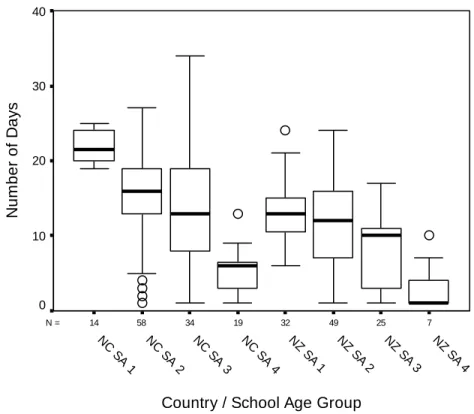
and New Zealand... 110 4.1 Variation in number of writing samples days for children in School Ages
1-4 in North Carolina and New Zealand. ... 121 4.2 Mean total number of words for children in School Ages 1-4 in North
Carolina, New Zealand, and North Carolina and New Zealand
combined. ... 125 4.3 Mean total number of different words for children in School Ages 1-4 in
North Carolina, New Zealand, and North Carolina and New Zealand
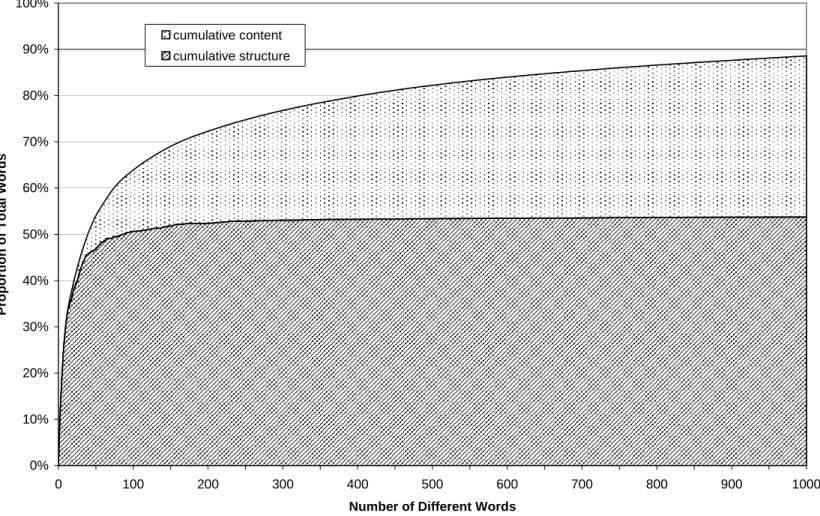
combined. ... 126 4.4 Proportion of total words represented by varying numbers of different
words. ... 127 4.5 Average number of t-units per writing sample for children in School
Ages 1-4 in North Carolina, New Zealand, and North Carolina and New
Zealand combined. ... 139 4.6 Average mean length of t-unit in words for children in School Ages 1-4
in North Carolina, New Zealand, and North Carolina and New Zealand
combined. ... 141 4.7 Mean percentage of clause structures at each clause stage for children
in School Ages 1-4 in North Carolina and New Zealand combined... 143 4.8 Mean percentage of clause structures at each LARSP stage for
children in School Ages 1-4 in North Carolina and New Zealand... 145 4.9 Mean percentage of phrase structures at each LARSP stage for
children in School Ages 1-4 in North Carolina and New Zealand
combined. ... 149 4.10 Mean percentage of phrase structures at each LARSP stage for
children in School Ages 1-4 in North Carolina and New Zealand... 150 4.11 Usage patterns for bound morphemes in School Ages 1-4 in North
Carolina and New Zealand combined. ... 154 4.12 Usage patterns for bound morphemes in School Ages 1-4 in North
Carolina... 156 4.13 Usage patterns for bound morphemes in School Ages 1-4 in New
CHAPTER 1: INTRODUCTION
The aim of this investigation was to elicit information that would assist educators and speech-language pathologists as they engage in decision-making about teaching and supporting children with complex communication needs (CCN) who use augmentative and alternative communication (AAC). To achieve this aim, the investigation documented and analyzed the written language used by typically developing early elementary children when they wrote about self-selected topics. The information obtained has high utility in that it will provide professionals with an understanding of typical written language development and its potential application to planning vocabulary sets and language representation systems for children with CCN.
Children with Complex Communication Needs
Children with complex communication needs (CCN) have communication impairments that limit their ability to meet all of their daily communication needs. These impairments may be caused by a variety of congenital and acquired conditions such as cerebral palsy, autism spectrum disorders, developmental apraxia of speech, or traumatic brain injury (Beukelman & Mirenda, 2005). The prevalence estimates for children with CCN vary widely. It is estimated that
children aged 21 years and under were identified as having CCN (Sutherland, Gillon, & Yoder, 2005).
Augmentative and Alternative Communication
Children with CCN are unable to use speech as their primary mode of communication. Instead, they are reliant on the introduction of some type of
augmentative and alternative communication (AAC) system. AAC is a term used to describe “the use of non-speech modes as a supplement to, or a substitute for, spoken language” (von Tetzchner & Jensen, 1996, p. 1). AAC includes the use of systems such as communication boards and electronic communication devices. To use these systems, the individual must select a symbol or a combination of symbols (e.g., words, photographs, line drawings, abstract symbols). These symbols
represent the message(s) that the individual wants to express. Some individuals have sufficient hand control that they are able to point to symbols. Others rely on alternative access systems. Some individuals, for example, control their AAC systems via switches that they trigger by pressing a button, puffing some air, or wrinkling an eyebrow (ASHA, 2006). Electronic communication devices differ from communication boards in that they produce voice output. Some electronic
communication devices have extensive memory capacity and are able to store a large number of symbols.
Why Study Written Language?
children use in the earliest stages of writing development may be more relevant to improving the face-to-face communication of children with CCN, than the language that typically developing children use when they speak. This is because writing may provide a more accurate reflection of the complexities of communicating through AAC than does speaking. Various authors (e.g., Gombert, 1992; Kroll, 1981;
McCutchen, 2000; Scardamalia, 1981) have described the obstacles that beginning writers face and many of these obstacles resemble those experienced by children with CCN when they use AAC. Both groups of children confront the challenge of taking language that is inside their heads and translating it into an expressive form, using an instrument that is not second-nature to them (e.g., a pencil or a
communication device). The cognitive, memory, and physical demands of such a process have obvious ramifications for the quantity and quality of the language produced. Harpin (1976) stated that:
When children begin the process of learning to write there is a big gap between their general language competence and their performance. The effort involved in learning a new skill is considerable and attention is, naturally enough, on the mechanics of the business. What is drawn on from those oral language resources is sharply restricted. As the act of writing becomes habitual, so more opportunity is available to bring oral competence and written performance into harmony. (p. 52)
Written Language Research
Hidi & Hildyard, 1983), and/or whether there are differences between the written language produced by typically developing children, and children with language disorders, learning disabilities, and/or mental retardation (e.g., McFadden & Gillam, 1996; Scott & Windsor, 2000). These studies have tended to provide statistical tests indicating the presence or absence of a significant difference on a range of
dependent variables; but they have not provided information that describes the actual content and form of the children’s writing samples. Very few of these studies (e.g., Bear, 1939) have examined the written language skills of children below the third grade level.
This investigation is the first to examine the vocabulary, semantics, syntax, and morphology used in writing produced by children in kindergarten through third grade who were provided with regular opportunities to write about self-selected topics. The children’s writing samples were analyzed in terms of the vocabulary (words and multiword sequences/phrases) and semantic themes used, and in terms of the syntax and morphology used. The findings from the syntactic and morphological analyses provide information that will be particularly useful for facilitating the
development of children’ precise communication, and the vocabulary and semantic analyses provide information that will be useful for guiding the development of both efficient and precise communication.
Efficient and Precise Communication in Augmentative and Alternative Communication
Children with CCN need to develop the ability to communicate both efficiently and precisely. Efficient communication is defined here as communication that
as possible. Precise communication is used here to mean communication that entails constructing a message that is grammatically correct and complete. Efficient communication strategies are important because they reduce the number of targets that individuals with CCN need to hit. This speeds up the rate of message
transmission and allows them to participate in conversations in a timely manner (Harris, Doyle, & Haaf, 1996). Precise communication is also critical for individuals with CCN. It is necessary for the prevention of communication breakdowns and misunderstandings, for the communication of complex ideas, and for written language development (Lund & Light, 2003; Sutton, Soto, & Blockberger, 2002).
Efficient communication and precise communication are not necessarily
mutually exclusive. For individuals with CCN, however, precise communication may often be sacrificed because of the pressing need to transmit messages at an
efficient rate. In efficient AAC communication, precision may be sacrificed in different ways depending on whether the communication is creative or formulaic. Creative
communication involves constructing a message from scratch (Wray & Perkins, 2000). In contrast, formulaic communication involves the use of pre-fabricated word sequences that are stored and retrieved as whole units (Schmitt & Carter, 2004; Wray, 2002). Efficient communication may be creative through the use of keywords, or formulaic through the use of strategies such as pre-programmed phrases.
excessive or insufficient information, or they may fail to match the exact topic of conversation (Bedrosian, Hoag, & McCoy, 2003; Hoag, Bedrosian, McCoy, and Johnson, 2004).
Educators and speech-language pathologists have vital roles to play in building the language skills of children with CCN. These professionals must plan vocabulary sets and language representation systems that support both efficient and precise communication for these children, and they must teach these children the language skills that they will need in order to become effective communicators (Nelson 1992; Paul, 1997). Regrettably, limited information is currently available to guide
professionals in this important process.
The Language Skills of Children with Complex Communication Needs The language learning experiences of children with CCN differ significantly from those of typically developing children and research suggests that these differences may lead to significant deficits in vocabulary, semantics, syntax, and morphology.
Vocabulary and Semantics
Children with CCN frequently have access to vocabularies that are grossly inadequate to meet their communication needs. These inadequacies are driven by a myriad of factors including limited memory capacity in AAC devices (Marvin,
Beukelman, & Bilyeu, 1994), the complexity of organizing the vast vocabulary used by persons without disabilities in face-to-face communication and writing (Yorkston, Dowden, Honsinger, Marriner, & Smith, 1988), as well as beliefs about many
access to far less than the 14,000 words that are in the vocabularies of children without disabilities by age 6 (Clark, 1993). The AAC systems described here as inadequate seldom provide access to more than a few hundred concepts and many systems provide access to significantly fewer than that. In addition, until the children with CCN who use these AAC systems learn to spell, they have minimal control over the acquisition of new vocabulary. Without functional speech, they are reliant on adults to determine what vocabulary is necessary and appropriate for inclusion in their AAC systems (Light, 1997). Unfortunately, despite the best intentions of
educators, parents, speech-language pathologists, and others; the vocabulary words that are selected for these children are often inappropriate to their individual
personality, situation, and developmental profile (Carlson, 1981).
The findings of this investigation provide much needed information regarding the developmental nature of vocabulary use in written language. This information will be relevant to professionals as they engage in selecting, prioritizing, and organizing vocabulary in AAC systems. It will prompt professionals to remember that
vocabulary selection is an ongoing process and that children with CCN need access to the words and multiword sequences that allow them to meet “today’s needs and tomorrow’s goals” (Fried-Oken & More, 1992, p. 52).
Syntax and Morphology
significant problems with syntax and morphology (Berninger & Gans, 1986; Kelford Smith, Thurston, Light, Parnes, & O’Keefe, 1989; Sutton & Gallagher, 1993). These problems include difficulty using morphological endings and auxiliary verbs, and limited use of complex sentence structures (Kelford Smith et al. 1989). It is unclear whether these difficulties occur as a result of the speech impairment, use of AAC, late introduction to literacy instruction, or whether they are merely a reflection of the types of difficulties all beginning writers experience. The findings of this investigation provide data to address this final possibility.
This investigation describes the syntax and morphology used by beginning writers when they write about self-selected topics. This information will provide professionals who work with children with CCN with knowledge about the range and complexity of language structures that typically developing children use when they are faced with one of their greatest cognitive challenges: the translation of thought into abstract symbols. Such information will assist professionals to develop realistic expectations for children with CCN and will guide professionals as they make decisions regarding which language structures to make available to children in “today’s” AAC systems and which language structures to target in language intervention and “tomorrow’s” AAC systems.
Summary
parallel to AAC development. This investigation provides some initial information regarding school age and country-related differences in written language
development when children engage in writing about topics of their own choice. Having an increased understanding of written language development in typically developing beginning writers will enable educators and speech-language
CHAPTER 2: REVIEW OF THE LITERATURE
In the review of the literature that follows, four topics that are particularly pertinent to the current investigation will be examined. These are: (1) precise and efficient communication, (2) language learning for individuals with CCN, (3) the language of beginning writers, and (4) vocabulary selection and language representation for children with CCN.
Precise and Efficient Communication
For many individuals with CCN, generating messages that are both precise and efficient is not a straightforward endeavor. Frequently these individuals find themselves in communication situations where they are forced to make a choice between maximizing their rate of message transmission, and communicating precisely what they wish to say (Bedrosian et al., 2003; Hoag et al., 2004).
One primary barrier to precise and efficient communication is the nature of the architecture underlying AAC devices (Todman & Alm, 2003). Many of the devices currently available are letter- or word-based. These devices are advantageous in that they enable the individual with CCN to construct novel messages (Bedrosian et al., 2003). Thus, the individual can express precisely what she or he wants to say, instead of being restricted to a limited number of pre-stored messages.
Communicating with these devices, however, is often a slow and frustrating process as the individual must string together multiple letters and/or words in order to
A slow rate of message generation can have a socially debilitating impact on the communication experiences of individuals with CCN (Higginbotham & Wilkins, 1999). Individuals with CCN and their communication partners may become extremely frustrated. Social exchanges that should be enjoyable may become laborious (Todman, 2000). Individuals with CCN may place more value on the time budgets of their communication partners, than they do on their own communication needs (Higginbotham & Wilkins, 1999). Consequently, they may make minimal contributions to a conversation (Higginbotham & Wilkins, 1999). They may produce very short utterances or just answer yes or no (Todman, 2000). In addition, it may be difficult for them to attain and maintain control of the conversational floor
(Higginbotham & Wilkins, 1999; Todman, 2000). While individuals with CCN are busy constructing messages, conversations may move on to new topics and threads. As a result, these individuals may produce utterances that appear out of context. In circumstances like these, they may be perceived as having questionable intelligence or communicative competence (Higginbotham & Wilkins, 1999).
produce approximately 10 words per minute (Higginbotham, Lesher, & Moulton, 2000a). Rate enhancement features can speed up message generation by reducing the number of keystrokes required by as much as 50 percent (Higginbotham, 1992; Venkatagiri, 1993). These savings are significant; however the rate is still extremely slow given that the average rate of message output in spoken English is
approximately 150 words per minute (Higginbotham & Wilkins, 1999).
While some researchers have been exploring methods for increasing the efficiency of letter- and word-based devices, other researchers have been focused on developing AAC systems that increase rate by providing access to prestored utterances. Examples of these utterance-based AAC systems include CHAT (Alm, Arnott, & Newell, 1992), ScriptTalker (Dye, Alm, Arnott, Harper, & Morrison, 1998), SchemaTalk (Vanderheyden & Pennington, 1998), TALK (Todman, Alm, & Elder, 1994a), and Frametalker (Higginbotham, Wilkins, Lesher, & Moulton, 1999). The two systems that have received the most recent attention in the literature are the TALK system and the Frametalker system. These two systems will be described in detail.
The TALK (Talk Aid Using Pre-Loaded Knowledge) system (Todman et al., 1994a) was designed primarily for individuals with CCN who have already developed good language skills. This group of individuals experience little to no problems
for social interaction by constructing and storing messages for use at a later time (File & Todman, 2002).
The TALK system uses a unique method of storage organization that is based on the premise that topics in natural conversation tend to shift a little at a time
between differing perspectives (Todman, 2000). These perspectives may be a
person perspective (i.e., shifting from my experiences and views to your experiences and views), a time perspective (i.e., shifting from past to present or future), or an
orientation perspective (i.e., shifting from where to what, how, when, who, or why) (Todman, Elder, & Alm, 1995). In the TALK system, phrases are identified by a combination of one of each of the three perspectives, for example, the phrase I visited my family at Christmas would be classified as Me/Past/Who. The system supports the natural flow of conversation by allowing the user to quickly shift one perspective at a time. For instance, the Me/Past/Who phrase described above might shift to a Me/Past/Where phrase such as We were in London and then perhaps to a
You/Past/Where phrase such as Where did you go for Christmas? The TALK system also provides access to various ‘quickfire’ utterances such as Ah Yes, and Too bad, and to comments such as I didn’t mean to say that, and That’s life, isn’t it (File & Todman, 2002).
involving individuals with conditions such as motor neuron disease and cerebral palsy (e.g., Todman, 2000; Todman & Lewins, 1996).
Many of the research studies have focused on determining the existence of a relationship between rate of communication (or average pause times preceding utterances) and listeners’ perceptions of conversations produced using the TALK system (Todman & Rzepecka, 2003). Findings suggest that the TALK system is able to produce conversational rates ranging from 40 words per minute with minimal training (Todman & Lewins, 1996) to 50-80 words per minute following the implementation of a relatively brief training program that focuses on teaching the unique features of the system (Todman, 2000; Todman, Rankin, & File, 1999). The findings also suggest that these increases in communication rate are positively correlated with a number of important conversational quality indicators such as coherence (File & Todman, 2002), number of topic shifts (Todman et al., 1994a), and reciprocity of structure (Todman, Elder, Alm, & File, 1994b). In addition,
increases in rate appear to be linked to more positive perceptions of individuals with CCN’s communicative competence and personal qualities (Todman, 2000; Todman & Rzepecka, 2003), and appear to result in a more enjoyable interaction for both the individual with CCN and the communication partner (Todman, 2000).
exchanging information in order to accomplish things in the world. This type of interaction is very different from a social interaction in which the primary goal is to develop a relationship (Todman & Alm, 2003).
The Frametalker system is based on a communication frame approach. A communication frame is defined as “an organized collection of language structures than an individual would typically use with a given interlocutor, in a specific context of communication, and where a particular topic or situation is in focus”
(Higginbotham, Moulton, Lesher, Wilkins, & Cornish, 2000b, p. 1). Communication frames are organized hierarchically so that there are Super Frames (e.g., Aches and Pain), Basic Level Frames (e.g., Headache), and Sub-Frames (e.g., Migraine
Headache). A communication frame contains various component frames and utterance constructions. For instance, the backache frame might contain the component frames symptom, location, cause, time, and remedy. Within each component frame would be utterance constructions such as I fell down (cause) or I need a massage (remedy). When appropriate, these utterance constructions would contain variable slots. In the construction I need a massage, the underlined slot would initially be filled by a default lexical item. This item would be chosen based on its importance or its documented frequency of use. The individual with CCN would also have access to alternative lexical items that they could select from if the default item did not meet their current communicative need (Higginbotham et al., 2000b).
on exploring the selection savings that the Frametalker system affords. Selection savings is measured by calculating the number of selections needed to produce an utterance on an AAC device and then dividing that number by the number of
selections required to produce the same utterance on a standard output device such as a keyboard (Cornish & Higginbotham, 2000). The Frametalker system has been compared to Co:Writer (Don Johnston) and to Minspeak-Unity (Prentke Romich Company). Co:Writer is a spelling-based word-prediction system with a dictionary of 40,000 words. Unity is a vocabulary system that consists of 4,000 encoded words. The selection savings for the three systems were as follows: Frametalker, 87%; Co:Writer, 45%; and Unity, 40%. It is important to note that the selection savings were measured using 10 utterances that were taken directly from the Frametalker system. The research team acknowledges that this may have introduced a degree of bias to the study’s findings; however, the study does provide some initial evidence to suggest that the Frametalker system may offer increased efficiency in situated
communication activities (Higginbotham et al., 2000b).
From the research studies described, it seems apparent that utterance-based systems such as the TALK system and the Frametalker system have the potential to make a dramatic difference to the communication efficiency of individuals with CCN. Nevertheless, these utterance-based systems are not without their limitations. For instance, the developers of these systems have focused solely on the
multiword sequences used by typically developing beginning writers. This information will be useful for guiding the selection of appropriate pre-stored utterances for children with CCN.
Another concern that is expressed in the AAC literature is the mismatch that can occur between the prestored messages in an utterance-based AAC system and the conversation at hand (Bedrosian et al., 2003). It is simply not possible to predict the exact content of a conversation. Individuals with CCN that use utterance-based systems must therefore have strategies to cope with the unexpected.
Bedrosian and colleagues (Bedrosian et al., 2003; Hoag et al., 2004) have suggested that when a mismatch occurs, individuals with CCN can implement one of three trade-off strategies: (a) they can edit the prestored message, (b) they can edit the prestored message after first generating a conversational floorholder that informs their listener that there will be a delay, or (c) they can use the message as it is
stored. Strategies (a) and (b) both maximize precision, but sacrifice efficiency. In contrast, strategy (c) maximizes efficiency, but sacrifices precision. If an individual with CCN chooses to implement strategy (c) then the consequences vary depending on the manner in which the prestored message differs from their preferred message. For instance, the prestored message may only be partly relevant, or it may contain too much or too little information.
Two studies have been conducted which have examined the impact that these trade-off strategies have on message delivery. The first study (Bedrosian et al., 2003) investigated message speed and message relevance by simulating a
a clerk at a checkout counter. The individual wished to communicate the following utterance: I’d like Bag of Bones by Stephen King in paperback please. The study included three experimental conditions. Each condition tested the impact of one of the strategies described above. The prestored message used when strategy (c) was implemented contained partly relevant information. This message was Stephen King was seriously injured in a hit-and-run accident. The interactions between the
individual with CCN and the clerk were scripted and videotaped. These videotapes were then watched by 96 sales clerks. After watching the videotapes, the sales clerks completed a questionnaire that elicited information about their attitudes toward the individual with CCN and his or her communication.
Prior to conducting this study, the researchers had hypothesized that there would be a hierarchy of trade-off strategies, with some strategies being perceived more positively than others. The researchers predicted that strategy (c) would be the most effective strategy because they believed that efficient message delivery would be viewed more favorably than precise message delivery. They also predicted that the placeholder provided in strategy (b) would be viewed more favorably than the absence of a placeholder as in strategy (a). They believed that the placeholder would inform the listener that message efficiency was about to be sacrificed and thus would act as an anticipated repair strategy (Bedrosian et al., 2003).
that message efficiency would be deemed more important than message precision, however, was found to be inaccurate. The edited message was perceived much more favorably than the prestored message. The sales clerks preferred an entirely relevant message, even if it meant waiting 1.5 minutes instead of 4 seconds for message output to take place. The message containing partly relevant information was ranked as the least preferred strategy more than 90% of the time (Bedrosian et al., 2003).
The second study (Hoag et al., 2004) also simulated a communication interaction in a bookstore. This study differed from the first study in that instead of investigating the impact of message relevance, it investigated the impact of message informativeness. In this study, the individual with CCN wished to communicate the same utterance: I’d like Bag of Bones by Stephen King in paperback please. This study had four experimental conditions: the two edited message conditions that were included in the first study and two prestored message conditions. In the first prestored message condition, the message used contained inadequate information (I’d like the Stephen King book please). In the second prestored message condition, the message used contained excessive information downloaded from Amazon.com (Bag of Bones by Stephen King. List price $7.95. Paperback. Seven hundred and thirty-two pages. Copyright 1999).
prestored message with excessive information. There was no statistically significant difference between these three conditions. The least preferred strategy was the prestored message with inadequate information. Written comments revealed that many of the sales clerks appeared to appreciate the efficiency of the prestored message, as long as they were able to figure out the individual with CCN’s
communicative intent. In the inadequate information condition, they were frequently unable to do so. This resulted in many of the sales clerks feeling irritated and
frustrated with the communicative interaction. They expressed concern about the amount of time and effort that they would need to exert in order to determine exactly what the individual with CCN wanted (Hoag et al., 2004).
The conflicting nature of these studies’ findings suggests that additional
research is necessary before any firm conclusions can be made about the hierarchy of preferred trade-off strategies. Future studies should examine whether these findings generalize to other settings and to other communication partners. Researchers (e.g., Todman & Rzepecka, 2003) have speculated that precise
communication may be more important in situations where the goal of the interaction is transactional, and where the communication partner is unfamiliar and/or
inexperienced at communicating with individuals with CCN. Precise communication may be considerably less important in social interactions, particularly when those interactions involve communicating with familiar communication partners such as friends and family.
have some important implications for the design and use of utterance-based AAC systems. These researchers suggest that individuals with CCN should be
encouraged to store phrases rather than complete sentences. Phrase generation retains the advantage of being more efficient than word-by-word generation. In addition, messages produced using phrase-generation are likely to be more precise than those produced using sentence generation. Phrases can be combined and recombined to create a variety of messages. Phrases can also be used with a tag that contains more detailed information. For instance, an individual with CCN could generate the pre-stored message, I would like that dress, please, and then choose from a selection of modifiers (e.g., cost, color, size, style) to clarify his or her exact communicative intent (Hoag et al., 2004).
Speech-language pathologists and educators who work with children with CCN do not currently have access to sufficient information and resources to guide them in making decisions about which phrases to incorporate into children’s AAC systems. A number of studies have documented the vocabulary used by typically developing children for the purpose of informing the field of AAC; however none of these studies have analyzed the data beyond individual word frequencies. This may be because the practice of including phrases and sentences in children’s AAC systems is actually a topic of controversy. Many professionals have expressed concern that providing children with access to pre-stored messages may be detrimental to
independently (Gerber & Kraat, 1992). They have also expressed concern that acquiring language in the context of pre-stored messages may prevent these children from learning to construct their own novel messages (Bedrosian,1997; Nelson, 1992). These are valid concerns that warrant further investigation; however, studies conducted outside the field of AAC suggest that the use of pre-stored
messages is not a characteristic that is unique to individuals with CCN. Adults and children who use spoken language as their primary mode of face-to-face
communication also rely heavily on pre-fabricated language forms. The current study provides important information regarding the phrases that beginning writers use most frequently and therefore informs decision-making regarding the use of phrases to support communication for children with CCN.
Extensive support for the prevalence of pre-stored phrases can be found in the linguistics literature, particularly in the body of research that is concerned with
formulaic sequences. A formulaic sequence is defined as:
A sequence, continuous or discontinuous, of words or other elements, which is, or appears to be, prefabricated: that is stored and retrieved whole from memory at the time of use, rather than being subject to generation or analysis by the language grammar. (Wray, 2002, p. 9) Formulaic sequences are used extensively in both spoken and written language (Erman & Warren, 2000). In fact, formulaic sequences may comprise as much as 70% of language produced (Altenberg, 1990). A number of different types of formulaic sequences have been identified including idioms (e.g., that’s the way the cookie crumbles), collocations (e.g., sheer coincidence or pure coincidence, but not
pass the ____?), and standard situational utterances (e.g., Can I help you?) (Wray, 1998).
It is generally accepted that formulaic sequences occur frequently in language usage because of issues relating to cognitive resource allocation (Schmitt,
Grandage, & Adolphs, 2004). Formulaic sequences increase processing efficiency. They are prepackaged in memory, which means that they can be processed more quickly and easily than sentences which are generated creatively (Schmitt & Carter, 2004). Formulaic sequences enhance fluency while at the same time freeing up cognitive resources so that individuals can focus on higher level language
processing such as the structure of discourse and the social aspects of interaction (Nattinger, 1988).
Formulaic sequences feature prominently in social interactions and in situations that are recurring and that include conventionalized language routines such as apologizing, giving directions, or complaining. In these situations,
communication partners expect to hear particular formulaic sequences (Schmitt & Carter, 2004). Formulaic sequences function as a social lubricant (Kecskes, 2003). They aid communication partners in co-constructing their interaction (Kecskes, 2003) and are critical to socially appropriate language use (Schmitt & Carter, 2004).
Formulaic sequences are also important in transactional communication. They facilitate precise and efficient message transmission. Examples of formulaic
The exact nature of the relationship between formulaic language processing and creative language processing is yet to be determined. Today most researchers agree that both are involved in language processing and that both are important, but precisely what governs the choice of a formulaic processing strategy versus a
creative processing strategy at any one time is still very unclear. A prominent theory in the literature at present is the phrase-first paradigm (Wray & Perkins, 2000; Wray, 2002). This theory posits that language processing is most effective when an
appropriate balance is reached between formulaic and creative processing. The advantage of the formulaic system is “economy of effort when dealing with the
expected” (Wray & Perkins, 2000, p. 11) and the advantage of the creative system is “the freedom to produce or decode the unexpected” (Wray & Perkins, 2000, p. 11). If language was totally formulaic, it would sound repetitive and clichéd. In contrast, if language was totally creative, it would sound pedantic, dysfluent, and unidiomatic (Wray, 1998).
The dynamic balance between formulaic processing and creative processing postulated in the phrase-first paradigm may not be achieved until late childhood or adolescence. One developmental theory (Wray & Perkins, 2000) proposes that very young children rely heavily on the use of formulaic sequences, but that this tapers off at around 20 months of age when children develop an increasing awareness of grammar. Children continue to learn formulaic sequences and use them in their spoken language, but the proportion of creative language compared to formulaic language increases. At approximately eight years of age, the strategy of creating messages from scratch becomes inefficient and a process of reorganization occurs. During this process, groups of words that have been repeatedly encountered and/or constructed are collapsed and restored as single formulaic frames. The language processing system is then continuously reorganized and refined until adult patterns of formulaic and creative language processing are achieved. For both beginning writers and children with CCN, the linguistic and cognitive resources that are
available to support this developmental process are likely to be constrained as they focus their energies on learning to use a novel instrument to modulate their
language output. The current investigation provides important information regarding the development and use of formulaic and creative language processing in
beginning writing. This information will provide the AAC field with greater insight into the role of formulaic and creative language processing in children with CCN.
Summary: Precise and Efficient Communication
manner (Wray, 1998). Unfortunately, this goal is currently not attainable for
individuals with CCN. The AAC devices that are available today are either word- or utterance-based. Word-based devices incorporate some pre-stored utterances, and utterance-based devices incorporate some capacity for creative message
construction. None of the devices, however, are flexible and dynamic enough to even approximate what is possible through spoken communication. An additional concern is that the utterance-based AAC devices that are currently available have not been created with children in mind. This is perhaps because of the prevailing belief in the AAC field that providing children with access to pre-fabricated messages may be confusing and may impede the development of language skills (See
discussion in Harwood, Warren, & Yoder, 2002 and in Wilkinson & McIlvane, 2002). Researchers in the field of formulaic sequences would argue that this would not necessarily be the case, particularly in the early stages of language development (Wray & Perkins, 2000). The architecture of future AAC devices must endeavor to provide children with CCN with language systems that support the development of a dynamic balance between both efficient and precise communication.
Language Learning for Individuals with Complex Communication Needs The language learning experiences of children with CCN may differ
significantly from those of typically developing children and “variables that are not usually at issue may come into play and interact in ways that are not fully
in the language(s) spoken in their home and school environments, they are also having to learn how language is represented or coded on their multimodal AAC systems (Light, 1989, 1997).
An additional challenge is the potential mismatch between the child with CCN’s intended message and the message that is translated into spoken language by their communication partner or by the pre-programmed AAC system. Communicating with AAC has been described as a process that is characterized by the co-construction of meaning. As young children with CCN are developing competence in their use of an AAC system, they are particularly dependent on their communication partners to co-construct meaning. Communication partners use their knowledge of the child, the context, and the AAC system to interpret or co-construct the child’s communicative intent. As communication partners engage in the process, they tend to align
messages produced using AAC with the rules of spoken language by making
changes such as altering word order, correcting syntax, or clarifying semantics (Soto, 1997, 1999).
integrated AAC use with their spoken communication less than 10% of the time, even when they had received specific encouragement and instruction to do so. It was also found that when parents and school personnel did model AAC use, they typically used natural speech to communicate the main message and used AAC to highlight key concepts. Furthermore, these adults were restricted to the use of symbols that were already in the child’s AAC system. Therefore, even when
modeling of AAC systems did occur, the output was dramatically different from the language models that typically developing children receive.
Over the past 25 years, a number of studies have been conducted in the field of AAC that have investigated the process of language learning and the linguistic capabilities of children and adults with CCN. These studies have addressed one or more of the five language domains: phonology, semantics/vocabulary, syntax, morphology, and pragmatics. The following section of this paper will present a detailed review of the research addressing semantics/vocabulary, syntax, and morphology. The research addressing semantics/vocabulary will be reviewed first. This language domain was selected as an area of focus for the current investigation because despite the fact that attempts have been made to improve vocabulary selection and organization for individuals with CCN, vocabulary growth continues to be identified as a prominent clinical concern (e.g., Roth, 2005). The discussion will then shift to the literature addressing syntax and morphology. These language
domains were selected as areas to address in the current investigation because they have received insufficient attention in the literature (Sutton et al., 2002). Early
individuals with CCN (Smith, 1996). It is only recently that syntax and morphology have begun to receive the attention they deserve. Studies that improve the field’s understanding of why individuals with CCN often struggle to develop mature syntax and morphology are urgently required.
Semantics and Vocabulary in Individuals with Complex Communication Needs The term semantics is defined as the “subsystem of language that deals with words, their meanings, and the links that bind them” (Bernstein, 2002, p. 7). The term vocabulary is a term that specifically refers to the words that an individual has available for language comprehension or production. This set of vocabulary words is often referred to as an individual’s lexicon (Nelson, Bahr, & Van Meter, 2004).
For typically developing children acquiring new vocabulary is a dynamic process. These children choose, store, and retrieve new words while they are actively responding to and manipulating their environments (Carlson, 1981). They are able to “capture and encode vocabulary that is most salient and interesting to them” (Light, 1997, p. 165). Children with CCN are presumably also attracted to new vocabulary, however many of these children must rely on other people to select the vocabulary that they are able to capture and encode. At least until they develop the ability to spell, children with CCN cannot independently program their AAC systems. As a consequence, many of these children often have access to restricted
vocabularies that fail to reflect their interests, full linguistic potential, and changing language needs.
dictated by the appropriateness of the vocabulary that is available to them (Light, 1997). Frequently in an attempt to provide functional vocabulary, the adults who program AAC systems select words which focus on the communication of wants and needs, but they fail to select words which provide children with the opportunity to express other important communicative functions such as those required to develop social closeness and those needed to seek and provide information about
experiences and events (Light, 1988, 1997).
Children with CCN who wish to communicate beyond the boundaries imposed by their AAC system must learn to compensate for the vocabulary they do not have by employing metalinguistic cues that help their communication partner to accurately infer their communicative intent. Children with CCN who are able to develop this level of metalinguistic knowledge typically employ a variety of strategies including semantic bypasses (e.g., using a synonym), phonological similarity cues (e.g., using a homonym), and/or word modification markers (e.g., ‘it’s the opposite of’, ‘it’s similar to’) (Soto, 1997, 1999). The cues that a child with CCN employs at a particular point in time may reflect their underlying language skills, exposure to language models, familiarity with their AAC system, and/or previous experience with their
communication partner.
Research: Semantics and Vocabulary in Individuals with Complex Communication Needs
A comprehensive search of the literature revealed five studies that have
examined the vocabulary and/or semantic knowledge of children or adults with CCN. Appendix A1 provides a summary of the participants that were included, the
were obtained for each of the studies. The studies included in this review were published in refereed journals between 1986 and 1996. The discussion of research is organized into the following sections: participants, methodological approaches, and findings.
Participants
The sample sizes across the five studies ranged from 1 to 40 participants. The participants varied across (and sometimes within) samples according to age (3 to 40 years), type of speech impairment (dysarthria, developmental apraxia of speech), and degree of speech impairment. In addition, some of the participants presented with medical problems and sensory impairments, while others did not. In Berninger & Gans’ (1986) study, for example, the 16-year-old boy had a severe hearing loss that was not diagnosed until 8 years of age. Similarly, in Udwin & Yule’s study (1990), some of the children exhibited hearing loss, visual impairment, and/or epilepsy. The cognitive abilities of the participants also varied considerably. Their IQ scores
ranged from significantly below average to within normal limits.
participants involved in these studies means that extreme caution must be exercised in the generalization of findings.
Methodological Approaches
Two studies focused on observing and/or quantifying participants’ language skills by administering an assessment (Berninger & Gans 1986; Bishop, Byers Brown, & Robson, 1990). Another study (Romski, Sevcik, & Robinson, 1996) examined whether participants were able to fast map novel vocabulary words. The remaining studies (Harris et al., 1996; Udwin & Yule, 1990) investigated the impact of two different approaches to intervention. Language skills were evaluated by
administering standardized tests (Berninger & Gans, 1986; Bishop et al., 1990) or by counting particular language behaviors such as the number of signs or symbols comprehended and expressed (Udwin & Yule, 1990), or the percentage of modeled vocabulary produced (Harris et al., 1996).
Findings
In the first study to examine the vocabulary skills of individuals with CCN
The second study (Bishop et al., 1990) compared the vocabulary skills of 24 young adults with cerebral palsy and severe speech impairments (anarthria or dysarthria), to a group of control participants who also had cerebral palsy but who had no coexisting speech difficulties. The two groups were matched according to chronological age and scores on Raven’s Progressive Matrices (Raven, 1967). Administration of the British Picture Vocabulary Scale (BPVS, Dunn, Dunn, Whetton, & Pintilie, 1982) revealed that the participants with severe speech impairments exhibited significantly impaired vocabulary skills compared to their matched controls.
Udwin and Yule (1990) also compared the vocabulary skills of two groups of children; however, in this study both groups of children used AAC. One group
included 20 children who were learning to communicate using Blissymbols (a system of graphic symbols representing 100 basic language concepts that can be used in isolation or combination) and the other group included 20 children who were learning to communicate using Makaton signs (a system of manual signs). The children were initially assessed when they had received an average of 10.5 months of symbol or sign training. They were then reassessed at 6-month intervals for a total period of 18 months. Udwin and Yule (1990) documented progress in the children’s receptive and expressive knowledge of signs or symbols. The results of the study identified
significant increases in the numbers of signs or symbols taught, the numbers of signs or symbols understood, and the numbers of signs or symbols produced. In general, however, progress was slow.
109. In the Makaton signing group, the children increased the number of signs they understood from 35 to 72, and the number of signs they produced from 31 to 65. Statistical comparisons between the two groups revealed only one significant difference (percentage of signs or symbols acquired expressively at initial
assessment) when disparities in IQ and language comprehension were taken into account. These findings indicated that neither the Blissymbols system nor the Makaton sign system had any benefit over the other in terms of ease of acquisition. Udwin and Yule (1990) emphasized, however, that it is inappropriate to infer that these systems will be equally effective for everyone. They observed considerable variability within the two groups of children.
Harris et al. (1996) examined the effectiveness of an intervention program that was designed to teach a child with developmental apraxia of speech who primarily communicated using pre-stored whole messages, to segment and combine
grammatical constituents. The child’s progress was monitored over a four month period using a multiple baseline design across contexts (storybook reading,
structured discourse). The child demonstrated increased levels of lexical flexibility. In the treatment trials, the child’s percentage of correct constituents score was
consistently greater than his percentage of modeled vocabulary score indicating that the child was able to make semantically correct word choices that had not previously been modeled.
Language (SAL, Romski & Sevcik, 1996) for a minimum of five years. The SAL is a multifaceted approach to language intervention that includes: (a) the SuperWolf AAC system (Adamlab, LLC), (b) a vocabulary of arbitrary picture symbols (lexigrams) paired with printed English words, (c) a teaching approach that encourages but does not require communicative attempts, and (d) a resource and monitoring system that includes weekly visits with the researchers, and the completion of a questionnaire that elicits information about the participants’ patterns of communicative use.
The purpose of the study was to explore whether the participants were able to engage in fast mapping. Fast mapping is defined as a child’s ability to map a new word on to a novel object in the absence of any overt definition (e.g., pointing) (Carey, 1978). Fast mapping is important for vocabulary growth as it enables
children to rapidly acquire new words. The researchers were interested in examining whether a relationship existed between the participants’ fast mapping abilities and their prior symbol achievement. For that reason, the participants were divided into a beginning achievement group (n = 4) or an advanced achievement group (n = 8) based on the size of their symbol vocabularies.
The participants’ fast mapping abilities were measured experimentally by exposing the participants to sets of stimuli consisting of four known objects and one novel object. The researcher asked the participants to give me the ____ while simultaneously activating the corresponding symbol on the SuperWolf. The
researcher asked for a known object first and then asked for the novel object. If the participant did not point to or physically manipulate the novel object, then the
of stimuli. The participants’ symbol comprehension and symbol production abilities were then assessed. The assessments were administered immediately following exposure to the novel words, and were then repeated one day and fifteen days later.
Overall, seven of the children successfully mapped the meanings of two or more novel symbols. The mean number correct was 0.5 (range 0 -1) for the beginning achievement group and 2.9 (range 0-4) for the advanced achievement group. The children were classified as ‘mappers’ or ‘nonmappers’. Only one of the participants in the advanced achievement group was classified as a nonmapper. Symbol achievement was found to be significantly related to mapping status. The children classified as mappers were able to generalize their knowledge to word production and were able to retain comprehension and production of at least half of the novel symbols for 15 days following initial exposure.
Summary: Research Examining Semantics and Vocabulary in Individuals with Complex Communication Needs