Acute Respiratory Health in Students Attending Middle Schools Near Concentrated Animal Feeding Operations
Virginia Thompson Guidry
Adissertation submitted to the faculty of the University of North Carolina at Chapel Hill in partial fulfillment of the requirements for the degree of Doctor of Philosophy
in the Department of Epidemiology.
Chapel Hill 2011
© 2011
Abstract
Virginia Thompson Guidry
Acute Respiratory Health in Students Attending Middle Schools Near Concentrated Animal Feeding Operations
(Under the direction of Steve Wing)
Residents near concentrated animal feeding operations (CAFOs) have
expressed concern about effects from associated air pollutants. Previous cross-sectional studies have found increased prevalence of asthma and wheezing among children who attend school near CAFOs.
The Rural Air Pollutants and Children’s Health (RAPCH) study used a school-based, longitudinal design to investigate acute respiratory responses in children attending public middle schools near CAFOs in eastern North Carolina. We conducted five sequential waves of data collection at three middle schools in February-November 2009. Each day in science class for 3-5 weeks, students completed a structured diary reporting current symptoms and recent odor observations, then measured their pulmonary function. We measured hydrogen sulfide (H2S) and particulate matter less than 10µm in diameter (PM10) at two locations: inside a participating classroom and outside the school building. The participatory protocol was designed to provide positive side effects for participants; process evaluation results from interviews with staff in May-June 2010 indicated benefits including increased interest in science, hands-on learning, and environmental awareness.
H2S, morning H2S, 12hr mean PM10, and morning PM10) and pulmonary function parameters (peak expiratory flow and forced expiratory volume in one second). There were substantial within-person decreases in pulmonary function over time-in-study. We found unexpected positive associations in unstratified analyses and larger beta
coefficients with greater precision among students reporting wheeze at baseline. In analyses stratified by Week 1 versus Weeks 2-5 to control for time-in-study, we observed small beta coefficients with poor precision for all models.
To my husband Chris for accompanying me on this journey. To Brother Romuald, Mary Ann McLane, Steve Wing, and my parents
Acknowledgements
TABLE OF CONTENTS
List of Tables ...ix
List of Abbreviations...x
Chapter I. Introduction & Specific Aims ...1
A. References ...4
II. Literature Review ...5
A. Urban and Rural Air Pollutants ……...5
B. Concentrated Animal Feeding Operations (CAFOs) in North Carolina ...5
C. Airborne Pollutants & Odor from CAFOs ...8
D. Health Impacts of Airborne Exposures from CAFOs on Adults ...10
E. Health Impacts of Airborne Exposures from CAFOs on Children...12
F. Enhancing Positive Side Effects of Research ...15
G. Strengths and Limitations of Previous Research ...15
H. References ...19
III. Enhancing Public Health Benefits Through Engaged Epidemiologic Research ...24
A. Abstract ...24
B. Introduction ...25
C. Study Design ...26
D. Study Population ...27
E. Data Collection ...29
G. Process Evaluation Results ...38
H. Discussion ...43
I. References...47
IV. Pulmonary Function in Children Attending Middle Schools near Concentrated Animal Feeding Operations ...49
A. Abstract ...49
B. Introduction ...50
C. Methods...52
D. Results ...56
E. Discussion ...64
F. References ...68
V. Discussion ...71
A. References ...79
Appendices ...80
A. Baseline Survey...80
B. Daily Diary ...93
C. Supplemental Tables...98
List of Tables
2.1 Shift in NC hog production from 1978-2007 ...6
2.2 NC Livestock Inventory and National Rank for 2009 ...7
3.1 Summary of Process Evaluation Participants ...38
3.2 Motivation to Participate ...39
3.3 Benefits of Participation for Students...40
3.4 Benefits of Participation for Teachers and Liaisons...41
3.5 Drawbacks of Participation ...42
4.1 Study Population...58
4.2 Summary of Outdoor Air Pollutants Measured at Each School Site ...59
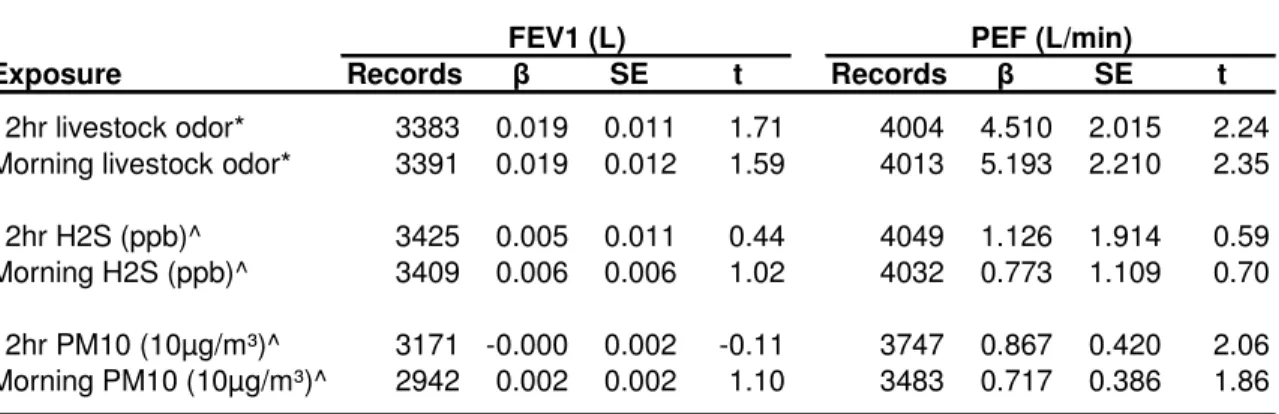
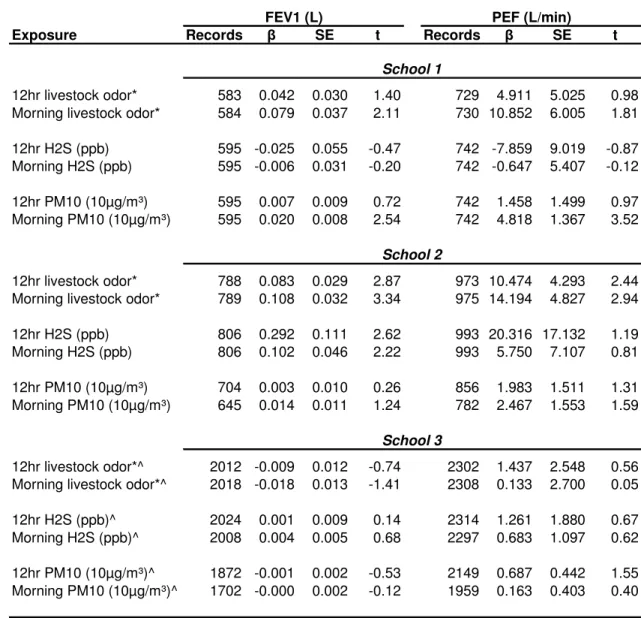
4.3 Single Pollutant Linear Fixed Effects Models of Livestock Odor, Hydrogen Sulfide, and Particulate Matter <10µg/m³ as Predictors of Lung Function ...60
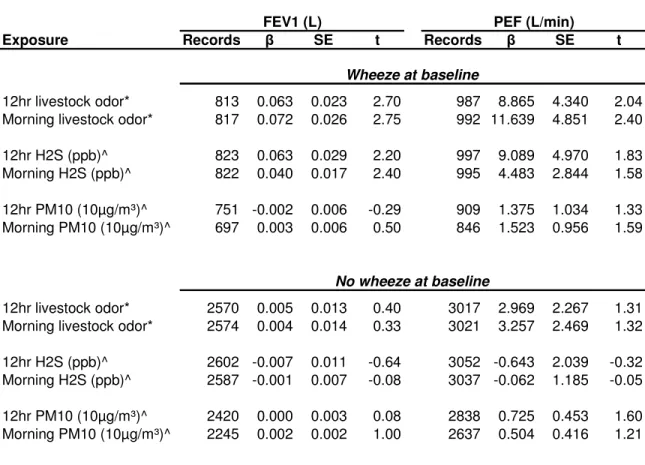
4.4 Single Pollutant Linear Fixed Effects Models of Livestock Odor, Hydrogen Sulfide and Particulate Matter <10µg/m³ as Predictors of Lung Function Stratified by Wheeze at Baseline ...61
4.5 Single Pollutant Linear Fixed Effects Models of Livestock Odor, Hydrogen Sulfide and Particulate Matter <10µg/m³ as Predictors of Lung Function Stratified by School ...62
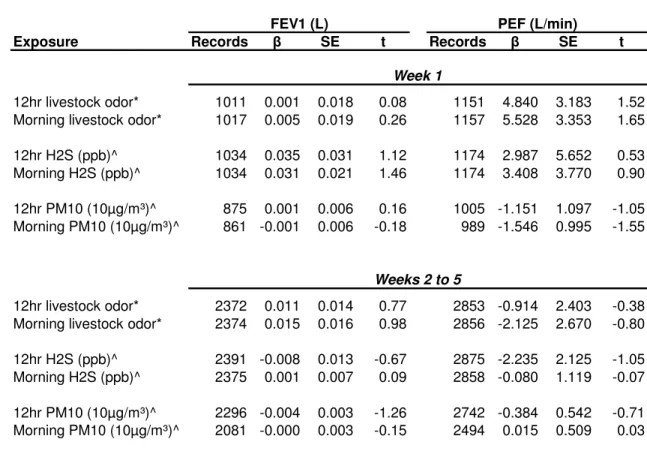
4.6 Single Pollutant Linear Fixed Effects Models of Livestock Odor, Hydrogen Sulfide and Particulate Matter <10µg/m³ as Predictors of Lung Function Stratified by Time in Study ...63
C.1 Comparison of Outdoor Hydrogen Sulfide Measurements from the Single Point Monitor (SPM) and Thermo Hydrogen Sulfide - Sulfur Dioxide Analyzer (Thermo)...98
C.2. Single Pollutant Linear Fixed Effects Models of Livestock Odor, Hydrogen Sulfide and Particulate Matter <10µg/m³ as Predictors of Lung Function Stratified by Frequent Livestock Exposure ...99
C.3 Single Pollutant Linear Fixed Effects Models of Livestock Odor, Hydrogen Sulfide and Particulate Matter <10µg/m³ as Predictors of Lung Function Stratified by Allergy Status...100
List of Abbreviations
ATS American Thoracic Society
ATSDR Agency for Toxic Substances and Disease Registry CAFO Concentrated animal feeding operation
CBPR Community-based participatory research CFR Code of Federal Registry
CH4 Methane
CHEIHO Community Health Effects of Industrial Hog Operations
CO2 Carbon dioxide
DustTrak DustTrak Aerosol Monitor
FDA United States Food and Drug Administration FEV1 Forced expiratory volume in one second H2S Hydrogen sulfide
hr Hour
ID Identification
IRB Institutional Review Board
ISAAC International Study of Asthma and Allergies in Childhood
km kilometers
L liters
L/min Liters per minute L/s Liters per second
M meters
mi miles
NC North Carolina
NCDA & CS North Carolina Department of Agriculture and Consumer Services
NH3 Ammonia
NH4+ Ammonium
NRC National Research Council PEF Peak expiratory flow PM Particulate matter
PM10 Particulate matter less than 10µm in aerodynamic diameter PM2.5 Particulate matter less than 2.5µm in aerodynamic diameter ppb Parts per billion
ppm Parts per million
RAPCH Rural Air Pollutants and Children's Health
REACH Rural Empowerment Association for Community Help
SE Standard error
sIgA Secretory immunoglobulin A SPM MDA Single Point Monitor
Thermo Thermo Hydrogen Sulfide - Sulfur Dioxide Analyzer
UK United Kingdom
UNC University of North Carolina Gillings School of Global Public Health
US United States
Chapter I
Introduction & Specific Aims
Industrial livestock production has emerged as a significant source of rural air pollution as numbers of concentrated animal feeding operations (CAFOs) have grown in recent decades. In eastern North Carolina (NC), the increase in CAFOs has placed agricultural livelihoods at odds with public health and enjoyment of rural life. Airborne emissions from confinement barns, voluminous quantities of manure, and frequent manure spraying or spreading reduce air quality and produce intermittent strong odors in surrounding communities. Children may be especially vulnerable to respiratory health insults and exposures may occur at schools they are required to attend. Previous research has suggested an association between school proximity to swine CAFOs and prevalence of wheeze symptoms and asthma (Mirabelli et al. 2006a; Sigurdarson & Kline 2006).
We conducted a longitudinal study comparing reported odors and air pollution measurements at schools with lung function measurements from participating students. We planned the study in collaboration with the community-based Rural Empowerment Association for Community Help (REACH) and sought ways to create positive side effects of data collection. During five waves of data collection lasting 3-5 weeks, we used air pollution monitors to measure indoor and outdoor hydrogen sulfide (H2S) and
curricula, we discussed air pollution and respiratory health with the students,
demonstrated instruments, and provided an opportunity to interpret preliminary results at the conclusion of data collection. REACH involvement generated further potential for ripple effects in the community.
The data collected will be used to address the following specific aims:
1) Document the rationale for designing a participatory epidemiologic study that intends to provide positive side effects to the participants and their broader communities, including:
a. Describing our approach in the context of most epidemiologic studies which are designed to minimize side effects on study participants; b. Illustrating this rationale with the Rural Air Pollutants and Children’s
Health study as an example of a collaborative effort to enhance the benefits of an epidemiologic study;
c. Presenting results of a process evaluation to document observed benefits and drawbacks;
d. Discussing how our approach can increase the potential for future epidemiologic studies to improve public health.
This aim is intended to produce a methodological article that shares our study design rationale with epidemiologists and others involved in public health research.
2) Determine whether exposure to variation in air pollutants is associated with pulmonary function over time by:
b. Evaluating whether observed effects are modified by allergies, chronic respiratory health status at baseline, home exposure to livestock, or exposure to smoking.
We hypothesize that increases in CAFO-related air pollutants will be associated with reduced lung function. We also hypothesize that stronger effects will be observed for children with allergies, chronic respiratory symptoms, frequent exposure to livestock, and frequent smoking exposure. This aim is intended to produce a scientific
manuscript presenting the results.
References
Mirabelli MC, Wing S, Marshall SW, et al. Asthma symptoms among adolescents who attend public schools that are located near confined swine feeding operations.
Pediatrics. 2006a;118(1):e66-75.
Chapter II Literature Review
Urban and Rural Air Pollutants
Most studies of health impacts from exposure to air pollution have been conducted in urban settings. An extensive literature provides evidence of acute and chronic health effects from urban pollutants, especially particulate matter, on mortality, cardiovascular health, and respiratory health (Dockery & Pope 1994; Chen & Kan 2008; Jerrett et al. 2009; Pelucchi et al. 2009; Brook & Rajagopalan 2010; Sun et al. 2010; Searing & Rabinovitch 2011). Urban air pollution is commonly composed of particulate matter, ozone, oxides of nitrogen and sulfur, carbon monoxide, and carbon dioxide produced by vehicle emissions, fuel combustion for heating or electricity generation, and other industrial processes (Chen & Kan 2008). Less is known about the composition and effects of air pollution in rural areas. While sources of fossil fuel combustion are found less densely than in urban areas, there are unique industrial contributors such as agricultural facilities, rendering plants for livestock, open burning, landfills, pulp and paper mills, and graineries.
Concentrated Animal Feeding Operations (CAFOs) in North Carolina
delivered feed to sustain the animals, and 3) exceed a threshold number of animals, e.g., >750 hogs weighing at least 55 pounds or >16,500 turkeys (CFR 2010). The need for regulations has arisen following the drastic consolidation of agriculture that has occurred over the past three decades and the accompanying waste management challenges. This shift is exemplified by hog production in North Carolina (Table 2.1).
Table 2.1. Shift in NC hog production from 1978-2007
Year Number of Operations Number of Hogs and Pigs Sold
1978 15,737 3.4 million
2007 2,459 43.2 million
Source: USDA 2009
Agriculture and associated businesses compose the top industry statewide (NCDA&CS 2010). North Carolina is a nationally ranked livestock producer, with inventories (total counts of animals on farms at one point in time) listed in the top five states for hogs, turkeys, and broiler chickens (Table 2.2). Though ranked fifth nationally, broiler production represents the largest proportion of North Carolina farm income at 26.4% (NCDA&CS 2010). As a demonstration of the previously described consolidation, more than 96% of the 43.2 million hogs produced in 2007 were from operations with more than 1,000 animals (USDA 2009). Additionally, CAFOs in North Carolina are mainly located in the eastern coastal plain with further concentration in two counties which house nearly half of North Carolina’s pork (4.2 million hogs) and over half of the turkeys (19.3 million) (NCDA&CS 2010). Thus, the environmental and public health burdens of CAFOs excessively affect certain regions. Several studies have documented that swine CAFOs are disproportionately located in communities of color and
Table 2.2. NC Livestock Inventory and National Rank for 2009
Type of Livestock Number of Animals National Rank % of US Production
Hogs & Pigs 9.6 million 2 14.8
Turkeys 35.5 Million 2 14.4
Broilers 760 Million 5 8.9
Source: NCDA&CS 2010
As the numbers of CAFOs have increased, so has public concern about health impacts from air pollutants generated by intensive livestock production. In North Carolina, liquid waste management, as used for hogs, typically involves flushing the manure out of the barns into large, open air pits called lagoons, where bacterial
decomposition occurs. Periodically, lagoon contents are sprayed on nearby fields using conventional irrigation equipment (NRC 2003). This is done to fertilize the fields and reduce the level of liquid waste in the lagoons. Poultry waste is typically considered “dry” and is handled differently. It is cleaned out of barns between flocks and piled up for storage before being spread on fields (NRC 2003). Airborne contaminants and odor are produced at several stages: ventilation of barns, removing waste from barns, stirring of lagoons, spraying or spreading waste on fields, and evaporation from fields.
It should be noted, however, that the impacts of environmental contamination from CAFOs go beyond respiratory health concerns. Ground and surface water
contamination occurs, with specific concerns about microbial pathogens, pharmaceutical chemicals, and excessive nutrient content (Burkholder et al. 2007). There have been documented reductions in the quality of life of nearby residents (Thu et al. 1997; Wing & Wolf 2000; Radon et al. 2004). There is worry about lowered property values and reduced appeal for new industries in areas with significant numbers of CAFOs. CAFOs provide a reservoir for known infectious diseases, e.g. Methicillin-resistant
concern about reproductive impacts from exposure to endocrine disrupting chemicals (animal estrogens) in livestock waste via contaminated water supplies (Hanselman et al. 2003). Hormones are naturally occurring and widely administered in CAFOs.
Airborne Pollutants & Odor from CAFOs
CAFOs generate a complex mixture of particles and gases that is most
concentrated inside confinement structures and near waste lagoons but also migrates offsite to the surrounding communities, where diminished concentrations have been detected (Donham et al. 2006; Wing et al. 2008a). Even at reduced levels, these
pollutants contribute to characteristic odors reported by neighbors and represent a public health hazard (Donham et al. 2006; Iowa State University and the University of Iowa Study Group 2002). Emissions and their dispersion are influenced by events within CAFOs (e.g., flushing barns or stirring lagoons) as well as atmospheric conditions.
There are several prominent air pollutants associated with CAFOs, including coarse and fine particulate matter, endotoxins, ammonia, hydrogen sulfide, carbon dioxide, and methane (Cole et al. 2000; Donham et al. 2006). Particulate matter (PM) consists of organic dust (animal feed, fecal matter, and dander) and bioaerosols (bacteria, molds, and endotoxins) (Cole et al. 2000; Iowa State University and the University of Iowa Study Group 2002) and approximately half of the generated particulate matter is smaller than 10µm in aerodynamic diameter (PM10), which can penetrate into the lungs (Donham 2010). Endotoxins, which originate from the external cell wall of gram negative bacteria, are frequently measured separately or in addition to other PM constituents because they can independently elicit a strong respiratory response.
respiratory irritant but conversion to ammonium (NH4+) aerosols also contributes to the formation of fine particulates less than 2.5µm in aerodynamic diameter (PM2.5) (Aneja et al. 2008; NRC 2003). Hydrogen sulfide (H2S) is a naturally occurring strong odorant produced by bacteria during the anaerobic decomposition of animal or plant proteins that can be toxic at very high concentrations, e.g., >500 parts per million (ppm) (ATSDR 2011; Iowa State University and the University of Iowa Study Group 2002). At lower levels, it can irritate mucus membranes in the eyes, nose, and throat, and can cause difficulty breathing, especially among those with asthma. Many people can smell H2S at concentrations of 1-10 parts per billion (ppb) (ATSDR 2011). Two other significant compounds, carbon dioxide (CO2) and methane (CH4), are greenhouse gases, though methane is 25 times more potent. Carbon dioxide is released from decomposing manure and methane is a product of ruminant digestion (Iowa State University and the University of Iowa Study Group 2002). Numerous other gases and volatile organic compounds are emitted in smaller concentrations from CAFOs (Cole et al. 2000; Schiffman et al. 2001; Iowa State University and the University of Iowa 2002).
There are other compounds in addition to hydrogen sulfide that contribute to strong odors from CAFOs, including other sulfur containing compounds, organic acids, and nitrogen containing compounds (Iowa State University and the University of Iowa 2002). Odor detection is a complex process that involves two nerves in the upper respiratory tract: the olfactory nerve, which identifies odorant compounds, and the trigeminal nerve, which responds to irritation and odor strength (Shusterman 1992). The response to irritation can result in the stimulation of several protective reflexes such as cough, runny nose, and even changes in respiratory rate (Shusterman 1992).
can be as complex as the process of detection. Effects can manifest in symptoms of irritation, as mentioned above, or if someone has been exposed to high concentrations of an odor that elicited physical effects, odor detection at lower concentrations may elicit the same effects (Schusterman 1992). Additionally, odors have been found to
exacerbate asthma (Shim & Williams 1986).
Health Impacts of Airborne Exposures from CAFOs on Adults
We know from occupational studies that CAFO generated air pollutants can be harmful to respiratory health (Donham et al. 1995; Reynolds et al. 1996; Donham et al. 2000; Cole et al. 2000). As with many air pollutants, larger particulates and
microorganisms can be removed by the physiologic defenses of the lungs but smaller particles are capable of penetrating deep into the lungs while some gases can be easily inhaled and absorbed (Iowa State University and the University of Iowa 2002).
Multiple cross-sectional studies have documented health impacts of CAFO pollutants on nearby adults. In perhaps the first study of community effects of CAFO exposures, Schiffman et al. found increased mood disturbance and decreased vigor among residents near CAFOs compared to controls (1995). Later studies found higher prevalence of depression reported among adults living <3km from a hog CAFO
compared to adults living ≥9km from a hog CAFO (Villeneuve et al. 2009) and
and decreased lung function have also been associated with residing within 500m of 12+ barns (Radon et al. 2007). One study used a chamber study to measure the difference in response experienced by adult participants when subjected at separate times to clean air and diluted hog barn air. Comparatively, exposure to diluted hog barn air resulted in increased symptom reports (headaches, eye irritation, nausea) plus a decreased
percentage of epithelial cells and an increased percentage of lymphocytic cells assessed via nasal lavage (Schiffman et al. 2005).
Two longitudinal studies have also been conducted with adult participants who live near CAFOs. In a small study (N=15), Avery et al. found odor ratings to be
associated with decreased concentration and secretion rate of secretory immunoglobulin A (sIgA), an indicator of immunosuppression (2004). A later participatory study with CAFO neighbors called Community Health Effects of Industrial Hog Operations (CHEIHO) used instruments to measure particulate matter, endotoxin, and hydrogen sulfide while participants reported odor, symptoms, and lung function in a structured diary over a two week period. Odor reports correlated with measured pollutant
Health Impacts of Airborne Exposures from CAFOs on Children
Children’s respiratory health deserves special consideration. With immune and respiratory systems still developing, children are at risk of lifelong impacts from
exposures to air pollutants (Schwartz 2004). Compared to adults, children have a higher resting metabolic rate, greater oxygen consumption per unit of body weight, and a faster inhalation rate, thus breathing a greater volume of air relative to body weight (EPA 2008). In addition to differences in physiology, children can also have different exposure patterns. While adults spend a greater average amount of time outside, children spend a greater proportion of time engaged in moderate to vigorous recreational activities that can increase ventilation rates (EPA 2009).
Initial studies with children have focused on the prevalence of respiratory disease associated with proximity to swine CAFOs. Chrischilles et al. found farm residence and childhood asthma prevalence to be inversely associated in one of two Iowa counties studied, but no association in the second county; this survey was conducted in an area with numerous CAFOs but “farm residence” was not further defined in terms of
crops/livestock and size of farm (2004). The Keokuk County Rural Health Study
conducted an extensive survey of rural home environments in Iowa and collected parent-reported respiratory outcomes in children as well as clinical measures including
within 3km of the CAFO compared to those living ≥3km of the CAFO (Villenueve et al. 2009).
Several studies have focused specifically on school related CAFO exposures. Sigurdarson and Kline found that asthma prevalence was higher among elementary school children attending a school 0.5mi from a swine CAFO compared to children attending a school >10mi from a swine CAFO, though no difference in asthma severity between the two groups was found (2006). Mirabelli et al. compared the prevalence of asthma and wheeze reported by students during the 1999-2000 North Carolina School Asthma Survey with geographic proximity of schools to swine CAFOs and staff reports of livestock odor at schools. Elevated prevalence of wheezing was found among children attending public middle schools within three miles of a swine CAFO or when livestock odor was reported at least two times per month inside schools, especially among children with allergies (2006a). Additionally, schools with high non-white enrollment and high proportion of subsidized lunches were more likely to be close to swine CAFOs and have stronger livestock odors at school (Mirabelli et al. 2006b). These studies indicate a relationship between the prevalence of respiratory illness in children and exposure to CAFOs that warrants further study.
When reviewing the impact of these exposures on children’s respiratory health, it is important to mention that a substantial body of literature has investigated whether farm exposures may have an inverse relationship with asthma incidence as a component of the “hygiene hypothesis.” The hygiene hypothesis posits that the
protective effects of these exposures have also been seen in children who do not reside on farms (Perkin & Strachan 2006; von Mutius 2010).
Subsequent studies have supported the inverse association proposed by the hygiene hypothesis, though immunologic mechanisms remain unclear, and are likely to be more complex than originally proposed (Sheikh & Strachan 2004; von Mutius 2010). Additionally, the relationship is less consistent with asthma than with allergic diseases (Ramsey & Celedon 2005; von Mutius & Radon 2008). For example, cross-sectional surveys of families in rural Austria, Germany, and Switzerland have found lower parent-reported prevalence of asthma, hay fever, and atopy in children growing up on a farm compared to those who didn’t, especially when children received early life exposures (Von Ehrenstein et al. 2000; Riedler et al. 2001). A study conducted in a region of New Zealand where farms tended to have greater numbers of animals stored in large outdoor pens found that children currently living on farms had a higher prevalence of asthma and allergic disease than their nonfarm counterparts (Wickens et al. 2002). A study in Iowa that compared prevalence of wheeze and asthma diagnosis between farm and rural, nonfarm children found decreased prevalence of these outcomes for farm children in one of the participating counties, but not the other (Chrischilles et al. 2004). Some studies have documented differences in childhood asthma prevalence by agricultural activities (Ege et al. 2007; Elliott et al. 2004; Farthing et al. 2009), however results conflict between studies. For example, Ege et al. found hog farming protective while Elliott et al. did not, although other farming activities were protective in the latter study; Farthing et al. found various farming activities to either have no association with asthma and respiratory symptoms or be associated with increased prevalence of these
an inconsistent association between farm-related exposures and childhood respiratory disease.
Enhancing Positive Side Effects of Research
Research studies with primary data collection can have “side effects,” or consequences for participants beyond the primary purpose of advancing scientific knowledge. Studies are carefully designed to minimize the negative side effects of research participation in order to protect participants; this is a standard principal of research ethics (Resnick 2008). Some researchers also seek to enhance the positive side effects of research participation (Wing et al. 2008b). There is a spectrum of public involvement in research that includes individual participation, community consent for study conduct, advisory board representation, and community-based participatory research (Brenner et al. 2011). Opportunities to incorporate positive side effects occur at each level of involvement and may be as complex as a community intervention or as simple as providing additional educational resources, but must respect participant values and local needs (Wallerstein et al. 2011).
Strengths and Limitations of Previous Research
unexposed periods. Repeated measures will also enable us to characterize individual variations in response to airborne exposures via within-person analyses.
For exposure assessment, all previous studies used metrics of proximity to CAFOs defined as farm residence (Chrischilles et al. 2004; Merchant et al. 2005), residence <3km or ≥3km or a CAFO (Villenueve et al. 2009), attending school 0.5mi versus >10mi from a CAFO (Sigurdarson & Kline 2006), and attending school ≤3mi or >3mi from a CAFO (Mirabelli et al. 2006a). One study also used frequency of indoor livestock odor reports at school as an additional exposure measure (Mirabelli et al. 2006a). Exposure assessment could be improved by measuring ambient concentrations to which participants are exposed. This would allow an estimation of the duration and frequency of CAFO plumes and assignment of mean exposure levels to participants.
Measured exposures have limitations as well. Single ambient pollutant concentrations can be used to represent the presence of CAFO pollution plumes, however more research is needed to understand the interaction between various components in these complex mixtures. There may be times when pollutants do not consistently co-vary and thus levels of one measured pollutant may not accurately represent the presence (or absence) of others (Heederik et al. 2007). In some cases, outdoor ambient pollutant measurements can underestimate personal exposures (Van Roosbroeck, et al. 2008). Odor reports have not been used in previous studies exploring health impacts of CAFOs on children, but children typically have a sensitive sense of smell (Lehrner et al. 1999) and adult swine odor reports have been associated with measured air pollutants from CAFOs (Wing et al. 2008a).
Outcomes in previous studies were measured using both survey responses and clinical measurements. Most previous studies used parent/guardian report to estimate outcome measures in children (Chrischilles et al. 2004; Merchant et al. 2005;
by children (Mirabelli et al. 2006a). Yawn et al. found that surveys completed by children, though generally comparable to what their parents report, indicated more frequent symptom occurrences and thus may be provide a more sensitive measure of respiratory health status (2006).
It may be ideal to have both student-completed surveys and clinical measures for respiratory outcomes. Only one previous study used clinical measures in addition to survey responses to assess respiratory health status, including spirometry and methacholine challenge testing (Merchant et al. 2005). Pulmonary function testing provides an objective measurement of acute respiratory response, however accurate measurement is dependent on correctly functioning instrumentation, participant effort, and proper technique. The gold standard of pulmonary function testing is spirometry, in which a participant, with guidance from a respiratory therapist or other trained health professional, uses a spirometer to track the course of the respiration cycle and measure numerous pulmonary function parameters. Due to substantial between-person variation, pulmonary function values are most informative when compared to a participant’s own levels, though reference values by gender, age, height, and race have been computed.
the time of measurement should not vary by more than two hours (Miller et al. 2005b). Compared to spirometry, measurements with peak flow meters may have reduced precision; in clinical settings, peak flow meters may be used for patient monitoring, but spirometry is used for diagnosis (NAEPP Expert Panel on the Management of Asthma 1997).
In summary, the body of research indicating detrimental effects of airborne CAFO pollutants on children’s respiratory health is small. Key opportunities for improvements upon previous research include a longitudinal study design with children as participants, measuring air pollutants directly, and combining symptom reports with clinical
References
Agency for Toxic Substances and Disease Registry (ATSDR). Toxicological Profile for Hydrogen Sulfide (Update). Atlanta, GA: U.S. Department of Health and Human Services, Public Health Service, 2006.
Aneja VP, Blunden J, James K, et al. Ammonia assessment from agriculture: U.S. status and needs. J Environ Qual. 2008;37(2):515-20.
Avery RC, Wing S, Marshall SW, et al. Odor from industrial hog farming operations and mucosal immune function in neighbors. Arch Environ Health. 2004;59(2):101-8.
Brenner BL, Manice MP. Community engagement in children's environmental health research. Mt Sinai J Med. 2011;78(1):85-97.
Brook RD, Rajagopalan S. Particulate matter air pollution and atherosclerosis. Curr Atheroscler Rep. 2010;12(5):291-300.
Bullers S. Environmental Stressors, Perceived Control, and Health: The Case of Residents Near Large-Scale Hog Farms in Eastern North Carolina. Hum Ecol. 2005;33(1):1.
Burkholder J, Libra B, Weyer P, et al. Impacts of waste from concentrated animal feeding operations on water quality. Environ Health Perspect. 2007;115(2):308-12. Chen B, Kan H. Air pollution and population health: a global challenge. Environ Health Prev Med. 2008;13(2):94-101.
Chrischilles E, Ahrens R, Kuehl A, et al. Asthma prevalence and morbidity among rural Iowa schoolchildren. J Allergy Clin Immunol. 2004;113(1):66-71.
Code of Federal Regulations (CFR). 40 CFR 122.23(b) (July 2010 ed.). 2010. Cole D, Todd L, Wing S. Concentrated swine feeding operations and public health: a review of occupational and community health effects. Environ Health Perspect. 2000;108(8):685-99.
Dockery DW, Pope CA,3rd. Acute respiratory effects of particulate air pollution. Annu Rev Public Health. 1994;15:107-32.
Donham KJ. Community and occupational health concerns in pork production: a review. J Anim Sci. 2010;88(13 Suppl):E102-11.
Donham KJ, Cumro D, Reynolds SJ, et al. Dose-response relationships between occupational aerosol exposures and cross-shift declines of lung function in poultry
Ege MJ, Frei R, Bieli C, et al. Not all farming environments protect against the development of asthma and wheeze in children. J Allergy Clin Immunol. 2007;119(5):1140-7.
Elliott L, Yeatts K, Loomis D. Ecological associations between asthma prevalence and potential exposure to farming. Eur Respir J. 2004;24(6):938-41.
Farthing P, Rennie D, Pahwa P, et al. The association between farming activities and respiratory health in rural school age children. J Agromedicine. 2009;14(2):256-62. Hanselman TA, Graetz DA, Wilkie AC. Manure-borne estrogens as potential
environmental contaminants: a review. Environ Sci Technol. 2003;37(24):5471-8. Heederik D, Sigsgaard T, Thorne PS, et al. Health Effects of Airborne Exposures from Concentrated Animal Feeding Operations. Environ Health Perspect. 2007;115(2):298-302.
Horton RA, Wing S, Marshall SW, et al. Malodor as a trigger of stress and negative mood in neighbors of industrial hog operations. Am J Public Health. 2009;99(Suppl 3):S610-5.
Iowa State University and the University of Iowa Study Group. Iowa Concentrated Animal Feeding Operations Air Quality Study. Merchant JA and Ross RF, editors. , 2002.
Jerrett M, Burnett RT, Pope CA,3rd, et al. Long-term ozone exposure and mortality. N Engl J Med. 2009;360(11):1085-95.
Lehrner JP, Gluck J, Laska M. Odor identification, consistency of label use, olfactory threshold and their relationships to odor memory over the human lifespan. Chem Senses. 1999;24(3):337-46.
Merchant JA, Naleway AL, Svendsen ER, et al. Asthma and farm exposures in a cohort of rural Iowa children. Environ Health Perspect. 2005;113(3):350-6.
Miller MR, Crapo R, Hankinson J, et al. General considerations for lung function testing. Eur Respir J. 2005;26(1):153-61.
Mirabelli MC, Wing S, Marshall SW, et al. Asthma symptoms among adolescents who attend public schools that are located near confined swine feeding operations.
Pediatrics. 2006;118(1):e66-75.
Mirabelli MC, Wing S, Marshall SW, et al. Race, poverty, and potential exposure of middle-school students to air emissions from confined swine feeding operations. Environ Health Perspect. 2006;114(4):591-6.
National Research Council (NRC) Ad Hoc Committee on Air Emissions from Animal Feeding Operations. Air emissions from animal feeding operations: current knowledge, future needs. Washington, D.C.: National Academies Press, 2003.
North Carolina Department of Agriculture & Consumer Services (NCDA&CS). Agricultural Statistics. Raleigh, NC: North Carolina Department of Agriculture & Consumer Services (NCDA&CS), 2010.
Pelucchi C, Negri E, Gallus S, et al. Long-term particulate matter exposure and mortality: a review of European epidemiological studies. BMC Public Health. 2009;9:453.
Perkin MR, Strachan DP. Which aspects of the farming lifestyle explain the inverse association with childhood allergy? J Allergy Clin Immunol. 2006;117(6):1374-81. Radon K, Peters A, Praml G, et al. Livestock odours and quality of life of neighbouring residents. Ann Agric Environ Med. 2004;11(1):59-62.
Radon K, Schulze A, Ehrenstein V, et al. Environmental exposure to confined animal feeding operations and respiratory health of neighboring residents. Epidemiology. 2007;18(3):300-8.
Ramsey CD, Celedon JC. The hygiene hypothesis and asthma. Curr Opin Pulm Med. 2005;11(1):14-20.
Resnik DB. Environmental Health Research Involving Human Subjects: Ethical Issues. Environ Health Insights. 2008;2008(2):27-34.
Reynolds SJ, Donham KJ, Whitten P, et al. Longitudinal evaluation of dose-response relationships for environmental exposures and pulmonary function in swine production workers. Am J Ind Med. 1996;29(1):33-40.
Riedler J, Braun-Fahrlander C, Eder W, et al. Exposure to farming in early life and development of asthma and allergy: a cross-sectional survey. Lancet.
2001;358(9288):1129-33.
Saenz RA, Hethcote HW, Gray GC. Confined animal feeding operations as amplifiers of influenza. Vector Borne Zoonotic Dis. 2006;6(4):338-46.
Schiffman SS, Bennett JL, Raymer JH. Quantification of odors and odorants from swine operations in North Carolina. Agricultural and Forest Meteorology. 2001;108(3):213-40. Schiffman SS, Miller EA, Suggs MS, et al. The effect of environmental odors emanating from commercial swine operations on the mood of nearby residents. Brain Res Bull. 1995;37(4):369-75.
Schinasi L, Horton RA, Guidry VT, et al. Air pollution, lung function, and physical symptoms in communities near concentrated Swine feeding operations. Epidemiology. 2011;22(2):208-15.
Schwartz J. Air pollution and children's health. Pediatrics. 2004;113(4 Suppl):1037-43. Searing DA, Rabinovitch N. Environmental pollution and lung effects in children. Curr Opin Pediatr. 2011;23(3):314-8.
Sheikh A, Strachan DP. The hygiene theory: fact or fiction? Curr Opin Otolaryngol Head Neck Surg. 2004;12(3):232-6.
Shim C, Williams MH,Jr. Effect of odors in asthma. Am J Med. 1986;80(1):18-22. Shusterman D. Critical review: the health significance of environmental odor pollution. Arch Environ Health. 1992;47(1):76-87.
Sigurdarson ST, Kline JN. School proximity to concentrated animal feeding operations and prevalence of asthma in students. Chest. 2006;129(6):1486-91.
Smith TC, Male MJ, Harper AL, et al. Methicillin-resistant Staphylococcus aureus (MRSA) strain ST398 is present in midwestern U.S. swine and swine workers. PLoS One. 2008;4(1):e4258.
Strachan DP. Hay fever, hygiene, and household size. BMJ. 1989;299(6710):1259-60. Sun Q, Hong X, Wold LE. Cardiovascular effects of ambient particulate air pollution exposure. Circulation. 2010;121(25):2755-65.
Thu K, Donham K, Ziegenhorn R, et al. A Control Study of the Physical and Mental Health of Residents Living Near a Large-scale Swine Operation. J Agric Saf Health. 1997;3(1):13-26.
Ublagger E, Schreuer M, Eder W, et al. Validation of questions on asthma and wheeze in farming and anthroposophic children. Clin Exp Allergy. 2005;35(8):1033-9.
United States Department of Agriculture. 2007 Census of Agriculture: North Carolina State and County Data. : National Agricultural Statistics Service, 2009.
United States Environmental Protection Agency (EPA), National Center for
Environmental Assessment, Office of Research and Development. Exposure Factors Handbook: 2009 Update (External Review Draft). Washington, D.C.: U.S. Environmental Protection Agency, 2009.
United States Environmental Protection Agency (EPA), National Center for Environmental Assessment, Office of Research and Development. Child-Specific
Van Roosbroeck S, Li R, Hoek G, et al. Traffic-related outdoor air pollution and
respiratory symptoms in children: the impact of adjustment for exposure measurement error. Epidemiology. 2008;19(3):409-16. (doi: 10.1097/EDE.0b013e3181673bab). Villeneuve PJ, Ali A, Challacombe L, et al. Intensive hog farming operations and self-reported health among nearby rural residents in Ottawa, Canada. BMC Public Health. 2009;9:330.
Von Ehrenstein OS, Von Mutius E, Illi S, et al. Reduced risk of hay fever and asthma among children of farmers. Clin Exp Allergy. 2000;30(2):187-93.
von Mutius E. 99th Dahlem conference on infection, inflammation and chronic
inflammatory disorders: farm lifestyles and the hygiene hypothesis. Clin Exp Immunol. 2010;160(1):130-5.
von Mutius E, Radon K. Living on a farm: impact on asthma induction and clinical course. Immunol Allergy Clin North Am. 2008;28(3):631,47, ix-x.
Wallerstein NB, Yen IH, Syme SL. Integration of social epidemiology and community-engaged interventions to improve health equity. Am J Public Health. 2011;101(5):822-30.
Wickens K, Lane JM, Fitzharris P, et al. Farm residence and exposures and the risk of allergic diseases in New Zealand children. Allergy. 2002;57(12):1171-9.
Wing S, Cole D, Grant G. Environmental injustice in North Carolina's hog industry. Environ Health Perspect. 2000;108(3):225-31.
Wing S, Horton RA, Marshall SW, et al. Air pollution and odor in communities near industrial swine operations. Environ Health Perspect. 2008a;116(10):1362-8. Wing S, Horton RA, Muhammad N, et al. Integrating epidemiology, education, and organizing for environmental justice: community health effects of industrial hog operations. Am J Public Health. 2008b;98(8):1390-7.
Wing S, Wolf S. Intensive livestock operations, health, and quality of life among eastern North Carolina residents. Environ Health Perspect. 2000;108(3):233-8.
Chapter III
Enhancing Public Health Benefits Through Engaged Epidemiologic Research
Abstract
Introduction
Epidemiologists conduct research aimed at improving public health. When this involves primary data collection, researchers typically endeavor to collect sufficient data while having minimal impact, often perceived as burden, on participants. Yet conducting a study creates the possibility of meaningful interaction between researchers and the public and an opportunity to share resources. Researchers should broaden the purpose of studies to include aspects that can immediately benefit participants - prior to results that can take years to produce and disseminate.
There is a continuum of public involvement in research, from individual
participation to community consent for study conduct, serving on advisory boards, and extensive involvement via community-based participatory research (CBPR) (Israel et al. 2005; Brenner et al. 2011). At each point on the continuum there are opportunities to incorporate benefits of participation - beyond study incentives that offer fair
compensation for participation time. While benefits may be as complex as community interventions, there are also simpler options of great value, e.g., sharing information or providing services to which communities otherwise have limited access. It is essential, however, that benefits or interventions be in accord with participant values and local needs (Wallerstein et al. 2011). Increasing positive impacts may be of special importance when environmental health research is conducted in contexts of
disenfranchisement, power imbalance, or distrust (Wing et al. 2008b). This may enhance the worth of research studies to the public, increase participation, be a more just use of resources, and support change to improve public health (Israel et al. 2005).
which principals, teachers, and research team members expressed perceived benefits and drawbacks of study participation. Finally, we will review lessons learned for application to future epidemiologic research.
Study Design
The RAPCH study was developed collaboratively by researchers at the University of North Carolina at Chapel Hill (UNC) and members of the Rural Empowerment Association for Community Help (REACH). REACH is a community based organization in eastern North Carolina with the stated mission of “improving the quality of life for low income families and people of color in rural eastern North Carolina.” UNC researchers and REACH members have collaborated previously on research studies, thus providing a foundation of trust and mutual respect at the outset.
We were interested in investigating the effect of airborne pollutants from concentrated animal feeding operations (CAFOs) on children’s respiratory health. CAFOs are agricultural facilities raising hundreds or thousands of animals in
We designed a longitudinal, school-based study to investigate the association between intermittent exposures to air pollutants from CAFOs and acute respiratory responses in children living in eastern North Carolina. We knew from previous research and community knowledge that some schools are located in close proximity to CAFOs and thus children would likely receive exposures there (Mirabelli et al. 2006a;
Sigurdarson & Kline 2006). A longitudinal design has the significant advantage of enabling analysis of within-person effects over time. Using fixed effects regression models, the potential for confounding by between-person differences is eliminated, provided that these factors remain constant during the study period (Allison 2005). For example, age, race, income level, and asthma diagnosis are assumed to be non-varying during our relatively short follow-up of 3-5 weeks. These time-invariant attributes may still serve as potential modifiers of observed effects, but not confounders (Wing et al. 2008b).
Study Population
Participants were students at middle schools in eastern North Carolina located near multiple hog and poultry CAFOs. Each school had a minimum of four hog CAFOs within two miles and the permitted number of hogs, or head count, within that same radius was at least 28,000 hogs. Local residents are familiar with industrial livestock production and employment in related industries is common.
There were several reasons we chose to partner with middle schools for data collection. Asthma prevalence is high among adolescents (Jensen 2006) and most students in this age group (11-14 years) possess the necessary maturity,
meaningful interaction between the research team, participating students, and school staff. Students were active participants in data collection and research activities complemented science curricula. The NC Standard Course of Study for 7th graders includes learning about the atmosphere, air pollution, and the human respiratory system, while fundamentals of scientific inquiry and technological design are part of the
curriculum for grades 6, 7, and 8 (NC Department of Public Instruction 2004). Research activities informed general concepts of research, air pollution, and respiratory health but did not describe study hypotheses.
Recruitment
School recruitment began in 2008 for a pilot exposure assessment study that also was a collaborative effort between UNC and REACH. Research team members examined the number and proximity of swine CAFOs within 2 miles of NC public schools to generate a list of schools likely to experience measurable air pollution exposure from livestock operations (geographic data for poultry CAFOs are not publicly available). REACH members initially contacted school administrators about participating and if they were interested a meeting with the project team followed. Administrators at two schools who participated in the pilot study accepted the offer to be a part of this subsequent epidemiologic study. REACH recruited one additional school from our original list.
All students within selected classes were invited to participate. Each class received an introductory presentation about respiratory health and air pollution that highlighted the differences between urban and rural sources. This introduction was attended by representatives from both UNC and REACH. We concluded the
presentation with a description of the RAPCH study using artist-rendered illustrations to describe the study protocol, emphasizing that both parental consent and individual student assent were conditions of participation. A packet containing an explanatory letter from the principal and science teacher plus two copies of the parental consent form (both printed in English and Spanish) was distributed to each student and a deadline for return was set by the teacher. The teachers facilitated the form collection process by providing reminders, storing returned forms for the research team, and occasionally clarifying ambiguously completed forms with students or parents.
We collected student assent from those who had obtained parental consent. There were no health conditions that excluded students from participating, but participants had to be proficient in English (teachers gave recommendations when needed; no students were excluded due to this requirement). We reviewed the assent form verbatim as a class, with frequent pauses to summarize and provide time for questions. Students then chose to assent or opt out. Science teachers provided alternate activities in the rare situations when either parents or students declined participation. We made every effort to minimize attention to students who were not participating and included them in supplemental educational activities.
Data Collection
excluded from the final data set because they did not complete both a diary and a baseline survey; one student participated at two different schools and records from the second participation were excluded, resulting in a final sample of 340 students (95% participation). Ten out of fifteen classes had 100% participation with the 14 non-participating students distributed among the remaining five classes.
Baseline Survey
Participants first completed a baseline survey to determine the prevalence of asthma-related symptoms and collect data on time-independent covariates that could be considered effect measure modifiers (Appendix A). This survey was based on the North Carolina Department of Health and Human Services Breathing Survey (Yeatts et al. 2003) and the International Study of Asthma and Allergies in Childhood (ISAAC) video questionnaire (Beasley et al. 1998; Asher et al. 1995).
The baseline survey had a total of 37 questions in three parts: 1) demographic information, 2) frequency of wheezing symptoms, medical diagnosis of asthma, and utilization of medical care, and 3) frequency of symptoms demonstrated by the ISAAC video questionnaire. In part 3, five video clips were shown which demonstrate
adolescents experiencing the following symptoms: a) wheezing at rest, b) exercise-induced wheeze, c) waking at night due to wheeze, d) waking at night due to cough, and e) wheezing accompanied by intercostal retractions. After each clip, students indicate the frequency with which they have experienced the demonstrated symptom (ever, in the last year, in the last month).
and his/her unique ID number. The cover page was removed from the survey and stored in a separate locked location from other participant data.
Student Training
Each participant received a binder containing data structured diary pages (Appendix B) and a Mini-Wright Digital (MWD) peak flow meter (Clement Clarke
International, Harlow, UK) stored in a pencil pouch. Participants practiced completing a diary entry with research team guidance using sample pages in the front of the diary. Each section of the diary was separately reviewed, with strategies presented to ensure proper completion (e.g., one check mark on each line) and a discussion of scenarios provided by a research team member that would result in varied completion of the items.
Training students in proper technique for lung function measurement was
another essential step. As with all peak flow meters, the technique used with the MWD is critical for achieving accurate measurement (Miller et al. 2005a). Trained research team members first demonstrated proper technique, then observed and coached the students in making their own measurements, either in small groups or individually. We
emphasized the need for maximal inhalation, forceful exhalation through the one second beep provided by the instrument, and completing three attempts each day. Students learned to write their measurements in their diary (measurements were also stored electronically by the instrument).
results, especially regarding lung function. We reinforced these lessons frequently during data collection.
During training activities, approximately five research team members were on hand to assist. A training checklist labeled by ID number was located inside each diary, listing five required activities for each student: 1) Diary training, 2) Mini-Wright Training, 3) Measure Height, 4) Baseline Survey, and 5) Decorate Diary. The checklist was an essential tool for coordinating groups of students completing different activities simultaneously. Upon completion of training, these checklists were collected from the students and shredded.
Either during training or the initial days of data collection, engineers on the research team demonstrated the air monitoring instruments to the students. This included a description of instrument components and their respective functions and a demonstration of instrument response to changes in real-time particulate matter concentrations. Some classes also received a demonstration of the process for
downloading data from a MWD. Data points were instantly plotted by the MWD software and we discussed the meaning of observed variation in measurements.
Daily Data Collection
the past 24 hours (yesterday afternoon, yesterday evening, last night, and this morning). Odor strength was rated using the same five point scale as symptoms. Third, students reported whether they had used rescue medication for asthma and the number of times used, whether they had taken allergy medications not usually taken daily, whether they had visited a doctor due to respiratory illness, and whether they had been absent from school due to respiratory illness since their last diary entry. Fourth, students categorized the time they spent outside in the previous 24 hours (Less than 1 hour, 1 hour, 2 hours, 3 hours, 4 hours, and 5+ hours).
Finally, students used their Mini-Wright Digital (MWD) peak flow meters to measure their forced expiratory volume in the first second (FEV1) and peak expiratory flow (PEF) via three maneuvers, and recorded the results in their diaries. Between maneuvers, students were instructed to turn off their instruments to ensure the electronic storage of individual measurements (the MWD stores the maximum FEV1 and PEF measurements made each time it is turned on).
School Liaisons
There were four research team members from REACH known as school liaisons who were responsible for orchestrating daily data collection in the classroom. The teachers often remained in the classroom and occasionally assisted with discipline or logistical instructions, however only the school liaisons handled participant data. Due to this division of responsibilities, the teachers did not need to be trained in the ethics of human subjects research.
period. In the classroom, school liaisons distributed diaries to students, monitored use of peak flow meters, checked diaries for proper completion, collected diaries for storage in a locked trunk or cabinet, and addressed any problems that arose. School liaisons were also responsible for confirming the proper function of air pollution monitors inside and outside the school.
The school liaisons were on our Institutional Review Board (IRB) list of approved study personnel and were fully trained in the ethics of human subjects research as well as our research protocol. Several additional research team members were trained in the responsibilities of the school liaisons and assisted as needed.
Monitoring Air Pollutants
CAFOs emit a complex mixture of airborne pollutants during barn ventilation and manure management. While particles and gases are most highly concentrated inside confinement barns and near waste storage, pollutants can also migrate offsite to
surrounding communities. In North Carolina, aerial spraying is commonly used to spread liquid waste on fields; this practice aerosolizes waste particles and contributes to
migration.
emissions. One other key pollutant, ammonia (NH3), was not measured because active samplers with sufficient time resolution for this longitudinal study were cost prohibitive. A set of active air monitors for PM10 and H2S were placed at one location inside the school building (a participating classroom) and one location outside of the school building (a site recommended by school staff). Each set included a DustTrak Aerosol Monitor (TSI Inc., Shoreview, MN) for PM10 and an MDA Scientific Single Point Monitor (SPM) (Honeywell Analytics, Inc., Lincolnshire, IL) for H2S. At one of the schools, we added a Thermo Hydrogen Sulfide - Sulfur Dioxide Analyzer (Thermo Fisher Scientific, Waltham, MA) when it became available to provide more sensitive detection of H2S. Instruments were checked for proper function daily by school liaisons and weekly by staff from the UNC Department of Environmental Sciences and Engineering.
Air pollution monitoring occurred for at least five weeks at each site, beginning one week prior to classroom data collection. Specific sites were subject to pollution plumes at intermittent, unpredictable intervals depending upon activities at nearby CAFOs and atmospheric conditions. We collected several weeks of data to increase the probability of capturing variation in pollutant levels.
Reporting Preliminary Results
completed a graph representing the results with the assistance of research team members.
Incentives
Extensive school involvement merited significant incentives at the student, teacher, and school levels. To encourage return of parental consent forms, participating classes earned a pizza party when 90% of forms were returned, regardless of consent or refusal. Fourteen of fifteen classes earned this incentive. Participating students were given a set of school supplies upon completion of the full data collection period (nonparticipating students received a smaller set of school supplies). Teachers were vital partners in classroom coordination and thus received $50 when 90% of parental consent forms were returned, $25 a week during data collection, and a $100 bonus upon successful completion of a data collection period. REACH members who were former educators emphasized the importance of having incentives that kept the teachers engaged and on board for the entire data collection period. Schools also received a $500 incentive when data collection was finished for all participating classes. Additionally, we coordinated a field trip to UNC for participating students from one school, at the request of the principal.
Process Evaluation
interviewers (one UNC-affiliated and one REACH-affiliated). The school liaisons all participated in one group interview conducted by a UNC-affiliated interviewer at the REACH office. Interview length reflected the extent of involvement in project details: principal interviews lasted 5-15 minutes, teacher interviews lasted 15-30 minutes, and the school liaison group interview lasted 70 minutes. We obtained informed consent and permission to audio record the interviews prior to beginning the interviews.
Interviews began with a reminder of study activities. All interviews included questions about perceived benefits and drawbacks to students as a result of participation as well as logistical recommendations for future studies. In addition, principals were asked what motivated their decision to participate and whether there were any implications for the staff. Teachers were asked about informal feedback they heard from students and whether learning objectives were supported. Liaisons were asked about the challenges/benefits of their role and considered possible benefits to the broader community as a result of the study. Both teachers and school liaisons were asked whether there were any concerns about maintaining confidentiality in the classroom setting.
Interviews were audio recorded and transcribed. Individual transcripts were reviewed and coded for primary themes. Themes repeated across interviews were standardized following the first round of coding. Interviews were recoded with
Process Evaluation Results
A total of 13 people participated in process evaluation interviews, as summarized in Table 3.1. All available principals, teachers, and school liaisons agreed to participate. Three teachers did not participate for the following reasons: two had changed jobs and one was unavailable due to illness at the time interviews were conducted.
Table 3.1. Summary of Process Evaluation Participants N Participation Proportion
Principals 3 100%
Teachers 6 66%
School Liaisons 4 100%
Total participants 13 81%
In the following tables we present primary themes addressing motivation to participate, benefits of participating, and drawbacks of participating. We also present the number of interviewees that made supporting statements and representative quotes for each theme.
Principals were asked what motivated participation for their school, since they are the primary decision makers in this regard (Table 3.2). All of the principals
Table 3.2. Motivation to Participate
Theme N* Quote
Academic enhancement
2 - The academic piece was so clear here, that’s what I focused in on. I see the benefit when I see the kids thinking about other things they can be engaged in and other things they would like to do.
- It sounded like a good program to help the students expand their understanding and knowledge of science and get a practical, hands-on approach.
Concern about student
respiratory illness 1
- The main reason that I was glad that the study team wanted to work with us is that when we register our students for classes, there are so many students that have asthma or breathing problems.
*Number of interviewees who made statements supporting the theme
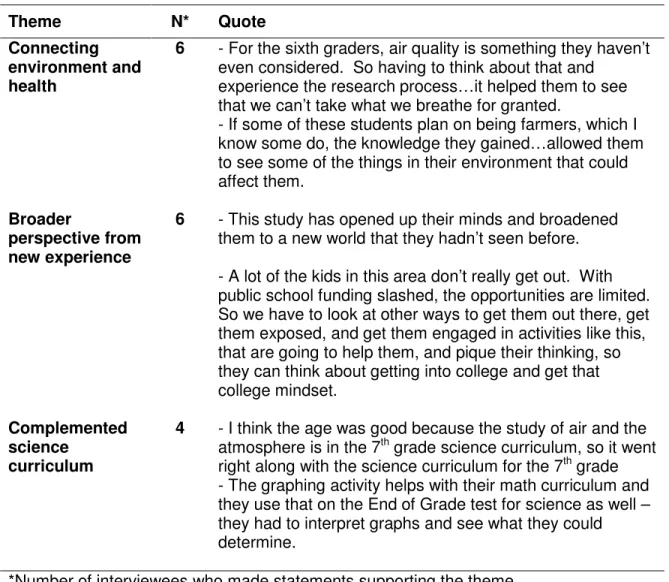
Principles, teachers, and school liaisons were asked about perceived benefits for students, teachers, and the broader community, as presented in Table 3.3. Only themes supported by at least two interviewees are included, ordered from most frequent to least frequent mention.
The study was positively reviewed by all of these stakeholders and the benefits cited were profuse and broadly supported. Nine of 13 interviewees (and 100% of
Table 3.3. Benefits of Participation for Students
Theme N* Quote
Enjoyed study participation
9 - That experience was a totally meaningful thing. They enjoyed it, meeting professors, especially seeing the instruments used to test air quality; that was the biggest thing. They got a thrill from that.
- The students really enjoyed the activity based on what I saw. I’ve been around the students about a year now and this is the stuff that will get these kids above that curve and doing what they need to do.
Increased interest in science & research
8 - A lotof kids hate science, it’s just too hard and they can’t figure it out…being involved in with the study, they realized that it was not all completely dry, bland stuff, that it could be interesting
- They asked more questions in class outside the study. Questions like, “Are there other things that people can do like this study? What other studies have been done?” Hands-on
learning
7 - Kids will gravitate toward anything hands on and using visual tools, something they can touch, feel, manipulate. - With all the hands-on activities they did, it certainly made it much more meaningful to them and gave them something concrete to experience.
Reinforced basic scientific skills
7 - The data recording, having them keep track, reading their instruments, making sure they’re in the right place in their diaries, recording the data appropriately, all this is really important for these kids because they are so weak in these areas.
- The whole scientific method was reinforced and the steps of following the scientific method. They were actively involved in gathering the data and then when you showed them the graphs that gave them practice interpreting findings, so they really could see the scientific method in action.
Exposure to technology and scientific instruments
7 - Students wanted to check the instruments to see what the air quality was…this let them see how the data were
handled and how things were measured.
- They are attracted to things that 1) they haven’t seen before, 2) are electronic, and 3) information that can be downloaded to a computer. The study used peak flow meters and brought in laptops to demonstrate downloading and show the results. It was important to see all the
Theme N* Quote Connecting
environment and health
6 - For the sixth graders, air quality is something they haven’t even considered. So having to think about that and
experience the research process…it helped them to see that we can’t take what we breathe for granted.
- If some of these students plan on being farmers, which I know some do, the knowledge they gained…allowed them to see some of the things in their environment that could affect them.
Broader
perspective from new experience
6 - This study has opened up their minds and broadened them to a new world that they hadn’t seen before. - A lot of the kids in this area don’t really get out. With public school funding slashed, the opportunities are limited. So we have to look at other ways to get them out there, get them exposed, and get them engaged in activities like this, that are going to help them, and pique their thinking, so they can think about getting into college and get that college mindset.
Complemented science
curriculum
4 - I think the age was good because the study of air and the atmosphere is in the 7th grade science curriculum, so it went right along with the science curriculum for the 7th grade - The graphing activity helps with their math curriculum and they use that on the End of Grade test for science as well – they had to interpret graphs and see what they could determine.
*Number of interviewees who made statements supporting the theme
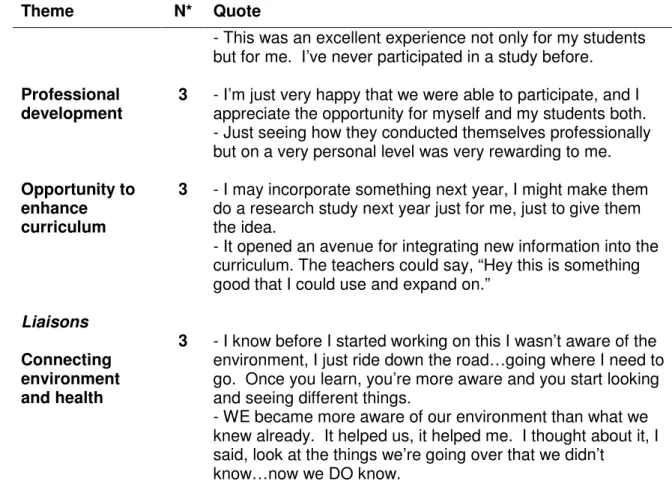
We also asked about benefits experienced by collaborators who were not research participants (Table 3.4). Teachers and principals appreciated the opportunity to interact with the research team and consider new ways to supplement their
curriculum. Liaisons cited many individual benefits, but one cited by multiple liaisons was an increased awareness of the connection between the environment and health.
Table 3.4. Benefits of Participation for Teachers and Liaisons
Theme N* Quote
Teachers
Theme N* Quote
- This was an excellent experience not only for my students but for me. I’ve never participated in a study before.
Professional development
3 - I’m just very happy that we were able to participate, and I appreciate the opportunity for myself and my students both. - Just seeing how they conducted themselves professionally but on a very personal level was very rewarding to me. Opportunity to
enhance curriculum
3 - I may incorporate something next year, I might make them do a research study next year just for me, just to give them the idea.
- It opened an avenue for integrating new information into the curriculum. The teachers could say, “Hey this is something good that I could use and expand on.”
Liaisons
Connecting environment and health
3 - I know before I started working on this I wasn’t aware of the environment, I just ride down the road…going where I need to go. Once you learn, you’re more aware and you start looking and seeing different things.
- WE became more aware of our environment than what we knew already. It helped us, it helped me. I thought about it, I said, look at the things we’re going over that we didn’t
know…now we DO know.
*Number of interviewees who made statements supporting the theme
Each interviewee was asked about drawbacks of participating (Table 3.5). Most said that there were no drawbacks to participating. Two interviewees mentioned that the study activities made classroom management more challenging, but that participating was still a positive experience.
Table 3.5. Drawbacks of Participation
Theme N* Quote
None observed 7 - With our 8th graders that I had that year, we gave them their binders, they completed it in a timely fashion, and it didn’t affect our studies that we had to do.
- There’s absolutely nothing I can think of as a drawback because of how it was set up. It was done very