MASTER THESIS
Emmanuelle HelbertCreativity in crisis:
creative climate of failing startups
How does crisis influence the creative climate of failing startups?
Technical University Berlin
MSc. Innovation Management and Entrepreneurship
University of Twente
MSc. Business Administration
Prof. Dr. Katharina Hölzle, MSc. Frederik Kraft
Chair of Entrepreneurship and Innovation Management
Prof. Dr. Rainer Harms
Faculty of Behavioural, Management and Social Sciences
“
Success is going from failure to failure, without losing enthusiasm.”
- Winston ChurchillAcknowledgements
I would first like to thank my UTwente thesis supervisor PD. Dr. Rainer Harms for the useful feedback, remarks and engagement throughout this master thesis. Furthermore, I would like to thank my TU Berlin thesis supervisors Prof. Dr. Katharina Hölzle and MSc. Frederik Kraft for the inspiration of the topic and supporting me on this journey. To the three of them I am also grateful for their patience in the process.
I would also like to thank the participants in my survey, who have shared with me their time and experience in the still stigmatized context of startup failure.
ABSTRACT
Entrepreneurship is a bumpy road and 9 out of 10 new ventures fail. At the same time, it has long been understood that creativity is an important determinant of a startup’s performance and success. Previous work has looked at the role of the work climate on the creativity of organization but it has remained static and failed to address the specific case of startups. This study focuses on understanding the processes of failure by looking at how crisis influences the creative climate of new venture teams. Using semi-structured interviews, members of a failing startup were asked about their perceptions of their work environment before and during the crisis. From this we could derive the creative climate profile of each phase. In the success phase, the startup showed high intensity of climate factors favorable to creativity and low levels of factors detrimental to creativity. In the failure phase it showed opposite values. In particular, control and time pressure were the most recurring issues expressed by the participants. The results of this research clearly show that climates are dynamic and that crisis induces behaviors detrimental to a climate for creativity. These insights can help founders get awareness of their response to crisis and regain some control over the failure process.
TABLE OF CONTENTS
ABSTRACT ... I
TABLE OF CONTENTS ... II
List of tables ... IV List of figures ... IV
INTRODUCTION ... 1
1. Research goal and research question ... 1
2. Purpose of research and contribution ... 2
3. Outline of the thesis ... 2
CHAPTER 1: THEORETICAL BACKGROUND ... 4
1. Introduction ... 4
2. Creativity in startup teams ... 5
3. Work environment for a creative climate ... 11
4. Work environment in failing organizations ... 20
5. Organizational response to crisis ... 22
6. Summary and conceptual framework ... 23
CHAPTER 2: METHODOLOGY ... 26
1. Research design ... 26
2. Interview guide ... 27
3. Data sample ... 30
4. Data collection ... 31
5. Data analysis ... 32
CHAPTER 3: RESULTS ... 35
1. Creative climate before the crisis ... 35
2. Creative climate during the crisis ... 39
3. Experienced impact of crisis on creativity ... 43
CHAPTER 4: CONCLUSION AND DISCUSSION ... 49
2. Review of the framework ... 53
3. Implications for research and practice ... 56
4. Limitations and recommendation for future research ... 57
5. Conclusion ... 58
BIBLIOGRAPHY ... i
APPENDIX ... 1
1. List of definitions ... 1
2. Interview guide ... 3
List of tables
Table 1: Summary of antecedents of a creative climate ... 24
Table 2: Interview participants ... 31
Table 3: occurences of reference to themes during case analysis ... 33
Table 4: creative climate factors coded as experienced more before or during the crisis ... 34
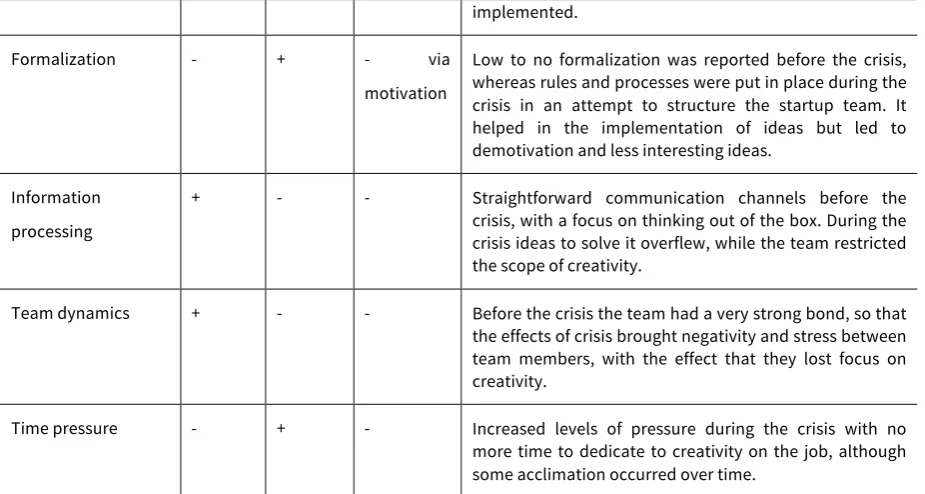
Table 5: summary of creative climate factors before/during crisis and their perceived effect on creativity ... 50
List of figures
Figure 1: Illustration of the relationship between creativity and innovation based on Anderson et. al (2004) ... 8Figure 2: Illustration of the components of group creativity ... 9
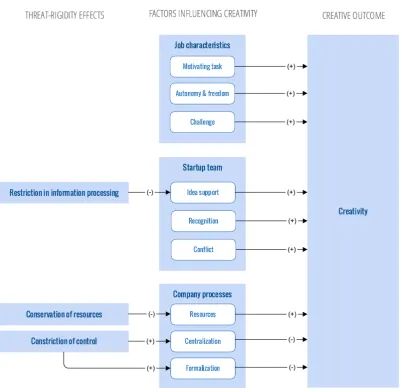
Figure 3: Work environment factors influencing the creative climate ... 19
Figure 4: Model of organizational response to threat (Staw, Sanderlands & Dutton, 1981) ... 23
Figure 5: Conceptual framework of the effect of crisis on creative climate ... 25
Figure 6: Creative climate before the crisis ... 51
Figure 7: Creative climate during the crisis ... 53
INTRODUCTION
1.
Research goal and research question
The topic of team creativity has recently come to the forefront, as organizations and specifically startups inevitably tend to rely on teams to develop their innovative activities (Anderson et al., 2014). Thus, creativity is acknowledged as a necessary trait for startup founders, whether it is used to craft ingenious strategies or recognize opportunities. It is also part of the overall quality of the entrepreneurial team, which is strongly connected to venture success (Chen, 2007). But when being creative in itself is not an easy task, doing so as a group can be even more challenging. In many ways, the team is seen as hindering creativity via social inhibition and cognitive interference (eg: social loafing, production-blocking). On the other hand, it also has potential to increase creative performance given the right social and cognitive stimulation (eg: upward comparison, divergence) (Anderson et al., 2014). Therefore, creating the right climate for creativity is a point of concern for organizations and startups alike.
Although leaders can influence the creative climates of their companies (Shalley & Gilson, 2004), they might need to adapt to circumstances. Thus, climates are not static but evolve with the situation of the venture. When all goes well, it might be easier to engage a creative climate, but what happens when a crisis arises? At the time when the startup needs creativity the most, can entrepreneurs manage to foster it or would they give in to pressure?
The purpose of this study is to investigate the creativity climates of startup teams in failure. It will include a theoretical overview of the topics of creativity climate and startup failure as well as an empirical study to explore the creative climate profiles of those startups in crisis. In its broad context, this study aims at understanding the differences in work environment of once successful and now failing startups and the resulting climate for creativity. The question and sub-questions that will guide this research are as follows:
RQ: How does crisis influence the creative climate of failing startups?
2.
Purpose of research and contribution
Considering the high failure rate of early stage startups, it is important to identify the processes for success or failure. Venture capitalists and founders alike would benefit from a deeper understanding of those mechanisms that support the long-term success of a startup. Even more relevant in the first phase of venture creation is the ability to avoid pitfalls and mistakes that could lead to the firm’s downfall.
There is a consensus on the importance of creativity for startup survival and success (Anderson et al., 2014; Van Praag & Versloot, 2008) as well very strong support for the influence of climate and group processes on team innovativeness. For example, a recent meta-analysis validated Anderson & West's (1998) Team Climate Inventory factors: vision, participative safety, task orientation and support for innovation (Hülsheger, Anderson, & Salgado, 2009). But while the current academic literature informs on the factors that foster team creativity, the studies have mostly looked at the link between work environment and creativity at a fixed point in time. They might not be adapted for the specific case of startups evolving though dynamic phases of change. In particular, there is still a gap in understanding the mechanisms through which negative circumstances impact the creative climate and the consequences it might have for furthering or getting out of failure.
This study attempts to contribute to the creativity and entrepreneurship literature by looking at the creative climates of failing startups, that is, how the team members of such companies perceive their work environment and how it influences their creativity (Amabile et al., 1996). More precisely, this research aims to learn about the differences in the creative climate between positive and negative circumstances. Understanding these differences through the perspective of the startup team could inform on the role of circumstances on company creativity.
3.
Outline of the thesis
CHAPTER 1: THEORETICAL BACKGROUND
1.
Introduction
Starting from the premise that “most new ventures fail” (Timmons & Spinelli, 1994), this study investigates what happens to the creative climate in startups under pressure. As creativity is a key prerequisite for innovation, the focus of this study is to explore the perceived differences in the work environment between positive and negative circumstances, and the resulting creative climates.
As startups are a specific type of organization, the literature review starts by describing the startup domain, defining the boundaries of failure and discussing the specificities of startup teams. Innovation in itself is the organizational goal, but it always starts with creativity, thus the literature review continues with a difference between the two and their relationship. The sum of individual creativities results in organizational creativity and the aggregation of attitudes and behaviors make up the organizational climate. Several factors in the work environment can serve to support the creative behavior by acting as conducive or obstructive influences. These can be grouped in factors relating to the job characteristics, the startup team as well as the company processes. These are summarized in a list of antecedents including their effect in Table 2.
2.
Creativity in startup teams
2.1.
Building blocks
2.1.1. Systematic literature review
In order to identify the research gap, a systematic literature review has been conducted on the topic of creative climate in startup teams. This method provides the advantage to ensure quality and contributes to offer a transparent and replicable process, hereby minimizing bias (Tranfield, Denyer, & Smart, 2003).
The databases searched in this review were the ones deemed relevant for entrepreneurial, creativity and organizational research: Business Source Elite, EconLit, Emerald Insight, JStor, LexisNexis, Oxford Journals, PsychArticles, Psychology and Behavioral sciences collection, SAGE Journals online, Science Direct, Springer Link, Wiley Online Library. More general databases were searched as well: Web of Science, Scopus and Google Scholar.
The search terms used included words to describe the creative climate in startups (“creative climate*” OR “creativity” OR “innovation*” OR “creative culture”) in conjunction with words to describe startups (AND “startup*” OR “start-up*” OR “new venture*” OR “organization*” OR “organisation*” OR “firm*” OR “team*”). Relevant records were retained from the social science, humanities and business administration areas, with a date between 1980 and 2016. A first screening was made to remove duplicates and select relevant publications by looking at the titles. A second screening included reading the abstracts to ensure that the papers would cover either (1) creativity factors and/or (2) the context of startup teams. A final total of 47 sources have been included in the review on creative climate in startups.
Identification Records identified though database searching 237
Screening Records after duplicates removed 189
Eligibility Full texts assessed for eligibility 104
Included Studies included in qualitative synthesis 47
Table 1: Systematic review report, adapted from PRISMA (Moher, Liberati, Tetzlaff, & Altman, 2009)
2.1.2. When is a firm considered a startup?
idea that enterprise growth follows life cycles was laid by the groundwork of Steinmetz (1969) and Griener (1998): a company passes through several identifiable stages as it ages, facing different challenges each time. While there is variation in the number of phases identified across authors, there seems to be a consensus around three main phases: start, growth and maturation. In particular, the starting phase is characterized by few years into business, few employees and limited revenues. Levie & Lichtenstein (2010), who reviewed 104 stage model frameworks and propose a new dynamic vision of SME growth, which, in the case of startups would involve the activities of market introduction, customer acquisition and setting up of organizational procedures.
Therefore, for the purpose of this research, startups will not be defined by conditions of age or size, as these will vary depending on context and industry. Rather, the definition of Klotz, Hmieleski, Bradley, & Busenitz (2013) will be retained, so that a startup is understood as “a firm that is in its early stages of development and growth. In general, such firms are in the process of bringing their initial products/services to market, forming a customer base, and putting into place organizational processes and procedures.” (p.227).
2.1.3. The specificity of startup teams
Startup teams are not like any teams as they have a deeper impact on the company and its future. They are also referred to in the literature as founding teams, venture teams, or entrepreneurial teams. Kamm, Shuman, Seeger, & Nurick (1990) looked at teams in the process of venture creation and described them as being comprised of two or more people participating actively in the development of the company in which they have invested a significant financial interest.
The criterion of actively contributing to the development of the venture is important, as it would else allow including in the definition individuals like investors. They might likely have high financial stakes in the startup and advise to some extent; however, they have no involvement in the firm’s operations (Cooney, 2005). On the other hand, the focus on “financial interest” limits the definition of startup teams, as it excludes team members having an important leadership position, without holding shares (Klotz, Hmieleski, Bradley, & Busenitz, 2013). Klotz et al. therefore advise to define new venture teams
team members that actively participate in both the development and implementation of the evolving strategy of new ventures (e.g., setting the vision and mission, acquiring resources, recruiting employees).” (p.227-228).
Startup teams are unique in the way that they are the ones to drive their company through its development as well as shape the new organization. In particular, although some ventures will have an appointed leader, all members of the team have to exert leadership as they have no processes to fall back on (Ensley, Hmieleski, & Pearce, 2006). Thus, they are the ones responsible to create policies, processes and a culture for their new company (Klotz et al., 2013). As such, they enjoy much more discretion in their actions than regular teams (Hambrick & Abrahamson, 1995) and this includes the degree and extent to which the startup will show creativity.
2.2.
Creativity in startups
2.2.1. Creativity as a prerequisite to innovation
As the terms innovation and creativity have often been used interchangeably, it is important to clarify the distinction between the two. Amabile (1988) notes that “creativity is the most crucial element of organizational innovation, but it is not, by itself, sufficient” (p.125). Innovation is the outcome of employees’ personal creativity on the workplace, fostered by organizational mechanisms that promote it (Bharadwaj & Menon, 2000). So when creativity will make connections in the new way that transform into new ideas for the workplace, innovation will have to turn those into a business reality, focusing on providing direction and organization (Mauzy, Harriman, & Harriman, 2003). Therefore, a creative idea will only turn into an innovation if the individual or the organization takes concrete steps to make it happen.
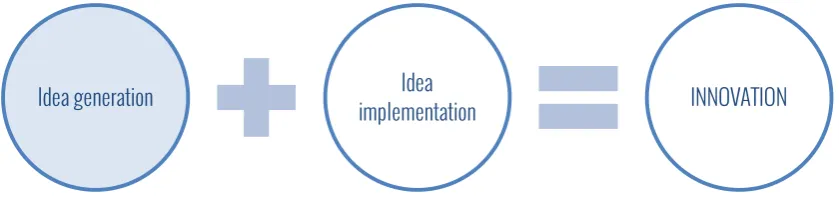
The most integrative definition of both terms has been offered by Anderson et al. (2014):
Figure 1: Illustration of the relationship between creativity and innovation based on Anderson et. al (2004)
As innovation is important for startups success, the necessary position of creativity in this process makes it the chosen focus for this study, as highlighted in color above.
2.2.2. Creativity in organizations
Creativity in an organizational context takes into consideration the individual as well as influences from the environment. The research on creativity originally focused on the individual and it is indeed undeniable that ideas originate from people’s minds, so that an organization is only as creative as its individuals (Anderson, 1992). While the individuals are at the core of the creative process, the earlier focus on personal characteristics led to the mystification of the lone genius, exceptional thinker divergent from the societal norms (Montuori & Purser, 1995).
As the individuals are embedded in a certain environment, they are also impacted by it, which in turn has an effect on their creative outcome. Several influential models are since then explaining creativity in the context of organizations, taking into consideration both the individual and environmental factors (Amabile, Conti, Coon, Lazenby, & Herron, 1996; Anderson & West, 1998; Ekvall, 1996). The most accepted definition of creativity in an organizational context has been given by Amabile et al. (1996): “a product or response [that] will be judged as creative to the extent that (a) it is both a novel and appropriate, useful, correct or valuable response to the task at hand, and (b) the task is heuristic rather than algorithmic” (p.35).
2.3.
Group creativity
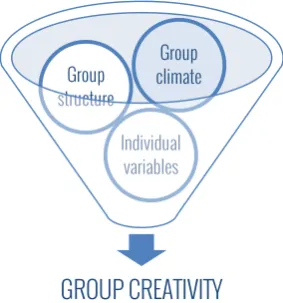
Startup teams are also responsible for their creative output. Particularly in innovative environments, they often have to generate ideas collectively. Group creativity is a complex phenomenon under the influence of several variables: group structure, member individualities, as well as situational variables. They will all interact together to form group creativity as illustrated in Figure 2.
Figure 2: Illustration of the components of group creativity
2.3.1. Individual member variables
Group creativity is influenced by the individual creativity of its members. Thus, not all people are equally creative and their propensity to be is function of several factors. It is at the intersection between personality factors, antecedent conditions, knowledge, cognitive style and abilities, motivation, as well as contextual and social factors (Woodman et al., 1993). Thus, some personality traits have been linked to individual creativity: autonomy, independence of judgment, broad interests and sense of self as creative (Barron & Harrington, 1981; Gough, 1979; Shalley & Gilson, 2004). In her Componential Theory for Creativity in the workplace, Amabile also identifies knowledge (domain-relevant skills), cognitive abilities (creativity-relevant skills) and (intrinsic) motivation as interacting factors leading to creativity (1988).
Domain-relevant skills refer to the factual knowledge and technical skills that an individual has in a particular domain. Those skills depend on people’s own innate perceptual, cognitive and motor abilities, which are then influenced by formal and informal education in the domain. “Domain-relevant skills constitute the individual’s ‘raw material’ to productive creativity” (Amabile, 1988, p. 131). But all the factual and technical knowledge will not result in creativity until the individual also has the adequate cognitive style allowing for exploration and out-of-the box thinking. Thus creativity-relevant skills include the capacity to understand complexities and break from mental sets while problem solving. Subsequent research has supported Amabile’s original reasoning that creative problem-solving can be trained and she even later renamed this factor creativity-relevant processes (Zhou & Shalley, 2003).
GROUP CREATIVITY
Individualvariables Group
structure
Finally, intrinsic motivation represents the person’ own interest and satisfaction in performing a task. It is the most prominent feature in the componential theory of creativity as it implies that even when an individual shows high potential for creativity by disposing of all the necessary skills, there needs to be a willingness to perform the creative task (Zhou & Shalley, 2003).
2.3.2. Group structure
Group structure comprises group diversity and group cohesiveness, whereby diversity refers to the extent to which individuals of the group are similar; and group cohesiveness represents the capacity of the group members to act in a unified way. If the group is composed of rather heterogeneous members, it is supposed to lead to greater group creativity. Thus, the “value in diversity” hypothesis proposes that thanks to members of diverse backgrounds and skills, the group will generate more diverse perspectives and doing so will improve the creative output (Shalley & Gilson, 2004). Groups with heterogeneous members are able to consider more nonobvious alternatives and generate better ideas both in quantity (McLeod & Lobel, 1992) and quality (Watson, Kumar, & Michaelsen, 1993).
On the other hand, group diversity also has its ambivalence. While member heterogeneity clearly lead to higher levels of creativity, they also have more difficulty in developing shared mental models in order to judge the value of the ideas generated (Mumford, Feldman, Hein, & Nagao, 2001). Those shared mental models are best shared among homogeneous groups, where it is easier to develop a group lens between similar individuals. Therefore, diversity can also represent an impediment in creating cohesiveness. In itself, the cohesiveness-creativity relationship is not linear but rather in an inverted U-shape: a certain amount of cohesiveness is necessary for the group to function, although too much will foster the emergence of norms that impede creativity (Woodman et al., 1993).
2.3.3. Group climate
are manifestations of a broader company culture. Fortunately for organizations a climate emerges from an organizational context and the latter can be shaped to favor the desired behaviors. Accordingly, this dictates that firms are able to create not any climate but rather a climate “for”: commitment, performance, creativity… according to the goal they want to achieve (Lepak, Liao, Chung, & Harden, 2006).
In the frame of this study, a creative climate will depict the team members’ perceptions of their work environment and how it influences their creativity (Amabile et al., 1996). It might be only one component for the overall group creative output; however, it is the one that stems from the working environment, whose influence is under study. Several frameworks and measurement tools have been built to assess creative climate in organizations and empirically supported (Amabile et al., 1996; Anderson & West, 1998; Hunter, Bedell, & Mumford, 2007; Isaksen, Lauer, & Ekvall, 1999; Mathisen & Einarsen, 2006). However, these tools were developed for and from more mature organizations with clear hierarchies and processes, which is not the case of startups. For the purpose of this study, they need to be adapted to the particular situation of new ventures.
The following chapter will present the relevant work environment factors for startup teams. From the previous chapter we have seen that leadership is spread among team members: they act as both supervisor and supervised, making supervisory factors redundant. Moreover, the names of the categories and content of the creativity climate frameworks may vary and some factors may not be found across all. After reviewing the main accepted models in the extent literature, the relevant influencing factors on creativity for startups have been divided into three distinct groups: job characteristics, the startup team and company processes.
3.
Work environment for a creative climate
3.1.
Influence of job characteristics
One level at which a climate can be influenced concerns the characteristics of the jobs that individuals will perform. Although they will impact each team member individually, the tasks performed will affect people’s feelings, attitudes and behaviors. Thus, tasks that generate motivation, autonomy and challenge are environmental factors that will contribute to foster a climate for creativity.
There are two types of motivation: extrinsic and intrinsic. People are extrinsically motivated when the task is only a means to achieve an external goal, for example financial rewards, avoid the threat of a deadline or an evaluation. People are intrinsically motivated when they perform the task for itself and find enjoyment, interest or self-actualization in it (Amabile, 1996). Because it is more tangible, extrinsic motivation can be more easily controlled by organizations, for example by using performance reviews or incentive schemes.
While there is a consensus on the positive effect of intrinsic motivation on creativity, there has been a less clear path regarding the role of extrinsic motivation. Initially, Amabile (1983) articulated her Intrinsic Motivation Hypothesis of Creativity in which she posited that extrinsic motivation would undermine creativity. It was supported empirically in several studies showing the negative effect of expected evaluation on creativity (Amabile & Pillemer, 2012). On the other hand, not all types of extrinsic motivation are equal. For example, controlling evaluation or close supervisor behavior will decrease creativity, whereas informational evaluation and developmental feedback will increase it, both via the mediating role of intrinsic motivation (Shalley, Zhou, & Oldham, 2004; Zhou, 2003). Nevertheless, across all field studies intrinsic motivation was always shown as positively affecting creativity, therefore this is the antecedent that will be retained for the purpose of this study (Amabile & Pillemer, 2012).
3.1.2. Autonomy and freedom
Autonomy and freedom refer to the degree of choice in how and when people perform their work. When individuals enjoy job autonomy, they “have discretion […] in scheduling their work, and in determining the procedures to be used in carrying it out” (Hackman & Oldham, 1975, p.162). Freedom on the job refers to the degree of independence in behavior that people can exert, including making judgments and selecting which tasks to work on (Volmer, Spurk, & Niessen, 2012).
Autonomy and freedom have been strongly empirically supported as an antecedent to creativity (Shalley & Gilson, 2004).
3.1.3. Challenge
The right amount of challenge on the job can be a strong motivator and foster creativity. The Oxford English Dictionary defines challenge as “a task or situation that tests someone’s ability” (“Challenge,” 2015). In the context of creativity in organizations, a challenging task will be difficult enough to stimulate without discourage the employee (Amabile, 1988). High levels of autonomy, as well as significance, skill variety, identity and feedback characterize them (Oldham, Cummings, Academy, & Jun, 1996). They contribute to increase the excitement and intrinsic motivation about the task, and therefore more likely to foster creativity. Moreover, they are usually more heuristic and require creativity to perform them in comparison to more simple or monotonous jobs. Several empirical studies have supported this relationship, where a sense of urgency inherent to the task, intellectual challenge and job complexity all resulted in increased creativity (Amabile, 1988; Göran Ekvall, 1996; Oldham et al., 1996).
Ironically, the challenge in shaping a challenging task is the fine line that separates it from negative pressure. Excessive workload or time pressure can be counter-productive, especially when they are perceived as a way to control the individual and decrease their autonomy. In that case, it is more likely to negatively influence intrinsic motivation, thus hindering individual creativity (Amabile, 1988).
towards their work. However, employees in firms rarely work on their own and the team also has some effect in creating or hindering a climate for creativity.
3.2.
Influence of the startup team
As the creative individual is not acting in isolation but is rather influenced by the surrounding environment, this includes the role played by team members. Thus, the efforts made to foster creative thinking in employees can be canceled if those ideas are never voiced out and discussed. Three important team dynamics will support or hinder their expression: participative safety, conflict and recognition.
3.2.1. Idea support
Across the literature, the construct of idea support has also been referred to participative safety”, “trust and openness”, “psychological safety”. Overall, it refers to the way new ideas are being handled within the team.
In a supportive climate for creativity, team members will actively listen to each other and provide constructive feedback (Göran Ekvall, 1996; Isaksen et al., 1999). This creates a positive atmosphere where there is space to take initiatives and come up with new ideas, therefore exposing employees to more unusual concepts; which has been shown to positively impact creative thinking (Parnes & Noller, 1972). Moreover, constructively challenging ideas can enhance the overall perception of challenge on the job, leading to creativity by increasing intrinsic motivation (Amabile et al., 1996).
On the other hand, when the support for ideas is low, suggestions will be constantly turned down or met with negative responses such as raising obstacles or pointing fingers (Göran Ekvall, 1996; Isaksen et al., 1999). Team members need to feel emotionally safe in their environment in order to express their ideas. When there is a strong level of trust, people perceive their environment as non-threatening and dare put forward their own opinions and ideas feeling that they will not be judged (Anderson & West, 1998; Edmondson, 1999). In essence, the participation of team members to decision-making through exerting influence, interaction and information sharing is more likely to lead to developing new ways of working (Anderson & West, 1998; Shalley & Gilson, 2004).
3.2.2. Recognition
but could also be promotions, awards… Nevertheless, they often trigger extrinsic motivation in the recipient (Shalley & Gilson, 2004). As discussed in a previous chapter, the extrinsic motivation linked to expecting a reward has a limited impact on the creative performance of an individual (Amabile, 1996; Amabile, 1997). However, other research argues that rewards can be positive for creativity given that they fulfill certain requirements (Eisenberger & Armeli, 1997).
Important is to consider what behaviors are being rewarded and how they are given. Thus, if they are used as a way to inform company members on what is valued, rewards are more likely to trigger intrinsic motivation and as a result creativity. Especially higher levels of creativity occur, when rewards are awarded as a recompense of competence as well as creative accomplishments. This means that distributing rewards needs to be balanced on a fine line between giving too many or too less. When individuals feel that every action they undertake is tied to a reward, they are less likely to take risks and implement new ideas. But they need to see that creative efforts are awarded so that they know that it is valued (Amabile, 1988).
Coming maybe as a precedent to rewards, appraisal is a result of the evaluation of one’s work. A lot of studies have investigated the role of valuation and feedback on creativity and the overall consensus is that constructive and informational feedback is beneficial, while controlling of punitive feedback is detrimental (Shalley & Gilson, 2004). Thus, when individuals expect an informational evaluation, both their intrinsic motivation and their creativity showed higher levels (Shalley & Perry-Smith, 2001). This effect is also particularly high when the feedback includes helpful information for the individual to learn and develop themselves on the workplace (Zhou & Shalley, 2003). Thus recognition can be expressed in several ways. Its contribution to fostering a creativity climate in an organization is when the rewards and appraisal are directed to promote creative behavior. Additionally, the feedback should be constructive and informational in order to trigger higher levels of intrinsic motivation and creativity.
3.2.3. Conflict
experiences and knowledge” (p.108). They consider this form of conflict as beneficial to creativity in the way it allows for different opinions to be heard and challenged. An organization where a lot of debates happen is a sign that people feel it is possible to challenge the status quo (as opposed to the authoritarian firm).
However, there is a fine line not to cross until the conflict becomes detrimental and that is when it shifts from ideas to person. Interpersonal conflict is often cited in the literature as a negative antecedent to creativity and performance. It is especially because of the emotional nature of conflict between team members that hinders creativity. People then focus on the “warfare” going on, exhibiting behaviors such as plotting, setting up traps and slandering their opponents (Ekvall, 1996). All this contributes to creating a climate of threat and distrust directly damaging participative safety. Consequently, team members will not feel safe expressing and discussing ideas, which is undermining team creativity. In a research on successful and unsuccessful innovation projects, it was found that harmony was experienced in 52% of successful projects and severe disharmony in 68% of unsuccessful ones (Souder, 1988).
This goes to support the fact that team dynamics plays an important role to foster creativity. In groups where there is emotional safety, people feel trusting and safe to express their ideas, which can then be acknowledged and discussed. Moreover, it is positive for creativity when the ideas themselves are being debated, proof that the team is willing to challenge status quo. However, interpersonal conflict comes as a detriment to team creativity by bringing in distrust and a threatening environment, shutting down the possibility of creativity to express.
Participative safety is very important to allow the expression of ideas. Such safe environments are characterized by trust and openness, where ideas are listened to and discussed. Thus, a debate of ideas is beneficial for creativity; however, interpersonal conflict will suppress idea initiation and transfer the energy away from creativity. Lastly, recognition plays a role to promote creative behavior by rewarding it, as well as increases intrinsic motivation.
3.3.
Influence of company processes
found in the literature are the presence of resources as well as the degree of bureaucracy experienced in the company.
3.3.1. Resources
As people come up with new ideas, they require having the necessary resources as hand to try them out. These include a broad range of elements: knowledge, network, funding, material, personnel, data or information. In her research on antecedents to creativity among managers, Amabile (1988) found that sufficient resources was ranked as the third most important factor to foster creativity and lack of resources the sixth most important factor to hinder creativity.
Whether some resources should always be kept aside ready to be used by the next innovation project is still subject to discussion. Such resources are called “slack” and can be considered as anything beyond the minimum level of resources allocation for the organization to function (Damanpour, 1991). While some studies have shown the positive effect of having slack resources for organizational innovation (Greve, 2003), others have found evidence that managers would still spend less on innovation in certain circumstances, for example in declining companies (Latham & Braun, 2009).
Nevertheless, it remains clear from the literature that when the organization imposes strict resource restrictions on its teams, it will limit the extent to which employees can accomplish their work, let alone implement creative ideas. Additionally, research has shown that resource allocation is directly related to the levels of creativity expressed in a project (Damanpour, 1991).
3.3.2. Bureaucracy
Another organizational structure that impacts creativity is the degree of bureaucracy experienced in the company. In general, more rigid organizations will not encourage their employees to come up with and try new ideas, whereas more flexible ones will allow more space for creativity (Shalley & Gilson, 2004). Thus, bureaucracy is a way of controlling employees’ behavior and is expressed in two dimensions: centralization of decision-making and formalization of processes (Hirst, Van Knippenberg, Chen, & Sacramento, 2011).
need to be validated by several superiors with low involvement of the employees. This has an impact on creativity in several ways: (1) it reduces individual autonomy and intrinsic motivation (Amabile, 1996) and (2) it impedes commitment to the decision and communication flows that would support the implementation of the idea (Pierce & Delbecq, 1977).
Formalization relates to the standards in place regarding company processes. The more rules in the organization, the less room employees have to test new ways of working. Thus, formalization defines the roles that individuals are supposed to fulfill and the required behaviors. In doing so, it will rigidify those behaviors and suppress more experimental ones (Shepard, 1967). On the other hand, research has also shown that some degree of formalization is beneficial to the adoption and implementation phases of ideas (Pierce & Delbecq, 1977). However, it also confirmed that formalization was detrimental to idea initiation, therefore creativity.
Bureaucracy, through centralization of decision-making and formalization of processes acts as an inhibitor to creativity. By controlling individuals, they decrease intrinsic motivation and autonomy, two factors that support creativity. They also prevent employees from thinking out of the box and getting out of routines, making them less likely to initiate ideas.
Research has shown that the organization can influence creativity through resources and bureaucracy. When empowered in the company, employees will be more motivated and have the ability to test new ways and experiment; using the support of sufficient resources as well as flexible systems to do so. Thus, rather decentralized and deformalized organizations are able to provide enough autonomy and freedom to the individuals for them to be creative.
3.4.
Model of creative climate factors
not too much that pressure would shut down the cognitive processes necessary to creativity.
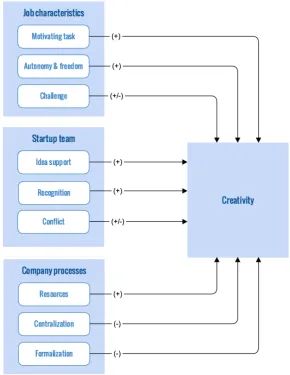
[image:25.595.156.447.344.720.2]The team contributes to a creative climate in three ways: by fostering idea support, constructive conflict and recognition. Only if individuals feel safe to voice out their opinions without the fear of being judged will they be able to express the ideas that come to them. Some conflict of ideas is beneficial to creativity as it promotes debate and a diversity of views; however interpersonal conflicts are detrimental to creativity, as they only serve to increase suspicion and threat, conditions that decrease the perception of safety and therefore the potential for individuals to express their ideas. On the opposite, recognition in the form of rewards and appraisal, not only indicate that creativity is desirable in the company but also stimulate intrinsic motivation through informational, constructive feedback.
In terms of company processes, the organization needs to function as an enabler of creativity. This is achieved by allocating resources for innovation as well as a flexible structure. Thus, decentralized and deformalized organizations can offer enough autonomy and freedom for their members to come up with new ideas.
Altogether these factors on the job, team and company levels will contribute to shape a climate that is able to most foster creativity in the workplace, as summarized in Figure 3.
4.
Work environment in failing organizations
Even if the ideal creativity climate can to some extent be influenced by the team (Mathisen & Einarsen, 2006) it is also influenced by the circumstances, positive or negative, that the firm is undergoing. In the case of startups where creativity and innovation are a factor of survival, sustaining a creative climate might be even more critical. However, crisis phases with a pending failure will have an impact on the overall work environment of the venture and affect the very factors that are fostering creativity.
4.1.
Failure
A first possible way to consider failure is from an objective standpoint, for example bankruptcy, insolvency, closing or significant decrease of activities (Ooghe & De Prijcker, 2008). In his systematic literature review on venture failure, Pretorius (2009) found that failure has also been understood around two different perspectives: decline and failure. When in decline, the venture’s “performance worsens (decreasing resource slack) over consecutive periods and it experiences distress in continuing operations” (p.10). In this state, the firm is at best underperforming, at worst in deep crisis. There is still a possibility to continue its operations, but only given significant changes. Given that decline is a situation where the survival of the company is at stake, it also resonates with the definition of crisis: an “event that threatens the viability of the organization and is characterized by ambiguity of cause, effect, and means of resolution, as well as by a belief that decisions must be made swiftly.” (Pearson & Clair, 2012, p. 60).
the difference to closure should be pointed out. Thus, some closures can happen at times when the owners consider their company successful and under circumstances other than failure (Bates, 2005).
Indeed, failure can also be considered from a subjective standpoint, including instances of failing to achieve an objective, deviation from goals or unacceptable performance (Cannon & Edmondson, 2005; Kow, 2004; McKenzie & Sud, 2008). This subjective definition of failure can be summarized as “the entrepreneurs’ dissatisfaction of the venture’s progression” (Gulst & Maritz, 2011, p.437). Although in itself problematic to define boundaries of venture failure, this understanding is relevant for the scope of this study, since it is looking at the personal experiences and insights of entrepreneurs.
As an umbrella term over decline and failure, the operational definition of crisis that is retained for this study is a contraction of the above. A crisis is a situation in which the viability of the company is threatened, the performance has worsened, the company is unable to attract funding and it experiences trouble in continuing to operate or cannot continue to operate under the current ownership.
4.2.
The effect of failure on the work environment
While not focused on new ventures, prior research has found some common changes affecting the work environment of organizations undergoing a crisis. Among those can be listed: decrease of communication and trust, increase in fear, rigidity and chaos (Amabile & Conti, 1999). Amabile & Conti (1999) explained these behaviors using the threat-rigidity theory of Staw, Sandelands, & Dutton (1981). This theory looks at the possible changes in the work environments of organizations undergoing a threat. Staw et al. (1981) define it as “an environmental event that has impending negative or harmful consequences for the entity” (p.502). Ventures undergoing a phase of decline or even failure will typically fit in this definition.
While exploring the changes in the work environment during downsizing, Amabile & Conti (1999) already used the threat-rigidity theory to explore the effect of downsizing on the aspects of work environments identified as influencing creativity. They found a significant decrease of all environmental stimulants to creativity and an increase of the organizational impediment to creativity. Thus, the behavioral changes induced by a threat to the vital interests of a company involve a restriction in information and a constriction in control known to be at the opposite of factors conducing to creativity (Amabile & Pillemer, 2012; Staw et al., 1981). Following their call for further research on the threat-rigidity effects on the creative climate, this is the main theory that will be used to look at the crisis component of the question under study.
5.
Organizational response to crisis
When a company experiences a threatening situation, it will react to the environmental change by adopting certain processes and response (Staw et al., 1981). Figure 4 summarizes the Staw et al. threat-rigidity organizational response model, which is divided into three categories: restriction in the information processing, constriction in control and efforts for greater efficiency.
The first effect described is restriction in information processing. The authors argue that the flow of information develops in a wave-like manner. At the onset of a crisis, communication channels are often overflowed as more information is researched in order to confirm the threat. After that point occurs an over simplification and a tendency to restrict alternatives to what is known and heavy reliance on prior knowledge. Search for information will then intensify once again when decisions are confirmed. Characteristic of this phase is the restriction of alternatives that the organization will look at in order to solve the problem: people stick to what they know and try to limit the amount of possibilities when taking a decision.
a failing startup it might mean that decisions will be performed top-down rather than collegially.
Lastly, the company will work towards conservation of resources by having a more intense focus on optimizing its resources. Especially when the crisis involves financial adversity, companies will increase cost cutting, individual accountability and tightening of budgets, resulting in an overall dominance of efficiency concerns.
[image:29.595.116.508.256.530.2]5.1.
Model of organizational response to threat
Figure 4: Model of organizational response to threat (Staw, Sanderlands & Dutton, 1981)
6.
Summary and conceptual framework
6.1.
Threat-rigidity effects on creative climates
resulting from the organizational response to threat leads to overall stronger bureaucracy. As seen in the paragraph on bureaucracy, this has a tendency to decrease autonomy and motivation as well as idea generation, which overall act to inhibit creativity. Finally, a focus on resources efficiency is likely to induce cost cutting and restrictions. However, we have seen that sufficient and adapted resources are important to enable people to express their creativity and implement their ideas.
6.2.
Conceptual framework
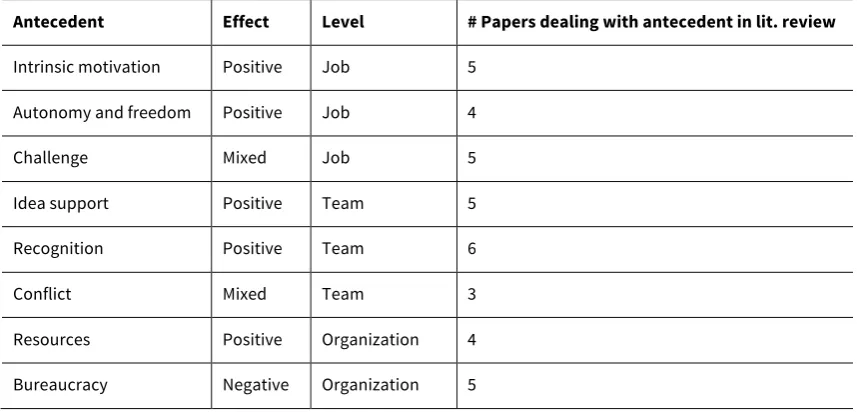
The chapter on creative climate has confirmed the importance of a creative climate for innovation and how it can be supported by factors from the work environment, summarized in the Table 2 below.
Antecedent Effect Level # Papers dealing with antecedent in lit. review
Intrinsic motivation Positive Job 5
Autonomy and freedom Positive Job 4
Challenge Mixed Job 5
Idea support Positive Team 5
Recognition Positive Team 6
Conflict Mixed Team 3
Resources Positive Organization 4
[image:30.595.84.513.325.531.2]Bureaucracy Negative Organization 5
Table 2: Summary of antecedents of a creative climate
formalization). Lastly, the restriction in information processing will negatively impact the perceived encouragement for creativity in the team.
[image:31.595.95.498.295.687.2]As a conclusion, a failure situation is likely to trigger rigidity in the work environment of a startup, which in turns might experience significant changes in the supporting or obstructing factors for creativity. Coming from this assumption, the purpose of this study is to investigate the experienced work environment of failing startups and the resulting creative climate. Thus, while the literature is well documented concerning the creative climate of organizations, it is too often considered as a static manifestation and do not account for changes across time (Amabile & Conti, 1999). This research will attempt to inform on the particular case of failing startups.
CHAPTER 2: METHODOLOGY
1.
Research design
This study aims at exploring entrepreneurs’ perceptions of the creative climate around them and the effects of negative circumstances on the work environment. The research questions are as follows:
RQ: How does crisis influence the creative climate of failing startups?
SRQ1: How do teams in failing startups experience their creative climate before the crisis? SRQ2: How do teams in failing startups experience their creative climate during the crisis? SRQ3: What was the perceived impact of crisis on the team’s creativity?
The choice of method to conduct a study will be informed by three criteria: the researcher’s philosophical perspective, the approach taken and the purpose of the study (Saunders, Lewis, & Thornhill, 2009). According to Guba & Lincoln (1994, p.105), “questions of methods are second to questions of paradigm”, which they define as the way the research sees the world, their choices being guided by their own ontology, epistemology and axiology.
In this case, the researcher is interested in understanding the subjective perceptions of the entrepreneurial teams. She assumes that the different individuals will make sense of the same situation and environment (failure) in a different way, thus having their own interpretation of reality. In this sense, she acknowledges a subjectivist ontology and an interpretivist epistemology. It encompasses both the views that (1) social phenomena come from the perceptions and resulting actions of individuals and (2) to understand those actions, it is necessary to explore the subjective meanings behind them (Saunders et al., 2009).
This study is looking into the effects of failure on creative climates in startups with a view to understand “what is happening, to seek new insights; to ask questions and to assess phenomena in a new light” (Robson, 2002, p.59). In this search for understanding, an exploratory research purpose is most useful (Saunders et al., 2009). Additionally, as the expected result of this thesis is to provide a characterization of the creative climates in failing startups, it is also descriptive, for which the object defined by Robson is “to portray an accurate profile of persons, events or situations” (2002, p. 59).
The subjectivist-interpretivist research philosophy combined with an inductive exploratory research call for qualitative methods. The exploration of context in our case makes the case study the most appropriate research strategy. Thus, Robson defines case study as a “strategy for doing research which involves an empirical investigation of a particular contemporary phenomenon within its real life context” (2002, p. 178). Moreover, case studies are recommended where a rich understanding of context and consequent processes is sought for (Morris, T., & Wood, 1991). Although it is broadly used for theory building (Eisenhardt, 1989), case studies are also worthwhile to explore existing theory (Saunders et al., 2009, p. 147).
2.
Interview guide
As they allow understanding personal experiences, in-depth interviews are the method of choice for qualitative research (Rubin & Rubin, 2011). For the purpose of this study, they have been used following the responsive interviewing model where “both interviewer and interviewee are treated as people, with feelings, opinions and experiences.” (Rubin & Rubin, 2011, p. 10). This interviewing style emphasizes on the conversational nature of the interview, a friendly tone and flexibility. As the people interviewed in this research are required to talk about a rather stressful experience (decline or failure of an organization that they have contributed to build), such technique was deemed appropriate in order to best gather the narratives and interpretation of the respondents.
2.1.
Semi-structured interviews
richness and insights of the information gathered, thus not allowing a proper exploration of the particular context of failure. On the other end, while unstructured interviews would support the emergence of new themes, it holds the risk that the respondent would omit to talk about some aspect of the climate without being asked about it. In this case, the semi-structured interview holds the best of both worlds by (1) being open enough to let new themes arise; and at the same time (2) providing a structure to follow so that all important themes are covered.
Flexibility and conversation are an important part of the responsive interview model, in order to achieve deeper insights (Rubin & Rubin, 2011). Therefore, open-ended questions were used to guide the interview. The authors of the responsive interview model recommended that these questions should lead to provide depth, detail, vividness, nuance and richness. Both spontaneous follow-up and probing questions will help in getting deeper understanding, additional details, contextual information and subtleties.
Aligned with the principles of the responsive interview model, the critical incident technique is a powerful tool to “gain understanding of the incident from the perspective of the individual, taking into account cognitive, affective, and behavioral elements.” (Chell & Pittaway, 1998, p. 56). A critical event is one that makes a significant contribution to a situation and is in practice retrieved by asking the respondent to tell a story about a specific experience. Not only does it allow an unrestricted range of answers, but it also lets people describe what is important to them (Gremler, 2004). As such, they can be identified after they happen, as they have had strong personal involvement (Webster & Mertova, 2007). This is particularly helpful in the context of this study, as respondents are also required to remember the climate before the decline of their startup.
2.2.
Concerns with validity and reliability
the decline situation, it is interesting to look at how they perceive their current situation compared to what they recall of a different state, including when the responses are a product of their own attitudes and attributes. Moreover, the creative climate in healthy companies is well documented, enabling a comparison of the recalled events to known frameworks. Additionally, sample selection and careful interviewing can be adjusted to minimize the possibility of poor recall by assuring that not too much time has passed since the time of recollection.
The validity challenges of the chosen research method concern the interview language and triangulation. For reasons of access, the interviews have been held in Germany. However, the whole study has been written and performed in English, and language of which neither the interviewees, nor the interviewer are native. As language is the primary vector to express meaning, telling narratives in another language than one’s own might restrict the richness and subtleties of the answers as well as influence interpretation. To limit that effect, the interviews have been led with individuals with strong English skills. Moreover, the interviewer is well acquainted with the German culture and language, so that she is able to get a closer understanding to the narratives.
In case study analysis, in-depth interviews are often triangulated with other sources of data like observation or surveys. While multiple data collection methods provide stronger results, it is also possible to use only some of these methods (Eisenhardt, 1989). In this particular case, triangulation is made difficult, as entrepreneurs in crisis are reluctant to let an observer in. Although checking the veracity of the narratives will be done by talking to other team members, the focus of this study in on the individual’s own perceptions. Their own interpretation of reality can hardly be crosschecked and are very relevant.
3.
Data sample
This study aims at exploring the experienced differences in creative climates in failing startup teams before and during a crisis. As argued previously, the research question formulated comes from a subjectivist-interpretivist research philosophy combined with an inductive exploratory research. In order to get informative cases, it is useful to perform purposive sampling (Neuman, 2005). Although the richness of information comes at the extent of the representativeness of the sample, this sampling selection fits the purpose of the study, namely gathering deeper insights into a situation (Patton, 2005). To further this approach, the population was chosen among firms that are homogeneous in their activities, strategy that is likely to provide greater depth in the results (Saunders et al., 2009). It would ensure that the themes emerging are not influenced by differences across industries but reflect common themes within one.
3.1.
Sample selection
Thus, the population was identified according to the following criteria and along the constructs defined in CHAPTER 1: THEORETICAL BACKGROUND:
(1) It concerns startups: firms in their early stages of development and growth, generally in the process of bringing their initial products/services to market, forming a customer base, and putting into place organizational processes and procedures
(2) The startups are undergoing a phase of crisis, comprising decline or failure: currently in a situation threatening the viability of the company, including a worsened performance, as well as distress or incapability to continuing operating. (3) The startups are active in the digital services industry.
Within the population of startups in crisis, the individuals recruited to be interviewed also were selected to fit the construct of a new venture team:
(1) The participant has been working at the startup since its early days, so that they have automatically witnessed and contributed to the working climate along the development of the company
(3) The participant should have a contributor function, so that some level of creativity with regards to the service was expected
In practice, recruiting founders of failing firms for an interview represents a significant access challenge. Sources to find potential case studies were threefold: a continuous screening of insolvency news in specialized journals (for example Gründers Szene, Silicon Allee, Berlin Valley), in the Insolvency registry of the German Ministry of Justice (Bundesministerium der Justiz, 2016) and via the researcher’s own connections in the industry.
3.2
Sample variability
The sample is constituted of 3 new venture team members belonging to one online platform company based in Berlin. The startup is 2 years old and has managed to successfully raise a double digit investment as well as launch in the US and German markets. Since November 2015, the startup is experiencing financial distress that is posing a threat to the continuity of its operations.
The participants who got interviewed are between 25 and 28 years old and were all working in their startups since its inception. As new venture team members, the roles they hold vary between Design and Marketing. The sample is overwhelmingly female, a factor that was not sought for but imposed itself as the participants were recruited against other criteria. This poses some further limitations to the current study, as it is possible that the perceptions of the working environment vary across gender. As a result, our sample gender structure works in favor for sample homogeneity, while restricting the possible validity of the results to European females.
Respondent Age Gender Member since Position Nationality
#1 25 F 2 years Design ES
#2 26 F 2 years Marketing DE
[image:37.595.84.513.585.651.2]#3 28 F 2 years Marketing DE
Table 3: Interview participants
4.
Data collection
as a guiding structure for the interviews. The subjects were asked to share their experience and actively compare the current crisis time to when things were going well. In order to identify a turning point as a frame of reference “before” versus “now”, the interviewees first were asked to describe the present difficult situation.
The interview questions included in the Interview guide were used as a guide throughout the process. However, the researcher asked probing questions to follow up on statements and get a deeper understanding of expressed ideas. Each interview lasted approximately one hour, was recorded and transcribed directly after it was performed.
5.
Data analysis
This study aimed at understanding the perceived changes in the creative climate during a crisis and the resulting effect on team creativity. Even if the research is exploratory, it is guided by the theoretical frameworks in Figure 3 and Figure 4.
The data collected was analyzed in three steps. First, it was coded along the creative climate factors: startup characteristics (idea support, conflict, recognition), job characteristics (autonomy, motivation, challenge) and company characteristics (resources, formalization, centralization), as well as perceived creativity. These codes were marked to the factor and the period they refer to, as in “before” or “during” the crisis.
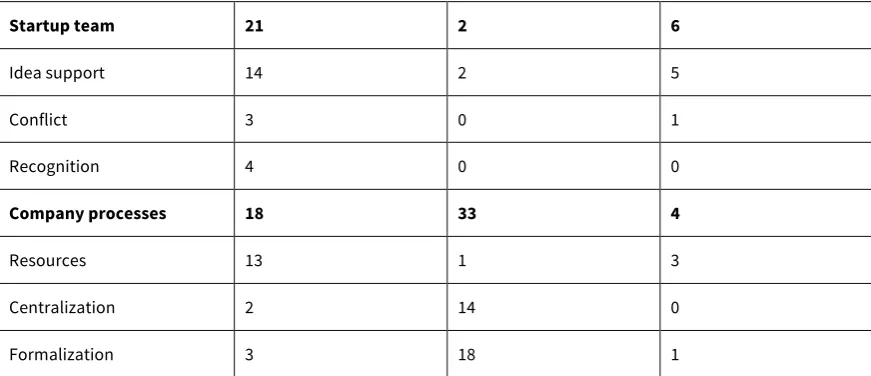
Additionally, participants were asked to judge the intensity of the factors and tell when (if at all) it was stronger: before or during the crisis. The mentions coded under the creative climate themes have been subcategorized into “more intense before the crisis”, “more intense during the crisis” or “unchanged before and during the crisis”, depending on the interviewees answer (see Table 5).
In parallel, the factors corresponding to the threat-rigidity framework were also coded: restriction in information processing (overload of communication channels, reliance on prior knowledge, reduction in communication), constriction of control (centralization of authority, increased formalization) and restriction of resources. They were marked to their perceived impact on the creative climate factors, the creativity output or the team in general.
Additionally, respondents provided a lot of information about the time and pressure dimensions, as well as team dynamics, resulting in a total of 16 factors collected.
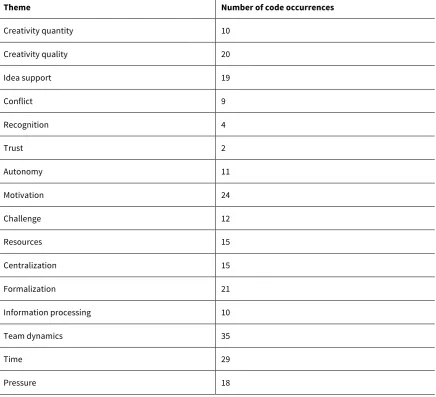
Overall, after coding the transcripts and categorizing the codes under themes, the analysis yielded a total of 321 codes grouped into 20 themes. Table 4 below represents the list of themes resulting from the analysis and the amount of codes referring to each theme.
Theme Number of code occurrences
Creativity quantity 10
Creativity quality 20
Idea support 19
Conflict 9
Recognition 4
Trust 2
Autonomy 11
Motivation 24
Challenge 12
Resources 15
Centralization 15
Formalization 21
Information processing 10
Team dynamics 35
Time 29
[image:39.595.87.524.214.611.2]Pressure 18
Table 4: Occurrences of reference to themes during case analysis
Factor More before More during Unchanged
Job characteristics 34 5 7
Autonomy 10 0 1
Startup team 21 2 6
Idea support 14 2 5
Conflict 3 0 1
Recognition 4 0 0
Company processes 18 33 4
Resources 13 1 3
Centralization 2 14 0
[image:40.595.86.522.72.260.2]Formalization 3 18 1
CHAPTER 3: RESULTS
This study relies on the premise that crisis triggers reactions that are detrimental to the creative climate of startups and posed the following propositions:
(1) Restriction in information processing will negatively impact perceived idea support
(2) Constriction of control will negatively impact perceived bureaucracy
(3) Conservation of resources will negatively impact perceived available resources to be creative
(4) Negatively impacted idea support, bureaucracy and available resources will act as obstacles to creativity
From this, the purpose of this research was to explore the perceived differences in the creative climate experienced by new venture team members who have been working on the startup project before and during the crisis occurred. The aim is not to (in)validate the above premises but rather to understand what were the creative climate differences in the two phases and get insights into the role of crisis on these differences.
1.
Creative climate before the crisis
The first research sub-question was: How do teams in failing startups experience their creative climate before the crisis? In order to answer this question, each creative climate factor is first analyzed as it was reported before the crisis.
1.1.
Job characteristics
1.1.1. Motivating task
Participant 1 expressed intrinsic motivation to work in her startup and that her job was making her happy: “I really love this job, I really like to do it and I am happy to get up in the morning to go to work because I am doing what I want to do, it makes me feel good” (P1). She saw team motivation as linked to the ability to bring in ideas benefiting both to the team and the company.
For Participant 3 the motivation was mostly not expressed in terms of task but rather came from the satisfaction of being part of something bigger: “In the end you like to be part of a big project and you are part of a really small team, part of a creation phase, part of what’s coming out of it in the end. So everyone is motivated to do something great.” (P3).
All participants were intrinsically motivated to do their jobs and at reported high levels, although it emerged from different sources: the tasks, the team and the project.
1.1.2. Autonomy and freedom
Both Participants 1 and 2 found they enjoyed complete autonomy to do their work, including self-direction and decision-making: “I think if you didn’t work autonomously then nothing would happen.” (P2), “I have to do the things by myself and take decision” (P1). Working hours in all three cases were flexible and longer hours spent in the office voluntary because “in a startup you don’t have those working hours so you work when everybody is motivated so in the evenings they spent longer time at the office because they like it” (P3).
1.1.3. Challenge
All respondents reported already a reasonable level of challenge before the crisis. This was mostly linked to the nature of entrepreneurship, working towards a common goal on multiple tasks that were often new. “At the beginning I think it was pretty challenging but on a level that you think you can handle it. So it was very interesting to learn so many new things.” (P3), “Because for us, this startup was a challenge, we had never done it before and we said ok, we will try it” (P1).
1.2.
Startup team
1.2.1. Idea support