SCIENCE MUSEUM EXPLAINER TRAINING:
EXPLORING FACTORS THAT INFLUENCE
VISITOR-EXPLAINER INTERACTIONS
Supara Kamolpattana
A thesis submitted in partial fulfilment of the requirements of the University of the West of England, Bristol for the degree of Doctor of Philosophy
Faculty of Health and Applied Sciences, University of the West of England, Bristol March 2016
i Copyright:
ii
Acknowledgements
I am especially indebted to my supervisors, Clare Wilkinson, Neil Willey and Karen Bultitude. The road towards my PhD was brighter with their support, encouragement and advice throughout this research. My supervisors restored my energy and made me believe that I could succeed.
I wish to thank all the participants: the international interviewees, the explainers and managers at the New York Hall of Science in the USA, Petrosains – the Discovery Centre in Malaysia and the Natural History Museum in the UK; and including the Thai visitors, explainers and staff at the National Science Museum (NSM) Thailand, for their help and involvement in this research study.
I am especially thankful to Pichai Sonchaeng, the former President of the NSM for his support and encouragement, both academic and personal. I got through dark days with his words ‘you can’. I also thank Ganigar and Chanintorn, members of the NSM and all my Thai friends for their support during my period of study in the UK. This research was funded by the Royal Thai Government, to whom I extend my thanks.
I wish to thank all my friends in Bristol and Cardiff and my colleagues at the Science Communication Unit, the University of the West of England, for their welcome, smiles and encouragement. I offer special thanks to Nong-Supachai for his suggestion, when I was exhausted, about taking care of my health.
iii
Abstract
There is currently minimal understanding as to how explainer training in Informal Science Institutions (ISIs) incorporates socio-cultural contexts. This thesis investigates this gap in the literature by examining the factors that influence explainer training programmes within Informal Science Institutions, through the examination of three research questions. The research employs a mixed methods approach comprising 21 interviews, three international case studies, a questionnaire survey of 600 visitors and 41 explainers, in addition to observations of explainer-visitor interaction.
From the international perspective, fifteen experts from 13 countries were interviewed. From the international experts’ viewpoint it was found that socio-cultural context influences the main roles of ISI explainers, and the knowledge and skills associated to success (knowledge of visitor, communication skills and knowledge of scientific content). Additionally, training programmes that provide opportunities for explainers’ active participation and collaboration were highlighted as important.
iv communication, being observed and feedback, and coaching by others within training settings. The case studies also expose the multiple participants who may be involved in training; educators, experienced explainers, peers and visitors, as well as the role of training delivery through discussion and interaction.
In the specific context of Thailand 600 visitors and 41 explainers completed questionnaires, six Thai educators were interviewed, and ten explainer-visitor interactions were observed. The Thai educators indicated the role, knowledge and skills required of explainers in the Thai socio-cultural context, and how training supports the personal skill development of explainers. The Thai interview and explainer data also highlights some gaps in Thai explainer training at present, whereby interaction appears mainly between educators and explainers, overlooking the role of experienced explainers or peers. Additionally, the role of social interaction in terms of organisational policy for ongoing training is discussed in terms of its potential shortcomings.
At the specific at level of explainer-visitor interaction, visitors are found to have positive attitudes towards explainers in general, though the social interaction between explainer and visitors suggest multiple perceptions of the explainers’ role; activities that are seen to be more likely to generate interaction and that the explainer-visitor relationship is developed through local activities and tools which could be more widely considered in the context of all explainer training.
vi
Contents
Acknowledgements ... ii
Abstract ... iii
Abbreviations ... xv
Chapter 1 Introduction ... 1
1.1 Context of the research ... 1
1.2 Motivations for the research ... 3
1.3 Research questions ... 5
1.4 Structure of the thesis ... 6
1.5 Definitions of terms ... 9
1.6 Outputs from the research ... 13
Chapter 2 Literature review ... 15
2.1 Professional development programmes ... 16
2.1.1 Professional development, staff development and training: definitions . 16 2.1.2 Professional development: the role of context ... 17
2.1.3 Professional development: determining effectiveness ... 19
2.1.4 Professional development: model and activities ... 23
2.1.5 Professional development: a socio-cultural perspective of PD ... 27
2.2 Explainer training programmes in informal science institutions ... 28
2.2.1 The development of informal science institutions as learning spaces .... 29
2.2.2 Explainers in informal science institutions ... 33
2.2.3 Explainer-visitor interactions: visitor’s perceptions of explainers ... 34
2.2.4 Explainers: knowledge and skills ... 39
2.2.5 Explainers: approaches for acquiring knowledge and skills ... 42
2.2.6 Explainers: trainingprogrammes ... 44
2.3 Thailand: culture, informal science institutions, and explainers ... 49
2.3.1 Thai culture, communication and social behaviour ... 50
2.3.2 Informal science institutions in Thailand ... 54
2.3.3 Cultural perceptions of training in Thailand ... 58
2.4 Chapter Summary ... 61
Chapter 3 Theoretical framework ... 63
vii
3.1.1 Adult learning ... 64
3.2 Sociocultural theory ... 65
3.2.1 Social interaction within a situated perspective ... 67
3.2.2 Situated perspective: strengths and weaknesses... 69
3.3 Cultural aspects of training and learning ... 71
3.3.1 Hofstede’s cultural dimensions ... 73
3.3.2 Hofstede’s culture dimensions: strengths and weaknesses ... 76
3.4 Framework for studying the factors that influence training explainers... 79
3.5 Chapter summary ... 80
Chapter 4 Research methodology and design ... 82
4.1 Epistemological framework ... 82
4.2 Research design ... 83
4.3 Ethical issues ... 87
4.4 Qualitative enquiry: interviews ... 88
4.4.1 Interview guide ... 90
4.4.2 Interview recruitment ... 90
4.4.3 Interview data analysis ... 94
4.5 Quantitative enquiry: questionnaires ... 95
4.5.1 Questionnaire design ... 96
4.5.2 Survey sampling ... 99
4.5.3 Questionnaire data analysis ... 101
4.6 Qualitative enquiry: case studies ... 101
4.6.1 Case study data collection ... 104
4.6.2 Case study data analysis ... 105
4.7 Qualitative enquiry: observation ... 106
4.7.1 Observation of training sessions ... 107
4.7.2 Observation of explainer-visitor interactions ... 108
4.8 Chapter Summary ... 112
Chapter 5 Explainer training programmes: International experts’ views ... 113
5.1 International experts’ views of the explainers’ role ... 114
5.2 International experts’ views of explainers’ skills and areas of knowledge .. 119
viii
5.2.2 Communicationskills ... 124
5.2.3 Knowledge of scientific content ... 128
5.3 International experts’ summary of current practices and suggestions for future explainer training programmes ... 133
5.3.1 Purpose of explainer training programmes ... 134
5.3.2 Timing of explainer training programmes ... 136
5.3.3 Duration of explainer training programmes ... 138
5.3.4 Content of explainer training programmes... 141
5.3.5 Activities within explainer training programmes ... 143
5.4 Chapter summary ... 151
Chapter 6 International explainer training programmes: Case studies in three ISIs ... 154
6.1 Case study characteristics ... 155
6.1.1 Characteristics: Context of the ISIs ... 155
6.1.2 Characteristics: Communication framework at the case study ISIs ... 158
6.1.3 Characteristics: Training sessions at the case study ISIs ... 159
6.1.4 Characteristics: Training activities across the three case studies ... 164
6.1.5 Characteristics: Explainers at the ISIs ... 167
6.1.6 Characteristics: Timing of training programmes at the ISIs ... 171
6.1.7 Characteristics: Frequency of training programmes at the ISIs ... 174
6.2 Themes emerging from the training sessions and explainers’ views ... 175
6.2.1 Creating space for explainer’s participation and applying the knowledge learned to the ISI ... 176
6.2.2 The role of discussion and interaction in training ... 180
6.2.3 The role of educators, experienced explainers, peers and visitors ... 190
6.2.4 Training materials: paper and online communications ... 193
6.3 Chapter summary ... 195
Chapter 7 NSM explainer training programmes: NSM educators’ and explainers’ views ... 197
7.1 NSM educators’ views of explainers and training programmes at NSM ... 198
7.1.1 NSM educators’ characteristics ... 198
ix
7.1.3 NSM educators’ views of explainers’ skills and areas of knowledge ... 201
7.1.4 NSM educators’ summary of current practices and future suggestions for explainer training programmes... 206
7.2 NSM explainers’ views of training programmes at NSM ... 215
7.2.1 NSM explainers’ characteristics... 215
7.2.2 NSM explainers’ views of skills and areas of knowledge ... 219
7.2.3 NSM explainers’ summary of current practices and suggestions for future explainer training programmes ... 222
7.2.4 NSM explainers’ views of visitors ... 226
7.3 Comparison between educator and explainer perceptions ... 228
7.3.1 Prioritisation of skills ... 228
7.3.2 Training approaches and formats ... 229
7.3.3 Further need for focus on personal context and communication skills . 229 7.4 Chapter summary ... 230
Chapter 8 NSM visitors’ perspectives on explainers at the NSM: NSM Visitors’ survey ... 233
8.1 NSM visitor characteristics ... 233
8.2 Visitors’ perspectives of explainers ... 237
8.2.1 Visitors’ expectations of the explainers’ role ... 237
8.2.2 Visitors’ expectations of activities including interaction with the explainer ... 240
8.2.3 Visitors’ experience of explainers interaction ... 242
8.2.4 Visitors’ learning experiences from explainer interaction ... 243
8.3 Chapter summary ... 246
Chapter 9 Observations of visitor-explainer interactions at the NSM... 248
9.1 Explainer-visitor interaction characteristics ... 249
9.1.1 Characteristics: NSM exhibits ... 249
9.1.2 Characteristics: NSM visitors and explainers ... 250
9.1.3 Characteristics: Initiating the interaction ... 252
9.1.4 Characteristics: Facilitating interactions ... 256
9.2 The interactions related to visitors’ perceptions of explainers ... 266
x
Chapter 10 Discussions: The role of socio-cultural context in explainer training
programmes within informal science institutions ... 279
10.1 Sociocultural influences and international explainer training programmes . 280 10.1.1 Socio-cultural perspectives have helped create contemporary conceptions of explainers ... 280
10.1.2 Socio-cultural influence on the purposes of explainer training programmes ... 282
10.1.3 Socio-cultural influence on knowledge and skill development ... 283
10.1.4 Socio-cultural influences and the design of training programmes ... 287
10.1.5 Socio-cultural influences and the delivery of explainer training programmes ... 291
10.2 The incorporation of personal, social and organisational/environmental contexts in the design of NSM explainer training programmes ... 295
10.2.1 The social and environmental context for supporting the NSM explainers’ role ... 295
10.2.2 The social context of knowledge and skills at NSM ... 296
10.2.3 Social context and its influence on ongoing training at the NSM ... 297
10.2.4 Challenges to the incorporation of socio-cultural contexts in the design of NSM explainer training programmes... 299
10.3 The influence of visitors’ personal and social contexts on the perspectives of explainers at the NSM ... 301
10.3.1 The positive role of explainers ... 301
10.3.2 The use of social interaction amongst explainers within groups ... 303
10.3.3 The ‘avoidance’ of explainers ... 303
Chapter 11 Conclusions and Implications ... 306
11.1 Conclusions ... 306
11.2 Implications for science communication and informal learning contexts .... 308
11.2.1 The role of socio-cultural contexts in explainer training ... 308
11.2.2 Demonstrating or Modelling ... 309
11.2.3 Using socio-culturally appropriate interaction in an ISI environment .. 309
11.3 Implications for practice ... 310
xi
11.3.2 Identifying communication frameworks ... 311
11.3.3 Influencing training good practice ... 311
11.4 Limitations ... 312
11.5 Recommendations for further study ... 313
11.6 Final concluding points ... 314
Chapter 12 References ... 316
Chapter 13 Appendices ... 331
Appendix 1 Hofstede’s cultural dissentions ... 331
Appendix 2 Information sheet and interview consent forms ... 333
Appendix 3 Interviewees schedules (International and Thai interviewees) ... 335
Appendix 4 Interviewees’ profile (International and Thai interviewees) ... 336
Appendix 5 Coding frame (International and Thai interviewees) ... 339
Appendix 6 Questionnaire for visitors (QV) ... 341
Appendix 7 Questionnaire for explainers (QA) ... 348
Appendix 8 Questionnaire for explainers (QB) ... 355
Appendix 9 Summary sources for developing questionnaires (QV, QA and QB) ...357
Appendix 10 Observation note –training session ... 358
Appendix 11 Observation note- NSM explainer-visitor interactions ... 359
Appendix 12 Response rate for questionnaire at NYSCI, Petrosains and NHM: response rate ... 360
xii
List of Tables
Table 1 Summary of four types of in-service professional development programmes
... 17
Table 2 The rank order of explainers’ science learning approaches ... 43
Table 3 Priority ordering of training activities according to their effectiveness... 46
Table 4 Hofstede’s cultural dimensions ... 74
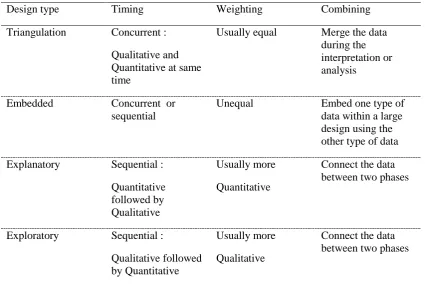
Table 5 The mixed method design types... 85
Table 6 Design of the research ... 86
Table 7 Questionnaire structure ... 97
Table 8 International explainers’ response to questionnaire survey ... 100
Table 9 Characteristic of visitors in observation at NSM ... 109
Table 10 Times for collecting observation at NSM ... 110
Table 11 International experts’ view of the explainer’s role ... 114
Table 12 International experts’ views of explainers’ skills and knowledge ... 120
Table 13 Case study: Characteristics of training session at NYSCI, Petrosains and NHM ... 160
Table 14 Mapping of training activities to particular sessions at NYSCI, Petrosains and NHM ... 165
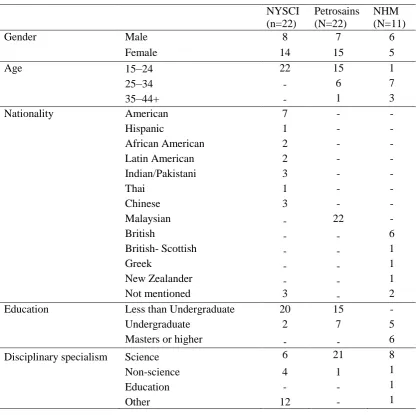
Table 15 Demographic profile of explainers at the NYSCI, Petrosains and NHM . 168 Table 16 Training programme system in NYSCI, Petrosains and NHM ... 171
Table 17 Frequency of training type in NYSCI, Petrosains and NHM ... 174
Table 18 Popular training activities at NYSCI, Petrosains and NHM from the perspective of the participating explainers ... 181
Table 19 People involved in training sessions at NYSCI, Petrosains and NHM ... 190
Table 20 Overview of explainer training programmes at the NSM-Science Museum ... 209
Table 21 Existing activities of explainer training programmes at NSM ... 213
Table 22 Demographic profile of the NSM explainers ... 216
Table 23 NSM explainers’ perceived benefits of working as a science explainer... 218
Table 24 Breakdown by educational background of respondents who felt they need more training in communication skills and visitor studies ... 221
Table 25 NSM explainers’ perceived frequency of NSM training types ... 223
Table 26 NSM explainers’ views on visitors’ behaviour ... 227
xiv
Table of Figures
Figure 1 Organisation of the thesis ... 6
Figure 2 Teacher professional development: features and relationships ... 18
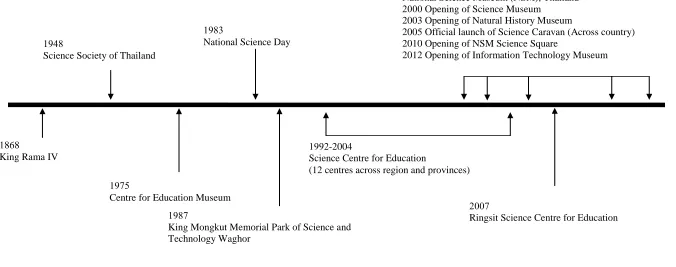
Figure 3 Informal science institutions under MOE and MOST in Thailand between 1868-2012 ... 55
Figure 4 The ‘Onion’: Manifestations of culture at different levels of depth ... 71
Figure 5 Hofstede’s cultural dimensions in fourteen countries ... 75
Figure 6 Literature and Theoretical Framework ... 79
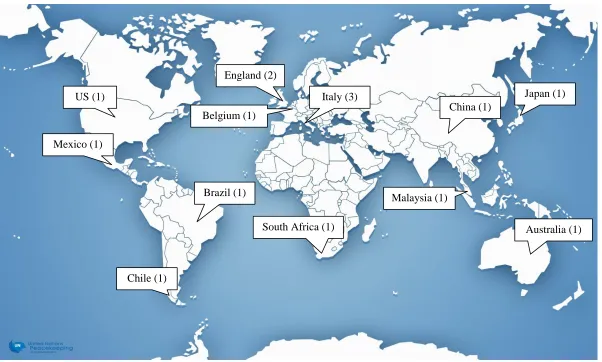
Figure 7 International interviewees professional location they are based in ... 93
Figure 8 Motivation to work as an explainer in NYSCI, Petrosains and NHM ... 170
Figure 9 Typical content of induction training at NYSCI, Petrosains and NHM .... 172
Figure 10 Explainers’ views of class participation at NYSCI, Petrosains and NHM ... 176
Figure 11 Explainers’ views of applying the knowledge at NYSCI, Petrosains and NHM... 179
Figure 12 Impact of training at NYSCI... 184
Figure 13 Impact of training at Petrosains ... 186
Figure 14 Impact of training at NHM ... 189
Figure 15 Explainers’ view of trainer at NYSCI, Petrosains and NHM ... 192
Figure 16 Motivation to work as an explainer in the NSM (n=41) ... 217
Figure 17 Views of skills required by NSM explainers (n=41) ... 220
Figure 18 Typical content of induction training in the NSM (n=41) ... 224
Figure 19 ‘Mathematics is all around us’ gallery at NSM ... 249
Figure 20 Math packing and Barcode exhibits at the NSM ... 250
Figure 21 Visitor-explainer interactions at initiating phase ... 253
Figure 22 Explainers’ and visitors’ actions in group-explainer interactions at facilitation phase ... 257
Figure 23 Adult-children interactions within-group at facilitation phase ... 262
Figure 24 Youth interactions within-group at facilitation phase ... 263
Figure 25 Degree of support of members in within-group interactions at facilitation phase ... 265
xv
Abbreviations
CDLF Cultural Dimension of Learning Framework
CPD Continuing professional development
DRS Describe, Reflect and Speculate model
GLOBE Global Organisational and Behavioural Effectiveness GLOs Generic Learning Outcomes
ISI Informal Science Institution LPP Legitimate peripheral participation
MLA Museums, Libraries and Archives Council MOE Ministry of Education, Thailand
MOST Ministry of Science and Technology, Thailand NHM Natural History Museum, UK
NSDC National Staff Development Council NSM National Science Museum, Thailand NYSCI New York Hall of Science, USA
OJB On-the-Job
PD Professional development
Petrosains Petrosains Discovery Centre, Malaysia
QA Questionnaire for explainers to explore explainers’ roles, training needs and existing training programmes
QB Questionnaire for explainers to explore explainers’ opinions on the effectiveness of each training session
1
Chapter 1
Introduction
1.1
Context of the research
Science museums and science centres, together with other informal science institutions such as zoos, aquaria and botanical gardens, are recognised as playing an important role in learning in various parts of the world (Bell et al., 2009). Learning within a museum environment is a complex process and differs significantly from learning in school, because visitors are often more active participants in terms of their background, existing experience and personal motivation (Falk and Dierking, 1992; Hooper-Greenhill and Moussouri, 2002). Additionally, experiences in a museum can vary according to whom the visitors interact with, across age groups (Melber, 2007), amongst solitary visitors compared to those attending in the company of others (Packer and Ballantyne, 2005), and in respect to personal situations such as economic and social factors (Rodari, 2011). It is also likely that there are cultural variations in such experiences.
2 their specific tasks are different depending on their contract or job role at their institution. Overall, however, explainers are the main group of people that directly interact with the majority of informal science institution visitors (Massarani, Rodari, and Merzagora, 2008).
Falk and Dierking (1992) suggest that most social interaction research considering the context of informal science institutions focuses on the context of the family and that ‘…it is amazing how little research exists on the role that museum staff – volunteers, guides, explainers…play in facilitating learning from museums’ (Falk and Dierking, 2000, p. 107). Furthermore, the authors go on to suggest that ‘a better understanding of how social interaction between staff and visitor affects learning and under what circumstances could lead to significantly better practice’ (Falk and Dierking, 2000, p. 108). It is anticipated that if explainers are well trained, they can have a positive influence on the visitors’ experiences. However, within the last fifteen years there have been few research studies on this topic resulting in an apparent gap in knowledge regarding explainer and visitor interaction, as well as the training explainers receive. Thus, this research study explores this gap.
3 It is also notable that although there has been some research related to explainer training programmes (Cox-Petersen et al., 2003; Kelsey, 2003; Tal and Morag, 2007; McIntosh, 2011), this has tended to focus on how explainers directly deliver activities to visitors rather than exploring the context or needs of visitors and how explainers adapt to them (Kelsey, 2003; McIntosh, 2011). Studies of professional development aimed at teachers suggest that incorporating a socio-cultural context can improve classroom practice (Garet et al., 2001; Borko, Jacobs and Koellner, 2010). Thus the content, process (e.g. sufficient time, active learning and collaboration) and context (e.g. personal, social, organization/environment) of professional development programmes are all recognized as important (Guskey and Yoon, 2009) in that setting. There is however little research on how explainer training in informal science institutions incorporates socio-cultural contexts. It is this gap in the literature that this thesis investigates by examining the factors that influence explainer training programmes within Informal Science Institutions (ISIs).
1.2
Motivations for the research
4 to what they aimed to get from working at the NSM. Over time, I realised that I came into this position with a science background (physics) but with little knowledge of any theoretical perspectives on training within ISI contexts. My passion to consider, and potentially increase the impact of explainers within the NSM, led me to an interest in how explainer training programmes could be designed in order to enhance visitors’ experiences. I am at the point in my career where I have more experience than many of my colleagues. However, experience can narrow one’s perspective. My personal motivation for this thesis was therefore grounded in an interest to explore the design of explainer training programmes from a diverse international perspective.
5 I was motivated to investigate how specific contexts (e.g. personal, social and organisational/environmental contexts) may influence the design of explainer training programmes at the level of educators, explainers and visitors, in the hope that the results of this research may encourage ISI educators to reflect on, potentially reform and expand their practice.
1.3
Research questions
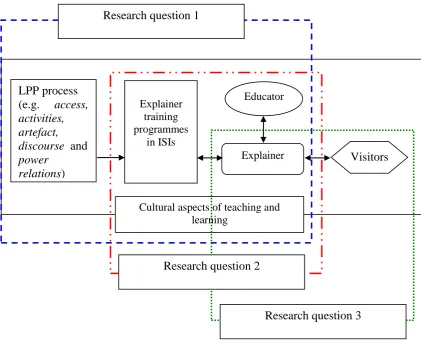
The broad purpose of this research was to investigate the factors that influence explainer training programmes within Informal Science Institutions (ISIs). This thesis addresses three research questions aiming to examine the way in which socio-cultural perspectives influence the design of explainer training programmes at an international level, as well as in the context of a specific ISI, the National Science Museum, Thailand (NSM):
1) How do explainer training programmes in different international contexts allow a socio-cultural perspective to influence their practice?
2) How does the NSM incorporate personal, social and
organisational/environmental contexts in the design of its explainer training programmes?
6
1.4
Structure of the thesis
[image:22.595.107.545.172.769.2]This thesis consists of eleven chapters, organised as shown in Figure 1.
Figure 1 Organisation of the thesis
Chapter 1
Introduction
Chapter 2
Literature review
Chapter 3
Theoretical framework
Chapter 4
Research methodology
Chapter 5
International experts’ views
Chapter 6
International case studies
Chapter 7
NSM educators’ and explainers’ views
Chapter 8
NSM visitors’ perceptions of explainers
Chapter 9
Observation of visitor-explainer interactions
Chapter 10
Discussion
Chapter 11
7
Chapter 2 reviews the context for this research, drawing on relevant literature to discuss teachers’ professional development and the role of socio-cultural context within training. The chapter also considers the growth of ISIs, and the role of explainer-visitor interaction and social context within informal settings. Finally, the chapter offers an introduction to Thailand and characteristics of Thai behaviour, particularly dimensions which may influence training in Thailand.
Chapter 3 examines the theoretical perspectives that have informed the thesis. It considers sociocultural theory, as well as theories regarding situated learning and legitimate peripheral participation within a community of practice. It additionally assesses theories pertaining to the influence of culture on training programmes.
Chapter 4 considers the research design and methodology of the research. It details the design of the data collection, development of the instruments for collecting data, sampling strategies, data analysis approach and ethical issues associated with the research.
Chapter 5 provides results from the analysis of data from 15 international experts who participated in interviews. These data examine socio-cultural contexts in the design of training, as well as international experts’ views regarding current practice in explainer training programmes and suggestions for improvement.
Chapter 6 offers results from the analysis of three international case studies, including the observation of eleven explainer training sessions. In particular it examines how socio-cultural perspectives were incorporated into their design.
8 current practice in training provision, as well as suggestions to improve explainer training programmes at the National Science Museum, Thailand (NSM).
Chapter 8 provides results from a questionnaire of 600 NSM visitors regarding the explainers’ role, activities through which they expect to interact with explainers and their experience of explainer interactions.
Chapter 9 offers the results of ten observations of explainer-visitor interactions at the NSM, exploring the characteristics of visitors’ interactions at the NSM and how this may potentially frame visitors’ perceptions of explainers.
Chapter 10 first draws together the results from Chapter 5 and 6, and discusses the socio-cultural context evidenced in international explainer training programmes in answer to the first research question. Secondly, drawing on results from Chapter 7, specifically the views of NSM educators and explainers, the discussion considers the role of personal, social and organisational/environmental contexts in the design of explainer training within NSM in order to answer the second research question. Thirdly, in response to the third research question, the NSM explainer-visitor interactions (see Chapter 7, Chapter 8 and Chapter 9) are considered to reveal how visitors’ personal and social contexts may influence their interactions with explainers.
9
1.5
Definitions of terms
As terms or words may have different or multiple meanings, to aid clear understanding of this thesis, the following definitions are provided (in alphabetical order):
Informal Science Institution (ISI): A variety of names refer to an organisation that supports informal learning such as a science museum or centre, a natural history museum, zoo, aquarium, botanical garden and a nature centre (Falk and Dierking, 1992; Astor-Jack, Balcerzak and McCallie, 2006; Kelsey and Dillon, 2010). In this thesis, the term ‘Informal Science Institution’ (ISI) refers to an organisation supporting visitors’ learning in science. However, the word ‘museum’ and ‘centre’ are applied to specific contexts where they are more appropriate and ‘ISIs’ when referring more broadly to any or all of the institutions mentioned above.
Educator: There are many titles to describe people who develop programmes within ISIs such as public programme developer, exhibition developer, or museum curator (McIntosh, 2011). In this thesis, an ‘educator’ refers to someone who is responsible for designing and implementing training and development programmes, particularly training and development for explainers.
Explainer: A number of names are used in different languages for the term ‘Explainer’ including:
10 monitor (in Flemish), Museumfürer, Moderatoren (in German), opas (in Finnish), monitor (in Portuguese), begeleider, suppoost, presentator (in Dutch), museilärare, teknoramavärd, museivärd, värd, museipedagogue (in Swedish), monitor, animador (in Spanish), vykladac, pruvodce, informator, lektor (in Czechoslovakian), przewodnik, przewodnik muzealny, demonstrator (in Polish) (Rodari and Xanthoudaki, 2005, p. 2) In this thesis, the term ‘explainer’ is used to refer to the wide range of roles and positions mentioned above and generally to refer to people who work directly with visitors within an ISI, either on the floor, within an ISI’s laboratory or in classrooms. They may be an unpaid volunteer or paid staff. The term ‘explainer’ is used in the thesis as it is commonly used by many ISIs, such as the Exploratorium, to describe staff that interact with visitors.
Development: The term ‘development’ in the context of teacher training infers
facilitating or guiding learners as a continuous process, covering various ways of supporting people’s learning, often over long periods including training, coaching or the development of a community of practice (Kennedy, 2005). Garavan (1997) suggests that the development process is designed to enhance people’s potential that leads to individual change or growth. The development process helps a learner expand their personal judgment to enable them to apply specific techniques across a variety of contexts (Grenier, 2005; McIntosh, 2011) for example in communicating with different groups of visitors.
11 practicing, coaching and feedback (Joyce and Showers, 2002; McIntosh, 2011) or reflective practice (Ash, Lombana and Alcala, 2012).
Learning: Vygotsky (1978) believed that learning occurs at a social and individual level. In this regard, people reorganise and reconstruct knowledge (e.g. facts or information) through social interaction with people and the environment around them. Abdullah et al. (2008) suggest that learners connect new knowledge to previous knowledge and make practical use of that knowledge. In this regard, the process of reorganising, reconstructing and integrating new knowledge to existing knowledge may shape learners’ practices, leading to the changing of behaviour, skills, understanding and attitudes (Museums, Libraries and Archives Council, 2008). In this thesis, ‘learning’ refers to the process of acquisition of knowledge at both a social and individual level. Additionally, ‘active learning’ refers to the acquisition of knowledge through active participation (van Driel et al., 2012). In the context of active learning a learner employs both hands and mind to participate with other people and the environment, integrating new knowledge into existing knowledge and finally making their own meaning (Hein, 1998; Kelly, 2007).
12
Teaching: Some researchers use the word ‘teaching’ to include explainer-led
activities within informal science institutions (Cox-Petersen et al., 2003; Tran, 2007; Bevan and Xanthoudaki, 2008; McIntosh, 2011; Allen and Crowley, 2014). Bevan and Xanthoudaki (2008) suggest that ‘teaching’ includes facilitating or guiding the learners, supporting interaction or ideas for learning. However, McIntosh (2011) argues that ‘teaching’ is not always appropriate within an ISI context as it presents a strong association with teaching in a school setting, and can suggest a transmission approach of communication. In this thesis, the word ‘teaching’ is reserved for the formal school environment, specifically relating to teacher and student contexts.
Training: Kennedy (2005) views ‘training’ as an activity to enable transmission of information to the learner by an expert with the content determined by the deliverer; in this regard the learner can be seen to play a passive role. The learner focuses on direct application of skills and knowledge that is received from the training to a task or job (McIntosh, 2011). However, Garavan (1997) suggests that ‘training’ refers to facilitating or guiding people to learn to do a specific task.
13
1.6
Outputs from the research
During the period of this research findings have been presented at four conferences including three oral presentations and one poster presentation. Additionally, the researcher conducted one workshop on the research data with 76 participants at the National Science Museum, Thailand. Lastly, one journal paper has been published in ‘Voices From Other Lands’, a Special Issue of the Journal Public Understanding of Science.
i) Conference presentations
Chen, G., Kamolpattana, S. (2015) Is the science centre experience the same in all countries? In Ecsite Annual Conference 2015. Muse, Trento (Italy), 11-13 June 2015.
Kamolpattana, S., Wilkinson, C., Willey, N., Bultitude, K., (2013) Explainer programmes: Science Museums’ investments in the future generation. In 13th The Asia Pacific Network of Science & Technology Centres (ASPAC) 2013. National Science Museum (South Korea), Daejeon, 6-10 May 2013.
Kamolpattana, S., Wilkinson, C., Willey, N., Bultitude, K., (2012) Development of culture-based science communication training for science museum explainers. In 2012 Postgraduate Research Forum, University of the West of England, Bristol, 21 September 2012 (Poster).
14 ii) Workshop
Kamolpattana, S., Wilkinson, C., Willey, N., Bultitude, K., (2013) Explainer Programmes: What we should know…What we should do about Explainers? At National Science Museum Bangkok, Thailand, 15 May 2013.
iii) Journal paper
15
Chapter 2
Literature review
Overview
The purpose of this study is to investigate the factors that influence explainer training programmes within informal science institutions. In particular this work explores the differences in explainer training programmes operating at various ISIs, and additionally focuses on an in-depth case study within the National Science Museum, Thailand. This literature review addresses the research questions as follows.
First, the literature review discusses the concept of teachers’ professional development (PD) and how socio-cultural context can affect teachers’ PD, as a model to consider how socio-cultural context could be interpreted in explainer training programmes. Next, the literature review examines the growth of ISIs, the role of explainer-visitor interactions and visitors’ perceptions of explainers, as well as socio-cultural contexts within that setting. This section includes a review of existing international research on explainer training provision, as well as what is known about the training needs of explainers internationally [RQ 1 and 3]
16
2.1
Professional development programmes
This section examines the concept of teachers’ professional development, including the features of effective professional development and the role of socio-cultural context within such programmes.
2.1.1 Professional development, staff development and training:
definitions
The terms professional development, in-service and staff development are often used interchangeably (Cooper, 2004), to describe all training activities that focus on developing knowledge and skills of staff, teachers, educators, administrators and others (Kennedy, 2005).
17 Table 1 Summary of four types of in-service professional development programmes
Categories Characteristics
Induction training Acquainting new staff with the institutional environment.
Foundation training Providing a foundation of professional knowledge for new staff regarding their career.
Refresh training Updating and maintain subject-matter knowledge, their responsibilities and dealing with new information, materials or methods, including review of older materials.
Career training Upgrading the knowledge, skills and ability of staff in order to help them take on greater responsibilities in higher level positions.
Adapted from Halim and Ali (1997, p. 172)
2.1.2 Professional development: the role of context
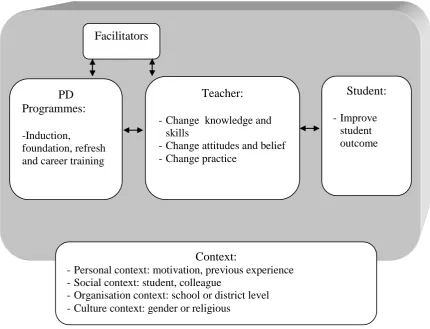
18 Figure 2 Teacher professional development: features and relationships
Note: Adapted from Guskey (2002), Fishman et al., (2003), Borko (2004), Desimone (2009), Borko, Jacobs and Koellner (2010), Mansour et al., (2014).
Professional development can generally consist of five key elements; i) the professional development programmes; ii) the teachers, who are learners in the context of professional development; iii) the facilitators or trainers, who facilitate, educate and guide teachers as trainees; iv) the context, the situation or environment where the PD occurs, including the personal, social, organisational and cultural contexts; and v) student, which refers to the people that the teacher then influences.
Facilitators
Context:
- Personal context: motivation, previous experience - Social context: student, colleague
- Organisation context: school or district level - Culture context: gender or religious PD
Programmes: -Induction,
foundation, refresh and career training
Teacher: - Change knowledge and
skills
- Change attitudes and belief - Change practice
Student: - Improve
19 During teacher PD programmes it is expected that facilitators guide and support teachers in order to gain new knowledge and skills, including changes to teachers’ attitudes and beliefs (Garet et al., 2001; Borko, 2004; Desimone, 2009). Teachers are anticipated to use their new knowledge and skills to improve their practice and instruction which in turn leads to improved student outcomes (Fishman et al., 2003). However, attending PD does not mean all teachers change their knowledge, skills, attitudes, beliefs and practices and here context has been presented as key. A variety of factors have been seen to influence context. For example, the teacher may find that the content within a particular form of PD does not meet their specific needs (personal context) (Guskey, 2002; EL-Deghaidy, Mansour and Alshamrani, 2014)or perhaps the curriculum (organisational context) they are working to. Teachers may also believe their current practice is working well or see no need to change their practice (personal context) (Mansour et al., 2014), or lack support from their school or colleagues (social context) (Guskey, 2002). As such, PD programs need to be carefully designed and consider contextual factors within their wider strategies for supporting individual development.
2.1.3 Professional development: determiningeffectiveness
20 scholars suggest lists of features of effective PD (Garet et al., 2001; NSDC, 2001; Joyce and Showers, 2002; Fishman et al., 2003; Borko, 2004; Borko, Jacobs and Koellner, 2010; Mansour et al., 2014; EL-Deghaidy, Mansour and Alshmrani, 2014), which are of use when creating training activities. The central features of PD can be grouped into three categories: content, process and context.
Content of PD
First, the content should be focused directly on teacher practice over three dimensions: i) content knowledge which the teacher is expected to teach; ii) teaching methods, including communication skills that the teacher is expected to employ with students, and iii) student learning process which focuses on assisting the teacher to interpret student thinking and support student learning especially within a particular subject matter (Garet et al., 2001; Desimone, 2009; Borko, Jacobs and Koellner, 2010).
The need for these three dimensions of content have also been evidenced in studies of teachers’ needs in PD programmes from a teachers’ viewpoint (Dillon et al., 2000; EL-Deghaidy, Mansour and Alshmrani, 2014). Desimone (2009) points out that the three dimensions must be specific to context, particularly where specific subjects are concerned. This may include knowing what students are likely to find difficult or challenging about a specific subject matter, or the best way to communicate and teach a discipline (Borko, Jacobs and Koellner, 2010).
Process of PD
21 participation. Sufficient duration allows teachers to try out new teaching methods, including reflection and revision in their practice (Dillon et al., 2000), and is important to consider from the point of view of both the overall span of time across the activities and the number of hours spent within each activity (Desimone, 2009). There is no single ‘right’ amount of time for PD. Birman et al. (2000) note that whilst longer PD activities are more likely to provide opportunities for in-depth discussion, too much time can conversely be ineffective when PD activities do not meet the teachers’ requirements. Instead, van Driel et al. (2012) note that the PD duration should be suitable to the goals and type of activities it comprises.
Additionally, inclusion of active learning and collective participationis viewed to be important (Garet et al., 2001; Borko, Jacobs and Koellner, 2010, Desimone, 2009). Engaging teachers as active participants can include discussion or observing other teachers or reviewing students’ work (Borko, 2004; van Driel et al., 2012). In this regard, a teacher is responsible as the constructor of their own knowledge; they are not waiting for instructors to fill them with knowledge (see section 3.1). Borko, Jacobs and Koellner (2010) point out that active participation provides opportunities for teachers to make a connection between their experience in PD and their classroom, again reiterating a role for context.
22 collective participation provides opportunities for teachers from similar subjects or key stages (age groups) to share common materials, methods, problems and solutions.
Collective participationand activelearning, via social interaction, are therefore seen to be useful aspects of teacher PD. Both processes are a way to gain access to the expertise of colleagues or other teachers within the teaching community (Lave and Wenger, 1991).
Context of PD
23 Thus while the above discussion offers an overview of features for effective PD this should not prevent it from having its own unique characteristics. The three dimensions can instead act as a core set of principles that can guide PD providers when designing effective PD programs (NSDC, 2001; Guskey and Yook, 2009; Borko, Jacobs and Koellner, 2010). Additionally, Guskey and Yook (2009) point out that there is also no common set of PD programmes, as each PD programme should be determined by the specific content, the process of the PD and context in which the PD occurs. The next section however will consider some commonalities in PD models and activities.
2.1.4 Professional development: model and activities
24 particular as this is potentially most relevant to the question as to how ISIs incorporate socio-cultural context in their design of explainer training programmes. Sparks and Loucks-Horsley (1989) suggest that training models come from various sources, but a comprehensive training model has been proposed by Joyce and Showers. Joyce and Showers (2002) proposed a training model for improving student achievement through teacher development programmes, depending upon the desired outcomes. The training might include components as presented below:
i) Exploring theory focuses on knowledge which consists of exploring theory or background knowledge. Studying the theory provides a mental image to guide practice and increase teacher’s understanding of demonstrations. ii) Demonstration or modelling of new skills or strategies, including facilitating
an understanding of theory by demonstrating them in action.
iii) Practice of skills includes trying out new skills in a simulated setting. Such practice enables teachers to identify their mistakes and receive feedback to correct them in a safe environment before they face the real situation. iv) Peer coaching is a process of being observed and receiving feedback. This
then extends to the collaborative work of teachers in planning and sharing ideas with colleagues to implement and develop material and lessons more effectively.
25 effectively than exploring theory and demonstration alone. Teachers have a chance to practice new strategies for teaching, and adopt appropriate strategies for their own goals and contexts to ensure that they are appropriate and useful for their students (Sparks and Loucks-Horsley, 1989).
Joyce and Showers (2002) state that any type of training should comprise activities that provide teachers with the knowledge needed to develop teachers’ skills, as well as providing opportunities to practice and receive feedback from others. Hoque, Alam and Abdullah (2011) suggest that there is no rigid structure for activities within training; however there are some common basic elements that support teacher improvement. The next section will consider some commonalities in effective PD activities.
Training activities:
26 their classroom practice’. However, transmission is also implied to encourage teachers’ to replicate and implement the approach (Hoque, Alam and Abdullah, 2011) meaning it may then be repeated in classroom practice, though it may not be well suited for people who tend to be active and have a practical teaching or learning style.
In contrast, a trainee-centred (Mansour et al., 2014) approach,also known as reform activities (Garet et al., 2001) or collaborative strategy (Hoque, Alam and Abdullah, 2011), is also possible. This category includes techniques such as discussion, role play, observation, coaching or mentoring and study groups (Garet et al., 2001; Mansour et al., 2014). The trainee-centred approach provides opportunities for teachers to engage for the benefit of ‘sharing ideas and experiences with other teachers and working collaboratively as a community or team to discuss their practices at school could support implementation of CPD ideas, and programme content’ (Mansour et al., 2014, p. 960). The implication is that a trainee-centred approach is more likely to support the teacher to make a connection with the classroom environment than the transmission strategy. Additionally, the trainee-centred approach can more effectively respond to teachers’ needs (Dillon et al., 2000), providing greater influence on a teacher to change their practice than transmission strategies (Garet et al., 2001; Hoque, Alam and Abdullah, 2011; Horrocks, 2012).
27 (NSDC) (2001) who argues the effectiveness of PD programmes comes not from the implementation of a particular set of activities, but from the careful adoption of various activities which are suitable and specific to varying content, process and contexts.
2.1.5 Professional development: a socio-cultural perspective of PD
Stein, Smith and Silver (1999) provide a clear overview of a relatively new feature of PD which they suggest is ‘the new paradigm for professional development [which] represents a clear departure from the use of workshops to teach ‘techniques’ towards the use of multi professional development strategies to build teacher understanding of the subject matter, pedagogy, and student thinking’ (p. 263). ‘Multi professional development strategies’ involve the teacher being supported by many resources such as people, artefacts or activities including local context through which the teacher can move from peripheral (novice) to full participants in particular working practices (Borko, 2004; Kelly, 2006).
28 an expert teacher (particularly at the earliest stages of their training), where their knowledge and skills are constructed through social interaction processes and active learning in order to move towards full participation.
As noted above, there can be various elements involved in the process of professional development such as people, artefacts and activities which aid teachers’ participation. Kelly (2006) suggests that experienced teachers share their experience through demonstrations to a novice teacher. Borko (2004) suggests that discussing recordings of lessons or a student’s work leads teachers to exchange their ideas and experiences. Teachers are thus provided with opportunities to engage in constructing and reconstructing knowledge, implying that the teachers are co-constructors in such training experiences.
From a sociocultural perspective, it appears that teacher training programmes can consist of various elements that support teachers’ development and illustrate the relationship between elements (see section 2.1.2), whilst features of social interaction and patterns of participation in learning activities move teachers from a novice to an expert perspective (Borko, 2004; EL-Deghaidy, Mansour and Alshmrani, 2014). Next this literature review turns to knowledge of explainer training programmes in ISI’s specifically.
2.2
Explainer training programmes in informal science
institutions
29
2.2.1 The development of informal science institutions as learning spaces
Historically, museums, aquariums, science centres, zoos and other informal science institutions have been found to provide a site for people to expand their interest and understanding of science (Astor-Jack, Balcerzak and McCallie, 2006; Kelsey and Dillon, 2010).The first generation science museums began in the eighteenth century, with natural history museums displaying private collections to educated people, for example the American Museum of Natural History in New York (Friedman, 2010); the Ashmolean Museum in Oxford, and the British Museum in London (Schiele, 2008).
Early technology museums, for example the Conservatoire National des Arts et Métiers in Paris, began in the nineteenth century, with the aim of supporting universities and industry to train new craftsman. In this period, international exhibitions were influential in the establishment of a number of new museums. For example, the Great Exhibition in London, set a legacy in the creation of the Science Museum amongst others (Schiele, 2008). The Exposition International de I'elec-tricite in Paris set the foundations for the Deutsches Museum. Museums evolved from a focus on guiding and lecturing visitors, to encouraging visitors’ curiosity through demonstration, experiment, and interaction, shifting towards communication with visitors, rather than simply seeking to inform them.
30 provide a ‘laboratory’ atmosphere which visitors can explore for themselves, via active participation, and combining entertainment with education for both young people and adult visitors (Oppenheimer, 1968).
In this regard, the role of ISIs has changed, when the goal of informing the visitor about science was replaced by the goal of convincing the visitor of the importance of science in the future (Astor-Jack, Balcerzak and McCallie, 2006). Many modern ISIs have shifted from one-way communication (transmission) approaches towards attempts to provide two-way communication to visitors (Bevan and Xanthoudaki, 2008; Schiele, 2008). Bevan and Xanthoudaki (2008) point out that the key strength of ISIs is that they ‘create a stimulating environment for rich learning experiences, social interaction, and active exploration’ (Astor-Jack, Balcerzak and McCallie, 2006, p.69).
Thus, visitors can approach and engage with ISI exhibitions and activities at their own pace, free to control their experience, and as Oppenheimer pointed out, ‘no one ever fails a museum’ (2006, p.248). However, there is still a strong emphasis on learning within ISIs, whether that is learning new knowledge, skills, attitudes, behaviour and so forth (Museums, Libraries and Archives Council, 2008).
31 the design or layout of the ISI or exhibition; and ‘social context’ refers to interaction with other people, such as peers or explainers (Falk and Dierking, 1992). In this regard, visitors go to ISIs in their personal context and are engaged by the physical context of the ISI. Learning is supported through interaction with other people, which provides the social context (Hooper-Greenhill and Moussouri, 2002; Choya, 2008).
However, visitors have differing expectations and their own agendas for visiting ISIs. Families often see the visit as a social outing for learning and the teaching of behaviour (Choya, 2008). Adults might visit ISIs as a group for entertainment and to maintain social cohesion (Falk and Dierking, 1992; Hein, 1998), though they may also have an expectation to learn something new during their visit. Two key studies have described the relationship between visitors’ motivations and patterns of learning in ISIs. First, Packer and Ballantyne’s (2002) work presented five categories derived from the results of factor analysis: learning and discovery; passive enjoyment; restoration; social interaction; and self-fulfilment. Many categories were similar to Moussouri’s research (1997, cited in Falk, 2009), such as education, entertainment and social events. Second, Falk’s work (2009) presented five identities related to motivation: Explorer, Facilitators, Experience Seekers, Professionals/Hobbyists and Rechargers. The importance of these two studies lies in their help for predicting learning behaviour and the outcomes of learning which is potentially useful for explainers in considering how they interact with visitors.
32 2007; Gutwill and Allen, 2010). During interactions between care givers and children, a variety of activities have been recorded to happen, such as asking and answering questions, or the parent encouraging children to engage in hands-on activities (Rennie and McClafferty, 1996; Choya, 2008). Such conversations provide opportunities for family members to develop their understanding, and share meanings that they construct through participation within the ISI context (Ellenbogen, Luke and Dierking, 2007).
Peers are also extremely influential during school field trips (Falk and Dierking, 1992; Davidson, Passmore and Anderson, 2010; DeWitt and Hohenstein, 2010). Davidson and colleagues (2010) describe the recollections of students visiting a zoo; three months after the trip, students still spoke about their interactions with friends. The students remembered things that they discussed; sharing information with their friends and learning by hearing other students speak. DeWitt and Hohenstein (2010) report that the interaction and discourse between students during school field trips to ISIs has a positive influence on students as it has the potential to contribute to (cognitive) learning and does not interfere with their enjoyment of the trip. In this regard, social context can enhance students’ learning as they work, share, and discuss together. It thus appears that visitors’ recollections, motivation for further investigation and learning are influenced by interaction with the people around them as they do activities together (Griffin, 2007).
33 research focuses on the context of the family in the museum and that ‘…it is amazing how little research exists on the role of museum staff-volunteers, guides, explainers…play in facilitating learning from museums’ (Falk and Dierking, 2000, p. 107). Falk and Dierking suggested that ‘a better understanding of how social interaction between staff and visitors affects learning and under what circumstances could lead to significantly better practice’ (2000, p. 108) and acknowledged that if explainers are well trained, they can have a positive influence on visitors’ experiences.
2.2.2 Explainers in informal science institutions
34 In terms of explainers’ characteristics, enthusiasm is seen to be an important part of being an explainer. In Grenier’s (2005) study on developing ISI explainers’ expertise, 12 explainers in four ISIs in the USA were interviewed. The results suggest that one important characteristic of explainers should be enthusiasm. There are two main reasons for this argument: firstly, keeping the environment of the interaction interesting, and secondly, helping explainers to be fresh when facing visitors who are less attentive. Some explainers believed that their enthusiasm helped to encourage visitors to enjoy their learning or develop an interest, which might lead to future visits to the ISI. King (2009) similarly suggested that explainers should have an appropriate level of enthusiasm: although it does not necessarily help visitors’ understanding directly, it may help in focusing visitors’ attention.
2.2.3 Explainer-visitor interactions: visitor’s perceptions of explainers
35 analogy can also be helpful when visitors have difficulty in understanding the scientific concepts of an exhibit (Johnston and Rennie, 1994). Additionally, Grinder and McCoy (1985) suggested some points that explainers need to be concerned about when working with visitors. For example, explainers should understand how different people learn, their general abilities, and their limitations. Explainers must have an overview of the institution and specific detailed knowledge of the exhibition that they can communicate to the visitors, including the educational philosophy of the institution. The explainers should be ready to react to unexpected situations when problems occur.
36 expressing simple understanding. In addition, many questions were asked of visitors with no intention of receiving visitors’ answers.
Furthermore, in research on the way in which explainers led tours at the Monterey Bay Aquarium in the USA, Kelsey (2003) evaluated the guide training programmes provided by the aquarium to examine explainer-visitor interactions and conversation regarding marine conservation. Her findings established that the explainers led the tour by relying on mini-scripts that were predetermined conversational messages established by aquarium experts. The explainer’s conversation tended to pair these predetermined statements with specific animals and repeated the pattern of a mini-script when moving from one marine station to another. Additionally, explainers redirected conversation to the script when visitors asked specific questions. This suggests that training programmes can not only significantly influence explainer practice, but also lead to a somewhat predetermined approach to explainer-visitor interaction.
37 quickly. As noted by Bevan and Dillon (2010), understanding the interests, identities and capacities of visitors are important aspects of creating effective explainers, including formal or informal educators.
Additionally, King’s (2009) study in an ISI in England found that explainers used a variety of strategies to promote visitors’ responses and facilitate visitors’ learning. For example, they encouraged visitors to observe and describe specimens, to relate to their experience outside the classroom, repeated students’ comments to emphasise important points or re-voiced students’ answers by rephrasing with appropriate vocabulary, and so on. Such techniques were found to be effective in supporting visitors’ engagement, and a few explainers acknowledged the value of the techniques. However, King (2009) pointed out that explainers needed to understand the theory underpinning their practice; otherwise such techniques may be applied for the wrong purpose.
Mony and Heimlich’s (2008) study explored the factors influencing message communication between explainers and visitors at a zoo in the Midwestern USA. It was found that the duration of interaction, the nature of the exhibit and type of visitor group were factors influencing message communication. For example, the length of the interactions when an explainer approached a visitor was longer than when a visitor approached an explainer. A group of adult visitors were more likely to have a conversation with explainers than individual adults and adults with children, and certain exhibits were seen to generate more interest among visitors, allowing the explainer to have more conversations.
38 based on the exhibits, activities and/or people that they were working with, and that this was based on the perception of the explainer. For instance, an explainer would have less conversation about activities which provided instructions for the parent to follow to facilitate their child’s interaction; whereas an explainer would have more conversation, unsurprisingly, in activities without instructions. Additionally, in activities on certain subjects such as Physics Lab activities, parents appeared more willing to accept support when it was difficult to motivate children to interact with the exhibit. There was also variation in the degree of help based on the stage of the activity, with explainers more likely to interact in the initiation phase.
Based on the studies above, two key conclusions can be drawn. Firstly, to facilitate visitor’s learning, explainers need various types of knowledge and skills. The studies of Cox-Peterson et al., (2003), Tal and Morag (2007) and Kelsey (2003), demonstrate that visitors can have limited engagement with exhibitions and interactions with their peers when tours are guide-centred and in lecture format. In these examples explainers were not understanding of visitors’ prior experience, used advanced scientific vocabulary or jargon, and did not pay attention to the visitors when posing questions. This contradicts existing advice, for example by Gomes da Costa (2005), that explainers should act as facilitators, rather than using transmission as an approach. The same work noted that explainers with little experience of questioning or other interactive techniques are likely to rely on transmission based approaches, making training in these areas an essential element to enhancing the explainers’ effectiveness.
39 studies by Mony and Heimlich (2008), and Pattison and Dierking (2013), it appears that the differences in exhibits and activities (physical context), as well as visitor groupings, including parent-child interactions (social context) can influence explainer facilitation strategies which may then lead to different visitors’ perceptions of the explainer and their role, for example as a co-facilitator (Pattison and Dierking, 2013), or walk-in supporter. Interaction can then require unique explainer facilitation strategies, including at the level of different ISIs (Pattison and Dierking, 2013) as well as with different groups of people from different diverse cultural backgrounds. Pattison and Dierking (2013) argue this therefore warrants attention in other ISI environments. As interaction between explainers and visitors who are alone, with family, in school groups, or with friends, has been shown to vary in both individual settings and due to personal and social contexts, it justifies more detailed attention over different settings and contexts.
2.2.4 Explainers: knowledge and skills
40 experience, demonstrate enthusiasm, show commitment and maintain a sense of humour were also included in characteristics of ‘expert’ explainers.
The PILOTS project (Richard, 2010), additionally carried out a survey on the profile of European explainers. The project received responses from 115 different ISIs and universities across 18 European countries, on 22 items related to explainer knowledge and skills. The most common skills recorded from both the explainers’ and their managers’ points of view were communication skills. Both agreed that the ability to ‘adapt communication to different visitors’ was the most important skill, followed by the ability to ‘encourage visitor participation’ and ‘interact with a group of visitors’ (Richard, 2010, p. 37), though their importance could vary based on the explainers’ experience and background.
Since the mid-1980’s a number of researchers have attempted to provide lists of knowledge and skills that ISI explainers should have (for example, see Grinder and McCoy, 1985; Johnston and Rennie, 1994), however there has not been an attempt to group such perspectives together based on theory and research (Tran and King, 2007) including the recent work of Richard (2010).
41 learners are free to engage in topics and with materials in which they have an interest within an informal environment, and are driven by their own motivations (Falk and Dierking, 2000). Next, object refers to the explainers’ need to recognise that ISIs are environments which consist of various types of objects such as artefacts, specimens or exhibits. In case of objects, this might be less relevant in some interactive ISI’s as they tend to have fewer of these types of materials. However, the explainer’s role is to reveal the complexities of objects and help visitors to find a point of personal connection, for instance using differen