FORFÁS
R&D FUNDING & PERFORMANCE IN THE STATE SECTOR 2009-2010
RESEARCH & DEVELOPMENT
FUNDING AND
PERFORMANCE IN THE
STATE SECTOR
Table of Contents
Introduction 4
Executive Summary 5
Chapter 1: State funding of research and development (GBAORD) 8
1.1 Types of R&D indicators 8
1.2 Government budget spending on R&D 9
1.3 Detailed government department spending on R&D 10 1.4 Programmes classified by area of research 13 1.5 GBAORD as a percentage of GNP and international comparisons 14
Chapter 2: Performance of research and development in the public sector (GOVERD) 17
2.1 Total expenditure on R&D performed in the government sector 17
2.2 Types of research 20 2.3 Fields of science 20 Chapter 3: Human resources dedicated to publicly-performedresearch and development 22
3.1 R&D personnel 22
3.2 Gender and qualifications of State sector research staff 23 3.3 R&D staff by fields of science 24
Appendix 1 - Methodology 26 Appendix 2 - Government departments and agencies included in the Survey 27
Appendix 3 - Definition of R&D 28
Appendix 4 - Acronyms 29
Appendix 5 – Government Departments and Agencies‟ Programmes 30
List of Charts
List of Figures
Figure 1: R&D funding and performance system 8
Figure 2: GBAORD trend in current prices, €m. (2000-2010) 9
Figure 3: GBAORD trend (€m.) and GBAORD as a percentage of GNP (2000-2010) 14
Figure 4: International comparison of civil GBAORD as a percentage of GDP/GNP (2009) 16
Figure 5: Average annual growth rate of civil GBAORD for selected countries (2003-2009) 16
Figure 6: GOVERD as a percentage of GNP and GOVERD trend (2000-2010) 17
Figure 7: Major State research and development performers (2010) 18
Figure 8: Total R&D personnel by occupation in headcount terms (2007-2010) 22
Figure 9: Total R&D personnel by occupation in FTEs (2010) 23
Figure 10: FTE Researchers by gender and qualification (2010) 23
Figure 11: Researchers classified by gender and field of science FTE (2010) 25
List of Tables
Table 1: Government departments and agencies funding R&D activities (2010) 10
Table 2: GBAORD classifications for Ireland (2010) 13
Table 3: Civil GABORD (2000 and 2010)) as a percentage of economic activity (GDP/GNP) 15
Table 4: GOVERD as a percentage of GDP (2004 and 2010 or latest available data) 19
Table 5: GOVERD by type of research (2010) 20
Table 6: Field of science classified by type of research, (2010) 21
Table 7: Total male/female (FTE) and as percentage of total by field of science (2010) 24
Appendix Tables
Introduction
This survey monitors public funding and performance of Research & Development (R&D) and aims to capture key performance metrics within the State sector. 35 government departments and agencies who are engaged in some form of R&D activity in 2009-2010 were surveyed. This report presents findings for R&D funding for the final outturn data for 2009 together with estimates for 2010.
This survey data is required for inclusion in the following reports:
Commission Regulation (EC) No 753/2004. This Regulation covers the production and development of
Community statistics on science and technology. Data is required by Eurostat on government expenditure and on the numbers employed in research.
Strategy for Science, Technology & Innovation. Indicators collected are included in the SSTI Indicators
report which is intended to present the most up to date assessment of performance and to identify issues arising and policy requirements.
OECD „International data collection on resources devoted to research and development‟
The metrics analysed in the report include:
Chapter 1: Government Budget Appropriations and Outlays on Research and Development (GBAORD)
funding for R&D programmes in the higher education sector;
funding for business sector R&D; and
funding for government sector performed R&D.
Chapter 2: Government Expenditure on Research and Development (GOVERD)
The funding for Government Expenditure on R&D (GOVERD) comes from public, private and other sources but does not include R&D performed in the higher education sector. This information is gathered in a separate survey conducted by Forfás; the Higher Education Research and
Development (HERD) survey.
Chapter 3: R&D human resource indicators for the government sector
The survey records the amount of time spent by staff working in the public sector on R&D activities or Full-Time Equivalent (FTE). In addition information is provided on the overall totals, gender, qualifications and occupations of these R&D staff. The research personnel are divided into PhD and non-PhD researchers, technicians and other support staff.
The survey is carried out using the definitions, rules and guidelines set out in the OECD Frascati Manual. This allows for a common dataset to be collected across all OECD and EU countries, which facilitates better international comparisons and benchmarking. Data on GBAORD, GOVERD and human resources is also prepared under European statistical legislation. All international comparison figures relate to the most recent data available for each country.
In previous years this report also included data on broader science and technology expenditure and
Executive Summary
Government Budget Appropriations or Outlays on R&D (GBAORD) measures public funding of R&D. The importance placed on increasing R&D in the State sector can be seen in the upward trend in GBAORD between 2000 and 2008. However, the slowdown in the economy is evident from the 7.9 percent decrease in the GBAORD figures between the 2009 outturn figure of €941 million and the 2010 allocation of €872 million. When GBAORD is viewed as a percentage of GNP, a slight rise in the GBAORD intensity rate is found from 0.61 percent in 2008 to 0.67 percent in 2010; this can be accounted for by falling Irish GNP.
GBAORD trend (€m) and GBAORD as a percentage of GNP (2000-2010)
The HEA accounts for 33.1% of total publicly funded R&D, followed by SFI (17.2%) and Enterprise Ireland and IDA Ireland (17.4% collectively). Sectoral areas follow, with Teagasc (5.6%) and the HRB (5.1%) accounting for the largest shares of publicly funded R&D. By discipline, higher education accounts for the majority of funding (52.4%) followed by industrial production and technology (20.2%) and agriculture (10.6%).
0.32% 0.37%
0.47% 0.44% 0.50%
0.55% 0.51% 0.57% 0.61%
0.72% 0.67% 290
360
504 518
635
756 790
934 946 941
872
0.00% 0.50% 1.00% 1.50% 2.00%
-100 100 300 500 700 900 1100
2000 2001 2002 2003 2004 2005 2006 2007 2008 2009 2010 (e)
Average annual growth rate of civil GBAORD for selected countries, (2005–2010)
State funding for R&D in Ireland grew strongly during 2001 to 2008 but has declined since. As a consequence, the growth rate of civil GBAORD in Ireland between 2005 and 2010, when benchmarked against that of other selected countries, shows a low level of growth as the economy has contracted over the last five years. Civil GBAORD excludes R&D expenditure on defence.
In terms of expenditure on R&D performed in the State sector itself (GOVERD) is estimated to have
decreased in 2010 to €91 million from the outturn figure of €103 million for 2009. The 2009 outturn is also considerably down on the previous expenditure in 2008 of €140 million. As a percentage of economic activity GOVERD is expected to reduce by 0.01 percent in 2010 to 0.07 percent. In terms of types of research undertaken 88 percent is applied, 8 percent experimental development and 4 percent is classified as basic research.
GOVERD trend and GOVERD as a percentage of GNP (2000-2010)
0.11% 0.11% 0.12% 0.11% 0.11% 0.09%
0.08% 0.09% 0.09%
0.08% 0.07% 96
104
125 127
138 127
120
141 140
103 91
20.0 40.0 60.0 80.0 100.0 120.0 140.0 160.0
0.05% 0.15% 0.25%
The number of PhD and non PhD researchers in the State sector in 2010 (340 and 171 respectively) is a reduction on 2009 from the outturn figures of 351 and 181 respectively in 2009. The numbers of technicians and other support staff in the State sector are also expected to show a decrease in 2010.
Total research and development personnel by occupation (headcount terms, 2008-2010)
431
197
298
424
351
181
268
407
340
171
244
380
0 100 200 300 400 500 600
Researchers with PhDs
Researchers without PhDs
Technicians Other Support Staff
Chapter 1: State funding of research and development
In this chapter Government spending on R&D is charted and benchmarked against international competitors.
1.1 Types of Research and Development indicators
R&D, as defined by the OECD “comprises creative work undertaken on a systematic basis in order to
increase the stock of knowledge, including knowledge of man, culture and society, and the use of this stock of knowledge to devise new applications”.1 This report focuses on R&D and yields the following
international data measures:
GBAORD – Government Budget Appropriations or Outlays on R&D – Spending (this chapter)
GOVERD – Measure of R&D performed in the Government sector (Chapter 2)
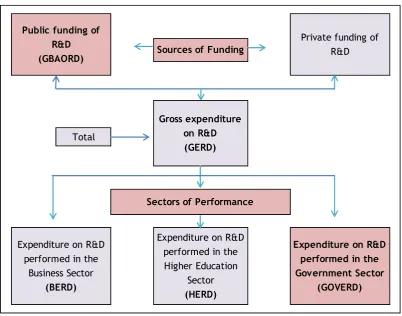
[image:8.595.86.489.378.694.2]Figure 1 below shows where this funding sits within the overall picture of Gross Expenditure on R&D (GERD) in Ireland.
Figure 1: R&D funding and performance system
Total
Expenditure on R&D performed in the
Business Sector (BERD)
Expenditure on R&D performed in the Higher Education
Sector (HERD)
Expenditure on R&D performed in the
Government Sector (GOVERD)
Public funding of R&D (GBAORD)
Private funding of R&D Sources of Funding
Gross expenditure
on R&D (GERD)
1.2 Government budget spending on research and development
State spending supports for R&D activities come from direct exchequer funding or to a lesser extent from EU sourced funding. Other non-public funding sources for state R&D activities can come from other sources including Irish and foreign business, non-profitable organisations, philanthropists and other donations from individuals. The internationally recognised indicator for benchmarking State sourced funding performance of R&D is GBAORD – Government Budget Appropriations and Outlays on R&D.
GBAORD includes:
funding for R&D programmes in the higher education sector, administered by the Department of Education and Skills, the Higher Education Authority (HEA), Science Foundation Ireland (SFI) and others;
funding for business sector R&D, administered via State agencies including IDA Ireland, Enterprise Ireland and others; and
[image:9.595.67.535.349.612.2] funding for government sector performed R&D, for example, Teagasc, The Marine Institute, non-teaching hospitals and others.
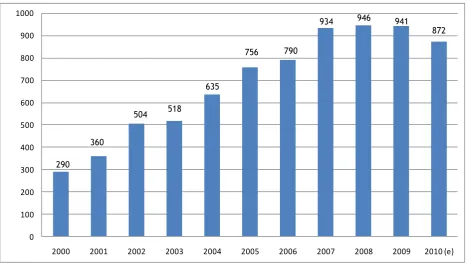
Figure 2: GBAORD trend in current prices, €m. (2000-2010)
Figure 2 above shows the government allocation to R&D activities performed across all sectors of the economy from 2000-2010. As can be seen, rapid gains were made in State R&D spending over the last decade. While there is a decline in allocated expenditure in the last two years the level of R&D funding from the State remains significant at €872 million.
Although there has been a drop in State funding sources from the EU over the last three years, this has been overshadowed by a more rapid slowdown in direct exchequer sourced funding for R&D activities.
290
360
504 518
635
756 790
934 946 941
872
0 100 200 300 400 500 600 700 800 900 1000
1.3 Detailed government department spending on research and development
Table 1 provides a breakdown of estimated public R&D funding by the main administrating government departments and agencies. The largest agency funding R&D projects in 2010 is expected to be the HEA which has allocated an estimated €288.7 million to R&D activities (or 33 percent of the total State spending on R&D). This spending includes expenditure on R&D programmes including direct funding via the
Programme for Research in Third-Level Institutions (PRTLI) and also indirect funding via the HEA block grant to supported institutions.
[image:10.595.86.508.246.684.2]The next largest funder of R&D activities was SFI allocating an estimated €150 million to R&D in 2010 via research grants and other research supporting programmes.
Table 1: Government departments and agencies funding R&D activities (2010 estimates)
Funding Department/Agency 2010 €m
% of Total
Higher Education Authority 288.7 33.1
Science Foundation Ireland
150.0 17.2
IDA Ireland
82.0 9.4
Enterprise Ireland
69.6 8.0
Teagasc
48.5 5.6
Health Research Board
44.4 5.1
Dept. of Agriculture, Fisheries and Food
29.0 3.2
Sustainable Energy Authority of Ireland 28.3 3.2
Irish Research Council for Science Engineering and Technology 24.0 2.7
Dept. of Enterprise Trade & Innovation
15.9 1.8
Dept. of Communications, Energy & Natural Resources
15.7 1.8
Environmental Protection Agency
13.0 1.5
Irish Research Council for Humanities and Social Science
11.8 1.3
Marine Institute
9.0 1.0
Others
44.6 5.1
The State currently invests in a wide range of R&D programmes which are outlined in more detail in Appendix 6. A summary of these programmes includes:
€289 million - The Higher Education Authority’s research programme is designed to enhance the research capabilities, capacity and infrastructure of Ireland‟s higher education institutions. These investments have been divided into a portfolio of programmes across disciplines spanning humanities and social sciences, the biosciences and technology and innovation sectors. During 2010, the HEA‟s PRTLI budget was transferred to the Department of Enterprise, Trade and Innovation.
€150 million - Science Foundation Ireland was established in 2000 to support globally competitive scientific research. SFI funds a variety of academic researchers and research teams which aim to promote research excellence in biotechnology, information communication technology (ICT), sustainable energy and energy efficient technologies. The allocation of finance is decided by SFI on the basis of scientific merit.
€82 million - IDA Ireland has national responsibility for securing new investment from overseas in manufacturing and international services, and for encouraging the existing foreign enterprises to expand their business. An R&D capability assistance grant is available to support the establishment of new R&D functions. Research Technological Development and Innovation (RTDI) grant assistance, is directed at established companies who are planning to undertake their first R&D project, and those companies who intend to expand existing ones.
€70 million – Enterprise Ireland (EI) is the national organisation responsible for bringing together innovation, business development and internationalisation for Irish industry. They aim to facilitate collaborative links between enterprise and the research community that will lead to the practical application of research in business. As such, EI offers a variety of supports and funding to companies that wish to engage in R&D. In addition to these R&D supports, EI also provides related funding of €23m through its Commercialisation Fund which is not included in this survey for classification reasons.
€48.5 million- Teagasc is the Irish institute responsible for research in agricultural production, the environment and the rural economy. The annual research portfolio comprises some 300 research projects, carried out by 500 scientific and technical staff in research centres throughout Ireland. Current research projects range from “animal bioscience research” to research aimed at enhancing the quality of life in rural Ireland.
€45 million - The Health Research Board (HRB) The research funding aspect of the HRB provides support for projects, programmes and fellowships in health research through an open competition process, along with an element of peer review. Funding covers all areas of health research from biomedical, translational, clinical and practised based research through to population health and research concerning the health services.
€28 million - Sustainable Energy Authority of Ireland is Ireland‟s national energy authority and is responsible for administering the Renewable Energy Research, Development & Demonstration (RERDD) Programme. The Authority also promotes and assists environmentally and economically sustainable production, supply and use of energy by operating grant aid programmes, providing policy support, and delivering information support aimed at increasing public awareness.
€24 million - The Irish Research Council for Science, Engineering and Technology, (IRCSET) funds R&D in science, engineering and technology in third level institutes. It seeks to position Ireland as an
international centre of excellence and achievement in research. It does this through a series of programmes of assistance, postgraduate research awards and the PhD fellowship scheme.
€16 million – Department of Communications, Energy and Natural Resources has responsibility for the Telecommunications, Broadcasting and Energy sectors. It regulates, protects and develops the Natural Resources of Ireland. The Department administers the Griffith Geoscience Research Awards the objectives of which are to develop overall research capacity particularly in priority areas of geosciences research. It also conducts research through its petroleum affairs, exploration and mining and energy planning divisions. The role of Geological Survey Ireland is the provision of information and advice on all aspects of geology.
€16 million – Department of Enterprise, Trade & Innovation has a wide economic development and job creation remit. Within the Department, the Office of Science, Technology and Innovation (OSTI) is
focussed on delivering this goal through the development, promotion and co-ordination of national science, technology and innovation policy, and by progressing the Strategy for Science, Technology and Innovation. In support of these aims, the Department manages Ireland‟s membership of the: European Space Agency - a principal objective of this membership is to promote opportunity for high technology industry in Ireland and the : European Molecular Biology Laboratory - an Inter-Governmental Research Organisation whose mission is the development of molecular biology throughout Europe. Membership of EMBL complements Ireland's significant investment in the biotechnology area by presenting opportunities for research training, networking and enhanced international collaboration.
€13 million - Environmental Protection Agency supports R&D activities in a range of environmental areas. This work is carried out by researchers in third level institutions, state agencies, government departments, local and regional authorities, the private sector and individuals. The EPA research programme for the period 2007-2013 is entitled Science, Technology, Research and Innovation for the Environment (STRIVE). The purpose of the programme is to protect and improve the natural environment by addressing key environmental management issues through the provision of world-class scientific knowledge generated through a vibrant, competitive programme of research developed supported and co-ordinated by EPA.
1.4 Programmes classified by area of research
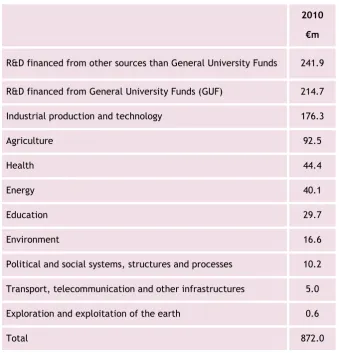
[image:13.595.130.470.217.573.2]The total expected GBAORD for 2010 can be classified into a number of funded economic areas (see Table 2 below). Over 50 percent of total GBAORD funding for 2010 has been allocated for performance in higher education. This €486 million includes funding for various agencies such as Science Foundation Ireland, the Higher Education Authority‟s PRTLI (Programme for Research on Third-Level Institutes) and other research funding bodies operating in the higher education sector.
Table 2: GBAORD classifications for Ireland 2010
2010 €m
R&D financed from other sources than General University Funds 241.9
R&D financed from General University Funds (GUF) 214.7
Industrial production and technology 176.3
Agriculture 92.5
Health 44.4
Energy 40.1
Education 29.7
Environment 16.6
Political and social systems, structures and processes 10.2
Transport, telecommunication and other infrastructures 5.0
Exploration and exploitation of the earth 0.6
Total 872.0
Industrial production and technology, which accounted for 20.2 percent of total GBOARD (and is expected to reach €176 million) in 2010 is an important category of R&D funding. Agriculture at €92 million
accounted for just under 11 percent of total government spending on R&D programmes.
1.5 GBAORD as a percentage of GNP and international comparisons
In order to compare state funding of R&D across international competitors, the OECD recommend using the GBAORD indicator with data derived using the guidelines stated in the Frascati Manual. GBAORD includes funding for R&D from direct exchequer sources and also via EU funding. It also includes funding for R&D in the humanities and social sciences.
[image:14.595.55.516.237.527.2]In Figure 3, the GBAORD trend line shows that between 2000 and 2007 there was a rapid increase in state R&D spending from €290 million to €946 million by 2008. There has been a downward trend in the last two years with the 2010 GBAORD figure down by €74 million on the 2008 figure.
Figure 3: GBAORD trend (€m) and GBAORD as a percentage of GNP (2000-2010)
The GBAORD intensity ratio [State R&D funding for R&D activities as a percent of economic activity divided by Gross National Product (GNP)] has risen steadily over the last decade. The period 2000 to 2002 saw the GBAORD intensity ratio climb from a low of 0.32 percent to 0.47 percent of GNP driven by rapid increases in R&D, funded by a strong economic growth scenario. Following a pause in state R&D funding growth in 2003 and 2006, the period 2003 to 2009 saw the GBAORD intensity rate rise as strong R&D spending gains outpaced nominal economic growth.
In 2009, GBAORD intensity climbed strongly to 0.72 percent of GNP although some of this rise was driven by the 4.1 percent contraction in economic activity in that year. Initial estimates for 2010 show total State departments, offices and agencies‟ spend on R&D activities declined to 0.67 percent of GNP.
0.32% 0.37%
0.47% 0.44% 0.50%
0.55% 0.51% 0.57% 0.61%
0.72%
0.67% 290
360
504 518
635
756 790
934 946 941
872
0.00% 0.50% 1.00% 1.50% 2.00%
-100 100 300 500 700 900 1100
2000 2001 2002 2003 2004 2005 2006 2007 2008 2009 2010 (e)
Table 3: Civil GBAORD as a percentage of economic activity (GDP/GNP) 2
Alongside this overall funding, we can also examine the civil GBAORD figures. Civil GBAORD is a better metric used for international comparisons as it does not include the defence portion of the R&D budget. Countries such as the US, France and the UK spent a relatively large proportion of their GBAORD budget on defence R&D. When data is adjusted for these R&D programmes to only include civil GBAORD programmes, the following data for 2000 and 2010 can be observed.
Country 2000 2009/2010 *
Finland 0.97% 1.12%
Iceland 0.94% 1.05%
Denmark 0.76% 0.98%
Portugal 0.56% 0.92%
Korea 0.49% 0.86%
Germany 0.73% 0.86%
Sweden 0.65% 0.84%
Spain 0.45% 0.76%
Netherlands 0.76% 0.75%
Ireland 0.32% 0.67%
EU – 27 countries 0.62% 0.61%
UK 0.43% 0.58%
United States 0.41% 0.57%
France 0.75% 0.53%
Australia 0.49% 0.49%
Greece 0.31% 0.30%
Latest data for most countries is 2010 with the exception of Iceland, Spain, Portugal, Sweden, UK and United States (2009), France (2008) and Greece (2007). Given the slowdown in economic activity in 2010 ratios for some countries could rise further.
Over the last ten years most OECD countries have seen an improvement in civil GBAORD performance relative to economic activity. Four countries in the table above stand out as having made rapid progress in their State R&D funding programmes – Spain, Portugal, Korea and Ireland. The ratio of civil GBAORD to economic activity in Spain increased from 0.45 percent of GDP in 2000 to 0.76 percent of GDP in 2008. In Korea the ratio rose from 0.49 percent to 0.86 percent of GDP between 2000 and 2010 and Portugal moved from 0.56 percent to 0.92 percent by 2009. In Ireland the civil GBAORD intensity ratio climbed from 0.31 percent of GNP in 2000 to stand at 0.67 percent of GNP in 2010.
Figure 4: International comparison of civil GBAORD as a percentage of GDP/GNP (2010*)3
* or latest date data is available
Finland, with civil GBAORD spending of 1.12 percent of GDP, is one of the strongest performing OECD countries, followed by Iceland at 1.05 percent of GDP. The latest available EU (27 countries) average civil GBAORD intensity is estimated to be around 0.61 percent of GDP.
Figure 5: Average annual growth rate of civil GBAORD for selected countries, (2005–2010)
[image:16.595.56.534.452.685.2]Chapter 2: Performance of Research and Development in the public sector
Research and development performed by relevant government departments and their agencies is measured using the GOVERD metric. The funding for Government Expenditure on R&D (GOVERD) comes from public, private and other sources but does not include R&D performed in the higher education sector. This
information is gathered in a separate survey conducted by Forfás titled, the Higher Education Research and Development (HERD) survey. When GOVERD is combined with the HERD and BERD (Business Expenditure on R&D) data, the R&D performance of the country as a whole can be calculated. As can be seen later in this chapter, the main performer of GOVERD continues to be Teagasc.
2.1 Total expenditure on research and development performed in the government sector
The expectation for expenditure on research and development performed in the government sector for 2010 is that it will drop from the 2009 performance of €103 million to €91 million which represents a decrease of 13 percent.
The 10-year trend in Figure 6 below shows that GOVERD levels are now around the same as in 2000. Expenditure on R&D performed in the State sector has fallen from a high in 2007 on €141 million to an allocation of €91 million in 2010.
[image:17.595.105.497.458.714.2]GOVERD as a percentage of GNP over the ten-year period from 2000 to 2010 is also illustrated in Figure 6. This graph shows that, as a percentage of GNP, the level of GOVERD has dropped from 0.11 percent in 2000 to 0.07 percent in 2010.
Figure 6: GOVERD as a percentage of GNP and GOVERD trend, (2000-2010)
0.11% 0.11% 0.12% 0.11% 0.11% 0.09%
0.08% 0.09% 0.09% 0.08% 0.07% 96
104
125 127
138 127
120
141 140
103
91
0.0 20.0 40.0 60.0 80.0 100.0 120.0 140.0 160.0
-0.05% 0.05% 0.15% 0.25%
2000 2001 2002 2003 2004 2005 2006 2007 2008 2009 2010
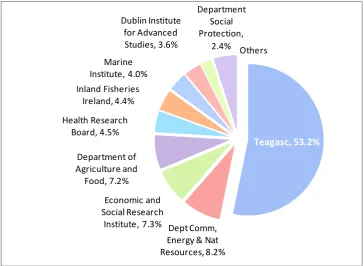
Figure 7: Major State research and development performers, percent of total (2010)
Figure 7 illustrates the major contributors to in-house R&D in the State sector in 2010. Teagasc, the Irish agriculture and food development authority, continued to be the largest performer of R&D in 2010, with expenditure of €48.5 million or over 53 percent of total GOVERD. However, the 2010 expenditure shows a decrease of 13 percent on the 2009 outturn figure of €56 million due to resource adjustments. Teagasc supports science-based innovation in the agri-food and broader bio-economy sectors.
Other major contributors include the Department of Communications, Energy and Natural Resources with expenditure of €7.4 million and of €6.6 million by the Economic and Social Research Institute and the Department Agriculture, Fisheries and Food. The contribution to GOVERD from the Marine Institute of €3.3 million, the national agency responsible for marine research, technology development and innovation (RTDI), has decreased due mainly to a re-classification of some programmes.
More detailed information on research spending in the government sector by institution and nature of programme is available in Appendix 5.
Teagasc, 53.2%
Dept Comm, Energy & Nat Resources, 8.2% Economic and
Social Research Institute, 7.3% Department of Agriculture and
Food, 7.2% Health Research
Board, 4.5% Inland Fisheries
Ireland, 4.4% Marine Institute, 4.0%
Dublin Institute for Advanced Studies, 3.6%
Department Social Protection,
Table 4: GOVERD as a percentage of GDP, selected countries (2005 and 2010 or latest available data)4
In Table 4 GOVERD as a percentage of GNP5 in Ireland is compared with GOVERD as a percentage of GDP in a selection of countries for 2005 and 2010 or the latest date for which data is available. Ireland has the lowest intensity rate with 0.08 percent in 2010. There is a concentration in Ireland on increasing the R&D performance in the higher education part of the overall research system - the figures for Higher Education Research & Development (HERD) are not included in this survey. Another reason for Ireland‟s low ratio is the size of the Irish public sector compared to other countries. A number of countries show a decrease in the ratio for 2010 when compared to 2005. These include, France, United States, China, United Kingdom
4OECD, Main Science and Technology Indicators Database, February 2011
5 GNP is used as a more accurate denominator for Ireland to reflect the large multinational base in Ireland which
repatriates profits to their respective home countries. It could therefore be argued that the GDP figure would not reflect real (i.e. retained) national income in Ireland
Country 2005 2010*
Germany 0.35 0.41
Korea 0.33 0.41
Slovenia 0.35 0.39
France 0.37 0.36
Finland 0.33 0.36
Czech Republic 0.28 0.33
United States 0.31 0.30
Japan 0.28 0.29
Norway 0.24 0.29
Luxembourg 0.19 0.29
Spain 0.19 0.28
China 0.29 0.28
Total OECD 0.26 0.26
EU-27 0.24 0.26
United Kingdom 0.18 0.17
Portugal 0.11 0.12
Turkey 0.07 0.11
Denmark 0.16 0.09
and Denmark. Increases can be seen in Germany, Korea, Slovenia, Finland, Japan, Czech Republic, Norway, Luxembourg, Spain, Portugal, Turkey and the EU 27.
2.2 Types of Research
The type of research being performed in the various government departments and agencies is also measured in this survey. The OECD Frascati Manual defines the three categories of research as follows:
Basic Research – experimental or theoretical work undertaken primarily to acquire new knowledge,
without any particular application or use in view;
Applied Research – original investigation undertaken in order to acquire new knowledge, primarily
directed towards a specific practical aim or objective; and
Experimental Development - systematic work, drawing on existing knowledge gained from research
and practical experience that is directed at producing new materials, products and devices, to
[image:20.595.157.439.397.534.2]installing new processes, systems and services, or to improving substantially those already produced or installed.
Table 5: GOVERD by type of research (2010)
Type of Research 2010
€m. % of total
Applied Research 80.0 88
Experimental Development 7.7 8
Basic Research 3.4 4
Total 91.1 100
88 percent of allocated funds for research to be undertaken by Irish government departments and agencies is in applied research, with expenditure in 2010 amounting to €80m.
Experimental development accounted for 8 percent of all expenditure at €7.7m, while €3.4m was allocated for basic research.
2.3 Fields of science
Table 6: Field of science classified by type of research, (2010) €m.
Field of Science Basic Applied Experimental Total
Agriculture, forestry and fisheries 0.0 56.3 2.3 58.3
Economics, business & education sciences 0.0 8.9 0.0 8.9
Veterinary science 0.0 1.3 4.1 5.4
Computer and information sciences 0.0 4.2 0.0 4.2
Health Sciences 0.2 4.0 0.0 4.2
Environmental engineering 0.0 2.7 0.6 3.3
Physical sciences 3.3 0.0 0.0 3.3
Other social sciences 0.0 2.2 0.0 2.2
Earth and related environmental science 0.0 0.3 0.6 0.9
Civil engineering 0.0 0.4 0.0 0.4
Totals 3.5 80.0 7.6 91.1
The majority of funds spent on research performed in the public sector is spent on applied research, this amounted to an allocation of €80m out of a total spend of €91m in 2010
Applied research in agricultural sciences continues to be the field of science in which most expenditure takes place. In 2010, €56.3 million was spent on applied science in this area with another €2.3 million spent on experimental development.
The major performer of R&D in the government sector is Teagasc which along with the Department of Agriculture, Fisheries and Food are engaged in the field of agricultural sciences. Other agencies working in this field are Bord Iascaigh Mhara, the Inland Fisheries Board and the Marine Institute.
Chapter 3: Human resources dedicated to publicly performed research and
development
Personnel engaged in R&D activities performed in institutions within the government sector are examined in this chapter. The data was collected from survey returns from 35 government department and agencies and relates only to personnel working in research and development in the government sector. It does not include R&D personnel in the higher education or business sectors.
The survey seeks to ascertain the amount of time spent by staff on R&D activities or in Full-Time
Equivalent (FTE) terms in addition to gathering information on the overall totals, gender, qualifications and occupations of R&D staff. The research personnel are divided into PhD and non-PhD researchers,
technicians and other support staff. A researcher spending 70 percent of their time on research activities equals one researcher in headcount terms, and 0.7 researchers in FTE terms. Gathering information on the time spent by government sector researchers and research support staff, specifically on R&D work, allows for more robust benchmarking with comparable data from other countries.
3.1 Research and development personnel
Based on estimates, it is anticipated that there will be a 6 percent decrease in 2010 in the overall number of research personnel employed in the government sector over the 2009 outcome of 1,207 (Figure 8). The number of PhD researchers has fallen by 3 percent, researchers without a PhD by 5 percent, and
technicians are expected to decrease by approximately 9 percent in 2010 over 2009. There has also been a reduction in the number of research support staff of approximately 7 percent in 2010.
[image:22.595.122.474.487.719.2]In „full-time equivalent‟ terms, there were 447 FTE researchers in 2010, supported by 539 FTE technicians and other support staff.
Figure 8: Total research and development personnel by occupation (headcount terms, 2008-2010)
431
197
298
424
351
181
268
407
340
171
244
380
0 100 200 300 400 500 600
Researchers with PhDs
Researchers without PhDs
Technicians Other Support Staff
As illustrated in Figure 9 below 32 percent of FTE researchers hold a PhD qualification, while 13 percent of FTE researchers hold degrees below PhD level. Twenty-two percent of government research personnel were employed at technician level, with the remaining 33 percent of the FTE total working in other support roles for government researchers.
Figure 9: Total R&D personnel by occupation in FTEs, (2010)
3.2 Gender and qualifications of State sector research staff
Figure 10 shows a breakdown of government researcher grades (excludes technicians and support staff), as a percentage of the total, by gender and type of qualification, for 2010, in full-time equivalent terms.
[image:23.595.157.448.570.769.2]Male PhD researchers continue to dominate the numbers employed at research level in the government sector representing 49 percent of the total. Female PhDs represent 23 percent of government researchers with another 12 percent of researchers below PhD level. Male researchers below PhD level each account for 16 percent of the total.
Figure 10: FTE Researchers by gender and qualification, (2010)
32%
13% 22%
33%
FTE Researchers with PHDs
FTE Researchers without PHDs
FTE Technicians
FTE Other Staff
Male (PhDs)
49%
Female PhDs,
23%
Male (Non PhDs)
16%
Female (Non PHDs)
3.3 Research and development staff by fields of science
Of the total 510 PhD and non-PhD researchers employed in the government sector in 2010, 328 were male and 182 were female and the following table sets out their fields of science.
[image:24.595.51.517.248.576.2]When analysed by the OECD standard fields of science, the following statistics emerge for 2010. The majority of the government researchers work in the agricultural, forestry and fisheries field. 51.6 percent of male researchers and 34.7 percent of female researchers are engaged in research and development work in this area.
Table 7: Total male/female and as percentage of total by field of science, (2010)
Fields of Science Male
Researchers
Male researchers
as % of all male researchers
Female Researchers
Female researchers
as % of all female researchers
Agriculture, forestry and fisheries 169 51.6 63 34.7
Civil engineering 4 1.2 2 1.1
Earth and related environmental sciences 32 9.8 24 13.2
Economics and Business 30 9.1 27 14.8
Environmental Engineering 21 6.4 13 7.1
Health sciences 3 0.9 33 18.1
Other social sciences 2 0.6 2 1.1
Physical sciences 50 15.2 18 9.9
Veterinary science 17 5.2 0 0.0
Figure 11 shows a gender breakdown within the different fields of science. Female researchers make up 92 percent of total medical and health researchers, while male researchers account for 63 percent of
researchers in engineering and technology fields. Male researchers also dominate all other fields of science accounting for 66 percent in natural sciences, 74 percent of research in the agricultural science, and 53 percent in social science. Outside of the medical and health fields, the highest participation by female researchers is in social sciences with females accounting for 47 percent of the total. Note that these percentages are based on small population samples (e.g. 40 engineering & technology researchers, 36 medical & health sciences researchers, etc).
Figure 11: Researchers classified by gender and field of science, (2010)
Male Researchers
Female Researchers
186.1
3 25 82.2
32.5
Agricultural Sciences Medical and Health Sciences Engineering and Technology Natural Sciences
Social Sciences
64.5
33.4 15
42
29
Agricultural Sciences Medical and Health Sciences Engineering and Technology Natural Sciences
[image:25.595.137.464.520.714.2]Appendix 1
Methodology
The information given in this document relates to information supplied by 35 institutions in receipt of monies from the exchequer for the performance or support of research and development. In general, institutions and information relating to them are listed separately. In a few cases an institution is listed with its parent department or organisation but identified separately.
Expenditure data for specific programmes refer to the 2009 outturn costs of programmes and to the expected costs in 2010. The outturn costs are mainly funded by matching grant-in-aid or voted monies. Where programmes are funded in other ways, these monies are noted separately. In these instances, the expenditure (cost) data shown includes both exchequer and other income contributions.
Expenditures are based on unaudited figures, except in a few cases where they are identical with a vote by the Oireachtas. For convenience, general overheads, where shown, are distributed in proportion to
programme expenditures. Programmes are attributed to the institution most directly involved - that is to those actually operating them, but not necessarily funding them. An example of the latter is the
Department of Enterprise, Trade and Innovation which funds but does not operate or manage programmes.
Appendix 2
[image:27.595.92.516.205.661.2]Government departments and agencies included in the 2010 Science Budget
This survey records expenditure on research and development in the government sector. This sector includes government departments, associated government agencies and government office. Table 8 below lists the 35 government departments, agencies and offices included in the 2009/2010 Science Budget.Table 8: Government departments/agencies and offices funding R&D activities, 2009-10
Government Departments Associated Agencies
Dept. of Agriculture, Fisheries and Food Bord Iascaigh Mhara, COFORD, Marine Institute, Teagasc
Dept. of Communications, Energy and Natural Resources
Inland Fisheries Ireland, Sustainable Energy Authority of Ireland
Dept. of Community, Rural and Gaeltacht Affairs Údarás na Gaeltachta
Dept. of Education and Skills
Dublin Institute for Advanced Studies, Higher Education Authority, Irish Research Council for Humanities & Social Sciences, Irish Research Council for Science, Engineering & Technology
Dept. of Enterprise, Trade and Innovation
Enterprise Ireland, FÁS, Forfás, IDA Ireland, InterTradeIreland, Science Foundation Ireland, Shannon Development
Dept. of the Environment, Heritage and Local Government
Environmental Protection Agency, Met Éireann, Radiological Protection Institute of Ireland
Dept. of Finance Economic and Social Research Institute
Dept. of Health and Children Health Research Board
Dept. of Social Protection
Dept. of the Taoiseach National Economic and Social Council
Dept. of Transport National Roads Authority
Appendix 3
Definitions of R&D activities
Research and Development:
Research: Original, experimental or theoretical investigations undertaken to acquire new knowledge, with or without a particular application or use in view.
Development: Systematic work drawing on existing knowledge gained from research and/or practical experience, that are directed to producing new products, processes, systems, services, varieties and breeds and to improving substantially already existing ones. Data collection conducted solely or primarily as part of the research and development (R&D) process included under “research” or “development” as appropriate.
Other Definitions:
Public funds = Exchequer + EU funds
GBAORD = Government Budget Appropriations or Outlays on R&D
(Public funds) + (Funds for the Social Sciences and Humanities (HEA)
Appendix 4
Acronyms
AAGR Average Annual Growth Rate
BERD Business Expenditure on R&D
COFORD National Council for Forest Research and Development
CSF Community Support Framework
DIAS Dublin Institute for Advanced Studies
EPA Environmental Protection Agency
ESRI Economic and Social Research Institute
FÁS Foras Áiseanna Saothair – National Training and Employment Authority
FTE Full-Time Equivalent
GBAORD Government Budget Appropriations and Outlays on R&D
GERD Gross Expenditure on R&D
GOVERD Government Expenditure on R&D
GUF General University Funds
HEA Higher Education Authority
HERD Higher Education Expenditure on R&D
HRB Health Research Board
IRCHSS Irish Research Council for the Humanities and Social Sciences
IRCSET Irish Research Council for Science, Engineering and Technology
NESC National Economic and Social Council
NRA National Roads Authority
OPW Office of Public Works
OST Office of Science and Technology - Department of Enterprise, Trade and Innovation
PGM&DB Postgraduate Medical and Dental Board
RPII Radiological Protection Institute of Ireland
SEAI Sustainable Energy Authority of Ireland
Table of Contents
Department of Agriculture, Fisheries and Food 32
Bord Iascaigh Mhara 33
COFORD 34
Marine Institute 35
Teagasc 36
Department of Communications, Energy and Natural Resources 37 Inland Fisheries Ireland 39
Sustainable Energy Authority of Ireland 39
Department of Community, Rural and Gaeltacht Affairs 41
Údarás na Gaeltachta 41
Department of Education and Skills 42
Dublin Institute for Advanced Studies 43
Higher Education Authority 44
Irish Research Council for the Humanities and Social Sciences 46 Irish Research Council for Science, Engineering and Technology 47
Department of Enterprise, Trade and Innovation 48
Enterprise Ireland 49
FÁS 50
Forfás 51
IDA Ireland 51
InterTradeIreland 52
Science Foundation Ireland 52
Shannon Development 55
Department of the Environment, Heritage and Local Government 56
Environmental Protection Agency 56
Met Éireann 57
Radiological Protection Institute of Ireland 58
Department of Finance 58
Economic and Social Research Institute 58
Department of Health and Children 59
Health Research Board 60
Department of Social Protection 61
Department of the Taoiseach 62
National Economic and Social Council 62
Department of Transport 62
National Roads Authority 62
Offices
Central Bank and Financial Services Authority 63
Department of Agriculture, Fisheries and Food
The Department of Agriculture, Fisheries and Food (DAFF) is a multi–functional organisation which provides a wide range of services directly and through specialist state agencies operating under its aegis. Its mission is to lead the sustainable development of a competitive, innovative, consumer focused agriculture, food, fishery and forestry sector and contribute to a vibrant rural and coastal economy and society.
State-sponsored bodies which come under the statutory responsibility of the Minister for Agriculture, Fisheries and Food include Teagasc (The Agriculture and Food Development Authority), the Marine Institute and An Bord Bia. However, the figures below refer only to the R&D spend by DAFF itself.
Research and Development Programmes €’000
2009
€’000 2010
Improvement of Crops
Improving the quality of crops and crop products through the use of the highest quality varieties and seeds. The main activities leading to achievement of this objective include the operation of two stations/farms at Fermoy in Co. Cork and Backweston in Co. Dublin, where plant varieties are evaluated, the operation of a potato laboratory at Raphoe in Co. Donegal and the carrying out of trials in farmers‟ fields throughout the country.
1,057 1,200
R&D-Related Veterinary Laboratory Activities
Operation of a central veterinary research laboratory at Backweston, Celbridge, Co. Kildare, regional veterinary research laboratories at Cork, Limerick, Sligo, Athlone and a testing laboratory in Waterford.
4,910 5,400
Institutional Food Research – Competitive Funding Programme
In its implementation of the Food Institutional Research Measure of the RTDI component of the Productive Sector OP under the National Development Plan 2000 – 2006 and 2007 - 2013, the Department is involved in the management of competitive tendering by food research institutions for grant aid to support food research in priority areas. It monitors the progress of successful projects, payment of grant aid and evaluation of the programme.
15,260 14,200
Agricultural Production Research- Competitive Funding Programme
This is the “Research Stimulus Fund” measure of the Productive Sector OP of the NDP 2000-2006 and NDP 2007-2013 which encourages co-operative research in agricultural production. This involves management of competitive tendering by research
institutions for grant aid to support agricultural research projects in priority areas, monitoring of progress of successful projects, payments of grant aid and evaluation of the programme.
5,502 6,622
Improvement of Livestock
Improving the quality of livestock and livestock products through adoption of better breeding and selection practices carried out in Irish Cattle Breeding Federation (ICBF). The main activities leading to achievement of these objectives are operation of
Genetic Resources in Plants and Animals
The Department of Agriculture, Fisheries and Food's grant aid scheme for the conservation of genetic resources for food and agriculture has been in place since 1996. The Scheme has an annual call for projects aimed at supporting the conservation and sustainable use of genetic resources for food and agriculture. Projects are
evaluated by an advisory committee, representing broad national stakeholder interests.
248 350
International Equine Institute
Based in University of Limerick the Institute receives a grant payment from DAFF 292 293
Bord Iascaigh Mhara
Bord Iascaigh Mhara (BIM) is the Irish State agency with responsibility for developing the Irish Sea Fishing and Aquaculture industries. BIM was established under the Sea Fisheries Act 1952. BIM‟s mission is “to promote the sustainable development of the Irish seafood industry at sea and ashore and support its diversification in the coastal regions so as to enhance its contribution to employment, income and welfare both regionally and nationally.
There are three complementary, integrated programmes, which form the core of BIM‟s support to the sea fisheries sector. The measures underlying these programmes are mainly provided for in the National Development Plan 2007-2013
BIM provides a range of services including advisory, financial, technical, business development and training supports to all sectors of the Irish seafood industry. BIM‟s clients comprise fishermen, fish farmers,
processors and all those engaged in marketing Irish seafood.
Research and Development Programmes €’000
2009
€’000 2010
Marine Technical
The objectives of the Marine Technical Section are to progress development of
responsible fishing practices addressing environmental and sustainability issues through technical innovation and technology transfer. The section carries out sustainability-orientated projects, aimed at promoting the use of more selective gear types and protection of key fisheries together with identifying ways to reduce operating costs through diversification into alternative, fuel-efficient fishing methods.
331 162
Resource Development
The primary focus of the Resource Development Section work programme will see the further development of mechanisms by which the industry can compete in the
marketplace through increased quality. At the core of this strategy is the development of quality schemes for the catching sector that are suitable for integration into the QSP programme. This will enable Irish fishermen to compete at the highest levels of quality and traceability now demanded by the consumer.
151 57
Inshore Fisheries
The primary function of the inshore fisheries Section is the implementation of the framework for the management of the major inshore stocks announced by the Minister in 2004. The work involves establishing species advisory groups and drawing up management plans for important inshore fisheries. Monitoring of stocks in support of
management and the further development of applied research programmes are funded through the NDP in support of the framework.
Supporting Measures
The Supporting Measures Programme of the National Development Plan provides, through 8 targeted schemes, grant aid of €25 million over the lifetime of the National Development Plan. To date some €26.9 million has been awarded to a total of 147 projects.
919 0
MEPS - Marine Environment Protection
The Marine Environment Protection Measure has been developed in accordance with Article No. 37 and 38 of Council Regulation (EC) No 1198/2006 of 27 July. The Measure facilitates projects to address issues of environmental concern, particularly those intended to protect and develop the marine environment.
00 600
Planning and Development 13 10
National Council for Forest Research and Development (COFORD)
COFORD is the National Council for Forest Research and Development. COFORD manages the forest research programme of the Department of Agriculture Fisheries and Food under the National Development Plan, 2007-2013. COFORD‟s objectives are:
to support the economic, environmental and social goals of forest policy through funded research and development activities, service provision and information and technology transfer;
to identify research and development needs and priorities for the forestry sector; and
to develop national forest research capacity and competence.
Research and Development Programmes €’000
2009
€’000 2010
COFORD‟s programme of funded research under the National Development Plan 2007-2013 comprises 13 thematic areas:
1. Forest reproductive material 2. Silviculture
3. Forest planning and management 4. Forest economics and policy 5. Forest health and protection 6. Forest harvesting and transport 7. Wood products
8. Wood energy 9. Non wood products
10. Forests & climate change mitigation adaptation 11. Biodiversity in native woodlands and plantations 12. Forests and water
13. Forest recreation and public health
wood energy advice
advice on climate change
* excludes €0.357 million allocated to Forestry Development and Promotion
Marine Institute
The Marine Institute has the general functions “to undertake, to co-ordinate, to promote and to assist in marine research and development and to provide such services related to marine research and
development that in the opinion of the Institute will promote economic development, create employment and protect the marine environment” (Marine Institute Act, 1991). The key services delivered by the Marine Institute include:
Research – The Marine Institute's activities, in relation to marine research, fall into three main areas:
Research Performer: The Marine Institute undertakes research (both applied and experimental development) through its operational programmes and also through leading and participating in many national and international research projects.
Research Funder: The Marine Institute administers the Marine Research Sub-Programme of the
National Development Plan 2007-2013.
Research Promoter, Coordinator and Catalyst: As the lead implementing agency for Sea Change –
A Marine Knowledge, Research & Innovation Strategy for Ireland 2007-2013, the Institute
co-ordinates and promotes marine research, bringing together industry, higher education institutions and government bodies to support the development of Ireland‟s knowledge economy.
Monitoring, data collection and other technical services: The Institute carries out Statutory and non-statutory monitoring and data collection to underpin the development of the marine sector and the sustainability of the marine environment.
Provision and formulation of scientific, technical and strategic policy advice:
Sectoral Development: The Marine Institute provides a number of services related to the development of Ireland‟s vast marine resource.
The Marine Institute has developed world-class marine research infrastructure including: HQ & Laboratory Complex (54 labs) in Oranmore, Co. Galway; an Aquaculture & Catchment Management Research Facility in Newport, Co Mayo; two multi-purpose National Research Vessels, a remotely operated vehicle (ROV); an Ocean Energy Test & demonstration site in Galway Bay; and a range of specialist scientific equipment and data management facilities.
Research and Development Programmes €’000
2009
€’000 2010
Marine Institute R&D Programmes (incl. EU Funded Projects)
The Marine Institute is a significant research performer - competing for and securing funds from both national and international (EU FP and INTERREG) funding sources. This research supports the provision of government services, including the provision of policy advice; underpins the competitiveness and market accessibility to Irish seafood production (fisheries and aquaculture) through a range of scientific research
assessment and monitoring programmes spanning fisheries resources, marine environment monitoring and marine food safely. In addition to the Institute‟s direct participation in externally funded research projects, the Institute also participates in marine research via in-kind contribution e.g. through the provision of research
facilities/infrastructure for projects that are complementary to the Institute‟s core activities.
EU FP7 Project Payments to Other Partners 249 0
NDP 2007-2013: Marine Research Sub-Programme and NDP 2000-2006 Marine RTDI Measure
The Marine Institute administers on a competitive basis the national marine research funding programme: Marine Research Sub-Programme of the 2007-2013 National Development Plan and Marine RTDI Measure of the 2000-2006 NDP. Research funding is awarded on a competitive basis for „applied‟ marine-related R&D in line with the objectives set out in Sea Change. The Institute administers and manages the following categories of funding:
Project-Based Awards: Strategic Research Projects, Applied Research Projects, Demonstration Projects and Desk/Feasibility Studies;
Researcher Awards: Strategic Research Appointments, Research
Capacity/Competency Building, Post-Doctoral Fellowships and PhD Scholarships;
Industry-Led Research Awards: Company Awards and Collaborative Awards;
Infrastructure Awards: Infrastructure Acquisition & Access to Infrastructure
7,796 5,413
Teagasc
Teagasc (the Agriculture and Food Development Authority) is the national body providing advisory,
research, education and training services to the agriculture and food industry. It was established under the Agriculture (Research, Training and Advice) Act, 1988. The organisation's mission is: “To support science-based innovation in the agri-food sector and broader bio-economy that will underpin profitability,
competitiveness and sustainability”.
The Teagasc Change Management 2009 -2013 plan addresses both the ongoing need for change identified in
Teagasc 2030 and the need for significant resource rationalization arising from the current budgetary
challenge. In pursuing this mission, Teagasc focuses on:
Developing the information and new technology required to underpin competitiveness and innovation in sustainable agricultural production and the food processing sector.
Analysing and projecting the impact of policies for the agri-food sector.
Developing and maintaining a strong human resource capacity across the agri-food sector.
Providing a sound scientific basis for decision-makers in protecting the integrity of the food chain, protecting the rural environment and addressing the concerns of the consumer.
Developing a capacity in molecular biology with a view to increasing its application in the agri-food industry.
Research and Development Programmes €’000
2009
involved in the business of agriculture and food with the knowledge to improve efficiency, competitiveness and responsiveness to the market and to develop policies that respect the physical environment, promote biodiversity and guarantee the maintenance of a healthy population and health-giving countryside.
Food Programme
The Food Programme is directed towards developing the base of expertise and information in generic technologies to assist the Irish food industry to achieve consistent quality and guaranteed safety, allied to product and process innovations. The programme covers the full spectrum of the innovatory process, ranging from market studies through strategic research to technology development services and training programmes. Some of the main areas targeted include food safety, cheese diversification and efficiency, meat quality, dairy and powder technology, and cheese cultures. In addition, there is an increased emphasis on the effect of food on human health with a view to generating products with scientifically proven health benefits – so called Functional Foods – and includes research programmes on obesity, infant and elderly nutrition, bioactive mining and gut health.
Department of Communications, Energy & Natural Resources
The Mission statement of the department is “to promote the sustainable development, management and regulation of the communications, energy, marine and natural resources sectors in support of national economic and social policy objectives”.Research and Development Programmes €’000
2009
€’000 2010
Exploration Mining Division
The purpose of the division is to stimulate the discovery of economic mineral deposits and to maximise the contribution of the mining sector to the national economy, with due regard to its environmental and social impact.
43 0
Geological Survey Ireland
As the national geological agency, GSI plays a key role in the development of the geosciences sector which contributes significantly to the economic development and quality of life of our nation. GSI provides a range of high-quality services which support the other players of the geosciences sector as well as a wide spectrum of other activities, including infrastructure, environment, mineral resources, water supplies, heritage and education.
157 120
INFOMAR (Integrated Mapping for the Sustainable Development of Ireland’s Marine resource).
INFOMAR, is the national marine mapping programme being undertaken jointly with the Marine Institute. Designed to create integrated knowledge of the physical, chemical and biological resources of our extensive seabed, INFOMAR worked in 2009 to help delineate new candidate marine Special Areas of Conservation in the deepwater offshore in collaboration with the National Parks and Wildlife Service. The RV Celtic Voyager completed surveys in Dingle Bay and along the coastlines of Wexford and North Dublin in support of maritime safety and biological heritage objections.
The RV Keary, a cost-efficient inshore survey vessel, was commissioned during 2009
and commenced surveying in Dublin Bay. It undertook collaborative surveys in the Irish Sea in conjunction with energy and biological heritage interests. INFOMAR became a partner in two EU-supported projects, GEOSEAS (FP7) and EMODNET (DG Mare), which will deliver efficient datasets. 2009 marked ten years of eventful seabed mapping and this milestone was recognised at the Seabed 10 conference in October which reviewed the progress and impact of this work.
The INFOMAR Programme held an applied Research Call in 2009 which supported 14 projects, mostly one year post grad studies, a total commitment of over €350,000
Griffith Geoscience Research Awards
The objective of the awards, which are managed by the Geological Survey of Ireland (GSI), is to develop overall research capacity particularly in priority areas of geosciences research as outlined in the National Geoscience Programme, 2007-2013 (available at www.gsi.ie). The awards among other things support the establishment of an all-island geosciences graduate school and seek to stimulate interest by primary and secondary school students in Geology/Geoscience through the production and distribution of geosciences outreach products.
341 3,284
Geoscience Initiatives
The Geoscience Initiatives is a series of co-ordinated actions managed by GSI and principally aimed at local authorities to support infrastructural development planning and environmental protection under the NDP.
786 0
Energy Planning
This covers a range of Energy RTDDI, administration, capital initiatives and programmes and policy support and advice.
131 542
National Digital Research Centre (NDRC)
NDRC (National Digital Research Centre) is an independent enterprise dedicated to accelerating research from idea to income with support from the Department of Communications, Energy and Natural Resources. Their collaborative approach with technology and business innovators drives greater collective success while cultivating bolder attitudes towards invention and investment.
1,995 4,153
Exemplar Test-bed Lab
DCENR is entering into a collaborative research undertaking to develop the Exemplar Smart Communications Test-bed Lab. This is the world‟s first example of a next generation network based on a truly dynamic optical infrastructure. It is based on a new technology called Optical Packet Switch and Transport (OPST) which enables the infrastructure to respond dynamically to unpredictable traffic patterns. OPST can guarantee the performance level of a multi-service network with respect to bandwidths, delay and jitter of packet flows across the network.
The contract for the first stage of the Exemplar Network Test bed lab was signed on April 22nd, 2010. The first stage opened in July 2010 with a target for the industry R&D projects to start in September 2010. In addition to the early industry participants several Irish, UK and Spanish University projects are in planning.