On the Discoursive Structure of Computer Graphics Research Papers
Beatriz Fisas, Francesco Ronzano and Horacio SaggionNatural Language Processing Group, Pompeu Fabra University, Barcelona, Spain
{beatriz.fisas,francesco.ronzano,horacio.saggion}@upf.edu
Abstract
Understanding the structure of scientific dis-course is of paramount importance for the de-velopment of appropriate Natural Language Processing tools able to extract and summa-rize information from research articles. In this paper we present an annotated corpus of scientific discourse in the domain of Com-puter Graphics. We describe the way we built our corpus by designing an annotation schema and relying on three annotators for manually classifying all sentences into the defined cate-gories. Our corpus constitutes a semantically rich resource for scientific text mining. In this respect, we also present the results of our ini-tial experiments of automatic classification of sentences into the 5 main categories in our cor-pus.
1 Introduction
Understanding the internal organization of text doc-uments is important for many content assessment tasks such as summarization or information extrac-tion. Several studies have investigated the struc-ture and peculiarities of scientific discourse across distinct domains, such as biology (Mizuta and Col-lier, 2004), chemistry and computational linguistics (Teufel et al., 2009), or astrophysics (Grover et al., 2004). The coherence of the argumentative flow that authors adopt to expose scientific contents is essen-tial to properly contextualize these contents, to char-acterize their connections with related pieces of re-search as well as to discover relevant aspects, novel-ties and future directions.
Because of both the huge, growing amount of scientific literature that is accessible online and the complexity that often characterizes scientific dis-course, currently researchers and professionals are experimenting more and more difficulties when try-ing to keep themselves up to date.
The analysis of the internal organization of the scientific discourse and the identification of which
role each piece of text plays in the scientific argu-ment contribute to structure and thus ease the in-terpretation of scientific information flow. In addi-tion, the explicit characterization of scientific dis-course provides useful meta-information to support tasks like targeted information extraction, content retrieval and summarization.
Although several studies have characterized sci-entific domains, the area of Computer Graphics, a sub-field of Computer Science, has not been studied in previous work. We have developed an annotation scheme and produced an annotated corpus of scien-tific discourse in this domain.
The rest of the paper is structured as follows: Af-ter a review of previous work in the next section, we present and motivate the annotation scheme in section 3, describing the corpus dataset in section 4. We provide details of annotation process in sec-tion 5, followed by the values of the attained inter-annotator agreement and an analysis of the structure of the resulting corpus in section 6. Finally, before closing the paper with conclusions and future work, we explain our first experiments in automatic sen-tence classification in section 7.
2 Scientific discourse characterization: related work
The analysis and annotation of scientific discourse has been approached from different points of view in previous works.
Although the focus of the analysis is manifold and spans along different linguistic concepts, the scien-tific discourse annotation schema we propose in this paper builds upon the proposals of Teufel (1999; 2009; 2010) and Liakata (2010) hence the follow-ing subsections describe in more detail their contri-butions.
classifying the citation functions (Garfield, 1965; Melvin Weinstock, 1971; Spiegel-R¨osing, 1977).
Liakata (2010) analyses the content and concep-tual structure of scientific articles with an ontology-based annotation scheme, the Core Scientific Con-cepts scheme (CoreSc). Closely related to this ap-proach is the multidimensional scheme of Nawaz (2010), tailored to bioevents, and the works of De Waard (2009) in classifying sentences in 5 epistemic types and White (2011), who concentrates on iden-tifying hypothesis, explanations and evidence in the biomedical domain.
In terms of scope, abstracts, considered to be a brief summary of the whole article, have been the object of research in the works of Guo (2010), Lin (2006), Ruch (2007), Hirohata (2008) and Thomp-son (2009).
Among researchers who explore full articles, Lin (2006) and Hirohata (2008) have based their analysis on section names, offering a coarse-grained annota-tion, while Liakata (2010; 2012), Teufel (2009) and Shatkay (2008) adopt a finer-grained approach.
The annotation unit is also a controversial matter. While most researchers agree to classify sentences into categories (Liakata and Soldatova, 2008; Li-akata et al., 2010; Teufel and Moens, 2002; Teufel et al., 2009; Lin et al., 2006; Hirohata et al., 2008), oth-ers segment sentences into smaller discourse units (Shatkay et al., 2008; DeWaard, 2009).
Bioscience is by far the most studied domain and acts as a motor for research in information extrac-tion from scientific publicaextrac-tions (Mizuta et al., 2006; Wilbur et al., 2006; Liakata et al., 2010). Neverthe-less, some work has also been done in the Compu-tational Linguistics and Chemistry domains, where Teufel (2009) has implemented her AZ-II extended annotation scheme.
2.1 Argumentative Zoning - AZ
Teufel’s main assumptions are that scientific dis-course contains descriptions of positive and nega-tive states, refers to other’s contributions, and is the result of a rhetorical game intended to promote the authors contribution to the scientific field. In fact, Teufel argues that scientific texts should make clear what the new contribution is, as opposed to previous work and background material.
From a theoretical point of view she develops the
Knowledge Claim Discourse Model (KCDM) which she adapts into three annotation schemes: Knowl-edge Claim Attribution (KCA), Citation Function Classification (CFC) and Argumentative Zoning (AZ).
Teufel annotates a corpus of Computational Lin-guistics papers with the first version of Argumenta-tive Zoning (AZ) (Teufel and Moens, 2002). She later extends the AZ scheme for annotating chem-istry papers, thus creating a new version, the AZ-II, with 15 categories (Teufel et al., 2009) instead of the first 7 in AZ.
The AZ-II annotated corpus consists of 61 articles from the Royal Society of Chemistry.
2.2 Core Scientific Concepts - CoreSc
Liakata (2010) believes that a scientific paper is a human-readable representation of a scientific inves-tigation and she therefore seeks to identify how and where the components of a scientific research are ex-pressed in the text.
As Teufel, Liakata also proposes a sentence-based annotation for scientific papers, but unlike Teufel, who proposes a domain independent annota-tion scheme based on argumentative steps, Liakata’s scheme supports ontology motivated categories rep-resenting the core information about a scientific pa-per.
It was constructed with 11 general scientific con-cepts based on the EXPO ontology (Soldatova and King, 2006), which constitute the first layer of the annotation. The second layer allows the annotation of properties (New/Old, Advantage/Disadvantage) of certain sentences labeled in the first layer. Finally, in the third layer, several instances of a concept can be identified.
With the CoreSC annotation scheme and guide-lines, Liakata’s team produced the CoreSC corpus, constituted by 265 annotated papers from the do-mains of physical chemistry and biochemistry.
categories while AZ-II covers aspects of knowledge claims that permeate across several CoreSC con-cepts.
Corpora annotated with Argumentative Zoning-II (Teufel et al., 2009) and Core Scientific Concepts (Liakata et al., 2010) have been exploited to build automatic rhetorical sentence classifiers.
3 Scientific Discourse Annotation Scheme 3.1 The domain: Computer Graphics
Computer Graphics is a vast field which includes al-most anything related to the generation, manipula-tion and use of visual content in the computer. It is a relatively young discipline which has not been yet described in terms of its discourse, which differs mainly from the Bioscience’s discourse in its much more mathematical content.
Research in Computer Graphics is based on mul-tiple technical backgrounds, (mainly Physics, Me-chanics, Fluid Dynamics, Geometry, Mathematics) and its results are the development of practical ap-plications for their exploitation in several industries. Scientific publications in Computer Graphics re-flect the characteristics of this domain. It is expected that they include a section where a theoretical model is presented in detail - with algorithms, equations, algebra and mathematical reasoning - and a section where a computational experiment demonstrates an application that contributes to the knowledge in the area or to enhance techniques already in use in the mentioned industries. Experiments in computational sciences are basically algorithmical and do not in-clude materials nor physical processes in laborato-ries.
3.2 The annotation scheme design
We defined our Scientific Discourse Annotation Schema by relying on both Teufel’s and Liakata’s annotation schemas and contributions. In particular, we extended and enriched Liakata’s CoreSc scheme at this first stage, leaving the knowledge claim ap-proach for a second stage.
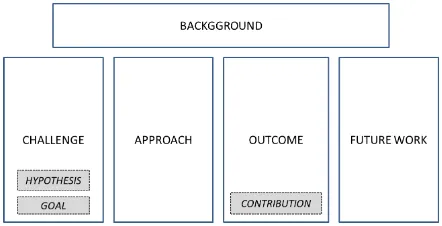
[image:3.612.316.537.62.175.2]A thorough review of the previous work in anno-tation of scientific publications as well as the analy-sis of the contents of papers in our domain, lead us to select 9 categories from Liakata’s annotation scheme and the Discourse Elements Ontology (DEO), which
Figure 1: Simplified Annotation Scheme: 5 categories and 3 subcategories
were later increased to a total of 16, in order to cover the scientific concepts that might appear in an arti-cle.
However, this first scheme proved to be too com-plex, and we agreed to follow an annotation work-flow characterized by subsequent steps with differ-ent levels of granularity. Thus, the corpus annota-tion process should go through a first coarse-grained phase and later increase the level of details with a finer-grained annotation scheme.
The 16 categories of the extended scheme were grouped into 5 main categories (Fig. 2).
Nevertheless and in order to provide the anno-tated corpus with more detailed information, we de-cided to leave annotators the possibility to specify three especially significant sub-categories: Hypoth-esis, Goal and Contribution.
Fig.1 shows the final version of our scientific dis-course simplified annotation scheme.
4 Corpus Dataset for annotation: Data collection and Annotation unit
To populate our corpus we randomly selected a set of 40 documents, available in PDF format, among a bigger collection provided by experts in the do-main, who pre-selected a representative sample of articles in Computer Graphics. Articles were classi-fied into four important subjects in this area: Skin-ning, Motion Capture, Fluid Simulation and Cloth Simulation. We included in the corpus 10 highly representative articles for each subject.
Figure 2: Description of the 5 categories of our Simplified Discourse Annotation Scheme
5 The Annotation Process 5.1 Annotators
The annotators are not domain experts. Two of them are computationally oriented linguists and the third is both a linguist and the developer of the annotation scheme. Each of them has annotated the whole set of documents. Therefore, the annotation outcome is a collection of 40 papers whose sentences have been annotated by the three annotators. The categories associated to each sentence by each annotator are then merged to create the Gold Standard version of the corpus.
5.2 Annotation Task
The 40 documents selected for our corpus were pro-vided to each annotator so as to start the sentence an-notation process. All the annotators use GATE v.7.1 as annotation tool, with a customized view where they have a window with the ready-to-annotate doc-uments, segmented into sentences. Their task is to select a sentence and choose the appropriate cate-gory from a pop-up list.
Each sentence of each document of the Corpus is classified as belonging to a category among: Ap-proach, Background, Challenge, Challenge Goal,
Challenge Hypothesis, FutureWork, Outcome or
Outcome Contribution. Sentences were classified as
Unspecified when the identification of the category
was not possible (for example, metadiscourse or ac-knowledgements) or asSentence when the selected text was characterized by segmentation or character encoding problems (for example, when a footnote appears incorrectly in the text flow).
5.3 Annotation Support
In order to ensure the quality of the annotation, the annotators were provided with the following support: an introductory training session, a visual schema of the proposed discourse structure, guide-lines for the annotation, a series of conflict resolu-tion criteria and recommendaresolu-tions. Moreover, two follow-up conflict-resolution meetings were sched-uled to perform inter-annotator agreement checks along the first stages of the annotation process.
5.4 Annotation Workflow
Category Annotated Sent. %
Approach 5,038 46.70
Background 1,760 16.32
Challenge 351 3.25
Challenge Goal 91 0.84
Challenge Hypotesis 7 0.06
FutureWork 136 1.26
Outcome 1,175 10.89
Outcome Contribution 219 2.03
Unspecified 759 7.04
Sentence 1253 11.61
[image:5.612.77.304.64.227.2]Total 10,789 100
Table 1: Number/Percentage of sentences per category
deal with similar concepts and terminology.
6 Annotation Results
6.1 Annotated corpus description
The Corpus includes 10,789 sentences, with an av-erage of 269.7 sentences per document.
We are currently defining the best approach to make Corpus annotations available to the research community, since most of its 40 documents are pro-tected by copyright.
The Gold Standard was built with the following criteria for each sentence: If all annotators or two of them assigned the same category to the sentence, it was included in the Gold Standard version with such category; otherwise, the category selected by the an-notator who designed the scheme was preferred and used in the Gold Standard. Table 1 details the num-ber of sentences of each category in the Gold Stan-dard version of the annotated corpus and its percent-age in reference to the total number of annotated sentences in the whole corpus.
6.2 Inter-annotator Agreement Values
We used Cohen κ (Cohen et al., 1960) to mea-sure the inter-annotator agreement. Cohen κ is an extensively adopted measure to quantify the inter-annotator agreement, previously exploited in several other annotation efforts, including the corpora cre-ated by Liakata and Teufel, previously introduced.
Depending on how documents are combined, there are several options for calculating the agree-ment measures over a corpus. Micro averaging
es-κ N n k domain
Liakata 0.57 255 11 9 Biochem.
Liakata 0.50 5022 11 9 Biochem.
Teufel 0.71 3745 15 3 Chemistry
Teufel 0.65 1629 15 3 Comp.Ling.
Teufel 0.71 3420 7 3 Comp.Ling.
Table 2: Summary of κ values in previous works: N=#sentences, n=#categories, k=#annotators
sentially treats the corpus as one large document, whereas macro averaging calculates on a per doc-ument basis, and then averages the results. Macro averaging tends to increase the importance of shorter documents.
In our corpus, the κ value of inter-annotator agreement (Cohen’s κ), averaged among all anno-tators’ pairs, considering the 5 categories and the 3 subcategories of our Simplified Annotation Schema (see Figure 1) is equal to 0.6567 for the macro aver-age and 0.6667 if the micro averaver-age is computed. If we consider only the 5 top categories of our Simpli-fied Annotation Schema the inter-annotator agree-ment grows: the macro average becomes 0.674 and the micro average 0.6823. In both cases, the mi-cro average is slightly greater than the mami-cro aver-age since there are documents with a number of sen-tences below the mean (269.7 sensen-tences per docu-ment) that are characterized by low κ values, thus negatively affecting the macro-averaged computa-tion ofκ.
Theseκvalues are comparable to those achieved by Teufel for 1,629 sentences in the domain of Com-putational Linguistics, with an annotation scheme of 15 categories and 3 annotators (see Table 2). The micro averageκ achieves the cut-off point of 0.67, over which agreement is considered difficult to reach in linguistic annotation tasks (Teufel, 2010).
[image:5.612.318.534.64.144.2]agreement with the other two annotators respecively from 0.59 for the first 5 documents to 0.68 for the last 25 documents and from 0.56 for the first 5 doc-uments to 0.66 for the last 25 docdoc-uments.
An analysis of the sentence distribution accord-ing to their agreement degree results in the fol-lowing values: totally agreed sentences (65.09%), partially agreed sentences (31.24%) and totally dis-agreed sentences (3.66%).
Not all the categories are equally distributed, as each one of them has its own characteristics in terms of number of sentences, ambiguity or conflicts with other categories.
BackgroundandApproach, the most highly repre-sented categories, are highly reliable. In fact, more than 45% of the sentences of the corpus were tagged with agreement by the three annotators pairs as Ap-proachorBackground. If we also take into account the sentences with partial agreement (2 annotators agreed), then sentences classified asApproach and
Background are more than 60% in the Gold Stan-dard version of our annotated corpus.
FutureWork and Outcome are quite reliable, al-though the difference between them is that the ra-tio of totally agreed/partially agreed is considerably higher inFutureWorkcompared to the same ratio in
Outcome (3.3 vs 0.9). This is due to the fact that although FutureWork sentences (1.3%) are much fewer than Outcome sentences (10.9%), those are much more easily recognized, as they include spe-cific lexical clues (for further research, in future in-vestigation, more research is needed in, it could be interesting to, a better understanding,etc.).
Clearly,Challengeis the category where the pro-portion of total disagreement is higher. This cate-gory which tends to appear at the beginning of a sci-entific paper shows more than any other the author’s skills in writing, synthesis and ability to communi-cate the scope of the challenge they are presenting. Authors must be able to provide a context and out-line the situation in order to attract the attention of the reader, who must understand the goal and com-plexity of the research.
When studying the relation between the number of sentences of a category and the annotation match between annotators, data reveal that the observed agreement among annotator pairs varies consider-ably according to the relative frequency of the
an-Figure 3: Box plots that show the distribution of the sen-tences of the 5 main categories of the Scientific Discourse Annotated Corpus
notation classes in the Corpus.
Agreement improves as the number of sentences of the category increases, getting close to 0.80 for the most frequent categories.
6.3 Discoursive Structure Analysis
The box plots of the 5 main categories (Fig. 3) give a clear picture of the discoursive structure of an aver-age scientific paper in the Computer Graphics do-main. In fact, the 5 main categories show a neat layout of the main zones (inside the box) in the ar-gumentative structure distributed along the article. Even if one can find all types of sentences along the whole document, the central 50% of each category seems clearly limited to a zone with little overlap-ping of one another. When searching for information about one of these categories, a reader or researcher will find the central 50% of the sentences of each category in the following article length ranges: Chal-lengein between the 3% and 23%, Backgroundin between the 11% and 29%, Approachin between the 35% and 70%, Outcomein between the 70% and 92%, FutureWorkin between the 88% and 97%.
[image:6.612.317.540.62.238.2]7 Automatic sentence classification: initial experiments
Recently several approaches to the automatic classi-fication of the discursive function of textual excerpts from research papers have been proposed (Merity et al., 2009; Liakata et al., 2012; Guo et al., 2013). We present our initial experiments of automatic sen-tence classification with our Corpus. We describe the set of features we use to model and thus to char-acterize the contents of each sentence in order to enable the execution of proper classification algo-rithms. In particular, by relying on these features, we compare the performances of two classifiers: Lo-gistic Regression (Wright, 1995) and Support Vector Machine (Suykens and Joos, 1999).
7.1 Description of sentence features
In order to support the extraction of the features that should characterize each sentence, we mine its con-tents by means of a pipeline of natural language pro-cessing tools, properly customized so as to deal with several peculiarities of scientific texts. As a con-sequence we are able to automatically extract from each sentence:
• inline citation markers- like(AuthorA et al., 2010)or[11];
• inline citation spansthat are text spans made of one or more contiguous inline citation mark-ers. Examples of inline citation spans including one incline citation marker are: (ALL2011) or
[11]. Examples of text spans including more than one inline citation marker are:[10, 12]or
(AuthorA. and AuthorB, 2010; AuthorC, 2014); • for each inline citation span, if it has or not a
syntactic role. For instance, in the sentence
[11, 12] demonstrate the theorem, the inline ci-tation span[11, 12]has a syntactic role since it is the subject of the sentence. In the sentence
We exploited the ABA method [14], the inline citation span[14]has no syntactic role. We process each sentence by a MATE depen-dency parser (Bohnet, 2010) to determine its syn-tactic structure. A customized version of the parser is exploited to properly deal with the presence of in-line citations. In particular, inin-line citations spans are
excluded from the dependency tree if they have no syntactic functions in the sentence where they are present. After dependency parsing is performed, it is possible to identify the token of each sentence to-gether with their Part-Of-Speech and syntactic rela-tions.
• unigrams, bigrams and trigrams built from the lemmas of each sentence, lowercased and without considering stop-words. We included only unigram, bigrams and trigrams with corpus-frequency equal or greater than 4; • depthandnumber of edges by edge typeof
the dependency tree;
• dependency tree tokens with corpus-frequency equal or greater than 4. Each dependency tree token is the result of the concatenation of three parts: kind of de-pendency relation, lowercased lemma of the source and lowercased lemma of the target of the dependency relation. For instance, one of the dependency tree tokens of the sentence We demonstrate the theorem is:
SBJ we demonstrate, because ”we” is the subject (SBJ) of the verb ”demonstrate”; • number of inline citation markers;
• number of inline citation spans that include two or more contiguous inline citation mark-ers;
• number of citations with a syntactic role; • position of the sentence in the document, by
dividing the document in 10 unequal segments (referred to as Loc. feature in (Teufel, 1999)); • position of the sentence in the section, by
dividing the section into 7 unequal slices (re-ferred to as Struct-1 feature in (Teufel, 1999)); • category of the previous sentence. We use
gold standard previous sentence categories in our experiments.
7.2 Classification experiments
Category Logistic SVM Regression
Approach 0.876 0.851
Background 0.778 0.735
Challenge 0.466 0.430
Future Work 0.675 0.496
Outcome 0.679 0.623
[image:8.612.103.267.62.173.2]Avg. F1: 0.801 0.764
Table 3: F1 score of 10-fold cross validation of Logistic Regression and SVM - 10 fold cross validation over 8,777 manually classified sentences.
classifiers: Logistic Regression and Support Vec-tor Machine with linear kernel. From our corpus we consider the set of 8,777 sentences that have been manually associated to one of the 5 high level classes of our scientific discourse annotation schema (see Figure 1): Background, Challenge, Approach,
Outcome, and Future Work. We collapse the sub-categoriesHypothesisandGoalinto the parent cat-egoryChallengeand the sub-categoryContribution
into the parent categoryOutcome. We perform a 10-fold cross validation of the two classification algo-rithms, over the collection of 8,777 sentences. The results are shown in the Table 3.
The Logistic Regression classifier outperforms the SVM one both globally and by considering each single category. We can note that in general the F1 score obtained in each category decreases as the number of training instances does. This trend is not confirmed by the categoryFuture Work. The corpus includes 136 sentences that belong to the category
Future Work. This number is considerably lower than the 449 examples of Challengesentences and the 1,175 examples ofOutcomesentences. Anyway, the Logistic Regression F1 score of the category Fu-ture Work(0.675) is almost equal to the one of the category Outcome(0.679) and considerably higher than the F1 score of the categoryChallenge(0.446). This happens because some linguistic features that characterizeFuture Worksentences are strongly dis-tinctive with respect to the elements of this class. For instance, the use of the future as verb tense as well words likeplan,future,venue, etc. consistently contribute to automatically distinguishFuture Work
sentences, even if we have few training examples in
our corpus.
8 Conclusions and Future Work
We have developed an annotation scheme for scien-tific discourse, adapted to a non-explored domain, Computer Graphics. We relied on the 5 categories and 3 subcategories of our annotation schema to manually annotate the sentences of a scientific dis-course corpus made of 40 papers.
We have observed that the larger categories (in terms of number of sentences) - Approach, Back-groundandOutcome- are highly predictable, while
Challenge, which corresponds mainly with the in-troductory part of the scientific discourse is more heterogeneous and highly dependable of the author’s style. Sentences classified asFutureWorkhave spe-cial lexical characteristics as confirmed by the re-sults of our automatic classification experiments. We have also characterized specific zones for each of the 5 categories, thus contributing to a deeper knowledge of the internal structure of the scientific discourse in Computer Graphics.
In future we plan to focus on the characteriza-tion of other peculiarities of scientific text, includ-ing citations, thus properly extendinclud-ing our annota-tion schema. We are also confident that our Simpli-fied Annotation Scheme will be suitable in other do-mains, and are therefore planning to verify it. A two-layered annotation scheme could then be applicable to most domains, the first layer being coarse-grained and general, and a second layer being finer-grained and domain-dependent for certain categories.
As future venues of research concerning auto-matic sentence classification, we are planning to carry out more extensive experiments and evalua-tions by increasing the set of features that describe each sentence, evaluating the contributions of sin-gle features and considering new classification algo-rithms.
Acknowledgments
References
Bernd Bohnet. 1999.Very high accuracy and fast depen-dency parsing is not a contradiction. Proceedings of the 23rd International Conference on Computational Linguistics. Association for Computational Linguis-tics, 2010.
Paolo Ciccarese, Elizabeth Wu, Gwen Wong, Marco Ocana, June Kinoshita, Alan Ruttenberg, and Tim Clark. 2008. The SWAN biomedical discourse ontol-ogy. Journal of Biomedical Informatics, 41, (5):739– 751.
J. Cohen. 1960. A Coefficient of Agreement for Nominal Scales. Educational and Psychological Measurement, 20(1):(37).
Anita de Waard, Paul Buitelaar and Thomas Eigner 2009
Identifying the Epistemic Value of Discourse Seg-ments in Biology Texts Proceedings of the Eighth In-ternational Conference on Computational Semantics, IWCS-8 ’09, 351–354,Stroudsburg,PA, USA, Associ-ation for ComputAssoci-ational Linguistics.
Eugene Garfield 1965. Can Citation Indexing Be Au-tomated?, Statistical Association Methods for Mech-anized Documentation, Symposium Proceedings, Na-tional Bureau of Standards Miscellaneous Publication volume 269, 189–192 Prentice-Hall, Englewood Cliffs, NJ.
Claire Grover, Ben Hachey, and Ian Hughson. 2004.
The HOLJ Corpus: supporting summarisation of le-gal texts.. Proceedings of the 5th International Work-shop on Linguistically Interpreted Corpora (LINC-04) Geneva, Switzerland.
Yufan Guo, Anna Korhonen, Maria Liakata, Ilona Silins, Lin Sun and Ulla Stenius. 2010. Identifying the In-formation Structure of Scientific Abstracts: An Inves-tigation of Three Different Schemes. Proceedings of the 2010 Workshop on Biomedical Natural Language Processing:99–107, Uppsala, Sweden. Association for Computational Linguistics.
Yufan Guo, Ilona Silins, Ulla Stenius, and Anna Korho-nen 2013. Active learning-based information struc-ture analysis of full scientific articles and two applica-tions for biomedical literature review. (Bioinformatics 29.11): 1440-1447
Kenji Hirohata, Naoaki Okazaki, Sophia Ananiadou, and Mitsuru Ishizuka. 2008. Identifying sections in sci-entific abstracts using conditional random fields. In Proceedings of the IJCNLP 2008, p.381–388.
Maria Liakata, Shyamasree Saha, Simon Dobnik, Colin Batchelor, and Dietrich Rebholz-Schuhmann. 2012.
Automatic recognition of conceptualization zones in scientific articles and two life science applications. Bioinformatics, 28,(7):991–1000.
Maria Liakata and Larisa Soldatova. 2008. Guide-lines for the annotation of general scientific con-cepts. Aberystwyth University, JISC Project Report, http://ie-repository. jisc. ac. uk/88.
Maria Liakata, Simone Teufel, Advaith Siddharthan and Colin Batchelor. 2010. Corpora for the Conceptuali-sation and Zoning of Scientific Papers. Proceedings of the Seventh conference on International Language Re-sources and Evaluation (LREC’10). Valletta, Malta, may 2010 Nicoletta Calzolari et al., European Lan-guage Resources Association (ELRA).
Jimmy Lin, Damianos Karakos, Dina Demner-Fushman, and Sanjeev Khudanpur. 2006. Generative Content Models for Structural Analysis of Medical Abstracts. In Proceedings of the Workshop on Linking Natural Language Processing and Biology: Towards Deeper Biological Literature Analysis, BioNLP ’06, p.65–72, Stroudsburg, PA, USA. Association for Computa-tional Linguistics.
Stephen Merity, Tara Murphy, and James R. Curran 2009. Accurate argumentative zoning with maximum entropy models. Proceedings of the 2009 Workshop on Text and Citation Analysis for Scholarly Digital Li-braries Association for Computational Linguistics Yoko Mizuta and Nigel Collier. 2004. Annotation
scheme for a rhetorical analysis of biology articles. Proceedings of the Fourth International Conference on Language and Evaluation (LREC2004),1737–1740 , Lisbon, Portugal. European Language Resources As-sociation (ELRA).
Yoko Mizuta, Anna Korhonen, Tony Mullen and Nigel Collier. 2006. Zone analysis in biology articles as a basis for information extraction. International Journal of Medical Informatics, 75(6):468–487.
Raheel Nawaz, Paul Thompson, John McNaught, and Sophia Ananiadou 2010 Meta-Knowledge Annota-tion of Bio-Events, Proceedings of the Seventh Inter-national Conference on Language Resources and Eval-uation (LREC’10), Valletta, Malta, May, 2010. Euro-pean Language Resources Association (ELRA). Patrick Ruch, Celia Boyer, Christine Chichester, Imad
Tbahriti, Antoine Geissbhler, Paul Fabry, Julien Gob-eill, Violaine Pillet, Dietrich Rebholz-Schuhmann, Christian Lovis and Anne-Lise Veuthey. 2007. Using argumentation to extract key sentences from biomed-ical abstracts. International Journal of Medical Informatics,76,(2-3):195–200.
Hagit Shatkay, Fengxia Pan, and Andrey Rzhetsky, and W. John Wilbur. 2008. Multi-dimensional classifica-tion of biomedical text: Toward automated, practical provision of high-utility text to diverse users. Bioin-formatics, 24, 18:2086–2093.
of scientific experiments. Journal of the Royal Society Interface, 3 (11):795–803.
Ina Spiegel-R¨osing. 1977. Science Studies: Bibliomet-ric and Content Analysis, 7 (1). Social Studies of Science, 97–113.
Johan AK Suykens and Vandewalle Joos. 1999. Least squares support vector machine classifiers. Neural processing letters 9.3 (1999): 293-300.
Simone Teufel 1999. Argumentative Zoning: Informa-tion ExtracInforma-tion from Scientific Text, School of Cogni-tive Science, University of Edinburgh, UK.
Simone Teufel, 2010 The Structure of Scientific Arti-cles: Applications to Citation Indexing and Summa-rization, CSLI Publications (CSLI Studies in Compu-tational Linguistics), Stanford, CA.
Simone Teufel and Marc Moens 2002 Summarizing Scientific Articles: Experiments with Relevance and Rhetorical Status. Computational Linguistics, 28, (4), 409–445.
Simone Teufel, Advaith Siddharthan, and Colin Batch-elor. 2009. Towards Discipline-independent Ar-gumentative Zoning: Evidence from Chemistry and Computational Linguistics, Proceedings of the 2009 Conference on Empirical Methods in Natural Lan-guage Processing: Volume 3,EMNLP ’09, Singapore, 1493–1502, Association for Computational Linguis-tics, Stroudsburg, PA, USA.
Paul Thompson, Syed A. Iqbal, John McNaught, and Sophia Ananiadou. 2009. Construction of an anno-tated corpus to support biomedical information extrac-tion. BMC Bioinformatics, 10:349.
Melvin Weinstock 1971. Citation indexes, Encyclope-dia of Library and Information Science, 5,16–40. Mar-cel Dekker, Inc., New York.
Elizabeth White, K. Bretonnel Cohen, and Larry Hunter. 2011. Hypothesis and Evidence Extraction from Full-Text Scientific Journal Articles. Proceedings of BioNLP 2011 Workshop:134–135, Portland, Oregon, USA, Association for Computational Linguistics. W.John Wilbur, Andrey Rzhetsky, and Hagit Shatkay.
2006. New directions in biomedical text annotation: definitions, guidelines and corpus construction. BMC Bioinformatics, 7:356.