REVIEW ARTICLE
RNA INTERFERENCE: PRESENT STATUS AND FUTURE PROSPECTS IN
AMELIORATING THE CROP YIELD
Sabina Akhtar
1, Shafiq A Wani
1, M. Ashraf Bhat
1, N.A. Zeerak
1, S. Chalkoo
4, Haleema
Ashraf
2, K.A. Bhat
1, Nawsheeba Wani
1, Ali Anwar
3, Shabir A. Wani and M. R. Mir
5Agricultural Sciences & Technology of Kashmir, Shalimar, 191 121, Jammu and Kashmir, India, 1Molecular Biology Laboratory, Division of Plant Breeding and Genetics,
2Division of Environmental Sciences,
3Division of Plant Pathology and Division of Environmental Sciences, Sher-e-Kashmir University of 4Central Potato Research Institute, Modiporum, INDIA,
5Department of Botany, AMU, Aligarh, UP.
ARTICLE INFO ABSTRACT
The discovery of RNA interference (RNAi) in mid ninety’s added a new dimension in the regulation of gene expression by different types of RNA. It is a phenomenon in which double stranded RNA (dsRNA) is the initiating factor in post-transcriptional gene silencing. It is a process in which the introduction of a double stranded RNA (dsRNA) in the cells causes the specific degradation of an mRNA containing the same sequence. The double stranded RNA (dsRNA) and short interfering RNA (siRNAs)
alone cannot degrade mRNA, but require the assistance of two enzymes namely Dicer
and RNA induced silencing complex (RISC). Dicer was first discovered in Drosophila.
It is a complex enzyme belonging to the RNase III family and has four different domains. RISC is the component of the RNAi machinery that uses siRNAs to track down and degrade the complementary mRNAs. It is diverse in its occurrence and applications. The double stranded RNA (dsRNA) has a direct role in inhibiting viral infection. It is potentially useful method to develop highly specific double stranded
RNA (dsRNA) based gene silencing therapeutics (Shuey et al., 2002). This technology
has practical applications in crop improvements such as in the production of potato
virus Y (PVY) resistant potatoes (Smith et al., 2000). Modification of plant height via
RNAi suppression of one of the gibberellin (GA) 20-oxidase (GA20ox) gene viz.
OSGA20 Ox2gene, in rice has been made possible (Feng et al., 2007). The field of RNA interference (RNAi) is moving at an impressive pace and generating exciting results. A better understanding of post-transcriptional gene silencing (PTGS) should allow a more efficient response to viral infection and the development of transgene/host associations that can override silencing to allow the expression of interested proteins.
INTRODUCTION
The gene expression process is of fundamental importance for all living organisms. Most genes reside in the chromosomes located in the cell nucleus and express themselves via proteins synthesised in the cytoplasm. The genetic material was identified as deoxyribonucleic acid (DNA) in 1944 and the double-helical nature of DNA was revealed in 1953 (by Francis Crick, James Watson and Maurice Wilkins; Nobel Prize in Physiology or Medicine in 1962). At that time, the main problem outstanding was how DNA in the cell nucleus could govern protein synthesis in the cytoplasm. It was proposed that another nucleic acid,
*Corresponding author:[email protected]
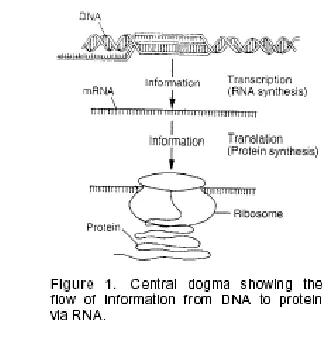
single-stranded ribonucleic acid (RNA), acts as an intermediary in the process, and the so-called Central Dogma was formulated, i.e. the idea that the genetic information is transcribed from DNA to RNA and then translated from RNA into protein.
The RNA carrying the genetic information was first believed to be the RNA in ribosomes; for several years the hypothesis was formulated as “one gene-one ribosome-one protein”. In 1961, Francois Jacob and Jacques Monod
presented a visionary gene control model, for which they received the Nobel Prize in Physiology or Medicine in 1965 together with André Lwoff. In their model, they
proposed that the gene is transcribed into a specific RNA
species, messenger RNA (mRNA). Soon afterwards it was demonstrated that a short-lived, non-ribosomal RNA
ISSN: 0975-833X
Available online at http://www.journalcra.com
International Journal of Current Research Vol. 4, pp.127-134, May, 2010
INTERNATIONAL JOURNAL
OF CURRENT RESEARCH
Key words: Molecular markers, Mulberry, Morus spp., Genetic diversity
© Copy Right, IJCR, 2010 Academic Journals. All rights reserved.
Article History:
Received 12th February, 2010 Received in revised from 15th March, 2010 Accepted 17th April, 2010
128 International Journal of Current Research, Vol. 4, pp.127-134, May, 2010
Fig. 1: Central dogma showing the flow of information from DNA to protein via RNA
directs the synthesis of proteins. Subsequently, Marshall Nirenberg and Gobind Khorana broke the genetic code and could assign code words (codons; triplets of nucleotides) to the twenty amino acids (they received the Nobel Prize in Physiology or Medicine in 1968 together with Robert Holley). Francis Crick predicted that an RNA molecule could act as an adaptor between mRNA and the amino acid, and a short, stable RNA, transfer RNA (tRNA) was soon identified as the predicted adaptor
For many years, messenger RNA was believed to correspond to an uninterrupted nucleotide sequence in the DNA. It therefore came as a complete surprise when Phillip Sharp and Richard Roberts showed in 1977 that the mRNA sequence could be distributed discontinuously in the genome. It was known that long RNA molecules (pre-mRNA, heterogeneous nuclear RNA) are trimmed to much shorter mature mRNAs, and Sharp and Roberts therefore suggested that the mRNA sequences, the exons, are likely to be cut out from the primary transcript and spliced, while the intervening sequences, the introns, are degraded. The discovery that RNA can act as a catalyst gave a radically new perspective on the roles of RNA (Nobel Prize in Chemistry to Sidney Altman and Thomas Cech in 1989). An “RNA world” is believed to have existed before DNA took over the role of being the key genetic material, and RNA was relegated to the role of messenger between DNA and protein. Not only did the discovery of catalytic RNA have evolutionary implications, but it also suggested that RNA could play a more active role in gene expression than earlier realised.
In the early 1980s it was revealed in Escherichia coli
that small RNA molecules (about 100 nucleotides in length) can bind to a complementary sequence in mRNA and inhibit translation (mizuno and Inouye , 1984).. Today, about 25 cases of regulatory trans-acting antisense RNAs are known in E. coli. Regulation of translation by antisense RNA also occurs in eukaryotes as was first demonstrated in 1993 when genes governing the development of the worm
Caenorhabditis elegans were studied. For many years, this
thoroughly documented case of posttranscriptional regulation was regarded as an oddity. The mechanism received more attention when a second example of a small regulatory RNA was found in C. elegans, because in this case similar sequences were also present in other species.
However, the situation changed drastically when a large number of small RNA molecules, called microRNAs (miRNAs), were revealed in 2001 (Lee and Ambros, 2001;
Lau et al., 2001; Lagos et al., 2001).
Prior to the discovery of RNA interference, a phenomenon called gene (or RNA) silencing was described in plants. It was noted in experiments around 1990 that a cloned gene incorporated into the genome (a transgene) could not only induce or stimulate gene activity but could also inhibit the expression of homologous sequences, a phenomenon called homology-dependent gene silencing. The inhibition of gene activity could take place at the transcriptional level (transcriptional gene silencing, TGS), or at the posttranscriptional level (posttranscriptional gene silencing, PTGS). A PTGS-like process called quelling was also established in the fungus Neurospora crassa. Analyses of viral infection in plants gave further insight into the mechanism of PTGS. However, although it was evident that RNA played a key role in gene silencing, the phenomenon remained enigmatic until the discovery of RNA interference provided a most unexpected explanation with many profound consequences.
1. History and overview
While petunias are attractive flowers, and petunia horticulture is bing business, their relevance to medical research has, until recently, been minimal. But a strange phenomenon first seen in petunias is turning out to be one of biology’s most exciting techniques of recent years. The story dates back to the late 1980s when a US team led by Rich Jorgensen was manipulating the plant genetically in order to produce more deeply coloured flowers. Their idea was to add extra copies of the gene for chalcone synthase, one of the key enzymes in the pathway of pigment synthesis. Instead of the deep purple flowers they expected, however, the researchers found that many of the flowers were white or variegated. Further investigation showed that the introduced gene and the resident chalcone synthase gene were transcribed normally, but somehow all the chalcone synthase messenger RNA (mRNA) was being destroyed.
Sabina Akhtaret al., RNA interference: Present status and future prospects in ameliorating the crop yield 129
[image:3.612.100.277.108.219.2]plants for several years: posttranscriptional gene silencing (PTGS)
Fig. 2: Phenotypic effect after injection of single-stranded or
double-stranded unc-22 RNA into the gonad of C. elegans. The unc-22 gene encodes a myofilament protein. Decrease in unc-22 activity is known to produce severe twitching movements. Injected double-stranded RNA, but not single-stranded RNA, induced the twitching phenotype in the progeny.
Within a year, the presence of RNAi had been documented in many other organisms, including fruit flies, trypanosomes, plants, planaria, hydra and zebrafish. Thus, the generality of the RNAi phenomenon among eukaryotes was proven very rapidly; a remarkable exception is the budding yeast, Saccharomyces cerevisiae.
2. Different classes of RNAs
The most abundant type of RNA inside a cell is ribosomal RNA (rRNA) followed by transfer RNAs (tRNAs) and messenger RNAs (mRNAs). In addition, there are hairpin NAs (hpRNAs), double stranded RNAs (dsRNAs), small interfering RNAs (siRNAs) and micro RNAs (miRNAs). Only the last four classes of RNA, which take active roles in RNAi, will be described here in some detail. The first of the classes of RNA taking an active role in RNAi is dsRNA, which is formed by complementary base pairing of two single-stranded fragments of RNA (Agrawal et al., 2003). Found naturally in the cell, long dsRNAs generally derive from such events as transposition of transposable elements (Schramke and Allshire, 2004) or virus induction (Rovere et al., 2002). With the production of dsRNA, the RNAi process is initiated.
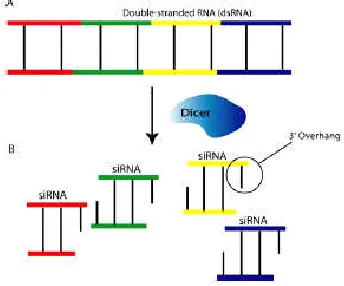
Fig. 4 :(A) Visual representation of a fragment of long dsRNA. Colored fragments represent siRNAs to cutting by Dicer. (B) A visual representation of sirNAs after Dicer has excised them from dsRNA.
Coloured fragments represent their position in the dsRNA
As previously stated, the long dsRNA is cut into smaller fragments known as siRNA. The term, small interfering was coined due to their use as a targeting sequence, by
RISC, aimed at mRNA for degradation. First isolated by Hamilton and Baulcombe (1999), the siRNAs are composed of 21-25 base pairs (bp) with a 3’ twonucleotide (nt) overhang. In addition to the 3’ nt overhang, they also have 5’ phosphate and 3’ hydroxyl groups. Lipardi et al.
(2001) found that the 3’ hydroxyl group is required in order to direct RNAi in vitro. While Dicer may incorporate siRNAs into RISC following their synthesis, they do not require this event to occur in vivo. Instead, siRNAs constructed in vitro can be introduced to silence the intended gene transiently.
3. Dicer and RISC
The dsRNA and siRNAs alone cannot degrade mRNA, but require the assistance of two enzymes namely, Dicer and RISC. Dicer, which was first discovered by Bernstein
et al. (2001) in Drosophila, is a complex enzyme belonging
to the RNase III family. A closer look at the enzyme reveals that it has four different domains each with a very specific task. They are: a) an N-terminal helicase, b) dual RNase III motifs, c) C-terminal dsRNA binding domain, d) PAZ (Piwi/Argonaute/Zwille) domain (Agrawal et al.
2003). The PAZ domain is believed to physically interact with the corresponding PAZ domain of the RISC complex. However, further work is necessary to verify this hypothesis. The dual RNase III motifs perform the actual cutting of the dsRNA, hence the characteristic 5’ phosphate and 3’ hydroxyl residues on the resulting siRNAs. . The helicase domain is also believed to take part in the process. RISC is the component of the RNAi machinery that uses siRNAs to track down and degrade the complementary mRNAs. First discovered in Drosophila, by Hammond et al. (2000), RISC consists of both protein and RNA. The protein component of the complex has ribonuclease activity with the ability to cut RNA. In addition to the ribonuclease activity RISC also contains a PAZ domain. Additional RISC components include two RNA binding proteins, Vasa intronic gene and dFMR proteins (Agrawal et al. 2003). There are still other components of RISC yet to be identified. For example, it remains unclear as to how the siRNAs become incorporated into RISC, as well as how the siRNA operates within the complex. The general consensus among scientists in the field is that there is protein-protein interaction between Dicer and RISC through the PAZ domain, enabling small single stranded 19-29 nucleotides long RNA fragments to enter the RNAi pathway. This phenomenon poses two questions: 1) Does Dicer first pick up the small single stranded fragment of RNA or does RISC recruit it into the complex itself and 2) How does the siRNA work within the complex? Researchers found only the answer to the second question. They obtained partial evidence to suggest that RISC degrades the sense strand and only uses the antisense strand of the siRNA. RISC utilizes the siRNA and searches for the complementary base sequence of the targeted mRNA. The degradation process is initiated once successful locating and cutting of the complementary mRNA occurs, by the siRNA-RISC complex, thus exposing the freshly cut mRNA to exonucleases.
4. Hairpin RNA
[image:3.612.105.277.533.676.2]130 International Journal of Current Research, Vol. 4, pp.127-134, May, 2010
molecule (Wesley et al., 2001). This folding brings the two complementary sequences together where they will hybridize. hpRNA can be accomplished through sequences of inverted repeats where a normal sequence reads in the 5’-3’ direction followed by the same sequence read in the 3’-5’ direction. t-RNAs are examples of naturally occurring hairpin RNAs originating from genes encoding respective t-RNAs. A slight problem with hpRNA, however, is its lack of stability.
Fig. 6 :(A) A diagram of hpRNA prior to folding into the characteristic hairpin structure. It has two sequences in inverted
repeat orientation with a spacer in between. The two sequences compose the arms and the spacer composes the loop. (B) unfolded
sequence in (A) folded into a hairpin structure
Stabilization of hpRNA can be accomplished through the introduction of a spacer sequence located between the two inverted repeat sequences (Wesley et al. 2001). The spacer sequence can be composed of any sequence, not complementary to the inverted repeats, and creates the loop structure of the hairpin. Recent studies illustrate that a much higher rate of silencing may be achieved, if the constructed spacer contains an established active intron sequence (Wesley et al., 2001).
5. MICRO-RNA
Since the RNAi machinery is present constitutively within eukaryotic cells, it is important to explore and understand the metabolicadvantages that are accorded by RNAi-related proteins duringthe intrinsic normal growth of cells and development of organisms. The natural RNAi machinery not only keeps the mobile transposableelements from disrupting the integrity of genomes, as was suggested by analyses in lower plants, A. thaliana, C. elegans, D.
melanogaster,and animals but also participates inorganism
development. Genetic defects in C. elegans RNAi genes
ego1 and dicer cause known, specific developmental errors. Similarly, the Argonaute family of genes of A. thaliana
(especially the ZWILLE proteins) is also responsible for plantarchitecture and meristem development, and the Dicer homologueof A. thaliana, CAF1, is required for embryo development (Golden et al., 2002).Thus, genetic evidence illustrates the role of the RNAi machineryas a controller of development-related genes. The mechanistic details of these developmental processes are beginning to emerge. In 1991, Ambros and coworkers first isolated a lin4 mutant
ofC. elegans which was arrested at the first larval stage
(Lee et al., 1993).Later on, the let7 mutation was isolated in the same system,which was responsible for development through the fourth larvalstage. Both lin4 and let7 encode short 22-nucleotide mature RNAs and were called short
temporal RNA because they control the temporal development program of C. elegans. The mature lin4RNA defines (negatively regulates) the mRNA expression of the
lin14 and lin28 heterochronic genes with the
antisense-mediatedrepression mechanism of translation initiation and thus specifiesthe fate of cells during the first three larval stages. Recentstudies have revealed that the short temporal RNAs are actuallymembers of a group of tiny RNAs (21 to 28 nucleotides) calledthe micro-RNAs, isolated members of which could easily run toa few hundreds. Some of the components of the RNAi machineryhave also been clearly established as the effector proteinsfor the maturation of micro-RNAs.
6. RNAi : How Does It Work?
The RNAi process engages the participation of several pathways. Two of the premier pathways involved in the process are RNA introduction (Waterhouse and Helliwell, 2002) and mRNA degradation. In addition to the above, an unclear amplification pathway exists.
Fig. 5 : Dicer cuts Long dsRNA is cut into smaller fragments, called siRNA. The siRNAs are then incorporated into RISC. The siRNA-RISC complex then targets a seuqnce, complementary
to the siRNA, in a piece of mRNA. The mRNA is cut by RISC exposing it to cellular endonucleases that eventually
degrade the mRNA
Insertion of double-stranded or small-interfering RNA into a cell can be accomplished in several different ways, such as by bombardment, Agrobacterium, viral mediated dsRNA transfer or by infiltration (Sijen and Kooter 2000). Most of these methods utilize an RNAi vector to produce stable or transient dsRNA in vivo. In other words the plant in study must be transformed with a vector that produces dsRNA, using one of the above techniques. Unnamalai et al. (2004), on the other hand, have recently devised a way of introducing dsRNA without transforming the plant with an RNAi vector. They used cationic oligopeptides for delivering dsRNA into plant cells. Specifically, the scientists introduced dsRNA into tobacco cells using POA, which is a cationic oligopeptide 12-mer. Their results showed efficient silencing of the target genes.
[image:4.612.104.279.176.309.2] [image:4.612.312.533.275.456.2]
Sabina Akhtaret al., RNA interference: Present status and future prospects in ameliorating the crop yield 131
21-25 base pairs with 3’ two-nucleotide overhangs attached to 5’ and 3’ ends, are siRNAs as mentioned earlier. Soon after their formation, the siRNAs are incorporated into RISC via an undetermined pathway, initiating the process of mRNA degradation (Agrawal et al., 2003 and Kuznetsov, 2003). Researchers currently believe that a physical interaction occurs between Dicer and RISC through a common PAZ domain. Thereafter, RISC utilizes the siRNA as a targeting sequence seeking the complementary mRNA. Successful docking of the RISC-siRNA complex at the targeted mRNA site initiates the degradation process. The mRNA degradation is completed by the action of cellular exonucleases. A third, not yet fully understood, pathway seems to enhance effectiveness of RNAi, through the amplification of siRNAs. Current consensus on the issue is that the siRNAs undergo amplification by an RdRP (RNA-dependant RNA polymerase). The site of siRNA amplification is yet to be determined. Lipardi et al. (2001) reported that siRNA might be involved in the synthesis of long dsRNA. Further studies into RdRP-mediated amplification revealed the presence of secondary siRNAs (Sijen et al., 2001). Secondary RNAs, not detectable in the introduced dsRNAs are derived from siRNAs that complement the targeted mRNA. These secondary RNAs actively participate in the degradation of the complementary mRNA.
8. Significance of the discovery of RNAi
It was evident from the very beginning that the significance of the discovery of RNAi would be exceptional. The far-reaching consequences of the discovery can be summed up as follows :
1. RNAi protects against viral infections: The finding of Fire and Mello that cells can process injected dsRNA and eliminate homologous single-stranded RNA suggested that RNAi could constitute a defence mechanism against viral attacks. Today, we know that this anti-viral mechanism is at work in plants, worms and flies, whereas it is still unclear how relevant it is for vertebrates, including man. 2. RNAi secures genome stability by keeping mobile elements silent
It has been proposed that in transposon-containing regions of the genome both DNA strands are transcribed, dsRNA is formed, and the RNAi process eliminates these undesirable products. As short dsRNAs can also operate directly on chromatin and suppress transcription, this would be another mode to keep transposons inactive.
3. RNAi-like mechanisms repress protein synthesis and regulate the development of organisms:
The small miRNAs are processed from larger hairpin-like precursors by an RNAi-like machinery. The miRNAs can regulate gene expression by base-pairing to mRNA, which results in either degradation of the mRNA or suppression of translation. Today, it is estimated that there are about 500 miRNAs in mammalian cells, and that about 30% of all genes are regulated by miRNAs. It is known that miRNAs play an important role during development in plants, C.
elegans and mammals. Thus, the miRNA-dependent
control of gene expression represents a new major principle of gene regulation.
4. RNAi-like mechanisms keep chromatin condensed and suppress transcription:
[image:5.612.313.538.91.445.2]it was soon shown that TGS in plants operates via RNAi-like mechanisms (Sijen et al., 2001) In the fission yeast
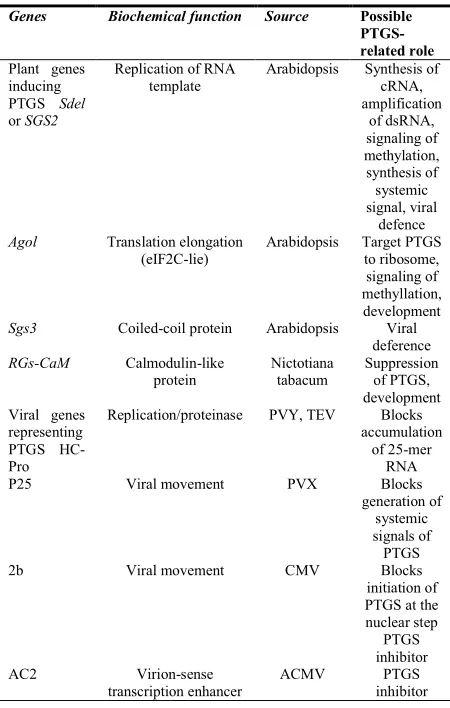
Table 1 :Plant and viral genes inducing or repressing PTGS
Schizosaccharomyces pombe (Hall, et al., 2002), and later
on in Drosophila and vertebrates, it was found that similar control of gene expression represents a new major principle of gene regulation.
4. RNAi-like mechanisms keep chromatin condensed and suppress transcription:
it was soon shown that TGS in plants operates via RNAi-like mechanisms (Sijen et al., 2001) In the fission yeast
Schizosaccharomyces pombe (Hall, et al., 2002), and later
on in Drosophila and vertebrates, it was found that similar processes keep heterochromatic regions condensed and transcriptionally suppressed. In addition, the RNAi-like machinery regulates the activity of genes in the immediate vicinity of the condensed blocks of chromatin
5. RNAi offers a new experimental tool to repress genes specifically : The targeted action of RNAi immediately suggested that this phenomenon could be utilized as a general method to suppress specific genes and look for the resulting phenotypic effect DNA constructs are introduced into the organisms under appropriate promoter control, and dsRNA hairpin structures are produced and further processed to achieve specific effects on gene regulation. 6. RNAi might be a useful approach in future gene therapy : The possibility to achieve RNAi-governed gene regulation in transgenic organisms has stimulated many explorations of whether this would be a useful option for medical therapy (Dorsett and Tuschi, 2004; Hannon and Rose, 2004). Promising results have been reported in
Genes Biochemical function Source Possible
PTGS-related role
Plant genes inducing
PTGS Sdel
or SGS2
Replication of RNA template
Arabidopsis Synthesis of
cRNA, amplification
of dsRNA, signaling of methylation, synthesis of systemic signal, viral
defence
Agol Translation elongation
(eIF2C-lie)
Arabidopsis Target PTGS
to ribosome, signaling of methyllation, development
Sgs3 Coiled-coil protein Arabidopsis Viral
deference
RGs-CaM Calmodulin-like
protein
Nictotiana tabacum
Suppression of PTGS, development Viral genes
representing PTGS HC-Pro
Replication/proteinase PVY, TEV Blocks
accumulation of 25-mer
RNA
P25 Viral movement PVX Blocks
generation of systemic signals of PTGS
2b Viral movement CMV Blocks
initiation of PTGS at the nuclear step
PTGS inhibitor
AC2 Virion-sense
transcription enhancer
ACMV PTGS
132 International Journal of Current Research, Vol. 4, pp.127-134, May, 2010
several animal models and even in recent clinical trials, but it is too early to predict the outcome of these challenging efforts.
9. Application of RNAi for crop improvement:
Directed by T. J. Higgins (Current publications by CSIRO), scientists at CSIRO, in Australia, have played a pioneering role in demonstrating that RNAi technology may be used for such applications as gene silencing thereby generating improved crop varieties in terms of disease-, insect resistance, enhancing nutritional qualities, and much more. . Bayer Crop Science has acquired an exclusive worldwide license to develop, market, and sell selected crop plant varieties in which the RNAi technology has been successfully applied by the CSIRO scientists.
I. Using this technique this group has developed varieties of barley that are resistant to BYDV (barley yellow dwarf virus) (Wang et al. 2000). Their results showed that the barely plants developed through RNAi technology are resistant to viral infection while the control plants became infected with the yellow dwarf virus.
II. Cereal adultery
For people who must restrict their protein intake-such as patients with kidney failure-a mutant rice that is naturally low in proteins called glutelins is beginning to be used as a dietary therapy, Makoto Kusaba and colleagues have now discovered how this mutant achieves low glutelln levels. The answer involves the increasingly well-known biological phenomenon of RNA Interference
III. Modification of plant height via RNAi suppression of OsGA20ox2 gene in rice
GA 20-oxidase (GA20ox) is a regulatory enzyme for the syntheses of biologically active GAs in plants. The loss-of-function mutations in OsGA20ox2 of rice (Oryza sativa L.) generate the well-known Green Revolution gene sd-1, which cause the semi-dwarfism phenotype. In this investigation, semi-dwarf plants were generated from a taller rice variety QX1 by RNAi suppression on the expression of OsGA20ox2. The 531 bp-fragment of OxGA20ox2 was amplified by PCR from genomic DNA of QX1 and used to construct the hairpin RNAi vector pCQK2. The wild type QX1 was transformed with pCQK2 by Agrobacterium-mediated transformation and some independent transgenic RNAi lines exhibited semi-dwarfism. RT-PCR and Northern blot analysed showed that the expression of OsGA20ox2 was specifically suppressed in the RNAi semi-dwarflines. Endogenous GA assays reveals GA19’ GA20 and the down-stream biologically active GA, were drastically reduced in the RNAi semi-dwarf limes. It was shown that the RNAi semi-semi-dwarf lines could be restored to normal plant height by applying exogenous GA3-.
IV. Using RNAi to improve plant nutritional value
caffeine content in coffee plants has been markedly reduced by RNAi-mediated suppression of the caffeine synthase gene
RNAi has been successfully used to generate a dominant high-lysine maize variant by knocking out the expression of the 22-kD maize zein storage protein, a protein that is poor in lysine content
RNAi mediated by a hairpin RNA has been used in cotton to downregulate two key fatty acid desaturase genes encoding stearoyl-acyl-carrier protein D9-desaturase and oleoylphosphatidylcholine u6-desaturase (Liu, et al., 2002).
Knockdown of these two genes in cotton leads to an increase in nutritionally improved oleic and high-stearic cottonseed oils, which are essential fatty acids for health of the human heart
V. Technology reduces Gossypol in cotton seed
It’s possible to significantly reduce gossypol levels within cottonseed and not reduce the levels of gossypol and related compounds in the foliage. The presence of these compounds in the foliage helps protect the plant from attack by insects. In addition, U.S. Consumers craving a new and nutritious snack food could soon be reaching for crunchy “TAMU nuts,” which were developed at Texas A&M over 20 years ago. Reduced-gossypol cotton seeds have a nutty flavor and crunch.
10. Prospects of utilizing RNAi technology
In Ethiopia, Bangladesh and India, the people in the lower socioeconomic class use a leafy vegetable known as
Lathyrus sativus. It is a leguminous crop and contains a
neurotoxin called â-oxalylaminoalanine-L-alanine (BOAA) (Spencer et al. 1986). People consuming this vegetable suffer from a paralytic disease called, lathyrism. The disease paralyses people both temporarily and permanently, however the effects can be somewhat reduced if the plant is boiled prior to consumption. Paralysis in the limbs is a known symptom of BOAA, yet people still consume this vegetable in times of famine. This species is remarkably suited to grow in marginal and inhospitable land without irrigation, fertilizer, and pesticides. It flourishes also times of devastating flood and drought, when no other food crop survives. This is an instance where RNAi technology can be used to silence the gene(s) responsible for production of BOAA. There may be one difficulty; in that the BOAA genes may be linked to genes, which confer immunity to this unique crop or impart drought and flood tolerance. Bringing down the levels of BOAA to a safe concentration, rather than totally silencing the concerned genes, may overcome this obstacle.
Another instance where RNAi may be fruitfully applied is in the production of banana varieties resistant to the Banana Bract Mosaic Virus (BBrMV), currently devastating the banana population in Southeast Asia and India (Rodoni et al. 1999). In certain years, the entire banana crop in certain areas is lost due to the attack by the above virus. The BBrMV infects banana plants destroying the fruit producing bract region, rendering them useless to farmers. The virus is spread by small plant eating insects called aphids, as well as through infected plant materials. The problem is further compounded when further banana crops are raised in the infected field because the infection spreads from the previous diseased crop. However, by carefully designing an RNAi vector aimed at silencing the Coat Protein (CP) region of the virus, scientists may be able to develop a banana variety that is resistant to BBrMV and yet safe to eat. The CP region of the different strains of virus is highly conserved and as such silencing of this gene in other varieties of banana will not pose a problem. Another novel approach here would be to utilize an inducible promoter system in order that dsRNA is produced only upon infection and not constitutively.
A possible application of RNAi involves the down regulation of a key enzyme in the biosynthetic pathway of lignin in the two economically important Corchorus
Sabina Akhtaret al., RNA interference: Present status and future prospects in ameliorating the crop yield 133
enzyme 4-coumarate:CoA ligase (4-Cl) is one of the key enzymes in the early stages of lignin biosynthesis. This makes it a promising target for regulating the quantity of lignin, produced in the jute plant. The present quantity of lignin in the commercial varieties of jute increases the cost of pulp production for manufacture of high quality paper. Hence, reduction in the lignin content will be welcome to the paper industry. With the availability of the sequence of the 4-Cl gene, it would be possible to create a transgenic jute variety expressing the RNAi construct to down regulate the quantity of 4-Cl mRNA thereby reducing the lignin production. With this approach, it would also be possible to vary the quantity of lignin synthesis by the help of different promoters and altering the length of interfering RNA. Thus RNAi technology may prove to be a powerful molecular tool by generating jute varieties with low lignin content, allowing for easier, environmentally friendly and cost effective processing of fiber for the production of various economically important commodities such as high quality paper and cloth.
CONCLUSION
Current agricultural technology needs more and more molecular tools to reduce current crop loss and feed extra mouths, which according to a recent estimate by the FAO (Food and Agriculture Organization) will increase by two billion over the next 30 years. The RNAi technology, described in this article, describes one such powerful innovation. If judiciously used, this technology may go a long way to narrow the gap through production of disease-, insect- and virus resistant, nutritionally rich and toxic-free crops. The cost effectiveness is always a big question, whenever a new technology is developed. In fact, it becomes a stumbing block for a resource-poor developing country to adopt a new technolgy, if it is to buy the patent from a multinational company at an prohibitive price. Fortunately, the situation in case of RNAi technology is different. Hopefully, the technology that has been developed by the scientists from developed countries will be available to any lab including those in the developing countries, where work utilizing RNAi technology is either in progress or going to be launched shortly. The technology is well developed and can be applied directly to evolve a crop resistant to stresses caused by virus, bacteria, fungi, insects or natural disasters.
One of the major purposes of the present review article is to help policy makers in food efficient countries to understand how scientific breakthroughs such as RNAi technology may be helpful in tackling this gigantic problem of feeding an additional 2 billion people over the next 30 years from an increasingly fragile natural resource base. However, any new technology involving the gene manipulation may be opposed by anti-GM groups severely limiting its effectiveness or wider use. Since this technology offers a great potential in understanding gene functions and utilize them to improve crop quality and production, it is a matter of time before we see the products of this RNAi research in the farmers’ fields around the world.
REFERENCE
Agarwal, N., Dasaradhi, P.V.N., Mohommed, A., Malhotra, P., Bhatnagr, R.K. and Mukherjee, S.K. 2003. RNA interference : Biology, Mechanism and
Applications. Microbiology and Molecular Biology
Reviews, 67 : 657-685
Bernstein ,E., Caudy, A. A., Hammond, S. M. and Hannon, G. 2001. Role for a bidentate R ibonuclease in the initiation step of RNA interference. Nature, 409: 363-366.
Dorsett, Y. and Tuschi, T. 2004. siRNAs : Applications in functional genomics and potential as therapeutics. Nature
Reviews, 3 : 318-329.
Fire, A., Montgomery, M.K., Kostas, S.A., Driver, S.E. and Mello, C.C. 1998. Potent and specific genetic interference by double-stranded RNA in coenorhabditis
legans. Nature, 391 : 806-811.
Golden, T.A., S.E. Schauer, J.D. Lang, S. Pien, A.R.Mushegian,U.Grossniklaus,D.Meinke,dA.Ray.2002.
Shortinteguments1/Suspensor1/Carpel Factory, a Dicer homolog, is a maternal effect gene required for embryo development in Arabidopsis. Plant Physiol., 130 : 808-822.
Hamilton, A.J. and Baulcombe, D.C. 1999. A species of small antisense RNA in posttranscriptional gene silencing plants. Science 286 : 950-952.
Hammond, S. M., Boettcher, S., Caudy, A., Kobayashi, R., and Hannon, G. 2001. Argonaute2, a Link Between Genetic and Biochemical Analysis of RNAi. Science 293: 1146-1150.
Hall, I.M., Shankaranarayana, G.D., Noma ,K., Ayoub, N., Cohen, A .and Grewal, S.I. 2002.Establishment and maintenance of a heterochromatic domain.Science, 297, 2232-2237.
Hannon, G.J. and Rose, J.J. 2004. Unlocking the potential of the human genome with RNA interference. Nature, 431, 371-378.
Kusaba, M., Miyahara, K., Lida, S., Fukuoka, H., Takario, T., Sassa, H., Nishimura, M. and Nishio ,T. 2003. Low glutenin content 1 : a dominant mutation that suppresses the Glutenin multigene family via RNA silencing in rice. Plant Cell, 15: 1455-1467.
Kuznetsov, V. V. 2003. RNA Interference. An Approach to Produce Knockout Organism and Cell Lines. Biochemistry (Moscow) 68: 1301-1317.
Lagos, Q.M., Rauhut, R., Lendeckel, W. and Tuschl, T. 2001. Identification of novel genes codling for small expressed RNAs. Science, 294 : 853-858.
Lau, N.C., Lim, L.P., Weinstein, E.G. and Bartel, D.P. 2001. An abundant class of tiny RNAs with probable regulatory roles in Caenorhabditis elegans. Science , 294, 858-862.
Lee, R. C., and Ambros, V. 2001. An extensive class of small RNAs in Caenorhabditis elegans. Science, 294:862-864.
Lee, R. C., L. Feinbaum, and V. Ambros. 1993. The C.
elegans heterochronic Gene lin-4 encodes small RNAs
with antisense complementarity to to lin-14. Cell, 75:843-854.
Lipardi, C., Wei, Q. and Paterson, B. M. 2001. RNAi as Random Degradative PCR: iRNAPrimers Convert mRNA into dsRNAs that are degraded to Generate New siRNAs. Cell, 107: 297-307.
134 International Journal of Current Research, Vol. 4, pp.127-134, May, 2010
Mizuno, T., Chou, M.Y. and Inouye, M. 1984. A unique mechanism of regulating gene expression: Translational inhibition by a complementary RNA transcript (micRNA). Proc. Natl Acad.Sci., 81, 1966-1970. Rodoni, B.C., Dale, J.L. and Harding, R.M. 1999.
Characterization and expression of the coat protein-coding region of the banana bract mosaic potyvirus, development of diagnostic assays and detection of the virus in banana plants from five countries in Southeastern Asia. Archives of Virology, 144: 1725-1737.
Rovere, C.V., del Vas, M. and Hopp, H.E. 2002. RNA-mediated virus resistance. Current Opinion in
Biotechnology, 13 : 167-172.
Schramke, V. and Allshire, R. 2004. Those interfering little siRNAs! Silencing and eliminating chromatin.
Current Opinion in Genetics and Development, 14:
174-180.
Sijen, T. and Kooter, J.M. 2000. Post-transcriptional gene-silencing : RNAs on the attack or on the defense?
BioEssays, 22 : 520-531.
Sijen, T., Vijn, I., Rebocho, A., van Blokland, R. And Roelofs, D. 2001. Transcriptional and post-transcriptional gene silencing are mechanistically related.
Curr. Biol., 11: 436-440.
Spencer, P.S., Roy, D.N., Ludolph, A., Hugon, J., Dwivedi, M.P. and Schaumburg, H.H. 1986. Lathyrism : evidence for role of the neuroexcitatory aminoacid BOAA. Lancet,
2(8515) : 1066-1067.
Unnamalai, N., Kang, B.G. and Lee, W.S. Cationic oligopeptide-mediated delivery of dsRNA for post-transcriptional gene silencing in plant cells.FEB Lett., 2004;566:307– 310.
Wang, M., Abbott, D. and Waterhouse, P. M. (2000) A single copy of a virus derived transgene encoding hairpin RNA gives immunity to barley yellow dwarf virus. Molecular Plant Pathology, 1: 401-410.
Waterhouse, P. M. and Helliwell, C. A. (2002) Exploring Plant Genomes By RNA-Induced Gene Silencing. Nature Reviews Genetics, 4: 29-38.
Wesley, S .V., Helliwell, C. A., Smith, N. A., Wang, M., Rouse ,D .T., Liu, Q., Gooding, P. S.,Singh, S. P., Abbott, D., Stoutjesdijk, P. A., Robinson, S. P.,Gleave, A. P., Green, A. G. and Waterhouse, P. M. (2001) Construct design for effective and high-throughput Gene silencing in plants. Plant Journal, 27(6): 581-590. Wu-Scharf, D., Jeong, B., Zhang, C. and Cerutti, H. 2000.
Transgene and transposon silencing in Chlamydomonas
reinhardtii by a DEAH-box RNA helicase. Science,
290:1159-1162.