UNIQUE COMMUNITY
1
Department of Education, Tel Hai College 12208, Israel
2Department of Interdisciplinary Studies, Tel Hai
ARTICLE INFO ABSTRACT
This paper examines whether there is grounds to a new learning model
model designed to create and spread knowledge on ADD and learning disorders in the educational system. Our proposed learning
the school community (administration, councilors and teachers), parents to children with ADD and learning disabilities (instead of the parents' council) and lecturers and students from t
specialize in this field. All participants volunteer to attend school once a week for a free academic course that
theoretical knowledge on ADD and learnin panhandle under a one
enable us to reply to the introductory question, we will review a number of acceptable models in the literature of a learning community, make a distinction between these models and the "adult community that is meaningful to the child", and see whether the model should be applied based on two years of implementation under the "Town Square Academia" program.
there is theoretical and practical basis for the model's proposal, which should therefore introduce a recommendation to broaden the examination, in terms of time and space. The conclusions that was reached for the learning process i
recognize as members of a learning community that is mainly inclined to receive information from a lecturer or share information with our peers (mainly comprised of a homogenous group), bu also base the shared community
retention by means of various tools. Put differently, actions taken by teachers, administrative staff, parents from the entire region, lecturers
founded on the knowledge of all those engaged in an initiated and proactive manner, by researching authentic cases by way of an educated analysis of individual events, and achieve all that thro dialogue between colleagues at the community in a diversified learning community. Attaining and embedding information in such an active manner is one of the objectives of the "Town Square Academia" project, aimed at benefiting the academia and its en
Copyright©2017, Anat Raviv and Yael Silver, This is an open access article distributed under the Creative Commons Att unrestricted use, distribution, and reproduction in any medium, provided the original work is properly cited.
INTRODUCTION
Models of Learning Communities
Learning communities are professional communities that consist of a common theme and objective. Literature contains a number of models that characterize learning communities on which we will focus in this chapter.
*Corresponding author: Anat Raviv,
Department of Education, Tel Hai College 12208, Israel.
ISSN: 0975-833X
Article History:
Received 11th May, 2017
Received in revised form 20th June, 2017
Accepted 19th July, 2017
Published online 31st August, 2017
Citation: Anat Raviv and Yael Silver, 2017. “Unique Community 9, (08), 56106-56116.
Key words:
Partnership, Learning Community, Collaboration, Social Models.
RESEARCH ARTICLE
UNIQUE COMMUNITY-LEARNING MODEL: "TOWN SQUARE ACADEMIA"
*,1
Anat Raviv and
2Yael Silver
Department of Education, Tel Hai College 12208, Israel
Department of Interdisciplinary Studies, Tel Hai College 12208, Israel
ABSTRACT
This paper examines whether there is grounds to a new learning model
model designed to create and spread knowledge on ADD and learning disorders in the educational system. Our proposed learning model "The adult community that is meaningful to the child" involves the school community (administration, councilors and teachers), parents to children with ADD and learning disabilities (instead of the parents' council) and lecturers and students from t
specialize in this field. All participants volunteer to attend school once a week for a free academic course that provides access to general theoretical knowledge and generates new local hands theoretical knowledge on ADD and learning disabilities. The project developed at the Galilee panhandle under a one-of-a-kind and innovative social project entitled "Town Square Academia." To enable us to reply to the introductory question, we will review a number of acceptable models in the rature of a learning community, make a distinction between these models and the "adult community that is meaningful to the child", and see whether the model should be applied based on two years of implementation under the "Town Square Academia" program.
there is theoretical and practical basis for the model's proposal, which should therefore introduce a recommendation to broaden the examination, in terms of time and space. The conclusions that was reached for the learning process is that one should not only rely on the conventional model, which we recognize as members of a learning community that is mainly inclined to receive information from a lecturer or share information with our peers (mainly comprised of a homogenous group), bu also base the shared community-based learning activities on knowledge generation, its distribution and retention by means of various tools. Put differently, actions taken by teachers, administrative staff, parents from the entire region, lecturers and students in learning communities, should establish and be founded on the knowledge of all those engaged in an initiated and proactive manner, by researching authentic cases by way of an educated analysis of individual events, and achieve all that thro dialogue between colleagues at the community in a diversified learning community. Attaining and embedding information in such an active manner is one of the objectives of the "Town Square Academia" project, aimed at benefiting the academia and its environment as a whole.
is an open access article distributed under the Creative Commons Att use, distribution, and reproduction in any medium, provided the original work is properly cited.
Learning communities are professional communities that consist of a common theme and objective. Literature contains a number of models that characterize learning communities on
.
Shared-learning Model
Wenger focuses on the pracsis of learning communities and characterizes the concept of knowledge
He argues that in order to build a community that generates information, a group of people must provide a sense of identity, belonging, and meaning to its members. Such a community consists of a number of key elements: the development of mutual relations – mainly mutual involvement
organization, which is constantly negotiated, and a shared world view that provides meaning to the community's routine
1Etienne Wenger,Communities of Practice: Learning, Meaning, and Identity
(New York: Cambridge University Press, 1999).
International Journal of Current Research
Vol. 9, Issue, 08, pp.56106-56116, August, 2017
Unique Community-learning Model: "Town Square Academia"”, International Journal of Current Research
LEARNING MODEL: "TOWN SQUARE ACADEMIA"
College 12208, Israel
This paper examines whether there is grounds to a new learning model– a community-based shared model designed to create and spread knowledge on ADD and learning disorders in the educational model "The adult community that is meaningful to the child" involves the school community (administration, councilors and teachers), parents to children with ADD and learning disabilities (instead of the parents' council) and lecturers and students from the academia who specialize in this field. All participants volunteer to attend school once a week for a free academic provides access to general theoretical knowledge and generates new local hands-on and g disabilities. The project developed at the Galilee kind and innovative social project entitled "Town Square Academia." To enable us to reply to the introductory question, we will review a number of acceptable models in the rature of a learning community, make a distinction between these models and the "adult community that is meaningful to the child", and see whether the model should be applied based on two years of implementation under the "Town Square Academia" program. The authors conclude that there is theoretical and practical basis for the model's proposal, which should therefore introduce a recommendation to broaden the examination, in terms of time and space. The conclusions that was s that one should not only rely on the conventional model, which we recognize as members of a learning community that is mainly inclined to receive information from a lecturer or share information with our peers (mainly comprised of a homogenous group), but rather based learning activities on knowledge generation, its distribution and retention by means of various tools. Put differently, actions taken by teachers, administrative staff, and students in learning communities, should establish and be founded on the knowledge of all those engaged in an initiated and proactive manner, by researching authentic cases by way of an educated analysis of individual events, and achieve all that through a dialogue between colleagues at the community in a diversified learning community. Attaining and embedding information in such an active manner is one of the objectives of the "Town Square
vironment as a whole.
is an open access article distributed under the Creative Commons Attribution License, which permits
pracsis of learning communities and characterizes the concept of knowledge in very broad terms.1 He argues that in order to build a community that generates information, a group of people must provide a sense of identity, belonging, and meaning to its members. Such a community consists of a number of key elements: the development of mainly mutual involvement – a shared organization, which is constantly negotiated, and a shared view that provides meaning to the community's routine
Communities of Practice: Learning, Meaning, and Identity (New York: Cambridge University Press, 1999).
INTERNATIONAL JOURNAL OF CURRENT RESEARCH
practices and knowledge.2 The collaboration and sharing among community members does not compel them to be uniform in nature. Often, the opposite is true – diversity can actually raise more involvement among all partners. In a heterogeneous group, the diversified nature of the group broadens the set of possible solutions,3 adds a new diverse perspective, defines problems in new ways, and often resolves a problem more effectively than a homogenous group.4 A community often encourages sharing and partnership among its members. This happens not only in a standardized work environment, but also in the scientific community, where community-based collaboration in the process of knowledge acquisition was adopted. The Citizen Science approach supports science conducted by the public, for the public.5
From this perception of knowledge development, models of school-based learning communities have arisen since the beginning of the twenty-first century. In the next section, we will briefly review models of learning communities. This paper seeks to present a slightly different model that attempts to create a partnership in which the public also has a say and can discuss and impact the scientific query, the methodology and future questions pertaining to this field. Under this model, the researcher and the public can learn and work with each other and not "by means of".6
A Professional Learning Community
A professional learning community at school consists of a group of experts that jointly examines its knowledge and pracsis in an effort to gain ground professionally.7 Teachers in a professional learning community meet on a regular basis, examine the relationship between their pracsis and their students' learning products, analyze teaching and learning processes, draw conclusions, and apply changes with the aim of improving their teaching and their students' learning experience.8 A large number of studies indicates that a professional learning community at school is a key component in any school-improvement process. Learning communities constantly contribute to the teachers' knowledge and professional expertise and to their ability to witness their students' achievements.9 The Learning Characteristics of a School-based Learning Community The school staff is a
2Ibid., 75.
3James M. Surowiecki,The Wisdom of Crowds: Why the Many Are Smarter
than the Few and How Collective Wisdom Shapes Business, Economies, Societies and Nations (New York: Doubleday, 2004).
4
Lu Hong and Scott E. Page, “Groups of Diverse Problem Solvers Can Outperform Groups of High-Ability Problem Solvers,” Proceedings of the National Academy of Sciences of the United States of America 101 (2004): 16385–89.
5Jonathan Silvertown, “A New Dawn for Citizen Science.” Trends in Ecology
and Evolution 24 (2009): 467–71.
6Ayelet Shavit and Yael Silver, “Learning from Success and the Success of
Learning: ‘Town Square Academia,’” in Campus-Community Partnerships in Israel, ed. Zvika Orr, Daphna Golan, and Jona Rosenfeld (Tel Aviv: Mofet, In press).
7Menucha Birenbaum, “Ha’aracha Le-Shem Lemida ve-Me'afyenei Tarbut
Beit-Sifrit Hama'atsimim Ota [Assessment for Learning and Characteristics of School-Based Community of Practice that Empower It],” in Haaracha, Chinuch Yehudi ve-Toldot Hachinuch: Asufa Le’zecher Professor Arie Levy, ed. Y Kashti (Tel Aviv: Ramot, 2009), 77–100.
8
Avivit Blanga, Gabi Landler-Pardo, and Madene Shachar, “Kehilot Morim Lomdot: Skira Muzmenet Kechomer Reka Le’avodat Va'adat Safa [Learning Teachers Communities: A Survey Required as Background for the Committee of Language and Literacy].” The National Israeli Science Academy (2011).
9Hanna Shachar,Yieautz Le-Beit Hasefer Ke-Ma’arechet: Teoria, Mechkar
ve-Ma'ase [Organizational Consultation in Schools: Theory, Research and Practice], (Tel Aviv: Ramot, 2007).
professional learning community when it works in
collaboration and meets on a regular basis over an extended period of time in a school setting. The staff has common objectives, viewed by staff members as valuable, and a collective responsibility for all students is developed at school, not only as an empty slogan but also as a seriously-intended concept.10 Collaboration is a key feature of a professional learning community. ‘Sharing’ means more than holding joint staff meetings. It involves transparency and exposure of the teacher's practices among staff members.1112 An equally-important feature of a professional learning community is an inquisitive perspective and a willingness to critically examine one’s working processes from up close. An effective professional learning community is not content with agreements and welcomes disagreements and differences of opinions by recognizing their contribution to a learning process that challenges the current practices.13To conclude this part, Blanga et al. identify four core principles for any model of community-based learning: (1) Relationships based on trust and sharing; (2) A high level of mutual and professional respect will form a community with a safe environment and a climate of containment, attentiveness and collaborative decision making; (3) Structured processes and regulated mechanisms for learning that provide permanence and stability; (4) A reflective dialogue with repeated self-examination.14
"Town Square Academia" and Innovative Social Models
Since the establishment of the first universities in medieval Europe, the academic establishment was often perceived as an organization that must function exogenously and be detached from the community – an institution that should be devoted to the acquisition of "pure" “ideal” and “objective” theoretical knowledge.15 As a result, standardized academia often tends to create internal bodies of knowledge, where the key partners are members of the academia and its students. Under this vision of science, more often than not, the direct and immediate contact between the academic establishment and the community is negligible. The "Town Square Academia" project tries to challenge that purified approach. The project is a social initiative that emerged during the social protest movement in the summer of 2011, under the protest activities in the peripheral city of Kiryat Shmonah. The partners of the "Town Square Academia" project include local residents, lecturers and students, joined by a range of academic and social organizations, as well as small businesses. All the participants are committed to take action that will spread knowledge to the general public in the city square, in order to create a regional learning and teaching community that focuses on collaborative, quality-oriented, and analytical education. The motivation for the project, from its early beginnings at the encampment of the social justice movement at Kiryat Shmona, was to create a
10Ibid.
11Richard DuFour, “What Is a ‘Professional Learning Community’?”
Educational Leadership 61 (2004): 6–11.
12Helen Timperley,“Teacher Professional Learning and Development,” The
International Academy of Education 1 (2008): 1–30.
13
Wenger,Communities of Practice: Learning, Meaning, and Identity.
14Blanga, Landler-Pardo, and Shachar, “Kehilot Morim Lomdot: Skira
Muzmenet Kechomer Reka Le’avodat Va'adat Safa [Learning Teachers Communities: A Survey Required as Background for the Committee of Language and Literacy].”
15
regional, cooperative and shared discourse between various groups in the northern periphery. To do so, as soon as the plan for the first academic year was devised, and in conjunction with the actual activity, we contemplated and critically-examined with many of our partners what has to be changed and where we were wrong. That reflective process, the "leisure for reflection through action", introduced year-by-year changes to the syllabus, methods and learning setting, which were shaped together with the community.16 In practice, Town Square Academia offers free courses that take place outside the campus.17 The study – its content, goals and products – is based on a mutual approach, such that the community can contribute to the academia and not only the benevolent contribution of the academia to the community.
At the Town Square Academia, not only highly-educated experts – professors and academics with PhD standards share in the knowledge they acquired, but all who attend can share their knowledge – tacit or explicit – suggest assumptions and hypothesis, examine a proposed theory by providing a practical example from their daily lives. A shared assignment that is built into the course program is an example of the meaningful action that involves knowledge sharing, which all partners jointly perform over an extended length of time, and often even by the end of the course. In this paper, we will discuss the products of a single course "That Child is Me – A Parents’ Compass", which focused on children with attention deficient disorder (ADD), attention deficient and hyperactivity disorder (ADHD) and learning disabilities, and especially on the families and school atmosphere from the standpoint of these children. The course took place in local schools and ran for two years in Kiryat Shmonah under the banner of the Town Square Academia project. The course aims to build an alternative type of discourse in school and at home. In most cases, the connection between the school and the parents is based on social distance and distance perception.18 The actual training programs for children with ADD, ADHD and learning disabilities, are held separately to parents and teachers. This practice continues despite repeated explicit attention drawn throughout the training period to the requirement and significance of collaboration between the school and home settings. In that sense, the common practice of separate learning runs counter to the theoretical models mentioned above that support parents' involvement at school, and the significance of parents' and school collaboration. The Town Square Academia project, which strives to be relevant to the community that it operates in, addresses this internal tension. In accordance with the guiding principles of Town Square Academia, meetings were held with the school principle prior to the beginning of the course, in order to make the learning process compatible to the target audience as we thought at the
16Donald A. Schon,The Reflective Practitioner: How Professionals Think in
Action (New York: Basic Books, 1983).
17The tuition cost for a full course is ILS 20 per participant, and this amount
practically represents "seriousness fees" that are mainly used for purchasing snacks. All the knowledge experts fully volunteer, including the managers who host the courses. The logistics for the production of the courses is sponsored with the help of organizations, such as Tel Hai Academic College, Migal – Galilee Technology Center, the Galilee Development Authority and Canada Israel Partnership.
18
IsaacFriedman, Medida Ha’aracha Shel Tochniyot Chevratiot ve-Chinuchiyot [Measurement and Assessment of Social and Educational Programs], (Jerusalem: Henrietta Szold Institute, 2005).
The term "distance perception" relates to the individual's personal perception of the situation, as she is not conscious of the reality beyond the one her senses have picked up, which arelimited and policed by personally identifying with what happened to her.
time: Parents of children with ADD, ADHD, and learning disabilities. However, the dialogue with the local school principal revealed what was missing from the standard academic training of teachers and parents, as well as the need for a new model of learning. The school principle said that it is insufficient for the parents merely to come to school in the evening in order to learn, but that she and her staff should actively learn with the parents. She thought the school needs to incorporate additional and diverse position holders (teachers, counselors, administration and parents) so that learning is “absorbed” into the school’s atmosphere. A continuous dialog between the lecturer, school principle and project director led to the creation of a new learning practice – to integrate into the training course “That Child is Me” all the adults that are meaningful in the child's life, and turn them into a community – which we wish to propose also as a learning model.
Characteristics of the "Community of Meaningful Adults for the Child” (CMAC) as a Model for Partnership Among School, Parents and Academia. Each year, a five-session course is offered under the project entitled "That Child is Me" on ADD, ADHD and learning disabilities related issues. The school's principal and the counsellor, along with teachers, parents and other educators from the school and its entire region, chose to take part in the course, share their knowledge and experiences, and perform a group task that will build a systematic change in the relations between the parents and the school’s administration and teachers. For two years, Dr. Anat Raviv volunteered to teach the course in two different schools in Kiryat Shmonah: in the academic year of 2012-2013 at Tel Hai elementary school, and in the academic year of 2013-2014 at the Danzinger-Darca junior high school. The key to building that learning community is the focus on an active partnership between the school's community and the parents.
The school staff did its best in the group-generation process. The school principals sent a letter calling to partner with the initiative and inviting parents to take the course. In addition, they made a personal appeal to parents who cope with children with ADD, ADHD and learning disabilities to take part in the course. The composition of learners at the course was diverse in two aspects: the first – participants came from the greater Galilee region; parents to children who study at the two schools where the course took place were joined by parents from schools in adjacent communities, teachers and staff members from various schools. The second – the course was attended by adults that had different emotional roles in the child's life. The participants' diversified nature provided for an observation into each educational theory based on a number of worldviews broken down into various needs, and through very different examples offered by participants. The composition of the course participants – as in any other Town Square Academia course – was highly diverse concerning parameters such as socio-economic status, level of education, age, life experience, occupation, religious belief, and more. Such class diversity requires the lecturer to compile the study material differently than in her daily life at the standard academia or in parent seminars. Such heterogeneity also provides additional modes to evaluate one’s theory. If most participants who come from different backgrounds with their own agendas, manage to provide an example from their own personal lives to affirm a specific theory, then that theory can be viewed as more robustly established and reliable.1920If most of them do not
provide a verifiable example, then that robust result should also be considered when evaluating the theory. The fact that the learning sessions were held in small groups was another contributor to the uniquely-created discourse. Participants not only heard a theory and shared their diverse experiences, but also raised the specific issues they would like to look into, and have therefore shaped the meetings according to their own knowledge and their child's relevant needs. The presence of diverse position holders from the school has broadened the perspective of the discourse and encouraged the generation of a different form of knowledge – more accurate and precisely tailored for the child's needs, and one that includes all the significant individuals in his/her life.21 It spawned the creation of a language that encourages partnership among all those individuals, and an attempt to jointly reply, as a community, to the difficult questions posed by ADD, ADHD and learning disabilities. This mode of joint learning encouraged a sense of communality or shared fate between the parents and schools, instead of leveling divisive accusations – a common occurrence in schools and family circles when problems with the child arise. In that sense, the project tries to alter a problematic social reality, and prevent a situation in which parents of children with special difficulties at school, who also live in a rural and peripheral community, are "…out of our sights and out of our hearts, and not only that, they do not have an opportunity to contribute to the community. They can only communicate with people who are like them."22
Knowledge has the capacity to reduce injustice not merely by the recognition of the community's existing knowledge, but also by advancing learning from within. Harpaz describes three learning models.23 According to the conventional model, the syllabus is at the center. Based on the progressive model, the child is in the center, and according to the constructive-social approach, learning is not a one-sided process (a teacher or a student), but a change that involves a transformation of participation, as both sides support and accompany the joint effort. As Rogoff put it: "No side takes full responsibility and no side remains passive".24 The latter approach, which we try to implement, requires a social dialogue as a key learning mechanism, and is based on a cooperative and proactive process of learning. The learning setting obligates the learners to communicate and challenge each other, since it is assumed that the developmental potential cannot be fully realized without a social interaction.
The process of knowledge production and accession at the two study groups (two courses given at different times and places) was formed by an integration of updated theoretical knowledge, applied academic knowledge combined with case displays and events' analysis that have surfaced from the
learners' community: parents, teachers, and school
administrators. Given the space and time constrains, we could not have provided a comprehensive review of learning
20Hellen E. Longino,The Fate of Knowledge (Princeton: Princeton University
Press, 2002).
21They are meaningful roles in the child's life and not the specific individuals
that fill these roles. After a parent joins the course, there is no intention that the remaining adults that are meaningful in the child's life will attend the course.
22
Jona M. Rosenfeld, “Lemida Mehatslachot: Keitsad Le’atsev Avoda Sotsialit Haholemet et Meyuadeiha [Learning from Success: How to Design Social Work That Fits Its Recipients],” Chevra uRevacha 17 (1997): 362.
23Yoram Harpaz, “Hamodel Hashlishi: Te’ur, Nitu'ach, Iyun [The Third
Model: Description, Analysis, Review],” Halacha leMa’ase beTichnun Limudim 20 (2009): 177–202.
24 Ibid, 181.
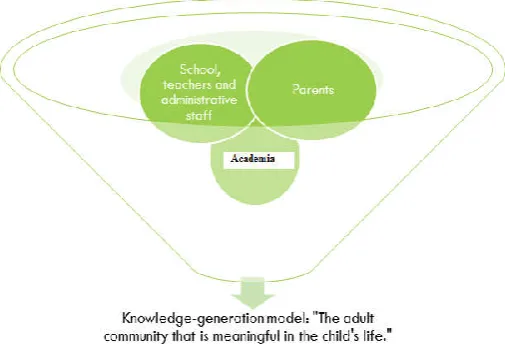
[image:4.595.308.561.205.377.2]communities in the field of education. However, even in the very brief review that we did provide of the common models and practices of community learning at school, one can easily notice that the learning process suggested in this paper is different in a number of aspects. First, as already indicated, the multi-functional and diverse composition of learners is unique to this learning format. A second unique aspect is the learners' proactive role in the learning process, that is, the recognition of the learners’ testimony as knowledge and the recognition of the learners themselves as relevant and necessary partners to a learning community that can improve the lecturer's, parents’ and schools’ practical and theoretical knowledge.2526
Figure 1. The School-Based Cooperative Model
That principle is based on democratic-educational principles. A teacher or a parent has the necessary knowledge for a comprehensive learning process. The parent mainly has idiosyncratic knowledge on the child's history and background, the teacher has knowledge that integrates the individual with the standard, and the lecturer mainly possesses theoretical knowledge, which is based on universal and standardized abstract models.27 The synergy between them is formed in an altered perception of teaching and learning, as it is practically manifested in the perception of the "democratic education". The focus of the democratic education on a dialog changes the roles that the players – the teacher and learner (or the learning community) – hold as well as their knowledge, and the practical meaning of learning, thereby creating a unique teaching-learning process with its own dynamics and compatibility to each learner's and teacher's character. Third, the learning process and the learners' partnership will be considered auspicious if it leads to a joint effort that incorporates the needs and desires of all participants. That effort is not only intended to affect a change in the individual's life, but also, and mainly, to affect a change in the learning institution's policy and at the child's home. The product of the knowledge-generation process in the learners' community is presented in Figure 2.
25Miranda Fricker, Epistemic Injustice: Power and the Ethics of Knowing.
(Oxford: Oxford University Press, 2007).
26
Shavit and Silver, “Learning from Success and the Success of Learning”.
27Tali Asher et al., “Pedagogia Democratit [Democratic Pedagogy],” Hed
Figure 2. Knowledge-Generation in the Learners' Community
The figure describes the knowledge-production process in the learners' community (parents-teachers-administration), the learning products created at the community level, and the products that can be dispersed to similar/additional
communities. The knowledge-production process is
multifaceted, as each of its participants enhances the other. The knowledge can then be dispersed in two main ways: knowledge from within the community that enhanced the academic establishment and improved research is spread to other communities through the academia. The knowledge acquired by participants is spread by "agents of change" in the community. Since the course is attended by participants of schools and diverse organizations in the region, it can then reach a wide-ranging audience. If everyone were to spread the knowledge and the learning products in their environment, then the impact of the course can be much more significant. Due to exceptional positive feedbacks, which suggest that the course participants, both learners and teachers, have had a similar and unique experience. We have embarked on an evaluative research project meant to examine if the learning setting of the "Town Square Academia" course fits the four core principles of Blanga et al. whether it substantially differs from the standard setting of community-based learning at schools, and if so, how?28
CHAPTER 2: MATERIALS AND METHODS
For evaluating the structure of the CMAC model, we rely on the literature. One of the more recognized models is Friedman's model for the assessment of social programs, which is concerned with assessing the program’s process and its result.29
28Blanga, Landler-Pardo, and Shachar, “Kehilot Morim Lomdot: Skira
Muzmenet Kechomer Reka Le’avodat Va'adat Safa [Learning Teachers Communities: A Survey Required as Background for the Committee of Language and Literacy].”
29Friedman, Medida ve-Ha’aracha Shel Tochniyot Chevratiot ve-Chinuchiyot
[Measurement and Assessment of Social and Educational Programs].
An assessment of a social program, in a public and political setting, requires an examination of the plan, its application and results, through the use of the study method, which is either quantitative or qualitative, as accepted in the field of social science (Smith, 1990 within Friedman, 2005). Some assessment studies draw attention to the implementation process, while others focus on the results. The studies that draw their attention to the results seek to establish what happens to the program's participants who they wish to assess, based on the impact of the program on them, or whether participants have met the program's objectives. Aprogram's assessment that focuses on the implementation process seeks to reveal the extent of which the program's implementation is on par with its original intentions, concepts, and objectives (Weiss, 1988 within Friedman, 2005). According to Roberts and Pruitt, assessments of models of learning communities of teachers are based on three major parameters: needs, process and product.30
Assessment of needs
This assessment focuses on the manner in which the devisers of a program have estimated the needs, requirements, interests or challenges for which the program can provide a solution. That assessment serves to identify and describe the needs of the organization, the community, and the individuals that may be assisted and benefited by the program. After all the relevant information is gathered, it will then be possible to begin planning the program, and if possible, have it implemented. In the presented case, the needs assessment was not conducted in the accepted manner. At first, a program for the course was drawn as part of the "Town Square Academia" project, and while discussing the plan with a school headmaster and teacher it was changed and suited to the school's needs. Under this study, we examined if the course had actually addressed those needs. A process assessment– This type of assessment is made when the plan is already being implemented. Assessors try to evaluate the program's means of assessment, by examining if the program is actually being implemented according to its determined assumptions, and if the program addresses the needs determined at the beginning of the course.
A product assessment
An assessment of the results – It is only possible to assess the program's results and its contribution to its participants when it is running and being implemented. This assessment will be conducted by the program's organizers with the acceptable assessment tools. In our case, the study began due to the exceptional (and almost surprising) positive responses received from the participants and lecturer of the first “Town Square Academia” course and prior to the beginning of the second course. The second course in effect attempted to re-examine concepts, ideas and guidelines that were brought up during the process. The assessment of the course in this study examines the process of learning implementation and the contribution of this learning process with the same level of dedication and rigor that was conducted for the result of the process, i.e. the knowledge acquired by the participants.
30
The Study Method
The study uses a mixed method, both the qualitative and the quantitative approach, with the intention of examining (a) the phenomenon of a proactive and diverse learning community as exemplified in the course; (b) examine if we can identify and explicate a new model for a learning community; and (c) articulate common principles of action that may enable other communities to utilizeour experience, findings and model. The qualitative study integrated findings obtained from partly-structured in-depth interviews of the participants (held before and after the second course “That Child is Me: A Parent’s Compass”), alongside an analysis of the videos that filmed all the sessions of the two courses. In conjunction, quantitative findings were taken from a questionnaire held at the end of the course, and an anonymous phone survey for parents and teachers who did not take part in the course.31During the data analysis, triangulation was held between the qualitative and quantitative findings. The qualitative tools enabled us to understand the studied issue in greater depth from the participants' points of view, and we used the quantitative findings as a critical backup for our findings. An analysis of the qualitative data was conducted by the extraction method and the breakdown of the interviews and video films into key themes. The cross-reference of the findings provides a clearer and broader picture of the "Town Square Academia" program as a whole, the course of “That Child is Me” in particular exposed us to the benefits of articulating a new model "the Community of Meaningful Adults for the child" (CMAC) – for both conceptualizing and operating a learners' community that shares parents, teachers, and the school’s administrative staff with information about ADHD, ADD and learning disabilities.
Sample
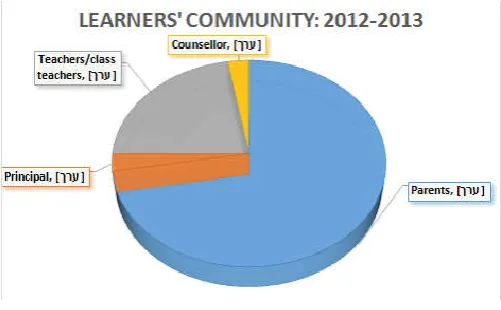
[image:6.595.311.561.49.208.2]Parents, teachers, and school principals who participated in the sample also took part in the two courses for which the CAMC model was examined in two schools in Kiryat Shmonah. N=60 (36 participants in the school year of 2012-2013 and 24 participants in the school year of 2013-2014). In addition, 10 parents and 10 teachers who did not attend the program took part in the sample. A video analysis of the course included all participants, while in-depth interviews were conducted with two school principals, two teachers, and four parents.
Figure 3. The Composition of the Learners' Community for the School Year 2012-2013
31The person conducting the interview and the participants did not know each
[image:6.595.38.289.571.726.2]other.
Figure 4. The Composition of the Learners' Community for the School Year 2013-2014
The Study Tools
In order to gather the qualitative findings, the study used qualitative tools that included pre and post partly-structured in-depth interviews, and an analysis of the video footage taken during the meetings. The quantitative tools used a closed positions' questionnaire at a Likert Scale of 1-5 (I am highly knowledgeable – I have no knowledge at all) and phone surveys with parents and teachers who did not take part in the program (see sections 1 and 2).
The Study Procedure
In-depth interviews were held with the school principal, teachers and parents before and after the program's sessions. In addition, all the sessions were documented and filmed, as they form a basis for a collection of qualitative findings. At the end of the program, all participants filled out a closed positions' questionnaire, and a phone survey was held with 10 parents and 10 teachers who did not participate in the program according to the proposed model.
Chapter 3: The study findings
The analysis of the data was conducted according to two categories: the course’s process and product.
Assessment of the Course's Process
school staff. In that sense, we believe our model offers an innovative and potentially fundamental new approach that should not be taken for granted. That question was examined by a phone survey of 10 parents and 10 teachers who did not participate in the course and by partly-structured interviews. During the survey, parents and teachers were asked if they think a community-based learning of ADHD, ADD and learning disabilities is important; and, if so, in what ways is it valuable to them, and how will this value be expressed? In the answer to that question, 100 percent of teachers and 90 percent of parents (one parent refused to answer) were in complete agreement that the proposed CMAC model is of clear significance. For example: " collaboration and training of both sides [parents and school] can clarify the common objective and raise awareness to the various difficulties– even make parents and teachers identify with each other; when both sides have a common goal in mind – the child's benefit, his/her welfare and success. They will do their best to collaborate and support the child."
One of the mothers added: "If parents, teachers, and staff will understand how they need to approach the children by means of joint training, then it will be much easier for all sides to help the child and there will be much more understanding for him/her. The teachers will realize that the child's problems are not his/her fault and one should know how to approach him/her. When I'll see a teacher who was trained as I was, I'll be able to collaborate more easily and with better understanding." A school principal who took part in the interview had indicated the significance of the learning community: "The significance of parents, teachers, and the administrative staff who jointly learn lies in the creation of a shared and invigorating language for each other, less accusations that teachers have to the student, the parents, and vice versa, and most importantly, the mutual recognition of each other and to diminish one's ego. The ego battles don't take us anywhere." A teacher who took part in the interview had indicated the significance of the heterogeneity in the learning community "in my mind the involvement of teachers, parents and the administrative staffs as a diversified community is very important. Their children spend most of their day here, and it is therefore important to form with them [the parents] a significant bond– it's an opportunity." An analysis of the findings has revealed that those taking part in the survey and the interviews strongly support a shared learning model. The participants think that a parents-teachers-administrative staff community forms a decisively significant measure for understanding the needs and challenges of a child with ADHD, ADD and learning disabilities. The shared learning process will create a common language, as well as common understandings of possible methods of therapy. The contribution is expected to form the groundwork for collaboration born of a mutual obligation to the child. Although one might plausibly expect such a support for a CAMC model, surprisingly, we did not
find in the literature a description of a similar model at work. In that sense, this research adds to the existing literature.
Assessment of Product
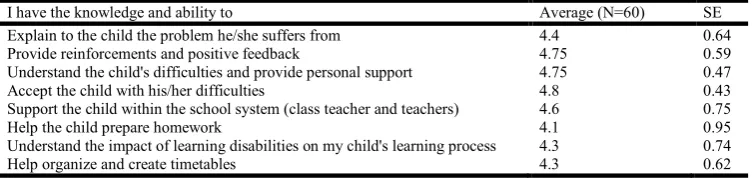
Have we evaluated to what an extent people report, after the course was completed on the presence of a common language and common knowledge? The question is important since the knowledge shared by participants can form the basis for productive and meaningful collaboration in the future. These aspects of knowledge and language were examined by means of a closed-positions questionnaire and in-depth interviews with the participants. Analysis of the closed-positions' questionnaire based on the Likert Scale (1= I don't have the knowledge and ability, 5= I have the knowledge and ability), had produced the following findings: An analysis of the findings reveals that most participants consider themselves knowledgeable and capable of understanding the child's needs and his/her difficulties. Since most participants at the end of the
course report on the knowledge they hold, there will be a basis for mutual propagation and dissemination of knowledge that can contribute to the collaboration between parents and the educational system. Furthermore, an analysis of the interviews reveals statements that support the quantitative data. For example, a parent from the Town Square learning community shared his experiences: "The academia offers me broad information that I couldn't get anywhere else. Where could I get it from?" One of the participants shared her feelings: "I also saw the teachers' reactions, that it [the CMAC learning process] helps them view the children in a different light. I think it is very beneficial. When I will later approach this teacher, I have a feeling that she will better understand my son's difficulties as well as the difficulties that I experience as a mother. Now I also understand her better, and I'll be more tolerant and less judgmental."
One of the teachers indicated:
[image:7.595.113.490.301.390.2]"each parent and teacher brought an example from the ground, which in turn made their understanding more acute and created a common language." Another teacher added during the interview, "As a teacher, it improved my approach [to the children] and made it more effective for students with learning disabilities." A principal from one of the schools emphasized: "unexpectedly I learned that the joint-learning session with the parents is highly productive. It spurs dialogue through a common language. The perspective they [the parents] bring to the process is interesting, different and mainly carries a lot of pain and a strong will to help their child. The sessions provide for a dialogue, which I really liked. It was difficult for me to see the parents confront their pain. From the dialogue and the pain, I realized that the educational system has to reach out to them for the sake of their children…"
Table 1. Description of the Average and Standard Deviation of the Statements in the Closed-Positions' Questionnaire
I have the knowledge and ability to Average (N=60) SE
Explain to the child the problem he/she suffers from 4.4 0.64
Provide reinforcements and positive feedback 4.75 0.59
Understand the child's difficulties and provide personal support 4.75 0.47
Accept the child with his/her difficulties 4.8 0.43
Support the child within the school system (class teacher and teachers) 4.6 0.75
Help the child prepare homework 4.1 0.95
Understand the impact of learning disabilities on my child's learning process 4.3 0.74
That same principal also indicated the change of view experienced by one of the teachers who took part in the learners' community: "one of the teachers shared in our pedagogical meeting a deep personal pain she felt about a specific class –probably consisting of a high rate of students with learning disabilities – and I listened to her and thought to myself… "Wow, she internalized it… it [the Town Square Academia course] did something…"
An analysis of the quantitative and qualitative findings paints a clearer picture of the experience felt by the community of learners. We have found parents, teachers, and a principal who have testified on a shared and empowering learning experience that created: A deeper understanding of the child’s difficulties and needs, a common discourse, a new kind of sensitivity and understanding. All of these, in their minds, helped and provided solutions for the child with ADHD, ADD and learning disabilities.
1. Does the cooperative learning process also provide a shared and valuable dialogue within the community of meaningful adults for the child (CMAC) and if so how?
By analyzing the video coverage of the sessions, one can provide examples of the heterogeneous and multifaceted interactions that took place during the course:
Teacher: "Some students get help in school but don't do their
homework at home and don't try hard. It's very frustrating…"
Mother: "My child was successful at school in the morning
when he was put on Ritalin. But in the afternoon, the effect waned and there he felt differently… I can't blame him – the experience is different, his ability changes, he's overwhelmed and not focused… you have to understand that experience and witness first hand his lack of attention, which happens not because he doesn't care. It's because he doesn't have the capacities to pull himself together…"
Teacher: "There's a perspective that I wasn't aware of. I looked
at the efforts I made for the student compared to his attitude when he comes to school without doing his homework. I now reached a different understanding. It enlightened me… thank you."
The interviews reveal a similar point:
Principal: "The parents' indecisiveness whether “to tell or not”
[that their child has ADHD, ADD or learning disciplines] is it “shameful” or not; [and] I think we witnessed here the emergence of a language of collaboration and understanding … to speak in the same language and take the same responsibility, which is something that's missing in the educational system. The child comes to school, and the school must provide him/her with solutions. But the school can't provide all the solutions, nor can it do so on its own, therefore the parents are a key aspect, and this is where the cornerstone for a meaningful dialogue and collaboration was laid.” The participating parents and teachers indicate the change in discourse and the new openness created at CMAC.
Teacher: "The workshop provided parents with a kind of
self-expression. I often heard those who said that it [the knowledge and personal stories exchanged during the course] sounds just like their own child. The workshop reflected on the situation
and ways of dealing with it, which is something that is probably missing for both teachers and students."
Parent: "When it [the knowledge] shows up in a lecture and
both parents and teachers cooperate and provide examples of their own, then… it [the knowledge] contributes to understanding and helps in sharing the difficulty…"
In conclusion, one the participating parents said: "It's very productive that people talk so candidly. When you get to hear all the parents and teachers and the things they have to deal with, it helps you understand and share… it created a joint understanding and a desire for both sides to take action." These qualitative findings testify to the heterogeneous, open and shared dialogue at CMAC –A dialogue that includes an overwhelming presentation of difficulties, internal conflicts, a search for common solutions, and mainly understanding and a greater empathy of parents and teachers to each other, and all for the benefit of the child.
2. How and to what an extent has the program contributed to
[image:8.595.310.556.316.467.2]its participants?
Figure 5. The Contribution of the Town Square Academia course "That Child is Me" to Its Participants N=60
The findings reveal that the participants (parents, teachers, and administrative-staff) were greatly benefited by joining such a community of learners. The participants claim that after undertaking the course, their knowledge expanded in the four key areas examined, and now they can better understand the phenomenon of ADHD, ADD and learning disabilities (average of 4.6, standard deviation of 0.71). The deviation standard reflects on the participants' agreement with acquisition of knowledge and understanding. One of the participants who took part in the conclusive session reinforced that notion: "I first came in with very little knowledge. I now know a lot more, and there's a clear and structured scheme." A participating teacher added, "This course dramatically improved my knowledge and understandings, re-structured things in my mind, and enabled me to think more laterally. I
treated specific pupils at the pedagogical meeting
experience at the parents-teachers-administrative staff's community: "I have a broad knowledge [of ADHD, ADD and learning disabilities], yet I learned a lot from the group's uniqueness. The opportunity to listen and understand the issues from the parent's and child's perspectives had added to my own knowledge and understanding. This model should be widely circulated in order to maximize the solutions we are required to provide for our children… we should continue to raise awareness in our community and schools."
Recommendations for Improvement
The interviews raised two points for internal criticism, which should be referred to in future plans for such courses. First, participants raised the need for a hands-on, immediate and specific problem-based learning during the time of the course. That aspect was not really addressed, and we recommend to consider a focus on specific issues that will accompany the baseline knowledge in the following courses. Another suggestion, raised as a need that should be considered, is the creation of additional learning communities with pupils and adolescents. Parents and teachers were highly supportive in integrating lectures to pupils that explain and illustrate the challenges and provide tools for the student to understand those challenges. Such lectures will provide the pupil with the capacities of expressing his/her difficulties in a clear and open fashion. Improvements were also recommended to the school. After the second course had ended, the parents, teachers, school administration and lecturer reconvened and formulated a document of recommendations for the school. This document was cooperatively compiled as an example of the course’s quality product, in order to continue and spread the CMAC model in the school's community and establish a path for ongoing and sustainable collaboration.
The finalized document of recommendations covers the following topics:
The relationship between school and parents should not be
driven by ego and/or mutual accusations but by the common need to cooperate for the benefit of the child.
Children with ADHD, ADD and learning disabilities
should be more looked at and be visible (in schools), thus
communication with the parents should change:
Communication should be made by phone more frequently and regularly to inform on the child's achievements and not only of his/hers challenges or disruptions.
A joint blog for parents, teachers, and professionals should be established in order to raise and share the difficulties and get counseling with a common effort on the tools for jointly handling those challenges.
A contact-person should be appointed at the school for children with learning disabilities, ADHD,ADD and their families. An educator to whom the teachers, parents and children can turn, and someone who can represent the child’s needs before professional teachers after making a connection with him/her.
Additional school staff, other than the single school counselor, should regularly learn about ADHD, ADD and learning disabilities. By doing so, the school will serve two functions aimed at working on the relationship between parents and teachers.
A recommendation to teachers, parents and adolescent
pupils with ADHD, ADD and learning disabilities to jointly participate in the Town Square Academia course.
Following the experience and evaluation of the learning process, the following recommendations were suggested. First, a model for CMAC should be developed, monthly meetings between the school and the lecturer should be routinely continued, a local CMAC blog and tutoring model for children with ADHD, ADD and learning disabilities should be established. Second, all the above CMAC activities should be expanded beyond one or two schools, by turning the above mentioned Town Square Academia course into an urban
initiative that is recommended for schools. The
recommendation is to try and build in each school a teachers-parents-administrative staff learning and sharing community as a key for a meaningful dialogue, and in order to provide appropriate solutions to children at the emotional, social, and education levels.
CHAPTER 4: DISCUSSION AND CONCLUSIONS
The authors conclude that the active participation of teachers, parents, administrative staff, lecturers and college students in a community of learners forms an alternative learning model that puts all partners on a more or less equal footing and motivated by a common goal – the child's benefit and the creation of a holistic multi-dimensional support structure for him/her. That community should establish and be based on the knowledge of all those involved, study authentic local cases, apply theoretical knowledge to examples from the field, and truly recognize heterogeneous perspectives through an educated analysis of individual events. The depicted process is based on a continuous dialogue, and to a large extent even an equal dialogue among diverse colleagues in a shared community. In CMAC, each side can hear and be heard, share knowledge and experience from his/her personal life, the workplace and the academia. We should not only be satisfied with the familiar model of members of a learning community, which in most cases only absorb information from a professional, academic and knowledgeable lecturer, but the shared-community learning activity should be based on knowledge generation, its distribution and preservation by means of various tools and voices.
This study showcased a number of practical insights on how to spread knowledge within the community (typically an underprivileged community), a CMAC theoretical model was created in order to explicate the principles of action that will sustain this important dialogue regarding ADHD, ADD and learning disabilities in the future. Attaining such aproactive, cooperative, critical, and reciprocal knowledge is one of Town Square Academia’s objectives, with the aim to benefit the academia and its environment as a whole, rather than promote a picture of a “benevolent” or “graceful” academia that occasionally descends from its ivory tower to educate the masses. There is valuable knowledge to be gained by everyone, and it seems that objective was realized in the learning experiences and the development of partners at CMAC. By
examining the CMAC model with respect to Blanga et
al.'s32core principles for any community-learning model, one can clearly see that these common principles strongly manifested during the course “That Child is Me”:
1st principle: Relationships based on trust and sharing.
32Blanga, Landler-Pardo, and Shachar, “Kehilot Morim Lomdot: Skira
By analyzing the findings – written and filmed – it seems that a trustful and cooperative relationship was very clearly expressed in the school year of 2012-2013:
Mother: "It reached a point when I was upset with my
daughter. Looking back, I now realize that she's not in control… she doesn't do things on purpose. These are mundane things that I want to help my daughter with but don't know how… I came here in search of answers… I received tools such as reinforcements in understanding token economy."
Teacher:"I feel that these meeting enriched me more than any
other meeting I attended…because of them [the course meetings] I learned to react differently…"
Mother: "It really enriches you. I [now] know that I have a
learning disability problem and that people have given up on me, but I'm not prepared to give up on my kids… The meetings gave me tools to deal with my kids."
Father: "This course is a must in every school. We were
ignorant at first, but after a single session I realized that I've changed. I changed my attitude and I can see the change in my child…"
Principal: "We all sit as students. The success is because of the
fact that all of those people come from a different background and we received lectures at an academic level that also respected the intelligence of all those present. We learned how we can change ourselves for our children. Something happened in that group. It's something different. We are all equal and partners in having to deal with what's best for our children…"
An analysis of the interviews taken for the course in the school years of 2012-2013 and 2013-2014 suggests that trust relationships were formed. However, in effect, parents did not share as much of their personal examples in the 2013-2014 course. One of our conjectures is that during 2012-2013, school-staff compliance was high, and their presence in the meetings contributed to the creation of the group and its collaboration. On the other hand, the 2013-2014 group was more diversified. Parents came from many schools, and school-staff and the administration representation was less conspicuous. It is possible that for that reason, parents shared less their difficulties and personal experiences. Continued study should look into the characteristics that encourage the generation of a meaningful learners' community as proposed in the model.
2nd principle: A high level of mutual and professional respect
will create a community with a safe environment and a climate of containment, attentiveness and collaborative decision-making. That principle is manifested by analyzing the dialogue in the videos, which demonstrates a dialogue between parents and teachers where understanding and a sense of mutual inclusion, as well as mutual respect are created, by understanding the difficulty from a different perspective.
3rd principle: Structured processes and regulated mechanisms
for learning.
The community's setting forms the basis for creating permanence and stability, and this principle is important for the creation of learning communities. In our case, although we could not create permanence in all participants, a strong core of
nearly 80 percent attendance rate of participants in 2012-2013 were present in all the sessions (some of the participants were absent due to institutional obligations such as field trips). Much to our dismay, even in 2013-2014, when the attendance rate was less than 70 percent, we were able to create a sense of meaningful and quantitative learning (as quoted in the interviews), whereby the power of the community model is illustrated. Furthermore, we decided to put more effort in the shared assignment in order to broaden the stable and ongoing learning foundation, and to provide participants with a meaningful product that can be distributed to other communities.
4th principle: A reflective dialogue and self-examination.
In a preliminary interview before the course in 2012, university lecturer Dr. Anat Raviv has indicated as a response to the question: "What are your expectations from the course?" that "The subject matter is highly emotional and contested, and I don't know who the audience will be… I hope it will create awareness and openness to this subject, which can be talked about. It's not a secret and it shouldn't be swept under the rug. I really would like to see parents bond with the children's' world and get parents to realize that they need to follow the child and the school rather than resist them and constantly deny the problem."
In a later interview Dr. Raviv spoke in a different tone. She no longer expected only to render her existing knowledge more accessible, but rather expected to form a true partnership that will generate new knowledge. "After two years of activity, I was surprised by the learning process and its results from the new learning model. There was an expectation to distribute knowledge and raise awareness, while in fact new knowledge and multi-level collaboration were generated. Teachers, parents, and school staff created a shared a dialogue as a great deal of challenges were talked about, creating a groundwork for discussion out of common knowledge and the understanding of each side's difficulties in dealing with the child difficulties." It should be noted that several questions remain open and unanswered for at this stage: Does a shared dialogue – if and when it is formed– encourage a shared working model of the school with all parents (and not only with the parents' council)? To what extent does the proposed model practically contribute to the learners' community compared with other models? These issues will be further looked at in a continued study, which will examine the impact of establishing a CMAC. For that goal, we recommend to expand the applicability of the CMAC model to additional schools, compare those that adopt CMAC with those who continue with the standard model of training parents separately from teachers, and examine the products on a long term basis. In conclusion, our research question can be answered affirmatively: there is indeed justification for presenting a new community-based learning model to the literature – CMAC - and yet the practical success of this model should be further tested on a much larger scale.
REFERENCES
Asher, Tali, Amos Bar, Yael Biber-Aviad, Yuli Khromchenko, Raviv Reichart, and Revital Yahalom, 2012. “Pedagogia Democratit [Democratic Pedagogy].” Hed Hachinuch 2, 78–81.
Birenbaum, Menucha, 2009. “Ha’aracha Le-Shem Lemida