Study and Analysis of Power Generation by Waste
Materials by using Plasma Gasification Technique
Devshree Trivedi
Dept. of Physics, Mandsaur University, Mandsaur-458001 (M.P.), India
Abstract: One of the greatest difficulties of developing nations today is electric power generation. The demand for Electric power is far above generation and distribution capacities. Utilizing a plasma torch can mediate for all intents and purposes a wide range of strong urban waste, as well as industrial waste, and get electrical energy all the while. The procedure behind plasma waste treatment is known as plasma gasification, where enough energy is moved to a solid or fluid substance with the end goal that it is changed into incompletely in gas, all the more exactly in synthesis gas (syngas), and another somewhat in liquid magma. The liquid magma cools to turn into an inactive vitreous sub item, leaving possibly risky items caught in a crystalline net, for example, some substantial metals. Hot gases can be utilized for power generation and this can be utilized both to stimulate a similar treatment plant and to convey power to the outside power grid. This is a concise report devoted to consider the feasibility of executing the treatment of urban residues by the utilization of plasma.
Keywords: Plasma physics, gasification, waste to energy, syngas, power generation.
I. INTRODUCTION
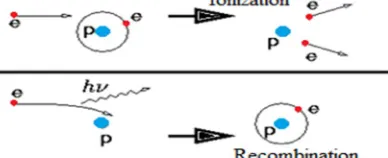
Plasma, in material science, an electrically conducting medium where there are generally equivalent quantities of positively and negatively charged particles, created when the atoms in a gas become ionized. It is now and again referred to as the fourth condition of issue, particular from the solid, fluid, and gaseous states.
The negative charge is generally conveyed by electrons, every one of which has one unit of negative charge. The positive charge is regularly conveyed by particles or atoms that are feeling the loss of those equivalent electrons. In some uncommon yet special cases, electrons missing from one type of atoms or particle become connected to another segment, bringing about plasma containing both positive and negative particles. The most extra ordinary instance of this type happens when little however naturally visible residue particles become charged in a state indicate to as a dusty plasma. The uniqueness of the plasma state is because of the significance of electric and attractive powers that follow up on plasma notwithstanding such powers as gravity that influence all types of issue. Since these electromagnetic forces can act everywhere separates, plasma will act on the whole much like a liquid notwithstanding when the particles only from time to time slam into each other.
About all the obvious issue known to universe exists in the plasma state, happening overwhelmingly in this structure in the Sun and stars and in interplanetary and interstellar space. Auroras, lightning, and welding arc segments are additionally plasmas; plasmas exist in neon and fluorescent cylinders, in the crystal structure of metallic solids, and in numerous other wonders and items. The Earth itself is drenched in a dubious plasma called the sun powered breeze and is encompassed by a thick plasma called the ionosphere.
II. CONCEPT OF PLASMA IN MATERIAL SCIENCE
[image:1.612.211.405.640.719.2]Plasmas are said to be semi neutral as Electrostatic power >> Kinetic Pressure Force.
This is one part of the way that, as a result of being ionized, plasmas display a wide range of aggregate conduct, not the same as unbiased gases, interceded by the long separation electromagnetic powers E, B. In plasma, the Debye length,
Where the electron temperature is Te as the particle density, n∞ is very large in the plasma sheath.
Typically we comprise as part of the definition of a plasma that λ << the size of plasma. This ensures that collective effects, quasi -neutrality etc.
If NDD = Number of particles in the `Debye Sphere, then for plasmas, ND >> 1 (Collective effects dominate over collisions) Thus, Plasma is an ionized gas in which collective effects dominate over collisions.
[ λD << size of plasma , ND >> 1 ]
We have recognized two conditions under which an ionized gas can be plasma. A 3rdcondition has to do with oscillations. If ω is the
frequency of oscillation and t is the mean period between oscillations, then ωt > 1 for the gas to behave like plasma rather than a
natural gas. Therefore, three conditions an ionized gas must assure to be called plasma are: λD << size of plasma, ND >> 1, and ωt
> 1.
III. PLASMA GASIFICATION TECHNIQUES
Synthetic Plasma may be created by passing a gas between objects with large differences in electrical potential, as in the case of lightning, or by exposing gases to high temperatures, as in the case of arc welding or graphite electrode torches. Plasma arc torches utilize a combination of these techniques. The extremely intense energy produced by the torch is powerful enough to disintegrate the MSW into its component elements. The subsequent reaction produces syngas and byproducts consisting of glass-like substances used as raw materials for construction, and also re-useable metals. Syngas is a mixture of hydrogen and carbon monoxide and it can be converted into fuels such as hydrogen, natural gas or ethanol. The Syngas so generated is fed into a heat recovery steam generator (HRSG) which generates steam. This steam is used to drive steam turbine which in turn produces electricity. The cooled gas is also used to drive a second turbine to generate additional electricity – The integrated gasification combine circle (IGCC) thus produce adequate electricity, part of which is used for the plant’s load and the rest of the power generated is sold to the utility grid. Basically the inorganic materials, for example, silica, soil, solid, glass, rock, incorporating metals in the waste are vitrified and flow out the base of the reactor. There are no tars, furans or ashes enough to dirty the earth.
The foremost points of interest of gasification instead of direct ignition (incineration) for the recovery of energy from wastes, for example, Municipal Solid Waste (MSW) include:
1) Production of a gaseous item that can be combusted more productively than a solid fuel, resulting in decreased necessity for excess air while lessening the potential for development of products of incomplete combustion (PICs). These outcomes in a decrease in the volume of emissions and lower absolute discharges when treated to a similar focus guidelines.
2) Ability to clean the item gas before burning, resulting in further decreases in emissions. Ability to use the Integrated Gasification Combined Cycle (IGCC) process for generation of power which results in a lot higher thermal efficiencies (40-45% energy recovery as power instead of 20-25% for mass burn offices). Plasma gasification speaks to a clean and efficient alternative to change over different feed stocks into energy in an earth dependable way. The following are the natural advantages of this procedure for power generation: Gasification happens in an oxygen starved condition, so feed stocks are gasified, not burned. Because of the high working temperatures in the plasma gasification process:
3) It delivers no base ash ash or fly ash that requires treatment or landfill disposal.
4) Metals not recovered from the waste stream preceding handling and most metallic mixes are decreased to their natural state and recovered in a structure that grants recycling.
5) Non-burnable inorganic materials, for example, glass, cement, and soil are melted and vitrified, creating an earth stable glass-like buildup that can be sold for use as development total.
7) The nonappearance of moving parts in the gasifier in mix with the high temperature and flexibility of the plasma warming system makes it conceivable to process materials, for example, rug and tires that are hard to process in regular incinerators or other gasification processes.
8) The gasifier works under a slight negative pressure, limiting the potential for getaway of the item gas.
9) Continuous release of the liquid residue through the coke bed at the base of the vessel takes out the need to keep up a liquid pool of buildup in the vessel and related issues with solidifying of taps required for release of the buildup.
IV. WASTES TO POWER GENERATION MATERIALS AND METHODS
Plasma material science connected to gasification speaks to a clean and efficient choice to oversee squander in an ecologically capable way. The plasma gasification innovation is in a perfect world fit to process squanders, for example, Municipal Solid Waste ("MSW"), regular risky waste, modern waste, concoction squander, silt slop and biomass. It can likewise vitrify fly fiery debris from incinerators and some other kinds of powder. Changing over waste into different vitality yields decreases dependence on the utilization of ordinary fossil based energizes by utilizing promptly accessible waste.
In Nigeria like most creating nations, waste are normally dumped in open dumps uncontrolled landfills where a waste gathering administration is sorted out. Open dumping of waste is anything but a long-term natural strategy for transfer. The perils of open dumping are various; wellbeing risk, contamination of ground water, spread of irresistible sicknesses, very harmful smoke from persistently seething flames, foul smells from deteriorating deny and outflow of nursery methane gas. A few million tons of squanders have been stored in open dumpsites the nation over throughout the years. Another innovation, for example, Plasma Physics connected to Gasification of MSW may demonstrate to be an ecologically neighborly and sustainable solution for wastes disposal and power generation.
V. GASIFICATION PROCESS
The gasification reaction for MSW is generally written as follows:
CHxOy + wH2O + mO2 + 3.76mN2 → aH2 + bCO + cCO2 + dH2O + eCH4 + fN + gC
Where waste material is depicted by its worldwide investigation, CHxOy), w is the measure of water per mole of waste material, m is the measure of O2 per mole of waste, a, b, c, d, e, f and g are the coefficients of the gaseous items and ash (every single stoichiometric coefficient in moles). This general condition has likewise been utilized for calculation of chemical equilibrium balance happening in the warm plasma gasification with info electrical energy. The centralizations of every gas have been chosen relying upon the measure of infused O2, H2O, and information warm plasma enthalpy.
The H2 and CO created during the gasification procedure can be a fuel source for power generation.
What are more, different ventures that produce dangerous waste as a feature of their manufacturing processes, (for example, the chemical and refining businesses) are analyzing plasma gasification as savvy methods for dealing with those wastes streams. Plasma is an ionized gas that is framed when an electrical release goes through a gas. The resultant flash from lightning is a case of plasma found in nature. Plasma torches and arcs convert electrical energy into intense thermal (heat) energy. Plasma torch and arc segments can produce temperatures up to 10,000 degrees Fahrenheit. At the point when utilized in a gasification plant, plasma torch and arc create this intense warmth, which starts and enhancements the gasification reaction, and can even expand the rate of those reaction, making gasification progressively efficient.
Inside the gasifier, the hot gases from the plasma torch or arc segment contact the feedstock, for example, municipal solid waste, auto shredder waste, medical waste, biomass or perilous waste, heating it to in excess of 3,000 degrees Fahrenheit. This outrageous warmth keeps up the gasification responses, which break separated the compound obligations of the feedstock and changes over them to a syngas. The syngas comprises fundamentally of carbon monoxide and hydrogen—the essential structure obstructs for synthetic compounds, composts, substitute flammable gas, and fluid transportation fills. The syngas can likewise be sent to gas turbines or responding motors to deliver power or combusted to create steam for a steam turbine-generator.
Since the feedstock's responding inside the gasifier is changed over into their essential components, even dangerous waste turns into a valuable syngas. Inorganic materials in the feedstock are softened and melded into a smooth like slag, which is nonhazardous and can be utilized in an assortment of utilization, for example, roadbed development and roofing materials.
VI. LAND REQUIREMENT
The land and transportation offices are essential necessity for waste destruction/power generation. According to the arrangements of Municipal Solid Waste (Management and Handling) Rules, 2000, the landfill site will be enormous enough to keep going for 20-25 years. It is the general experience that the land prerequisite for advancement of the MSW landfill site is around 0.2 ha/MT of MSW age every day with least necessity of 2.0 ha land region. The anticipated least land necessity for Plasma Gasification Process (PGP) is subject to the preparing limit of the plant and subordinate procedures that perhaps incorporated into the general plant structure. Be that as it may, a standard IGCC arranged plant having a limit of 1000 M.T every day would require about 2.02 Hectares (5 Acres) of land. Expanding the limit of the plant to 3000 M.T. every day would build land prerequisite to about 4.04 Hectares (10 Acres).
VII. PLASMA GASIFICATION PROVIDES A NUMBER OF KEY BENEFITS
A. It opens the best measure of energy from waste.
B. It does not create methane, an intense ozone harming substance.
C. It isn't burning and subsequently doesn't deliver leachable base cinder or fly fiery debris
D. It diminishes the requirement for land filling of waste.
E. It produces syngas, which can be combusted in a gas turbine or responding motors to create power or further prepared into synthetic concoctions, composts, or transportation fills.
F. It has low natural emissions.
VIII. RESULTS AND DISCUSSION
The issues of Waste and Power deficiencies on the planet can be settled by a single procedure of plasma material science connected to gasification of municipal solid waste. The feasibility directed demonstrated that power request surpasses supply, and just a limit of about 3,300MW of power is accessible at given time for a populace of more than 165 million in Nigeria. The arrangement of these twin issues appear to lie in the material science of Plasma Gasification. The Plasma Gasification Process of Municipal Solid Waste is a demonstrated innovation for waste to energy generation. The response forms in Plasma Gasification produce principally syngas (Hydrogen and Carbon monoxide).
IX. CONCLUSION
Developing nations should look for region explicit answers for their issues in the MSW the board. Use of Plasma Gasification Process (PGP) in waste to energy, assuages the weight on troubled landfills, and offers an earth considerate technique for arranging MSW. Metropolitan solid waste is considered as a wellspring of sustainable power source, and plasma gasification innovation is one of the main edge advancements accessible to outfit this vitality. Lately, the US government formally pronounced the MSW as a sustainable wellspring of energy, and power generation using MSW is viewed as green power and qualified for every qualified impetus. Plasma material science connected to gasification is a financial and reasonable wellspring of energy, and a solid wellspring of intensity generation. There is numerous utilization of Plasma Gasification Process and the benefit capability of plasma transformation is tremendous.
REFERENCES
[1] Sustainable Power Generation by Plasma Physics Anyaegbunam F. N. C. (Ph.D.) Department of Physics/Geology/Geophysics, Federal University Ndufu Alike Ikwo. Abakaliki Nigeria in American Journal of Engineering Research (AJER) e-ISSN: 2320-0847 P-ISSN: 2320-0936 Volume-02, Issue-08, pp-65-75
www.ajer.org
[2] Anyaeg bunam F.N.C, JVL Capital (2012), Plasma Power Project Feasibility Report, prepared for Brain Fintek Plasma Power Limited. BPP publications, July 2012.
[3] Langmuir I. (1928), Oscillations in ionized gases, Proceeding of National academy of science, U.S.14(8), pp 628. [4] Chen, Francis F. (1984), Plasma Physics and Controlled Fusion. Plenum Press. ISBN 0306413329
[5] Camacho S. L., 1996), Plasma Pyrolysis and Vitrification of Municipal Waste, U.S. Patent No. 5,544,597, Aug. 1996.
[6] Nedcorp Group (2009) Environmentally Friendly Waste Destruction and Sustainable Renewable Energy. A feasibility document of Nedcorp group, July 2009. [7] Evans Steve D, (2009), Plasma Gasification Plant Benefits for Municipal Waste Management, EzineArticles.com, available at . html, accessed during
December 2011.
[8] Patel Munna Lal, Chauhan Janardan Singh (2012), Plasma Gasification: A Sustainable Solution for the Municipal Solid Waste Management in the State of Madhya Pradesh, India. INTERNATIONAL JOURNAL OF ENVIRONMENTAL SCIENCES Volume 3, No 1, 2012
[9] Anyaeg bunam F.N.C., (2013), Plasma gasification in waste management and sustainable renewable energy in Nigeria. International Journal of Environmental Science and Technology, July 2013.
[10] Dighe, Shyam V. (2008), Westinghouse Plasma Corporation, Madison, Pennsylvania, USA, Plasma Gassification : a proven technology, Proceedings of NAWTEC16, 16th Annual North American Wasteto-Energy Conference, May 19-21, 2008, Philadelphia, Pennsylvania, USA.