Original Article
Association of
PSMA6
-8 C>G polymorphism with the
risk of ischemic stroke: a meta-analysis
Guanshu Qi1, Jianzhong Yu1*, Dong Luo2*, Feng Zhou3, Qihui Cheng3, Dan Yu3
1Department of Neurology, The First Affiliated Hospital of Zhejiang Chinese Medical University, Hangzhou, China; 2Department of Neurology, The Second Affiliated Hospital of Zhejiang University, School of Medicine, Hangzhou,
China; 3Department of Neurology, Affiliated Haikou Hospital of Xiangya Medical College of Central South
University, Haikou Municipal Hospital, Haikou, China. *Equal contributors.
Received August 10, 2016; Accepted November 19, 2016; Epub August 15, 2019; Published August 30, 2019
Abstract: Proteasome subunit α type 6 (PSMA6) -8 C>G polymorphism has been reported to be associated with the susceptibility to ischemic stroke (IS). Given the inconsistent results, we conducted a meta-analysis to assess the association between this SNP and the risk of IS. Articles based on the association between this variant and IS were searched in PubMed, EMBASE, Chinese National Knowledge Infrastructure (CNKI), Wanfang, and Google Scholar database published before August 1, 2016. Pooled odds ratios (OR) and 95% confidence intervals (CI) were calcu-lated using fixed-effect or random-effect models in five genetic models (allele, co-dominant, dominant, recessive, and additive model) according to heterogeneity among studies. In the combined analysis, this variant was found to be associated with a decreased risk of IS under heterozygous and dominant model, while was proven to be associ-ated with a reduced risk of large vessel disease (LVD) under allele, heterozygous and dominant model.Based on ethnic subgroup analysis, in Caucasian population, the risk of ischemic stroke was reduced in each of the genetic models, while the risk of large vessel disease was decreased in the allele, heterozygous and dominant model. As for African-American, lower IS risk of IS was only observed under allele model. Null association existed in Asian popula-tion. Our meta-analysis show that PSMA6 -8 C>G polymorphism is more likely to be associated with a decreased risk of IS and LVD in combined analysis, which is also present in Caucasian and African-American population.
Keywords: PSMA6, meta-analysis, stroke, cerebral infarction, single nucleotide polymorphism
Introduction
Stroke is known as one leading cause of death and disability accompanied with huge social and economic burden worldwide [1-3]. And ischemic stroke is accountable for about 80% of all stroke in origin [4]. Stroke is a highly com-plex disease caused by a combination of envi-ronmental risk factors and genetic predisposi-tion. Several genes, such as ACE, MTHFR, and
APOE, had been confirmed with increased risk of ischemic stroke [5]. However, these findings
are just the tip of the iceberg. It is necessary to further identify other potential susceptible genes in order to better understand, treat and prevent this disease.
Proteasomes are a large, 26S, multicatalytic protease distributed throughout eukaryotic cells for polyubiquitinated proteins degenera-tion in a non-lysosomal pathway. It is composed
ries the catalytic activity and a 19S regulatory particle [6]. Proteasome subunit α type 6 maps on chromosome 14, at 14q13.2 according to Entrez Gene. This gene encodes a member of the peptidase T1A family, which is a 20S core alpha subunit. Evidences suggested this prote-asome takes an important part in endothelial cell dysfunction [7], vascular senescence and atherosclerosis [8, 9]. One polymorphism rs10- 48990 (-8 C>G) within PSMA6 gene was firstly
reported to be associated with increased risk of myocardial infarction in Japanese in 2006 [10]. And the variation enhanced the transcription of
PSMA6, which contributed to vascular inflam -mation processes through the activation of
NF-κB, a major factor regulating gene expres
-sion of some cellular inflammatory factors
involved in atherogenesis [10, 11].
48990 polymorphism and susceptibility to is- chemic stroke have been conducted [12-18]. However, all these studies showed inconclusive and contradictory results. Therefore, we per-formed this meta-analysis on all the case-con-trol studies to assess the association of PSMA6
rs1048990 with the risk of ischemic stroke. Materials and methods
Searching strategy
A literature search for eligible candidate stud-ies was conducted by two authors in the PubMed, EMBASE, Chinese National Knowledge Infrastructure, Wanfang, and Google Scholar database until August 1, 2016. Studies were limited to language with English and Chinese. The following combinations of main terms were used: PSMA6, Proteasome subunit type 6, stroke and cerebral infarction. Meanwhile, ref-erence list of relevant studies and other reviews were manually searched for potentially
quali-fied studies.
Inclusion and exclusion criteria
Eligible studies must satisfy the following inclu-sion criteria: (1) studieson the association between PSMA6 -8C/G polymorphism and sus-ceptibility to ischemic stroke; (2) studies with
definitive diagnostic criteria for ischemic stroke;
(3) detailed data of genotype frequency to
cal-culate odds ratio and 95% confidence interval.
The reasons to exclude studies were based on
viewers independently from included studies:
name of first author, year of publication, coun -try of origin, ethnicity, number of cases and controls, stroke type based on Trial of Org 10172 in Acute Stroke Treatment (TOAST)
clas-sification [20], genotyping method, and geno -typic frequency. Disagreements were solved by discussion among all the authors until consen-sus was reached.
Quality assessment
The quality of included studies was judged by two authors independently according to the Newcastle-Ottawa scale (NOS) [21]. The NOS scores range from 0 (worst) to 9 (best) based on three aspects: selection, comparability and exposure situation. A good quality was with a score of seven or greater. Discrepancies were resolved by discussion among all the authors until subsequent consensus was reached.
Statistics
The Hardy-Weinberg equilibrium (HWE) of geno-type distributions in the controls was tested for each study by Chi-square test. We used two meta-analysis models including
random-effects model (RE) and fixed-random-effects model (FE)
[image:2.612.90.387.71.297.2]depending on the heterogeneity among stud-ies. Heterogeneity was assessed by Q statistic test and I2 statistic. The RE model was used if I2>50%; Otherwise, the FE model was used. The pooled ORs and corresponding 95% CIs were used to evaluate the association between
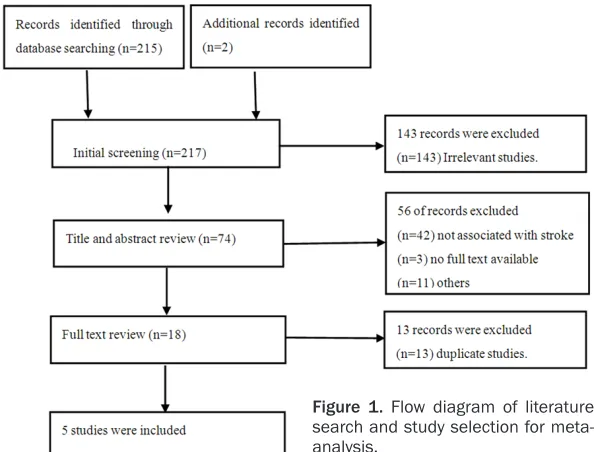
Figure 1. Flow diagram of literature search and study selection for meta-analysis.
the following criteria: (1) duplicate studies with over-lapping subjects; (2) case report, review, comments, and editorial; (3) studies wi- thout detailed genotype fr- equency distribution. This meta-analysis was conduct-ed according to the Prefer- red Reporting Items for Sy- stematic Reviews and Me- ta-analyses (PRISMA) gui- deline [19]. We also tried to contact authors for missing information required for me- ta-analysis. But the results were disappointed.
Data extraction
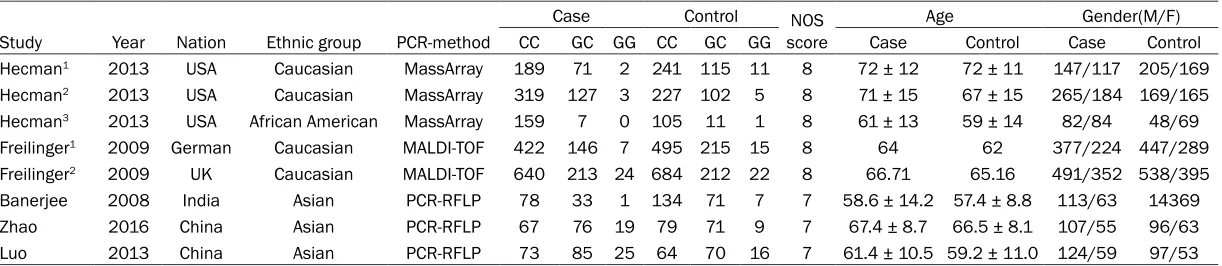
Table 1. Characteristics of studies included in the meta-analysis for the association of rs1048990 polymorphism with the risk of ischemic stroke
Case Control NOS
score
Age Gender(M/F)
Study Year Nation Ethnic group PCR-method CC GC GG CC GC GG Case Control Case Control
Hecman1 2013 USA Caucasian MassArray 189 71 2 241 115 11 8 72 ± 12 72 ± 11 147/117 205/169
Hecman2 2013 USA Caucasian MassArray 319 127 3 227 102 5 8 71 ± 15 67 ± 15 265/184 169/165
Hecman3 2013 USA African American MassArray 159 7 0 105 11 1 8 61 ± 13 59 ± 14 82/84 48/69
Freilinger1 2009 German Caucasian MALDI-TOF 422 146 7 495 215 15 8 64 62 377/224 447/289
Freilinger2 2009 UK Caucasian MALDI-TOF 640 213 24 684 212 22 8 66.71 65.16 491/352 538/395
Banerjee 2008 India Asian PCR-RFLP 78 33 1 134 71 7 7 58.6 ± 14.2 57.4 ± 8.8 113/63 14369
Zhao 2016 China Asian PCR-RFLP 67 76 19 79 71 9 7 67.4 ± 8.7 66.5 ± 8.1 107/55 96/63
Luo 2013 China Asian PCR-RFLP 73 85 25 64 70 16 7 61.4 ± 10.5 59.2 ± 11.0 124/59 97/53
1,2,3,a,bdifferent population in the same study; PCR-RFLP, polymerase chain reactions restriction fragment length polymorphism; MALDI-TOF: matrix-assisted laser
rs1048990 polymorphism and IS risk under
five genetic models including allele, co-domi -nant, domi-nant, recessive, and additive model.
We performed stratified analyses based on TOAST classification to investigate the possible
associations in ischemic stroke subgroups. In addition, subgroup analysis was also condu- cted according to the different ethnicities. Sensitivity analysis was carried out to check on each study modifying the pooled ORs. Publi- cation bias was detected by the Begg’s funnel plot and Egger’s test. All above analyses were performed using the software Stata 12.0 (Stata Corp., College Station, Texas). A two-way p
val-ues were considered significant.
Results
Characteristics of studies
Flow diagram in Figure 1 illustrated the process of the retrieved and excluded studies with
[image:4.612.95.503.79.463.2] [image:4.612.90.386.97.175.2]quency of TOAST subtypes out of two of the articles [12, 13], we further performed a sub-group analysis. The information about large vessel disease (LVD), cardioembolic stroke (CE) and small vessel disease (SVD) was shown in Table 2.
Sensitivity analysis and publication bias
Firstly, we performed sensitivity analyses to assess the stability of pooled results by omit-ting one study at a time, then calculaomit-ting the pooled ORs in the remaining studies. The results showed that study [13] on the Caucasian population in UK affected the pooled ORs
sig-nificantly in overall and subgroup stroke.
Therefore, we had to omit this study in the meta-analysis.
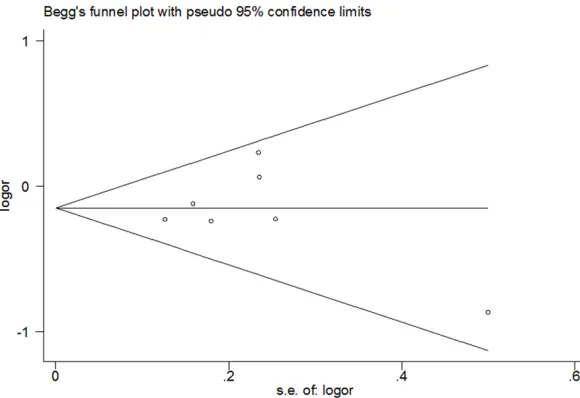
[image:4.612.93.383.218.417.2]Funnel plots and Egger’s test were employed to assess the publication bias of the included studies. All the results showed no evident pub-lication bias (Figure 2).
Table 2. Genotype frequency distribution in ischemic stroke subtype
based on TOAST classification
LVD SVD CE
Study CC GC GG CC GC GG CC GC GG
Hecman1 28 6 0 51 16 0 55 25 1
Hecman2 81 40 2 67 23 0 44 16 0
Hecman3 29 0 0 26 2 0 44 2 0
Freilinger1 91 42 2 138 39 3
1,2,3different populations in the same study, LVD large vessel disease, SVD small vessel disease, CE cardioembolic stroke.
Figure 2. Funnel plot of all 5 eligible studies, Egger’s test P=0.869.
detailed reasons for exclu-sion. Originally, a total of
217 studies were identified
originally. After screening the title, abstract and full-text, 5 available articles
[12-17] were finally includ -ed with 2844 ischemic st- roke cases and 3015 con-trol subjects in our meta-analysis. The detailed char-acteristics of overall isch-emic stroke were summa-rized in Table 1. All include- ed studies had a high qual-ity NOS score of more than seven points. None of the
fre-Association between rs1048990 polymor-phism and IS susceptibility
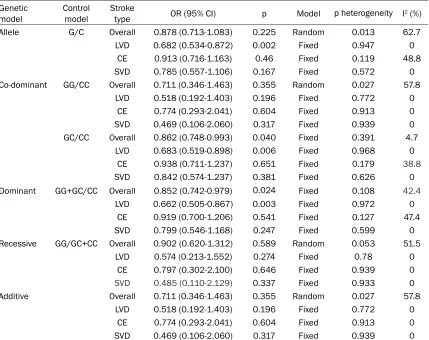
In this study, for the combined analysis, Table 3 summarized ORs with 95% CIs and the P value and I2 statistic for heterogeneity for the asso- ciation between SNP rs1048990 and risk of IS and stroke subtype in all models. In overall
stroke, a significant difference was observed
under dominant model (P=0.024, OR=0.852, 95% CI=0.742-0.979) and heterozygous ge- notype (P=0.04, OR=0.862, 95%
CI=0.748-0.993). Based on TOAST classification, the
positive results also exited in LVD under allele model (P=0.002, OR=0.682, 95% CI=0.534-0.872), dominant model (P=0.003, OR=0.662, 95% CI=0.505-0.867) and heterozygous geno-type (P=0.006, OR=0.683, 95% CI=0.519-0.898) but not in SVD and CE under any model. Figure 3 showed the forest plot of pooled ORs
and 95% CIs of the association of PSMA6 rs1048990 with risk of overall IS under hetero-zygous and dominant model.
Table 4 showed the detailed results based on
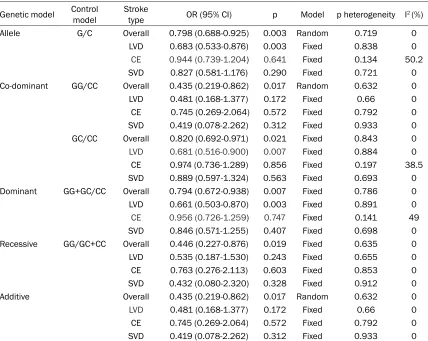
the ethnic group and IS stratification analysis. In Caucasian population, there was a signifi -cant decreased association with overall stroke
risk detected under all five genetic models. And
for the stroke subtype analysis, the associa-tions were shown in LVD under allele model (P=0.003, OR=0.683, 95% CI=0.533-0.876), dominant model (P=0.003, OR=0.661, 95% CI=0.503-0.870) and heterozygous genotype (P=0.007, OR=0.681, 95% CI=0.516-0.900).
But a nonsignificant association was observed
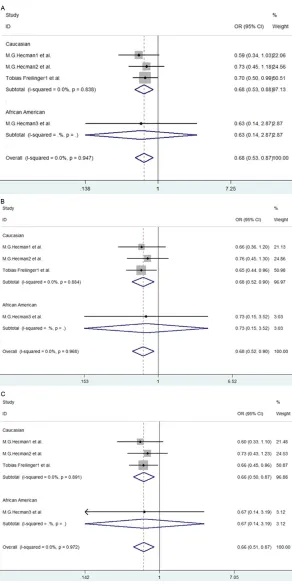
[image:5.612.94.523.96.436.2]with the risk of CE and SVD under each model. Figure 4 showed the forest plot of pooled ORs and 95% CIs of the association of rs1048990 with risk of LVD under allele, heterozygous and dominant model.
Table 3. Association between rs1048990 polymorphism and risk of ischemic stroke and subtype in all population
Genetic
model Control model Stroke type OR (95% CI) p Model p heterogeneity I2 (%)
Allele G/C Overall 0.878 (0.713-1.083) 0.225 Random 0.013 62.7
LVD 0.682 (0.534-0.872) 0.002 Fixed 0.947 0
CE 0.913 (0.716-1.163) 0.46 Fixed 0.119 48.8
SVD 0.785 (0.557-1.106) 0.167 Fixed 0.572 0
Co-dominant GG/CC Overall 0.711 (0.346-1.463) 0.355 Random 0.027 57.8
LVD 0.518 (0.192-1.403) 0.196 Fixed 0.772 0
CE 0.774 (0.293-2.041) 0.604 Fixed 0.913 0
SVD 0.469 (0.106-2.060) 0.317 Fixed 0.939 0
GC/CC Overall 0.862 (0.748-0.993) 0.040 Fixed 0.391 4.7
LVD 0.683 (0.519-0.898) 0.006 Fixed 0.968 0
CE 0.938 (0.711-1.237) 0.651 Fixed 0.179 38.8
SVD 0.842 (0.574-1.237) 0.381 Fixed 0.626 0
Dominant GG+GC/CC Overall 0.852 (0.742-0.979) 0.024 Fixed 0.108 42.4
LVD 0.662 (0.505-0.867) 0.003 Fixed 0.972 0
CE 0.919 (0.700-1.206) 0.541 Fixed 0.127 47.4
SVD 0.799 (0.546-1.168) 0.247 Fixed 0.599 0
Recessive GG/GC+CC Overall 0.902 (0.620-1.312) 0.589 Random 0.053 51.5
LVD 0.574 (0.213-1.552) 0.274 Fixed 0.78 0
CE 0.797 (0.302-2.100) 0.646 Fixed 0.939 0
SVD 0.485 (0.110-2.129) 0.337 Fixed 0.933 0
Additive Overall 0.711 (0.346-1.463) 0.355 Random 0.027 57.8
LVD 0.518 (0.192-1.403) 0.196 Fixed 0.772 0
CE 0.774 (0.293-2.041) 0.604 Fixed 0.913 0
SVD 0.469 (0.106-2.060) 0.317 Fixed 0.939 0
In African-American population, a decreased risk to overall IS only existed under allele mo- del (P=0.035, OR=0.366, 95% CI=0.144-0.932). However, in Asian population, there was
no significant difference between rs1048990
polymorphism and risk of IS under each model. Discussion
In the present meta-analysis, a total of 2844 cases and 3015 controls were included to eval-uate the correlation between PSMA6 -8 C>G polymorphism and susceptibility to overall IS
and stroke subtypes based on TOAST classifi -cation. The results showed that this variant was associated with a decreased risk of overall ischemic stroke categorized under dominant and heterozygous model, and also with the reduction of the risk of LVD under allele, hetero-zygous and dominant model. Based on
ethnici-ty stratification, in Caucasian population, a
de-creased risk existed in overall IS under each model, and in LVD under allele, heterozygous and dominant model; in African-American IS population, the protection was showed under allele model but not in any stroke subtype under any model; no relation was detected in all any of the IS type in Asian population. And no correlation was observed in CE and SVD under any model in each population.
[image:7.612.93.521.95.436.2]Heterogeneity is a potential inevitable problem when interpreting the results of the meta-an- alysis. In our study, obvious heterogeneity showed in homozygous, additive and allelic model for the combined analysis. Through ethnic subgroup analyses, heterogeneity was mainly from Asian population and decreased and even disappeared in Caucasian. Therefore, this subgroup results added credibility to the Table 4. Association between rs1048990 polymorphism and ischemic stroke and subtype in
Cauca-sian population based on ethnic groups tratification analysis
Genetic model Control model Stroke type OR (95% CI) p Model p heterogeneity I2 (%)
Allele G/C Overall 0.798 (0.688-0.925) 0.003 Random 0.719 0
LVD 0.683 (0.533-0.876) 0.003 Fixed 0.838 0
CE 0.944 (0.739-1.204) 0.641 Fixed 0.134 50.2
SVD 0.827 (0.581-1.176) 0.290 Fixed 0.721 0
Co-dominant GG/CC Overall 0.435 (0.219-0.862) 0.017 Random 0.632 0
LVD 0.481 (0.168-1.377) 0.172 Fixed 0.66 0
CE 0.745 (0.269-2.064) 0.572 Fixed 0.792 0
SVD 0.419 (0.078-2.262) 0.312 Fixed 0.933 0
GC/CC Overall 0.820 (0.692-0.971) 0.021 Fixed 0.843 0
LVD 0.681 (0.516-0.900) 0.007 Fixed 0.884 0
CE 0.974 (0.736-1.289) 0.856 Fixed 0.197 38.5
SVD 0.889 (0.597-1.324) 0.563 Fixed 0.693 0
Dominant GG+GC/CC Overall 0.794 (0.672-0.938) 0.007 Fixed 0.786 0
LVD 0.661 (0.503-0.870) 0.003 Fixed 0.891 0
CE 0.956 (0.726-1.259) 0.747 Fixed 0.141 49
SVD 0.846 (0.571-1.255) 0.407 Fixed 0.698 0
Recessive GG/GC+CC Overall 0.446 (0.227-0.876) 0.019 Fixed 0.635 0
LVD 0.535 (0.187-1.530) 0.243 Fixed 0.655 0
CE 0.763 (0.276-2.113) 0.603 Fixed 0.853 0
SVD 0.432 (0.080-2.320) 0.328 Fixed 0.912 0
Additive Overall 0.435 (0.219-0.862) 0.017 Random 0.632 0
LVD 0.481 (0.168-1.377) 0.172 Fixed 0.66 0
CE 0.745 (0.269-2.064) 0.572 Fixed 0.792 0
SVD 0.419 (0.078-2.262) 0.312 Fixed 0.933 0
and Chinese, it could be attributed to the different gene background among these three studies includ-ing one Indian and two Chinese which were from different regions and the Han Chinese population was not a genetically ho- mogenous group. In addi-tion, other factors such as different inclusion and ex- clusion criteria, age and gender distribution, sample size might also contribute to the heterogeneity. As for Asian population, the analysis suggested no as- sociation between the vari-ant and all IS type under any genetic model. During literature search, there was one Chinese case-control study in International Stro- ke Conference with a large number of 1120 IS cases and 975 healthy controls, which was excluded with-out full-text. This study sug-gested the variant was associated with an incre- ased risk with IS, LVD and CE. All these indicated that this variant had opposite effects on the correlation with IS between Chinese and Caucasian population, which meant that this poly-morphism is markedly dif-ferent gene background based on ethnicity.
Due to the existing hetero-geneity, sensitivity analysis was performed to evaluate the stability of the pooled effect sizes. The study [13] on the Caucasian popula-tion in UK could alter the pooled ORs, thus it was removed out. Then, the sensitive analysis was con-ducted again. The statisti-cal differences weren’t
sig-Figure 4. Forest plot for association between PSMA6 rs1048990 and risk of large vessel disease based on TOAST classification in allele (A), heterozygous (B), and dominant (C) model.
[image:8.612.91.383.68.652.2]nificant before and after the removal of each
remained study.
This study also has several limitations. Firstly, ischemic stroke is a multifactorial disease caused by the interaction between genetic and environmental factors, but we could not assess the effects of gene-environment interaction on ischemic stroke without related clinical data. Secondly, a small number of studies and a rela-tively small sample size limited the statistical power. Thirdly, some studies were excluded, which may have introduced selection bias. In summary, the present meta-analysis reveal- ed that the -8 C>G variant within gene PSMA6
was associated with the decreased risk of IS, especially LVD in Caucasian population. How- ever, there was a trend to increase the risk of IS in Chinese populations as compared to Cau- casian populations. Further well-designed pro-spective studies with a larger sample size and
more ethnic groups are needed to confirm these findings.
Disclosure of conflict of interest None.
Address correspondence to: Dr. Jianzhong Yu, De- partment of Neurology, The First Affiliated Hospital of Zhejiang Chinese Medical University, No. 54 You- dian Road, Shangcheng District, Hangzhou 310006, Zhejiang, China. Tel: 571-86008651; Fax: +86-571-86008651; E-mail: [email protected]; Dr. Dan Yu, Department of Neurology, Haikou Muni- cipal Hospital, No. 43 Renmin Road, Meilan Dis- trict, Haikou 570208, Hainan, China. Tel: +86-898-66151148; Fax: +86-898-+86-898-66151148; E-mail: [email protected]
References
[1] Liu M, Wu B, Wang WZ, Lee LM, Zhang SH and Kong LZ. Stroke in China: epidemiology, pre-vention, and management strategies. Lancet Neurol 2007; 6: 456-464.
[2] Liu L, Wang D, Wong KS and Wang Y. Stroke and stroke care in China: huge burden, signifi-cant workload, and a national priority. Stroke 2011; 42: 3651-3654.
[3] Bonita R, Mendis S, Truelsen T, Bogousslavsky J, Toole J and Yatsu F. The global stroke initia-tive. Lancet Neurol 2004; 3: 391-393.
[4] Dellamorte D, Guadagni F, Palmirotta R, Testa G, Caso V, Paciaroni M, Abete P, Rengo F, Ferroni P and Sacco RL. Genetics of ischemic
stroke, stroke-related risk factors, stroke pre-cursors and treatments. Pharmacogenomics 2012; 13: 595-613.
[5] Bersano A, Ballabio E, Bresolin N and Candelise L. Genetic polymorphisms for the study of multifactorial stroke. Hum Mutat 2008; 29: 776-795.
[6] Glickman MH and Ciechanover A. The ubiqui-tin-proteasome proteolytic pathway: destruc-tion for the sake of construcdestruc-tion. Physiol Rev 2002; 82: 373-428.
[7] Shirwany NA and Zou MH. The ubiquitin prote-asome system in endothelial cell dysfunction and vascular disease. 2012.
[8] Marfella R, Di Filippo C, Laieta MT, Vestini R, Barbieri M, Sangiulo P, Crescenzi B, Ferraraccio F, Rossi F, D’Amico M, Paolisso G. Effects of ubiquitin-proteasome system deregulation on the vascular senescence and atherosclerosis process in elderly patients. J Gerontol A Biol Sci Med Sci 2008; 63: 200-203.
[9] Wang F, Lerman A and Herrmann J. Dysfunction of the ubiquitin-proteasome system in athero-sclerotic cardiovascular disease. Am J Cardio- vasc Dis 2015; 5: 83-100.
[10] Ozaki K, Sato H, Iida A, Mizuno H, Nakamura T, Miyamoto Y, Takahashi A, Tsunoda T, Ikegawa S, Kamatani N, Hori M, Nakamura Y and Tanaka T. A functional SNP in PSMA6 confers risk of myocardial infarction in the Japanese population. Nat Genet 2006; 38: 921-925. [11] Palombella VJ, Rando OJ, Goldberg AL and
Maniatis T. The ubiquitin-proteasome pathway is required for processing the NF-kappa B1 precursor protein and the activation of NF-kappa B. Cell 1994; 78: 773-785.
[12] Heckman MG, Soto-Ortolaza AI, Diehl NN, Rayaprolu S, Brott TG, Wszolek ZK, Meschia JF and Ross OA. Genetic variants associated with myocardial infarction in the PSMA6 gene and Chr9p21 are also associated with ischaemic stroke. Eur J Neurol 2013; 20: 300-308. [13] Freilinger T, Bevan S, Ripke S, Gschwendtner
A, Lichtner P, Muller-Myhsok B, Wichmann HE, Markus HS, Meitinger T and Dichgans M. Genetic variation in the lymphotoxin-alpha pathway and the risk of ischemic stroke in European populations. Stroke 2009; 40: 970-972.
[14] Banerjee I, Gupta V, Ahmed T, Faizaan M, Agarwal P and Ganesh S. Inflammatory system gene polymorphism and the risk of stroke: a case-control study in an Indian population. Brain Res Bull 2008; 75: 158-165.
[16] Yu J and Liu Y. The study of association be-tween PSMA6 -8C/G gene polymorphism and stroke. Master Thesis 2009; 1-47.
[17] Luo D. The association between PSMA6 -8C/G polymorphism and stroke in Chinese Han pop-ulation in Hunan province. Medical Information 2013; 26: 301.
[18] Savchuk OI, Mel’Nyk VS, Goncharov SV, Viu S, Stroĭ DO, Vie D, Sokolova LI and Skybo HH. [Frequency of allele polymorphism of immune proteasome catalytic subunits in patients with ischemic stroke]. Fiziol Zh 2014; 60: 49-55. [19] Moher D, Liberati A, Tetzlaff J, Altman DG;
PRISMA Group. Preferred reporting items for systematic reviews and meta-analyses: the PRISMA statement. Int J Surg 2010; 8: 336-341.
[20] Adams HP, Bendixen BH, Kappelle LJ, Biller J, Love BB, Gordon DL and Marsh EE. Classifi- cation of subtype of acute ischemic stroke. Definitions for use in a multicenter clinical trial. TOAST. Trial of org 10172 in acute stroke treat-ment. Stroke 1993; 24: 35-41.