UMDSub at SemEval-2018 Task 2: Multilingual Emoji Prediction
Multi-channel Convolutional Neural Network on Subword Embedding
Zhenduo Wang and Ted Pedersen Department of Computer Science
University of Minnesota Duluth, MN 55812, USA
{wang7211,tpederse}@d.umn.edu
Abstract
This paper describes the UMDSub system that participated in Task 2 of SemEval-2018. We developed a system that predicts an emoji given the raw text in a English tweet. The system is a Multi-channel Convolutional Neu-ral Network based on subword embeddings for the representation of tweets. This model im-proves on character or word based methods by about 2%. Our system placed 21st of 48 par-ticipating systems in the official evaluation.
1 Introduction
People use emojis on social media with text in or-der to express their emotions or reveal meanings hidden by figurative language. However, under-standing the semantic relationship between texts and emojis is a challenging task because emojis often have different interpretations that depend on the reader. (Barbieri et al., 2018) shows that a carefully designed machine learning system can perform better than humans on an emoji prediction task. The system which gives the best predictions in that paper is a long short term memory (LSTM) network with pre-trained character embeddings as the text representation method.
(Barbieri et al.,2018) provides a new task in the context of Twitter and describes several powerful models in text sequence modeling and classifica-tion. Our work explores other possible configura-tions for the system, including subword embed-ding as a text representation method and multi-channel Convolutional Neural Networks as a fea-ture extraction method. We conduct experiments on the Semeval-2018 Task 2 Multilingual Emoji Prediction data set and compare our results with other methods. Our results show that subword em-bedding based Convolutional Neural Network sys-tem is effective. It improves on character embed-ding by 2.1% and word embedembed-ding by 1.8%.
2 Task Description
SemEval–2018 Task 2 has two subtasks which are similar but in different languages. Subtask A is emoji prediction on English tweets, while subtask B is on Spanish. Both tasks are to predict 1 out of 20 emojis (19 in Spanish subtask) given only the text of a tweet. There are∼500K tweets in the En-glish training set and∼100K tweets in the Spanish
training set. The organizers use the macro F-score to evaluate the performance of the systems.
This is by definition a text classification task. It is more challenging than tasks such as senti-ment analysis or authorship identification because it is on Twitter data which is extremely large and changes frequently. We build UMDSub for the English subtask and conduct several experiments with different settings.
3 System Description
UMDSub is a multi-channel Convolutional Neu-ral Network based on subword embedding as the text representation. We use byte-pair-encoding for subword segmentation.
3.1 Word Segmentation
The goal of the word segmentation step is to break the words into subwords in order to have better representations for tweet texts.
Existing text representation methods mostly work on whole word level (Mikolov et al.,
2013)(Pennington et al., 2014) or character level (Zhang et al., 2015) (Xiao and Cho, 2016). In these works, character embedding as the basis for feature extraction were shown to be more effective on text classification tasks. Also there are works such as (Bojanowski et al.,2016) which try to en-rich word representations with subword informa-tion and improve upon the original word embed-ding methods. We believe that subword is a
triguing level for text representation. However, the method used to generate subwords in (Bojanowski et al., 2016) is to divide words into fixed length n-grams, which fails to use knowledge of word morphology. We believe that Language is never, ever, ever, random(Kilgarriff,2005). Subwords as character n-grams could be detected by measuring their frequencies.
We detect subwords with the byte-pair-encoding (BPE) algorithm (Shibata et al., 1999), which is a frequency based text compression algorithm. The original algorithm first splits the text into bytes (characters). Then it ranks all the byte pairs (which are simply bigrams) according to their frequencies. The most frequent byte pair is then joined together and encoded by a single byte. By repeating this simple process, the original text will be compressed. In our system, we use BPE as a word segmentation algorithm. We join characters together by frequency but do not replace them with new symbols. This method was also shown to be successful in (Sennrich et al.,2015).
For example, suppose the text to be segmented is
S0= workers work in workshop.
First, we splitS0into character sequence.
S1= w o r k e r s w o r k i n w o r k s h o p.
Then in the first iteration, we choose the most fre-quent bigramwoand join them together.
S2= wo r k e r s wo r k i n wo r k s h o p.
In the second iteration, we choose the most fre-quent bigramworand join them together.
S3= wor k e r s wor k i n wor k s h o p.
Similarly, the next bigram should bework.
S4= work e r s work i n work s h o p.
The text is represented by a subword sequence af-ter the algorithm finishes inN iterations, and will
look like this :
SN = work er s work in work shop.
3.2 Subword Embedding Layer
Embeddings can be categorized into two types based on how they are trained, saved (or static) and reused (or dynamic). Static embeddings are separately trained from large open corpus (such as Wikipedia) and saved for reuse. Word2vec and GloVe models are two such examples. Dynamic embeddings are jointly trained with other parts of
specific systems. The Twitter corpus is not like a standard corpus, since it is extremely large and it changes frequently. We choose to use a dynamic embedding strategy since it may fit better for our system.
After word segmentation the text is made up of subword sequences. In order to use subword embedding to represent the text, we first represent each subword type with a hot vector. The one-hot vector for theith subword in vocabulary is a
sparse binary vectoroi which has 1 as the ith
el-ement and 0 for all others. This step results in a representation similar to a vector space model. We put all the subwords in the subword one-hot hyper-space where each unique subword type owns one dimension. The one-hot embedding is so sparse and it suffers from the Dimension Disaster. Hence we project it to a smaller hyperspace by multi-plying the one-hot embedding with a projection weighting matrixW ∈ Rd×|V|, wheredis the
di-mension for the target embedding hyperspace and
|V|is the subword vocabulary size. Now each
sub-word is represented by a dense vectorsi =W oi,
and the tweet text T with length of L is
repre-sented by a sequence of subword embedding vec-torsT = (s1, s2, ..., sL).
3.3 Multi-channel Convolutional Layer
often the case for Twitter.
In our system, we use a multi-channel CNN layer for feature extraction. Since tweets are gen-erally short, higher-level features for classification may not exist. Instead of adding depth to our net-work, we add diversity to the kernel sizes in order to keep as much n-gram information as possible. A similar model is used in (Ruder et al., 2016) (Shrestha et al.,2017).
The multi-channel convolution layer consists of three parallel convolution units. They have a similar structure but different convolutional ker-nel sizes. Each convolution unit consists of two steps, the convolution and pooling. The convo-lution step is to calculate the convoconvo-lutions of the resulting vector sequence from the subword em-bedding vector sequenceT = (s1, s2, ..., sL)and
convolution kernelsk1:M ∈Rd,M×r, whereM is
the kernel number,ris the kernel size. The kernel
size represents the context window of feature ex-traction and the kernel number represents the num-ber of patterns.
fl=1:Lm0 =σ(km∗[sl−r/2+1, ..., sl, .., sl+r/2])
whereσis the activation function.
Then the pooling step is to trim the resulting se-quenceF0by leaving only the maximum in every rconsecutivefl0s.
fq=1:L/rm = max{fl=(qm0 −1)×r+1, ..., fl=qm0×r}
Then the convolution unit outputs features ex-tracted by each kernel. The output of can be seen as all the features extracted within a certain size of context window.
F =f11, ..., f1M
Each CNN unit works as above. We concatenate all the three feature maps and flatten the resulting matrix to one single vector. This single vector is later used for classification.
3.4 Classification Layer
We make two assumptions of how texts affect the usage of emojis, and how emojis are chosen to ex-press emotions as an auxiliary symbol for the text.
1. Emojis are chosen and used to indicate the emotion of the whole tweet or the emotion of the tweeter at the moment, independent of position.
2. Emojis are tied to its context only, enhanc-ing or revealenhanc-ing the true underlyenhanc-ing meanenhanc-ing. This can vary depending on the position or content of the tweet.
In case 2, a “verbose” tweet which contains sev-eral sentences may map to different emojis at dif-ferent positions. Given this nature of how emojis are used in tweets, the task could have been very different from traditional text classification since only a part of the text decides the classification output. Fortunately, most the tweets are chosen so that they contain only one sentence and the dataset does not provide the position information of the re-moved emoji, which makes the task easier. Hence we assume all the emojis are used as in case 1 and we will use the whole tweet to do prediction.
From the convolutional layer we get output of the features extracted from the whole tweet. We first reshape the features matrix into a single vec-tor, then we feed it to a logistic regression layer for the final classification. The layer consists of a fully connected network layer and a softmax func-tion as activafunc-tion funcfunc-tion. It takes the the one di-mensional feature vector generated from convolu-tional layer as input and outputs a distribution over the 20 emojis denoting their probabilities of being used in the original tweet. Hence this layer can be represented by:
P[y=k|X~] = P20exp(Wk>X~ +bk) i=1exp(Wi>X~ +bi)
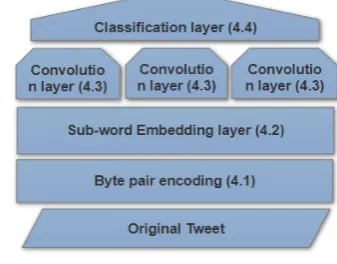
[image:3.595.328.497.538.670.2]Figure 1 is a summary of our system.
Figure 1: Diagram of UMDSub.
4 Parameter Settings
Embedding |V| d M r #param
Word 10K 256
128 3, 4, 5 4.16M
subword 2K 64 0.63M
Character 200 16 0.13M
Table 1: Network parameter settings.
iteration. Each iteration of BPE algorithm gen-erates a new character n-gram, resulting in a vo-cabulary size around 2,000. Then we embed each subword with a vector with dimensiond= 64. In
our concatenated Convolutional Neural Network, each unit has M = 128 filters with filter sizes and max pooling sizer = {3,4,5}. For compar-ison, we also build character based system con-taining not only the ascii characters with vocab-ulary size |V| = 200and embedding dimension
d = 16 and word based system with
vocabu-lary size|V|= 10,000and embedding dimension
d = 256. We use the same network structure for
all different text representation methods. We train the network for 50 epochs. Table 1 summarizes the parameter settings used.
5 Experimental Results
Table 2 shows our experimental results and reveals that our methods have a preference towards pre-cision. In the task evaluation, UMDSub attained precision of .330 which was 9th of 48 systems, and recall of .267 which was 20th. The overall F-score was .260 and placed 21st. This emphasis on precision can be seen in that our system was particularly accurate in predicting the most fre-quent emoji in the training and test data (the red heart), achieving an accuracy of .854 which was 4th among the 48 participating systems.
Our submission for the evaluation phase (sub-CNN (E)) was produced by a 4-layer single chan-nel Convolutional Neural Network. After we changed it to the post-evaluation version of our multi-channel network (sub-CNN (P)), we saw a significant improvement where the F-score rose to .301 which would have placed 10th in the eval-uation. The reasons for this success have to do with the nature of tweets, which are difficult to represent in a deep network given their very lim-ited content. A Multi-channel CNN captures more information using various kernels in a single layer and so the content of short and somewhat noisy tweets is well represented.
System config F1 Precision Recall sub-CNN (E) .260 .330 .267 Word-CNN (P) .283 .355 .285 sub-CNN (P) .301 .352 .302
Char-CNN (P) .289 .382 .291
BOW .29 .32 .34
Word-LSTM .33 .35 .36 Word-LSTM + P .32 .34 .36 Char-LSTM .32 .36 .37 Char-LSTM + P .34 .42 .39
Table 2: Experimental results (both evaluation (E) and post-evaluation (P) phase). -LSTM refers to the models used in (Barbieri et al., 2018), with results from this paper. +P refers to pre-trained embeddings.
6 Conclusion
Our work shows that subword embedding is an ef-fective method of text representation for the emoji prediction task. Under the multi-channel CNN framework, it improves word embedding by 1.8% and character embedding by 2.1% while maintain-ing a modest computational cost.
We try to explain the reason of our results with the success of byte pair encoding (BPE) segmen-tation. We check the segmented text after byte pair encoding algorithm and we find a very representa-tive example:
Before BPE: Playing the drums on RockBand made it look much easier than it is.
After BPE: Pl ay ing the dr um s on Rock B and made it look much ea si er than it is.
References
Francesco Barbieri, Jose Camacho-Collados, Francesco Ronzano, Luis Espinosa-Anke, Miguel Ballesteros, Valerio Basile, Viviana Patti, and Horacio Saggion. 2018. SemEval-2018 Task 2: Multilingual Emoji Prediction. In Proceedings of the 12th International Workshop on Semantic Evaluation (SemEval-2018). Association for Com-putational Linguistics, New Orleans, LA, United States.
Piotr Bojanowski, Edouard Grave, Armand Joulin, and Tomas Mikolov. 2016. Enriching word vec-tors with subword information. arXiv preprint arXiv:1607.04606.
Adam Kilgarriff. 2005. Language is never, ever, ever, random. Corpus linguistics and linguistic theory 1(2):263–276.
Yoon Kim, Yacine Jernite, David Sontag, and Alexan-der M Rush. 2016. Character-aware neural language models. InAAAI. pages 2741–2749.
Tomas Mikolov, Ilya Sutskever, Kai Chen, Greg S Cor-rado, and Jeff Dean. 2013. Distributed representa-tions of words and phrases and their compositional-ity. InAdvances in neural information processing systems. pages 3111–3119.
Jeffrey Pennington, Richard Socher, and Christopher Manning. 2014. Glove: Global vectors for word representation. InProceedings of the 2014 confer-ence on empirical methods in natural language pro-cessing (EMNLP). pages 1532–1543.
Sebastian Ruder, Parsa Ghaffari, and John G. Bres-lin. 2016. Character-level and multi-channel convolutional neural networks for large-scale au-thorship attribution. CoRR abs/1609.06686. http://arxiv.org/abs/1609.06686.
Rico Sennrich, Barry Haddow, and Alexandra Birch. 2015. Neural machine translation of rare words with subword units. arXiv preprint arXiv:1508.07909. Yusuxke Shibata, Takuya Kida, Shuichi Fukamachi,
Masayuki Takeda, Ayumi Shinohara, Takeshi Shi-nohara, and Setsuo Arikawa. 1999. Byte pair encod-ing: A text compression scheme that accelerates pat-tern matching. Technical report, Technical Report DOI-TR-161, Department of Informatics, Kyushu University.
Prasha Shrestha, Sebastian Sierra, Fabio Gonzalez, Manuel Montes, Paolo Rosso, and Thamar Solorio. 2017. Convolutional neural networks for authorship attribution of short texts. InProceedings of the 15th Conference of the European Chapter of the Associa-tion for ComputaAssocia-tional Linguistics: Volume 2, Short Papers. volume 2, pages 669–674.
Yijun Xiao and Kyunghyun Cho. 2016. Efficient character-level document classification by combin-ing convolution and recurrent layers. arXiv preprint arXiv:1602.00367.