Table of Contents
Executive Summary
2
1. What Is Microwork?
6
2. General Trend in Atypical Working Patterns in Ireland
16
3. The Policy and Regulatory Environment for Microwork
26
4. Opportunities for the Application of Microworking In Ireland
35
5. Conclusions and Recommendations
40
Appendix 1: Example of Microworking System - ‘Slivers of Time’ 41
Appendix 2: Example of Part-Time Jobs Initiative – Social Justice Ireland 44
Appendix 3: Extracts from 2011 NESC Report 45
Appendix 4: Supplementary Note on Addressing Undeclared Work 46
Executive Summary
Context
Microwork, in the context of this report, is considered to be “Work that can be
completed in a small block of time on a paid or voluntary basis”. More specifically, based on international experience and current practice in Ireland it generally involves work which is undertaken for companies, individuals or community and voluntary groups, on a paid or unpaid basis, in blocks of about three hours or less, where there is no on-going commitment to continue the arrangement implied by either the worker or the entity providing the work.
Microwork as a term is not widely recognised in its own right. As a consequence, the
issues relating to it are often considered under broader headings such as ‘as-and-when’ work (used in the UK), casual work (Department of Social Protection), occasional work, (very) atypical, part-time work and flexible work. As such, there is no agreed
international definition of what microworking encompasses.
There has been a rapid rise internationally in the number of on-line microwork
marketplaces and associated microworkers, although such marketplaces are not as yet widely available in Ireland.
Trends in Atypical Work in Ireland
Since 2002, the number of people working part-time has risen by 45% from 290,000 to
over 420,000 in 2012. Part-time workers now represent 20% of the workforce.
Some 171,000 of those working part-time considered themselves under-employed in
2012.
Approximately 150,000 people worked less than 20 hours per week in 2012, up from
100,000 a decade ago.
Among those working less than 10 hours per week in 2012 the number of men grew by
125% to 10,000 while the number of women rose by over 70% to 25,000 over the decade from 2002.
One in five recipients of Jobseekers Benefit or Jobseekers Allowance in 2012
(amounting to almost 90,000 individuals) worked on a casual, seasonal or part-time basis.
The number of people in part-time, temporary and short-term employment in
companies supported by IDA Ireland, Enterprise Ireland, Shannon Development and Údarás na Gaeltachta at almost 41,833 in 2012 was its highest level over the last decade. The number has risen by 30% since 2009.
Impact of Microwork on Unemployment in Ireland
The direct impact of a microwork initiative on the numbers unemployed would take
to reengage, albeit on a part-time basis, together with other groups that want to participate in the labour force such as those over 65.
Ease of access to microworking opportunities in Ireland has the potential to deliver a
social and financial dividend for unemployed and under-employed people and those seeking to re-enter the labour force, in a number of ways:
1. Providing a supplementary source of income to the newly unemployed as they
adjust to the rapid fall in income in the period while high expenditure commitments are being wound down (where possible). For the 9- or 12-month period while
receiving Jobseekers Benefit1, individuals can earn income on three days while
looking for full-time employment;
2. Closing the gap between the existing level of employment and the desired level of
employment for those part-time workers who are not on the Live Register but who consider themselves to be under-employed. This is a rapidly growing group having grown from 23,000 in 2009 to 63,000 in 2012.
3. Providing a means of accessing the part-time opportunities for those people who are
unemployed but looking for part-time work. Of these people, 78% were women in 2012.
4. Offering a pathway into the workforce for those "marginally attached" workers who
would like to work full-time, have looked for a job sometime in the past 12 months, but are currently not "actively" looking for work.
5. Providing options for individuals on Family Income Support working part-time to
access supplementary hours if needed to bring them up to the threshold of 19 hours required to maintain the support.
If the requisite software (e.g. such as in other countries as the Slivers of Time model in
the UK) were available to provide a centralised booking system for microworking to become widely utilised, the transaction costs associated with managing several microwork jobs are greatly reduced for individuals and employers.
Microwork is a means for short- and long-term unemployed to keep in touch with the
labour force, improve motivation and skills and maintain important personal networks while seeking full-time employment.
For a small number of individuals, particularly those with caring responsibilities,
microwork may fully meet their employment needs.
Policy and Regulatory Environment
The Protection of Employees (Part-Time Work) Act, 2001, the Protection of Employees
(Fixed-Term Work) Act 2003 and the Protection of Employees (Temporary Agency Work) Act 2012 has created a legislative environment which largely protects the interests of microworkers.
The Jobseekers Benefit and the Jobseekers Allowance administered by the Department
of Social Protection (DSP) are currently calculated based on days worked. A review of whether to change from a days-based system to an hours- or half-day-system is being
undertaken by DSP and a change to an hours based systems would be of benefit to mircoworking initiatives.
There are still significant opportunities for unemployed and under-employed individuals
both on and off the Live Register to microwork within the current regulatory context. Indeed, the nature of microwork is suited to matching people to opportunities which allow them to stay within the constraints dictated by the specific benefit they may be receiving.
Tax compliance and ease of tax administration can be achieved by incorporating into
any microworking initiative a system which allows individuals engaging microworkers to register as employers for tax purposes together with a payroll system linking in to the Revenue On-line Service (ROS).
Microwork and Social Enterprise
Microworking is not just of relevance to local, community and social enterprise, as its
use can extend potentially to the whole enterprise sector. This review has specifically examined the relevance of microworking to social enterprises. There are three primary ways by which microwork can be a basis for social enterprise development in
particular, including:
1. models whereby a social enterprise could aggregate work to be conducted by a
marginalised or disadvantaged community;
2. mobilisation of a cohort of volunteers on a micro-volunteering basis; and
3. co-ordination of a cohort of individuals working a few hours at a time on projects
with a social good or aim. This is most prevalent in care and community development settings and may also be of particular benefit to older people and those retired who wish to continue actively engaged in work.
Conditions for a Microwork Initiative to be Effective
For either a private or public sector-led microwork initiative to work there must be
workers, work, an effective marketplace, an organisation to act as a strong catalyst and, to be fully effective, a substantial support infrastructure which can facilitate booking, vetting, payroll and worker evaluation.
The availability of software platforms and open access networks can greatly facilitate
the development of microworking initiatives and schemes. For example, the Slivers of Time software platform in the UK has been developed as a means of creating an effective marketplace underpinned by a substantial support infrastructure. It can be used as a system for internal scheduling for large companies and organisations, peak time resourcing solutions, creating a local services network for neighbourhoods,
sourcing relief care staff for carers, mobilisingvolunteers and facilitating engagement
in the workforce. There are other examples similar to Slivers of Time and these are outlined in Appendix 5.
The elements needed to roll out a microwork initiative in Ireland are largely in place.
Conclusions and Recommendations
Overall, the conclusion of this review is that microworking can make a contribution to the efficient functioning of the labour market in general, providing opportunities for access to short-time work for individuals, and in meeting the employment objective of the Government in keeping unemployed and under-employed people (both on and off the Live Register) in contact with the labour market. In particular, the review of the evidence in other countries indicates microworking can offer a pathway into the workforce with additional socialisation and social capital benefits.
In this context, the following next steps are proposed for consideration:
1. As part of overall labour market policy development, review how best to encourage
private sector goods and services providers and social media/IT and recruitment organisations to develop microworking-type marketplaces, in conjunction with the public sector. In relation to public sector involvement, the greatest opportunity is through the involvement of local authorities and the Department of Social
Protection and the Department of Health at local and community level, encouraging the development and use of microworking-type platforms. Local employer groups are best placed to facilitate a small number of pilots to act as catalysts at a community level to deploy microwork initiatives in Ireland, for example, in a
specific geographic area or with a group of carers, in advance of the development of a nationwide network. Any microwork initiative should provide a full-service
software-based support infrastructure that would facilitate, among other features, employer registration for tax purposes, PAYE payments, Garda vetting, tracking of hours and days worked, worker evaluation, booking and booking confirmation. Two options could be explored to progress an initiative:
- working with social media/IT and recruitment firms in Ireland to explore the
potential to further extend existing software platforms, skills exchange and marketplace type offerings, and to explore the potential to develop industry-led initiatives in microworking (in consultation with EI); and
- deploying one of the systems already operational in other countries.
2. In order to facilitate the greater take-up of micro- and part-time working, the
Microworking in Ireland: A Scoping Report to
Identify Its Employment Potential
1.
What Is Microwork?
1.1 Background
As part of the Action Plan for Jobs, 2012, Forfás was assigned, inter alia, the following action
point:
Report on the potential of social enterprise to create jobs. The report will identify the actions required, in funding, procurement, etc., by Government and other relevant bodies and agencies to create jobs in this sector. It will examine potential initiatives in this area (e.g. a Micro-Working Initiative) and will be prepared with particular reference to the European Commission’s Social Business Initiative and associated funding.
Forfás has completed a separate report on the employment potential of Social Enterprise, and this report sets out the analysis completed in relation to the potential of microworking in Ireland.
In order to understand the range of issues involved in examining ‘a Micro-Working Initiative’,
Forfás commissioned Sapitwa Consulting to prepare a report on microwork incorporating a number of research elements, including:
1. An assessment of the relevance of the microworking concept with respect to:
- Its role in increasing flexibility in the labour market;
- Its potential contribution to employment and to enterprise competitiveness;
- The role of microworking as a facilitator of volunteering, both in general and in
connection with social enterprise;
2. The need for external and independent certification of the offer and of the people
putting themselves forward. (This is because microworking necessarily provides no real opportunity for on-the-job assessment of the suitability of the person
concerned for the hours that are offered);
3. Any implications identified by the relevant bodies for changes in labour legislation
and in taxation and social security systems in order to facilitate microworking;
4. Any available information on the application of microworking in other countries and
any lessons learned;
5. The scope for a government initiative to encourage microworking, and any
suggestions as to what form this initiative should take.
As part of the review, meetings were held with representatives of the Revenue
1.2 Terminology in Microwork
For the purposes of this scoping report, microwork is considered to be:
“Work that can be completed in a small block of time on a paid or voluntary basis”.
More specifically, it is work which is undertaken for companies, individuals or community and voluntary groups, on a paid or unpaid basis, and based on international experience and practice in Ireland is in a block of 3 hours or less where there is no on-going commitment to continue the arrangement implied by either the worker or the entity providing the work.
Microwork is not a term that is used on a widespread basis either in Ireland or internationally. Furthermore, microwork has not, to date, been dealt with as a concept in its own right in a policy or legislative context. Other types of work are more strongly established as concepts and in many cases legislation and policy have been developed in relation to them and such policy and legislation would also apply to microwork where microwork is a subgroup of the other type of work.
The term has evolved within the virtual/digital/internet communities to mean digital work which can be broken down into a series of small tasks and completed remotely by individuals. However, this is a subset of the larger microwork space as envisaged in the Action Plan for Jobs.
As microwork is not widely recognised in its own right, the issues relating to it are often considered under broader headings such as ‘as-and-when’ work (used in the UK), casual work
(Department of Social Protection), occasional work, (very) atypical2, part-time work and
flexible work.
As defined above, microwork can apply in all sectors. It is currently more prevalent in domestic services, caring and respite services, contract cleaning, market research, media (website tagging, blogs) and design. It is feasible that it will become more prevalent in other sectors as the technology to match microworkers and microwork develops.
Crowd sourcing, human cloud and on-line market places are terms used to designate the means and the places by which large numbers of microworkers can access microwork opportunities.
1.3 Requirements for Microwork to Flourish
In order for a microwork initiative to function, a number of structures need to be in place.
For requesters and microworkers:
A marketplace recognised by both requesters and workers where information on the
work available and/or the workers available can be easily accessed. In the experience of Slivers of Time in the UK a significant local ‘catalyst’ such as a local authority is needed to kick-start the system, though it is recognised that in the UK local authorities provide social services to the community, either directly or through contracts, which does not happen in Ireland;
A system by which the quality of the worker can be evaluated. Typical systems are grading of performance on similar tasks performed earlier, referrals and
recommendations, qualifications, past experience and face-to-face interview.
Payment systems which make it easy for the requester to make payments and the
microworker to receive payments. In on-line environments, this can include a facility for escrow payments whereby workers are not fully paid until the requesters indicate that they are happy with the work.
For evidence of compliance with tax obligations:
Information on the level of earnings generated by an individual from microwork or a
self-assessed declaration that it does not exceed a specific threshold.
Payment of the relevant PAYE, PRSI, USC and other charges.
Information on the status of the individual as either employed or self-employed.
For evidence of time worked or earnings:
A way of tracking the amount of time worked or the amount earned by an individual if
they are in receipt of a benefit or payment. The criteria vary depending on the benefit received. For Jobseekers Allowance and Jobseekers Benefit the tracking is by way of self-declaration.
Evidence of the associated PRSI payments made.
For protection of vulnerable groups:
Suitable background checking processes for all workers working with children, the
elderly and other vulnerable groups.
1.4 Characteristics of Microwork
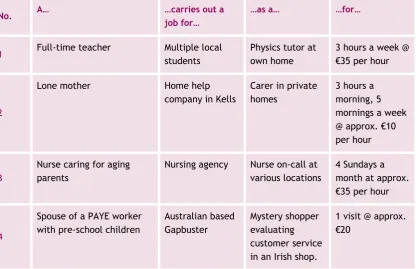
Table 1 outlines profiles of some the common types of work carried out in Ireland which could fall under the microwork umbrella. We note that:
The work can be done for an individual (numbers 1,9,10,14), company
(2,3,4,5,6,7,8,12), charity (11) or community and voluntary group (13);
The organisation seeking the service (the requester) can be based in Ireland
(1,2,3,6,7,9,10,11,12,13,14) or abroad (4,5,8);
Under the Revenue Code of Practice for Determining Employment or Self Employment
Status of Individuals, the status of the worker in Ireland can be as an Employee (2,3,6,7,12,14) or Self-employed (1,4,5,9,10) depending on the circumstances;
For employees, some may be classified as part-time employees (2,7,12) or employees
on zero-hours contracts (3) and benefit from protection under the Organisation of Working Time Act, 1997, while others would be classified as casual and not benefit
from these protections3 (6);
Work is paid for by completed job (database created, site visit or information sought) or by time (generally hour);
The payment can be made by the requester or an intermediary (3,5,8);
The payment can be in cash (1,9,10,14), international electronic funds transfer (EFT)
(4), PayPal (5), vouchers (8) or local Electronic Fund Transfer (2,3,6,7,12);
Some workers (2,7) need to consciously restrict the number of hours worked or amount
earned if they do not want to jeopardise existing receipts from the Department of Social Protection;
The jobs vary from 5 to 10 minutes to up to a few days but tend to be no more than a
few hours a day;
The skills level required varies from low to relatively high (education, nursing,
computer science);
The corresponding remuneration levels also vary but tend to be low relative to
full-time employment particularly as social insurance and benefits are generally not included;
The various microwork environments have specialised market places, differing quality
assurance systems and Garda/background check requirements; and
The history of compliance regarding declaration of earnings to the Revenue
[image:10.595.93.510.478.747.2]Commissioners varies from group to group and within groups as do the structures for providing information to the Department of Social Protection.
Table 1.1 Illustrative Examples of Microwork in Ireland
No. A… …carries out a
job for…
…as a… …for…
1 Full-time teacher Multiple local students
Physics tutor at own home
3 hours a week @ €35 per hour
2
Lone mother Home help
company in Kells
Carer in private homes
3 hours a morning, 5 mornings a week @ approx. €10 per hour
3
Nurse caring for aging parents
Nursing agency Nurse on-call at various locations
4 Sundays a month at approx. €35 per hour
4
Spouse of a PAYE worker with pre-school children
Australian based Gapbuster
Mystery shopper evaluating customer service in an Irish shop.
5
Computer Science Masters Student
A French hotel identified on elance.com
Database developer
1 €800 project secured after competitive tendering @ €25 p/h
6
Retired nurse Irish
merchandising company
Sales promotion assistant
Occasional Saturdays @ €18 per hour
7
Participant on the Part-time Job Incentive Scheme
An Irish-based cleaning company
Morning cleaner 3 hours per evening 5 evenings a week @ €8 per hour
8
Redundant Architect US small company identified on Amazon’s Mechanical Turk Researcher of contact details for lawyers in Dallas, Texas
100 contacts @ €0.50 per contact
(average USD$6 – 9 per hour)
9
Teenager Neighbours Dog-walker and
babysitter
2 hours a week on average @ €8 per hour
10
Lithuanian graduate Multiple individual households
Domestic cleaner 16 hours a week @ €10 per hour
11 Accountant Local charity Treasurer and Board member
On-going on a pro bono basis
12
Shop assistant Local store Shelf-stacker Occasional peak time hours and Christmas period at €9 per hour
13
PAYE worker The local
residents association
Litter removal on the local canal
1 day a year for no remuneration 14 Self-employed maintenance contractor Multiple individual households Small maintenance jobs
1.5 International Market Places
There has been a rise in the number of international market places where Irish people can source microwork. Examples of international marketplaces are:
Gapbuster Worldwide, based in Australia is a company carrying out mystery shopping,
audits and surveys for global clients in over 105 countries using a 400,000 strong field force of mystery shoppers and professional auditors. Mystery shoppers in Ireland are co-ordinated directly from Australia.
MySurvey is a consumer panel made up of individuals who have volunteered to
participate in market research studies. MySurvey is owned and operated by the market research firm Lightspeed Research which operates and performs research around the world. Irish microworkers complete surveys for points which can be redeemed in gift vouchers and charity donations
99 Designs (www.99designs.com) is an Australian design-based marketplace specialising
in logo design and webdesign. Payments to designers in August 2012 amounted to AUS$1 million.
LiveOps “the largest cloud contact centre in the world” allows call-centre workers sign
on for shifts in 30-minute increments and then uses the Web to route calls to them. It has a team of 20,000 independent home agents who deliver the customer service.
UTest, established in 2007, has 60,000 testers and QA professionals in 190 countries
providing a 24/7 software testing service.
In July 2012, Elance had almost 1.8 million registered contractors up from 1.1m in
2011. In 2011 earnings by contractors reached USD$140m. Over 2,000 jobs are posted
every day. Of current contractors 5,200 are registered in Ireland4 and earnings in
Ireland since 2006 have been almost $870,000 at an average of $1,660 per person at $25 per hour. 15,000 jobs have been posted from Ireland since 2008 with an average budget of $937 and average pay of $18 per hour;
Mechanical Turk, established by Amazon in 2005 has 50,000 ‘Turkers’ – with some listed
in Cavan, Athy, Ballina, Naas, Kilkenny, Waterford5. Workers on Mechanical Turk are
paid in dollars in the US, in rupees in India and in Amazon gift vouchers in the rest of the world. In 2010, Panos Ipeirotis, Associate Professor of the School of Business of New York University, carried out a survey of workers on Mechanical Turk6 and found that the average worker in the US was young and relatively well educated. He further observed:
“Approximately 50% of the workers come from the United States and 40% come from India. …Significantly more workers from India participate on Mechanical Turk because the online marketplace is a primary source of income, while in the US most workers consider Mechanical Turk a secondary source of income….. Most participants in the US use Mechanical Turk as a supplementary source of income, and often Mechanical Turk is used by stay‐at‐home parents, unemployed and under-employed workers, and so on. Since females are more likely to fit into these categories, there is a
corresponding increase in representation (60%)…. In general most workers spend a day or less per week working on Mechanical Turk, and tend to complete 20‐100
4 https://www.elance.com/trends/talent-available/geo#GeoRanking 5 http://techlist.com/mturk/global-mturk-worker-map.php
(tasks) per week. Correspondingly, this generates a relatively low income stream for Mechanical Turk work, which is often less than $20 per week.”
Clickworker has a community of 200,000 ‘clickworkers’ completing micro jobs such as:
1. Travel data research: Search for comparable prices on travel portals $0.12/per
search
2. Choose your 10 favourite Timeless Pop songs of all time: $0.10
3. Select 10 songs from the following list. $0.11
4. Writing English texts about a given flight destination: Write an English text for
Lufthansa about a given flight destination, Length: approximately 160 words for $1.84 per destination.
According to Clickworker.com the average worker can expect to earn $9.00 per hour.
Fiverr (www.fiverr.com) is an Israel-based operator of a global online marketplace for
buying and selling services. “Merchants, entrepreneurs, contractors and workers in more than 200 countries use Fiverr to monetize their skills, talents and resources. They can offer “Gigs”, ranging from web design, logo creation and market research, to personal greetings and video animation, in Fiverr. Customers can then access these jobs for services they need rendered. Fiverr helps service-providers collect payments,
promote their services, manage orders, exchange files and communicate with buyers7”.
In May 2012 for example tasks on Fiverr ranged from $5 to $150, and there were over 650,000 tasks and services listed.
oDesk (odesk.com) had 1 million contractors in 150 countries in 2012 up from 330,000
in 2009 and Crowdspring (www.crowdspring.com) had 124,000 ‘creatives’ from 185 countries.
1.6 Microwork as a Basis for Social Enterprise
There are three primary ways by which Microwork can act as a basis for Social Enterprise:
The model whereby a social enterprise aggregates work to be conducted by a
marginalised or disadvantaged community;
The mobilisation of a cohort of volunteers on a micro-volunteering basis; and
The co-ordination of a cohort of individuals working a few hours at a time on projects
with a social good or aim (most prevalent in care and community development settings).
1.6.1 Aggregating Work for a Marginalised or Disadvantaged Community
Samasource8 is a non-profit crowdsourcing company providing employment to people living in
poverty in developing countries by giving them work that can be performed using a computer. Companies can use the Samasource platform to upload and process files as projects for tasks in the areas of text and content, data mining and tagging as well as transcriptions of audio and video files. The Samasource team breaks down projects into individual tasks and distributes the jobs to groups such as women in India, refugees in Somalia and workers in Kenya.
In a similar vein, MobileWorks proposed introducing its microwork outsourcing programme in Jamaica in July 2012. The company's target is to generate about 1,000 jobs within half a year,
and up to 10,000 in the long-term9.
The model is potentially replicable but does not seem to have been successfully emulated so far. This may be related to the considerable challenges in securing and developing
relationships with the work-providers (Microsoft, Google etc.). However, the model has potential for development for disadvantaged and marginalised communities in Ireland if relationships can be developed with the work providers.
1.6.2 Micro-Volunteering
Micro-volunteering can be both virtual and traditional. In the virtual space, Sparked.com is a micro-volunteering website where volunteers can assist charities, community and voluntary organisations mainly in relation to tasks which can be completed on a computer (text editing, graphic design, web-design, fund-raising ideas, contact databases etc.). The community works on a crowd-source model whereby a number of people work on the same project and the organisation chooses the best option emerging from the creative process. From the web-site it appears that most projects have 2 to 6 people working on them.
Help From Home (helpfromhome.org) provides information on micro-volunteering
opportunities that can be conducted from home. In January 2011, it was mentioned in the UK Government Green Paper, ‘Giving’ as an example of a platform that can help people
volunteer in non-traditional ways as part of the Big Society vision. In April 2011, it published How To Set Up a Micro-volunteering Project, a 40 page handbook for charities and non-profits.
The mobile phone company Orange launched a 'Do Some Good' application
(http://dosomegood.orange.co.uk/) which aims to encourage individuals to volunteer using the mobile technologies at their disposal.
Following a more traditional route is the Spots of Time initiative (www.spotsoftime.org.uk) being piloted for care homes in London and Essex. The objective is to provide care homes with a link to skilled people in the neighbourhood to make it easy for them to capitalise on the skills, talents and enthusiasm of those who live nearby. The types of activities chosen mean that volunteers do not need to be vetted.
8 Samasource has 16 work centres across nine countries including India, Kenya, Haiti, Pakistan and Uganda. They provide free, specialised technology training and all the workers are certified. It works with local delivery centre partners who recruit, hire and train poor young women who have no formal work experience and are currently earning less than a living wage.
Slivers of Time, another UK-based system, also enables groups to mobilise volunteers but has the added advantage of being able to incorporate vetting into the process.
1.6.3 Mobilising Workers to Undertake Projects with a Social Objective
The Slivers of Time system piloted in the UK allows organisations to mobilise workers not only on a volunteer basis but also on a microwork basis. Their experience indicates that the initiative needs a significant local catalyst in order to kick-start progress. In the UK, local authorities have been instrumental partners in establishing microwork market places. In these cases, cost reduction is a key motivator in addition to service delivery.
A natural extension of the model is to use the system to mobilise workers in order to achieve a social objective. In this sphere, Slivers of Time has been most successful in the social care and healthcare sectors (particularly care in the home). However, scope exists for the system to be deployed in a community development context. The system acts as a marketplace for workers and ‘employers’ (either individuals or organisations) and hosts booking, tracking, worker evaluation, payroll and other features.
1.7 Microwork and Competitiveness10
In September 2011, the economist Jim Power carried out an economic assessment of the Agency Worker Directive for the National Recruitment Federation. As part of the analysis, he identified the major benefits of the flexibility of agency staff:
“The multi-national sector and the health service are two of the principle areas of the Irish labour market where agency workers play an important role in the functioning of the market. However, agency workers are now being increasingly utilized in retail, telesales, credit control, office administration, human resources, industry, finance and the hospitality sector.”
Given the scope within the multinational sector for the types of ICT microwork initiatives discussed earlier and the relevance of microworking to the healthcare sector (as
demonstrated in the UK), it is reasonable to extrapolate that some of the benefits of agency work to competitiveness could extend to microwork.
The access to short-term temporary contracts is very important to multinationals and at any one time over 10% of the workforce is on such contracts (see section 2.4). Power points out
that Gray et al (2010)11 identified Education, Skills and Research & Development as the
second most important criteria in establishing a comparative advantage in terms of attracting
mobile foreign investment. Within this category, a flexible labour force is second only to
access to skilled employees in importance. Having a flexible workforce can therefore be a contributing factor in attracting foreign direct investment.
The benefits in maintaining and developing skills were identified for the employees:
“In the current difficult economic and labour market environment, attaining full-time employment is very difficult and the agency route does provide a very valuable opportunity
10 http://www.nrf.ie/images/image/AWD%20Economic%20assessment.pdf
to maintain existing skills and develop new ones. This could be of major benefit if and when more normal economic and labour market conditions materialize.”
The benefits to the companies of agency work were identified as:
Increased flexibility as adding to the permanent workforce often requires particular
costs which limit an employer’s ability to be flexible in taking on new employees;
For companies with a ‘freeze’ on permanent employment, the use of agency workers to
fulfil a clear requirement for extra staff is frequently used to circumvent such limitations:
Agency workers can fill roles temporarily vacated by permanent employees due to a
variety of reasons such as sick-leave, maternity leave, holidays or career break;
The use of agency workers obviates the need for employers to engage in a time
consuming and often expensive search process. It allows companies outsource recruitment and achieve cost savings;
They allow new skills to be tested;
They allow specialist skills to be acquired for short-term projects;
Multi-national companies setting up in a country or expanding often use agency workers
until they can fill all of the vacancies on a full-time basis. This allows production to proceed from an early stage;
The use of agency workers allows greater control over payroll costs, which is important
for any company in an increasingly competitive globalised economy, but is particularly important in the current very difficult economic circumstances;
It allows companies the flexibility to satisfy increased business and stronger demand
until it becomes clear that the growth in business is permanent and sustainable, rather than just a temporary cyclical phenomenon. In many cases companies cannot commit to long-term hiring until it becomes clear that the increase in business is quasi-permanent;
In the current very difficult and challenging economic environment, the use of
temporary workers does provide greater flexibility in downsizing in order to ensure the longer-term survival of the business; and
For companies that require short-term staff, the use of an agency simplifies the
2.
General Trends in Atypical Working Patterns in Ireland
Based on an analysis of a range of data sources, there is an overall trend of an on-going move towards atypical working patterns in Ireland. Two main datasets are used in this section: the Quarterly National Household Survey which on a quarterly basis provides the official measure of employment and unemployment in the state (ILO basis), and the Live Register which provides a monthly series of the numbers of people (with some exceptions) registering for Unemployment Assistance/Benefit or for various other statutory entitlements at local offices of the Department of Social and Family Affairs.
2.1 General Increase in the Number of People Working Part-Time
[image:17.595.89.458.313.523.2]Since 2002, the number of people working part-time has risen by 45% from 290,000 to over 420,000 in 2012.
Figure 2.1. Numbers in Part-Time Employment by Quarter (2002-2012)
Source: CSO Quarterly National Household Survey (September 2012) 12
In May 2012, the number of people working part-time represented 20% of the labour force.
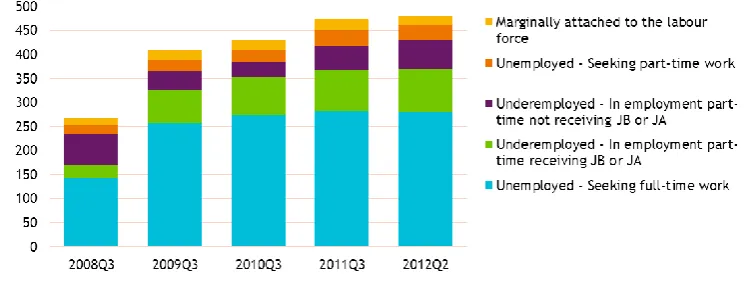
It should be noted however that there is a rapidly increasing number of involuntary part-time workers. The number of part-time workers who consider themselves under-employed has risen from 93,000 to over 150,000 since 2008 and now represents 35% of all part-time workers. Furthermore, an increasing proportion of these are not on the live register as they are not in receipt of JB or JA.
Figure 2.2. Numbers Under-Employed by Quarter (2008-12)
Source: Derived from CSO Quarterly National Household Survey and Live Register (September
2012)13
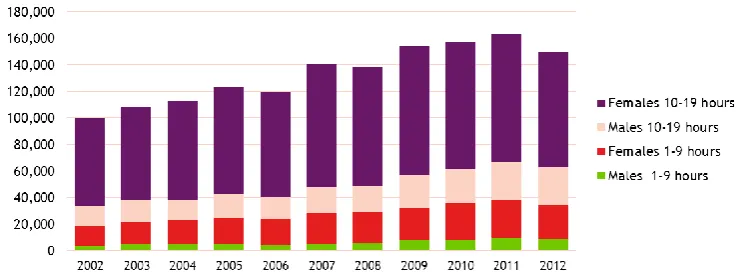
2.2 Growth in the Number of People Working Less Than 20 Hours per Week The Quarterly National Household Survey indicates that approximately 150,000 people currently work less than 20 hours per week, up from 100,000 in 2002. By far, the largest group are females working between 10 and 19 hours a week and this has increased by almost a third to 86,000 since 2002. However, a much higher growth rate is evident among men working between 10 and 19 hours (96%) although the absolute number is considerably lower at 29,000.
Figure 2.3.Numbers and Profile of People Working Less than 20 Hours (2002-2012)
Source: CSO Quarterly National Household Survey (September 2012)
Over 35,000 individuals operate at the microwork end of the spectrum working less than 9 hours a week.
[image:18.595.92.466.488.627.2]
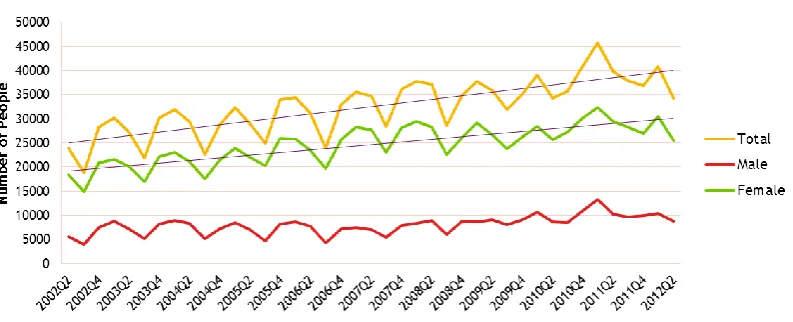
Among those working less than 10 hours per week the number of men grew by 125% while the number of women rose by over 70% over the decade.
Figure 2.4. Numbers Working Between 1-9 Hours per Week by Quarter (2002-2012)
Source: CSO Quarterly National Household Survey (September 2012)
2.3 Number of Recipients of Jobseekers Benefit or Jobseekers Allowance Working Recipients of Jobseekers benefit (JB) may work on 3 days a week and still be eligible for payment of the full amount. Those on Jobseekers’ Allowance (JA) may also work but the earnings have an impact on the allowance received.
Figure 2.5. Number of Recipients of Jobseekers Benefit or Jobseekers Allowance Working on a Casual, Seasonal or Part-Time Basis by Quarter (2002-2012)
Source: CSO Live Register (September 2012) 14
Between 2002 and 2009, the majority of such workers were female but over the last two years the proportion of men has risen steadily and now represents 55% of the total.
Figure 2.6. Number of Recipients of Jobseekers Benefit or Jobseekers Allowance Working on a Casual, Seasonal or Part-Time Basis by Sex and Quarter (2002-2012)
Source: CSO Live Register (September 2012)
By September 2012, recipients of Jobseekers Benefit or Jobseekers Allowance working on a casual, seasonal or part-time basis, represented 20% of all individuals on the Live Register, up from 12% five years ago.
[image:20.595.96.479.451.632.2]
Figure 2.7. Individuals on Jobseekers Benefit or Jobseekers Allowance Working on a Casual, Seasonal or Part-Time Basis as a Proportion of All Individuals on the Live Register by Quarter (2002-12)
Source: CSO Live Register (September 2012)
2.4 Workers with Variable Hours
Finally, the Quarterly National Household Survey captures the number of workers who indicate that they work variable hours (includes those who do not state their usual hours worked). These vary between 200,000 and 250,000 with the majority of workers males. While this number showed a downward trend over the last three years, it has shown a dramatic rise in the most recent reporting period 2012Q2. The specific reason for this rise is not clear15.
Figure 2.8. Number of Workers with Variable Hours (2002-2012)
Source: CSO Live Register (September 2012)
2.5 Atypical Workers in Industry
The number of people in part-time, temporary and short-term employment in manufacturing and internationally traded services companies supported by the enterprise development agencies (IDA Ireland, Enterprise Ireland, Shannon Development and Údarás na Gaeltachta) at almost 38,500 in 2011, as illustrated in figure 2.9, and increased further to 41,833 in 2012, an increase of 30% from 2009.
Figure 2.9. Number of People in Part-Time, Temporary and Short-Time Employment in All Manufacturing and Internationally Traded Services Companies Supported by the
Enterprise Development Agencies (2002-2011)
Source: Forfas Annual Employment Survey 2011 16
[image:22.595.118.412.515.640.2]
2.6 Agency Workers
The 2012 survey of the National Recruitment Federation17, the representative body of the
recruitment agency sector in Ireland, identifies approximately 50,000 agency workers with the number increasing by almost 15% since 2012.
The budget for agency staff working as nurses, dentists, social care workers, administrators and general support staff within the HSE rose from €117million and €127million in 2007 and
2008 respectively to €150million and €200million in 2010 and 201118 (including agency costs of
approximately 5% and VAT at 23%). The HSE National Service Plan 201219, however, aims to
cut the spend on agency staff by 50%.
The statistics in the totality of this section are indicative of a fragmentation of certain types of work and a weakening of the link between work and a specific individual in certain sectors. The trend indicates that there may be further fragmentation into smaller units some of which will be suitable for microworkers.
2.7 Potential Impact of Microworking on Unemployment20
While microworking is not a direct means to full-time employment, it provides access to employment opportunities, keeps those on the Live Register close to the labour market and helps in the maintenance of skills and expertise. Microworking can also benefit the
unemployed and under-employed people who are not currently on the Live Register has no impact on the headline unemployment rates.
Improving access to microwork opportunities in Ireland has the potential to deliver a social and financial dividend to a number of groups, both on and off the Live Register:
Those unemployed, in receipt of Jobseekers Benefit or Jobseekers Allowance and
seeking full-time work, the benefits of microworking relate primarily to motivation as well as access to networks and opportunities. Microworking may serve as a stepping stone to full-time employment but is not an end in itself.
Access to microwork opportunities may provide a supplementary source of income to
the newly unemployed as they adjust to the rapid fall in income in the period while high expenditure commitments are being wound down. For the 9- to 12-month period while receiving Jobseekers Benefit, individuals can earn income on three days while looking for full-time employment;
For existing casual, seasonal or part-time workers receiving Jobseekers Benefit or
Jobseekers Allowance but looking for full-time employment, microworking may provide access to networks, skills and opportunities but only if the microwork opportunities are superior to the current part-time work being undertaken. This group is growing rapidly and microwork may offer individuals joining this cohort in the future access to casual and part-time opportunities.
17 www.nrf.ie/news.asp?p=agency-worker-numbers-increase-to-over-50,000
18 HSE Annual Report 2011 and http://debates.oireachtas.ie/dail/2012/05/22/00429.asp 19 www.hse.ie/eng/services/Publications/corporate/nspexecutivesummary2012.pdf
For part-time workers who are not in receipt of JB or JA (and are therefore not on the Live Register) but who consider themselves to be under-employed, microwork may go some way to closing the gap between the existing level of employment and the desired level of employment. As for those in receipt of JB or JA, the additional benefits in motivation and access to networks and opportunities only arise if the microwork opportunities are superior to the current part-time work. This is a rapidly growing group having grown by almost 40,000 from 23,000 since 2009; 55% of all under-employed part-time workers are women and 45% were men in 2012.
For those people who are unemployed but looking for part-time work, microworking is
potentially a means of accessing the part-time opportunities sought; Of these people 78% were women in 2012.
For those "marginally attached" workers who would like to work full-time, have looked
for a job sometime in the past 12 months, but are currently not "actively" looking for work and an indeterminate number of individuals not actively seeking employment in the workforce (carers, stay at home parents etc.) microwork could offer a pathway into the workforce if suitable opportunities became available.
For workers on the Family Income Supplement working part-time, microwork could
[image:24.595.94.472.424.572.2]provide access to supplementary hours if needed to bring them up to the threshold of 19 hours required to maintain the support.
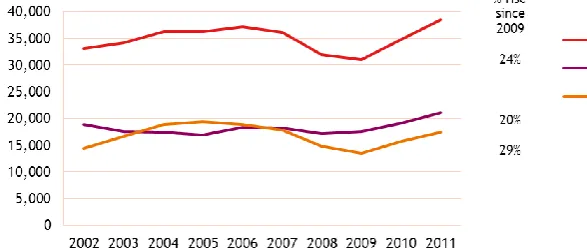
Figure 2.10. Relative Importance of Groups for which Microwork Could Be Beneficial
Source: Derived from Quarterly National Household Survey (May 2012) with the exception of JB and JA figures extracted from the Live Register
2.8 Summary
There is an on-going increase in the number of people across the economic spectrum engaged in atypical work patterns.
Since 2002, the number of people working part-time has risen by 45% from 290,000 to
over 420,000 in 2012. Part-time workers represented 20% of the workforce in 2012.
Approximately 150,000 people worked less than 20 hours per week in 2012, up from
Among those working less than 10 hours per week the number of men grew by 125% to 10,000 in 2012 while the number of women rose by over 70% to 25,000 over the decade.
One in five recipients of Jobseekers Benefit or Jobseekers Allowance (amounting to
almost 90,000 individuals) already worked on a casual, seasonal or part-time basis.
The number of people in part-time, temporary and short-term employment in
companies supported by IDA Ireland, Enterprise Ireland, Shannon Development and Údarás na Gaeltachta at 41,833 in 2012 is at its highest level for a decade. The number has risen by 30% since 2009.
As rated above ease of access to microworking opportunities in Ireland has the potential to deliver a social and financial dividend for unemployed and under-employed people, both on and off the Live Register, in a number of ways:
1. Providing a supplementary source of income to the newly unemployed as they adjust
to the rapid fall in income in the period while high expenditure commitments are being wound down;
2. Closing the gap between the existing level of employment and the desired level of
employment for 63,000 existing part-time workers who are not on the Live Register but who consider themselves to be under-employed. This is a rapidly growing group having grown by almost 40,000 from 23,000 since 2009.
3. Providing a means of accessing the part-time opportunities sought by 28,700 people
who are unemployed but looking for part-time work. Of these people 78% are women.
4. Offering a pathway into the workforce for 20,000 "marginally attached" workers.
5. Providing options for individuals on Family Income Support working part-time to
access supplementary hours if needed.
In relation to 2012, we assume the 88,000 in receipt of JA/JB who work part-time are
included in the overall QNHS figure of 171,000 who work part-time and are under-employed. Under social welfare operational guidelines, these 88,000 JA/JB recipients are seeking full-time employment and therefore part-full-time work is under-employment using this definition. From discussions with the Revenue Commissioners, the sharp increase since 2008 in the number of people on Jobseekers Benefit and Jobseekers Allowance working part-time is likely due to a large movement of staff from full-time employment to ‘Short-Time Employment’ particularly in the hospitality and retail trades as a result of the recession. However, this is not entirely verified from other sources, including CSO statistics, as the Short-Time
Employment category is not defined separately from seasonal or casual. This sharp increase amounted to about 60,000 people in 2012 (up from 27,000 in 2008 Q3). For these people who work to, or close to, the maximum allowed under JB/JA:
taking up microworking may put them over the days limit making them ineligible for
allowances; and
the additional benefits of motivation, contacts etc. are marginal as they already have a
part-time job.
‘Short-Time Employment’ could also benefit. However, as the knowledge behind the status of these is less clear they were not added.
3.
The Policy and Regulatory Environment for Microwork
3.1 Key Background Developments in the development of a potentially conducive
environment for Microwork in Ireland
The overall policy environment which might facilitate the development of microwork initiatives in Ireland has evolved over many years. The key elements of such a conducive framework are broadly in place in relation to allowing unemployed individuals receiving direct support from the State to work part-time, relevant labour legislation sets out the rights of workers who are not employed on a full-time basis, tax legislation caters for individuals earning low amounts and provisions are in place for dealing with the implications of individuals receiving payments outside the PAYE system for work undertaken and could contribute to opportunities for microwork. The one area for further examination, currently being undertaken by DSP, is the calculation of Jobseekers Benefit and Jobseekers Allowance as to whether it might in future be better administered on a days or hours based system. For comparative purposes, a review of initiatives in other countries was undertaken and is included in Appendix 5.
Table 3.1. Chronology of Relevant policy issues in the development of a conducive environment for Microwork in Ireland
1994 - 1998
A provision for the Part-Time Job Opportunities Pilot Programme is included in the 1994 Budget and the programme is piloted in a number of towns.
1994 Community Employment Development Programme introduced on a pilot basis in 1991 is mainstreamed nationally as the Community Employment (CE) programme. The CE programme is designed to help people who are long-term unemployed and other disadvantaged people to get back to work by offering part-time and
temporary placements in jobs based within local communities. It is possible for participants to seek other part-time work during their placement
1997 Organisation of Working Time Act, 1997 is published setting out statutory rights for employees in respect of rest, maximum working time and holidays and provides minimum legally enforceable entitlements for all employees (including those employed through an employment agency) to holidays and public holidays
1997 The Domestic Employer Scheme is introduced. It removes the obligation for individual domestic employers who employ one domestic employee for less than €40 wages per week to operate under the PAYE scheme. PRSI is paid directly to the PRSI Special Collections Section of the Department of Social and Family Affairs in a single annual payment at the end of each tax year. Consultation with the Special Collections Section indicates that utilisation of this option is not high.
2000 ‘The Shadow Economy Report’ is published by the Revenue Commissioners and concluded that ‘whereas the “nixer” aspect of the shadow economy is big in volume, it probably is relatively small in potential revenues lost and is very difficult to control on a case by case basis’
2002 A flexible contract system introduced in Germany21 in order to bring the long-time unemployed back into the labour force. It allows employees to earn up to €450 a month tax free, while the employers pay an easy-to administer flat rate of wage taxes, insurance and pension contributions.
The system is not without critics who point to the danger of full-time jobs being split up into mini-jobs with an attendant drop in the availability of full-time employment opportunities.
2000 - 2003
The National Framework Committee for Work-Life Balance Policies is established under the Programme for Prosperity and Fairness and continued under Sustaining Progress. Its objective is to promote a vision where atypical work is encouraged as a means of simultaneously ensuring equity for workers and competitiveness of the economy.
2003 The Protection of Employees (Fixed-Term Work) Act 2003 is introduced and applies to almost all types of atypical temporary workers, including fixed-term, specified purpose, seasonal workers, casual week to week/ day to day workers and 'floating' workers.
2006 Towards 2016 Ten-Year Framework Social Partnership Agreement 2006-2015 is published and states “Other elements of social protection will be examined to ensure that atypical working, the reconciliation of work and family life and those working on low incomes are supported;” (p53) as well as providing for the
“recruitment of staff (into the public service) on the basis of part-time working or atypical work patterns”.
2006 The Department of Social and Family Affairs publishes “Review of the Application of the Unemployment Benefit and Assistance Schemes Conditions to Workers who are not Employed on a Full-time basis”. The Group concluded:
That the scope of the UA (Now JA) scheme should not be extended to include part-time workers and that the full-time availability (for employment) condition should be retained (p. 50).
The flat rate of UB (now JB) should be retained but adapted to cater for part-time and other atypical workers as follows:
Compensating for the loss of employment up to the level of availability
relative to previous employment
Minimum availability of 3.5 hours per day or 19 hours per week
Loss of employment to be translated into days (following a Swedish
model)
Compensation to be capped for part-time workers (p. 54).
This remains a major reference document and forms the core of a review to be
completed by the Department of Social Protection in 2014.
Nov 2006 European Commission issued the Green Paper Modernising labour law to meet the challenges of the 21st century (COM 2006 708), which highlights the ‘proliferation of atypical forms of contract’ as a majorchallenge posed by increased competition and globalization.
These non-standard forms of employment range from themost conventional fixed-term and temporary agency work contracts to less established – and potentially less protected– forms of employment, such as zero-hour contracts or on-call contracts, which are increasingly being used.
Pre-2007 Part-Time Job Incentive Scheme introduced as a stepping stone to full-time work. It allows certain long-term unemployed people to take up part-time work and get a special weekly allowance instead of their jobseeker’s payment. Recipients of the Part-Time Job Incentive Scheme must be available for and seeking full-time work while getting the payment. However, take up has been relatively low:
Year No. of Participants
2007 210
2008 184
2009 173
2010 161
2011 180
2012 193
2007 The Hidden Economy Monitoring Group under the Towards 2016 Social Partnership Agreement updates the Code of Practice for Determining the Employed or Self Employed Status of Individuals22 .
July 2011 The National Economic and Social Council (NESC) publishes “Supports and Services for Unemployed Jobseekers: Challenges and Opportunities in a Time of Recession” which:
identifies the need to support both types of unemployed people – those on the Live Register and those not on it and the need for a clearing house or forum for actors to match people on the live register with opportunities in the private, public and community and voluntary sector;
concludes that if any disincentive to work is likely to occur it will occur where higher marginal effective taxes applicable when people combine social welfare payments with low-paid part-time work but notes there is not a large body of evidence to indicate that this disincentive exists in reality;
envisages a range of diverse actors as important partners in supporting the unemployed and recommends that a Board for Temporary Projects be
established for a limited period of time to include the inputs of local government, private enterprise and professional associations, regional bodies and local communities.
2011 The Government publishes the Review of Disability Policy for consultation23. This proposes a move to a person-centred approach to service provision where services are planned and delivered with the active involvement of the individual, developed around his/her particular characteristics and funded on a personal basis.”
August 2011
Department of Social Protection prepares the “Project Plan for the Development and Implementation of the National Employment and Entitlements Service” (NEES). The Plan states:
“The objective is to integrate the provision of employment services and benefit payment services within the Department and in so doing to ensure that the payment of income supports to people who do not have a job is directly linked to the equally, if not more important, task of supporting such people in their pursuit of employment and related opportunities and improving their life chances.
As part of this approach the Department is seeking to change its focus from the passive provision of transaction based services (claims processing and payments) to the active case management of clients. Under the case management model the Department will work with clients to prepare, execute and monitor a personal progression plan.
This progression plan will have a number of elements, for example, an income support-plan, a skills/training development plan and an employment plan. Clients will be expected to engage with this approach and failure to engage will lead to a reduction or cessation of benefit payments.”
October 2011
Social Justice Ireland prepares a Briefing to the Joint Committee for European Affairs24 recommending that the Part-Time Opportunities Programme piloted in 1994 – 1998 be rolled out in order to create opportunities for the unemployed.
2012 Announcement of the establishment of National Employment and Entitlements Service (NEES)
May 2012 The Protection of Employees (Temporary Agency Work) Act 2012 transposing an EU Directive into Irish legislation is signed into law. It provides that all temporary agency workers must have equal treatment as if they had been directly recruited by the hirer from their first day at work. Self-employed persons (i.e. individuals who are “in business on their own account”) who are placed by an employment agency are outside the scope of the Act.
May 2012 The Joint Committee on Jobs, Social Protection and Education publishes A review of the status of casual workers in Ireland based on a report prepared by Anthony Lawlor TD and subsequent debate and presentations to the committee in
September 2011 and March 2012. It concludes:
“It is clear that the current system, which is based on the number of days worked
23 www.dohc.ie/publications/pdf/ERG_Disability_Policy_Review_Final.pdf?direct=1
per week, disenfranchises a number of part-time workers from Jobseeker’s payments.
The stakeholders involved in this research all agreed that a move towards an hours based system would be much fairer and equitable to all involved. This sentiment was also agreed upon by the Department of Social Protection officials during the two Oireachtas Committee briefing meetings.”
Over recent years, the number of people interacting simultaneously with the tax and
employment-related social protection supports systems has risen, as the distinction between the employed and the unemployed blurs. Certain social protection benefits have become taxable, such as the Carer’s Allowance and the One Parent Family payment. Therefore, individuals microworking in Ireland interact with Revenue Commissioners but may often also interact with the Department of Social Protection in relation to employment support. As part of this review, meetings were held with representatives of both the Department of Social Protection and the Revenue Commissioners to discuss the impact of current policy and practices on the development of microworking in Ireland. The information in the following two sections derives largely from those meetings.
3.2 Social Protection Policy and Practice – Implications for Microworking In this section, we outline implications for Microworking that have arisen from social protection policies and their implementation over recent years.
3.2.1 Reform Process
The Department is engaged in a process of reform informed principally by Budget 2012 and
the recommendations proposed in the 2006 “Review of the application of the unemployment
and assistance schemes conditions to workers who are not employed on a full-time basis”.
Since July 2012, the entitlement of a Jobseeker's Benefit recipient has been based on a 5-day payment week rather than a 6-day week. For each day that a person is employed, 1/5th of the normal rate of Jobseeker's Benefit is deducted. Recipients must still be unemployed for at least 3 days out of 6 to claim Jobseeker's Benefit. From February 2013, Sunday working will be taken into account when calculating the amount of Jobseeker's Benefit or Jobseeker's Allowance to be paid.
For the foreseeable future, therefore individuals who wish to microwork and receive either Job-Seekers Benefit or Jobseekers’ Allowance will only be able to work on three days and
must still be unemployed for at least 4 days out of 725.
The issue of Jobseekers’ eligibility extending to people with part-time availability (as opposed to the existing stipulation to be available for full-time employment) is under review.
Unless a microworking initiative is structured so that it fulfils the criteria of providing full-time employment to individuals, it will be limited in the extent to which it can move more people into full-time employment, providing a stepping stone to full-time employment.
3.2.2 Calculation of Work Undertaken by Individuals Receiving Benefits
A further enabling measure to encourage micro-working would be to change the focus on days worked to a focus on hours worked in calculating the amount of work undertaken by
individuals receiving benefits. Under the current system, casual workers working a few hours a day are disadvantaged relative to casual workers working all their hours in two days.
The issue was raised in the Citizen’s Information Board Social Policy Quarterly Report Jan to March 2012:
“Evidence from Citizens Information Services suggests an economy in which part-time work opportunities are available but often at low rates of pay and therefore – particularly where there is no eligibility for FIS and/or where jobseeker’s payments have been lost – not financially viable. The 38-hour per fortnight eligibility rule for FIS also continues to be reported as an issue as regards the unemployment trap.’ (See Appendix 4 for case studies provided)
The possibility of employment being calculated in hours rather than days for Jobseeker supports is part of the overall reform process referred to earlier. The recommendation of the 2006 Review focused on ‘half-day’ rather than hours as a unit of calculation – informed by the Swedish model. The key concern for the Department is the extent to which individuals currently ineligible for jobseekers’ support will become eligible if hours or half-days are used in calculations resulting in increased costs to the Exchequer.
3.2.3 Scope for Individuals in Receipt of Benefits to Microwork
There are currently no restrictions to jobseeker claimants engaging in microworking three
days a week26. Part-time workers (those who work up to three days a week), seasonal and
casual workers are entitled to Jobseeker’s Benefit or Allowance if they are seeking full-time employment and fulfil unemployment criteria and means tests.
Microworking by these groups, within the limits stipulated, would not reduce the headline unemployment rate as in many cases income from microworking would be supplementary to the receipt of Jobseeker benefits and the majority of individuals would therefore remain on the Live Register.
The number of hours and total earnings allowed by individuals receiving certain payments from the Department of Social Protection vary under the different initiatives as follows:
Jobseekers Benefit Can only work for three days and must be available
for full-time employment. Jobseekers can microwork for 2.3 hours on 3 days at the National Minimum Wage with no impact on Jobseeker payments.
Jobseekers Allowance The individual can only work on three days and must be available for full-time employment. The allowance is means-tested so falls as earnings rise.
Part-Time Jobs Initiative Must work less than 24 hours per week for at least 2
months and be insurable at PRSI Class A or J. There is no limit on earnings.
One Parent Family Payment (Taxable) May earn up to set limits 27 per week and keep the
full payment with a cap for overall weekly earnings.
Carers Allowance (Taxable) Can work up to 15 hours outside the home and with
earnings capped at €332.50 per week in 2012 with no impact on the allowance received.
Family Income Supplement Must work a minimum 19 hours per week.
3.2.4 Resource Implications of Increased Numbers of Microworkers
Casual workers operate effectively on a self-assessment system. Each day is marked with an ‘x’ or ‘o’ to denote unemployed or employed and the weekly returns are submitted directly to the Department of Social Protection. These are input and payments made accordingly. Spot checks are carried out to monitor compliance with reporting requirements. The recording and monitoring systems are more resource intensive than for other types of claimants.
Under the current system, any increase in casual working by fully unemployed jobseeker claimants will increase the recording and monitoring workloads within the Department of Social Protection.
3.3 Tax Compliance Practice and Policy – Implications for Microworking
3.3.1 PAYE System
The important issues for the Revenue Commissioners in relation to any initiative are 1) tax compliance and 2) ease of administration.
The PAYE system is the key driver of tax collection and compliance. It has become
progressively simplified and automated and is now easily administered using payroll systems which link directly to the Revenue ROS system. This facilitates Revenue in the electronic delivery of tax credit certificates directly to pay-roll and facilitates employers in the electronic delivery of P45’s, end of year returns and payments etc.
The PAYE system is based on earnings rather than hours or time worked and therefore the distribution of hours throughout the week has no impact on PAYE calculations of tax payable. The PAYE system does not distinguish between work carried out for commercial enterprises, individuals, charities, social enterprises etc.
The PAYE system is, therefore, robust and capable of recording payments for microwork and associated tax payable (if any) relatively easily regardless of the nature of the employer or the distribution of hours.