
Supported by the Internal Grant Agency of Mendel University in Brno, Czech Republic (Project No. IP 5/2011 and Project No. TP 1/2012).
Eff ect of extruded full-fat soybeans on performance,
amino acids digestibility, trypsin activity, and intestinal
morphology in broilers
M. Foltyn
1, V. Rada
1, M. Lichovníková
1, I. Šafaík
2, A. Lohniský
1,
D. Hampel
31Department of Animal Breeding, Faculty of Agronomy, Mendel University in Brno,
Brno, Czech Republic
2Department of Nanobiotechnology, Institute of Nanobiology and Structural Biology of GCRC,
Academy of Sciences of the Czech Republic, České Budějovice, Czech Republic
3Department of Statistics and Operation Analysis, Faculty of Business and Economics,
Mendel University in Brno, Brno, Czech Republic
ABSTRACT: Th e infl uence of diff erent levels of extruded full-fat soybean (EFFSB) in the diet on growth performance, apparent ileal amino acids digestibility (AIAAD), intestinal morphology, and trypsin activity in digesta of broilers was determined. In the fi rst experiment, two-hundred sixty ROSS 308 male chickens were used to investigate the eff ect of EFFSB on growth performance, intestinal morphology, and trypsin activity in the digesta and AIAAD. Five dietary treatments were used, containing 0, 40, 80, 120, and 160 g/kg of EFFSB. Th e experiment lasted from day 10 till day 38 of age. Th e inclusion of EFFSB at the level of 160 g/kg in the diet signifi cantly (P < 0.05) decreased fi nal body weight (2443 g in 0 group vs. 2093 in 160 group) and worsened feed effi ciency. AIAAD was lower when diet contained more than 40 g/kg EFFSB. But at the level of 160 g/kg AIAAD increased in several amino acids (threonine, isoleucine, leucine, histidine). Trypsin activity increased with increasing EFFSB in the diets. Th ere were no signifi cant (P > 0.05) diff erences in AIAAD between groups 80, 120, and 160. Villus height (groups 0: 966.2; 4: 852.1; 8: 792.6; 12: 836.3; 16: 926.7 μm) and crypt depth (groups 0: 160.1; 4: 134.8; 8: 122.9; 12: 129.5; 16: 134.6 μm) of ileum decreased with inclusion of EFFSB in the diet, but villi/crypt ratio increased. In the second experiment, male chickens ROSS 308 were divided into 4 groups with 2 replicates per 100 chicks each. Th e groups were fed 0, 40, 80, and 120 g/kg of EFFSB. Th e experiment lasted from day 10 till day 38 of age. Final body weight (2594 g in 0 group vs. 2624 g in 120 group) was not signifi cantly (P > 0.05) aff ected by the diet. Th e study showed that EFFSB at the level of 120 g/kg in grower broiler diet had no adverse eff ect on performance.
Keywords:trypsin inhibitor; growth; villi; crypt
Soybean products are the most important sources of protein and energy in livestock feeds for many animals. Soybeans have a good amino acids profile, with a high content of lysine, tryptophan, isoleu-cine, valine, and threonine (Larbier and Leclercq, 1994). In addition, soybeans contain 180–220 g/kg of good quality oil mainly with a high proportion of
in swine and poultry diets with similar anticipated performance. However raw soybeans contain a number of antinutritional factors.
Protease inhibitor and lectin are two main factors in the soybeans which affect the broiler performance (Michele et al., 1999). Other antinutritional fac-tors are antivitamins, saponins, tanins, non-starch oligosaccharides and polysaccharides, and phytate (Dourado et al., 2011). These antinutrition factors depress the food intake, growth performers, and digestibility of nutrients (Liener, 1994; Perilla et al., 1997; Palacios et al., 2004; Valencia et. al., 2009). The growth depression, observed when trypsin inhibitors (TI) are ingested, may be a combined effect of endogenous loss of essential amino acids and decreased intestinal proteolysis (Clarke and Wiseman, 2007). The TI and urease activity (UA) are correlated to body weight and feed conversion ratio (Ruiz et al., 2004).
One way how to eliminate the antinutritional fac-tors and improve nutritional value of raw soybeans is heating treatment (Qin et al., 1996; Machado et al., 2008). Extrusion as a form of heating treatment inactivates TI and denatures it as native proteins (Perilla et al., 1997). Extrusion temperature has not a significant effect on weight gain, feed : gain ratio or mortality rate in broilers, but extrusion of soybeans at 140°C improves feed intake if compared to that at lower temperatures (Lesson and Atteh, 1996). Levels of TI decreased (P < 0.05) with increasing processing temperature (Fasina et al., 2003). To ensure destruction of the anti-nutritional factors, the exit temperature of the soybeans should exceed 138°C (Lusas et al., 1989). Chymotrypsin inhibitor activity in soybeans is more readily abolished by heat-treatment than trypsin inhibitor activity and lectin activity is relatively heat-resistant (Armour et al., 1998). Kunitz-free and lectin-free soybeans cannot be fed successfully to young chicks and pigs without heating, because they still contain sufficiently high levels of antinutritional factors to greatly depress growth at very young ages (Batal and Parsons, 2003; Palacios et al., 2004).
The effect of extruded soybeans on production performance was previously studied in layer hens (Latshaw and Clayton, 1976), turkeys (Moran et al., 1973), and chicks (Wood et al., 1971; Subuh et al., 2002). These studies show that feeding of extruded soybeans could partially replace SBM without any adverse effect on production per-formance. Many studies (Leeson and Atteh, 1996; Perilla et al., 1997; Clarke and Weisman, 2007)
are oriented on the effect of extrusion condition saying that temperature and pressure have posi-tive effect on destruction of TI and subsequently on growth performance and nutrient digestibility. Apparent N digestibility increased when moist extrusion was used (Friesen et al., 1993). The aim of the study was to evaluate the effect of various contents of extruded full fat soybeans (EFFSB) in broilers diets on growth performance, apparent ileal amino acids digestibility, intestinal histometric characteristics, and trypsin activity in digesta.
MATERIAL AND METHODS
Experiment 1
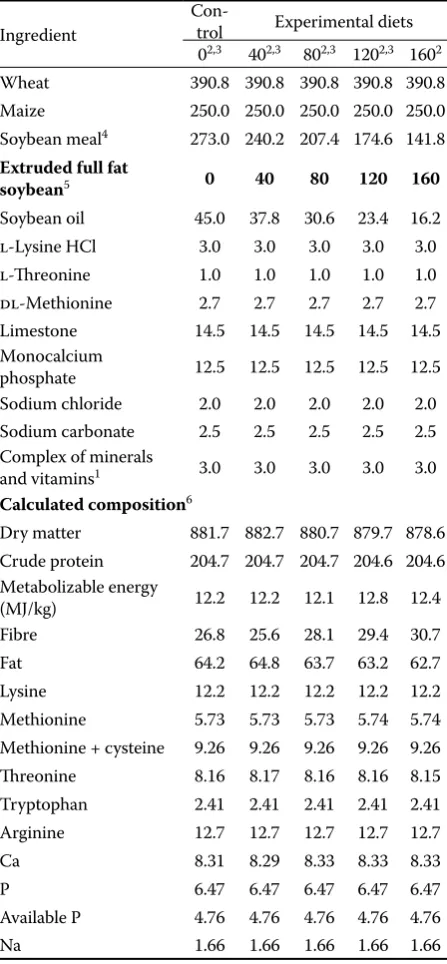
Birds management and diets. In total 260 male chickens ROSS 308 were housed in two-floor cages. Housing was provided according to technology guide for ROSS 308 chickens. Photoperiod was 23 h light : 1 h dark and followed a continuous schedule with lighting intensities of 30 lx on days 0–7 of age, 10 lx on days 7–22 of age, and 3 lx on days 22–38 of age. On days 1–10 of age chickens were fed a commercial diet. At ten days of age chickens were weighed and divided into five groups with the same average weight. Broilers were fed diets with different contents of SBM, EFFSB, and soybean oil. Soybeans were moist extruded by device MILTENS at temperatures from 130 to 135°C. Thirteen chick-ens were kept in each cage and four cages were used for each treatment. Chickens were divided into a group fed a control diet based on SBM (0 g/kg EFFSB) and groups fed 40, 80, 120, and 160 g/kg of EFFSB, respectively. The composition of the diets is shown in Table 1. The content of TI in the SBM and EFFSB, expressed as amount of trypsin inhibited per g of sample, was 6.7 mg and 8.4 mg for SBM and EFFSB, respectively. The diets were formulated to have similar energy (12 MJ AMEn/kg) and protein (200 g/kg CP) contents. Feed and water were available ad libitum. All birds were weighed individually from the start to the end of the experiment in regular one week period. Feed consumed per each cage was recorded; the dead chickens were weighed to calculate feed efficiency.
the digesta content of ileum (last one-third sec-tion between Meckel’s diverticulum and 4 cm from ileocecal junction). Digesta collected from each bird was stored at –30°C (one sample – 5 chickens, 6 replicates per treatment). Samples were lyophi-lized, ground, and analyzed for amino acids, dry matter, and insoluble ash in 4 mol/l HCl, which was used as an indicator. The 0.5 g samples of the feed and ileal digesta were treated by HCl oxidative acid hydrolysis (c = 6 mol/l). The chromatographic analysis of the hydrolyzate samples was performed using the AAA 400 analyzer (Ingos, Prague, Czech Republic) using Na-citrate buffers and ninhydrin detection to find out the amounts of certain amino acids. The content of fat in the diets and excreta was determined according to Soxhlet. Apparent ileal amino acids digestibility (fat digestibility) was calculated using the following formula:
AIAAD = 100 – (100 × Id × AAdc/Idc × AAd)
where:
AIAAD = apparent ileal amino acid digestibility (%) Id = content of indicator in the diet (g/kg DM) AAdc = content of amino acids in the digesta (g/kg DM) Idc = content of indicator in the digesta (g/kg DM) AAd = content of amino acids in the diet (g/kg DM)
The effect of feeding EFFSB on AIAAD for each amino acid was expressed by polynomial function:
y = ax2 + bx + c
where:
y = coeffi cient of digestibility
a, b, c = parameters of the polynomial function x = level of EFFSB
Trypsin activity in the digesta. Digesta from small intestine, which was gently pushed from part of one third between duodenum and the Meckel’s diverticulum, was used for determination of trypsin activity. Samples of digesta were diluted 10×, based on the sample weight, with ice-cold PBS (pH 7.0), and homogenized in the refrigerator for 10 min. Then the samples were centrifuged at 1500 g at 4°C for 10 min. The supernatant was transferred into Eppendorf tubes (Eppendorf, Hamburg, Germany) and stored at −30°C for enzyme assays.
[image:3.595.64.288.115.598.2]Trypsin activity was analyzed using the method of constant time. N-α-benzoyl-dl-arginine-p-nitroaniline (BAPNA) diluted with 50mM Tris-HCl was used as substrate. One ml of substrate was incubated at 37°C for 5 min. Then 0.1 ml of Table 1. Composition of the experimental diets (g/kg) fed
to broilers in days 10–38 of the growing period
Ingredient
Con-trol Experimental diets 02,3 402,3 802,3 1202,3 1602 Wheat 390.8 390.8 390.8 390.8 390.8 Maize 250.0 250.0 250.0 250.0 250.0 Soybean meal4 273.0 240.2 207.4 174.6 141.8
Extruded full fat
soybean5 0 40 80 120 160
Soybean oil 45.0 37.8 30.6 23.4 16.2 l-Lysine HCl 3.0 3.0 3.0 3.0 3.0 l-Th reonine 1.0 1.0 1.0 1.0 1.0 dl-Methionine 2.7 2.7 2.7 2.7 2.7 Limestone 14.5 14.5 14.5 14.5 14.5 Monocalcium
phosphate 12.5 12.5 12.5 12.5 12.5 Sodium chloride 2.0 2.0 2.0 2.0 2.0 Sodium carbonate 2.5 2.5 2.5 2.5 2.5 Complex of minerals
and vitamins1 3.0 3.0 3.0 3.0 3.0
Calculated composition6
Dry matter 881.7 882.7 880.7 879.7 878.6 Crude protein 204.7 204.7 204.7 204.6 204.6 Metabolizable energy
(MJ/kg) 12.2 12.2 12.1 12.8 12.4 Fibre 26.8 25.6 28.1 29.4 30.7 Fat 64.2 64.8 63.7 63.2 62.7 Lysine 12.2 12.2 12.2 12.2 12.2 Methionine 5.73 5.73 5.73 5.74 5.74 Methionine + cysteine 9.26 9.26 9.26 9.26 9.26 Th reonine 8.16 8.17 8.16 8.16 8.15 Tryptophan 2.41 2.41 2.41 2.41 2.41 Arginine 12.7 12.7 12.7 12.7 12.7 Ca 8.31 8.29 8.33 8.33 8.33 P 6.47 6.47 6.47 6.47 6.47 Available P 4.76 4.76 4.76 4.76 4.76 Na 1.66 1.66 1.66 1.66 1.66 1premix provided per kg diet: retinol 13 500.00 IU, cholecalcif-erol 499.80 IU, alpha tocophcholecalcif-erol 35.10 mg, menadione 3.00 mg, thiamine 2.25 mg, ribofl avin 6.00 mg, pyridoxine 5.10 mg, cobalamin 0.02 mg, calcium pantothenate 11.01 mg, niacin 32.49 mg, folic acid 1.50 mg, biotin 0.26 mg, betain 45.00 mg, choline chloride 250.20 mg, Fe 75.00 mg, Cu 15.00 mg, Mn 115.20 mg, Zn 108.00 mg, Se 0.30 mg, I 1.05 mg, Co 0.25 mg 2diets 0–160 EFFSB were used in Experiement 1
3diets 0–120 EFFSB were used in Experiment 2 4soybean meal contains 6.7 TI
were weighed and those with the highest and lowest weight were selected and not used in the experi-ment. So only eight pens (800 chickens) were used for the observation and there were no significant differences in live body weight among the pens at the beginning of the experiment. Birds were divided into four groups; two pens with 100 chickens per treatment. Chickens were fed diets containing 0, 40, 80, and 120 g/kg of EFFSB, respectively. Com-position of the feed mixtures is shown in Table 1. They were the same as in Experiment 1 and the same feed ingredients were used. The diets were formulated to have similar energy (12 MJ AMEn/kg) and protein (200 g/kg CP) contents. Feed and water were available ad libitum. All birds were weighed individually from the start to the end of the study in regular one-week periods. Feed consumption per pen was recorded and dead chickens were weighed to calculate feed conversion ratio.
Statistical analysis
Data obtained from these experiments were analyzed using the Single-Factor Analysis of Vari-ance. Data of live weight, trypsin activity, and intestinal morphology were followed by Scheffé’s test. For ileal amino acid and fat digestibility the Kruskal-Wallis analyses followed by LSD test were performed. Software package UNISTAT (Version 5.1, 2007) was used.
supernatant (digesta samples) was added and the solution was incubated for 10 min. The reaction was stopped by adding 1 ml of acetic acid. Trypsin activity was measured by absorbance at 405 nm. One unit of trypsin activity was defined as 1 mmol of BAPNA hydrolyzed per minute at 37°C and pH 8.2 in the presence of 10 mmol of CaCl2/l.
Morphometric light microscopy. For morpho-metric analysis, the small intestine was quickly removed after killing the birds. A 4-cm segment 4 cm from Meckel’s diverticulum was removed and rinsed with saline. Segments were fixed in 10% neutral buffered formalin solution. The cross-sections of each small intestinal sample were pro-cessed in low-melt paraffin, sectioned at 9 μm thickness, mounted on glass slides, and stained with hematoxylin-eosin.
Villus height (VH) and crypt depth (CD) were measured using the ANALYSIS program, and VH : CD ratios (VCR) were calculated. From each segment the best situated villi and associated crypts were measured.
Experiment 2
[image:4.595.66.532.516.724.2]Birds management and diets. The total of nine hundred 1-day-old male broiler chickens ROSS 308 were divided into nine pens with wood shavings. Housing and feed management were the same as in Experiment 1. At ten days of age all chickens
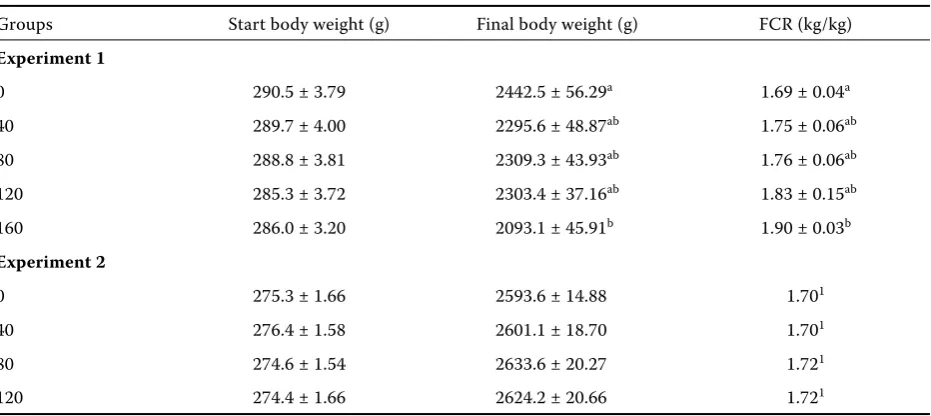
Table 2. Live body weight and feed conversion ratio (FCR) at days 10 and 38 of age
Groups Start body weight (g) Final body weight (g) FCR (kg/kg)
Experiment 1
0 290.5 ± 3.79 2442.5 ± 56.29a 1.69 ± 0.04a
40 289.7 ± 4.00 2295.6 ± 48.87ab 1.75 ± 0.06ab
80 288.8 ± 3.81 2309.3 ± 43.93ab 1.76 ± 0.06ab
120 285.3 ± 3.72 2303.4 ± 37.16ab 1.83 ± 0.15ab
160 286.0 ± 3.20 2093.1 ± 45.91b 1.90 ± 0.03b
Experiment 2
0 275.3 ± 1.66 2593.6 ± 14.88 1.701
40 276.4 ± 1.58 2601.1 ± 18.70 1.701
80 274.6 ± 1.54 2633.6 ± 20.27 1.721
120 274.4 ± 1.66 2624.2 ± 20.66 1.721
RESULTS
Growth and feed conversion ratio
Weights of the males at the beginning and at the end of the Experiment 1 and Experiment 2 and values of feed conversion ratios (FCR) are shown in Table 2. In both experiments there was no significant differ-ence among the groups at the beginning of feeding EFFSB. A significant difference (P < 0.05) was found in chickens’ final body weight between 0 group (2443 g) and 160 group (2093 g) in the first experi-ment. Other groups have reached approximately the same final body weight. A significant difference (P < 0.05) between groups 0 and 160 was regis-tered also as concerns FCR (0 group – 1.69 kg/kg while 160 group – 1.90 kg/kg).
In the second experiment, there was also no significant (P > 0.05) difference between all groups fed by addition of 40, 80, and 120 g/kg of EFFSB. FCR was almost the same in all groups.
Amino acids digestibility and trypsin activity
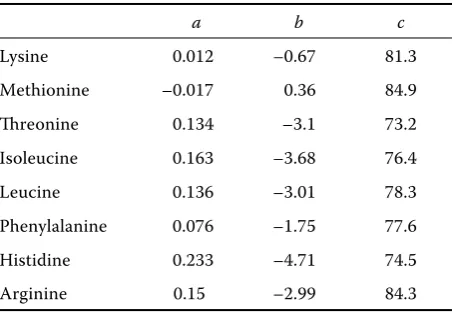
Coefficients of apparent ileal amino acids digest-ibility are shown in Table 3 and their polynomial function in Table 4. The AIAAD decreased with increasing level of EFFSB in the diets. Only in me-thionine there was no significant effect of EFFSB on AIAAD. There were significantly (P < 0.05) lower AIAAD in groups 80 and 120 in comparison with
groups 0 and 40 for threonine (Thr), isoleucine (Ile), leucine (Leu), phenylalanine (Phe), histidine (His), and arginine (Arg).
[image:5.595.65.536.101.281.2]There was no observed significant (P > 0.05) difference in AIAAD between the groups 80, 120, and 160 for all amino acids. In Lys, Thr, and Phe no significant differences in their digestibility between groups 0 and 160 were registered. The higher digestibility in group 160 than in groups 40, 80, and 120 was probably caused by higher weight of pancreas in these chickens and, consequently, by significantly (P < 0.05) higher trypsin activity (Table 5). On the other hand, the live weight of chickens in the group 160 was the lowest. The fat digestibility slightly decreased with the increasing level of EFFSB. A significant difference (P < 0.05) was observed only between groups 0 and 40 in comparison with group 120.
Table 3. Coeffi cients of apparent ileal amino acid digestibility
Groups
0 40 80 120 160
Lysine 0.803b 0.813a 0.748b 0.750b 0.740b
Methionine 0.841 0.878 0.858 0.859 0.866
Th reonine 0.696ac 0.718a 0.519b 0.532b 0.598bc
Isoleucine 0.734a 0.721a 0.517b 0.554b 0.603b
Leucine 0.758a 0.751a 0.583b 0.614b 0.660b
Phenylalanine 0.760a 0.757a 0.664b 0.663b 0.699ab Histidine 0.717a 0.661ac 0.483b 0.493b 0.604bc
Arginine 0.826a 0.794ac 0.661b 0.705b 0.753bc
Fat digestibility 0.873a 0.873a 0.855ab 0.799b 0.823ab a–cdiff erent superscripts indicate statistically signifi cant diff erence between groups
Table 4. Parameters of polynomial functions
a b c
Lysine 0.012 –0.67 81.3
[image:5.595.305.532.602.758.2]Small intestinal morphology
Inclusion of full-fat soybeans to the diets for broilers had an effect on villus height and crypt depth. Group 0 without full-fat soybeans had sig-nificantly (P < 0.05) longer villi and crypt depth than groups 40, 80, and 120. However, the more EFFSB in the diet, the longer villi were found. Group 160 had similar villi height as 0 group. Vil-lus height and crypt depth ratio increased with increasing level of EFFSB in the diets and there was a significant (P < 0.05) difference between 0 group and group 40 compared to group 160. Villus height, crypt depth, and villus/crypt ratio are shown in Table 6.
DISCUSSION
In these experiments increasing levels of EFFSB which slightly elevated TI activity in feed had no significant (P > 0.05) negative effect on both growth performance and FCR up to 120 g/kg of EFFSB. Despite the fact that Ruitz et al. (2004) reported that the TI and UA are significantly (P < 0.05) correlated to body weight and feed conversion ratio. The negative effect of TI probably depends on the TI range in the diet and up to a certain level of TI the negative effect does not occur. The level of 4 mg/g TI activity is assumed to have a
minimum adverse effect on birds although the basis for such recommendation is questionable (Clarke and Wiseman, 2007). Inclusion of extruded full fat soybeans in a pelleted broiler diet made the chicks performance equal or superior to that of dehulled solvent extracted SBM, and extruded soybeans could partially or completely replace SBM without any adverse effects on body weight, feed conversion, and mortality provided the diets are nutritionally balanced (Subuh et al., 2002).
Heat treatment can reduce the incidence of an-tinutritional factors. Extrusion significantly im-proved feed conversion ratio and apparent ileal digestibility of CP and non-starch polysaccharides (Marsman et al., 1997). Extrusion of soybeans at 140°C improved the feed intake in comparison with extrusion at lower temperatures. However, there were no significant (P > 0.05) effects of the extrusion temperature on weight gain, feed : gain ratio or mortality rate (Lesson and Atteh, 1996).
[image:6.595.63.532.104.190.2]The metabolizable energy (ME) and feed conver-sion efficiency of birds fed diets with the full-fat seed were worse than in birds fed the meal plus oil diets (Lee et al., 1991). This indicates poorer availability of energy when oil in diets is bound to cells, thus growth performance can be lower than if oil is added to diets. In this study significantly lower (P > 0.05) fat digestibility was found in group that was fed 120 g/kg EFFSB in comparison with groups containing 0 and 40 g/kg EFFSB.
Table 5. Eff ect of extruded full-fat soybean on trypsin activity and weight of pancreas on day 38 of age
Groups
0 40 80 120 160
Trypsin activity (U/ml) 580.5 ± 34.1a 452.8 ± 22.5a 617.2 ± 37.8a 451.2 ± 39.6a 969.2 ± 64.5b Weight of pancreas (g) 5.56 ± 0.25a 5.78 ± 0.24a 6.57 ± 0.35ab 7.52 ± 0.34b 8.87 ± 0.38b % share of pancreas from BW 0.23 ± 0.01a 0.26 ± 0.02ab 0.29 ± 0.01ab 0.33 ± 0.01bc 0.40 ± 0.02c a–cdiff erent superscripts indicate statistically signifi cant diff erence between groups
Table 6. Eff ect of extruded full-fat soybean on intestinal morphology on day 38 of age
Groups
0 40 80 120 160
[image:6.595.64.535.239.320.2]In our study the AA digestibility was higher in diets containing SBM and 40 g/kg EFFSB than in diets containing 80, 120, and 160 g/kg EFFSB. This result is in compliance with Piao et al. (2000) who reported decreasing AA digestibility in diets con-taining a higher level of EFFSB compared to that of SBM in piglets. Higher digestibility of amino acids can consequently affect the growth as de Coca-Sinova et al. (2010) reported. Amino acids digestibility from SBM or EFFSB can affect a lot of factors.
Wide variability between coefficients of digest-ibility for individual amino acids depends on the origin of the samples (Clarke and Wiseman, 2007; de Coca-Sinova et al., 2008). However correlation with TI levels indicating that other factors also affect amino acid digestibility of FFSB and SBM has not been found. This hypothesis is also indi-cated by Batal and Parsons (2003). In our study the replacement of SBM by EFFSB significantly (P < 0.05) decreased AIAAD when the level of EFFSB was higher than 40 g/kg. But this effect was not linear and we can confirm no correlation between TI levels and AIAAD.
Heat treatment can also affect the digestibil-ity of AA. Positive effect of extrusion on amino acid digestibility observed Ruitz et al. (2004). As temperature increased during wet extrusion, the digestible amino acid coefficients increased, in-dicating the gradual destruction of TI and other antinutritional factors that may affect amino acid absorption (Michele et al., 1999).
Trypsin and its activity play a very important role in amino acids digestibility. Pancreatic enzyme secretion is subjected to feedback inhibition from in-testinal trypsin and chymotrypsin, and TI stimulates pancreatic enzyme secretion indirectly, by binding or neutralizing trypsin and thereby removing its feedback inhibition (Green and Lyman, 1972).
It was found that removal of bile-pancreatic juice from the intestine resulted in a large increase in pancreatic enzyme secretion. Infusion of trypsin or chymotrypsin as well as bile-pancreatic juice suppressed the secretion of pancreatic enzymes. When trypsin was present in the intestine, a large pancreatic enzyme response was obtained by in-fusion of trypsin inhibitors. A similar increase in pancreatic enzyme output was evoked when trypsin infusion was stopped. Cholecystokinin (CCK) as a gut hormone is an important endo-genous secretagogue in exocrine pancreatic secre-tion. CCK also stimulates gallbladder contraction
and enhances growth of the exocrine pancreas. Soybean agglutinin stimulates CCK release by opening l-type Ca2+ channels in cultured rabbit jejunal cells (Wang and Cui, 2007).
Long-term exposure to a soybean diet induced an extensive increase in the relative and absolute weights of the pancreas and caused an increase in the incidence of macroscopic pancreatic nodules and possibly pancreatic neoplasia (Grant et al., 1995). Pancreas weight increases with increasing inclusion of both raw and Kunitz trypsin inhibitor SB, suggesting that TI is causing the depression in performance (Perez-Maldonado et al., 2003). Minimum pancreas weight was observed when chickens were fed FFSB extruded at 140°C (Perilla et al., 1997). In this study, weight of pancreas and its share in BW significantly (P < 0.05) increased after inclusion EFFSB at the level of 120 and 160 g/kg. And trypsin activity was consequently significantly (P < 0.05) higher in group 160 in comparison with group 0.
Qiao et al. (2003) suggest that moist extruded full-fat soybeans in pigs decreased crypt depth in their duodenum and cecum (P < 0.01) in comparison with SBM, while the villus height in the mid jejunum and ileum and the total height (villus height plus crypt depth) of the ileum and mid jejunum increased (P < 0.05). Recent advances in our understanding the energetic costs of absorption suggest that biochemical as well as structural changes in the intestinal function have decreased absorptive function and efficiency in both chickens and turkeys (Croom et al., 1999). A shortening of the villus reflects villus atrophy and a decrease in surface area for nutrient absorption. The crypt can be regarded as the villus factory, and a large crypt indicates fast tissue turnover and a high demand for new tissue (Ma and Guo, 2008). But in the group with the highest content of EFFSB the villi had almost the same length as in 0 group. This indicates that the area for nutrients absorption was sufficient and the trypsin activity was the highest (P < 0.05), too. Probably there are other factors affecting the growth performance.
(P < 0.05) lower at inclusion of EFFSB at the level higher than 40 g/kg. But the trypsin activity was not negatively affected by EFFSB.
REFERENCES
Armour J.C., Perera R.L.C., Wendy Buchan C., Grant G. (1998): Protease inhibitors and lectins in soybeans and effects of aqueous heat-treatment. Journal of the Science of Food and Agriculture, 78, 225–231.
Batal A.B., Parsons C.M. (2003): Utilization of different soybean products as affected by age in chicks. Poultry Science, 82, 454–462.
Clarke E., Wiseman J. (2007): Effects of extrusion condi-tions on trypsin inhibitor activity of full fat soybeans and subsequent effects on their nutritional value for young broilers. British Poultry Science, 48, 703–712.
Croom W.J., Brake J., Coles B.A., Havenstein G.B., Chris-tensen V.L., McBride B.W., Peebles E.D., Taylor I.L. (1999): Is intestinal absorption capacity rate-limiting for performance in poultry? Journal of Applied Poultry Research, 8, 242–252.
de Coca-Sinova A., Valencia D.G., Jiménez-Moreno E., Lázaro R., Mateos G.G. (2008): Apparent ileal digest-ibility of energy, nitrogen, and amino acids of soybean meals of different origin in broilers. Poultry Science, 87, 2613–2623.
de Coca-Sinova A., Jiménez-Moreno E., González-Alvarado J.M., Frikha M., Lázaro R., Mateos G.G. (2010): Influ-ence of source of soybean meal and lysine content of the diet on performance and total tract apparent retention of nutrients in broilers from 1 to 36 days of age. Poultry Science, 89, 1440–1450.
Dourado L.R.B., Pascoal L.A.F., Sakomura N.K., Costa F.G.P., Biagiotti D. (2011): Soybeans (Glycine max) and soybean products in poultry and swine nutrition. In: Krezhova D. (ed.): Recent Trends for Enhancing the Di-versity and Quality of Soybean Products. InTech Publish-ing, Rijeka, Croatia, 175–190.
Fasina Y.O., Classen H.L., Garlich J.D., Swaisgood H.E., Clare D.A. (2003): Investigating the possibility of moni-toring lectin levels in commercial soybean meals intended for poultry feeding using steam-heated soybean meal as a model. Poultry Science, 82, 648–656.
Friesen K.G., Nelssen J.L., Goodband R.D., Behnke K.C., Kats L.J. (1993): The effect of moist extrusion of soy products on growth performance and nutrient utiliza-tion in the early-weaned pig. Journal of Animal Science, 71, 2099–2109.
Grant G., Dorward P.M., Buchan W.C., Armour J.C., Pasz-tai A. (1995): Consumption of diets conPasz-taining raw soya
beans (Glycine max), kidney beans (Phaseolus vulgaris), cowpeas (Vigna unguiculata) or lupin seeds (Lupinus angustifolius) by rats for up to 700 days: effects on body composition and organ weights. British Journal of Nutri-tion, 13, 17–29.
Green G.M., Lyman R.L. (1972): Feedback regulation of pancreatic enzyme secretion as a mechanism for trypsin inhibitor-induced hypersecretion in rats. Experimental Biology and Medicine, 140, 6–12.
Larbier M., Leclercq B. (1994): Nutrition and Feeding of Poultry. 1st Ed. Nottingham University Press, Notting-ham, UK.
Latshaw J.D., Clayton P.C. (1976): Raw and heated full fat soybeans in laying diets. Poultry Science, 55, 1268–1272. Lee K.H., Olomu J.M., Simt J.S. (1991): Live performance,
carcass yield, protein and energy retention of broiler chickens fed canola and flax full-fat seeds and the restored mixtures of meal and oil. The Canadian Journal of Animal Science, 71, 897–903.
Leeson S., Atteh J.O. (1996): Response of broiler chicks to dietary full-fat soybeans extruded at different tempera-tures prior to or after grinding. Animal Feed Science and Technology, 57, 239–245.
Liener I.E. (1994): Implications of antinutritional components in soybean foods. Food Science and Nutrition, 34, 31–67. Lusas E.W., Erickson D.R., Nip W.K. (1989): Food Uses of
Whole Oil and Protein Seeds. 1st Ed. The American Oil Chemists Society, Champaign, USA.
Ma Y.L., Guo T. (2008): Intestinal morphology, brush border and digesta enzyme activities of broilers fed on a diet containing Cu2+-loaded montmorillonite. British Poultry Science, 49, 65–73.
Machado F.P.P., Queiroz J.H., Oliveira M.G.A., Piovesan N.D., Peluzio M.C.G., Costa N.M.B., Moreira M.A. (2008): Effects of heating on protein quality of soybean flour devoid of Kunitz inhibitor and lectin. Food Chemistry, 107, 649–655.
Marsman G.J.P., Gruppen H., van der Poel A.F.B., Kwakkel R.P., Verstegen M.W.A., Voragen A.G.J. (1997): The effect of thermal processing and enzyme treatments of soybean meal on growth performance, ileal nutrient digestibilities, and chyme characteristics in broiler chicks. Poultry Sci-ence, 76, 864–872.
Michele W.D, Parsons C.M., Hymowitz T. (1999): Nutri-tional evaluation of lectin-free soybeans for poultry. Poultry Science, 78, 91–95.
Moran E.T., Somers J., Larmond E. (1993): Full-fat soy-beans for growing and finishing large white turkeys 1. Live performance and carcass quality. Poultry Science, 52, 1936–1941.
of soybean variety and processing on growth performance of young chicks and pigs. Journal of Animal Science, 82, 1108–1114.
Perez-Maldonado R.A., Mannion P.F., Farrell D.J. (2003): Effects of heat treatment on the nutritional value of raw soybean selected for low trypsin inhibitor activity. British Poultry Science, 44, 299–308.
Perilla N.S., Cruz M.P., De Belalcazar F., Diaz G.J. (1997): Eff ect of temperature of wet extrusion on the nutritional value of full-fat soyabeans for broiler chickens. British Poultry Science, 38, 412–416.
Piao X.S, Kim J.H., Jin J., Kim J.D., Cho W.T., Shin I.S., Han K. (2000): Effects of extruded full fat soybean in early-weaned piglets. Asian-Australasian Journal of Animal Sciences, 13, 645–652.
Qiao S., Li D., Jiang J., Zhou H., Li J., Thacker P.A. (2003): Effects of moist extruded full-fat soybeans on gut mor-phology and mucosal cell turnover time of weanling pigs. Asian-Australasian Journal of Animal Sciences, 16, 63–69.
Qin G., Ter Elst E.R., Bosch M.W., van der Poel A.F.B. (1996): Thermal processing of whole soya beans: studies on the inactivation of antinutritional factors and effects on ileal digestibility in piglets. Animal Feed Science Technology, 57, 313–324.
Ruiz N., de Belalcázar F., Díaz G.J. (2004): Quality control parameters for commercial full-fat soybeans processed by two different methods and fed to broilers. Journal of Applied Poultry Research, 13, 443–450.
Subuh A.M.H., Motl M.A., Fritts C.A., Waldroup P.W. (2002): Use of various ratios of extruded full fat soybean meal and dehulled solvent extracted soybean meal in broiler diets. International Journal of Poultry Science, 1, 9–12.
Valencia D.G., Serrano M.R., Lazaro R., Jiménez-Moreno E., Mateos G.G. (2009): Influence of micronization (fine grinding) of soya bean meal and full-fat soya bean on the ileal digestibility of amino acids for broilers. Animal Feed Science and Technology, 150, 238–248.
Waldroup P.W. (1982): Whole soybeans for poultry feeds. World’s Poultry Science Journal, 38, 28–35.
Wang B.J., Cui Z.J. (2007): How does cholecystokinin stimu-late exocrine pancreatic secretion? From birds, rodents, to humans. American Journal of Physiology – Regulatory, Integrative, and Comparative Physiology, 292, 666–678. Wood A.S., Summers J.D., Moran Jr. E.T., Pepper W.F. (1971): The utilization of unextracted raw and extruded full-fat soybeans by the chick. Poultry Science, 50, 1392–1399.
Received: 2013–02–13 Accepted after corrections: 2013–05–24
Corresponding Author
Doc. Ing. Martina Lichovníková, Ph.D., Mendel University in Brno, Faculty of Agronomy, Department of Animal Breeding, Zemědělská 1, 613 00 Brno, Czech Republic

![Bis{benzyl N′ [(1H indol 3 yl)methylene]dithiocarbazato κ2N′,S}copper(II) N,N dimethylformamide disolvate](data:image/gif;base64,R0lGODlhAQABAIAAAP///wAAACH5BAEAAAAALAAAAAABAAEAAAICRAEAOw==)