Original Article
Association of genetic polymorphisms on BTNL2
with susceptibility to and prognosis of dilated
cardiomyopathy in a Chinese population
Liang Cheng, Rong Zhao, ZhenXiao Jin, Kai Ren, Chao Deng, Shiqiang Yu
Department of Cardiovascular Surgery, Xijing Hospital, The Fourth Military Medical University, Xi’an 710032, China
Received July 25, 2015; Accepted August 28, 2015; Epub September 1, 2015; Published September 15, 2015
Abstract: Background: Dilated cardiomyopathy (DCM) is one type of primary myocardial disease, partly caused by immunity dysfunctions. BTNL2 (butyrophilin-like 2) has already been confirmed to be involved in the etiology of auto-immune disorders and GWAS (genome wide association study) has also identified mutants of a SNP (single nucleo-tide polymorphism) near BTNL2 could modulate risk of coronary heart disease (also cardiomyopathy). The current study, therefore, was aimed to investigate whether polymorphisms within or around BTNL2 would be correlated with susceptibility to and prognosis of DCM. Material and methods: Peripheral blood samples were gathered from 82 DCM patients and 75 healthy controls. Nine tag-SNPs within or near BTNL2 were obtained from HapMap Database and previously published studies. Eligible haplotypes were gained on the basis of SHesis software. Genotyping of SNPs was implemented with aid of Sequenom MassArray iPLEX platform and subsequently analyzed via MALDI-TOF mass spectrometry. The odd ratios and their 95% confidence interval (95% CI) were utilized to evaluate the correla-tions between SNPs/haplotypes and DCM risks. Finally, Cox proportional hazard models and Kaplan-Meier curves were performed to assess association of SNPs/haplotypes with prognosis of DCM patients. The statistical analyses were conducted with SPSS 19.0 software. Results: Under the allelic model, rs3763313 (A > C), rs9268494 (C > A), rs9268492 (C > G) and rs9268402 (A > G) were remarkably associated with susceptibility to grade IV of DCM classified by NYHA (New York heart association) (OR = 0.43, 95% CI: 0.22-0.84; P = 0.018; OR = 0.49, 95% CI: 0.27-0.91; P = 0.024; OR = 0.50, 95% CI: 0.27-0.94; P = 0.035; OR = 0.53, 95% CI: 0.28-0.97; P = 0.048). Haplotype C-C-A-T (rs9268492, rs9268494, rs3763313 and rs3763317 synthesized) was also regarded as a protective factor for DCM patients compared with carriers of other haplotypes (OR = 0.50, 95% CI: 0.26-0.97, P = 0.038). Moreover, the univariate survival analysis and multivariate Cox regression analysis both indicated noticeable correlations between rs9268402 and haplotype C-C-A-T and prognosis of DCM patients (NYHA IV), respectively (Long-Rank P = 0.029, HR: 0.241, 95% CI: 0.089-0.650, P = 0.005; Long-Rank P = 0.036; HR = 0.126, 95% CI: 0.035-0.457, P = 0.002). Nonetheless, rs3763313 was found only associated with prognosis of DCM patients (NYHA IV) expressed in the Kaplan-Meier curve (P = 0.009). Conclusion: The genetic mutations within or around BTNL2 (rs3763313, rs9268494, rs9268492 and rs9268402) could alter susceptibility to grade IV of DCM in a Chinese population, and the 2 SNPs (rs3763313 and rs9268402) therein added with haplotype C-C-A-T might separately predict the prog-nosis of DCM patients. However, additional studies regarding diverse ethnicities need to be furthered to validate our results.
Keywords: Dilated cardiomyopathy, butyrophilin-like 2, single nucleotide polymorphism, haplotype, susceptibility, prognosis
Introduction
Dilated cardiomyopathy (DCM) has been
defined as a primary myocardial disorder, pri -marily embodied in augmentation of left or/ right ventricles accompanied by failure of ven-tricle systole [1]. It has been demonstrated that
and immunologic dysfunctions and so on, approximately a third of DCM sufferers could be attributed to inherited causes, among which mutations of autosomal dominants with decreased penetrance could not be ignored
[4-6]. The identified genes (e.g. ACTC1, TPM1, TNNT2, TNNC1, TNNI3, MYH7, TTN) were chief-ly concerned with encoding of sarcomeric
pro-teins, such as filamentous actin, tropomyosin, troponin subunits, β-myosin heavy chain (β-MHC), myosin binding protein C and giant
protein titin [7-10]. Nonetheless, genes encod-ing nonsarcomeric proteins should also be underscored with respect to their fundamental role in the pathogenesis of DCM. For instance, autoimmune-related genetic variants found in lymphocytes or macrophages could weaken
domain structure homology with the B7.1
receptor, which is of vital significance in the
cross-talk between B and T lymphocytes [16, 17]. Additionally, binding of BTNL2 to a putative receptor could lead to activation of T cells and
inhibition of T cell amplification in a mouse
model [18]. The above phenomena revealed that BTNL2 could function as a hazard for auto-immune disorders, such as sarcoidosis [19] and rheumatoid arthritis [20], suggesting a potential role of BTNL2 in DCM immune-patho-genesis. Previous GWAS (genome-wide
associ-ation study) has also identified rs9268402
[image:2.612.90.521.81.218.2]within C6orf10-BTNL2 to be associated with coronary artery disease (CAD) and it was explained that rs9268402 exhibited strong linkage disequilibrium (LD) with rs2076530 in Table 1. Primers of BTNL2 genetic polymorphisms for PCR amplification
RS ID PCR amplification primer
rs9405098 F: 5’-AATGAGGGATGGCACGTTTGAT-3’ R: 3’-CTTGGGTCGGTTTCAGGTGAAC-5’
rs3763317 F: 5’-GGTATGGATGTTGTGGGGCTTT-3’ R: 3’-TCAAAGTCCACCGTTCCACGAG-5’
rs3763313 F: 5’-TCAGAAGCTACATTGAAGCCGAACT-3’ R: 3’-TGTCGTCCCCGAAACACTTTCA-5’
rs9268494 F: 5’-GAGTGGAGTCCAGCTTGTGTGC-3’ R: 3’-CAGTAGTCGGAGGGTCCAGTCA-5’
rs9268492 F: 5’-GCAGTACCGCTGCCTTTTTGAA-3’ R: 3’-AGGAGGTCACACACTTTGACAGT-5’
rs2076523 F: 5’-ACACCCAACCCCATTTTCACAT-3’ R: 3’-TGAACTGTAACGAGGACTCGACC-5’
rs2076530 F: 5’-CTGGAGAGCAGATGGCAGAGTAC-3’ R: 3’-GGAGGTCACACACTTTGACAGTA-5’
rs9268402 F: 5’-CTAGTTTTAGGATGCTCCACCTGCCAAA-3’ R: 3’-GGTAATGGTCTGAAGAGTTGCCTTTGGA-3’ rs1555115 F: 5’-AAACTGGAAGGTTAGGTAAAACTGTGGT-3’ R: 3’-GTAGGTGAAGAGTATGTGGAAATAAAGA-3’
SNP, single-nucleotide polymorphism; PCR, polymerase chain reaction; F, forward; and R, reverse.
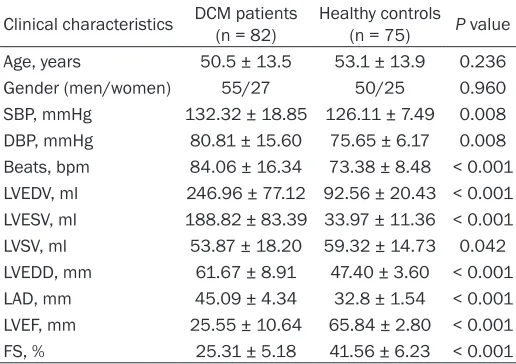
Table 2. Comparison of dilated cardiomyopathy (DCM) pa-tients and controls by selective clinical characteristics
Clinical characteristics DCM patients (n = 82) Healthy controls (n = 75) P value
Age, years 50.5 ± 13.5 53.1 ± 13.9 0.236
Gender (men/women) 55/27 50/25 0.960
SBP, mmHg 132.32 ± 18.85 126.11 ± 7.49 0.008
DBP, mmHg 80.81 ± 15.60 75.65 ± 6.17 0.008
Beats, bpm 84.06 ± 16.34 73.38 ± 8.48 < 0.001
LVEDV, ml 246.96 ± 77.12 92.56 ± 20.43 < 0.001
LVESV, ml 188.82 ± 83.39 33.97 ± 11.36 < 0.001
LVSV, ml 53.87 ± 18.20 59.32 ± 14.73 0.042
LVEDD, mm 61.67 ± 8.91 47.40 ± 3.60 < 0.001
LAD, mm 45.09 ± 4.34 32.8 ± 1.54 < 0.001
LVEF, mm 25.55 ± 10.64 65.84 ± 2.80 < 0.001
FS, % 25.31 ± 5.18 41.56 ± 6.23 < 0.001
SBP: systolic pressure; DBP: diastolic blood pressure; LVEDV: left ventricular end-diastolic volume; LVESV: Left Ventricular End-systolic Volume; LVEDD: left ventricular end diastolic diameter; LAD: left atrial diameter; LVSV: left ventricular stroke volume; LVEF: left ventricular ejection fraction; FS: frac-tional shortening.
resistance against environmental elements (e.g. viral agents) and fur-ther cause myocardial lesion, although the polymorphisms might not be directly causative for DCM
development [11]. Specifically, it
has been reported that a SNP (sin-gle-nucleotide polymorphism) invo- lved in encoding cytotoxic T-lym- phocyte antigen 4 (CTLA4) could elevate susceptibility to DCM [12]. Albeit with the above achievements, the underlying pathology regarding autoimmune-mediated DCM rema- ins ambiguous [13, 14].
[image:2.612.91.349.277.459.2]BTNL2 [21], which seemed to be correlated with risk of Kawasaki disease (KD), a disorder that would increase the likelihood of suffering from ischemic heart disease [22]. Conclusively, certain SNPs on and near BTNL2 (including rs9405098, rs3763313, rs3763317, rs926- 8494, rs9268492, rs9268402, rs2076523, rs2076530 and rs1555115) were selected in the current study to explore their potential associations with DCM allowing for the fact that
BTNL2 pertained to autoimmune genes and it was linked with certain myocardial dysfun- ctions.
As an individual SNP might impose relatively
low influence on the occurrence of DCM, haplo -type analysis incorporating multi-SNPs could aid in more accurate prediction of the disorder. Thus, the current study was aimed to provide solid foundations for estimating the associa-tion of risk and prognosis of DCM with SNPs and the corresponding haplotype located on
BTNL2.
Materials and methods
Clinical characteristics of study population
In this cohort study, 82 DCM patients (55 males and 27 females, mean age: 50.5 ± 13.5) and
sion, valvulopathy and tachyarrhythmia); 2)
tox-ins (e.g. chemotherapy drug, alcohol and defi -ciency of trace elements); 3) endocrine and metabolic disturbances (e.g. pheochromocyto-ma, diabetes and thyroid disease); 4) infections (e.g. viral myocarditis); 5) autoimmune diseas-es (e.g. systemic lupus erythematosus, sclero-derma and sclero-dermatomyositis); 6) peripartum cardiomyopathy. Subsequently, the whole DCM
cases were classified into 21 grade I-II cases,
30 grade III cases and 31 grade IV cases in light of New York Heart Association (NYHA) pub-lished in 1994 [24]. Clinical characteristics of the study subjects were displayed in Table 1. The protocol of this study was approved by Ethics committee of Xijing Hospital (Xi’an, China), and each participant has signed informed consent before their participations in the study. The study strictly complied with the the Declaration of Helsinki.
SNP selection
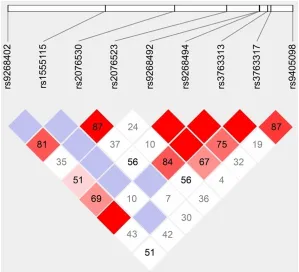
[image:3.612.89.388.71.343.2]The assessment of genotyping data with respect to Han Chinese population were in accordance with International HapMap Project Databases (Hapmap Data Rel 24/Phase II Nov08, on NCBI B36, dbSNP b126). Haploview 4.0 (Broad Institute, Cambridge, MA, USA) was Figure 1. Linkage disequilibrium map of 9 SNPs within or near BTNL2.
75 healthy controls (50 males and 25 female, mean age: 53.1 ± 13.9) were recruited from the Department of Cardiology at Xijing Hospital (Xi’an, China) between May 2010 and December 2013. All the eligible participants were Han Chinese with no kinship, and the age and sex of both DCM patients and healthy controls were well matched. The DCM patients were diagnosed strictly in light with Ame- rican Heart Association
Scientific Statement on the Classification of
hyperten-employed to select the tag-SNPs analyzed and SHesis software was applied to carry out haplo-type analysis according to LDs among tag-SNPs. Tag-SNPs would be included in our study if minor allele frequency (MAF) was greater than 0.05 and r2 was bigger than 0.75. Several potentially DCM-associated SNPs within BTNL2
were examined based on previous studies as well [25-27].
SNP genotyping
Genomic DNAs were extracted through DNA blood kit (Watson Biotechnologies, Inc) from peripheral blood samples gathered from DCM patients and healthy controls in strict accor-dance with the manufacturer’s protocols. Genotyping of SNPs was performed by means of Sequenom MassARRAY®-IPLEX (Sequenom Inc., San Diego, CA, USA) on the basis of matrix-assisted laser desorption/ionization
time-of-flight mass spectrometry (MALDI-TOF-MS)
(SpectroREADER, Squenom). Primers designed for PCR (polymerase chain reaction) amplica-tion and extension were prepared with usage of MassARRAY Assay Design Version 3.1 (Sequenom Inc., San Diego, CA, USA) (Table 1).
PCR amplication was achieved with a reaction system containing 0.1 U Taq DNA polymerase, 5 ng genomic DNA, 2.5 pM PCR primer and 2.5 mM dNTP. The mixture was subjected to a fol-lowing procedure: 95°C for 2 min; 45 cycles (at 95°C for 20 s, at 56°C for 30 s, at 72°C for 60 s); 75°C for 5 min. The remaining dNTPs would be removed by addition of 0.3 U alkaline phos-phatase into the system, after which the plates were incubated at 37°C for 40 min and further placed at 85°C for 5 min. In addition, before the extension reaction, the mixed components for single base extension reaction should be
man-aged: 5.4 pM extension primers, 50 μM dNTP/
ddNTP mixture and 0.5 U thermosequenase DNA polymerase. Then the reaction condition was dealt with as follows: at 94°C for 2 min, 40 cycles (at 94°C for 5 s, at 50°C for 5 s, at 72°C
for 5 s) and a final extension step at 72°C for 3
[image:4.612.92.521.98.360.2]min. Afterwards the samples were desalted by resin treatment for 15 min, spotted into SpectroCHIP (Sequenom, Inc., San Diego, CA), analyzed by mass spectrometer and ultimately interpreted on SpectroTYPER 4.0 software (Sequenom, Inc., San Diego, CA). The DNA sam-ples would be selected if the success rate for genotyping exceeded 95%.
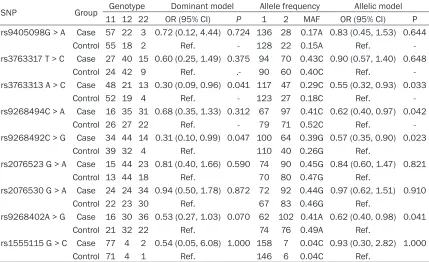
Table 3. Allele and genotype distributions of BTNL2 genetic polymorphisms in dilated cardiomyopathy
patients (n = 82) and controls (n = 75)
SNP Group 11 12 22Genotype OR (95% CI)Dominant modelP Allele frequency1 2 MAF OR (95% CI)Allelic model P
rs9405098G > A Case 57 22 3 0.72 (0.12, 4.44) 0.724 136 28 0.17A 0.83 (0.45, 1.53) 0.644
Control 55 18 2 Ref. - 128 22 0.15A Ref.
-rs3763317 T > C Case 27 40 15 0.60 (0.25, 1.49) 0.375 94 70 0.43C 0.90 (0.57, 1.40) 0.648
Control 24 42 9 Ref. .- 90 60 0.40C Ref.
-rs3763313 A > C Case 48 21 13 0.30 (0.09, 0.96) 0.041 117 47 0.29C 0.55 (0.32, 0.93) 0.033
Control 52 19 4 Ref. - 123 27 0.18C Ref.
-rs9268494C > A Case 16 35 31 0.68 (0.35, 1.33) 0.312 67 97 0.41C 0.62 (0.40, 0.97) 0.042
Control 26 27 22 Ref. - 79 71 0.52C Ref.
-rs9268492C > G Case 34 44 14 0.31 (0.10, 0.99) 0.047 100 64 0.39G 0.57 (0.35, 0.90) 0.023
Control 39 32 4 Ref. 110 40 0.26G Ref.
rs2076523 G > A Case 15 44 23 0.81 (0.40, 1.66) 0.590 74 90 0.45G 0.84 (0.60, 1.47) 0.821
Control 13 44 18 Ref. 70 80 0.47G Ref.
rs2076530 G > A Case 24 24 34 0.94 (0.50, 1.78) 0.872 72 92 0.44G 0.97 (0.62, 1.51) 0.910
Control 22 23 30 Ref. 67 83 0.46G Ref.
rs9268402A > G Case 16 30 36 0.53 (0.27, 1.03) 0.070 62 102 0.41A 0.62 (0.40, 0.98) 0.041
Control 21 32 22 Ref. 74 76 0.49A Ref.
rs1555115 G > C Case 77 4 2 0.54 (0.05, 6.08) 1.000 158 7 0.04C 0.93 (0.30, 2.82) 1.000
Control 71 4 1 Ref. 146 6 0.04C Ref.
11, wild genotype; 12, heterozygote mutant genotype; 22, homozygote mutant genotype; HWE, Hardy-Weinberg equilibrium;
Color Doppler echocardiography detection
The echocardiography (two-dimensional ultra-sound and Doppler ultraultra-sound) detection were implemented strictly following the require-ments of the American Association of Ultrasound based on Philips Sonos7500 and iE33 echocardiography system (Philips Medical Systems, Bothell, WA) with a S5-1 broadband phased-array transducer (1-5 MHz) [28]. To sum up, the detection indicators included left ventricular end-diastolic volume (LVEDV, ml), left ventricular endsystolic volume (LVESV, ml), left ventricular stroke volume (LVSV, ml), left ventricular ejection fraction (LVEF, mm), frac-tional shortening (FS, %), left ventricular end diastolic diameter (LVEDD, mm) and left atrial diameter (LAD, mm).
Follow-up
Totally, 82 DCM patients were included in the follow-up process via telephone communica-tions until January, 2015. The clinical follow-up regarding the genetic status of DCM patients
was carried out in single-blind fashion with the end point of cardiac death.
Statistical analysis
The experimental data were all analyzed with assistance of software SPSS 19.0 (SPSS Inc., Chicago, IL, USA). The chi-square test was uti-lized to compare the difference in gender between DCM patients and healthy controls
while the student’s t test was performed to fig -ure out if there existed distinctions in age, SBP (systolic pressure), DBP (diastolic blood pres-sure), LVEDD, LVEDV, LVESV, LAD, LVSV, LVSF and FS. In SNP genotypes, three genetic mod-els were established to assess the genotype distributions, including the dominant model (WM+MM vs. WW), recessive model (MM vs. WW+WM) and allelic model (W vs. M). Odds
ratio (OR) and respective 95% confidence inter -vals (CIs) were demonstrated to assess the
influence of any difference between genotypes,
alleles and haplotypes. Probability values of 0.05 or less were regarded as statistically
[image:5.612.86.520.96.387.2]sig-nificant in patients with DCM in comparison
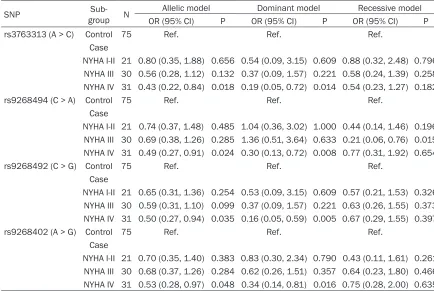
Table 4. Stratified analyses of rs3763313, rs9268494, rs9268492 and rs9268402 in DCM patients classified by NYHA and controls
SNP groupSub- N Allelic model Dominant model Recessive model
OR (95% CI) P OR (95% CI) P OR (95% CI) P
rs3763313 (A > C) Control 75 Ref. Ref. Ref.
Case
NYHA I-II 21 0.80 (0.35, 1.88) 0.656 0.54 (0.09, 3.15) 0.609 0.88 (0.32, 2.48) 0.796 NYHA III 30 0.56 (0.28, 1.12) 0.132 0.37 (0.09, 1.57) 0.221 0.58 (0.24, 1.39) 0.258 NYHA IV 31 0.43 (0.22, 0.84) 0.018 0.19 (0.05, 0.72) 0.014 0.54 (0.23, 1.27) 0.182
rs9268494 (C > A) Control 75 Ref. Ref. Ref.
Case
NYHA I-II 21 0.74 (0.37, 1.48) 0.485 1.04 (0.36, 3.02) 1.000 0.44 (0.14, 1.46) 0.196 NYHA III 30 0.69 (0.38, 1.26) 0.285 1.36 (0.51, 3.64) 0.633 0.21 (0.06, 0.76) 0.015 NYHA IV 31 0.49 (0.27, 0.91) 0.024 0.30 (0.13, 0.72) 0.008 0.77 (0.31, 1.92) 0.654
rs9268492 (C > G) Control 75 Ref. Ref. Ref.
Case
NYHA I-II 21 0.65 (0.31, 1.36) 0.254 0.53 (0.09, 3.15) 0.609 0.57 (0.21, 1.53) 0.326 NYHA III 30 0.59 (0.31, 1.10) 0.099 0.37 (0.09, 1.57) 0.221 0.63 (0.26, 1.55) 0.373 NYHA IV 31 0.50 (0.27, 0.94) 0.035 0.16 (0.05, 0.59) 0.005 0.67 (0.29, 1.55) 0.397
rs9268402 (A > G) Control 75 Ref. Ref. Ref.
Case
NYHA I-II 21 0.70 (0.35, 1.40) 0.383 0.83 (0.30, 2.34) 0.790 0.43 (0.11, 1.61) 0.261 NYHA III 30 0.68 (0.37, 1.26) 0.284 0.62 (0.26, 1.51) 0.357 0.64 (0.23, 1.80) 0.466 NYHA IV 31 0.53 (0.28, 0.97) 0.048 0.34 (0.14, 0.81) 0.016 0.75 (0.28, 2.00) 0.635
with control subjects. Cox proportional hazard models (multivariable models) and Kaplan-Meier curves (univariable analysis) were utilized to test associations of SNPs/haplotypes with survival time. When the multivariable models were conducted, covariates, such as SBP, DBP, LVEDD, LVEDV, LVESV, LAD, LVSV, LVSF and FS, would be controlled.
Results
Clinical characteristics of study population
The clinical characteristics of 82 DCM patients and 75 healthy controls were shown in Table 2. No striking variation in age or gender was observed between DCM patients and healthy controls. However, remarkably higher values could be found DCM patients in terms of SBP (P
= 0.008), DBP (P < 0.001), beats (P < 0.001), LVEDV (P < 0.001), LVESV (P < 0.001), LVEDD (P
< 0.001) and LAD (P < 0.001) than the control group, while notably lower LVSV (P = 0.042),
LVEF (P < 0.001) and FS (P < 0.001) might be observed in the DCM patients when compared with the control group.
Association analysis of genotype and haplo-types of BTNL2 SNP with the DCM susceptibil-ity
As displayed in the linkage disequilibrium map (Figure 1), 9 tag-SNPs within or near BTNL2
were finally included in the study, namely,
rs9405098 (G > A), rs3763317 (T > C), rs3763313 (C > A), rs9268494 (C > A),
G) also varied dramatically between cases and controls, manifested as the tendency that sub-jects carrying GG and GC genotypes were more
likely to develop DCM than CC carriers (OR = 0.31, 95% CI = 0.10-0.99, P = 0.047).
Furthermore, C alleles of rs9268494 (C > A) seemed to decrease the genetic susceptibility
to DCM compared with A alleles (OR = 0.62, 95% CI = 0.40-0.97, P = 0.042). The genotype
distribution of rs9268402 polymorphisms (A > G) indicated that DCM patients had a remark-ably higher frequency of G alleles than A alleles
(OR = 0.62, 95% CI = 0.40-0.97, P = 0.041).
Nevertheless, no associated relationship could be found between rs9405098, rs3763317, rs2076523, rs2076530 and rs1555115 and the susceptibility to DCM in both dominant and allelic models (all P > 0.05).
Moreover, DCM patients were categorized into four level groups in line with NYHA grading sys-tems (Table 4) and the correlations between DCM development and four SNPs (rs3763313, rs9268494, rs9268492 and rs9268402) were estimated in three groups (NYHA I-II, NYHA III
and NYHA IV), respectively. The stratified analy -ses showed that in the polymorphism of rs3763313 (A > C), AA and AC carriers were less inclined to suffer from the fourth grade of
DCM when compared with CC carriers (OR =
0.19, 95% CI: 0.05-0.72, P = 0.014). Similarly,
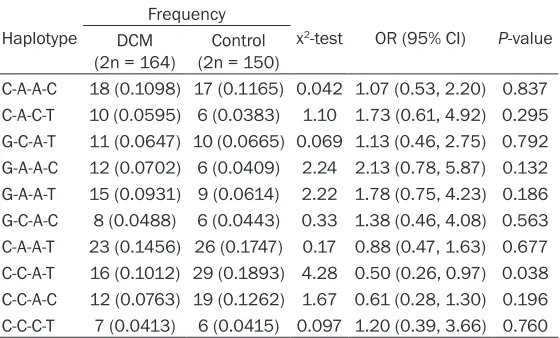
[image:6.612.92.372.109.278.2]lower prevalence of DCM could be noticed in CC and CA carriers of rs9268494, CC and CG carriers of rs9268492, as well as AA and AG Table 5. Haplotype structure and frequency analysis of BTNL2
genetic polymorphisms between dilated cardiomyopathy (DCM) patients and controls
Haplotype
Frequency
x2-test OR (95% CI) P-value
DCM
(2n = 164) (2n = 150)Control
C-A-A-C 18 (0.1098) 17 (0.1165) 0.042 1.07 (0.53, 2.20) 0.837 C-A-C-T 10 (0.0595) 6 (0.0383) 1.10 1.73 (0.61, 4.92) 0.295 G-C-A-T 11 (0.0647) 10 (0.0665) 0.069 1.13 (0.46, 2.75) 0.792 G-A-A-C 12 (0.0702) 6 (0.0409) 2.24 2.13 (0.78, 5.87) 0.132 G-A-A-T 15 (0.0931) 9 (0.0614) 2.22 1.78 (0.75, 4.23) 0.186 G-C-A-C 8 (0.0488) 6 (0.0443) 0.33 1.38 (0.46, 4.08) 0.563 C-A-A-T 23 (0.1456) 26 (0.1747) 0.17 0.88 (0.47, 1.63) 0.677 C-C-A-T 16 (0.1012) 29 (0.1893) 4.28 0.50 (0.26, 0.97) 0.038 C-C-A-C 12 (0.0763) 19 (0.1262) 1.67 0.61 (0.28, 1.30) 0.196 C-C-C-T 7 (0.0413) 6 (0.0415) 0.097 1.20 (0.39, 3.66) 0.760
OR, odds ratio; CI, confidence interval.
rs9268492 (G > C), rs2076523 (G > A), rs2076530 (G > A), rs9268402 (G > A), rs1555115 (G > C). The frequency distribu-tions of genotypes and alleles of the 9 SNPs, all complying with Hardy-Weinberg equilibri-um (HWE) model, were evalu-ated between healthy controls and DCM patients (Table 3). In the polymorphisms of rs37- 63313 (A > C), subjects with heterozygote CA and homozy-gote CC appeared to have a lower risk of DCM than those
with homozygote AA (OR = 0.30, 95% CI = 0.09-0.96, P =
carriers of rs9268402 than carriers of
homozy-gote AA, GG and GG, separately [OR = 0.30
(95% CI: 0.13-0.72; P= 0.008), OR = 0.16 (95%
CI: 0.05-0.59; P = 0.005) and OR = 0.34 (95%
CI: 0.14-.81; P= 0.016)]. Additionally, the allelic
distributions of rs3763313, rs9268494, rs9268492 and rs9268402 also suggested that A, C, C and A alleles could be negatively associated with elevated susceptibility to DCM (NYHA IV) in comparison with C, A, G and G
alleles, respectively [OR = 0.43 (95% CI: 0.22,
al analyses and they possessed a mean sur-vival period of 27 ± 12 months. Among the par-ticipants, 2 NYHA I-II cases, 12 NYHA III cases and 24 NYHA IV cases eventually died of cardi-ac death during follow-up, in which period the whole patients received constant medical treatment, but without heart transplantation. In the present study, the potential correlations between 4 SNPs as well as haplotype C-C-A-T
[image:7.612.90.382.74.285.2]and prognosis of DCM patients classified by
Figure 2. Kaplan-Meier survival curves free of cardiac death for GG homozy-gotes and (AA+AG) carriers (grade IV by NYHA) of rs9268402.
0.84; P = 0.018), OR = 0.49
(95% CI: 0.27-0.91; P = 0.024), OR = 0.50 (95% CI:
0.27-0.94; P = 0.035) and OR = 0.53 (95% CI:
0.28-0.97; P = 0.048)].
Association analysis be-tween haplotypes of BTNL2 and susceptibility to DCM
The haplotypes made up of 4 SNPs (rs3763317, rs37- 63313, rs9268494 and rs9268492) were investi-gated in the current study since there existed out-standing (approximately 100%) LDs among the 4 SNPs in the Chinese popu-lation. Subsequently, 16 haplotypes were obtained after randomly combining the 4 SNPs based on SHesis software, but 6
hap-lotypes were finally exclud -ed for their low frequency in the studied crowd (each
lower than 3%). It was final -ly indicated in the haplo-type analyses that subjects carrying haplotype C-C-A-T were inversely linked with DCM risk compared with carriers of all other
haplo-types (OR = 0.50, 95% CI =
0.26-0.97, P = 0.038)
(Table 5).
Association analysis be-tween 4 SNPs within or near BTNL2 and prognosis of DCM
Altogether 82 DCM patients were followed in the surviv-Figure 3. Kaplan-Meier survival curves free of cardiac death for haplotype
[image:7.612.91.382.342.552.2]NYHA grading were investigated. As illustrated in the Kaplan-Meier curve (Figure 2), a longer life span could be expected in AA and AG carri-ers (NYHA IV) than in GG carricarri-ers in terms of rs9268402 (Long-Rank P = 0.029) and the
trend remained remarkable when analyzed with a multivariate Cox proportional hazard mo- del after the adjustment of SBP, DBP, LVEDD, LVEDV, LVESV, LAD, LVSV, LVSF and FS (AA/GA vs. GG, HR: 0.241, 95% CI: 0.089-0.650, P =
0.005). Analogously, C-C-A-T carriers (NYHA IV) tended to obtain more favorable prognosis than subjects carrying other haplotypes
with-examined in a Chinese Han population in the current study. Results were obtained that ge- netic mutants located within C6orf10~BTNL2
(rs9268402) and BTNL2 (rs3763313, rs92- 68494 and rs9268492) might be associated with DCM (grade IV by NYHA) susceptibility and
identification of two SNPs therein could aid in
estimation of unfavorable prognosis of DCM patients (grade IV by NYHA).
The risk SNP rs9268402 has been identified by
[image:8.612.90.522.87.272.2]GWAS as a regulatory locus regarding CAD, one disease of cardiac failure, in a Chinese Han Figure 4. Kaplan-Meier survival curves free of cardiac death for CC
homozy-gotes and (AA+AC) carriers (grade IV by NYHA) of rs3763313.
Table 6. Association between the BTNL2 SNPs in the dominant model and patient’s survival
Overall survival
Characteristics NYHA Univariate survival analysis Multivariate survival analysis*
HR 95% CI P HR 95% CI P
SNP
rs3763313 III 0.555 (0.121, 2.546) 0.449 0.227 (0.039, 1.334) 0.101
(AA/AC vs. CC) IV 0.280 (0.108, 0.727) 0.009 0.238 (0.054, 1.054) 0.059
rs9268494 III 0.465 (0.140, 1.549) 0.212 0.152 (0.021, 1.079) 0.060
(CC/CA vs. AA) IV 0.520 (0.225, 1.201) 0.126 0.727 (0.285, 1.858) 0.505
rs9268492 III 0.538 (0.118, 2.464) 0.425 1.242 (0.175, 8.793) 0.828
(CC/GC vs. GG) IV 1.140 (0.423, 3.073) 0.795 1.048 (0.326, 3.369) 0.937
rs9268402 III 0.471 (0.151, 1.467) 0.194 0.700 (0.203, 2.415) 0.573
(AA/GA vs. GG) IV 0.407 (0.176, 0.944) 0.029 0.241 (0.089, 0.650) 0.005
Haplotype
C-C-A-T I-IV 0.282 (0.087, 0.919) 0.036 0.126 (0.035, 0.457) 0.002
HR, hazard ratio; CI, confidence interval.
out or with consideration of the parameters mentioned ab- ove, such as SBP, DBP, LVEDD and so on (Long-Rank P = 0.036; HR =
0.126, 95% CI: 0.035-0.457, P = 0.002) (Figure 3; Table 6). Nonetheless, for the polymorphism of rs3- 763313, notable correla-tions could only be obs- erved between CC carriers and poor prognosis of DCM patients (NYHA IV) (P =
0.009), as expressed in the Kaplan-Meier curve (Figure 4).
Discussion
[image:8.612.93.384.307.523.2]population [29]. The untranslated region (UTR), where rs9268402 was situated, shared the common 6q21.3 region with major histocom-patibility complex (MHC). Genetic polymor-phisms on leukocyte-binding MHC, also called human leukocyte antigen (HLA), have been shown to be tightly relevant to susceptibility to multiple immunity-associated disorders, such as osteoarthritis, rheumatoid arthritis, kawa-saki disease and ankylosing spondylitis [30]. Furthermore, variants of candidate C6orf10
within 6p21.32 could elevate susceptibility to psoriasis [31] and the gene could be activated
by tumor necrosis factor (TNF)-α, one vital pro
-inflammatory cytokine, found in keratinocyte [32]. The above findings suggested that variant
of rs9268402 could interact with its surround-ing SNPs to regulate immune responses, con-tributing to the occurrence of myocardial dis-eases, such as DCM.
It should also be noteworthy that BTNL2, situ-ated ~170 kb from HLA and not far from
rs9268402, was illustrated as the first butyr
-ophilin family member in modulation of inflam -matory immune diseases, such as myositis and
sarcoidosis [15, 18]. More specifically, BTNL2
abundantly expressed in intestine and lym-phoid organs could be involved in powerful inhi-bition of T cell proliferation and modest sup-pression of IL-2 production [19, 33], demon-strating its possible linkage with constraint of immune responses as a negative costimulatory molecule [18, 34]. Thus, tag-SNPs on BTNL2
(rs1555115, rs2076530, rs2076523, rs926- 8492, rs9268494, rs3763313, rs3763317 and rs9405098) were potently candidate poly-morphisms related with the presence of immu-nity-causing DCM, especially ones that dis-played high/moderate LD with rs9268402, a CAD-associated and immunity-related SNP
confirmed by GWAS. In fact, the associations of
rs3763313, rs9268494 and rs9268492 with tuberculosis, hepatitis B vaccination, ulcerative
colitis and Crohn disease have been confirmed
[27, 35-37].
Obviously, rs3763313 revealed higher LD (close to 100%) with rs9268402 when com-pared with rs2076530 (81%), suggesting that rs3763313 could be a more promising SNP than rs2076530 with respect to participation in the immune dysfunctions that contributed to myocardial damage. Interestingly, among the 7 SNPs investigated (rs9268402 and rs3763313 excluded), simply rs9268492 and rs9268494
achieved moderate/high LD with both rs9268402 and rs3763313 (all LD > 50%), and the couple of SNPs were found associated with DCM in the current study accordingly. The above results might indicate that rs9268402 and rs3763313 were pivotal polymorphisms linked with the appearance of DCM, and SNPs that showed relatively apparent LD with the two target polymorphisms might also potentially predispose to DCM.
However, although rs2076530 A allele has
largely been confirmed to be correlated with incremental susceptibility to inflammatory dis -orders (e.g. tuberculosis) [38, 39], the genetic predisposition to DCM was absent in the cur-rent study, which would be interpreted as
eth-nic distinctions. To be specific, correlations between rs2076530 and specific immune dis -eases, taking tuberculosis for instance, could be merely observed among European and South African populations, rather than in Chinese Han populations [27]. Furthermore, the A allele of rs2076530 could elevate risk of sarcoidosis primarily in white population and Japanese population as well [25, 40, 41], but
the finding might not be appropriate for the
Chinese population with consideration of genetic discrepancy. With respect to polymor-phisms of rs9405098, rs3763317, rs2076523 and rs1555115, even though their associa-tions with certain immunity-related disorders have been estimated [25-27], the
sophisticat-ed reactions inside each specific disease might
differ, which could account for the irrelevance of the SNPs with risk of DCM.
The haplotype analyses (Figure 3) integrating 4 SNPs of fairly high LD (rs9268492, rs9268494, rs3763313 and rs3763317) also implied that C-C-A-T carriers were less inclined to suffer from DCM and were 1.67-fold less susceptible to perish within 36 months than carriers of other haplotypes. Similarly, AA and AC carriers (grade IV by NYHA) of rs3763313 as well as AA and AG carriers (grade IV by NYHA) of rs9268402 were approximately 1.38-fold and 3.5-fold more likely to survive than CC carriers and GG carriers, respectively (Figures 2, 4). The prognosis condition, therefore, further validat-ed the positive association of heterozygotes CC/GG with DCM susceptibility.
(rs9268402) were associated with DCM (grade IV by NYHA) susceptibility in a Chinese popula-tion. Among the four SNPs, mutants of rs3763313 and rs9268402 were deemed to be tightly correlated with undesirable prognosis of DCM (grade IV by NYHA), indicating the pos-sibility of SNPs within or near BTNL2 as genetic markers to identify the DCM risk group and to predict their prognosis. Nonetheless, as the sample number and ethnicity studied in this
investigation appeared to be finite and the
SNPs studied were based on previously pub-lished studies, more meticulous investigations covering additional SNPs need to be furthered in terms of DCM-causing genes.
Disclosure of conflict of interest None.
Address correspondence to: Dr. Shiqiang Yu, Department of Cardiovascular Surgery, Xijing Hospital, The Fourth Military Medical University, 27 Changle West Road, Xi’an 710032, China. Tel: +86-29-83215321; Fax: +86-+86-29-83215321; E-mail: [email protected]
References
[1] Hershberger RE, Morales A and Siegfried JD. Clinical and genetic issues in dilated cardiomy-opathy: a review for genetics professionals. Genet Med 2010; 12: 655-667.
[2] Manolio TA, Baughman KL, Rodeheffer R, Pearson TA, Bristow JD, Michels VV, Abelmann WH and Harlan WR. Prevalence and etiology of idiopathic dilated cardiomyopathy (summary of a National Heart, Lung, and Blood Institute workshop. Am J Cardiol 1992; 69: 1458-1466. [3] Maron BJ, Towbin JA, Thiene G, Antzelevitch C,
Corrado D, Arnett D, Moss AJ, Seidman CE, Young JB; American Heart Association; Council on Clinical Cardiology, Heart Failure and Transplantation Committee; Quality of Care and Outcomes Research and Functional Genomics and Translational Biology Inter- disciplinary Working Groups; Council on Epidemiology and Prevention. Contemporary definitions and classification of the cardiomy-opathies: an American Heart Association Scientific Statement from the Council on Clinical Cardiology, Heart Failure and Tran- splantation Committee; Quality of Care and Outcomes Research and Functional Genomics and Translational Biology Interdisciplinary Working Groups; and Council on Epidemiology and Prevention. Circulation 2006; 113: 1807-1816.
[4] Jefferies JL and Towbin JA. Dilated cardiomy-opathy. Lancet 2010; 375: 752-762.
[5] Mestroni L, Rocco C, Gregori D, Sinagra G, Di Lenarda A, Miocic S, Vatta M, Pinamonti B, Muntoni F, Caforio AL, McKenna WJ, Falaschi A, Giacca M and Camerini. Familial dilated car-diomyopathy: evidence for genetic and pheno-typic heterogeneity. Heart Muscle Disease Study Group. J Am Coll Cardiol 1999; 34: 181-190.
[6] Burkett EL and Hershberger RE. Clinical and genetic issues in familial dilated cardiomyopa-thy. J Am Coll Cardiol 2005; 45: 969-981. [7] McNally EM, Golbus JR and Puckelwartz MJ.
Genetic mutations and mechanisms in dilated cardiomyopathy. J Clin Invest 2013; 123: 19-26.
[8] Herman DS, Lam L, Taylor MR, Wang L, Teekakirikul P, Christodoulou D, Conner L, DePalma SR, McDonough B, Sparks E, Teodorescu DL, Cirino AL, Banner NR, Pennell DJ, Graw S, Merlo M, Di Lenarda A, Sinagra G, Bos JM, Ackerman MJ, Mitchell RN, Murry CE, Lakdawala NK, Ho CY, Barton PJ, Cook SA, Mestroni L, Seidman JG and Seidman CE. Truncations of titin causing dilated cardiomy-opathy. N Engl J Med 2012; 366: 619-628. [9] Ingles J, Doolan A, Chiu C, Seidman J, Seidman
C and Semsarian C. Compound and double mutations in patients with hypertrophic cardio-myopathy: implications for genetic testing and counselling. J Med Genet 2005; 42: e59. [10] Girolami F, Ho CY, Semsarian C, Baldi M, Will
ML, Baldini K, Torricelli F, Yeates L, Cecchi F, Ackerman MJ and Olivotto I. Clinical features and outcome of hypertrophic cardiomyopathy associated with triple sarcomere protein gene mutations. J Am Coll Cardiol 2010; 55: 1444-1453.
[11] Staab J, Ruppert V, Pankuweit S and Meyer T. Polymorphisms in genes encoding nonsarco-meric proteins and their role in the pathogen-esis of dilated cardiomyopathy. Herz 2012; 37: 836-841.
[12] Ruppert V, Meyer T, Struwe C, Petersen J, Perrot A, Posch MG, Ozcelik C, Richter A, Maisch B, Pankuweit S; German Heart Failure Network. Eur J Hum Genet 2010; 18: 694-699. [13] Franz WM, Muller OJ and Katus HA.
Cardiomyopathies: from genetics to the pros-pect of treatment. Lancet 2001; 358: 1627-1637.
[14] Schonberger J and Seidman CE. Many roads lead to a broken heart: the genetics of dilated cardiomyopathy. Am J Hum Genet 2001; 69: 249-260.
homology to the butyrophilin gene family, lo-cated at the border of the major histocompati-bility complex class II and class III regions in human and mouse. Immunogenetics 2000; 51: 373-382.
[16] Sharpe AH and Freeman GJ. The B7-CD28 su-perfamily. Nat Rev Immunol 2002; 2: 116-126.
[17] Agostini C, Trentin L, Perin A, Facco M, Siviero M, Piazza F, Basso U, Adami F, Zambello R and Semenzato G. Regulation of alveolar macro-phage-T cell interactions during Th1-type sar-coid inflammatory process. Am J Physiol 1999; 277: L240-250.
[18] Nguyen T, Liu XK, Zhang Y and Dong C. BTNL2, a butyrophilin-like molecule that functions to inhibit T cell activation. J Immunol 2006; 176: 7354-7360.
[19] Valentonyte R, Hampe J, Huse K, Rosenstiel P, Albrecht M, Stenzel A, Nagy M, Gaede KI, Franke A, Haesler R, Koch A, Lengauer T, Seegert D, Reiling N, Ehlers S, Schwinger E, Platzer M, Krawczak M, Muller-Quernheim J, Schurmann M and Schreiber S. Sarcoidosis is associated with a truncating splice site muta-tion in BTNL2. Nat Genet 2005; 37: 357-364. [20] Mitsunaga S, Hosomichi K, Okudaira Y,
Nakaoka H, Kunii N, Suzuki Y, Kuwana M, Sato S, Kaneko Y, Homma Y, Kashiwase K, Azuma F, Kulski JK, Inoue I and Inoko H. Exome se-quencing identifies novel rheumatoid arthritis-susceptible variants in the BTNL2. J Hum Genet 2013; 58: 210-215.
[21] Lu X, Wang L, Chen S, He L, Yang X, Shi Y, Cheng J, Zhang L, Gu CC, Huang J, Wu T, Ma Y, Li J, Cao J, Chen J, Ge D, Fan Z, Li Y, Zhao L, Li H, Zhou X, Chen L, Liu D, Chen J, Duan X, Hao Y, Wang L, Lu F, Liu Z, Yao C, Shen C, Pu X, Yu L, Fang X, Xu L, Mu J, Wu X, Zheng R, Wu N, Zhao Q, Li Y, Liu X, Wang M, Yu D, Hu D, Ji X, Guo D, Sun D, Wang Q, Yang Y, Liu F, Mao Q, Liang X, Ji J, Chen P, Mo X, Li D, Chai G, Tang Y, Li X, Du Z, Liu X, Dou C, Yang Z, Meng Q, Wang D, Wang R, Yang J, Schunkert H, Samani NJ, Kathiresan S, Reilly MP, Erdmann J, Coronary ADG-WR, Meta-Analysis C, Peng X, Wu X, Liu D, Yang Y, Chen R, Qiang B and Gu D. Genome-wide association study in Han Chinese identi-fies four new susceptibility loci for coronary artery disease. Nat Genet 2012; 44: 890-894. [22] Kato H, Sugimura T, Akagi T, Sato N, Hashino
K, Maeno Y, Kazue T, Eto G and Yamakawa R. Long-term consequences of Kawasaki dis-ease. A 10- to 21-year follow-up study of 594 patients. Circulation 1996; 94: 1379-1385. [23] Maron BJ, Towbin JA, Thiene G, Antzelevitch C,
Corrado D, Arnett D, Moss AJ, Seidman CE, Young JB; American Heart Association; Council on Clinical Cardiology, Heart Failure and
Transplantation Committee; Quality of Care and Outcomes Research and Functional Genomics and Translational Biology Inter- disciplinary Working Groups; Council on Epidemiology and Prevention. Contemporary definitions and classification of the cardiomy-opathies: an American Heart Association Scientific Statement from the Council on Clinical Cardiology, Heart Failure and Tran- splantation Committee; Quality of Care and Outcomes Research and Functional Genomics and Translational Biology Interdisciplinary Working Groups; and Council on Epidemiology and Prevention. Circulation 2006; 113: 1807-1816.
[24] Bennett JA, Riegel B, Bittner V and Nichols J. Validity and reliability of the NYHA classes for measuring research outcomes in patients with cardiac disease. Heart Lung 2002; 31: 262-270.
[25] Spagnolo P, Sato H, Grutters JC, Renzoni EA, Marshall SE, Ruven HJ, Wells AU, Tzouvelekis A, van Moorsel CH, van den Bosch JM, du Bois RM and Welsh KI. Analysis of BTNL2 genetic polymorphisms in British and Dutch patients with sarcoidosis. Tissue Antigens 2007; 70: 219-227.
[26] Hsueh KC, Lin YJ, Chang JS, Wan L and Tsai FJ. BTNL2 gene polymorphisms may be associat-ed with susceptibility to Kawasaki disease and formation of coronary artery lesions in Taiwanese children. Eur J Pediatr 2010; 169: 713-719.
[27] Lian Y, Yue J, Han M, Liu J and Liu L. Analysis of the association between BTNL2 polymorphism and tuberculosis in Chinese Han population. Infect Genet Evol 2010; 10: 517-521.
[28] Schiller NB, Shah PM, Crawford M, DeMaria A, Devereux R, Feigenbaum H, Gutgesell H, Reichek N, Sahn D, Schnittger I, et al. Recommendations for quantitation of the left ventricle by two-dimensional echocardiogra-phy. American Society of Echocardiography Committee on Standards, Subcommittee on Quantitation of Two-Dimensional Echocar- diograms. J Am Soc Echocardiogr 1989; 2: 358-367.
Erdmann J, Peng X, Chen R, Qiang B and Gu D. Genome-wide association study in Han Chinese identifies four new susceptibility loci for coronary artery disease. Nat Genet 2012; 44: 890-894.
[30] Trowsdale J and Knight JC. Major histocompat-ibility complex genomics and human disease. Annu Rev Genomics Hum Genet 2013; 14: 301-323.
[31] Feng BJ, Sun LD, Soltani-Arabshahi R, Bowcock AM, Nair RP, Stuart P, Elder JT, Schrodi SJ, Begovich AB, Abecasis GR, Zhang XJ, Callis-Duffin KP, Krueger GG and Goldgar DE. Multiple Loci within the major histocompatibil-ity complex confer risk of psoriasis. PLoS Genet 2009; 5: e1000606.
[32] Banno T, Gazel A and Blumenberg M. Pathway-specific profiling identifies the NF-kappa B-dependent tumor necrosis factor alpha-regu-lated genes in epidermal keratinocytes. J Biol Chem 2005; 280: 18973-18980.
[33] Price P, Santoso L, Mastaglia F, Garlepp M, Kok CC, Allcock R and Laing N. Two major histo-compatibility complex haplotypes influence susceptibility to sporadic inclusion body myosi-tis: critical evaluation of an association with HLA-DR3. Tissue Antigens 2004; 64: 575-580. [34] Arnett HA, Escobar SS, Gonzalez-Suarez E,
Budelsky AL, Steffen LA, Boiani N, Zhang M, Siu G, Brewer AW and Viney JL. BTNL2, a butyr-ophilin/B7-like molecule, is a negative costim-ulatory molecule modulated in intestinal in-flammation. J Immunol 2007; 178: 1523-1533.
[35] Yang C, Pan L, Zhang L, Wu X, Zhu X, Yan B, Xu A, Li H and Liu Y. BTNL2 associated with the immune response to hepatitis B vaccination in a Chinese Han population. J Med Virol 2014; 86: 1105-1112.
[36] Juyal G, Prasad P, Senapati S, Midha V, Sood A, Amre D, Juyal RC and Bk T. An investigation of genome-wide studies reported susceptibility loci for ulcerative colitis shows limited replica-tion in north Indians. PLoS One 2011; 6: e16565.
[37] Murdoch TB, Bernstein CN, El-Gabalawy H, Stempak JM, Sargent M, Elias B, Xu W, Pathan S and Silverberg MS. Prevalence of genetic variants associated with inflammatory bowel disease in a healthy First Nations cohort. CMAJ 2012; 184: E435-441.
[38] Johnson CM, Traherne JA, Jamieson SE, Tremelling M, Bingham S, Parkes M, Blackwell JM and Trowsdale J. Analysis of the BTNL2 truncating splice site mutation in tuberculosis, leprosy and Crohn’s disease. Tissue Antigens 2007; 69: 236-241.
[39] Xie Y, Chen Y, Lin M, Wen J, Fan G and Wu Y. High-performance liquid chromatographic method for the determination and pharmaco-kinetic study of oxypeucedanin hydrate and byak-angelicin after oral administration of Angelica dahurica extracts in mongrel dog plasma. J Pharm Biomed Anal 2007; 44: 166-172.
[40] Levin AM, Iannuzzi MC, Montgomery CG, Trudeau S, Datta I, McKeigue P, Fischer A, Nebel A and Rybicki BA. Association of ANXA11 genetic variation with sarcoidosis in African Americans and European Americans. Genes Immun 2013; 14: 13-18.