Review Article
Association between the TERT rs2736100
polymorphism and lung cancer risk: evidence
from a case-control study and a meta-analysis
Yipeng Ding1*, Shuli Du2*, Pei Sun1, Huan Niu1, Mengling Duan1, Tianbo Jin2,3, Hongxia Yao4
1Department of Emergency, People’s Hospital of Hainan Province, Haikou, Hainan, China; 2School of Life
Sciences, Northwest University, Xi’an, Shaanxi, China; 3Key Laboratory of High Altitude Environment and Genes
Related to Diseases of Tibet Autonomous Region, School of Medicine, Xizang Minzu University, Xianyang, Shaanxi, China; 4Department of Hematology, People’s Hospital of Hainan Province, Haikou, Hainan, China. *Co-first
au-thors.
Received January 22, 2016; Accepted April 22, 2016; Epub June 1, 2016; Published June 15, 2016
Abstract: Background: The association between the TERT (telomerase reverse transcriptase) rs2736100 single nucleotide polymorphism and lung cancer risk has been studied by many researchers, but the results remain in-conclusive. To further explore this association, we performed a meta-analysis to further studies. Material and meth-ods: We performed a case-control study in 554 lung cancer cases and 693 controls. Odds ratios (ORs) and 95% confidence intervals (CIs) were calculated by unconditional logistic regression. Afterwards a computerized search of PubMed and Google Scholar for publications on rs2736100 and lung cancer risk was performed. Odds ratios (ORs) with 95% confidence intervals (CIs) were estimated to assess the association between rs2736100 and lung cancer risk in 21 selected case-control studies. A sensitivity analysis, a test of heterogeneity, a cumulative meta-analysis, and an assessment of bias were also performed. Results: In our study, we found that rs2736100 GT-GG increased the risk of lung in the dominant model (OR = 1.48, 95% CI: 1.13-1.94). In the meta-analysis, a significant association between the rs273610 polymorphism and lung risk was observed (OR = 1.225, 95% CI: 1.170-1.283 C vs. A; OR = 1.325, 95% CI: 1.285-1.365 for AC+CC vs. AA; OR = 1.324, 95% CI: 1.225-1.431 for CC vs. AA+AC), and further stratifications demonstrated a moderately increased risk for lung in Asian ethnicity studies. Conclusions: Our results and the meta-analysis suggest that the rs2736100 polymorphism may contribute to the risk of lung cancer in the Chinese population and Asian population.
Keywords: Lung cancer, single nucleotide polymorphism (SNP), case-control studies, meta-analysis
Introduction
Lung cancer is one of the most prevalent and deadliest cancers in the world. It is the most common cancer in men and the main cause of male cancer deaths worldwide, and it is the second leading cause of cancer deaths in women worldwide [1-3]. The major socio-envi-ronmental risk factor involved in the develop-ment of lung cancer is cigarette smoking. Additionally, recent genome-wide association
studies (GWAS) have identified a number of
chromosomal regions, which may also play a role in lung cancer risk. Of these regions, sin-gle-nucleotide polymorphisms (SNPs), espe-cially many investigators have explored TERT
rs2736100 contributing to inherited suscepti-bility to lung cancer [4-8].
Since the discovery of rs2736100, several research groups have reported associations between rs2736100 and cancer risk, lung can-cer consists of four major histological types: adenocarcinoma (AD), squamous cell carcino-ma (SQC), large cell carcinocarcino-ma (LCC), and scarcino-mall cell carcinoma (SCC) [9, 10]. These observa-tions suggest that inherited risk variants of different lung cancer subtypes may vary. The lack of concordance across many of these
stud-ies reflects limitation in the studstud-ies, such as
ethnic difference, phenotypic heterogeneity,
increased studies in recent years among Asians, and some other ethnic populations, there is a need to reconcile this inconsistency and to clarify the problems in previous studies. We therefore performed a meta-analysis of the published studies to clarify this inconsistency and to establish a comprehensive picture of the relationship between TERT rs2736100 polymorphism and lung cancer.
Materials and methods Ethics statement
The use of human blood sample and the proto-col in this study were strictly conformed to the tenets of the Declaration of Helsinki and were approved by the institutional ethical commit-tees of the People’s Hospital of Hainan Province and Northwest University. Written informed consent was obtained from each participant. Study participants
We designed a case-control study of 554 indi-viduals (male: 415, female: 138; Mean age: 54.87±9.47) with lung cancer (case group) and 693 healthy individuals (male: 392, female: 304; Mean age: 58.17±10.53), which were Han Chinese in Haikou City. The patients were ex- amined and treated at the People’s Hospital of Hainan Province. Control subjects were
ran-and ionization time of flight mass spectrometry
detection by Sequenom MassARRAY RS1000 according to the manufacturer’s protocol [12]. Statistical analysis
We used the SPSS 17.0 (SPSS, Chicago, IL) for statistical analysis. All p-values presented in this study were two-sided, and we used P <
0.05 as the cutoff for statistical significance.
Hardy-Weinberg equilibrium (HWE) testing was carried out
for SNPs by the x2 test in the control group. The
allele frequencies within the case and control groups were assessed by the x2 test [13]. Using
unconditional logistic regression, we calculated ORs, and 95% CIs, adjusted for the case-con-trol matching variables (age and gender), to estimate the relative risks of lung cancer asso-ciated with the SNP genotypes [14]. SNPstats, a web-based software tool (http://bioinfo.icon-cologia.net/SNPstats_web), was used to test the associations between certain SNPs and the
risk of lung cancer under five different genetic
models [15]. Publication search
[image:2.612.95.375.72.344.2]We conducted searches of PubMed, EMBASE, and the China National Knowledge Infrastruct- ure (CNKI) using the following search terms:
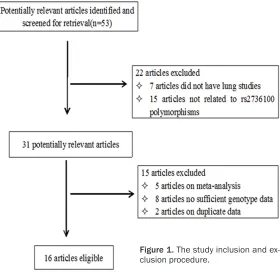
Figure 1. The study inclusion and ex-clusion procedure.
domly selected from partici-pants, without personal histo-ry of malignant disease. Then, a peripheral venous blood sample (5 ml) was obtained from each individual.
SNP genotyping
Genomic DNA was extracted from whole blood using the GoldMag® nanoparticle (Gold- Mag Co. Ltd., Xi’an City, China, based on the manufacturers’ instructions. The quality and quantity of DNA were mea-sured by using NanoDrop 2000. The Sequenom Mass- ARRAY Assay Design 3.0 Soft- ware was used to design
prim-ers for PCR amplification [11].
“TERT”, “telomerase reverse transcriptase”, “rs2736100”, “lung cancer”, and “polymor-phism”. The search was completed in March of 2015. The articles selected for the subsequent meta-analysis were all published in English in the primary literature, focused on humans, and free of obvious overlap with the subjects of other studies. Two investigators independently selected articles containing information on the association between TERT and lung cancer morbidity and checked the corresponding refer-ence lists. All studies providing estimates of odds ratios (ORs) and the corresponding 95%
confidence intervals (CIs), or the information
required to calculate them, were included in the meta-analysis. Multiple studies were pub-lished on the same population or subpopula-tion, only the most recent or informative study
was included in the meta-analysis. A flowchart
of the selection process for publications includ-ed in the meta-analysis is shown in Figure 1. Inclusion and exclusion criteria
Articles were included in the meta-analysis if they: 1) examined the hypothesis that rs27- 36100 is associated with lung cancer risk, 2) followed a nested case-control, case-control, or cross-sectional study design, and 3)
provid-ed sufficient information on genotype/allele
counts between cases and controls to estimate the ORs and corresponding 95% CIs. The exclu-sion criteria were: 1) non-case-control studies, 2) studies with a control population that includ-ed patients with a malignant tumor, and 3) duplicate studies.
and controls with the AA, AC, and CC rs2736100 genotypes.
Statistical analysis
All statistical analyses were performed using the STATA software (version 11.0; Stata Cor- poration, College Station, Texas). Two-sided P values less than 0.05 were considered
statisti-cally significant. For the case and control
groups in each study, we calculated the allelic frequencies and assessed them for departure from Hardy-Weinberg equilibrium (HWE) using a Chi-square test [16]. The OR and 95% CI in each case-control study were employed to assess the strength of the associations be- tween rs2736100 polymorphisms and lung cancer risk. The OR and 95% CI in each com-parison were assessed in a codominant model, a dominant model, and a recessive model. Subgroup analyses were performed based on the source of the controls and the ethnicity of the study participants. The chi-square test-based Q-statistic was calculated to test for het-erogeneity among the studies. If the studies were found to be heterogeneous (P < 0.05),
then the pooled ORs were analyzed using a random-effects model [17]; otherwise, a
fixed-effects model was used [16]. The I2 statistic
was then used to quantitatively estimate het-erogeneity, with I2 less than 25%, between 25%
and 75%, and greater than 75% representing low, moderate, and high degrees of
inconsis-tency, respectively [18, 19]. The significance of
the combined OR was determined using a Z test (P < 0.05 was considered statistically
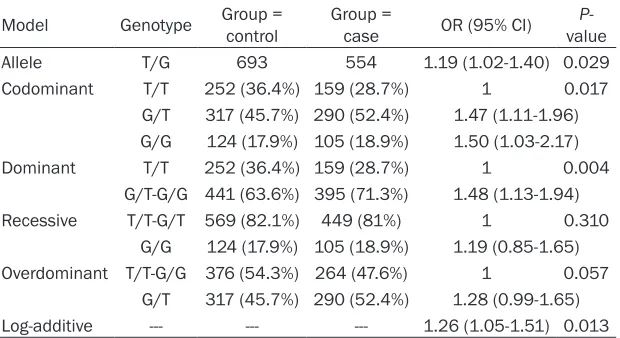
sig-Table 1. Association between rs2736100, a polymorphism in TERT, and Lung cancer risk under multiple models of inheritance
Model Genotype Group = control Group = case OR (95% CI) valueP
-Allele T/G 693 554 1.19 (1.02-1.40) 0.029
Codominant T/T 252 (36.4%) 159 (28.7%) 1 0.017
G/T 317 (45.7%) 290 (52.4%) 1.47 (1.11-1.96) G/G 124 (17.9%) 105 (18.9%) 1.50 (1.03-2.17)
Dominant T/T 252 (36.4%) 159 (28.7%) 1 0.004
G/T-G/G 441 (63.6%) 395 (71.3%) 1.48 (1.13-1.94) Recessive T/T-G/T 569 (82.1%) 449 (81%) 1 0.310
G/G 124 (17.9%) 105 (18.9%) 1.19 (0.85-1.65) Overdominant T/T-G/G 376 (54.3%) 264 (47.6%) 1 0.057
G/T 317 (45.7%) 290 (52.4%) 1.28 (0.99-1.65) Log-additive --- --- --- 1.26 (1.05-1.51) 0.013
P < 0.05 indicates statistical significance.
Data extraction
Two investigators inde-pendently extracted the data from all of the pub-lications that were eligi-ble under the selection criteria. Any disagree-ment was resolved by discussion. We extract-ed the following infor-mation, when available, from each study: the
first author’s name, the
[image:3.612.92.402.97.266.2]nificant). Additionally, sensitivity analyses were
performed after the sequential removal of each study. Cumulative meta-analyses were per-formed through an assortment of all eligible
cancer studies with case sample size. Finally,
we produced a Begg’s funnel plot and per-formed an Egger’s test, to assess publication bias (P < 0.05 was considered to represent a
significant publication bias) [17]. The Egger’s
test is based on the linear regression of the standard normal deviate against the precision of the standard normal deviate and can be used to test the symmetry of the Begg’s funnel plot.
Results
Results of the case-control study
Using the x2 test, we found rs2736100 was
associated with increased the risk of lung: rs2736100 in TERT (OR = 1.19, 95% CI: 1.02-1.40, P = 0.029). Next, we assumed that the minor allele of rs2736100 was a risk factor and
analyzed the association between the polymor -phism and lung under multiple inheritance
models. We found rs2736100 in TERT was associated with increased the risk of lung in a dominant model (OR = 1.48, 95% CI: 1.13-1.94, P = 0.004) (Table 1).
Study characteristics
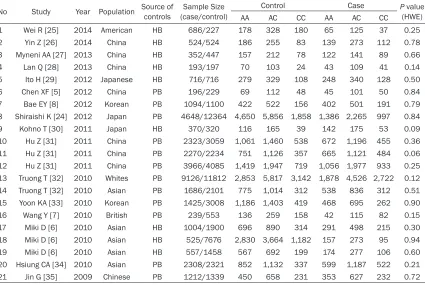
We identified 16 articles, covering 21 case-con -trol studies including 34961 cases and 58129 controls, which met the inclusion criteria. All of the studies in our meta-analysis focused solely on lung cancer. The characteristics of the stud-ies are listed in Table 2. The alleles of interest were in HWE in all of the studies. The 21 stud-ies included 3 studstud-ies of Caucasian popula-tions, 18 studies of Asian populations. Figure 1
shows the study selection procedure. Main meta-analysis results
After pooling the 34961 cases and 58129
[image:4.612.95.520.98.383.2]con-trols in the meta-analysis, we found a signifi -cant association between TERT rs2736100 polymorphisms and lung cancer risk in different genetic models (OR = 1.225, 95% CI: 1.170-1.283 for the allele model C vs. A; OR = 1.325,
Table 2. Characteristics of the studies on the association between TERT rs2736100 polymorphisms and cancer risk used in the meta-analysis
No Study Year Population Source of controls (case/control)Sample Size Control Case P (HWE)value
AA AC CC AA AC CC
1 Wei R [25] 2014 American HB 686/227 178 328 180 65 125 37 0.25
2 Yin Z [26] 2014 China HB 524/524 186 255 83 139 273 112 0.78
3 Myneni AA [27] 2013 China HB 352/447 157 212 78 122 141 89 0.66
4 Lan Q [28] 2013 China HB 193/197 70 103 24 43 109 41 0.14
5 Ito H [29] 2012 Japanese HB 716/716 279 329 108 248 340 128 0.50
6 Chen XF [5] 2012 China PB 196/229 69 112 48 45 101 50 0.84
7 Bae EY [8] 2012 Korean PB 1094/1100 422 522 156 402 501 191 0.79
8 Shiraishi K [24] 2012 Japan PB 4648/12364 4,650 5,856 1,858 1,386 2,265 997 0.84
9 Kohno T [30] 2011 Japan HB 370/320 116 165 39 142 175 53 0.09
10 Hu Z [31] 2011 China PB 2323/3059 1,061 1,460 538 672 1,196 455 0.36
11 Hu Z [31] 2011 China PB 2270/2234 751 1,126 357 665 1,121 484 0.06
12 Hu Z [31] 2011 China PB 3966/4085 1,419 1,947 719 1,056 1,977 933 0.25
13 Truong T [32] 2010 Whites PB 9126/11812 2,853 5,817 3,142 1,878 4,526 2,722 0.12
14 Truong T [32] 2010 Asian PB 1686/2101 775 1,014 312 538 836 312 0.51
15 Yoon KA [33] 2010 Korean PB 1425/3008 1,186 1,403 419 468 695 262 0.90
16 Wang Y [7] 2010 British PB 239/553 136 259 158 42 115 82 0.15
17 Miki D [6] 2010 Asian HB 1004/1900 696 890 314 291 498 215 0.30
18 Miki D [6] 2010 Asian HB 525/7676 2,830 3,664 1,182 157 273 95 0.94
19 Miki D [6] 2010 Asian HB 557/1458 567 692 199 174 277 106 0.60
20 Hsiung CA [34] 2010 Asian PB 2308/2321 852 1,132 337 599 1,187 522 0.21
21 Jin G [35] 2009 Chinese PB 1212/1339 450 658 231 353 627 232 0.72
Table 3. Stratified analyses of the association between TERT rs2736100 polymorphism and lung cancer risk
Popula-tion
Allele model
(C VS. A) Dominant model (AC+CC VS. AA) Recessive model (CC VS. AA+AC) Homozygote comparison(CC vs. AA) Heterozygote comparison(AC vs. AA) OR (95% CI) P I2 OR (95% CI) P I2 OR (95% CI) P I2 OR (95% CI) P I2 OR (95% CI) P I2
Total 1.225 (1.170-1.283)P < 0.05 75.90% 1.325 (1.285-1.365)P < 0.05 63.30% 1.324 (1.225-1.431)P < 0.05 73.10% 1.511 (1.376-1.659) P < 0.05 75.30% 1.250 (1.210-1.290) 0.009 47.40% Ethnicity
95% CI: 1.285-1.365 for the dominant model AC+CC vs. AA; OR = 1.324, 95% CI: 1.225-1.431 for the recessive model CC vs. AA+AC;
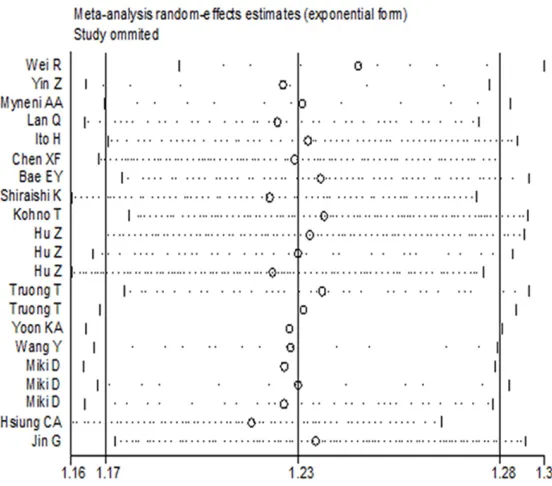
al study, indicating that the final results of the
[image:6.612.91.377.75.345.2] [image:6.612.93.369.398.641.2]meta-analysis were relatively stable and reli-able (Figure 3).
Figure 2. Forest plot of lung risk associated with the rs2736100 polymor-phism (C vs. A).
OR = 1.511, 95% CI:
1.376-1.659 for Homozygote com -parison CC vs. AA; and OR = 1.250, 95% CI: 1.210-1.290
for Heterozygote comparison
AC vs. AA) (Table 3). The forest plots for rs2736100 in the allele model are shown in
Figure 2.
When stratified by ethnicity, significantly increased risk
was observed in the Asian population (OR = 1.251, 95% CI: 1.200-1.304 for C vs. A; OR = 1.356, 95% CI: 1.310-1.404 for AC+CC vs. AA; OR = 1.381, 95% CI: 1.296-1.471 for CC vs. AA+AC; OR = 1.577, 95% CI: 1.452-1.712 for CC vs. AA; and OR = 1.270, 95% CI: 1.224-1.317 for AC vs. AA). The association appeared to be less pronounced among Caucasians (OR = 1.05, 95% CI: 0.831-1.342 for C vs. A; OR = 0.973, 95% CI: 0.648-1.461 for CC vs. AA+AC; OR = 1.099, 95% CI: 0.662-1.823 for CC vs. AA) (Table 3).
Test for heterogeneity
Statistically significant hetero -geneity was observed in trials using the following analyses with Q statistic tests (Allele model C vs. A: P < 0.05, I2 =
75.9%; dominant model AC+ CC vs. AA: P < 0.05, I2 = 63.3%;
recessive model CC vs. AA+ AC: P < 0.05, I2 = 73.1%;
homo-zygote comparison CC vs.
AA: P < 0.05, I2 = 75.3%;
het-erozygote comparison AC vs.
AA: P = 0.009, I2 = 47.4%)
(Table 3).
Sensitivity analyses
The pooled OR values were not qualitatively changed by the elimination of any
Publication bias
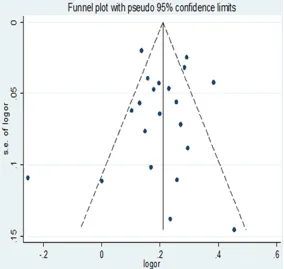
The shape of the funnel plot was relatively sym-metric and revealed no obvious publication bias (Figure 4). The Egger’s test revealed no
statistically significant asymmetry in the funnel
plot for any of the genetic models (P = 0.747).
Discussion
It is well known that SNPs are the most com-mon sources of human genetic variation, and that such variation can contribute to the sus-ceptibility of individuals to cancer [20]. Hence, genetic susceptibility to cancer is studied extensively. Although rs2736100, located in intron 2 of TERT, is hypothesized by many
researchers to be associated with the risk of lung cancer development, the results of tests
of the hypothesis have been conflicting and heterogeneous. We analyzed pooled data from
case-control studies to clarify the role of rs- 2736100 in determining lung cancer suscepti-bility. In our meta-analysis of 5454 cases and 14035 controls, we found that rs2736100 was
significantly associated with an increased risk of developing lung cancer. Furthermore, we
found that the increased risk was appeared
Thus, several subgroup meta-analyses were performed according to ethnicity and sample
size. In the subgroup analysis, ethnicity was
responsible for heterogeneity, and the ORs between different genetic models and sample
size were consistent. When stratified by ethnic
-ity, significantly increased risk was observed in
the Asian population (OR = 1.251). The associ-ation appeared to be less pronounced among Caucasians (OR = 1.05), suggesting a similar role of the variant among different ethnicity with different genetic backgrounds.
In interpreting the results, some limitations of
this meta-analysis should be addressed. First,
[image:7.612.91.375.72.341.2]as with any meta-analysis of published results, the quality of our meta-analysis depends on that of individual studies. Ideally, we would like to pool individual-level data. However, this is not possible for the present study. Second, our results were based on unadjusted estimates. A more precise analysis could be conducted if all individual raw data were available, which would allow for the adjustment by other covariants including age, drinking status, cigarette con-sumption, and other lifestyle factors. Third, only published studies were included in this meta-analysis. Therefore, publication bias may have
Figure 4. Funnel plot for publication bias (allele model).
using each of the genetic mod-els in the subgroup analyses of ethnicity and control source. TERT gene mapped to the 5p15.33 locus and consists of 16 exons and 15 introns span-ning 35 kb of genomic DNA [21]. It encodes the catalytic subunit of telomerase, func-tions as telomere mainte-nance and may play a role in the determination of cancer risk. TERT gene has been re-
cently identified to associate
with multiple cancer types including glioma [22], urinary bladder [23], prostate [24], based on its critical role in the maintenance of telomere, chromosome stability, and ulti-mately preventing normal cell malignance.
occurred, even though the use of a statistical test did not show it.
Despite these limitations, our result and the results of our meta-analysis show that the TERT
rs2736100 polymorphism significantly associ
-ated with lung cancer risk. Further functional
studies between this polymorphism and cancer risk are warranted.
Acknowledgements
This work was funded by National Natural
Science Funds of China (no. 81260014 and no.
81160008). We are grateful to all the patients and individuals in the study who made this work possible.
Disclosure of conflict of interest
None.
Address correspondence to: Dr. Tianbo Jin, School of Life Sciences, Northwest University, Mailbox 386, #229 North Taibai Road, Xi’an 710069, Shaanxi, China. Tel: +86-29-88305769-802; E-mail: [email protected]; Dr. Hongxia Yao, Department of Hematology, People’s Hospital of Hainan Province, #19 Xiuhua Road, Haikou 570311, Hainan, China. Tel: +86-98-68642118; Fax: +86-98-68642118; E-mail: [email protected]
References
[1] Howe HL, Wingo PA, Thun MJ, Ries LA, Rosenberg HM, Feigal EG, Edwards BK. Annual report to the nation on the status of cancer (1973 through 1998), featuring cancers with recent increasing trends. J Natl Cancer Inst 2001; 93: 824-42.
[2] Singh GK, Miller BA, Hankey BF. Changing area socioeconomic patterns in U.S. cancer mortal-ity, 1950-1998: Part II--Lung and colorectal cancers. J Natl Cancer Inst 2002; 94: 916-25. [3] Parkin DM, Bray F, Ferlay J, Pisani P. Global cancer statistics, 2002. CA Cancer J Clin 2005; 55: 74-108.
[4] Chen WQ, Zhang SW, Zou XN. Evaluation on the incidence, mortality and tendency of lung cancer in China. Thorac Cancer 2010; 1: 35-40.
[5] Chen XF, Cai S, Chen QG, Ni ZH, Tang JH, Xu DW, Wang XB. Multiple variants of TERT and CLPTM1L constitute risk factors for lung ade-nocarcinoma. Genet Mol Res 2012; 11: 370-8. [6] Miki D, Kubo M, Takahashi A, Yoon KA, Kim J, Lee GK, Zo JI, Lee JS, Hosono N, Morizono T,
Tsunoda T, Kamatani N, Chayama K, Takahashi T, Inazawa J, Nakamura Y, Daigo Y. Variation in TP63 is associated with lung adenocarcinoma susceptibility in Japanese and Korean popula-tions. Nat Genet 2010; 42: 893-6.
[7] Wang Y, Broderick P, Matakidou A, Eisen T, Houlston RS. Role of 5p15.33 (TERT-CLPTM- 1L), 6p21.33 and 15q25.1 (CHRNA5-CHRNA3) variation and lung cancer risk in never-smok-ers. Carcinogenesis 2010; 31: 234-8. [8] Bae EY, Lee SY, Kang BK, Lee EJ, Choi YY, Kang
HG, Choi JE, Jeon HS, Lee WK, Kam S, Shin KM, Jin G, Yoo SS, Lee J, Cha SI, Kim CH, Jung TH, Park JY. Replication of results of genome-wide association studies on lung cancer sus-ceptibility loci in a Korean population. Re- spirology 2012; 17: 699-706.
[9] Subramanian J, Govindan R. Lung cancer in never smokers: a review. J Clin Oncol 2007; 25: 561-70.
[10] Sun S, Schiller JH, Gazdar AF. Lung cancer in never smokers--a different disease. Nat Rev Cancer 2007; 7: 778-90.
[11] Gabriel S, Ziaugra L, Tabbaa D. SNP genotyp-ing usgenotyp-ing the Sequenom MassARRAY iPLEX platform. Curr Protoc Hum Genet 2009; 2: 12. [12] Thomas RK, Baker AC, Debiasi RM, Winckler
W, Laframboise T, Lin WM, Wang M, Feng W, Zander T, MacConaill L, Lee JC, Nicoletti R, Hatton C, Goyette M, Girard L, Majmudar K, Ziaugra L, Wong KK, Gabriel S, Beroukhim R, Peyton M, Barretina J, Dutt A, Emery C, Greulich H, Shah K, Sasaki H, Gazdar A, Minna J, Armstrong SA, Mellinghoff IK, Hodi FS, Dranoff G, Mischel PS, Cloughesy TF, Nelson SF, Liau LM, Mertz K, Rubin MA, Moch H, Loda M, Catalona W, Fletcher J, Signoretti S, Kaye F, Anderson KC, Demetri GD, Dummer R, Wagner S, Herlyn M, Sellers WR, Meyerson M, Garraway LA. High-throughput oncogene mutation profil-ing in human cancer. Nat Genet 2007; 39: 347-51.
[13] Adamec C. [Example of the use of the nonpara-metric test. Test X2 for comparison of 2 inde-pendent examples]. Cesk Zdrav 1964; 12: 613-9.
[14] Bland JM, Altman DG. Statistics notes. The odds ratio. BMJ 2000; 320: 1468.
[15] Sole X, Guino E, Valls J, Iniesta R, Moreno V. SNPStats: a web tool for the analysis of asso-ciation studies. Bioinformatics 2006; 22: 1928-9.
[16] Mantel N, Haenszel W. Statistical aspects of the analysis of data from retrospective studies of disease. J Natl Cancer Inst 1959; 22: 719-48.
[18] Higgins JP, Thompson SG. Quantifying hetero-geneity in a meta-analysis. Stat Med 2002; 21: 1539-58.
[19] Higgins JP, Thompson SG, Deeks JJ, Altman DG. Measuring inconsistency in meta-analy-ses. BMJ 2003; 327: 557-60.
[20] Wu GY, Hasenberg T, Magdeburg R, Bonning- hoff R, Sturm JW, Keese M. Association be-tween EGF, TGF-beta1, VEGF gene polymor-phism and colorectal cancer. World J Surg 2009; 33: 124-9.
[21] Wick M, Zubov D, Hagen G. Genomic organiza-tion and promoter characterizaorganiza-tion of the gene encoding the human telomerase reverse tran-scriptase (hTERT). Gene 1999; 232: 97-106. [22] Peng Z, Tian D, Chen Q, Zhang S, Liu B, Ji
B. Telomerase reverse transcriptase (TERT) rs2736100 polymorphism contributes to in-creased risk of glioma: evidence from a meta-analysis. Int J Clin Exp Med 2015; 8: 422-30. [23] Hosen I, Rachakonda PS, Heidenreich B, de
Verdier PJ, Ryk C, Steineck G. Mutations in TERT promoter and FGFR3 and telomere length in bladder cancer. Int J Cancer 2015; 137: 1621-9.
[24] Shadrina AS, Boyarskikh UA, Oskina NA, Sinkina TV, Lazarev AF, Petrova VD, Filipenko ML.TERT polymorphisms rs2853669 and rs7726159 influence on prostate cancer risk in Russian population. Tumour Biol 2015; 36: 841-7.
[25] Wei RR, Li C, Zhang M, Jones-Hall YL, Myers JL, Noth I, Liu W. Association between MUC5B and TERT polymorphisms and different interstitial lung disease phenotypes. Transl Res 2014; 163: 494-502.
[26] Yin Z, Cui Z, Ren Y, Zhang H, Yan Y, Zhao Y, Ma R, Wang Q, He Q, Zhou B. Genetic polymor-phisms of TERT and CLPTM1L, cooking oil fume exposure, and risk of lung cancer: a case-control study in a Chinese non-smoking female population. Med Oncol 2014; 31: 114. [27] Myneni AA, Chang SC, Niu R, Liu L, Ochs-Balcom HM, Li Y, Zhang C, Zhao B, Shi J, Han X, Li J, Su J, Cai L, Yu S, Zhang ZF, Mu L. Genetic polymorphisms of TERT and CLPTM1L and risk of lung cancer--a case-control study in a Chinese population. Lung Cancer 2013; 80: 131-7.
[28] Lan Q, Cawthon R, Gao YT, Hu W, Hosgood HD, Barone-Adesi F, Ji BT, Bassig B, Chow WH, Shu X, Cai Q, Xiang Y, Berndt S, Kim C, Chanock S, Zheng W, Rothman N. Longer Telomere Length in Peripheral White Blood Cells Is Associated with Risk of Lung Cancer and the rs2736100 (CLPTM1L-TERT) Polymorphism in a Prospective Cohort Study among Women in China. PLoS One 2013; 8: e59230.
[29] Ito H, McKay JD, Hosono S, Hida T, Yatabe Y, Mitsudomi T, Brennan P, Tanaka H, Matsuo K.
Association between a Genome-Wide Associ- ation Study-Identified Locus and the Risk of Lung Cancer in Japanese Population. J Thorac Oncol 2012; 7: 790-8.
[30] Kohno T, Kunitoh H, Shimada Y, Shiraishi K, Ishii Y, Goto K, Ohe Y, Nishiwaki Y, Kuchiba A, Yamamoto S, Hirose H, Oka A, Yanagitani N, Saito R, Inoko H, Yokota J. Individuals suscep-tible to lung adenocarcinoma defined by com-bined HLA-DQA1 and TERT genotypes. Carcino- genesis 2010; 31: 834-41.
[31] Hu Z, Wu C, Shi Y, Guo H, Zhao X, Yin Z, Yang L, Dai J, Hu L, Tan W, Li Z, Deng Q, Wang J, Wu W, Jin G, Jiang Y, Yu D, Zhou G, Chen H, Guan P, Chen Y, Shu Y, Xu L, Liu X, Liu L, Xu P, Han B, Bai C, Zhao Y, Zhang H, Yan Y, Ma H, Chen J, Chu M, Lu F, Zhang Z, Chen F, Wang X, Jin L, Lu J, Zhou B, Lu D, Wu T, Lin D, Shen H. A genome-wide association study identifies two new lung cancer susceptibility loci at 13q12.12 and 22q12.2 in Han Chinese. Nat Genet 2011; 43: 792-U103.
[32] Truong T, Hung RJ, Amos CI, Wu XF, Bickeboller H, Rosenberger A, Sauter W, Illig T, Wichmann HE, Risch A, Dienemann H, Kaaks R, Yang P, Jiang R, Wiencke JK, Wrensch M, Hansen H, Kelsey KT, Matsuo K, Tajima K, Schwartz AG, Wenzlaff A, Seow A, Ying C, Staratschek-Jox A, Nürnberg P, Stoelben E, Wolf J, Lazarus P, Muscat JE, Gallagher CJ, Zienolddiny S, Haugen A, van der Heijden HF, Kiemeney LA, Isla D, Mayordomo JI, Rafnar T, Stefansson K, Zhang ZF, Chang SC, Kim JH, Hong YC, Duell EJ, Andrew AS, Lejbkowicz F, Rennert G, Müller H, Brenner H, Le Marchand L, Benhamou S, Bouchardy C, Teare MD, Xue X, McLaughlin J, Liu G, McKay JD, Brennan P, Spitz MR. Re- plication of Lung Cancer Susceptibility Loci at Chromosomes 15q25, 5p15, and 6p21: A Pooled Analysis From the International Lung Cancer Consortium. J Natl Cancer Inst 2010; 102: 959-71.
[33] Yoon KA, Park JH, Han J, Park S, Lee GK, Han JY, Zo JI, Kim J, Lee JE, Takahashi A, Kubo M, Nakamura Y, Lee JS. A genome-wide associa-tion study reveals susceptibility variants for non-small cell lung cancer in the Korean popu-lation. Hum Mol Genet 2010; 19: 4948-54. [34] Hsiung CA, Lan Q, Hong YC, Chen CJ, Hosgood
JS, Cai Q, Landi MT, Yu CJ, Park JY, Tucker M, Hung JY, Lin CC, Perng RP, Boffetta P, Chen CY, Chen KC, Yang SY, Hu CY, Chang CK, Fraumeni JF Jr, Chanock S, Yang PC, Rothman N, Lin D. The 5p15.33 Locus Is Associated with Risk of Lung Adenocarcinoma in Never-Smoking Females in Asia. PLoS Genet 2010; 6.