© 2019, IRJET | Impact Factor value: 7.211 | ISO 9001:2008 Certified Journal
| Page 6118
WEIGHT BASED AUTO UPDATING INVENTORY MANAGEMENT SYSTEM
Ranjan Simha H S
1, Rajath S
2, Rohini B R
3, Srivathsa M A
41,2,4
Dept. of ISE, DBIT, Visweshvaraya Technological University, Kumbalagodu, Bengaluru, Karnataka, India
3
Asst. Professor, Dept. of ISE, DBIT, Visweshvaraya Technological University, Kumbalagodu, Bengaluru,
Karnataka, India
---***---Abstract — As the emerging information network, more
and more attention is paid to the Internet of Things technology. For the application in the field of logistics, tracking of goods and information traceability provides advanced technical support. In recent years, China's manufacturing industry rise rapidly, but the level of automation of inventory management, safety stock, the collection of information is not accurate. Things technology has the advantage of better information traceability, data processing and other aspects. The data acquisition in the manufacturing process of inventory management can help to solve the above risks. Articles from the status of Manufacturing Inventory Management, its existence doesn’t update timely. The page builds a manufacturing inventory management model based on Internet of Things technology, and also explains the design and implementation of the model. Finally, it proposed measures to promote the manufacturing inventory management model based on Internet of Things technology.
Keywords—Internet of Things, inventory,
manufacturing, management (key words)
I. INTRODUCTION
The traditional inventory management method, such as data update is not timely. This can be summarized in two aspects: first, inventory confusion, the goods out of storage or the shift library is not recorded in a timely manner. Due to the low level of business automation, many production operations cannot be mechanized, mostly done by hand. Error-prone manual work, production data flow between employees lead to data loss, defacement, data distortion, etc easily. These risks are ultimately resulting in denied access to the real basis of reliable data and information. Information update speed is slow. It does not allow managers real-time tracking of warehouse operations, to grasp the production process of its decision-making. Smart systems are playing a major role in industries, home, colleges, and other native environments. In the smart systems, there is a linear growth in the localization concept, because localization is playing a crucial role in contemporary life. It is really challenging to locate any particular object accurately. Localization can be done in two ways Type-1 and Type-2 IoT is a vision that permits individuals and things to be associated in a perfect world utilizing any path or any service. The need or urge for this
warehouse inventory management system, it is very challenging to track, identify products or objects in big industries. To track any product in a precise span of time it is very difficult.
The section where goods or products are stored is called the Warehouse. The prime goal of the Warehouse is to control the flow of products or items. The products must be managed cautiously otherwise it may have an effect on time, cost. In the globalization of industries, the inventory management.
Inventory management is a part of the supply chain. The efficient operation of a certain degree of Things is related to supply chain fluency. Internet of Things technology industry throughout the logistics supply chain, real-time visualization monitoring and management. In turn, efficient inventory management can help supply chain more quickly axis move, so closely related to the needs of both the Internet of things such binders and lubricants. There is a very wide field of application of things, and a strong cross-cutting nature of many industries, effective links in various industries, strengthen coordination and interaction between the industry. The formation of a unified Internet of Things technology-based inventory management, this mode is more universal, and can also get considerable economies of scale. Such as the textile industry and clothing industry, there is a big common. The two co-feasibility of the implementation of this management model is relatively large. Applied to the higher costs of manufacturing inventory management, networking, co-operation between the industries can integrate.
II. SCOPE
In recent years, some shoes and apparel companies have tested the water of Things, IOT technology into production, logistics management. This electronic chip can help enterprises in the pipeline between stores, companies and manufacturers to set up a fast-running, the store sales information and inventory together effectively. Same time, through the electronic tags, the staff spends more time on customer service, which led to the growth in sales volume.
© 2019, IRJET | Impact Factor value: 7.211 | ISO 9001:2008 Certified Journal
| Page 6119
development of the entire economic structure of the modefrom extensive to intensive.
MRP inventory management methods, for example, the combination of the Internet of Things are a common technique in the field of logistics, especially its core technology of RFID and network technology. Inventory management model is based on Internet of things technology to build the basic flow to improve inventory management. The perception layer is related to the Internet of Things technology anytime, anywhere and access to items from the storage. The library plays an important part of the real data. All data and information eventually focused on inventory management centre database.
Internet of Things is a multi-device, multi-network, multi-application, interoperability, and integration between network, including a variety of sensors, computers and communication networks. In combination with the inventory management system to these technologies, devices and systems connected a unified standard for the development of interface design. Communication protocol is particularly important. Standard interface will not be able to achieve the sharing of resources. In April 2012, the International Telecommunication Union examined the draft standard submitted by the country "Overview of Things. This standard covers the concepts, terminology, and technical view, characteristic of Things the basic content of the demand, the reference model, business model, reflecting the interest demands of our country in the networking industry. The Fig. 1 shows the IoT overview over time.
.
Fig. 1
According to market forecasts and customer contracts production planning, and then automatically calculated based on customer demand for finished parts, components and raw materials demand projections, according to the date of delivery of the finished product all parts of the production schedule and materials procurement schedule. First, the master production schedule, product structure and bill of materials, existing inventory input MRP system. MRP system according to the master production schedule under the final demand and product structure information, the demand for products are based on the specific
operating procedures broken down into the production planning. Finally, demand time is limit for placing orders to suppliers.
III. IMPLEMENTATION
The load cell sends the analog data to the ADC HX711 which plays a major role in converting that analog data of load cell to digital data. This digital data is sent to the Raspberry Pi through the GPIO ports which are General Purpose Input Output (GPIO) ports used for sending and receiving data from external sensors. This data is converted to weight according to the program present at the Raspberry Pi. Then this data is used for computation of quantity of items present on the load cell at any given point of time and this data is also used to calculate the quantity removed or added. The data from the Raspberry Pi is sent to the server through RESTful API in JSON format. This data being received at the server is processed by using some JSON libraries and is fed to the database present in the server. This process is done after every change in the reading and as son as a new reading is received to maintain the integrity of the data and real time computation and availability.The data from the database is used to reflect the changes and the present quantity present at the load cell using a Python front-end where the data is shown in a grid along with time. There is a feature where even when one entry is edited the next cant me made the ID f last entry so any kind of cheating will be known by seeing these IDs. The RESTful APIs are defined and configured at the server using Java and JS. The python program at the Raspberry Pi and the client front end consumes this using HTTP Get and Post requests. Post is used to hide the data from being visible to users when sent making it more secure. The Fig. 2 shows the circuit diagram of the system.
Fig. 2
IV. PERFORMANCE TESTING CHALENGES IN IOT
IoT does not have a standard protocol set to
© 2019, IRJET | Impact Factor value: 7.211 | ISO 9001:2008 Certified Journal
| Page 6120
them. The Table 1 shows the testing details of theinventory system.
Table 1.
IoT devices or sensors spread across different
places and use different network to connect to servers to send and receive data. As a part of PT, we can simulate devices from different locations using different networks such as 2G, 3G, 4G, Bluetooth, WIFI etc.
Sometimes IoT implementations require the data
from device that needs to be processed at runtime and based on data received, corresponding decision to be made. These decisions are generally notifications or alerts. As a part of PT, these notifications are to be monitored i.e. time taken to generate the notification.
IoT PT Simulation On devices or sensors Scale
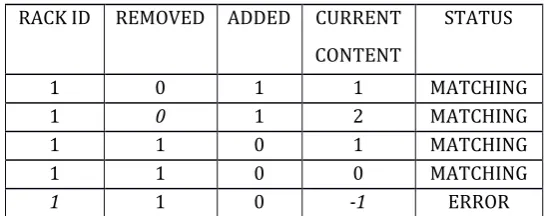
[image:3.595.33.307.504.612.2]Few devices to thousands of devices Protocols IoT uses non-standard and new protocols to communicate Requests/Response IoT devices create the requests and receive response as well as request and provide response. Amount of data sent and received minimal data per request but data is shared continuously with time interval. Table 2 shows the test cases of the rack contents.
Table 2.
V. CONCLUSION
The system is capable of detecting the changes in the load cell and according to the unit value it has the intelligence to compute the changes and it can feed this in real time to the server thus helping in monitoring the stock
in real time and with very less human error. This is because in the existing system there are humans to maintain the stock and there is a considerable amount of error during the stock arrival and even when there is utilization of the stock there is a chance of that not being
entered into the stock and even he can use the power to his advantage and enter wrong quantities. The sensors are always active and very precise thus any changes is immediately reflected to the stock owner on what the change was and if there is any discrepancies then this data can be produced as an evidence to claim the reality and thus making the owner secure and he doesn’t become a prey for the people who want to cheat him. Since there is a use of HTTP and networks the owner need not be in the same location to access the stock and the current amount of items present there. He can access that data from his system from any other place. He can cross check the stock from the customer to know if they match. He can immediately take necessary actions if the stock data that he has doesn’t match with what the customer had given him.
VI. FUTURE WORK
Using RFID for identifying a particular item in
inventory. Fig. 3 shows the connection of RFID sensor to Raspberry PI.
Working:
Fig. 3
The RFID RC522 is a very low-cost RFID (Radio-frequency identification) reader and writer that is based on the MFRC522 microcontroller.
This microcontroller provides its data through the SPI protocol and works by creating a 13.56MHz electromagnetic field that it uses to communicate with the RFID tags. Make sure that the tags you purchase for your RFID RC522 operate on the 13.56MHz frequency otherwise we will fail to read them.
Using CCTV camera to improve the security
prospects.
Improving the user interface to involve with the
main system so that direct monitoring is made. TEST
CONDITION SPECIFICATION INPUT SPECIFICATION OUTPUT /FAIL PASS
System sends
Data to Database
Data through
RESTful API Data at Database PASS
RACK ID REMOVED ADDED CURRENT CONTENT
STATUS
1 0 1 1 MATCHING
1 0 1 2 MATCHING
1 1 0 1 MATCHING
1 1 0 0 MATCHING
© 2019, IRJET | Impact Factor value: 7.211 | ISO 9001:2008 Certified Journal
| Page 6121
Using a more complex sub system for interfacing
the PI and client side system.
GSM modules can be used to find the precise
location of the items in the rack.
Using cloud to store and fetch the data.
REFERENCES
1) S.M. Huynh, D. Parry, A. Fong, J. Tang, Home
localization system for misplaced objects, in: Proc. IEEE International Conference on Consumer Electronics, 2014, pp. 462–463
2) Son Minh Huynh, David Parry, A.C.M. Fong, Novel
RFID and ontology based home localization system for misplaced objects, IEEE Trans. Consum. Electron. 60 (3) (2014).
3) Y.X. Lu, T.B. Chen, Y. Meng, Evolution guideline
system and intelligent evaluation process on the Internet of things, Am. J. Eng. Technol. Res. 11 (9) (2011) 537–541.
4) A. Ramaa, K.N. Subramanya, T.M. Rangaswamy,
Impact of warehouse inventory management system in a supply chain, Int. J. Comput. Appl. 54 (6) (2012) (0975-8887).
5) M. Bruccoleri, S. Cannella, G. La Porta, Inventory
record inaccuracy in supply chains: the role of workers’ behavior, Int. J. Phys. Distribution Logistics Manage. 44 (10) (2014) pp.
6) N. Wartha, V. Londhe, Context-aware approach for
enhancing security and privacy of RFID, Int. J. Eng. Comput. Sci. 4 (2015), pp. 10,078-88.
7) Samer S. Saab, Zahi S. Nakad, A standalone RFID
indoor positioning system using passive tags, IEEE Trans. Ind. Electron. 58 (5) (2011).
8) J. Gubbi, R. Buyya, S. Marusic, M. Palaniswami,
Internet of things (IoT): a vision architectural elements and future directions, Future Gener. Comput. Syst. 29 (7) (Sep. 2013) 1645–1660.
9) K. Stravoskoufos et al, IoT-A and FIWARE:
bridging the barriers between the cloud and IoT systems design and implementation, in: Proc. 6th Int’l Conf. Cloud Computing and Services Science (CLOSER 2016), 2016, pp. 146–153.
10)D. Bandyopadhyay, J. Sen, Internet of things:
applications and challenges in technology and standardization, Wireless Pers. Commun. 58 (1) (2011) 49–69.
11)P. Yang, PRLS-INVES: a general experimental
investigation strategy for high accuracy and precision in passive RFID location systems, IEEE
Internet Things J. 2 (2) (2015) 159–167.
12) A. Ibrahim, D. Ibrahim, Real-time GPS based
outdoor WiFi localization system with map display, Adv. Eng. Softw. 41 (2010) 1080–1086
13)Ashton, K. (2009). That ‘internet of things’ thing.
RFID journal, 22(7), 97–114
14)Atmojo, U. D., Salcic, Z., Wang, K. I.-K., & Park, H.
(2015). System-level approach to the design of ambient intelligence systems based on wireless sensor and actuator networks. Journal of Ambient Intelligence and Humanized Computing,6(2),153– 169. https://doi.org/10.1007/s12652-014-0221-3
15)Atzori, L., Iera, A., & Morabito, G. (2010). The
Internet of Things: A survey. Computer Networks, 54(15),2787–2805.
https://doi.org/10.1016/j.comnet.2010.05.010
16)Azanha, A., Vivaldini, M., Pires, S. R.I., & Camargo
Junior, J. B. d. (2016). Voice picking: analysis of critical factors through a case study in Brazil and the United States. International Journal of Productivity and Performance Management, 65(5), 723–739. https://doi.org/10.1108/IJPPM-11-2015-0163
17)Ballestín, F., Pérez, Á., Lino, P., Quintanilla, S., &
Valls, V. (2013). Static and dynamic policies with RFID for the scheduling of retrieval and storage warehouse operations. Computers & Industrial
Engineering, 66(4), 696–709.
https://doi.org/10.1016/j.cie.2013.09.020
18)Ballou, R. H., Gilbert, S. M., & Mukherjee, A. (2000).
New Managerial Challenges from Supply Chain Opportunities. Industrial Marketing Management,
29(1), 7–18.
https://doi.org/10.1016/S00198501(99)00107-8
19)Bell, E., & Bryman, A. (2007). The Ethics of
Management Research: An Exploratory Content Analysis. British Journal of Management, 18(1), 63–77.
https://doi.org/10.1111/j.14678551.2006.00487. x
20)Bizcommunity. (2017). Industry 4.0 and IoT
central to manufacturing transformation.
Retrieved from
© 2019, IRJET | Impact Factor value: 7.211 | ISO 9001:2008 Certified Journal
| Page 6122
21)Blumberg, B., Cooper, D. R., & Schindler, P. S.
(2008). Business research methods (2. European ed.). London: McGraw-Hill Education.
22)Chakravarty, A. K. (2014). Supply Chain
Transformation: Evolving with Emerging Business Paradigms. Springer Texts in Business and Economics. Berlin/Heidelberg: Springer Berlin
Heidelberg. Retrieved from
https://ebookcentral.proquest.com/lib/gbv/detai l.action?docID=3107028
23)Chibuye, M., & Phiri, J. (2017). A Remote Sensor
Network using Android Things and Cloud Computing for the Food Reserve Agency in Zambia. International Journal of Advanced Computer Science and Applications, 8(11). https://doi.org/10.14569/IJACSA.2017.081150
24)De Koster, R. de, Le-Duc, T., & Roodbergen, K. J.
(2007). Design and control of warehouse order picking: A literature review. European Journal of
Operational Research, 182(2), 481–501.
https://doi.org/10.1016/j.ejor.2006.07.009
25)Dixon, M., Jonas, S., & McCaughan, E. (1982).
Reindustrialization and the transnational labor force in the United States today. Contemporary Marxism, 5, 101–115.
26)Downe-Wamboldt, B. (1992). Content analysis:
Method, applications, and issues. Health care for
women international, 13(3), 313–321.
https://doi.org/10.1080/07399339209516006
27)Easterby-Smith, M., Thorpe, R., & Jackson, P. R.
(2015). Management and business research (5. ed.). London u.a.: SAGE.
28)Elbert, R. M., Franzke, T., Glock, C. H., & Grosse, E. H.
(2017). The effects of human behavior on the efficiency of routing policies in order picking: The case of route deviations. Computers & Industrial
Engineering, 111, 537–551.
https://doi.org/10.1016/j.cie.2016.11.033
29)Fang, J., Huang, G. Q., & Li, Z. (2013). Event-driven
multi-agent ubiquitous manufacturing execution platform for shop floor work-in-progress management. International Journal of Production
Research, 51(4), 1168–1185.
https://doi.org/10.1080/00207543.2012.693644
30)Folger, J. P., Hewes, D. E., & Poole, M. S. (1984).
Coding social interaction. In B. Dervin & M. J. Voigt (Eds.), Progress in Communication Sciences. Norwood, N.J.: Ablex Publishing.
31)Gallmann, F., & Belvedere, V. (2011). Linking
service level, inventory management and warehousing practices: A case-based managerial analysis. Operations Management Research, 4(1-2),
28–38.
https://doi.org/10.1007/s12063-010-0043-1
32)Gasson, S. (2004). Rigor in Grounded Theory
Research: An interpretive perspective on generating theory from qualitative field studies. In M. E. Whitman & A. B. Woszczynski (Eds.), The handbook of information systems research (pp.
79–102). Hershey, Pa.
https://doi.org/10.4018/978-1-59140-144-5.ch006
33)Goudarzi, P., Tabatabaee Malazi, H., & Ahmadi, M.
(2016). Khorramshahr: A scalable peer to peer architecture for port warehouse management system. Journal of Network and Computer
Applications, 76, 49–59.
https://doi.org/10.1016/j.jnca.2016.09.015
34)Guba, E. G. (1981). Criteria for assessing the
trustworthiness of naturalistic inquiries. ECTJ, 29(2), 75. https://doi.org/10.1007/BF02766777
35)Gubbi, J., Buyya, R., Marusic, S., & Palaniswami, M.
(2013). Internet of Things (IoT): A vision, architectural elements, and future directions. Future Generation Computer Systems, 29(7), 1645–1660.