Visualising surfaces, surfacing vision: Introduction Rebecca Coleman and Liz Oakley-Brown
Abstract
In this Introduction to a special section on Visualising Surfaces, Surfacing Vision, we
argue that to conceive vision in the contemporary world it is necessary to examine
its embedding within, expression via and organisation on the surface. First, we
review recent social and cultural theories to demonstrate how and why an attention
to surfaces is salient today. Second, we consider how vision may be understood in
terms of surfaces, discussing the emergence of the term ‘surface’, and its
transhistorical relationship with vision. Third, we introduce the contributions to the
special section, which cover written articles and artworks. We make connections
between them, including their exploration of reflexivity and recursion, observation,
objectivity and agency, ontology and epistemology, relationality, process, and two-
and three-dimensionality. Fourth, we consider some implications of an
understanding of visualising surfaces/surfacing vision.
Keywords
Image, materiality, surface, vision
In 1988 Donna Haraway critiqued the elision between vision and objectivity in the
God’s eye trick; the view from nowhere that is able to see everywhere and
anywhere. In a now infamous formulation, she insisted instead on ‘the embodied
nature of all vision and so reclaim[ed] the sensory system that has been used to
signify a leap out of the marked body and into a conquering gaze from nowhere’
(1988: 581). Put simply, she argued, feminist objectivity means ‘situated knowledges’
where vision is located in specific bodies, technologies and contexts (1988: 581).
Haraway’s argument can be understood as part of social and cultural theory’s wider
interest in vision and visual representation in the 1980s and 1990s (see e.g. Brennan
is not neutral but is historically and culturally specific; it is constituted and located
through its relations with bodies and technologies (see e.g. Crary 1990, Beer 1996).
A decade earlier, Hannah Arendt’s interrogation of ‘the old metaphysical dichotomy
of (true) Being and (mere) Appearance’ and ‘the old prejudice of ‘Being’s supremacy
over appearance’ posited (after Adolf Portmann) ‘the value of the surface’ (1978:
27). This special section both draws on and pushes Haraway’s argument, paying
particular attention to the relationships between vision’s complex sensorium and
‘the value of the surface’. The critical and creative contributions to this special
section indicate that – in different ways and with different foci – to understand
vision in the contemporary world it is necessary to examine its embedding within,
expression via and organisation on the surface. What we are suggesting is a review
of surfaces and a concomitant re-evaluation of vision to understand it in terms of a
surface.
An attention to the relationship between vision and surface can be identified in
social and cultural theory’s visual turn. Jonathan Crary, for example, argues:
what determines vision at any given historical moment is not some deep
structure, economic base, or world view, but rather the functioning of a
collective assemblage of disparate parts on a single social surface. It may
even be necessary to consider the observer as a distribution of events
located in many different places (Crary 1990: 6).
If vision is composite, that is in Crary’s view, if it works ‘as a ‘collective assemblage of
disparate parts’, vision’s corresponding focal point is coolly flattened into ‘a single
social surface’. Thus, one of our aims is to pay specific attention to this plane;
another is to consider the political significance of surfaces.
This Introduction’s title ‘Visualising surfaces, surfacing vision’ has a twofold meaning.
It refers both to how surfaces become a means by which particular ideas, relations,
visualise, that is be a spatio-temporal site through which relations and materialities
become visible, or not. One of these processes may be apparent in any example or
case, or they may both be evident. Surfacing vision refers to how vision becomes
located within or on a particular kind of surface – that is, how vision is relocated
from the view from above to a plane, or surface. Such a focus requires an
examination of, as well as a questioning of, a straightforward hierarchical binary
opposition between surface and vision. What are the implications of positing a
‘single’ surface for understanding vision? To what extent is a surface mapped,
engaged, interacted with, made visible? Does a surface ‘belong’ to any particular
entities, human or non-human? How is vision (part of or constitutive of) an
assembled surface? We approach these questions through academic papers and art
works, seeing language alone as incapable of articulating their complexity and
drawing attention to the multiple practices through which they are being addressed.
Reading the articles alongside the artworks makes connections between seemingly
exceptional and quotidian encounters. Yet there are similar questions at stake: for
instance, how does vision work to materialise or obscure particular material entities,
and what kinds of sensory, embodied and political experiences are created through
encounters with the surface? In sum, we suggest that vision is productive of and
produced via surfaces. Vision is located ‘on’ or ‘in’ surfaces. At the same time, vision
draws attention to surfaces in ways which ultimately complicate Crary’s concept of a
‘single social surface’. ‘The surface’ is thus potentially manifold and politically
contingent.
As well as discussing the various contributions to the special section, this
Introduction sets out what ‘a surfacing of vision’ refers to, what it might involve, and
what some of its implications are. First, we discuss how and why an attention to
surfaces is salient today, drawing together recent social and cultural theories where
surfaces are both explicitly and implicitly addressed. We emphasise especially the
processual and transformational quality of surfaces and hence we highlight how a
focus on surfaces is at the same time a focus on (its) surfacing. Second, we consider
how vision may be understood in terms of surfaces, discussing the emergence of the
introduce the contributions to the special section, discussing how they address the
question of visualising surfaces and surfacing vision. We make connections between
them, including their attention to reflexivity and recursion, observation, objectivity
and agency, relationality, and a re-working of the relationship between two- and
three-dimensionality. And we also consider how they put forward distinct theoretical
approaches and empirical foci to show the divergences between them; the special
section does not propose a unified account of visualising surfaces and surfacing
vision so much as reflect on the multiple ways in which these processes take place,
and the different agencies and actors they involve. In the last section of the paper,
we draw out what we see to be some of the implications of an attention to
visualising surfaces/surfacing vision in relation to social and cultural theory more
widely.
I. Reviewing surfaces
According to Christopher Kelen, ‘seeing and (re)theorising surfaces between cultural
entities (peoples, cultures, languages, and any of their characteristics) is increasingly
de rigeur for cultural criticism. A variety of synonyms and metaphorical schemata are available for the purpose’ (2007: 50). Lisa Adkins and Celia Lury (2009) designate a
‘turn to the surface’, which they explain in part as ‘a need to redefine the relations
between ontology and epistemology, and in particular a problematisation of
surface-depth models that is articulated in historical understandings of representation in
relation to, for example, hermeneutics, translation, concept formation, involvement
of publics, and so on’ (2009: 15). For Adkins and Lury, a redefinition of the relations
between ontology and epistemology as part of a turn to the surface is necessary not
only to correct a dualism within theory itself, but also to account for how the social is
‘open, processual, non-linear and constantly on the move’ (2009: 18). This
understanding sees the social as in process or becoming. It is in this sense that our
focus here is not only on surfaces but also on surfacing; or, better, that surfaces are
understood in terms of (a) surfacing.
The relationship between surfaces and surfacing, as well as a rationale for why these
Lury) and vision (for us), can be helpfully developed through recourse to Tim Ingold’s
work. Concentrating on the surface of the earth, Ingold explains the relationship
between surfaces and surfacing as processual: ‘the ground surface is not
pre-existent, but undergoes ‘continuous generation’ (2010: S125), and it is thus
‘perceived kinaesthetically, in movement’ (2010: S125). He also proposes that the
surface of the earth is ‘composite […] matted from the interweaving of a miscellany
of different materials, each with its own peculiar properties’ (2010: S125), and as
such, ‘far from comprising a featureless and perfectly level plane, the ground
appears infinitely variegated’ (2010: S125). While the surface is a plane, it is also
patterned, textured and knotty: a conception that suggests that relations of power
exist and are co-ordinated (see also Coleman 2016). These characteristics of (a)
surface lead Ingold to argue that a surface is ‘its surfacing’ (2010: S126). As
kineasthetic, composite, infinitely variated and continually generated, a surface is
always in the process of – and is constituted through this continual process – its
surfacing: a surface is its becoming.
The publication of Joseph Amato, Surfaces: A History (2013), Giuliana Bruno, Matters
of Aesthetics, Materiality and Media (2014), and Glenn Adamson and Victoria Kelly (eds) Surface Tensions: Surface, Finish and the Meaning of Objects (2013) alongside
symposia such as our own Theorising Surfaces (2013) and Mike Anusas and Cristián
Simonetti’s panel Surfaces: Contesting Boundaries Between Materials, Mind and
Body for the International Union of Anthropological and Ethnological Sciences
(2013)1 exemplify the scrutiny of surfaces’ materiality in the second decade of the
2000s. Concentrating on surfaces of different scale and scope, including buildings,
faces and plants, Amato’s phenomenologically-inspired monograph foregrounds
human perception’s variability. Surfaces, for Amato,
furnish our primary encounters with the outer and inner layers of things –
their cover, epidermis, membrane, bark, rind, hide, and skin. They also
present us with our first experiences of the primary disposition of objects,
body of surfaces, meet and interact with a world dressed in surfaces (2013:
xv).
Amato’s human-centric conceptualisation of surfaces puts it in tension with other
recent work. For example, the special issue of Environment and Planning A: ‘What
are surfaces?’ provides key essays on the subject as the journal’s guest editors Isla
Forsyth, Hayden Lorimer, Peter Merriman and James Robinson answer their titular
question by way of concepts of and case studies on the surfaces of earth, bodies and
faces and commodities, technologies and materials (2013: 1013). This line of
argument allows them to ‘rethink surfaces as multiple, embodied, and practised
material productions’ (2013: 1015), corporeality refigured by ‘Deleuzian,
Foucauldian, and Leibnizian conceptualisations of interiors as pleats or enfoldings of
an outside’ (2013: 1016), and the ways in which ‘[a]n array of different
technologies…have fundamentally altered the way we think about and understand
the world’ (2013: 1017).
In one way, Forsyth et al’s attention to the ‘emergent field of critical, surficial
thought’ (2013: 1017) is analogous to our objectives in this special section. Here,
surface refers to both tactile and tangible entities such as skin, screens, piecework
quilts and the Earth, and to more abstract and ephemeral forms and processes
embedded in temporality, spatiality and photology. As with vision, the surface is
material and immaterial, actual and virtual. A focus on the surface therefore requires
a consideration of the boundary making and unmaking between such states, and
how they might interface and/or become through their relationality. We also want
to note and frame what we see as an emerging field of thinking (about) surfaces.
However, by interlacing critical essays and creative pieces, and by broadening the
scope from geography to social and cultural theory more generally, we also have two
further aims. One is to bring together some of the wide-ranging and interdisciplinary
ways in which different surfaces are currently being theorized, performed and
practiced. A second is to foreground a particular ‘art of inquiry’ in which ‘the conduct
materials with which we work. These materials think us, as we think through them’
(Ingold, 2013: 6).
Branden Hookway develops an ‘art of enquiry’ by focusing on interfaces as a border
between social phenomena. In his monograph Interface (2014) he makes distinctions
– albeit uneasy ones – between interface, surface, edge and adjacency. ‘As a
boundary condition that comes into being through the active relation of two or more
distinct entities or conditions’, Hookway observes, ‘the interface may be
distinguished from the surface. The sur-face, as a facing above or upon (sur-) a given
thing, refers first of all back to the thing it surfaces, rather than to a relation
between two or more things. A surface exists primarily as an aspect of that which it
surfaces’ (2014: 13). In an endeavour to confound the enduring opposition between
visible and impalpable structures and their referents, Hookway is interested in
processes of relationality:
An analysis beginning from the surface privileges the question of what a thing
is or what its properties might be, while one beginning from the interface
privileges the question of how a relation may come into being and how it
may produce behaviours or actions. A surface presents form, while an
interface performs a shaping. (2014: 14)
Whilst this special section is concerned with the means by which surfaces come into
view, it further probes the binary between ‘form’ and ‘performance’ and unsettles
the nexus ‘upon, above and between’. Our understanding of surface moves between
what Hookway defines as ‘surface’ and ‘interface’, in that we examine both what
may be ‘sur-faced’ and the surface as a surfacing of relations and sensations. In
2008, Susanne Küchler noted that ‘a new kind of surface ontology which replaces the
opposition of inside and outside, invisible and visible, immaterial and material with a
complementary relation that thrives on transformation rather than distinction’ (116)
has become particularly significant with the emergence of a ‘technological
materiality’. ‘Wearable computing, and smart fabrics in more general terms’, she
Küchler’s positing of a new surface ontology is also proposed by other social and
cultural theorists who analyse the functioning of social and cultural processes as
networks, assemblages and planes of connections and linkages. For example,
developing the significance of the concept of assemblage to actor-network-theory to
explain his notion of ‘working surfaces on the social’ – and in ways that echo Crary –
Tony Bennett (2007a, 2007b) suggests the social be approached as ‘a single-levelled
reality’, where ‘there are no hidden depths or structures to be fathomed’ (2007a:
33). He goes on to argue that:
This commitment to the analysis of natural/cultural/social/technical
networks and assemblages of actants as consisting only of visible surfaces, a
single-planed set of wholly observable events, actions and processes with no
hidden, deep or invisible structures or levels, stands in contradistinction to
the dualistic ontologies of the social that still characterise those versions of
the cultural turn that have most influenced the development of cultural
studies (2007b: 614).
The understandings of surfaces and surfacing that we introduce here vary in their
foci and approach. While for Bennett, Adkins and Lury, and Küchler, surfaces enable
a thinking through of the connections between what Bennett calls
‘natural/cultural/social/technical networks and assemblages’, for Ingold it is more
phenomenological, whereby the point is not ‘to be beguiled by an ontology that
consigns the living world to the inertia of its objective representation’ (2010: S137,
N. 3) and epistemology is developed through the tactile relationship with the
ground. In bringing these sometimes disparate approaches together, our intention is
to draw attention to both the increasing interest in surfaces across different
disciplinary perspectives and practices and how these may draw through and
challenge certain historical conceptualisations of surfaces. It is also to highlight how,
despite their distinctiveness from each other, certain common themes can be
identified. These include a concern with process and movement, and a reformulation
of ontology and epistemology, depth and the superficial, movement and change –
II. Surfaces and vision
But what are the implications of surface/surfacing for understanding vision? In
scrutinizing the word ‘surface’ itself, a significant relationship with vision emerges.
Derived from the fourteenth-century Middle French term defining the ‘visible
outside part of a body, outermost boundary of any material object’2 the word
‘surface’ makes a striking appearance in the English vernacular in Thomas Bowes’
1594 published translation of Pierre de la Primaudaye’s L’Académie française The
second part of the French academie Wherein, as it were by a naturall historie of the bodie and soule of man, the creation, matter, composition, forme, nature, profite and use of all the partes of the frame of man are handled, with the naturall causes of all affections, vertues and vices, and chiefly the nature, powers, workes and immortalitie of the soule. In his epistle ‘To the Christian Reader’, Bowes writes that ‘Seneca the Philosopher reporteth…that the looking glasse was first invented to this end, that
man might use it as a meane to know himself the better by (b1r)’. Bowes continues:
In which respect this Booke may most fitly be resembled to a glasse, as that
which affoordeth unto us both these uses in farre more excellent maner then
can be performed by any looking glasse how rare and surpassing soever it be.
For even the best of that kind doth represent unto our eyes only so much of
the surface of our own bodies as is directly before it, but as for the hinder
parts we take no view of them by a glasse, much lesse is it able to give us a
sight of the internall members of our bodies, wherby we may attaine to any
profitable knowledge of them. (b1r; our emphasis)
It would be foolish, of course, to suggest that surfaces were disregarded before
1594. The publication of the first English translation of Euclid’s The elements of
geometrie of the most ancient philosopher (Henry Billingsley 1570) complete with its three-dimensional fold-up diagrams showing geometric shapes, for instance,
indicates that this was not the case.3 However, Bowes’ quotation is noteworthy for
‘the ways in which the terms ‘surface’’’ ‘looking glasse’ ‘and “‘bodies’’ are brought
earlier mirrors that produced murky reflections, in 1507 the Venetians discerned
how to manufacture transparent glass. While ‘[i]t continues to be hotly debated
whether glass is a liquid or a solid’ (Garrison 2015: viii), glass-making was a process
which Herbert Grabes called the ‘technological marvel of the age’ (Shuger 1999: 21).
For the French philosopher Georges Gusdorf, such mirrors ‘gave rise to modern
reflexive self-consciousness, which, in turn, led to the sudden proliferation of
autobiographical genres’ (cited in Shuger 1999: 21). By contrast, Deborah Shuger
argues that the sixteenth-century clear-glass mirror does not record a specular
moment of subjectivity (1999: 21). Unlike its everyday modern equivalent, the
reflective surface of the sixteenth-century mirror was generally convex. With a
bulging outer layer facilitating a greater field of vision, the material fabric of Bowes’
‘looking glasse’ encourages the viewer to look outward not inward, thus supporting
Shuger’s central thesis that ‘early modern selfhood was not experienced reflexively
but, as it were relationally’ (Shuger 1999: 37); this mirror calls attention not so much
to depth – ‘the internall members of our bodies’ – but to the relations that may be
detected on and through its surface. Hence, ‘the early modern mirror functions
according to an ontology of similitude rather than identity/difference; it reflects
those whom one will or can resemble’ (Shuger 1999: 37) in an interpersonal and
interactive process of reflection. In Bowes’ case, the relations are white, Western,
elite and patriarchal; his ‘looking glasse’ is a ‘technological marvel’ in favour of but
not (yet) consolidating ‘depth ontology’ (Miller 2010: 16). In the twenty-first century,
The second part of the French academie’s efforts to bring the ‘looking glasse’ and ‘bodies’ into dialogue with selfhood and identity also helps to explain how
materiality, technology, epistemology and ontology, as we discuss below, are bound
up with the semiotics and sensations of surfaces: selfhood, subjectivity and identity
become known and understood, and materiality comes to be shaped and made
actual, through particular visual technologies.
Evidently informed by contemporary discourses, Bowes’ Elizabethan episode and its
primary concern for the early modern Christian-humanist condition might seem far
(2010) has observed, ‘we are actually closer to the sixteenth century than to the
twentieth, precisely because the agreement that created the Bifurcation [between
Nature and Science] in the first place now lies in ruin and has to be entirely
recomposed’ (2010: 480). Looking back, as Latour suggests, may help us to move
forward. Or, put more topologically, ‘[t]hings that are seemingly distant […] turn out
to be far more promiscuous and can be shown to be in far closer proximity than one
might initially imagine’ (Michael and Rosengarten 2012: 104). Such topological
thinking can therefore bring apparently disparate elements into correspondence,
connections that bring into focus what might be termed an interface or a fold – a
surface – rather than a linear trajectory from past to present to future. In a broadly Latourian sense, like their sixteenth-century pre-Cartesian counterparts, twenty-first
century Western ontologies are ‘caught up in the same story’ (Latour 1993: 1) of
considering the material means by which surfaces, vision, technologies and
materiality are enmeshed. Taking inspiration from the 1594 appearance of the word
‘surface’ and its subjects as bound to the new technologies of book and glass
production in sixteenth-century England, places emphasis on the relations between
surfaces, materiality and (contemporaneous) technologies through which vision
operates (differently).
III. Visualising surfaces, surfacing vision
If, then, a focus on the surface involves an understanding of a circuit of visual
technologies and materiality, one question that is raised is whether or not it is
possible, or desirable, for the human to be placed as the central orientation point
from which to understand surfaces. In addition to – or indeed supplanting – Amato’s
exploration of how ‘humans […] meet and interact with a world dressed in surfaces’,
what the contributions included here demonstrate is the inextricable links between
humans and technologies. It is not so much a case of humans moving out into a
world that is somehow ‘beyond’ them, but, in Patricia Ticineto Clough’s (2000)
words, ‘the body and the machine, the virtual and the real, and nature and
Clough expands this configuration of nature and technology through the example of
television, arguing that television does not serve as an ‘extension of the human
body, […] maintaining the intentional knowing subject at its centre and as its agency.
Instead, television makes the subject only one element in a “network imagination”
of teletechnology’ (2000: 99, references omitted). Clough’s argument is made via an
appreciation of how television is an integral and ongoing aspect of contemporary
network imaginations; television is thoroughly embedded in the flow of social life.
Television invites that gaze. However, the television screen understood as a surface
is a nuanced threshold for both folding in and excluding its audience in ways that
chime with this special section’s content.
Furthermore, while it may have intensified, the functioning of vision and observation
in such a distributed and assembled manner has not emerged with the digital; for
example, the mirror that Bowes discusses is agentic in its relationality with other
aspects of a vision and observing assemblage. Modernity’s ‘immersion in the
primacy of surface’ (Cheng 2011: 10) is illustrated by Siegfried Kracauer’s practical,
empirical and theoretical essays produced in 1920’s Weimar Germany. In ‘The Mass
Ornament’ (1927/1995), Kracauer observes:
The position that an epoch occupies in the historical process can be
determined more strikingly from an analysis of its inconspicuous surface-level
expressions than from that epoch’s judgements about itself. Since these
judgements are expressions of the tendencies of a particular era, they do not
offer conclusive testimony about its overall constitution. The surface-level
expressions, however, by virtue of their unconscious nature, provide
unmediated access to the fundamental substance of the state of things (75).
While his overarching interests in ‘marginal, quotidian phenomena’ (Levin 1995: 15)
and ‘surface-level expressions’ are outstanding, Kracauer’s understanding of their
‘unconscious nature’ allowing ‘access to the fundamental substance of the state of
things’ remains indebted to the hierarchical relationship between surface/depth;
(Elsaesser and Hagener 2010: 109), late twentieth-century thinkers such as Laura
Marks have examined the ways in which ‘vision itself can be tactile’ (Marks 2000: xi).
Film theorist Vivianne Sobchack (1991, 2004) argues persuasively for an
understanding of vision as multi-sensory, while others demonstrate how images are
felt (as well as seen) and lived out sensorially and affectively (see for example,
Coleman 2009, 2012 Oakley-Brown 2017). Bruno draws attention to the tactility of
material surfaces onto which vision is projected, mediated, transmitted and
transmutated (2014: 3), be that the surface of a building or the screen on which a
film is projected and viewed. She argues that the screen is ‘a plane that makes
possible forms of connectivity, relatedness, and exchange. Such a surface, far from
being superficial, is a sizable entity: it is a space of real dimension and deep
transformation. Conceived as such a space of relations, the surface can contain even
our most intimate projections’ (2014: 8).
Produced in the wake of such optic and haptic theories, Meredith Jones’ essay in this
special section probes ‘an underexamined tension between two- and
three-dimensional embodiments. This tension lives, necessarily, between flat
representations of bodies (images) and the shapes, sizes, and dimensions that those
and all bodies have in their living forms, as and when they’re being experienced
within and having capacity through three-dimensions’ (2017: XX). Jones’ essay
explores relations between bodies and surfaces through a focus on labiaplasty, the
cosmetic surgery procedure that deals with the ‘complex and fraught’ history of the
vulva (2017: XX). She understands the procedure in terms of the surface for the ways
in which it moves between two and three dimensionality, complicating boundaries
between inside and outside, body and media. Jones’ argument is that contemporary
media culture creates what she has termed in previous work ‘media-bodies’ (see e.g.
2008), where skin and screens, usually understood as distinct and incompatible
surfaces, are increasingly merging. She argues that skin and screens can both show
and communicate, hide and conceal, and that there is ‘a theoretical and an everyday
Jones’ wide-ranging discussion takes in recent representations of vulvas in popular
culture (including of Kim Kardashian and understandings of censorship from film
board members), how representations and understandings of the vulva have a
racialised and racist history, and extracts from empirical research with women who
undergo cosmetic surgery. Drawing on these examples, she argues that labiaplasty is
‘intricately connected with a growing conflation of skin and screen, where the
surface of the skin becomes more expressive and visual’ (2017: XX); for example,
bodies become increasingly part of a media(ted) gaze, and the gaze comes to
(literally) shape bodies. As Marina, a participant in Jones’ research about to undergo
cosmetic surgery says, ‘I wish we could just do Photoshop to me now’ (2017: XX).
Jones attends clearly to the gendered and raced politics of labiaplasty; but she also
cautions against it becoming the subject of a moral panic, tied especially to any
collapse of the surface into the superficial (read, feminine: shallow, silly, artificial,
oppressed). Instead, in ways that resonate with our earlier discussion of the
emergence of the mirror as a surface, she proposes labiaplasty and cosmetic surgery
more widely as ‘allow[ing] for potential new forms of subjectivity to emerge:
subjectivities that offer alternatives to Cartesian depth/surface binaries and offer
new ways of being’ (2017: XX). Marina’s comments, for example, can be seen as ‘a
wish to exist in two-and three-dimensions, to be able to operate on more than one
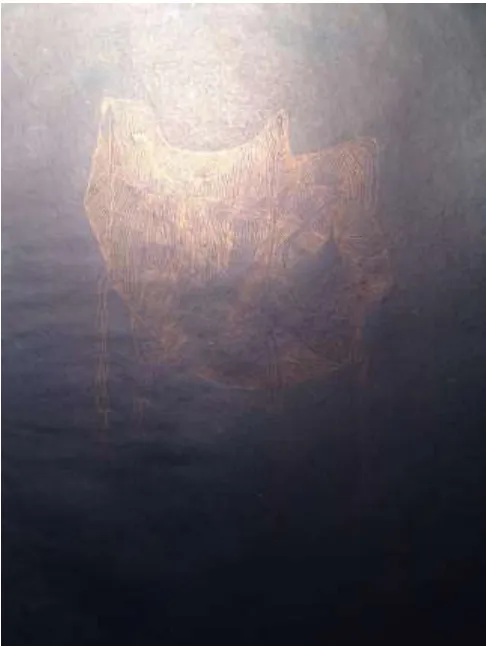
Figure 1: Sarah Casey, ‘Dark Nets’, 2015.
Moving between two- and three-dimensions is also key for Sarah Casey’s artistic
contribution to this special section (e.g. Figure 1). As part of her collaborative
AHRC-funded project ‘Dark Matters: Interrogating Thresholds of Imperceptibility’, Casey’s
drawings are informed by ‘theoretical cosmology, fine art and anthropology of
science to explore the relationship between human knowledge and perception and
the realm of the imperceptible’ (Ellis and Casey n.d.).4 In acts of drawing, as John
Berger explains, ‘[a] line, an area of tone, is not really important because it records
what you have seen, but because of what it will lead you on to see’ (Berger in
Grønstadt et al 2016: 9). Drawing is thus a particular ‘gestural form of seeing’
(Grønstadt et al 9): hand and vision work in tandem at the surface of inscription.
Arguably an anthropographical exercise, that is a ‘correspond[ence] with the world
through drawing’ (Ingold 2013: 129), Casey’s work interrogates the representation of
ontological limits and the thresholds between what is perceptible and imperceptible
through exploring how drawing works on and with particular surfaces. Recalling
metaphysics in an undoing of photology that can be described as an engagement in
the texture of light rather than in relation to light’s value as either an ideal physical
medium originating metaphorically or naturally from the sun’ (Vasseleu 1998: 11),
Casey’s creative exploration of ‘invisible dark matter’ exploits photologic
epistemologies alongside superficial effects: ‘light itself appears layered, coated, and
textured’ (Bruno 2014: 74). In one piece, for example, (Figure 1), Casey drew the fine
nylon mesh ‘cages’ used to house sandflies in biomedical research, as a means of
exploring the sense of barriers and limits. Using dark blue ink on dense dark indigo
paper, Casey expected a ‘barely perceptible result’ (Casey 2015). However,
‘surprisingly, the blue ink emerges as a coppery reflection. […] the ink on indigo
paper drawing is contingent upon lighting and the viewer’s spatial relationship to
the drawing in order to be seen’ (Casey 2015). In Casey’s work, as Day and Lury put
it, ‘relations of observation are constantly shifting, implying and sometimes
precluding points of view, and shaping the contours of events by providing
ever-changing conditions for visibility and invisibility across situations’ (Day and Lury
2017: XX).
Of importance here then are the circuits or systems by which bodies, machines,
vision, observation and reflexivity plug into or are in relations with each other. On
this point, and of relevance to a focus on surfaces, is the argument made widely
across different theoretical movements – including ANT (for example, Latour 1993),
new materialisms (for example, Barad 2007), affect theory (for example, Clough with
Halley 2007, Blackman and Venn 2010, Gregg and Seigworth 2010) – that a network
or system is composed of many different types or kinds of entity, all of which may be
agentic. Agency here is not the preserve of the human, but is distributed across
different actors that may more usually be understood as active and inactive. It is
necessary to examine both the actors themselves and the connections between
them, reconfiguring hierarchies (between organic and technological, human and
nonhuman for example) into what might be a single levelled and textured surface on
which different entities are capable of acting. In terms of Crary’s conceptualisation
different parts’; both vision and that which observes is disparate and distributed –
and may be composed of human and non-human elements.
Rather than perceiving vision as a God’s eye trick, Day and Lury’s essay draw on
Flusser’s (2014) philosophy of photography to propose an understanding of vision as
always-already within the situation that is imaged; that is, the observer – which
might be the photographed, the photographer, the viewer or the observational tool
– is not outside the photograph but inside the situation of photography. As such, and
in ways that make connections with Haraway’s and Crary’s arguments noted above,
observation is immanent to the situation rather than transcendent of it, and vision
may move and be positioned differently, constituting different visions as it is located
differently. In Day and Lury’s contribution, vision and surfaces are thought together
as a means of understanding things that disappear from view in a context where
composite images from satellite data ‘might lead us to imagine that contemporary
visualisation has no limits’ (Day and Lury 2017: XX).
It is to understand this potential moving and changing quality of vision that Day and
Lury concentrate on the surface. The cases of disappearance they examine are those
of Malaysia Airlines Flight 370, which disappeared over the South China Sea on 8th
March 2014 prompting international search efforts and struggles over what satellite
images different countries were willing to share with each other, and the 276 girls
who went missing after their abduction from Chibok, Nigeria by Boko Haram.
Through these two distinctive examples, Day and Lury ask how planes and (specific
kinds of) people can disappear from ‘today’s apparently boundless surface of
visualisation’ (2017: XX), drawing attention to how this surface is not as smooth or
all-encompassing as it might appear. Instead, they focus on recursion and rendition
as two particularly significant functions of contemporary surfaces of visualisation,
which demonstrate how ‘the grounds of observation may only retrospectively be
established, and even then only temporarily’ (2017: XX), and how ‘relations of
Figures 2 and 3: Karen Shepherdson, Band Apart, 2012.
Day and Lury’s interests in visibility and invisibility chime with Karen Shepherdson’s
practice-based research which is underpinned by a concern for visioning surfaces
‘created by our perceptual apparatus’ (2013). Shepherdson’s artwork Band Apart
(2012, Figures 2, 3) is a multimedia installation comprising two pieces – the
three-dimensional ‘Landscape with Unified Forms’ and the two-three-dimensional ‘Landscape
with Fragmented Forms’. As she walked around her local landscape of the Isle of
Thanet, Kent, UK, Shepherdson used mobile phone technology to photograph in situ
one thousand rubber bands discarded by postal workers during their rounds. Each
photograph fashioned ‘its own space around each band, framed by different
surfaces, textures and juxtaposed objects’. These images were then ‘randomly
frame’ (2013). In so doing, Shepherdson explored how this arbitrary
‘reappropriation’ altered the prosaic and mundane nature of the materials and how
‘surface, form and colour coalesce as viewing distance from the work increases’
(2013). Next, Shepherdson fashioned the same one thousand rubber bands into a
ball and set the object within a transparent resin container. As Shepherdson
explains, these ‘two interconnected works,…[open] up new research, making explicit
connections between photographic images, surface, texture and three-dimensional
installations’. Invested in capturing the simultaneous forming/performance of
surface, Shepherdson’s Band Apart presses Hookway’s view that ‘[a] surface
[image:19.595.99.500.334.571.2]presents form, while an interface performs a shaping’ (2014: 14).
Figure 4: Anais Moisy, Jen Southern, Chris Speed and Chris Barker, Unruly Pitch, 2015.
Jen Southern’s artistic contribution also shows how movement and lines move
across different planes/surfaces, for example, from walking on the earth to stiches
on different fabrics. Combining bodies, movement and technology, she primarily
‘works with hybrid places as lived environments’ (Southern, n.d.) Like Shepherdson,
Apart uses mobile phone technology to isolate and immobilise materials and surfaces, Southern’s technique of ‘live mapping’
offers participants…a shared experience of ‘comobility’, of being mobile with
others at a distance. As smart phones allow GPS to be a networked
technology this form of mobile communication becomes possible, and […]
participants reflect on what it means to them to be connected at a distance
through their movements, location, speed, trajectory and mode of travel
(Southern 2013).
By contrast with Shepherdson’s interest in recording surfaces-in-suspension,
Southern’s ‘shared experience of “comobility”’ emphasises movement and real-time
documentation. Southern’s focus on mobility and mapping resonates with Day and
Lury’s identification of the changing and live modes of contemporary satellite data
visualisations, as well as with whether and how particular bodies’ movements may
and may not be tracked across surfaces of visualisation. Moreover, Southern’s work
explicates the relations between vision and surfaces through the selection of specific
surfaces to work with. The video that constitutes part of this special section, Unruly
Pitch by Anais Moisy, Chris Speed, Chris Barker and Jen Southern was created for an exhibition at the National Football Museum in 2015 (Figure 4). In this work GPS
tracks of the collective movements of players in a mass football game, usually seen
as individual trajectories on a static map, are traced onto a white screen, revealing
footage of the mass of male bodies in a scrum. The mapping of GPS co-ordinates
onto the flat screen show the temporal and visceral intensities and actions of the
game. At the same time, the video holds a tension between the surface of the screen
and a line that seems to wipe away this surface, revealing the movement ‘below’.
Addressing the issue identified by Bennett of the ‘dualistic ontologies of the social’
that still permeate social and cultural theory from a different although
complementary angle, Susanne Küchler discusses the means by which Oceanic
piecework quilts ‘deflect the Western eye unaccustomed to representations
piecework quilts from the Cook Islands, Eastern Polynesia, where ‘composite parts
[…] are repeated over the surface in a symmetrical, iteratively replicated and
transitively arranged pattern’ (2017: XX) are fundamentally topological and
non-representational, concerned not so much with interpretation but with the
arrangements of parts across a surface and the relations they compose. These
textiles form an important and distinctive case of thinking through the relations
between surface and vision/visualisation in themselves. She offers the Oceanic
pieceworks as potentially productive in this regard: ‘That the surfaces discussed in
this article are at home in societies in which information exchange has operated
across vast distances for some time should make us look at our own [Western]
preconceptions, and provoke a rethinking of how surfaces bind an inner, profoundly
imagistic and geometric world of action with an intentional relation to the world’
(2017: XX). What is highlighted in Küchler’s essay, then, is how a concern with
topological surfaces is not new, and how geopolitical shifts – in the form of disaporic
movements across the globe and in how Western culture is ‘becoming topological’
(Lury et al 2012) – influence and shape ‘visualising surfaces, surfacing vision’.
IV. Reviewing surfaces now
The six contributions to this special section are bound by shared interests in
objectivity, depth, movement, relationality and composition, and individually and
collectively, these essays and artworks both illustrate and complicate Crary’s (1990:
6) assertion that ‘what determines vision at any given historical moment is not some
deep structure, economic base, or world view, but rather the functioning of a
collective assemblage of disparate parts on a single social surface’. The implications
of such a project open out to a series of issues and trends in social and cultural
theory that we have begun to indicate here. Thus, we locate a rationale for a special
section on vision and surfaces within broader interest in surface/surfacing. In
particular, and in part emerging through a series of theoretical (re-)investments in
materiality, ontology, relationality and topology, and in part responding to
contemporary social and cultural changes initiated by technological systems and
mediations, we suggest that surfaces are important devices for exploring and
permeated Western thought that surfaces are things to be delved under and got
beneath, our argument is that surfaces should themselves be seen as sites of
interest: as interfaces where spaces and times – virtual and actual – might be
brought together for example, or intersections where different senses or
materialities – human and nonhuman – might rub up against one another, or
boundaries where certain limits may be made, or breached. As this Introduction has
suggested, a focus on surfaces draws attention to the points where potentially
different entities both meet and are made distinct.
More specifically, we argue that understanding vision and visualising in terms of a
surface draws attention to how traditional dichotomies – between the organic and
technological, real and representational, interior and exterior – themselves require
re-working or are being re-worked, as surfaces may operate not only or so much as a
dividing line as a fold: ‘pleats’ of matter, the continuous textured and fluid enfolding
and unfolding of relations between bodies, technologies and worlds (Deleuze 2003).
As we hope we have begun to show, while the individual contributions are informed
by different conceptual models, the special section suggests more generally that the
study of surfaces is rhizomatic; it is an inherently interconnected and
interdisciplinary network with no firm foundation or clear centre (Deleuze and
Guattari 1987). In this way, our identification of the significance of surfaces/surfacing
to understanding vision today resonates with Martin Jay’s comments on the pictorial
turn in the 1990s; ‘a heterotopic space without a single totalizing vantage point. The
‘pictorial turn’, like the ‘linguistic turn’ before it, shows itself to be richly varied and
irreducible to one model’ (1996: 9). By contrast to the continued oscillations of the
dialectical exchange between subjects and objects, inside and outside, nature and
culture then, we suggest that an attention to surfaces encourages alternative
configurations of the technological and material conditions through which culture
and society transforms, and of the ways in which social and cultural theory may fold
into such transformations. In bringing the different approaches proposed by these
original articles and artist videos into dialogue, the aim of the special section is to
begin to co-ordinate what we see as some of the key conceptual framings of this
Indeed, responding to the ‘paradigm shift’ that Jay identifies in the 1990s through a
recognition of the proliferation of images in contemporary culture and the
displacement/replacement of a primarily linguistic model of understanding social life
with a visual one, what we are suggesting with this special section is that there may
be a further shift underway. What it examines is how surfaces are a productive way
in which to understand the emergence of new and apparently boundless modes of
visualisation, how a concern with surfaces may be understood topologically and
relationally, the techniques through which vision becomes visible, or not, and the
fusion between skin, screen and image. We suggest, therefore, that a contemporary
concern with vision must take into account the specific techniques, conventions and
practices via which vision and materiality are co-produced through
surfaces/surfacing. We see such a project as necessarily concerned with politics and
ethics: it draws attention to how images are produced, viewed and engaged (with),
how actors or agencies are entangled and ‘cut’ (Barad 2007), and the effects and
affects of location, vision and/or observing technologies.
Rebecca Coleman is Reader in the Sociology Department, Goldsmiths, University of
London. She researches and teaches on visual and sensory culture, bodies, inventive
methodologies and presents and futures. Recent publications include a special issue
of Sociological Review, 'Futures in Question: Theories, Methods, Practices' (2017,
edited with Richard Tutton). She is currently completing a book titled Engaging
Futures: Methods, Materials, Media (Goldsmiths Press) and in 2018-19 will be working on a project, 'Mediating Presents: Producing "The Now" in Contemporary
Digital Culture' as part of a Leverhulme Research Fellowship.
Liz Oakley-Brown is Senior Lecturer in the Department of English Literarture and
Creative Writing, Lancaster University, UK. She researches and teaches on
premodern writing and culture, and twenty-first century theory. Recent publications
Surfaces in Early Modern Thought' (2017, edited with Kevin Killleen). She is currently
working on a book-length project about Shakespearean surfaces.
Acknowledgements
This project emerged out of a 2013 seminar and exhibition, supported by the Faculty
of Arts and Social Sciences (FASS), Lancaster University. We would like to thank FASS
for its support. We would also like thank the contributors to the special section,
Patricia Cahill, Daniel Rozin, Kathryn Yusoff, Hazel Marsh and Elizabeth Nichols.
Notes
1 Theorising Surfaces: An Interdisciplinary Seminar, 24th May 2013 and Surfaces in
the Making Art Exhibition, 23rd May-1st June 2013, The Storey Creative Industries
Centre, Lancaster, UK: see http://www.surfacestudies.org/events.html and
‘Surfaces: Contesting Boundaries Between Materials, Mind and Body’, 6th August
2013, Manchester, UK: see
http://www.nomadit.co.uk/iuaes/iuaes2013/panels.php5?PanelID=1662 . See also Mike Anusas and Cris Simonetti (eds), Surfaces: Transformations of the Body,
Materials and Earth (forthcoming 2018). At the former events, Celia Lury, Sarah Casey and Jen Southern were among those who presented work; in the latter,
Susanne Küchler participated. 2
We were reminded of the general OED definition in Forsyth et el (2013: 1015). For
an extended discussion of premodern surfaces see the special issue of the Journal of
the Northern Renaissance edited by Liz Oakley-Brown and Kevin Killeen on Scrutinizing Surfaces in Early Modern Thought (2017).
3
See Kathleen Crowther, Euclid and Book History in the Digital Age
http://www.math.ubc.ca/~cass/Euclid/dee/dee.html>date accessed 1 September 2016
4
See http://darkmattersproject.wixsite.com/thresholds . In her earlier Murmur
works (2009-11), Casey considers the interplay between light, matter and drawing
otherwise inaccessible fabric of the human body. See further
http://www.axisweb.org/p/sarahcasey/ .
References
All websites accessed 8th October 2016, unless otherwise indicated.
Adamson, G. and Kelly, V. (eds) (2013) Surface Tensions: Surface, Finish and The
Meaning of Objects. Manchester: Manchester University Press.
Adkins, L. and Lury, C. (2009) ‘What is the empirical?’, European Journal of Social
Theory, 12(1); 5-20.
Amato, J. A. (2013) Surfaces: A History, Berkley and Los Angeles: University of
California Press.
Anusas, Mike. and Cris Simonetti (eds) (forthcoming 2018) Surfaces: Transformations
of the Body, Materials and Earth. London and New York: Routledge.
Arendt, H. (1978) The Life of the Mind: Thinking. San Diego and New York: Harcourt.
Barad, K. (2007) Meeting the Universe Halfway: Quantum Physics and the
Entanglement of Matter and Meaning, Durham, NC and London: Duke University Press.
Beer, G. (1996) ‘“Authentic Tidings of Invisible Things”: Vision and the Invisible in the
Later Nineteenth Century’, in Brennan, T. and Jay, M. (eds.) Vision in Context:
Historical and Contemporary Perspectives on Sight, New York and London: Routledge, pp. 83-100.
Bennett, T. (2007a) ‘The Work of Culture’, Journal of Cultural Sociology, 1(1): 31-48.
Bennett, T. (2007b) ‘Making Culture, Changing Society’, Cultural Studies, 21(4-5):
610-629.
Billingsley, H. (1570) The elements of geometrie of the most ancient philosopher.
London: John Day.
Blackman, L. and Venn, C. (2010) ‘Affect’, Body and Society, 16(1): 7–28.
Bowes, T. (tr) (1594) Pierre de la Primaudaye: The second part of the French
the frame of man are handled, with the naturall causes of all affections, vertues and vices, and chiefly the nature, powers, workes and immortalitie of the soule. London. Brennan, T. and Jay, M. (eds.) Vision in Context: Historical and Contemporary
Perspectives on Sight, New York and London: Routledge.
Bruno, G. (2014) Surface: Matters of Aesthetics, Materiality, and Media, Chicago:
Chicago University Press.
Casey, S. (2015) ‘Dark Nets’ blogpost:
http://darkmattersproject.wixsite.com/thresholds/emerging-ideas
Cheng, A. A. (2011) Second Skin: Josephine Baker and the Modern Surface. Oxford:
Oxford University Press.
Clough, P. T. (2000) Autoaffection: Unconscious Thought in the Age of
Teletechnology, Minneapolis, MN: University of Minnesota Press.
Clough, P. T. with Halley, J. (2007) (eds) The Affective Turn: Theorizing the Social,
Durham and London: Duke University Press.
Coleman, R. (2009) The Becoming of Bodies: Girls, Images, Experience, Manchester:
Manchester University Press.
Coleman, R. (2012) Transforming Images: Screens, Affect, Futures, London:
Routledge.
Coleman, R. (2016) ‘Notes Towards a Surfacing of Feminist Theoretical Turns’,
Australian Feminist Studies, 31(85): 228-245.
Crary, J. (1990) Techniques of the Observer: On Vision and Modernity in the
Nineteenth Century, Cambridge Massachusetts and London, UK: MIT Press. Crowther, K. (2015) Euclid and Book History in the Digital Age
<http://www.math.ubc.ca/~cass/Euclid/dee/dee.html>
Day, S. and Lury, S. (2017) ‘XXX’.
Deleuze, G. (2003) The Fold: Leibniz and the Baroque, translated by Tom Conley,
London and New York: Continuum.
Deleuze, G. and Guattari, F. (1987) A Thousand Plateaus: Capitalism and
Ellis, R. and Casey, S. (n.d.) ‘Dark Matters: An Interrogation of Thresholds of
(Im)Perceptibility Through Theorectical Cosmology, Fine Art and Anthropology of
Science’, http://insight.lancaster.ac.uk/?p=571
Elsaesser, T. and and Hagener, M. (2010) Film Theory: An Introduction Through the
Senses, New York and London. Routledge.
Forsyth, I. et al (2013) ‘Guest editorial: What are surfaces?’, Environment and
Planning A, 45(5), pp. 1013-1020.
Garrison, J. (2015) Glass, New York and London: Bloomsbury.
Gregg, M. and Seigworth, G. J. (eds) (2010) The Affect Theory Reader, Durham, NC
and London: Duke University Press.
Grønstad, A. et al (2016) Gestures of Seeing in Film, Video and Drawing, New York
and London: Routledge.
Haraway, D. (1988) ‘Situated Knowledges: The Science Question in Feminism and the
Privilege of Partial Perspective’, Feminist Studies, 14(3), pp. 575-599.
Hookway, B. (2014) Interface, Cambridge Massachusetts and London, UK: MIT Press.
Ingold, T. (2010) ‘Footprints through the weather-world: walking, breathing,
knowing’, Journal of the Royal Anthropological Institute, 16, Issue Supplement s1, pp.
S121-139.
Ingold. T. (2013) Making: Anthropology, Archaeology, Art and Architecture. New York
and London: Routledge.
Jenks, C. (ed.) (1995) Visual Culture London, New York: Routledge.
Jay, M. (1996) ‘Vision in Context: Reflections and Refractions’, in Brennan, Teresa
and Jay, Martin (eds.) Vision in Context: Historical and Contemporary Perspectives on
Sight, New York and London: Routledge, pp. 3-12.
Jones, M. (2008a) ‘Media-bodies and screen-births: cosmetic surgery reality
television’, Continuum: Journal of Media & Cultural Studies, 22(4): 515–524.
Jones, M. (2017) XXX.
Kelen, C. (2007) An Introduction to Rhetorical Terms, Penrith: Humanities E-Books.
Kracauer, S (1995) The Mass Ornament: Weimar Essays, translated by Thomas Y.
Küchler, S. (2008) ‘Technological Materiality: Beyond the Dualist Paradigm’, Theory,
Culture & Society 25 (1): 101-120. Küchler, S. (2017) XXXX.
Latour, B. (1993) We Have Never Been Modern, translated by Catherine Porter,
Cambridge: Harvard University Press.
Latour, B. (2010) ‘An Attempt at a “Compositionist Manifesto”, New Literary History
41(3): 471-490.
Levin, T. Y. Introduction. In Siegfried Kracauer, The Mass Ornament: Weimar Essays,
translated by Thomas Y. Levin, Cambridge: Harvard University Press.
Lury, C., Parisi, L. and Terranova, T. (2012) ‘Introduction: The becoming topological
of Culture’, Theory, Culture & Society 29(4-5): 3-35.
Lury, C., Parisi, L. and Terranova, T. (eds) (2012) ‘Topologies of Culture’, Special Issue
of Theory, Culture and Society, 29(4-5).
Marks, L. (2000) Skin of the Film: Intercultural Cinema, Embodiment, and the Senses,
Durham: Duke University Press.
Michael, M. and Rosengarten, M. (2012) ‘HIV, Globalization and Topology: Of
Prepositions and Propositions’, Theory, Culture and Society, 29(1-2): 93-115.
Miller, D. (2010) Stuff, London: Polity.
Mirzoeff, N. (ed) (1998) The Visual Culture Reader London, New York: Routledge.
Oakley-Brown, L. and Killeen, K (eds) (2017), Journal of the Northern Renaissance:
Scrutinzing Surfaces in Early Modern Thought, 8.
https://www.northernrenaissance.org/issues/issue-8-2017/>date accessed 20 August 2017
Oakley-Brown, L. (2017), ‘Translating Surfaces: Shakespeare’s As You Like It
1599-1989’, Journal of the Northern Renaissance, 8.
https://www.northernrenaissance.org/translating-surfaces-shakespeares-as-you-like-it-1599-1989/<date accessed 20 August 2017
Shepherdson, K. (2013) Description of art work provided by the artist, Surfaces in the
Shuger, D. (1999) ‘The “I” of the Beholder: Renaissance Mirrors and the Reflexive
Mind’, pp. 21-41 in P. Fumertin and S. Hinds (eds) Renaissance Culture and the
Everyday. Philadelphia: University of Pennsylvania Press.
Sobchack, V. (1991) The Address of the Eye: A Phenomenology of Film Experience,
Princeton, NJ: Princeton University Press.
Sobchack, V. (2004) Carnal Thoughts: Embodiment and Moving Image Culture,
Berkeley, Los Angeles and London: University of California Press.
Southern, J. (2013) ‘Walking to work no. 1’,
http://www.theportable.tv/walkingtowork/w2w2/index.html, accessed 6th April 2017
Southern, J. (no date) ‘Jen Southern’, http://www.theportable.tv/index.html,
accessed 6th April 2017.
Vasseleu, C. (1998) Textures of Light: Vision and Touch in Irigaray, Levinas and