Manuscript version: Working paper (or pre-print)
The version presented here is a Working Paper (or ‘pre-print’) that may be later published elsewhere.
Persistent WRAP URL:
http://wrap.warwick.ac.uk/120463
How to cite:
Please refer to the repository item page, detailed above, for the most recent bibliographic citation information. If a published version is known of, the repository item page linked to above, will contain details on accessing it.
Copyright and reuse:
The Warwick Research Archive Portal (WRAP) makes this work by researchers of the University of Warwick available open access under the following conditions.
Copyright © and all moral rights to the version of the paper presented here belong to the individual author(s) and/or other copyright owners. To the extent reasonable and practicable the material made available in WRAP has been checked for eligibility before being made available.
Copies of full items can be used for personal research or study, educational, or not-for-profit purposes without prior permission or charge. Provided that the authors, title and full
bibliographic details are credited, a hyperlink and/or URL is given for the original metadata page and the content is not changed in any way.
Publisher’s statement:
Please refer to the repository item page, publisher’s statement section, for further information.
Warwick Economics Research Papers
ISSN 2059-4283 (online)
Blockholder Disclosure Thresholds and Hedge Fund Activism
Guillem Ordonez-Calafi & Dan Bernhardt
Blockholder Disclosure Thresholds
and Hedge Fund Activism
∗
Guillem Ord´
o˜
nez-Calaf´ı
University of Bristol
Dan Bernhardt
University of Illinois
University of Warwick
July 1, 2019
Abstract
Blockholder disclosure thresholds are under scrutiny due to their impact on the in-centives for hedge fund activism, which in equilibrium are jointly determined with real investment and managerial behavior. We set up and study a comprehensive framework of the key mechanisms at play: initial investors in a firm—who value the disciplining effects of activism on management, but incur costs trading with activists who know their own value-enhancing potential; activists—who value higher thresholds when es-tablishing equity stakes, but incur costs if high thresholds reduce real investment or discourage managerial misbehavior; and firm managers—who weigh private benefits of value-reducing actions against potential punishment if activists intervene. We char-acterize the optimal thresholds for initial investors, activist funds and society. When managers are unresponsive to threat of activism, initial investors and society value tighter disclosure thresholds than activists. In contrast, activists value tighter thresh-olds when managerial behavior is responsive to the threat of activism.
Keywords: Hedge fund activism, blockholder disclosure thresholds, informed trad-ing, investor activism.
∗We thank Marc Arnold, Pablo Beker, Costas Cavounidis, Amil Dasgupta, Tao Li, Herakles
Polemar-chakis, Debraj Ray, Gunter Strobl, John Thanassoulis, Cristian Tiu, Giulio Trigilia, Hannes Wagner and the audiences at Warwick, the Econometric Society, the Royal Economic Society, Gothenburg, Bristol, Bank of Spain, the 11th Annual Hedge Fund and Private Equity Research Conference and the SGF Conference for their useful comments.
1
Introduction
Hedge fund activism mitigates agency problems that affect governance in publicly-traded
companies with dispersed owners. An extensive empirical literature establishes that activist
funds generate gains to their targets in terms of performance and stock prices (Brav et al.
2008; Clifford 2008; Klein and Zur 2009; Boyson and Mooradian 2011; Brav et al. 2015;
Bebchuk et al. 2015). However, their strong financial incentives to make profits and the
relative short-termism of their strategies (Brav et al. 2010) often generate controversy.1 In particular, activist hedge funds are, by nature, informed traders that profit from trading
on their information advantages at the expense of uninformed shareholders. As a result,
activists can impair real investment, destroying value (Leland 1992;Bernhardt et al. 1995).
Our paper provides a comprehensive analysis of how blockholder disclosure thresholds, by
limiting the trading profits of activist funds, structure interactions between small investors,
activist funds and corporate managers. Our analysis reveals mechanisms that enhance our
understanding of the costs and benefits of modifying disclosure thresholds for both market
participants and society. Investors in a firm value the direct and indirect disciplining effects
of activism on management, but may incur costs trading with activists who are privately-informed of their value-enhancing potential. Activist funds value higher thresholds when
establishing equity stakes, but incur costs if high thresholds deter real investment or
dis-courage managerial misbehavior that is the source of their profits. Finally, firm managers
weigh private benefits of malfeasance against potential punishment if activists intervene.
We show that hedge fund activism creates value when sufficiently limited, but that it can
harm uninformed investors and society otherwise. We characterize how the optimal
disclo-sure thresholds vary with economic primitives from the perspectives of uninformed investors,
activists and a welfare-maximizing regulator. When managerial behavior is sufficiently
unre-sponsive to threats of activism, initial investors and society value tighter disclosure thresholds
than activists as long as the costs of activism are likely to be low, in which case the probability of activism is relatively insensitive to the level of activist trading profits. In contrast, when
managerial behavior is responsive to potential activism, activists value tighter thresholds.
In 2011, senior partners at Wachtell, Lipton, Rosen & Katz (WLRK), a prominent law
firm specializing in corporate and securities law and corporate governance, submitted a
rule-making petition—the WLRK (2011) Petition—to the Securities and Exchange Commission
(SEC) advocating that rules governing the disclosure of blocks of stock in publicly traded
1Brav et al.(2010) report that hedge fund managers typically receive a significant proportion (e.g., 20%)
companies be tightened. WLRK argued that the US disclosure threshold of 5% allows
ac-tivist investors to secretly accumulate enough stock to control target companies. Empirical
evidence shows that while activist funds create fundamental changes in targeted companies
(Brav et al. 2008; Klein and Zur 2009), they rarely own more than 10% of shares and only
hold positions for short periods of time (Brav et al. 2010; Becht et al. 2017). This, WLRK
argued, undermines the original purpose of Section 13(d), and damages market transparency
and investor confidence. Academics responded, questioning the desirability of the proposed
measures (Bebchuk and Jackson 2012; Bebchuk et al. 2013). They argued that a crucial
in-centive for activist funds is the ability to purchase stock at prices that do not yet reflect the
value of their actions, and that tighter disclosure rules would discourage hedge fund activism. In turn, they argued that discouraging activism would harm small investors, who would then
not glean the value-enhancing benefits of hedge fund activism on corporate behavior.
Despite the importance of blockholder disclosure thresholds and the heated debate,2 there has not yet been a comprehensive analysis to provide a rationale for this rule or guidance for
potential adjustments. When and how do interests of uninformed investors and activist hedge
funds conflict? Can activists benefit from disclosure thresholds? What factors determine
the optimal threshold? Our paper sheds light on these issues. It presents a model of hedge
fund activism and shows how disclosure thresholds affect (i) incentives of activist funds to
engage in costly managerial disciplining; (ii) real investment of small uninformed investors; (iii) choices by managers of whether to pursue potentially value-destroying activities.
Activist funds profit from secretly acquiring undervalued stock and selling it at higher
prices after they intervene. Share prices typically rise sharply when an activist’s presence is
revealed because the market anticipates subsequent intervention, and Bebchuk et al.(2015)
provide evidence that these post-disclosure spikes in share prices reflect the long-term value
of intervention. Accordingly, the main source of rents for activist funds is the price change
caused by their own interventions, and the value of the shares acquired prior to revealing
themselves is key to their profitability (WLRK 2011 Petition, Bebchuk and Jackson 2012;
2The debate is built around interventions by leading academics and important figures in the industry.
Becht et al. 2017). A disclosure threshold limits the equity position that can be secretly
acquired, reducing incentives to intervene. Importantly, the expected levels of activism
af-fect the expected profitability of real investment by uninformed investors. In turn, this real
investment affects the value of activist interventions, creating a feedback effect on the
in-centives of activists to participate. The optimal disclosure threshold policy for each party
reflects the tensions faced with regard to the preferred level of market transparency.
Consider the tradeoffs faced by uninformed investors. Higher transparency (a lower
dis-closure threshold) reduces their trading losses, but it also reduces the willingness of hedge
fund activists to intervene. In turn, this encourages management to pursue its own interests
at the expense of shareholders. Uninformed investors value binding disclosure thresholds when the expected trading losses saved outweigh the benefit of free riding on the activist’s
costly managerial disciplining. They gain from the reduced shares that activists acquire
when those shares are not needed to induce activism, but they are harmed when the share
limit discourages activism. Their optimal disclosure threshold, when interior, trades these
considerations off. In particular, uninformed investors value binding disclosure thresholds
whenever the profit elasticity of activism is sufficiently small.
Despite the long-term value of hedge fund activism (Brav et al. 2015; Bebchuk et al.
2015), researchers have found that activist funds tend to have short investment horizons
(Brav et al. 2008, 2010; Boyson and Mooradian 2011), and that they acquire stock after targeting a firm (Bebchuk et al. 2013). We model this by considering a large informed
(po-tential) activist fund that is external to the firm, and whose incentives to incur the cost of
intervention are provided by the increase in the value of the stock that he acquires. That is,
the activist’s sole source of rents is the increase in stock value due to intervention relative
to the acquisition price, making activism directly related to block size.
The activist endogenously determines how many shares to acquire. In our static
deal-ership model, a competitive market maker posts prices conditional on the sign of the net
order flow. Then the activist trades along with a random, uniformly-distributed measure
of shareholders (initial investors) who receive liquidity shocks that force them to sell their shares. The activist’s order trades off between the benefits of a larger block size and the
costs of the information revealed. Uniformly-distributed liquidity trade allows us to solve
for informed trade and expected profits in closed form while preserving a key tension of
informed trading, namely adverse price effects. What matters for our analysis and findings
are how an activist’s ex-ante expected trading profits are affected by disclosure thresholds
at the moment when the activist decides whether to intervene.
The second key tension in our model is that the activist’s trading profits depend on the
in larger companies have bigger impacts. When the expected losses of initial shareholders to
the activist are too high relative to the benefits of disciplining management, the ability to
se-cretly acquire too many shares reduces real investment, reducing the profits that an activist
can extract. The activist does not internalize the investment feedback effect in his trading
because he participates only after initial investment has been sunk. A disclosure threshold
can serve as a commitment device for an activist to limit his trade, and thereby raise real
investment. Surprisingly, we establish the activist never wants a binding disclosure threshold
just because it boosts real investment: as long as managerial malfeasance is sufficiently
insen-sitive to the threat of investor activism, we prove that this tension is always resolved against
the investment feedback effect—the activist never wants a binding disclosure threshold. The negative effect of market opacity on real investment captures the original concerns
of the Williams Act (1968), which was designed to “alert investors in securities markets to
potential changes in corporate control and to provide them with an opportunity to evaluate
the effect of these potential changes”.3 Trading is a zero-sum game in which the activist’s expected trading profits represent expected trading losses to uninformed investors (e.g.,
Holmstr¨om and Tirole 1993). When trading losses outweigh the benefits of monitoring,
i.e., when the profit elasticity of activism is small, hedge fund activism harms uninformed
investors, causing them to reduce investment. The opposite happens when the profit
elas-ticity of activism is high. By regulating these trading transfers, disclosure thresholds affect real investment. This link between market efficiency and economic efficiency was first made
in Bernhardt et al. (1995). Here, we identify twin real effects of informed trade by hedge
fund activists: (i) it encourages activists to create value by intervening in underperforming
companies, and (ii) it affects real investment.
The third strategic agent is the firm’s management. The manager can take a
value-destroying action to obtain private benefits, but she incurs a reputation cost if disciplined by
the activist. Improvements in the performance and governance achieved by activists often
come at the expense of managers and directors who see sharp reductions in compensation
and a higher likelihood of being replaced (Brav et al. 2010;Fos and Tsoutsoura 2014). As a consequence, the threat of being disciplined by an activist improves managerial performance
(Gantchev et al. 2018). We capture this mechanism, recognizing the ex-ante disciplining
role of hedge fund activists in discouraging managerial malfeasance. Since higher trading
transfers make an activist more willing to act if management misbehaves, they also induce better behavior by management. We call this the managerial feedback effect.
3Quote of the case resolution Wellman v. Dickinson, 682 F.2d 355, 365-66 (2d. Cir. 1982), citing GAF
Corp. v. Milstein, 453 F.2d 709, 717 (2d Cir. 1971), cert. denied, 406 U.S. 910 (1972). (External linkhere
The managerial feedback benefits uninformed investors, but, paradoxically, by reducing
the likelihood that a manager pursues actions that benefit himself at the expense of
share-holders, it reduces an activist’s opportunities to extract profit from its business of disciplining
management. When managers are sensitive to the threat of activism, initial shareholders
are happy to increase the block disclosure threshold, as their trading losses are only realized
when the activist intervenes, so they are conditional on managers’ malfeasance. Raising the
disclosure threshold both increases activists’ intervention rates (ex-post disciplining) and
discourages malfeasance (ex-ante disciplining). The same mechanism represents a tension
for an activist fund, which trades off higher conditional trading profits against a lower
proba-bility of profiting. When the activism elasticity of malfeasance is sufficiently large, i.e., when managerial feedback is strong, activist hedge funds benefit from tighter disclosure thresholds.
That is, from the perspective of activists, the deterrence effect of managerial malfeasance,
in contrast to the negative investment feedback, is a first-order effect. As a result, activists
can benefit from committing to lower intervention rates, i.e., from a lower disclosure
thresh-old. Moreover, whenever activists value a binding disclosure threshold, it is always lower
than that preferred by uninformed investors. In effect, the willingness of an activist hedge
fund to act discourages excessively—from its perspective, but not shareholders—the desire
of management to pursue its own interests at the expense of shareholders. Shareholders gain
from an activist’s willingness to engage without having to pay in terms of trading costs. We characterize the socially-optimal disclosure threshold and show that it rarely coincides
with the preferred policies of uninformed investors or activists. Society (a regulator) does not
internalize the transfer of trading profits from uninformed investors to the hedge fund, caring
only about the expected value of the firm net of the cost of capital and the cost of activism.
Intuitively, society is not directly concerned about trading in financial markets, but only the
indirect real effects of such trading. We show that the socially-optimal disclosure threshold is
always weakly between the thresholds preferred by shareholders and the activist hedge fund.
We next relate the paper to the literature. Section 2 studies a simple model of hedge
fund activism in which managerial behavior is exogenous. Section 3 introduces blockholder disclosure thresholds and derives the optimal policies for the different parties. Section 4
endogenizes managerial behavior. A conclusion follows. An Appendix contains all proofs.
1.1
Related Literature
This paper contributes to a rapidly growing body of research on hedge fund activism. Shleifer
and Vishny(1986) introduced the role of blockholders as monitors of corporate management.
moni-toring incentives of blockholders (seeEdmans and Holderness,2017’s review). The literature
on hedge fund activism underscores that disciplining management often is the business of blockholders. The key role of financial markets follows from the strategies of blockholders,
who acquire stock in target companies before the price reflects the value of their actions.
We motivate our main modelling assumptions using findings from the empirical
litera-ture on hedge fund activism. Collin-Dufresne and Fos(2015) andGantchev and Jotikasthira
(2017) provide evidence that hedge fund activists exploit liquidity sales to purchase stock
in target companies. A host of papers document that activist funds enhance the value of
companies by disciplining management (Brav et al. 2008;Clifford 2008; Klein and Zur 2009;
Boyson and Mooradian 2011;Brav et al. 2015;Bebchuk et al. 2015) through costly interven-tions (Gantchev 2013). Brav et al. (2010), Fos and Tsoutsoura (2014) and Keusch (2017)
provide empirical foundations for our assumption that managers in target companies are
penalized when disciplined by activist funds. Our paper endogenizes firm value by assuming
that investors react to the expected value of the company, which is determined by corporate
governance. While this relation has not been established in the literature on hedge fund
activism,La Porta et al.(2006) andDjankov et al.(2008) find evidence of higher investment
in markets with more legal investor protection.
Some of our predictions have empirical support, while others remain to be tested. The
model predicts that the stock price reaction that follows disclosure of an activist fund cap-tures the value of their actions (Bebchuk et al. 2015), and that disclosure thresholds constrain
their acquisitions (Bebchuk et al. 2013). Gantchev et al.(2018) provides evidence of the
ex-ante disciplining effect of hedge fund activism.
Few papers have formally studied hedge fund activism. Our paper recognizes the role of
financial markets on the incentives of activists to take positions in a target company and
inter-vene. This property is shared withBack et al. (2018), who characterize the dynamic trading
by an activist investor. They followKyle(1985) by introducing stochastic liquidity trade that
provides camouflage for a blockholder’s trades. Back et al.(2018) revisit the classic question
of the relationship between liquidity and economic efficiency, and show how the intervention cost function affects outcomes. We simplify the trading process (static) and cost of
interven-tion (fixed) in order to endogenize investment and study the role of market transparency, i.e.,
of blockholder disclosure thresholds. In these ways, the two papers complement each other.
Market liquidity plays a key role in our model. The activist fund is initially external to
the target company, so liquidity camouflages its purchases of shares and diminishes adverse
price impacts, making intervention more profitable. This positive relationship was
formal-ized by Maug (1998) and Kahn and Winton (1998) in the context of general blockholder
Other analyses of hedge fund activism share with our paper the core trade-off between the
financial benefit of increasing a target company’s value (and thus share price) and the cost of
intervention. Fos and Kahn(2018) study the relation between ex-ante and ex-post correction
effects of hedge fund activism. Our analysis shares with theirs the key distinction between
the conditional and unconditional probability of activism, as well as the efficiency gains
gen-erated by threats of intervention. Burkart and Lee(2018) compare hedge fund activism with
hostile takeovers in a complete information setting, showing that they can be viewed as polar
approaches to the free-riding problem ofGrossman and Hart (1980). Burkart and Dasgupta
(2015) model hedge fund activism as a dual-layered agency model between investors, activists
and managers. Activist funds compete for investor flows, which affects their governance as blockholders. In their paper, funds inflate short-term performance by increasing payouts
financed by leverage, which discourages value-creating interventions in economic downturns
due to debt overhang. Brav et al. (2018) recognize the complementarity of costly
interven-tions by distinct funds in the same target and model the resulting coordination problem.
Our paper is also related to the insider trading literature. A number of papers discuss
for-mally the desirability of insider trading regulations by modelling the insider as an informed
trader (e.g., Fishman and Hagerty 1992; Khanna et al. 1994). In our model, the hedge fund
activist is an informed trader that profits from trading with uninformed investors. This
reduces the profitability of uninformed investors, who then reduce their investments. Le-land (1992) and Bernhardt et al.(1995) first incorporate this mechanism in the study of the
welfare effects of insider trading. This literature focuses on the informational role of prices
and anticipation of future trading by uninformed agents with informed traders; our current
paper combines this anticipation of future trading with how such informed trading provides
incentives for managerial disciplining. A more direct link to the insider trading literature
concerns the impact of mandatory disclosure rules for insiders (see Huddart et al. 2001).
Our paper is motivated by a debate that has been largely overlooked by the finance
liter-ature. Many calls for revisions of blockholder disclosure rules have been made by prominent
lawyers, hedge funds and academics.4 Bebchuk and Jackson (2012) provide a comprehen-sive analysis in corporate law of the law and economics of blockholder disclosure thresholds,
and Bebchuk et al. (2013) empirically analyse pre-disclosure accumulations of hedge fund
activists. In line with their findings, our paper shows that lower disclosure can increase
investor value. This is against a widely-held view that higher transparency must provide more investor protection,5 a view that ignores investor protection from activists.
4 Harvard Law School Forum on Corporate Governance and Financial Regulation contains a discussion
of interventions by different parties.
5SeeSchouten and Siems (2010) and its references for the corporate law literature; see La Porta et al.
2
Hedge Fund Activism
In this section we model hedge fund activism and characterize the inter-linkage with real
investment. We consider a firm that raises capital for a project whose value depends on the
initial investment by uninformed investors and a business plan that may be either good or bad. The manager can deliberately adopt the bad business plan in order to obtain private rents at the expense of shareholders. The bad plan reduces value for shareholders unless an
outside activist hedge fund intervenes to discipline management and implement the good plan. All agents are risk neutral. There are four dates,t= 0,1,2,3. There is no discounting.
At date t = 0 a continuum of dispersed investors invest capital k in a project with an
expected date t = 3 payoff of
V =f(k)
1−δ·1{m=0}
. (1)
Here, f is a standard production technology with f0(·) > 0, f00(·) < 0, f0(0) → ∞. The indicator function accounts for the business plan m ∈ {0,1} implemented by the manager
att = 1. The good plan (m= 1) yields cash flows f(k) to investors. The bad plan (m = 0)
yields nothing with probability δ∈[0,1]. Equivalently, the bad plan destroys a fractionδ of
the project’s value. Investors are uninformed, unable to distinguish between good and bad
business plans. We initially assume that the manager adopts the bad business plan (m = 0)
with some exogenous probability z. Section 4 endogenizes managerial malfeasance. The
marginal cost of capital is r > 0. Initial investors become shareholders who receive claims
to terminal project payoffs that they may trade in a market at t = 2. We normalize shares
outstanding to have measure one.
Att= 2 the market features initial investors who receive liquidity shocks that force them
to sell their shares, an activist hedge fund when it identifies that the bad business plan was
adopted (and by acting can change this plan) and a competitive market maker. The market
maker posts prices{Pl, Ph}that break even in expectation conditional on thesign of the net order flow, and then traders place orders. Orders are executed at the low pricePlif sell orders
exceed buy orders, i.e., if net order flow is negative; and they are executed at the high pricePh
if buy orders exceed sell orders, i.e., if net order flow is positive. We assume that the amount
of liquidity-driven sell ordersl is drawn from a uniform distribution on [0, b]. We let x(l)
de-note the associated density, and observe thatb ∈[0,1] is a measure of market liquidity—when b is larger, an activist can submit a larger buy order with reduced risk of being uncovered by
the market maker. The activist fund is an outsider to the firm that has no initial stake but
can acquire shares if it identifies managerial malfeasance that it can address, allowing it to
The activist can discipline management by incurring a fixed cost c, forcing the firm to shift
from the bad business plan to the good one. The activist privately observes this costc. Other
market agents share a common prior that c is distributed on [0, C] according to a strictly
positive and weakly decreasing densityg and associated cumulative functionG. The activist
chooses how many shares α ∈[0,1] to acquire, which we term his position. We denote net order flow by ω = α −l: ω equals the difference between liquidity sales and the position
acquired by the activist. Thus, orders are executed atPl whenω ≤0 and at Ph whenω >0.
To ease presentation, we assume that the activist cannot trade on private information
that the manager maximized shareholder value (choosing m = 1). That is, we assume that
the activist can only intervene if m= 0. We relax this assumption in Appendix B, showing that it does not qualitatively affect results.6 For simplicity we also assume that if an activist takes a position after management misbehaves (takes actionm= 0) then he disciplines
man-agement; i.e., he does not “cut-and-run” by selling shares before engaging with management.
Cutting and running becomes unattractive when it impairs the reputation of activist funds,
which Johnson and Swem (2017) find to be important for their profitability.7
Att = 3, the project delivers cash flowsf(k) if the manager implemented the good plan
or if the activist disciplines the manager. Otherwise, expected cash flows are (1−δ)f(k).
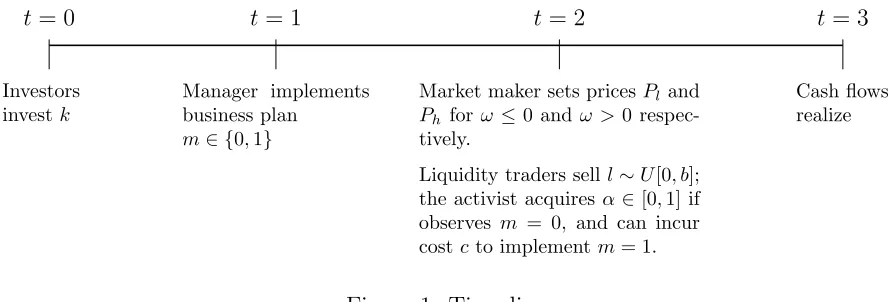
Figure 1 summarizes the timing of events.
Investors investk
t= 0
Manager implements business plan
m∈ {0,1}
t= 1
Market maker sets pricesPland
Ph forω ≤0 andω >0
respec-tively.
Liquidity traders selll∼U[0, b]; the activist acquiresα∈[0,1] if observes m = 0, and can incur costc to implementm= 1.
t= 2
Cash flows realize
[image:12.612.83.528.404.555.2]t = 3
Figure 1: Time line
Parameters δ and z capture the severity of the agency problem between management
and ownership. If δ = 0, both business plans yield cash flows f(k), so there are no frictions
between investors and the manager, and thus no room for managerial disciplining; and if
6Appendix B allows the activist to acquire stock when the business plan is good (m= 1). Thisincreases
the activist’s information rents without affecting the net value of the project. This hurts uninformed investors, causing them to reduce investment.
7 Empirical evidence shows that hedge fund activism increases the value of target companies via costly
z = 0 the manager always implements the good business plan. In contrast, δ >0 and z >0
imply that the manager may destroy shareholder value to obtain private benefits, creating
a potential role for hedge fund activism. In Section 4 we endogenize the probability z that
the manager implements the bad business plan.
Parameterλ captures search frictions of activist funds or the visibility of companies that
are susceptible of being targeted by an activist fund. For instance, Gantchev et al. (2018)
find evidence that industry peers of firms targeted by activists have increased perceptions of
their exposure to activism, i.e., higher λ.
We assume that the activist correctly identifies the good business plan, that it can
disci-pline management with certainty, and that it buys shares in the target company at a single time where shareholders (investors) face liquidity shocks. In practice, these processes are
dynamic (Collin-Dufresne and Fos 2015; Back et al. 2018), with uncertain costs (Gantchev
2013) and outcomes (Becht et al. 2017). We abstract from these mechanics to study the
incentives provided by financial markets. What matters for our analysis are the expectations
that an activist forms about these costs and outcomes att= 2 when decidingwhetherto try to discipline management. The decision is based on the balance between expected financial benefits and engagement costs, and the likely dynamic price impacts of trading—and not
the particular paths that can be realized given a decision to move forward. In our setting,
the cost of activismcis orthogonal to initial investment. This reflects the increasing returns of activism with respect to firm size on a reduced form that keeps our model tractable.
We represent the interplay between corporate governance and real investment in a static
setting. The impact of trading transfers on the incentives of initial investors captures price
discounts for uncertainty over managerial behaviour and activist participation accumulated
on share transactions from initial equity offerings. The agency problem owners-managers
im-poses a cost on uninformed shareholders for liquidating their shares, a cost that is transferred
over transactions between uninformed investors at any point in time. That is, subsequent
uninformed investors who acquire shares from any initial investors inherit their problem—
they value the disciplining role of activists, but face an expected trading cost associated with possibly unwinding their positions in a market with activists, and hence would want the same
real investment as initial investors. This trading environment preserves the crucial feature
for our analysis that there is an adverse price effect via trading that reveals information
to the market (see, e.g., Bebchuk and Jackson 2012). The continuum of random liquidity
sales l lets us endogenize the activist’s positionα. The uniform distribution yields a simple
closed-form solution for this position and provides an intuitive interpretation of stock sales
and purchases in terms of a firm’s shares. The continuum of liquidity shocks differentiates
levels of liquidity trade. For tractability, we consider a stock market where the market maker
posts two prices similar to a bid and an ask price before receiving orders, and then executes
all transactions at the relevant price. In Appendix C we consider an alternative
distribu-tional and timing formulation in which the price function of the market maker is continuous
over realizations of the net order flow. All qualitative findings extend in that setting.
2.1
Market Equilibrium
We solve recursively for the perfect Bayesian Nash equilibrium. Att= 2, real investment has
been sunk by uninformed investors and is observable to all parties, the manager adopted the
bad business plan with probabilityz, and the activist observes malfeasance with probability
λ. A competitive risk-neutral market maker posts prices Pl and Ph for net sales and net
purchases; then uninformed investors receive liquidity shocks and trade simultaneously with the activist. Att = 0, investors anticipate the subsequent events and invest capital.
2.1.1 Trading
Proposition 1 summarizes the Bayesian Nash equilibrium in the subgame at date 2. The
market maker sets prices that earn it zero expected profits given the activist’s decisions, and
the activist participation and trade is optimal given the prices posted by the market maker.
Proposition 1 At t= 2 after real investment has been sunk, the market maker posts prices
P(ω) =Pl≡
h
2[1−z(1−λG(c∗t))δ]−zλG(c∗t) 2−zλG(c∗t)
i
f(k) if ω ≤0
P(ω) =Ph ≡f(k) if ω > 0.
(2)
After prices are posted, if the activist observes managerial malfeasance (m= 0) and the cost of activism is sufficiently small, c≤c∗t where
c∗t =z
1−λG(c∗t) 2−zλG(c∗t)
b
2δf(k), (3)
then he takes an equity position
α∗ = b
2 (4)
in the market with the l∼U[0, b] initial investors who sell their shares, and then disciplines management. Otherwise the activist does not participate.
A proof is inAppendix A; here we provide the key intuition. The market maker has a
this conjecture is correct. The market maker uses Bayes rule to set pricesPl andPh. Letting
a1 denote activism anda0 denote the absence of activism, the market maker’s pricing rule is
P(sgn(ω)) = E[V|sgn(ω)] (5)
= hPr [a1|sgn(ω)] Pr [V =f(k)|a1] + Pr [a0|sgn(ω)] Pr [V =f(k)|a0]
i
f(k) ,
where sgn(ω) denotes the sign of net order flow.
A net buy order ω >0 reveals with probability one that the activist took a position, in
which case the project is sure to payf(k). That is, Pr [a1|ω > 0] = 1 and Pr [V =f(k)|a1] =
1. In contrast (weakly) net sell orders ω ≤0 are consistent with both the presence and the
absence of activism, and allow the activist to extract information rents from uninformed in-vestors. Conditional on the activist buying α shares when participating, the expected value
of the project when there is a net sale of stock is
Pl(α) =
b−αzλG(ct)−bz(1−λG(ct))δ b−αzλG(ct)
f(k). (6)
When the activist participates and liquidity shocks outweigh the number of shares that
he buys, i.e., when l ≥α, there is a net supply of shares and the activist acquires the stock
below its true value at Pl < f(k). If, instead, l < α, there is a net demand for stock and
the activist paysPh for each share, making no profit. The probability that the activist cam-ouflages his share purchase with liquidity sales is Rb
α 1 bdl =
b−α
b . It follows that his expected gross profits conditional on buying α shares are
E[ΠA|a1] =
b−α b
α[f(k)−Pl] . (7)
Inspection of (7) reveals that the activist faces a trade-off between the number of
under-valued shares that he may acquire α and the expected cost of information revelation b−bα.
This captures adverse price effects by which the expected stock price paid by the activist rises as he buys more shares. The activist’s expected trading profits in (7) are maximized
by a share purchase of α∗ =b/2; the price Pl in (2) is obtained by evaluating (6) at α=α∗.
Greater liquidity b makes it easier for the activist to camouflage his trade, encouraging him
to acquire a larger position.
If the activist observes managerial malfeasance, he disciplines management when doing so
price policy Pl(α) pin down the activist’s cost participation cut-off in equilibrium:
ct= (b−α)αz
1−λG(ct) b−αzλG(ct)
δf(k), (8)
which takes the form in (5) when evaluated at the optimal position of α∗ = b/2, i.e., c∗t ≡
ct(α∗). To see that the cut-offc∗t is unique, observe that the right-hand side of (8) decreases in
ctfor α≤b. In equilibrium, the activist employs a threshold strategy such that, conditional
on observing malfeasance, he buysα∗shares and disciplines management if and only ifc≤c∗t.
The cut-off c∗t captures two key equilibrium features. First, it represents the activist
participation threshold, and thus the extent of managerial disciplining. The probability that
the activist intervenes to discipline the manager after observing the manager taking an ac-tion that reduces shareholder value isG(c∗t). Thus, a higherc∗t implies superior governance.
Second, c∗t captures the activist’s expected conditional trading profits. In equilibrium, the
activist’s expected trading profits equal the expected trading losses of uninformed investors because trading is a zero-sum game in which the market maker expects to break even (e.g.,
Holmstr¨om and Tirole 1993). Thus, c∗t represents the expected transfer of trading profits
from uninformed investors to the activist conditional on the activist intervening.
Conditional trading transfers c∗t increase with investment k: The greater is real
invest-ment, the greater is the project value, and hence (i) the more valuable is managerial
disci-plining, and (ii) the more profitable it is for the activist to intervene. Two assumptions drive
this result. First, the cost of activism is independent of the company’s value, so the incen-tives for disciplining are positively related to stock ownership (Shleifer and Vishny 1986).8 Second, the value enhanced by the intervention is multiplicative, not additive. Therefore,
the relevant measure of incentives is the activist’s dollar ownership, not its share ownership (Edmans and Holderness 2017).9
These conditional trading transfers c∗t also rise with market liquidity b. High liquidity
increases activist trading profits and thus the probabilityG(c∗t) that the activist finds it
prof-itable to discipline management. In line with Kahn and Winton (1998) and Maug (1998),
higher liquidity allows the activist to increase his position with a reduced risk of discovery,
thereby encouraging intervention. Back et al.(2018) model the dynamics of position building by activist funds and show the potentially positive effects of liquidity. Consistent with this,
Collin-Dufresne and Fos(2015) and Gantchev and Jotikasthira(2017) provide evidence that
8Brav et al.(2018) argue that it can be harder for activists to intervene in larger companies due to credit
constraints. Our model can be modified to provide a similar prediction in the presence of financial constraints.
9In the related context of CEO incentives, Baker and Hall (2004) and Edmans et al. (2009) show
activist funds camouflage their purchases with liquidity trades by other parties.
2.1.2 Investment
At t = 0, uninformed investors anticipate trading outcomes and activism levels, and
in-vest capital so as to maximize expected profits. In addition to the inin-vestment decision,
Proposition 2 characterizes expected project payoffs and how they are split among
mar-ket participants in expectation at t = 0. This sets the ground for the analysis of the key
interacting forces in the model and the introduction of blockholder disclosure thresholds.
Proposition 2 The expected value at t= 0 of the project given investment k is
E[V] = [1−z(1−λG(c∗t))δ]f(k)≡πVf(k). (9)
The expected gross profits of the activist are:
E[ΠA] =zλG(c∗t) c∗t
f(k)f(k)≡πAf(k). (10)
The expected gross profits of uninformed investors are:
E[ΠI] = (πV −πA)f(k)≡πIf(k). (11)
The investment k by uninformed investors solves
πIf0(k)−r = 0. (12)
Total expected cash flows are the product off(k) and the probabilityπV ∈[0,1] that the
project succeeds. Proposition 2 reveals that expected total rents are split between the
ac-tivist and uninformed investors in proportions πA/πV and πI/πV respectively. This follows
because the market maker earns zero expected profits, which means that activist trading
profits are extracted one-for-one from uninformed investors. The expected gross profits of
the activist equal the product of the unconditional probability that he participates zλG(c∗t) and the expected trading profits c∗t from participating. Uninformed investors obtain, in
ex-pectation, the rest of the “pie”, (πV −πA)f(k). Real investment, characterized by (12),
maximizes the ex-ante expected profits of uninformed investors at date 0.
Proposition 2 shows that activism has an impact on real investment via its effect on the
expected profits of uninformed investors. Investors face a tension as to their preferred extent
profits c∗t increase the proportion of cash flows taken by the activist in expectation πA,
re-ducing the investors’ portion πI. However, higher trading transfers also incentivize activist
participation, and the increased managerial discipline raises total expected cash flowsπVf(k).
As a result, greater trading transfers c∗t to activists need not hurt uninformed investors. In
particular, activism fosters real investment when investor gains from managerial disciplining
outweigh the associated trading losses, and it discourages real investment otherwise.
This mechanism underscores the investment feedback effect faced by the activist. The value of activism is directly related to the size of the project—the profitability of the activist
grows with real investment, i.e., c∗t grows with k. But, expected levels of activism affect
investment. Therefore, expected activism affects real investment, which, in turn, affects the extent of activism. Crucially, the activist does not internalize this investment feedback in
his trading decision at t = 2, because real investment has already been sunk. Thus, when
the activist participates, he takes a positionα∗ to maximizeconditional expected profits (7), i.e., for a givenk, rather than unconditional expected profits (10).
Our analysis identifies novel strategic interactions between uninformed investors and
ac-tivist funds. The linkage between investment and trading profit transfers is similar to that
found in papers studying the real effects of informed trading (Leland 1992; Bernhardt et al.
1995). We incorporate a new element: the informed trader is an activist fund who can
in-crease investment value by alleviating agency problems between owners and managers (Brav et al. 2008; Klein and Zur 2009, Brav et al. 2015; Bebchuk et al. 2015). The effect of hedge
fund activism on real investment is thus twofold: Informed trading reduces the
profitabil-ity of uninformed investors who respond with lower investment; but it also encourages the
intervention of activist funds that discipline management, thereby incentivizing investment.
3
Blockholder Disclosure Thresholds
Blockholder disclosure thresholds require a shareholder to disclose stock holdings once they reach a certain fraction of the overall voting rights in a publicly-traded firm. In recent years,
hedge fund activism has led some market participants and commentators to call for an
ex-pansion of these rules. We briefly relate our analysis to the discussion and then derive the
optimal threshold policies for investors, hedge fund activists and society.
Ownership disclosure rules are one tool of financial regulators to prevent the expropriation
of rents by large shareholders at the expense of uninformed investors. Investor protection
is at the core of the regulatory framework of most prominent financial systems, which seek
to guarantee incentives for real investment (see, e.g., OECD’s 2004 Principles of Corporate
Consistently, La Porta et al. (2006) andDjankov et al. (2008) provide evidence that greater
legal protection of investors is associated with more developed financial markets. Both
stud-ies construct protection indices that include ownership disclosure rules. This view aligns with
the WLRK (2011) Petition, which argues that ownership disclosure rules no longer serve their
purpose because activist funds can gain control of companies with small positions.
Our model captures the link between investor protection and investment, but it challenges
the monotone positive relationship between more transparency and protection. Our initial
analysis shows how the ability to secretly acquire stock encourages activist funds to
disci-pline management. This mechanism captures the views of many academics that hedge fund
activism raises values of target companies, providing positive externalities for other investors. The debate on the merits of revising blockholder disclosure thresholds also reveals the
seemingly arbitrary levels set worldwide. Regulations differ greatly across financial systems.
For example, the threshold is 5% in the US and France, it is 10% in Canada, but only 3% in
Germany and the UK. Despite the vast potential impacts of small differences in these rules,
it remains unclear what brings regulatory bodies to choose one specific level. The following
analysis sheds light on the impact of revisions to these rules by capturing the key mechanisms.
3.1
Optimal Policies
We now show how blockholder disclosure thresholds can regulate the level of hedge fund
ac-tivism, deriving the optimal policies for investors, activist and society. Ownership disclosure rules may limit the number of undervalued shares that the activist can acquire, reducing
his incentives to participate. If a legal disclosure threshold α is implemented, an activist
must publicly announce his position when it crosses the threshold. Then the activist has no
incentive to establish a larger position because doing so would reveal his presence causing
the stock price to rise to Ph =f(k), which would eliminate his information rents, rendering
intervention unprofitable.10 Corollary 3 follows immediately:
Corollary 3 A disclosure threshold α is binding if and only ifα < α∗. In equilibrium, when
a disclosure threshold binds the activist sets α =α.
The activist’s conditional trading profitsct(α) in (8) increase with his position forα < α∗.
Thus, when the activist participates, he acquires a positionα= min{α, α∗}. The mechanism
implies that for a given firm characterized by f(k), a binding threshold necessarily reduces
both the profits and extent of hedge fund activism. To see this, let ct ≡ ct(α) represent
the trading profits, and hence participation cut-off, associated with a position determined
10This price reaction is consistent with evidence byBebchuk et al.(2015) that the stock-price spike that
by a binding threshold α < α∗. Because trading profits increase in α, activism is now less
profitable, i.e., ct < c∗t, making the activist less likely to participate, i.e., G(ct) < G(c∗t).
A direct consequence is that managerial malfeasance is more likely to destroy value. This
mechanism is consistent with arguments against expanding ownership disclosure rules (see
Section 3.1). However, our paper shows that they only comprise part of the overall effect.
The argument is incomplete because it neglects the effects of a disclosure threshold on real
investment. Changes in expected levels of activism att = 2 also alter real investment att = 0,
which, in turn, affects the activist’s incentives to participate. A binding disclosure threshold
reduces the conditional transfer of trading profits from investors to the activist, which may
in-centivize real investment, creating a positive investment feedback that can increase activism. Proposition 4 derives the consequences of blockholder disclosure thresholds by
character-izing the ordering of the optimal disclosure threshold policies for investors, the activist and
a welfare-maximizing regulator representing society. We denote these policies αI, αA and
αR respectively. We present our results as a function of theprofit elasticity of activism,
εa(ct) =
∂G(ct) ∂ct
ct G(ct)
.
Here, εa captures the responsiveness of activism to informed trading: the higher is εa, the
bigger is the increment in the probability that the activist intervenes G(ct) in response to
a marginal increase in expected trading profits ct. Absent a binding disclosure threshold,
when the activist participates he buys α∗ shares, earns expected gross profits c∗t, and the profit elasticity of activism is εa(c∗t)≡ε
∗
a.
Proposition 4 There exists cutoffs ε∗R
a ≡ −
c∗
t δf(k)−c∗t
"
df(k)/dα f(k) dc∗t/dα
c∗ t
#
and ε∗I
a ≡
c∗
t δf(k)−c∗t
, on
the profit elasticity of activism where ε∗aR< ε∗aI such that
1. No one benefits from a binding disclosure threshold if the profit elasticity of activism is sufficiently high: ε∗a ≥ε∗aI ⇒α∗ ≤ {αI, αA, αR}.
2. Only investors benefit from a binding disclosure threshold if the profit elasticity of ac-tivism is intermediate: ε∗R
a ≤ε
∗
a< ε
∗I
a ⇒0< αI < α∗ ≤ {αA, αR}.
3. Both investors and society gain from a binding disclosure threshold if the profit elasticity of activism is low, with investors gaining more: ε∗a < ε∗R
a ⇒0< αI < αR< α∗ ≤αA.
Figure 2 illustrates the results; a full proof is in Appendix A. Optimal disclosure
αI < αR< α∗ ≤αA
ε
∗aRαI < α∗ ≤ {αR, αA}
ε
∗aIα∗ ≤ {αI, αR, αA}
ε
∗a [image:21.612.92.523.74.134.2]0
Figure 2: Optimal Disclosure Thresholds
with respect to the activist position α. Corollary 3 implies that when the optimal position
is less than α∗, it can be achieved in equilibrium by a binding disclosure threshold.
Uninformed investors maximize πIf(k) −rk. The associated FOC reveals that they
benefit from a binding disclosure threshold if and only if
g(c∗t) [δf(k)−c∗t]< G(c∗t), (13)
which can be rearranged to ε∗a < ε∗aI. The left-hand side (LHS) represents the marginal benefits to uninformed investors of increasing the transfer of trading profits to the activist
whenα=α∗, i.e., forc∗t. Higher transfers cause the probability that the activist participates
conditional on observing managerial malfeasance to rise byg(c∗t). The associated benefit for
investors is the difference between the total value enhanced by the activist δf(k) and their
trading losses c∗t. The right-hand side (RHS) captures the conditional loss from marginally
higher transfers: with probability G(c∗t) the activist would have participated anyway, even
if expected trading profits had not increased.
A binding disclosure threshold α reduces transfers of trading profits, ct(α) ≡ ct < c∗t.
Equation (13) shows that this raises the marginal benefits to investors of activism (LHS) and
reduces the associated losses (RHS), increasing marginal profitability. Equivalently, a binding threshold raises the profit elasticity of activismεa, and it requires less trading transfers from
investors to encourage higher activism. Transfers of trading profits are the cost that investors
incur in exchange for managerial discipline, and this cost rises with the extent of activism.
The optimal extent of activism for investors solves this FOC:αIsolvesεa =ct/[δf(k)−ct]
whenε∗a< ε∗I
a . Full disclosure is never optimal. If the activist cannot acquire stock secretly, trading profits and hence transfers vanish, i.e., if α → 0 then ct → 0. But then the
ac-tivist never participates. Then, the marginal benefits of discipline for investors outweigh
the corresponding trading losses, i.e.,g(ct) [δf(k)−ct]> G(ct). Thus, uninformed investors
always benefit from some degree of market opacity, i.e., αI >0: the marginal profitability to uninformed investors of activism is always positive whenever αI is sufficiently small.
The optimal extent of activism can be achieved by a disclosure threshold when the
(13) holds, but not otherwise. The mechanism highlights the asymmetric role of disclosure
rules, which can only limit, but not foster, informed trading. If, absent regulation, the
marginal profitability of activism for investors is positive, i.e., if (13) is not satisfied, the
desired extent of activism cannot be achieved and the optimal policy is non-binding, i.e.,
αI ≥ α∗. We discuss below the role of market liquidity, which determines α∗ and thus
whether a particular disclosure threshold binds.
Our argument builds on the result that transfers of trading profits increase with the
ac-tivist’s position, i.e., dctdα >0 forα < α∗. It follows that restricting α reduces ct. This is not
immediate. We earlier established that the activist faces an investment feedback effect that he does not internalize. In particular, the activist’s position att= 2 influences initial invest-mentk, and this determines the trading profits from a given positionα. A binding disclosure
threshold regulates the number of shares that the activist buys in equilibrium. We have
dct dα =
∂ct ∂α
|{z}
mg. net trading transfer
+ ∂ct ∂k
∂k ∂α
| {z }
.
investment feedback
(14)
Net trading transfers capture the effect of the activist’s position on transfers at t= 2 for
a given investmentk; Proposition 1 shows that these transfers increase with αfor α < α∗ in
the absence of a disclosure threshold. The investment feedback effect captures the impact of
the activist’s position on real investment ∂k∂α, and hence on trading transfers ∂ct∂k. Real
invest-ment always raises trading transfers, and thus the extent of activism, i.e., ∂ct∂k >0. However,
the activist’s position α might be large enough to hurt investors, who respond by reducing investment. That is, if α > αI then ∂α∂k < 0, and the effect of a larger position on trading
transfers is determined by the balance of two opposing forces: positive net transfers and
a negative investment feedback. We show that, surprisingly, the tension is always resolved
against the investment feedback effect, so dctdα >0 for α < α∗.
This result reflects the subordinated nature of investment feedback with respect to the
direct impact of trading transfers. Intuitively, these transfers lead the activist to take a
posi-tion α∗, which, in turn, affects investment. If the reduction of investment from increasing α
was strong enough to reduce the activist’s trading profits, i.e., if dctdα <0, then it would also
increase investor profits because g(ct) [δf(k)−ct]< G(ct) when ∂α∂k <0. But then investors
would increase investment, not reduce it, benefiting activists. Because trading transfers are the activist’s sole source of income, this mechanism explains why he never benefits from a
binding disclosure threshold:
Corollary 5 Negative investment feedback reduces the positive impact of increasing the
does not alter the sign of the impact, i.e., dct
dα >0forα < α
∗: the activist never benefits from
a blockholder disclosure threshold just because it boosts investment.
Thus, when investors seek a binding disclosure threshold αI < α∗, a conflict of interest
arises between them and the activist. An activist position that exceeds αI harms investors,
reducing real investment. This, in turn, reduces the profitability of activism and the levels of
managerial discipline (negative investment feedback). Nonetheless, the investment response
is never strong enough to outweigh the net positive effect of additional shares on activist
prof-its. Therefore, the activist never wants a binding disclosure threshold to increase investment.
Society maximizes total expected value net of the costs of capital rk and the expected costs of activism zλG(ct)E[c|c≤ct]. Society gains from a binding disclosure threshold if
zλg(c∗t) [δf(k)−c∗t]dc
∗
t
dα +πAf
0
(k)∂k
∂α <0, (15)
which can be rearranged to ε∗a < ε∗R
a . The condition reveals that society cares about both the value-enhancing effects of activism and real investment. The first term in (15) captures
the impact of the activist’s equity position on project value via managerial discipline. This
is positive for all α < α∗. In particular, Corollary 5 shows that the extent of activism is
directly related to the activist’s position regardless of the investment feedback, i.e., dctdα >0. Moreover, greater managerial discipline always creates value. Here, g(ct)δf(k) is the
condi-tional increase in gross value, and g(ct)ct is the corresponding increase in expected cost of
activism. The second term in (15) represents investment feedback that is not internalized
by investors. More specifically, real investment solves πIf0(k)−r = 0, but the optimal
investment for society sets (πI+πA)f0(k)−r= 0,
Society only benefits from a disclosure threshold if investors gain, but the converse is not
true. For ε∗a < ε∗aR to hold, the investment feedback must be negative, i.e., ∂α∂k <0, implying
that ε∗a < ε∗aI. Intuitively, society only cares about the real economy, and not about
sec-ondary markets (trading transfers). The only social cost of increasing managerial disciplining is the potential reduction in investment. If this is sufficiently strong, then (15) holds and
the regulator wants to set a binding disclosure threshold. Still, this threshold always exceeds
the optimal threshold from the perspective of investors who do care about trading transfers.
That society’s preferred disclosure threshold lies (weakly) between those preferred by
in-vestors and activists also arises in models of insider trading where real investment is
endoge-nous (Leland 1992;Bernhardt et al. 1995). The social cost of increasing activism is a potential
reduction of real investment due to lower market transparency. Thus, a regulator only
consid-ers implementing a disclosure threshold when this also benefits investors. Yet, while investors
lower. Therefore, when the regulator seeks a binding threshold, it always exceeds the
pre-ferred threshold of investors, and sometimes they disagree on the need for a binding policy.
3.1.1 The role of liquidity and the cost of activism
Results in Proposition 4 reflect interactions of two opposing forces: (i) market liquidity and
(ii) the cost of activism. We discuss and interpret their roles by studying how market liquidity
determines the impact of a reduction in the cost of activism on optimal disclosure policies.
Formally, we consider a transformation τ of the cost distribution g that transfers proba-bility mass min{g(c), τ} from each realization c∈ (0, C] to c= 0. A transformation τ >0
scales down density g, reducing both the expected cost and the profit elasticity of activism
εa. This reduction in the cost of activism weakly increases the desirability of a disclosure
threshold for investors and society. Corollary 6 shows how market liquidity affects this force.
Corollary 6 Let cost distribution function g be such that no one benefits from a binding
dis-closure threshold, i.e., ε∗a ≥ε∗aI. There exist reductions in the cost of activismτI(b)< τR(b)
such that
1. Investors gain from a binding disclosure threshold if and only if τ > τI(b).
2. Society gains from a binding disclosure threshold if and only if τ > τR(b).
Both transformations decrease with market liquidity, i.e., τI0(b)<0 and τR0(b)<0.
A transformationτ >0 reduces the marginal profitability of trading transfers for investors
at any givenct, and they benefit from a binding disclosure threshold when the cost reduction
is large enough. In particular, ε∗a =ε∗aI when τ =τI(b), and a larger τ tightens the optimal
threshold. An analogous intuition holds for society. At the limit, as τ grows large so that
almost all probability mass is transferred to zero, activism becomes almost costless, and in-vestors do not need to incentivize activist participation with higher trading profits. Then, the
optimal policy for both investors and society approaches full transparency, i.e.,{αI, αR} →0.
Transformations τI(b) and τR(b) decrease with the extent of market liquidity b because
this makes activism more profitable: α∗ and c∗t both rise. All else equal, this reduces the
profit elasticity of activism, and may make a binding disclosure beneficial for investors. In
(13), the LHS decreases and the RHS increases. It follows that the cost reduction that leads
investors to gain from a binding policy falls as market liquidity rises.
These results reflect that activists require market liquidity to establish equity stakes and
(Bebchuk et al. 2013). Greater liquidity reduces the marginal profitability of activism for
in-vestors, making disclosure thresholds more desirable. Costs of activism work in the opposite
direction. If disciplining management is likely to be very costly, investors want to concede
further trading transfers to incentivize activism, so they do not benefit from a disclosure
threshold. That is, with high costs, i.e., large g(ct), the profit elasticity of activism is large
for relatively opaque markets, so investors do not want to limit the potential trading profits
of activists.
The cost of activism is often related to managerial entrenchment. Staggered boards make
it harder to gain control of a company in a proxy contest, discouraging activism. Our model
is consistent with Gompers et al. (2003) andBebchuk and Cohen (2005), who find evidence of a negative correlation between firm value and management-favouring provisions. In such
instances, relaxing disclosure thresholds can benefit investors by alleviating the negative
effect of these provisions at the expense of market opacity and investor trading losses.
4
Managerial Feedback
We next endogenize the probability of managerial malfeasance to characterize the complete
inter-linkage between investment, hedge fund activism and corporate management, and the consequences for optimal blockholder disclosure threshold policies.
We extend our model by assuming that if the manager implements the good business
plan (m = 1) at t= 1, she receives a payoff that is normalized to zero at t = 3. If, instead,
the manager adopts the bad plan (m = 0), her payoff depends on whether she is disciplined
by the activist. If the activist does not intervene, adopting the bad business plan gives the
manager a fixed benefit ϕ. If the activist disciplines the manager, she does not receive the
private benefit and incurs a privately-observed reputation cost ρ > 0. Other market agents
share a common prior thatρis distributed on [0, R] according to a strictly positive densityh
and associated cumulative functionH. Because the manager only cares about thenetbenefit of malfeasance, one could alternatively assume that the benefits of malfeasance are random,
and the reputation cost is fixed. To make it easier to establish that second-order conditions
hold in the derivation of optimal blockholder disclosure threshold policies, we assume that
private benefits from malfeasance are sufficiently high: 2R < ϕ(1−λ)2.
Both private benefits from malfeasance ϕ and the reputation costs of being disciplined
by an activist ρ allow for multiple interpretations. For instance, managerial benefits from
acting against shareholders might be related to increasing executive compensation or
empire-building mergers and acquisitions that managers value but harm firm value. The costs of
(2014) report that facing a direct threat of removal is associated with $1.3-$2.9 million in
fore-gone income until retirement for the median incumbent director in their sample; andKeusch
(2017) finds that in the year after activists intervene, internal CEO turnover rises 7.4%.
4.1
Market Equilibrium
The manager employs a threshold strategy, implementing the bad business plan if and only
if ρ≤ρt. At the cut-off, the expected private benefits from malfeasance equal the expected
loss due to punishment, (1−λG(ct))ϕ=λG(ct)ρt, which we solve for:
ρt =ϕ
1−λG(ct) λG(ct)
. (16)
The probability of managerial malfeasance is H(ρt). The equilibrium analysis is analogous
to Section 2.1, where both Propositions 1 and 2 extend by directly setting z ≡H(ρt).
The solution for ρt reveals that malfeasance declines with theconditional probability of activismG(ct): the more likely the activist is to participate after observing malfeasance, the
less likely is the manager to misbehave. We call the managers’ response to the threat of
activism, the managerial feedback effect. This effect is negative, reflecting that the threat of activism deters managers from destroying shareholder value. Activism disciplines
man-agement through two complementary channels: (i) ex post, the activist intervenes to change
the business plan when it is bad; (ii) ex ante, it discourages the adoption of the bad plan. The mechanism is consistent with anecdotes suggesting that executives of firms that are
yet-to-be-targeted by activist funds feel threatened and proactively work to evaluate firm
policies that minimize their vulnerability to attacks by activist funds.11 Gantchev et al. (2018) find evidence that non-target firms, observing that their peers are being targeted
by activists, perceive a higher risk of becoming a future target, and change their policies
to mitigate this risk. Relatedly, Fos and Kahn (2018) develop a model where the threat of
intervention by a blockholder discourages managers from destroying shareholder value. They
study the incentives for the blockholder to exit and the impact on ex-ante and ex-post
cor-rection mechanisms; we analyse how managerial feedback responds to market transparency.
11See, for instance, “Key Issues for Directors in 2014” by Martin Lipton of Wachtell, Lipton, Rosen and