Proceedings of NAACL-HLT 2019, pages 437–441 437
Lost in Machine Translation: A Method to Reduce Meaning Loss
Reuben Cohn-Gordon Stanford
Noah D. Goodman Stanford
[email protected] [email protected]
Abstract
A desideratum of high-quality translation sys-tems is that they preserve meaning, in the sense that two sentences with different mean-ings should not translate to one and the same sentence in another language. However, state-of-the-art systems often fail in this regard, par-ticularly in cases where the source and tar-get languages partition the “meaning space” in different ways. For instance, “I cut my finger.” and “I cut my finger off.” describe different states of the world but are translated to French (by bothFairseqandGoogle Translate) as “Je me suis coup´e le doigt.”, which is ambiguous as to whether the finger is detached. More gen-erally, translation systems are typically many-to-one (non-injective) functions from source to target language, which in many cases results in important distinctions in meaning being lost in translation. Building on Bayesian models of informative utterance production, we present a method to define a less ambiguous trans-lation system in terms of an underlying pre-trained neural sequence-to-sequence model. This method increases injectivity, resulting in greater preservation of meaning as measured by improvement in cycle-consistency, with-out impeding translation quality (measured by BLEU score).
1 Many-to-One Translations
Languages differ in what meaning distinctions they must mark explicitly. As such, translations risk mapping from a form in one language to a more ambiguous form in another. For example, the definite (1) and indefinite (2) both translate (under Fairseq and Google Translate) to (3) in French, which is ambiguous in definiteness.
The animals run fast. (1)
Animals run fast. (2)
[image:1.595.309.535.221.336.2]Les animaux courent vite (3)
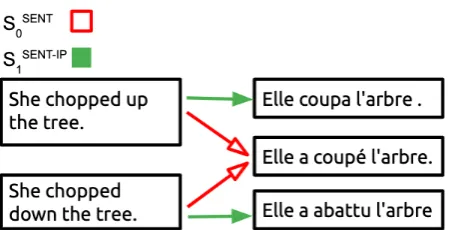
Figure 1: State-of-the-art neural image captionerSSNT 0
loses a meaning distinction whichinformative model SSNT-IP
1 preserves.
Survey To evaluate the nature of this problem, we explored a corpus1of 500 pairs of distinct En-glish sentences which map to a single German one (the evaluation language in section2.3). We iden-tify a number of common causes for the many-to-one maps. Two frequent types of verbal dis-tinction lost when translating to German are tense (54 pairs, e.g. “...others{were, have been} intro-duced .”) and modality (16 pairs, e.g. “...prospects for this year {could, might} be better.”), where German “k¨onnen” can express both epistemic and ability modality, distinguished in English with “might” and “could” respectively. Owing to En-glish’s large vocabulary, lexical difference in verb (31 pairs, e.g. “arise” vs. “emerge” ), noun (56 pairs, e.g. “mystery” vs. “secret”), adjective (47 pairs, e.g. “unaffected” vs. “untouched”) or deic-tic/pronoun (32 pairs, usually “this” vs “that”) are also common. A large number of the pairs differ instead either orthographically, or in other ways that do not correspond to a clear semantic
distinc-1
A He is wearing glasses. B He wears glasses. SSNT
[image:2.595.72.276.63.145.2]0 (A) Er tr¨agt eine Brille. S0SNT(B) Er tr¨agt eine Brille . S1SNT-IP(A) Er tr¨agt jetzt eine Brille. S1SNT-IP(B) Er hat eine Brille.
Figure 2: Similar to Figure 1, SSNT
0 collapses two
English sentences into a single German one, whereas SSNT-IP
1 distinguishes the two in German.
tion (e.g. “She had{taken,made}a decision.”).
Our approach While languages differ in what distinctions they are required to express, all are usually capable of expressing any given distinc-tion when desired. As such, meaning loss of the kind discussed above is, in theory, avoidable. To this end, we propose a method to reduce meaning loss by applying the Rational Speech Acts (RSA) model of an informative speaker to translation. RSA has been used to model natural language pragmatics (Goodman and Frank, 2016), and re-cent work has shown its applicability to image captioning (Andreas and Klein, 2016; Vedantam et al.,2017;Mao et al.,2016), another sequence-generation NLP task. Here we use RSA to de-fine a translator which reduces many-to-one map-pings and consequently meaning loss, in terms of a pretrained neural translation model. We in-troduce a strategy for performing inference effi-ciently with this model in the setting of translation, and show gains in cycle-consistency2 as a result. Moreover, we obtain improvements in translation quality (BLEU score), demonstrating that the goal of meaning preservation directly yields improved translations.
2 Meaning Preservation as Informativity
In the RSA framework, speakers and listeners, modeled as Bayesian agents, reason about each other in a nested fashion. We refer to listeners and speakers which do not reason about another agent asL0andS0respectively, and an agent which
rea-sons about another agent asL1orS1. For instance,
an informative speaker modelS1 is given a state
2
Formally, say that a pair of functions f : A → B,
g : B → Ais cycle-consistent ifg·f = id, the identity function. Iff isnot one-to-one, then (f, g) is not cycle-consistent. (Note however that whenAandB are infinite, the converse does not hold: even iffandgare both one-to-one,(f, g)need not be cycle-consistent, since many-to-one maps between infinite sets are not necessarily bijective.)
w ∈ W, and chooses an utteranceu ∈ U to con-vey w to S1’s model of a listener. By contrast,
S0 chooses utterances without a listener model in
mind — its behavior might be determined by a semantics, or in our case, by a pretrained neural model.
For translation, the state space W is a set of source language sentences (sequences of words in the language), while U is a set of target lan-guage sentences. S1’s goal is to choose a
trans-lation u which allows a listener to pick out the source sentence w from among the set of dis-tractors. This informative behavior discourages many-to-one maps that a non-informative transla-tion modelS0 might allow.
S0 Model BiLSTMs with attention (Bahdanau
et al., 2014), and more recently CNNs (Gehring et al., 2016) and entirely attention based models (Vaswani et al., 2017) constitute the state-of-the-art architectures in neural machine translation . All of these systems, once trained end-to-end on aligned data, can be viewed as a conditional distri-bution3S0WD(wd|w,c), for a wordwdin the target language, a source language sentencew, and a par-tial sentencecin the target language. SWD
0 yields
a distributionSSNT0 over full sentences4:
S0SNT(u|w,c) =Y
t
S0WD(u[t]|w,c+u[:t]) (4)
S0SNT returns a distribution over continuations of c into full target language sentences5. To obtain a sentence from S0SNT given a source language sentence s, one can greedily choose the highest probability word from SWD
0 at each timestep, or
explore a beam of possible candidates. We im-plement SWD0 (in terms of which all our other models are defined) usingFairseq’s publicly avail-able6 pretrained Transformer models for English-German, and for German-English train a CNN us-ingFairseq.
2.1 Explicit Distractors
We first describe a sentence level,globally prag-matic model SSNT-GP
1 for the simple case where
3
We useSWD 0/1 andS
SNT
0/1 respectively to distinguish word
and sentence level speaker models
4
Python list indexing conventions are used, “+” means concatenation of list to element or list
5
In what follows, we omit cwhen it is empty, so that
S0SNT(u|w)is the probability of sentenceugivenw
a source language sentence needs to be distin-guished from a presupplied distractor7 (as in the pairs shown in figures (2) and (1)). We use this model as a stepping stone to one which requires an input sentence in the source language only, and no distractors. We begin by defining a listenerLSNT1 , which receives a target language sentence u and infers which sentence w ∈ W (a presupplied set such as the pair (1) and (2)) would have resulted in the pretrained neural modelSSNT
0 producingu:
LSNT1 (w|u)∝ S
SNT 0 (u|w)
P
w0∈WS0SNT(u|w0)
(5)
This allows SSNT-GP
1 to be defined in terms of LSNT1 , whereU is the set of all possible target lan-guage sentences8:
S1SNT-GP(u|w) = S
SNT
0 (u|w)LSNT1 (w|u)α
P
u0∈US0SNT(u0|w)LSNT1 (w|u0)α
(6) The key property of this model is that, for W = {A, B}, when translating A, S1SNT-GP prefers translations of A that are unlikely to be good translations ofB. So for pairs like (1) and (2),S1SNT-GPis compelled to produce a translation for the former that reflects its difference from the latter, and vice versa.
Inference Since U is an infinite set, exactly computing the most probable utterance under SSNT-GP
1 (·|w) is intractable. Andreas and Klein (2016) andMao et al.(2016) perform approximate inference by sampling the subset ofUproduced by a beam search fromSSNT
0 . Vedantam et al.(2017) andCohn-Gordon et al.(2018) employ a different method, using anincrementalmodelS1SNT-IPas an approximation ofSSNT-GP
1 on which inference can be tractably performed.
S1SNT-IP considers informativity not over the whole set of utterances, but instead at each deci-sion of the next word in the target language sen-tence. For this reason, the incremental method avoids the problem of lack of beam diversity en-countered when subsampling from SSNT
0 , which
7Implementations for all models are available
to https://github.com/reubenharry/
pragmatic-translation
8α is a hyperparameter ofSSNT-GP
1 ; as it increases, the
model cares more about being informative and less about pro-ducing a reasonable translation.
becomes especially bad when producing long se-quences, as is often the case in translation.SSNT-IP1 is defined as the product of informative decisions, specified bySWD
1 (itself defined in terms ofLWD1 ), which are defined analogously to (6) and (5).
LWD1 (w|wd,c)∝S0WD(wd|w,c) (7)
S1WD(wd|w,c)∝ (8)
S0WD(wd|w,c)∗LWD1 (w|wd,c)α
S1SNT-IP(u|w,c) =Y
t
S1WD(u[t]|w,c+u[:t])
(9)
Examples SSNT-IP
1 is able to avoid many-to-one mappings by choosing more informative transla-tions. For instance, its translation of (1) is “Ces animaux courent vite” (These animals run fast.). See figures (1) and (2) for other examples of many-to-one mappings underS0SNTavoided byS1SNT-IP.
2.2 Avoiding Explicit Distractors
WhileS1SNT-IP can disambiguate between pairs of sentences, it has two shortcomings. First, it re-quires one (or more) distractors to be provided, so translation is no longer fully automatic. Second, because the distractor set W consists of only a pair (or finite set) of sentences,SSNT-IP
1 only cares about being informative up to the goal of distin-guishing between these sentences. Intuitively, to-tal meaning preservation is achieved by a trans-lation which distinguishes the source sentencew from every other sentence in the source language which differs in meaning.
Both of these problems can be addressed by introducing a new “cyclic” globally pragmatic modelSSNT-CGP
1 which reasons not aboutLSNT1 but about a pretrained translation model from target language to source language, which we termLSNT0 .
S1SNT-CGP(u|w)∝S0SNT(u|w)LSNT0 (w|u)α (10)
high probability of being back-translated towby LSNT0 . S1SNT-CGP is very closely related to recon-struction methods, e.g. (Tu et al.,2017).
Incremental Model Exact inference is again in-tractable, though as with SSNT-GP
1 , it is possible to approximate by subsampling fromSSNT0 . This is very close to the approach taken by (Li et al., 2016), who find that reranking a set of outputs by probability of recovering input “dramatically de-creases the rate of dull and generic responses.” in a question-answering task. However, because the subsample is small relative toU, they use this method in conjunction with a diversity increasing decoding algorithm.
As in the case with explicit distractors, we in-stead opt for an incremental model, nowS1SNT-CIP which approximates S1SNT-CGP. The definition of S1SNT-CIP(12) is more complex than the incremen-tal model with explicit distractors (S1SNT-IP) since LWD0 must receive complete sentences, rather than partial ones like LWD
1 . As such, we need to marginalize over continuations k of partial sen-tences in the target language:
S1WD-C(wd|w, c)∝S0WD(wd|w, c)∗
X
k
(LSNT0 (w|c+wd +k)S0SNT(k|w, c+wd))
(11)
S1SNT-CIP(u|w,c) =Y
t
S1WD-C(u[t]|w,c+u[:t])
(12) Since the sum over continuations ofcin (11) is intractable to compute exactly, we approximate it by a single continuation, obtained by greedily un-rollingS0SNT. The whole process of generating a new wordwd of the translation from a sequence cand a source language sentencewis as follows: first useS0WDto generate a set of candidates for the next word (in practice, we only consider two, for efficiency). For each of these, useSSNT
0 to greedily unroll a full target language sentence fromc+wd, namelyc+wd+k, and rank eachwdby the prob-abilityLSNT
0 (w|c+wd+k).
2.3 Evaluating the Informative Translator
Our objective is to improve meaning preserva-tion without detracting from translapreserva-tion quality in other regards (e.g. grammaticality). We conduct our evaluations on English to German translation, making use of publicly available
pre-trained English-German and German-English Fairseq models. The pragmatic model we evaluate isS1SNT-CIPsince, unlikeS1SNT-IP, it is not necessary to hand-supply a distractor set of source language sentences.
An example of the behavior of S1SNT-CIP and S0SNT on of our test sentences is shown below; S0SNTis able to preserve the phrase “world’s eyes”, whichS0SNTtranslates merely as “world”:
• Source sentence: Isolation keeps the world’s eyes off Papua.
• Reference translation: Isolation h¨alt die Au-gen der Welt fern von Papua.
• SSNT
0 : Die Isolation h¨alt die Welt von Papua fern.
• S1SNT-CIP: Die Isolation h¨alt die Augen der Welt von Papua fern.
We use cycle-consistency as a measure of meaning preservation, since the ability to recover the original sentence requires meaning distinc-tions not to be collapsed. In evaluating cycle-consistency, it is important to use a separate target-source translation mechanism than the one used to defineS1SNT-CIP. Otherwise, the system has ac-cess to the model which evaluates it and may im-prove cycle-consistency without producing mean-ingful target language sentences. For this rea-son, we translate German sentences (produced by S0SNT or S1SNT-CIP) back to English with Google Translate. To measure cycle-consistency, we use the BLEU metric (implemented with sacreBLEU (Post,2018)), with the original sentence as the ref-erence.
However, this improvement of cycle consis-tency, especially with a high value ofα, may come at the cost of translation quality. Moreover, it is unclear whether BLEU serves as a good metric for evaluating sentences of a single language. To fur-ther ensure that translation quality is not compro-mised by SSNT-CIP
1 , we evaluate BLEU scores of the German sentences it produces. This requires evaluation on a corpus of aligned sentences, unlike the sentences collected from the Brown corpus in section19.
9While we find thatSSNT-CIP
1 improves cycle-consistency
for the Brown corpus overSSNT
0 , we have no way to establish
Model Cycle Translate
[image:5.595.90.270.64.115.2]S0SNT 43.35 37.42 S1SNT-CIP 47.34 38.29
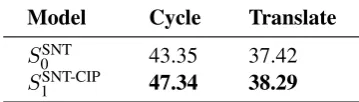
Table 1: BLEU score on cycle-consistency and transla-tion for WMT, across baseline and informative models. Greedy unrolling andα= 0.1
We perform both evaluations (cycle-consistency and translation) on 750 sentences10 of the 2018 English-German WMT News test-set.11 We use greedy unrolling in all models (using beam search is a goal for future work). Forα(which represents the trade-off between informativity and translation quality) we use0.1, obtained by tuning on valida-tion data.
Results As shown in table (1), SSNT-CIP
1
im-proves over S0SNT not only in cycle-consistency, but in translation quality as well. This suggests that the goal of preserving information, in the sense defined by SSNT-CGP1 and approximated by S1SNT-CIP, is important for translation quality.
3 Conclusions
We identify a shortcoming of state-of-the-art translation systems and show that a version of the RSA framework’s informative speakerS1, adapted
to the domain of translation, alleviates this prob-lem in a way which improves not only cycle-consistency but translation quality as well. The success ofSSNT-CIP
1 on two fairly similar languages raises the question of whether improvements will increase for more distant language pairs, in which larger scale differences exist in what information is obligatorily represented - this is a direction for future work.
Acknowledgements
Thanks to the reviewers for their substantive com-ments, and to Daniel Fried and Jacob Andreas for many helpful discussions during the development of this project.
10
Our implementation ofS1SNT-CIPwas not efficient, and we
could not evaluate on more sentences for reasons of time.
11http://www.statmt.org/wmt18/
translation-task.html
References
Jacob Andreas and Dan Klein. 2016. Reasoning about pragmatics with neural listeners and speakers. In Proceedings of the 2016 Conference on Empirical Methods in Natural Language Processing, pages 1173–1182. Association for Computational Linguis-tics.
Dzmitry Bahdanau, Kyunghyun Cho, and Yoshua Ben-gio. 2014. Neural machine translation by jointly learning to align and translate. arXiv preprint arXiv:1409.0473.
Reuben Cohn-Gordon, Noah Goodman, and Christo-pher Potts. 2018. Pragmatically informative image captioning with character-level inference. In Pro-ceedings of the 2018 Conference of the North Amer-ican Chapter of the Association for Computational Linguistics: Human Language Technologies, Vol-ume 2 (Short Papers), pages 439–443. Association for Computational Linguistics.
Jonas Gehring, Michael Auli, David Grangier, and Yann N Dauphin. 2016. A convolutional encoder model for neural machine translation. arXiv preprint arXiv:1611.02344.
Noah D Goodman and Michael C Frank. 2016. Prag-matic language interpretation as probabilistic infer-ence. Trends in Cognitive Sciences, 20(11):818– 829.
Henry Kuˇcera and Winthrop Nelson Francis. 1967. Computational analysis of present-day American English. Dartmouth Publishing Group.
Jiwei Li, Will Monroe, and Dan Jurafsky. 2016. A sim-ple, fast diverse decoding algorithm for neural gen-eration. arXiv preprint arXiv:1611.08562.
Junhua Mao, Jonathan Huang, Alexander Toshev, Oana Camburu, Alan L Yuille, and Kevin Murphy. 2016. Generation and comprehension of unambiguous ob-ject descriptions. InProceedings of the IEEE con-ference on computer vision and pattern recognition, pages 11–20.
Matt Post. 2018. A call for clarity in reporting bleu scores. arXiv preprint arXiv:1804.08771.
Zhaopeng Tu, Yang Liu, Lifeng Shang, Xiaohua Liu, and Hang Li. 2017. Neural machine translation with reconstruction. InThirty-First AAAI Conference on Artificial Intelligence.
Ashish Vaswani, Noam Shazeer, Niki Parmar, Jakob Uszkoreit, Llion Jones, Aidan N Gomez, Łukasz Kaiser, and Illia Polosukhin. 2017. Attention is all you need. InAdvances in Neural Information Pro-cessing Systems, pages 5998–6008.