High Density Impulse Noise Removal in
Color Images Using Region of Interest
Median Controlled Adaptive Recursive
Weighted Median Filter
Prof. A. Senthilrajan Dr.E.Ramaraj
Abstract: An Adaptive varying window size Recursive Weighted Median Filter [ARWMF] for removing the impulse noise in Color images is presented. The weights for the RWMF are calculated by using the median controlled algorithm. By applying Region of Interest [ROI] on selected windows the weight calculation’s efficiency can be increased and the memory will be reduced because of the ROI. In median controlled algorithm, the filter gives the smallest weight for the impulse. However, for many weight functions, including the exponential one, this weight is non-zero. Thus the Impulse has an effect on the output and the magnitude of the impulse is reduced. The window size of the RWMF is adaptive based on the presence of noise density.
The performance of the proposed algorithm is given in terms of Mean Square Error (MSE), Mean Absolute Error (MAE) and Peak Signal to Noise Ratio (PSNR) and it is compared with standard median filters, weighted median filters, center weighted median filters, Recursive weighted median filters and Lin’s Adaptive length recursive weighted median filters using median controlled algorithm.
Keywords— Adaptive window size, High impulse noise suppression, less computation, Median controlled algorithm, Recursive weighted median filters.
Prof. Senthilrajan is with Head Department Master of Computer Application, Jyoti Nivas College, Bangalore, India. IEEE and IAENG Member
(e-mail: [email protected]) .
Dr.E.Ramaraj is with Director, Computer Department, Alagappa University, Karaikudi, India.
I. INTRODUCTION
Impulse noise is caused by malfunctioning pixels in camera sensors, faulty memory locations in hardware, or transmission in a noisy channel. Two common types of impulse noise are the salt-and-pepper noise and the random-valued noise. For images corrupted by salt-and-pepper noise (respectively random-valued noise), the noisy pixels can take only the maximum and the minimum values (respectively any random value) in the dynamic range. There are many works on the restoration of images corrupted by impulse noise. The median filter was once the most popular nonlinear filter for removing impulse noise, because of its good denoising power and computational efficiency.
There is a significant improvement in the development of median filters. Weighted Median Filters (WMF) are good at detecting noise even at a high noise level. Their main drawback is that the noisy pixels are replaced by some median value in their vicinity without taking into account local features such as the possible presence of edges. It has been proved that RWM filter produces better result when compared to other median type filters. The median type filters exhibit blurring for fixed window sizes and insufficient noise suppression for small window sizes. In this paper an adaptive window size RWM filter algorithm using median controlled algorithm is proposed, which achieve a high degree of noise suppression and preserve image sharpness. Lin's, & Huang proposed adaptive length median filters for removal of impulse noise in images. Adaptive length Recursive weighted median filter using Lin's algorithm produces less efficient output and the algorithm has high complexity.
RWM operation is performed. The weight for the proposed adaptive RWM filter is calculated by using the median controlled algorithm. This algorithm is simple and has less computation complexity compared to the other weight calculating algorithms. And also the proposed algorithm is simple and produces better PSNR, MSE and MAE compared to the other standard algorithms.
II. RECURSIVE WEIGHTED MEDIAN FILTER The success of the median filters in the image processing is based on two intrinsic properties edge preservation and efficient attenuation of the impulsive noise properties not shared by traditional filters. The application of the weighted median filters, however, has not significantly spread beyond image processing applications. When a median type filter filters a signal, some characteristic’s will change. But impulse noise will be reduced significantly. In general, changes are more profound nearer edges than homogeneous regions. Thus the median filter can be understood as a simple detector of impulses and edges. It is a highly data dependent filter, by which weights have been given to the samples according to the changes by the low pass filter. The recursive weighted median filter detects and remove the impulses in the images. The general structure of linear IIR filters is denoted by the difference equation
Y
= N1 l
(
)
M2 1 k(
)
l=A Y n l
− +
k=−MB X n
−
k
∑
∑
(1) Where the output is formed not only from the input, but also from previously computed outputs. The filter weights consist of two sets: The feedback coefficients {Al} and the feed- forward coefficients {B k}, N +M1 +M2 + 1. Coefficients are needed to denote the recursive difference equation. For WM filters, the summation operation is replaced with the median operation, and the multiplication weighting is replaced by signed replication:
2
1
( ) sgn( ) ( )
sgn( ) ( )
1
,
)
(
lY n MEDIAN A Y n l
B B X n k
n
l l
M
k k k M
A
= ◊ −
◊ −
−
=− (2)
A. Recursive Weighted Median Filters
Given a set of N real-valued feed-back coefficients 0
N
i i
Α ⏐=
i=1 and a set of M + 1 real-valued feed-forward
coefficients
0
M
i i
B
⏐=i=0, the M + N + 1 recursive WM filter output is
defined as
Y(n) = MEDIAN ( |
A
N| sgn (A
N)Y(n‐N) ,…,|
A
1|◊
sgn
(A
1)
Y(n‐1), |B
0|sgn(B
0)X(n)…,
|
B
M|◊
sgn(
)X(n+M))
(3)Recursive WM filters are denoted as:
<(
A
N ,A
1….,B
0,
B
1,…..B
M ) > (4)B. Stability of Recursive WM Filters
One of the main problems in the design of linear IIR filters is stability. In order to guarantee the BIBO stability of a linear IIR filter, the poles of its transfer function must lie within the unit circle in the complex plane. Unlike linear IIR filters, recursive WM filters are guaranteed to be stable. Recursive weighted median filters, are stable under the bounded-input bounded-output criterion, regardless of the values taken by the feedback coefficients
{A l} for l = 1, 2… N.
C. Adaptive Window Size Selection
Generally in the fixed small window size filters, the amount of noise density filtered will be very less, for filtering high density noise the window size of the filter may increase. This may lead to blurring in the output images. In order to overcome this, the adaptive window length filters are designed for filtering high density noises. Lin and Huang proposed some adaptive algorithms for filtering impulse noise. But these algorithms are more complex and the results are not better compared to the proposed adaptive algorithm. The Proposed algorithm is simple and has less computation.
III. MEDIAN CONTROLLED ALGORITHM The weight calculation for the Recursive WM filter is performed by threshold decomposition technique, optimal weights by MAE technique. The above methods are complex and have high computation. In case of median controlled algorithm, the selections of weights are simple and also the filter gives small weights for the impulse. For example, for each window, those input samples which are closer to the output of the first filtering operation can be exponentially weighted more. Let the difference of the sample X i and the result of the low pass filtering X' i at the same position be |Xi-X'i| . Weight values can be obtained from the formula
Weight (i,j) = exp{- α |original(i,j) - reference(i,j)|}
(5)
The general weighted median filter structure [3] with weights as a = (a1,a2,a3……….ai) and the inputs x=(X1,X2,X3……..Xi) is given by
Weight Med(X1,X2,X3……..Xi) = MED{(a1 ◊X1 ,a2 ◊
X2,a3 ◊ X3……….ai ◊ Xi) (6) where ◊ is the replication operator defined as
ai ◊ Xi = ( ai, ai …….. ai) Xi times[3]
Selecting the output of the first iteration to be the reference signal, computing the new weights by comparing the new reference signal to the original signal, and computing the output again using the new weights can continue the procedure. This is repeated until the number of the iterations is reached. Thus the Median controlled Recursive Weighted Median filter is obtained. One needs only to change the first reference signal calculation to be done by the Recursive weighted median filter with weights
a
i. This gives more freedom for thedesigner. Further more, one can completely reject potential outliers by letting the weights be zero when the difference between the filtered signal and the original signal exceeds a certain level. Steps involved in the Median controlled algorithm are as follows
1. Get the median filtered image using the window W and apply the region of interest to a particular window, store the result in REFERENCE image. 2. Calculate the weight as Weight(i,j)=
exp{-α
|original(i,j) - reference(i,j)|}
3. Using the above weights, perform the recursive weighted median operation and store the output as reference image.
4. The process is done iteratively, so that output image is produced with least mean square error.
IV. STRUCTURE OF THE FILTER
The general structure of the recursive weighted median filter [4] is given as
( ) ( ) ( )
(
( ))
Y n MEDIAN ( A1 _ sgn A1 Y n l | N= − +k _ sgn X n k |??− M2
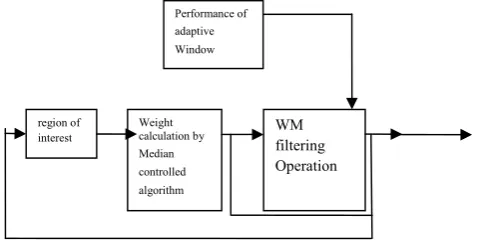
Fig 1. Block diagram of Median controlled adaptive RWM
Let us consider the algorithm as stages.
Stage 1 : Get the region of interest( inputs from the user), Find the window size.
Determination of the window size: Zmin = minimum intensity value in Sxy
Zmax = maximum intensity value in Sxy. ZRWM = RWM intensity value in Sxy Zxy= intensity value at coordinates Sxy
The adaptive Recursive weighted median filtering algorithm works in two levels
Level A : If Zmin < ZRWM < Zmax, go to level B Else increase the window size
If window size < Zmax, repeat level A Else output ZRWM
Level B : If Zmin < Zxy< Zmax , output Zxy
Else output ZRWM Stage 2: Filtering operation
The Recursive weighted median filtering operation is carried out based on the adaptive window size determined.
The algorithm for the recursive weighted median filter is given as:
Inputs/ Outputs: M X N image Moving window W,|W|=N=2k+1 Weight vector
a (a , a ...a )
=
1 2 NLet Half Sum=
∑
i=N1a / 2
ifor i=1 to Number of Rows for j=1 to Number of Columns
place the window W at (i,j) store the image values inside W and the corresponding weights in
x= ((X1,a1),X2,a2),…..(XN,aN))
sort x with respect to Xis, store the result in y =((X1,a1),X2,a2),…..(XN,aN))
let Sum = 0, m =1 repeat
let Sum = Sum+a(m) let m= m+1
until Sum > Half Sum
let Output(i,j) = y(m-1) Recmed(X1,X2,….XN) = MED (Y1,Y2,…Yk,Xk+1,……XN)
end end
Performance of adaptive Window
region of interest
Weight calculation by Median controlled algorithm
[image:3.595.43.282.565.685.2]V. RESULTS
The proposed ARWMF using median controlled algorithm is tested using the Lena color images.
Figures show the results Lena color image corrupted by 40% and 80% of noise densities. Figures (a, b, c, d, e, f, g) are the original image, corrupted image, Standard Median Filter (SMF)output, Weighted Median Filter (WMF) output, Recursive Weighted Median Filter (RWMF) output, Median Controlled using Lin’s algorithm (MC Lin’s) output and the proposed ARWMF using median controlled algorithm.
TABLE I
Comparison table of PSNR of different filters for Lena.jpg
TABLE II
Comparison table of MSE of different filters for Lena.jpg
(a)
(b) (c) (d)
(e) (f)
(h)
(a) Original Lena 256 X256 image (b)ROI (c) Noisy image (density 80%) (d) SMF outputs (e) WMF output
(e) RWM output (f) Proposed ARWMF output (h) After filter combined with remaining portion
VI. CONCLUSION
Generally, the RWM filters are designed only for the fixed window length which causes blurring in the output samples. In the fixed window length, the noise may absent in some windows, in that condition, the filtering operation is done for the original samples which causes the blurring in the output. To overcome the problem, the proposed filter is designed where the window length is determined by the width of the impulsive noise presented in the input sample. Therefore there is no chance of filtering the uncorrupted pixel which reduces the blurring in the output sample, by using the region of interest the window size is minimized. The speed of a processor and performance of a median filter will be increased. The weights calculated by using the Noise
density
SMF WM CWM RWM ARW MF 10 33.9 35.04 34.87 32.07 30.53 20 31.58 30.62 29.28 30.79 29.73 30 27.42 25.58 24.53 28.63 29.18 40 23.28 21.65 20.63 26.5 28.48 50 19.82 18.6 17.7 24.19 28.01
Noise density
median controlled algorithm is producing very effective result and preserved fine details and edges. The MSE is also very less when compared to other median type algorithms.
REFERENCES
[1] Ho-Ming Lin and Alan ”Median Filters with Adaptive Length”, IEEE
Transactions of the Circuits and Systems, vol...35, no.6, June 1988.
[2] Manikandan, O.Uma Maheswari, D.Ebenezer“ Adaptive length Recursive Weighted Median Filter
with Improved Performance in Impulsive Noisy Environment” WSEAS Transaction on Electronics, Issue 3, Vol..1, July 2004
[3] G. Acre, "A General Weighted Median Filter Structure Admitting Negative Weights", IEEE Tr. On Signal Proc., vol.46, Dec. 1998
[4] G. Acre and J. Paredes, "Recursive Weighted Median Filters Admitting Negative Weights and Their Optimization", IEEE Tr.
On Signal Proc., vol.48, nr. 3, March 2000.
[5] O. Yli-Harja, J. Astola and Y. Neuvo, "Analysis of the Properties Of Median and Weighted Median Filters Using Threshold Logic and Stack Decomposition", IEEE Tr. Signal Proc., vol. 39, no. 2, pp. 395-410, Feb. 1991.
[6] O.Yli-Harja, Heikki Huttunen, Antti and Karen “Design of Recursive Weighted Median Filters with Negative Weights” Signal Processing Lab, Tampere University of Tech., Finland, 2001.
[7] I. Pitas and A.N.Venetsanopoulos, “Nonlinear Digital Filters Principles and Applications”. Kluwer Academic Publications, 1990
[8] Gonzalez and Woods, “Digital Image Processing Using Matlab” Pearson Education, pp no.178-179, 2004.
[9] S. Zhang and M. A. Karim, “A New Impulse Detector for Switching Median Filters,” IEEE Signal Processing Letters, pp. 360–363, 2002.
[10] Z.Wang and D. Zhang, “Progressive Switching Median Filter for the Removal of Impulse Noise from Highly Corrupted Images,” IEEE
Transactions on Circuits and Systems II, 46, pp. 78– 80, 1999.
[11] M.Nikolova, “A Variational Approach to Remove Outliers and Impulse Noise,” Journal of Mathematical Imaging and Vision, 20, pp. 99–120, 2004.
[12] H. Hwang and R. A. Haddad, “Adaptive Median Filters New Algorithms and Results,” IEEE Transactions on Image Processing, 4, pp. 499–502, 1995.