Proceedings of the 2019 EMNLP and the 9th IJCNLP (System Demonstrations), pages 211–216 211
A Summarization System for Scientific Documents
Shai Erera1, Michal Shmueli-Scheuer1, Guy Feigenblat1, Ora Peled Nakash2, Odellia Boni1, Haggai Roitman1, Doron Cohen1, Bar Weiner1, Yosi Mass1, Or Rivlin1,
Guy Lev1, Achiya Jerbi1, Jonathan Herzig1, Yufang Hou1, Charles Jochim1, Martin Gleize1, Francesca Bonin1, Debasis Ganguly1, David Konopnicki1
1IBM Research,2IBM Cloud
Abstract
We present a novel system providing sum-maries for Computer Science publications. Through a qualitative user study, we identi-fied the most valuable scenarios for discov-ery, exploration and understanding of scien-tific documents. Based on these findings, we built a system that retrieves and summarizes scientific documents for a given information need, either in form of a free-text query or by choosing categorized values such as scientific tasks, datasets and more. Our system ingested 270,000 papers, and its summarization mod-ule aims to generate concise yet detailed sum-maries. We validated our approach with hu-man experts.
1 Introduction
The publication rate of scientific papers is ever in-creasing and many tools such as Google Scholar, Microsoft Academic and more, provide search ca-pabilities and allow researchers to find papers of interest. In Computer Science, and specifically, natural language processing, machine learning, and artificial intelligence, new tools that go be-yond search capabilities are used to monitor1, ex-plore (Singh et al.,2018), discuss and comment2
publications. Yet, there is still a high information load on researchers that seek to keep up-to-date. Summarization of scientific papers can mitigate this issue and expose researchers with adequate amount of information in order to reduce the load. Many tools for text summarization are avail-able3. However, such tools target mainly news or simple documents, not taking into account the characteristics of scientific papers i.e., their length and complexity.
1arxiv-sanity.com 2
groundai.com/
3github.com/miso-belica/sumy,ivypanda.
com/online-text-summarizer
A summarization system for scientific publica-tions requires many underlying technologies: first, extracting structure, tables and figures from PDF documents, then, identifying important entities, and, finally, generating a useful summary. We chose to provide summarization as part of a search system as it is the most common interface to con-sume scientific content, regardless of the task.
relevant, continue to the abstract. Here, users men-tioned, that in many cases, they find the abstract not informative enough in order to determine rel-evance. Hence the importance of summarization for helping researchers understand the gist of a paper without the need to read it entirely or even opening the PDF file.
Approach and Contribution. We present a novel summarization system for Computer Sci-ence publications, namedIBM Science Summa-rizer, which can be useful foremost to the ACL community, and to researchers at large. It pro-duces summaries focused around an information need provided by the user - a natural language query, scientific tasks (e.g., “Machine Transla-tion”), datasets or academic venues.IBM Science Summarizer summarizes the various sections of a paper independently, allowing users to focus on the relevant sections for the task at hand. In do-ing so, the system exploits the various entities and the user’s interactions, like the user query, in order to provide a relevant summary. We validated our approach with human experts. The system is avail-able at:https://ibm.biz/sciencesum.
2 Related Work
Numerous tools support the domain of scientific publications including search, monitoring, explor-ing and more. For automatic summarization, ef-forts mostly concentrated on automated generation of survey papers (Jha et al.,2015;Jie et al.,2018). Surveyor (Jha et al.,2015) considers both content and discourse of source papers when generating survey papers. CitationAS (Jie et al., 2018) au-tomatically generates survey papers using citation content for the medical domain. The main differ-ences between these systems and ours is that they create summaries from multi-documents, while our tool summarizes individual papers and sup-ports query-focused summaries.
For supporting the ACL community, CL Scholar (Singh et al.,2018) presents a graph min-ing tool on top of the ACL anthology and en-ables exploration of research progress. Tutori-alBank (Fabbri et al., 2018) helps researchers to learn or stay up-to-date in the NLP field. Recently, paperswithcode4 is an open resource for ML
pa-pers, code and leaderboards. Our work is comple-mentary to these approaches and provide the first
4paperswithcode.com/
Documents, Entities, query
query
Analysis & Enrichment
Query execution
Summarization
User query Summary PDF
JSON
Text, Tables, Figures extraction
Metadata enrichment
Entity extraction
Elasticsearch
[image:2.595.357.475.63.194.2](a) (b)
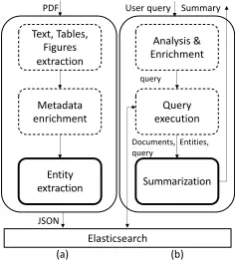
Figure 1:IBM Science SummarizerFramework.
tool for automatic summarization and exploration of scientific documents.5
3 System Overview
IBM Science Summarizer’s main purpose is to support discovery, exploration and understand-ing of scientific papers by providunderstand-ing summaries. The system has two parts. First, an ingestion pipeline parses and indexes papers’ content from arXiv.com and ACL anthology, as depicted in Fig-ure1(a). Second, a search engine (backed up by a UI), supports search and exploration, coupled with summarization, as shown in Figure1(b).
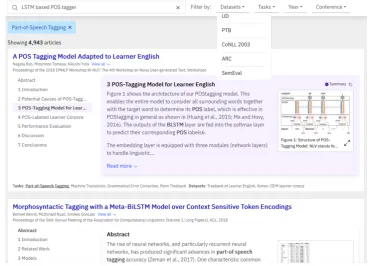
Figure2shows the user-interface forIBM Sci-ence Summarizer. Users interact with the sys-tem by posing natural language queries, or by using filters on the metadata fields such as con-ference venue, year, and author, or entities (e.g., tasks, datasets)6. User experience is an impor-tant usability factor. Thus, our UI provides in-dicators to help users explore and understand re-sults. Specifically, associating a comprehensive structure with each result allows users to navigate inside content in a controlled manner: each sec-tion shows clearly the elements that are computed by the system (section summary, detected entities, etc.) and the elements that are directly extracted from the original paper. This clear distinction al-lows users to have visibility into the systems’ con-tributions (Flavian et al.,2009).
4 Ingestion Pipeline
Our system contains 270,000 papers from arXiv.org (“Computer Science” subset) and the
5
For clarity, more related works are referred to in the var-ious sections of this paper.
Figure 2:IBM Science SummarizerUI.
ACL anthology7. The ingestion pipeline consists of paper acquisition, extracting the paper’s text, tables and figures and enriching the paper’s data with various annotations and entities.
Paper Parsing. We use Science-Parse8 to ex-tract the PDF text, tables and figures. Science-Parse outputs a JSON record for each PDF, which among other fields, contains the title, abstract text, metadata (such as authors and year), and a list of the sections of the paper, where each record holds the section’s title and text. We have merged sub-sections into their containing sections and this resulted in about 6-7 merged sections per article (e.g., see Fig.2). Science-Parse also supports ex-tracting figures and tables into an image file, as well as caption text.
In addition, we detect figure and table refer-ences in the extracted text. We extract tasks, datasets and metric (see details below). Finally, we use Elasticsearch9 to index the papers, where for each paper we index its title, abstract text, sec-tions text and some metadata.
7
We removed duplication between the two by using Jac-card similarity on the titles and authors.
8
github.com/allenai/science-parse 9https://www.elastic.co
5 Summarization
This module generates a concise, coherent, infor-mative summary for a given scientific paper that covers the main content conveyed in the text. The summary can either be focused around a query, or query agnostic (a generic summary)10. Scien-tific papers are complex: they are long, structured, cover various subjects and the language may be quite different between sections, e.g., the intro-duction is quite different than the experiments sec-tion. To ensure our summarizer assigns sufficient attention to each of these aspects we have opted to generate a standalone summary for each section. This way we summarize a shorter, more focused text, and the users can navigate more easily as they are given the structure of the paper. Each of these section-based summaries are eventually composed together into one paper summary.
Scientific papers summarization goes back more than thirty years. Some of these works fo-cus on summarizing content (Paice, 1981; Paice and Jones,1993), while others focused on citation sentences (citation-aware summarization) (Elkiss et al., 2008; Qazvinian and Radev, 2008; Abu-Jbara and Radev,2011). Recently,Yasunaga et al. (2019) released a large-scale dataset, Scisumm-Net, including summaries produced by humans for over 1000 scientific papers using solely the pa-pers abstract and citations. While citations data encompasses the impact of the paper and views from the research community, it is not available for newly-published papers, and tends to lead to high level and shorter summaries (Scisumm-Net average summary length is151words). We opted to focus on more extensive, detailed summaries which do not rely on citations data. As mentioned above, the inputs to the summarization module are an (optional) query and entities (task, dataset, metric), and the relevant papers returned by the search/filtering (see Fig.2). Given a retrieved pa-per and the optional query Q (or entity), we de-scribe next how a summary is produced for each sectionDin the paper.
Query Handling. If present, Q can either be short and focused or verbose. If short, it is ex-panded using query expansion (Xu et al., 2009). This pseudo-relevance feedback transformsQinto a profile of100unigram terms, obtained from
an-10Note that in order to optimize the response time, the pro-duction system currently offers query agnostic summaries.
alyzing the top papers that are returned from our corpus as a response to the given query. Alterna-tively, in the case of a verbose query, aFixed-Point term weighting schema (Paik and Oard, 2014) is applied in order to rank the terms of the query.
Alternatively, if only filtering is applied and there is no query, the keyphrases of the paper are extracted and used as a surrogate for the query. In this case, all keywords in the generated query are given the same weight.
Pre-Processing. Sentences are segmented us-ing the NLTK library and each sentence is tok-enized, lower cased and stop words are removed. Then, each sentence is transformed into a uni-grams and bi-uni-gramsbag-of-wordsrepresentations, where each n-gramis associated with its relative frequency in the text.
Summarization Algorithm. In general, sum-maries can either be extractive or an abstractive. In the extractive case, a summary is generated by selecting a subset of sentences from the original input. Abstractive summarizers, on the other hand, can also paraphrase input text. In many cases, ex-tractive summarization generates grammatical and focused summaries while abstractive techniques require heavy supervision, are limited to short documents and may transform meaning (Gambhir and Gupta,2017).
In our system, summarization is applied on D using a state-of-the-art unsupervised, extrac-tive, query focused summarization algorithm, in-spired by (Feigenblat et al.,2017), whose details are briefly described as follows. The algorithm gets a paper section, a natural language queryQ, a desired summary length (in our case, 10 sen-tences11), and a set of entities associated with the queryEQ. The outputS is a subset of sentences from D selected through an unsupervised opti-mization scheme. To this end, the sentence subset selection problem is posed as a multi-criteria opti-mization problem, where several summary quality objectives are be considered. The selection is ob-tained using theCross Entropy (CE)method (Ru-binstein and Kroese, 2004). Optimization starts by assigning a uniform importance probability to each sentence in D. Then, CE works iteratively, and, at each iteration, it samples summaries us-ing a learnt distribution over the sentences, and
evaluates the quality of these summaries by apply-ing a target function. This function takes into ac-count several quality prediction objectives, which (for simplicity) are multiplied together. The learn-ing process employs an exploration-exploitation trade-off in which the importance of a sentence is a fusion between its importance in previous itera-tions and its importance in the current one.
The following five summary quality predic-tors are used by Feigenblat et al. (2017): query saliency, entities coverage, diversity, text coverage and sentence length. Query saliencymeasures to what extent the summary contains query related terms as expressed by the cosine similarity be-tween the unigrams bag-of-words representation of the summary and the query terms.Entities cov-eragemeasures to what extent the set of entities identified in a summary shares the same set of en-tities withEQ, measured by the Jaccard similar-ity between the sets. The aim of this objective is to produce a summary that is more aligned with the information need provided explicitly (as a filter specified by the user) or implicitly (learnt from the query terms). Diversity lays towards summaries with a diverse language model using the entropy of the unigramsbag-of-wordsrepresentation of the summary. Text coverage measures the summary coverage of D as measured by cosine similarity between the bi-gram bag-of-words representation of a summary and D. Finally, the length objec-tive biases towards summaries that include longer sentences, which tend to be more informative.
6 Human Evaluation
IBM Science Summarizer summarization paradigm is section-based, i.e., each section is summarized independently, and then all sections’ summaries are combined into the paper’s sum-mary. In order to evaluate this paradigm, we approached12authors from the NLP community, and asked them to evaluate summaries of two papers that they have co-authored (preferably as the first author). For each paper, we generated two summaries of two types: the section-based summary as described above, and a second summary generated using the same algorithm but ignoring sections (i.e., treating the paper content as flat text), asection-agnosticsummary. For the section-based summary, each section’s summary length was fixed to 10 sentences. The length of the section-agnostic summary was defined as the
length of the section-based summary. In total24 papers, and48summaries were evaluated.
Tasks. The authors evaluated summaries of each summary type, section-agnostic and section-based (in random order), by performing the following3 tasks per summary: (1) for each sentence in the summary, we asked them to indicate whether they would consider it as a part of a summary of their paper (i.e., precision oriented measure); (2) we asked them to evaluate how well each of the sec-tions of the paper is covered in the summary (i.e., coverage/recall); and (3) we asked them to glob-ally evaluate the quality of the summary. For tasks (2) and (3) we used a 1-5 scale, ranging from very bad to excellent,3means good.
Analysis. The objective of the analysis is to find quantitative scores for each summary type to fa-cilitate a comparison between them. For task (1), for each paper, we calculated the precision scores of the two summary types, and then computed the average score for each summary type across all papers. For task (2), we calculated an average score for each paper and summary type by aver-aging over the sections scores. Then, we obtained the average of these scores for each summary type across all papers. Finally, for task (3), we simply averaged the scores given by the authors to each summary type. To further quantify the evaluation, we analyzed how well each summary type did for each of the 3 tasks. For that we counted the num-ber of times that each summary type scored better than the other, and then divided by the total num-ber of papers, to obtain the “% wins”.
Results. Table 1 summarizes the results across the 3 tasks. For example, for task (2), for68%of the papers, the section-based summary was scored higher, while, for 22%the section-agnostic sum-mary was scored higher (for 10% of the papers, the summaries were scored equally). The average score for section-based summaries was3.32with standard deviation of 0.53. Notably, the quality of the section-based summaries significantly out-performs the section-agnostic summaries on all 3 tasks, supporting our proposed paradigm.
7 Conclusion
Task Section-agnostic Section-based % wins Avg. score (std) % wins Avg. score (std) (1) 37 0.54 (0.17) 63 0.6 (0.18)†
(2) 22 3 (0.56) 68 3.32 (0.53)†
[image:6.595.76.292.62.119.2](3) 4.5 2.86 (0.56) 36 3.22 (0.61)‡
Table 1: Tasks results for agnostic, and section-based. †- The results were significant withp <0.05. ‡- The results were significant withp <0.005.
support for additional entities e.g., methods, and to increase our corpus to include more papers. Fi-nally, we plan to provide this tool to the commu-nity as an open service and conduct an extensive user study about the usage and quality of the sys-tem, including automatic evaluation of the sum-maries.
References
Amjad Abu-Jbara and Dragomir Radev. 2011. Co-herent citation-based summarization of scientific pa-pers. InProceedings of the 49th Annual HLT, HLT ’11, pages 500–509. Association for Computational Linguistics.
Aaron Elkiss, Siwei Shen, Anthony Fader, G¨unes¸ Erkan, David States, and Dragomir Radev. 2008. Blind men and elephants: What do citation sum-maries tell us about a research article? J. Am. Soc. Inf. Sci. Technol., 59(1):51–62.
Alexander Fabbri, Irene Li, Prawat Trairatvorakul, Yi-jiao He, Weitai Ting, Robert Tung, Caitlin West-erfield, and Dragomir Radev. 2018. Tutorialbank: A manually-collected corpus for prerequisite chains, survey extraction and resource recommendation. In Proceedings of the 56th ACL, pages 611–620.
Guy Feigenblat, Haggai Roitman, Odellia Boni, and David Konopnicki. 2017. Unsupervised query-focused multi-document summarization using the cross entropy method. In Proceedings of the 40th International ACM SIGIR, pages 961–964.
Carlos Flavian, Raquel Gurrea, and Carlos Orus. 2009. Web design: a key factor for the website success. Journal of Systems and Information Technology, 11(2):168–184.
Kata G´abor, Davide Buscaldi, Anne-Kathrin Schu-mann, Behrang QasemiZadeh, Ha¨ıfa Zargayouna, and Thierry Charnois. 2018. Semeval-2018 task 7: Semantic relation extraction and classification in sci-entific papers. In Proceedings SemEval@NAACL-HLT 2018, pages 679–688.
Mahak Gambhir and Vishal Gupta. 2017. Recent auto-matic text summarization techniques: A survey. Ar-tif. Intell. Rev., 47(1):1–66.
Yufang Hou, Charles Jochim, Martin Gleize, Francesca Bonin, and Debasis Ganguly. 2019. Identification of tasks, datasets, evaluation metrics, and numeric scores for scientific leaderboards construction. vol-ume arXiv:1906.09317.
Rahul Jha, Reed Coke, and Dragomir Radev. 2015. Surveyor: A system for generating coherent survey articles for scientific topics. InProceedings of the Twenty-Ninth AAAI, AAAI’15, pages 2167–2173.
Wang Jie, Zhang Chengzhi, Zhang Mengying, and Deng Sanhong. 2018. Citationas: A tool of auto-matic survey generation based on citation content*. Journal of Data and Information Science, 3(2).
Yi Luan, Luheng He, Mari Ostendorf, and Hannaneh Hajishirzi. 2018. Multi-task identification of enti-ties, relations, and coreference for scientific knowl-edge graph construction. InProceedings of EMNLP 2018, pages 3219–3232.
C. D. Paice. 1981. The automatic generation of litera-ture abstracts: An approach based on the identifica-tion of self-indicating phrases. InProceedings of the 3rd Annual ACM SIGIR, SIGIR ’80, pages 172–191.
Chris D. Paice and Paul A. Jones. 1993. The identi-fication of important concepts in highly structured technical papers. InProceedings of the 16th Annual International ACM SIGIR, SIGIR ’93, pages 69–78, New York, NY, USA. ACM.
Jiaul H. Paik and Douglas W. Oard. 2014. A fixed-point method for weighting terms in verbose infor-mational queries. CIKM ’14, pages 131–140, New York, NY, USA. ACM.
Vahed Qazvinian and Dragomir R. Radev. 2008. Sci-entific paper summarization using citation summary networks. InProceedings of the 22Nd International Conference on Computational Linguistics - Volume 1, COLING ’08, pages 689–696.
Reuven Y. Rubinstein and Dirk P. Kroese. 2004. The Cross Entropy Method: A Unified Approach To Combinatorial Optimization, Monte-carlo Simula-tion. Springer-Verlag, Berlin, Heidelberg.
Mayank Singh, Pradeep Dogga, Sohan Patro, Dhi-raj Barnwal, Ritam Dutt, Rajarshi Haldar, Pawan Goyal, and Animesh Mukherjee. 2018. Cl scholar: The acl anthology knowledge graph miner. In Pro-ceedings of the NAACL 2018.
Yang Xu, Gareth J.F. Jones, and Bin Wang. 2009. Query dependent pseudo-relevance feedback based on wikipedia. InProceedings of the 32Nd Interna-tional ACM SIGIR, pages 59–66.