
http://go.warwick.ac.uk/lib-publications
Original citation:Spencer-Oatey, Helen, 1952-. (2013) Relating at work : facets, dialectics and face. Journal of Pragmatics . ISSN 0378-2166 (In Press)
Permanent WRAP url:
http://wrap.warwick.ac.uk/53978/
Copyright and reuse:
The Warwick Research Archive Portal (WRAP) makes the work of researchers of the University of Warwick available open access under the following conditions. Copyright © and all moral rights to the version of the paper presented here belong to the individual author(s) and/or other copyright owners. To the extent reasonable and practicable the material made available in WRAP has been checked for eligibility before being made available.
Copies of full items can be used for personal research or study, educational, or not-for-profit purposes without prior permission or charge. Provided that the authors, title and full bibliographic details are credited, a hyperlink and/or URL is given for the original metadata page and the content is not changed in any way.
Publisher’s statement:
“NOTICE: this is the author’s version of a work that was accepted for publication in Journal of Pragmatics. Changes resulting from the publishing process, such as peer review, editing, corrections, structural formatting, and other quality control mechanisms may not be reflected in this document. Changes may have been made to this work since it was submitted for publication. A definitive version was subsequently published in Journal of Pragmatics (2013)
http://dx.doi.org/10.1016/j.pragma.2013.02.010 A note on versions:
The version presented here may differ from the published version or, version of record, if you wish to cite this item you are advised to consult the publisher’s version. Please see the ‘permanent WRAP url’ above for details on accessing the published version and note that access may require a subscription.
1
Relating at Work:
Facets, dialectics and face
Helen Spencer-Oatey University of Warwick
Journal of Pragmatics, (2013), http://dx.doi.org/10.1016/j.pragma.2013.02.010
Abstract
This article examines ‘relating at work’. Recent theorising in pragmatics has drawn attention to the importance of analysing relations, and yet the pragmatic study of relations is now intertwined so closely with the concept of face (e.g. Arundale, 2010a; Holmes et al., 2011; Locher and Watts 2005, 2008) that it might seem the two are synonymous. In this paper, I review this research from a multidisciplinary perspective, and then report a study on ‘relating at work’ in which leaders and interns were interviewed about their experiences of starting work in a culturally unfamiliar setting. I focus on one dialectic, connectedness–separateness, and report the challenges they described in ‘making contact’. In the discussion section and on the basis of my findings, I argue the following points: (a) relating at work entails a complex web of interrelated facets and ‘smooth relations’ is just one of employees’ relational concerns; (b) Relational Dialectic Theory offers much potential for interpersonal pragmatics; (c) dialectic tensions can occur at the individual as well as the
interpersonal/relational levels and an interactional achievement analytic perspective needs to be complemented by an individual perspective; (d) Relational Dialect Theory and Face Theory are complementary to each other and should not be conflated.
Keywords
Relations; Relational dialectics; Relating at work; Contact–Separation; Face.
Highlights
I review key issues and controversies re pragmatic approaches to ‘the relational’. I analyse metapragmatic emotion comments from workplace project partnerships. I argue that such comments offer useful insights for evaluating conceptual frameworks. I claim that discourse data alone is insufficient for studying ‘the relational’.
I call for more pragmatics research on ‘the relational’ to seek applied relevance.
1. Introduction
2
interpersonal relationships promises important new insights into the interpersonal pragmatics of relating”.
This article continues this line of interest by exploring the issue of ‘relating’ at work. I use the term ‘relating’ instead of ‘relationship’ for two main reasons. On the one hand it draws attention to the dynamic process of building/maintaining/managing relations, while ‘relationship’ could more easily be interpreted from a static point of view. On the other, ‘relationship’ tends to imply a dyad, while ‘relating’ is free from this restriction. In a workplace context, which is the focus of the study reported in this article, staff need to interact with a wide range of people, and the term ‘relating’ seems to capture that more accurately.
One of the main impetuses for the study came from a chance encounter. At a time when some colleagues and I were collecting data for a project on the competencies needed for starting work in a culturally unfamiliar workplace, I was challenged by a remark from a well-known “business
management guru”. In a personal exchange, he commented that there is no framework for
conceptualising relations at work. I was shocked and retorted, “Oh in pragmatics we’ve got very well developed theories.” “Excellent”, he said, “can you send that to me?” I promised to do so, but when I got home and searched my brain and my shelves for something suitable, I could find nothing appropriate to send. Some papers were theoretically too complicated, some assumed too much knowledge of linguistics/pragmatics, and others offered no applied perspectives. Moreover, the scope of their coverage was much narrower than what he seemed to want. They were highly focused on face and/or im/politeness, while his interests were much broader than this. That started me reflecting on what kind of framework might be suitable for needs such as this.
The focus of this article is a preliminary exploration of this complex area. My aim is threefold: a) to investigate employees’ ‘grassroots’ perspectives on relating at work and explore the web of facets they mention; b) to consider ways in which their perspectives can be conceptualised, examining the applicability and relative usefulness of Relational Dialectic Theory and how this relates to face; and c) to reflect on the relative importance of the cognitive in the pragmatic analysis of relations.
I start by reviewing different disciplinary perspectives on the notion of ‘relations’ and identifying some key controversies and perspectives. I then present a study on ‘relating at work’ in which leaders and interns were interviewed about their experiences of starting work in a culturally unfamiliar setting. I map out the different facets of relating that they mentioned and present a conceptualisation of the data using Relational Dialect Theory. I then focus on one dialectic, connectedness–separateness, and report the challenges the participants described in ‘making contact’. I conclude the paper by arguing as follows: (a) relating at work entails a complex web of interrelated facets and ‘smooth relations’ is just one of employees’ concerns; (b) Relational Dialectic Theory offers much potential for interpersonal pragmatics; (c) dialectic tensions can occur at the individual as well as the interpersonal/relational levels and an interactional achievement analytic perspective needs to be complemented by an individual perspective; (d) Relational Dialect Theory and Face Theory are complementary to each other and should not be conflated.
2. Conceptualising relations: Multidisciplinary perspectives
2.1 Face, politeness and relations
3
and the friendly relations which enable us to assume that our interlocutors are being cooperative in the first place” (1983: 82). Brown and Levinson, who explained politeness in terms of concerns about face, were even more explicit in linking their ‘model of politeness’ with relationships: “What we present here … is a tool for describing … the quality of social relationships” (1987: 55).
More recently, Locher and Watts (2005, 2008) have proposed the term ‘relational work’ to refer to “all aspects of the work invested by individuals in the construction, maintenance, reproduction and transformation of interpersonal relationships among those engaged in social practice” (Locher and Watts 2008: 96). They link their concept inextricably with both face and im/politeness, as the following quotation indicates:
… any interpersonal interaction involves the participants in the negotiation of face. The term ‘facework’, therefore, should span the entire breadth of interpersonal meaning. This, however, is rarely the case in the literature. Especially in accordance with Brown and Levinson’s
Politeness Theory, ‘facework’ has been largely reserved to describe only appropriate and polite behaviour with a focus on face-threat mitigation, at the exclusion of rude, impolite and
inappropriate behaviour. To avoid confusion and in favour of clarity we adopt ‘relational work’ as our preferred terminology.
Locher and Watts 2005: 11
Arundale (2010a) is even more explicit and deliberate about the connection between face and relations. He conceptualises face as “the relationship two or more persons create with one another in interaction” (2010a: 2078), or more specifically as “the interactional achieving and conjoint co-constituting of connectedness with others, in dialectical tension with separateness from them” (2010a: 2103). (See the next section for more information on dialectics.)
Spencer-Oatey (2000/2008; 2005; with Franklin 2009), on the other hand, focuses on ‘rapport’, which she and Franklin define as “people’s subjective perceptions of (dis)harmony, smoothness– turbulence and warmth–antagonism in interpersonal relations” (Spencer-Oatey and Franklin 2009: 102). She argues that perceptions of rapport are influenced three interconnected underlying factors: face, sociality rights and obligations, and interactional goals. She thus draws a distinction between rapport and face, while also acknowledging their close interconnection. She does not make clear whether she equates relations and rapport or not, although in a recent article (2011: 3576) she provisionally suggests there are three different perspectives on relations: strategic, sociality and rapport.
So we now have a situation where the concepts of ‘relations’, ‘face’ and ‘rapport’ are very closely intertwined and are even conflated by some authors. Haugh and Bargiela-Chiappini (2010) point out this is the case for face and politeness, and maintain that “while acknowledging the important role that face plays in politeness and impoliteness research, it is suggested that the time has come for face to be theorized on its own terms” (2010: 2073). I would similarly argue that this is the case for the concept of ‘relations’. We need to start analysing ‘relating’ as a concept and a process in its own right, and the study reported in this paper is an attempt to do so.
2.2 Individual and Social Perspectives on Relations
‘Relating’ entails an individual and a social component, and a fundamental question is their relative importance. Arundale (2010b) points out that much research to date has given greater weight to the individual perspective, a stance which he labels as a ‘weak’, summative interpretation of the
4
interactional achievement of the dyad and which he labels as ‘strong’, has much greater potential for advancing theory and research. So while he acknowledges that “conceptualizations of human relating from the perspective of the individual … will continue to be an important resource for understanding” (2010b: 159), he stresses the importance of taking a ‘conjoint co-constituting’ perspective.
This co-constructionist perspective has become increasingly dominant in recent theorising on face and im/politeness, and is reflected in works such as Locher and Watts (2005), Bargiela-Chiappini and Haugh (2009), Haugh and Bargiela-Chiappini (2010) and Arundale (2010a). However, as Langlotz points out, it is essential for such work to have a strong cognitive component. He summarises his position as follows:
Since humans are social beings acting in socially-constructed worlds of experience …, their cognitive representations and processes must be adapted to the dynamic, socially-distributed nature of sensemaking. The social interactional tradition is therefore right in criticizing the cognitivist paradigm for focusing on individual computational processes only. This, however, cannot prevent [the] interpersonal pragmaticist from taking the cognitive dimensions of sense-making into account. … the construction of social meaning must be understood as a social process that is cognitively mediated by the interacting cognizers. Along these lines, the
cognitive representations which underlie and guide the interlocutor’s interaction are of central importance for understanding communicative practices including the situated construction of social orientation. The construction of (social) meaning must therefore be understood as a socio-cognitive process by definition.
Langlotz 2010: 195–6
In other words, while an interactional achievement perspective on relations is vital, it is equally essential not to ‘throw out the baby with the bathwater’ and ignore the individual perspectives of the participants. This study explores the insights that an individual perspective can offer.
2.3 Performing relational work
From a practical point of view, knowing how to manage relations effectively and the strategies available for doing so is also of crucial importance. Theorising in pragmatics has pointed to a number of elements:
Relational management goals: politeness/impoliteness (many authors); identity and self-presentation (e.g. Ruhi, 2009; Spencer-Oatey, 2009); rapport orientation (Spencer-Oatey, 2005, 2000/2008);
The quality or nature of the relationship to be ‘managed’: distance/closeness and equality/inequality (see Spencer-Oatey, 1996, for a review);
Sensitivity factors: face (Brown and Levinson, 1987 and many others), politeness maxims (Leech 1983), sociality rights and obligations (Spencer-Oatey, 2005, 2000/2008);
Strategies for management, including: directness/indirectness (e.g. Brown and Levinson, 1987; Blum-Kulka, House and Kasper, 1989); ‘super-strategies’ such as positive/negative politeness strategies (Brown and Levinson, 1987) and involvement/independence strategies (Scollon and Scollon, 1995); content focus and functions, such as social talk, supportive humour, compliments (e.g. Holmes, Marra and Vine, 2011);
5
insights for conceptualising relating at work? One of the goals of this paper is to explore this possibility and so I briefly review RDT here.
Baxter and Montgomery (1996) analysed the tensions inherent in romantic relationships and found three recurring contradictions: connectedness–separateness, certainty–uncertainty, and openness– closedness. They further proposed that dialectics are multivocal in nature rather than binary; in other words that the oppositions are complex constellations of related and overlapping meanings. They argue as follows:
We have come to realize that it is much too simple and mechanistic to reduce the dialectics of relationships to a series of polar oppositions … Rather, contradictions are better conceived as complex, overlapping domains of centripetal or dominant forces juxtaposed with centrifugal or countervailing forces. Thus … connection as a centripetal force in personal relationships is in dynamic and opposing associations with a host of centrifugal forces like autonomy, privacy, self-assertion and independence.
Montgomery and Baxter, 1998: 157
The key to understanding RDT is the concept of contradiction. Griffin unpacks this as follows:
Although most of us embrace the traditional ideals of closeness, certainty and openness in our relationships, our actual communication within family, friendship, and romance seldom follows a straight path toward these goals. Baxter and Montgomery believe this is the case because we are also drawn toward the exact opposite – autonomy, novelty, and privacy. These conflicting forces can’t be resolved by simply ‘either/or’ decisions. The ‘both/and’ nature of dialectical pressures guarantees that our relationships will be complex, messy, and always somewhat on edge.
Griffin, 2012: 155–6
So according to RDT, “Social life is a dynamic knot of contradictions, a ceaseless interplay between contrary or opposing tendencies” (Baxter and Montgomery, 1996: 3). For example, a dialectic perspective on connectedness/separateness would not treat one end of the spectrum as necessarily more or less polite/face-threatening than the other, even in a given context; rather it would point to a continuous dynamic interplay between the opposing tendencies.
RDT scholars take different stances with respect to the ‘location of contradictions’ (Baxter and Montgomery, 1998: 4) – in other words, with respect to the individual–social dilemma discussed in the previous section. Baxter and Montgomery (1996, 1998) take a strong dialogic perspective, locating the tensions not in the cognition of the individual but only in the interaction between people. Baxter explains it as follows:
Contradictions are not internal cognitive dilemmas located in the individual mind, which in turn serve as the basis of the individual’s goal-directed communication. Instead, contradictions are located in the relationship between parties, produced and reproduced through the parties’ joint communicative activity.
Baxter, 2004: 14
Other researchers, however, take a different position. For instance, Dindia (1998) emphasises contradiction as an internal struggle in the mind of the individual, while VanLear (1998) and Brown, Werner and Altman (1998) maintain that dialectical tensions or contradictions can occur in three locations: within the individual, within dyadic relationships and within a social group. VanLear (1998: 121) differentiates the former two as follows: “Whereas individuals in a relationship context
6
oppositions may exist as a property of the relationship itself. Such relational dialectics are not simply reducible to the summation of behaviours and perceptions of individuals.”
As mentioned above, Arundale (2010a) has applied RDT to face theory, and he takes Baxter’s stance in rejecting the functioning of dialectics at the individual level. His Face Constituting Theory explains face exclusively as “participants’ interpreting of relational connectedness and separateness,
conjointly co-constituted in talk/conduct-in-interaction” (2010a: 2078). While I welcome his introduction of RDT to pragmatics, I disagree with his conflation of face and the relational dialectic, ‘connectedness– separateness’, and with his exclusive co-constructionist stance which downplays or rejects the contradictions that occur within an individual. As I explain further below, I believe this will lead to an impoverished understanding of the relating process.
2.4 Emergent issues
On the basis of this review of the literature, a number of issues emerge:
How can we conceptualise ‘relating at work’ as a process in its own right? What facets does it entail?
Can RDT offer any insights to help us conceptualise ‘relating at work’? What are the interconnections between ‘relating at work’ and ‘face’?
Can an individual perspective on relations offer valuable insights that helpfully complement a co-constructionist perspective?
The preliminary study reported below aims to address these issues.
3. Methodology
3.1 Research Design
Recent theorising of im/politeness (e.g. Watts, 1992; Eelen, 2001; Haugh, 2007, 2009, 2010) has drawn a distinction between first-order lay conceptualisations of the construct and second-order theoretical conceptualisations. There is now increasing acknowledgement that researchers need to probe participants’ understandings of im/politeness and not rely solely on their own interpretations, because otherwise they run the risk of imposing interpretations that are not meaningful to the participants. Eelen explains this as follows:
A situation in which the scientific account contradicts informants’ claims and dismisses them as being ‘wrong’ does not represent a healthy situation. Such a practice immediately leads to a rupture between scientific and commonsense notions, causing the theory to lose its grasp on the object of analysis. In an investigation of everyday social reality informants can never be ‘wrong’, for the simple reason that it is their behaviour and notions we set out to examine in the first place.
Eelen, 2001: 253
7
is vital that if we are studying relations, we should ‘fish for whatever we catch’, and not impose a ‘face only’ restriction. So, as explained below, we aimed in our study to explore first-order perspectives on relating at work; in other words, to start by probing the ways in which the interviewees described and commented on their relations at work.
However, as Haugh (2010) points out, it is methodologically challenging to gain participants’ perspectives. Within pragmatics, a number of researchers (e.g. Günthner, 2008; Márquez-Reiter, 2009; Nakane, 2006; Spencer-Oatey and Xing, 2003, 2004; Tyler, 1995) have obtained participants’ post-events comments on an interaction, sometimes playing them (extracts from) the recorded interaction to help stimulate recall of their interpretations or evaluations at the time. However, such a procedure not only entails recall challenges for the participants, but also results in co-construction between the researcher and the participant. Participants’ comments, therefore, cannot
straightforwardly be assumed to reflect the viewpoints they held at the time of the original interaction. Another methodological approach is to undertake ethnographic research, whereby a variety of data is collected, such as recordings of interactions, interviews and field notes. However, this too faces the same analytic complexity as post-event interviews do.
In this study we used interview data from the preliminary stage of a larger project on ‘Competencies for Global Leaders and Employees’. The purpose of the larger project during this phase was to explore the range of challenges that experienced and inexperienced employees report facing when starting work in a culturally unfamiliar setting. Interviews allowed us to gather a wider range of perspectives than interactional recordings would have done. As I explain below, we did not focus on any particular issues (such as workplace integration or communication challenges), but kept the questioning as broad as possible. In this way, we aimed to minimise imposing on the interviewees any pre-conceived ideas of our own, although a certain amount of co-construction is always inevitable. If we had decided upon a survey approach, it would have provided us with access to an even larger number of respondents, and would have allowed us to probe the impact of variables such as gender, nationality, language proficiency, amount of work experience, and so on. However, if we had devised a questionnaire without prior exploration with participants of the issues that they had experienced, we would have imposed our own concerns rather than probed those of the participants. For the next phase of the larger project, survey, ethnographic and discourse studies would all throw valuable new light, and are currently being considered.
Some people might question the relevance of this larger project to the current study of ‘relating at work’ in general, which does not have a specific focus on the impact of cultural factors. I would dispute this, though. Experiences of cultural difference often highlight issues that we do not typically notice in familiar contexts, because we are so used to them. So I would argue that this kind of data can be particularly helpful for mapping the various facets of relating at work.
3.2 Data Collection
Ethical approval for our bigger project on Competencies for Global Leaders and Employees was granted by relevant university committees. Still in its early stages, our data so far comprises interviews with three sets of participants, all of whom had recent experience of starting work in an office that was culturally unfamiliar to them from a national, sectoral, and/or linguistic perspective, and frequently from all three perspectives. The three sets of interviewees were as follows:
24 leaders in a major third sector organisation with offices throughout the world;
14 international master’s students (13 Chinese, 1 American) studying in the UK who spent four weeks as interns in a UK-based company;
8
interns in a commercial company. One of the French students went to Spain and the other to Germany.
The leaders were selected by the third sector organisation in which they work. They had all been invited to London for personal and professional development in leadership skills and the
organisation offered my colleagues and me the opportunity to interview them since they were interested in learning from our analytic perspective. The master’s students comprised the full cohort of students who had chosen to undertake an optional internship opportunity as part of their
master’s degree course at a UK university. The undergraduate students were returning Erasmus students, 34 of whom had spent (part of) their time in Europe working in a company. 10 out of the 34 agreed to be interviewed.
The official language of the third sector organisation was English and all the leaders interacted primarily in English whatever the office they were sent to. With the exception of the American master’s student, all the students (both undergraduate and master’s) had to interact in their workplace in a language that was not their mother tongue, but all of them were proficient in the language of the country. The balance of male and female interviewees was as follows: Leaders = 14 females and 10 males; master’s students = 13 females and 1 male; undergraduate students = 6 females and 4 males. As mentioned above, we did not attempt to probe the impact of different factors, such as gender, age, cultural background or linguistic proficiency, because the study had not been designed to investigate that. Rather, we wanted to explore how a range of people talk about relating at work. Since our various interviewees were primarily a convenience sample, the findings reported below should be treated as a non-exhaustive, preliminary indication of the issues being investigated.
All interviewees were given an information sheet about the main project, which described the overall purpose of the study (to understand what kinds of interactional situations they found demanding or challenging to deal with in a culturally unfamiliar work context and how they dealt with them) and assured of the confidentiality of what they said. All gave signed agreement to the interviews being recorded. The leaders and the master’s students were each interviewed in groups of four or five, with each interview lasting 45–75 minutes. The undergraduate students were interviewed individually, and the length of the interviews ranged from 25 to 55 minutes, with most interviews lasting about 45 minutes. The total interview time across the three sets of participants totalled 15 hours 46 minutes and 24 seconds. All interviews were conducted in English, audio recorded and transcribed in full. All four team members of the main research project conducted interviews. Since we were interested in commonalities and since the involvement of different interviewees could be expected to result in greater rather than fewer differences between interview content, we believed that the validity of any commonalities that might emerge would be
strengthened rather than weakened by this variation in interviewers.
9
The interview data from the master’s students was supplemented by individually-written intercultural learning journals, which each master’s student had to keep throughout his/her internship, as a requirement of the module.
3.3 Analytic Procedure
The qualitative software package NVivo was used to analyse the interview transcripts and journal entries. First the transcripts were read numerous times to get a feel for the major challenges that the interviewees described. This led to the mental identification of a small number of major themes, each of which was then followed up. One of these themes was ‘relating’– the focus of this article. To explore this major theme, a Holistic Coding method (Dey 1993; Saldaña 2009) was used for first cycle (i.e. open) coding. Dey describes this coding approach as follows:
The emphasis here is on a ‘holistic’ approach, attempting to grasp basic themes or issues in the data by absorbing them as a whole rather than by analysing them line by line. Broad categories and their interconnections are then distilled from a general overview of the data, before a more detailed analysis fills in and refines these through a process of
subcategorization.
Dey 1993: 104
The leader data and intern data were coded separately, with first the leader data being coded holistically and then the intern data. This was because I did not want to assume that leader concerns and perspectives on ‘relating’ would necessarily be the same as those of interns. Once the holistic codings had been initially decided upon, and with the leader and intern data still being analysed separately, all of the data in each of the holistic coding categories were read and re-read, and then broken down into more detailed categories, with the superordinate holistic categories being adjusted if necessary. Finally, all the codings from the leader and student data were compared and contrasted, and with the help of the software programme, Mind Manager, were merged into one big mapping picture of participants’ comments on relating in the workplace. The different coding nodes did not constitute mutually exclusive categories; on the contrary, they were highly interconnected and rather represented different facets or perspectives on the complex issue of relating at work.
Having completed the first cycle of holistic open coding, I then moved to the second cycle of coding in which I reconsidered the data from a theoretical perspective. As Saldaña (2009: 149) explains, the primary goal at this stage is to “develop a sense of categorical, thematic, conceptual, and/or
theoretical organisation” of the first set of codes. While doing this, a number of overarching dimensions emerged. This second cycle of coding could be seen as a more explicit ‘second order analysis’.
Both first cycle and second cycle findings are reported in the next section.
4. Findings
4.1 A Holistic Picture of Relating at Work
10
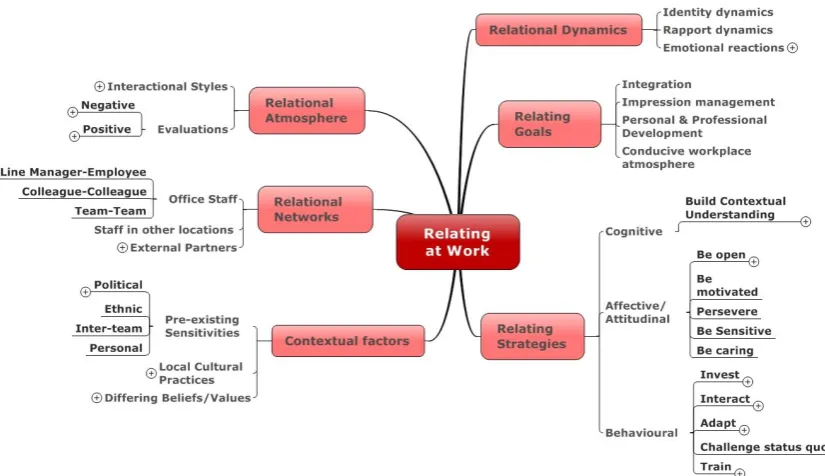
Figure 1: Facets of ‘Relating at Work’ talked about by Interviewees
As can be seen from Figure 1, the interviewees talked about six main facets: contextual factors, relational networks (i.e. the different people they had relations with at work), relational atmosphere, relational dynamics, goals for relating, and relating strategies. Each of these has many
sub-components, and the key ones are shown in Figure 1. The more detailed the level, the less generic the facets are likely to be, and so the full map has not been included here. Further research is needed to ascertain whether there are other main facets in addition to the six, and the extent to which the sub-components are generic. For example, there are likely to be pre-existing sensitivities in most workplace contexts, but they may not be ethnic; similarly, all employees will have workplace relational networks, but not all will necessarily interact with external partners or have colleagues in different geographical locations.
The six interconnected main facets that emerged in this study were given differing amounts of emphasis by different groups (leaders and interns) and by different individuals working in different contexts. For example, the leaders talked extensively about contextual factors: pre-existing sensitivities (e.g. political, ethnic), local cultural practices and differing beliefs and values. They reported some critical incidents that they had encountered that were affected by these contextual factors and the emotional reactions that they and their staff had experienced. They linked all these with comments on their need to build understanding and on ways in which they tried to achieve this. The interns commented very frequently on the atmosphere in the workplace (e.g. formal–informal, their evaluative reactions, and so on) and their interactions with their line manager and with other colleagues. They were particularly concerned about integrating into the workplace and the
impressions they were conveying, especially to their line manager.
11
of them simultaneously. Nevertheless, I would argue that it is important to keep this bigger picture in mind.
How, then, might face fit into this picture? Five of the interviewees (four leaders and one Chinese master’s student) mentioned face in their comments – all in relation to incidents that had upset them personally (or their interactant) in some way. So I would suggest that it is particularly associated with the facet of relational dynamics (rapport dynamics and emotional reactions) and that studies focusing on face are taking that facet as the starting point for investigation and analysis. However, other starting points and foci could equally be possible, making face less central to the analyses but probably still needed for explanatory purposes where the dynamics are ‘upset’ in some way.
4.2 Relational tensions
During the second cycle of coding, the data were re-examined from a conceptual rather than a thematic perspective. The issue of ‘connection’ seemed prevalent in the data, and I felt it
appropriate to explore the data from an RDT perspective. Three main relational tensions emerged, along with a number of multivocal constellations, and these are shown in Table 1. As can be seen, they correspond almost exactly to the relational dialectics proposed by Baxter and Montgomery (1996).
RELATIONAL TENSIONS EXAMPLES REPORTED BY INTERVIEWEES Connectedness–Separateness
Association–Dissociation (physical and social)
Engagement–Detachment
Managing physical distance Providing contact opportunity Attending staff funerals Participating in social events Finding common ground Inclusion–Exclusion Initiating small talk
Greeting strangers Invitations to participate (Inter)Dependence–Independence Asking for help/clarification
Reliance on local staff Openness–Closedness
Disclosure – Concealment Making evaluative comments Revealing personal information Explicitness–Implicitness Interpreting implicit disagreement
Phrasing of questions to elicit a ‘genuine’ answer Emotional display – Restraint Emotion and evaluative judgements
Certainty–Uncertainty
Certainty–Uncertainty Time and the planning of events
Table 1: Relational tensions and examples reported by interviewees
12
Another grouping revolved around inclusion–exclusion, and was particularly related to the issue of social or professional integration. A third grouping revolved around professional
(inter)dependence–independence, and included issues of authority and autonomy in professional interaction and work. The following examples illustrate each of these complementary perspectives on connectedness–separateness.1
Example 1: Association–dissociation
You know if somebody new arrives in a team, perhaps not every day, but if they’re not prepared to come down occasionally and sit down and have lunch, there’s a real distancing put in place. [ML-#6]
Example 2: Inclusion–exclusion
FMI-#15: Our boss also provide tea for us but no biscuits [laughter] They just provide the biscuits like this lady and this lady and just ignored me! [laughter]
FMI-#16: For us we feel like face threatening.
FMI-#15: Yes, they excluded you. At the beginning it was like that, but in the end we can eat biscuits.
Example 3: (Inter)Dependence–Independence
You have to keep on going to see them to check your understanding. In terms of the feedback I received at the end of the year it was that sometimes I was a bit too..., you know I needed to take more responsibility or to act on my own initiative. Which I think that was to a large extent was an unfair piece of feedback. Well yeah unfair might be the wrong word, but I think that to a large extent that could be attributed to the language... In that obviously the language in understanding instructions, and the fact I mean working in a foreign language it is less easier to go off and to do something your own way in case you hit some language barrier or... [MUI-#3]
All three examples suggest the dialectic nature of the tensions. In Example 1, the interviewee comments on the importance of meeting physically; however, he also mentions ‘perhaps not every day’, implying that a team member needs to find an appropriate balance between physical
association and physical dissociation. The new team member may even consciously think through the issue, perhaps experiencing it initially as an internal cognitive dilemma. Over time, though, s/he is likely to balance the tension satisfactorily, probably co-constructing an acceptable balance with colleagues. On the other hand, it could also remain an imbalanced tension, if this staff member has different views from other team members on the optimum frequency of physically association. This could lead to problems of rapport because of mismatches in conceptions of association sociality rights (Spencer-Oatey, 2005, 2000/2008).
Similarly, in Example 3, the intern needed to manage the tension between consulting his boss and working independently. Here we can see that he and his boss evaluated the optimum degree of dependence/independence differently. The intern was concerned that he might not have
understood the instructions clearly and felt it was safer to double-check with his boss. His boss, on the other hand, clearly felt that the intern needed to be more independent. In other words, the two individuals each balanced the cognitive tension internally, and did not co-construct a balance that they could both be satisfied with. The boss’s evaluation was probably face-threatening to the intern (although he did not describe it in those terms) and the intern certainly perceived it as unfair. This could be explained conceptually in terms of a perceived breach of his equity sociality rights (Spencer-Oatey, 2005, 2000/2008), since the boss did not seem to take language proficiency challenges into account.
In Example 2, which concerned the serving of biscuits to the residents of a care home, it was the boss who was primarily balancing the tension of including or excluding the interns in the serving of biscuits. It was a charity-based institution, with limited finances, and so the boss may first have felt it
1
13
inappropriate to provide the interns with ‘free biscuits’. Later, however, she seems to have changed her mind. The interns explicitly comment on feeling ‘face threatened’ by the exclusion, and it may be that the boss became aware of this and hence started including them later.
4.3 Implementation difficulties: Initiating contact
A thread associated with connectedness–separateness that ran through a large proportion of the comments was the challenge of initiating contact. Of course, without the initiation of contact the issue of connectedness–separateness is meaningless. For both the interns and the leaders we interviewed, the handling of this was more challenging than I had anticipated. So in the following two sub-sections I explore their comments.
4.3.1 Challenges in initiating contact: Intern perspectives
Several of the interns reported that initiating contact with both colleagues and their line manager was challenging and required effort. Part of this was linguistic, as Example 4 illustrates, but there were other elements involved too, including lack of background cultural knowledge (also see Example 4), different interactional conventions (Example 5) and differences in age and interests (Example 6).
Example 4
But in terms of collaboration with marketing perhaps or just talking with my colleagues I struggled to get the social aspect going because I don’t have as much vocab, I clearly don’t understand as many of the jokes, the references to TV or different things. So it was a bit more difficult for me to understand exactly what was going on and how. Yes building relationships was harder in Germany I think, because of the language barrier. [FUI-#5]
Example 5
Yeah, definitely. One thing I did pick up on as well was small talk and how in German there’s not even a translation for English small talk so a few times I asked a colleague how was your weekend or something in the lift, what did you do and they just didn’t give me any – they just really didn’t give me any expression or just completely ignored it, which I felt was very strange. As you can imagine me asking just a nice, how was your weekend, and then literally no answer or just tried to avoid the subject. I felt a bit weird and it was very strange. [MUI-#6]
Example 6
As I said, we have these kitchen breaks so they’re very useful just to initially get a bit of background information and then like any person anywhere you find some common ground and then you try and connect with them in that respect. In my office I was the youngest employee by a long way actually. So there’re were quite a few people who were just starting families or just married or whatever, so I found it a bit tricky to try and relate to them in that respect. But after a while you find things to talk about. [MUI-#8]
As a result of concerns such as these result, many of the interns reported problems with respect to initiating contact. For instance, one felt very intimidated at the beginning of her placement (Example 7) and another felt discriminated against (Example 8).
Example 7
my manager would encourage me to always go and physically talk to them instead of sending them e-mails, so … I’d have to go up to them … um, I guess um, all the, most of the people in sales were very traditional macho Spanish men, older men. And me being the small girl, obviously very foreign, I never would interact with them, especially when they were in a group. I did find that pretty intimidating. They were, they would never be intimidating but I, I spoke to them and they were always very friendly itself but just, you know, with a big group, you know, typical macho Spanish men like, I did think oh, my God, you know, I have to go and speak to them by myself, so, er, but at the beginning, like, one of my colleagues always came with me, whenever I had to go and talk to them. And then … once I was familiar with them, I was fine but at the beginning it was pretty intimidating. [FUI-#1]
14
FMI-#12: I will analyse the discrimination in the work placement. For example, we have a kitchen room too and if we go there to get some coffees or prepare for our lunches, usually just white people talk to white people and they don’t say hello to you, to me and to those minority groups. That’s just one case.
FMI-#13: I guess maybe it is because we are newcomers.
FMI-#12: No I don’t think so, do you know why? Because in the coffee room, in the kitchen they don’t know each other because different departments all go to that one kitchen room, but they say “hello,” “hi,” or just have a small talk, but they don’t have a talk with us.
Initiating contact with the interns’ line managers was reported as similarly problematic. One reported feeling uncertain whether she could interrupt or not (Example 9). Another described an occasion when her boss had gently reprimanded her for not asking him whether he wanted a cup of tea, even though he had told her that morning he had his own tea, leaving her (not surprisingly!) confused (Example 10). A third reported feeling he had been unfairly negatively evaluated for initiating contact with his line manager too frequently (Example 3 above).
Example 9
Always they are busy so we don’t know whether it’s a good time to interrupt to ask that. [FMI-#21]
Example 10
That day when the boss was there and when I went to make my own tea, the boss was like, his accent is like a little bit jokey, but friendly and he is saying like, “woah you won’t ask me to have a tea”, because I only asked [name of another intern]. [laughter] because she is nearer to me, so like I just asked her. When the boss told me “why you don’t ask me, I am also thirsty, or something like that”, I don’t know whether because he saw me a little bit awkward or
uncomfortable, he soon explained that usually people will ask the other people in the office before they went to the tea, instead of they have tea by themselves. … the reason that I didn’t ask him is because in the morning because there are only two of us, I tried to ask him whether he want a tea or not, he replied to me that he has got his own tea. So I didn’t ask him again. [FMI-#19
Several interns stressed the importance of sensitivity to their line manager’s personal preferences and the need to adapt flexibly to them (Example 11).
Example 11
Yeh, I mean I learnt I think from my first boss that when she was really busy, she just needed to be left alone. See there was a couple of times when she was a bit sharp, so then I would kind of be like, cos there were projects that I felt like were pretty important. So like, I would approach her and be like, you know, this one, you know, I haven’t, could you make a decision before you go, but if she was like kind of stressed, she’d be like, kind of ‘no’ and like, but I, I don’t think that’s kind of correct approach still. My other boss after that was much more like, yeh, yeh, I’ve just gotta do this so like send me an e-mail about it or like, put it on my desk. I often put things on desks with post-it notes as well, because they can look at it at their leisure rather than having to get straight on it. … It depends a little bit on the, on the bosses really. I think you have to adapt your strategy to how your boss works. [FUI-#2]
Once again, we can see some dialectic tensions reflected in the comments. For instance, in Examples 7 to 11, the interns reported struggling over initiating contact with colleagues and line managers, especially in terms of when to make contact. They seem to have experienced the tension as an internal cognitive one – there is no evidence (at least from their comments) that there was any co-constructed adjustment.
Few, if any, of the comments reflected any definite face-related issues. In Example 10, the boss’s comment certainly made the intern feel uncomfortable and that may well have been
face-threatening for her. However, most of the problems the interns reported in initiating contact were nothing primarily to do with face issues, although they could have developed into face-threats if problems had arisen.
15
For the leaders, there was naturally less concern about initiating contact for the reasons reported by the interns. Since English is the working language in all the worldwide offices for this particular organisation, there were no language proficiency concerns; moreover, the leaders’ hierarchical position meant that they had fewer reasons to be intimidated or reluctant within the workplace. Nevertheless, this did not mean that there were no problems at all.
An issue that was reported several times was lack of attention on the leader’s part to providing staff with the opportunity to have informal contact with them. This was particularly the case for lunch, where many staff wanted the leader to sit and eat with them and where failure to do so often had a significant distancing effect on the relationship from the staff members’ point of view (Example 1 above and Example 12).
Example 12
I told the director that it’s better to have lunch with us, not at your desk. I told him immediately. And he follows it because he sees- he sits there and chats informally and he finds it very helpful as well, although our teaching centre manager still prefers to eat at his desk, and that’s how he separates, and people immediately feel that distance and difference. [FL-#10]
Other leaders commented on the sensitivity of food breaks with respect to relations, and the cultural patterns associated with how food breaks are handled (Example 13).
Example 13
FL-#7 But I think that whole area of food and lunch, and coffee breaks, and breakfast and, that’s a minefield actually. ((laughter)) I think most countries in the world, except for the UK, do have lunch, a proper lunch, when they stop work, they get away from the desk, they take an hour out, and they, well I don’t even know if it’s UK, it might even just be an English thing of grab a sandwich and sit in front of the computer.
ML-#9 No, I think we’ve absorbed the American culture of working through lunch with a sandwich at the desk, and I think it, I think it’s getting frowned upon if you’re seen to be away from your desk at lunchtime.
In other words, the interviewees were commenting that if line managers focused so narrowly on workplace tasks that they deprived their staff of the opportunity of engaging in informal talk with them, this was perceived negatively in many offices and was detrimental to relationship building.
Nevertheless, it was not always easy for leaders to initiate social contact outside the workplace because of uncertainty as to how it would be perceived (Example 14).
Example 14
I think if you- if there are any situations that arise that you can actually uhm spend a little time with staff out of the office in a more informal set-up, that does help. But it’s quite difficult to engineer those uhm set-ups … a little group of staff organised a walk one day, a dawn walk up a hill and see the sunrise and then it sort of grew and grew and I heard about it and said do you mind if I come along. And they said OK you can come along, so all sweating up a hill together at 6 o’clock in the morning it does break down some of the barriers. but it it has to be the right kind of set-up ‘cos sometimes things can be, you might want, you might invite people to your house but then they might feel a bit uncomfortable because they’re in a boss’s house or something, you know, so it has to be the right kind of envir- right kind of thing you’re doing, activity. [FL-#7]
A second aspect of engagement that leaders raised was the potential danger of being unequal in the amount of talk they initiated with different groups of staff. If there were power or prestige
sensitivities associated with any kinds of divisions, such as different ethnic groups or project groups, leaders needed to be extremely careful not to exacerbate any perceptions of inequality. One leader expressed it as follows:
Example 15
16
who and how I’m engaging with across the office, so that I, so I don't, without realising it, suddenly be seen that I’m talking [unequally] to for example, Chinese or Malaysian staff. [ML-#13]
Moreover, when two teams were not talking to each other, the leaders had to take responsibility to resolve the lack of engagement. One described the following difficult situation that she had to deal with:
Example 16
When I joined the Oman office these two [teams of] people were not talking. … These people didn’t understand how these people operate, and these people didn’t understand how these people operate. And both of them didn’t want to understand … Therefore it escalated and became like you know uhm there’s no connection at all. So MY role as an Assistant Director was to bring them back together because we needed to work with them together, and then I found out there was something deeper than that. It started long time ago between this team and this team, which was related to culture, it was related to religion, it was related to habit of working. … And then I tried to, because I have control of my team, then it was easier for me to start from my team. So when they started talking to the other team then things started to get back to normal, when you say good morning and everybody answers you back. But we’re still working on making them more of a team; … they’re not there yet. [FL-#8]
In other words, lack of engagement between the two teams was a fundamental problem, and firm steps on the leader’s part to reinstate initiation of talk between the two teams was the starting point for resolving the ‘war’ between the two.
Once again, several of the comments suggest a dialectical tension. For instance, in Example 15 the leader points out the importance of finding an appropriate balance in the amount of talk he engages in with different groups of staff; and in Example 14, the leader indicates at a tension associated with social engagement – whether contact between the leader and subordinates at a social event is likely to be experienced positively or negatively and hence whether such contact should be proposed on any given occasion.
None of the examples are clearly linked with face issues, although presumably face threats could occur if any of the connection situations were handled inappropriately. In Example 15, the ‘potential for tension’ that the leader mentions could be explained in terms of equity sociality rights (Spencer-Oatey 2005, 2000/2008), in that speaking more with one group of subordinates than another could be perceived as unfair with a resultant impact on rapport.
5. Discussion
5.1 The bigger picture of relating at work
The mapping of the facets of relating at work that the participants talked about indicates that ‘smooth relations’ was only one of their concerns and, in fact, was only mentioned relatively infrequently. Other important goals were integration into the professional and social life of the office and impression management, especially (for the interns) in terms of their relations with their boss. The interns also frequently commented on relational atmosphere, which seemed very important and noticeable to them. Concerns such as these were part of a bigger relational picture, as depicted in Figure 1.
How reliable are the findings, though? Clearly this was a small sample and the facets that emerged should not be taken as necessarily representative of a wider population. Rather, the study should be treated as a starting point for further research. Nevertheless, it demonstrates the complex
17
5.2 The value of a relational dialectic approach
Furthermore, the findings offer firm support for the value of a dialectic approach for the study of relations. Superficially it might seem from the interviewee comments that contact (i.e.
connectedness) is a good thing and that failure to make contact is a bad thing; in other words, that connection is the positive pole and separation the negative pole. Such an interpretation would represent a dualistic stance rather than a dialectic perspective, and actually would be a
misrepresentation of the situation. While it is essential to make contact with colleagues for both social and task-related reasons, too much contact is nevertheless problematic, and several
interviewees reported struggling to achieve an appropriate balance. This is particularly apparent in the interns’ comments on making contact with their boss. As examples 3 and 9–11 demonstrate, several of the interns found it difficult to get the balance right, as far as their bosses were concerned. Failure to initiate talk with their boss was evaluated negatively by the boss on some occasions, while too much contact or untimely contact was also evaluated negatively. As a result, the interns needed to be highly sensitive to the local context, including their bosses’ personal preferences at any given time, in trying to balance the connection–separation dialectic accordingly. This is particularly apparent in example 11, where the interviewee comments “I learned from my first boss that when she was really busy, she just needed to be left alone”. In other words, the amount of connection– separation needed to be managed dynamically – there was no fixed balance that could be applied to all bosses on all occasions. It was a dialectic tension that needed constant attention. Similarly, leaders needed to manage connection–separation with their staff for both social as well as work-related purposes. As Example 14 illustrates, they did not always find it easy to initiate social contact because they could not be sure how staff would react to their presence at social events. It could be perceived as a welcome opportunity for informal contact, but could also be perceived as an intrusion that made staff feel uncomfortable. In other words, both leaders and interns need to be sensitive in managing connection–separation as a dialectic tension.
In reporting the findings in this paper, I have concentrated on just one dialectic tension: connectedness–separateness. This is a very important dialectic, and as Arundale (2010a: 2089) points out, it is broad enough to handle culture-specific construals, such as Haugh’s (2005) concept of ‘place’. However, as reported in section 4.2, several other dialectic tensions emerged, and the data is currently being analysed from those further perspectives. One particularly helpful feature of RDT is the notion of multivocal constellations. Pragmatic researchers have suggested a number of contrasts, such as positive and negative face (Brown and Levinson, 1987), involvement and
independence strategies (Scollon and Scollon, 1995) and the relative face orientation of ideal social self and ideal individual autonomy (Mao 1994). In fact, these all revolve around the broader notion of connectedness–separateness, and drawing them together, while still distinguishing them, as the multivocal constellations of a dialectic approach does, can offer a helpful perspective.
5.3 The role of individual cognition
However, if interpersonal pragmatics adopts a relational dialectic approach, a fundamental question needs to be addressed: what is the place of individual cognition? As explained in Section 2.2,
Arundale (2010b) takes a firmly co-constructionist position, arguing that for too long studies have focused on individual participants’ perspectives and that the time has come to take a
18
no individual adjustments, the interns perceived the majority of the responsibility for managing the dialectic tension to lie with them. Similarly, the leaders felt they needed to fit in with their staff’s preferences when planning social events (see example 14) and were concerned not to make their staff feel uncomfortable about the boss participating. When it was the staff organising a social event, it was the leaders who felt responsibility for managing the dialectic tension appropriately, since their position of power would make it very awkward for the staff to refuse their request or invitation to participate. In any analyses, it is very important to be aware of these individual perceptions, since they are bound to have an influence on the co-constructed negotiation of specific occasions. Moreover, individual evaluations of a co-constructed interchange (which may differ among participants) will affect future interchanges and are thus important for relational management.
An individual perspective is also important analytically for another reason. Since connection– separation sometimes meant NOT making contact (e.g. not going to see a colleague or boss, see Example 11), clearly a discourse approach would have failed to pick up these issues. Only an individual-based, non-discourse approach can capture this kind of information; it would be lost if only a co-constructionist, discourse approach was taken.
These analytic insights are not only important for the validity of the research findings; they are also important for practical application purposes. Interns and global leaders need to go into unfamiliar workplaces and start relating to a wide range of people. So if they are to be prepared or coached in advance in any way, individual perspectives from people who have already been through such experiences can be extremely valuable. As demonstrated in this study, it can reveal the
uncertainties that people may feel, the difficulties that they may face, the sense of bewilderment that they may experience, and/or the feelings of injustice that may arise. It can also enable the trainers to focus their sessions more appropriately. For example, in this study the interns were particularly concerned about themselves – how they could get on with their boss, the impression they were creating on their boss and colleagues, the overall atmosphere of the office, and their ability to form friendships at work. The focus (understandably) was on how they could adapt and fit in to their new environment and so information from previous interns about such challenges and ways of coping is extremely valuable for passing on to new interns. The leaders, on the other hand, (also understandably) had broader concerns. They were keen to understand contextual factors, manage the relational atmosphere and relational dynamics, and to manage the balance between adapting to the local context and bringing in adjustments to elements they felt needed changing. This, in fact, is another dialectic (pressure to change–maintain status quo) that emerged very clearly for the leaders, but was much less apparent for interns. So again trainers could focus on the aspects that are of most concern to their clients. They may also wish to let leaders know about interns’ perspectives, since that information can help them with their management. In other words, information on individual perspectives is vital for training purposes. However, this should not be interpreted as indicating rejection of a discourse-based, interactional achievement perspective; on the contrary, such data would provide extremely valuable complementary insights. My point is that both are valuable, and each should be recognised for its own strengths and limitations, without labelling one as inherently superior to the other.
5.4 Relations and face
19
terms [i.e. Baxter and Montgomery’s (1996) relational dialectics of openness–closedness, certainty– uncertainty, and connectedness–separateness] identify not personal needs or wants …, but rather properties, conditions, or states evinced in the interpersonal relationship that persons create and recreate as they communicate both at particular moments and across time” (2010a: 2086). In other words, relational dialectics cannot offer insights into people’s personal needs or wants, and how they might influence the process of relating. I would argue that this is where face theory is needed. Face theory can offer a motivational perspective to the study of relations that RDT cannot, and this is an essential complementary element. So while RDT can provide an excellent framework for
conceptualising the nature of relations and relating, it cannot explain why people (separately and conjointly) make certain choices, why they make certain evaluations in given situations and why they react emotionally (positively or negatively) to certain incidents. This requires additional theorising, such as can be provided by face theory and/or rapport management theory. Aspects of relational atmosphere, relational dynamics and contextual factors (see Figure 1) in particular need this additional theorising to account for them more comprehensively. So I contend that face is a complementary concept that helps add explanatory power to imbalances in relational dynamics.
5.5 Methodological considerations
Finally, from a methodological point of view, two main criticisms could be raised: the suitability of the dataset and reliability of the interviewees’ comments.
Some might argue that the sample of interviewees was inadequate because of its seemingly unprincipled mixture of different types of employees (leaders and interns rather than leaders and new employees) and that the use of different interviewers added further to the problem. Moreover, others might argue that using interview data from an intercultural project when the focus of this study is different is also problematic. I would dispute all of these criticisms. Clearly, further research is needed with a wider cross-section of informants. Nevertheless, the fact that very different groups of interviewees (in terms stage of career, length of experience of working in unfamiliar settings, nationality, language background, length of internship and so on), who were interviewed by different researchers, demonstrated very noticeable similarities in terms of mapping themes, relational dialectics and concerns over the initiation of contact, strengthens the validity of the findings. A disparate group of interviewees is likely to yield fewer similarities than a homogeneous group of interviewees. Furthermore, in terms of the focus on cultural differences in the data collection process that is not a focus of this study, I would once again refute the potential criticism. Cultural differences often bring issues to the fore that would not otherwise have been noticed, so I would argue that interview data from people who have been ‘relating in culturally unfamiliar workplaces’ could well be richer and more comprehensive than comparable data from people in familiar workplaces. Nevertheless, as acknowledged above, this is just a preliminary study and it is important that further research is carried out to verify, refine or adjust the findings that emerged in this study.
20 6. Concluding Comments
In this paper I have argued that ‘relational work’ has become too conflated with ‘facework’ and that it needs to be studied from a much broader perspective and in its own right. I have used the term ‘relating’ to indicate this broader perspective, and also to better represent the first-order lay conceptualisations of ‘doing relations’ that this study has aimed to capture. I have outlined (see Figure 1) the many different facets of ‘relating at work’ that the participants talked about, which are by no means limited to face. I have argued for the value of a relational dialectic perspective, and maintained that pragmaticists should not limit their attention to the connectedness–separateness dialectic. I have also argued that an individual perspective is important for a range of reasons, and that it should not be overlooked as we also gain insights from a co-constructionist perspective. I have further argued that relational dialectic and face perspectives are complementary to each other.
Finally, let me return to the anecdote I reported in the introduction to this article. I am still reflecting on the challenge. I am convinced that just as we seek to make our scientific accounts accord with informants’ perspectives (Eelen 2001), so we need to make them meaningful to those who helped us develop them in the first place by willingly acting as research participants. I hope this article is a first step in the process.
References
Arundale, Robert B., 2010a. Constituting face in conversation: Face, facework, and interactional achievement. Journal of Pragmatics 42, 2078–2105.
Arundale, Robert B., 2010b. Relating. In: Locher, Miriam A., Graham, Sage L. (Eds), Interpersonal Pragmatics, Berlin, Mouton de Gruyter, pp.137–165.
Bargiela-Chiappini, Francesca, Haugh, Michael, (Eds.), 2009. Face, Communication and Social Interaction. London: Equinox.
Baxter, Leslie A., 2004. Relationships as dialogues. Personal Relationships, 11: 1–22.
Baxter, Leslie A., Montgomery, Barbara M., 1996. Relating. Dialogues and Dialectics. New York: Guildford Press.
Baxter, Leslie A., Montgomery, Barbara M., 1998. A guide to dialectical approaches to studying personal relationships. In: Montgomery, Barbara M., Baxter, Leslie A. (Eds.) Dialectical Approaches to Studying Personal Relationships, New York, Psychology Press, pp.1–15. Blum-Kulka, Shoshana, House, Juliane, Kasper, Gabriele, (Eds.), 1989. Cross-Cultural Pragmatics.
Norwood, N.J., Ablex.
Brown, Barbara B., Werner, Carol M., Altman, Irwin, 1998. Choice points for dialecticians: A
dialectical–transactional perspective on close relationships. In: Montgomery, Barbara M., Baxter, Leslie A. (Eds.) Dialectical Approaches to Studying Personal Relationships, New York, Psychology Press, pp.137–154.
Brown, Penelope, Levinson, Stephen C., 1987. Politeness. Some Universals in Language Usage. Cambridge: CUP. Originally published as Universals in language usage: politeness phenomenon. In: Goody, Esther (Ed.), 1978. Questions and Politeness: strategies in Social Interaction. New York: CUP.
Dey, Ian, 1993. Qualitative Data Analysis: A User-Friendly Guide for Social Scientists. London: Routledge.
21
Eelen, Gino, 2001. A Critique of Politeness Theories. Manchester: St Jerome.
Enfield, N.J., 2009. Relationship thinking and human pragmatics. Journal of Pragmatics 41:60–78. Griffin, Em, 2012. A First Look at Communication Theory. Eighth edition. New York: McGraw Hill. Günthner, Susanne, 2008. Negotiating rapport in German–Chinese conversation. In: Spencer-Oatey,
H. (Ed.) Culturally Speaking. Culture, Communication and Politeness Theory, London, Continuum, pp.207–226.
Haugh, Michael, 2005. The importance of ‘place’ in Japanese politeness: Implications for cross-cultural and intercross-cultural analyses. Intercross-cultural Pragmatics, 2, 41–68.
Haugh, Michael, 2007. The discursive challenge to politeness research: An interactional alternative. Journal of Politeness Research, 3(2): 295–317.
Haugh, Michael, 2009. Face and interaction. In: Bargiela-Chiappini, Francesca, Haugh, Michael (Eds.) Face, Communication and Social Interaction, London, Equinox, pp.1–30.
Haugh, Michael, 2010. Intercultural (im)politeness and the micro-macro issue. In: Trosborg, Anna (Ed.), Pragmatics across Languages and Cultures, Mouton de Gruyter, Berlin, pp. 139–166. Haugh, Michael, Bargiela-Chiappini, Francesca, 2010. Face in interaction. (Editorial) Journal of
Pragmatics 42, 2073–2077.
Holmes, Janet, Marra, Meredith, Vine, Bernadette, 2011. Leadership, Discourse, and Ethnicity. Oxford: OUP.
Lakoff, Robin, 1989. The limits of politeness: therapeutic and courtroom discourse. Multilingua 8 (2/3), 101-129.
Langlotz, Andreas, 2010. Social cognition. In: Locher, Miriam A., Graham, Sage L. (Eds), Interpersonal Pragmatics, Berlin, Mouton de Gruyter, pp.167–202.
Leech, Geoffrey N., 1983. Principles of Pragmatics. London: Longman.
Locher, Miriam A., Graham, Sage L. (Eds), 2010. Interpersonal Pragmatics, Berlin, Mouton de Gruyter. Locher, Miriam A., Watts, Richard J., 2005. Politeness theory and relational work. Journal of
Politeness Research 1 (1), 9–33.
Locher, Miriam A., Watts, Richard J., 2008. Relational work and impoliteness: negotiating norms of linguistic behaviour. In: Bousfield, Derek, Locher, Miriam (Eds.), Impoliteness in Language. Studies on its Interplay with Power in Theory and Practice. Mouton de Gruyter, Berlin, pp. 77– 99.
Mao, LuMing Robert (1994). Beyond politeness theory: 'face' revisited and renewed. Journal of Pragmatics, 21, 451–486.
Márquez-Reiter, Rosina, 2009. How to get rid of a telemarketing agent? Facework strategies in an intercultural service call. Bargiela-Chiappini, Francesca, Haugh, Michael (Eds.) Face,
Communication and Social Interaction, London, Equinox, pp.55–77.
Montgomery, Barbara M., Baxter, Leslie A., 1998. Dialogism and relational dialectics. In:
Montgomery, Barbara M., Baxter, Leslie A. (Eds.), Dialectical Approaches to Studying Personal Relationships. Psychology Press, New York, pp.155-183.
Murray, Kevin, 2012. The Language of Leaders. How Top CEOs Communicate to Inspire, Influence and Achieve Results. London: KoganPage.
Nakane, Ikuko, 2006. Silence and politeness in intercultural communication in university seminars. Journal of Pragmatics, 38, 1811–1835.
Ruhi, Şükriye, 2009. Evoking face in self and other presentation in Turkish. In: Bargiela-Chiappini, Francesca, Haugh, Michael (eds.) Face, Communication and Social Interaction. London, Equinox, pp.155–174.
Saldaña, Johnny, 2009. The Coding Manual for Qualitative Researchers. London, Sage.
Schegloff, Emanuel, 1987. Between micro and macro: Conexts and other connections. In: Alexander, Jeffrey, Giesen, Bernhard, Munch, Richard, Smelser, Neil (Eds.), The Micro-Macro Link, Berkeley, CA, University of California Press, pp.207–234.
![Issues of informed consent for intrapartum trials: a suggested consent pathway from the experience of the Release trial [ISRCTN13204258]](data:image/gif;base64,R0lGODlhAQABAIAAAP///wAAACH5BAEAAAAALAAAAAABAAEAAAICRAEAOw==)