A Thesis Submitted for the Degree of PhD at the University of Warwick
Permanent WRAP URL:
http://wrap.warwick.ac.uk/97381
Copyright and reuse:
This thesis is made available online and is protected by original copyright. Please scroll down to view the document itself.
Please refer to the repository record for this item for information to help you to cite it. Our policy information is available from the repository home page.
Language learning experiences and learning
strategy shifts: voices of Chinese (Master)
students in one UK University
By
Junqiu Chen
A thesis submitted in partial fulfilment of the requirements for
the degree of Doctor of Philosophy in Education
Table of Contents
Acknowledgements ... ii
Declaration ... iii
Abstract ... iv
List of Abbreviations ... v
List of Tables ... vi
List of Figures ... vii
Chapter 1 Introduction ... 1
1.1. The English curriculum in Chinese schools ... 2
1.2 Teacher centred classroom teaching ... 5
1.3 Testing and assessment ... 7
1.4 My personal experiences and interest ... 9
1.4.1 Positionality ... 9
1.4.2 Confucian confusions ... 12
1.5 Significance of the study ... 16
1.6 Thesis structure ... 17
Chapter 2 Literature review ... 19
2.1 Introduction ... 19
2.2 Chinese students accommodating to the UK HE context ... 19
2.2.1 Speaking the English language: problems and challenges encountered by Chinese students ... 20
2.2.2 Academic culture shock ... 23
2.2.3 Different education systems ... 27
2.3 Understanding second language learning strategy research from cognitive and affective perspectives ... 32
2.3.1 What makes a Good Language Learner (GLL)? ... 33
2.3.2 Language Learning Strategies (LLS) ... 41
2.3.3 Factors affecting the learner’s use and choice of language learning strategies ... 49
2.4 The shifting language learning strategy research landscape- towards a sociocultural perspective ... 57
2.4.1 Why the shift in the language learning research landscape? ... 58
2.4.2 Criticisms of LLS research ... 59
2.5 Understanding language learning research from a sociocultural perspective ... 67
2.5.1 Understanding Sociocultural Theory (SCT) and mediation ... 67
2.5.2 Understanding sociocultural LLS research ... 70
2.6 The role of agency in sociocultural LLS research ... 72
2.6.1 A definition of agency ... 73
2.6.4 Understanding the complexity of the role of learner agency in LLS study from a
social-contextual perspective ... 76
2.7 The role of context in sociocultural LLS research ... 79
2.7.1 Understanding the role of context in sociocultural LLS research ... 80
2.7.2 Mainland Chinese students’ changing English learning experiences in a new English native language context ... 85
2.8 Conclusion ... 88
Chapter 3 Methodology ... 92
3.1 Methodological framework ... 92
3.1.1 Introduction ... 92
3.1.2 Ontological assumptions in my LLS research ... 93
3.1.3 Epistemological assumptions in my LLS research ... 94
3.1.3.1 Positivism vs. Interpretivism paradigm ... 94
3.1.3.2 The rationale for applying an interpretive approach to explore the students’ perceptions of their shifts in language strategy ... 97
3.1.4 Methodological assumptions in LLS research ... 101
3.1.4.1 Methodological assumptions in my study ... 103
3.1.5 Overall relationship between ontology, epistemology and methodology in my research ... 113
3.1.6 Validity of qualitative research ... 115
3.1.6.1 The role of the researcher ... 116
3.1.6.2 Validity in interviews ... 118
3.1.7 Reliability in qualitative/interview research ... 119
3.1.8 Validity and reliability in questionnaire surveys ... 121
3.2 Research design ... 122
3.2.1 Selection of the participants ... 122
3.2.2 Institutional context of the study ... 127
3.2.3 An overview of the stages of the data collection ... 128
3.2.4 The first stage/ second stage interview ... 132
3.2.5 Final stage five-point (Likert-scaled) self-completion questionnaire survey ... 139
3.2.5.1 Questionnaire design ... 140
3.2.5.2 Piloting the questionnaire ... 142
3.2.5.3 Returns ... 143
3.2.6 Ethical considerations ... 144
Chapter 4 Findings and Analysis ... 147
4.1 Data analysis for the interview data ... 147
4.1.1 An introduction to qualitative analysis methods ... 147
4.1.2 Applying Thematic Analysis (TA) in my interview data analysis ... 149
4.1.2.1 Understanding the theme ... 150
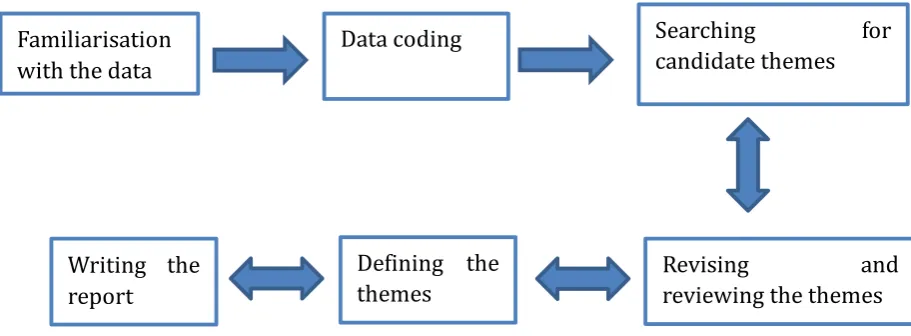
4.1.3 Conducting the Thematic Analysis under Braun and Clark’s (2013) six steps guidelines ... 153
4.1.3.1 Step one: familiarisation with the data ... 154
4.1.3.4 Step four: revising and reviewing the themes ... 163
4.1.3.5 Step five: defining the theme ... 164
4.1.3.6 Step six: writing the report ... 165
4.1.4. Conclusion ... 165
4.2 Findings of the first stage interview ... 165
4.2.1 Participants’ language challenges and difficulties ... 166
4.2.1.1 Dissatisfaction with English learning ... 168
4.2.1.2 The role of agency ... 171
4.2.2 Findings on the mediating factors ... 173
4.2.2.1 The impact of mediating social agents: peers ... 173
4.2.2.2 The impact of the mediating social agents: teachers and tutors ... 176
4.2.2.3 Impacts of material resources ... 177
4.2.2.4 Impact of shifting motivational discourses ... 178
4.2.3 Summary of the salient strategies of the first stage ... 183
4.2.4 Conclusion ... 185
4.3 Findings of the second stage interview ... 186
4.3.1 Academic study through the medium of English ... 186
4.3.1.1 Increased vocabulary ... 187
4.3.1.2 Academic writing in English ... 188
4.3.1.3 Academic reading in English ... 198
4.3.2 The role of technology ... 201
4.3.3 A summary of the changes in the use of LLS reported by the participants in second stage interview ... 202
4.4 Findings for the third stage questionnaire survey ... 204
4.4.1 Results and findings ... 205
4.4.1.1 Mediating sociocultural factors ... 206
4.4.1.2 Individual language learning adjustment ... 211
4.4.2 Summary ... 214
Chapter 5 Discussion ... 216
5.1 Introduction ... 216
5.2 Mediating agents: peers ... 218
5.3 Mediating agents: teachers and tutors ... 223
5.4 Mediating agents: other native/English speakers ... 229
5.5 The role of technology and other material resources ... 232
5.6 The role of the change in assessment mode ... 235
5.7 Understanding agency as a complex and dynamic system regulating the learner’s strategy use ... 241
5.7.1 Understanding how dynamic learner agency is oriented by changing goals/motivation ... 243
5.7.2 Understanding agency through learner identity ... 248
5.7.3 Understanding agency through the learner’s reflective thinking ... 251
5.8 Summary ... 253
5.9.2 The important role of Background knowledge in reading ... 257
5.10 Implications ... 260
5.10.1 Implications for the UK University teachers/tutors ... 260
5.10.2 Implications for the UK HE (Higher Education) providers ... 263
5.10.3 Advices for the L2 sojourners ... 264
5.10.4 Implications for teaching and learning English in China ... 268
5.10.5 Summary ... 275
Chapter 6 Conclusion ... 276
6.1 Summary of the outcomes of this study ... 276
6.2 Strengths and limitations of this study in terms of methodology ... 279
6.3 Suggestions for future research ... 281
6.4 Summary ... 284
Bibliography ... 286
Acknowledgements
First and foremost, I am heartily thankful to my supervisor, Professor David Wray.
My deepest gratitude goes to him for his enlightening guidance and instruction,
constant encouragement and support, enormous patience and tolerance, and
invaluable insight in assisting me to carry out the research and complete this thesis. I
have benefited a great deal from the way he guided me. I am also heartily thankful to
Dr. Michael Hammond for his invaluable and enormous support for my thesis
correction.
I should also express my gratefulness to my parents for supporting me
unconditionally throughout as well as their understanding, endless love, I am forever
indebted to their many sacrifices in order to provide me with the opportunity to study
abroad.
Last but not least, I also thank the all students who took part in this study. Special
thanks also to my colleagues and my friends, Dr. Xian Li, Dr. Ling Wu and all other
friends for sharing me joy and sorrow, accompanying me over this long but not lonely
Declaration
I declare that, apart from work whose authors are explicitly acknowledged, this thesis
and the materials contained in this thesis represent the author’s own original work. I
Abstract
Although there has been considerable research into Language Learning Strategies
(LLS) in a variety of educational and cultural contexts, it is still the case that there
have been few sociocultural LLS studies that have tried to understand learners’
approaches to learning and using a second language within a particular cultural
context. In contrast to widespread LLS studies conducted within a cognitive
psychology framework, this interpretive study has attempted to understand the
dynamics of the shifts and developments in language learning strategies used by a
group of Chinese Masters students in a UK University within a sociocultural
theoretical framework. A qualitative approach was used in this research. Data was
collected at three stages over a time span of one year of Chinese students' MA
academic study in the UK. The first and second stage data collection involved
interviews that explored the participants’ LLS use and how this changed and
developed during their period of study abroad. The third stage data collection
involved a questionnaire survey to validate whether the salient findings identified
from the first and second stage interviews also applied to a wider group. Findings
suggest the overall characteristics of the participants’ LLS use tend to be creative,
flexible, voluntary and independent. The participants’ dynamic changing language
learning strategies were shaped by interaction with various social mediating agents:
peers, teachers and tutors and other native speakers, social material resources,
technology and other artifacts, socio-contextual realities, assessment modes, and all in
interaction with learner agency. The outcomes provide insightful and useful guidance
to Chinese university students who are planning to pursue their higher education
abroad in English-speaking education systems and offer suggestions to teachers and
policy makers in China and the UK about the kinds of support that they can offer
Chinese students, especially in terms of the development of their competence in their
List of Abbreviations
CALLA Cognitive Academic Language Learning Approach
CET College English Test
COP Community of Practice
EFL English as a Foreign Language
ELT English Language Teaching
FLL Foreign Language Learning
GLL Good Language Learner
IDs Individual Differences
IELTS International English Language Testing System
L2 Second Language
LLS Language Learning Strategy
PPT PowerPoint
SCT Sociocultural Theory
SILL Strategy Inventory for Language Learning
SLA Second Language Acquisition
TA Thematic Analysis
List of Tables
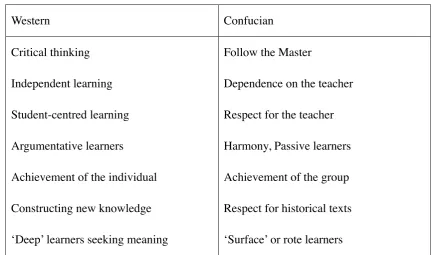
Table 2.1: A comparison between the ‘Western’ and the ‘Confucian’ ways of learning
(Ryan, 2010:43) ... 29
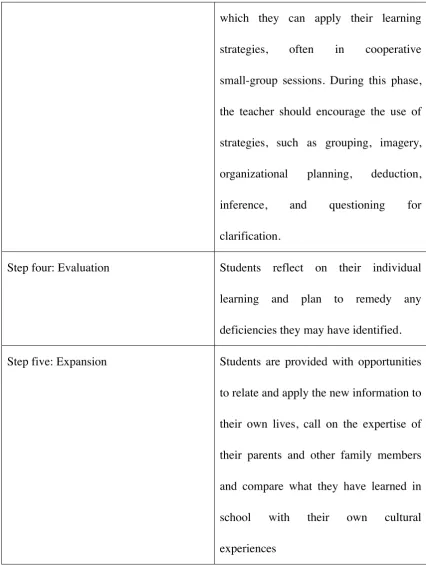
Table 2.2: CALLA model, source: based on Chamot & O’Malley (1987), Raftari et al (2013). ... 48
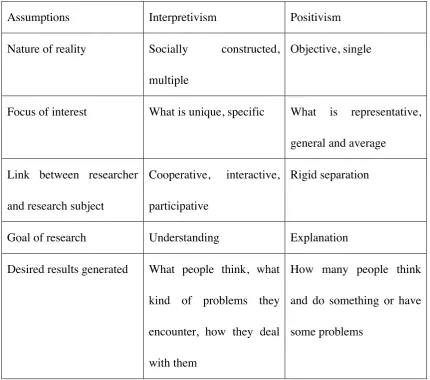
Table 3.1: Differences between interpretivism and positivism (Dudovskiy, 2011) ... 96
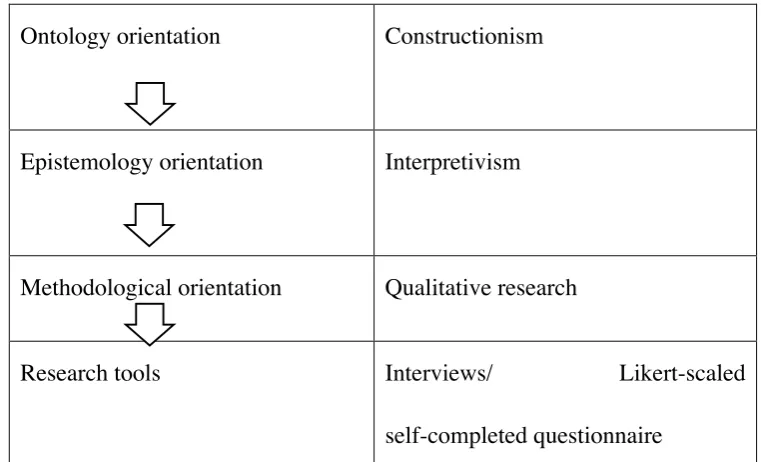
Table 3.2: Overall connection between ontology, epistemology and methodology in this research ... 114
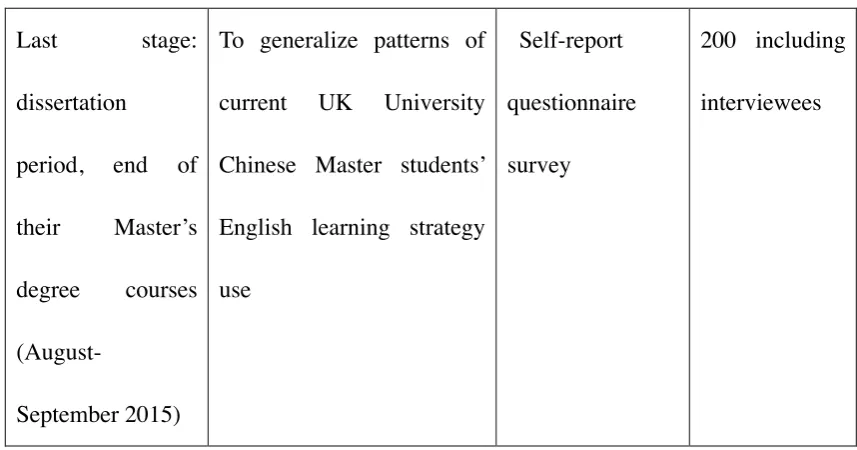
Table 3.3: The research stages in my research ... 131
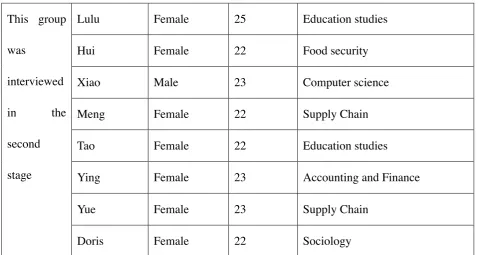
Table 3.4: Basic information for the interviewees ... 132
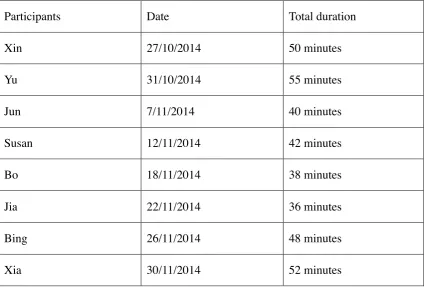
Table 3.5: First stage interview schedule and length of interview ... 137
Table 3.6: Second stage interview schedule and length of the interview ... 139
Table 4.1: Coding example ... 162
Table 4.2: Strategies reported in the first stage interview ... 184
Table 4.3 Percentage (%) of participants’ responses of LLS use and social agents .. 206
Table 4.4 Percentage (%) of participants’ responses of language learning and technology ... 209
Table 4.5 Percentage (%) of participants’ responses of language learning and academic study ... 210
Table 4.6 Percentage (%) of participants’ responses of language learning development ... 211
List of Figures
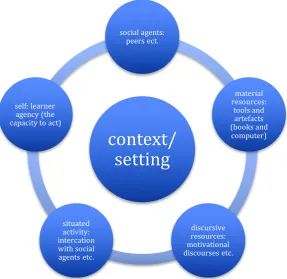
Figure 1: Mediated relationship between subject and object ... 68 Figure 2: Simplified sociocultural interpretive framework (adopted from Layder, 1993)
Chapter 1 Introduction
This chapter covers:
• the English Curriculum in Chinese schools; the predominant teacher centred
classroom teaching in China; the English testing and assessment in the education
system; a summary and evaluation of the main characteristics and limitations of
English teaching,
• my personal experiences and interest,
• the significance of the study and the thesis structure.
This study is about the Language Learning Strategies (LLS) and English learning
development of Chinese Masters students studying in the UK. Mixed research
methods were used in this study and data were collected from interview and
questionnaire survey. This study attempts to find out what sociocultural factors
influence the Chinese students’ LLS use and English learning development. This is an
important study as with China’s growing economy and the UK government’s
education policy tending to welcome international students to study in the UK,
Chinese students have become the largest group of international students in the UK.
According to the UK Council for International Students Affairs (UKCISA), the total
(http://institutions.ukcisa.org.uk/) and the number of Chinese students coming to
study in the UK Universities has risen by 15% per year since year 2011 (The
telegraph, 2011).
Before looking at the Chinese students’ English learning experiences in the UK, I will
start by looking at their English learning background in China.
1.1. The English curriculum in Chinese schools
Since the economic reforms and open door policy of the late 1970s, ‘English language
education has been increasingly given emphasis for its critical role in China’s
modernization and individual learners’ access to new socioeconomic opportunities’
(Wengfeng and Gao, 2008:386). Since 1982, English has been considered the main
foreign language in high school education (Lam, 2002:247), and in the mid-1990s,
English also became a compulsory subject in primary schools in China, starting from
year 3 (Cheng, 2008:16). English is generally taught from Grade 3, but in the larger
cities, such as Beijing and Shanghai, English is taught from Grade 1. In addition,
nearly all urban primary schools start to teach English in Year 1, while in the rural
areas, it may begin in Year 3, the delay being a result of the shortage of English
teachers (Zhao, 2005:6). During the six years of high school English education,
students have on average, 4 to 5 hours of English teaching per week. Senior high
school students are required to master 2000 English words. When the students
upgrade to tertiary education, as Siemon (2010) illustrated, 20 million of them
for a fourth year. Moreover, as Siemon (2010) points out, tertiary level students must
pass the College English Test Band 4 (CET-4), as it is one of the requirements to get
their Bachelor’s degree. At level CET-4, students are required to master 4500 English
words. More specifically, CET-4 is designed for non- English major students, such as
the students whose subjects are Engineering, Computer Science, History, Medicine,
for example. The reason the students need to pass the CET-4 in higher education is
having English as a communicative tool will enhance the students’ professional and
communicative skills in their future career. A higher level of CET-6 is also available.
Gan et al. (2004: 232) point out that China’s rapid economic development and
increasing exchanges with Western countries has given rise to a high demand for
competent English speakers in a wide range of professions. This situation became
more urgent once China joined the World Trade Organization. In Gan et al's view, the
recent political, economic, and social changes in China were bound to affect English
language teaching and learning, or have already affected them. With more recent
events like the 27th Olympic Games in 2008 in Beijing attracting many foreign
companies from English speaking countries, Chinese people’s interest in learning
English has become more intense.
Throughout all the stages of English teaching in China, textbooks play a key role in
Reading Course is taught as compulsory, using a uniform syllabus, textbooks and final
exams. The standardised / uniform textbooks used in the Intensive Reading Course, as
Cortazzi and Jin (1996:184) indicate, are especially designed to focus on teachers'
explanations - the grammar-translation method. This teaching mode is well suited to
the centuries-old Chinese approach to learning, which is mainly characterised by rote
memorisation, as further pointed out by McKnight.
‘While the currently fashionable Western communicative approaches to English
language teaching are known and used in some Chinese institutions, the dominant
teaching strategy remains the “grammar and translation approach...’ (McKnight, 1994:
46-7)
Although textbooks may be communicatively oriented with the teaching of
vocabulary advocated through inference and contextual cues, in reality, the learning of
vocabulary is effected through the use of mnemonic strategies such as word lists, oral
repetition, visual repetition, etc. In addition, despite the advocacy of communicative
methodology by the Chinese Ministry of Education and English language department
heads and the adoption of nation-wide communicative textbooks, this approach has
not provided the expected results because teachers still use drills and the time-tested
grammar-translation methodology.
little emphasis is given to improve their listening and speaking abilities (Siemon,
2010). Memorisation is still considered an essential skill for learning English in China.
Students are expected to memorize new English vocabulary after class and be tested
in a later class. As a result, Chinese students are good at memorising and can recite
long lists of English vocabulary and grammar rules, but fail to be proficient in using
the vocabulary and grammar rules appropriately, either in basic oral communication
or in their written work. Hu (2002: 93) indicated that Chinese students’ learning
strategies primarily focus on reading and writing, on memorising vocabulary and
grammar rules, on translation. These traditional grammar translation English learning
strategies fail to provide the students with an adequate level of communicative
competence, that is, the ability to interact and communicate authentically in English.
Weir et al. (2000:2) argue that the current system in China does not equip students
with the necessary skills and abilities to access foreign academic and technical
literature through the medium of English, and little attention has been paid to the
students’ development of language skills and strategies.
1.2 Teacher centred classroom teaching
In China, instruction tends to be teacher-centred and teaching is very formal (Siemon,
2010). The teacher-centred mode of English as a Foreign Language (EFL) teaching
has dominated China’s schools at all levels, from elementary, secondary and senior
school as well as tertiary level. In China, the teacher plays the dominant role both in
the traditional grammar translation based EFL teaching style. Compared with the
teacher’s role, students have supporting roles and get less opportunity to speak in
class. Compared with the teacher-centred Chinese education, Western education is
more student centred. Chinese students often view the focus on discussion critically in
Western class as unproductive (Zhao, 2012; Liu & Carney, 2012).
Most university English teachers in China are BA graduates, who have studied
linguistics, applied linguistics, languages, literature, English for Specific Purposes, or
English Language Teaching. Only a few have gained their master’s degree in the
above subjects (Zhao, 2005:8). According to Zhao (2005), due to the shortage of
English teachers, these graduates start to teach immediately after graduation.
Consequently, their previous learning experiences as students have a strong impact on
their teaching methods, so they tend to copy their previous teachers’ test-oriented
grammar-translation methods. In view of the large class sizes, the shortage of trained
teachers, difficult texts, unfamiliar vocabulary and the lack of comprehensible input
outside the classroom, the ‘best’ teachers can only keep the lesson ‘afloat’ by the
pedagogical use of two languages (Zhao, 2012; Liu & Carney, 2012).
Although most Chinese students can get very high or even full marks in most English
exams, many of them still have difficulty in having simple conversations with English
speakers, even when referring to everyday things. The main reason is the traditional
approaches in China, are more likely to produce silent English learners. As a result,
Zhao argues (2012: 32), the teacher-centred EFL teaching fails to meet the needs of
either society or students, or the ‘requirement of both the university and Ministry of
Education.’
1.3 Testing and assessment
In spite of starting to learn English at different times in school, all students face
standardised English tests for their subsequent entrance exams, such as those for
junior and senior middle schools. Furthermore, English is a compulsory subject tested
in the university entrance exam for all university candidates (Zhao, 2005:6; Cheng,
2008:16-7). At the end of senior middle school, English teaching is mainly
test-oriented as students are preparing for their university entrance exams (Jin and
Cortazzi, 2006:10). There is widespread recognition by teachers, students and parents
that passing examinations in English is needed not only to gain admittance to
university, but also to achieve high scores on the Test of English as a foreign language
(TOEFL), Graduate Record Examination (GRE) and College English Test (CET)
examinations (Wu, 2006).
The CET-4 (College English Test Band 4) certificate is one of the requirements for
obtaining a Bachelor’ Degree as well as a requirement of most employers; most
examination (Zhao, 2012; Liu & Carney, 2012). However, these examinations also
prevent the students ‘from achieving the balanced development of different skills,’
that is, these exams give priority to the students’ writing and reading skills, and put
less emphasis on the examine students’ listening and speaking ability (ibid.). Zhao
(2005) claims the end product is emphasized in Chinese education so Chinese
students and their families value hard work and successful exam results.
Summary
The above discussion suggests that Chinese international students’ experiences of
language learning may distinguish them from other international students upon their
arrival in UK. They may have had little time to develop speaking/listening in English.
Since their learning of English in China was characterised by English tests, one after
another, it is likely that most will tend to focus on factual information in a text and
take it at face value, rather than evaluate it critically. Apart from this, students may
experience English language problems, not only because their exposure to English
material in China is limited, but also because what is available in China is usually too
difficult for them to read (Pang, 2008:13). English teaching in China can be
summarised into the following points:
• English is widely taught in China, generally starting from year 3 in primary
school up to Bachelor’s degree level education. Great efforts have been made
to improve the quality of English education in the past three decades, however,
• The main characteristics of English teaching in China are translation, grammar
and memorisation oriented teaching. This means teacher centred and text book
based classroom teaching and standardised tests as compulsory assessment.
• Chinese students are used to their traditional English forms of learning and
how they are taught in China, which emphasise reading and writing ability. In
spite of being able to gain high scores in the test assessment, they lack the
ability to apply what they have learnt to making practical, authentic spoken
communication, in particular.
1.4 My personal experiences and interest
1.4.1 Positionality
I would like to begin this thesis by describing my position with regards to this
research topic. This is formed by my experiences, my skills and my background
beliefs. I myself have experienced a change in the approaches to learning English at
first hand as a Chinese Masters student and subsequently continuing my academic
study as a Doctoral student at the University of Warwick in the UK. My interest in
researching how Chinese students learn English in different social contexts is derived
from my English language learning experiences before and after my study in the UK.
two being Maths and Chinese. I agreed with my English teachers about the
importance of learning English, as a universal language, and the importance of being
able to communicate in English as a basic skill for everyone wanting to pursue a
successful future career. Therefore, I never stopped learning English and have spared
no efforts to improve my English proficiency since I started learning English. I
remember the English education I received in my middle school and high school as
being mainly about reciting words, translating, and learning English grammar. The
only way used to assess the students’ ability was through the English test. At that time,
I found learning English was quite simple. As long as I could remember the words I
had to learn or the grammar rules correctly, I could get high scores in the English test,
which were assumed to demonstrate my good English ability.
Thanks to high scores in the College Entrance Examination, I was able to continue
learning English as my major subject for my undergraduate study. It was not until I
became a major in English that I realized learning English was not just about simply
memorising or translating. As an undergraduate student majoring in English, I was
specializing in the English Language. The classes we had such as English reading
comprehension, applied linguistics, oral English provided me with sound background
knowledge and skills. I discovered there was a special research area named SLA,
which was particularly interested in researching how people learnt a second language.
improve Chinese learners’ English proficiency was an ongoing practical issue for both
learners and teachers, even for policy makers. As a learner of English as my second
language, I myself always felt being a good language learner was not an easy thing.
Before I studied abroad in the UK, I experienced a great dilemma in my English
learning. Even though I tried different ways of improving my English proficiency, I
could not use the English language like native speakers do and my English accent and
expression was a kind of Chinglish. Encouraged by my teachers, I pursed my Master's
study in the UK. During this study period in the UK, I developed various new ways of
practising English and gradually noticed the important roles of different social
contexts in mediating my English learning and overcoming the language difficulties
in the new English context, and I found myself making amazing progress. The absent
social context which had had a constraining role on my progress when I was learning
English in China, changed to offering an important supportive role that lead me to
make a breakthrough in my English studies in the UK.
During my Master's study in the UK, I noticed an increasing number of Chinese
students were coming to study in the UK through English to receive a better education
and improve their English proficiency. But many of them, including myself, had no or
little study abroad experience, therefore faced great challenges in how to cope with
life in the UK, and might not know how to overcome the linguistic, academic and
my Master’s dissertation, when I came across the Strategy Inventory for Language
Learning developed by Rebecca Oxford (1990). At that point, I decided to narrow
down my research to find out about well established and updated language learning
strategies that were particularly appropriate for Chinese students in the current UK
context.
All my English learning experience and knowledge taught me that we Chinese could
be effective English learners if we adopted the appropriate language learning
strategies in the new UK context. All these ideas drove me to conduct empirical
research to see what different ways current Chinese students had tried to improve
their English proficiency in the UK context. I hope the outcome of this research can
help make Chinese students aware of the importance of different social factors in
assisting their language study in the UK, and adopt suitable language learning
strategies to achieve effective English learning.
1.4.2 Confucian confusions
I used to get labelled as a stereotypical Chinese student, as a reticent and passive
learner under the Confucian education system. It is my impression that Chinese
students are indeed more reluctant to participant in classroom interaction and are
unwilling to speak in English in classroom discourse and social contexts, which
general, the reasons for Chinese students’ unwillingness to practice spoken English
are due to a face-saving strategy, low risk-taking in communication, intolerance of
ambiguity and so on. For example, Chinese students dare not raise questions in class
discussion for fear of losing face, so they behave very shyly and passively during
group discussions. They are reluctant to raise arguments or ‘stand up’ for their ideas
and express them if they contrast with the teacher’s opinion. They like to maintain
harmony within the group. Other problems rooted in passivity and reticence are
identified as non-participation, lack of questioning, giving no indications of
understanding or lack of understanding, writing which simply reproduces the
published literature but with no critical or independent thinking, lack of autonomy in
study practices. As a typical Chinese student who completed primary school,
secondary school and gained an undergraduate degree all in China, I can sympathise
with the above statements. After I came to study the UK, I experienced a huge culture
and language shock and had to make great efforts to attempt to adapt to life and study
in the UK. However, I wonder whether all Chinese students experience the same
problems? Are all Chinese students who growing up in the Confucian education
culture passive or reticent?
Several surveys have been carried out concerning this question and suggested the idea
that Asian learners are reticent and passive could be a myth, rather than a universal
Chinese students were ahead of the European students in terms of the range of
strategies they used. However, the European students use narrower range of strategies
slightly more often than Chinese students. The Europeans seemed to concentrate on
extensive reading and listening, on grammar activities, and on making use of
opportunities for oral interaction. Of course, Chinese students had reported similar
strategies but a large proportion of them used listening to the radio as a strategy as
well. There seems to be no basis then, for, concluding that Chinese students were less
committed to finding ways of under taking self-study to support their English
language acquisition.
Another researcher (Siemon, 2010), who taught English as a foreign teacher for many
years in a Chinese secondary school, also contests the notion that Asian students are
disengaged or uninterested when they are in the classroom. Based on her many years’
teaching experiences in China, she found that, normally, there were over 60 students
per class, so it was hard for teachers to ensure that every individual was noticed
during the 45 minutes allocated for each class. Consequently, most of English classes
were predominately concerned with grammar, reading and writing, leaving very little
time for speaking and listening. However, Siemon (2010) found if offered enough
opportunities, keen students were desperate to maximize opportunities for speaking,
inside and even outside of class. In fact, Chinese students wanted to be noticed, to
As I became more familiar with the research in this field, I began to notice that the
causal relationship between culture and language learning was overstated and
overgeneralized. Language learning is such an extremely complex process that any
particular observed behaviour may be caused by a number of different factors in
combination. The passive behaviour of Chinese students when learning English may
result from inappropriate teaching methods, a lack of English proficiency, irrelevant
or offensive topics, lack of motivation or even their mood on a particular day.
I believe that teaching methods really influence students’ learning motivation and
learning beliefs. For example, Chinese teachers always work hard to impart
knowledge to the students directly and completely, but Western teachers prefer
working with heuristic teaching methods; they encourage the students to be inquiring
so they acquire knowledge by themselves. If Chinese students could be taught in the
same way as most westerners are, such as through self-directed learning, with teachers
taking note of students as individuals in class, I suggest Chinese students could be
active, creative and positive as well. Bearing all these questions in mind, I decided to
conduct empirical research to look at real Chinese students’ English learning
experiences in the new to them UK education system.
From these different reflections on literature and my own experience, I want to know
were taught by teachers in China? Can Chinese students be creative or independent in
English learning? Can they make progress in English learning after they study in the
UK? What LLS are they using in the UK and were they influenced by sociocultural
factors? These questions led me to the research questions in my study.
1.5 Significance of the study
The outcomes of this research may provide further insightful and useful guidance to
Chinese university students (and possibly other Asians) who are planning to pursue
their higher education abroad in English-speaking education systems, about the
linguistic and academic culture challenges that they might face, the impacts of these
on them and how they can deal with these challenges. Moreover, to enable Chinese
students to learn English successfully, it is vital to establish effective ways of teaching
English. These need to build not only linguistic knowledge, but include English
learning strategies to ultimately create the most appropriate support for language
learning through pedagogy and the curriculum. My study aims to provide insights for
English language students, teachers and policy makers in China and the UK about the
kinds of support that they can offer Chinese students, especially in terms of the
1.6 Thesis structure
My overarching interest in this study is to uncover how Chinese students learn
English in the UK and what factors influence their language learning.
Chapter 2 reviews the background literature to this study, namely, Chinese students’
English learning in the UK and Language Learning Strategy (LLS) research. It is
organised by critiquing the widespread LLS research conducted from a cognitive
perspective and it discusses the importance of focusing on LLS research from a
sociocultural perspective. It explains why my study will be conducted from a
sociocultural perspective.
Chapter 3 presents the methodology and research design, including the theoretical
assumptions, methods and data collection of this study. This is an interpretive study
using mixed research methods. There are three stages of data collection, interviews
for the first and second stage, questionnaire survey for the third stage. This sequential
study sees each round of data collection as episodes enabling a deepening
understanding.
Chapter 4 describes the detailed process of analysing the data and presents the
findings from the interviews and questionnaire. I used a thematic approach to analyse
factors.
Chapter 5 discusses the main findings in light of the literature. This chapter answers
the research questions, and outlines the pedagogical and political implications of this
study. Chinese students’ language learning outcomes and LLS use were seen as
influenced by social agents (peers, teachers/ tutors and other native speakers); social
material recourses (technology); socio-contextual realities (assessment mode) and the
interaction with learner agency.
Chapter 6 concludes with the outcomes and some limitations of this study, as well as
suggestions for further research in the future. It reaches the conclusion that Chinese
students are able to develop suitable LLS and change to independent/ creative learners
Chapter 2 Literature review
2.1 Introduction
This chapter covers:
• a review of the overall picture of Chinese students’ English learning
experiences in the UK
• a review of Language Learning Strategy (LLS) research, including research
into what makes a good language learner; the fundamental contributions of
LLS research; an examination of the criticisms of LLS research
underpinned by cognitive theories and suggestions for a social aspect of
LLS research in response to those criticisms.
• the importance of LLS research underpinned by a sociocultural framework,
picking up the two key concepts, namely, learner agency and context, and
exploring the role these two key factors play in mediating the learners’ LLS
choices and their language learning.
• a drawing out of key research gaps, leading to the research questions which
guided this study.
life in the UK, to find out from the literature what language, academic and cultural
challenges Chinese students may face during their study in the UK University,
followed by a comparison of Chinese and the UK cultural and education systems in
terms of language, academic work or culture that Chinese students will need to adapt
to in the UK.
2.2.1 Speaking the English language: problems and challenges encountered by
Chinese students
One of the first problems that international Chinese students encounter on their arrival
in the UK is the contrast between the level of linguistic competence necessary to
guarantee fluent English language ability for daily communication and their existing
linguistic ability. Liu (2012) summarized the possible reasons for Chinese students’
speaking difficulties: the change in the way of life and strangeness of a different
culture; anxiety about starting a new university programme, all of which could lead to
Chinese students experiencing a mixture of frustration and silence.
Chinese students need to pass the International English Language Testing System
(IELTS) with a minimum score of 6.5 as the entry qualification for most postgraduate
programmes in British Universities (Macrae, 1997). However, according to Ryan
(2005: 87), ‘the level of spoken and written ability varies significantly across a cohort,
Additionally, English language ability is essential as the medium of communication,
so insufficient language ability impedes both the international students’ academic and
sociocultural adjustment (Hofstede, 1991). Language is a core problem for students
studying in a country where their first language is not spoken, and it is ‘a source of
strain’ for students who speak the country’s language as second language especially
when they need sufficient linguistic competence to finish their written work
(Cammish, 1997:67).
Liu’s (2012) research found that in China, students were trained to listen to the BBC
or the Voice of America as standard English. However, after they came to study in the
UK, they found the students and teachers were from different countries and had
different accents. This meant that they needed to explore ways of improving their
abilities to understand different accents. Even Chinese students with high English
proficiency levels claimed that they had to make efforts to speak and listen on their
arrival in the UK and for the first two months (Liu, 2012).
Apart from the difficulty in adapting to the different accents, newly arrived Chinese
students rely heavily on translation. As indicated from Liu’s (2013) classroom
observation and interview studies over a three-month period of Chinese students
learning English in the UK, it was quite common for the Chinese students to translate
phone so frequently to check the new word’s meaning that some UK teachers thought
they were sending messages. In addition, due to their inability to express themselves
directly in English, newly arrived Chinese students tended to use Internet translation
software as a support when reading English articles and writing essays in English at
the beginning of their study in the UK. However, reliance on translation decreased as
the students made progress in English and they used the translation software less and
tried to think and understand in English by the middle or end of their study time.
Due to the language barrier, international students, including Chinese students, have a
tough time participating in class and adapting to the academic culture, so that they
rarely participate fully. They may form silent groups in class due to their inability to
communicate with teachers and classmates (Gu, 2011). According to Chen’s (2012)
research, cultural shock, especially for Asian students in the UK, can also generate
stress when they practise speaking in English by giving oral presentations or
participating in group-activities or asking questions in class. Teachers are mostly
native speakers from a Western cultural background and new Chinese students find it
hard to communicate with them, and they may not even dare to express themselves.
Moreover, Sun and Chen (1997) interviewed Chinese students and concluded that the
main obstacle to their studies in the UK was language weakness. Yum’s (1998)
research found that international students felt depressed and fearful when they
communicated using the target language in class. Huntely (1993) also claimed that
communicative activities such as giving presentations or speaking in public or
discussing in group work. In addition, Zou (2000) shared her own experience of
studying in the UK, saying she found the academic life tough and she had difficulty
writing an essay as well as her native speaker classmates due to language problems. In
sum, their lack of language skills impedes Chinese students’ process of adapting to
academic study in the UK. The language problems and other factors result in Chinese
students’ having difficulty adapting to academic life in the UK will be detailed in the
following section 2.2.2.
2.2.2 Academic culture shock
Apart from language difficulties, Chinese students also often encounter difficulties
when adapting to the academic life of the UK University due to the big difference in
the educational systems and teaching models between the UK and China. In sum, the
unfamiliarity with the teaching and learning system in the UK also challenges the
newly arrived Chinese students 'to present a satisfactory academic outcome’ (Chen,
2012:34).
The differences in teaching philosophy between China and the UK leads to some
Chinese students experiencing academic cultural shock when they study in the UK.
As Phuong-Mai et al. (2009) put it, the language barrier is not the only factor that
influences Asian students’ classroom participation, but how different students see the
general, the Chinese teaching system values teachers as having authority and students
are taught to listen to the teachers’ instructions and behave passively; in contrast, the
UK teaching system values students’ opinions and participation in class and teachers
may regard their roles as being facilitators (Wan, 1999; Cohen, 2014). Sun (2005) also
points out that students within Chinese teaching principles are asked to obey their
teachers and they seldom share their opinions in class, so follow teacher-dominant
teaching principles. As a result, Chinese students in the UK class are not used to
asking questions since they regard this as offensive to their teachers, or sharing their
opinions since they are afraid of making mistakes. These concerns make Chinese
students silent and negative groups in the UK classroom (Liu, 2013). Chinese students
are described as passive, quiet and overall compliant in tutorial discussions (Volet and
Renshaw, 1996). Li and Campbell (2008) also found that Asian students had a
relatively low rate of participation in group work and they tended to have little
involvement in interactive activities.
Some studies have tried to offer suggestions for stimulating Chinese students’
participation in class, especially within a multicultural context. As Remedios et al.
(2008) pointed out, the reasons for the students’ silent behaviour in class could be
understood from two perspectives. Firstly, individual factors such as students’
personalities, learning preferences, motivation and lack of preparation. Zhang and Xu
(2007) suggested that lack of knowledge or confidence might cause some students to
aspect includes the contextual and sociocultural issues such as the various cultural
beliefs of the speakers of different languages or different social norms. Wan (1999)
further argued that the inability to make intercultural adaptation could result in
overseas students having difficulty in performing satisfactorily and achieving the
desired academic outcomes. Other reasons such as Chinese students being used to
living up to their parents’ expectations of being good students who fully obey their
teachers’ instructions, come within Confucian principles, which also affect their
behaviour (Holmes, 2004).
However, the traditional view of passive, silent Chinese students within Confucian
culture who will experience great academic culture shock has been challenged in
more recent research. Even though Chinese students are used to being silent in the
teacher-oriented teaching context in China, Wong (2004) found they tended to realize
the importance of independent learning and began to enjoy the student-oriented
learning style in the UK as they gradually familiarized themselves with the academic
life here. Sun (2005) also claimed that as long as Chinese students could gradually
improve their English ability and become more familiar with the local teaching
system and got used to the new context, they could change and enhance their active
participation in classroom activities. Additionally, Li and Campbell (2008) reported
that Chinese students in New Zealand had successfully found a middle way between
full cultural adaption. Montgomery and McDowell (2009) also supported this
argument; despite the great cultural difficulties faced by the international students as
reported, they found these students were more proactive in meeting the challenges
than expected, for example, they made good use of peer support to overcome
difficulties. Wu and Hammond’s (2011:1) research into East Asian Masters level
students in a UK University found that students largely enjoyed their sojourn and
achieved satisfactory results for their academic study in the UK. They argued the
students experienced ‘cultural bumps’ rather than culture shock since they had limited
interaction with local students and local people and did not go in depth into the local
culture during their Master's study in the UK. For example, East Asian students might,
at times, work with local students on academic studies but rarely socialized beyond
this. Wu and Hammond (2011: 1) would rather argue that these students experienced
an ‘international postgraduate student culture’ in the UK University not integration
into the local culture.
Other researchers holding different views to what constitutes Asian students’
academic culture shock in a Western University suggest the problem may lay in the
teaching strategies used rather than the students' learning strategies; tutors in a
Western University may fail to provide adequate familiar contexts to Eastern Asian
students when introducing ideas or concepts (Bamford, 2008). Brown (2007) also
questions whether it is necessary for tutors to be aware of their students’ background
students’ needs.
As Charlesworth (2007) put it, Asian students under the Confucian teaching culture
can adapt to the teaching reality in UK to meet their own needs. Asian students are
encouraged to express their needs in a way similar to the Western students. In order to
fully adapt to the new teaching environment in the UK, Chinese students need to
develop a positive attitude to life in the UK, and try to increase their participation in
the new social context to increase their ability to adapt to the new teaching approaches.
Moreover, it is important to enhance the students’ mastery of language to better
conduct interactive communication within the multicultural context for better
academic outcomes (Gu et al., 2010).
2.2.3 Different education systems
Different conceptualization of the function of a university
When students enter a western university, ‘teaching at undergraduate level displays a
progressive shift from an analytical approach to more critical thinking’ along
Ballard’s (1996:152) education continuum. University teaching aims at developing
students’ independent thinking and their ability to handle theory and abstraction.
Knowledge is open to question and criticism. It is the teacher’s job to open up any
uncertainties or paradoxes in the academic domain. Teachers, instead of being the
only authoritative source of knowledge, help students build up their own ideas and
teacher-focused tradition in China, Western education encourages students to engage
in independent exploration in their learning (Gu and Maley, 2008:230). This indicates
the potential confusion that Chinese international students might experience when
they notice the different roles that teachers assume in these two education systems. At
Master’s level in the UK, critical thinking is one of the core learning skills required of
all students.
However, unlike Western education, which has integrated Socrates’ ideas into its
education system, Confucius’ ideas on thinking in learning are largely overshadowed
by his philosophical principles. There are many reasons for this, one of which is
probably the inconsistency in his philosophical and educational perspectives.
Philosophically, Confucius posits that a harmonious society is built upon a
hierarchical structure, where everybody knows her/his place, and hence behave
accordingly. To maintain both a hierarchical social order and harmonious relationships,
people are socialized to strictly follow the unwritten rules of society. One principle,
for instance, is that words should be carefully chosen, and dissenting ideas always
avoided, even between peers. Within such a social ideology, even though Confucius
advocates the importance of reflective thinking in learning, his emphasis on hierarchy
and obedience militates against people engaging in critical thinking. Consequently,
Chinese people are more likely to prioritise harmony rather than question and
challenge. Any disagreement would be regarded as showing disrespect to a senior,
The contrast in education systems between East and West is becoming more and more
distinctive, illustrated explicitly in Table 2.1 by Ryan (2010).
Western Confucian
Critical thinking
Independent learning
Student-centred learning
Argumentative learners
Achievement of the individual
Constructing new knowledge
‘Deep’ learners seeking meaning
Follow the Master
Dependence on the teacher
Respect for the teacher
Harmony, Passive learners
Achievement of the group
Respect for historical texts
[image:41.595.102.537.161.416.2]‘Surface’ or rote learners
Table 2.1: A comparison between the ‘Western’ and the ‘Confucian’ ways of learning (Ryan, 2010:43)
In this table, Western education is characterised by critical thinking and
student-centred learning, within which different opinions and stances are welcome
and encouraged. On the other hand, ‘Confucian education’ highlights the value of
harmony. ‘This knowledge-centred learning stresses the face-value of existing
knowledge’ (Wallace and Wray, 2016:8) and by following and respecting it, few
opportunities are given for individuals to express their opinions and different voices.
In contrast, Western education is more open to controversial arguments, and these are
even considered essential for academic development. As for the students from
‘learning styles and preferences are largely conditioned by the values of collectivism,
conformity and respect’ (Benson et al. 2003:23), and they are often regarded as
passive and dependent learners.
However, this does not necessarily mean that Chinese international students do not
have their own strengths, comparable to those of their Western counterparts.
According to Wallace and Wray (2016:8), Western-educated students might be quick
to pick up critical thinking skills, but they also tend to underestimate the effort needed
to fully understand the work of others, and tend to overplay these critical skills. On
the other hand, Chinese students (or non-Western-educated students) may pay more
attention to understanding knowledge, but tend to accept too much at face value
without engaging in critical evaluation.
Different evaluation/assessment systems
In the education system, evaluation criteria in Chinese universities focus on the
structure and depth of knowledge, while evaluation criteria in the UK focus on the
flexible application of the knowledge and creativity of the student. In China, the
assessment of students’ learning ability is mainly done through examinations (Zhao,
2012; Liu & Carney, 2012). However, postgraduate students in the UK are usually
assessed by ‘means of written assignments and sometimes by collaborative group
work.’ (Hajar, 2015: 298). These differences in the evaluation and assessment systems
(Liu, 2012).
Critical thinking, referring to ‘not just passively accepting what you hear or read, but
instead actively questioning and assessing’ is an important academic writing/reading
requirement in UK higher education (Bailey, 2013; Jiang and Sharpling, 2011; Hajar,
2015). Compared to western assessment that focuses on personal interpretation and
critical thinking, Chinese education often assesses student factual knowledge through
tests. Liu’s study (2012) of the development of the UK Chinese MA students’ reading
strategies found that Chinese students used to adopt a word-by-word text-based
reading strategy in China in order to get high scores in the comprehensive English
reading test, however as there was a change in the academic reading requirement in
the UK, students had to read extensively and to develop their own ideas and the
word-by-word strategy was found to be inadequate for academic reading in the UK.
Owing to the washback effect triggered by the testing system in China, Chinese
students’ reflective thinking gradually diminishes during the learning process and rote
learning is further reinforced (Ryan, 2010). Pan and Block’s (2011) investigation of
learners and teachers’ beliefs about English language in China also found a prevalent
belief that English was an international and global language and a belief in the
instrumental value of English. Although English competence was believed to be
useful, the learning and teaching of English in China was still examination oriented.
contemporary China. One the one hand, ‘it is a commodity, defined by exam results,
which can be exchanged on the job market’ (Block, 2010). This means students see
the function of learning English as to pass the exams and to get a certificate which can
help them find a job – even if the exam results do not really indicate communicative
competence. On the other hand, for those who learn English to communicate with
non-Chinese nationals, English actually serves a concrete communicative function. In
short, these factors work together, and make a deep impact on Chinese students’
English learning beliefs, behaviour and strategies use.
2.3 Understanding second language learning strategy research from
cognitive and affective perspectives
It can be concluded from the above discussion that due to the sociocultural and
educational system differences, Chinese international students face a myriad of
challenges, particularly language difficulties, when they study in UK Universities.
They, therefore need to find new ways, such as using suitable Language Learning
Strategies, to improve their English abilities. This section now reviews Language
Learning Strategy (LLS) research through considering the following questions:
• what is a language learning strategy;
• why do we need to use language learning strategies;
• what is the difference between an ordinary learning activity and a strategic
• what is the difference between the process of language learning and the use of a
language learning strategy;
• the research on what makes a good language learner and the importance of LLS
in this field;
• the contributions and limitations of LLS research.
2.3.1 What makes a Good Language Learner (GLL)?
Research into what makes a good language learner in the field of English as a
second/foreign language began in the mid-1970s. Rubin (1975: 42) argued that the
significance of researching the good language learner lay in the hope that we might be
able to apply the strategies used by successful learners to the less successful learners
to enhance their learning ability. So far, research into GLL has expanded to consider
learner variables, learning variables as well as training in language learning strategy
expertise. Xiao (2012) summarised learner variables as including attitude, motivation,
style, aptitude, personality, culture, gender, learning context, autonomy, metacognition,
beliefs, and learning variables like grammar, vocabulary, function, pronunciation,
speaking, listening, writing and reading, while training in language expertise includes
teacher cognition, teacher expertise and teacher education.
Rubin (1975) gave a list of the characteristics of good language learners after her long
observation research. These learners are: a) highly motivated to learn and interact
practising the language to generate suitable language learning patterns; d) willing to
discover and correct their mistakes; e) able to pay attention to the meaning of the
language. Less successful learners may be able to improve their language proficiency
if they could adopt the characteristics of successful learners.
Based on numerous previous studies, there appear to be three major affective
variables that have a crucial impact on the outcomes of second language performance,
namely, motivation, beliefs and anxiety (Dörnyei, 2003; Ehrman, Leaver, & Oxford,
2003; Horwitz et al., 1986; Williams & Burden, 1999). Of these three variables,
motivation is believed by most researchers to have the most profound impact on
success in language learning (Cotterall, 1995; Dörnyei, 2003; Ehrman et al., 2003;
Gardner, 1990; Rubin, 1975). As Dörnyei (2009: 29) conceptualizes motivation as
‘part of the learner’s self-system’. Dörnyei (2005a: 8) also characterizes motivation as
‘the choice of a particular action, the persistence with it and the effort expended on it’.
Cheng and Dörnyei (2007: 153) further declared motivation is so important that even
the most gifted learners are unlikely to persist long enough to achieve proficiency in a
second language without sufficient motivation. Motivation is also considered as
self-management in the field of affective variables (Andrade & Bunker, 2009; Hurd,
2006).
Wang et al. (2008) found learners' sense of being successful can help to increase their
2008). Findings from Xiao’s (2012) study also suggest that successful language
learners are generally motivated and aware of what benefits they can get once they
make progress in English as a second language. Language learners can benefit from
monitoring and reflecting on their learning to make it more effective and reflective
throughout the learning process. This view is also supported by Bandura, (1986) and
Ehrman et al. (2003) ‘Perceived progress and resulting benefits can lead to a better
sense of success, which in turn can be an important source of learning motivation.’
Moreover, GLLs are able to take measures against a decrease in motivation. Dörnyei,
(2005a) claims that individual motivation fluctuates throughout the overall learning
process and a decline in motivation may result in poor learning, which in return may
accelerate motivational decline. The measures adopted by successful language
learners appear to be effective against any decline in learning motivation, and
successful language learners can minimize any negative impact on their learning
motivation and grasp effective methods, while less successful language learners find
any reduction in motivation is often beyond their control.
Learners' beliefs are another important factor in effective language learning according
to a large number of research studies (Cotterall, 1995; Horwitz, 1987; Wenden, 1999).
For example, learners’ beliefs about the responsibility for learning, the nature of