Model Substrate Studies
A thesis
submitted in partial fulfilment of the requirements for the Degree
of
Doctor of Philosophy in Chemistry in the
University of Canterbury
by
Stephen
J
van EykAbstract 1
Introduction 2
·The use of Tin in Diastereoselective Carbon-Carbon
Bond-forming Reactions 5
Allylic-organotins: Thermal reaction 5
Allylic-organotins: Lewis acid mediated reaction 7 Metallic tin: Grignard or Barbier-like reactions 12 The Use of Other Metals in Diastereoselective Carbon-Carbon
Bond-forming Reactions 17
Chromium 18
Zinc 19
Boron 21
Diastereofacial Selectivity 22
Epoxidations 25
Results and Discussion 30
Diastereoselectivity, Diastereofacial Selectivity
and Regioselectivity 30
Mechanistic Generalisations 49
Competition Studies 56
Preparation of Epoxy Ketones 59
Conformation and Frontier Molecular- Orbital Calculations 71
Conformational Analysis 71
Orbital Calculations 80
Crystallography 93
Conclusions 108
Experimental 110
Abstract
The reactions of cinnamyl chloride and crotyl chloride with various
aldehydes, RCHO; R=Me, Et, iPr, CH3(CH2)5, PhCH2, Ph, g-MeOPh, g-NCPh, to form homoallylic alcohols under the control of Sn-Al, Cr(II), Zn and Mg
were examined and the stereochemistry of the products determined. Stereoselectivity and regioselectivity of these reactions are compared and explained with reference to cyclic and linear mechanisms and the metal involved, frontier molecular orbital energies and molecular modelling experiments.
An attempt was made to extend control of the relative stereochemistry of the Sn-Al reaction to systems with more than two contiguous carbon
centers. The aldehydes, RCH(CH3)CHO; R=Me, Ph, tBu, reacting with . cinnamyl chloride under control of Sn-Al resulted in moderate Cram
selectivity, this diastereofacial selectivity increasing with the bulk of the aldehydes' R group. Glyceraldehyde gave very poor diastereofacial selectivity.
Dialdehydes terephthaldecarboxaldehyde and glyoxal were reacted with cinnamyl chloride mediated by Sn-Al and the relative stereochemistries of the major products deduced. Competition experiments of cro~yl bromide and cinnamyl chloride with aryl aldehydes, 12.-R-C6H4CHO; R=H, Me, MeO, NC, 02N, under the control of tin mediated conditions (Sn-Al) and of crotyl organotin and cinnamyl organotin (allylic-SnL3; L=Ph, nBu) catalysed by either BF3.0Et2 or heat were carried out and the results of these experiments discussed in the light of frontier molecular orbital theory.
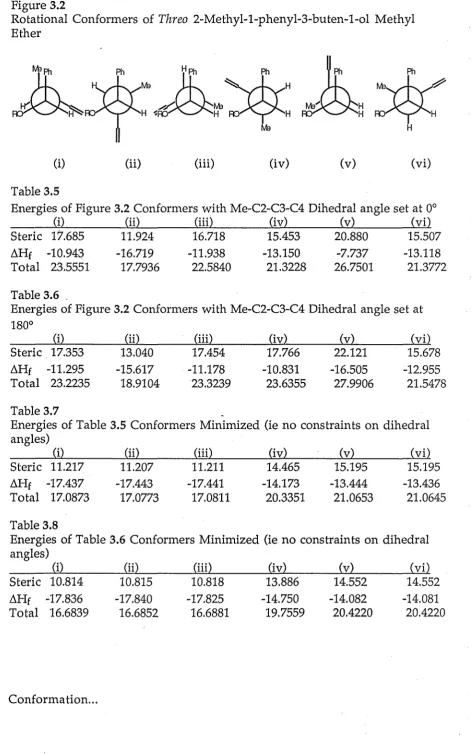
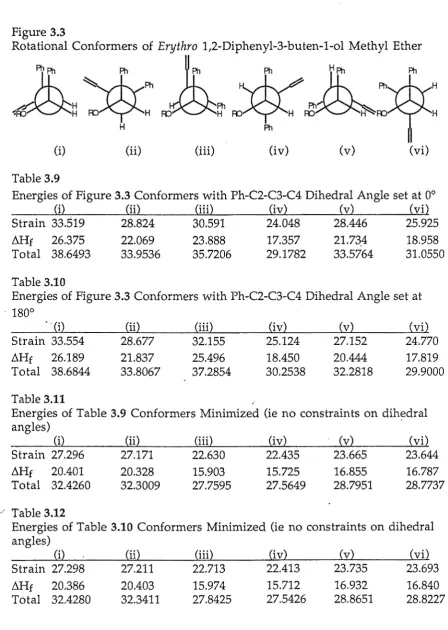
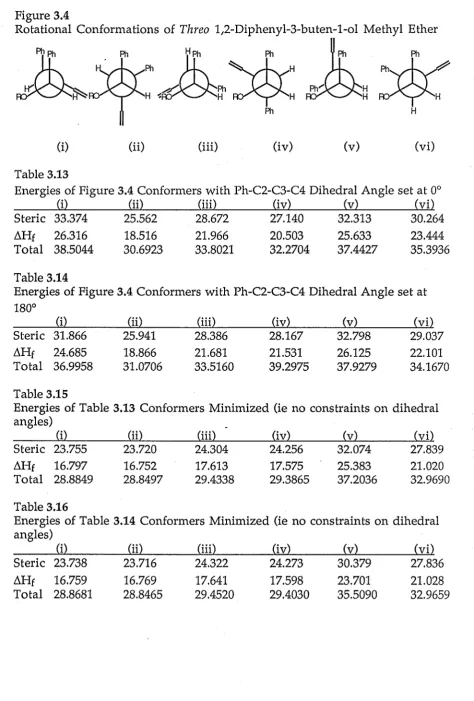
of the linear mechanism. Conformational analysis using MM calculations were undertaken in an attempt to rationalize the stereoselectivity at the cyclic transition state.
Synthetic pathways to ~,'y-epoxy ketones were explored and the synthesis of 38, 44, and 50 effected by a number of different paths to maximize yields; the diastereoselectivities of the epoxidations of intermediate hydroxy and acetoxy alkenes was investigated.
n
Ph0
0
Introduction
In the synthesis of organic molecules at least three problems must be dealt
with: the carbon skeleton must be built; the appropriate functionalities must be introduced and the correct stereochemistry induced. In modern chemistry it is no longer sufficient to deal with only the first two of these
objectives. Highly developed techniques are now readily available for certain organic systems (notably rigid cyclic or conformationally non-dynamic systems) to produce pure racemates and less often pure enantiomers.
The control of stereochemistry in conformationally non-rigid open chain compounds is more difficult. The size of the synthetic problem can become enormous when the elaboration of complex molecules such as polyether, _ ansamycin, and macrolide antibiotics is attempted. They and their synthons
often have functional groups of similar reactivity hence selective methods and reagents need to be available to the synthetic organic chemist. Recently the biological activities and commercial importance of molecules such as monensin, cx-multistriatin and nonactin have stimulated efforts to design methodological tools which provide products with relative and absolute asymmetric induction in high yieldsl . These methods include crossed aldol reactions, reaction of organometallic compounds with carbonyl compounds, ring opening reactions of cyclic compounds, 75TL2643 epoxidation of allylic alcohols,81TL2017, 83PA1823 hydroboration of olefinic compounds,78JA2933, 80JA7385 reduction of carbonyl derivatives, 80TL1641, 80TL2467 sigmatropic rearrangements79AC0563, 80JA1155 and selected reactions of
carbohydrates79AR0159, 80JA1439.
~-Methyl alkanol units in both the erythro and threo configurations are characteristic structural elements of a number of macrolide and polyether antibiotics and the diastereoselective synthesis of ~-hydroxycarbonyl and of homoallylic alcohols is applicable to the synthesis of these materials. The stereoselective formation of C-C bonds between prochiral centres is most generally accomplished by the addition reaction of metal enolates2 or 2-alkenylmetal derivatives3 to aldehydes.
2
3
MeO '•.
.
.
.
,
u-Multistriatin
OH
Monensin
Nonactin
77JA0247, 77JA8109, 79JA2501, 75TL1225, 77TIA651, 80J01066, 73JA3310, 75JL2201, 79TL1665, 79TL2225, 79TL2229, 79TL3937, 79JA6120, 74JM0373, 77JA7705, 74JA7503, 79TIA029.
The aldol condensation is fundamental to biosynthesis, however the same products can be produced by the synthetically analogous allylation of carbonyl compounds to produce homoallylic alcohols and subsequent oxidative cleavage of the double bond. Homoallylic alcohols have become one of the most useful intermediates in acyclic synthesis because of the facility the hydroxyl group and the C=C double bond offer for chemical modification. This dual functionality allows easy entry to a variety of bifunctionalized molecules and furthermore can undergo a facile one-carbon homologation to o-lactones via hydroformylation84TL4051 or can be
epoxidised thereby introducing a third chiral centre.81JA3229
Allylations of aldehydes or ketones to give homoallylic alcohols can be achieved using conventional organometallic reactions (eg Grignard or Barbier reactions) or in the presence of catalysts.85J00045 Mild conditions have recently been developed which allow or even require aqueous
conditions or the presence of metallic salts in a lower valence state.
Electro-chemical recycling of the organometallic has been developed and is likely to become important in large scale manufacture of organic chemicals. The allylation reaction can be highly stereospecific and with careful selection of the organometallic reagent and reaction conditions both_ threo and erythro
homoallylic alcohols can be produced from the same aldehyde and allylic \
moiety. The formation of C-C bonds using organotin compounds has received occasional attention and it is the intent of this thesis to expand on the use of tin for allylation of carbonyl compounds.
The Use of Tin in Diastereoselective Carbon-Carbon Bond-fonning Reactions
Allylic-organotins: Thermal reaction
Tagliavini et. al.77IC0047 suggested that after the formation of the allylic dialkyltin halide4 a coordination step (where the carbonyl coordinates to the tin atom) may facilitate the overall reaction (Scheme 1.1). At that time no mention is made of a cyclic transition state and there was no relative stereo-chemistry to be considered. In later papers78IC0041, 78JM0037, 79IC0263 they suggested that this reaction may be reversible (Scheme 1.2) since allyl dialkyl carbinols on reaction with (Bu3Sn)20 and (Bu2SnCl)20 produced water, the corresponding ketones and the mixed allyltins: Bu3Sn(CH2CH=CH2) and Bu2Sn(CH2CH=CH2)Cl respectively. The elimination reaction (and presumably the addition reaction) was explained in terms of a pericyclic transition stateS (Scheme 1.3) in which nucleophilic attack of the terminal olefinic carbon to the tin atom takes place together with the bre~king of the Sn-0 and the C-C bonds.
Scheme 1.1
R
I H20 - ClR2SnOCCH2CH=CH 2
-I
R
R
I ,
HOCCH 2CH=CH 2 + Cll\.2Sn0Sn~O
I
-R
Scheme 1.2
4
5
These and other allylic alkyltin halides are easily formed from the corresponding alkyltin halides and an allylic Grignard reagent and other methods as described in the referenced articles.
Scheme 1.3
nBu
2
xs/~Rz
~~
The reaction of 2-butenyl di-n-butyltin chloride with aldehydes, RCHO; R=CH3, C2Hs, C2Hs(CH3)CH, (CH3)2CH, C()lfs, gives threo and erythro
homoallylic alcohols in high yields82JM0149 and the ratio of products is independent of the trans:cis ratio of 2-butenyl di-n-butyltin chloride; e.g. i-PrCHO reacts with 66.6:33.3 trans and cis Bu2ClSnCrot to give 66.6:33.3 threo and erythro homoallylic alcohols and with 50:50 trans and cis
Bu2ClSnCrotyl to give the same (66.6:33.3) ratio of threo and erythro
homoallylic alcohols.
The threo:erythro ratio of 2:1 obtained, which is independent of the trans:cis
crotyltin ratio, shows that formation of the threo isomer is twice that of the
erythro isomer. Either cis trans interconversion of the reactant occurs under the reaction conditions and the addition is stereospecific or the product ratio is thermodynamically determined.
These results should be compared with those of Yamamoto et. ai.80JA4548 who realized total (100%) erythro selective coupling via the thermal72JM0020 reaction of cis-crotyl tri-n-butyltin (and also via the Lewis acid mediated
reaction).
Allylic-organotins: Lewis acid mediated reaction
It has been stated that in general, the trans-crotyl metal compound, such as
M = Li,80TL0303 B,80CL0993 Al,80JA2118 Zn,87JM0177 Ti,81TL0243 zr81TL2895 or
Cr81 TL1037 ... , reacts with aldehydes to produce the corresponding
retained during the reaction, while the cis derivative gives the erythro
isomer preferentially.84TD2239
The erythro selective synthesis is of special value for the synthesis of bio-organic molecules (e.g. macrolide antibiotics). Few easy synthetic pathways are available to form the cis-allylic metal derivative,80JA4548 therefore if an
erythro selective reaction process could be found for trans-allylic metal
derivatives a number of synthetic problems could be solved.
Yamamoto et. ai.80JA7107 used the Lewis acid mediated addition79CL0919 of
crotyl tri-n-butyltins to aldehydes (R
=
C6Hs, (CH3)2CH, CC2HshCH,(CH3hCHCH2, CH3CH2, CH3) and found that erythro-homoallylic alcohol products were produced preferentially (90-98%) in good (82-90%) yield independent of the trans to cis ratio of the crotyl metal derivatives. Thus
trans-crotyl tri-n-butyltin reacted with benzaldehyde in the presence of
BF3.0Et2 to give 98% of the erythro-homoallylic alcohol in a 90% yield and cis-crotyl tri-n-butyltin under the same conditions gave 99% of the
erythro-homoallylic alcohol in similar yield. Further, mixtures of trans-and
cis-crotyl tri-n-butyltin under similar conditions gave comparable results.
Yamamoto suggests the reaction goes through a linear mechanism6 (similar consideration is made for aldol addition79JA7723). If the trans-crotyltin undergoes a facile isomerization to the cis isomer via 1,3-tin migration (Scheme 1.4), the erythro selectivity of this reaction can be understood by the reaction occuring via a cyclic transition state. However this is excluded by the following two experiments:
6 See Schemes 2.2 and 2.3. The linear and cyclic mechanisms are more fully presented in
-the reaction of trans-crotyl tributyltin with benzaldehyde in the presence of BF3.0Et2 was quenched immediately at -78°C with MeOH-H20. No isomerization of the recovered crotyltin could be detected - the reaction of the isomeric 1-methylallyltin,76JM0155 with
benzaldehyde under the same conditions produced 1-phenyl-3-penten-1-ol in high yield.
Scheme 1.4
~nRs
~
SnRs
~SnR
0In a later paper84TD2239 Yamamoto suggests that the Lewis acid changes the
transition state structure by coordinating to the aldehyde oxygen and preventing coordination of the aldehyde to the tin atom thereby excluding the possibility of forming a cyclic transition state. The Lewis acid activates the carbonyl group and also acts as a stereosteering group. The effects of other Lewis acids (TiC4, SnCl4, BCl3, cyclopentyldichloroborane) are also reported; BF3.0Et2 gave the best results in both diastereoselectivity and yield. Recently an X-ray crystal structure of a boron friflouride adduct of
benzaldehyde and heteronuclear Overhauser experiments shows that the Lewis acid is indeed complexed anti to the phenyl group of benzaldehyde both in the solid phase and in solution.86JA2405
Koreeda and Tanaka82CL1299 using the same Lewis acid conditions as
Yamamoto found that trans-crotyl triphenyltin reacted with benzaldehyde to
give 5:1 erythro- and threo-homoallylic alcohols but trans-cinnamyl triphenyltin reacted with benzaldehyde to give 1:99 erythro- and
determines the threo erythro diastereoselectivity. Thus addition of crotyl tri-n-butyltin to a solution containing the Lewis acid and cyclohexane-carboxaldehyde produces 90:7 erythro- to threo- homoallylic alcohols (and
3% of the a-adduct) whereas addition of the aldehyde to a solution prepared from Lewis acid and crotyl tri-n-butyltin results in 4:91 erythro- to
threo-homoallylic alcohols (and 5% of the a-adduct). In contrast the BF3.0Et2 mediated reactions are unaffected by the order of addition of reagents.
In addition Yamamoto84TD2239 discovered the Lewis acid AlCl3.iPrOH
mediated reaction of crotyl tri-alkyltin with certain aldehydes gave the a-adduct. Thus reaction with RCHO (R =Ph, Et, nPr, nBu) gave 83- 95% of the (linear) a-adduct, 17- 5% of the (branched) y-adduct; (R = n-C9H19, Me2CHCH2) gave 60:40 a- and y-adducts; (R = iPr, MeCH=CH, PhC=O) gave they-adduct only. Where the linear adduct was formed the ratio trans:cis
was around 90:10 in all cases. A number of other factors (order of reagent addition, replacing iPrOH with other alcohols) were examined and found to be important in determining the regioselectivity of the reaction.
Yamamoto writes (Scheme 1.5) "the regioreversed addition can be under-stood by the following routes. Transmetallation from (i) with the aid of AlCl3.iPrOH, presumably AlCl2CO-iPr), would proceed through SE2' process to produce the a-methylallyl aluminium derivative (ii), whicr reacts with aldehydes to give (v). At higher temperature and/ or over a prolonged
'
period of time, (ii) undergoes rearrangement to the more stable isomer (iii), which reacts with aldehydes to give (iv). AlCl3 and other strong Lewis acids produce (iv) via path A. The combination of the soft Lewis acid
Scheme 1.5
~SnR3
A~
~AI(i) (ii) (iii)
lA
Is
lc
~
(iv)~
(v)~
(iv)This plethora of results led Denmark and Weber84JA7970 to design a system to evaluate the relative importance of synclinaF versus antiperiplanar reactive geometries (Scheme 1.6) and so help to explain a little more of the role of the metal centre, the Lewis acid and the allylic function. Reaction of the model aldehyde (Scheme 1.6, i) in the presence of various Lewis acids (TiC4, BF3.0Et2, AlCl3, Et2AICI, ZrC4, SnCl4, FeCl3, CF3COOH) and also the thermal reaction of the model aldehyde produces the cyclization products (Scheme 1.6, syn-ii, anti-iii) in syn:anti ratios greater than 80:20. This syn
selectivity implies the preferred transition state of the erythro (syn) selective Lewis acid catalyzed allylic alkyltin - aldehyde reaction has synclinal
geometry rather than the previously supposed antiperiplanar (linear)
transition state geometry. However it would seem that intramolecular steric interactions might force this reaction to take on a synclinal geometry and the antiperiplanar versus synclinal transition state question should be further investigated. A second point of issue is the disposition of the tributyltin group .. Denmark suggests, on the basis of recent studies, that the tin group is
orientated anti to the approaching aldehyde giving the synclinal transition state shown in Scheme 1.6.
Scheme 1.6
synclinal syn (H)
(Q
antiperiplanar anti (iii)
Metallic tin: Grignard or Barbier-like reactions
Mukaiyama et. al. had formed80CL1507 allyltin dihaloiodtde through
4-phenyl-2-butanone. When crotyl bromide was reacted with benzaldehyde under these conditions a 59:41 threo to erythro diastereoselectivity was observed.8 Mukaiyama realized the reaction mechanism was not clear but assumed initial formation of diallyltin dihalide which was suggested to react with aldehyde with concomitant rearrangement of the allylic fragment and after hydrolysis to form the homoallyl alcohols.
Two years later Nokami et. ai.830M0191 added water to accelerate the reaction
and aluminium (powder or foil) to improve the product yield. This new system was used to allylate aldehydes and ketones with allyl bromide or crotyl chloride (the latter reaction capable of producing two diastereo-isomers). For example, the heterogeneous mixture of acetaldehyde (20 mmol), crotyl bromide (19.4 mmol), was dissolved in ether (5 ml) and
water (3 ml), tin powder (8.4 mmol), aluminium powder (18.5 mmol) and a catalytic quantity of hydrobromic acid were added and the mixture stirred vigorously before workup. Allyl bromide reacting under these conditions generally gave better yields with aldehydes (around 70%) than with ketones (around 50%). Reaction of crotyl bromide with various aldehydes gave yields ranging from 76% to 96% (64% with crotyl aldehyde) and diastereo-selectivities favouring the erythro-homoallylic alcohol ranging 53:47 to 73:27. Different solvent systems gave different results. Thus 1;'HF-H20 gave better yields and diastereoselectivities than Et20-H20.
Luche et. ai.85TL1449 has found that homoallylic alcohols can be formed from
allylic halides and aldehydes or ketones by using metallic tin under sonication in a water - tetrahydrofuran solvent mixture. It would appear
8 Note this diastereoselectivity does not make sense in the light of later experiments by
Nokami830M0191 et. al. where erythro selectivity would have been expected.
However, this ratio had been determined from n.m.r. spectra and different and disagreeing spectra have been assigned to the threo and erythro product homoallylic
that the function of the sonication (or in Nokami's system, the function of the aluminium) is to activate the metallic tin and to thus allow the
formation of the allylic organotin. Luche has also investigated the kinetic selectivity of the reaction. This allows discrimination between aldehydes and ketones and he finds that for an equimolar mixture of benzaldehyde and acetophenone sonicated in the presence of 1.2 equivalents each of allyl bromide and tin that 90% of the aldehyde had undergone reaction whereas no trace of reaction with ketone was apparent. In a later paper87JM0177 Luche writes about this reaction " ... several mechanisms, involving 6-membered cyclic or acyclic processes according to the organometallic used, have been proposed to account of the stereoselectivity. In our systems, the presence of
water probably precludes the presence of organometallic species, and so the transition state must be different. Although no direct evidence has yet been obtained for a free radical intermediate in solution or absorbed on the metal surface,9 it can be regarded as highly probable."lO
Torii et. al.84TL6017, 85J05396, 86TL2395 uses this type of reaction but
electrochemically recycles the allylic tin reagent. In doing so he has carried out three different reactions in situ; generation of the organometallic
reagent, allylation of the carbonyl compound and regeneration of the metal.
Typical of Torii's procedure is the following experiment: a mixture of benzaldehyde (7.5 mmol), allyl bromide (15 mmol), tin powder (0.75 mmol) and cyclohexenell (30 mmol) was dissolved in methanol (3 ml) and acetic acid (0.75 ml) and stirred at room temperature for 2 hand then electrolysed in an undivided beaker type cell at 50- 55°C using platinum foil electrodes
9
10
11
The formation of organolithium and organomagnesium compounds is thought to involve a single electron transfer from the metal to the carbon-halogen bond. This first step necessarily occurs on the solid surface. It is reasonable to assume that this initial process applies also to other metals.
In fact organotin compounds are known to be relatively stable to aqueous conditions but see ref 82JA3481.
(2
*
1.5 cm2) under a constant current (50 rnA for 16 h, 3.9 F /mol). This gives a 91% yield of the homoallyl alcohol; only 11% of the homoallyl alcohol was obtained when no current was passed.This system has clarified certain mechanistic details. If the tin reagent is to be recycled then the tetravalent tin remaining after the allylation reaction has to be reduced to the active divalent or zero valent tin. This is then able to react with allyl bromide and regenerate the allyltin reagent. The reaction process is illustrated in Scheme 1.7. Diallyltin dibromide (iii) is produced from a metallic tin (or divalent tin) and allyl bromide in methanol and reacts with benzaldehyde to give allyl dibromotin monoalkoxide. This undergoes alkoxy exchange with methanol to produce the hoJ:?oallyl alcohol (i) and allyl dibromotin methoxide (iv). In contrast to the reaction in tetrahydrofuran, the reaction rate of diallyltin dibromide with
benzaldehyde in methanol is so fast as to avoid loss of the diallyltin
dibromide reagent by electroreduction.12 Allyl dibromotin methoxide (iv) is electro reduced to di and/ or zero valent tin,13 which completes the cycle by reacting with allyl bromide thus regenerating diallyltin dibromide.
Supporting evidence of this cycle is found in the cyclic voltammogram of (iii) in methanol. A reduction peak (circa -1.0 V vs. Ag/ AgN03) is clearly seen, which upon adding benzaldehyde, disappears and shifts· to a new peak (circa -0.8 V) corresponding to (iv) or its related alkoxide. This .is less
negative than the original, suggesting allyl dibromotin methoxide (iv) is more easily reduced than diallyltin dibromide (iii).
12
13
On electrolysing diallyltin dibromide in methanol and then adding benzaldehyde, a trace of (i) was obtained and benzaldehyde was recovered, suggesting (iii) is also electroreducible.
Scheme 1.7
B~
0
~R'
Allyi2SnBr2 (Iii)
(ii)
cathode
OH
~
R'(i)
MeO(BrhSn~
(iv)
product yields were obtained if either water or acetic acid were not present in the reaction mixture it is apparent that both play a part in the oxidative addition of allyl chloride to metallic tin rather than activation of the reduction process.
The absence of either aluminium or tin(II) chloride from the reaction mixture results in no homoallyl alcohol being produced and the use of metallic tin alone gives only low yields of the product. It becomes clear from these experiments that metallic (zero valent) tin together with aluminium is responsible for the allylation and the activity of this tin-aluminium system (however they are combined) affects the reaction rate and yield. These experiments were repeated using active zero valent tin. Torii found that the Sn(II)-Al system enhances the rate of allylation as compared with a system of metallic tin and aluminium. Various tin reagents (SnS04,
Sn(Ac0)2, SnO, SnCl2) can be used as can Sn(IV)Cl4 and at least 1 equivalent of aluminium is required for a complete conversion. Therefore, in this allylation system, [Sn(II)-Al-H20-HOAc-organic solvent], aluminium initially reduces Sn(II) to Sn(O) and an active Sn-Al combined metal is formed which oxidatively adds to allyl chloride. After the following allylation step Sn(IV) is again reduced by aluminium to Sn(O).
The Use of Other Metals i1t Diastereoselective Carbon-Carbon Bond-forming Reactions
element) with different classes of metals some results from reactions of chromium (a transition metal), zinc (a group II metal) and boron (a group IDA metal) are briefly presented below.
Chromium
Tamejiro Hiyama et. al. established77JA3179 the reaction of anhydrous chromic chloride with lithium aluminium hydride (presumably forming chromous chloride) and subsequent addition of aldehydes and allylic halides to form the corresponding homoallylic alcohols in reasonable (55- 96%) yield. They report complete threo selectivity for the reaction of
benzaldehyde and crotyl bromide. I have noted in the discussion that although in this case the threo selectivity is high a significant proportion (30%) of the linear isomer is also produced. This is in contrast to the reacli.on of cinnamyl chloride with benzaldehyde where I have found that the threo selectivity is not as high (17% erythro was found) but none of the linear isomer was formed. The similarity in results with commercial chromic chloride and the chromous chloride and lithium aluminium hydride mixture would imply that the reactive metal species in the latter case is the chromium(II) ion, although· the identity of the species has not yet been established.
In a 1981 paper81TL1037 Hiyama showed that both trans-crotyl bromide and cis-crotyl bromide with Cr(II) and aldehydes to give a threo preference (66-100%) although no mention of the linear isomer formation was made. The more hindered the aldehyde the less selective the reaction so that reaction of crotyl bromide with 2,2-dimethyl-propanal gave a 65% erythro bias.
the reaction speed and to a lesser extent to its diastereoselective direction. Thus the more polar N,N-dimethylformamide (DMF) solvent gives better yields and but less definite threo selectivity. The lesser threo selectivity was attributed to the better solvating power of the DMF (cf THF) and the
consequent increased bulkiness around the chromium metal to disfavour the chair transition state. It has been noted above that the solvent plays a noticeable role in yield and stereoselectivity in the various tin mediated reactions also. Generally the more substituted allylic carbon forms the new bond with the carbonyl carbon although in some cases significant reaction takes place at the less substituted allylic carbon to give the linear isomer. The reaction is very chemospecific; ketones are generally less reactive than aldehydes so .that selective addition to aldehyde functions and not ketone functions can be achieved. Nitriles and carboxylates do not react under these conditions. Again this feature is common with the tin mediated reactions.
Zinc
Although many metals have been used previously to effect carbon carbon bond formation, alterations in the experimental conditions and newer experimental techniques have evolved to increase yields and limit the chemical side products of the reactions. An interest in the diastereo-selectivities of these reactions instead of only the regiodiastereo-selectivities has resulted in a renewed interest in many of these metal systems.
The allylation of aldehydes and ketones by zinc has been studied by Jean-Louis Luche et. ai.85J00910 in a Barbier type reaction closely analogous to the tin-aluminium reaction. This reaction is activated using two different methods, both giving similar stereochemical results and again
Two experimental procedures are described; for example a mixture of benzaldehyde, allyl bromide and zinc powder in tetrahydrofuran and saturated aqueous ammonium chloride82J00751 was stirred 45 minutes and after workup yielded the alcohol in quantitative yield. Alternatively sonication of a similar reaction mixture in water:THF (5:1) for 45 minutes gave only a 23% yield. This should be compared with the unactivated
reaction (no sonication, water:THF 1:1) which after 4 hours gave a 48% yield. Yields of the ammonium chloride activated system ranged from 48% to
100% depending on the allylic group and the aldehyde employed. Luche
writes briefly on the mechanism 11
A reasonable mechanism cannot be proposed presently, but a classical organometallic process is quite improbable. Organozincs react violently with water and ammonium chloride is frequently used to quench organometallic reactions. To our knowledge, the only published organozinc reaction occurring in water is a Wurtz- type coupling of alkyl iodides. 64CZ0597 As the reactions depicted here are Barbier type reactions, the possibility of a free radical pair process
occurring on the metallic surface, as suggested by Molle and Bauer82JA3481 for the classical Barbier reaction, deserves consideration."
As in many of these metal directed reactions alkyl halides were not reactive under the conditions described. Also as is noted in the case of the tin
mediated reactions and the chromium mediated reactions the reaction is chemoselective.85TL1449 Intermolecular and intramolecular competition experiments between pairs of aldehyde and ketone functionalities
reaction mixture. Analysis of the products reveals only the product derived from the ketone and unchanged benzaldehyde.
In a comparative study between the sonically activated tin reaction and the same zinc reaction87JM0177 Luche reiterates his previous statement that the presence of water probably precludes the presence of an organometallic intermediate species and thus the cyclic or linear transition states which have been used to explain the diastereoselectivity of many metal mediated allylation reactions. While this is almost certainly true for the zinc reaction, organotins are in fact often quite stable to water. We must ask however, if
the zinc mediated allylation takes place on the metal surface why should the tin mediated reaction also be a surface reaction.
Bismuth
A communication from Makoto Wada and Kin-ya Akiba85TL421l
demonstrates another Barbier type and another Grignard type allylation reaction and suggests that this reaction can be generalized over a wide range of different metals. Allyl halide, aldehyde and bismuth metal were stirred in DMF using Barbier (all reactants added together) of Grignard (aldehyde added later in the reaction) conditions. Homoallylic alcohols resulted in
53-98% yield and it appeared the Grignard conditions gave the better yields. The reaction is chemoselective with aldehydes reacting faster than ketones (yield< 5%) and although allyl iodide and allyl bromide both reacted successfully with the aldehydes allyl chloride did not give the expected adduct. No diastereoselective reactions have been examined in this system to date.
Boron
used to preferentially produce (Z)-2-alkenyl organotins and silanes80JA4548 and in the allylation reaction of aldehydes to form the (Z)-linear isomer preferentially.83TL3209 Yamamoto et. al.83J05408 found that a boron-selenium system could direct the reaction toward the linear alcohol ((E)-selectively) or the branched alcohol (threo selectively) depending on the reaction
conditions.
Hoffmann has examined the allylation of aldehydes with boronates79AC0306, 81J01309 and he and others have continued this work to examine not only the diastereoselective direction of the reaction but also the enantioselective direction.79TL4653, 81CB2786 This, however is beyond the scope of this
discussion.
The important thing to note about the use of boron derivatives in this work is the extreme versatility of boron in directing the reaction. Slight changes in the reaction conditions can bring about impressive changes in the regio-diastereo- and enantioselectivity of the reactions.
Dim~tereofacial Selectivity
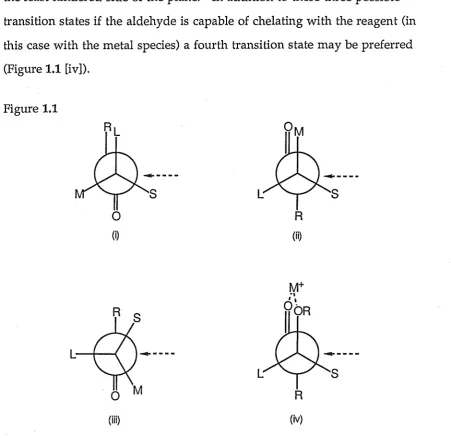
In the allylation reaction of an aldehyde or unsymmetrical ketone if the carbonyl has in addition to its prochiral face a chiral centre adjacent to the carbonyl carbon then relative asymmetric induction can be produced due to· the diastereofacial selectivity. Cram,52JA5828, 63JA1245 Karabatsos,67JA1367 and Felkin68TL2199 and others have proposed transition states to explain the 1,2-asymmetric induction encountered in nucleophilic additions to chiral carbonyl compounds. Cram's rule states that the carbonyl oxygen orients itself between the small and medium sized groups attached to the adjacent chiral centre (Figure 1.1 [i]). Karabatsos shows the transition state differently (Figure 1.1 [ii]) and Felkin considers the largest a-substituent is placed
the carbonyl oxygen to have smaller steric bulk than the alkyl group (Figure 1.1 [iii]). In all cases the approaching nucleophile attacks preferentially on the least hindered side of the plane. In addition to these three possible transition states if the aldehyde is capable of chelating with the reagent (in this case with the metal species) a fourth transition state may be preferred (Figure 1.1 [iv]).
Figure 1.1
L:
0 R
ro
oo
(iii)
R
(iv)
After these transition structures had been postulated theoretical calculations and experimental systems were designed77NC0061, 82JA7162, 87JA1580 to
determine which of these were closer to actuality. It would appear from the results of these studies that the Felkin model comes closest to reality though for different reasons. The antiperiplanar approach of the nucleophile allows a n-cr* interaction between the nucleophile electron pair and the cr*
The diastereofacial selectivity of the allylation reaction has been probed for a number of metal systems including those above. Where a chelation
mechanism is not able to operate it is generally found that the Cram isomer is formed predominantly, though the isomeric preference is somewhat low; often no better than 5:1 Cram selectivity; and generally dependent on the relative steric bulk of the aldehyde. This relatively low diastereofacial
selectivity for many reactions is expected since the additional chirality is one bond further away from the reaction centre. Generally the
threo-erythro
selectivity is not affected by the formation of this third chiral centre.A number of the investigators of the tin mediated allylation reaction have also probed the reaction for its efficacy as a diastereofacially selective system. Yamamoto84TD2239 examines the Lewis acid catalysed reaction of allyl- and crotyl- trialkyl tins with 2-phenylpropanal and notes the reaction proceeds with Cram selectivity ranging from 2:1 to 7.3:1 depending on the Lewis acid used. Keck et. ai.84TL1879 examines the diastereofacial selectivity of the reaction of a-alkoxyaldehydes on addition to crotyl tributyl tin mediated by various Lewis acids. The three acids Znlz, MgBrz and TiCl4 were used (they had previously shown these acids to be highly stereodirective) as well as boron triflouride etherate to catalyse the allylation of
2-benzyloxy-2-cyclohexyl ethanal with crotyl tributyltin. Analysis of the product mixture clearly showed a preference toward the antiCram isomer and a selectivity dependent on the Lewis acid employed. Thus boron triflouride exhibits only ·a moderate diastereofacial selectivity (antiCram:Cram 67:33) but a good
dia-stereoselectivity
(erythro:threo
92:8), in contrast zinc iodide provides excellent antiCram selectivity (98:2) but no diastereoselectivity. T~tanium tetrachloride selectively produces the antiCram isomer close to 100% selectively but with only moderateerythro
preference (63:37) and(>200:1 antiCram) diastereofacial selectivity and good (93:7 erythro)
diastereoselectivity. Keck also noted the diastereofacial selectivity increases as expected as the steric bulk of the aldehyde increases.
Keck continued his studies on this reaction84TL1883 and was ultimately able to selectively add crotyl tributyl stannane to either face of the aldehyde and still retain the erythro selectivity by proper choice of Lewis acid and hydroxyl protecting group. Thus almost total Cram selectivity was obtained with high erythro (95:5) diastereoselectivity by using a tertiary-butyl diphenylsilyl
function as the hydroxyl protecting group and boron triflouride etherate as the catalyst. AntiCram diastereofacial selectivity is best obtained with magnesium bromide as the catalyst and the benzyl protecting group which gives 91:9 antiCram selectivity and a 89:11 erythro preference.
Diastereofacial selectivity in the tin-aluminium reaction is not outstanding. Reaction of cinnamyl chloride with various chiral aldehydes gives Cram diastereofacial selectivity depending on the steric bulk of the aldehyde, the threo diastereoselectivity of the reaction is retained. Thus 2-methylbutanal gives a 5:2 preference for the Cram-threo alcohol whereas 2-phenylpropanal produces the Cram alcohol as 75% of the product and
2,4,4-trimethylpentanal exhibits the same diastereofacia] selectivity but produces the Cram-threo product as >90% of the yield.
Epoxidations
The epoxidation of alkenes is an important method of introducing a new chiral centre to the carbon skeleton being constructed. Epoxides are
important intermediates in organic synthesis and the possibility of
today most diastereoselective epoxidations produce only moderate stereoselectivity.
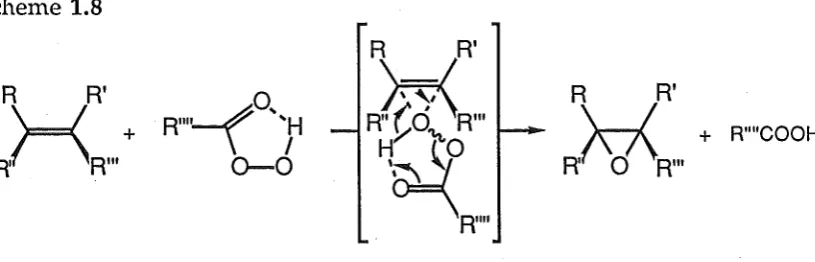
Epoxidation of alkenes with peroxyacids has long been known.09CB4811 Selective epoxidation of double bonds is often possible by varying the strength of the peroxyacid employed. One of the more well known peroxy-acids employed is m-chloroperoxybenzoic acid (MCBP A). MCPBA is a
moderately strong epoxidising reagent which has found considerable favour amongst chemists due in a large part to its ease of use and the generally clean products produced. This peracid is commercially available in 60-85% purity (with the corresponding benzoic acid) and is used without
purification. Typically 1.1 mole equivalents of 85% MCPBA in
dichloromethane (to make a 0.4- 0.5 molar solution). A 1 molar solution of the alkene (1 mole equivalent) is added and the mixture stirred for 1 - 5 hours or until completion of reaction. Cooling may be required to reduce formation of reaction byproducts. m-Chlorobenzoic acid may be removed .from the organic solution by washing with 10% sodium hydroxide solution.
Acid sensitive products that often rearrange under these conditions can be epoxidised with m-chloroperbenzoic acid in a dichloromethane- aqueous sodium bicarbonate two-phase system.73J02267
Scheme 1.8
~o
..
R"'' \ .. ~
o-o
R
R'
\.=!
R{~d'\R"'
H~~o
'~
• R""
R R'
\ _ _ / + R""COOH
R,(\01\R"'
[image:29.595.107.515.86.217.2]The origin of the diastereoselectivity of epoxidation reactions is often steric. Neighbouring and to a lesser extent remote functional groups cause the peracid to preferentially attack from the less hindered face of the double bond. In the case of certain groups (eg alcohol or carbonyl functionalities) weak electronic interactions cause the peracid to approach the reactive site from the same side as the participating neighbouring group (Figure 1.2).
Figure 1.2
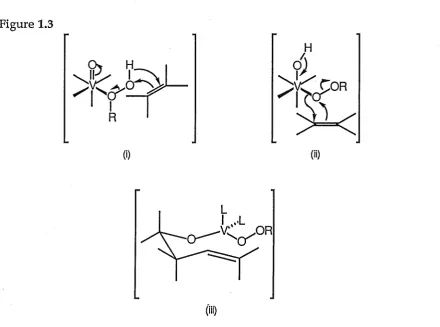
have been proposed for this reaction amongst them a peroxymetal intermediate and an activated complex (Figure 1.3 i, ii). A tetrahedral vanadate ester transition state model (Figure 1.3 iii) has been proposed to explain the high asymmetric induction seen in the epoxidation of
[image:30.595.98.539.198.525.2]homoallylic alcohols.79TL4729, 81JA7690
Figure 1.3
(i) (ii)
(iii)
The Sharpless Epoxidation80JA5974, 81JA6237, 84J03707, so named after the
discoverer is a special case of the metal catalysed alkyl peroxide epoxidation. A titanium complex (Ti(O-iPr)4 with an optically pure enantiomer of diethyl tartrate catalyses the tert-butyl hydroperoxide epoxidation of allylic alcohols to yield the
erythro
epoxide in >90% enantiomeric excess. The enantiomer produced is dependent on the enantiomer of the diethyl tartrate used. The reaction is also sensitive to any chirality of the allylic alcohol substrate so that only one enantiomer of the alcohol forms the epoxide. The reaction isequivalents of(+) or(-) tartrate and 1 molar equivalent of the allylic alcohol in dichloromethane (to make 0.1 M allylic alcohol solution) at -20°C. Tert-butyl hydroperoxide (0.6 molar equivalent as a 4-6 M dichloromethane solution) is added and the reaction maintained at -20°C until completion of the reaction. Sharpless went on to produce a rather complex mechanism and rate equation which adequately explains the selectivity of this
reaction83PA1823.
Since the epoxidation of homoallylic alcohols is so important in organic synthesis it was investigated to establish if this reaction could produce the same results for the epoxidation of homoallylic alcohols.84J03707 Though the enantiomeric excesses of the epoxidations were somewhat disappointing (23- 55%) the reaction was shown to be of some potential synthetic
usefulness by making GABOB (an antiepileptic and hypotensive drug) in high enantiomeric purity and 10% yield.
Epoxidations continue to be an important synthetic intermediate and
Results and Discussion
Diastereoselectivity, Diastereofacial Selectivity and Regioselectivity
The reaction of (E)-cinnamyl magnesium chloride with benzaldehyde to give the homoallylic alcohols (Sa) and (Sb) under Barbier conditions14 has recently been described84AJ0065 and the product ratio was reported to be 70:30 respectively. In my hands this reaction gives a 50:50 mixture of diastereo-isomers (lH n.m.r., 13C n.m.r., g.l.c). One diastereoisomer was separated by fractional crystallization and unambiguously identified as the erythro
product (Sa) by an X-ray structure determination of an epoxide derived from this alcohol namely (lRS, 2RS, 3RS)-3,4-epoxy-1,2-diphenyl-2-butanol. All attempts to purify the threo diastereoisomer (Sb) were unsuccessful and a stereoselective synthesis of (Sb) obviating the necessity for separation of the two diastereoisomers was attempted.
Ph
Ph..._
A
rH
n
(1 RS, 2RS)-8aPh~
bH
Be'l
PhPh
Ph..._
A
rH
n
(1 RS, 2SR)-8b
Ph
PhY1
9
First attempts to synthesize (Sb) involved stereoselective reductions84TL2479 of the ketone (9). Reduction with lithium .aluminium hydride gave a 9:2 mixture of (Sa) and (Sb) respectively while reduction with sodium bore-hydride in the presence of cerium chloride hexahydrate, a reagent mixture
which has been reported81JA5454 to effect stereoselective reductions, gave a 2:1 mixture of (Sa) and (Bb) respectively.
A second attempt at diastereoselective synthesize (Bb) was made using a chromium (II) mediated method reported by Hiyama and co-workers. 77JA3179 Hiyama had reported that crotyl bromide in reaction with benzaldehyde in the presence of chromium (II) gave complete threo-selectivity (lb). Similar results have been reported using crotylzirconium 81TL2895 reagents. Reaction of cinnamyl chloride, benzaldehyde, chromium (III) chloride and lithium aluminium hydride gave alcohols (Sa) and (Bb) in a ratio 17:83, as determined by g.l.c. No linear isomer (Be) was found present in the product mixture. Initial difficulties with this reaction were overcome by carrying it out under nitrogen in the strict absence of moisture. Since the threo selectivity was rather less than reported for the reported reaction of crotyl bromide with benzaldehyde this reaction was repeated. No erythro homoallylic alcohol (la) was in evidence from analysis of the 1 H n.m.r spectra (i.e. less than 5%) but the linear regioisomer (lc) was present as approximately 30% of the product mixture. Substitution of cinnamyl chloride in place of crotyl bromide gave a lesser threo selectivity but no linear isomer was found to be present.
The diastereoselectivity of the reaction of an allylic halide with an aldehyde or ketone when mediated by a metal atom (Scheme 2.1) can be understood if
obtained by altering the nature of the metal or in the case of Lewis acid
catalysed reactions, the nature of the acid or even the order of mixing the reagents. These·chair and linear transition states can be closely compared to analogous transition states for the metal mediated aldol condensation reaction. A brief description of these mechanisms is in order at this point.
Scheme 2.1
y-adducts
R'
R'~X
~
1. Metal
R'
R
~R'
R~
~X
2. RCHOR' OH OH
a-adducts
The cyclic mechanism (Scheme 2.2) requires the metal (eg Cr77JA3179, 81TL1037,
.
82BJ0561) to be inserted between the halogen and the carbon of the allylic halide. This is followed by replacement of one of the ligands on the metal by the aldehyde (or ketone); bond formation followed by hydrolysis of the
organometallic intermediate gives the product alcohol. Steric interactions in the 6-membered cyclic chair transition state can result in one or other of
these transition states being formed and hence account for the observed
stereoselectivity in the reaction.
The procedure described by Nokami et. ai.830M0191 using Sn and AI is
erythro-selective for the reaction of crotyl bromide with aldehydes. We
tri-n-butyltin has been shown to react with the opposite stereochemistry to that of cinnamyl tri-n-butyltin.82CL1299 Reaction of cinnamyl chloride with benzaldehyde in the presence of tin and aluminium powders successfully gave the
threo
alcohol (Sb) as the only detectable product (g.!. c., lH n.m.r.,13C n.m.r.). No
erythro
homoallylic alcohol (Sa) and no linear isomer (Be) was found.Scheme 2.2
H
R'
l
~0---M
'~
R
(i)
R'
R
threo
1
(iii)
cis-ally lie-metal
R'~
~o---M
'~
trans-ally lie-metal
R R
(ii)
I
R'
H
erythro
J
(iv)
l
R~~-~
Since the structure of (8b) was not in question due to an earlier X-ray crystal structure of (lRS, 2RS, 3RS)-3,4-epoxy-1,2-diphenyl-2-butanol, and since no definitive proof was given for the structure of the products of the
tin-aluminium catalysed crotyl bromide reaction the latter reaction was repeated in order to confirm the opposite diastereoselectivity of the crotyl bromide compared with cinnamyl chloride reactions. Thus reaction of crotyl
bromide in the presence of tin and aluminium did indeed give alcohols (la) and (lb) in the ratio 60:40 as previously reported. The structures of these alcohols have previously been established in this department by conversion to cyclic carbonate derivatives.77 AJ0835
Me Me
p~
Ph~
Ph'Cl
OH
I
bHI
OHI
(1 RS, 2SR)- 1 a (1 RS, 2RS)- 1 b 1c
Apart from the diastereoselective properties of the tin and aluminium mediated reaction one of the major advantages of this reaction procedure is the ease with which the reaction is carried out. Neither an inert atmosphere nor the absence of water is required, indeed water is necessary to ensure good product yield.
benzaldehyde under the described conditions. Also 75% of the threo
diastereoisomer (Sb) and 25% of erythro diastereoisomer (Sa) were
[image:38.595.93.507.228.522.2]produced from the reaction of dnnamyl chloride with benzaldehyde under the same conditions. No linear products (lc, Be) were in evidence.
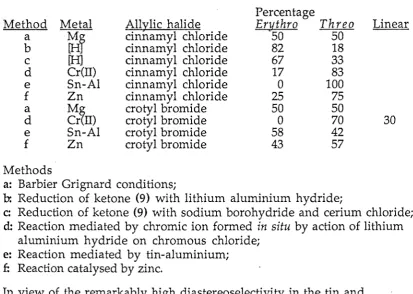
Table 2.1
Barbier type reaction of allylic halides with benzaldehyde and reduction of ketone (9) (see experimental section)
Percentage
Method Metal All)!:lic halide Erythro Threo
a
Mr
dnnamyl chloride 50 50b dnnamyl chloride 82 18
c [H) dnnamyl chloride 67 33
d Cr(ll) cinnamyl chloride 17 83
e Sn-Al dnnamyl chloride 0 100
f Zn cinnamyl chloride 25 75
a
~~IT)
crotyl bromide 50 50d crotyl bromide 0 70
e Sn-Al crotyl bromide 58 42
f Zn crotyl bromide 43 57
Linear
30
Methods
a: Barbier Grignard conditions;
b: Reduction of ketone (9) with lithium aluminium hydride;
c: Reduction of ketone (9) with sodium borohydride and cerium chloride; d: Reaction mediated by chromic ion formed in situ by action of lithium
aluminium hydride on chromous chloride; e: Reaction mediated by tin-aluminium;
£: Reaction catalysed by zinc.
In view of the remarkably high diastereoselectivity in the tin and
aluminium promoted formation of (Sb) the corresponding reaction with a variety of selected aldehydes (RCHO; R =Ph, 4-MeOPh, 4-NCPh,
Yamamoto et. al. have argued84TD2239 that if the addition goes through a cyclic transition state then when a cis-allylic metal reacts with an aldehyde the sterically favoured transition state is with the aldehyde R group
equatorial (Scheme 2.2, [ii]) rather than axial (Scheme 2.2, [i]). Compare the favoured transition state for the trans-allylic metal which has the R groups of the aldehyde positioned equatorially (Scheme 2.2, [iii] cf Scheme 2.2, [iv]).
In this case the allylic R groups are also in an equatorial position. Thus the trans-allylic metal species gives the threo-homoallylic alcohol preferentially and for the cis-allylic metal species the erythro-product will mostly result.
The linear mechanism is important because it is considered to account for
erythro selectivity regardless of the starting geometry of the double bond. 80JA7107 If the aldehyde is for any reason unable to replace a metal ligand (e.g. if a Lewis acid were coordinated to the aldehyde oxygen) then a linear mechanism is likely to operate. It is said by Yamamoto80JA7107 to be apparent from Scheme 2.3 that the favoured transition state conformation for trans-allylic metals (Scheme 2.3, [iv]) and for cis-allylic metals (Scheme
2.3, [viii]) both result in the erythro-homoallylic alcohol. This will be discussed later.
It is the energy differences between different transition state conformations and the ground state conformations of the various reaction pr.ocesses and competition between reaction processes that will determine the threo to
erythro ratio in any one reaction of this type. In the light of this it can be
benzaldehyde to produce only the threo~branched alcohol but cinnamyl chloride reacts with benzaldehyde to produce the erythro~isomer in minor but significant quantities. I propose that a number of different mechanisms operate (the linear mechanism, the cyclic mechanism and a further
mechanism producing the linear isomer) and these mechanisms compete within the reaction mixture. Minor adjustments to the reactants or
substrates or even reaction conditions can shift the balance through steric, electronic or other effects and so produce a preference (moderate or
complete) toward one isomer. A complete understanding of how these factors operate may allow the precise production of the required isomer.
At this point a number of questions arise. It is likely that in th~ Sn-Al
mediated reaction conditions the aluminium promotes the formation of the allylic tin by activating the tin and reduction of any tin salts formed. It is also probable that the water hydrolyses the tin carbinol thereby forcing the equilibrium toward the product homoallylic alcohol. The erythro-selectivity of the reactions of both cis- and trans-crotyl organotins reacting with
aldehydes in the presence of boron triflouride etherate has been suggested to result from the removal of the availability of the carbonyl oxygen as a ligand
f to the tin metal centre and hence forcing a linear transition state for the reaction so determining the stereochemical outcome.80JA7107, 84TD2239 Evidence supporting this explanation has recently been advanced by Reetz et. a1.86JA2405 who from an X-ray crystallographic study showed' BF3 to be complexed anti to the benzaldehyde phenyl group. Heteronuclear
SnCl4 is a Lewis acid it is probably not present in this reaction mixture and if it were present the reaction would be expected to give poor product dia-stereoselectivity.84TL3927 Hydrobromic acid is added in only catalytic
quantities and is probably involved in generating an active metal site. The addition of hydrobromic acid is considered unlikely to effect the diastereo-selectivity of the reaction,15 that is it does not play a role in the sterically controlled transition state. If there is no Lewis acid present then it may be reasonable to say that the Lewis acid (in the Lewis acid reaction) does not stop the formation of the cyclic mechanism by attaching itself to the carbonyl oxygen but rather promotes the formation of product via the linear
mechanism.
Torii86TL2395 also reports work, completed after our preliminary
report85TL6121 which he references, that Sn(II)-Al reacts with cinnamyl
chloride and various aldehydes to give good yields (68%- 84%) and high threo diastereoselectivities. His work parallels our earlier studies.
Since benzaldehyde and cinnamyl chloride give the threo diastereoisomer and because only one diastereoisomer was formed in these reactions it
might be assumed that the diastereoisomer formed was the threo diastereo-isomer. This has been confirmed for (1RS, 2SR)-1-(9-anthracenyl)-2-phenyl-3-buten-1-ol (13b), (2RS, 3RS, 4SR)-4,5-epoxy-1,3-diphenyl-4-penten-2-ol (7a), (2RS, 3SR, 4SR)-2,4-diphenyl-5-hexen-3-yl 3,5-dinitrobenzoate (25b) and (3RS, 4RS)-2-methyl-4-phenyl-5-hexen-3-yl 3,5-dinitrobenzoate (33b, R=iPr) by X-ray studies.16
15
16
See competition studies. The addition of large quantities of hydrobromic acid did not appear to effect the course of the reaction.
1-(4-Cyanophenyl)-2-phenyl-3-buten-1-ol (lOb) has been crystallized and is waiting for
an X-ray crystal structure analysis. A preliminary photographic study was performed on the crystalline 2-methyl-4-'phenyl-5-hexen-3-yl4-nitrobenzoate (32b, R=iPr) and
this indicated an orthorhombic unit cell of dimensions 6.09, 17.06, and 19.38 A.
0
co
32a, R=IPr
Ph
7a
13b
_ Ph
Ph~
co
33b, R=PhCH(CH3)
The reaction of acetophenone with cinnamyl chloride did not give the expected branched homoallylic alcohol. Pyridine-4-aldehyde and cinnamyl chloride in the presence of tin and aluminium powders was unreactive.
Ph Ph
(3RS, 4RS)-14b 15b
Ph p
(3RS, 4RS)-16b 17b
Elemental analyses of the products from these reactions which are generally oils, were difficult to obtain and since the homoallylic alcohols are some-what unstable EI mass spectrometry tends to produce poor data. For almost all products CI mass spectra were obtained using the new standard poly-dimethylsiloxane87 AC0194 allowing for acquisition of an accurate mass;
however due to repeated and extended periods of machine failure the time from synthesis to mass spectral data collection was often several months and prolonged storage of many of these compounds resulted in det~rioration of samples. The crystal structures provide a definite proof of structure. A number of 4-nitrobenzoate and 3,5-nitrobenzoate derivatives of these alcohols have been made but in many cases while a derivative may be solid it does not easily form crystals suitable for X-ray crystallography.
Cinnamaldehyde and crotonaldehyde could as well as undergoing the
the ketones (17) and (15) respectively. Reaction of both cinnamaldehyde and crotonaldehyde with cinnamyl chloride in tin and aluminium media gave only the 1,2-addition threo diastereoisomers (16b) and (14b) respectively. Thus this reaction occurs with both high regioselectivity and high
diastereoselectivity. In contrast reaction of these aldehydes with cinnamyl chloride under Barbier-Grignard conditions gives a mixture of several products including both the threo and erythro products and 1,4-(Michael) addition products.
In view of the high selectivities found in the above reaction it was of
interest to examine the possibility of extending this reaction to the synthesis of molecules containing more than two chiral centres. Firstly aldehydes containing a chiral centre adjacent to the carbonyl group were examined. In this case the products contain three contiguous chiral centres, i.e. four
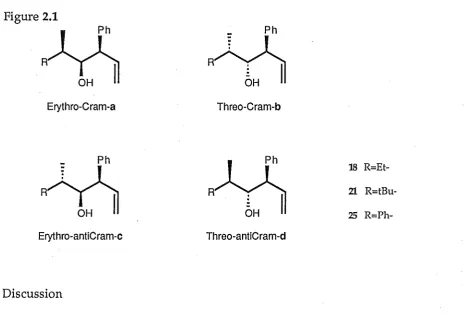
[image:44.595.92.567.493.807.2]possible diastereomers (Figure 2.1). The aldehydes chosen were 2-methyl-butanal, 2,4,4-trimethylpentanal (20) and 2-phenylpropanal (24) and these were synthesized as shown in Scheme 2.4.
Figure 2.1
_ Ph
R~
Erythro-Cram-a Threo-Cram-b
_ Ph
R~
18 R=Et-21R=tBu-25
Scheme 2.4
~OH
H2S04~
1. Cr02CI219a 2.Zn
-{A
2019b
y
PhMgBrPh~OH
DMSO P h y 1. Cr02CJ2 PYCHO0 2.Zn
22 23 24
Reaction of 2-phenylpropanal with cinnamyl chloride, tin and aluminium gave two diastereoisomers one of which was present as greater than 90% yield. This diastereoisomer was determined to be the Cram-threo
diastereoisomer (25b) by X-ray crystal structure analysis of the 3,5-dinitro-benzoate derivative. Thus the reaction occurs not only with
diastereoselective carbon-carbon bond formation (threo selectivity), but also with selectivity between the enantiomeric faces of the carbonyl group (Cram selectivity).17 2-Methylbutanal and 2,4,4-trimethylpentanal also showed a diastereofacial preference, though not so marked, toward one
17
M
Cram's rule applied to reactions of this type states that the oxygen of the carbonyl orients itself between the small and medium sized groups attached to the adjacent asymmetric centre. The approaching group attacks preferentially on the least hindered side of the plane (see introduction).
LR L L
0
oz
oz
diastereoisomer giving respectively a 2:5 and a 75:25 mixture of two of the four possible diastereoisomers. In each case the major diastereoisomer is (by analogy) threo Cram and the minor diastereoisomer threo anti-Cram.
The results are not as dramatic as for the simple diastereoselective (erythro-threo) system and the selectivity seems to be highly dependent on the steric bulk at the chiral centre of the aldehyde. The reduction in selectivity is expected because the chirality is one bond further away from the reaction centre.
Investigation of the diastereofacial selectivity of aldehydes capable of chelation with the tin centre has also been examined. Keck84TL1879 for example found that a-alkoxyaldehydes on addition to crotyl tributyl tin catalysed with boron triflouride etherate gave a moderate preference for antiCram isomers. Ultimately, Keck was able to selectively add crotyl tributyl stannane to either face of the aldehyde84TL1883 and still retain the erythro-selectivity by proper choice of Lewis acid and alkoxy group. In contrast Yamamoto84TD2239 had found 2-phenylpropanal (not capable of chelation) gave the expected Cram isomer in moderate selectivity.
The reaction of glyceraldehyde with cinnamyl chloride was carried out in an attempt to form a triol diastereospecifically, however the resultant material was a mixture of several compounds, of sufficient complexity that the reaction was not pursued further. The chelation mechanism is very probably competing with the Cram mechanism and interfering with the threo-selective mechanism to produce up to eight different diastereomeric alcohols.
Reaction under Barbier-Grignard conditions were carried out for
25c, 25d) in the ratio 1:3:3:4 respectively. Crystals of the 3,5-dinitrobenzoate derivative of (25d) were obtained however these were of insufficient quality for X-ray crystal -structure analysis.
Scheme 2.5
R~
PhR~
[OJ
_ Ph
R~
_ Ph
R~
R~
• Pha: Oxidation of diastereomers produces two ketones
R
[OJ
_ Ph
R~
R~
b: Oxidation of threo dlastereomers produces two ketones
Oxidation of the product alcohols from the Grignard and tin-aluminium reactions support the evidence showing that the tin-aluminium reaction gives
threo
Cram andthreo
anti-Cram products. As can be seen inproduced in the tin-aluminium catalysed reaction, in this case one major ketone (from the
threo
Cram alcohol) and a minor ketone (from thethreo
antiCram alcohol). As predicted a 50:50 mixture of isomeric ketones resulted from oxidation of the four alcohols produced in the Grignard reaction and a 75:25 mixture of ketones was produced from the twothreo
alcohols obtained from the tin-aluminium reaction.An attempt to extend the use of this reaction to the synthesis of molecules containing more than two chiral centres was made by studying the reaction of glyoxal (29) with cinnamyl chloride. 2,3-Dihydroxy-1,4-dioxane was also used but spectra indicated that this substance gave exactly the same products. The products contain four contiguous chiral centres and six diastereomers are possible (Scheme 2.6). Prediction of the product diastereoisomers is complicated by the fact that after addition of the first cinnamyl chloride to the carbonyl the intermediate may undergo tautomeric equilibration to form both the
erythro
andthreo
intermediate. Each of these two intermediates may further react with another molecule of cinnamyl chloride to form the product (28). It is most likely however that the second addition will occur withthreo
selectively and hence the two possibleerythro-erythro
products (28e, 28£) are unlikely to be produced. We would therefore expect four products; the symmetrical products (28a, 28b) and the unsymmetrical products (28c, 28d).overlap. The spectrum of the reaction mixture showed a maximum of four signals for any carbon, indicating some selectivity as predicted above. The lH n.m.r. spectrum was more informative. Resonance patterns for H2 and H7 were found centred at 5.8, 5.95, 5.99, 6.14, 6.25 in a ratio 60:60:100:100:15; indicative of the presence of at least three diastereoisomers and traces of another pattern hidden under larger peaks indicated the presence of a fourth dias tereoisomer.
Scheme 2.6 Ph
~CI
+!
Ph
0~
OH Ph
.
'
(3RS, 4SR, 5RS, 6SR)·28a
OH '
OH
(3RS, 4SR, 5SR, 6RS)-28b
~
0 0
Ph Ph
HO~
0~
(3RS, 4RS, 5RS, 6SR)-28c (3RS, 4RS, 5RS, 6RS)-28
Ph
'
OH
A successful separation of one diastereoisomer of (28) was accomplished by radial chromatography and identification of this diastereoisomer as (28a) was accomplished by preparation of the acetonide derivative (31). Since the separated diastereoisomer (28a) was symmetrical (13C n.m.r.) and since (28e) and (28£) were already eliminated from consideration this diastereoisomer had to be either (28a) or (28b). The acetonide methyl groups of (31) were not equivalent (lH n.m.r.) and therefore this established the acetonide had mirror symmetry (31a) corresponding to the alcohol (28a).
Ph Ph
I I
o'};:~
o
I"
..
I
(3RS, 4SR, 5RS, 6SR)-31 a (3RS, 4SR, 5SR, 6RS)-31 b
Secondly the reaction was carried out with terephthaldicarboxaldehyde. Six diastereoisomers are possible (27a,27b~.27c,27d,27e,27£). In this case
however, a tautomeric equilibrium is not possible because the two carbonyls are separated. It is expected that both the carbonyls would add threo
(1RS, 2SR, 1'SR, 2'RS)-27a (1 RS, 2RS, 1'RS, 2'SR)-27d
(1RS, 2SR, 1'RS, 2'SR)-27b (1RS, 2RS, 1'RS, 2'RS)-27e
(1RS, 2RS, 1'SR, 2'RS)-27c (1 RS, 2RS, 1 'SR, 2'SR)-27f
Mechanistic Generalizations
It is possible to generalize the results of my own studies and those of other authors. If the cyclic mechanism is operating in a reaction system then
trans-crotyl trialkyltin will react with aldehydes to produce threo-homo-allylic alcohols; erythro-homothreo-homo-allylic alcohols are produced from the reaction· of cis-crotyl trialkyltin with aldehydes. On the other hand the linear
transition state results in the formation of erythro-products both trans- and I
If steric interactions in these transition states were most important in determining the orientation of approach of the two reacting species and hence ultimately the stereochemistry of the product then we would expect similar diastereoselectivities for other allylic tins (and indeed other allylic metals). In order to be able to predict which mechanism is likely to take place in any one experimental system it is necessary to consider several factors, these include:
-the nature of the metal- carbon bond;
-whether transmetallation (Scheme 2.7) of the allylic system occurs and
-how added reagents (Lewis acids, additional metals) and solvents affect the mechanism.
It was considered important to determine whether tin and aluminium both played important roles in this reaction mechanism. Reaction of cinnamyl chloride with benzaldehyde in the presence of aluminium gave no product; and the same reactants in the presence of tin gave a very poor yield (i.e. less than 10%). When it is considered that the electrochemical potential of
aluminium (Al+3 + 3e-~ Al) is -1.706- V and the electrochemical potential of tin (Sn+2 + 2e-~ Sn) is -0.1364 V then it would seem reasonable that the aluminium is present to reduce the tin salts produced in the course of the reaction back to active tin metal.
Scheme 2.7
~SnRs
~
SnRs~SnRa
Koreeda and Tanaka82CL1299 using the same Lewis acid conditions as
benzaldehyde to give 5:1
erythro-
and threo-homoallylic alcohols buttrans-cinnamyl triphenyltin reacted with benzaldehyde to give 1:99
erythro-
and threo-homoallylic alcohols. They considered that these "observations may be accounted for in terms of the ionic property of the allylic carbon tin bond. Thus the allyl tin with a greater ionic contribution from the carbon tin bond increases the propensity for the cyclic transition state in its reactions with aldehydes."In the case of cinnamyl trialkyltin the allylic species (anion or radical) is stabilized by conjugation with the phenyl ring. As a consequence of this stabilization the metal (in this case tin) is more electropositive and attracts the electron rich oxygen of the aldehyde to give a cyclic transition state. In contrast the crotyl system (anion or radical) of crotyl trialkyltin is not so well stabilized and the metal is less electropositive and does not attract the
carbonyl oxygen and the
erythro
product is now formed via the linear mechanism.They continue to write " .. .in this regard, the conjugated dienyltin, (E),(E)-2,4-hexadienyl-tri-n-butyltin exhibited intermediate property by providing a 5/3 ratio of the stereoisomers of the y-adducts (stereochemistry unassigned) in addition to the e-adducts in a 2/1 stereoisomeric mixture" (Scheme 2.8).
Scheme 2.8
~~~
/ ~ ~ 'Sn(nBu)a
(i)