http://www.scirp.org/journal/psych ISSN Online: 2152-7199
ISSN Print: 2152-7180
DOI: 10.4236/psych.2018.92018 Feb. 28, 2018 280 Psychology
Developing an Expert and Reflexive
Approach to Problem-Solving:
The Place of Emotional
Knowledge and Skills
Vanessa Hanin, Catherine Van Nieuwenhoven
Department of Education Science, Université Catholique de Louvain, Louvain, Belgium
Abstract
Nowadays it is widely accepted that mathematics and, especially, problem-solving tasks, are particularly concerned by the issue of emotions. Yet, educa-tional interventions designed to improve students’ problem-solving compe-tence and performance still mainly focus on cognitive and metacognitive knowledge and skills. The main purpose of this study was to design and assess the benefit of a training program that promotes the development of not only cognitive but also emotional knowledge and skills. This benefit was assessed using four variables, namely, problem-solving performance, problem-solving competence, academic emotions and emotion regulation strategies. 428 fifth and sixth graders took part in the study, split into four conditions: 1) a “cog-nition” condition which received an intervention on an eight-step problem-solving process; 2) an “emotion” condition in which emotional knowledge and skills were developed through various activities; 3) an “emotion and cog-nition” condition overlapping the two previous ones, and 4) a “control” con-dition. The findings showed that the “emotion and cognition” condition and the “cognition” condition had equivalent cognitive efficiency. However, only the former reduced negative emotions, aroused the emergence of positive ones, promoted the use of adaptive emotion regulation strategies and discou-raged the use of maladaptive ones. The practical implications for educational practices and possible avenues for further research are discussed.
Keywords
Problem-Solving Competence, Elementary School Students, Emotion Knowledge and Skills, Heuristic Strategy, Intervention
How to cite this paper: Hanin, V., & Van Nieuwenhoven, C. (2018). Developing an Expert and Reflexive Approach to Prob-lem-Solving: The Place of Emotional Know-ledge and Skills. Psychology, 9, 280-309.
https://doi.org/10.4236/psych.2018.92018
Received: January 24, 2018 Accepted: February 25, 2018 Published: February 28, 2018
Copyright © 2018 by authors and Scientific Research Publishing Inc. This work is licensed under the Creative Commons Attribution International License (CC BY 4.0).
http://creativecommons.org/licenses/by/4.0/
DOI: 10.4236/psych.2018.92018 281 Psychology
1. Introduction
Students’ poor grades in mathematical problem-solving have preoccupied re-searchers for several decades now (e.g., Blum, 2011; De Corte & Verschaffel, 2008; Demonty & Fagnant, 2014; Hanin & Van Nieuwenhoven, 2016a; Mevarech & Kramarski, 1997; Polya, 1957; Schoenfeld, 1992; Verschaffel, De Corte, Lasure, Van Vaerenbergh, Bogaerts, & Ratinckx, 1999). So far, the focus has been on the development of cognitive and metacognitive strategies to overcome the difficul-ties observed. The accumulating evidence, collected during the last decade, of the profound effects exerted by emotions on students’ learning behaviors and aca-demic emotions have changed the perspective of educational psychologists. Emotions influence students’ attention, choice of learning strategies, source of regulation (external vs. internal), motivation to learn and their interactions with peers and teachers (Pekrun, 2014; Schutz & Pekrun, 2007). Studies have shown that mathematics and, especially, problem-solving tasks, are particularly con-cerned by the issue of emotions (Ahmed, van der Werf, Kuyper, & Minnaert, 2013; Kim & Hodges, 2012; Op’t Eynde, De Corte, & Mercken, 2004). These findings have led to a reconceptualization of what expertise in mathematical problem solving requires. This is no longer limited to the mastery of cognitive and self-regulative knowledge and skills but also includes emotional components (De Corte & Verschaffel, 2008). However, just as the acquisition of cognitive and self-regulative skills does not occur spontaneously or automatically, the individ-ual is not naturally endowed with emotional knowledge and skills. These latter need to be fostered and taught at school (Goetz, Frenzel, Pekrun, & Hall, 2005; Kim & Hodges, 2012). Since emotions are domain specific (e.g., Goetz, Frenzel, Pekrun, Hall, & Lüdtke, 2007; Goetz, Pekrun, Hall, & Haag, 2006), this appren-ticeship has to be disciplinarily situated as well.
DOI: 10.4236/psych.2018.92018 282 Psychology depending on the problem given. The present contribution attempts to palliate these limitations. Our first goal consists in designing and assessing a training program that promotes the development of an expert and reflexive approach to mathematical problem-solving through the development of cognitive, emotional and regulative knowledge and skills among upper elementary students. Our second goal is to propose a more complete measure of problem-solving compe-tence by taking into account not only the correctness of the use of strategies but also strategy flexibility.
2. Theoretical Background
2.1. Cognitive Dimension of Problem-Solving Competence
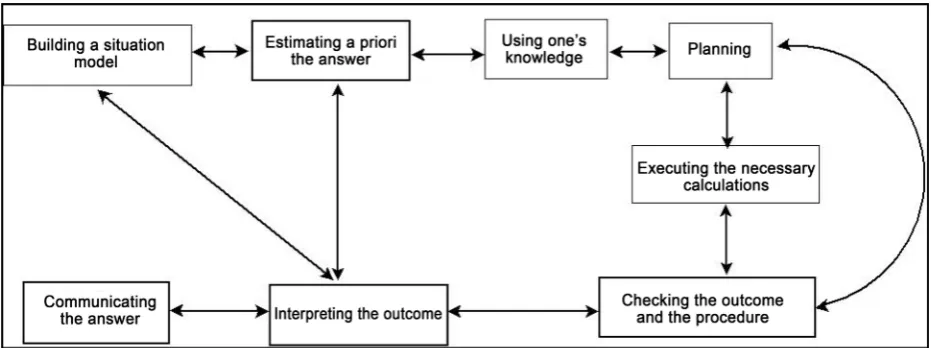
[image:3.595.74.540.477.651.2]Nowadays, scholars acknowledge that the development of an expertise in ma-thematical problem solving requires the reconceptualization of mama-thematical problems as exercises in mathematical modeling; that is, the consideration of a problem’s statement as the description of a situation in everyday life that can be modeled mathematically (Blum & Niss, 1991; Verschaffel, Greer, & De Corte, 2000). Mathematical modeling is viewed as a complex and cyclic process involv-ing a number of phases (e.g., Blum & Niss, 1991; Fagnant, Demonty, & Lejonc, 2003; Verschaffel et al., 2000). In a previous study (Hanin & Van Nieuwenhoven, 2016a), we gave an account of the main processes used to solve non-routine word problems1 as well as recommendations resulting from empirical studies (e.g., Fuchs, Fuchs, Prentice, Burch, Hamlett, et al., 2003; Fagnant & Demonty, 2005) within an integrative eight-step cycle (Figure 1, for a complete description see Hanin & Van Nieuwenhoven, 2016a). In addition, the majority of the steps constituting this solution process are heuristic strategies, namely, “search strate-gies for problem analysis and transformation which do not guarantee, but
Figure 1. Schematic diagram of non-routine word problem-solving process.
DOI: 10.4236/psych.2018.92018 283 Psychology significantly increase the probability of finding the correct solution of a problem because they induce a systematic approach to the task” (De Corte et al., 2004: p. 372). However, as noted above, being competent in problem solving is not li-mited to the use of heuristic strategies, but requires using them correctly, flexibly and thoughtfully, that is to say, self-regulating one’s problem-solving approach (De Corte & Verschaffel, 2008; Focant & Grégoire, 2008). In the present study, we focused on what Elia et al. (2009) called inter-task strategy flexibility, defined as the student’s ability to select and adjust his or her strategies to the demands of the problem-solving task. For instance, planning the steps of a problem that contains only two steps is an example of non-flexibility. Thoughtful use means the awareness, control and regulation of one’s cognitive activities (Focant & Grégoire, 2008). So far, empirical studies have shown that cognitive and self-regulative inter-ventions in mathematical problem-solving increase the use of heuristic strate-gies, support the development of a global self-regulative approach and improve performance (e.g., Blum & Leiss, 2007; De Corte, Verschaffel, & Masui, 2004; Mevarech & Amrany, 2008; Perels, Gürtler, & Schmitz, 2005).
Supporting the development of an accurate, flexible and thoughtful use of heuristic strategies appears positively and strongly related to problem-solving performance (e.g., Baroody, 2003; Elia et al., 2009; Schoenfeld, 1992; Torbeyns, De Smedt, Stassens, Ghesquière, & Verschaffel, 2009). People who develop such strategic behavior can modify their behavior according to changing situations and conditions, develop more refined strategies and procedures that are better adjusted to the special features of the situation and generate more creative and appropriate solutions to problems.
2.2. Emotional Dimension of Problem-Solving Competence
DOI: 10.4236/psych.2018.92018 284 Psychology the context of this study aims to develop the first four competencies. Emotion identification consists in awareness and identification of one’s own emotions (Mikolajczak et al., 2009). This presupposes openness to both positive and nega-tive emotions and a sufficient emotional vocabulary. Emotion expression implies taking into account what is to be expressed, the interlocutor to whom emotional information is addressed, and the way information is expressed in order to do it in a socially acceptable way (Rimé, 2005). Emotion understanding pertains to the understanding of the causes of one’s emotions. It is a question of identifying the unsatisfied or threatened needs underlying the emotions felt. Finally, emotion regulation consists in influencing which emotions we feel, when we feel them, and how we experience and express them (Gross, 1998). Both positive and nega-tive emotions may be down- or up-regulated. In the current study, we focused on the down-regulation of negative emotions through six strategies used by up-per-elementary students to regulate their negative emotions during problem-solving tasks: task utility self-persuasion, help-seeking, brief attentional relaxa-tion, emotion expression, negative self-talk and dysfunctional avoidance (Hanin, Grégoire, Mikolajczak, Fantini-Hauwel, & Van Nieuwenhoven, 2017).
3. The Present Study
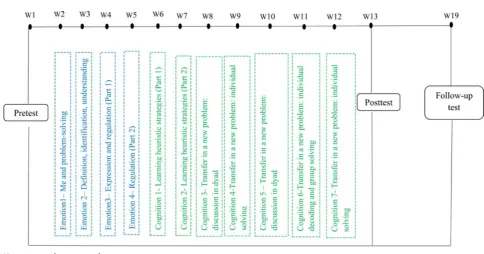
DOI: 10.4236/psych.2018.92018 285 Psychology Note. w1 = week 1; w2 = week 2, etc.
Figure 2. Schematization of the experimental design.
task” variable (for a more detailed description of the conditions, see Appendix 1). For a question of ecological validity, the four conditions were carried out by regular teachers who had previously received two days’ training from the first author.
On the basis of the literature presented above, we formulated the following hypothesis:
• The “emotion and cognition” condition will surpass the three other condi-tions regarding all the dependent variables (hypothesis 1);
• The “cognition” condition will surpass both the “emotion” and the “control” conditions on the cognitive dimensions (i.e., problem-solving competence and performance) (hypothesis 2);
• The “emotion” condition will surpass the “cognition” and the “control” con-ditions on the emotional dimensions (i.e., academic emotions and emotion regulation strategies) (hypothesis 3);
• The “emotion” condition will surpass the “control” condition in terms of problem-solving performance (hypothesis 4).
4. Method
4.1. Participants
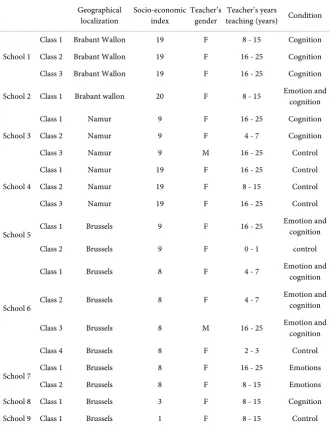
428 upper elementary students2 from nine French-speaking Belgian schools took part in the present study. We took care to make the four conditions as compara-ble as possicompara-ble both regarding the schools’ characteristics (i.e., geographical loca-lization and socioeconomic level) and the teachers’ characteristics (gender and
DOI: 10.4236/psych.2018.92018 286 Psychology
Table 1. Characteristics of the sample constituting each condition.
Geographical
localization Socio-economic index Teacher’s gender teaching (years) Condition Teacher’s years
School 1
Class 1 Brabant Wallon 19 F 8 - 15 Cognition Class 2 Brabant Wallon 19 F 16 - 25 Cognition Class 3 Brabant Wallon 19 F 16 - 25 Cognition
School 2 Class 1 Brabant wallon 20 F 8 - 15 Emotion and cognition
School 3
Class 1 Namur 9 F 16 - 25 Cognition Class 2 Namur 9 F 4 - 7 Cognition Class 3 Namur 9 M 16 - 25 Control
School 4
Class 1 Namur 19 F 16 - 25 Control Class 2 Namur 19 F 8 - 15 Control Class 3 Namur 19 F 16 - 25 Control
School 5 Class 1 Brussels 9 F 16 - 25
Emotion and cognition Class 2 Brussels 9 F 0 - 1 control
School 6
Class 1 Brussels 8 F 4 - 7 Emotion and cognition
Class 2 Brussels 8 F 4 - 7 Emotion and cognition
Class 3 Brussels 8 M 16 - 25 Emotion and cognition
Class 4 Brussels 8 F 2 - 3 Control
School 7 Class 1 Brussels 8 F 16 - 25 Emotions Class 2 Brussels 8 F 8 - 15 Emotions School 8 Class 1 Brussels 3 F 8 - 15 Cognition School 9 Class 1 Brussels 1 F 8 - 15 Control
years teaching) (Table 1). The “control” condition was made up of 148 students (M age = 10.7; SD = 0.63), 54.7% were girls; the “cognition” condition consisted of 131 students (M age = 10.1; SD = 0.36), of which 51.9% were girls. The “emo-tion” condition was composed of 41 students (M age = 11; SD = 0.53), of which 58.5% were girls. Finally, the “emotion and cognition” condition comprised 108 students (M age = 10.8; SD = 0.59), of which 49.1% were girls. Participants pro-vided data on three occasions: prior (Time 1), immediately after (Time 2) and six weeks after the training-program (Time 3).
4.2. Measures
DOI: 10.4236/psych.2018.92018 287 Psychology author and on Fagnant and Demonty’s (2005) textbook. In selecting these prob-lems, our main concern was to respect the three characteristics of openness, realism, and complexity, recommended by Verschaffel and his colleagues (2000) to develop, among students, an expert and reflexive approach to problem solv-ing. Students’ performance was appraised by a global score obtained by sum-ming up the correct answers on a binary scale (0 = wrong answer, 1 = right an-swer). Interscorer agreement, computed on 40% of protocols, by two indepen-dent blind scorers, was 0.95. The test took on average 45 minutes to complete. It is noteworthy that for each measurement time, it was the same four mathemati-cal structures that were used to design the problems’ statements, and only the “dressed-up” of the problems was modified.
Problem-solving competence was assessed through three indicators, namely, “strategy use”, “correct strategy use” and “strategy flexibility”. The heuristic strategieswere measured on the basis of students’ written productions. Regard-ing “strategy use”, we scrutinized students’ pretest, posttest, and retention test for traces of the application of five3 out of the seven heuristic strategies taught, namely; building a situation model, using one’s knowledge (i.e., searching for connections with familiar problem structures in order to identify the structure of the problem, and identifying the mathematical tool to be used to solve this type of problem), verifying the outcome and the procedure, interpreting the outcome and communicating the solution. Then, we computed a presence score for each heuristic strategy according to a binary scale (0 = missing; 1 = present). As for “correct strategy use”, a ratio between the number of correct implementations and the total number of implementations was calculated for each heuristic. As regards “strategy flexibility”, a ratio between the number of students who used the heuristic and the total number of students was computed. As a flexible use of heuristics requires to be familiar with heuristic, only the posttest and the reten-tion test problems were analyzed, and that only for the “cognireten-tion” and the “emotion and cognition” conditions. The scoring of the use of heuristics and of their correct use had a high interrater reliability
(
k=0.89)
.Academic emotions experienced by students while solving non-routine ma-thematical problems were evaluated through a questionnaire presenting facial expressions. These included positive emotions (enjoyment, pride, relief), and negative emotions (boredom, fear, anger, hopelessness, shame, worry, frustra-tion, and nervousness) most frequently experienced by elementary students when dealing with problem-solving tasks (Hanin & Van Nieuwenhoven, sub-mitted; D’Mello & Graesser, 2011; Frenzel, Pekrun, & Goetz, 2007; Prawat & Anderson, 1994). Students were asked to indicate to what extent they felt each emotion when solving a math problem using a 5-point Likert scale (1 = never to 5 = always).
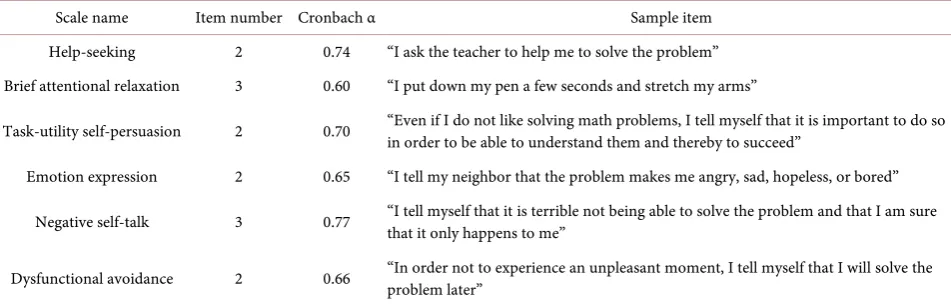
DOI: 10.4236/psych.2018.92018 288 Psychology Emotion regulation strategies were appraised using the Children’s Emotion Regulation Scale in Mathematics (CERS-M) (Hanin et al., 2017). This question-naire consists of 14 items, rated on a 4 point Likert scale (ranging from 1= (al-most) never to 4 = (almost) always) and targets six strategies used by 5th and 6th graders to regulate their emotions when solving mathematical problems (see Table 2).
Classroom social climate, one of the control variables, was assessed using a French version of the questionnaire designed by Patrick, Kaplan and Ryan (2007) for use with upper elementary students. Students responded to 27 items assessing their perception of teacher emotional and academic support, their peers’ emotional and academic support, the promotion of mutual respect and the promotion of interaction (see Table 3). Responses ranged from 1 (false) to 4 (true). Due to poor internal consistency, the student academic support scale and the promotion of mutual respect scale were removed from the subsequent analy-sis.
4.3. Fidelity of Implementation
[image:9.595.59.535.417.569.2]As outlined by Durlak and Dupre (2008), one cannot interpret the results of the implementation of a training-program without first ensuring that it has been de-livered as planned. To monitor the program’s fidelity of implementation, several tools were used. First, a check-list containing the prescribed instructions (activities,
Table 2. Description of the emotion regulation strategies’ scale.
Scale name Item number Cronbach α Sample item Help-seeking 2 0.74 “I ask the teacher to help me to solve the problem” Brief attentional relaxation 3 0.60 “I put down my pen a few seconds and stretch my arms”
Task-utility self-persuasion 2 0.70 “Even if I do not like solving math problems, I tell myself that it is important to do so in order to be able to understand them and thereby to succeed”
Emotion expression 2 0.65 “I tell my neighbor that the problem makes me angry, sad, hopeless, or bored”
Negative self-talk 3 0.77 “I tell myself that it is terrible not being able to solve the problem and that I am sure that it only happens to me”
[image:9.595.53.541.602.726.2]Dysfunctional avoidance 2 0.66 “In order not to experience an unpleasant moment, I tell myself that I will solve the problem later”
Table 3. Description of the classroom social climate scale.
Scale name Item number Cronbach α Sample item Teacher emotional support 5 0.72 “My teacher really understand how I feel about things”
Teacher academic support 5 0.63 “My teacher cares about how much I learn” Student emotional support 6 0.77 “In my class, other students are nice to me”
Student academic support 2 0.47 “In my class, other students want me to do well in school”
DOI: 10.4236/psych.2018.92018 289 Psychology methodology and duration) was filled-in by each teacher at the end of each les-son. Examination of the checklists showed that teachers completed 95% of the steps as prescribed. Second, teachers were asked to keep a diary with their feel-ings, students’ responsiveness, potential amendments, and any other item of in-formation considered relevant. Third, at the end of their two-day training, teachers received a manual containing a full and detailed description of the training-program attributed to them, that is, a number of theoretical aspects, a scenario of each lesson (goals, working methods, teacher’s and student’s activi-ties, equipment and duration) and a detailed answer to each problem based on the heuristic strategies taught and highlighting the diversity of possible paths. Fourth, the researcher and the teachers met weekly to exchange views about pos-itive experiences and difficulties encountered as well as to take stock of the past lessons and to plan the following ones.
4.4. Analysis
As significant baseline variations were found between the four conditions for several variables under investigation, the data were analyzed using normalized gain scores. Normalized gain scores are recommended when pretest scores differ widely between groups (Marx & Cummings, 2007; Gilley & Clarkston, 2014). By normalizing the gain score, that is, by dividing the absolute gain by the maxi-mum possible gain, the variance in pretest scores is accounted for. Normalized change scores were calculated, using the formula developed by Marx and Cum-mings (2007):
maximum or mini if . if 0 if if mum post pre post pre Max pre
drop post pre
post pre post pre post pre pre = − > − = = − <
More precisely, when the pretest is lower than the posttest (or the retention test), we talk about normalized gain score which represents the amount students learned (post-pre) divided by the amount they could have learned (max-pre) (Marx & Cummings, 2007). However, when students score higher on the pretest than the posttest (or the retention test), it is a normalized loss score (post-pre divided by pre). Normalized scores were expressed as a percentage and so may reach a maximum of 100%. According to Marx and Cummings’s formula, par-ticipants with the maximum or the minimum score on both the pretest and the posttest (or retention test) were dropped from the analysis, which explains why the sample size varies for each dependent variable.
DOI: 10.4236/psych.2018.92018 290 Psychology problem-solving performance. Then, in order to refine our results, Bonferroni post-hoc procedures were applied.
5. Results
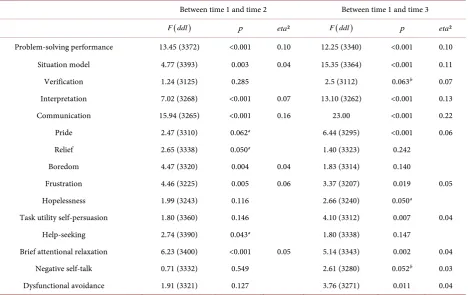
Table 4 summarizes the significant differences observed between the four condi-tions. It is noteworthy that we examined short-term changes (gains scores be-tween Time 1 and Time 2) as well as long-term changes (gains scores bebe-tween Time 1 and Time 3).
The results of the Bonferroni post-hoc tests are reported in the following text.
5.1. Problem-Solving Performance
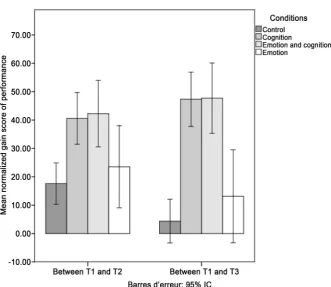
[image:11.595.72.541.404.699.2]Between Time 1 and Time 2 a significant difference of mean normalized gain score of problem-solving performance was observed between the “control” con-dition and both the “cognition” concon-dition
(
MD= −31.95,p<0.001)
and the “emotion and cognition” condition(
MD= −34.85,p<0.001)
(Figure 3). Fur-ther, a difference on the edge of significance was observed between the “emotion and cognition” condition and the “emotion” group(
MD=23.49,p=0.066)
. Between Time 1 and Time 3, only the differences between the “control” condi-tion and both the “cognicondi-tion”(
MD= −31.58,p<0.001)
and the “emotion and cognition” conditions(
MD= −35.92,p<0.001)
were maintained. In termsTable 4. Univariate analyses of variance of mean normalized gain scores.
Between time 1 and time 2 Between time 1 and time 3 ( )
F ddl p eta² F ddl( ) p eta²
Problem-solving performance 13.45 (3372) <0.001 0.10 12.25 (3340) <0.001 0.10 Situation model 4.77 (3393) 0.003 0.04 15.35 (3364) <0.001 0.11 Verification 1.24 (3125) 0.285 2.5 (3112) 0.063b 0.07 Interpretation 7.02 (3268) <0.001 0.07 13.10 (3262) <0.001 0.13 Communication 15.94 (3265) <0.001 0.16 23.00 <0.001 0.22 Pride 2.47 (3310) 0.062a 6.44 (3295) <0.001 0.06 Relief 2.65 (3338) 0.050a 1.40 (3323) 0.242
Boredom 4.47 (3320) 0.004 0.04 1.83 (3314) 0.140
Frustration 4.46 (3225) 0.005 0.06 3.37 (3207) 0.019 0.05 Hopelessness 1.99 (3243) 0.116 2.66 (3240) 0.050a
Task utility self-persuasion 1.80 (3360) 0.146 4.10 (3312) 0.007 0.04 Help-seeking 2.74 (3390) 0.043a 1.80 (3338) 0.147
Brief attentional relaxation 6.23 (3400) <0.001 0.05 5.14 (3343) 0.002 0.04 Negative self-talk 0.71 (3332) 0.549 2.61 (3280) 0.052b 0.03 Dysfunctional avoidance 1.91 (3321) 0.127 3.76 (3271) 0.011 0.04 aThe Bonferroni post-hoc procedure indicates that there is no significant difference between the four conditions. bThe Bonferroni post-hoc procedure shows
DOI: 10.4236/psych.2018.92018 291 Psychology
Figure 3. Mean normalized gain score and standard errors for the problem-solving
per-formance for each condition per measurement time.
of problem-solving performance, hypothesis 1 and 2 are thus only partly con-firmed. As no significant difference between the “emotion” condition and the “control” condition was observed, hypothesis 4 was not corroborated.
5.2. Cognitive Dimension of Problem-Solving Competence
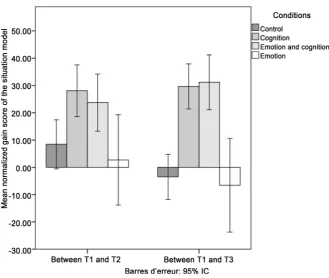
We start with the findings related to the “strategy use” indicator. First, regarding the “situation model” strategy, between Time 1 and Time 2, a significant differ-ence of mean normalized gain score was found between the “cognition” condi-tion and the “control” one
(
MD=20.49,p=0.013)
as well as a difference at the limits of significance between the “emotion and cognition” condition and the “control” condition(
MD=18.38,p=0.070)
(Figure 4). Between Time 1 and Time 3, if the difference of mean normalized gain score between the “control” group and both the “cognition” group(
MD= −33.93,p<0.001)
and the “emotion and cognition” group(
MD= −35.45,p<0.001)
is maintained; the “cognition” group(
MD=35.82,p=0.003)
as well as the “emotion and cogni-tion” group(
MD=37.34,p=0.003)
also differ from the “emotion” group.DOI: 10.4236/psych.2018.92018 292 Psychology
Figure 4. Mean normalized gain score and standard errors for the “situation model”
strategy for each condition per measurement time.
condition, between Time 1 and Time 2. These differences are maintained be-tween Time 1 and Time 3 (Bebe-tween the “control” condition and the “cognition” condition: MD=42.68,p=0.041; between the “control” condition and the “emotion and cognition” condition: MD=51.49,p<0.001) (Figure 5). Be-tween Time 1 and Time 3, a significant difference was also found beBe-tween the “emotion” condition and the “control” condition
(
MD=42.68,p=0.041)
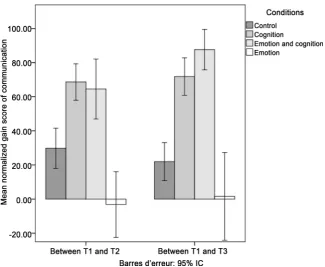
.Fourth, with respect to the “communication” strategy, the “cognition” and the “emotion and cognition” groups stood out from, on the one hand, the “control” group (MD=39.14,p<0.001; MD=31.66,p=0.014; respectively), and, on the other hand, from the “emotion” group ( MD=68.58,p<0.001 ;
76.07, 0.001
MD= p< respectively) (Figure 6). These four differences were still observable at Time 3 (Between “cognition” and “control”: D=48.92,p<0.001; between “emotion and cognition” and “control”: MD=63.78,p<0.001 be-tween “cognition” and “emotion”: MD=71.39,p<0.001; between “emotion and cognition” and “emotion”: MD=86.25,p<.001).
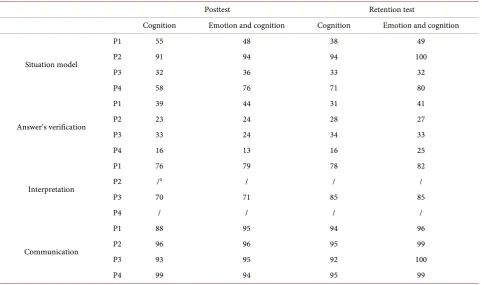
DOI: 10.4236/psych.2018.92018 293 Psychology knowledge” and “verification”, findings showed that when used, they are used correctly. Finally, with respect to the communication strategy, it seemed more relevant to assess the completeness than the correctness of its implementation.
Figure 5. Mean normalized gain score and standard errors for the “interpretation”
strat-egy for each condition per measurement time.
Figure 6. Mean normalized gain score and standard errors for the “communication”
[image:14.595.211.537.427.694.2]DOI: 10.4236/psych.2018.92018 294 Psychology
Table 5. Ratio between the number of correct implementations and the total number of implementations per group and per
heu-ristic.
Condition Control Cognition Emotion and cognition Emotion T1 (%) T2 (%) T3 (%) T1 (%) T2 (%) T3 (%) T1 (%) T2 (%) T3 (%) T1 (%) T2 (%) T3 (%) Situation model 50 65 55 62 74 66 65 78 80 42 55 50 Using one’s knowledge / / / / 98 99 / 93 90 / / /
Answer’s verification / / / / 94 100 / 95 100 / / / Interpretation 80 99 76 74 98 91 81 100 96 68 100 88 Communication 85 81 82 86 94 96 91 96 100 88 84 85
Note. T1 = pretest; T2 = posttest; T3 = retention test.
Table 6. Ratio between the number of students who used the heuristic and the total number of students per group and per heuristic.
Posttest Retention test
Cognition Emotion and cognition Cognition Emotion and cognition
Situation model
P1 55 48 38 49
P2 91 94 94 100
P3 32 36 33 32
P4 58 76 71 80
Answer’s verification
P1 39 44 31 41
P2 23 24 28 27
P3 33 24 34 33
P4 16 13 16 25
Interpretation
P1 76 79 78 82
P2 /4 / / /
P3 70 71 85 85
P4 / / / /
Communication
P1 88 95 94 96
P2 96 96 95 99
P3 93 95 92 100
P4 99 94 95 99
Note. P1 = problem 1; P2 = problem 2; P3 = problem 3; P4 = problem 4.
Findings present no change between the three measurement times for both the “control” and the “emotion” conditions as well as a continuous increase between Time 1 and Time 3 for both the “cognition” and the “emotion and cognition” conditions.
[image:15.595.59.541.255.540.2]DOI: 10.4236/psych.2018.92018 295 Psychology more used in problems 1 and 3, both at the posttest and retention test. These latter problems are the only two that contain numerical data and thus that re-quire calculations. As regards the “interpretation” and “communication” strate-gies, they seem to be used at a similar frequency for all the problems, both by the “cognition” and the “emotion and cognition” conditions. Nonetheless, as the analysis does not take into account students’ inner thinking, the results must be interpreted with caution.
In sum, findings showed that the “emotion and cognition” condition sur-passed both the “control” and the “emotion” conditions in terms of “situation model” and “communication” and only the “control” group in terms of “verifi-cation” and “interpretation”, thus partly corroborating hypothesis 1. Further, the “cognition” condition also surpassed both the “control” and the “emotion” con-ditions in terms of “situation model” and “communication” but only the “con-trol” condition regarding “interpretation”, partly supporting hypothesis 2. Re-garding correct strategy use, both the “cognition” and the “emotion and cogni-tion” conditions seem to stand out. Further, while both conditions displayed a flexible use of the situation model strategy, they did not seem to use the verifica-tion strategy in a relevant way.
5.3. Emotional Dimension of Problem-Solving Competence
First, pride is the only positive emotion on which the four conditions stood out. More precisely, between Time 1 and Time 3, the “emotion and cognition” group as well as the “emotion” group distinguished themselves from both the “control” group (MD=19.9,p=0.0565; MD=40.35,p=0.003; respectively) and the “cognition” group (MD=21.46,p=0.032; MD=41.90,p=0.003; respective-ly). However, these differences faded at Time 3 (Figure 7).
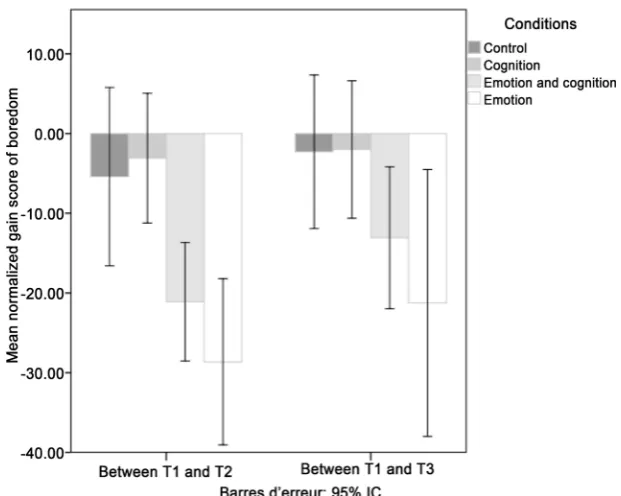
Second, boredom and frustration are the two negative emotions on which the four conditions differed. With respect to boredom, the “emotion” group dis-played a mean normalized loss score significantly higher than that of the “cogni-tion” group
(
MD= −23.63,p=0.042)
and presented a difference on the edge of significance with the control group(
MD= −22.90,p=0.058)
. The “emotion and cognition” differed significantly from the “cognition” group as well(
MD= −17.86,p=0.041)
. However, these differences were only observedbe-tween Time 1 and Time 2 (Figure 8).
As regards frustration, the “emotion” group presented a mean normalized loss score significantly higher than the “control” group
(
MD= −28.4,p=0.025)
. Quite surprisingly, the “cognition” group displayed a mean normalized loss score of frustration significantly higher as compared to the “control” group(
MD= −24.87,p=0.011)
. These differences did not persist at Time 3.DOI: 10.4236/psych.2018.92018 296 Psychology
Figure 7. Mean normalized gain score and standard errors for pride for each condition
per measurement time.
Figure 8. Mean normalized gain score and standard errors for boredom for each
condi-tion per measurement time.
other conditions (control: MD=21.70,p=0.001; “cognition”: MD=16.05, 0.024
[image:17.595.218.529.358.606.2]DOI: 10.4236/psych.2018.92018 297 Psychology
Figure 9. Mean normalized gain score and standard errors for the “brief attentional
re-laxation” strategy for each condition per measurement time.
Still at Time 3, the “emotion and cognition” condition recorded a mean nor-malized gain score regarding the “task utility self-persuasion” strategy signifi-cantly higher than both the “control” condition
(
MD=22.77,p=0.038)
and the “cognition” condition(
MD=24.43,p=0.012)
. With respect to dysfunc-tional strategies, differences are observed from Time 3 as well. More precisely, the “emotion and cognition” group stood out, to its advantage, from the “con-trol” group in terms of “dysfunctional avoidance”(
MD= −15.26,p=0.024)
. Further, a difference regarding the “negative self-talk” strategy approaching sig-nificance was observed between the “emotion” group and the “control” group to the benefit of the first(
MD= −26.21,p=0.07)
.In sum, the “emotion and cognition” condition differs to its advantage from the “control” and the “cognition” conditions, both in terms of academic emo-tions and emotion regulation strategies, thereby partly supporting hypothesis 1. The “emotion” condition also differs from the “control” and the “cognition” conditions but mainly regarding academic emotions, so partly confirming hy-pothesis 3.
6. Discussion
DOI: 10.4236/psych.2018.92018 298 Psychology to assess this benefit.
Our first research question was about the effects of such an intervention. We at first expected that the “emotion and cognition” condition would surpass the three other conditions regarding all the dependent variables (Hypothesis 1). This is partly supported by our data. First, the “emotion and cognition” condition stood out, to its advantage, from the “control” condition regarding problem-solving performance, the frequency of use of four heuristic strategies (i.e., situa-tion model, verificasitua-tion, interpretasitua-tion, communicasitua-tion), pride, and three emositua-tion regulation strategies (i.e., brief attentional relaxation, task utility self-persuasion, dysfunctional avoidance). Only the difference observed for pride was no longer observed after the end of the intervention. Second, the “emotion and cognition” condition distinguished itself from the “emotion” condition as well. Not surpri-singly, the two groups differed mainly in cognitive terms, namely, regarding problem-solving performance and the frequency of use of two heuristic strate-gies (situation model, communication). However, the difference in performance did not last after the end of the intervention. Furthermore, and unexpectedly, the “emotion and cognition” condition differed advantageously from the “emotion” condition regarding the “brief attentional relaxation” strategy as well, but only during the intervention. This suggest that students may need to be cognitively and metacognitively well equipped to engage in brief attentional relaxation mo-ments. This hypothesis is partly supported by a study conducted among upper elementary students that stressed that the brief attentional relaxation strategy is more used by expert than by novice problem solvers (Hanin & Van Nieuwenho-ven, submitted). Third, quite logically, the “emotion and cognition” group dis-tinguished himself from the “cognition” group on emotional variables, namely, pride, boredom and on two functional regulation strategies, that is, “brief atten-tional relaxation” and “task utility self-persuasion”. If the differences regarding the two strategies are maintained after the end of the intervention, this is not the case of the emotions.
prob-DOI: 10.4236/psych.2018.92018 299 Psychology lem-solving process taught may have contributed to the reduction of the frustra-tion of students in the “cognifrustra-tion” condifrustra-tion. A quesfrustra-tion remains, however, as to why no significant change of frustration was observed among the “emotion and cognition” condition. In this respect, several scholars have pointed out that du-ration, intensity and frequency of the intervention’s activities impact the find-ings (e.g., Durlak, Dymnicki, Taylor, Weissbergand, & Schellinger, 2011; Green-berg, Domitrovich, Graczyk, & Zins, 2005). In the present case, the “emotion and cognition” condition was rather intense in that the “cognition” intervention followed immediately after the “emotion” intervention, leaving no time for the students to assimilate the information provided by the first intervention. In ad-dition, four lessons on emotions knowledge and skills may not have been enough to allow them to fully appropriate this whole new academic content (Verschaffel et al., 2000). However, as this is only speculation, future research is warranted to clear up these inconsistent findings.
Hypothesis 3 stated that the “emotion” condition would surpass the “cogni-tion” and the “control” conditions with respect to academic emotions and emo-tion regulaemo-tion strategies. Several findings lend support to this hypothesis. First, the “emotion” condition differentiated itself, profitably, from the “cognition” condition in terms of pride and boredom. However, these differences did not last after the end of the intervention. Surprisingly, no significant difference was found regarding the emotion regulation strategies between these two groups. Second, the “emotion” condition outperformed the “control” condition regard-ing pride, boredom, frustration and the “negative self-talk” strategy. Again, the differences regarding the emotions did not last after the end of the intervention. In addition, and unexpectedly, at Time 3, the “emotion” condition outperformed the “control” group regarding the “interpretation” strategy. It should be recall that students in the “emotion” condition did not receive any training in heuristic strategies. One possible explanation may have to do with the students’ problem-solving-related belief system. On this point, scholars have shown that students hold inadequate beliefs about problem solving, such as assuming that the reality described in a problem is different from real life (e.g., McLeod, 1992; Schoenfeld, 1988, 1992; Verschaffel et al., 2000). But to interpret correctly the mathematical result of a problem requires modifying one’s beliefs system and, more precisely, breaking down the barriers between mathematical reality and everyday life. On that basis, we hypothesize that the “emotion” intervention, in that it invites stu-dents to become aware, to understand, to express and to regulate their emotions in the context of problem solving, made mathematics more human and thereby could have contributed to bring mathematical reality closer to everyday life.
DOI: 10.4236/psych.2018.92018 300 Psychology group. The unfamiliarity of students with non-routine problems may be a possi-ble explanation. Several scholars have shown that the strategies used by students to solve the problems traditionally presented in classes prove to be ineffective in solving non-routine problems (Depaepe, De Corte & Verschaffel, 2015; Fagnant, Demonty, & Lejonc, 2003). For novice students, solving non-routine problems required both emotional knowledge and skills and effective cognitive and meta-cognitive strategies (Hanin & Van Nieuwenhoven, submitted; De Corte & Ver-schaffel, 2008). And neither the “control” group nor the “emotion” group pos-sessed the strategies required to solve non-routine problems. Another comple-mentary explanation may be that the two conditions differ regarding two activity emotions (boredom, frustration) and one outcome emotion (pride). Yet, a study conducted by Hanin & Van Nieuwenhoven (2016b) showed that mathematics performance is only predicted by outcome emotions. Future research is war-ranted to clear up this finding.
Two related general observations deserve to be examined more closely. A first one is the few differences regarding the emotional variables between the groups who received an intervention on emotional knowledge and skills and those who did not. A second observation is the non-persistence after the end of the inter-vention of the differences in emotions observed at the end of the interinter-vention. A first possible reason for these two observations could be the weight of motiva-tional beliefs, direct antecedents of academic emotions (Ahmed, Minnaert, van der Werf, & Kuyper, 2010; Pekrun, 2006, 2014; Tzohar-Rozen & Kramarski, 2014). As these motivational beliefs were not taken into account in the interven-tion, they may have remained fragile for some students and thereby may have countered the positive effects induced by the intervention on emotions. This ob-servation is in line with the conclusion made by other researchers, that it is ne-cessary to act on both fronts simultaneously to reach more optimally the learn-er’s emotions (Dweck, 1992; Kim & Hodges, 2012; Pekrun, 2006). A second ex-planation may be the too short duration of the intervention on emotion, as out-lined previously.
DOI: 10.4236/psych.2018.92018 301 Psychology or, at least, does not make necessary the construction of a situation model (problem 4) (Elia et al., 2009; Fagnant & Vlassis, 2013). This reflects a flexible use of the strategy. On the other hand, verifying one’s answer is a relevant strat-egy regardless of the problem. Yet, the “emotion and cognition” condition did not resort to it in all the problems. Two hypotheses may be put forward to ex-plain this. First, as problems 2 and 4 do not imply calculations, the verification may have been carried out mentally by the learner. Second, as most problems usually dealt with in classes contain numerical data (Houdement, 2014), stu-dents may have associated the relevance of the verification strategy with the veri-fication of calculations rather than with that of the whole resolution process. In this second case, our result would illustrate the influence of the didactic contract on the students’ approach to problem-solving tasks (Fagnant et al., 2003; Greer, 1997; Verschaffel et al., 2000).
In sum, our results showed that to act significantly on emotions and on emo-tion regulaemo-tion strategies, a specific intervenemo-tion on emoemo-tion knowledge and skills is needed just as acting on the problem-solving competence required a cognitive and self-regulative intervention.
7. Conclusion
DOI: 10.4236/psych.2018.92018 302 Psychology reasoning carried out is only secondary (Schoenfeld, 1992; Verschaffel et al., 2000). Second, our findings show that an accurate, flexible and thoughtful use of heuristic strategies may be enhanced through instruction which intergratively fosters the development of strategic knowledge addressing the procedural (how?) and the conceptual (why? when?) dimensions. In this way, the findings align with previous studies (Baroody, 2003; Elia et al., 2009; Mevarech & Kra-marski, 1997). Third, the close intertwining between emotions and motivational beliefs, extensively documented in the literature (e.g., Ahmed et al., 2010; Hanin & Van Nieuwenhoven, 2016b; Peixoto et al., 2017; Pekrun, 2006, 2014; Tzo-har-Rozen & Kramarski, 2014), suggests that such an educational intervention could be even more fruitful by fostering students’ emotional knowledge and skills simultaneously with their motivational beliefs (e.g., perceived competence, problem-solving tasks value).
DOI: 10.4236/psych.2018.92018 303 Psychology emotional and cognitive intervention (Hanin & Van Nieuwenhoven 2016a; Montague, 2007; Muir, Beswick, & Williamson, 2008). Sixth, the problems con-stituting the pretest, posttest and retention test do not necessitate the use of the planning strategy. However, with our objective of offering a more complete and accurate measure of problem-solving competence—by taking into account cor-rect strategy use and strategy flexibility—it is necessary to vary even more the problems of these tests in terms of “unmissable” heuristic strategies to solve them. Last, if the intervention in its current state already leads to promising re-sults, we believe that implementing it over the year would be even more fruitful (Durlak et al., 2011).
Acknowledgements
The authors would like to thank all the children and teachers who participated in this study.
References
Ahmed, W., Minnaert, A., van der Werf, G., & Kuyper, H. (2010). The Role of Compe-tence and Value Beliefs in Students’ Daily Emotional Experiences: A Multilevel Test of a Transactional Model. Learning and Individual Differences, 20, 507-511.
https://doi.org/10.1016/j.lindif.2010.03.005
Ahmed, W., van der Werf, G., Kuyper, H., & Minnaert, A. (2013). Emotions, Self-Regulated Learning, and Achievement in Mathematics: A Growth Curve Analysis. Journal of Educational Psychology, 105, 150-161. https://doi.org/10.1037/a0030160
Baroody, A. J. (2003). The Development of Adaptive Expertise and Flexibility: The Inte-gration of Conceptual and Procedural Knowledge. In A. J. Baroody, & A. Dowker (Eds.), The Development of Arithmetic Concepts and Skills (pp. 1-34). Mahwah, NJ: Lawrence Erlbaum Associates.
Blum, W. (2011). Can Modelling Be Taught and Learnt? Some Answers from Empirical Research. In G. Kaiser, W. Blum, R. Borromeo Ferri, & G. Stillman (Eds), Trends in Teaching and Learning Mathematical Modelling (pp. 15-30). New York: Springer.
https://doi.org/10.1007/978-94-007-0910-2_3
Blum, W., & Leiss, D. (2007). How Do Students and Teachers Deal with Mathematical Modelling Problems? The Example Sugaloaf und the DISUM Project. In C. Haines, P. L. Galbraith, W. Blum, & S. Khan (Eds.), Mathematical Modelling (ICTMA12)-Education, Engineering and Economics. Chichester: Horwood.
Blum, W., & Niss, M. (1991). Applied Mathematical Problem Solving, Modelling, Appli-cations, and Links to Other Subjects. State, Trends and Issues in Mathematics Instruc-tion. Educational Studies in Mathematics, 22, 37-68.
https://doi.org/10.1007/BF00302716
Boekaerts, M. (2007). Understanding Students’ Affective Processes in the Classroom. In P. A. Schutz, & R. Pekrun (Eds.), Emotion in Education (pp. 37-56). San Diego, CA: Elsevier Academic Press. https://doi.org/10.1016/B978-012372545-5/50004-6
D’Mello, S., & Graesser, A. (2011). The Half-Life of Cognitive-Affective States during Complex Learning. Cognition & Emotion, 25, 1299-1308.
https://doi.org/10.1080/02699931.2011.613668
DOI: 10.4236/psych.2018.92018 304 Psychology stimulants [Learning and Teaching Mathematics: A Conceptual Framework for De-signing Stimulating Teaching and Learning Environments]. In M. Crahay, L. Verschaffel, E. De Corte, & J. Grégoire (Eds.), Enseignement et apprentissage des mathématiques: Que disent les recherches psychopédagogiques? [Mathematical Teaching and Learning: What Do Psychoeducational Research Say?] (pp. 25-54). Brussels: De Boeck Université. https://doi.org/10.3917/dbu.craha.2008.01.0025
De Corte, E., Verschaffel, L., & Masui, C. (2004). The CLIA-Model: A Framework for De-signing Powerful Learning Environments for Thinking and Problem Solving. European Journal of Psychology of Education, 19, 365-384. https://doi.org/10.1007/BF03173216
Demonty, I., & Fagnant, A. (2014). Tâches complexes en mathématiques: Difficultés des élèves et exploitations collectives en classe [Complex Math Tasks: Students’ Difficulties and Collective Work in the Classroom]. Education et Francophonie, 42, 173-189.
https://doi.org/10.7202/1027912ar
Durlak, J. A., & DuPre, E. P. (2008). Implementation Matters: A Review of Research on the Influence of Implementation on Program Outcomes and the Factors Affecting Im-plementation. American Journal of Community Psychology, 41, 327.
https://doi.org/10.1007/s10464-008-9165-0
Durlak, J. A., Dymnicki, A. B., Taylor, R. D., Weissberg, R. P., & Schellinger, K. B. (2011). The Impact of Enhancing Students’ Social and Emotional Learning: A Meta-Analysis of School-Based Universal Interventions. Child Development, 82, 405-432.
https://doi.org/10.1111/j.1467-8624.2010.01564.x
Elia, I., van den Heuvel-Panhuizen, M., & Kolovou, A. (2009). Exploring Strategy Use and Strategy Flexibility in Non-Routine Problem Solving by Primary School High Achiev-ers in Mathematics. ZDM Mathematics Education, 41, 605-618.
https://doi.org/10.1007/s11858-009-0184-6
Fagnant, A., & Demonty, I. (2005). Résoudre des problèmes: Pas de problème! Guide méthodologique et documents reproductibles. 10/12ans [Solving Problems: No Problem! Methodological Guide and Reproducible Documents. 10/12 Years]. Brussels: De Boeck.
Fagnant, A., & Vlassis, J. (2013). Schematic Representations in Arithmetical Problem Solving: Analysis of Their Impact on Grade 4 Students. Educational Studies in Mathe-matics, 84, 149-168. https://doi.org/10.1007/s10649-013-9476-4
Fagnant, A., Demonty, I., & Lejonc, M. (2003). La résolution de problèmes: Un processus complexe de «modélisation mathématique» [Problem-Solving: A Complex Process of “Mathematical Modeling”]. Bulletin d’informations pédagogiques, 54, 29-39.
Focant, J., & Gregoire, J. (2008). Les stratégies d’autorégulation cognitive: Une aide à la résolution de problèmes arithmétiques [Cognitive Self-Regulated Strategies: Help in Solving Arithmetic Problems]. In M. Crahay, L. Verschaffel, E. De Corte, & J. Gregoire (Eds.), Enseignement et apprentissages des mathématiques. Que disent les recherches psychopédagogiques? [Mathematical Teaching and Learning: What Do Psychoeduca-tional Research Say ?](pp. 201-221). Brussels: De Boeck.
https://doi.org/10.3917/dbu.craha.2008.01.0201
Frenzel, A. C., Pekrun, R., & Goetz, T. (2007). Girls and Mathematics—A “Hopeless” Is-sue? A Control-Value Approach to Gender Differences in Emotions towards Mathe-matics. European Journal of Psychology of Education, 23, 497-514.
https://doi.org/10.1007/BF03173468
Fuchs, L. S., Fuchs, D., Prentice, K., Burch, M., Hamlett, C. L., et al. (2003). Explicitly Teaching for Transfer: Effects on Third-Grade Students’ Mathematical Problem Solv-ing. Journal of Educational Psychology, 95, 293-305.
DOI: 10.4236/psych.2018.92018 305 Psychology Gilley, B. H., & Clarkston, B. (2014). Collaborative Testing: Evidence of Learning in a
Controlled In-Class Study of Undergraduate Students. Journal of College Science Teaching, 43, 83-91. https://doi.org/10.2505/4/jcst14_043_03_83
Goetz, T., Frenzel, A. C., Pekrun, R., & Hall, N. C. (2005). Emotional Intelligence in the Context of Learning and Achievement. In R. Schulze, & R. D. Roberts (Eds.), Emotion-al Intelligence: An InternationEmotion-al Handbook (pp. 233-253). Cambridge: Hogrefe & Hu-ber Publishers.
Goetz, T., Frenzel, A. C., Pekrun, R., Hall, N. C., & Lüdtke, O. (2007). Between and within Domain Relations of Students’ Academic Emotions. Journal of Educational Psycholo-gy, 99, 715-733. https://doi.org/10.1037/0022-0663.99.4.715
Goetz, T., Pekrun, R., Hall, N., & Haag, L. (2006). Academic Emotions from a Social-Cognitive Perspective: Antecedents and Domain Specificity of Students’ Affect in the Context of Latin Instruction. British Journal of Educational Psychology, 76, 289-308.
|https://doi.org/10.1348/000709905X42860
Greenberg, M. T., Domitrovich, C. E., Graczyk, P. A., & Zins, J. E. (2005). The Study of Implementation in School-Based Preventive Interventions: Theory, Research, and Practice. Promotion of Mental Health and Prevention of Mental and Behavior Disord-ers (Vol. 3). Washington, DC: U.S. Department of Health and Human Services. Greene, J. A., Robertson, J., & Croker Costa, L.-J. (2011). Assessing Self-Regulated
Learn-ing UsLearn-ing Think-Aloud Methods. In B. Zimmerman, & D. Schunk (Eds.), Handbook of Self-Regulation of Learning and Performance (pp. 313-328). New-York: Routledge. Greer, B. (1997). Modelling Reality in Mathematics Classrooms. Learning and
Instruc-tion, 7, 293-307. https://doi.org/10.1016/S0959-4752(97)00006-6
Gross, J. J. (1998). Antecedent- and Response-Focused Emotion Regulation: Divergent Consequences for Experience, Expression and Physiology. Journal of Personality and Social Psychology, 74, 224-237. https://doi.org/10.1037/0022-3514.74.1.224
Hanin, V., & Van Nieuwenhoven, C. (2016a). Évaluation d’un dispositif pédagogique visant le développement de stratégies cognitives et métacognitives en résolution de problèmes en première secondaire [Evaluation of an Educational Training-Program Aimed at Developing Cognitive and Metacognitive Strategies in Solving Problems in Secondary 1]. Evaluer. Journal international de Recherche en Éducation et Formation(e-jiref), 2, 53-88.
Hanin, V., & Van Nieuwenhoven, C. (2016b). The Influence of Motivational and Emo-tional Factors in Mathematical Learning in Secondary Education. European Review of Applied Psychology, 66, 127-138. https://doi.org/10.1016/j.erap.2016.04.006
Hanin, V., & Van Nieuwenhoven, C. (submitted). Exploration of Cognitive, Motivational, Emotional and Regulative Behaviors of Elementary Novice and Expert Problem Solv-ers. European Review of Applied Psychology.
Hanin, V., Grégoire, J., Mikolajczak, M., Fantini-Hauwel, C., & Van Nieuwenhoven, C. (2017). Children’s Emotion Regulation Scale in Mathematics (CERS-M): Development and Validation of a Self-Reported Instrument. Psychology, 8, 2240-2275.
https://doi.org/10.4236/psych.2017.813143
Houdement, C. (2014). Des connaissances fonctionnelles (mais ignorées) en résolution de problèmes arithmétiques [Functional (But Ignored) Knowledge in Solving Arithmetic Problems]. Cahier des Sciences de l’Education-University of Liège (aSPe), 36, 7-33. Kaizer, C., & Shore, B. (1995). Strategy Flexibility in More and Less Competent Students
on Mathematical Word Problems. Creativity Research Journal, 8, 77-82.
https://doi.org/10.1207/s15326934crj0801_6
DOI: 10.4236/psych.2018.92018 306 Psychology Emotions, Motivation and Achievement in an Online Mathematics Course. Instruc-tional Science, 40, 173-192. https://doi.org/10.1007/s11251-011-9165-6
Marx, J. D., & Cummings, K. (2007). Normalized Change. American Journal of Physics, 75, 87-91. https://doi.org/10.1119/1.2372468
Mayer, J. D., & Salovey, P. (1997). What Is Emotional Intelligence? In P. Salovey, & D. Sluyter (Eds.), Emotional Development and Emotional Intelligence: Implications for Educators (pp. 3-31). New York: Basic Books.
McLeod, D. B. (1992). Research on Affect in Mathematics Education: A Reconceptualiza-tion. In D. A. Grouws (Ed.), Handbook of Research on Mathematics Teaching and Learning (pp. 575-596). New York: MacMillan.
Mevarech, Z. R., & Amrany, C. (2008). Immediate and Delayed Effects of Meta-Cognitive Instruction on Regulation of Cognition and Mathematics Achievement. Metacognition and Learning, 3, 147-157. https://doi.org/10.1007/s11409-008-9023-3
Mevarech, Z. R., & Kramarski, B. (1997). IMPROVE: A Multidimensional Method for Teaching Mathematics in Heterogeneous Classrooms. American Educational Research Journal, 34, 365-394. https://doi.org/10.3102/00028312034002365
Meyer, D. K., & Turner, J. C. (2006). Re-Conceptualizing Emotion and Motivation to Learn in Classroom Contexts. Educational Psychology Review, 18, 377-390.
https://doi.org/10.1007/s10648-006-9032-1
Mikolajczak, M., Quoidback, J., Kotsou, I., & Nelis, D. (2009). Les compétences émotionnelles [Emotional Competencies]. Paris: Dunod.
Misra, R., & Castillo, L. G. (2004). Academic Stress among College Students: Comparison of American and International Students. International Journal of Stress Management, 11, 132-148. https://doi.org/10.1037/1072-5245.11.2.132
Nye, B., Konstantopoulos, S., & Hedges, L. V. (2004). How Large Are Teacher Effects? Educational Evaluation and Policy Analysis, 26, 237-257.
https://doi.org/10.3102/01623737026003237
Op’t Eynde, P., De Corte, E., & Mercken, I. (2004). Pupils (Meta)Emotional Knowledge and Skills in the Mathematics Classroom. Unpublished Document Presented at the American Educational Research Association (AERA), San Diego.
Op’t Eynde, P., De Corte, E., & Verschaffel, L. (2006). Accepting Emotional Complexity: A Socio-Constructivist Perspective on the Role of Emotions in the Mathematics Class-room. Educational Studies in Mathematics, 63, 193-207.
https://doi.org/10.1007/s10649-006-9034-4
Patrick, H., Ryan, A. M., & Kaplan, A. (2007). Early Adolescents’ Perceptions of the Classroom Social Environment, Motivational Beliefs, and Engagement. Journal of Educational Psychology, 99, 83-88. https://doi.org/10.1037/0022-0663.99.1.83
Payton, J. W., Wardlaw, D. M., Graczyk, P. A., Bloodworth, M. R., Tompsett, C. J., & Weissberg, R. P. (2000). Social and Emotional Learning: A Framework for Promoting Mental Health and Reducing Risk Behavior in Children and Youth. Journal of School Health, 70, 179-185. https://doi.org/10.1111/j.1746-1561.2000.tb06468.x
Peixoto, F., Sanches, C., Mata, L., & Monteiro, V. (2017). How Do You Feel about Math?: Relationships between Competence and Value Appraisals, Achievement Emotions and Academic Achievement. European Journal of Psychology of Education, 32, 385-405.
https://doi.org/10.1007/s10212-016-0299-4
DOI: 10.4236/psych.2018.92018 307 Psychology Pekrun, R. (2014). Emotions and Learning. Educational Practices Series. Belley, France:
International Academy of Education.
Perels, F., Gürtler, T., & Schmitz, B. (2005). Training of Self-Regulatory and Problem-Solving Competence. Learning and Instruction, 15, 123-139.
https://doi.org/10.1016/j.learninstruc.2005.04.010
Polya, G. (1957). How to Solve It (2nd Ed.). Princeton. NJ: Princeton University Press.
Prawat, R. S., & Anderson, A. L. (1994). The Affective Experiences of Children during Mathematics. The Journal of Mathematical Behavior, 13, 201-222.
https://doi.org/10.1016/0732-3123(94)90024-8
Rimé, B. (2005). Le partage social des émotions [Social Sharing of Emotion]. Paris: Presses Universitaires de France.
Robinson, M. D., & Clore, G. L. (2002). Episodic and Semantic Knowledge in Emotional Self-Report: Evidence for Two Judgment Processes. Journal of Personality and Social Psychology, 83, 198-215. https://doi.org/10.1037/0022-3514.83.1.198
Schoenfeld, A. H. (1988). When Good Teaching Leads to Bad Results: The Disasters of “Well-Taught” Mathematics Courses. Educational Psychologist, 23, 145-166.
https://doi.org/10.1207/s15326985ep2302_5
Schoenfeld, A. H. (1992). Learning to Think Mathematically: Problem Solving, Metacog-nition, and Sense Making in Mathematics. In D. Grouws (Ed.), Handbook for Research on Mathematics Teaching and Learning (pp. 334-370). New-York: Macmillan. Schutz, P. A., & Pekrun, R. (2007). Emotion in Education. San Diego, CA, US: Elsevier
Academic Press.
Schutz, P. A., Hong, J., Cross, D. I., & Osbon, J. N. (2006). Reflections on Investigating Emotion in Educational Activity Settings. Educational Psychology Review, 18, 343-360.
https://doi.org/10.1007/s10648-006-9030-3
Sierpinska, A., Bobos, G., & Knipping, C. (2008). Sources of Students’ Frustration in PreUniversity Level, Prerequisite Mathematics Courses. Instructional Science, 36, 289-320. https://doi.org/10.1007/s11251-007-9033-6
Torbeyns, J., De Smedt, B., Stassens, N., Ghesquière, P., & Verschaffel, L. (2009). Solving Substracting Problems by Means of Indirect Addition. Mathematical Thinking and Learning, 11, 79-91. https://doi.org/10.1080/10986060802583998
Tzohar-Rozen, M., & Kramarski, B. (2014). Metacognition, Motivation, and Emotion: Contribution of Self-Regulated Learning to Solving Mathematical Problems. Global Education Review, 1, 76-95.
Veenman, M. V. J., Van Hout-Wolters, B., & Afflerbach, P. (2006). Metacognition and Learning: Conceptual and Methodological Considerations. Metacognition Learning, 1, 3-14. https://doi.org/10.1007/s11409-006-6893-0
Verschaffel, L., De Corte, E., Lasure, S., Van Vaerenbergh, G., Bogaerts, H., et al. (1999). Learning to Solve Mathematical Application Problems: A Design Experiment with Fifth Graders. Thinking and Learning, 1, 195-229.
https://doi.org/10.1207/s15327833mtl0103_2
Verschaffel, L., Greer, B., & De Corte, E. (2000). Making Sense of Word Problems. Lisse, Hollande: Swets & Zeitlinger.
Wayne, A. J., & Youngs, P. (2003). Teacher Characteristics and Student Achievement gains: A Review. Review of Educational Research, 73, 89-122.
DOI: 10.4236/psych.2018.92018 308 Psychology
Appendix 1. Description of the Training Programs
The training program on emotions took place over four weeks. Each week, between one and a half and two hours were devoted to a specific emotional con-tent in line with the adapted version of Mayer and Salovey’s (1997) model, i.e. the five-branch emotional competencies model. Concretely, the first lesson questioned the learner about his emotional relationship to math problem solv-ing. The goal here was to get students to think about and become aware of how they experience problem solving. The second lesson aimed to familiarize learn-ers with the concept of emotion by working on its components and on the basic emotions. The ability to identify and understand one’s own emotions was also part of this session. The third lesson emphasized the importance of expressing rather than repressing one’s emotions, addressed the social norms associated with emotional expression and introduced the concept of emotion regulation. The fourth and last lesson proposed to discover and experienced six strategies used by upper elementary students to regulate their negative emotions when solving math problems: task utility self-persuasion, brief attentional relaxation, help-seeking, emotion expression, dysfunctional avoidance and negative self-talk. While the first three are effective, the last three are ineffective (Hanin et al., 2017). A wide range of activities were provided including video-clips, analyses of mini-case studies, drawings, Chinese portrait, short lectures, facial expressions analyzes, group tasks and discussions and role play. At the beginning of each lesson, a summary of the previous lesson was made by the teacher in interaction with the students. To facilitate the transfer, at the end of each lesson an activity of linking of what had just been learned to problem-solving tasks was offered. At the end of the fourth lesson, students received an illustrative plate of twenty ba-sic emotions as well as a booklet containing a succinct and pictorial description of the six emotion regulation strategies. Students in the “emotion and cognition” condition were invited to use the booklet during the subsequent intervention on heuristic strategies and self-regulated behaviors.
DOI: 10.4236/psych.2018.92018 309 Psychology (Veenman et al., 2006). This summary sheet was then used to solve the subse-quent problems. Each of the following lessons consisted in solving a non-routine problem according to a specific methodology (individual resolution, individual resolution followed by a discussion in dyad or individual representation fol-lowed by group solving). A collective discussion promoting a reflective and cor-rect use of heuristic strategies closed each lesson. Several activities aimed at de-veloping a self-regulated approach among students, such as the completion of a self-assessment grid, the comparison of one’s self-assessment with the assess-ment made by another student (co-assessassess-ment), the emphasis put on the utility of each heuristic strategy (the why) and a mid-term formative evaluation on heuristic strategies. Note that before starting to solve each problem, students in both the “emotion” and the “emotion and cognition” conditions were invited, systematically, to choose an emotion regulation strategy. These strategies and their effectiveness were then discussed during the collective discussion.
Concerning the choice of problems, in order to remain in line with the train-ing-program’s objective, i.e. to develop an expert and reflexive approach to problem solving, only application problems were offered, and use of the calcula-tor was permitted. In addition, the problems chosen for the training-program presented a structure distinct from those of the problems addressed in the prob-lem-solving tests so as to avoid a potential learning effect.
Appendix 2. Statements of the pretest problems
Problem 1 To celebrate my sister’s birth, my parents organized a party with the whole family. They ordered 170 balloons to inflate to decorate the garden. After the party, they distributed the balloons between the 8 cousins. How many balloons did each one receive?
Problem 2 Christine, Julie and Camille, three friends in the 6th year of primary school, would like to organize an outing to “Adventure Park” during the holiday week. They are all very busy: Julie is free on Monday and Saturday, as well as on Tuesday, Thursday and Friday. Christine is not available on Monday, Thursday and Sunday. Camille can come on Monday, Wednesday, Friday and Saturday.
The “Adventure Park” is open every day from 10am to 6pm except Mondays. When will they be able to organize the outing? Show all possible answers.
Problem 3 The 5th and 6th elementary school students of the “Stream” school go to the snow class. A bus can contain 31 people. Knowing that there are 182 people (children and adults) who are going to the snow class, how many buses will it take?
Problem 4 To decorate the Christmas tree, Madam Nathaly proposes various DIY projects: painting stars, pasting glitter on balls, drawing angels, cutting out lanterns. Sylvie does not like to draw or cut.
Tom loves stars.
Steve says that glitter is for girls. Clara hates cutting with scissors.