An evaluation of a simulation-based educational
programme to equip HCAs with the necessary
non-technical skills to undertake their role safely and
effectively, specifically in relation to the measurement of
vital signs
LEWIS, Robin, KELLY, Shona <http://orcid.org/0000-0003-4002-048X>,
WHITFIELD, Malcolm, MCKENZIE-SMITH, Michelle and STRACHAN,
Alasdair
Available from Sheffield Hallam University Research Archive (SHURA) at:
http://shura.shu.ac.uk/7912/
This document is the author deposited version. You are advised to consult the
publisher's version if you wish to cite from it.
Published version
LEWIS, Robin, KELLY, Shona, WHITFIELD, Malcolm, MCKENZIE-SMITH, Michelle
and STRACHAN, Alasdair (2013). An evaluation of a simulation-based educational
programme to equip HCAs with the necessary non-technical skills to undertake their
role safely and effectively, specifically in relation to the measurement of vital signs.
Project Report. Sheffield Hallam University, Centre for Health and Social Care
Research.
Copyright and re-use policy
See
http://shura.shu.ac.uk/information.html
HCA Report - version 7.2.3
An evaluation of a simulation-based educational programme to
equip HCAs with the necessary non-technical skills to undertake
their role safely and effectively,
specifically
in relation to the
measurement of vital signs.
Project team
Sheffield Hallam University:
Dr Robin Lewis (Research Fellow)
Dr Shona Kelly (Reader)
Professor Malcolm Whitfield (Director of Research Centre)
Montagu Clinical Simulation Centre:
Mrs Michelle McKenzie-Smith (Senior Educator)
Dr Alasdair Strachan (Consultant Anaesthetist)
Funder
Yorkshire & Humber Strategic Health Authority
.
HCA Report - version 7.2.3Executive Summary
Introduction
All the evidence (see Lewis et al 2011) shows that a significant proportion of adverse events in health care are caused by problems relating to the application of the 'non-technical' skills of communication, teamwork, leadership and decision-making. These are the cognitive and social skills that complement technical skills to achieve safe and efficient practice. Non-technical skills are seen as distinct, since they involve interactions between team members (e.g. communication and teamwork) or thinking skills such as the ability to read and understand situations or to make decisions, all of which assist with task execution (Lewis et al 2011).
Given that the current HCA training is already focused upon the acquisition of technical skills, it was hypothesised that simulation would have the biggest impact (and therefore the greatest added value) upon HCA non-technical skills. This study focused upon the acquisition of non-technical skills.
In consultation with the Trust, a process mapping exercise was undertaken to determine the non-technical activities involved in HCAs measuring, documenting and interpreting patients' vital signs. The activities were then mapped against the learning outcomes for the simulation training day to ensure that the HCAs would be provided with necessary exposure to the skills required.
A cohort of HCAs undertook an intervention consisting of the CARMA (Crisis Avoidance and Resource Management) simulation modified for HCAs. This study day was specifically designed to equip HCAs with the non-technical skills required for their job. The study would also enable the development and testing of a basic simulation assessment tool for HCAs which could be used alongside the existing CARMA study day.
Methods
The study used the well-validated and evaluated CARMA study programme developed by MCSC (Montagu Clinical Simulation Centre) as the basis for the simulation intervention in a pre/post-evaluation mixed-methods study design. This included:
1. pre/post-test scenario-based simulated clinical assessment using Human Patient Simulation (HPS)
2. pre- and post-intervention questionnaire based on the Featherstone et al (2005) ALERT questionnaire
3. Follow up interviews of HCAs and qualified colleagues from the clinical area
Participants
2
HCA Report - version 7.2.3Summary
The following bullet points are designed to provide a detailed breakdown of the key findings:
(1) Questionnaires
• The HCAs' self-reported confidence improved in all the areas measured from pre- to
post-simulation intervention (at p <0.001)
(2) Simulated scenario assessments
• The overall simulation performance scores increased from pre- to post-simulation
intervention. There was considerable variation in both the starting point and the amount of improvement in observer-rated competence between individual HCAs, but the overall change was statistically significant (p <0.001) and participants tended to retain their overall 'ranking' within the cohort
• There was a significant difference (at p=0.007) between pre/post-test assessment skills
scores and for pre/post-test communication skills scores (at p=0.001)
• There was no statistical correlation between the HCAs' confidence in their own abilities and
any improvement (or otherwise) in their post-test simulated assessment performance
(3) Semi-structured interviews
• There was general agreement between the qualified staff interviewed and the HCAs over the
pivotal nature of the HCA role to the team
• There was some general disagreement regarding the form that the role should take, and
this included ambivalence over HCAs undertaking vital signs measurement/documentation and reporting
• There was an ambivalence and a lack of agreement over the need for HCA supervision and
support in the clinical area
• There was general agreement that the prevailing culture of the clinical team was important
in relation to the quality of patient care delivered
• There was agreement between all participants over the need for appropriate and timely HCA
training, and that the training should consist of both theory and practice. The use of simulation as an educational strategy was seen by the qualified staff as a clinically and cost-effective way to achieve this
Conclusion
3
HCA Report - version 7.2.3The findings of this study have given us an (albeit brief) insight into how we might better address the development of HCAs' non-technical skills. From a cognitive skills perspective, simulation may be used to improve HCAs' decision making in 'crisis' situations, and to aid the development of their confidence in their own clinical abilities. The simulation exposure provided by the CARMA day gave the HCAs an interactive and immersive learning environment in which to learn, and one that permits them to make mistakes, correct those mistakes in real time and learn from them, without fear of compromising patient safety.
Recommendations for future research
• More quantitative studies are needed to provide the 'hard evidence' to demonstrate the
clinical and cost effectiveness of simulation
• Further work is needed to validate this tool as for use with HCAs, and more fully validated
measurement tools are required to add to it. There is a deficit of formal measurement tools available to evaluate HPAs. Most research in this area still pays no attention to the validation of measurements
• More research is needed to examine the transferability of the simulation experience into
5
HCA Report - version 7.2.3Project details
1) Principal Investigator(s): Dr Robin Lewis & Mrs Michelle McKenzie-Smith 2) Project title: Doncaster HCA (Health Care Assistant)Simulation project 3) Protocol version number and date: Version 5/July 2013
Introduction to the proposed study
All the evidence (see Lewis et al 2011) shows that a significant proportion of adverse events in health care are caused by problems relating to the application of the 'non-technical' skills of communication, teamwork, leadership and decision-making. These are the cognitive and social skills that complement technical skills to achieve safe and efficient practice. Non-technical skills are seen as distinct from psychomotor skills, since they involve interactions between team members (e.g. communication and teamwork) or thinking skills such as the ability to read and understand situations or to make decisions, all of which assist with task execution (Lewis et al 2011)
Given that the current HCA training is already focused upon the acquisition of technical skills, it was hypothesised that simulation would have the biggest impact (and therefore the greatest added value) upon the HCA participants' non-technical skills. The decision was therefore taken that the study would focus upon the acquisition of non-technical skills.
In consultation with the Trust, a process mapping exercise was undertaken to determine the various non-technical activities involved in HCAs measuring, documenting and interpreting patients' vital signs. Having finished the mapping exercise, the activities were then mapped against the learning outcomes for the CARMA day to ensure that the HCAs would be provided with necessary exposure to the skills required (see figure).
List of acronyms used in this report
• CARMA - Crisis Avoidance and Resource Management • DBH - Doncaster & Bassetlaw NHS Foundation Trust • EWS - Early Warning Score
• HCA - Health Care Assistant • HPS - Human Patient Simulation
• LETB - Local Education and Training Board • MCSC - Montagu Clinical Simulation Centre • MPET - Multi Professional Education and Training • NHS - National Health Service
• NICE - National Institute for Health and Care Excellence • NPSA - National Patient Safety Agency
• NVQ - National Vocational Qualification • QCF - Qualifications and Credit Framework • SHA - Strategic Health Authority
• SHU - Sheffield Hallam University
7
HCA Report - version 7.2.3The first cohort of HCAs would undertake a pre/post intervention assessment and the intervention would consist of the CARMA (Crisis Avoidance and Resource Management) day for HCAs. This study day was specifically designed to equip HCAs with the non-technical skills required for their job. The study would also enable the development and testing of a basic simulation assessment tool for HCAS which could be used alongside the existing CARMA study day. Prior to entering phase 1 of the study, all of the HCAs had successfully completed the following Trust-based programmes:
1) A three week induction programme
2) A study day in vital signs measurement and documentation
3) A competency-based assessment of vital signs measurement and documentation
Background
There is a growing body of evidence to suggest that patient deterioration is still not being recognised or acted upon by hospital staff in a timely manner (e.g. NPSA, 2007), and that this may result in adverse outcomes for patients, including delayed or avoidable admission to critical care and increased mortality. In many clinical areas, routine physiological observations are regularly undertaken by HCAs; it is often the case that patients' physiological observations are seen as a clinical 'task' with a low priority. In order for the measurement and recording of observations to be given an appropriate level of priority, all staff, including HCAs,need to be convinced of their value for ensuring patient safety (NPSA 2007).
In addition, HCAs continue to be unregulated and lack any form of standardised training or entry requirements for the role. This raises significant issues for both patient safety and the protection of vulnerable adults, since HCAs are in continual, close contact with patients who are often unwell and require high dependency care. Regulation, a code of conduct and standardised training would help give health care assistants a much clearer role definition to help ensure that they are only asked to perform tasks suitable for their competencies, thereby maximising safety and quality of care.
Both the Cavendish and Francis Reports (2013) apportion a significant proportion of the blame for the recent failures in the NHS to HCAs. However, if the demand for patient care increases as is predicted, then it is argued that the gap could only be filled if 12.5% of nurses' current workload is devolved to HCAs. It is clear however that the increasing reliance on HCAs raises serious quality and safety questions that need to be addressed.
Patient safety
9
HCA Report - version 7.2.3The EWS is calculated as part of the overall vital signs assessment, and should be associated with appropriate and timely communication between the HCA and nursing and medical staff as necessary. EWS should be used to highlight an acute deterioration in a patient's clinical condition, (Gao 2007) and to prompt appropriate and timely escalation of treatment to avoid further physiological deterioration and potential harm.
HCAs and the current context of the NHS
The context of the NHS is changing, and there has been much role redefinition and redrawing of professional boundaries in recent years. As part of the new Health Service reforms, it is acknowledged that the support workforce is critically important to the future of the NHS. These continuing attempts at modernising the NHS over recent years have had a number of effects on the HCA role. As Kessler et al (2010) note, the development of the role has been seen as a way of achieving key health policy goals; however it is not clear that the evidence and strategic planning underpinning the assumptions that have been made are based upon sound evidence. According to the most recent figures (HEE 2013), less than 10% of HCAs are under 24 years of age, and the vast majority are over the age of 30. This has significant implications for the way in which this workforce are trained and educated, and how the money allocated is spent. There are a number of key issues that need to be addressed as a matter of urgency:
1) There are over 55,000 support staff in the Yorkshire & Humber region alone, representing almost 50% of the total healthcare workforce (HE Y&H 2013)
2) Only 1% of the current MPET (Multi Professional Education and Training) budget is spent on the support services workforce as a whole
3) The support services workforce is ageing with a significant proportion of staff aged over 55
4) There is competition from other employment sectors offering perceived better terms and conditions
Developing a new paradigm for HCA training
:
HCA Report - version 7.2.3There are many factors identified in the literature that may influence the acknowledged high incidence of HCA drop-out from NVQ type programmes. These include a lack of previous experience of formal education, student learning styles which may not be suited to an open-ended educational format, as well as other outside pressures on time, such as family requirements. In addition,Keeney et al (2005a) identified three key problems with existing vocational training programmes for HCAs. Firstly there was no consistency in their duration; secondly there are inevitably questions over the management and funding of the training; and finally there remained a lack of consensus over the content of the training.
The NVQ framework has been criticised for being too bureaucratic and authors have questioned the use of a competency-based framework for promoting task-orientated activity over a more holistic approach. The QCF framework (QCF 2011) has been implemented despite the continuing lack of consensus as to what constitutes appropriate training and education for HCAs, either in form or content. Whilst the new framework is an improvement upon the NVQ framework, it is clear that it does not address all of the issues associated with vocational training, in that the teaching and learning methods may not always suit the HCAs for which it was intended.
The rationale for using simulation with HCAs
As healthcare faces new and even more intense pressures to change, the nature, management and consequences of the support workforce are likely to become topics of keen interest to policy makers, trust managers, staff representatives and other practitioners. Liberating the NHS – from Design to Delivery (DH 2012) set out a new education and training system designed to put employers and professionals in control of the process. The idea was to give them the support they need to identify and anticipate the key workforce challenges, and to be flexible and responsive in planning and developing their workforce. Much attention has been paid to the education and training needs of doctors, nurses and other AHPs working in the NHS; however there remains comparatively little discussion over the educational needs of the clinical support workforce. The recent White Paper A Framework for Technology Enhanced Learning (DH, 2011) argued that innovative educational technologies, such as simulation provide opportunities for health and social care students, trainees and staff to acquire, develop and maintain the essential knowledge, skills, values and behaviours needed for safe and effective patient care. Simulation is seen as an effective educational strategy that may be used to address the growing ethical issues around 'practicing' on human patients and may therefore provide an effective way to increase patient safety, decrease the incidence of error and improve clinical judgment. Given the proven effectiveness of human patient simulation (HPS) as an educational strategy for doctors and nurses, the study team wanted to look at whether HPS could also be successfully adapted to train HCAs.
;
HCA Report - version 7.2.3Development of an assessment tool for use with HCAs
[image:10.595.80.524.278.344.2]Following an extensive review of the simulation literature, it was clear that there were no simulation assessment tool specifically developed for use with HCAs. On that basis, it was decided that an adapted version of the Todd et al (2008) assessment tool would be used for the study. The rationale for this is shown below. The reliability and validity of the tool has been assessed and has good inter-rater reliability, and there was a significant amount of detail in the paper regarding its development. In addition, the tool does appear to assess the aspects of affective behaviour that the study was interested in measuring. The downside of using the tool was that it had been developed in the US for use with student nurses rather than HCAs.
Table 1: HCA assessment tool
Kardong-Edgren et al (2010) also identified that the Todd et al (2008) assessment tool was one of the closest they had reviewed to addressing all the three learning domains simultaneously. They did note however that further validation of reliability and validity figures with multiple users was required for the production of a robust tool. Interestingly they also suggest a complete moratorium on the development and use of self-report and satisfaction measures as much of the literature suggests that these data do not provide particularly useful or reliable information (Davis et al 2006).
The findings from the Todd et al (2008) paper itself suggest that the development of a valid and reliable instrument for simulation evaluation 'across the board' is clearly possible. A valid and reliable instrument for simulation would also help to minimise the concerns regarding the use of self-report measures, by providing an objective quantitative score of the individual's performance. They noted that the use of such an instrument would also assist in determining if a particular simulation is appropriate for the level of student, which has clear implications for the use of simulation with HCAs.
Based upon the Todd et al (2008) evaluation tool, the HCA assessment scoring sheet that was used in the study is shown below. The scoring sheet was adapted from the original tool by in-depth observation of HCAs undertaking CARMA scenarios, and a group of experts mapping the technical and non-technical activities involved. Once the mapping exercise had been completed, the activities were then cross-referenced with the DH requirements for HCAs working in acute care situations. The content of the scoring sheet was agreed and was tested using the HCAs video performance. The video footage of the HCAs' performance in the scenarios was scored retrospectively by four simulation experts.
Tool Overview of tool Reliability & validity Notes
Todd et al (2008)
Simulation Evaluation Instrument designed using (American) Nursing College core competencies (including critical thinking, communication, and basic technical skills). Tool tested with students in groups of 4 -5
Content validity determined by expert panel & review of literature. Overall inter-rater reliability shown at 0.85 - 0.89
?
HCA Report - version 7.2.3Aim of the Proposed Study
To answer the following question: "Does a simulation-based educational programme equip HCAs with the necessary non-technical skills to undertake their role safely and effectively, in relation to the measurement of vital signs and the use of EWS?"
In addition, the study was further subdivided into the following aims:
1) To evaluate the impact of the simulation education provided by the MCSC, and its clinical effectiveness as an educational methodology for addressing patient safety issues on a cohort of HCAs
2) To develop an appropriate evaluation tool to assess the impact of the investment in clinical skills within the SHA and then to apply it to parts of the current region wide clinical skills project
3) To examine the requirements for culture change /organisational change, in terms of the organisation's attitudes to HCA education and training
Methods
The study used the well-validated and evaluated HCA CARMA study programme developed by MCSC (see above) as the simulation intervention. In addition a pre/post-test mixed-methods design was used. This included:
4. A survey: pre-/post-test questionnaire based on the Featherstone et al (2005) ALERT questionnaire
5. A scenario assessment: pre/post-test scenario-based simulated clinical assessment using Human Patient Simulation (HPS)
6. Follow up interviews: post-test interviews of HCAs and qualified colleagues from the clinical area
Research governance
Ethical approval and research governance permissions were sought and obtained, in consultation with the Trust Research & Development department, and ethical authorisation was granted through the IRAS research ethics framework (ref: DBHfT 0434/2011/NCTS 09/05/2012). All study participants were provided with a detailed information sheet and all gave their informed, signed consent to participate in the study (see relevant appendices).
Population, sample and recruitment of participants
HCA Report - version 7.2.3
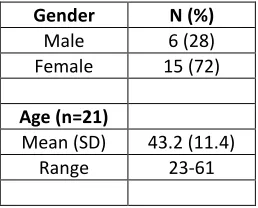
[image:12.595.72.201.184.288.2]There were 15 HCAs from the main site and 6 HCA from Bassetlaw. There were 8 HCAs from Outpatients, 2 from a medicine for the elderly rehabilitation unit and 11 from acute wards (medicine, surgery and orthopaedics). The HCAs were allocated to the clinical areas after their appointment. Three of the participants were being re-deployed from other NHS posts which were being eliminated or outsourced.
Table 2:Characteristics of HCA participants
Gender N (%)
Male 6 (28) Female 15 (72)
Age (n=21)
Mean (SD) 43.2 (11.4) Range 23-61
HCA CARMA day (the simulation intervention)
The HCA CARMA (Crisis Avoidance and Resource Management) programme, was developed by Montagu Clinical Simulation Centre (MCSC), a regional simulation centre and uses human patient simulation with high fidelity manikins to focus upon the role of the HCA in the avoidance and/or management of simulated clinical crises. It is used to highlight how the modification of behaviour, optimal use of resources, good team working and effective communication can all help to manage problems in a more effective manner. Each of the HCAs participates in simulated scenarios with learning activity relevant to their own clinical area, and contributes to a session of carefully structured feedback and debriefing facilitated by the centre staff.
The CARMA day focuses upon the avoidance and/or management of simulated crisis situations, and aims to highlight how modification of behaviour, optimal use of resources, good team working and effective communication can all help to avoid and/or manage problems in a more effective manner. The course meets the ‘Recorder’ objectives as set out in the Care of the Acutely Ill Patient document (DH 2009) and meets both Core and Health and Wellbeing Dimensions in the KSF (DH 2004). Each of the HCAs participates in simulated learning activity and participates in structured feedback and debriefing. The learning outcomes for the day are shown below.
Figure 2: Key learning outcomes from the HCA CARMA course of interest to the study
1. Correct measurement of patient's physiological observations 2. Correct identification/recognition of the deteriorating patient 3. Declaring the emergency/calling for help as required
.
HCA Report - version 7.2.3Data collection (phase 1)
1) The pre/post-test questionnaire
To address issues of reliability and validity, the questionnaire was based upon an existing well-validated questionnaire used to evaluate the multidisciplinary ALERT™ programme (Featherstone et al 2005). Permission was sought (and granted) to modify the questionnaire to make it relevant to HCAs. The questionnaire had also been extensively tested upon undergraduate nursing students (see Lewis 2011). The purpose of the questionnaire was to establish (1) the HCAs’ self-reported levels of knowledge and understanding, (2) their confidence in caring for an acutely unwell patient, and (3) their perceptions of communication and multidisciplinary working both before, and after, participating in the training. The first section of the questionnaire consisted of a number of questions relating to the HCAs' clinical knowledge of the acutely unwell, deteriorating patient, the second consisted of questions relating to their clinical confidence in dealing with patients in a general ward situation, and the third section related to their perceptions of ward-based communication and interprofessional teamworking. There was, in addition, a free text space left for HCAs' comments in each section.
The questionnaires were given to the participating HCAs and collected upon completion. This was either done prior to attending their training session on vital signs and observation charts or on the actual vital signs training day. Questionnaires were printed with a personalised covering letter on headed paper including the Trust and Simulation Centre logo. The letter included a request that staff also complete a follow up questionnaire at a later date. An envelope was included for replies. 21 of the original participants completed both pre- and post-simulation questionnaires but only 18 agreed to being videotaped during the pre/post-test simulated scenarios.
The overall HCA score measuring their 'confidence' in their own clinical performance was derived from the sum of six Likert-style questions (see Appendix X) which asked about confidence in recognising a deteriorating patient and reporting this to others. The confidence score ranged from 6 to 60 and an increasing score was deemed to indicate increasing self-reported confidence.
2) Pre/post-test video recording of the simulated scenarios
2
HCA Report - version 7.2.3The simulation performance score was derived from four independent evaluators. The evaluators were all experts in simulation education. Working to a set of pre-determined criteria (appendix x), the evaluators scored the individual participant's performance retrospectively using the video recording of the simulated clinical scenarios. The scoring system used was based upon an existing simulation assessment tool developed by Todd et al (2010) for undergraduate nursing students in the US. The rationale for this was that there were few, if any existing validated simulation assessment tools for measuring individual performance, and none at all for HCAs.
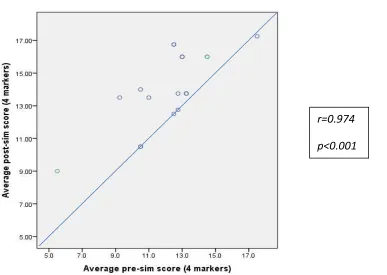
The resultant modified simulation score is an average of all markers over all questions (possible range of scores is 0-18) and again an increasing score indicates increasing competence in the non-technical skills being assessed. The change in score from pre- to post-simulation was calculated (see Table 1). The absolute change in score is not very informative as a person with a small incremental change might already have a high score (see Figure 1). To examine this issue we then created tertiles from the entire set of scores: level C = a score of 1-11; level B = a score of 12-14; level A = a score of 15-18. The tertiles were not based on any evidence for specific cut-offs, but were based upon what might be considered, from simulation education perspective to be a 'reasonable' range of scores for each tertile. The modified HCA simulation assessment tool can be further broken down into two sub-components of the assessment tool (1) assessment skills and (2) oral/written communication skills.
Analysis
All analyses were conducted in SPSS v.20. T-tests were used to test for significant differences between pre- and post-simulation confidence and competence scores. There was no missing data, except for the HCAs who refused to be filmed. The mean confidence score increased between pre- and post-simulation and a t-test indicated a significant increase in confidence levels (p <.001) (see Table 3). Due to the small sample size and the fact that this was a pilot study, inter-rater reliability was variable, and there were some small discrepancies in the marking between the experts and the scores given to the individual HCAs. The decision was taken to use the mean score in each category of the tool, which gave each HCA a composite score.
Results
[image:14.595.71.380.668.723.2]The simulation performance scores increased from pre- to post-simulation (see Table 3 below) with considerable variation in the amount of improvement. The diagonal line represents no change in score, pre to post while scores to the left of the line represent an improvement. All participants either improved or stayed the same (Table 4). If level B or above is considered competent then all but 3 reached a competent level although, of the remainder, only 9 of the 15 actually improved as the others began and ended at the same competency level. Overall, a t-test indicated a significant increase in competence (p <.001).
Table 3: Confidence scores taken from the questionnaire
Mean (SD) Range
3
HCA Report - version 7.2.3Table 4: Summary of results from retrospective video evaluation of HCA performance
Video assessment scores Mean (SD) Range Level C
(n)
Level B (n)
Level A (n)
Pre-simulation total score 12.2 (2.5) 5.5-17.5 1 11 6 Post-simulation total score 14.0 (2.4) 9-17.25 7 8 3
[image:15.595.81.468.247.522.2]Change in score 1.83 (1.7) -0.25-4.25
Figure 3: Pre- and post-simulation video scores (n=18)
Table 5: Level changes in video-assessment tertile levels pre- and post-simulation scenario
pre-post tertile number
A-A 1
B-A 6
B-B 5
C-B 3
C-C 3
r=0.974
5
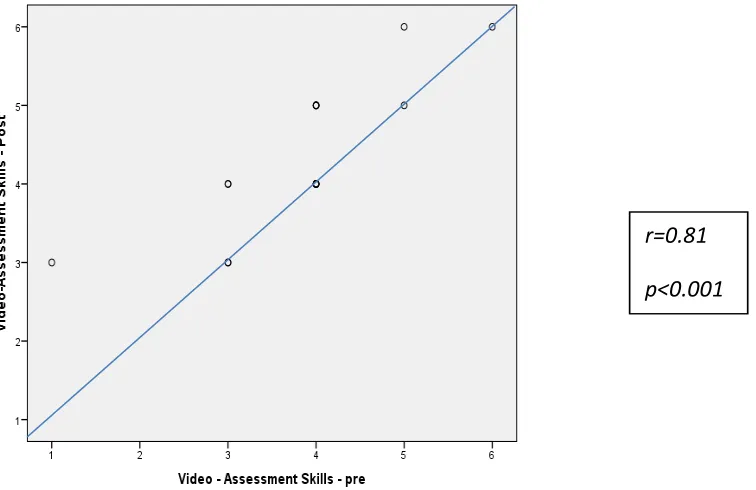
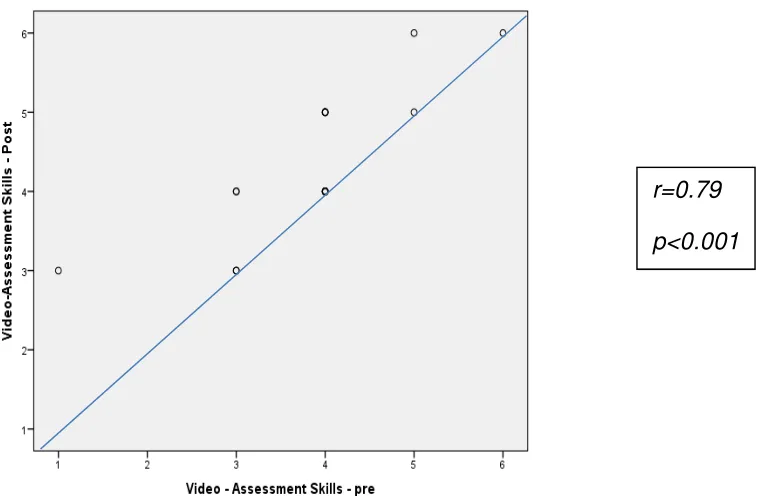
HCA Report - version 7.2.3 [image:16.595.73.529.229.341.2]The video assessment included a demonstration of two key non-technical skills. These were (1) assessment skills and (2) communication skills. These both showed evidence of improvement for all participants but the participants tended to retain their overall ranking within the cohort. If we look at the individual sub-components of the simulation scoring we see no change in the median score although the Wilcoxon signed rank test found a significant difference at p=0.007 for assessment skills and p=0.001 for communication skills.
Table 6: Pre/post-test changes in video scoring
Pre-simulation Post simulation Change pre to post test
median
(IQR) range
median
(IQR) range
0 units 1 unit improvement
2 unit improvement Video Scoring
Assessment
Skills 4 (1) 1-6 4 (1) 3-6
10 7 1
Communication
Skills 4 (2) 2-6 5.5 (2) 3-7
14 4 0
Figure 4a: Changes in Video Score for Assessment Skills (pre/post-test)
As we can see from figures 4a and 4b, most of the participants demonstrated overall improvements in both of these key non-technical skills. This is illustrated by the fact that the majority of the participant plots are above the diagonal line. It should be noted here that the number of points shown in the diagram does not correspond to the number of participants since several participants obtained the same pre/post-test scores and therefore the same degree of improvement.
r=0.81
[image:16.595.81.459.410.655.2]7
HCA Report - version 7.2.3 [image:17.595.78.457.149.397.2]As we can see, a significant number of the HCAs did not improve their scores: their scores remained the same overall and fall on the diagonal line
Figure 4b: Changes in Video Score for Communication Skills (pre/post-test scores)
The figures for both communication and assessment (4a/4b) are similar in their scatter plot distribution. It may be hypothesised that content of the CARMA day addressed equally both of these key skills, and that they are inextricably linked together.
The next set of figures (5a/5b) are designed to look at whether there is any relationship between the participants' self-reported confidence levels (as measured by the questionnaire) and their performance in the simulated scenarios (as measured by the assessment tool). Figure 5a looked at whether there was any correlation between the HCAs' self-reported pre- and post-test confidence scores and their pre- and post-test assessment scores. As we can see from the charts, there is no clearly discernible statistical correlation between the two concepts in terms of a link between the HCAs' confidence in their own abilities and any improvement (or otherwise) in their post-test performance
r=0.79
9
HCA Report - version 7.2.3Figure 5a: Relationship between pre-intervention confidence score and video score of assessment skills
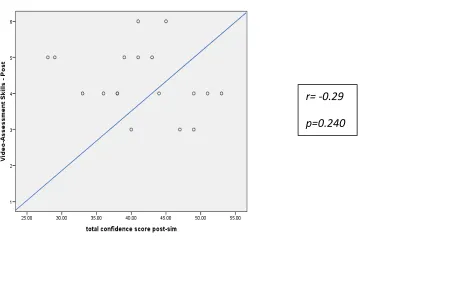
Figure 5b looked at whether there was any correlation between the HCAs' self-reported post-test confidence scores and their post-test communication scores. As we can see from the chart, there is no clearly discernible statistical correlation between the two concepts in terms of any link between the HCAs' confidence in their own abilities and any improvement (or otherwise) in the post-test performance in communication.
Figure 5b: Relationship between post-intervention confidence score and video score of assessment skills
r= -0.11
p=0.664
r= -0.29
[image:18.595.78.527.462.762.2] [image:18.595.81.371.468.696.2]:
HCA Report - version 7.2.3The final set of figures (6a/6b) are designed to look at whether there is any relationship between the participants' self-reported confidence levels (as measured by the questionnaire) and their performance in the simulated scenarios (as measured by the assessment tool). Figure 6a and 6b looked at whether there was any correlation between the HCAs' self-reported pre- and post-test confidence scores and their pre- and post-test communication scores. As we can see from the charts, there is no clearly discernible statistical correlation between the two concepts in terms of any link between the HCAs' confidence in their own abilities and any improvement (or otherwise) in the post-test performance in communication.
Figure 6a: Relationship between pre-intervention confidence score and video score of communication skills
Figure 6a looked specifically at whether there was any correlation between the HCAs' self-reported pre-test confidence scores and their pre-test communication scores. As we can see from the scatter plot diagram, there is no clearly discernible statistical correlation between the two concepts.
r= -0.16
[image:19.595.77.461.250.499.2];
HCA Report - version 7.2.3Figure 6b: Relationship between post-intervention confidence score and video score of communication skills
Figure 6b looked specifically at whether there was any correlation between the HCAs' self-reported post-test confidence scores and their post-test communication scores. Again, as we can see from the scatter plot diagram, there is no clearly discernible statistical correlation between the two concepts.
Escalation of concerns and team working
[image:20.595.81.441.128.376.2]In question 7, the HCAs were asked who they would contact first if they had concerns about a deteriorating patient they were looking after. This was designed to enable the researcher to identify the key relationships in the clinical area, and any 'escalation pathways' (whether formal or informal) that were being used.
Table 7: first point of contact for any concerns (Q 7)
Type of colleague Pre-test (%) Post-test (%)
Staff nurse 73 77
Sister/charge nurse 23 17
Junior doctor 4 6
Interestingly, we can see that as well as a significant increase in the post-test scores for contacting a staff nurse, the percentage of HCAs who would contact a sister or charge nurse first fell slightly. The change is not significant, although there was a slight, non-significant increase in the percentage who would contact a junior doctor first.
r= -0.11
[image:20.595.73.336.588.646.2].?
HCA Report - version 7.2.3.
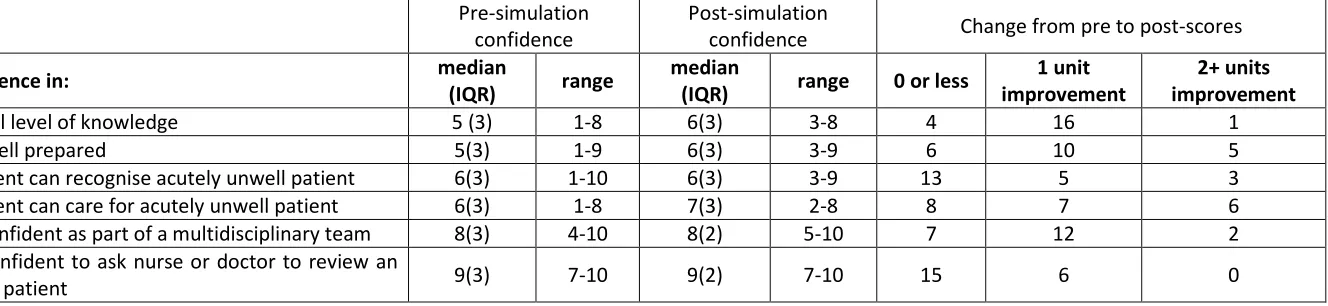
HCA Report - version 7.2.3Table 8: Summary of results of individual Confidence questions
Pre-simulation confidence
Post-simulation
confidence Change from pre to post-scores
Q Confidence in: median
(IQR) range
median
(IQR) range 0 or less
1 unit improvement
2+ units improvement
2 general level of knowledge 5 (3) 1-8 6(3) 3-8 4 16 1
3 how well prepared 5(3) 1-9 6(3) 3-9 6 10 5
4 confident can recognise acutely unwell patient 6(3) 1-10 6(3) 3-9 13 5 3
5 confident can care for acutely unwell patient 6(3) 1-8 7(3) 2-8 8 7 6
9 feel confident as part of a multidisciplinary team 8(3) 4-10 8(2) 5-10 7 12 2
10 feel confident to ask nurse or doctor to review an
..
HCA Report - version 7.2.3Data collection (phase 2)
Semi-structured interviews
All of the participants were interviewed approximately 6 weeks after the final assessment. Interviews were arranged at a convenient time for the staff member, at their place of work, using a quiet room or office, and were approximately 20-30 minutes in length. All the interviews were audio taped with the participants' written consent, and an external company transcribed the recorded interviews. A schedule was used to guide the interview that explored the following areas pertinent to the project objectives:
• The role of the HCA within the ward team
• The role of the HCA in measuring and documenting vital signs • Their education and training for the role
• The use of simulation as an educational strategy
In addition to the participants, a small convenience sample of the HCAs' qualified colleagues was also interviewed (see table 8 below). An interview schedule was also used to guide the interview that explored the qualified staff's perspectives of:
• The role of the HCA within the ward team
• The role of the HCA in measuring and documenting vital signs • The education and training required for the role of HCA
Interview questions
1) What is an HCA?
2) What does an HCA do? Should they measure and record vital signs? 3) What should they not do?
4) Where do we 'draw the line'?
5) What training and education should they have?
6) Who should supervise them? Should RNs be taught how to supervise properly?
Interview data
.2
HCA Report - version 7.2.3Table 9: qualified staff interviewed for the study
Key emergent themes
There were a number of key themes that emerged from the analysis of the interview data. These related to: the role of the HCA within the team; the issues around HCAs measuring and recording vital signs; HCA anxiety and (over)confidence; the provision of education and training for HCAs; the form that this training should take; simulation as an educational strategy; the lack of formal supervision and support for HCAs
The role of the HCA within the ward team
The thoughts of some of the HCAs on their role are illuminating. This HCA commented:
"We do all the observations, if we find anything wrong then we report it back to the nurse… a lot of hands-on with the patient, all the personal care, the observations…"
The majority of the participants were in agreement with regard to the pivotal role that HCAs played within the ward team:
"… HCAs run the wards. (the) Staff nurse might be in the office, she might be with the doctor doing a ward round… or with some relatives… but they do the work… there just aren't enough qualified staffto go round…"
This RN had previously been an HCA herself, so could see things from both perspectives…
"I see the healthcare assistant as a vital member of staff that's there to support the nursing staff… I think that they often get more from the patients than the nurses do, especially with the amount of paperwork that we have to do now…"
The HCAs' role had broader implications, in that it increased their visibility to both patients and relatives. This HCA commented that:
"They (the patients) might see the staff nurse but not talk to them… they want someone who is there all the time … not sitting behind a computer… the patients tell you more, they trust you more than a staff nurse I think…"
AfC Banding Number (N)
Band 5 8
Band 6 4
.3
HCA Report - version 7.2.3The responsibility of the role: HCAs and vital signs
These were the thoughts of one of the ward managers, on the subject of HCAs and vital signs:
"There needs to be a set HCA job description, because some HCAs see their role as all expanded and it really shouldn't be, it should be all about basics of patient care… If the ward wants anything extra then that's fine, but until that's addressed and it's consistent, then I don't think there should be anything more…"
Given that all of the HCAs in the study were now regularly undertaking the measurement and recording of patients' physiological observations, the dearth of education or training for HCAs generally was an area of some concern, both for the HCAs themselves and by virtue of patient care delegation, for the other members of the healthcare team. When asked whether HCAs should be doing observations, there were mixed views. This HCA was in favour of HCAs undertaking this important role:
"Yes… I feel it's down to us that we're keeping a close eye on the patients. We have more contact than the nurses because they're busy with the medications, a lot of writing and stuff, and we're the ones that keep an eye on all the observations. If we find that they're getting poorly we pass it on to the nurse…
The majority of the qualified staff were less enthusiastic, though understandably pragmatic in their views:
"…in an ideal world… no not really but I think if they've had the correct training and they understand how to do the early warning score and if they understand the implications of what they're recording, like it's no use recording that someone is hypotensive and then telling the staff nurse four hours later…"
"But with staffing levels as they are… I can turn round and say it should be qualified staff only, but with everything else they've got to do, something always gives, so what is it to be? Who do we delegate onto? Is it discharge planning that we delegate out, or is it this or is it that, you know…"
"I do think that healthcare assistants doing vital signs, doing observations puts patients at risk... If things aren't escalated … I'm sure there are some very good healthcare assistants but there are also times when equipment's not used correctly, such as different sized cuffs, and therefore we get a wrong reading…they really need proper training"
When asked about taking on new roles and responsibilities, there were some mixed views expressed by the HCAs. These included a perceived (over)confidence in their own abilities and a lack of understanding regarding the importance of vital signs measurement within the recognition and treatment of the deteriorating ward patient. When asked, these HCAs answered as follows:
.5
HCA Report - version 7.2.3"… but we all use the 'DynaMap' (automated blood pressure monitor) these days anyway… you just press a button and write it down on the chart.."
it (measuring vital signs) isn't that difficult is it? I mean if X(refers to an RN on the ward) can do it then so can anyone…"
Whereas this HCA had a slightly different view:
" … Oh yes I do worry sometimes… I worry a lot… and I often wonder whether I'm doing it right… but we have to do it because there's no-one else to do it… the staff nurses are too busy.."
Education and training for HCAs
The whole issue of education and training for HCAs clearly remains a contentious one and it clear that there were some HCAs working for the Trust who had had no formal education or training of any description. Historically, HCA training has not been considered a high priority, and a number of the more experienced HCAs had been subjected to the old-fashioned, experiential 'see one, do one' school of healthcare education.
"… I shouldn’t say this I suppose but some of the older HCAs learned by 'sitting next to Nelly' didn’t they?"
This ward manager reflected back on the reality of HCA training:
"In the past most of them have learned with time, and through experience, working alongside trained nurses, knowing the expectations of the trained staff. That's probably time served … experience … ."
One of the HCAs made an interesting point, which resonated with the other HCAs and some of the qualified staff
"I do think that there are some of the older HCAs out there that think they know it all though… and don't want to know about training…"
It was evident though that the majority of the HCAs interviewed were keen to learn and develop themselves, and found the lack of training available to them very frustrating. This HCA had worked as an auxiliary elsewhere. She went on to say:
" …at the end of the day why shouldn’t we have the same teaching as staff nurses as we are doing a lot of what they do. We are not acting as staff nurses but we’re still doing a lot of what they do…"
.7
HCA Report - version 7.2.3There was a manifest sense of irritation from a number of the HCAs, over their status within the team, and how that impacted upon their opportunities to learn:
We’re as important as anyone else but the number of times you hear HCAs asking to go on courses… and they say no you're only HCAs… we're busy and we need you on the ward…"
What form should the training take?
When asked about the form that the education and training should take, most of the participants had similar views:
"I'd say a mixture of learning in the classroom and on the ward…"
"I think a mixture of both (classroom and 'hands on' teaching) is easier for me… to learn then go and practice…"
"…once you've had the theory and you understand the theory, practice is definitely the best way to go… and simulation seems to me a good way of doing that…"
Simulation and the CARMA day
When asked about the use of simulation, the qualified staff were uniformly complimentary over the impact of the CARMA day:
"I think they need to know how to do it properly from the beginning and maybe have regular updates... I'd like to see them all going to the simulation centre at Mexborough to do the course that you do…"
There was a general agreement amongst the HCAs that they had gained a lot from participating in the simulation. As this HCA commented:
"…it worries me that I didn’t really know what to do … I just froze up and couldn’t think… I didn’t like the simulation really"
When questioned further some of the HCAs articulated a growing realisation of the significance of what was being expected of them, and the implications for the patients of 'getting it wrong'. Although initially unconcerned, these HCAs noted that they were much more questioning of their role and responsibilities now:
"… I realise that some HCAs think they know the job inside out but there are some things that we talked about there (the CARMA day) that I'd not thought about before…"
It's made me realise that there is much more to it than just pressing a button on a machine… it's what you do with 'obs' (sic) that's important..."
.9
HCA Report - version 7.2.3Supervision and support for HCAs
There was a worrying ambivalence on the part of the qualified staff towards the need for HCAs to be supervised. There seemed to be a lack of understanding over the relationship and what it entailed. This response from a staff nurse was typical:
"I don’t think that a new healthcare assistant needs to be supervised all the time… like when the nurses come on here and they've just qualified, they work with somebody for about a month… that’s enough"
"… I know we should be supervising the HCAs but we don’t have the time… we need them to be able to get on with it"
There was also an antipathy towards supervision and delegation on the part of the HCAs as well; indicative of a misunderstanding of what supervision entailed:
"I wouldn’t want a staff nurse breathing down my neck all the time… I just get on with my job…"
Summary of key findings from phase 1 and phase 2 of the study
• A significant increase in the HCAs' non-technical skills clinical performance and confidence
from pre- to post-intervention
• An acknowledgement by all of the participants that the non-technical skills involved in the
measurement and reporting of patients' vital signs were an extremely important (and misunderstood) aspect of the HCAs' work
• Simulation was seen as an effective way of addressing this aspect of the HCAs' workload
• Overall, the HCAs enjoyed the learning experience provided by simulation, particularly the
ability to link theory to practice and to rehearse clinical activities in a safe environment
• There was no statistical association between the self-reported confidence measures and
.:
HCA Report - version 7.2.3Discussion
The overarching aims of the pilot study were to evaluate:
1) The impact of the simulation education provided by the MCSC, and its clinical effectiveness as an educational methodology for addressing non-technical skills/patient safety issues on a cohort of HCAs
2) The development of an appropriate simulation assessment tool for HCAs
3) The requirements for culture change /organisational change, in terms of the organisation's attitudes to HCA education and training
(1) The impact of the simulation education provided by the MCSC
HCAs and their role
As the recently published Cavendish Report (2013) notes, HCAs now make up around a third of the 'front line' caring workforce in hospitals, and all the evidence suggests that they now spend more time than nurses at the bedside. All of the staff who participated in the interviews discussed the significance of the HCA to the team they worked in, although there was some disagreement over the extent of the role and in particular the interface between HCAs and RNs. There also seemed to be a tension between the fact that HCAs are unqualified and the need for them to be supervised. It was apparent from the interviews that some of the RNs felt uncomfortable as supervisors and had never been 'taught how' to supervise. Some of the HCAs did not want close supervision, and some of the RNs appeared reluctant to supervise the HCAs that they worked with. The need for supervision appeared to depend upon the RNs' perceptions of the individual HCA and their competence. The recent NMC guidance (2013) makes it clear that RNs are responsible for delegating work to an HCA who is competent and willing to perform the task required; and that the HCA is then responsible for thattask. But the lack of clear job descriptions and competences in some clinical environments can make nurses unsure about what they can delegate, and to whom. In spite of this, there remains ambivalence over the supervision of HCAs by RNs, particularly in relation to what might constitute and what tasks might require direct supervision.
HCAs and patient safety
.;
HCA Report - version 7.2.3It was apparent both from the interviews and during the simulation sessions from the CARMA training that the HCAs were not always clear what observations needed to be measured, why they were doing them and what to do with the information that was generated.
The role of the HCA in patients' physiological observations per se raises some important questions, since to undertake this activity effectively involves (1) identifying that the patient may be at risk of deterioration, (2) assessing the patient and measuring the vital signs, (3) interpreting that information and (4) communicating this information effectively to an appropriately qualified member of the team (NICE 2007). Whilst there is little doubt from the interviews that the HCAs that participated in the study were genuine in their desire to provide high quality patient care, there were deficits in their understanding of the scenarios in which they participated, and the importance of HCAs developing some cognitive decision-making skills should not be underestimated. When questioned during the interviews, it was apparent that a number of the HCAs focused much more on the 'doing' of the activity and not necessarily the 'thinking' associated with it, and this lies at the heart of the issue that is being addressed. The HCAs are currently trained to undertake clinical tasks, and are not provided with the underpinning rationale for what they are asked to do. The CARMA day is specifically designed to make the HCAs think about what they do and to begin to appreciate the need to understand the rationale for the actions that they take.
Education and training for HCAs
2?
HCA Report - version 7.2.3Simulation as an educational strategy for training HCAs
There is now a broad acceptance of the efficacy of simulation as an educational strategy for the provision of high quality healthcare education. However, studies attempting to assess its worth have found empiric data elusive, particularly in relation to non-technical skills (Yuan et al 2011). There remains a clear need for quantitative studies such as this to add to the body of simulation 'hard' evidence. Anecdotally, the simulation activities undertaken as part of the CARMA day had a positive effect upon the HCAs self-reported confidence post-intervention and this was reflected in the interview data. This study found that the majority of HCAs improved their scores in the post-intervention simulated scenarios. According to all the adult learning literature (e.g. Berragan 2011), students of all descriptions value an immersive, experiential and participatory approach to learning in healthcare. It provides them with a safe environment and a format that enables them to engage with the learning activities, whatever their preferred learning style.
It is argued that these adult learning theories (e.g. Clapper 2010) which support immersion, participation and team collaboration are ideally suited to the learning needs of HCAs, for whom the more traditional methods of learning (i.e. passive, content-driven acquisition of knowledge and skills) may not suit. This was borne out to some degree by the interview data, in which the majority of the HCAs though that the use of simulation on the CARMA intervention day helped to bring theory and practice together in a meaningful way. Some of the HCAs did highlight a small number of issues relating to situational fidelity and their initial discomfort with simulation and dealing with a manikin. From the HCAs' perspective, if the simulation is to work it must be believable, and a number of the HCAs did comment upon the perceived lack of fidelity in the manikin that was used. It may be that the HCAs were initially not used to simulation and were certainly unfamiliar with the manikins, and as they become more accustomed to the manikins this may become less of an issue. The true advantage of simulation is that it provides a safe environment in which to learn the skills necessary for the prevention of adverse outcomes. If it is to be successful in this particular context then it is necessary for the HCAs to be able to 'suspend reality', whilst learning in their role. The fact that some of the HCAs struggled to do this has implications for the way in which simulation-based education for HCAs is delivered, and this needs further investigation.
(2) The development of an appropriate simulation assessment tool for HCAs
The absence of any link between self-assessment and performance
2
HCA Report - version 7.2.3While there was a strong correlation between confidence and self-reported experience, there was no statistically significant correlation between either self-reported confidence or experience and performance on actual simulations (Morgan & Cleave-Hogg 2002). Despite this growing body of literature, healthcare educationalists continue to emphasise the importance of self-assessment as an accurate measurement of clinical competence.
Development and testing of the assessment tool
Accurately measuring complex learning outcomes in the cognitive, affective, and psychomotor domains is extremely difficult. HPS such as the CARMA course does offer the opportunity for the evaluation of higher level cognitive functions such as application and evaluation of HCAs' clinical knowledge. The development of the non-technical 'softer' skills, encompasses learning in the affective domain and evaluation of learning outcomes in this domain will involve identifying whether the HCAs have 'taken on board' these values, attitudes, and beliefs and whether they have internalised them. All the evidence shows that this aspect of assessment is complex and difficult to carry out in an objective way. As we are also aware, learning outcomes from HPS have largely focused upon self-reported satisfaction and confidence. While easily obtained, these measurements are not associated with observed assessment of competence. The development of effective simulation evaluation tools needs to be an organised, rigorous process, and as Kardong-Edgren et al (2010) note, should include measures for each of the three domains of student performance: cognitive, psychomotor, and affective.
(3) The requirements for cultural and/or organisational change
HCAs and the ward culture
2.
HCA Report - version 7.2.3Strength and weaknesses of the study
The major strength of this evaluation was its use of a mixed methods approach. The combination of simulation assessment and semi-structured interviews gave us a valuable overview of the potential impact of human patient simulation on HCA training and education. It is acknowledged that the data is taken from a small convenience sample of HCAs from one Trust; however the HCAs were not selected in any way and were a single cohort recruited at the same time. The cohort of HCAs also consisted of a number of individuals who had been redeployed following redundancy. While the findings have implications and lessons which are likely to be useful, they should be interpreted in the light of the fact that the context of this evaluation may well differ from that in other hospitals.
Both of the tools used for measuring the HCAs' confidence and non-technical skills performance were being used for the first time on HCAs. However, the simulation assessment tool was adapted from an existing tool developed and validated for use with nursing students, albeit in the US. Although it was the most suitable of the assessment tools that were reviewed, there were a number of predictable developmental issues, and the small sample meant that it was difficult to objectively assess either the content validity or inter-rater reliability of the tool as adapted. Further testing of the tool is clearly required. In addition, the questionnaire, which was adapted from a multi-professional questionnaire, was used to measure the HCAs' self-reported confidence in working as part of a team, and in communicating with other (more senior) members of the team. The survey results show that the HCAs' self-reported confidence increased post-intervention in all the areas that were measured. This is in line with the findings from the original Smith et al study, and subsequent unpublished studies undertaken at Sheffield Hallam University.
It should also be noted that the impact of the educational intervention was assessed over a relatively short period of time. Whether the overall positive effect we observed will be sustained over a longer period is not known. Also, the questionnaire used to measure the students' self-confidence was created by the research team, and had reliability and content validity but was without established construct validity, although this may be mitigated in part as it was based upon an existing questionnaire.
22
HCA Report - version 7.2.3Recommendations for future research
• More quantitative studies, combined with an economic and social cost evaluation, are
needed to provide the 'hard evidence' to demonstrate the clinical and cost effectiveness of simulation
• Further work is needed to validate this tool as for use with HCAs, and more fully validated
measurement tools are required to add to it. There is a deficit of formal measurement tools available to evaluate HPS; in particular there is a need for measurement tools which evaluate team performance. Most research in this area still pays no attention to the validation of these types of measurements
• More research is needed to examine the transferability of the simulation experience into
'real life' clinical situations. Fidelity is a subject which requires further investigation, as there has been a focus upon technological fidelity of the manikins used, often at the expense of psychological and environmental fidelity
Health policy and the future for HCAs
Following a period of consultation and debate, the Francis Report, the more recent Cavendish Report and the Berwick report all highlighted the need for a shakeup in the education and training of all support staff including HCAs. It is clear that a robust programme of appropriate and timely education for HCAs is urgently needed to ensure quality of care is maintained, and to protect patients. Cavendish argued that 'Post Mid Staffs' there is an opportunity to raise the status of caring for HCAs and bridge any divides in the healthcare system by creating a Certificate of Fundamental Care. This would encompass the minimum competences that HCAs should achieve before they can start working in caring roles. It would build upon the recent National Minimum Training Standards (NMTS) developed and published by Skills for Health and Skills for Care (2013) as part of its response to the Francis Inquiry (2013).
23
HCA Report - version 7.2.3These are that HEE should:
•
Develop a Certificate of Fundamental Care, in conjunction with the Nursing and Midwifery Council (NMC), employers, and other sector skills bodies. This should be linked to the framework of National Occupational Standards, and build on work done by Skills for Health and Skills for Care on minimum training standards•
Develop a Higher Certificate of Fundamental Care, linked to more advanced competences developed and agreed by employers. This must include a focus upon the development of the softer, non-technical skills• Work with the CQC to require all HCAs to have completed the Certificate of Fundamental
Care before they can work unsupervised in the clinical area
•
Work with the NMC to recommend how best to draw some of the key practical elements of the new Nursing Degree curriculum into the Certificate(s)• Work with the LETBs and employers to have nursing students and HCAs completing the
Certificate(s) together
In summary
It is not clear how the new Certificate recommended by Cavendish will 'fit' with the existing QCF Diploma in Health and Social Care that was unveiled in 2011. There are a significant number of existing HCAs that will have completed either the QCF Diploma or the NVQ level 2/3 courses, not to mention the HCAs that have regular direct patient care contact that have no formal qualification of any description. The very specific training needs of these HCAs will need to be addressed, and this study has given some indications as to how this may be achieved.
This research study has shown that simulation is beneficial for training HCAs and in providing them with the non-technical skills that they need. It has also shown that self-reported measures should not be used to predict actual clinical competence, and that it is dangerous to do so. Finally, it has illustrated that if patient care is to be improved, then there needs to be an organisational culture that is supportive of and receptive to the changes that need to be made.
25
HCA Report - version 7.2.3References
1. Baxter P & Norman G (2011) Self-assessment or self-deception? A lack of association between nursing students’ self-assessment and performance. J Advanced Nursing 67: 2406-2413.
2. Berragan L (2011) Simulation: An effective pedagogical approach for nursing? Nurse Education Today, 31 (7) 660-663
3. Berwick D (2013) A promise to learn – a commitment to act: Improving the safety of patients in England The Stationery Office, London.
4. Brain L & Roberts M (2008) How to assess competency levels of healthcare assistants Primary Health Care 18(4) 36-40
5. Care Quality Commission (2011) State of Care report 2011/12: Quality and safety of health and social care. CQC London
6. Cavendish C (2013) An Independent Review into Healthcare Assistants and Support Workers in the NHS and social care settings The Stationery Office, London.
7. Clapper, T (2010) Beyond Knowles: What those conducting simulation need to know about adult learning theory Clinical Simulation in Nursing, (6), e7-e14.
8. Davis D, Mazmanian PE, Fordis M, Van Harrison R, Thorpe KE & Perrier L (2006) Accuracy of physician self-assessment compared with observed measures of competence. A systematic review. JAMA 296: 1094-1102
9. Department of Health (2000a) A Health Service of all Talents: Developing the NHS Workforce. The Stationery Office, London.
10. Department of Health (2001) Working Together, Learning Together: A Framework for Lifelong Learning for the NHS. The Stationery Office, London.
11. Department of Health (2002) Funding Learning and Development for the Healthcare Workforce Consultation on the Review of NHS Education and Training Funding and the Review of Contract Benchmarking for NHS Funded Education and Training. The Stationery Office, London.
12. Department of Health (2004) The NHS Knowledge and Skills Framework (NHS KSF) and the Development Review Process. The Stationery Office, London.
13. Department of Health (2006) Modernising Nursing Careers: Setting the Direction. The Stationery Office, London.
14. Department of Health (2008) A High Quality Workforce: NHS Next Stage Review. The Stationery Office, London.
15. Department of Health (2011) A Framework for Technology Enhanced Learning The Stationery Office, London.
16. Department of Health (2012) Liberating the NHS: Developing the Healthcare Workforce From Design to Delivery The Stationery Office, London.
17. Eva K.W. & Regehr G. (2005) Self-assessment in the health professions: a reformulation and research agenda. Academic Medicine 80, S46–S54.
18. Field L. & Smith B. (2003) An essential care course for healthcare assistants. Nursing Standard 17 (44), 33 – 35.
19. Francis R (2013) Report of the Mid Staffordshire NHS Foundation Trust Public Inquiry The Stationery Office, London
20. Gould D, Carr G, Kelly D & Brown P (2004): Healthcare assistants: the new registration route. Nursing Standard 18(33): 37-40.
21. Griffin R Arbuthnot R Fee & L McElroy L (2012) Better care through training - evaluation of an HCA development programme British Journal of Healthcare Assistants 6 1 35-38
27
HCA Report - version 7.2.323. Hancock H, Campbell S, Ramprogus V & Kilgour J (2005) Role development in healthcare assistants: the impact of education on practice. Journal of Evaluation