The relationship between students’ engagement and the
development of Transactive Memory Systems in MUVE: An
experience report
NISIOTIS, Louis <http://orcid.org/0000-0002-8018-1352> and KLEANTHOUS,
Styliani
Available from Sheffield Hallam University Research Archive (SHURA) at:
http://shura.shu.ac.uk/24344/
This document is the author deposited version. You are advised to consult the
publisher's version if you wish to cite from it.
Published version
NISIOTIS, Louis and KLEANTHOUS, Styliani (2019). The relationship between
students’ engagement and the development of Transactive Memory Systems in
MUVE: An experience report. In: Proceedings of the 24th annual ACM conference on
innovation and technology in computer science education. ACM.
Copyright and re-use policy
See
http://shura.shu.ac.uk/information.html
Sheffield Hallam University Research Archive
Development of Transactive Memory Systems in MUVE: An
Experience Report
Louis Nisiotis
†Faculty of Science, Technology and Arts (STA) Sheffield Hallam University
Sheffield, United Kingdom
[email protected]
Styliani Kleanthous
Cyprus Center for Algorithmic Transparency Open University of Cyprus
Nicosia, Cyprus
[email protected]
ABSTRACT
Student engagement is a very important topic in higher education hence, it drew a lot of research interest over the years. The use of educational Multi-User Virtual Environments (MUVEs) that provide synchronous interaction, dynamic, interactive and social learning experiences have the potential to increase student engagement and contribute to their learning experience. Due to increased social and cognitive presence, the use of such environments can result in greater student engagement when compared to traditional asynchronous learning environments. In this work, we hypothesized that students’ engagement in collaborative learning activities will increase if Transactive Memory System (TMS) constructs are present. Thus, we employed the theory of TMS that emphasizes the importance of Specialization, Coordination and Credibility between members in a team. The results show that there is a significant correlation between the development of TMS and students’ engagement. In addition, further quantitative and observation analysis reveals some interesting facts about students’ engagement with respect to their collaboration in group activities.
CCS CONCEPTS
•Applied computing → Education; Collaborative Learning; •
Human-centered computing → Collaborative and social computing; Computer supported cooperative work
KEYWORDS
Student Engagement, MUVE, Virtual Worlds, Transactive Memory Systems, CSCL
1.
Introduction
The need for education to become more active, engaging and customized to the learners’ individual needs is imperative [1]. One of the ways that higher education institutions are adapting to this change is through the adoption of technology to assist learning and teaching. While modern students are familiar with the use of the Internet, smartphones, high quality 3D graphical computer games, virtual reality and other technological affordances, in their everyday life, it is important to engage them
in the learning process when in classroom. Student engagement in higher education is a topic that drew much international research and literature [2], and there are studies suggesting the positive effects of technology [3-5] towards student engagement. One of the many technologies that are being used to support students, is the use of MUVEs. These are computer generated 3D virtual worlds, in which users can interact with and with each other using their Avatar [6]. Employing such environments in education, enables us to develop educational activities that promote collaboration, socialisation and engagement [4, 7, 8].
Effective communication and collaboration contribute to student learning and are integral parts of the development of Transactive Memory System (TMS). TMS development within working groups has been identified to be very beneficial. The TMS theory relates to the encoding, storage and retrieval of information, and can provide the option to recall previously visited areas of information, and to identify relevant knowledge [9]. It also enables to create awareness of ‘who knows what’ within a group, and this provides opportunities for effective collaboration. However, while there is a lot of knowledge around the phenomenon of TMS in the field of organisational psychology and behavioural sciences, little is known about the potential relation of TMS with students’ engagement and especially, within a MUVE. To investigate this, we have designed a 10-week experimental study, implemented as part of a Computer Science module, delivered through a MUVE we designed. Section 2 presents the theoretical underpinnings of this investigation, and Section 3 describes the methods, instrumentations, and experimental procedures of this study. The results of this investigation are presented in Section 4, and Section 5 provides a discussion and concludes the paper.
2.
Theoretical Background
2.1
Students’ Engagement in MUVE
2
[4, 11]. Especially in Computer Science there are several ongoing discussions on how academics view the concept of engagement (e.g. [12, 13]), and how students’ engagement in computer science classes can be improved [14]. This is even more important when we are dealing with first year students in introductory Computer Science modules [15, 16].
A number of researchers have defined engagement as the involvement, participation or commitment of the student in learning. Particularly, some suggest that students engagement refers to the extent to which students are involved and actively participate in learning activities [17]. Others indicate that engagement relates to the effort in time and energy the student commits to purposeful educational activities [18]. These definitions enable us to summarize and understand the close relationship between the student and the need to devote effort, time, involvement, active participation and commitment to the learning process. In this work we consider students’ engagement by measuring three types of Student Engagement [19, 20] and adapting them to the topic of MUVEs:
• Behavioral Engagement – what is the student’s behavior towards learning through an MUVE e.g. i) I follow the rules of the MUVE; ii) When I am in the MUVE, I just ‘act’ as if I am learning; iii) I am able to consistently pay attention when I am taking the online class in MUVE.
• Emotional Engagement – How the student is feeling when following the class in the MUVE e.g. i) I like taking the online class in MUVE; ii) I feel happy when taking online class in MUVE; iii) I feel bored by the online class in MUVE.
• Cognitive Engagement – whether the student is following the material he/she read within the MUVE to further develop his/her knowledge e.g. i) I study at home even when I do not have a test; ii) When I read the course materials, I ask myself questions to make sure I understand what it is about; iii) I talk with people outside of school about what I am learning in the MUVE.
The topic of student engagement through the use of technology mediated learning tools and online learning environments has been positively investigated in the literature, and one of the methods that can increase students’ engagement is through the use of the educational MUVE [4].
A MUVE is a computer generated and persistent three -dimensional environment in which users can navigate and interact with the environment and others, using a virtual representation of themselves known as avatar [6]. MUVEs enable users to immerse in the virtual environment and communicate, interact and coexist in the same shared space at the same time. Over the past few years, the use of MUVEs gained a lot of popularity in education [21] especially in a mixed method teaching and learning scenarios. Educators who are interested to improve, differentiate and enhance their teaching and learning practices use these environments that offer a range of functionalities and possibilities that cannot be found in the traditional online learning systems [22]. MUVEs offer access and synchronous participation in learning activities that make learning more interesting [23], social [24] and engaging [25]. MUVEs allow teachers to develop immersive experiential and
problem based learning activities to support and engage students in the learning process [8].
One of the most important attributes of a MUVE is the feeling of presence that the user is developing when interacting and participating in the environment. Presence is concerned with the extent to which the individual feels present in the virtual environment rather than the physical [26], experiencing the illusion of ‘being there’, regardless if ‘there’ actually exists in the real world [27]. It has been established that increasing presence also increases learning and performance [28] and it has been suggested that when managed properly, the sense of presence in a MUVE can increase student engagement and improve learning [29, 30]. It was also identified that presence is positively correlated with learning success, because it motivates and engages students in learning [31].
Furthermore, due to increased social and cognitive presence, the use of such environments can result in greater student engagement when compared to asynchronous learning environments [32]. Furthermore, the ability of a MUVE to bring students together in the same shared space helps to develop the feel of belonging to a community and this removes the lack of student engagement and isolation that occurs in traditional online environments [33].
Thus, while in traditional face-to-face delivery, instructors experience difficulties maintaining students’ engagement and successfully promoting active learning [34], other methods (e.g. [16, 35]) including the use of technology as a mean to draw students interest with modern learning methods is a great asset in the toolbox of each academic. Robinson and Hullinger [36] mentions that one of the way educators can offer modules that promote student engagement, is through the use of online learning environments, as these tools are now used at most of the higher education institutions [37]. Such tools are usually used as repositories of information and to provide interactive and collaborative activities [38].
2.2 Transactive Memory Systems in MUVE
TMS is defined as a memory system of a group that comprises of the memory systems of individuals, and the processes involved for communicating the information within the group [9]. The processes involved in this procedure are what is needed so the group is able to encode, store and retrieve information held by its members. Following these processes members of a team can facilitate collaboration by utilizing the maximum of their knowledge and information resources [39] and in extend achieve team efficiency and satisfactory results. As a consequence, being part of a team that has developed and utilized TMS can be a positive and fulfilling experience at an individual level [40].
There is a substantial body of research that looked into the development of TMS in several contexts and using different parameters, and TMS proved to be very promising for the functioning of couples, teams and groups in face-to-face [9, 41] and online communication [42, 43].
measured by five items in a Likert scale. According to Lewis, specialization deals with unique information and knowledge that a member holds and can be shared or is valuable to the rest of the team as long as the knowledge available is known to, and accessible by others. Coordination is about the ability of the team to work together, coordinate task execution and manage misunderstanding. Finally, credibility is about trusting the knowledge others are sharing and decisions they make.
In addition, measuring TMS is not only a matter of the information and knowledge available, but it is also related to the willingness of the people to contribute and to the task at hand thus, we argue that TMS should be positively related to students’ engagement. A successful collaboration should not only be judged by the final output of the team.
Many tools allow the researchers to collect log data of users’ collaborative activities and provide the opportunity to mine this data for behavioral and interaction patterns related to collaboration (e.g. [45]). While the educational affordances of MUVE have been investigated thoroughly in the existing literature, little is known about the extent to which TMS and Student Engagement are related to each other within a MUVE, during collaborative learning activities. To ascertain this, building on previous work [7, 46, 47] that investigated how various tools in a MUVE relate to TMS building, we have devised the following research questions.
RQ1: What are the students’ perceptions of their Behavioral, Emotional and Cognitive Engagement when participating in learning activities within the MUVE?
RQ2: Is there a correlation between Student Engagement and the development of TMS in a MUVE?
3.
Methods and Instrumentation
3.1 The VirtualSHU
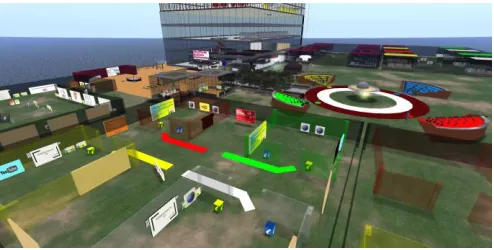
[image:4.612.318.565.75.200.2]To conduct this investigation, the VirtualSHU MUVE has been used (Fig. 1). The environment is implemented using the Opensimulator MUVE platform, and its design is representing a common educational setting featuring different areas dedicated to each of the topics of the module. In particular, the environment has a main campus with lecture rooms, activity and recreational areas, and a courtyard for students to meet and set -up for activities. An orientation area is also provided for students to learn the basic navigation and features of the environment. The environment provides a fantasy and 'sandbox' areas in which students can build their own objects. Lastly, a quiet area is also provided for students who do not wanted to be distracted, or are 'away from keyboard' but do not want to disconnect from the environment. Information on how someone can visit the VirtualSHU can be found here [50]
Figure 1: The VirtualSHU Layout
3.2 Experimental Study
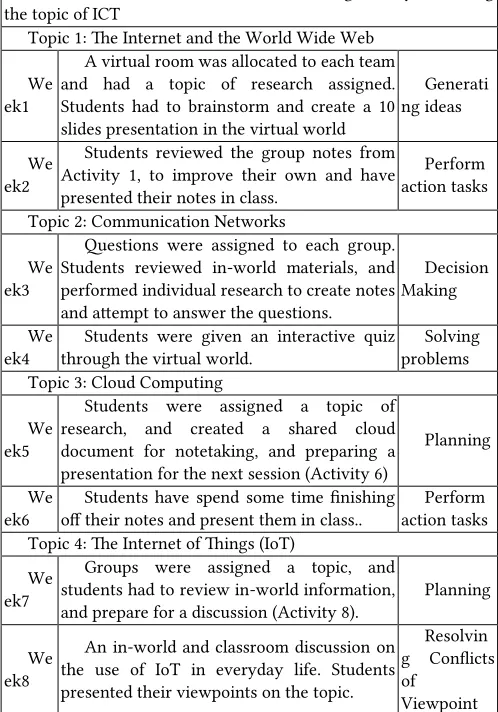
To conduct this investigation, we have setup an experiment for a period of 10 weeks to support the tutorial sessions of the Introduction to Information Communication Technology (ICT) module at our university. The module consisted of four tutorial classes with 16 to 20 students attending each class. Students were put in groups of 4 and 5 in the beginning of the academic year, and each session lasted for 60 minutes. During the period of the module, students were collaborating through the MUVE in completing module related tasks (Table 1). All tutorial tasks, for the duration of the experiment, took place within the virtual environment. To access the environment, students had a computer at their disposal, and they were accessing the visual aspect of the environment using their computer monitor, as well as their keyboard and mouse to interact with other users and the environment. The communication affordances of the environment (nearby chat, instant message, group message) were utilized to establish communication and information sharing among students and tutors. Each week’s topic was taking place in different dedicated rooms, utilizing a range of in -world tools designed to provide access to PowerPoint slides, website loaders, YouTube videos and information boards.
4
Table 1: Activities conducted within the VirtualSHU
Description TypeTask Orientation Session & Introduction to ICT
Week 1 and 2: Account creation, orientation, avatar customization, team formation and icebreaking activity discussing the topic of ICT
Topic 1: The Internet and the World Wide Web
We ek1
A virtual room was allocated to each team and had a topic of research assigned. Students had to brainstorm and create a 10 slides presentation in the virtual world
Generati ng ideas
We ek2
Students reviewed the group notes from Activity 1, to improve their own and have presented their notes in class.
Perform action tasks Topic 2: Communication Networks
We ek3
Questions were assigned to each group. Students reviewed in-world materials, and performed individual research to create notes and attempt to answer the questions.
Decision Making
We ek4
Students were given an interactive quiz through the virtual world.
Solving problems Topic 3: Cloud Computing
We ek5
Students were assigned a topic of research, and created a shared cloud document for notetaking, and preparing a presentation for the next session (Activity 6)
Planning
We ek6
Students have spend some time finishing off their notes and present them in class..
Perform action tasks Topic 4: The Internet of Things (IoT)
We ek7
Groups were assigned a topic, and students had to review in-world information, and prepare for a discussion (Activity 8).
Planning
We ek8
An in-world and classroom discussion on the use of IoT in everyday life. Students presented their viewpoints on the topic.
Resolvin g Conflicts of
Viewpoint
3.3 Data Collection Instruments
From the overall 71 students who were enrolled on the module, 48 students (34 male and 14 female), between 19 and 23 years old participated in the data collection.
The instruments used in this study were adapted from existing validated scales. To measure students’ engagement in the MUVE and address RQ1, we have adapted the Engagement Scale initially developed by Fredricks et al. [20], and further edited by Sun and Rueda [19], measuring three types of Student Engagement: Behavioral, Emotional and Cognitive Engagement. Initially, the scale was designed to measure children’s levels of school engagement, and Sun and Rueda [19] had modified some of the items to measure engagement of graduate and undergraduate students in distance education settings. To adopt the scale and ensure its fitness to the purpose of our investigation, we have further modified the scale by removing
two items relating to homework and revisiting recorded lectures (BE5 and CE7 from the Sun and Rueda [19] scale), as these were not applicable to our case. Due to this change, it was imperative to ensure the reliability of the questionnaire, therefore we have calculated an internal consistency coefficient test (Cronbach’s a) and the results indicated high internal consistency among the
items comprising each scale.
Figure 2: Examples of Students Collaborating in the MUVE
To investigate the development of a TMS among groups working within the virtual world and address RQ2, we adopted the Transactive Memory System scale developed by Lewis [44]. The scale investigates the factors of Specialization, Credibility and Coordination and its interpretation suggests that when a TMS exists, it causes specialized knowledge, trust in each other’s knowledge, and coordination in tasks processing.
While the reliability of the instruments used in this study was previously validated and reported, we have also performed reliability tests on the scales using the Cronbach’s alpha coefficient. The results were consistent with the index reported by the original authors of each instrument; suggesting high reliability and internal consistencies among the items comprising each scale. All scales were measured using a 5-point Likert rating (5 = strongly agree, 4 = agree, 3 = neither agree nor disagree, 2 = disagree and 1 = strongly disagree). To collect the results, an online questionnaire was administered to students at the end of the experiment (available at [51]).
In addition to the quantitative data collected, we have employed observations and informal enquiries to collect additional data. This included classroom observations by tutors and informal discussions with students to better understand their behavior, performance, and environment use. The experiment was initiated with the assumption that the students had limited social interaction with each other, due to the fact that they were 1st year students who were only recently
[image:5.612.314.558.154.294.2]4.
Results
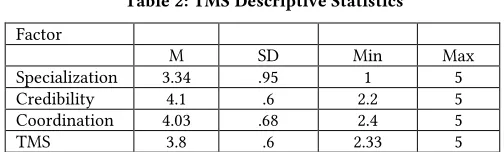
[image:6.612.313.569.120.183.2]Prior to conducting any statistical analyses, the data has been tested and verified for normality; therefore, parametric tests have been used. TMS results have first been investigated using descriptive statistics and are summarized in Table 2. It can be observed that the factors comprising TMS development have been perceived positively, suggesting that a TMS has been established among the working groups especially for Credibility and Coordination. These results are aligned with previous work [7, 46, 47, 49] validating the effectiveness of the MUVE we designed to support collaboration and TMS development.
Table 2: TMS Descriptive Statistics
Factor
M SD Min Max Specialization 3.34 .95 1 5 Credibility 4.1 .6 2.2 5 Coordination 4.03 .68 2.4 5 TMS 3.8 .6 2.33 5
The results indicate that there was overall medium to high Specialization among the students within the working groups, indicating that the students acknowledged and utilized the unique skills that different group members possessed. Mean Credibility is 4.1 out of 5 meaning that most of the students felt that the information shared, and actions taken during task execution by other members were credible and useful for the task at hand. Coordination construct measured how well the groups coordinate their actions, whether they needed to backtrack a lot and overall how well the coordination of activities achieved. Students in our sample thought that the coordination among their groups was good and that helped them achieve the output of each task. Thus, for us the above results confirm that the TMS was developed and the team members acknowledged the value of each member towards the achievement of the tasks’ goals.
The Student Engagement results were then investigated, with respect to RQ1, to extract the students’ perceptions of their Behavioral, Emotional and Cognitive Engagement when participating in learning activities within the MUVE and are summarized in Table 3. The results indicated that the students’ Behavioral, Emotional and Cognitive Engagement were moderately high during activities. Students’ indicated positive responses regarding their overall engagement with the course through the MUVE. For example, 75% of the students indicated that they constantly pay attention when they are taking the class in the MUVE; 58.3% mentioned they like taking the online class in the MUVE; 62.5% they feel excited by their work in the MUVE and 83.3% they mentioned they talk with people outside of school about what they are learning in the MUVE.
We understand that the environment itself might have affected how engaged students were with the material within the MUVE. A Pearson correlation test showed that the affordances, tools and design of the environment correlate significantly (r=0.771, p=0.000) with the student engagement scale. 66.7% rated the environment design was stimulating; 66.6%, thought
[image:6.612.46.298.217.293.2]that the object metaphors were intuitive; 75% mentioned that the amount of information displayed on the screen was adequate.
Table 3: Students’ Engagement Descriptive Statistics
M SD Min Max Behavioral Engagement 3.93 .89 1.50 5 Emotional Engagement 3.85 1.07 1.17 5 Cognitive Engagement 3.48 .82 2.00 5 Engagement Overall 3.75 .77 1.65 5 RQ2 of this study was set to investigate if there is correlation between Student Engagement and the development of TMS in a MUVE. Pearson correlation test was employed after all the assumptions met. The test revealed positive correlation (r=.567, p=0.000), between the two scales of TMS and Engagement. The relationship between the individual factors comprising TMS and Engagement were also assessed, revealing interesting correlations.
Table 4: Correlations Table
Spec Cred Crd BE EE CE Spec - .34* .44** .24 .24 .56**
Cred .34* - .69** .51** .42** .29*
Crd .44** .69** - .53** .38** .32*
BE .24 .51** .53** - .7** .39**
EE .24 .42** .38** .7** - .42**
CE .56** .29* .32* .39** .42** -
*significant at the 0.05 level / ** significant at the 0.01 level. Spec=Specialization, Cred=Credibility, Crd=Coordination, BE=Behavioral, EE=Emotional, CE= Cognitive Engagement
Specifically, the tests revealed positive correlation between Specialization and Cognitive Engagement (r=.56, p=0.000) indicating that the specialized knowledge and/or skills that members possessed relate to the cognitive engagement of the students. Credibility positively correlates to Behavioral (r=.51, p=0.000) and Emotional Engagement (r=.42, p=0.003) indicating that the development of credibility relates to how much involved is a student in terms of the behavior and emotional engagement to the course. Furthermore, positive correlation was also identified among Coordination with Behavioral (r=.53, p=0.000), and moderately positive correlation for Emotional (r=.38, p=0.007) and Cognitive Engagement (r=.32, p=0.029). This is an expected outcome since in order to coordinate actions within group activities students need to be highly engaged to the task.
4.1 Observations
One of the most interesting observations identified was that students were engaging in activities that required the team to delegate tasks in pairs or individuals. Tutors observed that activities requiring input from all students for a successful completion, was making students to contribute in order to make sure that they satisfy the rest of the team. This observation was later validated through the students’ responses in the TMS questionnaire.
[image:6.612.314.566.290.397.2]6
students responded and delivered better and more complete results in less complicated tasks. Informal discussions between students and the teaching team, revealed that when a reward was offered upon task completion, students were engaging and persisting in trying to complete the activity. Tutors observed that the more the students were required to interact with each other during tasks, the more they kept engaged in the learning activities. This included not only knowledge transfer but also social interaction. Furthermore, since the student interactions established during task execution, active students appear to attract the attention of the disengaged students.
Some student groups were informally enquired about their group work at the end of each session, after the fourth week of the experiment. Students suggested that as time passed their collaboration evolved, they were becoming more confident in coordinating, communicating, delegating activities based on the skills of the individual team members, and trusted each other to complete their assigned tasks. These is in line the TMS results.
The students experience with the MUVE was also inquired and their responses were very positive towards the use of the environment to support the module. Students appreciated the immersive feeling of being in the virtual environment and the ability to collaborate and communicate with others in a technology enhanced learning setting. Students indicated that the environment was a useful addition to learning and that the learning experiences were enjoyable. The students also agreed that the use of the environment as an alternative method of learning and undertaking activities was very engaging, as it was different to the traditional sessions they are used to. Some students further discussed the ability of the environment to promote socialization by reducing awkwardness and shyness in social interactions.
However, some students indicated that the 3D graphical and ‘gaming like’ element of the environment was found as a distraction. Some students provided examples of students disengaging from the activity when finishing their assigned tasks early, and start editing their avatar, playing around or even disturbing other team members by virtually pushing, or spamming the chat room.
5.
Discussion
The importance of promoting and accommodating for student engagement is crucial to ensure quality of learning. An effective modern classroom requires the use of technology, to establish effective collaboration among students, and utilization of learning activities that engage, stimulate and maintain the interest of students. The results of this study suggest that a MUVE can successfully engage students during collaborative learning tasks, through the building of TMS within groups. We have identified that when collaborative activities are designed within an MUVE, these can support Emotional, Behavioural, and Cognitive Engagement (RQ1), since Credibility, Specialisation and Coordination are achieved during the collaborative tasks. We have also determined that levels of Students’ Engagement in a MUVE are significantly correlated with the factors that contribute to the development of a TMS within the environment
(RQ2). In addition, as time passes, students are getting more familiar and develop better working relationships with their peers in the group and becoming more effective and productive.
Based on the results, observation, and lessons learned during this experimental project, some suggestions and considerations for the design of educational activities within a MUVE have been devised. Firstly, it is important to design activities that require equal input from all students, both in effort and time required for completion. This is necessary in order to ensure that all students are required to engage with the learning content for a successful outcome. Furthermore, it is important to ensure that the learning activities include elements that will involve all students of the group, to allow students time to focus and engage, as well as get to know their peers, each other abilities and capabilities. However, it is also important that these activities are intellectually stimulating and challenging to ensure that students are not losing interest.
Another aspect that an educator could consider is the social aspect of the activities which is essential in the learning process but also for the development of TMS. To promote social connections among students in the MUVE and in classroom, the activities design should aim to facilitate socialisation and let the students showcase their unique skills, knowledge and abilities so they can feel valuable to the group and valued by their peers. This can promote Cognitive and Emotional Engagement. This can be achieved by ensuring that a discussion, brainstorming, and/or information sharing is established within the group preferably at the beginning of the collaboration [7, 24]. Finally, the successful completion of activities should require students’ attendance and participation in the MUVE, activities should require students to reflect on their learning in order to understand what they have been taught.
While this work has provided some very interesting insights on the topics under investigation, there are some limitations that may have impacted the results. One of the most important limitations of this research project is that students were also conducting activities offline as part of their normal university life, and this had an impact in their communication channels. However, this was a conscious decision as the module team wanted to ensure that the students would communicate and collaborate in real life as well as the virtual world, without being isolated during the semester. Future work will focus on collecting, further data in qualitative form that may help to develop a better understanding of the relationship between Engagement and TMS.
Acknowledgements
This project is partially funded by the European Union's Horizon 2020 research and innovation programme under grant agreements No. 739578 (RISE) and 810105 (CyCAT).
REFERENCES
[1] Cardullo, V.M., Wilson, N.S., Zygouris-Coe, V.I. "Enhanced Student Engagement through Active Learning and Emerging Technologies". Student Engagement and Participation: Concepts, Methodologies, Tools, and Applications: Concepts, Methodologies, Tools, and Applications, Vol, 2017, pp. 399.
[2] Savin-Baden, M. "The Impact of Transdisciplinary Threshold Concepts on Student Engagement in Problem-Based Learning: A Conceptual Synthesis".
Interdisciplinary Journal of Problem-Based Learning, Vol 10, (2), 2016, pp. 3. [3] Chen, P.-S.D., Lambert, A.D., Guidry, K.R. "Engaging Online Learners: The
Impact of Web-Based Learning Technology on College Student Engagement".
Computers & Education, Vol 54, (4), 2010, pp. 1222-1232.
[4] Henrie, C.R., Halverson, L.R., Graham, C.R. "Measuring Student Engagement in Technology-Mediated Learning: A Review". Computers & Education, Vol 90, 2015, pp. 36-53.
[5] Junco, R., Elavsky, C.M., Heiberger, G. "Putting Twitter to the Test: Assessing Outcomes for Student Collaboration, Engagement and Success". British Journal of Educational Technology, Vol 44, (2), 2013, pp. 273-287.
[6] Boulos, M.N., Hetherington, L., Wheeler, S. "Second Life: An Overview of the Potential of 3-D Virtual Worlds in Medical and Health Education". Health Information and Libraries Journal, Vol 24, (4), 2007, pp. 233-45.
[7] Nisiotis, L., Kleanthous Loizou, S., Beer, M., Uruchurtu, E. 2017. The Development of Transactive Memory Systems in Collaborative Educational Virtual Worlds. In: D. Beck, C. Allison, L. Morgado, J. Pirker, F. Khosmood, J. Richter, and C. Gütl (eds.) Immersive Learning Research Network: Third International Conference, Ilrn 2017, Coimbra, Portugal, June 26–29, 2017. Proceedings. Cham: Springer International Publishing, 2017, 35-46
[8] Jarmon, L., Traphagan, T., Mayrath, M., Trivedi, A. "Virtual World Teaching, Experiential Learning, and Assessment: An Interdisciplinary Communication Course in Second Life". Computers & Education, Vol 53, (1), 2009, pp. 169-182. [9] Wegner, D.M. 1987. Transactive Memory: A Contemporary Analysis of the
Group Mind. Theories of Group Behavior. Springer, 1987, 185-208
[10] Astin, A.W. "Student Involvement: A Developmental Theory for Higher Education". Journal of college student personnel, Vol 25, (4), 1984, pp. 297-308. [11] Trowler, V. "Student Engagement Literature Review. York: Higher Education
Academy". Trowler, V. and Trowler, P.(2010) Student Engagement Evidence Summary, Vol, 2010, pp.
[12] Morgan, M., Sinclair, J., Butler, M., Thota, N., Fraser, J., Cross, G., Jackova, J. 2018. Understanding International Benchmarks on Student Engagement: Awareness and Research Alignment from a CS Perspective. Proceedings of the 2017 ITiCSE Conference on Working Group Reports. ACM, 1-24. [13] Morgan, M., Butler, M., Thota, N., Sinclair, J. 2018. How Cs Academics View
Student Engagement. Proceedings of the 23rd Annual ACM Conference on Innovation and Technology in Computer Science Education. ACM, 284-289. [14] Gutica, M. 2018. Improving Students' Engagement with Large-Team Software
Development Projects. Proceedings of the 23rd Annual ACM Conference on Innovation and Technology in Computer Science Education. ACM, 356-357. [15] Butler, M., Morgan, M., Sheard, J., Falkner, K., Weerasinghe, A. 2015.
Initiatives to Increase Engagement in First-Year Ict. Proceedings of the 2015 ACM Conference on Innovation and Technology in Computer Science Education. ACM, 308-313.
[16] Harrington, B., Chaudhry, A. 2017. Tracademic: Improving Participation and Engagement in Cs1/Cs2 with Gamified Practicals. Proceedings of the 2017 ACM Conference on Innovation and Technology in Computer Science Education. ACM, 347-352.
[17] Yang, Y.-F. "Engaging Students in an Online Situated Language Learning Environment". Comp. Ass. Language Learning, Vol 24, (2), 2011, pp. 181-198. [18] Nakamaru, S. "Investment and Return: Wiki Engagement in a “Remedial” Esl
Writing Course". Journal of Research on Technology in Education, Vol 44, (4), 2012, pp. 273-291.
[19] Sun, J.C.Y., Rueda, R. "Situational Interest, Computer Self‐Efficacy and Self‐
Regulation: Their Impact on Student Engagement in Distance Education".
British Journal of Educational Technology, Vol 43, (2), 2012, pp. 191-204. [20] Fredricks, J.A., Blumenfeld, P., Friedel, J., Paris, A. 2005. School Engagement.
In: K.A.M.L. Lippman (ed.) What Do Children Need to Flourish? : Springer, 2005, 305-321
[21] Cho, Y.H., Lim, K.Y. "Effectiveness of Collaborative Learning with 3d Virtual Worlds". British Journal of Edu.Technology, Vol 48, (1), 2017, pp. 202-211. [22] Warburton, S., García, M.P. "Analyzing Teaching Practices in Second Life".
Learning in Virtual Worlds: Research and Applications, Vol, 2016, pp. [23] Kamvisi, M., Kleanthous, S., Nisiotis, L. 2015. Experiences of Collaborating and
Learning through Collab3dworld. In: M. Gardner, G. Christian, P. Johanna, and R. Jonathon, eds. Workshop, Short Paper and Poster Proceedings from the inaugural Immersive Learning Research Network Conference, Prague, CZ. [24] Nisiotis, L., Beer, M., Uruchurtu, E. 2015. The Evaluation of a Cyber Campus to
Support Distance Learning Activities. In: M. Gardner, G. Christian, P. Johanna, and R. Jonathon, eds. Workshop, Short Paper and Poster Proceedings from the inaugural ILRN Conference, Prague, CZ.
[25] Chou, C.C., Hart, R.K. "The Pedagogical Considerations in the Design of Virtual Worlds for Organization Learning". Handbook of research on practices and outcomes in virtual worlds and environments, Vol, 2012, pp. 551-569. [26] Witmer, B.G., Singer, M.J. "Measuring Presence in Virtual Environments: A
Presence Questionnaire". Presence: Teleoperators and Virtual Environments, Vol 7, (3), 1998, pp. 225-240.
[27] Steuer, J. "Defining Virtual Reality: Dimensions Determining Telepresence".
Journal of Communication, Vol 42, (4), 1992, pp. 73-93.
[28] De Lucia, A., Francese, R., Passero, I., Tortora, G. "Development and Evaluation of a Virtual Campus on Second Life: The Case of Seconddmi".
Computers & Education, Vol 52, (1), 2009, pp. 220-233.
[29] Dede, C., Salzman, M.C., Loftin, R.B., Sprague, D. 1999. Multisensory Immersion as a Modeling Environment for Learning Complex Scientific Concepts. Modeling and Simulation in Science and Mathematics Education. Springer, 1999, 282-319
[30] Winn, W., Windschitl, M., Hedly, N., Postner, L. 2001. Learning Science in an Immersive Virtual Environment. Annual Meeting of the American Educational Research Association, Seattle, WA.
[31] Schrader, C., Bastiaens, T.J. "The Influence of Virtual Presence: Effects on Experienced Cognitive Load and Learning Outcomes in Educational Computer Games". Computers in Human Behavior, Vol 28, (2), 2012, pp. 648-658. [32] Claman, F.L. "The Impact of Multiuser Virtual Environments on Student
Engagement". Nurse education in practice, Vol 15, (1), 2015, pp. 13-16. [33] Gregory, S., Gregory, B., Wood, D., Grant, S., Nikolic, S., Hillier, M., Hearns,
M., Jacka, L., Mcdonald, M., Reiners, T. "Me, Us and It: Insiders' Views of the Complex Technical, Organisational and Personal Elements in Using Virtual Worlds in Education". Vol, 2017, pp.
[34] Connor, E. "Perceptions and Uses of Clicker Technology". Journal of Electronic Resources in Medical Libraries, Vol 6, (1), 2009, pp. 19-32.
[35] Toth, D., Kayler, M. 2015. Integrating Role-Playing Games into Computer Science Courses as a Pedagogical Tool. Proceedings of the 46th ACM Technical Symposium on Computer Science Education. ACM, 386-391. [36] Robinson, C.C., Hullinger, H. "New Benchmarks in Higher Education: Student
Engagement in Online Learning". Journal of Education for Business, Vol 84, (2), 2008, pp. 101-109.
[37] Holmes, N. "Engaging with Assessment: Increasing Student Engagement through Continuous Assessment". Active Learning in Higher Education, Vol 19, (1), 2018, pp. 23-34.
[38] Blin, F., Munro, M. "Why Hasn’t Technology Disrupted Academics’ Teaching
Practices? Understanding Resistance to Change through the Lens of Activity Theory". Computers & Education, Vol 50, (2), 2008, pp. 475-490.
[39] Theiner, G. "Transactive Memory Systems: A Mechanistic Analysis of Emergent Group Memory". Review of Philosophy and Psychology, Vol 4, (1), 2013, pp. 65-89.
[40] Michinov, E., Olivier-Chiron, E., Rusch, E., Chiron, B. "Influence of Transactive Memory on Perceived Performance, Job Satisfaction and Identification in Anaesthesia Teams". British journal of anaesthesia, Vol 100, (3), 2008, pp. 327-332.
[41] Hollingshead, A.B., Brandon, D.P. "Potential Benefits of Communication in Transactive Memory Systems". Human communication research, Vol 29, (4), 2003, pp. 607-615.
[42] Kotlarsky, J., van den Hooff, B., Houtman, L. "Are We on the Same Page? Knowledge Boundaries and Transactive Memory System Development in Cross-Functional Teams". Comm. research, Vol 42, (3), 2015, pp. 319-344. [43] Kahn, A.S., Williams, D. "We’re All in This (Game) Together: Transactive
Memory Systems, Social Presence, and Team Structure in Multiplayer Online Battle Arenas". Communication Research, Vol 43, (4), 2016, pp. 487-517. [44] Lewis, K. "Measuring Transactive Memory Systems in the Field: Scale
Development and Validation". J of App. Psy., Vol 88, (4), 2003, pp. 587-603. [45] Loizou, S.K., Dimitrova, V. "Adaptive Notifications to Support Knowledge
Sharing in Close-Knit Virtual Communities". User Modeling and User-Adapted Interaction, Vol 23, (2-3), 2013, pp. 287-343.
[46] Kleanthous, S., Michael, M., Samaras, G., Christodoulou, E. 2016. Transactive Memory in Task-Driven 3d Virtual World Teams. Proceedings of the 9th Nordic Conference on Human-Computer Interaction (ACM). 93.
[47] Nisiotis, L., Kleanthous, S. 2018. The Development and Evolution of Transactive Memory System over Time in Muves. 10th Computer Science and Electronic Engineering Conference. IEEE.
[48] McGrath, J.E., Hollingshead, A.B. "Putting the" Group" Back in Group Support Systems: Some Theoretical Issues About Dynamic Processes in Groups with Technological Enhancements". Group support systems: New perspectives, Vol, 1993, pp. 78-96.
[49] Kleanthous, S., Kapitsaki, G.M. 2018. Analyzing the Transactive Memory in Teaching Software Engineering. Proceedings of the 40th ICSE: Companion Proceeedings. ACM, 145-146.
[50] Instructions to Connect to VirtualSHU. Available From: http://virtualshu.com/instructions.html
[51] Data Collection Instruments Used in this Study. Available From: