Balance disorder after traumatic brain injury : A
multifactorial observational study.
CAMPBELL, Margaret.
Available from Sheffield Hallam University Research Archive (SHURA) at:
http://shura.shu.ac.uk/20637/
This document is the author deposited version. You are advised to consult the publisher's version if you wish to cite from it.
Published version
CAMPBELL, Margaret. (2007). Balance disorder after traumatic brain injury : A multifactorial observational study. Doctoral, Sheffield Hallam University (United Kingdom)..
Copyright and re-use policy
See http://shura.shu.ac.uk/information.html
Learning ana 11 services
Collegiate Learning Centre Collegiate C rescent Cam pus
Sheffield S10 2BP
1 0 1 8 5 7 3 3 7 2
ProQuest Number: 10701284
All rights reserved
INFORMATION TO ALL USERS
The quality of this reproduction is dependent upon the quality of the copy submitted.
In the unlikely event that the author did not send a com plete manuscript and there are missing pages, these will be noted. Also, if material had to be removed,
a note will indicate the deletion.
uest
ProQuest 10701284
Published by ProQuest LLC(2017). Copyright of the Dissertation is held by the Author.
All rights reserved.
This work is protected against unauthorized copying under Title 17, United States C ode Microform Edition © ProQuest LLC.
ProQuest LLC.
789 East Eisenhower Parkway P.O. Box 1346
Balance disorder after traum atic brain injury: a multifactorial observational study
Margaret Campbell
A thesis submitted in partial fulfilment of the requirements of Sheffield Hal lam University
for the degree of Doctor of Philosophy
Acknowledgments
Many survivors of traumatic brain injury seek assistance and advice from rehabilitation professionals in the process of trying to adapt and rebuild their lives in the months and years following injury. We are often limited in what we have to offer. This study emanates from a desire to do better in this regard and to repay the trust vested in health and social care professionals with improved outcomes for TBI survivors.
Thanks are due to Professor Anne Parry, my Director of Studies, for understanding the competing demands of clinical and academic life and believing first, that I would
eventually register as a PhD student, and second, that I would complete. Thanks are also due to Professor Alan Wing, Director of the SyMoN team at the University of Birmingham, for his substantial support and access to a dynamic peer group of researchers.
Many people gave freely of their time for discussion and debate in the early development of this study, notably, members of the team at the Head Injury Rehabilitation Centre,
Sheffield; Dr Richard Greenwood, Neurologist; Dr Peter Tungland, Audiological
Physician; Dr Nigel Harris, Clinical Scientist and Dr Jon Whittle, Researcher in Orthoptics. Others provided practical support or facilitation for the clinical study, notably Elizabeth Murray, Clinical Director; Dr Brenda Zinober, Research Manager and Dr Dipak Datta and Dr Christian Murray-Leslie, Consultants in Rehabilitation Medicine. A specific note of thanks is also due to all the members of the two neurorehabilitation teams who hosted the study for their high level of support and interest.
Abstract
Purpose
This research was undertaken to improve the assessment and treatment of balance disorder after Traumatic Brain Injury (TBI). It had three aims:
• to identify factors that have shaped healthcare practice concerning balance disorder and describe barriers to improved practice
• to develop understanding of the nature of TBI balance disorder
• to establish proposals for an improved healthcare response for those with balance disorder following TBI.
Relevance
TBI is a significant cause of disability in the young adult population and problems with balance are consistently reported.
Description
A mixed methods approach was employed to address the aims within a common framework. This comprised a series of subject reviews, an observational study and a systematic analysis of emergent findings. Topics for the subject reviews were chosen for their relevance to TBI physiotherapy practice. The observational study involved 27 participants in the recovery and rehabilitation phase after TBI and was structured using a new comprehensive assessment protocol developed from first principles. Findings were explored using frequency analysis and thematic analysis generated from the development of individual participant narratives. Emergent topics were then considered with reference to the literature, existing theories and concepts of postural control.
Observations
Different conceptualisations of balance were identified, influenced by discipline tradition, their evidence base, the evolution of ideas, and past and current purpose. Practice
development was constrained by the lack of a comprehensive conceptualisation of human balance, inconsistent and fragmented service response and limited knowledge concerning the nature and prevalence of impairments affecting balance function after TBI. Balance disorder was found to be highly prevalent and multifactorial in nature. New sensorimotor characteristics of TBI balance disorder were identified, including observations of
importance to the contentious debate concerning symptomatic minor TBI. Issues of key importance in the structure and process of assessment were also identified.
Conclusions and benefits
Contents
List of Tables v
List of Figures vi
1 In t r o d u c t io n 1
1.1 Balance 1
1.2 Traumatic brain injury 2
1.3 Balance disorder after traumatic brain injury 3 1.3.1 Physiotherapy for balance disorder after traumatic brain injury 3
1.3.2 The wider healthcare response 4
1.4 Research Aims 5
1.5 Methodology 6
1.6 Thesis design 6
1.6.1 Factors that have shaped and influenced healthcare practice 6
1.6.2 The nature of TBI balance disorder 8
1.6.3 Development of proposals for an improved healthcare response 8
S e c t i o n I
2 Mo t o rc o n t r o l: t h e o r ie sa n dp r a c t ic a la p p l ic a t io n s 9
2.1 Context and definitions 9
2.1.1 Perspectives on motor control 9
2.2 Theories and practical applications 14
2.2.1 Current theory-practice links 16
3 Ba l a n c e: c o n c e p t sa n d d e r iv a t io n 20
3.1 Balance, basic science and medicine 20
3.1.1 Mechanics 20
3.1.2 Biomechanics 21
3.1.3 Anatomy and physiology 22
3.2 Concepts of balance in physiotherapy practice 24
3.2.1 Early influences 25
3.2.2 Neurophysiotherapy 28
4 Ba l a n c e a s s e s s m e n ta n de v a l u a t io n 3 3
4.1 Academic influences 33
4.2 Approaches to assessment 33
4.2.1 Influence of purpose 33
4.2.2 Biomechanics and motor control 34
4.2.3 Neuro-otology, otolaryngology and vestibular science 36
4.2.4 Neurorehabilitation 41
5 Tr a u m a t i c b r a inin j u r y 51
5.1 Definitions 51
5.1.2 Severity 52
5.2 Pathophysiology 58
5.2.1 Types of injury and associated damage 59
5.3 Incidence and prevalence 61
5.4 Impairments and their functional impact 63
5.4.1 Early observations 63
5.4.2 Secondary observations 64
5.4.3 Emerging cognitive and behavioural issues 66
6 Ba l a n c ed is o r d e ra f t e r t b i: t h ec l in ic a lp r o b l e m 71
6.1 Balance disorder and clinical practice 71
6.1.1 Current rehabilitation practice 72
6.1.2 Current neurophysiotherapy practice 72
6.1.3 Systems underpinning human balance 73
6.2 Pathophysiology of TBI 74
6.2.1 Potential for multi-system dysfunction in TBI balance disorder 74 6.2.2 Balance disorder after TBI as described in the research literature 74 6.3 Limitations of current knowledge and practice 76
7 Se c t io n I: s u m m a r ya n dc o n c l u s io n s 78
7.1 Summary 78
7.2 Conclusions 80
S e c t i o n II
8 RESEARCH DESIGN AND METHODOLOGY 81
8.1 Research programme aims 81
8.1.1 Current understanding of TBI balance disorder 81
8.1.2 Research questions 82
8.2 Influences on research design 82
8.2.1 Context and clinical applicability 82
8.2.2 Characteristics and context of research participants 83
8.2.3 Constraints 83
8.3 Materials and methods 84
8.3.1 Standardisation 84
8.3.2 Assessment schedule development 85
8.3.3 Pilot Study 90
8.3.4 Main study 93
8.3.5 Results 94
9 Or ig in a l o b s e r v a t o n s: p r im a r ya n a l y s is 95
9.1 Whole group observations 95
9.1.1 Confounding factors 95
9.1.2 Sample validity 96
9.1.3 Spread of deficits 97
9.1.4 Frequency of deficits 97
9.1.5 Trends and associations 101
10 Or ig in a lo b s e r v a t o n s: s e c o n d a r ya n a l y s is 117
10.1 Single case analyses 117
11 Su m m a r yo fo v e r a l lf in d in g s 132
11.1 Comparison of primary and secondary analyses 132
12 Dis c u s s io n o fe m e r g e n tt o p ic s 134
12.1 The nature of balance disorder after TBI 134
12.1.1 Postural orientation 134
12.1.2 Postural drift 143
12.1.3 Illusory movement 145
12.1.4 Muscular co-contraction 148
12.1.5 Dizziness and disorientation 150
12.1.6 Central and ill-defined balance system disorders 153 12.1.7 Functional signs of balance system dysfunction 161
12.2 Symptomatic Minor Injury 165
12.2.1 Natural history of mild/minor TBI 165
12.2.2 Limitations in determining and describing severity 166 12.2.3 Post concussion syndrome and other presumptions of non organic symptoms 171
12.2.4 Brain Injury 173
12.3 Assessment structure and interpretation of findings 174
12.3.1 Assessment structure and content 174
12.3.2 Interpretation o f findings 175
12.4 Summary 181
12.4.1 Newly identified factors underlying TBI Balance Disorder 181 12.4.2 Key issues for the assessment of TBI Balance Disorder. 182 12.4.3 Key issues with implications for the understanding of TBI 183
Se c t io n III
13 Co n c e p t u a ll im it a t io n sa n dl e s s o n sf r o m p o s t u r a lc o n t r o lt h e o r y 184
13.1 Conceptual basis of data collection 184
13.1.1 Conceptual approach and group observations 184 13.1.2 Conceptual approach and single case analysis 185
13.2 Postural control theory 185
13.2.1 Essential characteristics o f a theoretical model 186
13.2.2 Schematic overview of postural control 187
13.2.3 Postural control theory and the key findings of this study 189
13.2.4 Value and limitations of the model 193
13.3 Sensory based conceptualisation of balance disorder 194
13.4 Balance mechanism and balance sense 195
13.5 Summary 196
14 Im p l ic a t io n sf o rh e a l t h c a r ea n d n e u r o p h y s i o t h e r a p e u t i cp r a c t ic e 198
14.1 Advances in the understanding of TBI balance disorder 198 14.2 Challenges for current service provision in the UK 199
14.2.1 Service developments 199
14.2.2 Specific needs o f TBI survivors 200
14.2.3 Neurophysiotherapeutic developments 200
14.3 Key components of a meaningful service response 201 14.3.1 The neurophysiotherapist as a service orchestrator 202 14.4 Service provision model for TBI balance disorder 203
14.4.1 Neurophysiotherapeutic competencies 203
14.5 Developing clinical practice 205
14.5.1 Supporting research programmes 205
15 Ev a l u a t io n o ft h er e s e a r c h p r o g r a m m e 207
15.1 Research focus and programme design 207
15.1.1 Initial concept and design 207
15.1.2 Emergent concept and design 208
15.2 Reflections on the research programme 209
15.2.2 Appropriateness of the approach 209
15.2.3 Strengths 209
15.2.4 Limitations 210
15.2.5 Conclusions 210
16 Co n c l u s io n s 212
16.1 Fulfilling the objectives of the enquiry 212
16.1.1 Concepts of balance within healthcare 212
16.1.2 Understanding the nature of TBI balance disorder 214
16.1.3 Improvements for patient care 214
16.1.4 Summary 215
12
39
53 53 58 73 86 91 92 92 96 98
List of Tables
Perspectives on motor control
Six sensory conditions for the Clinical Test for Sensory Interaction in Balance TBI severity: lowest summated Glasgow Coma Score (GCS) in the first 24 hours post-injury
TBI severity: duration of coma
TBI severity: duration of post-traumatic amnesia Components of postural control
Applying Nashner’s postural control analysis to TBI Assessment schedule contents
Details of participants 1 to 5
Total recorded observations by participant Details of participants 1 to 27
List of Figures
Figure 2.1 Movement occurring at the interaction of individual, task and environment 17
Figure 2.2 Factors constraining movement 18
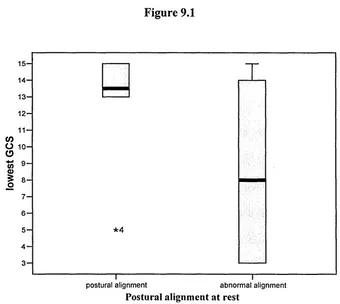
Figure 9.1 Postural alignment at rest 101
Figure 9.2 Number of biomechanical factors 102
Figure 9.3 Abnormal postural movement observed, eyes open 102 Figure 9.4 Abnormal speed and quality of cervical movement 103
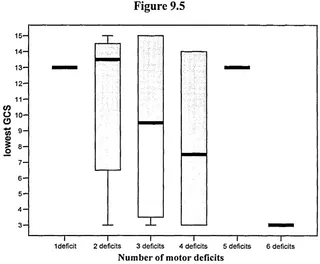
Figure 9.5 Number o f motor deficits 103
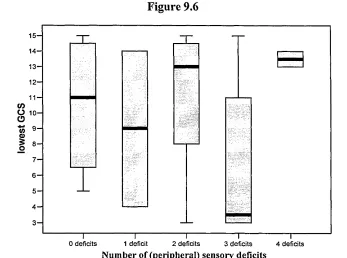
Figure 9.6 Number of (peripheral) sensory deficits 104
Figure 9.7 Smooth pursuit 104
Figure 9.8 Diminished acuity 105
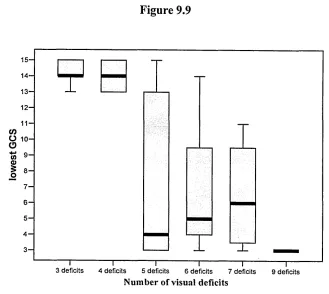
Figure 9.9 Number of visual deficits 105
Figure 9.10 Reported double vision 106
Figure 9.11 Reported visual degradation 106
Figure 9.12 Symptomatic on Dix-Hallpike manoeuvre 107
Figure 9.13 Suspected otolith involvement 107
Figure 9.14 Number of vestibular deficits 108
Figure 9.15 Number of vestibular deficits 22/27 108
Figure 9.16 Number of biomechanical factors 110
Figure 9.17 Reduced range of cervical movement observed 110
Figure 9.18 Number of motor deficits 111
Figure 9.19 Abnormal postural movement observed, eyes open 111 Figure 9.20 Abnormal postural movement observed, eyes closed 112
Figure 9.21 Single stimuli tactile deficit 112
Figure 9.22 Multi-joint proprioception 113
Figure 9.23 Number of sensory deficits 113
Figure 9.24 Neck pain reported 114
1
I
n t r o d u c t io n1.1 Balance
Balance is a term in daily use by health professionals working within the field of rehabilitation and is employed to describe a core component of functional human movement. Balance is considered by physiotherapists and other rehabilitation
professionals to be a key domain to address within a range of restorative programmes following injury or disease (Pollok, Durward, Rowe et al., 2000). Assessment of balance function and intervention to promote recovery in the presence of disorder is therefore a common focus in programmes with the objective of restoring optimal motor performance (Shumway-Cook & Woollacott, 2001 e). However, despite its apparent importance there is a lack of clarity around the meaning of the term as applied to functional human movement and an inconsistency in the use of the term in healthcare practice (Pollok et al., 2000). There is also a range of approaches to the definition and clinical management of balance disorder.
Pollock and colleagues (2000) discuss the lack of a universally accepted definition of balance within clinical practice and identify other commonly used clinical terms, such as stability and postural control, that are used with similar imprecision within the same context. This lack of precision in the use of language, and an associated underlying confusion in clinicians’ intuitive understanding of human balance, is cited as a past and present barrier to the development of optimal patient care. It is argued that the adoption of a set of agreed definitions would provide a foundation for future developmental work in this area. The authors suggest standard definitions for the imprecisely used clinical terms of human balance, human stability and postural control, derived from detailed reference to mechanical principles but also taking into account factors that differentiate human balance from that of the inanimate objects referred to in mechanics. The
suggested definitions are:
• human balance a multidimensional concept referring to the ability of a person not to fall,
• human stability the inherent ability to maintain, achieve or restore a state of balance, and
• postural control the act of maintaining, achieving or restoring a state of balance.
A different approach to the same issue is taken by Shumway-Cook and Woolacott, who equate (human) balance to (human) postural stability and discuss postural control in terms of achieving stability and orientation (Shumway-Cook & Woollacott, 200 le). Within this conceptualisation balance or postural stability are defined as “the ability to maintain the projected centre of mass within the limits of the base of support”. While this definition is, like that of Pollok and colleagues, clearly routed in mechanics, there are subtle differences in the conclusions drawn and in the language used.
The term balance is, within one approach used to describe a concept and, within another, to describe a skill. This illustrative example highlights both inconsistency in the use of language and differing approaches to conceptualisation and categorisation of these commonly used phrases within rehabilitation practice.
1.2 Traumatic brain injury
Traumatic brain injury (TBI) is a common cause of death and disability worldwide, with peaks of incidence in the moderately young and relatively old subpopulations (Sorenson & Kraus, 1991). In young adults injury is often linked to high-energy insults, for
example, in road traffic accidents, assaults with weapons or high-risk sports.
Consequently, TBI affecting this population often results in diffuse brain damage with additional extracranial injuries (Campbell, 2000d).
Over the last thirty years there has been significant progress in early medical management with a concomitant increase in survival rates. Developments in
1.3 Balance disorder after traumatic brain injury
Complaints of balance disorder after TBI are reported in a small series of studies but the nature of TBI balance disorder is imprecisely or incompletely described (Campbell & Parry, 2005). Studies are largely reported in isolation without reference to a wider context and there is often an (incorrect) assumption that balance is a universal concept that requires no definition or description. Understanding of the nature of balance disorder after TBI is therefore limited by the lack of reference to a common framework within which to consider the findings of individual studies as well as the issues of definition and labelling common to other areas of healthcare practice as introduced in section 1.1.
1.3.1 Physiotherapy for balance disorder after traumatic brain injury
Physiotherapy is concerned with human function and movement and with maximising potential (Chartered Society of Physiotherapy, 2002). The assessment and management of factors interfering with a return to pre-injury levels of physical function for people recovering from TBI is, therefore, a key responsibility for physiotherapists working in the field of TBI rehabilitation.
While the precise nature of TBI balance disorder remains unclear it is known to variously limit the ability of affected individuals to safely perform physical activities and participate in a range of normal life roles. There is, therefore, a continuing demand on physiotherapists within TBI rehabilitation services for a clinical response to manage the functional impact at the level of the individual.
As a practitioner working in this area my initial response was to apply assessment and management approaches common to wider physiotherapy practice. Regular clinical evaluation then allowed experientially-based adjustment and development of
However, attempts to relate these management programmes to the published literature, in order to progress to formal evaluation of the developed approach and communicate this to the wider health community, proved difficult. The literature was inadequate and confused. In addition, the process of review highlighted that much of ‘established’ physiotherapy practice was derived from the same confused knowledge base.
1.3.2 The wider healthcare response
Limitations and inconsistencies in the wider healthcare response were also identified when trying to develop collaborative approaches in individual cases and from the reports of patients’ experience outside specialist TBI services.
Responses to requests for a clinical opinion from medical specialities to enhance the development of physiotherapy and other rehabilitation management plans were
unpredictable and inconsistent. With a few exceptions they were commonly associated with a negative message about management or recovery. Follow-up discussions with clinicians in non-TBI medical specialities, and with their associated scientific and academic colleagues, identified that they were aware that their knowledge base with respect to TBI was limited but that they also had little expectation of any potential for improvement. These discussions also suggested that there was a variety of
conceptualisations of balance disorder between disciplines.
In terms of individuals who had consulted medical colleagues prior to engaging with TBI rehabilitation services there were recurrent issues of their problems not being recognised as genuine or of them being advised that there was no scope for remediation of their symptoms or any available effective management advice.
The negative messages commonly expressed by medical practitioners were not
Characteristics of the healthcare response
The observed healthcare response to people who experienced balance disorder after TBI was characterised by inconsistent advice and prognoses. The response received was dependent on the discipline consulted and the personal experience of the practitioner seen. Much of the medical response was negative, either in terms of a failure to validate the problem or in terms of failure to offer constructive management advice or onward referral.
Underlying factors
The primary factors underlying the poor healthcare response were:
• Specific limitations of knowledge concerning TBI and balance disorder after TBI • Inconsistencies in the conceptualisation of balance and balance disorder in its wider
context
• Lack of understanding of the potential to manage balance disorder after TBI for positive effect. The ability to communicated clinical success by isolated
practitioners was significantly limited by the clack of a common conceptualisation of balance and an accepted description of TBI balance disorder.
1.4 Research Aims
The research programme reported in this thesis was undertaken, therefore, to develop the knowledge base upon which clinical practice for suspected balance disorder after TBI is founded. The research programme had three primary aims:
• to identify and describe factors that have shaped and influenced healthcare practice concerning balance and balance disorder and so understand barriers to improved practice
• to develop a better understanding of the nature of TBI balance disorder
1.5 Methodology
A mixed methods approach was employed to achieve the three inter-related outcomes outlined above. The research design was, in part, emergent, influenced by the
knowledge and understanding developed from the primary review of the literature. This process revealed wide, complex and sometimes conflicting influences on practice in general and limitations of knowledge in the area of TBI balance disorder in particular. The nature of the literature precluded straight forward critical review and synthesis resulting in the generation of testable hypothesis relating to the nature of balance disorder. However, analysis did allow the development of understanding of the context for current healthcare practice and the distillation of a theoretical context within which to explore the nature of TBI balance disorder.
The complex research process that emerged approximates to a Grounded Theory (Strauss & Corbin, 1998) approach, acknowledging the contextual influences on
healthcare practice, observing the nature of TBI balance disorder without the constraints afforded by those historical influences and interrogating the emergent observations in a thematic format with reference to a wide secondary literature review. Finally, the knowledge developed via this process is applied to the limitations previously identified in standard healthcare practice resulting in the generation of a new theoretical
framework and suggestions for change in healthcare practice.
1.6 Thesis design
The structure and content of the thesis is consistent with the research design and comprises a primary narrative and a series of appendices. The primary narrative is presented in three main sections which are broadly congruent with the three aims of the research programme.
1.6.1 Factors that have shaped and influenced healthcare practice
allow description of the contextual influences on the development and content of physiotherapy practice, including wider healthcare influences, and to summarise current understanding of TBI and TBI balance disorder. As well as the citing and critical
evaluation of pertinent research studies, leading voices are used to summarise issues and approaches in complex or contentious areas. This is presented in the format of a series of focused subject reviews.
Three subjects reviews:
• Motor control: theories and practical applications • Balance: concepts and derivations
• Balance: assessment and evaluation
are employed to provide a broad understanding of influences on physiotherapy practice in the context of healthcare practice. As balance is considered within physiotherapy practice to be an expression of motor performance, motor control was chosen as a key subject to understand the content of neurophysiotherapeutic practice. Concepts of balance and approaches to assessment were chosen to explore the perceived confusions in wider healthcare practice.
Two further subject reviews: • Traumatic brain injury
• Balance disorder after traumatic brain injury
are used to describe current knowledge of this pathology and its effects and how this is reflected in clinical practice. With reference to the latter, the clinical problem is
described from practice-based knowledge linked with key issues raised in the preceding subject reviews. The presentation of this knowledge, while not evidenced by any significant literature, is crucial to the development of understanding of the primary need for the research programme as a whole and the third aim of the programme in particular.
1.6.2 The nature of TBI balance disorder
The nature of TBI balance disorder is, therefore, examined via a focused observational study of participants in the rehabilitation and recovery phase after TBI. The
development, process and findings of this study are presented in Section II (Chapters 8 to 12). This includes a full discussion of the emergent themes with respect to a wider literature, consistent with a grounded theory approach.
1.6.3 Development of proposals for an improved healthcare response
2
M
o t o r c o n t r o l:
t h e o r ie s a n d p r a c t ic a lAPPLICATIONS
2.1 Context and definitions
Before exploring concepts of human balance it is important to define the context within which the discussion sits. That context is human motor control. Motor control is the name given to the study of the nature and control of movement (Shumway-Cook & Woollacott, 2001c). This field of study has been approached from a variety of perspectives and issues of key importance categorised in different ways dependent on the view point of the summarising author. A review of key summary approaches is given below followed by a distillation of important factors derived from consideration of each approach.
2.1.1 Perspectives on motor control
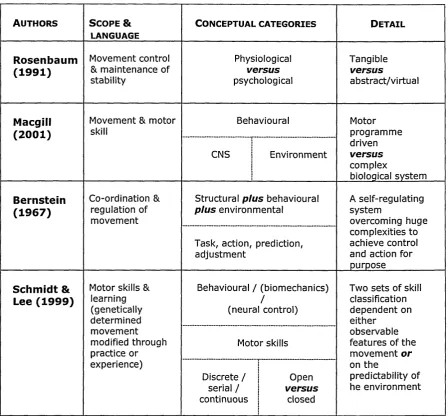
Rosenbaum (1991b) defines the scope of motor control as being inclusive both of how movement is controlled and how stability is maintained. He identifies two primary approaches to experimental studies and theory development relating to motor control; the physiological and the psychological. In this view motor control considered from the physiological perspective is strongly focused on the physical components that underpin the motor system including muscles, bones, joints and the nervous system. It also considers the relationship between these physical components. By contrast, the psychological perspective focuses on describing how motor control might be achieved with respect to theoretical frameworks and processes, without necessarily identifying the underlying physical mechanisms.
influenced have at their core the belief that human movement control is a complex system, similar to other complex biological or physical systems, adhering to the theories of non-linear dynamics.
Rosenbaum’s (1991a) and Macgill’s (2001)differing approaches to categorisation, and the apparently arbitrary nature of the distinctions they choose to make, raises awareness of potentially varying assumptions underlying research studies undertaken from
differing perspectives. It also begins to hint at the complexity of synthesising literature in this and related fields. This is one factor contributing to the confusion of approaches in healthcare practice (see 2.2 below and chapters 3 and 4). However, while
Rosenbaum’s physiological/psychological conceptualisation and Macgill’s central/environmental conceptualisation offer alternative frameworks for the consideration of new knowledge and developing theories within the field of motor control, they lack comprehensive coverage.
Bernstein and colleagues in the Moscow School of Biometrics pursued a programme of research and theory development in the first half of the twentieth century, some of which was summarised and published in English shortly after Bernstein’s death in 1967 (Bernstein, 1967b). This body of work is characterised by the cross referencing of multiple facets of knowledge, not only across biomechanics, anatomy and
neurophysiology but also considering the impact of a changing environment. Theories developed within this programme were tested in terms of mathematical laws. It is not until the last quarter of the twentieth century that this work is given full credence in western literature (Latash, 1998) and reference is still often limited to fragments rather than to the work as a whole, for example (Allum, Bloem, Carpenter et al., 1998; Shumway-Cook & Olmscheid, 1990; Zattara & Buouisset, 1998) .
1926), recognising that the relationship between action and the external environment was significantly more complex:
“A movement never responds to detailed changes by a change in its detail; it responds as a w hole to changes in each small part, such changes being considerably distant both spatially and temporally from those initially encountered.” (1967a)p23
He suggested that movement appropriately controlled for purpose was probably achieved via the co-operation of a range of neural structures rather than movements being dependent on a single topological location:
“..the co-ordinational regulation o f each complete cognitive motor act is constructed on a kind o f multiple hierarchical system o f circuits o f regulation and
adjustment.”( 1967d)p 178
He also concluded via the analysis of cycles of movement that movement had to be organised with some accuracy in advance and postulated that this was achieved via a system of stored memories (engrams) combined with a system of activation sufficiently flexible to allow a degree of on-line adjustment. Thus he modelled human motor control as an example of a self-regulating system and, given the mechanical complexities of the human system, at the same time elucidated the complexities of achieving postural control and efficient co-ordinated movement:
“The coordination o f a movement is the process o f mastering redundant degrees o f freedom o f the m oving organ, in other words its conversion to a controllable system.” (1967c)pl27
The resonance of Bernstein’s work today is at least in part a function of its
comprehensive coverage. It is also because his logical and analytical approach resulted in innovative postulations about the central nervous system, and its role in motor control, which continue to hold true.
Schmidt and Lee offer a three-way construct to underpin their approach: behaviour, biomechanics and neural control. Motor skills (behaviours) are considered via two sets of classification. The first comprises discrete, serial or continuous movements, a method of classification of individual actions that is dependent on observable features. The second set is open versus closed skills, with classification being dependent on the predictability of the environment within which an action takes place.
[image:24.621.82.531.236.652.2]What is clear from consideration of all the approaches summarised here (see table 2.1) is the lack of agreement on what constitutes the scope of motor control and how its constituent parts are best described. There is not a settled theory of motor control.
Table 2.1
Au t h o r s Sc o p e &
LANGUAGE
Co n c e p t u a l c a t e g o r ie s De t a il
Rosenbaum
(1991) Movement control & maintenance of stability Physiological versus psychological Tangible versus abstract/virtual Macgill
(2001) Movement & motor skill Behavioural Motorprogramme driven versus complex
biological system
CNS i Environment
|
Bernstein
(1967) Co-ordination & regulation of movement
Structural plus behavioural
plus environmental A self-regulating system
overcoming huge complexities to achieve control and action for purpose Task, action, prediction,
adjustment
Schmidt &
Lee (1999) Motor skills & learning (genetically determined movement modified through practice or experience)
Behavioural / (biomechanics) /
(neural control)
Two sets of skill classification dependent on either
observable features of the
movement or
on the
predictability of he environment Motor skills
Discrete /
j
Openserial / | versus
continuous j closed
However, while authors approach description and categorisation from different perspectives and continue to focus on specific aspects central to their own interests, there are some elements that are core and from which general statements can be derived.
• Motor control (how movement is controlled and stability maintained) is dependent on a range of distinct control parameters and levels of control within the nervous system, such as affects movement planning, selection, timing, force and co ordination.
• Motor control is not just about observable action but is dependent on complex systems of sensory perception that provide information about the environment and the relationship between the human organism and the environment.
• Theories of motor control must take into account the biomechanics of the human organism, its neurophysical and neuropsychological properties and its capacity for self-organisation.
So human motor control must be governed by an intelligent, self-regulating system that comprises a set of properties including:
1. A knowledge base
a. Understanding body components and their interrelationships, their properties, possibilities and limitations
b. Understanding the nature of environments, the rules that pertain, from which to develop predictions based on expectations
c. Having a sense of self, a knowledge of vulnerability and a range of emotional responses linked to prior experience.
2. Sensors to monitor the body and its components 3. Sensors to monitor the environment
4. Mechanisms to link 2 and 3 to develop an understanding of the relationship between the body and the environment
2.2 Theories and practical applications
Neurophysiotherapy in the United Kingdom as it developed into a distinct speciality during the 1970’s became dominated by an approach to treatment which became known as the Bobath Concept. The Bobath Concept was the product of an innovative and highly skilled physiotherapist, Berta Bobath and her doctor husband, Karel. Mrs Bobath worked initially with children with cerebral palsy and then with adults with acquired neurological deficits and particularly with hemiplegia (The Bobath Centre). She demonstrated significant treatment successes, as compared to previous
interventions that were based on the promotion of compensatory strategies and the use of various splinting and walking aids. The neurophysiology literature cited in support of this assessment and treatment approach (Bobath, 1970,1978) was that of Magnus (1926) and Sherrington (1947), focusing on reflex inhibition and facilitation of ‘normal’ movement in the context of a hierarchically organised central nervous system (CNS). Treatment progressions were also strongly influenced by an assumption of recovery patterns paralleling the developmental sequence seen in the normal child from birth through to physical maturity.
The Bobath Concept was one of several ‘neurophysiological approaches’ to treatment in the presence of neurological dysfunction developed in the mid twentieth century, for example, The Rood Approach (Goff, 1969; Stockmeyer, 1967) and Proprioceptive Neuromuscular Facilitation (Kabat & Knott, 1954; Voss, 1967), which remained popular for longer in the United States. Although these approaches were qualitatively different in the specific techniques employed, and to some extent the defined target population, they all relied heavily on the handling skills of therapists and the basic principle that it was possible to influence the CNS via its peripheral sensory endings in skin, muscles and joints.
techniques, and an underpinning observational assessment to guide appropriate
application, were then taught as the basis of treatment. The original neurophysiological theory, when given alongside the practical courses, appeared increasingly tenuous in its linkage.
While much of what was practised under the label of the Bobath Concept in the UK produced positive outcomes, some practitioners began to recognise limitations in this and other facilitation approaches (Lennon, Baxter, & Ashbum, 2001; Matteo, 2003). Initially this was in relation to applied movement or the carryover of movement achieved in therapy sessions into day to day living. Subsequently there was growing recognition of potential conflicts between existing practice and emerging knowledge, for example, in the fields of motor learning and in muscle physiology (Gordon, 2000). There were some, however, who dismissed the importance of such conflicts on the grounds that theory development in these and other related areas were not applicable to clinical practice, since they were developed to reflect the normal as opposed to the pathological human system.
Other treatment approaches to address physical dysfunction associated with
neuropathology have been proposed, influenced by research and theory development in a range of academic fields. These include a variety of educational, psychological and biomechanical approaches, as well as those based on theories of motor control and skill acquisition, for example, Conductive Education(Brown & Mikula Toth, 1997)and Movement Science(Carr & Shepherd, 2000b). It is not intended here to provide a full historical review of the development of neurophysiotherapy or to evaluate the relative merits of the various approaches. The purpose of this discussion is to highlight the erratic nature of the theoretical context within which neurophysiotherapy sits and in particular to recognise that practice in the UK was for a period of time almost
completely dissociated from a credible theoretical base. As a result, practice is now a mixture of experiential and knowledge based procedures.
development through research. Thus while the reflex dominant hierarchical model of CNS control was increasingly challenged in the academic world and evidence to support the plastic nature of the whole neuromuscular system, including the CNS, was growing, lack of potential for recovery of lost function was still a prominently held belief within medical circles until very recent times. This, coupled with the lack of a robust underpinning theory for ‘successful’ clinical interventions, has contributed to the lack of value given to rehabilitation practices, poor access to research funding and limitations on the development of evaluation programmes.
2.2.1 Current theory-practice links
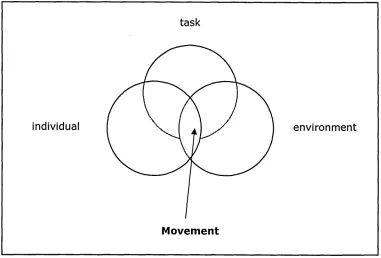
While there have been significant challenges to the development of a comprehensive evidence-base, increasingly ideas and developments from a wide range of fields of enquiry have been synthesised to inform assessment and intervention in clinical practice, for example Carr and Shepherd (1998b) and Partridge (2002). Motor control theories developed and presented in the latter part of the twentieth century have moved away from regarding the nervous system as requiring a stimulus in order to produce movement and towards the recognition that the brain has an inherent ability to initiate action and beyond that to suggest that the exploration of the environment to satisfy the human organism’s needs may be the pre-eminent factor (Gibson, 1966). Movement is increasingly recognised not as a distinct entity in itself but as being more effectively associated with a purpose, for example, the achievement of a concrete outcome such as beating a drum (van der Weel, van der Meer, & Lee, 1991). Thus, movement is more accurately considered as something that transpires when there is a task to be achieved.
Figure 2.1
task
individual e n v iro n m e n t
Movement
Movement occurring at the interaction of individual, task and environment (Shumway-Cook & Woollacott, 2001e)
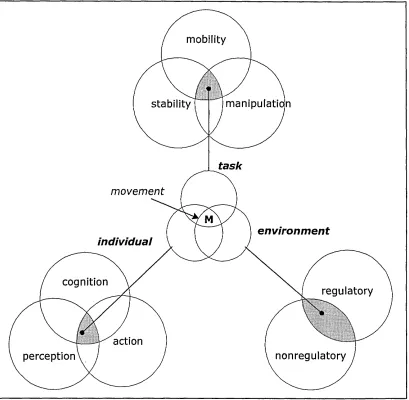
Shumway-Cook and Woolacott further define aspects pertaining to each of the primary factors that constrain the emergent movement, amplifying the complexity that underlies the successful production of everyday movement. In defining the three primary factors (individual, task and environment) and the constraints that apply to them (see figure 2.2) they draw on evidence and ideas associated with a variety of theories of motor control, incorporating them into a new conceptual framework, rather than aligning with one particular perspective. By implication this suggests that they do not consider any single theory of motor control sufficient to apply directly to clinical practice.
Figure 2.2
mobility
manipulation stability
task
movement
environm ent individual
cognition
regulatory
action
nonregulatory perception
Factors constraining movement (Shumway-Cook & Woollacott, 2001e)
Summary
Motor control is the study of the nature and control of movement and is approached from various perspectives, categorised in a variety of ways and set in a range of
contexts. Theories of motor control address physiological (tangible) and psychological (abstract) domains or may be developed from behavioural analyses and attributed to central (nervous system) or environmental factors. Comprehensive approaches, such as that of Bernstein and colleagues, are inclusive of structural, behavioural and
3
B
a l a n c e:
c o n c e p t s a n d d e r iv a tio n3.1 Balance, basic science and medicine
Healthcare practice today is the result of an evolutionary process. Its nature is strongly dictated by medicine but it is also influenced by developing concepts in the basic sciences. In some areas this influence is overt, for example, the use of biomechanics in the development of prosthetics and orthotics. In terms of neurophysiotherapy the links are not so clearly seen. In order to understand influences on current knowledge and practice it is important to briefly review this genesis and to explore its impact and utility.
The term balance as applied to functional human movement within physiotherapy practice is probably derived from two quite separate traditions, from the physical sciences and from medicine. In terms of the physical sciences the link is via
biomechanics to Newtonian mechanics. In terms of medicine the primary influences are found in neuroanatomy, physiology and pathology.
3.1.1 Mechanics
Mechanics is a field of study within physics that deals with forces and the effects of forces on solid, liquid and gaseous matter. It comprises a set of basic laws that are applied to a range of sub-disciplines, including a discipline called the mechanics of rigid bodies (Bell, 1998c). The mechanics of rigid bodies comprises three further
subdivisions: statics, kinematics and kinetics. Statics is concerned with the description and analysis of forces that tend to cause motion, kinematics is concerned with motion (without reference to mass or force) and kinetics is concerned with motion, mass and the forces that produce motion (Bell, 1998b). The term body when used in mechanics refers to any object, animate or inanimate (Bell, 1998b). Much of Newtonian
mechanics is based around Newton’s Laws of Motion which variously state that:
■ Force is the product of the mass of a body and acceleration (the rate of change of speed)
■ Action forces are always opposed by an equal reaction force (Bell, 1998b).
Discussion of the application and impact of each of these laws centres around three primary phenomena: force, motion and deformation and is dependent on the acceptance of a whole range of mathematical concepts such as mass and time and the rules of mathematical disciplines such as algebra and calculus (Bell, 1998c). Thus
diagrammatic representations and mathematical calculations are used to explain or predict the effects of external forces on a body or to define the optimum conditions or qualities required of a body to meet the demands of a particular task.
3.1.2 Biomechanics
Biomechanics is both a concept and branch of applied science. In terms of a concept it is described simply by Bell (1998c) as the application of mechanics to the human body and by Adrian and Cooper (1995a)as the physics of human motion. Winter (1990a) describes biomechanics in terms of two primary components, mechanics and the biophysics of the musculoskeletal system, influenced by the neural system. Taken on their own, the concise definitions given by Bell, and Adrian and Cooper, are seemingly easy to understand but it is the more descriptive outline given by Winter that begins to hint at the complexity of the subject. This tension between the seemingly simple concept of applying mechanics to the human body and the ability to achieve this meaningfully in practice is also apparent in the development of physiotherapy practice (see 3.2.1).
Balance as a mechanical/biomechanical concept
Within mechanics and biomechanics the term balance does not generally appear as a stand-alone concept but is strongly associated with discussion of equilibrium.
is, a state of balanced forces. Stable, unstable and neutral equilibrium are terms used to define how a body will behave in response to an external force causing slight
displacement, directly related to its current level of stability. The stability of a body is a factor of its base of support (the larger the better), centre of gravity (the lower the better) and line of gravity (to remain within the area of the base of support) (Bell,
1998a). Thus in mechanics only static equilibrium is regarded as a true state of balance and this can only occur when a body is at rest.
In relation to biomechanics, Adrian and Cooper define balance as a constant adaptation to forces in order to momentarily attain dynamic equilibrium before adapting and establishing new equilibrium (Adrian & Cooper, 1995b). This suggests that in
biomechanical terms balance is not a concept applicable only to a body at rest but that it is an active process of repeatedly achieving an approximation to static equilibrium while not truly being at rest or even when in motion. This use of the term balance to describe a dynamic process is taken further by Winter (1995), who defines it as “a generic term describing the dynamics of body posture to prevent falling”. This definition of balance is already somewhat removed from the pure mechanical concept of balanced forces associated with static equilibrium. It does, however, hold up to examination when considered alongside the colloquial use of the term within rehabilitation practice.
3.1.3 Anatomy and physiology
In anatomy the term balance is associated with one of the two divisions of the eighth cranial nerve and with its sensory end organ, housed in the middle ear. The function of the eighth cranial nerve is designated as hearing and balance but the two divisions of the nerve are termed cochlear and vestibular, reflecting the formal anatomical names given to the sensory end organs of hearing and balance respectively (Nolte, 1999c).
Anatomical texts refer to balance as a function associated with the eighth cranial nerve and its connections, including the vestibular end organ1 but they do not define balance function in itself.
The structure and function of the constituent parts of the vestibular end organ and its neural connections are clearly described. In summary, there are three semi-circular canals that detect angular acceleration in each of three planes, and two otolithic organs that detect linear acceleration (Nolte, 1999c). Sensory afferent information is conducted from the balance organ to four brainstem nuclei (known collectively as the vestibular nuclei) and to the cerebellum. The vestibular nuclei also receive projections from the cerebellum, the contralateral vestibular end organ and the spinal cord (Nolte, 1999c). The vestibular nuclei project to the spinal cord and cerebellum and also to the nuclei of the third, fourth and sixth cranial nerves (associated with eye movements and vision). There are further projections to the cerebral cortex (via the thalamus) and to the reticular formation (Nolte, 1999c). The neural connections are indicative of functional links with antigravity muscles and neck muscles, eye movements (including the vestibulo-ocular reflex) and whole body position sense (in association with information provided by other proprioceptive systems and the visual system).
Vestibular science
Vestibular science is a subdivision of the wider discipline known as audiological
Balance as medical construct
In medical science, then, the term balance is most commonly used with reference to the structure and function of the vestibular (or balance) organ of the inner ear and its neural connections. In keeping with the historical development of medicine, where
pathological signs and symptoms tend to be given labels derived from the anatomical structures implicated in the disease process, symptoms associated with dysfunction of the balance organ are known as balance disorders. By inference, the function that is disturbed by these disorders is ‘the balance’.
The accepted use of the term balance disorder in medical practice is derived primarily from this focus within the specialities of ENT and audiology, and with neurology and neurosurgery becoming involved in the diagnosis and management of pathologies that extend beyond the middle ear. In the wider neurological context balance may also be used to refer to a physical skill but this usage remains peripheral to the primary focus on the balance organ.
3.2 Concepts of balance in physiotherapy practice
Physiotherapy is defined as a science-based healthcare profession, which views human movement as central to the health and well being of individuals (UK Chartered Society of Physiotherapy, 2002). The physiotherapy profession is a broad church,
encompassing practitioners who work in a whole range of health promotion, preventative healthcare, treatment and rehabilitation settings. There is a core undergraduate curriculum but also a diverse range of postgraduate specialisms.
This discussion does not attempt to review concepts of balance in all areas of
physiotherapy practice. It focuses on historical influences on undergraduate teaching and early professional practice and the impact of the emergence and maturation of the postgraduate specialism of neurophysiotherapy.
3.2.1 Early influences
Historically, physiotherapy core skills relate to the application of manual, electrical and exercise-based interventions. Texts for all of these were strongly based on principles derived from the basic sciences and, combined with the study of anatomy, physiology and pathology, were intended to develop an understanding of the active elements of the recommended interventions and the effects of those interventions on the human being in normal and pathological states. As practice developed from the initial focus on massage and the use of light and heat to include the use of electrical currents and therapeutic exercise, texts were expanded to include more physical principles.
For example the seventh edition of Clayton’s Electrotherapy and Actinotherapy (Scott, 1975) was the first to include a section on physical principles related to exercise. This section comprised two chapters, one on mechanics and one on the physical principles of exercises in water. In terms of mechanics, Newton’s laws are clearly cited and
described along with energy, work and power, the principles of levers, pulleys and springs. All are given context in the form of examples of application to the human body or to apparatus that may be used as part of therapeutic exercise programmes. However, the human examples are limited and do not necessarily add clarity. For example, while equilibrium (or balance) is defined as occurring when a body remains at rest, it is also stated that continual adjustment is required of the human body during movement so that equilibrium is maintained. There is a fleeting and global reference to neurological mechanisms that control the body but no reference to the vestibular system.
Mechanical Principles which focuses on applied kinematics and kinetics and another entitled Erect Posture, which uses the mechanical principles of equilibrium as its foundation. In the latter chapter the term balance is applied to the whole body and to individual joints in turn to describe the optimum position of equilibrium within and between body segments to achieve a standing position termed comfortable symmetrical posture and “body balance” in other commonly adopted antigravity positions.
A whole chapter entitled Balance (Waddington, 1976) appears in Practical Exercise Therapy (Hollis, 1976), which also includes a chapter on Applied Mechanics and another on Simple Machines. While the latter two chapters revisit a similar range of subjects as covered by Scott (1975) under the heading of Mechanics, the chapter entitled Balance includes only a few paragraphs recognisable as theoretical principles before describing methods of balance re-education. There is brief and simple reference to base of support, centre and line of gravity, with the assertion that depending on the relative position of these three factors, “a body is either balanced - in equilibrium - or not” (Waddington, 1976) p226.
In the style of physiotherapy texts of the time there is no direct referencing of the included material (including no cross-referencing with earlier content in the same book) and the information that is presented is given as fact. Maintenance of balance is said to be “dependent on the one hand upon the integration of sensory input.... and on the other on an integrated motor system and the basic postural reflexes” (Waddington, 1976) (p226). It is said to occur almost completely at a subconscious level and so the recommended approach to treatment is to provide external stimuli to provoke a motor reaction rather than to encourage conscious effort to maintain equilibrium.
imminent stimuli (for safety), somewhat contrary to the stated requirement of avoiding conscious effort.
Balance as an early physiotherapy construct
The construct of balance in early physiotherapy practice is derived from textbooks and not from independent research studies. These texts are almost entirely based on mechanical principles.
The application of physical principles to physiotherapy intervention was already established in the use of light, heat and electricity prior to movement analysis and therapeutic exercise becoming a core focus of the profession. Extending this approach to include the application of principles of mechanics to human movement appears to have translated reasonably well in terms of providing guidance concerning equilibrium around joints and between body segments. It was used in this regard both to provide benchmarks for assessment and to provide target outcomes for therapeutic interventions such as segmental alignment, whole body postural correction and efficient muscular control for stability. There is also some clear logic in the general application of the laws of stability to the whole human body, promoting understanding of the relative stability of commonly adopted positions and postures.
However, the adherence to a singular approach with inherent issues of application had clear limitations and, although there is some evidence of linkage with the concept of neural control, this is confused and confusing. It is also of interest to note the lack of influence on these early texts of the strong emphasis on the vestibular organ and its connections, so apparent in medicine.
Waddington’s chapter on Balance (Waddington, 1976) is unusual in that it is clearly intended to direct treatment in the presence of balance disorder. Underpinning
implicit understanding that remediation should be tackled by eliciting reflex motor responses to maintain equilibrium in either static postures or dynamic situations.
Balance as an early physiotherapy construct is, then, closely related to that of mechanics but is also seen to depend on effective muscular control. There is lack of clarity about how effective muscular control is achieved and an almost complete absence of attention to sensory factors.
3.2.2 Neurophysiotherapy
Definition of the physiotherapist’s role within neurology is also primarily textbook- based. These texts begin to appear in the 1970’s. The emphasis on biomechanics, so apparent in the non-neurological texts of the same era, is notable by its absence. Instead there is a focus on applied anatomy and physiology, neural reflexes and patterns of movement. For example, Bobath (1970; 1978) discusses the range of components required to effect sufficient background control for normal functional movement under the composite heading of the Normal Postural Reflex Mechanism. This mechanism, which to all intents and purposes is indistinguishable from Winter’s definition of balance (a generic term describing the dynamics of body posture to prevent falling) (Winter, 1995), is said to comprise righting reactions, equilibrium reactions and automatic adaptation of muscles to changes in posture. Similarly, Atkinson (1977a) discusses the importance of the suprasegmental reflexes concerned with postural
activities, subdivided into antigravity mechanisms, reflexes concerned with obtaining an upright position and body alignment, and equilibrium and tilting reactions. Both
Balance as an early neurophysiotherapy construct
Balance as an early neurophysiotherapy construct is inextricably linked with
mechanisms of postural control. In turn, postural control is understood as comprising interrelating neural reflexes developed and modified over a period of maturation and via a recognisable progression through a series of physical milestones. This analysis is consistent with the generally accepted neurophysiological theories of the time. The belief that the ‘regressions’ seen in the presence of pathology could be positively influenced or even reversed via manipulation of the peripheral sensory system was a more radical view. General statements acknowledging the importance of afferent sensory information are not developed and even when included within proposed assessment parameters there is no description of how this should link into any
formulation process. Treatments focus on motor performance and primarily on motor response to contrived stimuli. References to the impact on motor performance of musculoskeletal or environment factors are not prominent and, like sensory factors, are not overtly integrated into problem analysis or treatment planning.
Developments associated with a maturing speciality
Neurophysiotherapy has over the last twenty years been engaged in a change process with reference to the basic assumptions that underpin its practice. The dynamic for change has had three major components: increased demand for rehabilitation,
dissatisfaction with treatment outcomes and advances in the understanding of the neural bases of movement (Gordon, 2000). The dominant theoretical base, which has been termed the Neurophysiological Approach, has faced increasing challenges as its applications have failed to produce the levels of successful outcomes required in the current healthcare context, including higher levels of expectation in the patient population (Gordon, 2000).
The Systems Approach (Shumway-Cook & Woollacott, 200le) sees balance as synonymous with postural stability and this is defined as the ability to maintain the body in equilibrium. Postural stability and postural orientation (defined as the ability to maintain an appropriate relationship between body segments and between body and the environment for task) together result in overall postural control. A conceptual model of seven overlapping systems underpinning postural control is given to include:
• Musculoskeletal components • Neuromuscular synergies • Individual sensory systems • Sensory strategies
• Anticipatory mechanisms • Adaptive mechanisms • Internal representations.
The demands on each system and how they are required to work together are clearly identified as being interdependent with the task in hand and the environmental context.
Within Movement Science, balance is defined as the process by which the body’s equilibrium is controlled for a given purpose and the ability to control the body mass or centre of gravity relative to the base of support (Carr & Shepherd, 2000a). Postural adjustments and the need to control body segments are given prominence, as are the importance of task and environmental context. As within the Systems Approach, a range of body systems and subsystems is recognised as contributing to the achievement of appropriate body equilibrium at rest and during movement, including sensory, motor, musculoskeletal and various neural systems.
tactile information and vision, and on central interpretative mechanisms and musculoskeletal properties (de Weerdt & Spaepen, 1999).
Balance as a construct within developing neurophysiotherapy practice
The intellectual activity associated with the maturation of the neurophysiotherapy specialism has begun to test assumptions underlying clinical practice (Ragnarsdottir, 1996), has uncovered a wide range of applicable literature (Carr & Shepherd, 2000b; Shumway-Cook & Woollacott, 2001 e) and led to balance being discussed in a wider context (Huxham, Goldie, & Patla, 2001). Not all authors give equal emphasis to the same subsystems and there are variances in the scope and detail of the context that is described. However, the need for some sort of systems analysis, based on a range of contributory factors is constant and there are some core messages. The focus on postural control remains but is accompanied by a clear acknowledgement of the
influence of central nervous system processes beyond movement execution, and of other body systems (Browne & O'Hare, 2001). Environmental context and the importance of task or purpose are also given prominence (Huxham et al., 2001). Postural control is seen as a dynamic, multifactorial and purposeful process.
Summary
Concepts of balance within physiotherapy practice were originally derived from mechanical principles borrowed from the physical sciences and have been modified over time to reflect changes in neurophysiological understanding and knowledge development over a wide range of biomedical sciences. While medical practitioners have predominately considered balance to be associated with the peripheral vestibular system, physiotherapists have variously focused on biomechanical models and/or motor outputs of the central nervous system that achieve postural control. Current
neurophysiotherapy paradigms incorporate a range of developing knowledge including the results of critical analysis of the content and efficacy of clinical practice. They reflect a more holistic analysis of balance function in the context of inclusive multi system models of postural control and movement that extend beyond the person to include task and environmental influences. Nomenclature remains an issue within the speciality and across disciplines. The term balance continues to be used:
■ generically to describe effective physical performance that prevents falling ■ more precisely to mean the state when the body is stabilised over the base of
support
4
BALANCE ASSESSMENT AND EVALUATION
4.1 Academic influences
Interest in human balance is not limited to clinical practice nor confined to the study of balance disorder. It is also a focus for research associated with the development of theory in relation to balance itself, and to wider sensorimotor performance. The scope of research and the relative emphasis on balance within research programmes varies, and there is a spectrum of work involving so-called ‘normal’ subjects (Carpenter, Allum, & Honegger, 1999), elite athletes (Ageberg, Roberts, Holmstrom et al., 2005) and other specialist groups, for example, astronauts (Paloski, 1998). Some research teams confine themselves to non-pathological subjects but others have interest in a wider variety of participants. Increasingly, research groups will comprise a range of personnel from a variety of academic and clinical areas. Hypotheses and findings from academic studies, and methods of investigation used within them, are sources of
influence on clinical practice. There are, however, issues of applicability and feasibility in directly employing scientific approaches or laboratory findings within clinical
practice.
4.2 Approaches to assessment
Approaches to, and methods of, balance assessment and evaluation are diverse and varied in focus. Assessment approaches and methods may relate to how balance is conceptualised or to the rationale for performing an assessment or to both. Some assessment methods are clearly set within a theoretical context, some loosely derived and others more overtly linked to a practical outcome.
4.2.1 Influence of purpose
Telian, 1996e; Shumway-Cook & Woollacott, 200Id). In research there is an infinite variety of reasons to explore balance, for example, to describe new syndromes (Brandt,
1996; Bronstein, 1995; Karlberg, 1995), to und