A graphical simulator for modeling complex crowd
behaviors
HAO, Yu, XU, Zhijie, LIU, Ying, WANG, Jing
<http://orcid.org/0000-0002-5418-0217> and FAN, Jiulun
Available from Sheffield Hallam University Research Archive (SHURA) at:
http://shura.shu.ac.uk/18880/
This document is the author deposited version. You are advised to consult the
publisher's version if you wish to cite from it.
Published version
HAO, Yu, XU, Zhijie, LIU, Ying, WANG, Jing and FAN, Jiulun (2018). A graphical
simulator for modeling complex crowd behaviors. In: 2018 22nd International
Conference Information Visualisation. IEEE. (In Press)
Copyright and re-use policy
See
http://shura.shu.ac.uk/information.html
Sheffield Hallam University Research Archive
A Graphical Simulator for Modeling Complex
Crowd Behaviors
Yu Hao1,2, Zhijie Xu2, Ying Liu1 ,Jing Wang3,Jiulun Fan1
Xi‟an University of Posts and Telecommunications1
, University of Huddersfield2, University of Sheffield3 {[email protected], [email protected], [email protected], [email protected], [email protected]}
Abstract---Abnormal crowd behaviors within varied real-world settings could represent or pose serious ongoing situations public safety. However the video data needed for relevant analysis and research are often difficult to acquire due to security, privacy and data protection issues. Without large amount of realistic crowd data, it is difficult to develop and verify crowd behavioral models, corresponding event detection algorithms, and never mention the necessary test and evaluation work. This paper presented a synthetic method for generating crowd movement and dynamic data based on existing social and behavioral studies, graph and tree search algorithms and, game engine techniques. The two main outcomes of this research: 1) the categorization of entity-based Crowd Behavior Types based on a linear aggregation model; and 2) an innovative agent behavior model based on A-Star (A*) path-finding algorithm and an enhanced Social Force Model. A Spatial-Temporal Texture (STT) technique has been adopted for the evaluation of the model’s effectiveness. The experimental results have shown the visual and behavioral pattern similarities of the simulated crowd scenes against their real-world recordings.
Keywords--- Crowd Behavior Simulation, Spatial-Temporal Texture, Social Force Models, Agent Modeling
I.INTRODUCTION
In the field of crowd behavior analysis, approaches can be categorized as entity-based and agent-based analysis. For entity-based approach, the individuals with similar behaviors and neighboring positions are considered as a single entity [1][2][5][6]. This approach concentrates on understanding the behavioral anomaly of this entity, without considering any individuals abnormal behavior. For example, entity-based approach is more interested in scenarios such as panic dispersing, crowd congestion and crowd bottlenecking. As for agent-based approach, each individual‟s motion is extracted from the crowd, and then analyzed to decide whether anything abnormal happened [3][4]. For example, scenarios such as person falling or theft among the crowd are likely to be researched in this approach.
However the number and quality of benchmarking video database for crowd analysis is very limited, due to the safety reasons and difficulty of generating desired scenarios with high population density. For example, the most frequently used benchmarking dataset is UMN [28]. It is widely utilized in various researches of crowd analysis [1][3][6][7], nevertheless the population density in its video is not high at all and could not satisfy the requirement of research into high density scenarios. Besides, the types of scenarios are also very rare, UMN has only one type of crowd behavior which is panic
dispersing. Furthermore, the recreating of high crowd density scenarios in real-life for study is not applicable because the serious risks posing to the public. In order to address these, this research has proposed a 3D game engine-based crowd behavior simulation toolkit to be used in high crowd density research. The behavioral types to be generated are decided by the requirement of both entity-based and agent-based approaches.
II.THEORETICAL UNDERPINNINGS AND TAXONOMY
A. Entity-based Crowd Behavior Types
In the entity-based approach, particle trajectories are modeled from the optical flow field to locate the region of interest in the frame, then the eigenvalues of the Jacobian Matrix are used to determine the five different crowd behaviors defined by Solmaz[8]. These five behaviors are named as Blocking, Lane, Bottleneck, Ring and Fountainhead respectively. In this research, definition of crowd behavior types is an expansion from these five basic types.
Fig.1. Five crowd behaviors recognized in Solmaz [8] algorithm
In the research of crowd dynamics, the so called bottleneck situation is frequently explored [16][24]. Bottleneck scenario exhibits several interesting phenomenon such as “faster is slower”, “arching clogging effects” and “oscillation” [24], some of which can be used to measure and benchmarking the performance of the devised simulation models. And since the fountainhead behavior always appears along with the bottleneck, they are usually considered as a single scenario.
Unlike bottleneck, the Lane and Crossing scenarios usually contains agents with different destinations. Since the agents‟ goals are different, it has a high probability that two agents will collide to each other while moving. In order to achieve fine simulation of these types, a collision avoiding handler is necessary for each agent and its performance could be used for the efficiency measurement of the simulation models. The Lane/Crossing scenarios are simulated in various researches [16][24], and the real-life crossing video is widely used for crowd behavior analysis [12][13][14].
researched Circling video is the hajj in Mecca [8]. In high crowd density situation, this scenario will have a high risk of stampede. In order to give precaution, this scenario is widely analyzed by many researchers [8][9]. Also the traffic flow at roundabout can be considered as a Ring scenario, despite each automobile the ultimate individual destination, the phenomenon near the roundabout still shows the similar visual patterns as a classical ring or part of it.
The video footages with Panic Dispersing scenario usually contain two stages. In the pre-dispersing stage, individuals show largely similar or totally random behaviors. When the hazardous situation occurs, an explosion for instance, individuals would immediately attempt to escape from the hazard. Most complex behaviors of individuals, small or large groups can be co-existed. As pilot studies show, this type of footages comes rare and is mostly in demand for research into crowd behavior understanding [1][3][7] to inform designers and operators of automatic emergency alarming systems. In real life, when an individual among a crowd falls, others who follow will try to avoid or re-route around him/her. This scenario also contains two stages as the panic dispersing – from normal to abnormal.
In the real world, combination of crowd behaviors usually co-exist in video footages. Main stream of the crowd abnormal behavior analysis approaches still concentrate on uni-type behavior detection, however a practical detection algorithm should be able to detect and differentiate multiple behaviors. So the combinatory crowd behavior analysis will be important for corresponding research, including an effective method for benchmarking the simiulation-based scenarios against real life video recordings, for example, through comparison using the Spatio-Temporal Textures (STT) extracted from the computer generated scenes and the video footage. In this research, hybridization of multiple Scenarios will be generated to satisfy the possible requirements. Also the hybridization can be a verifier of the adaptive ability for the behavioral models proposed in next section.
B. Agent-based Behavior Types
The approaches of agent-based modeling for analyzing crowd scenes can be roughly categorized as macroscopic-oriented and microscopi-oriented [15,16]. For macroscopic approaches, pedestrians are represented as a flow field and the crowd dynamic is controlled globally by modeled descriptors. According to Adrien [17] and Hughes [18], a particle description of the crowd is based on the continuous density field that generates accumulatively more realistic crowd behaviors. The most notable pattern of this approach is that a very large number of crowds can be easily handled, though comparing to the agent-based approach, this type of approach does not have the behavioral variability and flexibility. The microscopic approach is also called agent-based approach. It is the most frequently applied by researchers [10][11]. In this approach, each agent‟s motion is operated by an independent behavior handler,
which usually contains models such as path navigator, interaction handler and decision maker. Agents may have various psychological and social behaviors and goals. By generating large population of agents in multiple scenarios, crowd with different behaviors can be achieved. The crowd dynamic with microscopic approach usually has high variety of agent‟s behavior, and the interaction handler ensures the smooth interacts between agents, which provide more visual realism to the generated video footage.
In Stuart‟s research [19], a framework consists of path finding, local steering and social force models is proposed to simulate the urban crowd. With the simulated video footage, the perceptual experiment is conducted for perceived realism assessment, in order to test the overall effectiveness of the simulation algorithm.
III.FRAMEWORK DESIGN FOR THE GENERATIVE CROWD
BEHAVIORAL MODELS
Inspired by his work, the strategy adopted for modeling agents‟ behavior in this research, is based on using the A-star (A*) algorithm to achieve the long term decision making and find the optimal path to destination. Then, a steering algorithm proposed by Reynolds [20] to handle the local navigation, for instance, to pull the agent back to the optimal path, and an enhanced Social Force Model [21] to solve the agent collision problems. Figure 2 shows the framework of the devised agent‟s behavior modeling strategy. In the path navigation model, the A* algorithm is applied to explore the optimal path to the goal, in which Euclid distance is set as the heuristic function. For the model of destination modifier, since in many cases, the agent‟s goal always changes along time - such as the Ring and Circling formations – thus a handler is needed to control agent‟s follow-on destination. In collision handling model, the social force model is used to avoid the collision between agents so the realistic behaviors can be generated. But instead of using the conventional Social Force Model, a velocity-perception-based Social Force Model approach is implemented to improve the performance of collision handling. Models work together to steer the agent‟s movement, so that the agent can reach the destination successfully and correctly of the assimilar visual appearance as the real world scenes.
Fig.2. The framework of agent behavior modeling in this research.
direct path finding algorithm in a static road network, and it is also a heuristic algorithm for many other problems. The direct path-finding algorithm indicates A* can search for the shortest path without any preprocessing, and it works better on a road network with fixed weights. The core concept of A* algorithm is to look for shortest partially probed path and estimate distance on each iteration, which can be represented as following Equation 1.
𝑓(𝑛) = 𝑔(𝑛) + (𝑛) (1)
Where n is the index of current node, 𝑔(𝑛) is the calculated distance from start to current node so far. And
(𝑛) is the heuristic function to estimate the distance from current node to destination. In this research, the implementation of A* on a game engine, Unity [30], is as follows. The size of agent is set to one unit, and the map is divided into a grid with m by n nodes, and each node‟s size is one unit. For 𝑔(𝑛) calculation, all eight neighbor nodes will be assessed, and the Euclid distance between current node and the destination is set as the heuristic function (𝑛).
The collision avoid handling model provides ability of avoiding others to the agent. Its main objective is to control agent‟s local behavior, and ensure the visual and logical realism of the simulation. The Social Force Model is adapted to handle the collision between agents in this research. In conventional Social Force Model proposed by Helbing [21], the pedestrian‟s motion is affected by three types of forces, which are desired force, attractive force and repulsive force. The desired force
𝑓 describes the force when agent wants to reach the goal. The repulsive force 𝑓 describes the force agent try to
keep distance from others when gets too close. The repulsive force 𝑓 describes the force derived when
agent get too close to obstacles such as walls. These three forces control the current moving velocity and direction of agent, shown as equation 2.
𝑚 𝑑𝑣⃗
𝑑𝑡 = 𝑓 + ∑ ≠ 𝑓⃗ + ∑ 𝑓⃗
(2)
Where 𝑚 is the mass of current agent, and 𝑣⃗ is the actual velocity. The overall motion of the agent is obtained by summing the desired force, all repulsive forces from both other agents and obstacles. To be specific, these three forces can be represented as following equations 3 to 5.
𝑓 = 𝑚 𝑣
0(𝑡)𝑒⃗
𝑡0(𝑡) − 𝑣⃗(𝑡)
𝜏 (3)
Where 𝑣0(𝑡) is the desired velocity, 𝑒⃗
𝑡0(𝑡) is the
desired direction, 𝑣⃗(𝑡) is current velocity and 𝜏 is a certain time interval.
𝑓⃗ = 𝐴𝑒(𝑟𝑖𝑗− 𝑖𝑗)/𝐵𝑖𝑛⃗⃗ (4)
Where 𝐴 is a constant to measure the magnitude of repulsive force, is the sum of two agents‟ radius, 𝑑
is the Euclid distance between two agents, is a constant to limit the range of repulsive force, 𝑛⃗⃗ is a
normalized direction vector pointing to the agent j. In the experiment of this research, 𝐴 is set to 1, and is set to 40.
𝑓⃗ = 𝐴𝑒(𝑟𝑖− 𝑖𝑂)/𝐵𝑖𝑛⃗⃗ (5)
Similar to equation 4, the repulsive force to obstacles shares the concept of repulsive forces between agents. The force direction𝑛⃗⃗ points from the obstacle to the
agent.
In this research, since the A* algorithm is utilized to provide the path finding mechanism, and serve the same purpose as the desired force, thus the desired force will be unnecessary in the model, especially in complicated terrain environment. In such case, the A* path finding and desired social force would frequently give contradict direction, which will clearly hamper the efficiency of simulation system. Only repulsive forces will be adopted by the collision handling model.
Despite the Social Force Model is a successful algorithm to simulate behavior of the crowd, it does have certain disadvantages which might cause visual or logical unrealism. First each agent is considered as a rigid body, thus the model doesn‟t consider the deformation of collided agents. In order to improve the performance, a physical contact force contains body force and sliding friction force is proposed in research [23]. Second, the calculation of repulsive force in original Social Force Model is based only on the co-ordinate of agents, without considering the velocity and moving direction. Qingge [24] mentioned that agents with different velocity and same co-ordinate may generate exactly same repulsive force, which is unrealistic. And three enhancements are proposed to the repulsive forces of original Social Force Model, which includes a Personal Space, Relative Velocity Affected Repulsive Force, and Prediction mechanism. The Personal Space [25] concept implies that each agent has a comfort space to others, if anyone enters this space, a repulsive force will be generated, otherwise no force will exist. In this research, the Personal Space and Relative Velocity affected repulsive force are applied to the collision handling model. According to Qingge‟s research, to implement the concept of Personal Space, the repulsive force in original model is replaced with equation 6.
𝑓⃗ ′ = { 𝑓⃗ , 𝑑 − ≤ 𝜌
0, 𝑜𝑡𝑒 𝑤𝑖𝑠𝑒 (6)
Where 𝑓⃗ is the repulsive force in original model, 𝜌
is the radius of personal space. In this research, the radius of agent is set to 0.5 unit, and 𝜌 is set to 1 unit.
Assuming two agents move in same direction, when they become close enough, the one in front should not be affected by too large repulsive force in real life scenario, it is because this agent isn‟t observing anything behind him. Thus the Relative Velocity is applied in Qingge‟s [24] model to solve this issue. The repulsive force merged with relative velocity concept can be represented as equation 7.
𝑓⃗ 𝑟𝑒𝑝= { 𝜃(
𝑛)𝐺
𝑓⃗ ′, 𝑑 − > 𝜌
(1 + 𝜃( 𝑛)𝐺 )𝑓⃗ ′ , 𝑜𝑡𝑒 𝑤𝑖𝑠𝑒
(7)
Where 𝑛 is the normalized relative velocity,
defined as 𝑛= (𝑣⃗ − 𝑣⃗)𝑛⃗⃗ . The value of 𝜃( ) equals
factor of relative velocities according to [24], in this experiment, it is set to fixed value ranges from 1 to 5.
As previously mentioned, the proposed framework is using A* algorithm for path finding, and the Velocity-Perception-Based SFM approach for collision handling. The agent‟s motion for each frame in this research can be represented as equation 8.
𝑚 𝑑𝑣⃗
𝑑𝑡 = 𝑓𝐴∗+ ∑ 𝑓⃗ 𝑟𝑒𝑝
≠
(8)
Where the calculation of 𝑓𝐴∗ is similar to desired
force 𝑓 in social force, the difference is that the desired goal is set to next node on the detected path, instead of the final destination.
IV.GAME ENGINE-BASED GRAPHICAL SIMULATOR
A. Graphical Scenes and Map Design
In this section, the defined crowd behavioral types are recreated based on the proposed agent behavior model. Each generated scene is composed of three primary components, namely, agent generators, goals, and map/environment. The agent generator spawns agents of modeled behavior with certain initial speed and locations. One or more agent generators could co-exist in a scene, to spawn agents with same or different destinations. The goal is a target or area, which is used to guide agents‟ long term moving direction. Map/environment is a vessel to distribute objects in the scene. It usually contains obstacles and ground for agents to move around. All three components will be modified to generate bottleneck, Lane/Crossing, Ring/Circling, Panic Dispersing, and a hybrid of multiple behavior types. Snapshots of the simulated video are shown in Figure 3.
To obtain the bottleneck behavioral type, a narrow entrance is set in order to limit the crowd flow. The Goal is set at the end of the entrance. The Agent Generator spawns agents from the scene‟s left with a random position in range. The simulated crowd exhibits typical patterns such as „faster is slower effect‟. When the
spawning speed is higher, the speed of crowd passing through the entrance is slower.
To obtain the lane behaviors, two walls are set to create a relatively narrow passage. Two agent generators at each side of scene spawn agents with opposite moving directions. The agents with different directions are marked with different colors. And the goals are set to the other side from the agent generator. The simulated crowd shows the so called „lane effect‟ – agents with same goal gradually form lanes by following others, despite the spawning location is randomized at start.
To obtain the crossing behaviors, two agent generators are set at left and bottom sides on the scene and goals are set at the other side of the scene. When agents with different goals merge, they try to avoid colliding to each other.
To obtain the fall and avoiding behavioral type, an obstacle is set as a fallen person in the crowd. The social force magnitude from agents to the fallen person is set higher to exhibit more explicit effect. As a result, the simulated crowd shows a bypassing effect.
To obtain the panic dispersing behavioral type, an object is set as a dangerous source, and agents are generated from the margin of the scene. At the first stage, the dangerous source is considered as an obstacle, so agents will only try to bypass same as the fall avoiding type. At the second stage, the source is triggered, and agents will try to escape from it.
To obtain the circling behavioral pattern, an object is set as the goal, and agents are generated from the margin of the scene as well. When the distance between agents and the goal is smaller than certain threshold, the moving direction is set vertical to the calculated direction by A* algorithm. As a result, the agent will circle around the goal instead of moving towards to it.
For the hybridization, the crossing and fall avoiding behavioral types are both implemented at the same time. As a result, all agents attempt to avoid collision to others while bypassing the obstacle, implies that the simulated crowd exhibits the hybrid behaviors.
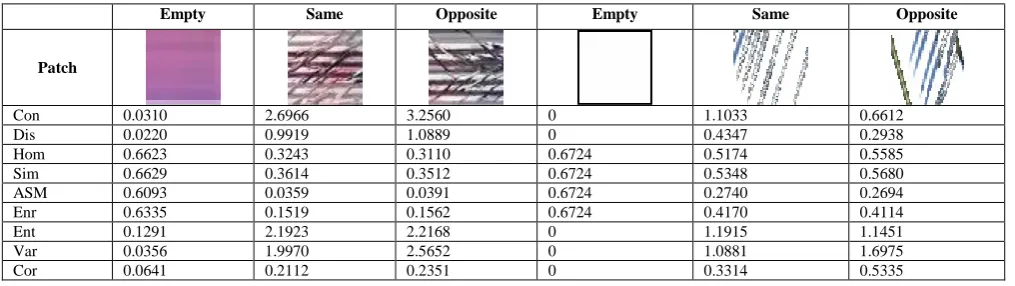
TABLE 1 STTS PATTERN VALUE COMPARISON BETWEEN REAL-LIFE AND SIMULATED VIDEOS
Empty Same Opposite Empty Same Opposite
Patch
Con 0.0310 2.6966 3.2560 0 1.1033 0.6612
Dis 0.0220 0.9919 1.0889 0 0.4347 0.2938
Hom 0.6623 0.3243 0.3110 0.6724 0.5174 0.5585
Sim 0.6629 0.3614 0.3512 0.6724 0.5348 0.5680
ASM 0.6093 0.0359 0.0391 0.6724 0.2740 0.2694
Enr 0.6335 0.1519 0.1562 0.6724 0.4170 0.4114
Ent 0.1291 2.1923 2.2168 0 1.1915 1.1451
Var 0.0356 1.9970 2.5652 0 1.0881 1.6975
[image:5.595.43.551.628.771.2]B. Test and Evaluation
To assess the performance of the simulation approach, the most important aspect is the visual realism of the simulated crowd. This means the simulated crowd should behave as close as possible to the real crowd. Despite no universal approach is proposed to measure the simulation realism, many researches have been tackling the challenge from various perspectives. In the research of Stuart [19], an experiment based on psychophysics is conduct to judge whether the proposed approach achieved higher realism than others. In the experiment, an online survey system with the so called two-alternate force choice (2AFC) mechanism is implemented, survey takers mandatorily select from two simulated crowds in limited time. The result is aggregated as perceived realism to measure which approach has higher performance. However the implementation of this measuring approach takes longer time, since the number of survey takers must be high enough so the result can be convincing. Also the survey taker‟s observation is essentially subjective, thus the accuracy of the result on same crowd video isn‟t stable.
Another pattern could be used to assess the performance of local interaction force is the oscillation effect. When the crowd density is high, agent affected by multiple neighbors will show clear vibration. This unrealistic phenomenon impacts the visual realism. Gao [26] introduced relative velocity to measure the magnitude of local oscillation. The local interaction force used in this research is velocity-perception-based SFM imported from [24], it has been proved to have better oscillation proof performance than the original SFM.
In this research, the aim of crowd simulation is to generate video data for crowd behavior analysis. Thus the patterns and signatures for crowd behavior analysis could be utilized to compare between simulated video and real-life video if the distribution of patterns matches, the simulated video can be considered realistic. In
previous research, the Spatial-Temporal Texture (STT) is extracted from the video [30], and Gray Level Co-occurrence Matrix (GLCM) is obtained from the STT. Then a signature is modeled from the GLCM patterns to decide if current texture contains anomalies [31]. Thus the signature value of simulated crowd in this research is compared to some real-life crowd videos. The extracted STTs from both simulated and real life videos with lane behavioral type are shown in Figure 4.
Once the STTs are extracted, small texture patches are divided to calculate GLCM patterns. Different patches are selected depends on the information they contains. In the experiment, patches of empty background, pedestrian with same direction and pedestrian with opposite direction are selected. Then the GLCM patterns including Contrast, Dissimilarity, Homogeneity, Similarity, Angular Second Moment, Energy, Entropy, Variance and Correlation are calculated using the approach in [31]. The result is shown as Table 1. It could be observed the distribution of the pattern values of simulated video matches values of real-life video with similar events. For example, Homogeneity value of empty texture is higher than texture with motion information in both videos. The more the pattern value distribution matches to the real-life video, the more realism is achieved.
(a) STT of Simulated video (b) STT of Real life video
Fig.4. STTs comparison between simulated and real life scene
V.CONCLUSIONS AND FUTURE WORK
In this research, six crowd behavioral types are categorized at the perspective of crowd behavior analysis. Defined Behavioral types include Bottleneck, Lane, Crossing, Fall Avoiding, Panic Dispersing and Ring/Circling. After these types are defined, a framework is proposed for agent behavioral modeling by importing the path finding algorithm A* and the enhanced social force model. The path finding algorithm guaranteed the long term goal of each agent, and the enhanced social force model provides more realistic local behavior than the ordinary SFM. Together the improved framework has better performance in the complicated environment. Next the defined crowd behaviors are simulated and inspected using the proposed agent behavioral models, including the hybridization of
(a) Bottleneck (b) Lane (c) Crossing
(d) Panic
Dispersing (e) Ring/Circling (f) Fall Dodging
multiple behaviors. All simulated crowds exhibited expected patterns, such as arching clogging in bottleneck. In the end, the performance of simulated video is assessed, and achieved a fine local oscillation and simulation realism. This simulation approach could be used in crowd behavior analysis, to provide most required crowd behavioral types.
To further improve the proposed approach, the Fuzzy Social Force Model [27] can be utilized. The fuzzy social force model describes the interaction force between crowds with expression rules and fuzzy sets, instead of using mathematical expressions. This approach has faster speed than mathematical approach, also said to be easier to parameterize. Thus it could be used to improve the simulating efficiency of proposed approach in this research.
ACKNOWLEDGEMENTS
This research is funded by Chinese National Natural Science Foundation No. 61671377, the Industrial Research Project of Shaanxi Province No. 2017GY-076.
REFERENCES
[1] Xinyi Cui, Qingshan Liu, Mingchen Gao, Dimitris N. Metaxas, Abnormal Detection Using Interaction Energy Potentials [2] Ernesto L. Andrade, Scott Blunsden, Robert B. Fisher, Hidden
Markov Models for Optical Flow Analysis in Crowds
[3] Dandan Ma, Qi Wang, Yuan Yuan, Anomaly Detection in Crowd Scene via Online Learning
[4] Vikas Reddy, Conrad Sanderson, Brian C. Lovell, Improved Anomaly Detection in Crowded Scenes via Cell-based Analysis of Foreground Speed, Size and Texture
[5] Barbara Krausz, Christian Bauckhage, Loveparade 2010: Automatic video analysis of a crowd disaster
[6] Ramin Mehran, Alexis Oyama, Mubarak Shah, Abnormal Crowd Behavior Detection using Social Force Model
[7] Mahfuzul Haque, Manzur Murshed, Panic-Driven Event Detection From Surveillance Video Stream Without Track And Motion Features
[8] Berkan Solmaz, Brian E. Moore, Mubarak Shah, Identifying Behaviors in Crowd Scenes Using Stability Analysis for Dynamical Systems
[9] Bri an E. Moore, Saad Ali, Ramin Mehran, Mubarak Shah, Visual Crowd Surveillance through a Hydrodynamics Lens
[10] Q. H. Nguyen, F. D. McKenzie, and M. D. Petty, Crowd behavior cognitive model architecture design, in Proceedings of the BRIMS, pp. 55–64, 2005
[11] N. Pelechano, K. O‟Brien, B. Silverman, and N. Badler, Crowd simulation incorporating agent psychological models
[12] W. He and Z. Liu, Motion pattern analysis in crowded scenes by using density based clustering, in Proc. 9th IEEE Int. Conf. Fuzzy Syst. Knowl. Discovery, May 2012, pp. 1855–1858.
[13] S. Ali and M. Shah, A Lagrangian particle dynamics approach for crowd flow segmentation and stability analysis, in Proc. IEEE Conf. Comput. Vis. Pattern Recognit., Jun. 2007, pp. 1–6. [14] R. Mehran, B. E. Moore, and M. Shah, A streakline
representation of flow in crowded scenes, Proc. Eur. Conf. Comput. Vis., 2010, pp. 439–452.
[15] Evaluation Framework for Crowd Behaviour Simulation and Analysis based on Real Videos and Scene Reconstruction, Konrad Jablonski
[16] Simulation Of Crowd Behavior Using Fuzzy Social Force Model, Altieres Del Sent
[17] Adrien Treuille, Seth Cooper, Zoran Popovi´c , Continuum Crowds,
[18] Hughes, R. L, A continuum theory for the flow of pedestrians, Transportation Research Part B 36, 6 (july), 507535.
[19] Stuart O'Connor, Fotis Liarokapis, Chrisina Jayne, Perceived Realism of Crowd Behaviour with Social Forces
[20] Reynolds, Craig W, Steering behaviors for autonomous characters, in Game developers conference, vol. 1999, pp. 763-782. 1999. [21] Helbing, Dirk, and Peter Molnar. Social force model for
pedestrian dynamics, Physical review E 51, no. 5, 4282. 1995. [22] Hart, P. E.; Nilsson, N. J.; Raphael, B. A Formal Basis for the
Heuristic Determination of Minimum Cost Paths. IEEE Transactions on Systems Science and Cybernetics SSC4. 4 (2): 100–107. doi:10.1109/TSSC.1968.300136
[23] D. Helbing, I. Farkas, P. Molnar, T. Vicsek, Simulation of pedestrian crowds in normal and evacuation situations, Pedestrian and evacuation dynamics, 2002, 24: 21-58
[24] Qingge Ji, Fuchuan Wang, Ting Zhu, VPBS: A Velocity-Perception-Based SFM Approach for Crowd Simulation, 2016 International Conference on Virtual Reality and Visualization [25] E. Goffman, P. Manning, Relations in public: Microstudies of the
public order, 1971
[26] Y. Gao, P. Luh, H. Zhang, T. Chen, A modified social force model considering relative velocity of pedestrians, IEEE International Conference on Automation Science and Engineering (CASE), Madison, IEEE, 2013: 747-751
[27] Altieres Del Sent, Simulation Of Crowd Behavior Using Fuzzy Social Force Model, Proceedings of the 2015 Winter Simulation Conference
[28] UMN Crowd Dataset. [Online]. Available: http://mha.cs.umn.edu/proj_events.shtml#crowd
[29] Unity Game Engine [Online]. Available: https://unity3d.com/ [30] Yu Hao, Zhijie Xu, Jing Wang, Ying Liu, Jiulun Fan, An
Effective Video Processing Pipeline for Crowd Pattern Analysis, 23th International Conference on Automation and Computing (ICAC'17)