School of Education Student Capstone Theses and
Dissertations School of Education
Spring 2019
Can You Repeat That, Please? Using Repeated
Reading With Low-Intermediate Adult English
Language Learners
Jennifer Siegfried Hamline University
Follow this and additional works at:https://digitalcommons.hamline.edu/hse_all Part of theEducation Commons
This Thesis is brought to you for free and open access by the School of Education at DigitalCommons@Hamline. It has been accepted for inclusion in School of Education Student Capstone Theses and Dissertations by an authorized administrator of DigitalCommons@Hamline. For more information, please [email protected], [email protected], [email protected].
Recommended Citation
Siegfried, Jennifer, "Can You Repeat That, Please? Using Repeated Reading With Low-Intermediate Adult English Language Learners" (2019).School of Education Student Capstone Theses and Dissertations. 4458.
CAN YOU REPEAT THAT, PLEASE? USING REPEATED READING WITH LOW-INTERMEDIATE ADULT ENGLISH LANGUAGE LEARNERS
Jennifer L. Siegfried
A capstone proposal submitted in partial fulfillment of the requirements for the degree of Master of Arts in English as a Second Language
Hamline University St. Paul, Minnesota
May 2019
Primary Advisor: Betsy Parrish Content Reviewer: Laurie Martin Peer Reviewer: Sarah Knowles
ACKNOWLEDGMENTS
First, to “Team Thesis” – Betsy, Laurie, and Sarah – I could not have done this without your direction, insight, and encouragement. Betsy, thank you for your tireless guidance and for helping me to see connections to other areas of research. Laurie, thank you for being an unending wealth of knowledge and providing many insights that I would not have considered on my own. Sarah, thank you for asking the tough questions that I knew you would ask in order to make me a better researcher. I admire all that each of you have contributed to the field of adult education and ESL.
I owe a debt of gratitude to my husband, Stefan, who has supported my journey without complaint and at the expense of a great many household tasks.
I would never have considered a Master’s degree if not for my parents, who showed me through both words and actions that education is and should be a lifelong priority. Thanks also to my brother, who provided me with the very specific motivation of sibling rivalry. Shannon, your enthusiasm for this project and help with data analysis was invaluable. Kathy, my “work mom,” thanks for pushing me to do this at literally every opportunity. Finally, to Jeri, my former dean and “accountability buddy,” thank you for your
unwavering support. Michaela, thank you for guiding me to this topic and saving me (a little) work. And Adam, thank you for signing off on this research just weeks after
joining our program. I’ve been incredibly fortunate to have worked with encouraging and thoughtful administrators who have supported each step of this journey.
TABLE OF CONTENTS
CHAPTER ONE: INTRODUCTION ... 8
Personal and Professional Journey to Research ... 10
Rationale for Pursuing the Research ... 13
Summary ... 17
CHAPTER TWO: REVIEW OF LITERATURE ... 19
Adult Education and Reading ... 21
Literacy instruction for adult learners. ... 21
The STAR initiative for adult reading instruction. ... 22
The need for additional research. ... 24
Reading in the L2 ... 25
Reading challenges for adult L2 learners. ... 25
Reading challenges versus language challenges. ... 26
L1 literacy effects on L2 reading. ... 27
Language input and language proficiency. ... 28
Reading attitudes and reading ability. ... 30
Reading Fluency ... 31
Definitions of fluency. ... 31
Prosody. ... 33
Comprehension. ... 33
L1 fluency and automaticity. ... 34
Measuring and developing fluency in the L1. ... 35
Fluency in the L2 ... 37
Differences between L1 and L2 reading fluency. ... 38
L1 influence on L2 fluency. ... 39
L2 decoding versus vocabulary knowledge. ... 39
Controlled texts for L2 fluency practice. ... 40
Automaticity in L2 reading fluency. ... 41
Oral reading fluency of adult L2 learners. ... 42
Correlations between L2 fluency and L2 comprehension. ... 43
Fluency Instruction in the Adult Education Classroom ... 44
Many adult education classrooms lack fluency instruction. ... 45
Instructional practices for fluency. ... 45
Potential benefits of fluency instruction with adult L2 learners. ... 48
Repeated Reading ... 49
Automaticity. ... 49
Repeated reading with adult learners. ... 50
Effects on comprehension. ... 51
Repeated reading with L2 learners. ... 52
Repeated reading and reading attitudes. ... 53
Summary ... 55
CHAPTER THREE: METHODOLOGY ... 56
Research Design ... 56
Participants ... 57
Informed Consent and Participant Confidentiality ... 59
Setting ... 59
Data Collection ... 60
Data collection materials. ... 61
Student survey. ... 61
Texts. ... 62
Comprehension question sets. ... 62
Treatment session tasks. ... 63
Data collection pilot study. ... 65
Data Analysis: Measuring Fluency ... 67
Rate. ... 67
Accuracy. ... 69
Prosody. ... 70
Data Analysis: Measuring Comprehension ... 71
Data Analysis: Measuring Attitudes ... 72
Summary ... 73
CHAPTER FOUR: RESULTS ... 74
Effects on Oral Reading Fluency ... 75
Individual differences in rate. ... 76
Accuracy. ... 79
Individual differences in accuracy. ... 80
Prosody. ... 83
Individual differences in prosody. ... 84
Additional gains in prosody. ... 86
Effects on Comprehension ... 87
Effects on Attitudes toward English Reading ... 89
Key Findings ... 92
Summary ... 94
CHAPTER FIVE: CONCLUSION... 95
Connections to Previous Research ... 96
Implications ... 98
Limitations ... 99
Future Research ... 101
Using and Sharing Results ... 103
Personal and Professional Growth ... 104
Summary ... 105
REFERENCES ... 107
APPENDIX A: Participant Survey to Assess Demographics and Reading Attitudes .... 114
APPENDIX B: Sample Data Collection Text ... 116
APPENDIX C: Sample Comprehension Questions ... 117
LIST OF TABLES AND FIGURES
Table 1: Participants ... 58
Table 2: Treatment session tasks ... 64
Figure 1: Rubric for analyzing oral reading prosody ... 71
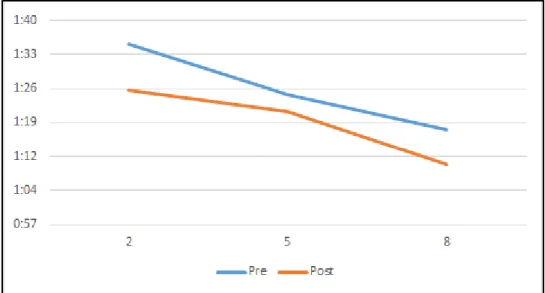
Figure 2: Average reading rate per 100 words ... 76
Figure 3: Pre- and post-treatment rate by years of school ... 77
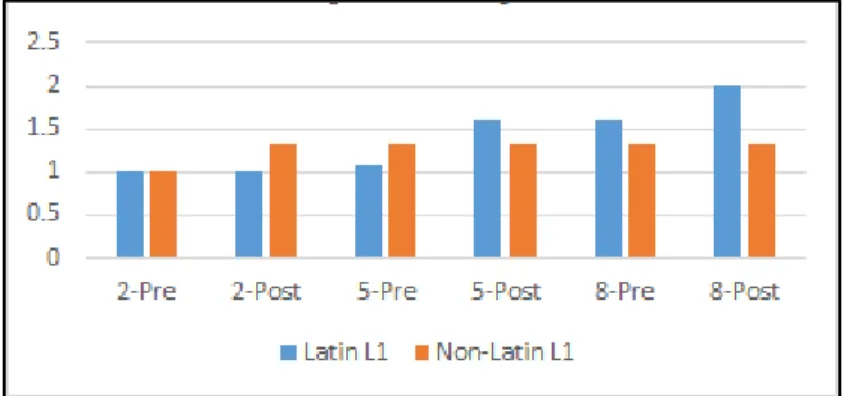
Figure 4: Pre- and post-treatment rate of Latin-alphabet L1 speakers vs. non-Latin-alphabet L1 speakers ... 78
Figure 5: Pre- and post-treatment rate of Latin-alphabet L1 speakers vs. non-Latin-alphabet L1 speakers, P7 removed... 78
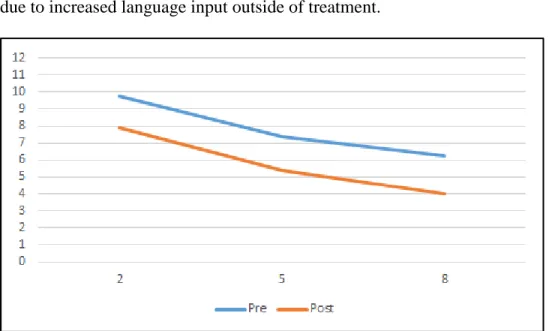
Figure 6: Average miscues per 100 words ... 79
Figure 7: Miscues of Latin-alphabet L1 speakers vs. non-Latin-alphabet L1 speakers ... 80
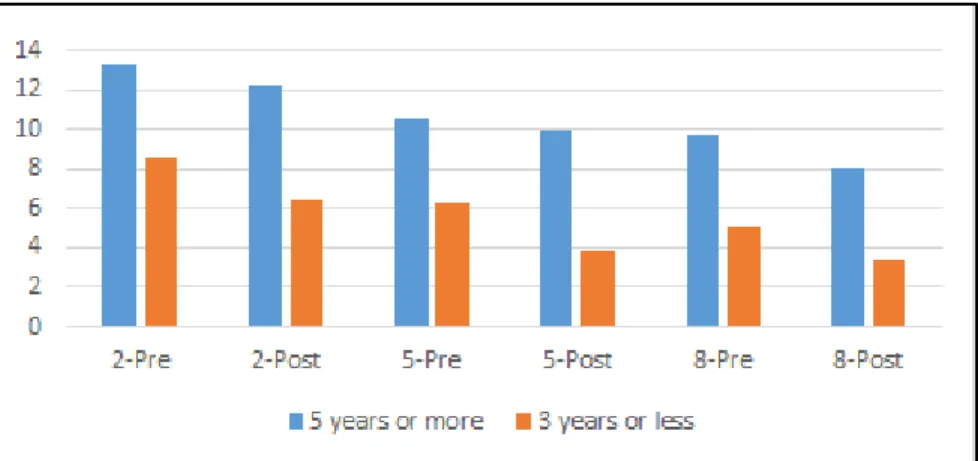
Figure 8: Pre- and post-treatment miscues by length of time in the U.S. ... 81
Figure 9: Pre- and post-treatment miscues by years of school ... 82
Figure 10: P6 miscues ... 83
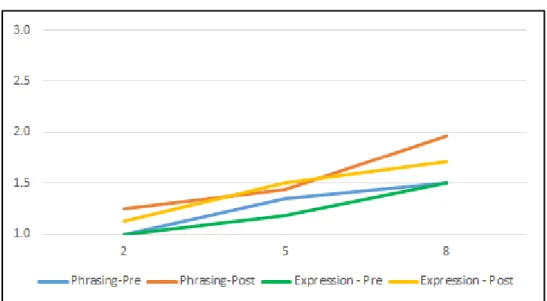
Figure 11: Average prosody (phrasing and expression) ... 84
Figure 12: Expression of Spanish L1 speakers vs. non-Spanish L1 speakers ... 85
Figure 13: P9 prosody ... 86
Figure 14: Average comprehension of participants ... 88
CHAPTER ONE Introduction
“We learn to read by reading a lot” (Grabe, 2002, p. 280).
For adults living in the U.S., reading is a part of everyday life. The written word is abundant in U.S. culture. Text is used to communicate news, convey knowledge, share opinions, make decisions, access healthcare, and so much more. But the written word is not equally accessible to all adults living in the U.S. Many adults are reading at
proficiency levels that do not allow them to access the full range of information available in text, which may prevent them from accessing healthcare, reaching their income
potential, and fully participating in their communities (Batalova & Fix, 2015; McShane, 2005; National Research Council, 2012). Many of these adults are non-native speakers of English who have immigrated to the U.S. in search of better opportunities. These adults may seek out instruction in order to learn the English they need to access these opportunities, so teachers who work with such learners in adult education programs must be prepared to help them learn to access the vast amount of knowledge and language available in text.
Unfortunately, for adults who struggle with reading, “reading a lot” may not be a practical or realistic goal. Adults who struggle with reading face unique challenges in improving their reading, and they are not likely to have the desire to read a lot.
Additionally, many do not have as much time available to dedicate to their education as children attending full-time school do.
Struggling adult readers may have difficulty in one or more components of reading. The goal of reading is comprehension, but other factors can influence how much struggling adult readers understand from a text. Research has found that good reading fluency, or the ability to read efficiently, is a critical component of reading
comprehension (Kruidenier, MacArthur, & Wrigley, 2010). For many struggling adult readers, fluency practice is important and necessary component of comprehension.
Reading a lot is an even bigger challenge for adult English Language Learners (ELLs). These learners must learn both spoken and written English simultaneously, and reading is often a lower priority for these learners—and their instructors—than other language skills. Like their native-speaking counterparts, adults who are learning English are also likely to struggle with reading fluency. However, reading fluency is especially important for these learners because of the linguistic and cultural knowledge that is available through text; learners must be competent readers in order to access such information (Kruidenier, MacArthur, & Wrigley, 2010; McShane, 2005; National Research Council, 2012).
For adult education instructors, research-informed practices can help ensure that students’ and other stakeholders’ goals, such as “reading a lot” and understanding the text that adults encounter on a daily basis, are met efficiently and effectively. By researching reading fluency using the method of assisted repeated reading, or reading a text multiple times with a model reading example, with adult English language learners, I hope to contribute to the growing field of research-informed best practices for adult educators.
Personal and Professional Journey to Research
I first began teaching English as a Second Language (ESL) classes to adults in 2005. It was my first job following the completion of my undergraduate degree, and for a few years, I saw it as just that: a job. I was hired by the adult education department at the local community college to teach a low-level class that was just starting up, and it seemed like a great way to pass the time while I looked for something more permanent. While I took the job seriously, I never thought of it as a long-term path; the thought of pursuing further schooling never crossed my mind. A few years later, I was still working at this “temporary” job when I was offered an additional position teaching adult ESL for a local refugee resettlement agency. That was when I realized that teaching ESL was no longer a job for me—it was a career.
The realization that teaching adults was a legitimate career path sent me on a new trajectory in my professional life. My manager at the refugee resettlement agency
encouraged me to take a professional development course in the basics of teaching ESL. This introduction to the academic field of Teaching English to Speakers of Other
Languages (TESOL) was eye-opening, and I discovered that the processes and techniques that I had used and observed over the past few years had names, and rationales, and research behind them. I had been a decent teacher before, but taking that course helped me to start thinking more deeply about the process and reflecting on my own practices in the classroom. It also helped me start thinking about graduate school.
In the summer of 2013, I had the opportunity to earn a Graduate Certificate in TESOL at American University in Washington, D.C. It was an intense summer during which I completed 15 graduate credits, and I found myself growing exponentially as an
instructor as well as academically. Many, many aspects of that experience have made a lasting impression on me both professionally and personally, and it was that program that planted the seeds of what would eventually become a research interest for me: best practices in teaching second language reading.
Most of that summer was spent reading countless research articles to meet the requirements of my various classes and projects, but there were two readings in particular that I kept going over in my mind. The first was Grabe’s (2002) article, “Dilemmas for the Development of Second Language Reading Abilities,” in which he writes “we learn to read by reading a lot” (p. 280). The statement is so simple, yet in the context of adult second language reading, we know that it is not simple at all. Decoding a new language, perhaps with a new alphabet, and trying to understand new words all while attempting to make meaning from a connected text are not likely to come easily to any learner. I began to wonder how teachers could best encourage “reading a lot.”
The second article that stuck with me partially answered that question. Renandya and Jacobs’ (2002) piece, “Extensive Reading: Why Aren’t We All Doing It?” introduced me to the concept of having students read extensively in ESL classes. This inspired me to start experimenting with extensive reading in my intermediate-level ESL classes, and to my surprise, almost all of the students enjoyed it. It was as though they understood the importance of reading, but needed someone—an instructor—to give them the time, opportunity, and support necessary to make reading happen. The technique of using extensive reading in my adult ESL classroom was so positive that I ended up giving presentations on the experience at two state professional conferences in 2015. At the time, I considered my research on reading complete.
Later that same year, however, the financial situation at the refugee resettlement agency took a drastic turn for the poorer, and over 70% of the education staff was let go. Back to working at only one job, I wondered how I would fill my newfound extra time. I remembered how much I learned from that initial course that introduced me to the academic field in TESOL and my time in my graduate certificate program and decided that pursuing a Master’s degree through Hamline University was an appropriate course of action.
In the interim, my professional trajectory at the community college program also changed slightly. After twelve years of teaching on the ESL side of our program, my manager approached me about teaching a reading class in our Adult Basic Education (ABE) program. I agreed, and soon found myself in an unfamiliar teaching context, somewhat unsure of myself and deliberating on how to put together a reading course. The student population was different; although many were students who had exited our ESL program, a number of students were younger adults and fluent English speakers who, for a variety of reasons, had not completed high school in the U.S. (and some students brought a negative attitude toward school with them to class!). I remembered what I had learned from those two articles I had read during my certificate program and the research I had done for my presentations on extensive reading and managed to flounder through my first two courses. I felt out of my element, knowing that I could improve my
instruction and course design but not quite sure how to go about accomplishing it. When the opportunity to take a new professional development offering on the STudent
Achievement in Reading (STAR) initiative came up in the fall of 2017, I jumped at the chance. The STAR program was developed by the U.S. Department of Education’s
Office of Career, Technical, and Adult Education (OCTAE) to help states, programs, and instructors implement evidence-based reading instruction into ABE classrooms in order to improve the reading skills of adults reading at an intermediate level (Kratos Learning, n.d.). In this year-long training course, I learned about research-based techniques for teaching alphabetics, vocabulary, fluency, and comprehension - the four components of reading.
It was about midway through the year-long STAR training course that I reached the point of starting my capstone research. Unsure of what to study, I consulted with my manager at the community college, who abruptly answered with “reading!” She
encouraged me to go with what I know and to look for a topic that would bridge my experience with ABE reading classes and ESL teaching. As I thought about this, I realized that I found myself keenly interested in reading fluency. Reading fluency was a key component of the ABE reading classes I had been teaching, but many of the English language learners who had matriculated into the class from our ESL program were struggling with fluency more than their native-speaking counterparts. If these advanced language learners were struggling with fluency at the ABE level, what was happening in the lower levels of ESL? More importantly, to inform teaching in our adult ESL classes, would it be possible for some of the reading techniques used in ABE to be effective with lower-level English learners as well?
Rationale for Pursuing the Research
As I pondered these questions, I began to focus in on one specific level of our ESL program. Low-intermediate ESL learners are the largest segment of the student population in our Adult Education program, with about 400 of our approximately 1200
ESL students enrolled in this level (G. Holladay-Baxter, personal communication). Anecdotally, this is also the level that students and teachers experience a great deal of frustration with. Anderson (2008) refers to this as the “intermediate level slump” (p. 67), and both teachers and students in our program often express frustration when learners fail to progress to higher levels at the completion of the low-intermediate ESL course.
Classes in our program run on a quarterly schedule, with each course running for eight weeks. In order to move up to the high-intermediate ESL level, students must earn a scale score of at least 212 on the Comprehensive Adult Student Assessment Systems (CASAS) Life and Work Reading exam (National Reporting System, 2018). According to the National Reporting System level descriptors, students in low-intermediate ESL should be able to “process, understand, interpret, and/or engage with” level-appropriate text,
including identifying the main idea of a text and answering questions about key details, in order to exit the level (National Reporting System, 2017, p. B-23). With classes lasting only eight weeks, many students are not able to make the level gain necessary to move up and end up repeating the level, sometimes multiple times. Both students and teachers are understandably frustrated with this system of advancement through the program;
unfortunately, there are several policies in place at the state level that prevent changes at the program level. Since we cannot change the system, instructors are constantly looking for ways to work within it, and this often focuses on desperate attempts to improve learners’ reading skills in a short amount of time.
When my manager suggested looking at reading for my capstone research, it clicked. In ABE, instructors use a method called repeated reading to improve learners’ reading fluency, and reading fluency has been shown to increase comprehension (Curtis
& Kruidenier, 2005; Kruidenier, 2002). Repeated reading, first developed by Samuels (1979) for English-speaking primary school learners, has emerged as a successful technique in adult education for native English speakers and advanced ELLs and is a core instructional technique in STAR classes. With repeated reading, students read a text multiple times in order to increase their fluency with the text and comprehension of its words and ideas. If this technique works for native speakers who are beginning readers, as well as second language learners at an advanced proficiency level (Kruidenier, MacArthur, & Wrigley, 2010), might it also work with second language learners at the low-intermediate proficiency level? I began to research the method of repeated reading for English learners and discovered that there is very little research available, and almost no research that deals specifically with low-intermediate learners in an adult education context (Kruidenier, MacArthur, & Wrigley, 2010). If I wanted to know whether repeated reading could be effectively used to increase fluency and comprehension for English learners at a low-intermediate level, I would have to undertake the research myself.
Unfortunately, instruction time in adult education programs is often limited; teachers and students may tend to focus on maximizing the time spent on the skills they need to survive everyday life. Reading fluency, or the ability to read text efficiently and with comprehension, is an often neglected skill in many classrooms (Rasinski, 2012). However, fluency instruction does not have to use much instructional time, and its potential benefits to adult English learners may far outweigh the investment of time (Anderson, 1999; Gorsuch & Taguchi, 2008). This is particularly true of adult English learners at the low-intermediate proficiency level. As states adopt the College and Career Readiness Standards (CCRS) and other standards-based guidelines for adult education
which emphasize an increase in academic rigor and focus on career pathways (Pimentel, 2013; Shore, Lentini, Molloy, Steinberg, & Holzman, 2015), the role of reading becomes an even more crucial part of classroom instruction.
It is critical, then, that researchers find evidence-based methods that instructors can implement in their classrooms in order to improve reading skills efficiently. Repeated reading has emerged as a promising practice in fluency instruction, and the technique has been adapted for wider and more varied populations beyond native-speaking children and adults. Assisted repeated reading, in which learners have opportunities to hear a text modeled by a fluent reader while reading along is one such adaptation that Gorsuch and Taguchi (2008) made for their university-level English learners. Adding the support of a model fluent reading may help English learners in an adult education context improve their own reading fluency and comprehension skills, as prior research has established these skills to be very closely linked (Kruidenier, MacArthur, & Wrigley, 2010;
McShane, 2005). However, very little research in this area has been conducted with low-intermediate adult English language learners. My research, then, will focus on the use of assisted repeated reading with low-intermediate adult learners in order to answer the following research questions:
1. To what degree does assisted repeated reading increase oral reading fluency of adult intermediate English language learners?
2. What, if any, effects does the practice of oral repeated reading have on learners’ comprehension?
3. What, if any, effect does the practice of assisted oral repeated reading have on learners’ attitudes toward reading in English?
Summary
In the following chapters, I describe research that has been conducted on reading and reading fluency in both first and second languages. Reading fluency has been shown to have a strong correlation with reading comprehension in native-speaking adults who are struggling to read; second language reading research also hints at a similarly strong correlation, although there may be aspects of learning that differ among students with different language and literacy backgrounds. The method of repeated reading is explored with regards to adult learners, and preliminary investigation shows that the method has great potential to be significantly effective with adult English learners as it is with native-speaking struggling readers. If my research shows that gains may, in fact, transfer to new texts, then repeated reading might be one method that instructors in my program can use to work on reading skills with our low-intermediate students.
In Chapter Two, previous research on reading fluency and the adult education population will be discussed. An overview of reading instruction in adult education provides the context for this research along with a more in-depth look at the reading fluency of adult learners in their first language (L1). A discussion of research in adult reading and fluency in a second language (L2) follows, and the chapter ends with a look at how the method of repeated reading has been used to provide instruction in oral reading fluency for different student populations. Chapter Three focuses on the
methodology of this research, including an overview of the setting, participants, and data collection methods for the study, along with details of how data will be quantified and analyzed. In Chapter Four, the results of data collection and an analysis of the
evaluate how it interacts with the work that has been conducted by others. Chapter 5 will also discuss the implications and limitations of this work as well as possibilities for future research.
CHAPTER TWO Review of Literature
While Chapter One discussed the researcher’s journey to the exploration of repeated reading with low-intermediate adult ELLs, this chapter will look at the background of reading and fluency in adult education. First, the need for reading
instruction in the adult education context is explored. Next, differences and challenges in reading specific to L2 learners is examined. A discussion of reading fluency and fluency development in L1 readers comes next, followed by fluency differences specific to L2 readers and how the L1 may affect L2 reading fluency. Fluency instruction in the adult education context is reviewed, and finally, repeated reading is presented as a technique that may aid both L1 and L2 adult learners in overcoming reading challenges.
Reading is a significant component of the adult education landscape in the U.S.; however, many adults in the U.S. struggle with literacy (National Research Council, 2012). While much of the current research on reading has been conducted in a K-12 context, there is a growing body of research that informs reading instruction for adult education (Kruidenier, MacArthur, & Wrigley, 2010). Fluency has been identified in ABE as a critical component of adult reading instruction, along with alphabetics, vocabulary, and comprehension (Bell & Dolainski, 2012; Kratos Learning, n.d.; Kruidenier, MacArthur, & Wrigley, 2010). Although good comprehension is the main
goal of reading instruction, the literature from L1 reading research has shown that fluency is crucial to achieve comprehension.
Reading ability is perhaps even more important in a second language context because text can be a valuable source for language input (Anderson, 1999; Lems, 2012). However, although there are similarities between how L1 and L2 learners can improve reading abilities, the literature about L2 reading highlights several contrasts. Reading fluency in the L2 is a particular struggle because unfamiliar language and vocabulary leads to slower reading (Anderson, 1999), which leads to less motivation to read and, therefore, less language input (Nation, 2009). Because “we learn to read by reading a lot” (Grabe, 2002, p. 280), researchers have been exploring methods to incorporate fluency into both L1 and L2 classrooms.
Repeated reading is one method that researchers have explored to incorporate “reading a lot” and fluency instruction into adult education classrooms. Originally created for use with children who were struggling to read at grade-level norms (Samuels, 1979), the method of repeated reading has been shown to be effective with adult L1 beginning and intermediate readers as well as advanced English as a Second Language (ESL) learners (McShane, 2005). However, little research to date has focused on using repeated reading to increase the reading fluency and comprehension of adult ELLs at an intermediate level of language proficiency. Therefore, this research is focused on the following questions:
1. To what degree does assisted repeated reading increase oral reading fluency of adult intermediate English language learners?
2. What, if any, effects does the practice of oral repeated reading have on learners’ comprehension?
3. What, if any, effect does the practice of assisted oral repeated reading have on learners’ attitudes toward reading in English?
Adult Education and Reading
Adult education programming is a broad category services for a heterogeneous group of learners. Federal guidelines for adult education state that it exists for low-literate adults, aged 16 or older, who are no longer served by high school or other secondary education programs (Kruidenier, 2002). This population can include adults who did not complete high school, those with learning disabilities, incarcerated individuals, speakers of nonstandard English dialects, and English language learners (ELLs). Although these learners come from widely varied demographics, many have a need for instruction in basic skills in order to reach such goals as earning a high-school equivalency, improving their job skills or socioeconomic status, or becoming proficient in the English language.
Literacy instruction for adult learners. Adult education is a critical component of the U.S. educational landscape. Adults have different educational needs from children; they often come to class with a definite goal or purpose but with limited time to dedicate to their schooling. They have more varied responsibilities in their lives (Curtis &
Kruidenier, 2005), which can include work, caring for family, maintaining a household, and other commitments. Many adults have developed skills that allow them to function and survive their daily lives, yet a lack of basic educational skills, such as reading proficiently, can prevent them from fully participating in their communities and making the best use of their resources (McShane, 2005). A lack of reading proficiency can also
limit job opportunities, income, and access to information about healthcare (Kruidenier, MacArthur, & Wrigley, 2010).
Low literacy skills affect a significant portion of adults in the U.S. The National Assessment of Adult Literacy, a survey of 18,000 U.S. adults conducted in 2003, found that as many as 43 percent of adults aged 16 and older have literacy skills at the basic or below basic level (National Research Council, 2012). At the basic level, adults can accomplish simple, everyday reading tasks in simple documents and short, everyday prose; adults at the below basic level are only able to complete the most simple and straightforward tasks (National Center for Education Statistics [NCES], n.d.). Adults in this group may struggle with word and letter recognition and may not understand even simple passages (NCES, n.d.; National Research Council, 2012). Similarly, data from the 2012 Program for the International Assessment of Adult Competencies (PIAAC) shows that almost half of U.S. adults lack some literacy skills “needed to function in modern society” (Batalova & Fix, 2015, p. 9). With such a large percentage of adults who are struggling to read well, literacy instruction is a critical need in the U.S.
The STAR initiative for adult reading instruction. While there is a great need for adult reading instruction in the U.S. in order to help adult learners realize the same opportunities as their more proficient peers, research in this area has been somewhat lacking. The Adult Literacy Research Working Group, a collaborative effort by the National Institute for Literacy and the National Center for the Study of Adult Learning and Literacy, found only about 70 studies exploring reading in adult learners for their 2002 report (Kruidenier, MacArthur, & Wrigley, 2010). Research focusing specifically on ELLs’ reading in an adult education context is even more limited. Much of what is
known about adult reading in both first language (L1) and second language (L2) contexts has its basis in kindergarten through 12th-grade (K-12) research (Curtis & Kruidenier,
2005; Kruidenier, MacArthur, & Wrigley, 2010). However, adult learners differ from children not only in their varied responsibilities and limited time but also in cognitive development (Lightbown & Spada, 2013; Taylor & Marienau, 2016) as well as other obstacles that may interfere with their education.
Since it is critical that adult learners’ limited time in class be used most
efficiently, the Office of Career, Technical, and Adult Education of the U.S. Department of Education (OCTAE) created the STudent Achievement in Reading (STAR) initiative to develop best practices for adult reading instruction from the research that is available (Kratos Learning, n.d.). STAR makes use of evidence-based reading instruction (EBRI), or techniques that have been shown to be effective by empirical studies, to improve adults’ reading proficiency. STAR divides reading into four components: alphabetics, or how readers decode words; vocabulary, or the words a reader is familiar with;
comprehension, or the ability to make meaning from text; and fluency, or a reader’s ability to read text efficiently (McShane, 2005; Kratos Learning, n.d.). Each component can affect the others. For example, a reader who struggles to decode words will not improve his or her vocabulary, and a reader who reads slowly will fail to make meaning from text. Comprehension, of course, is the ultimate goal in reading (Curtis &
Kruidenier, 2005), but a struggling reader may have difficulty in one or all of the components (Abadiano & Turner, 2005; McShane, 2005). The STAR initiative focuses on providing intensive instruction of each component based on students’ needs by providing explicit instruction, modeling, guided practice, and independent practice.
Practice is key for improving adult learners’ reading skills because, again, “we learn to read by reading a lot” (Grabe, 2002, p. 280). The benefits of exposure to print include increased motivation, greater vocabulary, knowledge of language use and
grammar, increased academic ability, and metalinguistic awareness (Curtis & Kruidenier, 2005; Kruidenier, MacArthur, & Wrigley, 2010; Sparks, Patton, Ganschow, & Humbach, 2012). In fact, Sparks, Patton, Ganschow, and Humbach (2012) assert that opportunities for print exposure have been found to have a stronger impact than cognitive ability on literacy skills in L1 research. The very act of reading can help those with lower cognitive ability level the playing field by exposing learners to more vocabulary and access to general knowledge.
The need for additional research. While the act of reading and providing
evidence-based instruction can help remove limits on learners with low reading skills, the STAR initiative is somewhat limited in scope. It has been developed for readers at an intermediate reading level, defined by the National Reporting System as those earning scores between 4.0 and 8.9 grade level equivalencies (GLE) on the Test of Adult Basic Education (TABE) forms 9 and 10 (National Reporting System for Adult Education, 2018). STAR covers L1 readers at an intermediate level as well as advanced ESL
learners; however, since limited research is available on reading instruction for beginning and intermediate adult ELLs, less is known about whether EBRI techniques can be effective for these adults as well. Further research is needed to determine if EBRI
techniques in the low-intermediate adult ESL classroom can effectively improve learners’ oral reading fluency as well as their reading comprehension skills.
Reading in the L2
Although little research has been conducted on adult reading in an L1 context, even less exists for adult reading in an L2 context. Similar to L1 adult reading, much of what is known or hypothesized about L2 reading has its basis in a K-12 context, although some research has focused on university L2 learning contexts. Adult L2 readers face a unique set of challenges in learning to read, and learners’ L1s can influence this process. However, the importance of reading as a source of language input cannot be overlooked, and reading practice can help learners overcome some of the challenges they face in their new language.
Reading challenges for adult L2 learners. Learning to read in a second language presents challenges at any level, but adult ELLs face the added challenge of learning both oral and written language simultaneously. While L1 learners bring a wealth of spoken vocabulary as well as linguistic and cultural knowledge to their acquisition of literacy, L2 learners at beginning and intermediate levels are starting from scratch (Kruidenier, MacArthur, & Wrigley, 2010). Depending on their L1 and educational background, some L2 readers may need to learn basic literacy skills in addition to
learning the second language. L2 readers will also encounter a great deal more unfamiliar language than L1 beginning readers, and decoding skills alone are not enough to be able to comprehend what they read. L2 readers will require controlled texts with schema-activating activities in order to make meaning from text (Nation, 2009; Pey, Min, & Wah, 2014), and they will need opportunities to work with text to practice reading skills.
Opportunities for reading in an adult education classroom may present another challenge; since reading needs to be taught along with other language skills, teachers may
not be able to dedicate significant time to reading practice. This is unfortunate, as
Gorsuch & Taguchi (2008) note that poor readers, particularly L2 readers, need sufficient reading practice in order to develop their reading skills; only “actual reading experience” can help L2 readers improve (p. 255).
Reading challenges versus language challenges. In addition to insufficient reading practice, other factors can also influence the L2 reading skills of adolescent and adult learners. Similar to much of the research that has been done for L1 reading, L2 reading research has also focused on the individual components of alphabetics, vocabulary, fluency, and comprehension to determine best practices for instructional techniques and interventions. Jeon and Yamashita (2014) undertook a meta-analysis of L2 reading correlates to try to determine whether issues in L2 reading are rooted in reading challenges, such as metacognition and working memory, or language challenges, such as vocabulary and grammatical knowledge. They found that L2 comprehension is primarily a language challenge, but reading challenges are significant as well.
Specifically, they found that decoding ability, vocabulary, grammatical knowledge, and L1 reading proficiency have the strongest correlations to L2 reading comprehension. However, one significant issue with Jeon and Yamashita’s conclusions when applying them to an adult education context is that most of the adult-oriented research they analyzed dealt with language learners in university-level classes; many of these learners would be likely to have very strong L1 literacy skills that may transfer to their L2 reading as well as larger L2 vocabularies from earlier L2 schooling. ELLs in an adult education classroom may come from varied and perhaps limited educational backgrounds, and weak literacy skills in an L1 may not transfer to an L2 (Bigelow & Vinogradov, 2011;
Sparks, Patton, Ganschow, & Humbach, 2012). While vocabulary and grammatical knowledge are likely to significantly affect L2 reading in an adult education context, L1 literacy skills may have an even more significant effect on this population than Jeon and Yamashita’s meta-analysis concluded.
L1 literacy effects on L2 reading. Print exposure and literacy skills in the L1 may have a profound effect on literacy in the L2. Sparks, Patton, Ganschow, and Humbach (2012) explored how L1 reading achievement correlated with L2 proficiency among U.S. high school students. They found that L1 reading ability was a strong predictor of not only L2 reading, but of L2 proficiency in general, and that literacy levels in the L1 may play a role in L2 outcomes. They also found that L1 print exposure had particularly significant effects on L2 reading comprehension and word decoding skills. L1 reading and print exposure also facilitates the development of other skills, such as vocabulary acquisition, grammatical knowledge, phonological awareness and a stronger memory for words and their meanings. Students who have higher oral and written language ability in their L1s are likely to exhibit a stronger aptitude for learning a second language, and this aptitude may extend into learning a second language even later in life. Similarly, strong decoding and comprehension strategies in the L1 can transfer to L2 reading, although Sparks et al. (2012) note that some L2 vocabulary knowledge is necessary in order to facilitate comprehension. Jeon and Yamashita (2014) add that some higher-order
cognitive processes, such as making inferences, can also transfer to L2 reading in learners with strong L1 literacy. Decoding may also be facilitated by strong L1 literacy skills; however, this may be dependent on features of the learner’s L1.
Decoding, of course, is necessary for reading comprehension in any alphabetic language; similar to L1 beginning readers, research has shown that decoding is correlated to reading ability in young learners in L2 contexts (Jeon & Yamashita, 2014). Among adult learners, however, the correlation is harder to determine. Adults who are reading in an L2 may be influenced not only by L1 literacy, but also by L1 interference and the distance between the orthography of their L1 and L2. Learners who come from an L1 that uses an alphabetic script may have more efficient decoding abilities in English than those whose L1 uses a non-alphabetic script (Jeon, 2012). Similar grammatical structures or many cognates between the L1 and L2 may also facilitate L2 reading proficiency (Jeon & Yamashita, 2014). Likewise, many differences between the L1 and L2 may hinder
reading proficiency, at least in beginning and intermediate levels of ESL. As learners’ L2 proficiency increases, readers can make more use of L2 orthographic knowledge in order to make meaning from text. Thus, while beginning and intermediate adult ELLs may be helped or hindered in their reading efforts by features of their L1, as learners increase their language proficiency, their L2 literacy will similarly improve.
Language input and language proficiency. Adults have shown capacity to improve reading skills at any age and in any language (Bigelow & Vinogradov, 2011), and “continued growth in reading after elementary school may play an important role in second language learning” even later in life (Sparks et al., 2012, p, 494). Although Sparks et al. focused on the variance of L1 literacy skills in L2 proficiency, the overall message is clear: more language input from reading leads to more language proficiency. If adult L2 readers at the intermediate level are given more opportunities to practice reading in the L2, they will also gain more language input through reading. Children’s L1
vocabulary and grammatical knowledge is primarily a result of language exposure rather than language teaching, and reading practice is a significant contributor to children’s knowledge of words. A wider variety of words and grammatical structures are used in text than in spoken language (Sparks, et al., 2012), and Pey, Min, and Wah (2014) found that, unsurprisingly, low-frequency words were more likely to be incorrectly decoded by L2 readers due to their lack of familiarity in students’ oral vocabulary. Seok and DaCosta (2014) also note that vocabulary instruction is particularly important to improve the fluency and comprehension abilities of ELLs, and instruction of low-frequency vocabulary may be best facilitated with text. Therefore, it is vital that L2 learners, especially adult ELLs, receive significant and varied practice with print. Even reading aloud to adult ELLs can improve their reading proficiency. As Rasinski (2005) states, many teachers in elementary settings probably read aloud to students regularly, but this technique has been shown to be valuable even for struggling readers who are older and are reading in an L2. Moreover, Sparks et al. (2012) note that L2 reading proficiency may also facilitate the development of oral language proficiency, even for L2 learners who do not learn a second language until later in life.
Just as with adult L1 learners who are struggling to read, reading practice may have many benefits for adult L2 learners. Language exposure through reading can lead to language proficiency, even in older learners who are learning a second language.
However, there are also many differences between L1 and L2 reading, and much of what is known comes from research with children or with well-educated adults in university and EFL settings. A focus on reading fluency with adult ELLs may provide more input into L2 reading in an adult education context, and this focus will further inform the
research on a link between fluency and comprehension in adult L2 readers at the low-intermediate level.
Reading attitudes and reading ability. Although reading has many benefits for both L1 and L2 adult learners, those who are struggling to read in either their L1 or L2 may face both emotional and developmental barriers. Grabe (2002) is not wrong in his assertion that reading is learned by the act of reading, but adult beginning readers,
especially readers who struggle with literacy in their native language, are likely to have a negative relationship with reading. Curtis and Kruidenier (2005) note that “emotional factors such as motivation, engagement, and fear of failure play a major role in reading success” (p. 1), and these feelings may be particularly potent in adult learners who have struggled with reading for many years or have expended energy hiding this struggle from others. When these readers encounter a text that they do not understand, they tend to slow down in an attempt to improve comprehension; consequently, reading becomes a
laborious and time-consuming process (Anderson, 1999). As a result, these learners spend less time reading and thus do not improve their reading skills. Stanovich (1986) describes this as the “Matthew effect” (p. 381) after the biblical Gospel of Matthew in which the rich get richer and the poor get poorer. With reading, learners who read well are motivated to read more, resulting in more vocabulary and general knowledge and, eventually, higher educational attainment, more job opportunities, and greater access to resources that will improve their socioeconomic status. In contrast, poor readers are less motivated to read and do not make the same gains in learning (Jeon & Yamashita, 2014; Stanovich, 1986). Struggling readers may continue to avoid reading into adulthood, further contributing to low levels of adult literacy in the U.S.
Adult ELLs may have similar negative attitudes toward reading in English. According to Nation (2009), negative preconceptions of and attitudes toward reading in the L1 may transfer to the L2. A negative attitude toward reading can lead to achievement gaps in reading in a second language just as it can in a first language. Even learners who are avid readers in their L1 may not be motivated to read in the L2 due to a lack of linguistic knowledge and reading confidence (Garvey, 2018). Additionally, adult ELLs may view reading as a utility, a task to be engaged in when necessary for survival. Many may not wish to make the effort to engage with text outside of school or necessity, and many more may not have the time to dedicate to reading practice independently.
Reading Fluency
Although comprehension is the objective of both L1 and L2 reading alike, it has been well established that the four components of reading – alphabetics, vocabulary, fluency, and comprehension – have symbiotic relationships, and good instruction will be most effective when all four components are taught (Kruidenier, MacArthur, & Wrigley, 2010). A weakness in one or more other components can hinder a learner’s
comprehension. The link between fluency and comprehension has been well-established in L1 research (Jeon, 2012), and comprehension is not possible without some level of fluency (McShane, 2005). Reading fluency is a crucial component of learning to read efficiently and effectively, and “fluency with comprehension is and should be a primary goal in our literacy instruction” of L1 learners (Abadiano & Turner, 2005, p. 55).
Definitions of fluency. How, then, is reading fluency defined? Many researchers define fluency in terms of rate, accuracy, and prosody (Abadiano & Turner, 2005; Crawley & Merritt, 2009; Curtis & Kruidenier, 2005; Pey, Min, & Wah, 2014). Rate is
the reader’s speed, often measured by the number of words read in a given amount of time, while accuracy is the number or percentage of words read correctly (Curtis & Kruidenier, 2005). Prosody, or reading with expression, “includes the set of vocal
patterns and inflections that people use when speaking or reading aloud” (Lems, 2012, p. 249). Curtis & Kruidenier (2005) further define fluent reading as the ability to read efficiently and decode text easily and accurately, and Crawley & Merritt (2009) add phrasing to their definition of prosody. Poor fluency may be indicated by a slow pace, choppy reading, repetitions and regressions, false starts, and improper phrasing or intonation, while readers with good fluency exhibit a natural, conversational pace and make use of punctuation and phrasing in text. (Abadiano & Turner, 2005; Jiang, 2016).
Rate and accuracy. Reading rate is probably the most salient measure of reading fluency. It would be difficult to deem a reader as fluent if their reading rate is below a certain threshold. Hasbrouck and Tindal’s (2005) seminal study on oral reading fluency of K-8 students has provided elementary and intermediate teachers with a set of grade-leveled norms for words-per-minute (WPM) read aloud. Bader and Pearce (2009) note that adult oral reading fluency may differ due to differences in how print is processed by adult learners; they recommend a range of word-per-minute reading rates appropriate for adults at beginning (80-102 WPM), low intermediate (115-133 WPM), and intermediate (120-140 WPM) adult L1 learners (p. 34).
Accuracy is another salient subskill of oral reading fluency. Too many deviations from a written text may mean that a learner cannot process its meaning. In fact, Bader and Pearce (2009) include only words read correctly in their guidelines for analyzing reading rate. Accurate decoding of words is a necessity of fluent reading; further
examination of the relationship between rate and accuracy is explored in the discussion of Automaticity Theory later in this chapter.
Prosody. Prosody is perhaps the subskill of the above definitions of fluency that has the greatest impact on comprehension, and prosody is most easily observed in students’ oral reading (Bader & Pearce, 2009). Appropriate pauses and phrasing in oral reading indicate the learner’s ability to read the text in meaningful segments or chunks (Curtis & Kruidenier, 2005; Jiang, 2016). Doing so indicates that the learner is able to “convey and construct meaning with his or her voice” (Rasinski, 2005, p. 9), and
demonstrates comprehension of text. Expression, or emphasizing key words in reading by varying pitch and volume, is another key component of prosody (Bader & Pearce, 2009). When readers interpret phrasing and expression as an author intended, they reach a higher level of comprehension due to inferred meaning than a reader who only interprets the text literally (Rasinski, 2012).
Comprehension. Another aspect of fluency is comprehension, but there are varying views on the role of comprehension in a definition of fluency. Pey, Min and Wah (2014) claim that it is unknown “whether fluency is the cause or the effect of
comprehension” (p. 29), and Samuels (1979) defines fluency only in terms of speed and accuracy but notes that comprehension is likely to increase as a result of fluency practice. However, other researchers have found a symbiotic relationship between these
components of reading. Abadiano & Turner (2005) insist that a complete definition of fluency “acknowledges a critical link to comprehension” (p. 51) because it is possible that a reader may read with good fluency without understanding the text. Without comprehension, fluency is simply a measure of reading speed and a performance of text
(Abadiano & Turner, 2005; Rasinski, 2012). Even Samuels (1979) agrees that if the content and vocabulary in a text are familiar, students should be able to comprehend what they have read aloud. Seok and DaCosta (2014) assert that past research has suggested a complementary correlation; fluency may improve comprehension while comprehension also improves fluency. Rasinski (2012) further argues that fluency instruction must be positioned as a means to achieve comprehension, and a true measure of fluency will include the components of rate, accuracy, and prosody in addition to comprehension.
L1 fluency and automaticity. Recognizing that fluency is a means to
comprehension and that comprehension is the ultimate goal of reading is just one part of the fluency puzzle for adult learners. Learners must also have strong decoding abilities to deal with unknown words as well as a sizable inventory of sight words (Abadiano & Turner, 2005). This sight vocabulary is developed by practicing reading to the point that decoding and word recognition become automatic; that is, the print components of reading can be done quickly and without attention. When reading becomes automatic, more attention can be given to making meaning from what is read. Automaticity Theory, proposed by LaBerge and Samuels (1974, as cited in Samuels, 1979), describes how the demands of reading can compete for a learner’s limited cognitive effort: when too much attention is given to decoding text, fewer cognitive resources are available for making meaning. Automaticity occurs when a reader can recognize words without effort, and when word recognition is automatic, comprehension improves as the reader attends to the meaning components of text (Curtis & Kruidenier, 2005; Rasinski, 2012; Rawson & Touron, 2015). Automaticity is accomplished through practice and instruction in fluency.
The adult learner’s task, then, is to improve their word recognition skills to the point of automaticity, which is signaled by fluent reading. Improved fluency will free up cognitive resources for making meaning (Gorsuch & Taguchi, 2008; Pey, Min, & Wah, 2014), and fluent readers are able to simultaneously perform both decoding and
comprehension tasks. In contrast, readers with poor fluency spend more energy on decoding, leaving fewer cognitive resources available to make meaning from the text. When reading is interrupted in order to decode words, fluency suffers, and if readers progress through a text too slowly, their working memory will be less efficient at making meaning (Abadiano & Turner, 2005; Crawley & Merritt, 2009; Curtis & Kruidenier, 2005; Jiang, 2016). If poor readers are able to improve their fluency, they will be more able to attain higher levels of comprehension.
Measuring and developing fluency in the L1. Improving fluency and automaticity for L1 learners is a process. Samuels (1979) discusses three levels of automatic word recognition. In the “nonaccurate stage,” students struggle to recognize words in a reasonable amount of time. The “accurate stage” is characterized by word recognition but the student is still using most of his or her cognitive energy on decoding; in oral reading, the learner exhibits choppy, word-by-word reading. Finally, students reach the “automatic stage,” in which they can recognize words effortlessly, and oral reading exhibits a natural speaking pace with good prosody (p. 406). Good prosody and a natural pace can signify that a reader is using his or her working memory to read words and phrases while making meaning from the text, but Pey, Min, & Wah (2014) contend that the subskill of accuracy is most strongly aligned with automaticity theory. They claim that meaning can be “distorted and misinterpreted” when decoding is not accurate
(p. 21), which may lead to a breakdown in comprehension. However, Samuels (1979) states that the best indication of automatic reading is likely the learner’s rate. Without automatic word recognition, reading rate cannot improve. Therefore, automaticity, along with rate, accuracy, prosody, and comprehension, must be considered an integral part of the fluency component of reading.
Fluency instruction, then, must incorporate both automaticity and prosody in order for adult learners to improve their comprehension. Rasinski (2012) asserts that fluency can benefit a wide variety of learners and should be integrated into classrooms at all levels of education, and the National Reading Panel (2000, cited in Crawley &
Merritt, 2009) found that fluency instruction is appropriate for all ages of learners as well as for both good and poor readers. While much research from psychology has shown that older adults struggle to move to memory-based cognitive processing, such as sight word retrieval, from algorithmic processing, such as decoding, Rawson & Touron (2015) found an exception in adult reading processes. They discovered that repeated practice with a meaning-based reading task encouraged a quicker shift to memory-based retrieval in both older and younger adults. While the older adults were slower to make this shift than their younger counterparts, the researchers suggest that the “rich context of a narrative
passage” may support older learners in moving toward memory-based retrieval, or automaticity in word recognition (p. 821). While it is possible that some adults did not switch to memory-based processing but instead made use of more efficient decoding, the cognitive process is more efficient. Either method of more automatic processing allows the reader to divert more attention to prosodic elements and making meaning from text.
Fluency in the L2
Similar to research on adult L1 reading fluency, little research exists for L2 reading fluency, especially for adult ELLs in an adult education context. Reading fluency may be overlooked by L2 teachers for many of the same reasons that reading instruction in L2 classrooms may be limited; its importance to both reading and language
development may be misunderstood (Gorsuch & Taguchi, 2008). Additionally, fluency has been assumed to be the natural result of increased reading proficiency (Gorsuch & Taguchi, 2008; Jiang, 2016); however, there is little evidence to support this perception. Kruidenier, MacArthur, and Wrigley (2010) note that each component of reading may develop at a different rate, and this remains true for adult L2 readers. Furthermore, instructors may simply be unaware of the importance of fluency or how to provide instruction. Anderson (2008) found that few, if any, L2 reading textbooks include activities specifically for building reading fluency. This is particularly unfortunate
because Nation (2009) notes that equal instructional time should be given to what he calls the four strands of a language course: “meaning-focused input, meaning-focused output, language-focused learning, and fluency development” (p. 1). Although Nation is referring to fluency in both speaking and reading, it is obvious that reading fluency should still be a crucial part of the language course. He concludes that fluency work may be neglected in L2 courses partly because fluency development in an L2 is best done by using what learners already know. When instructional time is limited, as it is in many adult education courses, both instructors and learners may prefer to focus on learning new material. Since adult ELLs are working toward the simultaneous goals of learning written and spoken
language, fluency instruction for this group of learners has been overlooked by both instructors and researchers.
Differences between L1 and L2 reading fluency. Although reading fluency has not been used effectively or often in many L2 classrooms, it may be just as effective in L2 reading instruction as it is in L1 reading instruction (Nation, 2009). However, there are some important differences between L1 reading fluency and L2 reading fluency. One key difference between L1 and L2 reading fluency is a slower reading rate in the L2 (Lems, 2012). Proficient bilinguals read about 30% slower in their L2 than in their L1, and even highly skilled bilingual learners may read more slowly in their L2. ELLs have much poorer reading ability than their native-speaking counterparts, and even advanced ELLs may be reading at a rate below 100 words per minute (Anderson, 1999). English learners often have a weaker ability to recognize and identify words, leading to slower reading rates with less accuracy, which, in turn, weakens comprehension (Seok & DaCosta, 2014). Below a certain threshold, learners cannot read quickly enough to make meaning from text because too much cognitive energy is being put toward decoding. According to Anderson (2008), research has shown that adolescent and adult ELLs need to achieve a rate of 180-200 words per minute in silent reading in order to divert more attention toward comprehension. Similar to L1 reading fluency, print exposure and practice with reading in the L2 should increase learners’ speed and automaticity. As L2 learners gain fluency skills, they move from decoding letters, to words, to phrases (Nation, 2009). When longer strings of text can be held in working memory,
help learners, even adult ELLs, increase their reading fluency to achieve better comprehension.
L1 influence on L2 fluency. However, fluency is subject to the same challenges as other components of L2 reading. Although a relationship exists between oral reading fluency and reading comprehension, this has not been studied much in L2 populations; learners from different L2 backgrounds may face unique challenges in reading fluency. Jiang (2016) found that the more closely related a learner’s L1 and L2 are, the stronger the link was between oral fluency and comprehension. The distance between the writing systems of each language can affect how much difficulty L2 learners encounter in reading English text aloud. Learners whose L1 orthography is similar to English may have some advantage in decoding English words (Lems, 2012), especially at beginning levels of ESL. Similarly, L1 decoding patterns may interfere with accuracy in oral reading (Pey, Min, & Wah, 2014). However, some research has concluded that L2 beginning readers are likely to have stronger decoding skills than their native-speaking counterparts (McShane, 2005), although there may always be some L1 interference in pronunciation.
L2 decoding versus vocabulary knowledge. These stronger decoding skills do not necessarily lead to better comprehension, though. When L1 readers decode a word in oral reading, they are typically able to draw on their oral vocabulary to find its meaning. With L2 readers, however, this is not guaranteed. They may be able to decode the word, but may not know its meaning because their oral vocabulary is not as developed as that of a native speaker. Alternatively, L2 readers may understand a word’s meaning in text but be unable to decode it orally (Pey, Min, & Wah, 2014). Similarly, Jeon (2012) states that L2
readers may perform oral passage reading accurately, but not efficiently; therefore, L2 fluency cannot be considered a substitute for comprehension. Oral and silent vocabulary knowledge, then, is a crucial component of L2 fluency. Indeed, this was one of the strongest correlates, along with grammatical knowledge, that Jeon & Yamashita (2014) found aligned with reading comprehension. They advise that “text comprehension is impossible if readers have no knowledge of the individual words that constitute the text” (p. 165). For L2 learners, then, some vocabulary knowledge is needed in order to begin reading connected text.
Controlled texts for L2 fluency practice. Limited vocabulary knowledge, however, does not preclude beginning and intermediate ELLs from practicing reading fluency, but progress may be affected by vocabulary knowledge and other factors. New vocabulary that L2 readers encounter in text will be harder to learn because of the competing demands on working memory when trying to both decode and make meaning in an L2 (Sparks, et al., 2012). Similarly, unfamiliar grammatical structures can compete for the reader’s attention when reading in an L2 (Jeon & Yamashita, 2014). Thus, texts used for fluency practice in the L2 should be controlled for vocabulary and grammar. According to Nation (2009), reading material for fluency instruction should be at or below the learner’s proficiency level. This may be in contrast with how reading material for fluency instruction is selected for adult L1 beginning readers, but L1 readers already have a well-developed oral vocabulary and an understanding of the grammar of the language. L2 readers’ limited vocabulary may also affect how fluency and
comprehension skills transfer to new readings. With L1 readers, some fluency and comprehension gains from deep practice of one reading will transfer to a new text
(Rasinski, 2012). Research has been inconclusive about whether the same phenomenon occurs in L2 reading; it is possible if fluency is practiced regularly over the long term, but transfer is often limited because of differences in vocabulary and grammar between passages (Gorsuch & Taguchi, 2008). The possibility of transfer may increase when texts used for L2 fluency practice are controlled for vocabulary and grammatical complexity.
Controlling text complexity for L2 fluency instruction can also help L2 learners’ oral fluency by limiting unfamiliar language. Lems (2012) cautions that unfamiliar language may inhibit fluency because, when asked to read aloud, ELLs’ performance may be hindered by an affective filter. Learners may be self-conscious about their oral reading due to unfamiliarity with vocabulary and pronunciation as well as background and cultural knowledge. Particularly with very beginning ELLs, oral reading may not be appropriate because learners may not yet have enough language proficiency to perform the task. If oral fluency is practiced with lower level adult ELLs, it is crucial that the text is well within their proficiency level (Lems, 2012; Nation, 2009).
Automaticity in L2 reading fluency. Text complexity may be one major difference between fluency instruction for adult L1 intermediate readers and adult intermediate learners of English, but other factors of how fluency is learned and how it relates to comprehension may be similar. Working memory is significant in L2 reading just as in L1 reading. While Jeon and Yamashita (2014) found working memory to be a weaker correlate to comprehension when compared with vocabulary and grammar, it is still significant for achievement in reading comprehension. Without working memory, readers cannot access their long-term memory knowledge to make meaning from text. Just as with L1 fluency instruction and practice, L2 fluency practice makes reading an
automatic process so that cognitive energy is available to create meaning from text. Gorsuch and Taguchi (2008) found that automaticity was a significant factor in the ability of university EFL students to make meaning from text, corroborating Automaticity Theory in L2 reading. Pey, Min, and Wah (2014) also found that correlation between fluency and comprehension as found in L1 research can be duplicated in an L2 context with their study of secondary ESL students in Malaysia, further showing the relevance of Automaticity Theory in L2 reading fluency. However, they caution that while a link between fluency and comprehension exists for L2 learners, the relationship between these components may not act in quite the same way between L1 and L2 contexts. Jiang (2016) affirms that more research is needed to explore the link between fluency, especially oral reading fluency, and comprehension, particularly among adult L2 learners from different L1 backgrounds.
Oral reading fluency of adult L2 learners. Oral reading fluency may be an especially significant indicator of comprehension in L2 reading. As in L1 reading, reading fluency is a critical component of overall reading ability, and fluency may demonstrate ability in reading performance (Jiang, 2016; Seok & DaCosta, 2014). Although Lems (2012) cautions that claims supporting oral reading as a measure of fluency for ELLs are variable, research does show that oral reading competence increases along with silent reading comprehension. Seok & DaCosta (2014) found that oral reading fluency and silent reading fluency were significantly related to each other in their study of secondary and postsecondary learners, and that for ELLs, comprehension was strongly related to fluency ability. Similarly, Jiang (2016) found that oral reading fluency can
contribute to improved reading comprehension among adult learners from varying L1 backgrounds.
Correlations between L2 fluency and L2 comprehension. Just as with L1 research, there are differing aspects of fluency that have been looked at in L2 research. While Jiang (2016) found that oral reading fluency contributed to L2 comprehension with adult ELLs, she also discovered that different aspects of fluency were significant for learners of different L1 backgrounds. She looked at four components of fluency: rate, accuracy, prosody, and efficiency, or “words read correctly per minute” (p. 229). Jiang notes that efficiency is a significant component of fluency for L2 readers because they may read very quickly, but have several errors in their reading. Her study found that efficiency was the most significant indicator of increased comprehension for Arabic speakers, but for learners from Chinese and Japanese L1s, prosody was the only
significant component of fluency that correlated to increased comprehension. Accuracy and rate were most significant for Spanish speakers, most likely because Spanish is orthographically related to English. However, this study looked at learners of varying English proficiency levels; studying learners with similar proficiency levels may yield somewhat different results.
Other studies with adolescent L2 learners have yielded similar findings for the correlation between oral reading fluency and reading comprehension. Jeon (2012) studied three variables of oral reading fluency – passage reading, pseudoword reading, and word reading – in high school English learners in Korea and found a strong correlation between oral passage reading fluency and comprehension in silent reading. Learners’ fluency was judged on their ability to read quickly and with accuracy. However, in contrast with