FLOW IN INTERNET SHOPPING:
A VALIDITY STUDY AND AN EXAMINATION OF A MODEL
SPECIFYING ANTECEDENTS AND CONSEQUENCES OF FLOW
A Dissertation
by YI GUO
Submitted to the Office of Graduate Studies of Texas A&M University
in partial fulfillment of the requirements for the degree of DOCTOR OF PHILOSOPHY
December 2004
FLOW IN INTERNET SHOPPING:
A VALIDITY STUDY AND AN EXAMINATION OF A MODEL
SPECIFYING ANTECEDENTS AND CONSEQUENCES OF FLOW
A Dissertation by YI GUO
Submitted to the Office of Graduate Studies of Texas A&M University
in partial fulfillment of the requirements for the degree of DOCTOR OF PHILOSOPHY
Approved as to style and content by:
____________________________ Marshall Scott Poole (Chair of Committee)
____________________________ ____________________________
Marietta Tretter Joobin Choobineh
(Member) (Member)
____________________________ ____________________________
Manjit Yadav Dean Wichern
(Member) (Head of Department)
December 2004
ABSTRACT
Flow in Internet Shopping:
A Validity Study and an Examination of a Model
Specifying Antecedents and Consequences of Flow. (December 2004) Yi Guo, B.S., Northern Jiaotong University;
M.S., University of Nebraska at Omaha
Chair of Advisory Committee: Dr. Marshall Scott Poole
This dissertation studies the antecedents and consequences of the flow experience in online retailing environments. Flow is the enjoyable and engrossing experience that people feel when acting with total involvement. A review of previous studies suggests that applying the notion of flow to understand the online consumer experience is a promising but underdeveloped field with several conceptual and methodological issues.
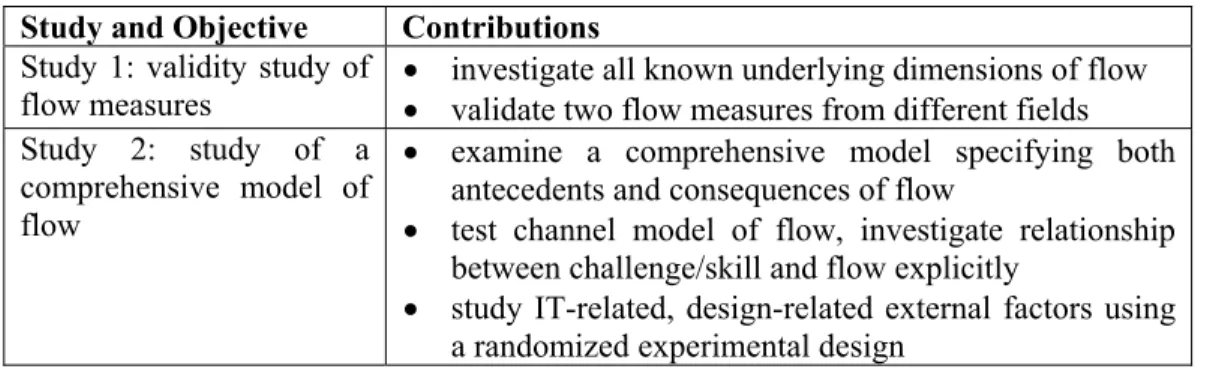
This dissertation attempts to contribute to our understanding of flow in online shopping in three ways. First, a three-part validity study was carried out using different approaches to construct validity and involving two sets of two flow measures: the Flow State Scale (FSS, Jackson and Marsh 1996) and the Internet Flow Scale (IFS). The first study related flow to behavioral criteria in online shopping. The second conducted a traditional construct validity study in which we developed and tested a “nomological network” of relationships between flow measures and other logically-related constructs. This study also included a Multitrait-Multimethod validity study. The third was a
factorial validity study of the flow construct. These studies provided evidence of construct validity for flow and suggested that the FSS had advantages over the IFS in terms of validity.
Second, this dissertation tested a comprehensive model of flow that included the underlying dimensions of flow, the mediating effects of perceived challenge and skill on flow, and antecedents and consequences of flow. Consequences of flow include perceived usefulness, affective responses to the site, and intentions to revisit and purchase. Overall, results based on data collected by a controlled experiment supported our model, suggesting that flow is a second-order construct and positively related to outcome variables.
Thirdly, we studied the effect of Web site complexity on flow. Perceived site complexity was found to effect flow negatively. Investigating the effects of it on inducing flow in online shopping may eventually lead us to guidelines for improving the shopping experience by designing more capable Web sites.
DEDICATION
To my parents, Guo Tianquan and Xiong Weirong, for their never ending love, support and encouragement.
ACKNOWLEDGEMENTS
First of all, I want to express my deepest gratitude to my advisor, Dr. Poole. I would not have been able to finish this dissertation without him. Dr. Poole is the kind of advisor every Ph.D. student dreams for. He guides you through each step with inspiration, encouragement, and patience. He is the kind of researcher you want to be and work with: knowledgeable, dedicated, and open-minded. He touched and changed my life by being my mentor. Words are just too limited and pale to describe my gratitude. I guess, the best thing I can do to pay him back is to work harder and hopefully someday I myself will become a researcher and teacher of his kind.
I want to send special thanks to my committee members for their time, attention, and support through this complicated and challenging process: Dr. Tretter for her support throughout the years and her great help on statistics; Dr. Choobineh for his many valuable comments; Dr. Yadav for offering helpful insights and for his pursuit of excellence. Their constructive critiques made the dissertation better.
Long over-due thanks go to my fellow Ph.D. students in INFO department: Dianne Hall, Amend Mahfouz, Funda Sahin, Rosaria Rosas-Vega, Hope Koch, and Haiyan Fan. Thank you for the moral support during my hardest years and all the wonderful conversations we had. Your friendship means a lot to me. I also want to thank Bettie Poehl and Patty Smith for being my friends and Dr. Shetty for bringing me to Texas A&M University and believing in me. Additional thanks go to Paul Ammos for providing me tons of subjects, to John Norton for technical support, and to everyone
in INFO department. You were practically my family in College Station. Finally, I want to thank my good friends, Xiaopo Yang, Bingbing Yang, and Shu Yan. Without you, life in Aggieland would not have been as enjoyable.
TABLE OF CONTENTS
Page CHAPTER I INTRODUCTION ……….… 1 1.1 Research Objectives ……….. 3 1.2 Expected Contributions ………. 51.3 Organization of the Dissertation ……… 8
II LITERATURE REVIEW ……… 10
2.1 Introduction to Flow Theory ………. 10
2.2 Studying Flow in Information System Use ….. 16
2.3 Studying Flow in Online Environments ……… 19
2.4 Evaluation of Previous Work ……… 34
III RESEARCH OBJECTIVES AND QUESTIONS ……… 43
3.1 Overview ………... 43
3.2 The State of Flow: Instrument Validation (Study 1) ………. 45
3.3 Effects of Web Site Complexity on Flow (Study 2) ……… 58
IV METHODOLOGY ……… 83
4.1 Pilot Study ……….……… 85
4.2 Study 1-A ……….. 93
4.3 Study 1-B ……….. 107
4.4 Study 1-C and Study 2 ……….…. 109
V A VALIDITY STUDY OF FLOW MEASURES……… 123
5.1 Study 1-A ……….. 123
5.2 Study 1-B ……….. 127
5.3. Study 1-C ………. 146
5.4 Conclusion ..……….. 157
VI TEST OF FLOW MODELS ……… 159
6.1 Manipulation Checks ……… 159
CHAPTER Page 6.3 Effects of Complexity and Consequences of
Flow: Structural Models ……….…… 173
6.4 Discussion ..………... 187
VII CONCLUSION ……… 190
7.1 Main Findings and Contributions ………. 190
7.2 Implications ..……… 199 7.3 Limitations ..……….. 202 7.4 Future Research ...……….. 203 7.5 Final Words ……… 208 REFERENCES ..……… 210 APPENDIX A ..……… 218 APPENDIX B ..……… 226 APPENDIX C ..……… 244 APPENDIX D ..……… 254 APPENDIX E ..……… 267 APPENDIX F ..……… 270 APPENDIX G ..……… 275 APPENDIX H ...……… 279 VITA ……….……… 280
LIST OF TABLES
TABLE Page
2.1 General Characteristics of Flow Experience ………. 14
2.2 Literature of Studying Flow in Human Computer Interaction …….. 17
2.3 Summary of Literature Studying Flow in the Internet ……….. 20
2.4 Contrast of Original Flow Theory and Flow in Computer-Mediated Communication ……….. 24
2.5 Summary of Selected Research on Flow ……… 35
3.1 Objectives and Contributions of This Dissertation ………. 45
3.2 Definitions and Measurements of Flow Dimensions ……….. 49
4.1 The 4-Channel Flow Model and Coding Rules in the Pilot Study …. 88 4.2 The Quality of Experience by Channels ………. 89
4.3 Correlations among Constructs ………... 91
4.4 Study 1-A: Behavioral Correlates of Flow ………. 94
4.5 Web Page Types ………. 97
4.6 Behavioral Categories of Flow ……… 100
4.7 Percentage of Agreement for Behavioral Correlates ………... 105
4.8 Most Familiar and Unfamiliar Product Categories ………. 112
4.9 Web Site Classifying Attributes ……….. 114
4.10 Web Site Cluster Membership ……… 115
5.1 Behavioral Correlates Summary for Study 1-A-1 ……….. 124
5.2 Behavioral Correlates Summary for Study 1-A-2 ………... 125
TABLE Page
5.4 Mean Differences for Number of Positive and Negative Correlates .. 126
5.5 Rotated Factor Matrix for FSS ……… 128
5.6 Rotated Factor Matrix for IFS ……… 130
5.7 Reliability Coefficients (Crobach’s Alpha) of FSS and IFS in Study 1-B ……….. 131
5.8 MTMM Matrix for FSS and IFS in Study 1-B ……… 134
5.9 Rotated Factor Matrix for Common Dimensions from FSS and IFS .. 138
5.10 Correlations of Flow and Related Constructs ………. 140
5.11 Correlations of Flow and Related Constructs in Game Context ……. 141
5.12 Correlations of Flow and Related Constructs in Online Shopping Context ……… 142
5.13 Reliability Coefficients (Crobach’s Alpha) of FSS and IFS in Study 1-C ……….. 147
5.14 MTMM Matrix for FSS and IFS in Study 1-C ……… 149
5.15 Goodness of Fit: Alternative Models ……….. 151
5.16 Standardized Regression Weights ………... 156
6.1 Rotated Factor Matrix of Perceived Complexity Measure ………….. 162
6.2 Perceived Complexity Factors ……… 162
6.3 Mean Values of Perceived Complexity of Web Sites ……… 163
6.4 Test for Differences in Complexity ……… 165
6.5 Descriptive Summary for PC, PS, and CS ……….. 167
6.6 Results of Segmentation ………. 167
TABLE Page 6.8 Flow Scores for Not-In-Flow and In-Flow Cases ………... 170 6.9 Correlations between Flow Dimensions with PC and PS …………... 171 6.10 Stepwise Regression Result of PS and PC on CS……… 172 6.11 Model Modification Process for Purifying the Measurement Model . 175 6.12 Model Modification in Refining the Theoretical Model……….. 180
LIST OF FIGURES
FIGURE Page
2.1 The 4-Channel Flow Model ………... 12
2.2 The 8-Channel Flow Model ……….. 13
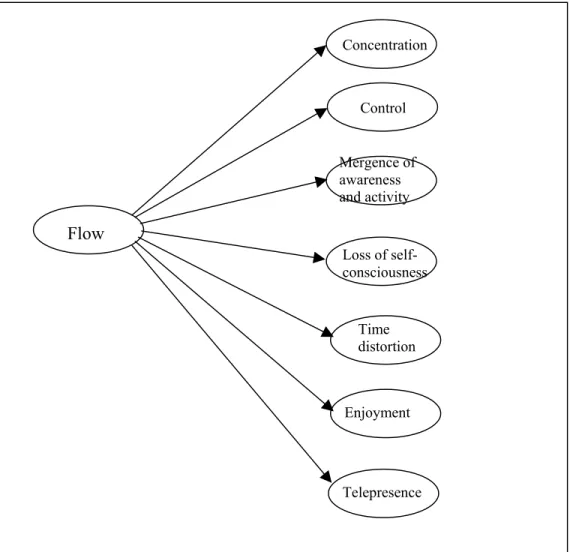
3.1 Flow Construct and its Underlying Dimensions ……… 48
3.2 A Nomological Net for Flow ………. 55
3.3 Research Model ……….. 58
4.1 Research Design ………. 84
4.2 An Excerpt of Transcript ……… 97
4.3 A Coding Card ………... 104
4.4 An Example of Trace Tree Diagram ……….. 106
4.5 The Web Page Directing Subjects to Assigned Web Site ……….. 120
6.1 Scatter Chart of Perceived Skill and Perceived Challenge ……… 168
6.2 Experiences of the Subjects in the 4 Channels ……….. 169
6.3 Second Order Flow Measurement Model 1 ……….. 177
6.4 Second Order Flow Measurement Model 2 ……….. 177
6.5 Flow with Preconditions ………. 178
6.6 The Full Model – Base ……….. 179
6.7 The Full Model – Revised ……….. 180
6.8 The Model with Indirect Effect of Clear Goal ………... 182
6.9 The Model with Perceived Skill and Perceived Challenge ……… 184
CHAPTER I
INTRODUCTION
It is obvious that the Internet has affected how we shop. This dissertation studies one specific aspect of Business-to-Consumer (B2C) Electronic Commerce (EC) -- online consumer behavior. It is focused on the flow experience in online retailing environments. The flow experience is often described as engrossing and intrinsically rewarding (Csikszentmihalyi 1975). Normally when people are in flow, they act with a sense of total control, concentration, and deep involvement. This study attempts to tackle questions such as “What are the factors contribute to flow in online shopping?” and “What are the antecedents and consequences of this optimal shopping experience?”
These are important issues for two reasons. First of all, the Internet is a different medium and a distinct distribution channel in its own right (e.g., Hoffman and Novak 1996; Butler and Peppard 1998; Schlosser 2003), and thus it is important to study its impact on consumer behavior (Barwise et al. 2002). In online commerce, shopping is mediated by the interactive Internet. Shoppers behave as both consumers and computer/Internet users (Koufaris 2002). Hoffman and Novak (1996) proposed that it was important to study flow in interactive, computer-mediated environments to understand this dual role of online consumers. We attempt to address this call with a study of the impact of the Internet on consumer behavior through the lens of flow theory. _______________
Second, contrary to the early prediction of large increases in online spending and changes in consumers’ buying habits, overall EC has proven to be merely satisfactory in terms of growth and volume. Despite the anticipated incentive and customer value of utilizing online technology, customer acceptance of the Internet as a major and routine shopping place is still not “revolutionary” (Barwise et al. 2002). Studying online consumer behavior may help us understand why. In particular, flow, as an optimal experience, is posited to lead to exploratory behavior and intentions to return to a site, both of which seem likely to contribute to utilization of online shopping sites (Hoffman and Novak 1996; Wan and Nan 2001). By understanding the mechanism by which Web sites affect the flow experience, we may be able to contribute some insights into why EC can be made more rewarding for consumers. Although online shopping is not yet as commonplace as it promised to be, it still holds potential to increase rapidly in the next few years (Barwise et al. 2002). Studying online consumer behavior, especially optimal shopping experience, will help to better realize this potential.
Several researchers have applied flow theory to online environments in the study of consumers’ shopping experience, e.g., Novak et al. (2000) and Koufaris (2002). Flow is a “peculiar dynamic state—the holistic sensation that people feel when they act with total involvement” (Csikszentmihalyi 1975, p. 36) and an “ordered, negentropic state of consciousness” (Csikszentmihalyi 1988). Flow is engrossing and enjoyable and people want to repeat experiences that lead to flow. Hoffman and Novak (1996) note that flow is “the process of optimal experience preceded by a set of antecedent conditions necessary for this experience to be achieved and followed by a set of consequences that
occurs as a result of the process.” Studying such experiences and their antecedents and consequences in leisure, work, and everyday-life events helps us construct activities to “maximize flow involvement in as many people as possible” (Csikszentmihalyi 1975, p.203).
It is evident that people undergo this “optimal experience” in a range of situations, including various online activities (Chen et al. 1999). Several studies have assessed the flow experience and its antecedent factors in using computers and the Internet (e.g., Ghani 1995; Nel et al. 1999; and Skadberg and Kimmel 2004). However, there has been little detailed research on flow in online shopping settings, as will be subsequently demonstrated. Especially lacking are experimental studies that systematically vary antecedents of flow.
1.1 Research Objectives
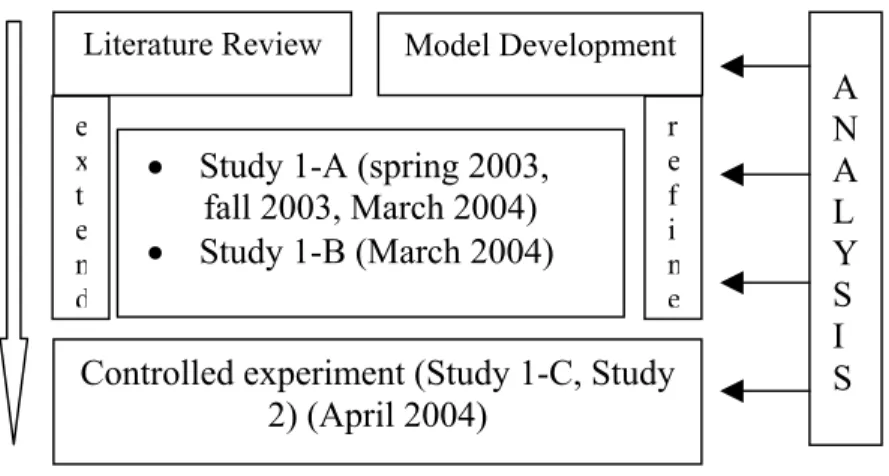
Originally, we focused our effort primarily on constructing and testing a structural model of flow in online shopping environments that included both antecedents and outcomes of flow. However, research is an interactive learning process, especially in an area of limited understanding, such as this one. It took several pilot studies and modifications of the initial plan to arrive at the final plan for the dissertation. At the outset, when we had a rough idea of what we wanted to do, we conducted an initial pilot study. In this study we experimented with the Experience Sampling Method and used screen-capture software to record subjects’ mouse movements as they shopped. This study led to the conclusion that the flow measure adapted from the original Experience Sampling Form (Csikszentmihalyi and Csikszentmihalyi 1988) was not satisfactory. We
then conducted a second pilot study using a flow measure compiled from previous studies of flow in the fields of Information Systems and Marketing. We called this measure the Internet Flow Scale (IFS). Results of the second pilot study suggested that this measure was far from perfect. We extended our literature review effort to other fields and discovered another flow measure in sports psychology, the Flow State Scale (FFS) (Jackson and Marsh 1996). This measure had a good deal of validity evidence and had been employed in a number of studies, suggesting it might be more adequate than existing measures of flow employed in IS and Marketing. However the FSS had never been applied in IS, and it was unclear that it would transfer well. This suggested that a full-fledged construct validity study of the various measures would be useful. This validity study consisted of three parts: (1) Study 1-A assessed the validity of flow measures by identifying behavioral correlates of flow in Internet contexts and assessing the relationships between the flow measures and behavioral correlates; (2) Study 1-B was a classic construct validity study of IFS and FSS in which we tested a nomological network of constructs related to IFS and FSS, and conducted a mutlitrait-multimethod (MTMM) validation study; and (3) Study 1-C assessed the factorial validity of the IFS and FSS. These studies were related and complementary to each other. They examined the validity issue of flow measures from three different angles. Study 1-A related subjective flow measures to observable behaviors. If the flow measures correspond to expected behaviors, this provides evidence for their construct validity. In Study 1-B, assessing the MTMM matrix would provide evidence of (or lack of) convergent and discriminant validity. A nomological network including flow and other related
constructs addressed the validity issue using a between-network approach by establishing a logical, theoretically consistent pattern among constructs (Marsh 1990). Finally, Study 1-C, using the factorial approach, evaluated within-network issues related to internal structure of flow (Marsh 1990). In combination, these studies provided a comprehensive examination of validity of flow measures.
Following the validity study and selection of appropriate flow measures, the dissertation conducted a test of a comprehensive model of flow (Study 2). This model included key antecedents of flow, a broad measure of flow as it relates to online shopping, and outcomes of flow. The antecedents fell into two types. The first type was the direct preconditions of the flow experience that are suggested by flow theory. The preconditions leading to the flow experience are theorized to be (1) the balance between the perceived challenge presented by the activity and the skills possessed by the actor, (2) a clear goal, and (3) a quick and unambiguous feedback mechanism. The second type of antecedent was external factors, such as Web site complexity, which affects flow via its impact on perceived challenge and skill.
The broad measure of flow used in the comprehensive model was adapted mainly from the FSS since it demonstrated a better performance in our validation study. The outcomes were customers’ cognitive evaluation of the usefulness of the site, affective responses to the site, and behavioral intentions to revisit and purchase in future.
1.2 Expected Contributions
The dissertation attempts to make several contributions to research on flow in the online context. It (1) includes a multi-part validity study of flow measures using
multiple approaches, (2) tests a comprehensive model of flow including all underlying dimensions of flow as well as the mediating variables of perceived challenge and skill, (3) examines the applicability of the channel model of flow in online environments, and (4) investigates the effects of site complexity on flow in online shopping. The ultimate goal is to provide information that will enhance our understanding of flow in online shopping and facilitate the design of Web environments that provide an optimal online shopping experience.
These studies attempted to address both conceptual and methodological challenges in studying flow in Information Systems field. First, it tried to formally address the validity issue of flow measures in IS research, an issue considered only indirectly in previous research. The validity studies employed both behavioral and subjective measures to assess construct validity in multiple studies, thus providing a multi-perspective view of validity of flow measures rooted in different fields: Information Systems and Sports Psychology. We believed this effort would contribute to the literature by addressing measurement challenges faced by researchers in this field, helping in development of measures more tailored to the IS field.
Second, the current study utilized a full set of underlying dimensions of flow in the context of online shopping. This represents an advance over previous studies that have used only a partial operationalization of flow. We were able to study those dimensions that have been left out of IS and Marketing research, such as mergence of awareness and activity and loss of self-consciousness. Furthermore, by testing this comprehensive model of flow using validated measure we were able to overcome the
conceptualization issues in previous work, such as inconsistent flow models and incomplete operationalization of the flow construct.
Third, using the channel models to compare and contrast experience in different segments enabled us to determine the role of flow in the online shopping context in a more definitive fashion than previous research has done, addressing a call by Chen et al. (1998). To our knowledge this was the first controlled laboratory experiment that has examined the mediating effects of perceived challenge and skill on flow in the online environment, which is the essence of flow theory and has been neglected by researchers in IS and Marketing. If it could be established that perceived challenge and perceived skill were indeed the direct antecedent of experiencing flow in online shopping, this would simplify future endeavors in that the extension of the model could focus on external factors thought to have impacts on these two factors.
Fourth, the study incorporated external factors and consequences of flow that have both research and practical significance. The external factor of site complexity is an information technology-centered variable that represents unique aspects of Internet interaction. Results from these studies have the potential to deepen our understanding of flow in online shopping and extend our knowledge of online consumer behavior by including the Internet as a distinctive medium. Furthermore, the results of this research have the potential to provide a basis for future research on site usability and development of technologies that make Web sites more “flowable.” It would also supply guidelines for site design and shed light on optimal Web retailer strategies. It would help designers create online shopping environments that are capable of
maximizing people’s flow experience. The study also investigated the relationship between flow and consequent outcomes which are of significant and practical value to retailers. Positive associations would indicate that flow is a desirable state and that online retailers should develop plans to facilitate flow in their site based on their overall business strategies.
The contributions of this study are not restricted to online shopping. The study would also provide general guidance for other kinds of Web sites as well. For example, if this study found that unfamiliar content presents a major part of perceived challenge to users, an information intensive site should balance the overwhelming amount of domain knowledge by employing a simpler structure or presenting the content in a way easier for visitors to grasp, so that the perceived challenge and skill could somehow in balanced.
In addition to theory and practice, this research also experimented with multiple data collection methods to address the uniqueness of the interaction between a Web site and its clients. The Experience Sampling Method was used to collect on-the-spot data of participants’ internal states and feelings. This represents a new approach in data collection in online environments. We examined the applicability and experimented with the manner in which to adapt this method to online environments. We also developed a set of methods to transcribe and code mouse movement data captured by software.
1.3 Organization of the Dissertation
This dissertation is organized into chapters as follows: The next chapter provides a theoretical foundation by introducing the main points of flow theory and reviewing
previous work on flow in Information Systems and EC. The literature review revealed certain conceptual and methodological issues and challenges in flow research, some of which we tried to address in our research. This led to Chapter III, in which a series of research studies to further flow research in online shopping is proposed based on the evaluation of previous research. The effort is targeted to two aspects of flow research: the validity issue of flow measures and investigation of a comprehensive flow model in online shopping. In Chapter IV, the procedures used in those studies are discussed. Chapter V and Chapter VI present the results of this research project. Chapter V reports the results of the validity study (Study 1), and Chapter VI reports the results of the investigation of the proposed flow model (Study 2). Chapter VII discusses the results of the studies and their significance.
CHAPTER II
LITERATURE REVIEW
In this section, we first introduce the basis of the theory of flow briefly by presenting its main points and describing data collection techniques that have been used in previous research. Flow is an optimal state of experience. People feel flow in various leisure and everyday activities. Since the theory developed, it has been used in various fields to examine people’s subjective experience in different situations, such as playing chess, composing music, and performing surgery. Since the late 1980s, researchers have used the flow concept to explain the usage of information technology, e.g., spreadsheet software (Webster 1989), email (Trevino and Webster 1992), and the Internet (Agarwal and Karahanna 2000). When online shopping became a phenomenon, researchers tried to use the theory to study people’s online shopping experience in order to investigate what affected their behavior. This chapter presents a review of related studies in Information Ssystems and other fields that applied the flow concept to study online behavior. At the end of the chapter, we discuss the limitations of previous research, which is the motivation for the current study.
2.1 Introduction to Flow Theory
When trying to understand enjoyment, Csikszentmihalyi (pronounced chick-sent-me-high-ee) developed the concept of flow. Flow “is the crucial component of enjoyment” (Csikszentmihalyi 1975, p. 11). Flow represents a “peculiar dynamic state— the holistic sensation that people feel when they act with total involvement” (p. 36) and
an “ordered, negentropic state of consciousness” (Csikszentmihalyi 1988, p. 34). In this state, actions transit seamlessly into another, displaying an inner logic of their own. The term “negentropic” refers to being in harmony and a lack of chaos. The actor experiences a smooth transition and total control of his/her actions without distraction. The term “flow” was coined by the informants themselves who participated in those studies when they refer to this “autotelic experience.”
In order for flow to occur, the task should have a clear goal and a quick, unambiguous feedback mechanism. That is why people often experience flow when playing games (e.g., chess and basketball). The first model of flow presented by Csikszentmihalyi states that the perceived balance of challenge and skill leads to flow. If
challenges exceed skills, people feel overwhelmed and anxious; on the other hand, if the
activity is too easy, people get bored. Empirical data suggested both challenges and
skills had to pass a certain threshold for flow to occur; otherwise the person showed
apathy towards the activity, even when challenges and skills were in balance
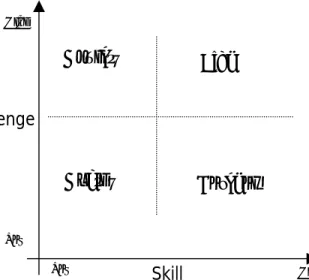
(Csikszentmihalyi and Csikszentmihalyi 1988). This discovery led to the development of the four-channel model of flow (Figure 2.1).
A more complex, 8-channel model was developed by Massimini and Carli (1988). The 8 channels (Figure 2.2) are the results of three levels in challenge and skills, listed below. Only in the case of high challenge and high skill does flow occur.
1. High challenges and average skills (arousal) 2. High challenges and high skills (flow) 3. Average challenges and high skills (control) 4. Low challenges and high skills (boredom) 5. Low challenges and average skills (relaxation) 6. Low challenges and low skills (apathy)
7. Average challenges and low skills (worry) 8. High challenges and low skills (anxiety)
The dimensions of the flow experience include focused concentration, “merging of activity and awareness”, perceived control, time distortion, and loss of self-consciousness (“a transcendence of self”) (Csikszentmihalyi 1988). As a result, “consciousness is in harmony and the self – invisible during the flow episode – emerges strengthened” and “the negentropic quality of the flow experience makes it autotelic, or intrinsically rewarding” (Csikszentmihalyi 1988). The term “autotelic” (from Greek auto=self and telos = goal, purpose) means with one’s own purposes. In other words, the activity “required formal and extensive energy output on the part of the actor, yet provided few if any conventional rewards” (Csikszentmihalyi 1975, p. 10). A summary of the characteristics of flow is listed in Table 2.1.
Figure 2.1 The 4-Channel Flow Model Skill Challenge Boredom Anxiety Apathy Flow High High Low Low
Figure 2.2 The 8-Channel Model of Flow Subject mean Anxiety Apathy Control Boredom Relaxation Arousal Flow Worry Skill Challenge Low Low High High
Table 2.1 General Characteristics of Flow Experience
Construct Type of
Construct Definition
1 Challenge and
skill balance Precondition “A balance between the challenges perceived and the skills a person brings to” (Csikszentmihalyi 1988) “A challenging activity that requires skills”
(Csikszentmihalyi 1990, p. 49)
2 A clear goal Precondition “The activity must have relatively clear goals.” (Csikszentmihalyi 1988)
3 Feedback Precondition “Provide rather quick and unambiguous feedback” (Csikszentmihalyi 1988)
4 Concentration Dimension “A centering of attention on a limited stimulus field” (Csikszentmihalyi 1975, p. 40)
“Concentration on the task at hand” (Csikszentmihalyi 1990, p. 58) 5 Mergence of activity and awareness or Mergence of action and awareness
Dimension “The merging of activity and awareness: transcendence of ego boundaries” (Csikszentmihalyi 1975, p. 85)
“merging of activity and awareness so typical of enjoyable activities” (Csikszentmihalyi 1988)
“People become so involved in what they are doing that the activity becomes spontaneous, almost automatic; they stop being aware of themselves as separate from the actions they are performing.” (Csikszentmihalyi 1990, p.53)
6 Sense of control Dimension “There is the sense that the outcomes of the activity are, in principle, under the person’s own control.” (Csikszentmihalyi 1988)
“Lacking the sense of worry about losing control” (Csikszentmihalyi 1990, p.59)
“The sense of exercising control in difficulty situations” (Csikszentmihalyi 1990, p.61)
7 Time distortion Dimension “Distorted sense of time” (Csikszentmihalyi 1988) “The transformation of time”, “Time no longer seems to pass the way it ordinarily does (Csikszentmihalyi 1990, p.66)
8 Loss of
self-consciousness Dimension “Lose temporarily the awareness of self” (Csikszentmihalyi 1988) “There is not enough attention left over to allow a person to consider either the past or the future, or any other temporarily irrelevant stimuli.”
(Csikszentmihalyi 1990, p.61)
“The loss of the sense of a self separate from the world around it is sometimes accompanied by a feeling of union with the environment.” (Csikszentmihalyi 1990, p.63) 9 Autotelic
Csikszentmihalyi introduced the concepts of flow (or autotelic) personality and flow activity, which refer to a personality that has the ability to experience flow easily and an activity that is easy for people to achieve flow experience, respectively. Both will influence the occurrence of flow. Furthermore, flow is a dynamic, evolving force. It is hard to be in flow for a substantially long period of time since the perceived level of challenge and skill change over time. In most cases, a person with ever increasing skills will eventually become bored unless the activity becomes more challenging at the same time.
In order to study activities that people enjoyed a lot, researchers initially used personal interviews to collect first-hand data. Subjects’ descriptions of their subjective experiences were used to extract the common features and structure of such enjoyable experiences. The results confirmed the theoretical model of flow. Later, two quantitative methods for determining the presence or lack of flow were tested in a study of rock dancing. The first method was to code and count “the number of elements of the flow experience a person derives from an activity” and the second one was “the ratio of skills to challenges perceived by a person in a given activity” (Csikszentmihalyi 1975, p.102). Still, the majority of earlier studies in various contexts relied on self-reported, personal reminiscence through interviews and questionnaires. The data from these studies were qualitative and not fully definitive.
To find a way to record flow experience in the stream of consciousness of everyday life, the Experience Sampling Method (ESM) was developed in the mid-1970s
(Csikszentmihalyi and Csikszentmihalyi 1988). It used electronic pagers as the stimulus for participants to report their on-the-spot thoughts and feelings. Once prompted, participants answered a set of questions (on the “Experience Sampling Form”, ESF) regarding the activities they were participating in and their subjective states at the time. In a typical study, participants were prompted six to eight times a day for a period of one to two weeks. Each ESF had over 30 questions regarding the emotional and situational state of the participants. Flow was determined by the ratio of challenges and skills. It was found that in order for flow to occur both challenges and skills have to pass a threshold. The 4-channel model of flow was thus developed. The scales made statistical testing of hypothesized relationships possible. Several studies subsequently used this measurement approach to closely examine flow experience in everyday life, to compare experiences in different cultures (Carli et al. 1988), and to investigate relationship between flow experience and other factors, such as self-esteem (Wells 1988) and family context (Rathunde 1988).
2.2 Studying Flow in Information System Use
Before flow was introduced to study subjective experience in online environments, it was integrated into studies on computer mediated communications (CMC) (Trevino and Webster 1992) and human-computer interaction (Webster et al. 1993; Ghani and Deshpande 1994). In these studies, flow is considered as a multidimensional complex construct, characterized by a set of underlying constructs. In this section, we provide a brief review of selected literature focusing on studies that
provided a basis for further investigation by conceptualization and operationalization of flow in CMC environments. A summary is presented in Table 2.2.
Table 2.2 Literature of Studying Flow in Human Computer Interaction
(Csikszentmihal yi 1975, 1988) (Trevino and Webster 1992) (Webster et al. 1993) (Ghani and Deshpande 1994) (Ghani 1995)
Domain Email vs. voice
mail systems Use of Lotus 1-2-3 Computer usage in the workplace Computer use Data collection method
Field survey Study 1: student survey Study 2: field survey
Field survey Experiment
Sample 154 respondents 1. 133 respondents 2. 43 respondents 149 respondents Pilot: 450 students, Main: 130 students Flexibility Technological factors Ease of use Modifiability Contextual factors Flow activity Job characteristics Individual factors
Flow personality Cognitive
spontaneity
Precondition Challenge and skill Perceived challenge Skill, perceived challenge Clear goal Feedback Flow Dimension
Concentration Attention Attention focus Concentration
Mergence
Control In control Control Perceived
control Perceived control Time distortion Loss of self-consciousness Curiosity Aroused curiosity Results Autotelic
experience Intrinsic interest Intrinsic interest Enjoyment Enjoyment
Attitudes Experimentation
behavior Exploratory use Learning Communication effectiveness Expected voluntary use Creativity Quantity of communication Communication effectiveness Focus on process Communication
Trevino and Webster (1992) applied both flow theory and the Technology Acceptance Model to study the effects of multiple variables on user evaluation and perceived impacts of electronic mail and voice mail systems. This field survey found that flow, which was operationalized in terms of four dimensions of control (attention focus, curiosity, and intrinsic interest), was affected by technological factors (email vs. voice mail) and by perceived ease of use. Flow was found to be positively associated with user attitudes, communication effectiveness, and quality of communication. Similarly, in Webster et al. (1993), flow was found to be associated with perceived characteristics of the computer software as well as with relevant performance outcomes. However, the proposed 4-dimensional flow construct was found to be three-dimensional in that curiosity and intrinsic interest seemed to make up one dimension (called cognitive enjoyment) when using computers (Webster et al. 1993).
Ghani and Deshpande (1994) reported that flow experiences were linked with exploratory use behavior, which in turn led to the extent of computer usage in terms of number of hours of use. The antecedents of flow were perceived control and challenge. Job characteristics also played a moderating role in the relative influence of those antecedents on flow experiences. In another study, students used computer software to complete an assignment and answered a questionnaire (Ghani 1995). Flow (in terms of enjoyment and concentration) was found to be positively related to learning, creative behavior, and process focus. On the other hand, flow was also positively related to individual cognitive spontaneity and perceived control. In addition, the term of “fit” was
defined as the difference between skills and perceived challenges and was positively related to perceived control. Contrary to the theory, no direct relation was found between “fit” and flow. In explaining this, Ghani introduced the notion of “optimal challenge” which reflected the curvilinear relationship between “fit” and flow, arguing that the perceived challenge was relative to one’s skills. Thus, flow was empirically showed to be negatively related to the square of the difference between skills and challenge.
2.3 Studying Flow in Online Environments
Table 2.3 highlights major studies with special relevance to our research. They focus on flow experience in Internet usage and online shopping. Some of them are conceptualizations and others are empirical investigations, and some of them use qualitative methods and others use quantitative methods. From the summary, we can see that flow is a useful concept in understanding people’s behavior in engaging and interactive activities, including human computer interaction and online environments. However, research in this stream is far from cohesive and still in its initial stages. Several challenges can be observed in this literature (Finneran and Zhang 2002). In this section each study is discussed briefly; critiques will be presented in the next section. The table lists studies chronologically, although discussion of the studies in this review may not follow this sequence, as we try to discuss closely related papers together.
Table 2.3 Summary of Literature Studying Flow in the Internet
Authors Main points and Limitations
1. Hoffman and Novak (1996)
• Application the concept of flow to Internet usage
• It defined flow in computer mediated communication
• It proposed a process model of Web navigation with antecedents and consequences of flow 2. Chen et al.
(1998) • An empirical test of the validity and the possibility of applying notion of flow to Internet surfing
• 100 students, Experience sampling method (ESM), 201 data points
• Results partially supported flow theory.
• More work is needed to examine applicability of flow in Internet surfing.
• Time interval of 5 to 7 minutes was naturalistic. 3. Chen et al.
(1999) • • Report of “Web users’ optimal flow experience in the Web environment” Content analytic procedures, 304 Web users’ open-ended questionnaires
• The flow feeling (internal experience when in flow) reported were very similar to those described by original works in flow. Factors and activities for challenge, control, and enjoyment were extracted too.
o Based on previous experience of flow in Web activities 4. Nel et al.
(1999) • • Investigation of distinguishable patterns of flow in different Web sites Experimental evaluation of different kinds of Web sites grouped by their content and audience focus
• Web sites acting as domestic communication tool had the highest flow score.
• Flow score were positively related to return intention and overall rating. o Omission of perceived challenges and skills
o Intention of user was excluded. 5. Novak et
al. (2000) • Development of a structural model that “embodies the components of what makes for a compelling online experience”
• Constructs included: Web usage, arousal, challenge, control, exploratory behavior, flow, focused attention, interactivity, involvement, playfulness, positive affect, skills, telepresence, and time distortion, total 75 items
• Based on a large-scale online survey, 1654 respondents o Self selected sample
o Bases on memory of previous experience o Not taking a situated perspective
o Congruence of challenge and skill was not treated as dynamic process as it should be. o No repeated measures on same individual
6. Agarwal and
Karahanna (2000)
• Use of a multidimensional construct “cognitive absorption” to explain information technology usage.
• Cognitive absorption (CA) is a state of deep involvement with software; it is mainly based on flow theory.
• Five dimensions of CA: temporal dissociation, focused immersion, heightened enjoyment, control, and curiosity.
• World Wide Web as the target technology
• Playfulness and personal innovativeness were important determinants of CA.
o Only personal traits are included as determinants for CA, no other contextual factors are considered.
7. Wan and
Nan (2001) • Examination of “whether a congruency effect exists if Web features and surfing motives match up.”
• A 2 by 2 (dynamic vs. static Web site designs and information seeking vs. entertainment seeking motives) online experiment using an actual e-commerce Web site.
• Interaction effect of surfing motive and Web design was significant on facilitating positive emotion and experience and resulting in high evaluation and behavioral intention, but the congruency effect was not symmetric.
o No investigation of the impacts of balance of perceived challenges and skills on those variables
Table 2.3 Continued
Authors Main points and Limitations
8. Finneran and Zhang (2002)
• Study intended to “enhance the understanding of flow and how to study it within computer-mediated environments by reviewing past studies.
• Listing conceptual and methodological challenges
• Proposing a conceptual framework including task and artifact characteristics and individual traits
9. Koufaris
(2002) • The Technology Acceptance Model and flow theory, along with environmental psychology, were used to form an integrated theoretical framework of online consumer behavior.
• Shopping enjoyment and perceived usefulness were found to impact intention to return.
• Product involvement, Web skills, and challenges had impacts on shopping enjoyment and concentration, while value-added search mechanisms only affected shopping enjoyment. 10. Novak et
al. (2003) • An investigation of “whether flow occurs during both experiential and goal directed activities”
• A series of quantitative analyses of over 1000 Web users’ open-ended questionnaires
• More evidence is found for flow occurring in goal-directed activities although there is evidence for flow happening in both kinds of activities.
o Based on previous experience of flow in Web activities 11. Smith and
Sivakumar (2004)
• Development of a model to study impacts of flow on different aspects of online shopping
• Consumer individual difference, product and purchase characteristics are included.
• A conceptualization paper 12. Skadberg
and Kimmel (2004)
• An empirical evaluation of visitor’s experience while browsing a Web site using flow model
• Interrelationships among elements of a Web site were closely related to flow experience.
• Flow experiences leaded to increased learning, and eventually changes of attitude and positive actions.
13. Huang
(2003a) • An investigation of Web attributes’ effect on flow, and direct or indirect impacts on the Web performance
• Web attributes: complexity, novelty, interactivity
• Flow: attention, control, interest, curiosity
• Web performance: utilitarian and hedonic
• Web attributes affected flow differently
• Flow was found to enhance both utilitarian and hedonic performance. 14. Finneran
and Zhang (2003)
• Development of a component-based model that consists of person, artifact, and task, as well as the interactions of these components.
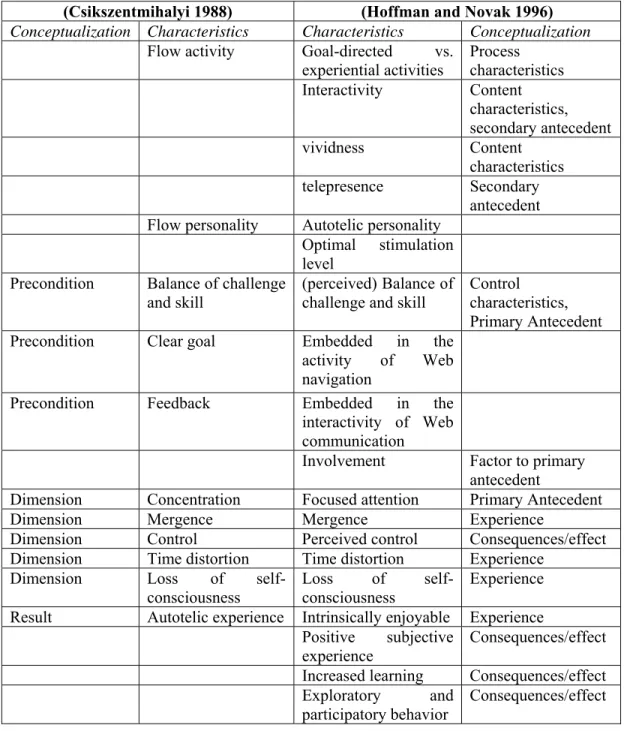
Directly applying flow concepts in the study of online shopping was pioneered by Hoffman and Novak (1996). First, flow experience in a hypermedia computer mediated environment (CME) has been defined as a cognitive state that is a seamless sequence of responses facilitated by machine interactivity, which is the extent to which users can participate in modifying the form and content of the mediated environment in real time. Machine interactivity is inherent to the Web to some extent, but it is different in levels determined by ease of use, speed, technology use by the site, as well as other
factors. In addition, this particular flow state is intrinsically enjoyable, accompanied by a loss of self-consciousness, and self-reinforcement. A process model of network navigation in CME was proposed based on conceptualization and previous empirical studies. The authors argue that flow consists of a process state that requires a set of antecedents to occur and results in a set of consequences. In this model, antecedents of flow are three sets of variables. They are: (1) control characteristics, including skills and challenges; (2) content characteristics, including interactivity and vividness; and (3) process characteristics, whether the shopping task is an experiential one or a goal-directed one. They found that the relationship between skills and challenge, and interactivity directly affect flow. Interactivity and vividness affect telepresence and focused attention, and process characteristics affect involvement, which in turn impacts focused attention. Also, telepresence and focused attention influence on flow. Thus the authors differentiate primary and secondary antecedents of flow. Primary antecedents are skills, challenges, focused attention, and involvement, while secondary antecedents are interactivity and telepresence, which are not sufficient alone, but increase the subjective intensity of the flow state. Major consequences of flow are increased learning, an exploratory mind-set, a positive subjective experience, and perceived behavioral control. In their proposed model, flow is the centerpiece gluing antecedents (i.e., content characteristics, process characteristics, and control characteristics) and consequences together.
In summary, for a sufficiently motivated user to experience flow when interacting with the Web, focused attention and perceived balance between their skill
and the challenge posed by the Web site are needed. During flow, (1) action and awareness are merged; (2) concentration is so intense that little attention is left for anything else; (3) self-consciousness disappears; and 4) sense of time is distorted. In this optimal, gratifying, intrinsically enjoyable state, people feel control and respond positively. As a result, consumers show better learning and more exploratory and participatory behaviors. However, the way they conceptualization of characteristics of flow experience in Web navigation is slightly different from the original structure proposed by Csikszentmihalyi (1988). A contrast of these two is in Table 2.4.
In their subsequent work (Novak et al. 2000), researchers collected data on flow in conjunction with the ninth WWW User Survey, which was a large-scale online consumer survey at the Georgia Institute of Technology. The flow survey was one of the ten surveys given. Key constructs related to flow were modeled and empirically measured. These constructs included interactivity, involvement (importance), playfulness, focused attention, skill, control, challenge, arousal, telepresence, time distortion, positive affect, and exploratory behavior. Flow was measured as a yes-no variable by self-assessment questions, such as “Did you have flow in the past when using the Web?” A total of 1962 respondents completed the flow survey.
Table 2.4 Contrast of Original Flow Theory and Flow in Computer-Mediated Communication
(Csikszentmihalyi 1988) (Hoffman and Novak 1996)
Conceptualization Characteristics Characteristics Conceptualization Flow activity Goal-directed vs.
experiential activities Process characteristics Interactivity Content characteristics, secondary antecedent vividness Content characteristics telepresence Secondary antecedent Flow personality Autotelic personality
Optimal stimulation
level Precondition Balance of challenge
and skill
(perceived) Balance of challenge and skill
Control characteristics, Primary Antecedent Precondition Clear goal Embedded in the
activity of Web navigation
Precondition Feedback Embedded in the interactivity of Web communication
Involvement Factor to primary antecedent
Dimension Concentration Focused attention Primary Antecedent
Dimension Mergence Mergence Experience
Dimension Control Perceived control Consequences/effect Dimension Time distortion Time distortion Experience
Dimension Loss of self-consciousness
Loss of self-consciousness
Experience Result Autotelic experience Intrinsically enjoyable Experience
Positive subjective
experience
Consequences/effect
Increased learning Consequences/effect
Exploratory and
participatory behavior
Based on their early work (Hoffman and Novak 1996), the authors proposed a set of hypotheses to examine relationships among these constructs and a structural model, called base model. The base model was purified and revised using statistical procedures, resulting in a revised model. The base and revised model supported most parts of the hypotheses. First, the study found that greater skill/control and greater challenge/arousal were related to greater flow experience. This finding was in accordance with the preconditions of flow. Experiencing flow was found to be associated with time distortion and telepresence. Focused attention was thought to be a direct influence of flow too; however, it only affected time distortion and telepresence, not flow. Second, indirect influences included speed of interactivity and involvement. Speed of interactivity affected flow but not focused attention, time distortion, nor telepresence; and involvement (importance of the activity) affected focused attention. Intuitively, the longer a user had been using the Internet, the higher his/her skill was. Thirdly, in the study exploratory behavior and positive affect were investigated as consequences of experiencing flow when using the Web; however, a conclusion remained elusive. The relationship between exploratory behavior and flow were more complex than thought. In the base model, the relationship was significant, but not in the revised model. Further investigation is needed. Positive affect was dropped during the purification process, so the hypothesis involving this variable was not testable.
More data was collected by the “Web and Internet Usage Survey”, which was part of GVU WWW survey as well. The authors used data from 1654 respondents who filled out both flow and Web usage surveys to obtain insights to online consumer
behavior. It was found that people experience greater flow (including greater time distortion, telepresence, and focused attention) in experiential activities (such as chatting) than in task-oriented activities (such as working or specific reference searching). The length of time people had been using the Web was negatively related to experiential usage of the Web and experiencing flow.
This study was the first of only a few to use empirical data and a complex process model to examine online user/consumer experience, and the results were very informative. However, it was a cross-sectional study that only examined the users’ past Web experience in general. This raises three main concerns. First, the congruence of challenge and skill was not treated as a dynamic process as it should be. In other words, the study did not take a situated and dynamic perspective, which is presumed in flow experience when studying the phenomenon (Chen et al. 1999). For example, questions about skills and challenges were related to the respondents’ current levels of skills and perceived challenges in using the Web. Secondly, it treated Web use as one monologue activity. Again, the skill and challenge questions assessed the current, average levels and did not take into account the variety of Web activities and Web sites. The questions about flow and its closely related constructs tended to be an average of past experience (e.g., “Interacting with the Web is slow and tedious” and “Most times I use the Web I feel that I am in flow”). There were no context-based questions to gather information about circumstance under which the participants experienced flow. Data collected in this manner were not “on-the-spot” as they should be. The on-the spot data normally refers to information collected by Experience Sampling Forms (Csikszentmihalyi and
Csikszentmihalyi 1988). Survey data might produce a systematic measurement error due to memory loss and distortion, and cause concerns regarding measurement validity. Repeated, on-the-spot measures on the same individual would have provided data on studying subjective experience, which is characterized by perceived condition. At first these two concerns seem merely methodological and related only to data collection. However, the resulting one-shot data is not only subject to memory loss and distortion, but also raises theoretical concerns because it contradicts the belief that flow is a process state, not a constant state (Hoffman and Novak 1996).
Third, in Hoffman and Novak’s structural model, the effects of skill and challenge on flow were treated separately, ignoring the critical precondition that the balance between the two is the key. Furthermore, their study was not targeted to the shopping context in particular, although an online information search can be thought of as the part of the shopping process. Thus, it would be hard to pinpoint in which exact situation, in which activity, and in which stage of the shopping process, Web users experienced the optimal, flow state. Nevertheless, this study is a good starting point.
Nel et al. (1999) found that flow experience varied among different kinds of Web sites. Web sites were classified into four categories (or four cells) based on two axes: Web site content (communication tool vs. transaction site) and audience focus (international vs. domestic). These four categories of Web sites corresponded to the four quadrants: domestic communication tool (Q1), domestic transaction site (Q2), international communication tool (Q3), and international transaction site (Q4). In a simulated experimental setting, each student subject was asked to surf twenty Web sites
(five for each category) and to evaluate them based on their experience. Web sites acting as a domestic communication tool (Q1) had the highest flow score, followed by Q2, Q3, and Q4, in that order. Also, there was a significant positive relationship within each quadrant/cell between flow on a Web site and the likelihood of that site being visited again. It was found that when overall ratings of individual sites varied from good to bad, flow mean scores correspondingly deteriorated.
This study showed a distinguishable pattern in flow experience among Web site categories. However, it failed to identify the causes of differences in flow experience. In our opinion, omitting perceived challenge and skill from their model is the primary reason leading to this inadequacy, because there is then no way to tell whether or not Web sites in different quadrants presented different levels of challenges due to the selected factors. Also, without a hypothesized mediating effect of challenge and skill along with selection of factors in terms of their effects on challenge and skill, the choice of factors (site content and audience focus) seems unjustified and ill conceived. Thinking of factors in terms of perceived challenges and skills would yield more reasonable and relevant choices, making the selection process more systematic and efficient. Also, the intention of the user was excluded from the study. In other words, when users tried to make a transaction they would find an information provider site frustrating. “It is the task and the context that create the flow experience, not merely the Web site type” (Finneran and Zhang 2002).
Chen et al. (1998) took a microphenomena approach to study the flow experience during interaction with the Web. A computer application was developed to implement
the Experience Sampling Method (ESM) in a computer interaction environment. It recorded the users’ navigation activities and prompted a questionnaire at random times with intervals of 5 to 7 minutes. One hundred students participated in the study while browsing the Web and generated 201 data points. The subjects were classified as being in flow if 1) differences between the skills and challenges were less than 2 on an 11-point Likert scale and 2) both of them were above 5. Other flow dimensions measured included a clear goal, enjoyment, attention, and time distortion. Results were mixed. People in flow enjoyed less and paid less attention, in addition to not likely having a clear goal, which contradicted the fundamental elements of flow theory. On the other hand, the associations of the dimensions were as expected. It was also found that the sequences of actions in Web navigation affected the flow experience. The authors called for re-examination the applicability of flow theory and its dimensions in online environments by using ESM technique.
Chen et al. (1999) reported baseline data on the existence of flow phenomenon in the Web environment. Using standard qualitative content analytic procedures on 304 Web users’ descriptions of perceived flow experience, the authors categorized contextual and situational factors, as well as conditions relating to flow experience. The Web is a multi-activity medium; it is not surprising to find flow occurring in several Web activities. Research on the Web, including information retrieval, was the activity with the highest frequency in which people felt flow. Other activities included participating in newsgroups and communicating by email or chatting. The feelings of flow (internal experience when in flow) reported were very similar to those described by original work
in flow, such as inspired involvement, lost self-consciousness, excitement, timelessness, and so on. Factors and activities related to challenge, control, and enjoyment were extracted too. The most reported sources for challenges were surfing (locating information), looking for information to solve a problem, and building research strategies and queries. Their study provides the groundwork for future model and instrument building.
In trying to understand consumer experience in different activities, Novak et al. (2003) investigated whether flow occurred during both experiential and goal-directed activities, which are two distinct categories of consumer behavior. This time, they performed a series of quantitative analyses on qualitative descriptions of flow experiences provided by Web users. Web users were asked to answer three open-ended questions about their flow experience when using the Web. Over one thousand user verbatims (short descriptive answers to open-ended questions) were collected through a Web survey and coded according to ten coding rules. Contrary to earlier research, more evidence was found for the occurrence of flow in goal-directed activities, although there was evidence that flow happened in both kinds of activities. Flow on the Web seemed to occur across a broad range of consumer involvement with goals, processes, products, and content. Study results also showed distinguishable flow experiences defined by types of activities: goal-oriented as opposed to experiential. It was evident that the context was important in inducing subjective experiences. The authors suggested an important future research area to study different kinds of flow, namely experiential and task-oriented flow.
In an experimental study, the effects of Web design and user motivation on experiencing flow were put under investigation (Wan and Nan 2001). A 2 (Web site design feature: dynamic vs. static Web design) by 2 (user motivation: information seeking vs. entertainment seeking motives) online experiment was conducted. It was posited that a match between Web features and surfing motives would result in an optimal experience. This proposition implied that the matching situations (static Web site with information seeking motives, dynamic Web site with entertainment seeking motives) would facilitate positive emotions and experience, resulting in high evaluation and high behavioral intention. Although the interaction between the two factors (Web feature and user motivation) was significant, the congruency effect was not symmetric. The combination of dynamic Web site and entertainment seeking motivation was more capable of inducing optimal experience than the combination of static Web site and information seeking motive. The authors attributed the lack of symmetry to the too-appealing dynamic Web design. Although it was thought that the Web as a shopping channel lacked the ability to evoke the emotional aspect of a shopping experience, this study found certain features of Web site design could induce affective responses, both positive and negative. However the underlying mechanism needs further investigation since this study did not model the perceived challenges and skills at all.
Smith and Sivakumar (2004) tried to explore conditions under which flow experience would facilitate different aspects of online shopping by proposing a conceptual model. The model incorporated consumer-related factors (such as perceived risk, willingness to buy, and self-confidence), the nature of products involved (goods vs.
services), and the nature of the purchase occasion (planned vs. impulse). In this conceptualization paper, it was the first time that individual factors besides skills were included, and it was also the first time shopping-specific factors were systematically considered in a model; this moved one step further to studying flow in online shopping.
In another study (Koufaris 2002), online consumers were treated as both shoppers and computer users. The Technology Acceptance Model and flow theory, along with environmental psychology, were used to form an integrated theoretical framework of online consumer behavior. The two consumer behavioral variables looked at were unplanned purchases and intention to return. Five factors were thought to have impacts on them. They were: perceived control, shopping enjoyment, concentration, perceived usefulness, and perceived ease of use. Furthermore, product involvement, Web skills, value-added search mechanisms, and challenges were hypothesized to affect perceived control, shopping enjoyment, and concentration. Three hundred actual online shoppers were recruited to visit a fairly unknown Web bookstore and to answer online questionnaires. Shopping enjoyment and perceived usefulness were found to impact the intention to return. Product involvement, Web skills, and challenges had impacts on shopping enjoyment and concentration, while value-added search mechanisms only affected shopping enjoyment.
Another study (Skadberg and Kimmel 2004) attempted to empirically evaluate visitors’ experience while browsing a Web site. A complex model of flow was proposed and tested using structural equation modeling. It was found that flow experience was characterized by time distortion, enjoyment, and telepresence. There was adequate
evidence to conclude that the interrelationships among the elements of a Web site— design attractiveness, speed, and ease of use—were closely related to people’s flow experience. This research also found that flow experience while browsing a Web site influenced a number of important outcomes that are typically expected by Web site developers. First, when people were in a state of flow they tended to learn more about the content in the Web site. Second, the increased learning led to changes in attitude and behavior, including taking positive actions, e.g. revisits.
In addition to examining both antecedents and consequences of flow, two strengths of the study were (1) situated definitions of skill and challenge, and (2) including multiple contextual antecedents. First, skill and challenge were conceptualized and measured in terms of the situation. That is, skill was the domain knowledge of the visitors and challenge was the content of the Web site. Although we can argue the specifics, measuring skill and challenge by other means than a general question is a step forward, which was called for by Ellis et al (1994). Second, the study incorporated multiple items as antecedents to flow: site design, performance, prior Web experience and knowledge, and Web site content. However, this study was not without drawbacks. The first weakness was the incomplete measurement of flow dimensions. Only telepresence, enjoyment, and time distortion were assessed. Second, some relationships between constructs were arguable. For example, experience with Web sites can also relate to skill and challenge, not only perceived ease of use and attractiveness as posited by the study.
Huang (2003a) studied impacts of Web attributes (complexity, interactivity, and novelty) on flow experience (in terms of attention, control, curiosity, and intrinsic interest) and investigated consequences of flow (utilitarian and hedonic Web performance) using a structural model based on data collected by a Web survey. It was found that those attributes impacted flow differently and could meet both goal-oriented and experiential needs directly. Complexity distracted attention; novelty excited curiosity; interactivity increased control, curiosity, and interest. Furthermore, flow was found to contribute to both utilitarian and hedonic aspects of Web performance. Attention was more utilitarian related; curiosity was both utilitarian and hedonic; control and intrinsic interest were more hedonic.
Another study worthy of mentioning is by Agarwal and Karahanna (2000). In the study, cognitive absorption, a concept very similar to flow, was posited as one of two influences on perceived usefulness and perceived ease of use, and eventually affects behavioral intention to use. Personal innovativeness and playfulness were two individual characteristics thought to affect cognitive absorption. In this study, contextual factors, perceived challenge, and perceived skill were excluded for no good reason. However, the measures of cognitive absorption were robust. Cognitive absorption has five dimensions, which echo the counterparts of flow. Thus, they can be used readily as subset of measures for the dimensions of flow.
2.4 Evaluation of Previous Work
In this section, we discuss the conceptual and methodological issues found in previous work. While we try to separate them, it is clear that conceptual and