W&M ScholarWorks
W&M ScholarWorks
Dissertations, Theses, and Masters Projects Theses, Dissertations, & Master Projects Summer 2018
Applicable Outcomes: A Program Evaluation of the Investigations
Applicable Outcomes: A Program Evaluation of the Investigations
Math Program
Math Program
Sean Marco Hamer
College of William and Mary - School of Education, [email protected]
Follow this and additional works at: https://scholarworks.wm.edu/etd Part of the Educational Assessment, Evaluation, and Research Commons
Recommended Citation Recommended Citation
Hamer, Sean Marco, "Applicable Outcomes: A Program Evaluation of the Investigations Math Program" (2018). Dissertations, Theses, and Masters Projects. Paper 1530192598.
http://dx.doi.org/10.25774/w4-x8ym-5g17
This Dissertation is brought to you for free and open access by the Theses, Dissertations, & Master Projects at W&M ScholarWorks. It has been accepted for inclusion in Dissertations, Theses, and Masters Projects by an authorized
APPLICABLE OUTCOMES: A PROGRAM EVALUATION OF THE INVESTIGATIONS MATH PROGRAM
A Dissertation
Presented to
The Faculty of the School of Education
The College of William and Mary in Virginia
In Partial Fulfillment
Of the Requirements for the Degree Doctor of Education
By Sean M. Hamer March 19, 2018
APPLICABLE OUTCOMES: A PROGRAM EVALUATION OF THE INVESTIGATIONS MATH PROGRAM
By Sean M. Hamer Approved March 19, 2018 by James H. Stronge, Ph.D. Committee Member Margaret E. Constantino, Ph.D. Committee Member
Michael F. DiPaola, Ed.D.
Dedication
This work is dedicated to my family, who represent the inspiration for my drive and commitment. To my wife, Terri, who has stood by my side for twenty-three years prior to this educational journey, and has always supported my hopes and dreams as a selfless partner, thank you for being the support that made all of this possible. Thank you for being my sounding board, source of laughter, source of calm, and source of relief. Thank you for being there every step of the way. To my son Sekou, I wanted to be a model for you, and you have become a model for me with equal parts perseverance, love, and light. Know that this journey began with you 15 years ago and only this chapter ends for me as yours will soon begin. To my daughter Nala, you are the bright shiny star that keeps me focused and I appreciate your sharp mind, caring spirit, and maturity. To my mother, Jackie, thank you setting the example for growth mindset and showing me how to do everything at once. To the Hamer men, thank you all for always being a positive and motivational voice of support throughout our lives. You are all part of my journey and I love you all.
Table of Contents
Acknowledgements ...vi
List of Tables ... vii
List of Figures ... viii
Abstract ...ix
Chapter 1: Introduction ...2
Background ...2
Program Overview ...3
Context of the study ...4
Description of the program ...6
Overview of the Evaluation Approach ...7
Program evaluation model ...7
Purpose of the evaluation ...10
Focus of the evaluation ...10
Evaluation questions ...11
Logic Model for the Product Evaluation of the Investigations Math Program...12
Program theory...14
Definition of Terms...15
Chapter 2: Review of Literature ...18
A Brief History of Program Evaluation in Education ...18
Paradigms of program evaluation ...19
Concerns About Math Instruction ...22
Evidence of America’s Mathematics education problem ...24
A Program History and Description of the Math Program- Investigations ...26
Efficacy of Investigations K-5 curriculum ...28
Achievement effects ...30
Theoretical Framework of Teacher Orientations Toward Math Curriculum ...32
Summary ...34
Chapter 3: Methods ...36
Overview to the Program Evaluation ...36
Evaluation questions ...37
Participants ...38
Data Sources ...40
Qualitative data: Focus groups...40
Quantitative data: Student achievement test scores ...46
Data Collection ...48
Dependability and credibility ...49
Data Analysis ...50
Qualitative measures ...50
Quantitative measures ...51
Assumptions, Delimitations, and Limitations ...54
Assumptions ...54
Delimitations ...54
Ethical Considerations ...55
Chapter 4: Findings ...57
First Impressions of Investigations ...58
Findings for Evaluation Question 1 ...61
Findings for Evaluation Question 2 ...63
Findings for Evaluation Question 3 ...69
Context for learning supplemental curriculum ...71
Findings for Evaluation Question 4 ...73
Findings for Evaluation Question 5 ...76
Analysis of standardized achievement tests assessments ...80
Summary of Findings ...83
Chapter 5: Discussion, Conclusions and Recommendations ...86
Discussion of Findings ...87
Implications for Policy or Practice ...92
Recommendations for School of Study ...94
Consistently review updates and revisions to curricular, institutional, state, and national standards for Mathematical practice ...94
Continue working on classroom practices, developing and adopting materials for differentiation to enhance their content knowledge and instructional practices ...94
Continue ongoing dialogue between horizontal grade-level teams and vertical cross-grade teams to maintain consistency in methodology and assessment practices ....95
Continue to identify unexpected positive and negative outcomes from the enacted curriculum and the impact on students and families ...95
Develop specific curricular strategies to increase student achievement scores ....96
Summary of Recommendations ...96
Recommendations for Future Research ...97
Conclusions ...98
Appendices ...100
Appendix A: JSCEE Program Evaluation Standards...100
Appendix B: Focus Group Protocol ...103
Appendix C: Focus Group Review Panel: Outcomes for Coding ...104
Appendix D: Focus Group Coding Outcomes from Review Panelist ...107
Appendix E: Timeline ...108
Appendix F: Literature Survey Talley Matrix ...109
Appendix G: Checklist for Focus Group Interviews ...113
Appendix H: Participant Informed Consent Form ...114
References ...115
Acknowledgments
I want to thank my lasting cohort members for riding together for the past three years on this incredible journey of life and learning. Jason, Antoinette, Barbara, Juvenal, John, Sam, Christie, Carolyn, Howard, and Nyah- you are all reasons that completing this journey was possible. I hope to see you all on the other side! I want to thank Dr.
Constantino for shepherding us along, being open about the challenge we undertook, honest about the dedication it would take, and authentic about how life can get in the way while keeping us accountable. I want thank Dr. DiPaola for supporting my efforts to complete this project. I want to thank Dr. Roche and Dr. Stronge for helping me to “keep it simple.” Thank you, Dr. Parish, Dr. Grant, Dr. Tschannen-Moran, and the other Dr. Constantino for guiding me in each of your own unique ways.
List of Tables
Table 1. Profiles of Focus Group Interview Participants ...39 Table 2. Review Panel for Focus Group Interview Protocol ...41 Table 3. Focus Group Interview Themes for Coding ...44 Table 4. Table of Specification: Alignment of Research Questions, Program Objectives,
Focus Group Themes for Coding, and Standards for Educational Evaluation ...45 Table 5. Corresponding Investigations Grade 5 Units for ERB CTP4-Level 5 Content
Categories ...47 Table 6. Analysis Methods for Evaluation Questions ...53 Table 7. Unintended Outcomes (Positive and Negative) from Implementation of
Investigations shared by Focus Group Interview Participants ...74 Table 8. Summary of ERB-CTB4 Math Achievement Test Scores ...80 Table 9. Link between Findings for Evaluation Questions and Recommendations ...93
List of Figures
Figure 1. Logic Model for Product Evaluation of Investigations Math Program ...12
Figure 2. Outcomes for Program Evaluation of Investigations K-5 Math Program (Zoomed insert of Figure 1.) ...14
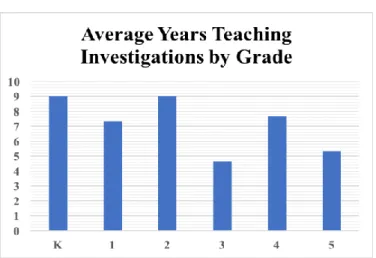
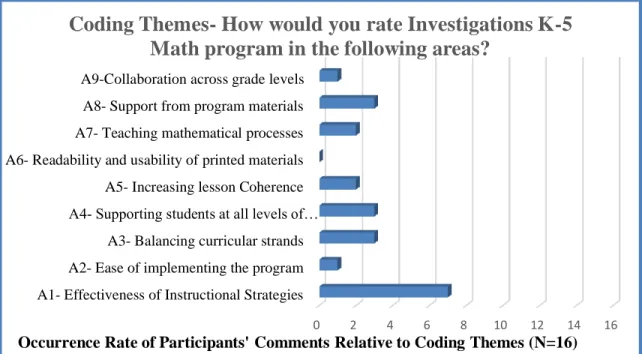
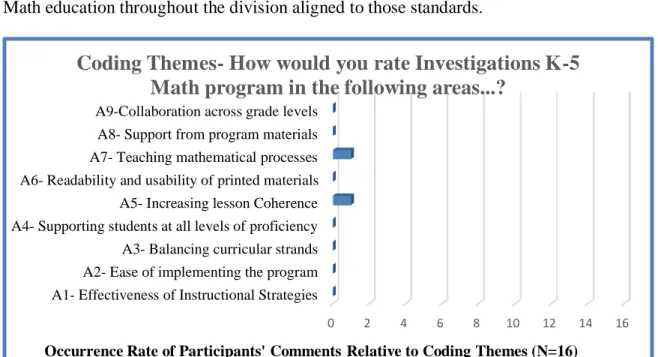
Figure 3. Average number of years teaching the Investigations program by grade level .38 Figure 4. Frequency of coding themes A1-A9 for first impressions of Investigations K-5 Math program...59
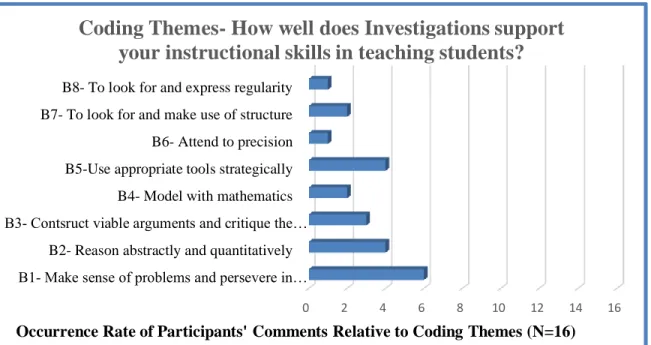
Figure 5. Frequency of coding themes B1-B8 for first impressions of Investigations K-5 Math program...60
Figure 6. Frequency of coding themes A1-A9 for Evaluation Question 1 ...62
Figure 7. Frequency of coding themes A1-A9 for Evaluation Question 2 ...64
Figure 8. Frequency of coding themes B1-B8 for Evaluation Question 2...66
Figure 9. Frequency of coding themes B1-B9 for Evaluation Question 5...77
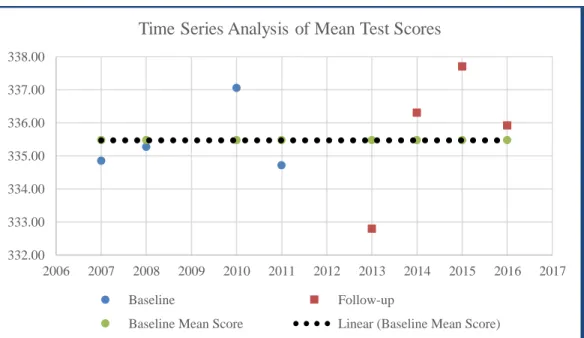
Figure 10. Time Series Analysis (Baseline Mean model) of ERB-CTP4 Test Scores ...81
Figure 11. Time Series Analysis (Baseline Mean model) of Standard Deviation for ERB-CTP4 Test Scores ...82
Abstract
This program evaluation study focused on the outcomes of a Math program for
elementary level students. This mixed-methods study explored the relationship between the implementation of the Investigations Math program and teachers’ perceptions of its impacts. The program theory that guided this study stated that teachers who were provided time and resources to examine best practice Math curricula and instructional methods would: adopt and implement a holistic Math program that updated the
curriculum; create positive changes in teacher content and pedagogical knowledge; meet the needs of all students, at all proficiency levels; result in a consistent scope and
sequence; and lead to improved student achievement. The findings did not fully support the program theory but did inform the school of study of the positive outcomes that the adoption of the Investigations program enhanced teachers’ perceptions of: alignment of the curriculum with Common Core Standards for Mathematical Practice; their
capabilities as leaders of the inquiry process within the classroom setting; facilitating a Math program with consistency in concepts, student experiences, and assessment; improved students’ consistency of good thinking; and increased number sense, perseverance in solving problems, and use of appropriate tools to construct viable arguments. However, analysis of the ERB-CTP4 math achievement test scores revealed negligible changes in the overall mean student performance as a result of the
implementation of the Investigations program. Weaknesses in the assessment materials of Investigations also required a supplemental curriculum to be adopted in parts.
APPLICABLE OUTCOMES: A PROGRAM EVALUATION OF THE INVESTIGATIONS MATH PROGRAM
CHAPTER 1 INTRODUCTION
Background
Van Der Sandt (2007) cites the examination of research by Koehler and Grouws (1992) on teaching from the perspective of four levels of complexity and representative models that reflected the changes and progress made in research on teaching. The highest level (Level 4) reflected current research, where research questions in teaching and learning are being approached from several perspectives, thereby, having a strong theoretical foundation (Koehler & Grouws, 1992). Koehler and Grouws’ model suggests that outcomes of learning are based on a learner’s own actions or behaviors, which are influenced by their beliefs about themselves as learners, their beliefs about the discipline of Mathematics, and what the teacher does or says within the classroom (1992). Wilkins (2008), whose theoretical model related teachers’ content knowledge, attitudes,
instructional beliefs and practices, found that teachers’ beliefs had the strongest effect on their practice. Similar to the Koehler and Groews (1992) model, the Wilkins (2008) model supported the premise that teacher behavior is influenced by the teacher’s content knowledge, how learners understand that specific content, the teacher’s method of instruction, and the teachers’ attitudes and beliefs about teaching and Mathematics.
Under former ESEA policies, schools strived to meet the adequate yearly progress goals in Mathematics achievement that are now defunct due to updated ESSA policies
(Chenoweth, 2016). Many schools attempted to maximize their efforts by turning to improved activity-based curricula (Gatti & Giordano, 2010). In the lower school program at the school of study, each classroom teacher had ownership of an individualized Math program, lacking continuity across the lower school classrooms. Not surprisingly, children were moving to the next grade having had different Math experiences. This was a challenge for numerous students who were prepared with different degrees of success for the next grade.
Program Overview
Critical inconsistencies in the basic Mathematical skills of kindergarten through fifth grade (K-5) students at the school of study were identified by the Pennsylvania Association of Independent Schools (PAIS), the regional accreditation body for the school of study. It was observed that the lower school (K-5) classes did not have a
consistent scope and sequence for the Math program. Each classroom teacher covered the same basic topics, but the methodology and emphases were different. They did not use similar vocabulary, teach similar concepts, and were out of sync with their evaluation of student proficiency at the transition point from fifth grade to the middle school program in sixth grade. Meeting the needs of children who had been prepared differently was a challenge for the teachers who taught the next grade, the farther along a teacher was in the sequence of lower school grade levels, the more he or she had to differentiate
instruction to meet the students’ needs. There were also concerns that many teachers were tempted to focus their programs toward the more capable Math students because it tended to be their parents who were most vocal about whether the Math program was meeting
their children's needs. Simultaneously, some children who were struggling were not having their needs met, and they were being recommended for Math tutoring.
A recommendation from the accreditation committee was made for the lower school to develop greater continuity in the Math program for the students from Kindergarten to fifth grade. The committee communicated that it was difficult for
students to navigate the changes in content, ways of learning, strategies, and an emphasis on some curricular strands over others. The school responded to this critical need by (a) researching different Math programs, (b) visiting other schools to observe programs in practice, (c) piloting programs at different grade levels, and (d) hiring a Math consultant to assist in the transition to a uniform instructional platform. This process led to the selection of the Investigations K-5 Math Program for implementation in 2006.
Investigations in Number, Data, and Space, a kindergarten to fifth-grade curriculum, was developed by Technical Education Research Centers (TERC) under a grant from the National Science Foundation (Agodini & Harris, 2010). The program is based on a constructivist, student-centered approach that emphasizes the use of numerous problem-solving techniques, communicating about Mathematics verbally and through writing and drawing, as well as metacognition, or thinking about one’s own reasoning (U.S. Department of Education, 2013). While poorly designed and implemented curricula can be confusing and frustrating to students and teachers, the No Child Left Behind Act required the publishers of Investigations to “conduct rigorous efficacy research to support their educational materials” (Gatti & Giordano, 2010, p. 1).
Context of the study. The program that was evaluated was the Math program for K-5 students attending lower school at an independent Quaker school in Philadelphia,
PA. The school of study was accredited by both the PAIS and the Middle States Association of Colleges and Secondary Schools (MSACSS). The school served 865 students, kindergarten to 12th grade, that were comprised of 30% students of color and 6% Quaker students. There were 85 full-time faculty members, 25 part-time faculty members, and 19 assistant teachers/aides. The Lower School included 17 homeroom teachers and 17 assistant teachers/aides from this total.
The school was founded in 1845 and remained affiliated with the local Quaker Monthly Meeting. This rich Quaker history has been maintained in the school’s mission to educate, not as training for a particular way of life, but as part of a lifelong process. The institution remained rooted in the Quaker tenets of simplicity, peace, integrity, community, equality, and stewardship. Students are guided and encouraged in their personal growth, the school is well resourced, and families are highly engaged with the school community. As is the Quaker practice, many institutional decisions were made through open dialogue and consensus among the community members involved.
In light of the PAIS accreditation team’s recommendations, and the inadequacies of the curriculum, the school began the implementation process of the Investigations Math Curriculum for the lower school in 2006. The inconsistencies in the materials used and methods of instruction at each grade level were a primary concern. The lower school hoped to adopt a program that would bring consistency to the classrooms and provide a similar Math experience for all lower school students. The school aimed to help all children become active learners and flexible thinkers with a deep understanding of the Mathematics being investigated in the classrooms. The idea of creating in each classroom a Mathematical community in which children investigated problems not only for
themselves but to share thinking with their peers was also a goal. The five-year rollout to transition the lower school division to the Investigations K-5 Math program, developed at TERC, and funded by the National Science Foundation, TERC, and Pearson Publishing, was completed in 2011.
As an independent, Quaker school, the school of study was not beholden to state testing mandates, nor was it required to publish the ERB CTP-4 standardized tests that it implemented as part of the assessment process to gauge student progress. In order to properly assess the effectiveness of curricular programs, periodic and meaningful program evaluation practices were necessary. Data from longitudinal studies were essential to examine the true achievement gains in the student population (Ding & Navarro, 2004) and surveys, or interviews, were practical methods to assess teachers’ instructional experiences.
Description of the program. The Investigations K-5 Math program is a
complete, flexible, rigorous, activity-based curriculum developed by TERC, and funded in part by the National Science Foundation (Gatti & Giordano, 2010). The program is built upon the tenet of active teaching. Active Mathematics teaching requires teachers to think deeply about the Mathematics content the students are learning and the instructional techniques they employ in order to meet diverse student needs and learning styles. Active Mathematics curricula like Investigations also encourages students to think creatively, develop and articulate their own problem-solving strategies, and work cooperatively with their classmates. The curriculum at each grade level is organized into units that offer from three to eight weeks of work covering the National Council of Teachers of Mathematics (NCTM) Mathematics standards. The Investigations K-5 Math program
includes both ongoing and periodic assessment opportunities, as well as extended practice opportunities to help students become fluent with Mathematical skills and concepts.
Overview of the Evaluation Approach
In the 1960s, when the Great Society social programs were introduced by both Kennedy’s and Johnson’s administrations, the practice of evaluating teaching programs was originating (Karimnia & Kay, 2015). Educational programs are fundamentally about change and program evaluation is designed to determine whether change has occurred. Learners, teachers, administrators, other health professionals, and a variety of internal and external stakeholders participating in educational programs are invested because they are interested in change (Frye & Hemmer, 2012). While a program’s focus on change is often focused on outcomes for the learners, everyone else involved with that program also participates in change. Therefore, effective program evaluation should focus, at least in part, on the questions: (1) Is change occurring? (2) What is the nature of the change? (3) Is the change deemed successful? This line of questioning directs the focus on
program evaluation to look for both intended and unintended changes associated with the program (Frye & Hemmer, 2012).
Program evaluation model.Designed to assist administrators in making
informed decisions, Context, Input, Process, and Product evaluation (CIPP) is a popular evaluation approach in educational settings (Mertens & Wilson, 2012; Zhang et al., 2011). The CIPP Evaluation Model was originally developed as a means to
systematically provide timely evaluative information for use in decision-making (Stufflebeam, 1983). The CIPP evaluation model belongs in the improvement and accountability category, and is one of the most widely applied evaluation models (Zhang
et al., 2011). This approach, developed in the late 1960s, seeks to improve and achieve accountability in educational programming through a “learning-by-doing” approach (Zhang et al., 2011, p. 62). Its core concepts are context, input, process, and product evaluation, with the intention of improving the program itself. An evaluation following the CIPP model may focus singularly on a context, input, process, or product evaluation, or may include a combination of these elements (Mertens & Wilson, 2012). As cited in Zhang et al. (2011), a survey by the American Society for Training and Development members concluded that Stufflebeam’s CIPP model was preferred over other program evaluation models.
Context evaluation. The context evaluation stage of the CIPP Model creates the big picture indicating where both the program and the evaluation fit (Mertens & Wilson, 2012). This stage assists in decision-making related to planning, and enables the
evaluator to identify the needs, assets, and resources of a community in order to provide programming that will be beneficial (Mertens & Wilson, 2012). Context evaluation also identifies the political climate of the environment that could influence the positive execution of the program (Mertens & Wilson, 2012). To achieve this, the evaluator compiles and assesses background information, and interviews program leaders and stakeholders. In addition, program goals are assessed, and data reporting on the program environment is collected. Data collection can use multiple formats. These include both formative and summative measures, such as analysis of extant documents and data, program profiling, case study interviews, and stakeholder interviews (Mertens & Wilson, 2012). Throughout this process, continual dialogue with the client maintains a focus on
the needs of the stakeholders. This process is integral to the identity of this tool, which comes under the Use branch of evaluation (Mertens & Wilson, 2012).
Input evaluation. To complement context evaluation, input evaluation can be completed. In this phase, information is collected regarding the mission, goals, and plan of the program. Its purpose is to assess the program’s strategy, merit and work plan against research, the responsiveness of the program to client needs, and alternative strategies offered in similar programs (Mertens & Wilson, 2012). The intent of this stage is to choose an appropriate strategy to implement to resolve the program problem (Zhang et al., 2011).
Process evaluation. In addition to context evaluation and input evaluation, reviewing program quality is a key element to CIPP. Process evaluation investigates the quality of the program’s implementation. In this stage, program activities are monitored, documented and assessed by the evaluator (Mertens & Wilson, 2012). Primary objectives of this stage are to provide feedback regarding the extent to which planned activities are carried out, guide staff on how to modify and improve the program plan, and assess the degree to which participants can carry out their roles (Zhang et al., 2011).
Product evaluation. The final component to CIPP, product evaluation, assesses the positive and negative effect the program had on its target audience and documents both the intended and unintended outcomes (Mertens & Wilson, 2012). Both short-term and long-term outcomes are judged. During this stage, judgments of stakeholders and relevant experts are analyzed, viewing outcomes that impact the group, subgroups, and individual. Applying a combination of methodological techniques assures that all
outcomes are noted and assists in verifying evaluation findings (Mertens & Wilson, 2012).
Purpose of the evaluation. This study of the Investigations K-5 Math program in an independent Philadelphia Quaker school sought to provide clarity on Investigations implementation and to inform faculty and school leaders as to the effectiveness of the program’s outcomes. While all four components of the CIPP program evaluation design can be valuable, the purpose of this program evaluation was to measure the effectiveness of the Investigations K-5 Math program as it is currently implemented. The CIPP model supported this study, as it can be usefully adopted for retrospective evaluation of
completed programs (Frye & Hemmer, 2012). This summative evaluation process was designed to support the lower school in its ability to determine whether the original short, medium, and long-term goals of the program were being met. The outcomes of the evaluation were to be shared with key lower school faculty: the head of lower school, the Math specialist for the lower school, the learning specialist/testing coordinator, and the lower school teachers.
Focus of the evaluation. This study focused on the final component of CIPP, product evaluation, as it assessed the positive and negative outcomes of the program. It accounted for both the intended and unintended outcomes and evaluate the program’s effectiveness (Mertens & Wilson, 2012). It applied a concurrent mixed-methods approach where outcomes from the dialectical approach were noted and merged to verify
evaluation findings (Mertens & Wilson, 2012). The product, or impact, evaluation component will benefit the school of study as it measures, interprets and judges the
project outcomes and interprets their merit, worth, significance, and probity (Zhang et al., 2011).
Evaluation questions. When evaluation works effectively, it generates information to a wide range of audiences that can be used to make better decisions, develop greater appreciation and understanding, and gain insights for action (Preskill & Jones, 2009). The evaluation questions were directly related to the expected outcomes from the Investigations K-5 Math program. The first four questions related to teacher perceptions of the effectiveness of the implementation of the Investigations K-5 Math program. The fifth question related to the quantitative evaluation of student achievement data at the completion of the program.
The program evaluation research questions for this study are:
1) What are teachers’ perceptions regarding the extent that the implementation of the Investigations K-5 Math program updated the curricular program to the school’s desired standards of practice for Math?
2) What are teachers’ perceptions regarding the extent to which implementation of the Investigations K-5 Math program impacted how they feel about
Mathematics content and pedagogical knowledge?
3) What are teachers’ perceptions regarding the extent to which implementation of the Investigations K-5 Math program assisted the development of a
consistent scope and sequence for the K-5 classrooms?
4) What are teachers’ perceptions regarding unintended outcomes (positive or negative) that have resulted from the implementation of the Investigations K-5 program?
5) What are teachers’ perceptions of the changes in student achievement resulting from implementation of the Investigations K-5 Math program?
Logic Model for the Product Evaluation of the Investigations Math Program
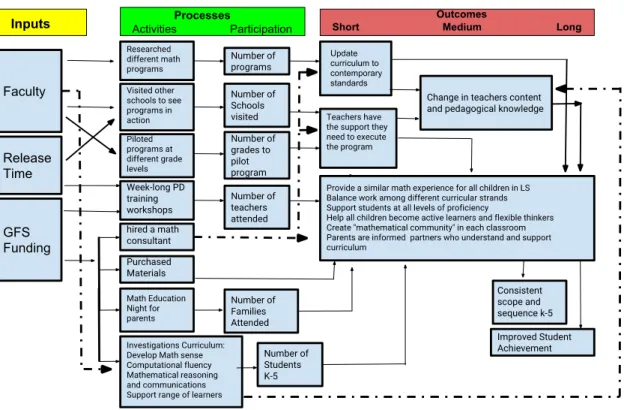
The Investigations K-5 Math program is applicable to all students enrolled in kindergarten through the fifth grade. The program was in effect as a complete sequence for students completing fifth grade each year since 2011. A logic model (Figure 1) distinctly shows what the long-term goals of the project were and which areas needed to be addressed to determine if the project was a success (Frechtling, 2007).
The inputs that drive the processes, or outputs, are the faculty, release time, and the school’s funding resources. The kindergarten through fifth grade teachers who delivered the Math curriculum to lower school students were supported by the lower school principal, the Math consultant, learning specialists, and teaching assistants.
The inputs that drive the processes, or outputs, are the faculty, release time, and the school’s funding resources. The kindergarten through fifth grade teachers who deliver the Math curriculum to lower school students are supported by the lower school principal, the Math consultant, learning specialists, and teaching assistants.
The processes, or outputs, that drive the outcomes encompassed research of different options for Math programs, school visits to programs in action and piloting of sample programs in current k-5 classrooms. The school of study funded professional development for all the K-5 teachers to attend training workshops for the Investigations program. This process included the hiring of a Math consultant, who supported the school’s selection of the Investigations K-5 Math program and facilitated parent education nights to inform K-5 families of the programmatic changes.
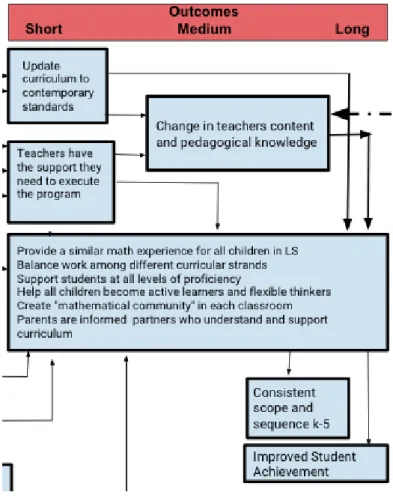
As represented by the outcomes from the logic model (Figure 2), the intended outcomes from the implementation of the Investigations K-5 Math program begin with the short-term goals of giving teachers the support they need to execute a curriculum aligned to current Mathematics standards. The expected outcomes that initiate as short-term goals and span medium and long-short-term goals are to provide a similar Math
experience for all children at all proficiency levels in the lower school. Also expected during this span of outcomes was the goal of creating Mathematical communities in each classroom where all students would become active learners and flexible thinkers. The
Figure 2.Outcomes for program evaluation of Investigations K-5 Math program (Zoomed insert of Figure 1.)
expected long-term outcomes from the Investigations program were a consistent K-5 scope and sequence and improved student achievement.
Program theory. From the full logic model (Figure 1), it is observable that the program theory posits:
1. The faculty research of different Math programs, the additional guidance of a Math consultant, and the adoption of the Investigations program would result in the short-term goal of updating the curriculum to contemporary standards. 2. The faculty visits to other schools to see programs in action, the piloting of the
participation in professional development training workshops, and their use of Investigations program materials would result in the short-term outcome of providing the support they needed to execute the program.
3. The utilization of the updated curriculum (Investigations), and the multiple support resources to execute the program, would result in the medium to long term outcome of positive change in teachers’ content and pedagogical knowledge. 4. The combination of updated curriculum using the Investigations program,
sufficient teacher support, and growth in teachers’ knowledge would lead to the short , medium, and long-term outcomes of providing students across the K-5 grades with a similar Math experience, balancing the topics across curricular strands, differentiating to support students at all levels of proficiency, helping children to become active and flexible learners, and creating a Mathematical community in classroom that would be supported by informed parents as partners. 5. The combination of short and medium-term outcomes would result in the
long-term outcomes of a consistent scope and sequence for the K-5 division and improved student achievement.
Definition of Terms
Context: Describes the important features of the environment in which the project or intervention is based (Frechtling, 2007).
Focus group interviews: A structure where group discussions on a particular topic are organized for research purposes (Creswell, 2014)
Impact evaluation: An evaluation that assesses a program’s effects and the extent to which the program’s goals were achieved (Mertens & Wilson, 2012).
Implementation: The act of carrying out or performing activities. Implementation can be characterized in terms of the extent to which it reflects what was intended in the plan (Frechtling, 2007).
Inputs: The resources that are brought to a project. Typically, resources are defined in terms of funding sources or in-kind contributions (Frechtling, 2007).
Logic model: A model that displays the sequence of actions in a program, describes what the program is and will do, and describes how investments will be linked to results (Mertens & Wilson, 2012).
Mixed-methods: A combination of qualitative and quantitative approaches in the study and/or data collection (Mertens & Wilson, 2012).
Outcomes: Changes that show movement toward achieving ultimate goals and objectives. Outcomes are desired accomplishments or changes (Frechtling, 2007).
Perception: A mode of apprehending reality and experience through the senses, thus enabling discernment of figure, form, language, behavior, and action (Given, 2008).
Processes (Outputs): The immediate results of an action; they are services, events, and products that document implementation of an activity. Processes (Outputs) are typically expressed in numbers or percentages (Frechtling, 2007).
Product evaluation: An evaluation that measures, interprets, and judges the achievements of a program in attaining its overall goals (Mertens & Wilson, 2012).
Program theory: A way of making explicit the assumptions underlying an intervention. It describes the causal linkages that are assumed to occur from project start to goal
attainment and clearly defines the theory of change underlying a program or policy (Frechtling, 2007).
Qualitative evaluation: Approach to evaluation that is primarily descriptive and interpretive (Creswell, 2014).
Quantitative evaluation: Approach to evaluation involving the use of numerical measurement (Creswell, 2014).
Stakeholders: People who have a vested interest in the program, policy, or product being evaluated, and also have a stake in the evaluation (Mertens & Wilson, 2012).
Student achievement: engagement in educationally purposeful activities, satisfaction, acquisition of desired knowledge, skills and competencies, persistence, and attainment of educational outcomes (Kuh, Kinzie, Buckley, Bridges, & Hayek, 2006).
Time-Series Analysis: a variable that undergoes a repeated periodic observation that is used to characterize a pattern of behavior occurring in the natural environment over the measurement period (Linden, Adams, & Roberts, 2003).
CHAPTER 2
REVIEW OF RELATED LITERATURE
This study of the Investigations K-5 Math program at an independent, private Quaker school sought to provide clarity and to inform the school’s faculty and school leaders as to the effectiveness of the program’s outcomes. The conclusions from this study were meant to inform the administration’s decisions to improve the execution of the program, or to seek alternative curricular options. This literature review begins by describing underlying concerns, depicting the context of the study, sharing evidence of the problem, providing an overview of program evaluations and delineating why it is useful to study the effects of a curricular program. The review then details the evaluation of elementary Math programs, and what previous research on evaluating Math programs tells us about their potential effects. The review then continues with a history and
description of the Investigations K-5 curriculum, later delving into the efficacy of the program. A concluding segment follows, which defines the framework of teacher orientations to Math curriculum, an important understanding when evaluating the taught curriculum.
A Brief History of Program Evaluation in Education
While the roots of evaluation can be chartered as early as the 1800s, the initial phases of development that resulted in the current structure of program evaluation as a profession is traced to the 1960s (Mertens & Wilson, 2012). Lyndon Johnson’s Great Society initiatives included Headstart programs and the Elementary and Secondary
Education Act (ESEA), which mandated evaluations as part of the programs (Mertens & Wilson, 2012). Using the agreed upon protocols from the Joint Committee on Standards and Evaluation, as described in Appendix A has expanded the reliability and uniformity of approach to program evaluations in a vast array of fields (Mertens & Wilson, 2012). Theorists in evaluation have constructed multiple approaches to guide the process of evaluations, which most often include the postpositivist, pragmatic, constructivist, and transformative paradigms (Mertens & Wilson, 2012).
Paradigms of program evaluation. The four paradigms represent a method of organizing the major influences that have affected the evolution of program evaluation. This evaluation falls under the pragmatic paradigm, which focuses primarily on data that is useful by stakeholders and advocates for the use of mixed methods. Pragmatic
knowledge claims that the world is not an absolute unity, or singular reality apart from our perceptions (Atieno, 2009; Creswell, 2014). The history of the pragmatic paradigm began in the second half of the 19th century when pragmatists rejected the claim that the scientific method could discover “truth” (Ravitch & Carl, 2016). According to Mertens and Wilson (2012), the axiological assumption of contemporary pragmatists is that the value of something is a function of its consequences. This assumption supports the pragmatist notion that the value of an evaluation is how it’s used and the outcomes of its use, rather than doing an evaluation for its own sake. The ontology of this paradigm is that truth is not the goal of evaluation as much as usefulness is, with respect to the problem. The epistemology of this paradigm is that pragmatists are free to study what is of interest and of value to them, and they can use the study in ways that are appropriate to generates positive outcomes (Greene & Caracelli, 1997; Mertens & Wilson, 2012). The
methodology of the pragmatic paradigm is identified by the philosophical framework that guides some researchers to their choice of mixed methods. This research structure
supports the assumption of the paradigm that the method should match the study’s purpose (Ravitch & Carl, 2016).
A program evaluation may focus on the effectiveness of new processes, the expert review of documents, or guide future decisions that shift a program’s direction. Program evaluation methods have changed since their inception, but the assertion remains the same. Evaluations are used to identify, classify, or apply the merit of a program and stakeholders are often involved in the process (Cain, 2002). Program evaluations employ all forms of research, inclusive of qualitative, quantitative, and mixed-method
designs. Qualitative methods for this program evaluation were selected to measure the experiences of the elementary teachers who used the Investigations K-5 Math program and the usability of the program. The expertise-oriented program evaluation approach was selected for three reasons: primary teachers (a) are required to teach Math to all of the students within their class, (b) they selected the Investigations program and (c) could use their expertise with the program to evaluate the positive and negative elements of the program as highly qualified educators (Townsend, 2015). The conclusions of this line of reasoning led to the selection of a program evaluation as the methodology for this study.
Evaluation of elementary Math programs. The understanding that elementary school students in the United States demonstrate poor Math skills on national
achievement assessments, specifically those students from lower socioeconomic backgrounds, and that accumulating evidence indicates an early and lasting difficulty with Mathematics is being experienced by many school children is indicated in numerous
studies of Math curricular programs that have emerged in recent years (Agodini & Harris, 2010; Doabler, Fien, Nelson-Walker, & Baker, 2012).
Curricula funded by the National Science Foundation, including Investigations, were expected to show significant evidence of effectiveness in the areas of problem-solving, concepts, and applications, however, Slavin and Lake (2008) found little evidence of strong effects in these areas. They found that when referencing outcomes based on traditional measures such as state assessments and standardized tests,
curriculum differences were less consequential than instructional practices. Slavin, Lake, and Groff (2010) assessed 13 studies of elementary Mathematics curricula, 40 middle and high school curricula, and found no evidence that different curricula produce different outcomes in terms of achievement. However, they did find strong evidence that using effective teaching strategies can make a real difference. The Doabler et al. (2012) study of three elementary Math curricula found that most textbooks were missing opportunities for explicit, systematic instruction, and none offered procedures for linking assessment results with instructional decision-making. The Bhatt and Koedel (2012) study of three elementary Math curricula found that major differences could exist between curricula that share the same pedagogical approach. Studies also indicate that teachers’ self-efficacy is a key variable in student learning, changing the way that children work together,
improving classroom management and motivation, and raising Mathematics outcomes for all students (Stronge, 2010). The impact of extensive professional development to help teachers use instructional strategies was found to have the strongest evidence of
effectiveness (Slavin et al., 2010). With an effect size of d=1.00, superseded only by teacher feedback (effect size d=1.13) and students’ prior cognitive ability (effect size
d=1.04), “excellence in teaching is the single most powerful influence on achievement” (Hattie, 2003, p. 4).
A feasible strategy to address the low Math achievement of U.S. children is to improve the quality of foundational Math instruction delivered in elementary classrooms (Doabler et al., 2012). At the core of most Math programs are textbooks, which influence the ease of curriculum management in the classroom and assist teachers with guided opportunities to introduce students to critical Math content. Often, Math programs are offered in full service packages including textbooks, curricular pacing guides,
manipulative tools, assessments, and training sessions for teachers. Documenting
individual student achievement is a difficult task. Due to the concern that low elementary school performance would limit students’ future Mathematical capabilities, and their ability to function in an increasingly complex world, legislators constructed mandates for improved performance and accountability in schools (Ding & Navarro, 2004). Therefore, it is important to discern whether programs provide teachers with the foundational
resources for teaching key Math concepts and skills to an inclusive spectrum of exceptional, proficient and struggling students (Doabler et al., 2012).
Concerns About Math Instruction
The most instructive elementary Math programs develop student knowledge through experiential, hands-on instruction that supports the development of number sense, is grounded in meaningful experiences, and solves real-world and contextualized Mathematics problems. Traditional Mathematics curriculum has historically focused on the acquisition of numerical skills such as number order, counting on, addition and subtraction facts, place value, and addition and subtraction algorithms while the
constructivist Mathematics curriculum, which is grounded in Piaget's theory of child development, is focused on sense-making about number as a primary concern (Goodrow, 1998). The ongoing challenges of many classrooms to deliver effective Mathematics instruction is a national concern in the United States.
National achievement data in the United States show that elementary level
students have relatively weak Math skills. The 2009 National Assessment of Educational Progress (NAEP) contends that only 39% of all fourth graders demonstrated proficiency in Math, and 18% rated below basic (National Center for Education Statistics, 2009). Six years later, the 2015 NAEP results showed minimal improvement with 40% of fourth graders demonstrating proficiency in Math (NAEP - 2015 Mathematics & Reading Assessments, n.d.). Critical inconsistencies in the basic Mathematical skills of
kindergarten through fifth grade (K-5) students at the school of study were identified by PAIS, the regional accreditation body for the school of study. Dialogue among the teachers and school leadership led to the decision to select a uniform curriculum for the lower school classrooms.
Internal support of the constructivist philosophy at the school of study led to adoption of the Investigations K-5 Math program, which was approved and implemented across the K-5 classrooms. The roll out of the program, one grade level at a time, over a five-year period completed the curricular integration. After four more years in
application, a total of nine years in use, the institution had not assessed the program’s effectiveness. The evaluation of the outcomes from this program at the school of study will deliver practical benefits to multiple stakeholders involved with the institution. Insights from the study will provide the necessary information to evaluate student
progress, support teachers’ instructional practices, and assist administrative leaders as they make curricular decisions regarding the elementary Math program.
Evidence of America’s Mathematics education problem. Math education is essential and most jobs require at least some proficiency in the subject (Nahornick, 2016). A background in Math is needed to pursue technological development, to
understand political and cultural issues, and simply in everyday life, so it seems evident that Mathematical proficiency matters (Nahornick, 2016). Contemporary research reveals that about 20% of students in community colleges’ basic Math and pre-algebra programs lacked a sense of part-whole relationships with whole numbers (Steinke, 2015). Further, these concepts are needed to understand fraction and percent relationships, carries over to the relationship between details and the main idea in factual prose, in critical thinking in job situations, and on the current high school equivalency tests. The ability to compute, problem solve, and apply concepts and skills in Mathematics influences multiple decisions in our lives (Little, 2009). However, Mathematics is often challenging for students with, and without, disabilities to master. The long-term impact on students failing to develop Math skills is the direct effect on their potential earnings and future opportunities in a progressively science, technology, engineering and Mathematics
(STEM) driven workforce. More than two-thirds of STEM workers have at least a college degree, compared to less than one-third of non-STEM workers (Langdon, McKittrick, Beede, Khan, & Doms, 2011). STEM degree holders also enjoy higher earnings, regardless of whether they work in STEM or non-STEM occupations.
Comparison studies, such as PISA and TIMMS, that are focused on student results have shown US students not performing as well in Math as students in many other
developed countries (Hanushek & Woessmann, 2010; OECD, 2016; U.S. Department of Education, 2000). In 1983, the National Commission on Excellence in Education spent 18 months developing a research report, which concluded that schools in the United States were failing (No Child Left Behind [NCLB], 2002). They found that only a third of the country’s population had the ability to solve multi-step Math problems. These findings ignited the government and other educational organizations to address these issues and improve the country’s educational system. In 2001, with the passage of NCLB, the federal government required educators to use research-based programs to ensure students achieved 100% proficiency in reading and Mathematics by 2014 (NCLB, 2002). Numerous factors, including research that has documented the importance of early educational experiences on brain development, have given educators and policymakers greater insights to improve young children’s learning (Daily, Burkhauser , & Halle, 2011). Daily et al. (2011) summarized the state and national initiatives that focused on Math and literacy readiness in early childhood and kindergarten programs:
Readiness programs were supported in 2002, the Bush administration launched Good Start, Grow Smart, which urged states to develop voluntary early literacy and early Math guidelines for children between the ages of three and five and align them with their K–12 standards. The Obama administration has maintained a focus on early childhood by including $5 billion of new funding for Child Care, Head Start, Early Head Start, and programs for young children with special needs in the American Recovery and Reinvestment Act. (p. 21)
What is taught to students, and how it is taught, are important factors in a school’s capability to make gains in student achievement, however, the widespread use of varying
approaches to Math curriculum and instruction limits the generation of consistent evidence for system wide improvements (Agodini & Harris, 2010). During the fifteen years, from 2001 through 2015, the federally mandated policies of NCLB made
improvements in the accountability of school systems and the achievement of students, but they also resulted in numerous negative outcomes for students, teachers, and school systems (Chenoweth, 2016). The ESEA law was rewritten and signed into law in 2015. The update to the ESEA-NCLB act, Every Student Succeeds Act, aims to correct many of the shortcomings of NCLB and maintains the requirements of states having standards but is more flexible relative to how a state chooses to manage the process (Chenoweth, 2016).
A Program History and Description of the Math Program - Investigations
The conceptual goals of Math education are multifaceted and include viewing Mathematics as a language of reasoning. As a particular kind of logical structure,
students use Math to reason analytically about quantitative and spatial phenomena, make sense of things, and form judgments, inferences, and conclusions (Battista, 1999). When engaged in Mathematics, students learn to recognize and describe patterns by
manipulating and reflecting on ideas to solve problems. The societal benefits of Math education stem from the capabilities of individuals to become articulate in employing the “abstract concepts and Mathematical perspectives that our culture has found most useful” in addition to the contributions that “future Mathematicians, engineers, and scientists make to the scientific/technical infrastructure of the country” (Battista, 1999, p. 425). These long-term outcomes are initiated in primary/elementary school classroom experiences.
In 1990, the Mathematics research and development group known as TERC (of Cambridge, Massachusetts) was funded by the National Science Foundation (NSF) to develop a complete K- 5 Mathematics curriculum (Kehle, Lambdin, Essex &
McCormick, 2005). The goals of the Investigations K-5 curricular program mirror much of the conceptual goals of Math education by: supporting students to make sense of Mathematics and learn that they can be Mathematical thinkers, focusing on
computational fluency with whole numbers as a major goal of the elementary grades, emphasizing reasoning about Mathematical ideas, communicating Mathematics content and pedagogy to teachers, and engaging the range of learners in understanding
Mathematics (Investigations in number, data, and space, n.d.). In addition to the goals of the curriculum, the three guiding principles that are touchstones for the Investigations K-5 program are that: students possess Mathematical ideas; teachers remain engaged in professional development about Mathematics content, pedagogy, and student learning; and teachers integrate the students and content materials to create the curriculum as enacted in the classroom (Investigations in number, data, and space, n.d.). Willingham (2009) supported the perspective that students need to develop balanced Mathematical understandings as he shared his view that “procedural or factual knowledge without conceptual knowledge is shallow and is unlikely to transfer to new contexts, but conceptual knowledge without procedural or factual knowledge is ineffectual” (p. 14). The Investigations program instructs teachers to guide students to work on a smaller volume of in-depth problems and to select from a variety of materials, both concrete and technological, to find solutions as a regular daily practice. The increased conceptual knowledge assists students to move from bare competence with facts and procedures to
the automaticity needed to be a good problem solver (Willingham, 2009). Teachers act as facilitators of student dialogue, assisting them to gain deeper understandings of
Mathematical concepts, and to express their thoughts (U.S. Department of Education, 2013). Because the developers of the curriculum shared the belief that teachers are critical to the learning process, they designed the program to foster teacher learning (Remillard & Bryans, 2004). Examples of student work, research summaries and assessment samples were included in the program materials.
Each grade level is organized into units that may focus on a single subject, or may revolve around related subjects. For example, addition and subtraction or geometry and fractions could be part of a unit, which usually lasts within a timeframe of two to eight weeks. Each unit is designed around two or more investigations that provide multiple contexts in which students explore Mathematical challenges. Some
investigations last only two or three days, while others may stretch for multiple weeks. Classroom activities can vary from day to day and are dependent on the type of
investigation being studied. For example, an investigation lasting one week may consist of an introduction to the investigation by the teacher through a large group hands-on activity, followed by two or three days where students work in pairs or small groups to explore the concept in depth. The final class meeting during an investigation consists of the students and teacher discussing as a group what they learned during the investigation and the various methods they use to solve problems.
Efficacy of the Investigations K-5 curriculum. The Investigations K-5 Math program is based on constructivist theory, unlike most traditional Mathematics
and learning (Clements & Battista, 1990). In traditional instruction, students passively "absorb" Mathematical structures invented by others and scribed in texts by authoritative adults, which depicts teaching as the transmitting of established facts, skills, strategies and concepts to students (Clements & Battista, 1990). The constructivist approach to Mathematics instruction defines learning as an active process. Cobb (as cited in Jaworski, 2002) suggested that constructivism challenges the notion that meanings reside in words, actions, and objects independently of an interpreter. Teachers and students are viewed as active partners who construct understandings and continually give contextually based meanings to each other's words and actions as they interface. Grady, Watkins, and Montalvo (2012) cite the following definition of constructivism from Glaserfeld:
Constructivism is a theory of knowledge with roots in philosophy, psychology, and cybernetics. It asserts two main principles whose application has far-reaching consequences for the study of cognitive development and learning as well as for the practice of teaching, psychotherapy, and interpersonal management in general. The two principles are: (a) knowledge is not passively received but actively built up by the cognizing subject; and (b) the function of cognition is adaptive and serves the organization of the experiential world, not the discovery of ontological reality. (p. 162)
A challenge in many constructivist settings, where the teacher is a “facilitator,” in contrast to most guided instruction settings, where the teacher is an “activator,” is the assumption that “knowledge is best acquired through experience based on the procedures of the discipline” (Hattie, 2009, p. 243). Some constructivists reject strategies, including memorizations, and fail to understand that it is advantageous to have automatic retrieval
of knowledge (Quirk, 2013). This outlook can become an impediment to student progress if the teacher focuses on the process of Mathematics to the exclusion of teaching the skills of Mathematics (Hattie, 2009). Teachers should understand that constructivism is a way of knowing, not a teaching method. The instructional method of constructing
conceptual knowledge, however, involves a consideration of the learner’s viewpoint and an understanding that what they learn is socially constructed (Hattie, 2009). Goodrow’s (1998) study of constructivist versus traditional Math methodologies examined (a) the development of number sense and number representation by children in traditional, transitional, and constructivist second-grade Mathematics classrooms and (b) how different teaching approaches influence the way children deal with computation
exercises. The study found that children in constructivist classrooms, who had not learned rote, algorithmic procedures for addition and subtraction but, instead, relied on their own number sense, produced a larger percentage of correct responses through the use of diverse strategies and demonstrated a broader understanding of number relations and of the properties of the decimal system. In contrast, when students rely on procedural knowledge of the standard algorithm, their errors suggest an overgeneralization of rules (Resnick & Omanson, 1987). Conclusions from the Goodrow study support the view that children are more successful at computation when they rely on their own thinking about number sense rather than on taught procedures.
Achievement effects. The U.S. Department of Education study (Agodini, Harris, Thomas, Murphy, & Gallagher, 2010) presented the findings of a large-scale comparison study of four elementary school Math curricula in prominent use in classrooms: (1) Investigations in Number, Data, and Space (Investigations); (2) Saxon Math; (3) Math
Expressions; and (4) Scott Foresman-Addison Wesley Mathematics (SFAW). The study used randomized controlled trial techniques to compare the effect of each program on Math achievement of early elementary school students. The study found student-centered instruction and peer collaboration were significantly higher in Investigations classrooms than in classrooms using the other three curricula (Agodini et al., 2010). Student-centered instruction substitutes active learning for lectures, holding student responsible for their own learning through cooperative learning and assigning open-ended problems that require critical or creative thinking (Felder & Brent, 1996). The Agodini et al. (2010) study also found “that compared to teachers using the other curricula, Investigations teachers should pose more open-ended questions to students, repeat student answers in a neutral way, and probe students for reasoning or justification for their answers” (p. 97).
The Agodini and Harris (2010) study of four curricula: Investigations; Saxon Math; Math Expressions; and Scott Foresman-Addison Wesley Mathematics recruited and randomly assigned the four programs to first-grade classrooms across 39 schools from four districts, in four geographically dispersed states, in three regions of the country, with each district implementing all four curricula. The results of study showed that the average Math achievement for Math Expressions and Saxon students was 0.30 SD higher than Investigations students and 0.24 SD higher than SFAW students.
As a teacher-as-facilitator program, the Investigations K-5 curriculum requires teachers to lead the students toward collaborative dialogue. This goal necessitates that teachers will develop effective lines of questioning to drive students’ understandings and ownership of content. Both of these findings can be attributed to the constructivist methodology of the Investigations curriculum, which requires teachers to guide, not
direct students through the inquiry process. According to the efficacy study of the Investigations program by Gatti and Giordano (2010), where Math achievement was measured by the Group Mathematics Assessment and Diagnostic Evaluation (GMADE), the program assisted students in realizing positive educational attitudes and achievement outcomes. The Investigations student groups showed mixed performance of minimally outperforming comparison groups at the second-grade level and “dramatic and
educationally significant increases at both the early and late elementary grades” (Gatti & Giordano, 2010, p. 23), with late elementary Investigations students completing 5th grade testing five months ahead of their counterparts in the comparison group. While
Investigations ranked as the least impactful curriculum of the four compared in the Agodini and Harris (2010) study when measuring effectiveness of first-grade Math achievement, and showed significant increases in Math achievement at multiple levels in the Gatti and Giordano (2010) study, it was also recognized by Agodini and Harris as having the most student centered and constructivist approach of the four programs and identified by Gatti and Giordano for teacher and student approval of its activities, materials and ability to make Math more appealing and fun for students.
Theoretical Framework of Teacher Orientations Toward Math Curriculum
Teacher behavior is influenced by the teacher’s content knowledge, how learners understand that specific content, the teacher’s method of instruction, and the teacher’s attitudes and beliefs about teaching and Mathematics (Van Der Sandt, 2007). Also informed by what Doyle (1993) has named teachers’ curriculum processes, is the method by which teachers construct or enact curriculum. Studies of teachers’ curricular methods include scrutiny of how teachers utilize resources like curriculum guides, and how there
is an assumption that teachers inherently understand the intent and meaning of the
resources. Remillard and Bryans (2004) view the enacted curriculum as a co-construction between teachers and students as they participate in the daily instructional routines. Their findings revealed that the most significant learning occurred during the process of
enacted learning, due to the cognitive stretch that occurs for teachers and student together during those moments. It is in these circumstances, when teachers “examine unfamiliar Mathematical tasks and interpret student work on them while teaching” (Remillard & Bryans, 2004, p. 355), that teachers’ ideas about pedagogy are challenged and changed. Researchers have found that a teacher’s level of content knowledge and pedagogical beliefs determine how they structure their lessons. As teachers’ process similar information from textbooks, and activities differently, there is an assumption that teachers use suggestions in the curriculum differently as well, a situation referred to as “opportunities for learning” by Remillard and Bryans (2004, p. 355).
A negative impact on student achievement develops when there is a lack of instructional level alignment (LeMire, Melby, Haskins, & Williams, 2012). In cases where teachers fail to accommodate academically diverse students, the students experience inequitable learning opportunities. Instructional level alignment, where instruction is given at a level that is beneficial to the student, is reliant on specific aspects of the cognitive domain (Lemire et al., 2012). While effective instruction leads to growth in a student’s knowledge, comprehension, and critical thinking, poor instruction may lead to a sense that the student is not valued and that success is not possible in the educational setting. Hackenberg (2010) shared that the lack of a student’s ability to reach a valuing state could result in substantial negative consequences where there is potential for a
student to affectively shut down. The affective domain has received less attention than the cognitive domain, primarily due to the widespread application of the levels of Bloom’s cognitive domain of educational taxonomy (Lemire et al., 2012). However, a student’s affective response to instruction can play a major role if their interest level is high enough. Subban (2006) found that students continue to see cognitive stimulation if they enjoyed a task at an early age, which also helps marginalized students to engage in the classroom. Engaging students actively in the content, and the learning process helps all students to see patterns developing, and to see learning as a positive experience. As noted by Kennedy and Smolinsky (2016), the experiences of African American boys who were successful in Mathematics reflected several key factors: recognition of abilities, support systems and a positive Mathematical and academic identity.
Summary
The challenge of achieving Math proficiency in elementary classrooms persists despite technological developments, curricular innovations, and increased accountability of school systems. Teacher self-efficacy and improved quality of foundational Math instruction is the most plausible method to address low Math achievement (Stronge, 2010; Doabler et al., 2012). A teacher facilitated, student-centered, constructivist approach to instruction increases students’ depth of understanding and their ability to express Mathematical concepts (U.S. Department of Education, 2013). This instructional approach increases students’ breadth of understanding of number relationships and their intuitive abilities to create diverse problem-solving strategies. Teachers with greater content knowledge, and self-efficacy, demonstrate greater competence at supporting constructivist instructional methods. This level of competent instruction supports
students’ affective domain, which engages marginalized, mainstream, and advanced students alike and helps them to view learning as a positive experience (Subban, 2006). Large-scale studies of major elementary curricula shared mixed reviews of the impact on student achievement of student-centered and collaborative programs, such as
Investigations. The Gatti and Giordano (2010) efficacy studies of Investigations
supported the Math achievement outcomes and positive educational attitudes of students who used the program while the Agodini and Harris (2010) study showed limited impact on Math achievement. Insights from studies in the literature support the premise that experiential, hands-on instruction that develops number sense is the most instructive methodology for elementary Math programs. Curriculum and instruction practices that are grounded in meaningful experiences, and provide solutions to real world applications are the most beneficial Math programs for elementary students.
CHAPTER 3
METHODS
Overview to the Program Evaluation
At the most basic level, evaluation involves making value judgments about available information (Cook, 2010). Therefore, an educational program evaluation typically uses data and information resources to decide the merit or worth of an
educational program, especially if it focused on outcomes as is this study. Educational program evaluation is more formally defined as the “systematic collection and analysis of information related to the design and implementation and outcomes of a program for the purpose of monitoring and improving the quality and effectiveness of the program” (ACGME, 2013 p. 8). The choices of specific measurement tools typically used to gather information for evaluations are guided by many factors, including the primary evaluation questions that define the program’s successes or failures. A strong evaluation process maintains accountability while supporting the educator’s ability to learn useful
information about their program (Goldie, 2006). For many years evaluation models did not support such an inclusive scope of needs, but contemporary program evaluation standards have been designed to “guide the evaluation of educational training programs, projects, and materials in a variety of settings” (Mertens & Wilson, 2012, p. 23).
This study focused on the final component of CIPP, product evaluation, as it assessed the positive and negative outcomes of the Investigations program at the school of study. It applied a mixed-methods methodology to assure both qualitative and