BALDWIN, LESLIE W., Ed.D. Effective Leadership Practices in Language Immersion Programs. (2018)
Directed by Dr. Silvia Bettez. 188 pp.
This is a dissertation study regarding effective leadership practices in language immersion programs. Much of the previous research concentrates on students’ academic achievement in immersion programs. The purpose of this research is to discover actions, attitudes, knowledge, and skills that immersion leaders of successful programs exhibit. Using a basic qualitative model, I interviewed principals, assistant principals, teachers, and parents at three schools with Spanish/English dual immersion programs. The findings indicate that the immersion leader must establish a positive culture through building trust, building community with parents and teachers, and showing commitment to the program. In addition, the leader must provide program and teacher support in a variety of ways, including the provision of professional development, differentiated professional development for international teachers, resources, and leadership
opportunities. Finally, effective immersion leaders must possess specific knowledge and skills in order to lead a successful immersion program, including program knowledge, advocacy skills, and the ability to apply a shared leadership model. Being bilingual is considered an asset, but not required. Immersion leaders can learn from the applications for practice in their respective settings. Future research in this should include a wider range of program models and a more balanced pool of participants, including native target language speakers in dual immersion programs. Future research should also include a critical pedagogy lens in studying dual immersion programs specifically.
EFFECTIVE LEADERSHIP PRACTICES IN LANGUAGE IMMERSION PROGRAMS
by
Leslie W. Baldwin
A Dissertation Submitted to the Faculty of The Graduate School at The University of North Carolina at Greensboro
in Partial Fulfillment
of the Requirements for the Degree Doctor of Education Greensboro 2018 Approved by _________________________ Committee Chair
ii
Dedicated to the memory of Maywood Modlin Scarborough, a model educator and grandmother
iii
APPROVAL PAGE
This dissertation written by Leslie W. Baldwin has been approved by the following committee of the Faculty of The Graduate School at The University of North Carolina at Greensboro. Committee Chair ___________________________________ Silvia Bettez Committee Members ___________________________________ Kathryn Hytten ___________________________________ Craig Peck ___________________________________ Mary Lynn Redmond
____________________________ Date of Acceptance by Committee _________________________ Date of Final Oral Examination
iv
ACKNOWLEDGMENTS
I have enjoyed the process of earning an Ed.D. and writing the dissertation, as I have learned a great deal, but it has not always been easy. I have many people to thank for support along the way.
First and foremost, I must thank my family for their love and support throughout this process. My husband, Lou, has been my biggest supporter all along the way, always understanding when I needed to work and not be available for family activities and responsibilities. He has been my rock and I could not do this without his constant support and encouragement. I also owe a debt of gratitude to my mother, who has supported me throughout this process in many ways. Our children, my father, stepmother, and other family members were also constant encouragers.
I greatly appreciate the help of my committee chair, Silvia Bettez, and my other committee members as I worked through the writing process. Silvia challenged me to think about things I had not considered and pushed me to complete a quality research project. I must also specifically thank Mary Lynn Redmond, a committee member and my mentor, for encouraging me to grow through leadership roles and supporting me through every step of my career, including this experience.
I also owe much gratitude to Eta State North Carolina of the Delta Kappa Gamma Society (DKG) International and DKG International for financial support. Generous DKG scholarships helped to lift the financial burden of this process.
v
TABLE OF CONTENTS
Page
LIST OF TABLES ... vii
CHAPTER I. PROBLEM AND PURPOSE ...1
Problem Statement ...1
Need for Research ...2
Purpose and Significance ...5
Research Questions ...6
Definition and Description ...6
Positionality ...8
II. LITERATURE REVIEW ...11
Effective Leadership Practices ...12
Leadership in Language Immersion Programs ...22
Why Language Immersion? ...27
III. METHODOLOGY ...39
Theoretical Framework ...39
Methods...48
Trustworthiness ...58
Ethics...60
IV. POSITIVE SCHOOL CULTURE ...63
Trust in Teachers...64
Building Community with Parents...66
Building Community with and Among Teachers ...77
Principals’ Commitment to the Immersion Program ...82
Teachers’ Comparisons to Previous Administrators...85
Connections to Literature ...87
V. PROGRAM AND TEACHER SUPPORT ...93
Professional Development ...93
Providing Resources Through Materials, Staffing, and Programs ...101
vi
Support Through Leadership Opportunities ...108
Connections to Literature ...111
VI. PRINCIPALS’ KNOWLEDGE AND SKILLS ...118
Principals’ Program Knowledge ...118
Principal as Advocate ...124
Bilingual Leaders ...131
Utilizing Shared Leadership ...136
Connections to Literature ...140
VII. IMPLICATIONS ...146
Research Questions and Applications to Practice ...147
Limitations ...155
Future Research ...157
Conclusion ...163
REFERENCES ...168
vii
LIST OF TABLES
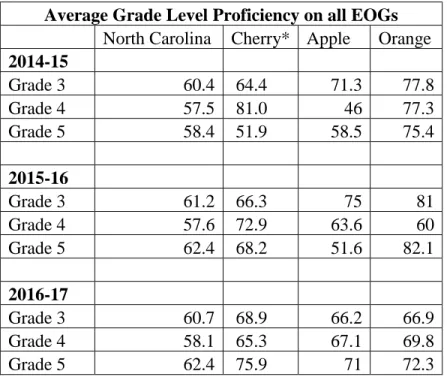
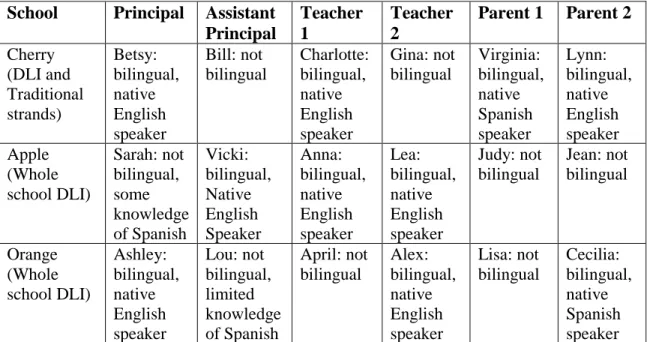
Page Table 1. EOG Data ...52 Table 2. Project Participants ...53
1
CHAPTER I
PROBLEM AND PURPOSE
Problem Statement
Language immersion programs are on the rise in the United States. The number of programs has increased dramatically in the past several years across the country. The Center for Applied Linguistics (CAL) has attempted to track this growth, noting in a 2011 report identification of almost 450 programs in the United States, while in 1995 there were 187 programs (Center for Applied Linguistics, 2011). Closer to home, in 2009 there were 40 immersion programs of various sizes and models in North Carolina K-12 public schools, and in 2018 the number has grown to over 140 immersion programs (North Carolina Department of Public Instruction, 2018). This explosive growth in North Carolina has been a grassroots effort, largely driven by local districts and individual schools. This national and state growth is in part due to the recognition that language skills are necessary in the global economy, but also because of the proven achievement benefits that are associated with immersion programs (Howard & Christian, 2002). With such rapid growth, there are not enough instructional leaders in schools with experience as immersion program administrators. In Delaware and Utah there has also been rapid growth in immersion programs, but unlike in North Carolina, the Delaware and Utah state departments of instruction set forth program requirements and provide guidance and training (Delaware Department of Education, n.d.; Utah State Board of
2
Education, n.d.). There are various models for immersion programs, but little
direction from the NC Department of Public Instruction as to how immersion programs in NC should be designed, and until the last two years, almost no professional development was provided by the state. This leaves many questions for teachers and administrators. It seems that in many cases those involved with programs across the state are continuously “reinventing the wheel” and all are looking to one another for guidance. Administrators in schools with immersion programs are often not aware of the unique needs of the program regarding curriculum, pedagogy, and teacher qualifications. Many immersion administrators do not speak another language proficiently and do not understand the process of language acquisition. In some cases, these programs are imposed upon the principal without his/her input, while in other instances principals have driven the effort to establish a program.
Principals have great impact on the success, or lack thereof, of special programs such as language immersion. Teachers and their students are directly affected by
principals’ leadership. The principal can help attract students to the program or can drive parents away, depending upon his/her actions. With such rapid growth in the amount of language immersion programs and little guidance provided by the state, principals need resources to help them lead these unique programs effectively.
Need for Research
Research has been conducted regarding effective leadership in schools, but not a great deal of this research relates to leadership behaviors specifically in language
3
immersion programs (Hunt, 2011; Jacobson, 2011; McKinney, Labat Jr, & Labat, C., 2015; Tschannen-Moran & Gareis, 2015). Research regarding schools in general
indicates that climate is an important factor in a school’s success, and that teacher trust in leadership is an important component of positive climate (McKinney et al., 2015;
Tschannen-Moran & Gareis, 2015). If this is the case, then it is important to examine stakeholder perceptions of school climate, how leaders affect climate, and how principals’ attitudes and actions affect the success of a program. Other researchers describe the need for the principal to focus on building relationships with stakeholders (Brown III, 2015; Garza, Drysdale, Gurr, Jacobson, & Merchant, 2014). Newmann, King, and Rigdon (1997) discuss the need for principals to have “organizational capacity” in order to lead effectively (p. 41). All of these characteristics are important regarding school leadership in general. However, it is also important to learn about various aspects of leadership in unique programs such as language immersion, in which leadership practices are crucial to the programs’ success or failure (Alanís & Rodríguez, 2008; Hunt, 2011). While there is a small amount of research in this specific area, as reflected in the literature review that follows, there is not a great deal of information to guide principals regarding effective leadership in these specialized programs.
Researchers have found that immersion programs have positive effects on student achievement, as well as providing other advantages for students (Collier & Thomas, 2017; Lindholm-Leary, 2005; Thomas and Collier, 1997, 2003, 2012). One of the typical benefits of these programs is that students are in classes with diverse populations, they have teachers from other countries, and appreciation of other cultures is naturally
4
integrated into the curriculum (Howard et al., 2018). Immersion program students are often racially and socioeconomically diverse and students constantly interact with peers from different backgrounds in positive ways (Thomas & Collier, 2012). This builds relationships and cultural understanding among students of different backgrounds. Especially in dual immersion programs where there are two native language populations, students recognize the need to learn language from one another and in doing so, gain cultural knowledge and understanding. Effective leaders help establish an environment in the school that promotes cultural awareness and understanding and builds
relationships, thus promoting inclusiveness as part of the students’ academic experience. Given what we know regarding effective leadership in schools, the benefits that immersion programs provide, and that immersion programs have specific needs, it is important to examine how leadership behaviors affect the success of language immersion programs. Research indicates that climate is an important factor in a school’s success, and that teacher trust in leadership is an important component of positive climate. Research also addresses the need for shared leadership practices and strong managerial skills in successful schools. But these are characteristics that can be generalized to any educational setting. Principals of language immersion programs also must understand the uniqueness of these programs and how to apply their leadership skills in these settings. There is little research that indicates what other skills may be important for successful immersion programs, or how leadership practices affect these specialized programs, either positively or negatively.
5
Through this research project, I examined the connection between principals’ leadership practices and language immersion program success. I sought to identify actions, decisions, and attitudes that are beneficial to programs, as well as those that are detrimental. This included investigating stakeholders’ perceptions of principals’
behaviors, as well as principals’ own observations, and data that indicates programs’ outcomes.
Purpose and Significance
This project helps to highlight characteristics and leadership practices of the principals of successful language immersion programs. Success can be exhibited by program growth and academic achievement. The findings of this research may help principals become more effective leaders of language immersion programs by being aware of specific effective leadership practices that have positive effects on immersion programs. This project adds to the body of research regarding these specialized programs and the implications for effective leadership so that the goals of the program can be achieved.
Several findings related to effective leadership practices in schools with immersion programs align with the research regarding effective school leadership in general, but I also found that there are characteristics and actions needed that are specific to the success of language immersion programs. These are distinctive programs and therefore require specific knowledge and skills of the leadership in order to be effective. The purpose of my study was to explore these practices.
6
Research Questions
One primary question drives my research in this study:
• In schools with successful immersion programs, what are the principals’
leadership styles, actions, and attitudes, as described by themselves, teachers, and parents?
As part of answering this question, I also explored the following sub-questions:
• What actions do principals take that are supportive to immersion programs? • What actions do principals take that are detrimental to immersion programs?
Definition and Description
Language immersion programs come in two basic models, but the premise is the same. Students learn language and content simultaneously, so that the acquisition of language is a natural process, embedded in the subject area content instruction of the classroom (Howard, Lindholm-Leary, Rogers, Olague, Medina, Kennedy, Sugarman, &, Christian, 2018). As Lindholm-Leary (2005) states, “instruction and classwork take place in two languages, with the non-English language used for at least 50 percent of the students’ instructional day” (p. 56). Immersion programs usually begin in Kindergarten and grow with the students as they move through the grade levels, ideally continuing through 12th grade. The two models are dual, or two-way immersion, and one-way
immersion. The choice of model depends upon the population being served. In one-way immersion, all of the students are native speakers of the same language while in two-way or dual immersion, half of the students are native English speakers and half are
7
native speakers of the target language, whether it be Spanish, Chinese, or another
language. Typically in a one-way program all of the students are native English speakers, but there are also developmental bilingual programs. These are one-way immersion programs in which all students are native Spanish speakers. The most common dual language immersion (DLI) programs in the US are Spanish/English, but other language programs exist as well (CAL, 2011). In both two-way and one-way programs, the goal is for all students to become bilingual and biliterate (Howard & Christian, 2002; Howard et al., 2018). This means that the students served by an immersion program might vary, depending upon the population of the school or community and the needs to be addressed.
As stated above, language immersion programs begin in Kindergarten because of language acquisition and immersion methods. In order for native English speaking children to begin to learn in another language, the language must be comprehensible and must be simple enough to be represented by visuals, manipulatives, and other methods without using translation (Howard & Christian, 2002; Howard et al., 2018). As such, the Kindergarten curriculum is the perfect place to start. A Kindergarten classroom is already rich with visual and tactile resources and the instruction must be hands-on for students, concepts critical to appropriate immersion instruction. In this way, students are able to easily grasp the content concepts as well as the target language. As their language skills grow, students are able to learn increasingly complex content through the
language. Native English speakers typically cannot begin in an immersion program after first grade, at the latest, if they do not have prior experience with the language because by
8
that point, the content would be inaccessible to them. In a DLI or developmental program, native speakers of the target language can enter at later grade levels because they would be able to understand the instruction in that language, even if they might not have the English skills of the other students.
Positionality
I am the World Languages Program Manager for a large, urban school district in North Carolina. I have worked with language immersion programs for the past 12 years and have learned a great deal through working with various principals and
teachers. Though I did not know much about immersion when I first became the district coordinator for language programs, I have worked to educate myself by reading relevant research, attending conferences, talking with experts in the field, and visiting other programs. In my work I have seen programs grow due to effective, dedicated leadership, and have experienced working with principals whose leadership was detrimental to the immersion program. While I have worked with immersion programs as a district administrator for several years, my position is somewhat unique because I am not the actual leader of the school. I can work with the principals to provide support, and at times can make recommendations, but I am not actually in charge of the programs. Depending upon the receptiveness of the principal, my recommendations may or may not be applied. As a result of my experiences, I am interested in how leaders’ actions and attitudes affect language immersion programs and I want to gather information regarding effective leadership practices in order to help inform the profession.
9
I am aware that my role and experiences give me a biased perspective in some ways, especially because of the emotion involved with my personal connection to the immersion programs (Glesne, 2016). Not only do I work with immersion programs as a part of my job, but I also have been an immersion parent. I am a White native English speaker, but have a background as a Spanish teacher and wanted my child to be bilingual as well, and so he began in an immersion program in Kindergarten. I understand the need for reflexivity as defined by Glesne (2016), “reflecting upon and asking questions of research interactions all along the way” (p. 145). In one situation with an ineffective principal, I was involved both professionally and personally, as my child was in the immersion program at that school. The principal’s actions and attitude affected me both at work and home, so I have opinions and attitudes based on my involvement with this situation. As Hesse-Biber and Piatelli (2007) describe, I acknowledge my place as it relates to the research and will engage in self-reflexivity as described by Pillow (2010). As Pillow (2010) recommends, I worked to counter my bias by carefully
considering the interview transcripts, reading and re-reading them multiple times. I kept a research journal to collect thoughts and reflections during the research process. I fully acknowledge my personal and professional interest and attachment to the topic.
In the chapters that follow I include a review of current literature regarding effective leadership practices in schools in general, as well as specifically in language immersion programs. The literature review also includes information about the benefits of immersion programs as well as student populations served by immersion programs. Then I describe the theoretical framework, and methods for conducting the
10
research and data analysis. Also, I present ethical considerations relevant to the project and my role as the researcher. There are three data chapters that present the research findings, including positive culture, program and teacher support, and the principals’ knowledge and skills. Finally, I conclude with analysis and application, limitations, and implications for future research.
11
CHAPTER II LITERATURE REVIEW
It is well known that the leader of a school affects the success of the school (Brown III, 2015; Jacobson, 2011; Louis, Dretzke, & Wahlstrom, 2010). In an article highlighting effective practices that principals implement, Spiro (2013) states simply that “school leadership matters to student achievement” (p. 21). The Wallace Foundation (2013) concurs, stating “leadership is second only to classroom instruction among school-related factors that affect student learning in school” in a report about the principal as a leader (p. 5). In a 2010 report of a national survey regarding effective leadership in schools, Louis et al., focus on three leadership behaviors that affect student success, including a focus on instruction, trust, and shared leadership. Jacobson, (2011) found that “the existence of essential core leadership practices…[is] necessary for improved student achievement” (p. 41). These core practices include setting a vision and establishing positive school culture (Jacobson, 2011). Others note the need for strong organizational skills and a focus on data (Brown III, 2015; Spiro, 2015; Newman et al., 1997).
According to these researchers, effective school leaders establish positive culture and climate, they utilize shared leadership practices, and they have strong organizational skills which affect factors such as scheduling and establishing professional learning communities.
12
However, all of this research is about schools and education in general. It is difficult to find research that speaks to specific skills that may be needed for specialized programs, such as language immersion. While many effective leadership qualities may be common to all schools, if a program has unique components and characteristics, then it stands to reason that leadership practices in such a program may be unique as well. Through this project I explored principals’ actions and attitudes in successful language immersion programs. This includes how common leadership behaviors affect such programs, as well as the behaviors and characteristics specific to being a principal in a language immersion school.
In the literature review, I will first describe what is known about effective leadership practices in general. This includes establishing a positive climate and culture and trust, and how teachers’ perceptions affect those components. I will also explain how the research addresses the need for shared leadership and organizational skills.
Following the general research, I will share what has been documented regarding leadership specifically in language immersion programs. Finally, I include research regarding the outcomes of immersion programs.
Effective Leadership Practices
There are various practices that are a part of general effective leadership. Below, I describe two major components, due to the repetition with which these occur in the literature, and their connection to the leadership theories I am applying to this project. In any setting, it is apparent that the principal must establish a positive climate and culture
13
in order to lead a successful school. As a part of climate and culture, the leader must establish trust with staff members. Mutual trust among staff and leadership is an important factor in fostering a positive climate. In addition, effective school leaders establish relationships with parents as they are important stakeholders. The use of shared leadership practices is related to trust, relationships, and culture, and is another aspect of effective leadership. Finally, I describe the need for principals to employ specific organizational skills in order to lead effectively. All of these practices are a part of applying instructional, shared, or transformational leadership theories, which I will describe more thoroughly in the theoretical framework.
Positive School Climate and Culture
There are several factors that affect school climate and culture. A positive climate is an important factor in a successful school. Teachers need to feel respected and
supported by leadership as a part of a positive culture. The leader contributes to the climate by establishing rapport and trust with teachers, which is part of a positive and supportive working environment. In addition to teachers, the principal needs to establish relationships with students’ parents as a part of the culture of the school. Part of
developing trust and a supportive environment includes the use of shared leadership, involving staff in planning and decision making. Relationship building with multiple stakeholders, establishing trust, and giving teachers leadership opportunities are significant components in establishing a positive school climate and culture.
14
Positive climate and school culture are important aspects of successful schools, and these aspects are significantly influenced by school leaders. In their meta-analysis of effective school leadership behaviors, Marzano, Waters, and McNulty (2005) found that establishing a positive culture was one of 21 leadership responsibilities with the highest correlation to student achievement. They state that “an effective leader builds a culture that positively influences teachers” (p. 47). In a qualitative study of 64 schools urban and suburban schools about the correlation of trust in leadership, school climate, and student success, Tschannen-Moran and Gareis (2015) found that “principals have both a direct and an indirect relationship to student achievement, through their influence on school climate” (p. 82). This component of success is dependent upon the leaders’ behaviors. Spiro (2013) states that “a good principal knows how to shape a
culture…which means fostering a supportive environment” (p. 29). This positive culture comes from establishing a common vision as well as shared expectations for behavior and other processes in the school (Brown III, 2015; Garza et al., 2014). Garza et al. (2014) used previously reported case studies to investigate the principal’s role in school success. They state that in successful schools, teachers are “committed to working …to achieve agreed-upon goals” (p. 805). If all staff are working together towards a clear, common purpose, within a positive environment, success likely follows in schools.
Establishing trust.
Related to establishing a positive climate, principals must also foster a sense of trust. Tschannen-Moran and Gareis (2015) describe the need for faculty trust in the
15
principal in successful schools. The administrator plays a large role in setting the tone and establishing the culture and climate of the school, which affects teachers’ and students’ performance (Hopson, Schiller, & Lawson, 2014; Thapa, Cohen, Guffey, & Higgens-D’Alessandro, 2013). McKinney et al. (2015) present characteristics of
successful principals found by studying National Blue Ribbon Schools. This designation is given by the U.S. Department of Education to schools with exemplary student
performance or those showing great progress in closing the achievement gap (United States Department of Education, 2015). These are highly successful schools as measured by state standardized assessments. They found that one of the most effective shared characteristics of these schools was the rapport built by the principals with and among the teachers. McKinney et al. (2015) state that “the academic and social connection between the principal and teacher played a huge role in the success of these national blue ribbon schools” (p. 164). As in any other relationship, trust in a principal is built by the way in which s/he behaves and acts in the leadership role. Garza et al. (2013) note similar
findings, describing the trust teachers had in the leadership, as well as the positive climate the principal established in which “teachers felt supported and appreciated” (p. 806). Teachers must feel valued by administrators in order to trust them. Principals need to “[see] teachers as respected professionals…who have expertise to be orchestrated and shared” in order to establish professional trust (The Wallace Foundation, 2013, p. 20). By investigating the relationship of trust in school leadership to school climate and student success, Tschannen-Moran and Gareis (2015) found that “such leadership matters a great deal” (p. 82).
16
The establishment of trust and a positive climate depend a great deal upon the teachers’ perceptions of the principals’ leadership. The Blue Ribbon Schools study by McKinney et al. (2015) indicates “the development of a strong positive rapport between the principal and his or her faculty and staff as being significant to improving student learning” (p. 164). Such rapport cannot be built without trust and collegiality. If teachers do not perceive the leader to be trustworthy or have their best interest in mind, then positive rapport cannot be built.
Strong relationships with students’ families.
This issue of positive climate and trust extends beyond relationships between principals and teachers. It also involves the principals’ interactions with students’ parents/guardians. Effective principals “[create] an environment of collaboration,” not only with staff, but also with parents (Garza et al., 2014, p. 805). Multiple studies of successful schools speak to the importance of involving parents in intentional ways. Garza et al., (2014) describe the positive relationships principals built with parents that contributed to the success of the schools studied. In a case study of high achieving schools, Brown III (2015) also notes the importance of strong parent involvement as a part of school culture in high achieving schools. School staff cannot impact achievement alone, but need intentional parental involvement as well. Ishimaru (2013) describes this leadership practice of encouraging parent involvement as an “approach that focuses on developing relationships with parents to understand their priorities, concerns, and hopes for their children as drivers for programs and activities” (p. 42). While we often think of
17
the importance of pedagogical knowledge for a principal, this body of research indicates that relationship building skills beyond the school walls are also vital for successful schools.
Shared leadership.
Related to establishing positive culture in a school involves sharing leadership and providing administrative support for teachers. A principal of a successful school “understands that teachers who are responsible for the end result as well as the tasks associated with it are more likely to experience success” (McKinney et al., 2015, p. 164). A principal cannot do all of the work that affects improved achievement in a school. Marzano et al., (2005) address the concept of shared leadership, stating that all the responsibilities of a leader they identified in the research can be met “if the focus of school leadership shifts from a single individual to a team of individuals” (p. 99). The 2013 Wallace Foundation report supports this concept as well, stating “the more willing principals are to spread leadership around, the better for the students” (p. 10).
In a report of a national survey of teachers in the United States, Louis et al., (2010) also discuss the positive impact of shared leadership in schools. They state that “increasing teachers’ involvement in the difficult task of making good decisions and introducing improved practices must be at the heart of school leadership” (p. 332). Teachers do not work effectively when told what to do without understanding a purpose or reason. They need to be a part of the process to implement practices well. Spiro (2013) also addresses the need to cultivate leadership skills in others, stating that “one of
18
the most important things principals can do to improve student achievement is to spread leadership around” (p. 30). This means including teachers in decision making and encouraging them to take leadership roles within the school, such as facilitating professional learning communities or grade level meetings.
It is apparent that if teachers perceive the leadership to be collegial, rather than authoritative, they feel a part of decision-making processes and have buy in towards the outcomes. Teachers in Hunt’s (2011) case study investigating the role of leadership in three New York City immersion programs reported that the “principals acknowledge and request their opinions and suggestions when making decisions,” leading to the teachers’ understanding that their knowledge is valued by the leadership (p. 198). Hunt (2011) describes the way principals in successful schools build trust through shared leadership. She reports that that teachers perceived “themselves as part of the practice of leadership” in the collaborative environment established by the principals (p. 195). This perception affects the sense of shared leadership and support found in the school. Shared leadership helps teachers buy in to needed initiatives and gives them a sense of responsibility and accountability for successful results.
A positive school climate and culture is something that can be difficult to measure, but it is an important factor in successful schools. It involves the working environment, morale, and the feeling you get when you are in a school. School leaders set the tone for climate and culture by their actions and behaviors. In order to establish a positive climate, leaders have to establish trust and build relationships with teachers and parents/guardians. They need to exhibit respect and support for teachers. Using shared
19
leadership practices also contributes to establishing a positive climate by involving teachers in planning and making decisions that affect instruction.
Managerial and Organizational Skills
In addition to the importance of building relationships and establishing a positive culture, research also points to the need for principals to have specific “organizational capacity” (Newmann et al., 1997, p. 41). Principals of successful schools must know how to work with data, establish effective schedules, and implement professional learning communities. Marzano et al., (2015) found that one of the leadership
responsibilities with the highest correlation to student achievement was order, or being able to “[establish] a set of standard operating procedures and routines” (p. 43). As Spiro (2013) states, “effective principals are good managers” (p. 31). While leadership of instruction is important, they must also be able to orchestrate logistics to support
instruction. This means arranging “the school organization so that it supports the work in a…productive way” (The Wallace Foundation, 2013, p. 20).
In a five-year qualitative study of schools that have been restructured, Newmann et al., (1997) found that the principals’ ability to organize both internal and external resources was a factor in the success of change. Scanlan, Kim, Burns, and Vuilleumier (2016) also discuss the effectiveness of “communities of practice” (COPs) when the principal is intentional about the organization and supports provided for these
professional learning groups. The description of COPs is much like that of a Professional Learning Community in this 2016 report of a case study of 12 elementary schools by
20
Scanlan et al. They state that “school leaders can effectively scaffold rich and vibrant COPs” if they design and organize the groups well (p. 35). They cannot simply call a group of teachers working together a COP. In designing such a system of practice there is “intentionality [that] includes attending to the host of factors that affect individuals” (Scanlan et al., p. 36). It is not enough to tell teachers to work in collaborative teams and use data to inform instruction. The leader must implement the organizational structures and accountability measures necessary for these practices to be effective.
When leaders establish internal accountability structures, this promotes a clear consensus among staff regarding student learning outcomes and what is needed to achieve the goals. As Newmann et al., (1997) state, “strong internal accountability advance[s] organizational capacity in schools” (p. 58). Related to the need for shared leadership practices, the authors note that principals involved teachers in the
organizational structure and design for meeting instructional needs. Scanlan et al. (2016) focus on the benefits of principals as organizers for culturally and linguistically diverse (CLD) students. They describe how school leaders can navigate transition processes through organization of effective COPs to “improve educational opportunities for CLD students” (p. 37). Accountability and organizational structures also involve the use of data to improve instruction. “Principals … know how to exploit data for sound decision making (Spiro, 2013, p. 31). They use multiple data points to inform instruction and help teachers understand how to do so as well (Brown III, 2015; Corcoran, Peck, & Reitzug, 2013).
21
Brown III (2015) addresses the need to schedule creatively in order to support instruction. The principal must be able to create a schedule that protects instructional time as well as time for teacher collaboration through professional learning communities (PLCs) (Corcoran et al., 2013). Successful principals “encourage faculty members to collaborate with and learn from one another” through PLCs, but this must be done in strategic ways, as described by Scanlan et al., (2016) (Spiro, 2013, p. 30). At all levels of K-12 instruction, the schedule must allow for optimal learning and instruction. This includes deliberate decisions regarding when students receive support services, elective or specials classes, potential interruptions to instructional time, and when teachers are able to collaborate. Effective school leaders understand how the schedule can impact various aspects of instruction and learning, and intentionally construct the schedule for the benefit of students.
It is apparent that effective school leaders must do more than establish a positive climate and rapport with stakeholders. They must also have managerial skills in order to develop procedures and schedules that optimize learning for students. Principals must establish effective professional learning communities and design schedules that support time for such collaboration and data analysis for teachers. They establish accountability for teachers, helping them to use data and focus on student learning outcomes. Effective principals have to be intentional in their use of resources, including time and personnel, in order to maximize the use of instructional and planning time.
22
Leadership in Language Immersion Programs
If a principal’s leadership behaviors are important to the success of a school in general, this is especially true in an immersion program. Parents have to choose to enroll their children in immersion programs, so they must prove to be successful in order to be maintained. In many areas language immersion programs are relatively new, and it is somewhat of a leap of faith for parents to choose these programs for their children. Language immersion programs are unique and require different kinds of instruction, staffing, and structures than a traditional educational experience. Presumably, this also means that there are unique leadership characteristics important for immersion programs, but there is little research to this effect. Though limited, there is some research that addresses effective leadership practices in immersion programs. This includes the level of commitment to the program that the principal demonstrates, and the knowledge the principal has regarding language acquisition, the program model, and immersion pedagogy.
Program Commitment
According to Alanís and Rodríguez, (2008) who studied characteristics of a successfully maintained immersion program in Texas, “the principal’s level of commitment to a program is essential to implementing and maintaining enriched
education programs such as dual language education” (p. 315). Leaders have to be fully dedicated to the immersion model and must understand how to implement and promote the program. Rocque, Ferrin, Hite, and Randall (2016) found a similar theme in their
23
qualitative study of immersion programs in Utah. In the results of their surveys and interviews, immersion principals agreed that “immersion proponent” is a key role for the leader of such a program (p. 810). Principals of bilingual programs “must be, or become, advocates, supporters, [and] champions…of dual immersion programs” (Rocque et al., 2016, p. 811). In their 2017 report regarding common dual language questions, Kennedy and Medina state that if the program is housed within a traditional school, it is important that the leader “ensure[s] that the dual language program is viewed as an integral part of the school rather than as a mere appendage” (p. 7). Even when the whole school is not immersion, the administrator must have strong commitment to the program in order to “advocate at the school and district levels” to meet the program needs (Kennedy & Medina, 2017, p. 7). Though the number of these programs is on the rise, they are still somewhat uncommon and unknown. Program success is partially dependent upon community buy-in and voluntary enrollment, so the principal must be committed to the program and able to promote it in the community with knowledge and confidence.
Program Knowledge
Leaders in an immersion program must be knowledgeable of and dedicated to the program model. Rocque et al. (2016) state that “the…principal need[s] to have
specialized training in dual immersion, including knowing how to… lead teachers to be true to the instructional model” (p. 811). Instruction in two languages requires a different instructional model than would be evident in a traditional, monolingual classroom. Alanís and Rodríguez (2008) found that pedagogical equity and knowledgeable leadership were
24
important features of the programs. Pedagogical equity means that equal value is placed on knowledge and skills in both program languages and rigorous content is taught in both languages. In the Texas program the principals and staff “supported the notion of equal status of languages, as they were careful not to promote one language over the other” (p. 312). The leaders and teachers in these schools promoted a “positive attitude toward bilingualism” (p. 313).
Hunt (2011) also discusses the need for principals and staff to have a shared commitment to the bilingual model, noting that programs are successful “when the administration and teachers all truly believe in dual language programs as a means of preparing students linguistically and academically” (p. 199). If a principal of an
immersion program does not promote such an attitude, and by his/her demands of staff, clearly values English over the target language, this contributes to low teacher morale and lack of commitment to the immersion model. As Hunt (2011) notes, the “lack of trust” on the part of the principal “lessens the strength of the learning community” (p. 198). In addition, Collier and Thomas (2004) found that fidelity to the model affects differences in student achievement. They note that “the principal is a key player in making the model happen as planned” (p. 13).
McGee, Haworth, and MacIntyre (2015) conducted a qualitative study regarding leadership practices to support English Language Learners (ELLs) in two schools in New Zealand. The two urban schools both had populations of ELLs; one was from a higher income area and one had a lower income population. The results of their study support the need for the principal to be knowledgeable of pedagogy and program design for the
25
ELL population. They state “the knowledge that leaders have about the learnings, curriculum, pedagogy, and assessment is seen as highly important” (p. 102). If this is true for working with a specific population or program such as ELLs, then it can be related to immersion programs as well. It would be detrimental to a program if the principal shows that s/he does not “[understand] the nature of bilingualism and the importance of advocacy for teachers, students, and biliteracy” by demanding more English instruction and assessment earlier in the program than appropriate (Alanís & Rodríguez, 2008, p. 316). Just as Alanís and Rodríguez (2008) describe, this push for English over the target language can happen if a principal does not have the necessary pedagogical understanding. A principal’s lack of understanding and support of the immersion program will slowly “overpower teachers’ best intentions and ultimately sabotage the program” (p. 316).
Thomas and Collier (2014) support this need for knowledge of bilingual instruction. They state that immersion administrators “need to understand second language acquisition [and] second language literacy” (p. 42). Principals and other staff who do not fully understand immersion programs create obstacles to effective
implementation (Thomas & Collier, 2014). For example, if a principal does not understand to expect lower assessment scores in English in the early grades than in a traditional class, s/he may push teachers to use more English instruction than prescribed by the program model, “which can have serious implications for the effectiveness of the program” (Kennedy & Medina, 2017, p. 3). A principal cannot lead an immersion
26
program effectively if s/he does not have the knowledge of appropriate pedagogy and program structure in a bilingual setting.
Vision and Support
In the Texas immersion program, the teachers believed that “the principal’s support and knowledge regarding dual language instruction had been crucial in program sustainability” (Alanís & Rodríguez, 2008, p. 315). In this case study interview, one teacher said that her principal was “a motivating force” in the success of the program (p. 316). In their book about dual language immersion programs to which 24 dual
immersion administrators contributed, Thomas and Collier (2014) also address the importance of the principal developing trust with staff through a clear vision and
commitment to the dual language model. Hunt’s (2011) study of leadership in bilingual programs supports these concepts as well, including that “the principal and the staff share a clear and unified vision” (p. 193). Rocque et al., (2016) expand on this concept,
explaining that in a strand model where the immersion program is housed in a school with traditional, monolingual classes, “both immersion and nonimmersion teachers [need] to continually be made aware of the many goals and values that [unite] them” (p. 811). If the principal is not supportive and knowledgeable of the program, there cannot be a shared vision and mission.
It is apparent that there are leadership practices that are important for leaders of any school to employ. However, language immersion programs are different from a traditional school and therefore require additional skills and knowledge. The limited
27
research in this area indicates that immersion principals must be knowledgeable
regarding immersion pedagogy and program models. They must understand how these programs are different from a traditional one, and what that means for instruction, staffing, schedules, and resources. Effective immersion principals also have to exhibit commitment to the program and show support for the program’s vision and goals. A lack of such skills and behavior will negatively affect implementation of general leadership practices for effective schools, including establishing a positive school climate and trust with teachers.
Why Language Immersion?
Research shows that language immersion programs have various benefits.
Students in immersion programs exhibit high achievement, typically at or above the level of their monolingual peers. Thomas and Collier (2012) have shown this to be true for multiple subgroups of students. In addition to academic achievement, immersion
programs promote global competence and cultural understanding; this teaches students to respect differences among people. Immersion programs are beneficial in multiple ways, providing quality instruction in content, language, and the soft skills necessary for globally competent students. Additionally, dual immersion can be used to elevate the status of the Spanish language and Spanish speakers in our English dominant society. There is current debate in the field over who is being served in DLI programs.
28
Achievement Outcomes
Because of the need to address achievement of English Language Learners (ELL’s) in many areas of the country, DLI programs have become popular and much of the research addresses these two-way programs specifically. Researchers have found that DLI programs “successfully educate native English speakers and English language learners within the same classroom and fulfill for both groups the goals of full bilingualism and biliteracy, grade-level academic achievement, and multicultural competency” (Lindholm-Leary, p. 56, 2005). What more could we want for students than that they achieve these goals? Marian, Shook, and Schroeder (2013) also note the achievement of both groups of students in such programs, stating that “bilingual two-way immersion education is beneficial for both minority- and majority-language elementary students” (p. 178). They studied achievement data for immersion students in the Chicago area, as compared with students of similar demographics in traditional, monolingual classes. In almost every instance, the 3rd-5th grade native English
speaking immersion students “outperformed the mainstream classroom students” with the greatest differences shown in math (p. 178).
Researchers Virginia Collier and Wayne Thomas are well known in the field of bilingual education. In a 2004 report on various longitudinal studies of one-way and two-way immersion programs, they describe multiple instances of bilingual programs closing the achievement gap for multiple groups of students. More recently, Thomas and Collier conducted a longitudinal study of achievement in North Carolina DLI programs. Some early results of the study are included in their 2012 text, Dual Language Education for a
29
Transformed World. They used various DLI programs in the study, in both rural and urban areas. Thomas and Collier (2012) found that “both English learners and native English speakers in [these] dual language classes are outperforming their peers in all grades in which they are tested (3-8)” (p. 85). They found that no matter the subgroup – African American, low socio-economic status (SES), ELL – enrollment in DLI programs worked to close the achievement gap for all subgroups in both reading and math. Thomas and Collier (2012) state, “results from all of these NC analyses indicate that all groups of students benefit greatly from dual language programs. English learners and African American students especially strongly benefit” (p. 83). In earlier research Lindholm-Leary (2005) found similar results. According to her, “both English language learners and native English speakers in bilingual immersion programs demonstrated large gains over time in their reading and math achievement test scores,” and additionally in middle school, “both groups scored at or well above grade level in reading and math (p. 58). In a text reporting their experience with a dual immersion program in Colorado, Westerberg and Davison (2016) also found that students exhibited increased achievement in their immersion program, performing at or above the level of students in nearby traditional schools. In addition, they found “steady growth documented for reading, math, and writing” over time as the program became better established (p. 165).
Immersion programs naturally cultivate educational equity. Effective instruction in bilingual classrooms must include hands-on experiences and thematic units that are cross curricular (Christian, 1996). For language and content to be understood, teachers must use a great deal of visuals and modeling, language in context, and must check for
30
understanding constantly, in multiple ways (Howard et al., 2018). These are all aspects of effective instruction in any classroom, but are vital in a bilingual setting where some or all of the students are not native speakers of the language of instruction. As such,
effective immersion programs provide high quality instruction.
As already stated, Thomas and Collier’s (2012) research shows that dual
immersion programs close the gap for all subgroups. This includes populations that are typically low performing, including racial minorities, low socio-economic status students, English language learners, and students with disabilities. Dual immersion programs have proven to be more effective for English language learners than traditional pull out
services for English. Teachers in these programs value the students’ native language by fostering literacy skills and content knowledge in that language as well as English (Thomas & Collier, 2012; Westerberg & Davison, 2016). In a dual immersion program, the two native language population groups constantly change in who has an advantage in the classroom. Some of the instruction is in English, so native English speakers are at an advantage, but at least half of the instruction is in the target language, so native speakers of another language have the advantage at that point. In a one-way immersion program in which all students are native English speakers, students are often at equitable
educational levels, regardless of background, because they all have the same amount of experience with the target language. These aspects of immersion programs level the playing field for students, creating equitable educational opportunities for all students. However, in order for immersion programs to be successful and exhibit such results, leadership must be effective.
31
Other Benefits
Immersion programs not only contribute to academic achievement for language minority and language majority students, but they have other benefits as well. Some of these are less tangible than test scores and are difficult to measure, but are evident
nonetheless. In our rapidly changing world, we know that “schools must prepare students to be globally competent” (Mansilla & Jackson, 2011, p. 97). In a 2011 report sponsored by the Council of Chief State School Officers and Asia Society, Mansilla and Jackson define global competence as “the capacity and disposition to understand and act on issues of global significance” (p. xiii). Immersion programs prepare students for a global
economy by providing both language and cultural skills. Globally competent workers are able to communicate with others effectively, “using appropriate verbal and nonverbal behavior, languages, and strategies” (Mansilla & Jackson, 2011, p. 39). Becoming proficient in languages other than English through an immersion program provides students with communication and cooperation skills needed in an increasingly interdependent world.
Bilingual programs promote cultural understanding and “sensitivity to culturally and linguistically diverse communities” (Collier & Thomas, 2004, p. 12). Even early in these programs’ development, Christian (1996) noted that dual immersion programs “[enhance] the language resources that minority students bring to school”, promoting an asset model in working with English learners where native language skills are valued, rather than a deficit one where they are seen as a disadvantage (p. 67). Students are in classes with diverse populations, they often have teachers of varying nationalities, and
32
appreciation of other cultures is a natural part of the curriculum (Howard, et al., 2018). This fosters a soft skill that is difficult to measure, but is vital in helping students to understand differences among people and establish connections with others. Bilingual programs promote global competence, producing students who “bring a pluralistic and respectful attitude to their interactions, recognizing difference as a matter of fact”
(Mansilla & Jackson, 2011, p. 44). As previously noted, immersion program populations are often racially and socioeconomically diverse and students have a great deal of
interaction with peers from different backgrounds (Thomas & Collier, 2012). This interaction helps to build relationships and bridge typical gaps in cultural understanding among students of varying backgrounds. Students learn language and culture from one another, enhancing their cultural awareness and acceptance of those different from themselves. Effective leaders establish a positive school environment that promotes relationship building and cultural understanding, providing students with global competency skills.
Teachers and school leaders in immersion programs must establish respectful environments that honor differences among people. Hunt (2011) states that “the strength of diversity must be cultivated among students and staff” and that staff in a dual
immersion program cannot “fall victim to seeing diversity as an obstacle or a hindrance” (p. 190). In addition to the safety all students should feel by honoring and valuing diversity, immersion students feel safe in taking risks and in not always knowing the answer. Students in a language immersion environment have to learn to be comfortable with some ambiguity because they are not always going to understand every word the
33
teacher says. In learning a language, they will make many mistakes, so a positive learning environment is vital. Teachers have to establish an accepting environment where all students are treated with equity and differences are honored. Effective school leaders can help in this process, taking actions to ensure that both English and the target language are valued equally, and helping teachers to naturally integrate various cultural aspects as a part of the curriculum.
Student Population Served by Immersion
As previously stated, there are multiple types of language immersion programs. One-way programs target native English speakers, while two-way programs target native English speakers and native speakers of a target language, such as Spanish or Chinese. The goal for both types of programs is that all students become bilingual and biliterate. Howard et al., (2018) also include “sociocultural competence” as a necessary goal for dual immersion programs (p. 10). They stress the need for equity in these programs, as it “is crucial in the dual language program model with its emphasis on integrating students of different ethnic, linguistic, and socioeconomic backgrounds” (p. 11). According to Francisca Sánchez, one of the contributors to Thomas and Collier’s 2014 text for administrators, dual immersion programs are to “use culturally and linguistically responsive pedagogies…in classrooms that are responsive to all students” (p. xvi). For native speakers of the target language, this is an additive model, as opposed to
subtractive, allowing them to build on their native language skills as well as learn English (Collier & Thomas, 2017; Howard et al., 2018). However, some researchers have
34
investigated Spanish/English dual, or two-way, programs in particular, with a critical approach to determine the focus of these programs and whether they are truly for the benefit of all students, or if they perpetuate “dominant hegemonic practices that have long existed in ‘English-only’ classrooms” (Alfaro & Hernández, 2016, p.9).
Valdez, Freire, and Delavan (2016) studied policy documents to discover “which student groups were positioned … to benefit the most” from Utah’s dual language initiative (p. 601). They found that the documents emphasized “globalized human
capital” and “economic themes” rather than goals such as promoting native or indigenous languages for marginalized groups (p. 612). Furthermore, in analyzing the requirements for teachers, they found that “having highly qualified teachers that could meet the target language needs of English-privileged students in DL was a priority,” yet teachers with English learners in the classes “were not expected to have any training in ESL or dual language methods” (p. 616). Through their analysis, Valdez et al., (2016) found that emphasis was placed on native English speakers learning Spanish, rather than raising the achievement of typically under-performing populations such as native Spanish speakers. The results of their analysis include exactly what Alfaro and Hernández (2016) warn against in their article about a need for critical pedagogy for dual language educators. Thomas and Collier (2014) state that English learners “are the group that most benefit from” dual language education, but that population does not seem to be the focus for the Utah model, according to the 2016 findings of Valdez et al. (p. 6).
With similar intentions, Scanlan and Palmer (2009) studied how two-way immersion programs approach “dimensions of diversity” in two different schools (p.
35
391). They identified two-way immersion programs as beneficial from a social justice perspective because of the “purposeful inclusion of such diverse communities as
immigrant Latinos, native US-born Latinos, and Anglo children in the same classroom” (p. 392). However, in practice at one school they found that the timing of and restrictions on enrollment had the effect of segregating the school, with White middle-class students and some Latino in the immersion program, and the rest of the school being largely African American and Latino. Resources were available to the immersion program specifically, but not for the rest of the school, which “work[ed] to exploit the sense of entitlement of powerful members of the school” (p. 402). While the school began the immersion program as a strand within a school in order to diversify the school and meet the needs of native Spanish speaking students, in reality the focus became more on the middle class White students learning another language. This is similar to what Flores and García (2017) describe in their description of a change in focus for bilingual programs over time. They state that while dual immersion programs have “the possibility of challenging the marginalization of Latinx and other minoritized students,” these programs have become “boutique” programs, marketed “to powerful parents” (p. 16).
In the other school Scanlan and Palmer (2009) studied, the school intentionally worked to “[reduce] marginalization” of students, “[seeking] to recruit and retain a population that is diverse across language, but similar in being primarily Latinos of low socioeconomic status” (p. 404). The immersion programs at both schools “were founded in an explicit effort to address inequity and develop rich, diverse schooling
36
is seen as “elite” and “more challenging” than the traditional monolingual classes and some Latino students are denied access because of space restrictions, while at the other all Latino students are welcome (p. 411). The second program did a better job of meeting the needs of all students involved, without valuing the native English-speaking students over native Spanish speakers in implicit or explicit ways.
This strand of research may have implications for program design and professional development for teachers and leaders in dual immersion programs specifically. Alfaro and Hernández (2016) recommend that dual immersion staff “be aware and vigilant of their own middle-class preferences, including their biases against non-standard language use” in order to “ensure equity” in dual language programs (p. 10). If leaders and teachers are not aware of the unintended consequences that can occur due to implicit bias and English dominance, then Flores and García’s (2017) claim will be evident, that “the White English-speaking community [will profit] most from the boutique DLE programs” (p.27). Given such research, if a principal is the leader of a dual immersion program, it is important that s/he identify the specific focus of the program, whether to give native English speakers skills in a second language, or to raise the achievement of typically marginalized students, or possibly both. This focus will have implications for practices and policies in the program. If the focus is about pride in heritage language and culture and building native language skills for Spanish speakers, as Flores and García (2017) discuss, there will need to be intentional practices to overcome the realities of White/English dominance, such as ensuring that all students can see themselves represented by role models in the teaching staff, curriculum and resources are
37
representative of the student population, and that the staff engages in cultural competency training.
Why Not Language Immersion?
Given the research, especially data that shows improvement for all subgroups, language immersion seems an obvious choice for schools. Not only have these programs been effective in closing the achievement gap, positive results are seen for all students. Thomas and Collier (2012) say it best:
What is amazing is that dual language programs close the achievement gap not only for English learners but also for other groups as well. Latinos fluent in English, African Americans, and students of low socioeconomic status from all ethnic backgrounds have greatly improved their test scores within dual language classes, benefitting these groups more dramatically than other school reform models. Fully meeting the needs of historically underserved and low-scoring groups is an important reason to expand access to dual language classes for as many student groups as possible (p.112, emphasis mine).
With such promising results, language immersion, whether one- or two-way
programs, can be a strong model for schools. But as with any instructional program, it must be implemented with fidelity. The potential positive effects cannot be realized without the appropriate, knowledgeable implementation. Principals must be effective immersion leaders in order for this to occur. Although some research exists regarding effective leadership in immersion programs, it is minimal, and thus more research is needed on this topic to best support these potentially highly effective programs. Research has proven these programs to be effective for all students, including those who are
38
traditionally marginalized and not successful in school. Therefore, it is important to expand the research in this area so that principals can support these programs for the benefit of students.
39
CHAPTER III METHODOLOGY
Theoretical Framework
In this research project I address effective leadership practices in schools,
specifically in language immersion programs. As such, it is important to consider various theories of educational leadership. In the 1980’s a shift began in American schools, from a focus on managerial or administrative leadership to instructional leadership (Hallinger, 2011). Much of the recent research deals with instructional leadership, transformational leadership, and shared or distributed leadership (Bush & Glover, 2014; Hallinger,
2011). These leadership theories provide a framework for the research and are evident in the literature review.
In a review of current leadership models and research, Bush and Glover (2014) describe leadership as “influence rather than authority” (p. 554). They describe leadership as an intentional process, and different from that of positional
authority. Principals obviously have positional authority, but they must be intentional about how they use their influence and authority in order to apply appropriate leadership theories. In a review of empirical research about leadership in schools, Hallinger (2011) states that “leaders must adapt their styles to changing circumstances” (p. 135). He discusses multiple theories, including instructional and transformational leadership, but says that the context is important in determining which strategies to use in order to be