The American University in Cairo
School of Sciences and EngineeringA DECISION SUPPORT SYSTEM FOR THE RE-EQUILIBRIUM
OF PPP CONTRACTS
A Thesis submitted to the
Construction and Architectural Engineering Department
In partial fulfillment of the requirements for
the degree of Masters of Science
By
Eng. Amira Mohamed Shalaby
Under the supervision of:
Dr. Amr Hassanein
Professor, Construction and Architectural Engineering Department
The American University in Cairo, Egypt
Co-supervisor:
Eng. Atter Hannoura Director of the PPP Central Unit,
Ministry of Finance, Egypt
ii
DEDICATION
I dedicate this research to my wonderful parents, to whom I am very grateful for their love, support, time, effort, and prayers. They believed in me during the different and difficult phases of this research. Without them, I would definitely not have made it so far. I also dedicate this research to my small family. A special dedication goes to my spectacular husband and my lovely daughter who motivated me through the journey, and I hope this research inspires them, as well.
iii
ACKNOWLEDGEMENTS
First of all, thanks to God for enabling me to complete this degree. I would like to express my deep gratitude to Dr. Amr Hassanein, my supervisor, for his continuous guidance, support, and patience during the research. He has helped in many ways. I would also like to thank Eng. Atter Hannoura, my co-supervisor, representing the Ministry of Finance of Egypt for his continuous support and providing the insightful information that enriched the research contents. Thanks are also extended to Mrs. Malak Deraz from the International Finance Corporation (IFC) for her guidance and direction. Special thanks go to Eng. Khaled El Degwey, concession director at Orascom Construction Industries, for his reviews and recommendations. Finally, I would like to thank all involved professors and professionals who either directly or indirectly helped in the completion of this research.
iv
ABSTRACT
Public Private Partnership (PPP) contracts tend to have longer contract durations compared to other conventional procurement methods. Due to their prolonged nature, PPP contracts are extremely prone to contract renegotiation along their lifecycles in comparison to other forms of contracts with shorter durations. The common outcomes of the renegotiation process may include: increasing the service charges, increasing the concession period, or paying a lump sum amount to the party of concern in order to maintain a fixed rate of return and keep the return on equity constant. In this research, a framework is developed in order to calculate the renegotiation process outcomes and facilitate the decision making process of choosing the optimum scenario that preserves the rights and the interests of all the stakeholders. This is done using a weighted sum model to calculate the weights and ranks of a number of factors influencing the stakeholders’ decisions. A Decision Support System (DSS) is developed with the aid of Microsoft Excel 2013, Visual Basic for Applications (VBA) programming language, and the Precision Tree 5.5 for Excel add-in. The data for the model is obtained from a case study of a wastewater treatment plant in Egypt. The results obtained from the model are close to the ones obtained from the Independent Financial Expert (IFE) of the wastewater treatment plant.
v
TABLE OF CONTENTS
List of Figures ... viii
List of Tables ... x
List of Equations ... xi
Chapter 1 : Introduction ... 1
1 . 1 Public Private Partnership (PPP) ... 1
1 . 2 Importance of PPP ... 2
1 . 3 Problem Statement ... 3
1 . 4 Thesis Objective ... 3
1 . 5 Thesis Organization... 4
Chapter 2 : Literature Review ... 6
2 . 1 Evolution of the Public Private Partnership (PPP) ... 6
2 . 2 Forms of PPP ... 7
2 . 3 Advantages and Disadvantages of PPP ... 10
2 . 4 PPP Payment Mechanisms ... 13
2 . 4 . 1 User Charges... 13
2 . 4 . 2 Usage Payment ... 14
2 . 4 . 3 Availability Payment ... 14
2 . 4 . 4 Monitoring and Control of Unplanned Payments in PPP Projects ... 15
2 . 5 PPP Concession Period ... 16
2 . 6 PPP Projects Risks ... 18
2 . 6 . 1 PPP Risk Management Process ... 19
2 . 6 . 2 Common Types of PPP Risks and Their Preferred Allocations ... 24
Chapter 3 : Current Practice in Contract Renegotiation ... 32
3 . 1 Current Practice ... 32
3 . 1 . 1 PPP Life Cycle... 32
3 . 1 . 2 The PPP Financial Model ... 35
vi
3 . 2 . 1 Triggers of Renegotiation ... 36
3 . 2 . 2 Frequency of Renegotiation... 40
3 . 2 . 3 PPP Contract Renegotiation and the Re-equilibrium Model ... 41
3 . 2 . 4 Results of Renegotiation ... 42
3 . 3 Tools to Facilitate the Renegotiation Process ... 44
3 . 3 . 1 Decision Support Systems (DSS) ... 44
3 . 3 . 2 Applications of DSS in PPP ... 45
3 . 4 Originality of Research ... 46
Chapter 4 : Research Methodology... 48
4 . 1 Framework Development ... 48
4 . 2 Prototype DSS Model... 49
4 . 2 . 1 The User-Interface Module ... 51
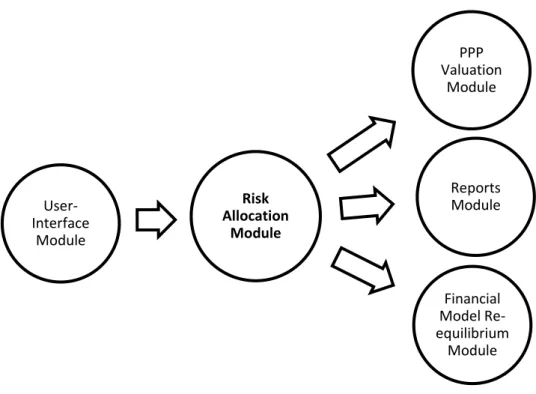
4 . 2 . 2 The Risk Allocation Module ... 53
4 . 2 . 3 The PPP Valuation Module ... 57
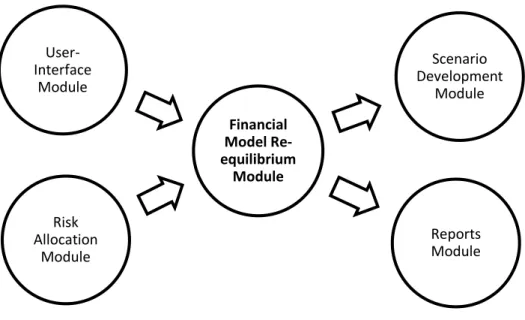
4 . 2 . 4 The Financial Model Re-equilibrium Module ... 59
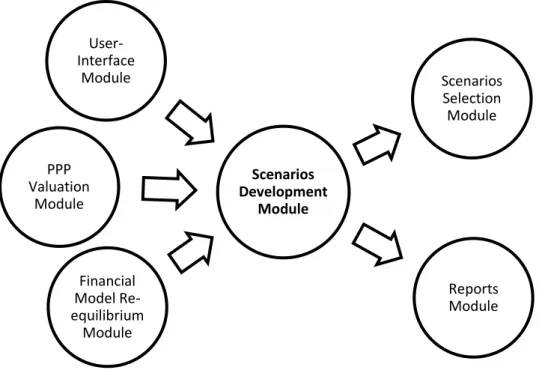
4 . 2 . 5 The Scenarios Development Module ... 61
4 . 2 . 6 The Scenarios Selection Module ... 64
4 . 2 . 7 The Reports Module ... 67
4 . 2 . 8 The Sensitivity Analysis Module ... 68
Chapter 5 : Results Analysis, Verification and Validation ... 70
5 . 1 The Waste Water Treatment Plant (Case Study) ... 70
5 . 2 Results Analysis ... 72
5 . 2 . 1 The User-Interface Module ... 72
5 . 2 . 2 The Risk Allocation Module ... 75
5 . 2 . 3 The PPP Valuation Module ... 77
5 . 2 . 4 The Financial Model Re-equilibrium Module ... 80
5 . 2 . 5 The Scenarios Development Module ... 84
5 . 2 . 6 The Scenarios Selection Module ... 89
5 . 2 . 7 The Reports Module ... 95
5 . 2 . 8 The Sensitivity Analysis Module ... 102
vii
Chapter 6 : Conclusion... 111
6 . 1 Overview and Contributions ... 111
6 . 2 Limitations ... 112
References ... 114
viii
LIST OF FIGURES
Figure 1: Private Sector Involvement (Kwak et al, 2009) ... 8
Figure 2: Value for Money (VFM) of PPP (Skanska, 2004) ... 11
Figure 3: PPP Project Life Cycle (Public Private Partnership Central Unit, 2009) ... 32
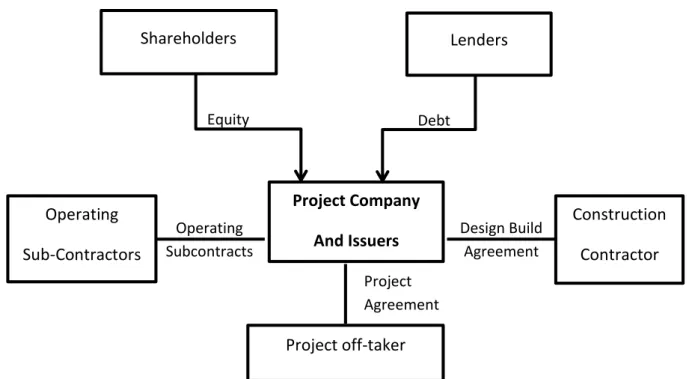
Figure 4: PPP Agreement Structure (Kriegler, 2006) ... 34
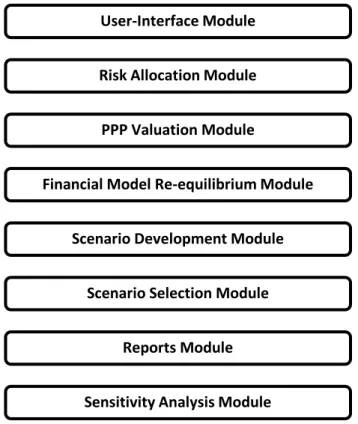
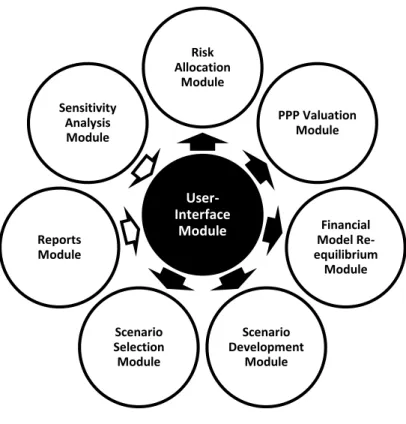
Figure 5: Proposed Framework Modules ... 49
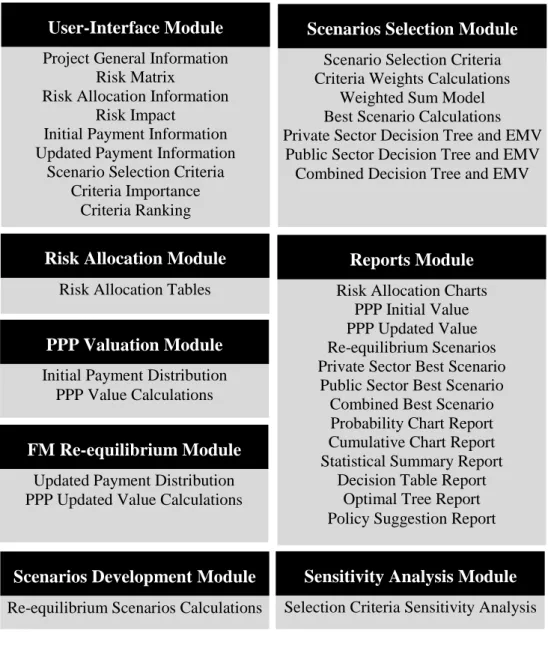
Figure 6: The Framework Sub-modules ... 50
Figure 7: Modules Interrelation ... 52
Figure 8: The Risk Allocation Module Interrelation with the Other Modules ... 54
Figure 9: The PPP Valuation Module Interrelation with the Other Modules ... 59
Figure 10: The Financial Model Re-equilibrium Module Interrelation with the Other Modules... 60
Figure 11: The Scenarios Development Module Interrelation with the Other Modules ... 61
Figure 12: The Scenarios Selection Module Interrelation with the Other Modules .... 65
Figure 13: Scenario Selection Criteria Decision Matrix (Pugh, 1991) ... 66
Figure 14: The Reports Module Interrelation with the Other Modules ... 67
Figure 15: The Sensitivity Analysis Module Interrelation with the Other Modules ... 69
Figure 16: DSS User-interface no.1 ... 73
Figure 17: DSS User-interface no.2 ... 73
Figure 18: DSS User-Interface no.2' ... 74
Figure 19: Risks Default Table ... 76
Figure 20: DSS User-interface no.3 ... 77
Figure 21: Initial Payment Distribution ... 79
Figure 22: Risk Factor Filtration... 79
Figure 23: DSS User-interface no.4 ... 81
Figure 24: DSS User-interface no.5 ... 82
Figure 25: Updated Payment Distribution ... 83
Figure 26: PPP Concession Value and Re-equilibrium Value at t = 0 ... 83
Figure 27: Re-equilibrium Scenarios Calculations ... 84
Figure 28: DSS User-interface no.6 ... 86
ix
Figure 30: The Final Re-equilibrium Scenarios ... 88
Figure 31: Re-equilibrium Criteria ... 90
Figure 32: Criteria and Sub-criteria Priorities ... 90
Figure 33: Criteria and Sub-criteria Decision Matrix ... 92
Figure 34: Sub-criteria Ranking... 93
Figure 35: Scenario Scores Calculations ... 94
Figure 36: DSS User-interface no.7 ... 95
Figure 37: Default Risk Allocation Chart ... 96
Figure 38: Private Sector Optimal Decision Tree ... 97
Figure 39: Private Sector Probability Chart ... 99
Figure 40: Private Sector Cumulative Chart ... 100
Figure 41: Private Sector Statistical Summary ... 101
Figure 42: Private Sector Policy Suggestion ... 101
Figure 43: 'Exchange Rate' Sub-criteria Rank Sensitivity Graph ... 102
Figure 44: 'Exchange Rate' Sub-criteria Rank Strategy Region ... 103
Figure 45: Private Sector Tornado Graph ... 104
Figure 46: Private Sector Spider Graph ... 105
Figure 47: Two Way Sensitivity Graph ... 106
Figure 48: Two Way Sensitivity Analysis Strategy Region ... 107
x
LIST OF TABLES
Table 1: Components of PPP Arrangements ... 8
Table 2: Percentage of Renegotiated Contracts (Marques & Berg, 2010) ... 41
Table 3: Renegotiation Outcomes (Guasch L., 2004)... 43
Table 4: Qualitative and Quantitative PPP Risks Allocation (Badran, 2013) ... 55
Table 5: Scenarios Percentage Variance ... 110
xi
LIST OF EQUATIONS
Equation 1: PPP Pricing Equation (Xu et al, 2012) ... 43
Equation 2: The Effect of PPP Risks on the Pricing Equation (Xu et al, 2012) ... 44
Equation 3: PPP Valuation Equation ... 58
Equation 4: Future Value given Present Value ... 63
Equation 5: Annuity given Present Value ... 63
1
CHAPTER 1
: INTRODUCTION
1 . 1 Public Private Partnership (PPP)
Public Private Partnership (PPP) is recognized as a mechanism that achieves cooperation between the public sectors and the private sectors. The agreement is usually referred to as the “concession agreement” while the duration of the contract is the “concession period”. The durations of PPP contracts tend to be very long compared to other conventional delivery methods. The heart of PPP agreements is that the private sector finances a PPP project on behalf of the public sector, with the project ownership retained by the public sector, retained by the private sector or transferred to the public sector at the end of the project. Moreover, PPP agreements also include design, build, operate, maintain, develop, buy, or refurbish agreements. PPP contracts have many types that are basically combinations of the previously mentioned agreements. Examples of PPP contracts are design-finance-operate (DBFO) contracts, build-operate-transfer (BOT) contracts, and build-own-operate (BOO) contracts.
The choice between the Public Private Partnership delivery method and other conventional delivery methods depends on many factors that should be looked at thoroughly. One of the main factors is the value for money (VFM). The value for money is the difference between the project value that is incurred by the private sector in case of choosing the PPP option and the project value if executed by the public sector. Although the cost of borrowing for the private sector is usually much higher than the cost of borrowing for the public sector, the PPP option, in many cases, may have a higher value for money for several reasons, such as the ability of the private sector to provide better and more efficient services than the public sector. Private sector know-how is another reason for choosing a PPP approach. A value for money study should be conducted to determine whether the PPP option is more efficient in the long run than other procurement methods.
In order to assess the value for money, the private sector is required to submit a financial model along with the bid that includes detailed calculations of all expected costs and revenues for the project. On the other hand, the public sector prepares a public sector comparator, which is a mirror of the private sector financial model but with the
2
public sector conducting the project by conventional procurement methods. If the comparison between the two models proves that the value for money is higher in the case of the private sector taking over the project, then the Public Private Partnership option is to be chosen. The risk sharing mechanism provided by the PPP method and the lower whole life cost of procuring services, which compensates for the higher cost of finance in the private sector, are the reasons for the higher value for money in the private sector option. Although the PPP option seems to be the expensive option, the efficiency and quality provided the private sector usually lead to great savings for the public sector.
1 . 2 Importance of PPP
As stated in the previous section, the public sector should only choose the PPP option over conventional procurement methods when the private sector is providing a better service with more efficiency; in other words, when the private sector is providing a higher value for money (VFM).
In addition, governments strive to enhance the economic growth of their states. This requires enhancing existing services and working on developing beneficial strategic projects, such as infrastructure projects. According to the Construction Management Association of America (CMAA), Public Private Partnership is one of the mechanisms that governments employ to engage private sector financing in the development process (The Construction Management Association of America, 2012) . The importance of the Public Private Partnership approach is that it supports and helps governments achieve their strategic plans in shorter time periods. The private financing provided through the Public Private Partnership model helps in allocating governmental funds to other strategic projects and services. This allows governments to achieve a greater number of goals in a relatively short period of time with high efficiency, which boosts the economic growth of the country.
Moreover, the Public Private Partnership contracts are based on service availability, which means that the private sector is not to be paid unless the service is being provided to the users according to the contract specifications. In other words, the Public Private Partnership mechanism ensures that the private sector is not being paid
3
for an incomplete or insufficient service. Hence, the private sector is keen to provide the service on time and according to the contract specifications in order to collect the expected revenues as planned. This minimizes the probability of time delays and cost overruns in PPP projects tremendously. Furthermore, Public Private Partnership contracts can be of great benefit to the end users of a service. In order to maximize its revenues, the private sector usually tries to provide the service earlier in the concession period in order to increase the operation period, thereby increasing revenue.
1 . 3 Problem Statement
Despite all of the above benefits, PPP projects are very challenging in terms of attracting investors to enter the bidding process. This is due to several factors; one of which is the private sector’s fear of the long-term nature of PPP projects, which makes it extremely difficult to anticipate contingencies along the projects’ lifecycles. Due to the lengthy contract durations, the principles and bases upon which the original PPP contract was made may no longer apply; they may be simply altered or totally changed as the project evolves. A different set of conditions and situations may appear later in the project, making the need for a contract equilibrium inevitable, and with re-equilibrium comes renegotiation. During the renegotiation stage, conflicts may arise between the different stakeholders of the project. These lengthy renegotiations become full of conflicts that, in some cases, may lead to contract terminations and major losses for several parties. However, those conflicts can be avoided through a pre-agreed mechanism. Tools are needed to ease the lengthy renegotiation process. This thesis provides a tool that facilitates a renegotiation process in which the interests of all parties are considered in the final decision. This tool will help in attracting the private sector to enter PPP contracts and ensure project continuity and stability of transactions.
1 . 4 Thesis Objective
Since the PPP contract renegotiation process seems to be an inevitability, the goal of this research is to enhance and to support this process in order to make PPP contracts more favorable to investors.
4
Typically, there are four re-equilibrium scenarios that appear in a PPP contract: increasing the service charges, increasing the concession period, paying a lump sum amount to the private sector, or a combination of any of the above. The aim of those scenarios is to maintain the contractual internal rate of return of the private sector fixed. In order to enhance and to support the renegotiation process and to achieve the thesis goal, the research objective is to develop a tool that provides a clear method of selection from the common four re-equilibrium scenarios. This tool is a Decision Support System model which ensures that the decision is unbiased and robust. In other words, it increases transparency and stability of transactions by providing a pre-agreed mechanism which enhances mutual trust between the PPP parties.
The decision to choose from among the above scenarios is affected by many factors that exist in both the private and the public sectors. In order to achieve the thesis objective and ensure that the optimum decision is taken, a Decision Support System (DSS) is developed. This DSS model contains eight modules: a User-Interface Module, a Risk Allocation Module, a PPP Valuation Module, a Financial Model Re-equilibrium Module, a Scenarios Development Module, a Scenarios Selection Module, a Reports Module, and a Sensitivity Analysis Module. The User-Interface Module serves to help non-expert users interact easily with the tool, and the Risk Allocation Module reflects the contractual allocations of the different projects risks in order to determine the portions of the risks that will be considered in the renegotiation process. The PPP Valuation Module and the Financial Model Re-equilibrium Module provide a basis for the Scenarios Development Module calculations, which the latter develops the different re-equilibrium scenarios. The Scenarios Selection Module uses the weighted sum model to calculate the weights and the ranks of a number of factors influencing the stakeholders’ decisions. The results of the DSS model are presented through the Reports Module and the Sensitivity Analysis Module.
1 . 5 Thesis Organization
This thesis is organized into six chapters. Chapter One is the introduction to Public Private Partnerships and their importance. It also includes the problem statement and the thesis goal and objective.
5
Chapter Two is a literature review of the concept of Public Private Partnerships (PPP), the different forms of PPP, the advantages and disadvantages of PPP, the different payment mechanisms, the PPP concession period, and the different PPP risks.
Chapter Three covers the current practice and the contract renegotiation. It includes the PPP lifecycle and the components of the PPP financial model. It also includes the renegotiation process and its frequency and outcomes. It also discusses the tools to facilitate the renegotiation process, such as Decision Support Systems (DSS), and examples of their applications in the PPP field.
Chapter Four presents the methodology of the research and an introduction of the framework proposed. It also explains the inputs and outputs of the eight modules of the prototype Decision Support System model.
Chapter Five evaluates the results and provides an analysis of the data obtained from the Decision Support System of PPP contracts renegotiation of PPP. It also incorporates an analysis of a case study of a wastewater treatment plant in Egypt, and the verification and validation of the suggested framework.
Finally, Chapter Six is the summary and conclusion of the research findings. It includes the contributions and the limitations of the research.
6
CHAPTER 2
: LITERATURE REVIEW
2 . 1 Evolution of the Public Private Partnership (PPP)
The Canadian Council describes Public Private Partnership (PPP) as “a cooperative venture between the public and private sectors, built on the expertise of each partner, that best meets clearly defined public needs through the appropriate allocation of resources, risks and rewards” (The Canadian Council, 2006). Public Private Partnership is, as its name denotes, a partnership between the public sector, which is usually represented in the government, and the private sector, which usually consists of a consortium of construction and operation companies and investors. In this context, the government awards a public project to the private sector in which the agreement between the government and the private sector is called a “Concession Agreement.” The government is usually referred to as the “Off-taker” while the private sector is called the “Concessionaire” (Kriegler, 2006). The contractual period of the agreement is also called the “Concession Period,” during which the Concessionaire has to fulfill his obligations under the contract. The PPP agreement may include one or more of the following components: design, build, finance, operate, maintain, own, transfer, lease, develop, buy, or refurbish (Delmon, 2010).
The first PPP project was in 1782 in France, where a water distribution project was awarded to Perrier (Grimsey & Lewis, 2002). Further cooperation between the public and the private sectors can be traced to the 1970s, represented in privatizations of many projects, especially in Europe, which continued to rise until the late 1980s (Hood, 1991). However, the term “PPP” was not used until the 1990s (Davies & Eustice, 2005). The use of PPPs began to rise in Europe, specifically in the United Kingdom, where the term “PPP” was first used in 1997. The most successful PPP programs today are found in the United Kingdom, where the value of the PPP projects until 2008 was almost 63 billion British Pounds (Demirag et al, 2010). Furthermore, PPPs continued to be used in Portugal, the Netherlands, Ireland, and many other European countries. PPPs may also be traced to the 1980s in the United States (Agyemang, 2011). As for South America, PPPs were highly evolving in Brazil and Mexico. Moreover, Africa and Asia also started using PPPs, mainly in South Africa in 2001 and in Japan (Broadbent & Laughlin, 2004).
7
Alhomadi, in his PhD dissertation entitled “Public-Private Partnership Implementations in Saudi Arabia Infrastructure,” published in 2012, also suggested a framework to enhance PPP practices in the Kingdom of Saudi Arabia by trying to reach market maturity and avoid political and legal barriers (Alhomadi, 2012).
It has been noticed that PPPs emerge in developed countries in earlier stages than in developing countries (Guan-Wei, 2010). This proves that the claim that PPPs are only suitable for developing countries due to the lack of funds is not accurate. Actually, PPPs can be very costly if not studied thoroughly. According to the United Nations, the reason is that the government incurs costs, such as administrative and transaction costs, in order to prepare bids, negotiate the contract terms, manage the PPP contract along the life of the project, and provide monitoring (The United Nations, 2011). In addition, the cost of borrowing for the private sector is much higher than for the public sector.
Moreover, Viegas, in his paper entitled “Questioning the Need for Full Amortization in PPP Contracts for Transport Infrastructure,” claims that, in most cases, PPP contracts have a relatively short concession period to reach full amortization, which also leads to an increase of transaction costs (Viegas, 2010). To summarize, the public sector should only choose the PPP option when the value for money is proven to be higher; for instance, if the private sector provides better control and monitoring, more advanced operation, or a higher level of know-how.
2 . 2 Forms of PPP
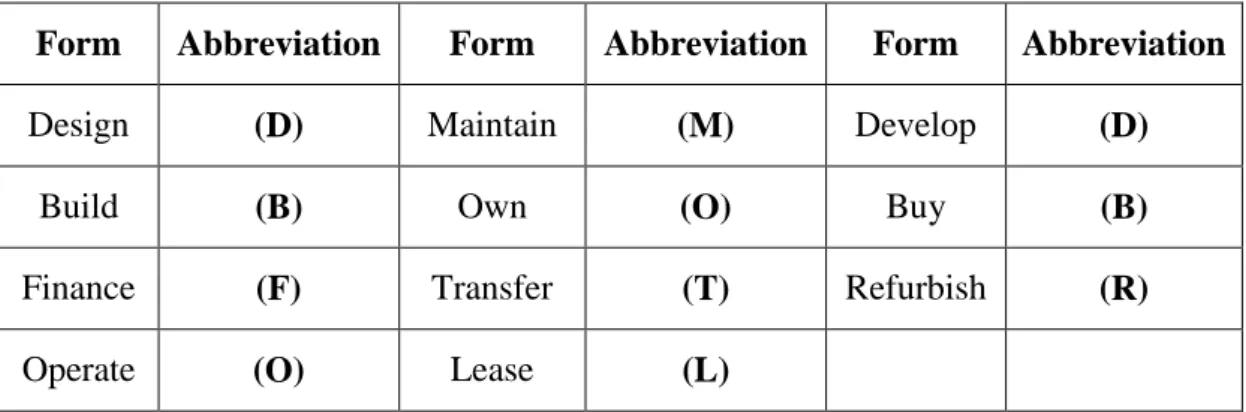
As mentioned above, PPP arrangement may include one or more of the components in Table 1. PPP contracts include one or more of the following components: design, build, finance, operate, maintain, own, transfer, lease, develop, buy, or refurbish. The combinations of those trades usually vary depending on the level of involvement of the private sector, the ownership status of an asset, and the source of financing. For instance, if the difference between BOT contracts and BOO contracts is the ownership of the asset (Kwak et al, 2009).
8
Table 1: Components of PPP Arrangements
Form Abbreviation Form Abbreviation Form Abbreviation
Design (D) Maintain (M) Develop (D)
Build (B) Own (O) Buy (B)
Finance (F) Transfer (T) Refurbish (R)
Operate (O) Lease (L)
PPP is a relatively new delivery method which is still developing and evolving. The five most common types of PPP are Operation-Maintenance (OM), Design-Build-Operate (DBO), Design-Build-Finance-Design-Build-Operate (DBFO), Build-Design-Build-Operate-Transfer (BOT), and Build-Own-Operate (BOO). Figure 1 explains the level of involvement of the private sector for those common types of PPP where the BOO represents the highest level of involvement of the private sector and the OM represent the lowest.
The Build Operate Transfer (BOT) is the most common among the above types; it is also referred to as Build-Transfer-Operate (BTO), Design-Build-Operate-Transfer (DBOT), Build-Refurbish-Operate-Transfer (BROT), Build-Lease-Transfer (BLT), and Turnkey (The United Nations, 2011). Build Operate Transfer (BOT) and its other forms mean that “the private sector is responsible for finance, design, construction, operation, and maintenance” (Kwak et al, 2009). It also means that the ownership rights belong to the public sector as the private sector transfers ownership at the end of the
9
project. Another type is Build Own Operate Transfer (BOOT), which during the project the ownership of the asset belongs to the private sector; however, at the end of the contract, the ownership is transferred to the public sector which can also be another name for the BOT contracts.
On the other hand, Broadbent in his paper entitled “PPPs: Nature, Development and unanswered Questions”, claims that the ownership of the asset during the execution of a BOT contracts belong to the private sector as well (Broadbent & Laughlin, 2004). Unlike BOT, Build-Own-Operate (BOO) is a PPP type in which the ownership of the asset is transferred to the private sector.
In addition, Menendez, in his report entitled “Constrains and Opportunities for PPP Transport Projects,” states that during Design-Build-Finance-Operate (DBFO) and Design-Build-Operate (DBO) contracts, the ownership of the asset remains with the public sector, which increases the level of involvement of the public sector (Menendez, 1998).
Public Finance Initiative (PFI) is another type of PPP, wherein the private sector finances the delivery of an improved specific service for the government, and ownership remains with the public sector, as well. In his paper entitled “Contract Issues and Financing in PPP/PFI,” Palmer conducts a comparison between Design-Build-Finance-Operate (DBFO) and Design-Build-Operate (DBO) contracts. The paper defines the criteria based upon which the public sector decides whether to use DBO or DBFO contracts. The criteria depend on both the nature of the project and the availability of funds in the public treasury of a country. Because of the continuous evolution of new technologies and changing customer needs, a quick response is required. Palmer recommends in such cases to avoid using the DBFO contracts, as the financing component of this contract requires additional agreements and protocols with a financing party, such as a bank. This additional link in the PPP chain would require additional approvals in order to adjust any part of the PPP process to adhere to technological changes. It would be more efficient to have fewer approvals in such cases. Moreover, Palmer states that the DBO is better than the DBFO approach provided that the government has sufficient funds to bear the project costs (Palmer, 2000).
The various types of PPPs can constitute either an opportunity or a risk for both the public and the private sectors, as each type has advantages and disadvantages that
10
may be reversed depending on the nature of the PPP project. For example, opting for a Build-Own-Operate (BOO) approach for a strategic project such as a nuclear plant could have numerous disadvantages, as the public sector would hand the ownership of such an important facility to the private sector. Hence, advantages and disadvantages of a PPP should be studied thoroughly in order to ensure its feasibility for a certain project.
2 . 3 Advantages and Disadvantages of PPP
Almost all of the other PPP advantages lead to the same conclusion: a better value for money (VFM). According to Skanska in his report entitled “European Commission Second International Workshop on PPPs,” the Net Present Value (NPV) of a public project consists of the whole life cost of procuring services, the cost of finance, and the cost of risks retained by the public sector, as shown in Figure 2 (Skanska, 2004). When going for the PPP option, the public sector reduces the whole life cost of procuring services and the cost of risks retained by the public sector; however, it increases the cost of finance.
According to Guan-Wei in his PhD dissertation entitled “The Bids-Evaluation Model Development and Application for PPP Transport Projects: A Project Risk Modeling Framework,” in order to make a PPP more beneficial, a balance should be obtained to ensure that the summation of all the benefits and drawbacks achieves, in the end, a positive value for the public sector: the value for money (Guan-Wei, 2010).
Herpen, in his paper entitled “Public Private Partnerships, the Advantages and Disadvantages Examined,” states that the value for money is achieved due to several factors. First, instead of the public sector bearing all the risks, the PPP approach allows the public sector to transfer many risks to the private sector; moreover, PPP contracts are output-based contracts, meaning that the private sector shall only be paid when providing the service as per the specifications required. In addition, the private sector is obliged to provide the public sector with the whole life cost of the project in advance, despite the long-term nature of the PPP project. Due to all of the above, PPPs promote cost efficiencies and provide improved service (Herpen, 2002).
11
Figure 2: Value for Money (VFM) of PPP (Skanska, 2004)
Archer and Cameron, in their paper entitled “Making Public Private Partnerships Work,” published results of a survey conducted by the National Audit Office (NAO) of the United Kingdom. The survey included 37 PPP projects. Cost overruns and time delays were estimated. The results indicated that almost 75 percent of conventional procured projects suffer from cost overruns while less than 25 percent of PPP projects suffer from cost overruns. The study also found that almost 24 percent of PPP projects suffer from time delays. The conclusion showed that PPPs are more efficient in terms of time and cost than conventional procurement methods (Archer & Cameron, 2003).
In its report entitled “An Owner’s Guide to Project Delivery Methods,” The Construction Management Association of America states that one of the main advantages of PPPs are that they delay the need of the public sector to use the funds in the public treasury. In other words, they allow the public sector to use the capital in the public treasury for other projects and minimize the need for raising taxes to meet the demands of infrastructure projects. However, the government should be very careful when planning for future spending, considering the operation costs of PPP projects after they are transferred to the government. Another advantage of PPPs are their quick responses to customers’ needs, which are usually more efficient in the case of the user-fees payment method. PPPs also provide an incentive and high potential for early
12
delivery of the service, as the private sector wants to maximize the operation period in order to obtain higher profits. Many governments nowadays encourage the PPP option, creating an atmosphere of mutual cooperation and a better work environment for the private sector investors, which is another main advantage. The PPP option provides a non-depleting source of resources to meet the public demand for new services and infrastructure projects (The Construction Management Association of America, 2012). The value for money (VFM) can be a great advantage of PPPs, as shown above; however, if not studied thoroughly, it can be also a major disadvantage if the conventional procurement methods become more efficient. PPPs have many additional costs that the public sector must bear, such as tendering, administration and transaction costs. Moreover, poor drafting of contract terms can lead to renegotiation, resulting in the private sector being overpaid for the service. Again, the cost of borrowing for the private sector is much higher than for the Public Sector, which also should be weighed against the other gains of PPPs.
Katz, in his paper entitled “Financing Infrastructure Projects: Public Private Partnerships (PPPs),” states that due to the length of PPP contracts, such contracts are usually prone to renegotiation as a result of various unexpected contingencies that might occur along the project lifecycle. In addition, it is very difficult to control the performance of the private sector and its quick response to growing demand, especially when the private sector is paid by the government rather than the user fees method. This may lead to political issues due to the dissatisfaction of the service users. A PPP contract may lose efficiency with time due to the fact that the project cannot be re-tendered, which diminishes competition and the incentive to provide a better service (Katz, 2006). In his report entitled “Granting Renegotiation Infrastructure Concessions: Doing It Right”, Guasch states that the aim of PPPs is to encourage better private sector quality and performance for the benefit of users. In the long run, the private sector records efficiency gains that should be passed to the users in the form of lower tariffs. However, it has been shown in different studies that these efficiency gains have a weak correlation with tariffs and usually reflect on a minor portion of them. According to Guasch, the efficiency gains are reflected only in 1 percent or less of the tariff value. In some cases, the government chooses to obtain those efficiency gains indirectly by increasing the taxes (Guasch L. , 2004).
13
In summary, the idea of a PPP is to combine the expertise and resources of the public and the private sectors in order to reach efficiency and value for money (VFM), yet the above disadvantages along with insufficient feasibility studies and poor decisions can turn a PPP from an advantageous method of delivering services to the public sector into leading to undesired results.
2 . 4 PPP Payment Mechanisms
Payments in PPP contracts are made based on the service availability, or what is called “verifiable outcomes,” and are not paid against the cost of materials or the inputs of the process like other conventional contracts. In PPP project types where the private sector performs the construction agreement, it will not be paid until the service becomes available. Sometimes third parties are used to measure the output for the purpose of the payment. The public sector has to be very careful to define clear tools to measure the performance of PPP projects, especially if the output service is not as easy to quantify or verify. Surveys may be conducted to measure the performance of a project (Noble, 2006).
2 . 4 . 1 User Charges
This mechanism is used when the private sector is bearing the demand risk and, therefore, is collecting the payments or revenues from the users directly, as in the case of highways, bridges, or tunnel tolls. In determining the appropriate user charges, the public sector should apply tariffs in a manner that ensures the project will earn sufficient revenues to guarantee the bankability of the project. Sometimes it is necessary for the public sector to provide some help to the private sector to maintain the bankability of the project, such as providing a share of the capital expenditures (Capex) or grants. Another method is to provide revenue support, which is a way to support the private sector in cases of low demand during certain periods. Other governments may help with the debt guarantees in case of a major drop in demand that prevents the private sector from paying the debt at some stage (Noble, 2006).
In his paper “Contractual Structures and Risk Allocation and Mitigation in the Context of Public Private Partnerships in the Health Sector,” Stemmer concluded that
14
the public sector has to be very careful when providing subvention, as fixed subventions are not recommended. In some cases, subventions decrease the performance of the private sector as it will transfer some of the demand risks back to the public sector. Hence, subventions should always be linked to the performance of the private sector. In some cases, the public sector may try to limit private sector profits when it is proven that the revenues are exceeding a certain boundary. One of the techniques of limiting the revenues is sharing surplus revenue, especially if the public sector is providing subventions. Another technique is capping revenues, but this may limit the private sector from enhancing the service and attracting more users (Stemmer, 2008).
2 . 4 . 2 Usage Payment
The payment in this case is provided by the public sector itself to the private sector for projects where it is known that the demand is not high enough to cover the debt and provide sufficient revenues to the private sector. In order to do that, a measurement tool has to be agreed upon between the two parties to measure the performance. If performance measures are not linked to the payment, the demand risk will be transferred to the public sector, which is not desirable and this makes it difficult to ensure that the private sector has an incentive to maintain the quality of the service until the end of the operation period. If the payments are made by users directly, this may be shown as a measure of the quality of the service itself. Therefore, if the payment is made by the government, the government has to take all necessary precautions to ensure that the service is delivered in a proper way, as mentioned above (Noble, 2006).
2 . 4 . 3 Availability Payment
The contract should mention clearly the definition of the service availability in order for the public sector to start paying the private sector for the service. Deductions are made in case of service unavailability. In addition, in some contracts it is stated that if within a certain period the private sector is able to rectify the service availability, minor or no deductions shall be applied. On the contrary, a provision in the contract is added for bonuses in case the private sector exceeds or enhances the performance level agreed upon with the public sector.
15
Sharma, in his PhD dissertation entitled “Design of Availability Payment Mechanism for Public Private Partnerships,” developed a model that helps with designing availability payment for PPP contracts. In such contracts, the public sector usually defines an upper limit to the availability payment. Sharma’s model calculates this upper limit, which guarantees that the public sector achieves its cost saving target and, at the same time, assures the re-equilibrium of the financial state of the private sector. The model also considers the different uncertainties and the financial state of the private sector (Sharma, 2012).
2 . 4 . 4 Monitoring and Control of Unplanned Payments in PPP Projects
In order to apply the above, the private sector has to introduce a quality management system to the project while the public sector shall review and monitor this system in order to ensure the service availability and performance. As this is the case in many countries, government officials may not be qualified or motivated enough to apply such monitoring systems; hence, it is recommended to use an external organization to perform the monitoring tasks for the public sector. This external organization shall be paid by the public sector to avoid any conflict of interest that could arise if it is paid by the private sector.
Spagnolo et al, in the report entitled “Contract Design in Public-Private
Partnerships,” states that in some projects, it is allowed for part of the facility to be rented to a third party, which will constitute secondary revenue for the private sector. If this has been accounted for in the bid price, then the private sector will earn such revenue. However, if this is not the case, then the revenue shall be shared between the public and the private sectors. Another source of unplanned revenue are price variations to protect the private sector from bearing the risk of cost overruns, which prevent the price from maximizing as a result of a huge mark up to account for such contingency. In any case, the service charge should always be adjusted to ensure that it will cover the financial obligations of the private sector. The contract has to state which “price index” will be used when calculating the inflation changes; moreover, it should define the “proportion of the tariff” or the part of the unitary payment to be affected by the inflation changes. On the other hand, the public sector may require a provision in the contract to protect itself when market prices decrease. (Spagnolo et al, 2007).
16 2 . 5 PPP Concession Period
As it is important to design the contract to be flexible enough to absorb changes and modifications in the project, as well as allow for an extension in the concession period to absorb the effects of such changes.
Meunier and Quinet, in their paper entitled “Tips and Pitfalls in PPP Transport Projects” stated that the contract duration should be designed very carefully in order to avoid unnecessary long concession periods, which constitute a greater risk for the private sector to forecast the future demand versus cost. In the case of a unitary payment mechanism, when determining the contract duration, it has to be connected with the amount of investment by the private sector and the unitary payments versus the residual value of the project assets. For example, if project assets will be given to the private sector after the completion of the project, then the duration of the contract should be relatively shorter in order to account for the residual value of the asset. In the case of a user charges payment mechanism, the contract duration is greatly connected with the amount of revenues expected along the project life. For contracts in which the cost of the projects depends on the condition of the assets and cannot be determined at the contract design stage, it is recommended to lengthen the contract duration to encourage the private sector to take on the project. However, in some countries there exist rules and regulations to limit the contract durations to certain number of years; for instance, in Chile, as well as Egypt, the concession period shall not exceed 30 years while in Italy it shall not exceed 50 years (Meunier & Quinet, 2010).
Albalate and Bel propose variable term contracts for PPP projects in their paper entitled “Regulating Concessions of Toll Motorways: An Empirical Study on Fixed vs. Variable Term Contracts.” Albalate and Bel encourage the use of variable term contracts over the ordinary term contracts. Variable term contracts are contracts in which the concession period is not defined by a limited number of years but by certain conditions. The type that Albalate and Bel suggest is the Least Present Value of Revenue (LPVR) or the Least Present Value of Net Revenue (LPVNR). In those contracts, the concessionaire delivers the project back to the public sector after reaching a certain discounted value of revenue. This type of contract eliminates many disadvantages of the ordinary PPP contracts and tremendously minimizes the
17
probability of renegotiation. Despite the effectiveness of variable term contracts, they are rarely used in PPP projects nowadays (Albalate & Bel, 2009).
Bel et al, in their paper entitled “Public-Private Partnerships: Infrastructure,
Transportation and Local Services,” suggested that where the market is small with a low number of competitors, it is ideal to offer long contract durations in order to encourage a competitive atmosphere rather than internal agreements between the different competitors. On the other hand, if the market is unlikely to unify and there exists a spirit of competition between the different bidders, it is better to use short-term contracts, as these encourage originality and innovation, which usually lead to cost savings and quality enhancement. Another incentive that can be used is contract renewal based on the private sector performance. The shorter the contract duration, the greater the frequency of renewal, which constitutes a larger incentive for the private sector (Bel et al, 2013).
Vassallo, in his paper entitled “Traffic Risk Mitigation in Highway Concession Projects: The Experience of Chile,” stated that the contract duration can be determined on the basis of the Least Present Value of Revenue (LPVR). In this case, when the LPVR is reached, the contract expires automatically. He concluded that some bidding options, such as the Minimum Income Guarantee (MIG) and the Revenue Distribution Mechanism (RDM) as well as the Least Present Value of Revenue (LPVR), decrease the probability of renegotiation (Vassallo, 2006).
In his PhD dissertation entitled “A Real Options Model for the Financial Valuation of Infrastructure Systems under Uncertainty,” Kashani developed a model that estimates the value of the above measures. In his model, he was able to estimate a value for the Minimum Revenue Guarantee (MRG), or a price cap to be defined by the public sector. Kashani's measures took the demand risk into consideration and used Monte Carlo simulation with the aid of stochastic processes to develop his model (Kashani, 2012).
Shen et al, in their paper entitled “Alternative Concession Model for Build
Operate Transfer Contract Projects,” produced a model that can give an estimate of the optimum concession period in such contracts. Their model balances both the investor and the government interests, which makes this type of contract more efficient and appealing (Shen et al, 2002). Shen and Wu improved the model in their paper titled
18
“Risk Concession Model for Build/Operate/Transfer Contract Projects.” In this model, they focused on different risks and their effects on the concession period. An investor has to account for the risks that may cause any delay or cost overrun to the project and increase the concession period to account for those risks. They used a hypothetical case to apply the project, which can be very misleading in terms of adjusting the variables to get the desired results. Because cash flows of a project cannot be a deterministic value, Shen et al used Monte Carlo simulation to model the effect of the different risks on the project cash flow (Shen & Wu, 2005).
In “The Cost of Contract Renegotiation: Evidence from the Local Public Sector,” Gagnepain et al also stress the importance of increasing the concession period in order to make sure that the investor is getting fair returns on investment. This will minimize the probability of a contract renegotiation later in the project (Gagnepain et al, 2013).
Liou and Huang, in their paper entitled “Automated Approach to Negotiations of BOT Contracts with the Consideration of Project Risk,” used the Monte Carlo simulation to produce a contractual-negotiation model. They also studied how the model would vary in case of high and low risk profiles. A conclusion was reached that a sponsor or an investor should be given a longer concession period in the case of a high risk profile project (Liou & Huang, 2008).
2 . 6 PPP Projects Risks
One of the major triggers of PPP renegotiation is the inability to predict and account for all the contingencies in the contract design stage; hence, PPP risks should be studied carefully. In their Procedure Manual, the Water Services Training Group in Ireland states that one of the main advantages of the Public Private Partnership approach is that it provides a better risk allocation approach for both the private sector and the government. Allocating risks to the party that is able to mitigate them is a good practice to help in attracting the private sector to engage in PPP projects. Transferring too many risks to the private sector may not be in favor of the PPP project and may cause the private sector to fail to meet the obligations of the contract. Moreover, some risks
19
cannot be transferred to the private sector, such as the political risks in the case that the service did not satisfy public needs (Water Services Training Group, 2012).
PPP risks have major effect on deciding whether or not to choose the PPP delivery method. Checherita, in her PhD dissertation entitled “A Macroeconomic Analysis of Investment under Public-Private Partnerships and its Policy Implications - the Case of Developing Countries,” has developed a model to help in deciding whether to invest in a PPP project or not. The conclusion of the study was that some risks, such as exchange rates and public investment risks, have a great impact on the choice to invest in a PPP. Other factors affecting the decision were the degree of experience of the different parties, the economic condition of a country, and the degree of aid provided by the public sector (Checherita C. , 2009).
2 . 6 . 1 PPP Risk Management Process
2 . 6 . 1 . 1 PPP Risk Identification
In his paper entitled “Risks and Guarantees in BOT Tender”, Tiong stated that, “Unpredictability is the kiss of death in BOT project financing” (Tiong, 1995). In order to minimize unpredictability, great concern should be given to the risk identification phase in risk management. In order for the risks to be identified, they have to be categorized either by project phases or by their type. In general, PPP project phases consists of bid phase, negotiation with preferred bidders, construction phase, operational phase, and transfer of asset phase. Risks can also be defined by their type, such as site risk, design, construction and commissioning risk, sponsor and financial risk, operating risk, market risk, network and interface risk, industrial relations risk, legislative and government policy risk, force majeure risk, asset ownership risk, etc.
Chan et al published a paper entitled “Potential Obstacles to Successful Implementation of Public-Private Partnerships in Beijing and the Hong Kong Special Administrative Region.” In their paper, Chan et al identified the main risks affecting the PPP projects in Beijing and Hong Kong and compared them with the ones in the United Kingdom. They conducted a survey to identify the top risks in the PPP field. The results of the survey were that two of the major risks in both Beijing and Hong Kong are the long period of renegotiation and the delays due to political debate. One of
20
the top risks in Beijing was also the lack of experience and sufficient skills for managing PPPs, while in Hong Kong, it was the low number of concessions reaching the award phase (Chan et al, 2010).
2 . 6 . 1 . 2 Risk Assessment
Risks have to be assessed and studied carefully in order to allocate them to the suitable party and choose a suitable risk mitigation mechanism. The likelihood of the occurrence of a risk should be calculated carefully. This is not an absolute figure, as it is affected by many factors, one of which is the question of whether this risk is to be allocated to the public or the private sector. Another factor to consider is the effect of such risk if it materializes. In other words, some risks may have a high probability of occurrence, yet they have such a minor effect on the project that they can be neglected. Fischer et al, in their paper entitled “An Integrated Risk Management System (IRMS)
for PPP Projects,” stated that the risk management process is very complicated, especially in PPP projects. They conducted a questionnaire of 53 German PPP experts to evaluate the risk management status. The result showed that industry practitioners prefer to use qualitative techniques of risk assessment over more complicated techniques, such as simulation methods. Moreover, industry experts do not rely totally on the results of risk assessment due to the lack of transparency and accuracy (Fischer
et al, 2010).
Tolani, in his PhD dissertation entitled, “An Examination of Risk Perceptions and Allocation Preferences in Public-Private Partnerships in Nigeria,” conducted a questionnaire aiming to compare the comprehension of PPP risks by the private sector, the public sector and the bank. Tolani argued that the different parties of a PPP project perceive risks differently. However, the questionnaire results indicated that apart from poor workmanship risk, the three players had the same comprehension of the different PPP risks in Nigeria. The researcher conducted the same process in China and obtained the same result except for the corruption risk. This indicates that the private sector, the public sector and the bank have almost the same risk assessment of the different PPP risks (Tolani, 2013).
21
In their paper entitled “Evaluating the Risks of Public Private Partnerships for Infrastructure Projects,” Grimsey and Lewis stress the need for assessing risks in PPP projects. Grimsey and Lewis developed a computer-aided model providing a framework for the process of evaluating the different risks from the perspective of the public sector, the private sector, and the lenders. They applied their framework to a case study of a wastewater treatment plant in Scotland and found that the objectives of the framework were achieved (Grimsey & Lewis, 2002).
On the other hand, from the lender’s point of view, many risks are considered important. Demirag et al, in their paper entitled “Risks and Financing of PPP:
Perspectives from the Financiers,” study PPP risks from the perspective of the lender. They conducted a survey sent to 109 experts in PPP debt and equity, and almost 40 percent responded. The survey results showed that the lenders usually prefer that all risks are either insured or allocated. Moreover, the survey also proved that lenders usually go for an investment environment that they are aware of or worked in before, whether by working with the same institutions, the same type of projects, or in the same region. (Demirag et al, 2011).
2 . 6 . 1 . 3 Risk Allocation
The goal of risk allocation is to reach the optimum value of the project; in other words, the lowest contract price. If risks are allocated to the private sector while the public sector is the party who can control and predict such risks, then the private sector would have a very high contingency, resulting in an unnecessary increase in the bid price. This happens first by choosing the type of contract that would help in assigning the right risks to the party that is best suited to handle such risk. “Proactive contracting” is a term used by Tieva and Junnonen in their paper entitled “Proactive Contracting in Finnish PPP Projects,” which means that the allocation criteria of PPP risks should be defined in clear terms in the PPP contract. The allocation criteria may include insurances, securities, or guarantees. An example of allocation of political risk and the necessity of obtaining governmental guarantees was used by Tieva and Junnonen (Tieva & Junnonen, 2009).
22
In the Partnership Victoria model, the government only pays the private sector for the output, which means that all risks that have to do with construction are allocated to the private sector. Given the above, governments should also take over the risks that they can handle the best in order to reach the optimal risk allocations. In the case of risks over which neither party has control, it is better to go with a shared approach in order to avoid high risk premiums if the full risk allocated to the private sector. In general, it should be allocated to the party which can best mitigate the rick. It is also recommended to relate the payment mechanism to the risk allocation, meaning that, “No service, No payment.” In other words, payments should not start before the service is delivered to users, as this is an incentive for the private sector to complete the project according to the specifications of the government (Department of Treasury and Finance, 2001).
Ke et al, in their paper entitled “Preferred Risk Allocation in China's
Public-Private Partnership,” focused on China’s Public-Private Public Partnership projects, and how the different risks should be allocated to the different contractual parties. The research was conducted with the help of a two-round Delphi survey. Based on the survey results, 37 risks were defined, and only one risk should be totally allocated to the government: the risk of ‘‘expropriation and nationalization.” Twelve risks are mostly allocated to the public sector including, ‘‘land acquisition” and ‘‘approval and permit.” Fourteen risks are shared equally between the public and the private sectors including ’‘ground/weather conditions” and ‘‘force majeure” (Ke et al, 2010).
In “VFM and Risk Allocation Models in Construction PPP Projects” Li et al
conducted a survey to gather results of both qualitative and quantitative risk allocation of PPP risks. In other words, it gathers information of the different types of PPP risks and the percentages of the risks allocated to the private sector, the public sector, or shared (Li et al, 2001).
Li et al published another paper entitled “The Allocation of Risk in PPP/PFI Construction Projects in the UK” in 2005. Li et al studied the Private Finance Initiative (PFI) which has the advantages of Private Public Partnership, yet it also transfers risk away from the public sector. A survey was conducted to define which risks should be allocated to the public sector and which to the investor. Risks were categorized into three categories: macro-level risks, such as macroeconomic risks; meso-level risks such
23
as construction and operation risks; and micro-level risks, such as coordination risks. Macro and micro-level risks are advised to be allocated to the public sector or shared with the private sector. While PPP/PFI projects usually contain meso-level risks, it is advised to allocate them to the private sector (Li et al, 2005).
Badran, in her thesis entitled “Risk Analysis and Contract Management for Public Private Partnership Projects in Egypt,” also discussed the allocation of the different PPP risks in Egypt. Badran gathered 59 risks from the academic literature and conducted a survey to define the critical risk groups. She also developed a risk matrix with the different PPP risks and their recommended allocations (Badran, 2013).
Finally, it has been advocated that PPP risk allocation is not a straightforward decision. In their paper entitled “Perceived Risk Allocation in Public-Private-Partnered (PPP) Water Supply Projects in Indonesia,” Wibowo and Mohamed conducted a survey aiming to gather experts’ opinions about the allocation of the different risks of the water services-related PPP projects. The survey included 39 project risks that were grouped in six risk categories. Thirty-four experts who hold managerial positions in the water services-related companies responded to the questionnaire. The results were totally different from one questionnaire to the other, reflecting a large variance of who should bear certain risks. The risk transfer is one of the huge advantages of PPP; however, risk allocation requires further study in order to guarantee the success of PPP projects (Wibowo & Mohamed, 2008).
2 . 6 . 1 . 4 Risk Mitigation
The goal of risk mitigation is to reduce both the probability of a risk occurrence and the effect on different contractual parties if a risk materializes. Both the private and the public sectors have different mitigation mechanisms. The private sector mechanisms include passing the risks to a third party. As an example, the concessionaire usually passes the design and construction risks to a design and build contractor. An example of another famous mechanism is insurance. The public sector mechanisms are similar to those of the private sector. The public sector usually appoints different consultants or advisors in the different fields of the project, such as legal, financial, and technical consultants, (Delmon, 2010).
24
Li et al published another paper entitled “Risk Treatment Preferences for PPP/PFI Construction Projects in the UK” in 2004. In their paper, Li et al discuss the different risk mitigation techniques. They recommend the use of risk retention and risk transfer over the use of risk avoidance and risk reduction when dealing with PPP risks (Li et al, 2004).
2 . 6 . 1 . 5 Monitoring and Review
Monitoring and reviewing is the most important phase of risk management, as it ensures the effectiveness of the plan. It is significant to ensure that the risk management plan expresses all risks that can be identified in a certain project. Moreover, the process should not only guarantee that the mitigation plans are being followed and identify critical phases and deadlines, but also ensure its effectiveness and viability along the different phases of the project. In addition, the plan should continuously update the probabilities and impacts of each risk, and calculate its mitigation costs, as well. The reviewing process should also monitor the resources that should be available at certain times to deal with the risks (Noble, 2006).
2 . 6 . 2 Common Types of PPP Risks and Their Preferred Allocations
There are many types of risks, some of which are associated with a specific project and others which apply to almost any project. Both types should be considered when preparing the risk matrix for a PPP project.
2 . 6 . 2 . 1 Statutory Risk
Examples of statutory risks are land acquisition, permits, and compensations in the case of the land not being owned by the government. The public sector is the best party to control such risk, more so than the private sector, as in most cases, the public sector will carry out such tasks before the tender stage. In some countries, such as Latin America, the public sector cannot bear the statutory risks as it lacks the know-how and the technical capabilities to be competent to carry such risks. On the other hand, the private sector has no control over such risks; it will have to increase the contingency
25
allowance, which increases the unitary charges. In this case, it is optimum for the public sector to carry statutory risk. Li et al introduce the case study of YD2nd Tunnel in Shanghai, China in their paper “The Allocation of Risk in PPP/PFI Constructions Projects in the UK.” During the mentioned project, the public sector chose to carry the statutory risk. Li et al recommend that the public sector carries the statutory risks, whether by using “in house” expertise or an external consultant, but bearing in mind that, at some point in time, the public sector should gain knowledge from such consultant in order to better handle the risks on its own (Li et al 2005).
2 . 6 . 2 . 2 Legislative Risk
Legislative risk is the risk that the government will change a law or a policy that will impact the project in a negative way. According to Dong, the government chooses to allocate this risk to the private sector. The private sector might deal with those changes in laws and minimize their effect on the project by passing the effect of such risk to the users through increasing the service charges. However, if the service is provided by the government itself, the private sector would opt to share the legislative risk with the public sector (Dong, 2010).
2 . 6 . 2 . 3 Output Specifications Risk
Iossa et al, in their report entitled “Best Practices on Contract Design in Public-Private Partnerships,” stated that the output specifications are usually defined by the public sector during the pretender stage of the project. It is recommended that the output specifications risk be allocated to the public sector to serve as a motivation for the experts in the tender committee to spend time and effort to avoid any mistakes that might occur in the output specifications and appear later during the design stage. However, this might not be sufficient motivation for the public sector officials as, simply, the public sector officials may lack the financial and technical capabilities. In addition, PPP projects last for a long period of time, and mistakes are more likely to be discovered at a later stage, at which point the government employee responsible for them may have changed jobs already. Hence, the public sector should appoint consultants or an external advisory committee to produce the specifications of the
26
output requirements in order to be held accountable and carry such risks in case of an error discovered in a later stage of the project (Iossa et al, 2007).
2 . 6 . 2 . 4 Design, Planning and Construction Risk
In most of the cases, government interference during the design and the construction stage is minimal. The design, planning, and construction risk includes the design stage, the planning stage, the construction stage, the commissioning stage, and the operation stage. All of the above should be allocated to the private sector to work as a motivation to perform its obligations and duties under the contract agreement. The private sector should plan for any event that might result in a cost or a time over-run, or in mistakes in the design. Moreover, it should plan for any potential risks that would result in unavailability or inadequacy of the service provided. In some circumstances, the risk sharing mechanism between the public and the private sectors is used, especially when dealing with renovation projects, as the government in this case would be the party who can evaluate the conditions of the existing assets and predict the probability of occurrence of relevant risks (Stemmer, 2008).
2 . 6 . 2 . 5 Demand Risk
In their paper entitled “Private Concession Contracts for Toll Roads in Spain: Analysis and Recommendations,” Baeza and Vassallo state that the demand risk is one of the main reasons for renegotiation. Demand risks can be allocated to the private sector, the public sector, or shared between the two of them depending on the nature of the demand in different PPP projects. For projects in which the users pay for the service, the demand risk is best allocated to the private sector, as it is the sector that can best quantify such risk. For projects wherein the public sector pays the private sector a unitary charge, the demand risk is best allocated to the public sector, as it is the one in control of the demand, such as in the case of prisons. Finally, in projects where the private sector depends on cash forecasts and cannot predict accurately the expected demand, such as infrastructure projects such as a road or a bridge, it is better to reach a risk sharing mechanism between the public and the private sectors (Baeza & Vassallo, 2010).