Proposing a theoretical model for IT governance and IT business alignment
Daniel Beimborn, Frank Schlosser, Tim WeitzelUniversity of Bamberg, Germany
{daniel.beimborn | frank.schlosser | tim.weitzel}@uni-bamberg.de
Abstract
This paper suggests extending the view that strateg-ic alignment is a core IT governance issue and post-ulates that considering operational alignment as well offers more precise insights into how governance me-chanisms influence business process performance.
Theoretically combining findings from IT value, IT business alignment and IT governance research, we show the tantamount role of top executive support and operational alignment from a governance perspective. Empirical data from 82 firms show, among others, that the impact of IT governance mechanisms on success is mediated by strategic and operational alignment.
1.
Introduction
Building on the suggestion by van Grembergen et al. [70] that strategic alignment is a core IT governance issue we suggest to extend this view and postulate that operational alignment is a key IT governance mechan-ism as well. We expect a closer integration of insights from alignment and from IT governance research to offer a better understanding of how IT governance mechanisms actually work in theory and practice.
Encouraged by recent insights from case studies and cross sectional surveys on the role of IT business alignment for IT value creation and especially the effectiveness of practical alignment mechanisms [10, 11, 72], we propose a theoretical model that links alignment with governance mechanisms and business process performance. More precisely, we want to eva-luate if our understanding of structures and processes associated with IT value creation is theoretically suffi-ciently sound to explain business process performance and sufficiently relevant to evaluate the effectiveness of particular governance/alignment actions.
While this study is only a first step to evaluate if our approach is worth further pursuing, we offer two main insights. First, by combining IT governance and IT business alignment arguments it is shown that oper-ational alignment, i.e. alignment at the level of daily business, is a relational governance aspect that
me-diates the impact of governance actions to success. Second, the results strongly indicate that executive support in terms of both structural (IT represented in the board) and behavioral (top management does ac-tively support and propel alignment) factors as a pri-mary governance obligation drive strategic alignment, operational alignment, and governance mechanisms. Besides, the model offers exciting avenues for further research to analyze the effectiveness of governance measures and also to maybe think about the role of alignment for compliance issues.
2.
Model Development
Recent literature on both, IT business alignment and IT governance has highlighted the important role of alignment for IT value creation. And while there is a rich and maturing research on both areas, we suggest that closer aligning the literature and theoretical con-cepts on IT governance and alignment can help to put forward clear theoretical models for IT governance and IT business alignment. This should also allow us to evaluate practical measures and approaches towards IT governance structures and processes.
In the following, we implicitly explore an analogy between IT governance (long term, strategic) and IT management (short term, daily business) on the one side and strategic (long term) and operational (short term, daily business) alignment on the other. Within IT governance research, governance mostly refers to the distribution of decision rights [51] while IT manage-ment is concerned with the daily IT operations and centers around more practical questions related to strategy implementation and mechanisms to ensure effective IT governance in daily work routines. Thus, IT management and IT governance belong together but still are distinct from one another [69]. Analogous, strategic alignment, as elaborated below, has long been discussed as the extent of harmony between business and IT plans [39, 56] while operational alignment comprises interaction, communication and cognitive linkages between IT and business personnel in daily business [9, 71]. Accordingly, de Haes & van
Grembergen have emphasized that such relational mechanisms are important for aligning IT and business [28, 29].
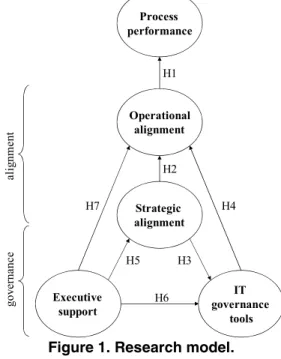
Figure 1 depicts our suggested model that is ex-plained and empirically evaluated in the following.
Executive support Strategic alignment IT governance tools Operational alignment Process performance gov er na nc e al ig nm en t H1 H7 H6 H5 H4 H3 H2
Figure 1. Research model.
2.1. IT Business Alignment and Performance
In recent years, IT business alignment has become an important explanatory factor within the IT business value debate [31, 56]. The literature has conceptualized alignment as a multi-faceted construct with different levels (alignment on the strategic level vs. alignment on the structural level [39]) and dimensions (intellec-tual vs. social dimension [56]). Since strategies are only effective when they are translated into actions [31], interaction between the business and the IT do-main has to be effective not only on the strategic level but also within IT projects and on the operational (or structural) level. Even perfectly aligned business and IT strategies need to be implemented and transformed into daily business in order to lead to the intended results [35]. Therefore, in this work we build on both levels of alignment, capturing them in distinct con-structs. While strategic alignment (i.e. congruence of IT and business strategies and plans [56]) has been focused on in many research works during the last 15 years, there is more lack of clarity and of agreement on conceptualizing alignment on the structural level. As one of the more recent works, which bring several of the more fundamental conceptualizations together, Wagner [71] has composed operational alignment by three different dimensions. Drawing on Reich and
Benbasat [55, 56], Tiwana et al. [33] and others [32, 49, 75], the first component is communication and refers to the intensity and quality of interaction patterns between business and IT [56]. The second dimension is shared domain knowledge and refers to one sides knowledge about the other sides domain, which has shown to be a critical requirement for effective colla-boration of IT and business side as well as for achiev-ing superior IT performance [5, 49, 59]. For example, if the IT staff does not have knowledge about the sup-ported business activities, products, and processes, they will not be able to provide valuable services or adapt the systems to fulfill the demands of the business [65]. The third dimension in Wagners concept is described as the cognitive dimension of the IT/business rela-tionship. Based on [33, 66] the cognitive relationship embraces concepts like trust, mutual acceptance and respect of each other´s work, which have been shown in numerous studies to be an essential factor for a suc-cessful relationship between business and IT people. Obviously, those three dimensions of operational alignment are highly interrelated. Reich and Benbasat [56] argue that shared knowledge improves communi-cation, while it is also obvious that communication leads to more shared knowledge [1, 14] and cognition [66]. Similar argumentations can be made for the rela-tionship between communication, shared knowledge, and the cognitive dimension [17, 38, 60, 66].
Summarizing, operational IT business alignment represents a linkage between the business and IT side of the firm and allows effective interaction, knowledge transfer and collaboration [74]. Operational alignment leads to the IT services orientating at the actual de-mands of the business and thus leads to higher IT ef-fectiveness. Two propositions supporting this argument can be directly drawn from Wagner [71]: (1) Align-ment leads to more effective IS support processes at the operational level [3, 40] and (2) alignment increas-es the likelihood of developing and changing informa-tion systems according to the business requirements by frequent communication between the IT unit and the business unit [71], cf. also [44, 64]. Since business units, in case of high operational alignment, are more strongly involved in IT planning and, thus, their re-quirements are better reflected in the information sys-tems, the resulting information systems both are more likely to be used [3, 45] and providing a higher level of efficiency. In turn, as a direct consequence from the IT being better adapted to the business needs and the IT being used more efficiently and effectively, the opera-tional performance of the business process (e.g., in terms of time/cost/quality) will increase.
Hypothesis 1: Operational IT Business Alignment leads to increased process performance.
By contrast, we do not propose a direct link be-tween strategic alignment and operational process performance. As [31] argues, strategies as well as stra-tegic alignment have to be brought down and imple-mented on the structural level of the firm in order to actually generate value. Strategic alignment is useless if it is not reflected by alignment on the operational level. Therefore, although strategic alignment of course has value-contributing characteristics, these will be more indirect and are mediated by other variables, one of them being operational alignment. The following section will shed light on this interrelationship.
2.2. IT Governance
Previous literature has presented different definitions of IT governance, indicating that there are various ways in assessing this concept [73]. However, some central aspects have been identified which should be incorporated when dealing with IT governance. Ac-cording to Broadbent [16], IT governance is part of the corporate governance and has to provide mechanisms for IT councils, business alignment, and implementa-tion processes. Based on this, van Grembergen (2000) defines IT governance as "the organizational capacity to control the formulation and implementation of IT strategy and guide to proper direction for the purpose of achieving competitive advantages for the corpora-tion" [68]. Since our research has a focus on IT busi-ness alignment, especially on how alignment on the operational level can leverage the impact of gover-nance mechanisms on process performance, we lean on this definition and do not include aspects like policies and procedures, which is also in line with [73]. Van
Grembergen et al. referred to them as IT governance structures, processes, and relational mechanisms [26] [20]. In order to achieve them, promising mechanisms have been proposed for each part [26, 49]. We build upon that and investigate executive support (as aspect of IT governance structures), distinctive governance mechanisms like partnership rewards (as mechanisms for relational IT governance mechanisms), and strateg-ic alignment (as mechanism for IT governance processes), which is in line with [26, 49]. In the follow-ing we elaborate each aspect in more detail, startfollow-ing with strategic IT business alignment.
As highlighted above, IT business alignment has been identified to be positively correlated with busi-ness process performance. What is still rather unclear is the question of how IT business alignment, in partic-ular on the operational level, can be reached. First, one has to distinguish between strategic and structural or operational alignment. Guldentops [37] distinguishes between Alignment in strategy and Alignment in
operations and points out that alignment is important in the operational level rather than only on the strategic level. Alignment on the operational level needs to be based on alignment on the strategic level. Thus, we state that an IT strategy that is documented and accu-rately aligned with the business strategy allows to clearly communicate this strategy as well as major objectives down to the IT unit and the business units. In this way, strategic IT business alignment is positive-ly correlated with operational IT business alignment.
Hypothesis 2: Alignment between business and IT strategy increases operational IT business alignment.
In addition to this direct link between strategic and operational alignment, we propose a mediating effect of strategic alignment over distinctive governance mechanisms as good alignment on the strategic level might allow for a more effective application of these mechanisms. The reason is that only when there are clear objectives and aligned IT and business strategies it is likely that, first, there are mechanisms to imple-ment these plans and strategies in daily business, and, second, these mechanisms are used in a valuable way. Our next hypothesis therefore is that better strategic IT business alignment has a positive impact on the use of alignment governance mechanisms.
Hypothesis 3: The appropriate use of alignment governance tools is driven by strategic alignment.
Since it is very unlikely that good alignment on the operational level happens by accident, it seems promis-ing to investigate the enablers which drive operational alignment. Above, we argued that alignment on the strategic level enhances alignment on the operational level. However, we assume that this link can be facili-tated by the appropriate implementation of several mechanisms, some of them identified by Wagner [71] and supported by others. It has been shown that e.g. the existence of a liaison unit that aims at improving the collaboration between business units and the IT unit can have positive effects [32, 71]. However, it is also possible that it leads to a reduced level regarding the direct communication between business and IT as it represents an additional layer within the organization. This can result in longer ways and more bureaucracy. Also, the involvement of business units into IT plan-ning has been identified to enhance the operational alignment in terms of better shared domain knowledge and cognitive relationship [26, 55, 56]. This is even more important as the process of IT planning is regu-larly mentioned to be decisive for improving alignment [54, 57]. Moreover, incentives rewarding good interac-tion between business and IT on the operainterac-tional level will lead to better operational IT business alignment [70], as it might be an enabler and accelerator for
supe-rior communication [69]. Our next hypothesis thus is as follows.
Hypothesis 4: Governance mechanisms facilitate IT business alignment on the operational level.
Extending the hypotheses stated so far, we address and include another factor into our research model which is the executive support, or top management support. According to [21] the role of top management is cru-cial for gaining firm-internal abilities and shaping the firm´s environment. Top management support is shown to be important in the literature in various ways. Teo and Ang [64] found that top management commitment to the strategic use of IT is a critical success factor for alignment. Luftman and Brier [47] identified senior executive support for IT as an enabler of strategic alignment. To make this even more effective it is key that the IT is personally represented in the executive board what also explicates the role and responsibilities as well as the decision rights of IT executives within a firm. Thus, IT governance must be driven from the highest levels within the organization [73]. The need for IT being part of the firms governance or being addressed by an distinctive IT governance arises from the fact that IT has become a key factor in supporting and sustaining the business [70]. Business executives have to deal with IT decisions in most sectors and industries and cannot simply delegate, ignore, or avoid them [52, 67, 70]. Van Grembergen et al. [70] also point out that strategic alignment is a core issue of IT governance, being a responsibility of the firm´s board. Thus, when clear leadership and guidance are present and everybody knows who is accountable for specific decisions and furthermore this is done in a way of close collaboration between business and IT, this may have positive effects on other parts of the firm, such as IT business alignment and governance mechanisms. We therefore state the following three hypotheses:
Hypothesis 5: Executive support positively influ-ences IT business alignment on the strategic level.
Hypothesis 6: The appropriate use of governance mechanisms is driven by executive support.
Hypothesis 7: Executive support increases opera-tional IT business alignment.
3.
Methodology
3.1. Approach / Data collection
As unit of analysis for this study we examined the banks business process of granting credits to small and medium sized enterprises (SME credit process). The overall survey was conducted to investigate the
influence of IS usage on process performance and to examine which factors actually lead to a more effective IS usage in order to achieve and sustain business value from IT and a competitive advantage in the corporate loans business as the relevant market. The data shows that more than 90% of all respondents see their bank within a highly competitive environment in regard of the SME credit process, indicating the relevance of the SME loans business. Moreover, more than two third of the banks (69%) perceive the design of their SME credit process to deliver a sustainable competitive advantage.
Besides the high relevance of the corporate loans business for the typical banks retail model, the SME credit process was chosen as application domain for various reasons: banking processes in general are high-ly IT reliant, Thus, IT can spend a business value, but the ubiquitousness can also lead to the opposite effect [20]. Moreover, the SME credit process does not nec-essarily force a bank to utilize a high degree of IT since loan applications can also be processed by humans. Consequently, this process shows high potential for variation in IT usage which facilitates our research.
Choosing only one industry and one business process for conducting a survey avoids heterogeneity and, thus, makes the use of several demographic con-trol variables obsolete [see 24]. The study focuses on similar IT systems, on similar business contexts, on people with comparable skills and competencies, and on firms acting in the same regulatory environment and market. We focus on the business process level and the relevant IT system because aggregation of organiza-tional measures across the firm will lead to the dilution and disguise of IT impacts [4]. Therefore, all con-structs are operationalized at a business process level. In this analysis, we particularly focus on the colla-boration of IT and business units involved in this process both on the strategic and the operational level. Which roles do superior executive support and distinc-tive governance mechanisms play for enhanced opera-tional IT business alignment and thus process perfor-mance?
Data collection was conducted in 2007 by sending a six-page questionnaire to C-level executives in the 1,500 largest US banks according to total assets. In order to ensure that the questionnaire will be addressed to the person who is in charge of the SME credit process (i.e. the Chief Credit Officer or the Chief Lending Officer), we contacted the corporate office of each bank to identify the adequate addressee, explain the objective of our survey and ask for participation. Since only the headquarters have been called, there are no bank duplicates in the overall population.
Out of the 1,500 credit process managers, 1,213 in-itially agreed to participate. We sent them the
ques-tionnaire using the individually preferred channel (e-mail, (e-mail, or fax) and resent it after four weeks to those banks who had not answered. Four to six weeks after that, the managers who still had not sent back the completed survey were called again to make sure they had received the questionnaire and to find out why they had not replied. Most of those executives who indi-cated a reason for not taking part in the survey, men-tioned lack of time or lack of interest. Those who were still willing to complete the questionnaire received it once again. Finally, we received 149 mainly completed questionnaires, representing a response rate of 12.3 % when ignoring the 287 initial declines where no ques-tionnaire was sent out. This rate is in line with other studies among firm managers (e.g. [12, 14, 71]).
All data were then entered into a data base and veri-fied by a second person based on the original docu-ments. For testing our model, we conducted a PLS analysis using smartPLS [58]. Before starting the cal-culation, all cases containing at least one missing value regarding the items used were skipped, leading to a final sample for calculation that consisted of 82 data sets.
3.2. Measurement
Next, we show how the different constructs in our research model have been operationalized. A detailed overview of all indicator questions is presented in the appendix at the end of this paper. Executive support (ES): Executive support reflects both the general IT commitment of executives, in particular those from the business area, and moreover the active support for alignment initiatives between business and IT. In our model, we also evaluate if the IT unit is personally represented in the bank´s board. Thus, the two indica-tors assessing the level of executive support count for a sufficient representation of the IT unit in the bank´s executive board, and for an dedicated top management support of interaction between business and IT. The construct executive support is one out of two constructs measured formatively in our model.
Strategic IT business alignment (SA): This con-struct is concerned with the functional integration at the strategic level. It is about the link between business and IT strategy. According to Reich and Benbasat [55], strategic IT business alignment can be seen as a process of organizational learning that brings business and IT knowledge together in order to support business objectives. For the purpose of this research, we meas-ure strategic alignment by three items: (1) alignment of IT strategy with the business strategy, (2) documenta-tion of IT strategy, and (3) familiarity of the Chief Credit Officer with the IT strategy.
Governance Mechanisms (GM): Governance Me-chanisms is the second construct to be measured for-matively. These mechanisms contain tools which help to transform the executive support and IT business alignment on the strategic level into daily business and thus enhance the IT business alignment on the opera-tional level. We address this construct by taking into account three tools, which have already been pointed out in section 2.2. First, it is important if there is a dedicated liaison unit to foster the collaboration be-tween business and IT. Second, we examined if there are explicit incentives rewarding good interaction be-tween business and IT. Third, the fact whether the back office is proactively involved into IT planning has been included.
Operational IT business alignment (OA): Since a consistent framework which allows for measuring the structural or operational dimension of IT business alignment is still missing, we focus on the three major dimensions discussed above: (1) communication, (2) shared domain knowledge, and (3) cognitive linkage (cf. section 2.1). However, we do not measure the three domains as separate constructs but consider them alto-gether as operational IT business alignment. The rea-son is, as already pointed out in section 2.1, that the three dimensions are strongly interrelated. Since these correlations are not subject to our investigations in this research, we can aggregate all three dimensions all into one reflective construct. Nevertheless, the indicators used represent each of the dimensions and are adopted from previous literature (cf. appendix). Communica-tion [56] is evaluated by the extent to which there is extensive communication between IT unit and back office, and by checking if there are regular meetings between the different parties in order to identify busi-ness process improvements. For measuring shared domain knowledge [5, 49, 59], we asked, if the IT employees are able to interpret business related prob-lems and develop solutions. Finally, cognition [33, 66] is measured by two items: (1) the level of mutual trust and respect between IT and business; (2) the fact if IT unit and business units regularly consult each other.
Process Performance (PP): Process performance displays the overall success measure in our research model. Basically process performance can be measured by time, cost, and quality [48]. We argue that process performance in the SME credit process is positively correlated with the quality level and therefore focus on quality issues. Thus, we wanted to know, if the current SME credit process configuration allows the respective bank to sustain a competitive advantage, and/or allows differentiating from the competitors. Additionally, a third and a fourth indicator captured the level of opera-tional efficiency and the excellence of the process design compared to the competitors. This approach of
considering different aspects of performance helps to more consistently reflect the real level in each bank.
4.
Analysis and Results
4.1 PLS Measurement Model
Our model was tested based on formative and ref-lective measures. While formative measures were ap-plied for the constructs executive support and gover-nance mechanisms, the other constructs (strategic IT business alignment, operational IT business alignment, process performance) were measured reflectively.
The analysis of the measurement model was carried out with respect to content validity, indicator reliabili-ty, and construct validity. Content validity was ad-dressed by deriving the indicator questions from the existing literature, which is in line with [30].
Testing the stability and statistical significance of the constructs was performed by applying the PLS bootstrap algorithm. In our case, we calculated 500 random samples. The results of both the factor loadings and the T-values are presented in table 1. Literature suggests that loadings should be above .707 [41]. All reflective measures fulfill this requirement and are significant at the .001 level, so that indicator reliability can be assumed (cf. Table 1).
Table 1. Measurement model parameters
Construct Ind. ID Loading
/Weight T-Value Executive support (ES) (formative) ES1 0.298 2.680 ES2 0.818 9.313 Strategic alignment (SA) (reflective) SA1 0.844 17.046 SA2 0.884 36.216 SA3 0.820 13.979 Governance Tools (GM) (formative) GM1 0.112 0.921 GM2 0.889 12.275 GM3 0.121 0.896 Operational
align-ment (OA) (reflec-tive) OA1 0.817 24.466 OA2 0.883 30.878 OA3 0.812 17.153 OA4 0.894 39.371 OA5 0.763 16.182 Process Performance (reflective) PP1 0.825 12.162 PP2 0.858 20.050 PP3 0.709 8.534 PP4 0.842 19.449
Further, the following tables show that the require-ments regarding construct validity are fulfilled as well. According to [62] one has to distinguish between vergent and discriminant validity. For ensuring
con-vergent validity, an AVE of above .5 [25] and a com-posite reliability of above .7 [50] is recommended. Table 2 shows that the composite reliability is larger than .8 for all (reflectively measured) constructs and that AVE is larger than .5 for all reflective constructs.
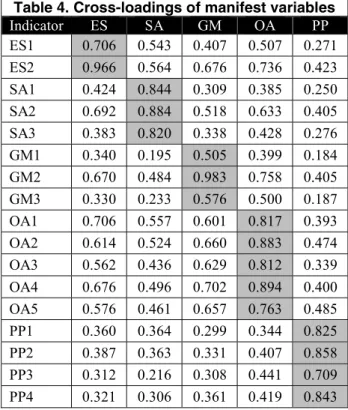
Table 2. Quality measures for reflective con-structs Composite Reliability AVE Cronbachs Alpha R Square SA 0.886 0.722 0.816 0.388 OA 0.920 0.698 0.891 0.717 PP 0.884 0.657 0.824 0.254 The following tables show furthermore that the con-structs fulfill the requirement of discriminant validity. Cross-correlations between latent variables are smaller than the squared AVE in all cases (table 3), indicating a good fit between the latent variables and their mea-surement [34]. Also, all indicators load highest on their own construct (table 4).
Table 3. Correlations of latent variables and AVE square root (shaded cells)
SA OA PP
SA 0.850
OA 0.594 0.835
PP 0.382 0.504 0.811
Table 4. Cross-loadings of manifest variables
Indicator ES SA GM OA PP ES1 0.706 0.543 0.407 0.507 0.271 ES2 0.966 0.564 0.676 0.736 0.423 SA1 0.424 0.844 0.309 0.385 0.250 SA2 0.692 0.884 0.518 0.633 0.405 SA3 0.383 0.820 0.338 0.428 0.276 GM1 0.340 0.195 0.505 0.399 0.184 GM2 0.670 0.484 0.983 0.758 0.405 GM3 0.330 0.233 0.576 0.500 0.187 OA1 0.706 0.557 0.601 0.817 0.393 OA2 0.614 0.524 0.660 0.883 0.474 OA3 0.562 0.436 0.629 0.812 0.339 OA4 0.676 0.496 0.702 0.894 0.400 OA5 0.576 0.461 0.657 0.763 0.485 PP1 0.360 0.364 0.299 0.344 0.825 PP2 0.387 0.363 0.331 0.407 0.858 PP3 0.312 0.216 0.308 0.441 0.709 PP4 0.321 0.306 0.361 0.419 0.843
Having examined the measurement model, we now present the results of the PLS analysis regarding the structural model in the following section.
4.2 Structural Model: Test of Hypotheses
Figure 2 displays an overview of the PLS calcula-tion results. As can be seen, all hypotheses except one could be supported. Executive support reveals a high and significant impact on operational IT business alignment (H7). However, this correlation is consider-ably mediated by both strategic IT business alignment and governance mechanisms. Both links (H5, H6) are very strong and significant, too. The corresponding hypotheses from strategic IT business alignment (H2) and governance mechanisms (H4) to operational IT business alignment could also be supported. Validation of H2 is not that strong and less significant, neverthe-less existent. Merely the proposed positive correlation between strategic IT business alignment and gover-nance mechanisms (H3) turned out to be insignificant. Finally, we could find evidence that operational IT business alignment is significantly correlated with process performance (H1). gov er na nce al ign m ent Executive support Strategic alignment R2= 38.8% IT governance tools R2= 46.0% Operational alignment R2= 71.7% Process performance R2= 25.4% H1+: .504*** T = 6.531 H7+: .331*** T = 3.533 H6+: .611*** T = 5.577 H5+: .623*** T = 8.970 H3: .100n.s. T = 0.874 H4+: .481*** T = 5.542 H2+: .157* T = 1.795 Significance levels: *** p <= 0.01 ** 0.01 < p <= 0.05 * 0.05 < p <= 0.1 n.s. p >= 0.1 Figure 2. PLS results.
In order to test the validity of the mediating effect via operational alignment on process performance, we tested two alternative models containing (1) additional direct links from ES, SA, GM on process performance or (2) only direct links from ES, SA, GM on process performance. In the first case, the R2 of process
per-formance increased slightly from 25.4% to 26.3% with all added direct links being insignificant. In the second model the R2 dropped down to 20.9%. Consequently, we can argue that operational alignment as a mediating factor contributes to the explanation of process perfor-mance.
5.
Conclusion, Limitations, and Further
Research
5.1. Limitations
As our model was partly derived from prior work on successful alignment practices, the theoretical scope is certainly limited and especially the opportunistic selection of the governance tools is not exhaustive and can and should be substantially extended. We still decided in favor of our approach because particularly the measurement model for alignment and governance tools has been refined and validated in a previous large survey [6, 7, 8].
The empirical evaluation might be subject to non-response and common method bias. In order to control for non-response bias, one should carefully compare the data of early and late respondents [2]. The reason is that late respondents share similarities with non-respondents [44]. Accordingly, we compared late res-ponding banks (i.e. answering after the second remind-er, N=27) to the rest (N=55), but we did not find any significant differences in answering the items used in this analysis.
According to [53], common method bias refers to the amount of variance explained by the measurement method rather than by the constructs represented by the measures. Common method bias may be existent when the predictor and the criterion variables are taken from only one source (Podsakoff et al. 2003), which is true for our survey as we merely asked one person in each bank. To sufficiently address the issue of common method bias, Podsakoff et al. [53] recommend both procedural and statistical remedies. The first ones deal with the questionnaire design prior to data collection, the latter ones with both detection and control of com-mon method bias inside the data. In our survey, proce-dural remedies have been addressed by conducting pre-tests to identify complex or ambiguous items, which then were deleted or adjusted. Furthermore, we in-cluded reverse-coded items to avoid acquiescence effects and ensured anonymity to the respondents to encounter social desirability effects. As statistical re-medy, we applied Harmans single-factor test which did not identify a single component explaining all or the majority of the overall variance extracted.
5.2. Conclusion and Further Research
Theoretically integrating key findings from IT value, IT business alignment and IT governance re-search, we show the tantamount role of executive sup-port and operational alignment from a governance perspective. Executive support directly and significant-ly drives not onsignificant-ly strategy and operational alignment but also IT governance tools, and indirectly business process performance.
To summarize, the main findings are:
• The impact of IT governance mechanisms on suc-cess is mediated by strategic and operational alignment.
• The lack of a significant relation between strategic alignment and governance mechanisms highlights the gap between strategy and strategy implementa-tion. Generally, it is quite obvious that strategic alignment is required as a foundation for effective IT governance, but our test results show that it is not necessarily a driver as well. Firms that are stra-tegically aligned still need to make substantial ef-forts in order to implement alignment on the opera-tional level as well and, thus, increase IT effective-ness and process performance. Of course, there might be many different reasons why a firm, which has high strategic alignment does not set up the ap-propriate IT governance tools, such as improper or-ganizational structures, missing budgets and capaci-ties, missing focus of top management due to com-petitive pressure and others.
• Executive support is strongly correlated with all alignment dimensions and governance mechanisms. What does that mean from a practitioners perspective? First, executive support of alignment is a strong driver of all facets of alignment and intensity of the applied governance mechanisms. An analysis of the total ef-fects of the two executive support indicators regarding operational alignment (i.e. total effect of construct * outer weight of indicator) shows that both top man-agement support for interplay between business and IT (0.320) and IT representation in the board (0.117) are of considerable importance. Second, strategic align-ment is surely an enabler of high process performance but does not necessarily translate into success. It is thus important to actively select adequate governance tools to establish operational alignment. Focusing on the total impact of the different governance tools we assessed regarding operational alignment (again meas-ured by the total effect of construct * outer weight of indicator), we found a strong impact of involving the back office proactively into IT planning (0.428), while the existence of liaison units (0.058) and incentives
rewarding good interaction (0.054) are at least mod-erately important.
Finally, we think that our results open some poten-tially relevant avenues for further research. Further strengthening the governance alignment nexus might help getting an even better understanding of how the IT resource can be used successfully and in particular how relational mechanisms like those mentioned above interact with strategic and structural properties of a firm.
Also, as we see growing amounts of regulation and stronger public reactions to how firms conduct their business, compliance issues have received increased attention. Especially from an IT governance perspec-tive, two questions are exciting to ask: How are align-ment and compliance related, i.e. to what extent can or should the dimensions of alignment be an explicit part of compliance activities? And one step further: As regulation regarding internal controls like the Sar-banes-Oxley Act in the USA affects almost all IT ac-tivities [61] this is a highly relevant issue. From an IT business value perspective, IT business alignment may be a driver but IT compliance may act as a constraint. In practice, combining the demands for compliance and value delivery of IT is widely seen as the domain of IT governance [43]. This leads to the second question: Is there a positive business value impact from compliance beside just being compliant, i.e. do improvements from better governance/alignment structures and actions would have been worth the effort even without external regulatory pressure?
References
[1] Alavi, M. and Leidner, D.E., "Review: Knowledge Management and Knowledge Management Systems: Con-ceptual Foundations and Research Issues", MIS Quarterly, 25(1), 2001, 107-136.
[2] Armstrong, J.S. and Overton, T.S., "Estimating Nonres-ponse Bias in Mail Surveys", Journal of Marketing Re-search, 14), 1977, 396-402.
[3] Avison, D., Jones, J., Powell, P., and Wilson, D., "Us-ing and Validat"Us-ing the Strategic Alignment Model", Jour-nal of Strategic Information Systems, 13(3), 2004, 223-246. [4] Barua, A., Kriebel, C.H., and Mukhopadhyay, T., "In-formation Technologies and Business Value: An Analytical and Empirical Investigation", Information Systems Re-search, 6(1), 1995, 3-23.
[5] Bassellier, G. and Benbasat, I., "Business Competence of Information Technology Professionals: Conceptual Development and Influence on IT-Business Partnerships", MIS Quarterly, 28(4), 2004, 673-694.
[6] Beimborn, D., Franke, J., Gomber, P., Wagner, H.-T., and Weitzel, T., "Die Bedeutung des Alignments von IT und Fachressourcen in Finanzprozessen: Eine empirische Untersuchung", Wirtschaftsinformatik, 48(5), 2006, 331-339.
[7] Beimborn, D., Franke, J., Wagner, H.-T., and Weitzel, T., "The impact of outsourcing on IT business alignment and IT flexibility: a survey in the German banking indus-try", Twelfth Americas Conference on Information Systems (AMCIS), Acapulco, Mexico, 2006.
[8] Beimborn, D., Franke, J., Wagner, H.-T., and Weitzel, T., "Strategy matters - The role of strategy type for IT business value", 12th Americas Conference on Information Systems (AMCIS), Acapulco, Mexico, 2006.
[9] Beimborn, D., Franke, J., Wagner, H.-T., and Weitzel, T., "The impact of operational alignment on IT flexibility - Empirical evidence from a survey in the German banking industry", 13th Americas Conference on Information Sys-tems (AMCIS), Keystone (CO), USA, 2007.
[10] Beimborn, D., Franke, J., Wagner, H.-T., and Weitzel, T., "The Influence of Alignment on the Post-Implementation Success of a Core Banking Information System: An Embedded Case Study", 40th Hawaii Interna-tional Conference on System Sciences (HICSS), Waikoloa, Big Island (HI), 2007.
[11] Beimborn, D., Hirschheim, R., Schlosser, F., Schwarz, A., and Weitzel, T., "How to Achieve IT Business Align-ment? Investigating the Role of Business Process Docu-mentation in US and German Banks", 14th Americas Conference on Information Systems (AMCIS), Toronto, 2008.
[12] Bergeron, F., Raymond, L., and Rivard, S., "Ideal patterns of strategic alignment and business performance", Information & Management, 41(8), 2004, 1003-1020. [13] Bhatt, G.D., "Managing information systems compe-tence for competitive advantage: an empirical analysis", 24th International Conference on Information Systems (ICIS), Seattle (WA), 2003.
[14] Bhatt, G.D. and Grover, V., "Types of Information Technology Capabilities and Their Role in Competitive
Advantage: An Empirical Study", Journal of Management Information Systems, 22(2), 2005, 253-277.
[15] Boynton, A.C., Zmud, R.W., and Jacobs, G.C., "The influence of IT management practice on IT use in large organizations", MIS Quarterly, 18(3), 1994, 299-318. [16] Broadbent, M., Leading Governance, Business and IT Processes: the Organizational Fabric of Business and IT Partnership, Gartner ITEP Findings, 1998.
[17] Broadbent, M. and Weill, P., "Improving business and information strategy alignment: learning from the banking industry", IBM Systems Journal, 32(1), 1993, 223-246. [18] Burn, J.M. and Szeto, C., "A Comparison of the Views of Business and IT Management on Success Factors for Strategic Alignment", Information & Management, 37(4), 2000, 197-216.
[19] Carmeli, A. and Tishler, A., "The Relationships Be-tween Intangible Organizational Elements and Organiza-tional Performance", Strategic Management Journal, 25(13), 2004, 1257-1278.
[20] Carr, N.G., "IT doesn't matter", Harvard Business Review, (May), 2003, 41-49.
[21] Castanias, R.P. and Helfat, C.E., "Managerial Re-sources and Rents", Journal of Management, 17(1), 1991, 155-171.
[22] Chan, Y.E., Huff, A.S., Barclay, D.W., and Copeland, D.G., "Business strategic orientation, information systems strategic orientation, and strategic alignment", Information Systems Research, 8(2), 1997, 125-150.
[23] Chang, J.C.-J. and King, W.R., "Measuring the per-formance of information systems: a functional scorecard", Journal of Management Information Systems, 22(1), 2005, 85-115.
[24] Chiasson, M.W. and Davidson, E., "Taking Industry Seriously in Information Systems Research", MIS Quarter-ly, 29(4), 2005, 591-605.
[25] Chin, W.W., "The partial least squares approach for structural equation modelling" in: Marcoulides, G. A. (Ed.); Modern Methods for Business Research, Lawrence Erl-baum Associates, Mahwah (NJ), U.S., 1998, 295-336. [26] Chung, S.H., Rainer, R.K., and Lewis, B.R., "The impact of information technology infrastructure flexibility on strategic alignment and applications implementation", Communications of the AIS, 11), 2003, 191-206.
[27] Cragg, P.B., King, M., and Hussin, H., "IT Alignment and Firm Performance in Small Manufacturing Firms", Journal of Strategic Information Systems, 11(2), 2002, 109-132.
[28] De Haes, S. and Van Grembergen, W., "IT Gover-nance and its Mechanisms", Information Systems Control Journal, 1), 2004.
[29] De Haes, S. and Van Grembergen, W., "Information Technology Governance Best Practices in Belgian Organi-sations", 39th Hawaii International Conference on System Sciences, Hawaii, 2006.
[30] Eisenhardt, K.M., "Building theories from case study research", Academy of Management Review, 14(4), 1989, 532-550.
[31] Feurer, R., Chaharbaghi, K., Weber, M., and Wargin, J., "Aligning Strategies, Processes, and IT: A Case Study", Information Systems Management, 17(1), 2000, 23-34. [32] Galbraith, J.R., Organization Design, Addison-Wesley, Reading (MA), 1977.
[33] Galunic, D.C. and Rodan, S., "Resource recombina-tions in the firm: knowledge structures and the potential for Schumpeterian innovation", Strategic Management Jour-nal, 19(12), 1998, 1193-1201.
[34] Gefen, D., Straub, D.W., and Boudreau, M., "Structur-al Equation Modeling and Regression: Guidelines for Re-search Practice", Communications of the AIS, 4(7), 2000. [35] Gordon, J.R. and Gordon, S.R., "Structuring the Inte-raction between IT and Business Units: Prototypes for Service Delivery", Information Systems Management, 17(1), 2000, 7-16.
[36] Griffiths, G.H. and Finlay, P.N., "IS-enabled sustaina-ble competitive advantage in financial services, retailing and manufacturing", Journal of Strategic Information Systems, 13(1), 2004, 29-59.
[37] Guldentops, E., "IT Governance: Part and Parcel of Corporate Governance", CIO Summit, European Financial Management & Market Conference, Brussels, 2002. [38] Hansen, M.T., "The search-transfer problem: the role of weak ties in sharing knowledge across organization subunits", Administrative Science Quarterly, 44(1), 1999, 82-111.
[39] Henderson, B.D. and Venkatraman, N., "Strategic alignment: leveraging information technology for trans-forming organizations", IBM Systems Journal, 32(1), 1993, 4-16.
[40] Holsapple, C.W. and Luo, W., "A Framework for Studying Computer Support of Organizational Infrastruc-ture", Information & Management, 31(1), 1996, 13-24. [41] Hulland, J., "Use of Partial Least Squares (PLS) in strategic management research. A review of four recent studies", Strategic Management Journal, 20(2), 1999, 195-204.
[42] Hult, G.T.M., Ketchen Jr., D.J., and Nichols Jr., E.L., "An Examination of Cultural Competitiveness and Order Fulfillment Cycle Time within Supply Chains", Academy of management Journal, 45(3), 2002, 577-586.
[43] Institute, I.G., Board Briefing on IT Governance, IT Govnernace Institute, Rolling Meadows (IL), 2003. [44] Kearns, G., S. and Lederer, A.L., "The Impact of Industry Contextual Factors on IT Focus and the Use of IT for Competitive Advantage", Information & Management, 41(7), 2004, 889-919.
[45] Lederer, A.L. and Mendelow, A.L., "Coordination of information systems plans with business plans", Journal of Management Information Systems, 6(2), 1989, 5-19. [46] Luftman, J., Competing in the Information Age. Align the Stand, Oxford University Press, Oxford (MA), 2003. [47] Luftman, J. and Brier, T., "Achieving and Sustaining Business-IT Alignment", California Management Review, 42(1), 1999, 109-122.
[48] Mooney, J.G., Gurbaxani, V., and Kraemer, K.L., "A Process Oriented Framework for Assessing the Business Value of Information Technology", The DATA BASE for Advances in Information Systems, 27(2), 1996, 68-81.
[49] Nelson, K.M. and Cooprider, J.G., "The contribution of shared knowledge to IS group performance", MIS Quar-terly, 20(4), 1996, 409-432.
[50] Nunnally, J.C., Psychometric theory, McGraw Hill, New York (NY), 1978.
[51] Peterson, R., "Crafting Information Technology Go-vernance", Information Systems Management, 21(4), 2004, 7-22.
[52] Peterson, R.R., "Information Strategies and Tactics for Information Technology Governance" in: Van Grember-gen, W. (Ed.); Strategies for Information Technology Go-vernance, Idea Group Publishing, Hershey (PA), 2003, 37-80.
[53] Podsakoff, P.M., MacKenzie, S.B., Lee, J.-Y., and Podsakoff, N., "Common Method Biases in Bevioral Re-search: A Critical Review of the Literature and Recom-mended Remedies", Journal of Applied Psychology, 88(5), 2003, 879-903.
[54] Powell, T.C. and Dent-Micallef, A., "Information Technology as Competitive Advantage: The Role of Hu-man, Business, and Technology Resources", Strategic Management Journal, 18(5), 1997, 375-405.
[55] Reich, B.H. and Benbasat, I., "Measuring the linkage between business and information technology objectives", MIS Quarterly, 20(1), 1996, 55-81.
[56] Reich, B.H. and Benbasat, I., "Factors that influence the social dimension of alignment between business and information technology objectives", MIS Quarterly, 24(1), 2000, 81-113.
[57] Reich, B.H. and Kaarst-Brown, M.L., "Creating Social and Intellectual Capital through IT Career Transitions", Journal of Strategic Information Systems, 12(2), 2003, 91-109.
[58] Ringle, C.M., Wende, S., and Will, A., "SmartPLS 2.0 M3 (beta)". 2007, Hamburg.
[59] Sambamurthy, V. and Zmud, R.W., "At the Heart of Success: Organizationwide Management Competencies" in: Sauer, Christopher and Yetton, Philip (Eds.); Steps to the Future: Fresh Thinking on the Management of IT-based Organizational Transformation, Jossey-Bass Publishers, San Francisco, 1997, 143-163.
[60] Segars, A.H. and Grover, V., "Strategic Information Systems Planning Success: An Investigation of the Con-struct and Its measurement", MIS Quarterly, 22(2), 1998, 139-163.
[61] Smith, H.A. and McKeen, J.D., "Developments in Practice XXI: IT in the New World of Corporate Gover-nance Forms", Communications of the AIS, 17), 2006. [62] Straub, D.W., Boudreau, M.-C., and Gefen, D., "Vali-dation Guidelines for IS Positivist Research", Communica-tions of the AIS, 13), 2004, 380-427.
[63] Tallon, P.P., Kreamer, K.L., and Gurbaxani, V., "Ex-ecutives perception of the business value of information technology: a process-oriented approach", Journal of Man-agement Information Systems, 16(4), 2000, 145-173. [64] Teo, T.S.H. and Ang, J.S.K., "Critical Success Factors in the Alignment of IS Plans with Business Plans", Interna-tional Journal of Information Management, 19(2), 1999, 173-185.
[65] Teo, T.S.H. and King, W.R., "Integration between Business Planning and Information Systems Planning: An
Evolutionary-Contingency Perspective", Journal of Man-agement Information Systems, 14(1), 1997, 185-214. [66] Tiwana, A., Bharadwaj, A., and Sambamurthy, V., "The antecedents of information systems development capability in firms: a knowledge integration perspective", 24th International Conference on Information Systems (ICIS), Seattle (WA), USA, 2003.
[67] Van Der Zee, J.T.M. and De Jong, B., "Alignment is not Enough: Integrating Business and Information Tech-nology Management with the Balanced Business Score-card", Journal of Management Information Systems, 16(2), 1999, 137-158.
[68] Van Grembergen, W., "The Balanced Scorecard and IT Governance", Information Systems Control Journal, 2(1), 2000, 40-43.
[69] Van Grembergen, W. and De Haes, S., "Measuring and Improving IT Governance through the Balanced Score-card", Information Systems Control Journal, 2), 2005. [70] Van Grembergen, W., De Haes, S., and Guldentops, E., "Structures, Processes and Relational Mechanisms for IT Governance" in: Van Grembergen, W. (Ed.); Strategies for Information Technology Governance, Idea Group Publishing, 2004, 1-37.
[71] Wagner, H.-T., A resource-based perspective on IT business alignment and firm performance - Theoretical foundation and empirical evidence, ibidem, Stuttgart, Ger-many, 2007.
[72] Wagner, H.-T. and Weitzel, T., "IT Business Align-ment as Governance Tool for Firm-Internal Relationship Quality: A Longitudinal Case Study", 41th Hawaii Inter-national Conference on System Sciences (HICSS-41), Big Island, Hawaii, 2008.
[73] Webb, P., Pollard, C., and Ridley, G., "Attempting to Define IT Governance: Wisdom or Folly?", 39th Hawaii International Conference on System Sciences, Kauai, Ha-waii, 2006.
[74] Zahra, S.A. and George, G., "The Net-Enabled Busi-ness Innovation Cycle and the Evolution of Dynamic Ca-pabilities", Information Systems Research, 13(2), 2002, 147-150.
[75] Zmud, R.W., "Building relationships throughout the corporate entity" in: Elam, J., Ginzberg, M., Keen, P., and Zmud, R.W. (Eds.); Transforming the IT organization: thhe mission, the framework, the transition, 1988, Washington, 1988, 55-82.
Appendix
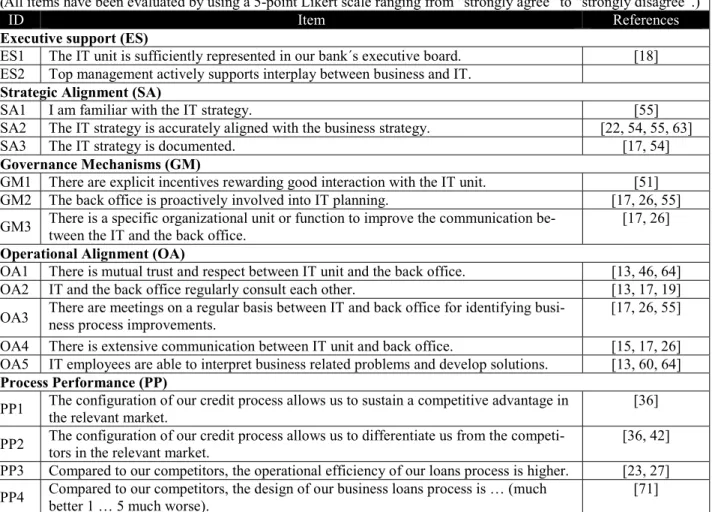
Table 5. Used indicators
(All items have been evaluated by using a 5-point Likert scale ranging from strongly agree to strongly disagree.)
ID Item References
Executive support (ES)
ES1 The IT unit is sufficiently represented in our bank´s executive board. [18] ES2 Top management actively supports interplay between business and IT.
Strategic Alignment (SA)
SA1 I am familiar with the IT strategy. [55]
SA2 The IT strategy is accurately aligned with the business strategy. [22, 54, 55, 63]
SA3 The IT strategy is documented. [17, 54]
Governance Mechanisms (GM)
GM1 There are explicit incentives rewarding good interaction with the IT unit. [51] GM2 The back office is proactively involved into IT planning. [17, 26, 55] GM3 There is a specific organizational unit or function to improve the communication be-tween the IT and the back office. [17, 26]
Operational Alignment (OA)
OA1 There is mutual trust and respect between IT unit and the back office. [13, 46, 64]
OA2 IT and the back office regularly consult each other. [13, 17, 19]
OA3 There are meetings on a regular basis between IT and back office for identifying busi-ness process improvements. [17, 26, 55] OA4 There is extensive communication between IT unit and back office. [15, 17, 26] OA5 IT employees are able to interpret business related problems and develop solutions. [13, 60, 64]
Process Performance (PP)
PP1 The configuration of our credit process allows us to sustain a competitive advantage in the relevant market. [36] PP2 The configuration of our credit process allows us to differentiate us from the competi-tors in the relevant market. [36, 42] PP3 Compared to our competitors, the operational efficiency of our loans process is higher. [23, 27] PP4 Compared to our competitors, the design of our business loans process is (much better 1 5 much worse). [71]