Electronic Theses and Dissertations
Fall 12-20-2019
Perceptions of Blended Learning in the High School Classroom
Perceptions of Blended Learning in the High School Classroom
Kelli MurphyFollow this and additional works at: https://dsc.duq.edu/etd
Part of the Adult and Continuing Education Commons, Educational Technology Commons,
Instructional Media Design Commons, Junior High, Intermediate, Middle School Education and Teaching Commons, Online and Distance Education Commons, Other Teacher Education and Professional
Development Commons, and the Secondary Education and Teaching Commons
Recommended Citation Recommended Citation
Murphy, K. (2019). Perceptions of Blended Learning in the High School Classroom (Doctoral dissertation, Duquesne University). Retrieved from https://dsc.duq.edu/etd/1864
This Immediate Access is brought to you for free and open access by Duquesne Scholarship Collection. It has been accepted for inclusion in Electronic Theses and Dissertations by an authorized administrator of Duquesne
TEACHER PERCEPTIONS OF BLENDED LEARNING IN THE HIGH SCHOOL CLASSROOM
A Dissertation
Submitted to the School of Education
Duquesne University
In partial fulfillment of the requirements for the degree of Doctor of Education
By Kelli B. Murphy
Copyright by Kelli B. Murphy
iii
TEACHER PERCEPTIONS OF BLENDED LEARNING IN THE HIGH SCHOOL CLASSROOM By Kelli B. Murphy Approved August 16, 2019 ________________________________ Dr. David D. Carbonara
Assistant Professor of Education (Committee Chair)
________________________________ Dr. Carol Parke
Associate Professor of Education (Committee Member)
________________________________ Dr. Susan Poyo
Associate Professor of Education (Committee Member)
iv
ABSTRACT
TEACHER PERCEPTIONS OF BLENDED LEARNING IN THE HIGH SCHOOL CLASSROOM
By Kelli B. Murphy
December 2019
Dissertation supervised by Dr. David D. Carbonara
As innovative technologies and accessibility increase in the K-12 environment, teachers are offered opportunities to rethink the paradigm of the instructional and learning process. They are at the forefront of instructional change. One type of change is the use of technology as an instructional strategy. Blended learning is a type of instructional strategy which incorporates both online and face-to-face instruction.
The instructional choices a K-12 teacher makes under their own volition to present new content in a technology-rich school is the focus of this study. A quantitative research study was performed in a high school with high technology accessbilitity. Teachers’ intention to use blended learning was measured using the Technology Acceptance Model and its two
constraints—perceived ease of use and perceived usefulness. Computer self-efficacy, previous online learning experiences, and teaching beliefs were used as independent variables to
v
determine if a relationship exists towards teachers’ intention to use blended learning in their high school (grades 9-12) classes. Findings indicated a relationship exists between teaching beliefs and teachers’ intention to use blended learning instructional strategies in their high school classes.
vi
ACKNOWLEDGEMENTS
My journey to complete this dissertation, like many before me, was long and arduous. There were many times when I wanted to walk away and move ahead with other facets of my life and forget this path. I allowed myself to get continually distracted and disheartened in my ability to finish. However with the support of some special people around me, they strengthened my confidence when I needed it and pushed me forward when I fell behind. I would like to
acknowledge their efforts and support on my behalf as I FINALLY completed this monumental step in my life.
Aislinn Britt Murphy is not only a great professional editor but a fantastically supportive daughter. She did not allow our relationship to get in the way of her professional opinions of my writing and when I was slacking. She will always be my pride and joy, even more when she is professionally editing my work.
Drs. Robert and Kathleen Murphy, my parents, were a wonderful sounding board as I navigated this process. As fellow educators, I drew upon their experiences in my journey.
The rest of my Murphy family, including my former in-laws (Jack and Maisie Godfrey), showed me love and endless patience. When I finally immersed myself into dissertation writing, occasionally, I canceled seeing them so I could continue to write. They always responded with understanding and the hope that I would complete writing sooner than later.
I would also like to thank my Duquesne University family. Cohort 5 (Susan, David, Juel and Bekir) and their invaluable support during some of our courses will not be forgotten. Lastly, my journey would not have been successful if I didn’t have a great mentor and chairperson. Dr. David D. Carbonara was both to me. I only wish for others to have had as great a dissertation guide and support as he was for me.
vii
Table of Contents
ABSTRACT ... iv
ACKNOWLEDGEMENTS ... vi
List of Tables ... xi
List of Figures ...xii
CHAPTER 1 ... 1
Introduction ... 1
Statement of the Problem ... 2
Conceptual Framework ... 3
Statement of Purpose ... 5
Instructional Models ... 7
Technology in the Classroom ... 9
Research Questions... 12
CHAPTER 2 ... 14
Technology-Enhanced Learning ... 14
Instructional Uses ... 16
viii
Administrative Uses ... 18
Technology Acceptance Model (Framework) ... 19
The Evolution of TAM... 20
The New TAM ... 28
Components of the New TAM ... 32
Current Study ... 34
Blended Learning... 35
Defining Blended Learning... 37
Working Blended Learning Definition ... 54
CHAPTER 3 ... 56
Introduction ... 56
Research Design ... 57
Research Questions... 58
Participants and Setting ... 59
Procedures ... 61
Data Collection ... 63
ix Data Analysis ... 65 Summary ... 67 CHAPTER 4 ... 69 Introduction ... 69 Data Collection ... 69 Participants ... 71 Results ... 73 Research Questions... 75 CHAPTER 5 ... 89 Introduction ... 89 Summary of Findings ... 92 Conclusions ... 97 Limitations ... 98 Future Research ... 98 References ... 101 APPENDIX A ... 111
x
APPENDIX B ... 118 APPENDIX C ... 122
xi
List of Tables
1 Frequency Distribution - Teaching Experience ... 72
2 Frequency Distribution Technology Confidence Level ... 73
3 Survey Questions Descriptives ... 74
4 Test for Survey Reliability ... 75
5 Pearson's Correlation ... 77
6 Summary of Mean Results ... 80
7 Summary Results of ANOVA ... 82
8 ANOVA with Independent Variable Collapsed to Three Categories ... 83
xii
List of Figures
1 Technology Acceptance Model (Original TAM) ... 4
2 Theory of Reasoned Action ... 21
3 Theory of Planned Action ... 22
4 Technology Acceptance Model (Original TAM) ... 24
5 TAM2 ... 32
6 TAM3 ... 33
7 TAM with Study Variables ... 59
8 Variable Testing of TAM Using ANOVA... 67
9 Survey Questions Mapped to TAM Framework ... 71
1
CHAPTER 1 Introduction
It is rare these days to walk by a K-12 classroom and not see some sort of technology present. The abundance of access, including to the Internet, results in the endless supply of “up-to-date, uninterrupted, limitless supply of information to the students within a short span of time” (Singh, 2013). The presence of technology shifts the paradigm of the K-12 classroom, teaching and learning. In addition, as innovations continue to evolve and increase in accessibility it challenges teachers to rethink their pedagogical practices in this technological world.
Districts look to see how the investment of technology affects student performance. There is an expectation that teachers would use technology to meet the educational needs of the 21st century learner (Ertmer & Ottenbreit-Leftwich, 2010; Kopcha, 2012; Sadaf & Johnson, 2017). “Teaching with technology requires teachers to expand their knowledge of pedagogical practices across multiple aspects of the planning, implementation, and evaluation process” (Ertmer & Ottenbreit-Leftwich, 2010, p. 260). The availability of technology does not always lead to usage. Let’s face it, the adoption of any new technology innovations would depend upon teachers’ acceptance ultimately affecting its usage and implementation.
Acceptance and then subsequently adopting new processes and/or technologies is key towards change. As districts seek to introduce new initiatives that include technologies in the hopes of addressing performance gaps, gaining teacher acceptance will be important. “In neglecting teachers’ perspectives, policymakers, intent upon transforming how teachers teach, have a serious credibility problem in mobilizing teachers to support their reform agenda” (Cuban, 2013, p. 116). Therefore, it is important to determine factors that influence teacher’s perspectives towards technology usage in order to mitigate acceptance.
2
Statement of the Problem
The attempt to find the most effective and engaging mode of learning for students with respect to individual differences, subject matter and learning objectives has attracted many K-12 teachers towards using blended learning (Neumeier, 2005; Gough, DeJong, Grundmeyer, & Baron, 2017; Kuo, Belland, Schroder, & Walker, 2014). Blended learning incorporates elements of traditional brick and mortar classroom and face-to-face instruction with the use of technology for online instruction. This change in the paradigm of instruction has become a topic of interest to many.
This new model of incorporating both instructional strategies has grown in popularity and usage at the university level (Kuo, Belland, Schroder, & Walker, 2014). There is increased interest in the K-12 levels for blended learning as well. According to the International Association for K-12 Online Learning, “K-12 blended learning is one of the fastest growing areas in the educational system today” (Kellerer, et al., 2014). Consequently, there is evidence of popularity and growth of blended learning through the increase of research.
An analysis of research trends divides into context levels—K-12, higher education, and corporate. An analysis of blended learning research topics in dissertations by Drysdale, Graham, Spring and Halverson (2013) found that 77% of research was conducted in the higher education context level. Blended learning research in K-12 context level has not kept pace in the higher education creating a gap (Halverson, Graham, Spring, & Drysdale, 2012; Drysdale, Graham, Spring, & Halverson, 2013; Spring & Graham, 2017).
In addition to a review of research based on context levels, blended learning can also be divided into various categories. Spring and Graham (2017), through research analysis, were able to categorize the most cited blended learning research into nine main categories. They found that
3
the most commonly researched blended learning categores were: learner outcomes (42.1%), instructional design (31.6%), disposition/perceptions/intentions (27.6%), exploration (21.1%), technology (21.1%), interaction (10.5%), regional (10.5%), comparison (7.9%), and other (5.3%) with some articles falling in more than one category. In addition, they concluded that the
majority of the research focused on student or learner perceptions with only 3.9% on faculty perceptions (Spring & Graham, 2017). While 27.6% of the research represents studies on intention, these studies most often were taken from the student or learner point of view.
There is a need to further explore faculty and teacher dispositions of blended learning practices. Research conducted on blended learning is most often conducted in the higher education context level, the K-12 context level has not been explored as often (Horn & Staker, 2011; Halverson, Graham, Spring, & Drysdale, 2012; Drysdale, Graham, Spring, & Halverson, 2013; Ertmer & Ottenbreit-Leftwich, 2010; Spring & Graham, 2017). In fact, the research that was included in the study of high impact publications on blended learning Halverson, Graham, Spring, & Drysdale (2012) found that the top cited publications focused on pre-service and in-service K-12 teachers in graduate courses. This study will focus on K-12 teachers who are actively teaching in a K-12 school.
Conceptual Framework
“There is an apparent gap between the amount of technology available in today’s classrooms and teachers’ use of that technology for instructional purposes” (Kopcha, 2012, p. 1109). Access does not always lead to usage. The ability to predict and mediate adoption would be a great assistance to districts who continue to purchase innovative technologies with the expectations for usage. This study will utilize the Technology Acceptance Model (TAM) to study teacher acceptance of blended learning instructional practices.
4
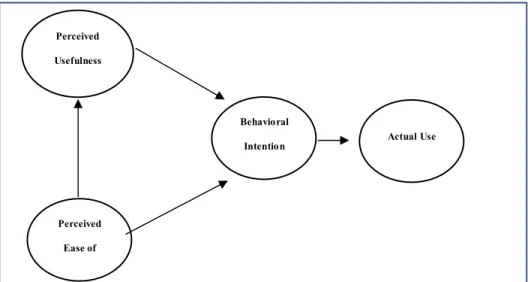
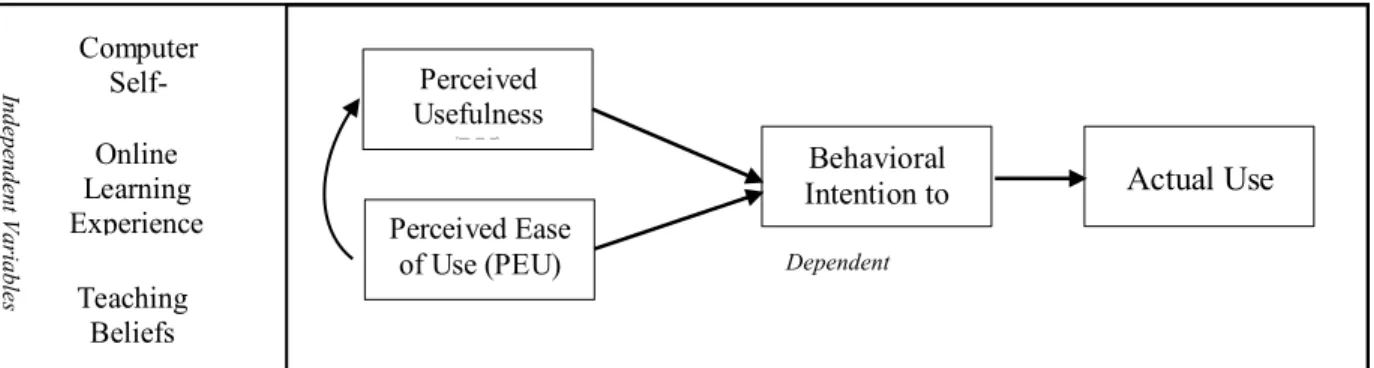
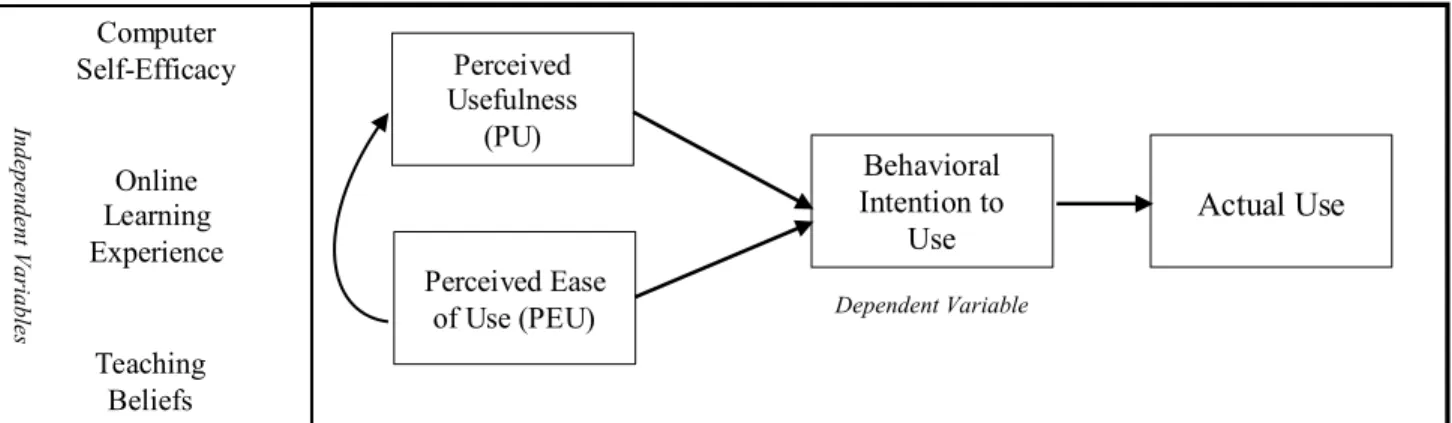
TAM was developed by Fred Davis (1989) as a better measure for predicting technology adoption and usage. The original model used two main constructs, perceived ease of use (PEU) and perceived usefulness (PU), as predictors for an individual’s behavioral intention to adopt of technology in the business environment which then is a predictor towards actual usage (see
Figure 1). The distinction between PEU and PU “is similar to the distinction between subjective decision-making performance and effort” (Davis, 1989, p. 321). In addition, “TAM posits that PU will be influenced by PEU because, other things being equal, the easier the technology is to use, the more useful it can be” (Venkatesh, 2000, p. 343). This relationship is defined in Figure 1 of the original model of TAM.
In the last two decades of TAM usage, it has proven to be an empirically sound model that is valid, reliable, and easy to administer for the study of technology adoption (Venkatesh, Davis, & Morris, 2007). The versatility of this model shows in the range of technologies that have been researched. “TAM can be used to evaluate new technologies, by measuring the behavioral intention to use; and/or (b) currently used technologies, by measuring usage behavior
Perceived Usefulness Perceived Ease of Use Behavioral Intention to Use Actual Use
Figure 1. Original Technology Acceptance Model (Davis, 1989 as cited by Venkatesh & Davis, 2000). Reprinted with permission.
5
(UB—e.g., actual use)” (Holden & Rada, 2011, p. 344). Recent research studies using TAM have included examining variables that may influence technology adoption such as: technology self-efficacy (Holden & Rada, 2011), learning management systems (Alharbi & Drew, 2014), and faculty perceptions teaching online (Wingo, Ivankova, & Moss, 2017).
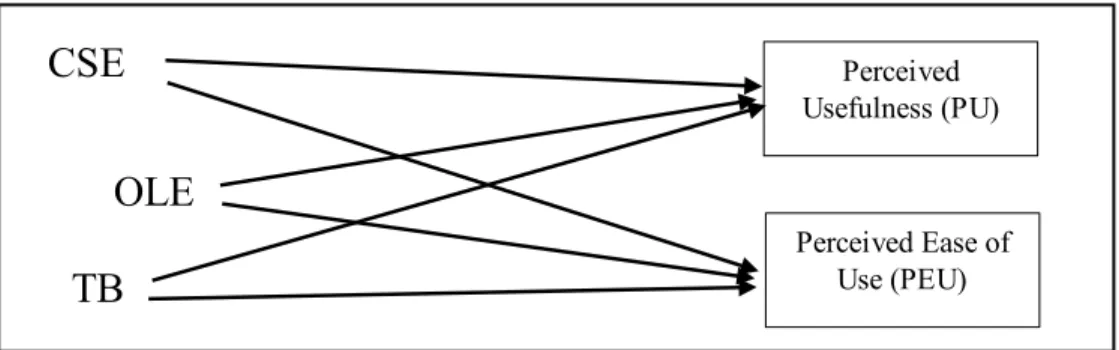
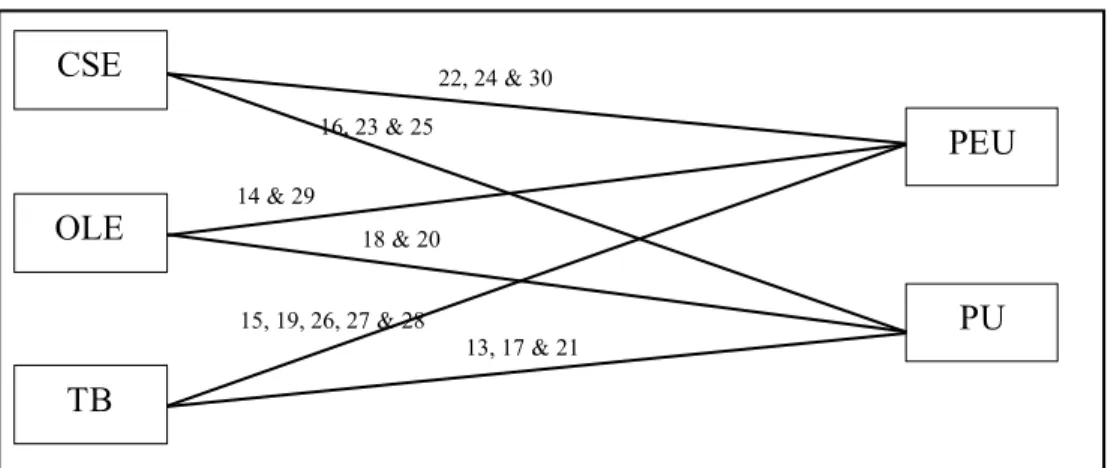
In this study, the focus will be high school teachers’ perception of using blended learning instructional practices with traditional classes. TAM will be used to examine whether teachers perceive blended learning as a relevant and useful instructional strategy as well as the level of difficulty towards developing blended learning opportunities. Their perceptions will be examined between the TAM determinants with respect to three variables—computer
self-efficacy, previous online learning experience, and teaching beliefs. Often it is the teacher in a K-12 classroom who is left with the choice to decide how technology is utilized in their
instructional practices (Cuban, 2013).
Statement of Purpose
The presence of technology offers opportunity for educators to rethink the paradigm of the teaching and learning process. Technology may be used in all, some or no parts of the instructional process. Blended learning includes the use of online learning in addition to face-to-face for teaching new content, also known as direct instruction. The focus for this study is the choice of which instructional strategy the teacher would choose to present new content. They may choose traditional pedagogical methods of a teacher-centered classroom or with technology providing instruction in addition to traditional practices creating a blended teaching strategy.
The role of technology in the instructional process may take two forms—enhances or replacement. If technology enhances instruction, the teacher provides direct instruction but may use technology towards this goal. If technology replaces direct instruction by the teacher. All
6
new content is then presented through using technology. Online learning in the K-12 classroom is a shift from traditional teacher-centered classrooms. Combining the two instructional
practices of traditional teacher-centered instruction and online learning creates a blended learning environment.
The purpose of this study is to investigate teacher acceptance of blended learning instructional practices in order to more fully understand the evolution of teaching patterns as technology becomes more imbedded in the educational process. The influence of technologies in education may influence teachers to explore alternative instructional methods to meet the needs of their students. However, the potential of technologies may be stymied by lack of acceptance of them into the learning process while still be used in other areas of education.
The influence of technology can be seen in some areas in education. However, not all processes changed by technology are readily accepted by teachers. Reluctance to use technology is on-going. According to Kirkwood and Price “teachers’ conceptions of teaching have
significant and interrelated impacts upon how they employ technology and upon students’ learning” (2013, p. 2).
Online systems designed to deliver, enhance, support and track learning for an online or distance learning course or in conjunction are available to be used with traditional classroom learning. A Learning Management System (LMS) provides a secure online environment for the teacher to design learning that is accessible 24/7 to learners with Internet access. It allows the teacher to present and manage course material, provide communication forums and deliver and track student evaluations via multimedia inputs, online discussions, live chat sessions,
assessments and assignments and the ability to push third-party applications. As a result, it has become a key tool towards online and blended learning (Al-Busaidi & Al-Shihi, 2012).
7
One of the key factors for using an LMS in education is its design towards universal accessibility. Many of today’s LMS are designed to run on any WiFi or Internet-based device such as computers, laptops, tablets and smartphones. Easy access and multi-device accessibility increase learning opportunities in and out of the physical classroom. The use of LMS as tool for pedagogical practices allows K-12 teachers more opportunities to engage the students. Content can be delivered face-to-face, by the computer with the physical presence of the teacher and in alternate locations with virtual classrooms. If K-12 teachers chose to create and deliver content using a combination of these methods, then they are creating a blending learning experience for the student.
Instructional Models
The teacher’s role in the 21st century classroom may evolve as the capabilities of technology grow. One common view of K-12 education incorporates aspects of traditional practices with modern technology. It places the teacher at the center of providing content using instructional practices with low levels of technology. This is known as teacher-centered
learning. Student desks are faced towards the teacher and class activities structured by the teacher.
In this scenario, the addition of technology in the classroom has not necessarily changed teaching from this model. It is not uncommon to see traditional teachers using technology to present content or as a tool for students to type papers—low levels of technology. The teacher often controls the technology in learning in respects to which type, how and when it is
incorporated (Florida Center for Instructional Technology at the University of South Florida, School of Education, 2018).
8
In contrast to teacher-centered is the student-centered instruction model. This model puts the student as the center of instructional activities supporting student responsibility in learning activities. The International Society for Technology in Education (ISTE) defines student-centered learning as the process to “move students from passive receivers of information to active participants in their own discovery process” (2018). This model focuses on the individuality of the student and their learning needs (International Society for Technology in Education, 2018; Tomlinson & McTighe, 2006; Beetham, 2013).
For the purposes of this study, the focal point for research is from the teacher’s
perspective and their instructional practices. The adoption of any new innovations, resources, and practices depend on a teacher’s acceptance and usage for their success. Teacher-centered instruction refers to instructional practices where technology is used to enhance the activities of teacher and reinforce learning. All instruction is directed and delivered by the teacher. This type of instruction is also referred to as traditional.
In contrast, a student-centered instruction is less centered on the role of the teacher and more of the individual learner. The teacher’s role is more of a facilatator and mentor to the student during the learning process. There may be a variety of resources used for instruction in a student-centered classroom, including technology. Teacher technology usage for this type of instruction tends to be at a higher level of integration.
The levels of teacher integration of technology are congruent with their evolving pedagogical practices. The Technology Integration Matrix (TIM) has five clearly delineated levels of technology integration by the teacher of which are helpful in this study (Florida Center for Instructional Technology at the University of South Florida, School of Education, 2018). The levels move from an entry level of usage which is reminiscent of traditional classrooms with
9
the center of instruction generates from the teacher presenting content towards a transformational learning environment where the role of the teacher has transformed to guide or mentor of
learning.
The five levels of TIM reflect the role of technology in the active learning process. The beginning level of integration, Active Entry, sees the majority of technology usage by the teacher to support delivery of information or to reinforce skills. The Adoption and Adaption levels sees the role of the teacher shift with usage of technology. The teacher moves from the center of the room presenting content and shifts towards directing student exploration and facilitating student independence in learning.
The fourth level of Infusion sees more student independence in their use of technology with the teacher as a guide. The last level of Transformation encourages students to engage in higher order activities which would not have been possible in a traditional classroom or without the use of technology. The teacher is able to guide and mentor the student in their learning as well as acting as a model for technology integration.
Technology in the Classroom
“Technological innovations have been drafted often into the task of altering teacher-centered practices” (Cuban, 2013, p. 112). However, access to technology does not guarantee usage or integration by the teacher though it is the first step towards transforming instructional strategies beyond the focus on just the technology itself (McKnight, O'Malley, Ruzic, Horsley, & Franey, 2016). A major influence in the adoption of any new process in the classroom is the teacher. “Teachers’ conceptions of teaching have significant and interrelated impacts upon how they employ technology and upon students’ learning” (Kirkwood & Price, 2013, p. 537).
10
The CoSN Horizon Report states that one of the challenges towards technology adoption in K-12 education is the need to rethink the roles of teachers stating that “educators are moving beyond dispensing information and assessing students’ knowledge, which are tasks that can be increasingly outsourced to machines” (Freeman, Adams Becker, Cummins, Davis, & Hall Giesinger, 2017, p. 24). How teachers accept technology and use it in the learning process means new models of instruction. Ertmer and Ottenbreit-Leftwich stated that “if teachers are going to adopt new beliefs about teaching and learning, they need to understand how these beliefs translate into innovative classroom practices” (2010, p. 275).
Blended education involves a combination of multiple instructional delivery modes incorporating technology and face-to-face interactions for purposes of meeting learning objectives. “Pedagogically, blended learning encourages active learning, student-centered learning, as well as peer-to-peer interactions” (Tandoh, Flis, & Blankson, 2014). In addition, it is hoped that the utilization of selected technologies such as learning management systems coupled with face-to-face learning interactions that educators use will provide to our students authentic learning experiences (Bullock, 2015).
The need to incorporate online tools and learning with traditional teaching practices cannot be overstated as educators prepare their learners for the skills, knowledge and abilities of 21st century jobs. “Teachers need to know how and why to use technology in meaningful ways in the learning process for technology integration to work” (Gorder, 2008). Technology empowers educators to meet the initiatives outlined by the Partnership for 21st Century Skills to develop good communicators, critical thinkers, good collaborators, and information and technology literate (21st Century Partnership, 2009).
11
According to Ertmer & Ottenbreit-Leftwich (2010), “professionals of the 21st century think and act differently than those of previous centuries, due at least in part to the radically different tools they use to perform their jobs.” In previous decades, schools relied heavily on books, papers and writing utensils. The priority for student and educator access to “robust and comprehensive infrastructure when and where they need it for learning” (2018) is an articulated goal of U.S. Department of Education, Office of Educational Technology. As a result, we find large district investments in WiFi infrastructure to support district and individual devices which can be used with innovative software in the learning process.
In the traditional brick and mortar classroom, technology-enhanced indicates the presence of some computer technology. It does not, however, define how the technology is used in the classroom or by whom. For example, a single computer may see more use by the teacher for purposes such as presentation of content, communications (towards educators, parents, and perhaps students), creation of learning materials and research.
The hope for the investment of classroom technologies is that an increase in the quantity of computers would translate to its integration into learning. The increase of technology would mean the availability of technology to use in teaching and learning practices. “The success of any initiatives to implement technology in an educational programme depends strongly upon the support and attitudes of teachers involved” (Teo, Lee, & Chai, 2008, p. 128).
There are expectations for student use in learning in the 1:1 laptop model in meeting 21st century skills. In addition, schools provide a variety of online learning resources for teachers to utilize with students. As technology innovations continue so do the usage of technology in many classrooms. However, whether the school mandates usage of said technology, process or
12
Teachers are in the front line of education with direct responsibility for the learners in their classroom. They influence the initiatives that directly affect the learning in their classroom. Teacher satisfaction and acceptance of new technologies, processes and how they integrate into their teaching is significant towards acceptance and subsequent usage (Gough, DeJong,
Grundmeyer, & Baron, 2017; Al-Busaidi & Al-Shihi, 2012; Means, 2010; Teo, Lee, & Chai, 2008). Consequently, there is a need to understand the perceptions of teachers as they make the choice to adopt a new technology or instructional strategy.
Research Questions
The focus of this study is to explore teachers’ perceptions of using blended learning in their high school courses. The teachers’ use blended learning for instruction will be contrasted with face-to-face instruction with technology support. During the exploration, it will be important to differentiate between use of technology as an enhancement to instruction or in a primary role of delivering instruction in their high school courses.
The study will look to study teachers who are not currently scheduled to teach online or blended courses for the school district. The choice to use blended learning is voluntary. This study will take the perspective of the teacher on the challenges of technology integration into content delivery. It will also compare teacher perceptions of blended learning based on personal characteristics (age, years of paid teaching service, years teaching in current school district, previous experience of online teaching/learning, Pennsylvania certification, role as an
administrator or a supervisor, confidence level of technology, previous online teaching/learning experience and whether they current create instruction). The specific research questions are:
RQ1: What is the relationship between computer self-efficacy and high school teachers’ intentions to use blended learning instructional practices?
13
RQ2: What is the relationship between prior experience with online learning and high school teachers’ intentions to use blended learning instructional practices?
RQ3: What is the relationship between high school teachers’ teaching beliefs and high school teachers’ intentions to use blended learning instructional practices?
RQ4: What are high school teachers’ perceptions towards blended learning instructional practices can meet their instructional objectives (perceived usefulness)?
RQ5: What are high school teachers’ perceptions towards creating blended learning instructional practices to meet their instructional objectives (perceived ease of use)?
14
CHAPTER 2
Technology-Enhanced Learning
Technology innovations have changed the dynamics of teaching and learning in the classroom. Access to powerful technologies with Internet no longer limit instruction to the teaching presenting in the physical classroom. Technology allows teachers to provide an extension to their learning beyond the four walls. Ultimately, technology can offer the teacher increased teaching environments and the learner increased learning opportunities.
“Teaching with information and communication technologies has become required practice at all levels of education, and [technology] tools are evolving and multiplying at a frantic pace” (Bhati, Mercer, Rankin, & Thomas, 2009, p. 5). Accessibility does not always lead towards the intended uses. Studies have indicated that the availability and capability of
technology does not always translate to a change in pedagogical practices in the classroom (Cuban, 2013; Means, 2010).
It may be that technology is used to supplement traditional teacher-centered pedagogy. The teacher still controls the pace and style of learning in the classroom though technology may be included in their presentation of content. This resembles traditional teaching of the 20th
century but with 21st century technologies. Technology is present in the classroom, but it is used to support teacher instruction.
In their work on blended learning, Horn and Staker (2015) define technology-rich instruction as a classroom with a variety of digital tools but where the teacher still employs traditional teacher-centered pedagogy. While the presence and availability of technology is essential towards usage, it does not always lead to innovation in teaching for learning. Efforts for integration and effectiveness “must focus on teachers (not technology); what they believe
15
comprises good instruction and good learning; how they put those beliefs into practice; and how they can be supported by the contextual, cognitive, and affective factors that exist in their school environment” (Ertmer & Ottenbreit-Leftwich, 2013, p. 180). Therefore, it is important to research teaching beliefs as a factor toward technology usage and integration.
“Teachers’ beliefs, practices and attitudes are important for understanding and improving educational processes” (Dehghayedi & Bagheri, 2018). They reflect a teacher’s pedagogical training and experiences through which decisions and actions are made. “Teachers’ conceptions of teaching have significant and interrelated impacts upon how they employ technology and upon students’ learning” (Kirkwood & Price, 2014, p. 2). In their study on teachers’ pedagogical beliefs and technology usage, Palak and Walls (2009) found that “teacher use of technology is most frequent for preparation, administration, and management purposes, but rare when it comes to facilitating student-centered pedagogy even among those teachers who work in technology-rich schools and are comfortable with technology.”
There have been many technological advances in education in the years since this study which may change teacher perceptions on how technology can be used in instruction. New technology innovations have meant new uses in education. “Although previous media
technologies generally placed children in the role of passive observers, these new technologies make content construction much more accessible to students, and research indicates that such uses of technology can have significant positive effects” (Roschelle, Pea, Hoadley, Gordin, & Means, 2000, p. 80). But it has not always led to significant usage in the instructional process by the teacher.
Continual technology innovations warrant continued research on technology acceptance to anticipate adoption. Researching the factors for technology acceptance would help transition
16
towards adoption. One factor which may influence teachers’ pedagogical beliefs may be their feelings on whether these technologies will meet their needs as an educator. Ball and Levy (2008) used three categories to describe classroom technology use—instructional, productivity, and administrative. A further exploration of each of these categories will help define the use of technology in instruction.
Instructional Uses
The goal of instruction is to provide students with opportunities for effective learning. “In effective classrooms, teachers consistently attend to at least four elements: whom they teach (students), where they teach (learning environment), what they teacher (content), and how they teach (instruction)” (Tomlinson & McTighe, 2006, p. 2). The content, resources, and pedagogies employed by the teacher contribute towards this goal. How the technology is utilized to support or to provide instruction differentiates its purpose.
The same technologies used for productivity and administrative tasks can be used by the teacher to support learning. For example, a math teacher plans to introduction a lesson on parameter and area. The teacher writes the equations for perimeter and area on the board. Then directs the students in a discussion on the differences between the two. Another choice could be that she uses technologies to illustrate the differences and complete the calculations.
The teacher has the students measure the walls of the room. In real time the teacher demonstrates the steps to solve the problem using her computer which is connected to a
multimedia projector and interactive board. She creates a quick blueprint of the classroom using Microsoft Word draw tools with gridlines turned on to resemble graph paper and demonstrates the differences between perimeter and area of the classroom. The students watch the
17
Once the teacher has completed the presentation of content, she directs the students to apply the concepts. They will use the same equations with a host of other numbers to practice their application of the concepts. The students may use a calculator or a spreadsheet using Microsoft Excel to provide quick calculations for the problems with changing values.
This is an example of a lesson enhanced or enriched by the technology available to the teacher and students in the classroom. Technology supports the presentation of content by the teacher. The new concepts are reinforced by the students as they practice calculations
individually. Other tools such as tablets and clickers may be considered instructional tools for learning as well. The main usage of instructional technologies is to support the teacher as they provide the content in a face-to-face learning modality.
Productivity Uses
Technology in the classroom may also be used as a productivity tool to prepare for learning. This type of technology usage may see technology as research tools to gather materials or to create curriculum materials to support teaching activities. Programs such as word
processing, desktop publishing, spreadsheets and presentations have been the mainstay for any organizational environment and also used in the educational environment as well. Worksheets, graphs, and essays are common outputs with use of office suite tools which may be completed during class or as an at-home assignment.
The preparation for learning is not limited to the use of technology for printed outputs. Specialized programs for such as screen casting, may also be used to create learning materials. Screen casting allows a user to create videos of movements and content from a computer screen. This type of technology allows a teacher to create content videos for self-paced learning and
18
even how-tos. Other specialty programs to create learning materials may include video and audio editing. These are all examples of productivity uses of technology for learning.
Administrative Uses
Administrative uses of technology indirectly affect student performance. Technology and the Internet have increased a teacher’s capability to effectively communicate. Teachers use computers to calculate grades, send student progress updates, communicate with students, parents and school personnel and professional peers. Technology has provided an effective tool for all to provide information and timely responses.
Student information systems maintain information on many aspects of the student. Grades, attendance, medical, disciplinary and biographical data of students are kept in this system. Teachers enter grades in the online gradebook and the student is notified immediately. Parents and students are able to keep informed of student progress though the real-time
capabilities of the electronic gradebook.
These are all examples of administrative uses of technology. These include the use of technologies to support and to evaluate learning but not that are not directly used in instructional activities. The teacher is not interacting with students and fostering learning while completing administrative tasks. They are, however, important tasks that support learning. Administrative use of technology will not be included in this research.
Function and purpose of technology is often determined not just by the technology but also by the usage. “Technology integration is not about the availability of technology, but more about the teachers’ effective use of technology that makes a difference in reforming a classroom” (Gorder, 2008, p. 65). The process to use technology not just as a support to teaching but as the provider of instruction would mean a change and shift in pedagogical practices. However,
19
change does not happen without acceptance. Therefore, it is important to isolate the factors of acceptance to mitigate the barriers of change—most specifically in instructional practices.
Technology Acceptance Model (Framework)
The major purpose of this study is to identify factors that influence teacher’s decisions to voluntarily adopt blended learning as an instructional practice to their traditional class schedule. In this study, teachers given access to a learning management system (LMS) in a 1:1 computing environment were encouraged but not mandated to incorporate it in their face-to-face courses. Professional development was provided to all teachers on the new system. They are able to incorporate new instructional strategies utilizing available technologies of laptops, internet access and learning management systems.
Teachers’ beliefs about technology and its application towards instructional delivery would influence their usage. The choice of whether they to incorporate these resources may depend on their perceptions about whether these technologies will meet their instructional needs and whether students learn from digital delivery of instruction. The technology chosen by the educational institution may have been allocated for usage in learning, but the success of its usage would remain with the teachers. Technology integration and performance would improve if the institutions could minimize the barriers for usage.
This study seeks to study teacher perceptions about the use of learning management systems towards creating blended learning opportunities. One of the most significant and popular acceptance models present in research is the Technology Acceptance Model (TAM) developed by Fred Davis for doctoral thesis in 1986 (Davis, et al,1989; Venkatesh and Davis, 2000; Venkatesh and Balla, 2008; Fatherma, Shannon, and Ross, 2015). “Numerous empirical studies have found that TAM consistently explains a substantial proportion of the variance
20
(typically about 40%) in usage intentions and behavior, and that TAM compares favorably with alternative models such as the Theory of Reasoned Action (TRA) and the Theory of Planned Behavior (TPB)” (Venkatesh & Davis, 2000, p. 186).
This research uses the extended version of TAM, also referred to as TAM3, to understand the teacher propensity to incorporate blending learning techniques in their high school courses voluntarily. TAM was developed for the purposes of developing “better measures for predicting and explaining [information technology] use” (Davis, 1989, p. 320). It was originally developed to predict technology (email) usage in the business environment. The widespread usage of TAM has included education to help predict technology adoption by teachers and students.
The Evolution of TAM
TAM’s premise is an evolution from the Theory of Reasoned Action (TRA) (Fishbein and Ajzen, 1975) and the Theory of Planned Behavior (TPB) (Ajzen, 1991) both of which focused on the cognitive self-regulation towards prediction of behavior. TRA, TPB and TAM are examples of acceptance models in social behavioral studies. “The goal of technology acceptance research is to understand what technology acceptance factors influence the behavior outcome of an individual’s choice to use (or not use) the technology, and focuses largely on the decision to adopt a technology for subsequent usage” (Buche, Davis, & Vician, 2012, p. 42). TAM was initially presented as an adaption to TRA, which is a more general social psychology model (Venkatesh, Davis, & Morris, 2007). The journey from TRA to TAM is worth further exploration as how TAM became a dominant model in technology adoption and acceptance research.
The central tenant of TRA is an individual’s intention towards completing a specific behavior. “Intentions are assumed to capture the motivational factors that influence a behavior;
21
they are indications of how hard people are willing to try, of how much of an effort they are planning to exert, in order to perform the behavior” (Ajzen, 1991, p. 181). In this model, intention is affected by the control an individual has in completing that action, beliefs about the behavior, and perceptions of socially expected behavior. These are the components in the TRA model (see Figure 2).
“The success of [TRA] in explaining behaviors depends on the degree to which a
particular behavior is under volition control (that is, the individuals can exercise a large degree of control over the behavior)” (Montano & Kasprzyk, 2015, p. 98). However, the components of TRA are less effective in predicting behavior when the participant is mandated in their behavior, less of a voluntary choice. Consequently, Ajzen (1991) updated the model by adding perceived control.
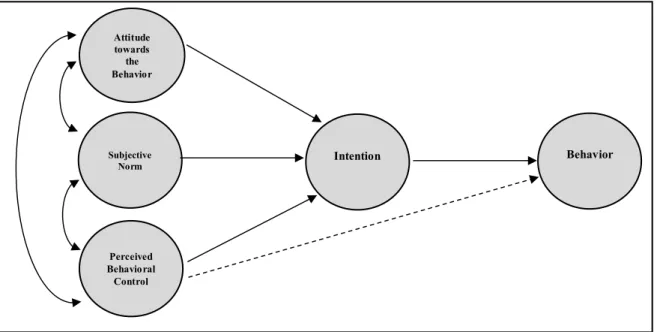
Ajzen created TPB as an extension of TRA dealing with the limitations of the models in dealing with voluntary choice. He found that choice is a factor in whether in predicting whether a person completes a behavior. TPB incorporates planned behavior into the model using the
Attitude towards the Behavior Subjective Norm Behavioral Intention Behavior
Beliefs about the outcome of the behavior
Normative beliefs about the behavior Evaluations of the outcome
Motivation to comply
Figure 2. Theory of Reasoned Action (Fishbein, 1979) was used as a model to predict behavioral intentions (Madden , Scholder Ellen, & Ajzen, 1992). Reprinted by permission.
22
constructs of attitude, subjective norm and ability to determine the likelihood or intention of a person completing an action or behavior, see Figure 3. Again, the central component of TPB is intention. “Intentions are assumed to capture the motivational factors that influence a behavior; they are indications of how hard people are willing to try, of how much of an effort they are
planning to exert, in order to perform the behavior” (Ajzen, 1991, p. 181).
There is a direct relationship between intention and behavior. The deeper the intention a person has towards a behavior the more likely they are to perform the behavior. For example, if a person wanted to play a game of tennis, we can measure their efforts to do so in a variety of ways. They may be influenced by friends who also play tennis and encourage them to
participate. This results in them purchasing the appropriate equipment as well as enrolling in tennis lessons. Their motivation can be measured by the efforts taken with purchasing the
Attitude towards the Behavior Subjective Norm Perceived Behavioral Control Intention Behavior
Figure 3. Theory of Planned Behavior created as an extension of Theory of Reasoned Action to include subjective norm (Ajzen, 1991). Reprinted by permission.
23
equipment and taking lessons. There is a high probability that the behavior to play a game of tennis will happen due to the efforts made towards this end.
There are some commonalities and differences between the three frameworks—TRA, TPB and TAM. The focus of TRA and TPB have been on attitude and subjective norm towards the intention to perform a specific behavior. “Consistent with TRA, TAM suggests that the effect of external variables (e.g., system design characteristics) on intention is mediated by the key beliefs (i.e., perceived ease of use and perceived usefulness)” (Venkatesh, 2000, p. 343).
Whereas, TAM focuses more on the relationship of the behavior that affects their job. The use of a specific information technology which may be helpful or a hindrance in some aspect of their job. “A key purpose of TAM is to provide a basis for tracing the impact of external variables on internal beliefs, attitudes, and intentions” (Legris, Ingham, & Collerette, 2003, p. 192). More specifically, the conceptual framework of TAM focuses on the users’ behavioral intentions as important factors towards the use of information technology. It is specifically designed to measure predictability of the adoption of technology.The Components of TAM
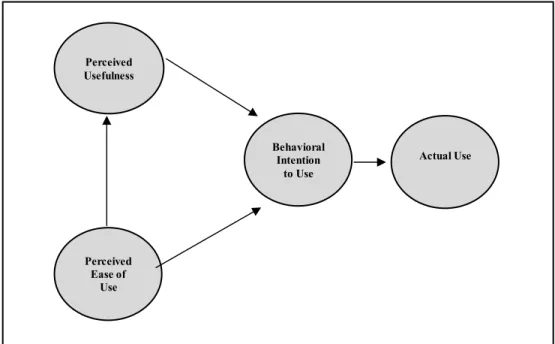
TAM states that adoption of information technology is based upon user perceptions. The adoption, or intention, is based upon two key predictors of behavior—perceived usefulness and perceived ease of use as seen in Figure 4. The hypothesis is that a user’s intention is a close predictor of user’s behavior with intention affected by user’s attitude and perceived value of the system (Lee & Lehto, 2013). “The emphasis [of TAM] is placed on understanding users’ usage behaviors towards technology through usability testing and evaluation methods, which are targeted to ensure that users can operate a technology efficiently, effectively, and satisfactory” (Holden & Rada, 2011).
24
The TAM framework measures the degree to “which a person believes that using a particular [technology or process] would enhance his or her advantageously” (Davis, 1989, p. 320) which implies choice. The user’s choice may be to accept this new technology or process or not to accept it. This choice may be in agreement with their organization or in disagreement. An organizational initiative may be successful or not depending on whether its workers accept a change or not. The ability to adapt and prepare employees for changes would be of importance to any organization.
Davis, Bagozzi and Warshaw (1989) adjusted the original TAM further with the
elimination of attitude as a determinant. The link between attitude and perceived usefulness was found to be weak as users may still intend to use a technology despite not having a good attitude towards it (Venkatesh, 2000). Users may be willing to overcome difficulty in learning and using a new technology if they perceive it to have a positive effect on their job. “The omission of
Perceived Usefulness Perceived Ease of Use Behavioral Intention to Use Actual Use
Figure 4. Technology Acceptance Model (Davis, 1989) cited by (Venkatesh & Davis, 2000). Reprinted with permission.
25
attitude helps better understand the influence of perceived east of use and perceived usefulness on the key dependent variable of interest—intention” (Venkatesh, 2000, p. 343). The resulting framework focused on two determinants with influences from external variables. Defining the determinants further will illustrate the relationships between the elements of the framework.
TAM Determinants. There are two key predictors of TAM, perceived usefulness and perceived ease of use, which represent the individual’s view of how a technology may affect their job performance. Collectively they define whether a person is more willing to make a change through use of a technology or remain status quo. Their perception of the change may vary over time increasing their acceptance of the change or rejection. Organizations seeking to push change through use of technology would want to mitigate the issues associated with low perceptions into order to increase usage.
The first key predictor of TAM is perceived usefulness (PU). PU is defined as the extent a user believes that using the new technology will add benefit to their job (Davis, 1989). For example, a teacher is introduced to email as a way of communicating to co-workers,
administrators, and parents. Using email promises to increase the timeliness of receiving and responding to information. In order to gain the benefit from using email, they would need to add the steps of logging in more frequently. This is a change of practice which may discourage teachers to use email in the first place.
Schools have sought to become more responsive to the needs of learners in a globalized society (Tomlinson & McTighe, 2006). “Many changes in schools today can be credited to the utilization of computer technology” (Hampton, Anderson, & Sigman, 2002, p. 3). Teachers have been introduced to many technology tools and processes that have directly and indirectly
26
distribution and some were of mandatory use. If the usage of some technology was reflective in job evaluation, then there may be a higher level of perceived usefulness to the implementation.
Technology bridges the gap offering a partnership between the school, students and parents by offering an immense amount of information in a timely manner such as student
graded performance, attendance, and learning objectives (Hampton, Anderson, & Sigman, 2002). Since the implementation to schools, many administrations have mandated that scores be entered into the electronic gradebook within 48 hours of a graded assignment.
Tracking progress with electronic gradebooks increases the ability of teachers to adjust instruction or pace as needed. Some gradebooks also include analytics on whether the ability to track student progress towards meeting learning standards. The access to this type of
information creates a partnership between the teachers, students and parents. The
communication capabilities of many of the systems keeps all parties informed in the learning process.
The electronic gradebook provides an example to illustrate some of the determinants or variables that can affect PU. Prior to full implementation of electronic gradebooks schools allowed teachers the choice of using one to track student progress. In this example, the extent that the teachers believe that using electronic gradebook will benefit their teaching may change their intentions to be receptive in using it. Variables such as social pressures to use or not to use from other teachers are a contributing factor.
It may be the social group within the school that the teacher identifies with is progressive in their adoption of technological practices in education. Their acceptance and use of electronic gradebooks can influence this specific teacher’s use of it. “Across the many empirical tests of
27
TAM, perceived usefulness has consistently been a strong determinant of usage intentions, with standardized regression co-efficient typically around 0.6” (Venkatesh & Davis, 2000, p. 187).
A variety of variables have been studied to identify influences of PU, in TAM research studies. Sagers and Grover (1993) included six variables (work more quickly, makes job easier, useful, increase productivity, effectiveness and job performance) in their factor analysis of the TAM framework. In their research into student adoption of e-textbooks, Van Horne, Henze, Schuh, Colvin and Russell (2017) focused on how the e-textbook was in completing major class assignments, preparation for exams and in developing a deeper understanding of course content. Behrend, Wiebe, London, and Johnson (2011) utilized accessibility, ease of travel, technology anxiety and reliability as determinants for PU in their study.
The second key predictor of TAM is perceived ease of use (PEU). It is defined as the belief that a user has that the technology or process will be free of effort or relatively simple to learn (Davis, 1989). The two key predictors of user’s behavior in TAM are interrelated. Vankatesh states that “TAM posits that PU will be influenced by PEU because, other things being equal, the easier a technology is to use, the more useful it can be” (Venkatesh, 2000, p. 343). The adoption of the technology is more likely to take place if it is perceived to be easy to use.
Personal experiences may dictate the adoption rate of a user towards the new technology. “Perceived ease of use has been theorized to be closely associated with individual’s self-efficacy beliefs and procedural knowledge, which requires hands-on experience and execution of skills” (Venkatesh & Bala, 2008, p. 279). For example, a teacher who willingly uses technology in various aspects of their life (banking, media, communications, health care, etc.) may find less difficulties with adopting another technology.
28
External variables may affect a user’s intention to use. They are referred to as those influences outside of the user and more related to the environment such as professional
development or training, accessibility to the technology, stability of the technology, support, and quality of the systems. A user’s experience with the technology would also be considered to be a PEU variable. These variables are considerations as to whether the users believe that the
technology is user-friendly and would be free from trouble to use.
The perception that a new process or technology tool may be easy to learn and master, though, may be a different measurement for each user. Previous experience is one of the many determinants that could affect the technology adoption. The level of ease may be dependent on previous experiences which can affect perspective and ability towards this new item. Learning a new technology tool or process may involve individual time and effort on varying levels. “Most educators will expend the effort needed to integrate technology into instruction when, and only when, they are convinced that there will be significant payoffs in terms of student learning outcomes” (Means, 2010, p. 287).
The original model of TAM focused on these two keys as a predictor of technology use— PU and PEU. In the past few decades since its original introduction, TAM has been continually used as a theoretical framework for predicting technology adoption. It has, however, gone through numerous studies as well as redevelopments.
The New TAM
The application of TAM in a multitude of situation is made easy to apply due to its economy of design with its predictive power (Venkatesh, 2000). Consequently, TAM has been used in numerous technology adoption studies in education as well as the business environments. Buchanan, Sainter, and Saunders (2013) explored Internet self-efficacy in higher education
29
faculty. Chen, Sivo, Seilhamer and Sugar (2013) sought to evaluate and predict the use of mobile technologies with Blackboard in higher education. Research conducted by Wingo, Ivankova and Moss (2017) explored faculty perceptions of teaching online courses at the university level.
Over time, though, changes have been made to the framework to broaden its findings with the determinants of the PEU. Venkatesh and Davis (2000) continued to update TAM to further explore how variables affect the key determinants to PU and PEU. They added external variables such as internal beliefs, personal abilities, attitude, mind-set affect intention to use the technology, see figure 3. The variables were explored to seek a more detailed relationship between factors that may contribute towards technology acceptance.
The new version, referred to as TAM2, “incorporates social influences (subjective norm, voluntariness, and image) and cognitive instrumental processes (job relevance, output quality, result demonstrability, and perceived ease of use)” (Venkatesh & Davis, 2000, p. 187). TAM2 incorporated additional factors of technology knowledge and experiences as well as perceptions towards the adoption of technologies from the original TAM framework. Self-efficacy appeared as a factor for Davis and Venkatesh in the TAM2 update.
Social influence plays a role in the user’s voluntariness. Acceptance of technology by co-workers may influence an individual’s adoption of the same technology. “TAM2 theorizes that, in a computer usage context, the direct compliance-based effect of subjective norm on intention over and above perceived usefulness and perceived ease of use will occur in mandatory, but not voluntary, system usage settings” (Venkatesh & Davis, 2000, p. 188). Therefore, it is added as a factor towards intention to use technology.
30
The development of further editions of TAM included various determinants of
technology adoption and use. Venkatesh (2000) proposed that a new framework was needed to present alternate perspectives based upon anchors and adjustments to PEU and PU. The
determinants represented a user’s general beliefs about technology and technology usage. He labels the anchors for PEU as computer self-efficacy, perceptions of external control, computer anxiety and computer playfulness.
These determinants may be positive or negative experiences they have had with other technologies unrelated to the current one. Whether it was easy to learn and use technology, computer self-efficacy is an individual perspective that plays an important role in the adoption process. “Computer self-efficacy, facilitating conditions, computer playfulness, and computer anxiety are system-independent, anchoring constructs that play a critical role in shaping PEU about a new system, particularly in the early stages of user experience with the [new
technology]” (Venkatesh, 2000, p. 346).
User control is an important contributor technology acceptance and adoption. This may entail the access to resources as well as the ability to use them. The interaction with the
organization in terms of facilitating the technology implementation and training also contributes to control within the user towards the specific technology. The availability of resources and opportunity to use them account towards the perception of ease of use. There are also examples of external control variables.
Computer playfulness is a term that Venkatesh (2000) uses to describe use of technology by the individual independent of their job. The user indulges in interacting with the technology for the sake of it. This variable is an intrinsic motivator. There is no reward for use but rather an
31
innate need to use it. As opposed to an extrinsic motivator where a user is rewarded for use of the specific technology.
The next determinant sides with a more negative emotion—anxiety. Computer anxiety is the user’s apprehension when faced with the event of interacting or using the specific technology (Davis, 1989). In other words, the level of difficulty a user feels the new technology may be to learn may prevent them from fully adopting it. Computer anxiety may elicit an emotional and a cognitive response by the user affecting their perception. Adjustments Venkatesh and Davis (2000) have been added to the new model to account for user’s enjoyment from the technology and the technology’s ability to satisfy the stated objectives of its use.
Venkatesh and Davis (2000) extended TAM by proposing to incorporate various social and cognitive influences on PU. They are subjective norm, image (the concern a user feels they portray with use of the technology), job relevance, output quality and demonstrated results from usage of technology (Figure 5). These are all factors that are related to the use of the technology for the benefit in the user’s job. For example, a digital gradebook is applicable to a teacher’s job but the digital sound system in the auditorium may not be unless they are a music or theatre teacher.
32
Components of the New TAM
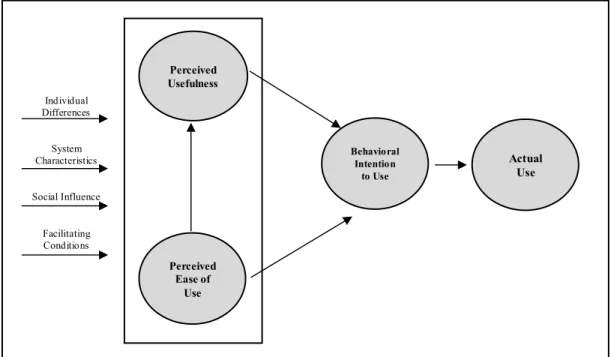
There are four determinants that have been added to the TAM3 model which influence PU and PEU. These new determinants are the results of Venkatesh and Balla (2008)
synthesizing the usage of TAM over the years. These new determinants are Individual
Differences, System Characteristics, Social Influence and Facilitating Conditions, see figure 6. Individual Differences refer to the individual characteristics of the user. Gender, usage experience, age, and other personality demographics may influence a user’s perception for and thus their intended behavior towards the new technology. Previous experience or lack thereof can encourage or discourage a behavior towards technology (Fathema, Shannon, & Ross, 2015). In the original version of TAM, demographics of the user were not measured.
Perceived Usefulness Perceived Ease of Use Intention to Use Actual Use Subjective Norm Image Job Relevance Output Quality Result Demonstrability Experience Voluntariness
Figure 5. TAM2 extends beyond the original TAM to include external variables (Venkatesh & Davis, 2000). Reprinted by permission.
33
System characteristics refers to the technologies themselves. A technology that is so complex with many steps, may discourage application and influence the potential user’s frequency to use. Venkatesh and Bala (2008) refer to them as the “salient features of a system that can help individuals’ perceptions of perceived usefulness and perceived ease of use”
(p. 276). For example, there are an abundance of software choices available to create and edit digital videos from the simplistic to the complex. While some software can produce professional results, the ease and simplicity of the point and shoot video capabilities of most cell phones lessen the need for editing.
Social Influence, also known as subjective norm, was first introduced by Fishbein (1979) in his work with the Theory of Reasoned Action (TRA) and then in the subsequent model of Theory of Planned Behavior (TPB) with Ajzen (1991). It is defined as the influence of those around the user towards completion of the behavior based upon the user’s perception. Whom the
Perceived Usefulness Perceived Ease of Use Behavioral Intention to Use Actual Use Individual Differences System Characteristics Social Influence Facilitating Conditions
Figure 6. TAM3 presents the synthesis of prior studies using TAM as of 2008 (Venkatesh & Bala, 2008). Adapted by permission.
34
user feels are important with respect to their intention to or not to do the behavior. For example, a new technology of an interactive whiteboard is available in some classroom placements. Some teachers are excited for its integration and some are highly resistant to its use. To measure a specific person on their individual behavior to use or not use this new technology may be reflective of which group they most identify with.
Facilitating characteristics represent the organizational support as new technologies are introduced and systems implemented (Venkatesh & Bala, 2008). These characteristics include the organizational side which represents those that make the decision for purchase of specific technologies, implementation plans, training, support and other areas which make it available to the user. A great product can remain unused without adequate implementation and support.
Current Study
TAM can be used for a plethora of technology-related areas; such as the use of a specific hardware or application to a process that includes technology. For example, a teacher may have a multimedia project in their classroom for use to show videos on history topics. However, they are not using the multimedia projector for presenting lessons. The use of the technology is limited in its instructional uses by the teacher. The strategy of whether to utilize the projector may be predicted based on the teacher’s perception of ease of use and usefulness in their classroom.
In this study, teacher’s perceptions delivering instruction in an online environment as well as in a traditional face-to-face will be evaluated. The practice of teaching online as well as face-to-face creates a blended learning environment if students have some control of their
learning. In addition, content is introduced in one environment without a duplication to the next. The flow of instruction shifts from one environment to the next. However, blended learning
35
strategy does not include posting of class materials online with all instruction remaining in the face-to-face classroom. This type of educational situation would be considered traditional teaching with enhanced technology.
An understanding of how technology and the resulting instructional practices are incorporated by teachers in K-12 schools as well as higher education would assist in
organizational planning and design for user acceptance and usage of new technologies. As noted by Ertmer and Ottenbriet-Leftwich (2013), “although teachers may believe that technology helps them accomplish professional and/or personal tasks more efficiently, they are reluctant to
incorporate the same tools into the classroom for a variety of reason including lack of relevant knowledge (Lawless and Pellgrino, 2007).” The new technology is the use of blended learning strategies in the high school classes.
Blended Learning
Technology has influenced education and redefined learning. Innovations and accessibility have led to the increased usage of technology in the classroom (Roschelle, Pea, Hoadley, Gordin, & Means, 2000). Capabilities of technology have expanded its capabilities to become tools in society and in education (Cox, 2013). Opportunities for learning have expanded beyond the walls of the classroom and the school day. Whereas a few decades prior, technology was often relegated to office tasks it is now migrated towards a tool for learning.
According to Education Week (2017) the growth of technology access in K-12
classrooms has increased by 363 percent over seven years with purchases of mobile devices in K-12 schools such as laptops, tablets, netbooks and Chromebooks. The “spread of the Internet has increased the quality of digital classroom resources and has spurred the creation of district-level programs that blend online learning and face-to-face instruction” (Watson, 2008, p. 3). In