PERCEPTIONS OF STEM AND LIBERAL ARTS POLICY IN FLORIDA
by
Rudolph W. Lurz
B.A. University of Florida, 2006 M.Ed. University of Florida, 2007
Submitted to the Graduate Faculty of the School of Education in partial fulfillment
of the requirements for the degree of Doctor of Education
University of Pittsburgh 2017
ii
UNIVERSITY OF PITTSBURGH SCHOOL OF EDUCATION
This dissertation was presented by
Rudolph W. Lurz
It was defended on April 25, 2017 and approved by
Dr. John Weidman, Professor, ADMPS Dr. Stewart Sutin, Clinical Professor, ADMPS Dr. Erik Ness, Assistant Professor, University of Georgia
Copyright © by Rudolph W. Lurz 2017
iv
The promotion of STEM (Science, Technology, Engineering, and Mathematics) education is similar to the rhetoric of the Space Race. Only 19% of U.S. degrees are in STEM fields, compared to over 50% in China (National Science and Technology Council, 2013). Policy makers like President Obama, New Jersey Governor Chris Christie, and Maryland Governor Martin O’Malley tie STEM investment directly to economic impact, using language similar to the rhetoric President Eisenhower utilized to promote the National Defense Education Act (NDEA) of 1958. Florida Governor Rick Scott places STEM in zero-sum competition against liberal arts subjects with the rationale of stimulating economic growth.
I surveyed and interviewed Florida policy makers to explore their perceptions of STEM and liberal arts fields. I wanted to know how these perceptions influenced policy formation. I examined press releases to identify trends and patterns in messaging from Governor Scott’s office. The majority of policy actors supported balanced positions on the 7-point Likert scale survey items, recognizing the economic importance of STEM education while also noting the value of liberal arts disciplines. However, when given the freedom to respond in open-ended survey items and semi-structured interviews, many policy makers revealed positions closer to the zero-sum strategies of Governor Scott. They were dismissive of the utility of liberal arts subjects,
PERCEPTIONS OF STEM AND LIBERAL ARTS POLICY IN FLORIDA
Rudolph W. Lurz, M.Ed. University of Pittsburgh, 2017
and saw them as frivolous and unnecessary. Other participants defended the value of the liberal arts and saw them as a necessary component of a tertiary education.
My research demonstrates that the relationship between higher education and economic impact is unpredictable. To maximize economic growth, universities should produce opportunistic communicators who recognize opportunities in the Information Age economy and communicate to consumers across state and national borders. Zero-sum competitions between STEM and the liberal arts are unnecessary and detrimental in a non-zero-sum global economy.
vi
TABLE OF CONTENTS
PREFACE ... XI
1.0 INTRODUCTION ... 1
1.1 BACKGROUND ... 2
1.2 STATE STEM VIGNETTES... 4
1.2.1 Florida... 4
1.2.2 Georgia ... 6
1.2.3: West Virginia ... 8
1.2.4: State Vignettes Summary ... 11
2.0 REVIEW OF THE LITERATURE ... 12
2.1 DEFINITIONS AND DIRECTIONS OF THE LIBERAL ARTS ... 14
2.2 STEM-MORE THAN JUST AN ACRONYM ... 27
2.2.1 Introduction ... 27
2.2.2 STEM Education for Economic Impact and National Security ... 29
2.2.3 STEM as a Zero-Sum Game ... 37
2.2.4 STEM Summary ... 40
2.3 UNIVERSITY AUTONOMY & ACCOUNTABILITY ... 42
2.3.1 History ... 42
2.3.3 Internal Threats to Autonomy... 45
2.3.4 External Threats to Autonomy ... 47
2.3.5 Autonomy & Accountability Summary ... 49
3.0 METHODS ... 51
3.1 CONCEPTUAL FRAMEWORK... 52
3.1.1 Research within policy formation: Policy scholars and policy actors ... 63
3.1.2 Summary ... 65
3.2 RESEARCH DESIGN ... 66
3.2.1 Predictions ... 70
3.2.2 Sample, Data Collection, and Coding ... 70
3.2.3 Summary ... 76
4.0 DATA ANALYSIS ... 78
4.1 LIKERT-SCALE SURVEY DATA ... 81
4.1.1 STEM Promotion ... 83
4.1.2 Liberal Arts Promotion ... 86
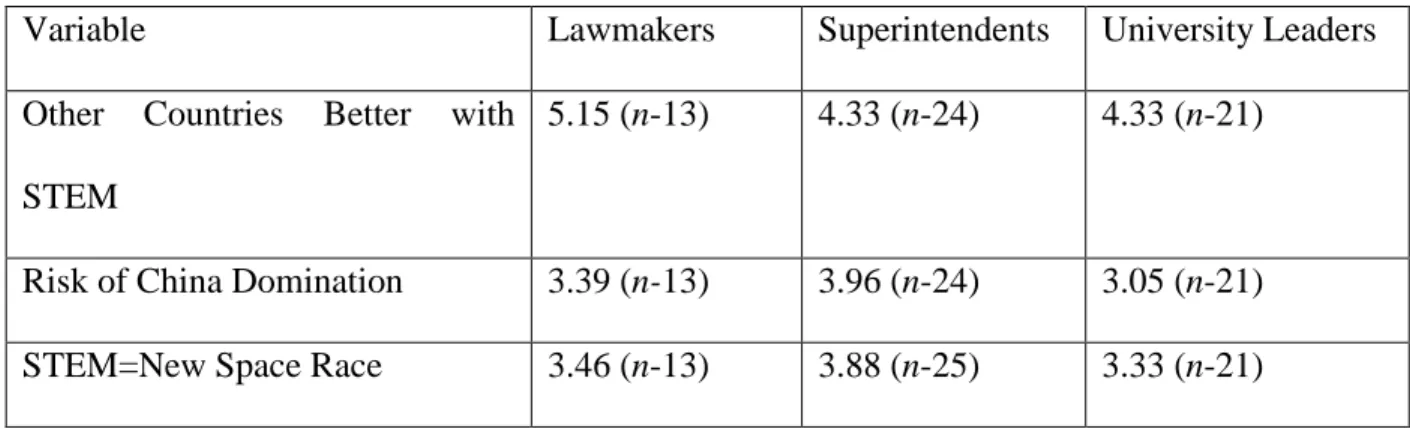
4.1.3 Fear & Falling Behind ... 89
4.1.4 State Role in Academic Management ... 91
4.1.5 Likert-Scale Analysis Summary ... 94
4.2 EVALUATION OF QUALITATIVE SURVEY DATA AND INTERVIEWS ... 95
4.2.1 Zero-Sum STEM Promotion ... 95
4.2.2 Both/And STEM & Liberal Arts Balance ... 97
viii
4.2.4 The State and University Management ... 101
4.2.5 Unique Insights from Interview Data ... 102
4.2.6 Summary ... 106
4.3 ANALYSIS OF PRESS RELEASES ... 107
4.3.1 Brief Timeline of Major Events in Sample ... 112
4.3.2 Jobs at the Center, Linked to STEM ... 116
4.3.3 Looking for Competition... 118
4.3.4 Other Insights ... 120
4.4 CONNECTIONS AND ALTERNATIVES ... 122
4.4.1 Connections in Survey, Interview, and Press Release Data ... 122
4.4.2 Connections and Revisions of Conceptual Framework ... 124
4.4.3 Pathways to the Alternative Model of “Opportunistic Communicators” .... ... 134
4.4.4 Summary of Data Analysis ... 138
5.0 SYNTHESIS OF POLICY NARRATIVES, RECOMMENDATIONS, AND FUTURE DIRECTIONS ... 140 5.1 LIMITATIONS ... 144 5.2 FUTURE DIRECTIONS... 147 5.3 FINAL THOUGHTS ... 153 APPENDIX A: FRAMEWORKS ... 156 BIBLIOGRAPHY ... 159
LIST OF TABLES
Table 1. Blackwell & Cistone, 1999, p. 116 ... 68
Table 2: Coding... 71
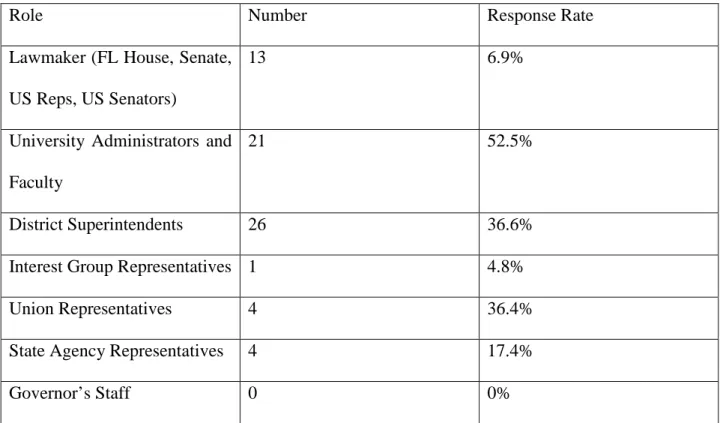
Table 3. Sample and Response Rate ... 74
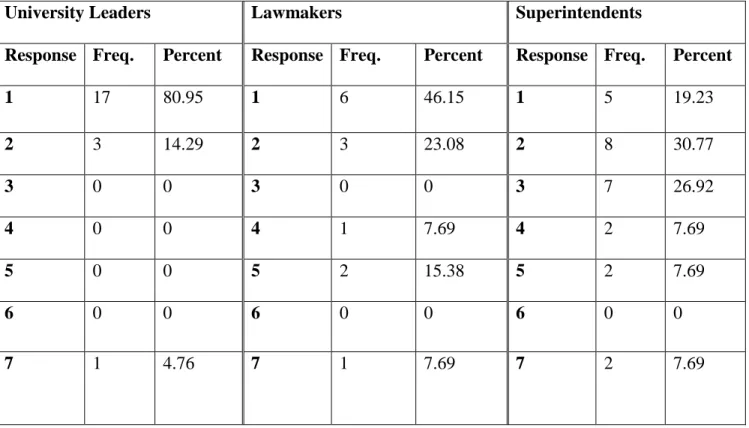
Table 4: Response Distribution for "Liberal Arts are a Waste of Time" ... 84
Table 5. Liberal Arts Mean Scores ... 88
Table 6. Fear and STEM Promotion ... 90
Table 7. The State & University Management ... 91
Table 8. Response Distribution: "The State Should Determine Academic Budgets Based on Capacity to Create High-Tech Jobs" ... 92
Table 9. Press Releases (Jan. 2015-Jun. 2015 by Focus ... 108
Table 10. Messaging Strategies ... 111
x
LIST OF FIGURES
Figure 1: From Banning & Folkestad (2012) ... 28
Figure 2: Ferguson (2014) p. 4 ... 37
Figure 3: Initial Conceptual Framework Presented at DGfE in Berlin (2014) ... 55
Figure 4: Initial Dissertation Framework ... 60
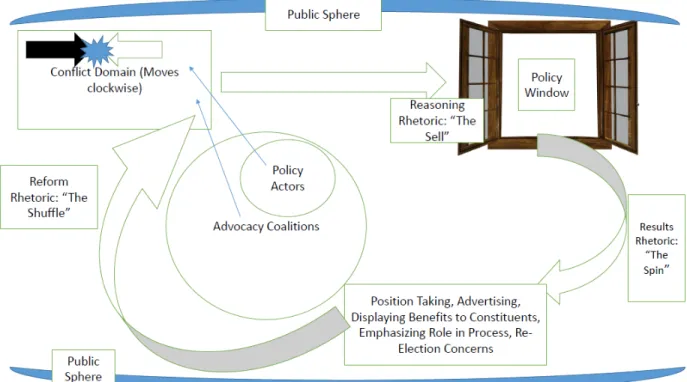
Figure 5: Final Conceptual Framework ... 128
Figure 6: Governor Scott & Zero-Sum STEM Promotion... 132
Figure 7. Initial Dissertation Framework ... 156
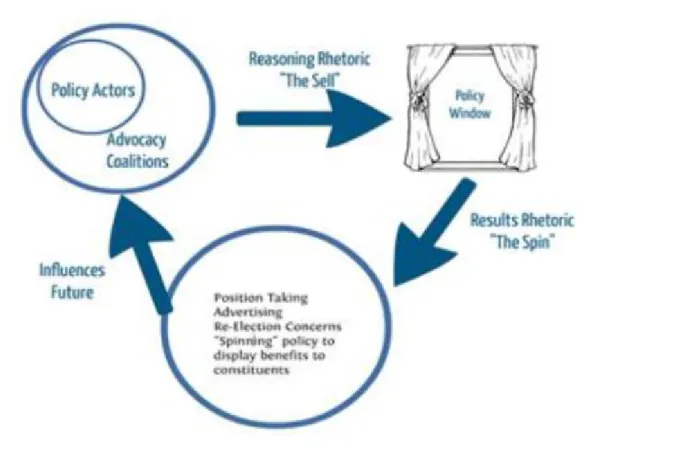
Figure 8. Final Conceptual Framework ... 157
PREFACE
I began my investigation of this research topic during my first semester of doctoral study in Fall, 2011. The Governor of my home state of Florida, Rick Scott, introduced a controversial idea to take money from liberal arts programs like anthropology at state universities and divert it to STEM (Science, Technology, Engineering & Mathematics) fields (Anderson, 2011, October 10). He pursued this policy with the intention of using higher education to create jobs and spur economic innovation. Governor Scott charted this course despite the fact that it is difficult to correlate a link between state STEM investment and economic growth in the state itself (Gittel & Sedgley, 2000), and the few studies that explore this subject area illustrate multiple, overlapping variables that demonstrate a more complicated relationship than the linear narrative often portrayed by policy makers (Gasiewski, Eagan, Garcia, Hurtado, & Chang, 2012; Gittel & Sedgley, 2000; Hira, 2010). Upset by Governor Scott’s attacks on the liberal arts, I brought my concerns about the matter to my class discussion board. By that time, the news had been picked up by the AP and was being republished nationwide. I was infuriated as a liberal arts graduate of a public university in Florida. I believed that my degree had given me the skills to be adaptable in a rapidly changing global economy. Now Governor Scott was devaluing my degree? I concurred with former University of Florida and UCLA president Charles E. Young, who stated, in response to Scott’s proposal, “It’s sheer and utter nonsense…they [Gov. Scott and his allies]
xii
have a total lack of understanding about what a university is and what universities do” (Anderson, 2011, October 10, p. 1).
I championed the cause of the liberal arts on the course discussion board, and noted that curriculum mandates could be a potential solution that would please STEM advocates like Governor Scott without gutting liberal arts programs. Why not have liberal arts majors choose a STEM minor, and have STEM majors choose a liberal arts minor? A balanced approach to the curriculum sounded to me like a good plan that did not, as the Sarasota Herald-Tribune article stated, “…rob Peter to pay Paul” (Anderson, 2011, p. 2). My colleagues were quick to caution my enthusiasm for my idea. They noted that incentivizing STEM had its benefits and putting mandates on university curricula could have unintended consequences. Other comments noted that I was potentially crafting a solution to a nonexistent problem. Governor Scott did not have the authority to rearrange items in a university budget. If the Florida Legislature wanted to provide more money for STEM, what was the problem?
I took the critiques of my colleagues, reflected on my thoughts, and refined my own position on the matter. I began to look at general education requirements as a potential avenue for the reforms I had in mind. I wrote two Op-Eds in 2012 for the Sarasota Herald-Tribune, the newspaper that originally broke the story of Governor Scott’s plans for incentivizing STEM from liberal arts budgets. The first, titled, “Balance Gen Ed”, illustrated the problem of general education requirements at universities, which often encompassed 50% or more of total university credits a student earned, while offering a “cafeteria style” selection of courses that allowed students to pick the path of least resistance (Lurz, 2012, March 7). I suggested that universities could instead cut general education requirements in half if students chose a minor significantly different than their major course of study. I used the suggestion I first brought up in class-
STEM students could select a liberal arts minor, and liberal arts majors could select a STEM minor. “An engineering major would be strengthened by a minor in German or Chinese. Likewise, an anthropology degree would be strengthened by a minor in chemistry. These are just two possibilities out of thousands of combinations” (Lurz, 2012, March 7, p. 8A). My article was used as a reference in Penn State’s report on its General Education policies five months later (Pennsylvania State University, 2012). After introducing the problem space and framing my proposal within general education, I wrote a second Op-Ed for the Herald-Tribune titled “Creating Renaissance Scholars”. I outlined specific ideas for my STEM/liberal arts major minor suggestion in this editorial. I took to heart the critiques of my colleagues, and cautioned against state or institutional mandates on the curriculum. I suggested instead that a pilot program, in which students selected the course of study I proposed, was an attractive and “shovel-ready” measure universities could put in place themselves (Lurz, 2012, November 26).
My published articles were a means of empowerment for me. I reflected critically on the thoughts of my colleagues and advocated my position on an important issue in the public sphere. The use of the university curriculum as the avenue for implementing my ideas was logical, and based on my research interests at the beginning of my doctoral program. When I first arrived at the University of Pittsburgh, I was interested in studying the mission and purpose of higher education institutions, specifically the increasing prominence of entrepreneurship and regional economic impact on university management. Traditionally, universities have focused on missions of academics, research, and service (Altbach, 2011; Thelin, 2011). Entrepreneurship and creating economic stimulus, on the other hand, are relatively recent goals of higher education institutions. Geiger (2011) notes that economic stimulus as a university mission had its roots in American colleges west of the Appalachians in the early 1800s, as local leaders believed that
xiv
establishing a college would enhance the cultural and economic standing of their towns (p. 48), and Altbach (2011) notes that the Germans who established research as a pillar of higher education recognized the advances in industrial production that such research generated.
The mission of entrepreneurship in American universities, a mission with the deliberate aim of creating economic growth in partnership with regional private interests, has only become universally recognized in the course of the last 30 years, and remains a subject of debate in the global higher education community (Curri, 2008). On highly visible signs all over campus, as well as on its official website, the University of Pittsburgh proclaimed, “Leader in Academics, pioneer in research, partner in regional development” (University of Pittsburgh, 2012). These prominent signs, which greeted me upon my arrival in Pittsburgh, demonstrated the university’s recognition of its mission to create economic impact for its community. Ross (1994) argues that universities, within their strategic planning, engage in a process that is implicitly entrepreneurial, and should be viewed as an enterprise which results in comparative advantage and measurable net gains in the value of the institution. When public universities advocate for funding from state legislatures, they often deem such funding to be an investment that will produce the returns of economic growth in the region. This vision of bettering society through investment in higher education “requires a shift from past practices to embrace a more entrepreneurial vision of the university, one that is better suited to today’s economy and society (Potter, 2008, p. 3). Entrepreneurial visions of university management inevitably lead to focusing on departments and degrees that offer the highest return on investment. Such views of higher education administration have natural allies in state policy makers who wish to incentivize STEM.
Being an advocate for civic engagement and service in the academy, such corporatization of the university environment alarmed me. The statements by Governor Scott for incentivizing
STEM at the expense of the liberal arts in the name of economic impact seemed to affirm the viewpoints of entrepreneurial proponents. Other scholars, echoing my concerns, worried about the potential implications of market-driven management of universities. The traditional missions of universities, such as civic engagement, academic excellence, research, and student development, risk being overshadowed by pursuit of curricula and management philosophies that are dictated by market demands. Kirp (2003) makes a particularly strong rebuke of these entrepreneurial principles within higher education institutions (HEIs). He states, “Entrepreneurial ambition, which used to be regarded in academe as a hold-the-nose necessity, has become a virtue” (p. 2). Kirp (2003) is especially critical of Resource Center Management (RCM), which dictates that department costs cannot outpace revenues, and favors profit centers that produce more revenue than they spend in expenditures. Such management philosophy might be good for popular health science programs, but it can be devastating to smaller departments like classics, religion, Russian, or German, which provide value for academic pursuit but less robust profit margins. Departments that operate at a loss could be at risk for elimination.
This was the research background I had when I first began looking into STEM and liberal arts higher education policy. The more I looked into the issue, the more my research concentration moved away from curricula and university mission/vision and more into higher education policy approaches of the federal government and various state governments. In Dr. John Weidman’s Policy Studies course in Fall, 2012, I studied other states’ approaches to STEM and liberal arts higher education policy. I decided to focus on West Virginia and Georgia as comparative models. I selected West Virginia and Georgia on the basis of their status as states classified as having strong merit-based scholarship systems (Heller, 2000, 2004) and as states which received between 10-15% of their education budgets from gaming revenues like casinos
xvi
and lotteries (Russell, 2008). My study in that course led me to determine that there are many different approaches to STEM policy that governments can undertake. Florida has set up STEM disciplines in a competitive and confrontational relationship with liberal and fine arts disciplines, and has pushed through legislation and budgets that provide direct advantages to STEM projects. Georgia has taken a more balanced approach, incentivizing STEM projects, but also promoting liberal and fine arts in the name of critical thinking and innovation. Georgia’s approach to the issue is more similar to the federal government’s, whose commissions and reports from various administrations have concurred that more STEM funding is needed, but prose literacy and critical thinking cannot be ignored either. West Virginia advocated for a balanced STEM and liberal arts K-12 curriculum, while pushing for shovel-ready community college and certificate STEM programs in an alliance between government entities, private firms, and 2-year institutions. In short, Governor Scott has other options. While pushing STEM projects is a politically popular maneuver, there is no need to attack the liberal or fine arts in the process.
Delving into state and federal STEM policy was fascinating for me, and raised questions of how to measure a tangible regional economic impact from STEM education. I read various justifications for STEM funding used by policy makers and university leaders, and that term, regional economic impact, which I was familiar with from previous studies concerning entrepreneurship in the academy, kept coming up. How could such an item be measured? In my quantitative methods research methodology studies with Dr. Shafiq, I returned to the limited literature regarding this aspect, and learned the difficulty in correlating state STEM investment with economic impact. The short answer is this: the omitted variable bias is too great to overcome. STEM investment impacts the economy. However, there are many other variables that influence a broad topic like economic growth or new job creation, and a researcher would
have a very difficult time controlling for even 30% of the existing variables. Gittel & Sedgley (2000) conducted an exploratory study regarding higher education investment in New England, and came to similar conclusions as those put forward to me by Dr. Shafiq. While STEM investment has a possible impact on economic growth, it is incredibly difficult to demonstrate a strong correlation, and impossible to prove. State funding that Governor Scott takes away from liberal arts disciplines and pumps into STEM programs was just as likely to benefit Georgia or Virginia as it would Florida, since graduates could leave the state. Significantly altering the mission and vision of universities is not a prudent measure if the promised local economic impact is only a possibility, rather than a probability.
My advisor and I, taking in all the research I have done on this topic, along with some of my earlier research on university missions and purpose, approached a colleague, Everett Herman, to present some of our initial findings at the Deutsche Gesellschaft für Erziehungswissenschaft (DGfE) [trans: Society for Education Science] Conference in Berlin. We combined our STEM policy research with Mr. Herman’s research on Civic Engagement, in an attempt to see if a middle ground could be reached regarding university missions of service and producing the regional economic impact desired by policy makers on both sides of the Atlantic. Our project, “Constructing Narratives of STEM and Civic Education in the University: Complementarity or a Zero-Sum Game”, concluded that promoting both STEM and Civic Engagement at higher education institutions produced benefits for universities and society at large, by producing graduates with the skills to foster innovation and the social conscience to build a more equitable democracy (Porter, Lurz & Herman, 2014). We received good feedback from European colleagues, and learned that STEM education also receives strong support in the EU, although in German-speaking countries it is called ‘MINT’ (Mathematik, Informatik,
xviii
Naturwissenschaften, Technik). Germany has been identified as an economic peer by national task forces exploring the issue of STEM, and it has been noted that while the number of students in the United States who major in STEM fields is under 20%, while in Germany, 30% major in Engineering alone (National Science and Technology Council, 2013). The number of students majoring in Engineering in the United States is a mere 4% (National Science and Technology Council, 2013). These figures, along with the political popularity of STEM education, were strong motivating factors for our team to present this research in Berlin. We were pleased at the response, and are exploring the possibility of writing a book chapter on the topic.
Following this long road of coursework, research, and study, I began an internship in 2014 in Harrisburg, working for Republican State Senator Mike Folmer of the 48th Senatorial District, which encompasses parts of the central Pennsylvania counties of Lebanon, York, and Dauphin. Senator Folmer is the chair of the Education Committee. Education constitutes the single largest expenditure of the Commonwealth’s budget (Commonwealth of Pennsylvania, Office of the Governor, 2014). I was excited to put the ideas I had learned from my research into practical use. In going through the budget and preparing the Senator for committee hearings with questions and data, a surprising event occurred. I found myself recommending that the Senator go on public record supporting STEM education. Unlike the other states I’ve studied, STEM projects did not have a prominent position in Governor Corbett’s proposed education budget. STEM certainly existed within that budget, but it was embedded into items such as “Hybrid Learning” and “Ready to Learn Block Grant” (Commonwealth of Pennsylvania, Office of the Governor, 2014). Those two items combined for over $350 million dollars in funding, and our staff’s analysis of those items indicated that STEM was included within it. However, I knew from my own research how popular STEM was with constituents across demographic groups. I
knew that putting the title of STEM front and center and labeling it prominently on future legislation would be seen as a positive step for the Commonwealth, and would likely receive broad, bipartisan support. I included the caveat that a balanced approach which included the critical thinking skills of liberal arts disciplines and creativity of fine arts study along with STEM promotion would be the best option to pursue. Nonetheless, I quoted the same figures used by policy figures like former Education Secretary Margaret Spellings, President Barack Obama, and Florida Governor Rick Scott. Less than 20% of US Students major in STEM, and of those who begin STEM majors, 38% drop out or switch majors before they complete their degrees (National Science and Technology Council, 2013). Just 4% of American college students major in Engineering, and over 30% do so in Germany (National Science and Technology Council, 2013). What is the Commonwealth doing to promote STEM Education?
Senator Folmer asked those questions and quoted my figures at an education hearing in March, 2014. The Senator’s Chief of Staff passed them on to the Senator, and the Senator asked them. As an intern, I was up on the fifth floor in my attic cubicle watching the hearing on closed-circuit TV, taking notes and summarizing positions. At first, I could not believe he actually used my suggestion. I was a lowly intern and had been on staff for less than two months. He had powerful education lawyers on his staff that provided him with most of the data and questions he used in hearings. They had printed bullet points. I had scrawled my question on a yellow piece of scrap paper on a legal pad and handed it to the Chief-of-Staff. The more I thought about it, however, the more it made sense to me. The Senator knows how important and hot STEM education is right now. It was wise for him to go on record asking that question and quoting those statistics. They are the questions the populace wants to hear. Additionally, there is a policy window open right now for Pennsylvania to promote STEM education. That said, a
xx
disturbing question came to mind: had I become Governor Scott? Was I using my own research and taking politically expedient positions like the policy actors I opposed?
Upon further reflection, I do not believe that is the case. In meetings that have occurred since that March hearing, I have advocated for an approach that adds the liberal arts into the STEAM (Science, Technology, Engineering, Arts, and Mathematics) model in the name of creativity and innovation. I have not suggested that the Senator seek to take funding out of the liberal or fine arts in order to promote STEM, as Governor Scott advocated. We are simply trying to find funding to encourage STEM education while maintaining funding for other disciplines, using a balanced approach as encouraged by President Obama’s STEM Task Force (National Science and Security Council, 2013) as well as Georgia Governor Nathan Deal’s administration (Georgia Department of Education, 2012).
In conclusion, my views on this topic have evolved through the course of my studies and experiences in Administrative and Policy Studies at the University of Pittsburgh. I began with passionate outrage at what I perceived to be an assault on university autonomy by an opportunistic Governor. I debated with colleagues. I collected data. I explored the available scholarly literature, along with relevant documents like government press releases. I shared critical newspaper editorials. I looked up the literature related to policy formation as a whole, exploring authors such as Mills (2007), Doyle (2007) and Ness (2010a, 2010b). I crafted a theoretical framework describing how I saw the formation of STEM Policy in the states I researched, and edited that framework with colleagues. I pursued alternatives to the confrontational positions of Governor Scott, and discovered viable options. I collaborated with a friend and fellow scholar in the department, and flew overseas to exchange ideas with higher education personnel on the other side of the Atlantic. Finally, I obtained a 6-month internship
position where I had the opportunity to take what I have learned at the University of Pittsburgh and put it into practice, speaking truth to power in Harrisburg, PA. I have learned that the broad conclusions I put forward in class and even in the first editorials I published did not have the nuance needed to properly approach STEM policy formation, or university administration, for that matter. There are multiple approaches to this issue, and there is merit even in the arguments I disagree with. There is no silver bullet-no perfect STEM solution that is interchangeable in all fifty states. My research and experiences from Posvar Hall, to Potsdamer Platz, to the Pennsylvania Senate have shown me that this issue is, as my dear friend, Dr. Noreen Garman, likes to say-“complicated”. I believe that my coursework, experiences and internship have given me the background needed to undertake this dissertation research. I collected and analyzed the data for this dissertation through the lens of my experience. With this dissertation, I hope to generate research that guides education policy formation in this field.
1
1.0 INTRODUCTION
The purpose of this study is to investigate the perceptions policy makers have of STEM (Science, Technology, Engineering, and Mathematics) and liberal arts education policy in the state of Florida. The rationale for making investments in STEM education is often an urgent narrative of falling behind competitors, which is reminiscent of language used in Cold War education legislation such as the National Defense and Education Act (NDEA) of 1958. STEM is linked with jobs, and policy makers see a direct relationship between state investment in higher education and economic impact (Gittell & Sedgley, 2000). In today’s contentious political environment, STEM-centered education is an area of strong consensus. Language used to justify such legislation has not changed a great deal from the NDEA of 1958 to President Obama’s Committee on STEM Education in 2013.
This study aims to critique and complicate the dominant narrative which presents STEM investment as a direct gateway to economic growth, and often denigrates liberal arts instruction in the process. My research demonstrates that innovation and economic impact through education are more complex than the present and persistent narrative suggests. By exploring the perceptions policy actors had of STEM and liberal arts disciplines, I gained insights into the education policy making process, and discovered areas of convergence that demonstrated potential for complicated yet concurrent mutual benefit.I focused my research on two central questions:
1.) What are key elements of the policy narratives of STEM and the liberal arts? 2.) How are these narratives utilized within the education policy making process?
1.1 BACKGROUND
Governor Rick Scott took office in 2010 with the campaign motto of “Let’s get to work”. He aimed to be a “jobs governor”-cutting government waste, reducing government regulation of business, and attracting industry to create jobs for the state (Scott, 2012). Degrees which did not fulfill this purpose were seen by Scott as frivolous or expendable (Anderson, 2011, October 10). In addition, many state legislators feel a sense of duty to their constituents to help alleviate unemployment and economic malaise in their home districts. Florida was hit particularly hard when the housing market collapsed in the late 2000s. Not only is the housing industry one of the state’s largest employers, but property tax revenues from valuable real estate are an important source of revenue for local governments. Average home prices in the state plummeted 52.7% between April 2006 and October 2011 (Holtz-Eakin & Winkler, 2012). The collapse of the housing market, combined with the reduction of tourism due to the recession, left Florida reeling. Promises to get Floridians back to work propelled Governor Scott and many of his allies in the legislature into office. Higher education provides a vehicle for these policy actors to fulfill their campaign promises.
Governor Scott and his allies in the legislature have publicly stated their goal to shift funding from liberal arts programs to STEM disciplines. Zac Anderson (2011, October 10) originally broke the story concerning the Governor’s proposals in the Sarasota Herald-Tribune. The Governor’s statement to the Herald-Tribune, which has been reprinted in publications
3
nationwide, illustrated his position clearly. He states, “If I’m going to take money from a citizen to put into education then I’m going to take that money to create jobs. Is it a vital interest of the state to have more anthropologists? I don’t think so” (Anderson, 2011, October 10, p. 1). Anderson also quoted current and former university presidents who were critical of the Governor’s ideas. Former University of Florida president Charles Young said bluntly, “It’s sheer and utter nonsense. They have a total lack of understanding about what a university is and what universities do” (Anderson, 2011, October 10, p. 1). Young was not alone in his condemnation of the Governor’s statement. Shortly after the story broke, over 11,000 members of the American Anthropological Association signed an open letter to Governor Scott questioning his comprehension of their subject and defending the utility and worth of an anthropology degree.
Over the course of Governor Scott’s time in office, he has remained consistent in his perception of higher education policy. He frequently cites STEM education as a reason for strong jobs growth on monthly labor reports. Although he has not been as blunt as he was during that Sarasota Herald-Tribune interview, Governor Scott has continued to frame STEM in direct competition with liberal arts fields when discussing budget priorities and the purpose of higher education. Academic disciplines without perceived economic utility face Scott’s criticism in the public sphere.
1.2 STATE STEM VIGNETTES
This section evaluates state policy toward STEM and the liberal arts with vignettes of Florida, Georgia, and West Virginia. With these state snapshots, policy makers are presented with a few options regarding state government policy toward higher education. Each has its own set of benefits and risks, and its own base of support. Therefore, policy makers should carefully analyze the choices they make formulating higher education policy as well as the language and rhetoric they use to defend their choices.
These state vignettes were evaluated using a few guiding questions. Was Florida’s attitude toward the liberal arts the norm? How did other states approach STEM promotion? Did they also see STEM as a zero-sum game in competition with the liberal arts? I looked at West Virginia and Georgia as comparative models. I selected these states based on their classification as having strong merit-based scholarship systems (Heller, 2000; 2004) and as states which received at least 10-15% of their education budgets from gaming revenues like casinos and state lotteries (Russell, 2008). While these states’ governors certainly view STEM as an important piece of their education policies, I did not find animosity toward liberal arts fields as part of the rationale for the promotion of STEM projects
1.2.1 Florida
As the Florida 2012 legislative session began in January, it became clear to Governor Scott and his political allies that they could not actually undertake the measures he proposed in October, 2011. The Governor and state legislature do not have direct control over internal university budgets; that power is held by individual universities and the state Board of Governors.
5
Therefore, the Governor could not go into each university’s budget, cut funding from programs he did not like, and shift it to STEM programs. What the Governor and his allies in the legislature did have the power to accomplish was favor STEM programs in the appropriation of state funds, and cut liberal arts programs which received state funding to make room for new STEM-centered projects in Florida’s 2012 budget. The Governor’s budget did exactly that. It cut items such as writing labs at the University of Central Florida, arts programs at Polk State College, and funding for the liberal arts-centered New College in Sarasota. New projects proposed in the Governor’s budget included over 3 million dollars for a national high magnetic field lab and 4.5 million dollars for a medical school at Florida International University. In addition, HB 7135 was passed, which aimed to steer secondary students into STEM-related majors and required universities to report numerous statistics to the state, including percentage of STEM graduates, the percentage change of STEM graduates from year to year, and the number of patents and start-up businesses linked to the university (Florida House of Representatives, 2012).
Initial reports seem to indicate that the Governor’s measures are bearing fruit for STEM careers in the state. Over 64,000 job listings for STEM-related careers were listed in September, 2012, an increase of over 5,000 from the previous September. Responding to these statistics, Rick Scott states, “Jobs in STEM-related fields are high skill positions that are helping to further grow and diversify our economy…seing an increase in the demand for these jobs shows that we’re making significant strides and ensuring that Florida is a leader in growing industries” (Florida Governor’s Office, 2012, October 16). Since Florida will be the subject of this dissertation study, this section was kept purposefully brief.
1.2.2 Georgia
Georgia was one of the first states to promote an integrated P-16 education policy structure. These goals were designed to provide a seamless system of public education, increase high school students’ preparedness for college-level work, and, with the aid of the merit-based HOPE scholarship system, keep the most talented students in the state for college (Valenzia et al., 2005). This idea helps foster the implementation of policy through all levels of the state education system. STEM initiatives are actively promoted through programs such as the Carl D. Perkins Perkins-plus Reserve Fund Grants, STEM Institutes for 5 day teacher training programs, and STEM Festivals for high school students across the state, designed to encourage students to consider STEM fields (Georgia Department of Education, 2012).
While Georgia emphasizes funding for STEM projects, it does not appear to do so in direct competition with liberal arts disciplines. Funding is not taken directly from liberal arts programs to promote STEM ones, and while public discourse is pro-STEM, the blunt attacks on the liberal arts seen in Florida are not repeated in Georgia.
Rhetoric concerning STEM is positive in nature, and not connected to corresponding cuts in the liberal arts. Georgia high schools can apply for official “STEM School” designations from the state. Designation as a STEM School is awarded to high schools that show a dedication to STEM instruction as well as cutting-edge methodology used in the classroom (Georgia Department of Education, 2012). The kind of zero-sum comparisons between STEM and the liberal arts cannot be found on any part of the application for STEM School designation or in the requirements for becoming such a school.
Georgia also illustrates coordination between multiple groups of stakeholders in promoting STEM education. In June, 2012, the state hosted the Georgia Aerospace STEM
7
festival, which featured coordination between the Georgia Center of Innovation Aerospace, the Museum of Aviation, Robins Air Force Base, the Aerospace Workforce Alliance, the Georgia Department of Education and the Georgia NASA Educator resource center. The purpose of this festival was to help teachers “develop classroom instruction that integrated fundamental knowledge of science and mathematics with real world STEM applications” (Georgia Department of Education, 2012).
In policy and public statements, Georgia’s stance toward STEM is positive in nature. Like in Florida, STEM is connected with jobs and real-world applicability. But unlike Florida, STEM is not portrayed as locked in a bitter battle with liberal arts disciplines like anthropology. Instead, arts and humanities are portrayed in positive terms. In recent press releases from Governor Nathan Deal’s office, the study of arts and humanities has been tied to bolstering and advancing the state’s culture. Governor Deal then ties culture, surprisingly, to business and innovation, using similar rhetoric as that used to defend STEM. A press release from the Governor’s office states, “‘Georgia’s artistic and cultural enterprise facilitates our competitiveness in the global market and attracts new commerce,’ said Deal. ‘These individuals and organizations are building a distinct state identity while also helping make Georgia the No. 1 place to do business nationwide.’” (Georgia Department of Education, 2012). Deal’s statements could be seen as a nod to the role of the arts in advancing the state’s economic performance. Over the past several years, Georgia has become a popular setting for many films and television shows.
The Governor’s statements and the actions taken by legislators in Georgia to support STEM initiatives demonstrate a balanced approach to STEM and liberal arts state policy. Governor Deal’s rhetoric concerning the arts and humanities, which ties excellence in these
fields to cultural identity, innovation, and global economic competitiveness has support in the research concerning state higher education policy and demonstrates considerable political acumen. By supporting both STEM and the humanities, Governor Deal builds a broad coalition of allies to help him advance his goals to completion. Returning to the theoretical framework used to guide this analysis, Governor Deal can utilize successes in the state of Georgia in both STEM and the liberal arts for “credit claiming” and “advertising” (Mayhew, 2004; Mills, 2007; Ness, 2010a). The rhetoric in the “stories” expressed by Deal, to use language used by Mills (2007), can paint Governor Deal in the best possible light in countless different scenarios. If STEM businesses are created, Deal can claim his support of STEM education led to job creation. If the next great American novel comes out of a Georgian author’s imagination, Deal can point to his “Governor’s Arts and Humanities Awards” as a measure he’s taken to foster such creative sparks. Finally, his policy is not creating enemies in the state’s higher education institutions. Governor Deal’s balanced approach might not result in jobs or economic growth; such a result is not guaranteed. However, it is allowing him to build a stronger and more diverse advocacy coalition, which will help him claim credit for a broader set of political and economic victories.
1.2.3: West Virginia
West Virginia was the 2nd state to adopt the educational model advocated by the Partnership for 21st Century Skills (West Virginia Department of Education, 2011), which promoted an interdisciplinary approach to education designed to ensure West Virginia students developed the abilities necessary to thrive in a globalized economy. This includes, among other goals, implementing a portfolio-centered, project-based approach to secondary education modeled on Finland’s system. In 2006, with the passage of HB 4690, the state created the West Virginia
9
Consortium for Undergraduate Research and Engineering (CURE), which was designed to improve the quality of STEM-based instruction and research at higher education institutions statewide (Zinth, 2006). Like Georgia, the initiatives created by the state government and public statements by policy makers did not make STEM promotion a zero-sum game. While rhetoric heavily concentrated on promoting STEM, no public attacks were made on the liberal arts.
The first page of West Virginia’s “Global 21 Initiative” contains a quote from Machiavelli: “Whoever wishes to foresee the future must consult the past; for human events ever resemble those of preceding times. This arises from the fact that they are produced by men who ever have been, and ever shall be, animated by the same passions, and thus they necessarily have the same results” (WVDE, 2011, p. i). This sentiment is echoed throughout this document. In defining itself, as the second state in the nation to join the Partnership for 21st Century Skills (P21), West Virginia advocated the need for promoting critical thinking skills and global competitiveness, items also forwarded by the Spellings Commission (U.S. Department of Education, 2006). In promoting this 21st Century Skills vision, the WVDE stated:
21st century learning is built on world-class curriculum standards for both content and skills. It graduates students who have mastered core content while also cultivating an understanding of global awareness; financial, economic and business literacy; civic literacy; and personal health and wellness. It features the importance of 21st century skills, focusing on the development of (1) Information and Communication Processing Skills (2) Thinking and Problem-Solving Skills, and (3) Personal and Workplace Productivity Skills. (West Virginia Department of Education, 2011, pp. 8-9)
The state of West Virginia also demonstrates a strong commitment to STEM education, as evidenced by the CURE consortium, which promotes better STEM research and instruction at state higher education institutions. But its vision for a 21st Century education also includes a prominent place for skills learned in liberal arts disciplines. West Virginia’s approach for combining STEM and the liberal arts to suit the needs for a globalized economy provides a model that could potentially be used outside its borders.
In addition to taking an interdisciplinary approach connecting K-12 instruction to higher education, West Virginia has taken measures which strongly emphasize STEM initiatives in vocational and technical education. The actions of Governor Earl Ray Tomblin illustrate STEM support in these fields with collaboration from the job creators in private industry who have an eye on workforce development. The rhetoric supporting a strong advocacy coalition with a clear, united goal is evident in the following press release from the Governor’s office:
Gov. Earl Ray Tomblin, joined by Chancellor Skidmore of the Community and Technical College System of West Virginia and Robert Orndorff of Dominion Power, today presented West Virginia Northern Community College (WVNCC) and West Virginia University at Parkersburg (WVU-P) $50,000 each from the Dominion Foundation.
As new extraction methods are used in the Marcellus Shale region, advanced welding techniques and an extensive understanding of both mechanical and electrical technology will be necessary,” said Gov. Tomblin. “In an effort to meet this demand for highly technical professionals, these grants will be used for cutting edge simulators which will allow students to learn in a safe classroom environment.” (State of West Virginia, Office of the Governor, 2012)
Governor Tomblin stood side by side with members of two other stakeholder groups: Chancellor Skidmore and Mr. Orndorff of Dominion Power. WVU-P will use the funds to create an advanced, technical welding simulator for their students, and WVNCC will install a hydraulics simulator. Both programs have direct connections to needed training for jobs available in the state of West Virginia.
Chancellor Skidmore stated, “The development of the Marcellus Shale, along with other economic development efforts, hinge on increasing the number of technically proficient college graduates in West Virginia…These generous gifts by the Dominion Foundation provide a marketable-classroom experience for students” (West Virginia Department of Education, 2012).
Representatives of policymakers, higher education, and industry supported the single goal of workforce development. Dominion Power provided the funding, WVNCC and WVU-P provided the means of education with their physical plant and academic programs, and Governor Tomblin represented the political capital and support for the entire endeavor. Should these
11
measures lead to more jobs and a better trained workforce, each of the three groups can claim credit and benefit from the collaboration. It is not a zero-sum game, in which success for one group comes at the direct expense of another. West Virginia represents a balanced program in which interdisciplinary study at the secondary level is used as a basis for STEM, vocational, and technical support at the tertiary level. Such an approach seems to follow the advice of Lind (2006) who advocated using liberal arts in the German Gymnasium-style approach, in which a broad, liberal arts education in grades 7-12 is a prerequisite for a more exclusive focus on the major field of study at the university.
1.2.4: State Vignettes Summary
These short vignettes demonstrate both/and alternatives to the zero-sum strategies advocated by Governor Scott. These demonstrate places of potential policy convergence at the state level. The snapshots illustrate how coalitions can be built between policy actors, higher education representatives, and private industry leaders. These coalitions can advance policies that are beneficial for multiple stakeholders, in a manner that does not diminish non-STEM subjects. Georgia and West Virginia show alternative narratives to the Governor Scott’s story, and demonstrate that these narratives produce successful STEM policy for their constituents.
2.0 REVIEW OF THE LITERATURE
I centered my review of the literature on three distinct aspects. First, I explored definitions and characterization of the liberal arts. It is a broad term. Liberal arts formed the basis of classical, Western education. Their story is complex. Many higher education leaders are confused by the animosity toward liberal arts subjects, especially since most universities, including my own, place STEM and liberal arts disciplines under the same organizational roof, utilizing management formations like the College of Liberal Arts and Sciences (CLAS). To properly research STEM and the liberal arts, I first had to determine how they were defined.
I examined the historical basis of STEM in the public sphere, and the evolution of STEM perception. STEM can be succinctly summarized by labeling each of the terms in its acronym, but the evolution of that acronym, and what is included within it, is a more complicated story. Arguments for more utilitarian courses of study at universities are not limited to the last half century. Items like the Yale Report of 1828 defended the classical curriculum of the liberal arts as viable against contemporary opponents who sought more practical job training on campus. However, aptitude in modernly characterized STEM disciplines has been seen by policy actors as essential for both economic security and national security. In examining historical characterizations of STEM, I was able to draw rhetorical parallels between Presidents Eisenhower and Obama. Each framed the necessity for promoting STEM as a race-particularly, a race the United States was losing. The metaphors I learned from studying the history of STEM
13
in the public sphere helped me glean an understanding of its popularity with modern policy makers. Additionally, I examined the evolving nature of STEM’s relationship with the liberal arts. In Florida particularly, policy makers transitioned from not only promoting STEM fields, but also placing STEM disciplines in direct conflict against the liberal arts.
The STEM-centric ideas of policy makers like Governor Scott raise important questions about autonomy and accountability of public universities. Therefore, I explored these questions in detail in my review of the literature. How accountable to government oversight should public universities be? How does accountability impact the treasured tradition of university autonomy? In my exploration of the mission and purpose of American public universities, I discovered potential sources of contention between university and government leaders. Former University of Florida president Charles Young criticized policy makers like Governor Scott, stating, “It’s sheer and utter nonsense. They have a total lack of understanding about what a university is and what universities do.” (Anderson, 2011, October 10, p. 1). It is understandable why Dr. Young and Governor Scott disagree. They have fundamental disagreements about the purpose of university study. Policy makers tend to focus on the modern mission of universities to provide regional economic impact and drive the growth of commerce and industry, while university leaders prefer to concentrate on the traditional university pillars of teaching and service. The mission of research is a battleground, as universities and government policy actors wrangle about whether to search for so-called “Capital K” knowledge, that is, knowledge for knowledge’s sake, or focus research efforts on things that are economically viable.
2.1 DEFINITIONS AND DIRECTIONS OF THE LIBERAL ARTS
Colleges of the liberal arts and sciences are often the largest on campus at universities across the country (Jennings, 2014). The term “liberal arts” is used broadly by policy makers, university representatives, and students. What it actually means is decidedly ambiguous. There are no singular definitions for the term and no mandated, standardized liberal arts curriculum (Bourke, Bray & Horton, 2009; Miller, 1975; Nesturuk, 2005; Starr, 1965). The roots of liberal arts education can be seen in the writings of Roman and Greek orators and philosophers, but defining precisely what constitutes the liberal arts is more difficult. There is a myriad of major courses of study at higher education institutions designated as liberal arts colleges. Even a half century ago, Starr (1965), discussing liberal arts curricula, notes, “Included were courses ranging from Greek to warfare, cabinet making, technical drawing, industrial chemistry, instrumental analysis, Gregorian chant, navigation, forestry, engineering, agriculture, astronautics, and aeronautics” (p. 227).
Rather than a strictly defined curriculum, the liberal arts were developed to provide mental acumen and flexibility. At the conclusion of studies, the liberally educated student should have the ability to look upon the surrounding world with a critical eye (Bourke et al., 2009; Conrad, 2014; Starr, 1965). From a classical perspective, the liberal arts student should pursue rigorous academic study in the pursuit of intellectual freedom. Constraints to this freedom could inhibit intellectual growth. Starr (1965), quoting Aristotle, notes that liberal education could be defined as “free men engaged in inquiry that is free and unhampered” (p.226). Knott (1975) notes, “Liberal education is here conceived as a process that develops specific human abilities rather than as a set of studies…The chief goal and end result of that process is the liberation of an individual’s intelligence (pp. 27-28). Stewart (2004) was tasked
15
by Seattle Pacific University with teaching a university freshman seminar course that encompassed liberal arts principles. In his course planning, he centered his reflection on John Henry Cardinal Newman’s 1852 work, The Idea of a University. Newman’s words echo those of Aristotle, although Newman is slightly more voluble with his description. Quoting Newman, Stewart (2004) states, “the liberally educated person has…learned to think and to reason and to compare and to discriminate and to analyze…has refined his taste, and formed his judgment, and sharpened his mental vision” (p. 70). This type of inquisitive nature in liberal education can be found in the writings of Seneca the Younger, over a millennium before Cardinal Newman existed. Conrad (2014) notes,
Seneca the Younger, in the first Century AD, wrote that ‘liberal studies’ had nothing to do with the Greek curriculum of general education, but were concerned with the cultivation of virtue…the study of liberal arts subjects was only a preparation for a truly liberal education: that which gives a man his freedom by setting the soul on its way towards virtue, the ultimate aim of which is to question the nature of the universe. (p. 51)
In making any attempt to define the liberal arts, the spirit of liberal education should be placed front and center. The process is as important as the planning, if not more so. Graduates of liberal arts programs develop a spirit of inquiry that allow them to critically examine the world around them. They have the flexibility to undertake many different career paths. Historically, an educated man was expected to possess these types of talents. Therefore, as the liberal arts become more defined in modern American higher education, it is important to recognize the importance of process. How the liberal arts are studied might be more significant than the precise subject matter.
That particular subject matter, despite the present level of variance, once centered on a fairly consistent set of courses: The Trivium and the Quadrivium (Conrad, 2014; Jennings, 2014; Knott, 1975). The Trivium was composed of grammar, logic, and rhetoric. Arithmetic,
geometry, astronomy, and music comprised the Quadrivium. Conrad (2014) notes that the formal classification of these seven liberal arts first emerged around the 5th century in De nuptils Philologiae et Mercurii, and describes how the subjects appeared as handmaidens at the wedding of Philology and Mercury. This wedding brought the handmaidens together as one and transformed the bride and groom into stars. Much like modern bridesmaids, the handmaidens of the liberal arts grew slowly apart and became less unified as an integrated curriculum. They began to associate with new friends-professional fields and applied sciences. The combination of the original arts with new scientific fields and disciplines during the 19th and 20th centuries created the curriculum structure we see today in modern CLAS configurations.
Like their 21st century counterparts, education critics in the early 19th century called for a greater concentration on professional courses of study that were more relevant to the economic needs of the time. Critics called for universities to train students for careers and to stop teaching antiquated subjects like ancient Greek. The Yale Report of 1828 reaffirmed American higher education’s embrace of the Trivium and Quadrivium, and stated in no uncertain terms that the purpose of higher education was not practical training for careers. Bourke et al. (2009) cite the Yale Report as the “locomotive that initially drove the core curriculum debate with its calls for focusing on the true purpose of a higher education: the furnishing of the mind” (p. 220). In defending the traditional model of education, with Trivium and Quadrivium at its center, the faculty of Yale College (1828) state,
From different quarters we have heard the suggestion, that our colleges must be new-modelled; that they are not adapted to the spirit and wants of the age; that they will soon be deserted, unless they are better accommodated to the business character of the nation. At this point we have an important bearing upon the question immediately before the committee, we would ask their indulgence, while we attempt to explain, at some length, the nature and object of the present plan of education at college…the two great points to be gained in intellectual culture, are the discipline and furniture of the mind; expanding its powers, and storing it with knowledge. (p. 4) [emphasis authors’]
17
The Yale Report was widely celebrated by traditionalists who objected to the increasing intrusion of professional fields and applied sciences into university mission and management. The report was a ringing rhetorical triumph and persuasively defended the classical curriculum against contemporary critics. The triumph, however, was short-lived. Near the turn of the 20th century, other schools, such as Harvard and the University of Michigan, began promoting more electives and applied fields of study in their curricula, while Yale steadfastly defended the old ways (Thelin, 2011). Yale was one of the final holdouts for a classical, fully prescribed Trivium/Quadrivium education. It also fell, eventually, to the ‘new-modelled’ spirit of the times. Liberal arts education evolved in the late 19th and early 20th century to a model most students would recognize today-general education requirements within a broader major course of study.
2.1.1: Liberal Arts and General Education
General education requirements are well-known to undergraduate students at universities nationwide. They typically involve undertaking a series of courses within the first 1-2 years of an undergraduate degree program in different categories like writing, humanities, biological sciences, and international studies. By and large, students choose their courses in a “cafeteria style” manner, meaning they pick introductory-level classes in order to fulfill their general education requirements (Pennsylvania State University, 2012). This represents a shift from the fully prescribed days of the Trivium and Quadrivium. General education has shifted from these centralized, prescribed curriculum requirements to distribution requirements, which allow students to choose elective courses in an array of categories (Bourke et al., 2009). Bourke et al. (2009) demonstrate that in most doctoral-granting institutions as well as liberal arts colleges, distribution requirements are used rather than a prescribed set of courses.
Placing the spirit and curriculum of the liberal arts within general education requirements can be a challenging task for universities. Jennings (2014) notes that liberal arts disciplines need greater clarity in both defining what they are as well as what outcomes a graduate with a degree in the field can expect. The role of general education programs has developed over time to complement major courses of study, and to ensure that breadth coincides with depth (Bourke, et al., 2009, p. 223). The level of depth has been criticized recently. Rhodes (2001) notes the weakness of present general education programs in promoting the study of liberal arts disciplines-courses that are essential in developing the critical thinking skills necessary to flourish in the Information Age. Rhodes (2001) states, “It is possible to graduate from 78% of the nation’s colleges and universities without studying the history of Western civilization; 37%; without studying any history at all; 77% without studying a foreign language; and 33% without studying natural or physical sciences” (p. 90). Dr. Rhodes broaches an intriguing issue. How can liberal arts curricula retain rigor while still allowing students to elect their own schedule of courses? Returning to the Trivium and Quadrivium and turning the clock back to the 1828 Yale Report does not seem to be a viable option. St. John’s College, with campuses in Annapolis and Santa Fe, has a fully prescribed liberal arts course of study, with a curriculum adapted from the classical model of the Trivium and Quadrivium. St. John’s is the exception in today’s education climate, rather than the rule. Students demand choice in their curriculum (Pennsylvania State University, 2012). How can liberal arts colleges, along with liberal arts departments at doctorate-granting institutions, adapt within the changing circumstances of general education? Bourke et al. (2009) state, “The days of a list of required course and sequences outside the major are waning…continual review of the status of general education will need to be undertaken” (p.
19
236). The literature offers many options that allow liberal arts disciplines to thrive within the context of general education.
Nesteruk (2005) suggests proposing an optional common curriculum at liberal arts colleges, in which integrated sets of classes could be chosen by students, instead of individual classes from the metaphorical cafeteria line. Nesteruk (2005) states, “Optional common curricula hold the promise of providing a different kind of general education at liberal arts colleges. It is a kind of general education that neither insists on a single common experience nor accepts the disconnection of individual experiences” (p. 272). That coincides with the integrated vision Rhodes (2001) has for general education. Rhodes (2001) forwards a vision in which science and humanities can, and should, coexist in a curriculum. This view supports providing a place for liberal arts in all disciplines, to develop abstract skills such as moral responsibility and democratic virtue alongside practical skills such as technical writing and critical thinking. Rhodes (2001) states, “A young man or woman will become a more humane physician after some exposure to Shakespeare and Dostoyevsky. The time to reflect on our mortality is not in the operating room, but in the classroom” (p. 135). Integration of the liberal arts within clusters or themes in modified general education programs is already occurring at universities from Stanford to the University of Ohio, often within living-learning communities, which place students in residence halls based on their selected cluster. Such arrangements could lead to the reform of general education programs, and change the manner in which liberal arts courses are designed.
General education programs at state universities have historically been tasked with the purpose of instilling critical reading, writing, and thinking skills in students, along with forging intellectual curiosity through the study of a broad swath of topics. Regardless of the major
students select, general education is designed to provide the prose literacy skills advocated by the Spellings Commission’s (2006) report. However, recent literature has demonstrated that these “gen ed.” programs are not fulfilling this task, and are instead seen as superfluous courses to complete before engaging in one’s major course of study. A Penn State report on general education (2012) is especially critical. The Penn State report (2012) notes,
Often, general education curriculum is both too broad and too narrow. It consists of a broad menu of lower division introductory courses that meander across wide swaths of classes. It is too narrow in that general education courses often correspond to contracted faculty research interests or are taught as elementary disciplinary classes rather than as integrative challenges that inspire students to think across the disciplines and professions. Additionally, general education curricula usually have few and often no commonly required courses. (p. 5)
Penn State recommends reforming general education into “bundles” of courses that connect common themes, giving students the choice of themes, and identifying that selection on university transcripts. Stanford University was one of the first in the nation to move general education requirements from cafeteria-style into unified themes such as “Thinking Matters”, “Ways of Thinking”, and “Writing and Rhetoric” (Stanford University, 2014). To satisfy the “Ways of Thinking” requirement, students can take program bundles such as “Immersion in the Arts: Living in Culture”, “Science in the Making Integrated Learning Environment”, and “Structured Liberal Education” (Stanford University, 2014). These programs can be undertaken in living-learning communities, in which students live with colleagues in the same program. This is a course of action supported by the University of California’s “Report on General Education in the 21st Century” (Pennsylvania State University, 2012, pp. 6-7). Lurz (2012), used as a reference in Penn State’s report, advocates cutting general education requirements in half and requiring students to select a minor outside their major field of study, in order to promote intellectual flexibility and depth of study. Lurz (2012) suggests that STEM and Business majors
21
select a liberal arts minor, and liberal arts majors select a STEM or business minor, and opines that STEM and the liberal arts are not mutually exclusive.
Policy makers should explore avenues to advance both STEM and liberal arts programs in higher education. This measure could produce graduates with both the technical skills provided by STEM, as well as the flexibility and advanced literacy skills provided by the liberal arts. The literature supports this stance, as well as the actions of most stakeholders associated with STEM and liberal arts state government policy. St. Olaf College President David Anderson defends liberal arts education for providing flexibility and preparation for a multitude of different careers. Anderson states, “If St. Olaf had given me an education that prepared me exactly for 1974…I would now be unemployed and irrelevant” (Gonnerman, 2012, March 20, p. 1).
These arrangements could help stem the tide of universities cutting general education programs in the name of greater concentration on major courses of study. Direct cuts to general education could have the effect of shrinking liberal arts departments, which rely on institutional general education requirements to promote student enrollment (Jennings, 2014). Faced with these cuts, along with external pressure from policy makers interested in job creation, liberal arts colleges are faced with difficult choices. While creative options such as general education clusters are available, Bourke et al. (2009) note that colleges and universities are increasingly willing to change or subvert their mission in order to “climb the ladder” of Carnegie Classification and perceived prestige (p. 232). Presenting one or two choices for liberal arts colleges trying to survive in a 21st century higher education climate would be disingenuous. Small colleges do not have to revert to the Trivium or subvert their missions to survive. There are a number of creative options that liberal arts departments and colleges can use to succeed alongside applied disciplines like STEM fields and business.
2.1.2: Liberal Arts in the 21st Century- Folklore & Facebook?
The liberal arts and applied sciences do not have to stand in direct competition. Liberal arts study has been touted as a means of freeing the mind and developing a scholarly identity that seeks greater understanding of the surrounding world. The nature and fundamental definitions of the liberal arts make it an ideal vehicle for the exploration of new technologies and subject areas. Scholarly literature illustrates how liberal arts colleges and departments can take on new roles in areas ranging from marketing to social media.
Academic scholars and policy makers were initially skeptical about the influence of Facebook. Its impact is no longer doubted. Moore (2012) states, “Now that there are more people using Facebook than there are people living in North America, it is impossible not to believe that something very significant is happening to the world” (p. 264). The ascendance of social media technology has confronted liberal arts instructors with the challenge of incorporating it into the curriculum. Given its roots in classical education models like the Trivium and Quadrivium, it might appear to the casual onlooker that liberal arts disciplines would not be effective tools for addressing 21st century issues like social media. However, the liberal arts are historically adept at developing identity and utilizing critical thinking capacity. This makes liberal arts study an extremely relevant means to investigate social media applications. Perhaps the nature of the liberal arts makes the exploration of social media an obligation rather than a possibility. Moore (2012) argues,
If Facebook is indeed both a performance space and a new kind of politics, then the liberal arts are the natural locus for investigating it. Insofar as the liberal arts are concerned with modes of human expression, with cultural and ideological frameworks, and with power and its object, then Facebook and other social communications technologies are suitable subjects for serious study in liberal arts classrooms. (p. 272)
Formal folklore scholarship, which has been marginalized in recent years, could be a natural vehicle for incorporating social media within the liberal arts. Recently, many folklore