Patterns of cooperation between
Higher Education and the World of Work
ITB-Forschungsberichte ITB Research Reports
CR&DALL Working Paper 201-2017
64
Patterns of cooperation between Higher Education and the World of Work Institut Technik und Bildung (ITB), Universität Bremen, Dezember 2016
ITB-Forschungsberichte 64
Centre for Research & Development in Adult and Lifelong Learning (CR&DALL), University of Glasgow, Dezember 2016
CR&DALL Working Papers 201-2017
Die ITB-Forschungsberichte sollen Forschungsergebnisse zeitnah der Fachwelt vorstellen. Zur Absicherung der Qualität wird ein internes Reviewverfahren mit zwei Gutachtern durchgeführt.
Die ITB-Forschungsberichte können kostenlos von der Webseite des ITB geladen werden. Eine Druckversion ist auf Anfrage ebenfalls erhältlich.
ITB-Forschungsberichte is a series which serves as a platform for the topical dissemination of research results. Quality is being assured by an internal review process involving two researchers. ITB-Forschungsberichte are available for free download from the ITB-Website. A printed version is available as well.
ISSN 1610-0875
© 2016 ITB, Universität Bremen Am Fallturm 1, 28359 Bremen
Tel. +49 (0)421 218-66250, Fax +49 (0)421 218-66299 [email protected]
www.itb.uni-bremen.de
Andreas Saniter (ITB Uni Bremen, DE)
Muir Houston (U Glasgow, UK)
Karsten Krüger (Fundación Conocimiento y Desarrollo, ES) (Eds.)
Patterns of cooperation between
Higher Education and the World of Work
ITB Research Reports 64
Zusammenfassung:
Abstract:
Seit Jahren ist die Öffnung der Zugänge zum Arbeitsmarktes durch neue oder innovative Programme, so z. B. durch den Abbau traditioneller Hürden zwischen Beruflicher Bildung und Hochschulbildung, eines der hervorgehobenen Themen der politischen Empfehlungen, insbesondere der EU, im Bildungsbereich. Doch wie klingen diese Melo-dien, geschrieben in Brüssel oder anderswo, wenn sie mit den alten Instrumenten der nationalen Regelungen, Traditionen, finanziellen Beschränkungen und Zuständigkeiten der verschiedenen Institutionen gespielt werden? Unser Projekt LETAE (Erhöhung der Relevanz für die Arbeitsmärkte der Erwachsenbildung an Universitäten) konzentriert sich auf die Schnittstelle zwischen universitärer Bildung und der »Welt der Arbeit«: Gegen-stand der Untersuchungen sind Programme für erwachsene Lerner (nach Beendigung einer ersten Ausbildung oder eines Studienganges), die Lernprozesse an Universitäten und in Arbeitsprozessen kombinieren.
Dieser Forschungsbericht beinhaltet die wesentlichen Projektergebnisse der verglei-chenden Analyse der nationalen Strategien zu universitärer Erwachsenenbildung, den jeweiligen Bildungssystemen, der Finanzierung solcher Programme etc. in den 6 teilneh-menden Ländern (DE, UK, ES, CZ, TK, und FI). In jedem Land wurden zusätzlich 3 Fallstudien durchgeführt, diese werden in dem vorliegenden Bericht ebenfalls skizziert. Unsere Ergebnisse können sicher nicht als repräsentativ, aber als indikativ bezeichnet werden; insbesondere die Verteilung der Fallstudien innerhalb der entwickelten Typolo-gien zeichnen ein sehr klares (und trauriges) Bild.
Widening access to labour markets through developing and promoting new or innovative programmes, aimed at reducing traditional gaps between blue collar and white collar respectively. Vocational Education and Training (VET) and Higher Education (HE) has been high on the agenda of policy makers, especially at the European level for years. But how sound are these melodic rhythms written in Brussels or elsewhere when played with the old instruments of national legislations, traditions, funding shortages, and claims between different stakeholders? Our project LETAE (Reinforce the Labour Efficiency of Tertiary Adult Education at universities) focuses on the interface between universities and the »world of work«: Subjects of inquiry are programmes for adult learners (who should have finished a first (either VET or HE) qualification), which combine learning at universities and at the workplace.
This research report reveals the main findings of a comparative analysis of strategies of Tertiary Lifelong Learning (TLL), educational systems, funding, etc. of such pro-grammes in the 6 participating countries (DE, UK, ES, CZ, TK, and FI). Additionally 3 case studies per country were selected and are sketched out in the report; so findings might not be classified as »representative«, but as »indicative«; especially since the distribution of cases in our developed typologies draw a quite clear (and sad) picture.
This publication is based on the results of the project LETAE Labour Efficiency of Tertiary Adult Education. It is co-funded with support from the European Commission (LETAE-project nº 539382-LLP- 1-2013-1-ES-ERASMUS-EQR).
Funded by the Erasmus+ Programme of the European Union
This publication reflects the views only of the author, and the Commission cannot be held responsible for any use which may be made of the information contained therein.
This report is a collaborative report using parts of the national reports elaborated by: Laureano Jiménez Esteller, Alba Molas (U Rovira i Virgili, Spain)
Karsten Krüger (Fundación Conocimiento y Desarrollo, Spain) Andreas Saniter & Rainer Bremer (ITB Uni Bremen, Germany) Muir Houston & Mike Osborne (U Glasgow, Scotland)
Kıymet Selvi, Dilruba Kürüm Yapıcıoğlu & Ayşe Dilek Keser (Anadolu University, Turkey)
Yulia Shumilova & Yuzhuo Cai (University of Tampere, Finland)
Michal Kaderka & Jakub Štogr (Navreme Boheme, s.r.o., Czech Republik)
As it is a collaborative report, the parts taken literally from the national reports are not marked as citations.
Content
1 Introduction ... 7
2 Methodological questions ... 9
2.1 Case study approach ... 10
2.2 Mutual Learning Seminars ... 12
3 Institutional context ... 14
3.1 Short overview of the educational systems and educational structures ... 14
Spain ... 14
Germany ... 17
United Kingdom (Scotland) ... 18
Turkey ... 20
Finland ... 21
The Czech Republic ... 23
National contexts: a summary ... 27
3.2 Systems and structures of work based/work related learning in HE resp. adult education ... 28
Spain ... 28 Germany ... 30 UK/Scotland ... 32 Turkey ... 33 Finland ... 34 Czech Republic ... 36
National strategies: a summary ... 38
3.3 Funding ... 39
Spain ... 39
Germany ... 41
United Kingdom - Scotland ... 42
Turkey ... 44
Finland ... 45
Czech Republic ... 46
Funding: a summary ... 47
3.4 Statistics on Educational structures and Graduate labour markets ... 48
4 Case study fiches ... 54
4.1 Spanish Cases ... 54 4.2 German Cases ... 57 4.3 Scottish Cases ... 60 4.4 Turkish Cases ... 63 4.5 Finnish Cases ... 66 4.6 Czech Cases ... 69 5 Tentative typology ... 72
6 Potential of university-business cooperation in the field of higher education ... 79
Tables
Tab. 1: Levels of Education and Qualification following ISCED and EQF ... 10
Tab. 2: Educational structure in Spain 2004 and 2014 by age groups (25-34 and 25-64) ... 16
Tab. 3: Higher education institutions in the Czech Republic ... 25
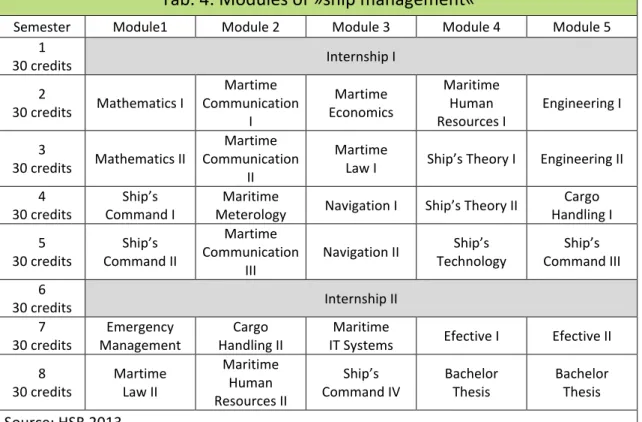
Tab. 4: Modules of »ship management« ... 32
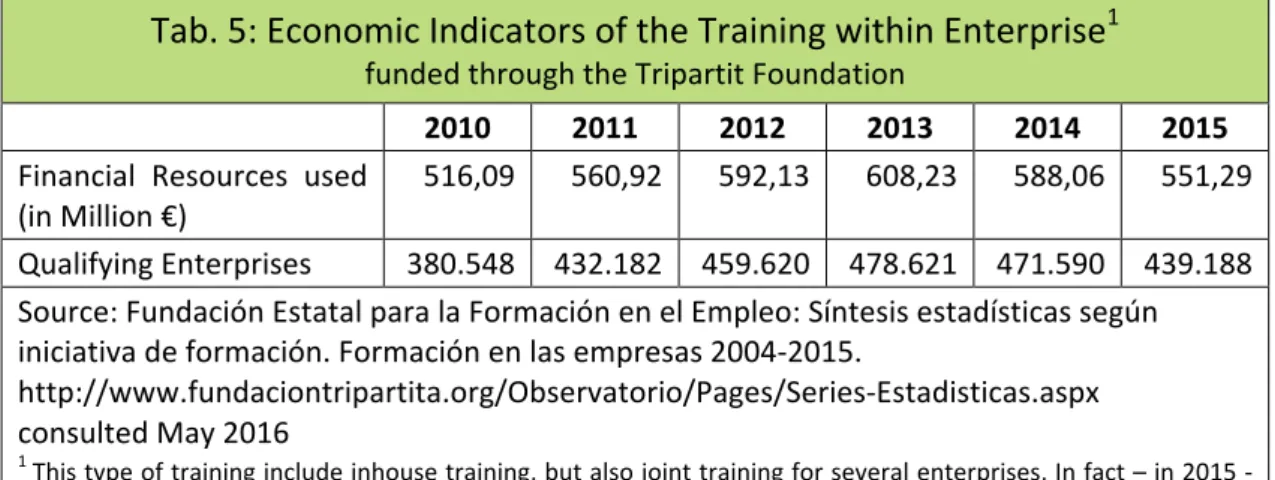
Tab. 5: Economic Indicators of the Training within Enterprise1 ... 40
Tab. 6: Participants by education level in Training in Enterprise ... 40
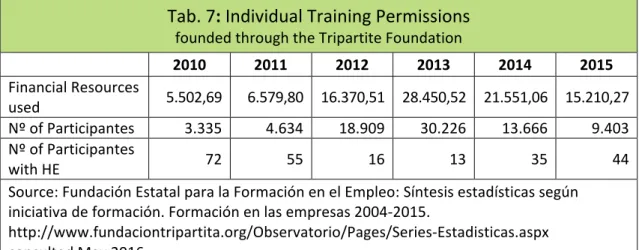
Tab. 7: Individual Training Permissions ... 41
Tab. 8: Apprentice wages (€) ... 41
Tab. 9: Funding of HE and Adult education in DE ... 42
Tab. 10: Ministry of National Education’s budget distribution for adult education* ... 44
Tab. 11: Budgets of Ministry of National Education and HEC+Universities* ... 45
Tab. 12: Public support for tertiary education ... 46
Tab. 13: Fees and financial support for higher education ... 47
Tab. 14: Percentage of younger adults (25-34 years old) with tertiary education ... 48
Tab. 15: Participation rate in education and training (last 4 weeks), Age from 25 to 64 ... 49
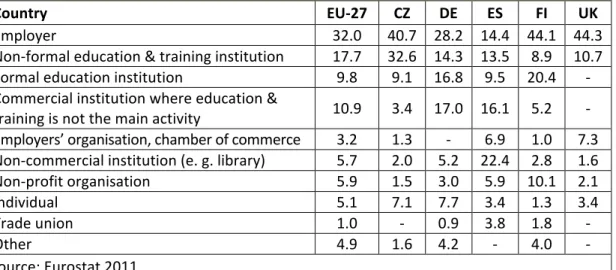
Tab. 16: Providers of non-formal education and training activities, 2011 ... 49
Tab. 17: 1st Typology of University Lifelong Learning Programmes ... 75
Tab. 18: 2nd Typology of University Lifelong learning Programmes ... 77
Pictures Picture 1: Structure of the Spanish education system ... 15
Picture 2: The relevant part of the German educational system ... 17
Picture 3: National Structure Scotland 2014/15 ... 18
Picture 4: The Finnish system of education ... 22
Picture 5: The Czech system of education ... 24
Picture 6: Number of Students in 1989 – 2014 (CZ) ... 26
Picture 7: Share of people with higher education ... 50
Picture 8: Unemployment rate of people with higher education of the whole population ... 51
Picture 9: Unemployment rate of people with higher education ... 52
1 Introduction
It has long been suggested that in order to meet the requirements of the knowledge economy, university provision for adult learners is crucial. In its resolution of 2011 on modernising universities for Europe’s competitiveness in a global economy, the Euro-pean Council claimed
»to improve the identification of training needs, increase the labour market relevance of education and training, facilitate individuals’ access to lifelong learning opportunities and guidance, and ensure smooth transitions between the worlds of education, training and employment.« (EU 2011a)
The Council recognised the need to increase lifelong learning opportunities to: widen access to higher education, boost employability and upgrade the skills of adult popu-lation. This requires close cooperation between public services, education and training providers and employers at all levels.
One of the key elements of this modernising strategy is to encourage higher edu-cation (HE) institutions to be more accessible to non-traditional learners including adult students; and to develop further their role in lifelong learning, increasing, where appro-priate, the diversity of the tertiary education system.
This is confirmed in the strategy framed in the new master plan »Europe 2020«. In the strategy paper »Supporting growth and jobs – an agenda for the modernisation of Europe's higher education systems« (EU 2011b) one of the key policy issues is to encourage a greater variety of study modes (e.g. part-time, distance and modular lear-ning, continuing education for adult returners and others already in the labour market) to increase flexibility and therefore widen access.
However, each policy and their concrete outcomes must be subject to an evaluation measuring their efficiency. It is thus important to develop tools to evaluate the strategies of universities to provide programmes of study which develop labour market relevant skills and competences. This is of particular relevance to their programmes of adult education, which are mainly at least in part, funded by students themselves or by enter-prises. Both students and enterprises expect an adequate return on their investment. An evaluation of the labour market efficiency of such programmes will be a valuable re-source to allow institutions to adapt their programmes to local and regional labour mar-ket needs and to avoid poor investments or labour marmar-ket and skill mis-match.
The LETAE project examines selected cases of »apparent good practice« in the participating countries of Germany, Scotland, Finland, Turkey, Spain, and Czech Republic; analysing potentials and examining barriers to their successful articulation with the labour market, establishing a dialogue between institutional and external stakeholders about ways to increase the labour market efficiency of the programmes and provide tools that attempt to measure this.
This project will promote the labour market articulation of tertiary adult education programmes, facilitated by universities, in relation to the demands of external stakehol-ders in the form of industrial organisations, enterprises, public sector and worker’s representatives. It is expected that, orientation to this specific, but still broad area of demand, will contribute to mitigate and ameliorate the qualification gap outlined above. In the following, we present the results of a study about university-enterprise coope-ration in the field of tertiary lifelong learning (TLL), university adult education or using the old fashioned term continuous training at tertiary level. We selected and analysed
three cases per country of university-enterprise programmes for adults, who already have labour market experience but who want to participate in education and training measures offered by universities to improve or consolidate their labour market position. These case studies are complemented by desk research about the institutional context of university higher education in each of the partner countries.
Core questions not only address the regulation of TLL systems within national quali-fication systems, but also examine the degree to which labour market actors are inte-grated in the design and delivery of the programmes. The project asked specifically for universities programmes in the area of further training to improve or consolidate the labour market position of adult students and its impact on their work performance. For this reason, we exclude all experience of business-university cooperation in the field of initial educational programs, which participants tend to enter directly after compulsory education.
We do not consider programmes analysed as representative of the offers for conti-nuous education in the respective countries, but all of them show both potential bene-fits and obstacles of cooperation and collaboration between enterprises and other exter-nal stakeholders in the field of education. Chapter 2 »Methodological questions«
presents briefly the methodologies – »case studies« and »mutual learning« – applied in the project.
National strategies towards TLL depend strongly on the respective national educati-onal systems: for this purpose chapter 3 »Institutional context« offers a comprehensive insight into the educational systems of participating countries, focussing on similarities as well as differences that might strengthen or weaken mutual learning.
Chapter 3 is subdivided into 4 sections, beginning with a »Short overview of the educational systems and educational structures« of participating countries. Section 3.2 focuses on »Systems and structures of work based/work related learning in HE resp. adult education«. It will be no surprise if we mention in this introduction that funding is one of the most crucial elements in all the selected cases, and, given the importance of this issue section 3.3 is devoted to »funding« and the different approaches and mechanisms adopted by participating countries. Although the project and this report are drawn from qualitative research, the presentation of macro-data provides a context within which to situate the relevance and potential impact of cooperation between universities and the world of work, and thus some basic statistics from official sources (e.g. OECD; Eurostat) are quoted and analysed briefly in section 3.4 »Statistics on Educational structures and Graduate labour markets«.
A comprehensive overview of the 18 cases (3 per country) can be consulted in Chap-ter 4 »Case study fiches«; detailed comprehensive case studies as well as the national re-ports are available for download on http://www.letae.eu/. Chapter 5 »Tentative typology« offers attempts to classify the university lifelong learning programmes in respect of the social needs, to which they gave response.
Chapter 6 »Potential of university-business cooperation in the field of higher education« consists of a summary in respect to our findings on university-business cooperation in the area; and, the potential, which it offers to align university education and training more closely to the labour market.
2 Methodological questions
In this section, we will briefly discuss some methodological issues starting with the question, what we consider as university adult education. This is followed by two sub-sections on the methodologies of the empirical research: non-representative multiple case studies and mutual learning seminars.
What is University adult education?
In recent decades, lifelong learning has played an important role in EU-education poli-cies. In the key Commission document »Making a European area of lifelong learning a reality« (EU Commission 2001a) lifelong learning is defined as
»all learning activity undertaken throughout life, with the aim of improving knowledge, skills and competences within a personal, civic, social and/or employment-related perspective« (Ibid 9).
The same document welcomed the idea that lifelong learning is not restricted to a specific age or education period and neither to a specific learning mode. The definition includes all forms of learning.1 When the focus comes to learning activities of those
people who have left initial education and training, lifelong learning is often termed as adult learning, In the Communication »Adult learning: It is never too late to learn« the European Commission (2006) stated:
»Definitions of adult learning vary, but for the purpose of this Communication it is defined as all forms of learning undertaken by adults after having left initial education and training, however far this process may have gone (e.g., including tertiary education)« (Ibid 2).
Moreover in the European Adult Learning Glossary, Level 1 (2008: 5) Brooks & Burton include in adult education all formal, non-formal and informal learning activities of adults.
It also includes higher education in the case that the adult does not come directly from other education tracks. That means, initial higher education of students, coming e.g. from secondary schools, are excluded from this definition. But such a definition must include also initial (higher) education where the students are considered to be adults. In this sense Bélanger & Valdivielso (1997) characterized adult learning as any educational activity structured in terms of content and time frame, and aimed at serving adults who are outside of the formal education system (see also Bélanger & Bochynek 1997).
Tertiary education is defined as the level of education following secondary schooling – provided by universities and other higher and further education institutions. Often, tertiary education is used as a synonym for higher education. Tertiary education is not the same as university education. Universities are a core element of tertiary education, but there are other providers of tertiary education such as tertiary colleges or higher vocational schools2. This is reflected in the new ISCED 2011, where eight levels are
distinguished reserving the levels ‘5’ to ‘8’ for higher education. Similar, taking the
1
The OECD (2007) referring to a paper of Behringer & Cole (2003:7) used a similar definition: »Learning -activity that is undertaken throughout life and improves knowledge, skills and competences within personal, civic, social and/or employment related perspectives. Thus the whole spectrum of learning – formal, non-formal and innon-formal, is included, as are active citizenship, personal fulfillment, social inclusion and professional, vocational and employment related aspects.”
2
For instance in Spain, training for higher technicians, considered as part of higher education, is provided by vocational schools.
lification as point of departure, the European Qualification Framework also established eight levels applying the last four to higher education resp. Continuous Vocational Edu-cation and Training (CVET, see Tab. 1).
Tab. 1: Levels of Education and Qualification following ISCED and EQF
ISCED1 EQF2
Level 5 Short-Cycle Tertiary HE short cycle (CVET)
Level 6 Bachelor or Equivalent First cycle (CVET)
Level 7 Master or Equivalent Second cycle
Level 8 Doctoral or Equivalent Third cycle
1 The ISCED is a frame to classify achieved education levels allowing an international comparison.
On the contrary, the EQF defined the levels of qualification using three criteria: knowledge, skills and competences. But as we see, from the 5 level onwards, the congruence between both
classifications is very high. The ISCED defines: »Tertiary education builds on secondary education,
providing learning activities in specialised fields of education. It aims at learning at a high level of complexity and specialisation. Tertiary education includes what is commonly understood as academic education, but is broader than that because it also includes advanced vocational or professional education« (UNESCO 2011: 42)
2 European Qualification Framework, see European Union (2008)
Our project sought to investigate the social impact of adult education provided by full universities or universities of applied science, excluding other types of adult education, namely CVET. Following the aforementioned pragmatic definitions, we are studying the learning provision of universities for adults who have left initial education and training many years before (in general, people older than 25 years).
We prioritise the impact on the labour market situation of the learners. This does not exclude studying the relationship of university adult education to the »initial« higher education curricular structure of the Bologna cycle.
2.1 Case study approach3
This chapter presents the methods used for collecting data on the university adult education programmes based on the cooperation between universities and enterprises aimed to develop and test tools to measure their social effectiveness. Different EU-wide University Adult Education Programmes were selected, studied and compared in order to detect the relevance of work-linked learning and the social effectiveness of University Adult Education (UAE). Our methodology is based on a multiple case study approach combined with desk and statistical research. Additionally mutual learning seminars, both on national and transnational level, were designed in order to involve project external experts and practitioners from the field of UAE in the project development from the beginning.
The Case Study method is deemed to be particularly well suited to study contem-porary phenomena within real-life contexts, where the relevant behaviours cannot be manipulated [Yin, 1994]. More specifically, we adopted a Multiple-Case Study research
3
strategy, comparing different university programmes oriented to adult learners across a selection of EU countries and Turkey.
Our study was exploratory (rather than purely descriptive or fully interpretative) in nature, answering the following research question: »what are the conditions under which UAE programmes become socially effective in terms of access to jobs and quality of work?«
The analysis of social effectiveness was targeted to study the degree to, and the con-ditions under which:
1. The different programmes successfully open higher education systems to adults. 2. Participation in such programmes facilitates the transition between labour market
episodes for adults to achieve the desired quality of work. The underlying themes were:
- The effectiveness of UAE in increasing the value of the individuals’ capital stock and improving their position in the labour market.
- The impact of UAE on labour performance in the work place.
To evaluate the social effectiveness of programmes, our project adopted a twin perspective: 1. The individual perspective: Persons, who have decided to participate in learning
programmes, always develop some expectation of its impact on their life. The aim is to discover if the UAE programme has fulfilled these expectations in terms of access to jobs and/or quality of work.
2. The enterprise perspective: enterprises facilitating employee access to (university) adult education through in-house or external training have some expectations on the return of investment. Our approach allows us to evaluate the impact of participation in UAE-programmes from a multiple capital perspective on the impact of programme participation on work performance.
A second aspect analysed by the project was the relevance of work-related learning provision for the effectiveness of these programmes. It does not ask so much about the relevance of internships but for the interrelation of learning with concrete working environments or the application of work oriented didactics (problem based learning, project learning, collaborative learning etc.).
The construction of an analytical model is a prerequisite for specifying the data collection tools in the form of interview protocols [see Mariani & Krüger 2013]. The units of analysis were concrete University-based Lifelong learning programmes. Eighteen (three in each Country) programmes provided a cohort of case studies for comparative analysis. Our case studies relied principally on the systematic semi-structured interviewing of key people.
In a semi-structured interview, the researcher must have a set of pre-defined questions [interview protocol] at hand, but he or she is free to change the order of the items and to add or skip some. Semi-structured interviews are less systematic and more qualitative in nature than structured ones, allowing the collection of a richer set of data and evidences. The drawback is that a systematic comparison among the answers provided by respondents might be difficult.
An interview protocol refers to the instructions and to the list of specific open-ended questions that were submitted to each target group of respondents. We designed a unique interview protocol useful both for analysing the variables for social inclusion and
for TLL teaching and learning methods. In addition, our research approach distin-guishes between two main types of target: TLL providers and TLL users (students). Because of this, two different versions of the unique interview protocol were designed [see www.letae.eu]
To select the interviewees, a snowball process was followed:
1. Start by interviewing one decision maker of the HE institution within our re-search programme (i.e. the one who makes the agreement). At the end of the interview, we asked him/her to indicate other decision makers/ lecturers and students who can conveniently be interviewed4;
2. Contact and interview people identified by the first interviewee and ask each one to indicate other decision makers/ lecturers and students who can conveniently be interviewed until the necessary set of information and data has been collected.5
Before starting to investigate all the case studies (which proceeded in parallel), the interview protocols were tested in one preliminary pilot study in Spain. This pilot testing provided evidence for the validity of the overall research plan ensuring that:
- The questions are clearly understood and unambiguous. - The length of the interview is acceptable.
- The collected data support the research goals.
To perform the necessary analysis on the collected data, some interviews were audio-recorded. Together with the additional secondary data, the interviews were used to write individual case study reports that were proof-read by the interviewees. To maintain consistency and ensure comparability, these reports maintained a common structure very similar to the structure of the interview protocol.
2.2 Mutual Learning Seminars
The second main pillar of the empirical methodology used in the project has been the mutual learning seminar approach developed and successfully applied in a previous research project.6
Mutual learning has become prominent in the context of the Open Method of Coordination (OMC) of the EU to coordinate policy development in such key areas as employment, social policy and education & training. The OMC assumes that member states or entities (e. g. universities) within a state can learn from each other by exchan-ging apparent good practice experiences and jointly establishing benchmark indicators. In another context, mutual learning is seen as an essential element of policy develop-ment based on public participation [see Daniels & Walker 1996]. Our project adopted this participatory idea by creating a forum not only to present our research results and discuss them with practitioners, but also to reflect upon, share, consolidate and transfer
4 This also allowed the possibility to ask the interviewee which questions in the interview protocol are in need of
further elaboration.
5
The overall number of interviews to be performed depends on the information collected in each interview. Again, in this case, we’re not aiming to achieve a representative sample. On the contrary, the aim should be to reach ‘saturation’, that is each partner should perform enough interviews to generate sufficient data about the subject under investigation (or to answer in a satisfactory way the questions contained in the interview protocol).
6
We make reference to the THEMP project co-funded by the European Commission within the Lifelong Learning programme, in particular Mariani & Krüger 2013.
experiences on university adult education generally. This will hopefully influence the practice of adult education in European universities.
In this sense, mutual learning is a dialogue between project researchers, external experts and practitioners in order to facilitate the design, implementation and evaluation of project results; and, improve the practice of adult education in universities. It origi-nates from the interrelationship between good social science, good practice and good learning. With reference to the learning concept of Kolb [1984] the mutual learning workshops combine social scientific conceptualisation, scientific observation, and active experience; thus creating space for reflective discussions around adult education at universities.
In our project, mutual learning has been interpreted as an active component of social learning. »The process of defining the problem and generating alternatives makes for meaningful social learning as constituencies sort out their own and others’ values, orien-tations and priorities« [Daniels & Walker 1996: 73]. Mutual learning uses techniques that facilitate understanding of such complex matters as university adult education and its link to labour markets and employment policies. It combines the presentation of infor-mation with dialogue in order to allow participants to clarify the scope and definition of problems within the field of study.
These techniques are designed to stimulate creative discussion among participants from different countries and/or different kinds of institutions. Because of the nature of the project, our mutual learning seminars did not aspire to develop new policies or strategies on university adult education. The objective was to provide an informed environment for the discussion of different experience on these issues, thus creating ideas and inputs into future development of strategies and policies at the universities, as well as indicators for future research in the field.
Two national mutual learning workshops in each participating country and two trans-national mutual learning workshops comprised an essential part of the overall project flow. The first workshop was intended to promote discussion on the proposed ap-proach and methods and their viability and suitability for the analysis and design of TLL as a viable component of social and employment policies. The objective was to intro-duce the viewpoint of practitioners in the field of university adult education into the approach and methodology design from the beginning.
The second workshop was convened to discuss the research findings and their implications for TLL development within the framework of social and employment policies. As such, both transnational workshops can be interpreted as opportunities for validation and exchange rather than data collection.
The content and structures of the national WS were more open; trusting that researchers from participating countries know best which themes would attract their national experts most – and would deliver best feedback to the LETAE consortium.
3 Institutional context
3.1 Short overview of the educational systems and educational structures
Spain
The Spanish education system is characterised by unique education tracks at the level of compulsory primary and secondary education, where the differentiation of type of schools is done by the funding of the institutions: public schools, private school and private schools with public funding.
After the compulsory stage, there are two options to follow education (see
Picture 1):
1. The general education track: which delivers an education certificate allowing access to higher education; which can be higher vocational education & training or university education;
2. The vocational track: which delivers a medium technician certificate; the certificate together with an access test permits the student to access higher vocational education & training leading to higher technician certification. This certificate permits direct access to universities.
This means, that the higher education systems is clearly structured for a vocational track (higher technician) delivered in vocational schools and a general track at universities and associated education centres. The vocational track is structurally considered as a prior step towards university education. University education is characterized by its institutional homogeneity; except for specific academic fields (sports, music and arts), official higher education degrees (bachelor, masters and doctorate) are facilitated by only one type of institution: the full university.
Within this structure, demands for adult training derived from new political, cultural and labour conditions are not included and are delivered outside of the traditional educational system. Some were provided by social organizations through programs of Vocational Training and Continuing Education, and others directly by civil organizations, often without due social recognition. Some autonomous com-munities such as Andalusia, Catalonia, Galicia and Valencia approved specific laws for adult education but with the same practical difficulties of application. Outside the traditional education system, there was an intense development of vocational training in the1980’s. The INEM (currently the Public Service of State Employ-ment) activities during this period were based on a strategy of continuing improve-ment of Vocational Training and Professionalism Certificates. Through social dia-logue between the administration, trade unions and employers’ associations a series of national agreements for continuing training were established since 1992. Starting from these agreements it was understood that professional training was fundamental in responding to labour market needs.
In parallel, the Law of University Reform of 1983 authorized universities to carry out unofficial teaching activities and offer continuing education and training, and therefore they were allowed to attract different student profiles. Moreover, this law granted the possibility to offer degrees with diplomas different to the officials. In practice, continuing education and training became widespread in the 1990s, fo-cused on the graduate level and with a strong professional orientation. Given the
proliferation of programs of continuing education and training offered by Univer-sities and also the existence of varied programs offered by non-university entities, there was an increasing need for homologating denominations and characteristics. At the University level, the objective was to apply some homogeneous criteria and to secure the specificity and quality of its continuing education and training pro-grams. Two agreements arose, one in 1988 for the Catalan universities, on the deno-minations and characteristic of the graduate degree studies and their certification; and another in 1991, for all Spanish universities, distinguishing the scope of con-tinuing education programs between master, specialist, expert and postgraduate diploma degrees. The first one, of at least 50 credits, has as prerequisite a university degree; specialist and expert were programs of at least 20 credits directed to gra-duates or undergragra-duates but with at least a Baccalaureate certificate; the ability to grant a postgraduate diploma would be for other training initiatives.
Picture 1: Structure of the Spanish education system
However, although universities’ continuing education and training depends on the autonomy of each institution – there are no legal guidelines –, the objective of supply flexibility and better matching with demand was achieved; the practice created a varied and heterogeneous supply of programs obstructing recognition and transferability among institutions. At the same time universities began to develop short courses to address specific social specialisation demands, among which we find firm-tailored courses with even more heterogeneous denominations and dura-tions, including language courses or initiatives such as the university for people (focused on participants of more than 50 or 55 years). In this way university
continuing education and training has responded to the three above-mentioned dimensions: professional, social and academic. Regarding the final dimension, one must also keep in mind the realization on the part of the adult population university official studies: at the moment Bachelor’s, Master’s and Doctorate.
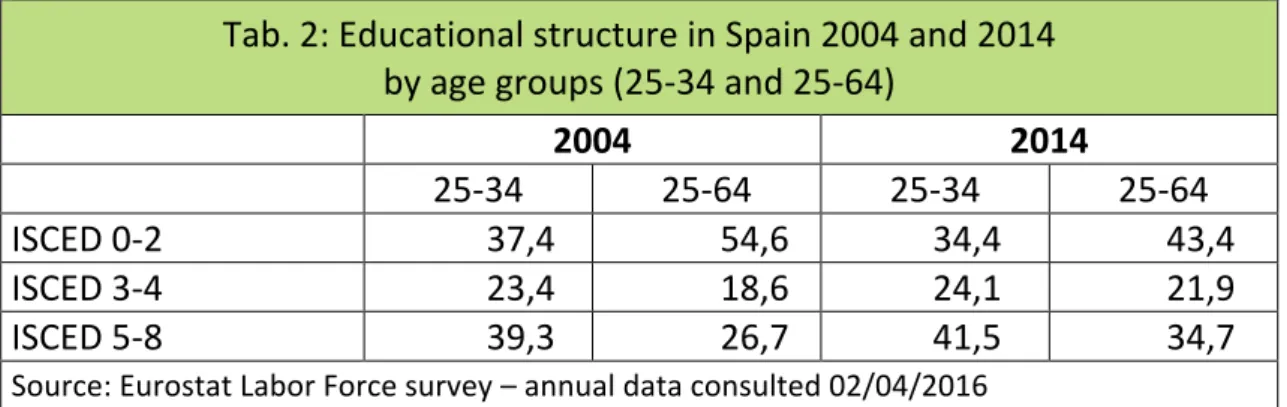
The relevance of university continuous training – compared to many other EU-countries – must be seen in the context of the Spanish education structure and the development of the labour market. The educational structure of the Spanish popu-lation is a unique case among the EU member states. As Table 1 shows in Spain the rate of low educated people is with distance the highest followed by the rate of high educated people among the population between 25 and 64 years. But among the population between 25 and 34 years this is a reverse situation, the rate of people with higher education is higher than the of people with a low education level. In both age cohorts, the lowest rate is the one for medium educated people. This dual structure is persistent in time (taking as reference the period from 2004 to 2014), observing, however that the rate of people with low education level is decreasing constantly, meanwhile the rate of people with medium and higher education is increasing.
On the other side, studies about sub-utilisation of labour forces indicate continuous mismatch (ILO, 2014). That means, the Spanish rate of underemployed higher educated people is always the highest or at least the second highest rate among the analysed countries (Cedefop, 2015).
In this circumstance, there is a considerable demand of continuous higher education facilitating additional certificates improving so the labour market per-spectives of graduates. As mentioned before, this type of higher education and training is not regulated by the state, in terms of content and fees. But there is a more or less coherent structure observable with mainly one and two year pro-gramme, but also shorter and tailor made programmes.
Tab. 2: Educational structure in Spain 2004 and 2014 by age groups (25-34 and 25-64)
2004 2014
25-34 25-64 25-34 25-64
ISCED 0-2 37,4 54,6 34,4 43,4
ISCED 3-4 23,4 18,6 24,1 21,9
ISCED 5-8 39,3 26,7 41,5 34,7
Source: Eurostat Labor Force survey – annual data consulted 02/04/2016
On the other hand, even in the traditional higher education track, there is an increa-sing demand for a stronger vocational orientation of university education promoting more industrial master and PhD programmes. In so far, the issue of work related or work based learning at universities is one of the main topics in the Spanish higher education debate.
Germany
The structure of the German Educational System is based on two mighty pillars: At the end of the 4th year7 of elementary school pupils have to decide (or the decision is
made by teachers or parents) whether they want to go to university later and choose the track »Gymnasium« or whether they want to start an apprenticeship after their 10th year of (compulsory) general schooling (Hauptschule or Realschule).
Compared to this distinct frontier or threshold the difference between General and Higher Education (GE and HE) is not that sharp. The German Gymnasium covers the middle and upper parts of GE. At the upper stage it performs like a college, (which may be part of university level studies in other countries), the assign-ment of »Gymnasiale Oberstufe« either to GE or to HE is not a trivial thing.
The attempts to bring HE and work related learning together started in Germany with the latter! The ordinary career of a German young adult led from compulsory school to an apprenticeship; then to CVET – ways leading to HE have been exclu-ded for the mass of the school leavers; HE used to be an exclusive field for a small privileged amount of population (~10%): Any bridge between HE and work related learning had to be built from the VET-side. Picture 2 illustrates the way decisions can be made.
Picture 2: The relevant part of the German educational system (with the apprenticeship system as its centre)
This section aims at understanding the way Germany has developed to what we have to face now in a more or less European defined situation. To characterise this situation from the general German perspective as the latter is bound to the facts set by the recent reforms resulting in an elaborated VET regime the leading questions of our project require a different interpretation. In Germany the need to open HE to workplace or work related learning cannot be the way to include the latter into
7
the Educational System — as there already is a broad offer of vocational learning fixed in institutional structures; it is a question of opening workplace and work rela-ted learning to HE. In Germany the last step to terminate reforms aiming at parity of esteem now seems to come: Replacing the traditional VET regime by HE will import all the problems other countries have to include workplace and work related learning into HE.
The 2 mighty pillars sketched in general respective vocational education (Abitur resp. Haupt-/ Realschule followed by IVET) find their prolongation afterwards: HE at university (or university of applied sciences) level was only available for applicants with Abitur; the standard career paths for others – after finalising IVET – were CVET-courses.
Aiming at increasing the options for university studies for students without the Abitur, the German Ministry of Education and Research recently introduced a pilot initiative »open universities«; supporting 47 pilot projects allowing people without Abitur to study, to:
assure sustainable supply of skilled workforce,
- increase permeability between VET and HE, - assure fast transfer of knowledge to practice,
- and to allow universities to develop a profile within the area of LLL. (Source: oh_2015)
United Kingdom (Scotland)
We will first provide a general overview of the Scottish educational sector; briefly introduce the historical context for the development of adult education in higher education before moving on firstly to summary of lifelong learning in general, and then more specifically at the development and provision of work based learning in higher education.
Picture 3: National Structure Scotland 2014/15
Source: Eurydice
It is important in any discussion of UK higher education to note that education is a devolved matter meaning that each of the constituent parts of the UK (England, Scotland, Wales and Northern Ireland) develops and implements its own policy; and, in relation to where this diverges between England and Scotland specifically in
relation to post-compulsory provision the differences will be noted. The post-com-pulsory system in the UK consists of universities, Higher Education Colleges (HECs) and Further Education Colleges (FECs) with the majority of providers fun-ded by the state. There have been recent inroads to the sector from private provi-ders particularly in England which has travelled furthest down the road of the direct marketization of post-compulsory education. The emergence of private providers has been subject to criticisms about quality, oversight and monitoring in particular in relation to issues of finance; specifically, access to public funding with a critical report released by the National Audit Office which provides scrutiny of public spending on behalf of Parliament. In Scotland the FE sector has also been subject to reorganisation which has resulted in the creation of a framework with 13 regions and 27 colleges. In ten of the regions a single regional College exists, often created from the merging of local FECs under one umbrella organisation.
Higher education at sub-degree level delivered in FECs plays an important role in widening participation in Scotland with 64% of HE qualifications awarded from FECs in Scotland (2012-13) at HNC/HND levels. The power to award degrees is regulated by law in the UK and there is a distinction between Recognised bodies which are institutions that can award degrees (these would be recognised as univer-sities), and Listed bodies that offer courses which can lead to an award from a Re-cognised body; in addition, there are also institutions which can award their own unique degrees known as Recognised awards. At present there are 156 Recognised bodies with 16 of them in Scotland and only six of them, all in England, which are private institutions with four for-profit and two which operate as privately funded charitable bodies. In relation to Listed bodies, 653 institutions were identified with a considerable number of these recognisable as FECs. A review by Parry et al., suggests that in England, some 349 FECs exist, the majority (283) offering some HE level provision; while a survey by the Department for Business, Innovation and Skills (BIS) noted 674 private providers of higher education which they reckoned was a very conservative estimate.
FECs are providers of both non-advanced vocational education below HE level and of short cycle Higher Education of one or two year duration, equivalent in the national credit frameworks across the UK of one or two years of the Bachelors offered in universities and HECs. In England, the creation of the Foundation Degree, two year programmes with a vocational or employment focus, has replaced the previous Higher National Diploma (HND) while in Scotland the HND and its one year pre-requisite, the High National Certificate (HNC) are still awarded.
A further difference in the form of qualifications between England and Scotland relates to duration; and, while in England an Honours degree is typically three years in duration; in Scotland students may exit at the end of third year with an Ordinary degree or as the majority do continue to fourth year and exit with an Honours degree.
Given the likelihood (across the UK) of those studying in FE to be older, have lower levels of formal qualifications gained in compulsory education and to come from disadvantaged and under-represented groups; higher education delivered in further education is an important element in ensuring more adults have access to higher education to address the skill requirements of the knowledge economy as set out above.
Turkey
Adult education in Turkey has been an important issue since the foundation of the Republic of Turkey. In the early days of the Republic, adult education was regarded as the most important means not only to eliminate widespread ignorance, poverty, and illiteracy but also to introduce the ideals and values of the Republic to the public and develop the country (Miser, Ural, and Ünlühisarcıklı, 2013). As there was a common perception that informal education played a key role in development; it was considered as almost equally important as formal education (Miser et al., Ibid.). Thus, teachers and their associations worked to enlighten people in cities and coun-tries by talking to them about social change and teaching literacy until 1928 (Akyüz, 2010). After 1928 various institutions were founded aimed at educating adult people; Nation Schools in 1928, Vocational Evening Schools for Men in 1928, Vocational Evening Schools for Women in 1929, Public Reading Rooms in 1930, People's Houses in 1932, Training of Trainers in 1936, Village Courses in 1939, Village Insti-tutes in 1940, Evening Schools in 1942, Public Courses and Classrooms in 1953, and Community Development Studies in 1961 (Miser et al., Ibid.). In addition to the schools and courses, state radio and television has offered a variety of educational programs specifically to contribute public education (Akyüz, 2010).
Today, adult education in Turkey is delivered by a number of diverse institutions and organizations. These institutions and organizations are the Ministry of Educa-tion and subsidiaries including university, municipality, confederaEduca-tion/ trade union, foundations and associations (Turkish Statistical Institute, 2014). The total number of education/training courses provided by these institutions in 2013 was 72,321 in total, and 3,294,418 people have attended these courses (Turkish Statistical Institute, 2014). In the Turkey Statistical Agency report it stated that 65,1% of these courses were organized by ministry and subsidiary, 21,9% were organized by municipalities, 7,3% were held by foundations and associations, and other institutions organized 5,6% of them. In the report it also suggested that social studies, professions and law were the most common areas of education with the 27.8 percent.
In the report published by Ministry of Education, institutions that organize cour-ses for adults are classified as following; Public Education Center (Halk Eğitim Mer-kezi), Practical Art School for Girls (Pratik Kız Sanat Okulu), Ministry of National Education Distance Education Centres (MEB Uzaktan Eğitim Kurumları) and Pri-vate Education Institutions (Yayla, 2009). Among those the most common adult education institution is the Public Education Centres, which have 935 centres in total (Yayla, 2009).
Universities have a significant role among institutions involved in adult education in Turkey. Distance education is one of the biggest opportunities for adult educa-tion that is provided by universities. The first attempt at distance educaeduca-tion in Tur-key was the foundation of Teaching via Post Centre (Mektupla Öğretim Merkezi), in 1960 (Özer, 1989). This Centre provided 8 to 24-month-duration training for eleven professional and technical fields. In 1974, the Centre gained the function of provi-ding higher education. As a result of problems relating to organizational structures, this Centre stopped training in 1974 (Özer, 1989). Because of the intense need for education, distance education was restarted under a different organizational struc-ture. Thus, the Informal Higher Education Institution (Yaygın Yüksek Öğretim
Kurumu-YAYKUR) was established by Ministry of National Education in 1975 (Özer, 1989). This institution provided higher education thus solving the problem of people who wanted to go on higher education but could not enter the universities. About 85 thousand people registered on the teaching training programs of YAYKUR in 1975-1976. However, due to problems it stopped training and was closed in 1978-1979 (Özer, 1989). In 1981, universities had the right to deliver distance education and later in 1982 this role was given to Anadolu University which had the scientific knowledge, academic experience, qualified human resources and technical and technological basis that conformed to international standards (Ana-dolu University, 2015). In 2010, Istanbul University and Atatürk University founded distance education faculties. Today, Anadolu University has the largest student population, with approximately 1.4 million students in distance education with around 2.2 million graduates. It provides eleven undergraduate and thirty upper secondary programs not only for people in Turkey but also for Turkish people who live abroad (Anadolu University, 2015).
Continuing Education Centres (CEC) of universities are another important element of adult education in Turkey. Founded under The Law of Higher Educa-tion No.2547 Article 7, Continuing EducaEduca-tion Centres are organizaEduca-tions that aim to fulfil the lifelong education needs of adults by sharing the contemporary knowledge and experience of the universities with adult learners. The first CEC was founded within Middle East Technical University in 1991 and from 2000 the establishment of other CECs increased rapidly (Kılıklı, 2008). There are 184 universities in Turkey and 98 have CECs. CECs were gathered under the organisational umbrella of the Turkish Universities Continuing Education Centres Council (TUCEC), founded in 2011. The aim of this council was to let CECs become institutions that deliver more extensive, active, and qualified education and to enhance their collaboration with national and international institutions as well as providing more qualified educa-tional services. CECs design and implement their programs by considering the demands and needs of adults. This is usually to gain a profession, increase their professional competences, acquire new professional skills, or cater for their personal development needs through CEC programs (Bulut, 2009).
One of the other main institutions providing training and courses for adults to provide professional and occupational opportunities is Turkey Employment Agency (Türkiye İş Kurumu-İŞKUR). This agency is an intermediary between people see-king employment and enterprises seesee-king employees. In addition to its task of helping people find work; the agency also provides courses for people to allow them obtain a professional qualification.
Finland
The Finnish education system is built on the principles of lifelong learning and free education. The key words in Finnish education policy are quality, efficiency, equity and internationalisation. The system is characterized by a high degree of permeabi-lity between general and vocational sectors. A tripartite partnership among Govern-ment, trade unions and employer organisations is an integral part of policymaking.
Participation and consultation of a wide range of different stakeholders play a central role in educational reform. The main objectives and broad lines of the policy are defined at central level, but the implementation of these is devolved to the local
level. The main steering document in Finnish education policy is the Government’s Development Plan for Education and Research (Finnish National Board of Education).
Upper secondary education and training
After compulsory basic education school-leavers opt for general or vocational upper secondary education. Both forms usually take three years and give eligibility for higher education. Vocational education and training is popular in Finland, more than 40 per cent of the relevant age group starts vocational upper secondary studies immediately after basic education. The most popular fields are technology, commu-nications, transport, social services, health and sports. However, due to the modular structure of upper secondary education, students may combine studies from both general education and vocational education and training.
Picture 4: The Finnish system of education
Source: Eurydice
The selection of students for upper secondary school is based on their grade point average for the theoretical subjects in the basic education certificate. Entrance and aptitude tests may also be used, and students may be awarded points for hobbies and other relevant activities. Vocational qualifications can be completed in upper secondary VET, apprenticeship training or as competence-based qualifications. The majority of young learners complete their upper secondary vocational qualifications at vocational institutions. One of the main assessment methods there is the voca-tional skills demonstrations. Competence-based qualifications are usually completed by adults (Finnish National Board of Education, undated).
General upper secondary education ends with a national matriculation exami-nation, which comprises four compulsory tests: mother tongue and, according to each candidate’s choice, three of the following: the second national language, a foreign language, mathematics or one subject in general studies, such as humanities and natural sciences. Students may also include optional tests. The funding for upper secondary education and vocational education and training is based on the number of students reported by the school as well as on the unit prices set by the Ministry of Education and Culture.
Higher/Tertiary Education
The Finnish higher education system has a dual structure and consists of:
1. 14 Universities providing academic education based on research. All 14 uni-versities offer Bachelor’s, Master's, Licentiate and Doctoral degrees (3 + 2 + 4 years), and
2. 24 Universities of Applied Sciences (polytechnics) providing vocational edu-cation on a higher level and promoting applied research. Polytechnics confer Bachelor’s (from 3.5 up to 4 years) and Master’s (1 – 1.5 years) degrees. A student is eligible for polytechnic/UAS Master’s level studies after accom-plishing a Bachelor’s degree, and having acquired at least three years of rele-vant work experience after that.
Finnish universities are independent corporations under public law; or, foundations under private law. The Ministry of Education and Culture set operational and qualitative targets for each university, defines how these targets are monitored and evaluated; and determines the resources required every three years. Universities receive funding from the state but they are also expected to develop external funding streams.
The Czech Republic
In the Czech Republic, school attendance is compulsory for nine years (usually from the ages of 6 to 15). Compulsory education includes Primary and Secondary education. All pupils start in a comprehensive single structure institution called základní škola, during the second stage it is possible to proceed to secondary school providing general education (gymnázium) or to eight-year dance conservatoire.
Upper secondary education in the Czech Republic include three different types: 1. Secondary education completed with examination (ISCED 3A), that means:
– Upper secondary general education at gymnázium secondary school
(4 years),
– Upper secondary technical education at secondary school (4 years), or – Art education at conservatoire (4 years)
2. Secondary education leading to apprenticeship certificate (ISCED 3C)
– Upper secondary vocational education at secondary school (2/3 years)
3. Secondary education (ISCED 2C/3C)
– Upper secondary general and vocational education at secondary school
Post-secondary education include two types:
- Post-secondary education completed by examination (ISCED 4A)
- Post-secondary education leading to apprenticeship certificate (ISCED 4C) The tertiary education sphere is governed by two laws:
- Act on Higher Education Institutions (the Higher Education Act)
- Act on pre-primary, primary, secondary, tertiary professional and other education (Education Act), which has one section dealing with higher professional education.
Since 2001 the three cycle structure has strictly been implemented in higher education:
- Bachelor's study programme (ISCED 5A); - Master's study programme (ISCED 5A); - Doctoral study programme (ISCED 6).
Picture 5: The Czech system of education
In the past twenty years, the Czech tertiary system of education has undergone fundamental changes and dynamic development. At the present time higher education is provided at a total of 26 public (two of which are of non-university type, concretely Vysoká skola v Ceskych Budejovicích and Vysoká skola Poly-technická Jihlava) and two state schools. 90 % of students are studying at public and state educational institutions. In 1998 The Higher Education Act defined:
»the roles and responsibilities of the state administration and of the higher education institutions, their financing and management, studies, types of studies and their processing, the rights and responsibilities of students, the position and employment relations of academic staff.«8.
This act also permitted the establishment of private higher educational institutions. There are now 45 private higher educational institutions in the Czech Republic, almost all of them are non-university education (three of them are university type).
In the Czech Republic there are also Tertiary professional schools (Vyssí odborná skola) which deliver non-university higher education, and art education (Kon-zervatos). Higher education (Vysoká skola) has a long-standing tradition in the pre-sent Czech Republic, in comparison tertiary professional schools (Vyssí odborná skola) represent a new type of school, which were founded in 1992.
Tab. 3: Higher education institutions in the Czech Republic
Types of institution ISCED level Length (years) Theoretical age Konzervator – Art education 5B 2
2 17-19 19-21
Vyssí odborná skola
(tertiary professional school) 5B 3 (3,5) 19-22 Vysoká skola (higher
educa-tion institueduca-tion, university and non-university type) – Bachelor and Master's studies
5A 3-4/5/6/7
19-22/23/24/25/26
Vysoká škola (university
type) – Doctoral studies 6 3-4 -
In the Czech Republic prior to 1989 cooperation between schools and companies (all of them state owned) was strictly planned. The capacity of schools and work based interns was established according to the plan of production. Companies were controlled by national directives and they had a guaranteed sale even if they were not innovative. This had an impact on cooperation between the schools and com-panies. Interns were very often approached formally and the effectiveness of the cooperation for the companies was not a priority.
After 1989 the number of university students rapidly increased from 110,091 in 1989 to 327,495 in 2014. Three times more students (peak 2009) compared to the
8
period before 1989 and structural changes brought many new opportunities to the labour market which was suffering from a lack of professionals until 2010.
The development of a new tertiary sector had absorbed many employees from the industrial sector which was a national priority before 1989. Beside migration from the secondary to tertiary sector, university graduates were taking over positions in middle and top management.
The first ten years after the revolution were marked by a lack of brigade work for students but at the end of the millennium, qualified part time jobs for students grew rapidly. Students were not dependent on the universities for getting their first professional internships. During the economic crisis the situation changed: wages for new graduates dropped and many companies had to reduce staff. For many students getting a proper and effective internship provided by the university became the only opportunity to achieve initial job experience.
The increasing number of university students was supported by the establishment of private universities. Those universities are often part of the discussion concerning the quality of adult education. This discussion ignores the fact that those universities focus on cooperation with enterprises and their alumni often achieve a higher employment rate compared to alumni from public universities.
Picture 6: Number of Students in 1989 – 2014 (CZ)
Source: Eurostat
Generally Czech schools lack know-how and experience for systematic collabo-ration with external enterprises. Therefore the National Office for Education orga-nized a project: Pospolu (Together) which aimed to develop: closer cooperation bet-ween vocational schools and business enterprises and designs and tests an optimal system of cooperation between these partners.9. This is part of national policy
9
http://www.cedefop.europa.eu/pl/news-and-press/news/czech-republic-project-pospolu-together-fosters-cooperation-between-schools-and
toward the popularization of technical education among Czech society.10 This was
followed up with the Year of Industry and Technological Education 2015 and:
Measures supporting systemic changes were intensified under the campaign umbrella. The most important include signing the national agreement on human resources development, eight sectoral agreements for selected industries, and thirteen regional sectoral agreements. These agreements should improve cooperation among companies, schools and regional administration and also support further use of the national register of qualifications and the national register of occupations.11
National contexts: a summary
The above, cited from the national reports, mirror a heterogeneous landscape not only of educational systems but also of the understanding of the participating researchers of educational structures that are relevant for the LETAE project. Some national reports like the Finish or German refer to the whole educational system, including VET, other like the Czech or UK/Scottish report focus on HE. This might be influenced by the engagement of companies in VET; Finland (part of labour policies for older persons) and especially Germany (IVET) have strong approaches to apprenticeship, whereas in other countries like Spain companies expect that public bodies, either VET-schools or universities, deliver well-skilled workers – both blue and white collar.
The economic and political preconditions of participating countries must also be taken into account: three of the countries (Germany, Scotland, and Finland) are, compared to the others, relatively rich and consequently pressure on educational structures is rather low. On the other hand Turkey does still have a certain backlog in labour market developments and low educational levels of the population (relative to the European mean); the Czech Republic, as all CEE-countries still struggles with the consequences of the overthrow of the former socialist regime (for example was apprenticeship in state combines an essential part of planned economy – maybe the idea to disestablish apprenticeship together with planned economy wasn’t the best one); and Spain suffers (beside Greece) most under the current economic crisis; going hand in hand with a high youth unemployment ratio many of whom have higher education qualifications.
A first, preliminary, summary can be drawn: Educational systems, all over the world, are in a constant process of adaption and modernisation due to economic pressure and as they seek to compete in the ‘global knowledge economy’ although as we suggest later, the policy rhetoric does not always match the reality of the labour market. In Scotland, Germany, and Finland this process is characterised by incremental developments of existing educational structures, while Turkey still has the need to make major changes to and investments in existing structures. The Czech Republic still seeks equilibrium for structures as they develop in both public and private sectors and Spain reacts with many efforts, partly hectic, to the economic crisis – but the Spanish HE system as such is very conservative although 10 http://www.cedefop.europa.eu/pl/publications-and-resources/country-reports/czech-republic-vet-europe-country-report-2014 11 http://www.cedefop.europa.eu/en/news-and-press/news/czech-republic-looking-back-year-industry-and-technical-education