COMMUNITY HEALTH WORKER CERTIFICATE PROGRAM EVALUATION
A DISSERTATION SUBMITTED TO THE GRADUATE DIVISION OF THE UNIVERSITY OF HAWAI‘I AT MĀNOA
IN PARTIAL FULFILLMENT OF THE REQUIREMENTS FOR THE DEGREE OF
DOCTOR OF PHILOSOPHY IN PUBLIC HEALTH MARCH 2018 By Charlie Schlather Dissertation Committee: Kathryn Braun, Chairperson
Colette Browne Jane Chung-Do
Lehua Choy Robert Hirokawa
ABSTRACT
Racial and ethnic minorities in the United States and in Hawaiʻi experience greater mortality and morbidity than non-minorities from many chronic conditions, including heart disease, cancer, and diabetes (Centers for Disease Control and Prevention, 2011; Centers for Disease Control Division for Heart Disease and Stroke Prevention, 2015; Pobutsky, Bradbury, & Wong Tomiyasu, 2011). One approach to combating health disparities involves the use of Community Health Workers (CHWs). Valued for their strong connection to the communities they serve, CHWs effectively bridge the gap between providers and patients of differing ethnic and cultural
backgrounds to improve access to and quality of health care, especially for underserved minorities. To build CHW training capacity for the State of Hawaiʻi, the University of Hawaiʻi Maui College (UHMC) developed the CHW Certificate Program (UHMC-CHW), and a comprehensive evaluation was completed to determine its effectiveness in providing core competency training for CHWs.
This disseration was comprised of three studies. Study 1 measured the effectiveness of the UHMC-CHW courses to teach students the CHW core
competencies and improve student confidence in applying these competencies in the field. Overall, students gained knowledge and confidence in CHW core competencies and were satisfied with the courses in meeting their training needs.
Study 2 used qualitative methods to collect CHW employer perspectives on the effectiveness of the UHMC-CHW in preparing new and incumbent CHWs for the
workforce in Hawaiʻi. Employers reported student participation in the program improved self-confidence and performance in the field.
Study 3 administered a survey to measure the impact of the UHMC-CHW on the careers of certificate completers. Graduates reported employment and wage gains, improvements in the core CHW skills, satisfaction in the program, and a desire to continue their education.
Taken together, findings confirm the program was successful in teaching
students the core CHW skills, building confidence in applying those skills, and ultimately improving performance in the field. The program positively impacted the careers of
graduates. Results provide validation for the effectiveness of for the UHMC-CHW to provide core competency training for Hawai‘i’s CHWs.
TABLE OF CONTENTS
ABSTRACT ... ii
LIST OF TABLES ... vi
LIST OF FIGURES ... vii
LIST OF ACRONYMS ... viii
CHAPTER 1: Introduction ... 1
The Current State of College Delivered CHW Training Programs ... 5
The University of Hawaiʻi Maui College CHW Certificate Program ... 10
Research Goals ... 13
Conceptual Framework ... 14
Community Partners ... 17
CHAPTER 2: A Survey of Student Satisfaction, Learning and Confidence Abstract ... 19 Introduction ... 19 Methods ... 20 Results ... 25 Discussion ... 30 Conclusion ... 32
CHAPTER 3: Employer Perceptions of the UHMC-CHW Abstract ... 33 Introduction ... 33 Methods ... 35 Results ... 39 Discussion ... 43 Conclusion ... 47
CHAPTER 4: The Certificate Program’s Impact on Student Careers Outcomes Abstract ... 48 Introduction ... 48 Methods ... 50 Results ... 53 Discussion ... 57 Conclusion ... 60 CHAPTER 5: Conclusions Summary of findings ... 61 Recommendations ... 63
Future research directions ... 65
APPENDIX A: Study 1 Pre/Posttest Surveys ... 66
APPENDIX B: Study 2 Interview Guide and Consent Form... 105
APPENDIX C: Study 3 Survey ... 109
LIST OF TABLES
Table 1.1 Systematic review of college delivered CHW training programs ... 7
Table 1.2 Evaluation results of college programs reviewed ... 8
Table 1.3 CHW-NEC recommendations utilized in UHMC-CHW development ... 12
Table 1.4 C3 Core Skills addressed in UHMC-CHW ... 12
Table 2.1 Characteristics of students completing pre/posttests ... 27
Table 2.2 Knowledge and confidence pre/post comparisons ... 28
Table 2.3 Student Satisfaction ... 29
Table 3.1 Interviewee Characteristics ... 37
Table 4.1 Graduate Characteristics ... 54
Table 4.2 Graduate self-rated skills improvement ... 55
Table 4.3. Graduate career rewards and goals ... 56
LIST OF FIGURES
Figure 1.1 UHMC-CHW Program Development Process ... 13
Figure 1.2 Central Research Hypothesis ... 13
Figure 1.3 CDC-FPEPH... 14
Figure 1.4 TOP Model ... 15
Figure 1.5 Logic Model Adapted from the TOP Evaluation Model ... 16
Figure 2.1 Pre/Posttest Survey Design ... 22
LIST OF ACRONYMS
ANOVA Analysis of variance
C3 CHW Core Consensus Report
CCSF The City College of San Francisco
CDC-FPEPH Centers for Disease Control and Prevention Framework for Program Evaluation in Public Health
CHC Community Health Center
CHW Community Health Worker
CHW-NEC Community Health Worker National Education Collaborative
HPDP Health Promotion Disease Prevention Course
IOM Institute of Medicine
NH Native Hawaiian
NHOPI Native Hawaiian and Other Pacific Islanders
UHMC-CHW University of Hawaiʻi Maui College Community Health Worker
CHAPTER 1
INTRODUCTION
Racial and ethnic minorities in the United States and in Hawaiʻi experience greater mortality and morbidity than non-minorities from many chronic conditions, including heart disease, cancer, and diabetes (Centers for Disease Control and Prevention, 2011; Centers for Disease Control Division for Heart Disease and Stroke Prevention, 2015; Pobutsky, Bradbury, & Wong Tomiyasu, 2011). Cultural differences, limited English-language proficiency, substandard living conditions, poverty, and other social determinants of health are contributing factors. Unequal treatment of minorities within health care systems and by providers also has been implicated (Committee on Understanding and Eliminating Racial and Ethnic Disparities in Health Care, 2003).
One approach to combating health disparities involves the use of Community Health Workers (CHWs). According to the widely accepted American Public Health Association (APHA) definition, a CHW is
a frontline public health worker who is a trusted member of and/or has an unusually close understanding of the community served. This trusting
relationship enables the CHW to serve as a liaison/link/intermediary between health/social services and the community to facilitate access to services and improve the quality and cultural competence of service delivery. A CHW also builds individual and community capacity by increasing health knowledge and self-sufficiency through a range of activities such as outreach, community education, informal counseling, social support and advocacy (American Public Health Association, 2009, para 4).
Valued for their strong connection to the communities they serve, CHWs
effectively bridge the gap between providers and patients of differing ethnic and cultural backgrounds. Also referred to as outreach workers, health navigators, and promotores, CHWs work in a variety of social service and health care settings. Evidence of their effectiveness in improving health outcomes for underserved and disadvantaged
populations has grown substantially over the last two decades (Rosenthal et al., 2011). CHWs have been shown to improve outcomes for patients with chronic disease
(Brownstein et al., 2007), increase appropriate healthcare utilization (Viswanathan, 2009), and promote positive health behaviors (Swider, 2002).
Despite the promise of CHWs to improve access to and quality of health care, especially for underserved minorities, development of the workforce has been
hampered by unsustainable short-term grant funding (U.S. Department of Health and Human Services Health Resources and Services Administration Bureau of Health Professions, 2007). Consensus is growing among CHWs and stakeholders that standardized CHW training will lead to increased health care integration of and more stable funding for CHWs (Dower, Knox, Lindler, & O’Neil, 2006; May, Kash, &
Contreras, 2005). Recent developments indicate forward momentum of the CHW profession. In 2000, APHA developed the Community Health Worker Special Primary Interest Group (CHW SPIG). In 2009, CHW SPIG published a policy recommendation that urges CHWs and policymakers to create “common definitions and nationally recognized standards of core competencies for CHW practice, based on an updated understanding of core CHW roles” (American Public Health Association, 2009, para 28).
In addition, the Bureau of Labor Statistics added a unique CHW Standard Occupation Code that supports the recognition and legitimacy of the CHW workforce (Office of Management and Budget, 2010). In 2015 the Center for Disease Control and Prevention published a policy brief supporting the utilization of CHWs in the prevention and treatment of chronic disease (Center of Disease Control National Center for
Chronic Disease Prevention and Health Promotion, 2015).
Under the Affordable Care Act of 2010, and as a component of the triple aim of health reform, CHWs are acknowledged for their emerging role in addressing issues such as hospital readmissions, Patient Centered Medical Homes, and improving the health of underserved communities and the health care experience of their constituents (Bovbjerg, Eyster, Ormond, Anderson, & Richardson, 2013). In the backdrop of health care reform, there appears an opportunity for further integration of the CHW workforce within the health care system.
Healthcare professionals (doctors, nurses, social workers, administrators)
serving marginalized and underserved groups are often ethnoculturally mismatched with their patients. In studies of provider/patient discordance, compared to white patients,
minority patients experience lower levels of trust and satisfaction and greater difficulty communicating with their provider. When given the choice, minority patients preferred to see providers of the same ethnicity and cultural background (Cook, Kosoki-Lasaki, & O’Brien, 2005). According to the Institute of Medicine (IOM), poor patient-provider relationships contributes to health disparities experienced by minority groups (Institute of Medicine, 2003).
Amborse et al. (2012) found that Native Hawaiians and other Pacific Islanders (NHOPI) are underrepresented in the physician workforce, with several communities having no NHOPI physicians to choose from. In an effort to redress this issue, The University of Hawaii’s John A. Burns School of Medicine created Imi Ho’ola, a program to increase recruitment and graduation of physicians from underrepresented groups, including Native Hawaiians and Pacific Islanders. Considering the overall shortage of the physician workforce in Hawai‘i (Withy, Dall & Sakamoto, 2010), in addition to the underrepresentation of NHOPI in the physician workforce, more needs to be done to increase healthcare provider capacity, especially for minority status groups.
Although CHWs are not physician substitutes, they are well positioned to address ethnocultural discordance between providers and patients. A defining characteristic of CHWs is their membership in the communities they serve. They often share cultural ties, language, and life experiences with their patients and serve as effective brokers between minority individuals and race-discordant health providers. Building capacity and use of CHWs in Hawai‘i may serve to mitigate the problematic impacts of
provider/patient discordance.
Nationally, the CHW workforce is largely comprised of minority (62%) women (82%), ages 30-50 (55%). Education levels range from a high school diploma (35%), some college (20%), 2-year degree (7%) and 4-year degree (31%) (U.S. Department of Health and Human Services Health Resources and Services Administration Bureau of Health Professions, 2017). Belonging to this demographic places CHWs firmly in the communities they serve (e.g. insider status); it also presents a major challenge. While CHWs have been utilized for decades, they have yet to enjoy the profession status and economic benefits of others healthcare workers, such as doctors, nurses and social workers. Instead, CHWs continue to hold subordinate roles and low wages within the
healthcare workplace, and often experience feelings of being marginalized and undervalued. Standardized training has helped these other professional groups legitimize their standing in the healthcare workforce. In a survey of New York CHWs and employers, 92% of employers wanted to hire CHWs who have completed a
standardized training program, and 80% of CHWs were interested in completing formal training if it were available (Findley et al., 2012). Measures that demonstrate an
elevated profession include, higher wages, greater responsibilities and scope of care, and recognition and respect shown by other healthcare professions. As standardized and stakeholder-sanctioned CHW training programs are developed and implemented, it is important to measure the impact such trainings have on the careers of individual CHWs and the profession as a whole.
The IOM noted inconsistencies in CHW training, roles, scope of practice, and qualifications as barriers to CHW integration into the health care system (Committee on Understanding and Eliminating Racial and Ethnic Disparities in Health Care, 2003). In fact, most CHWs have gained their skills on the job (usually in community-based health and social service agencies) and lack formal college training in the CHW field (U.S. Department of Health and Human Services Health Resources and Services
Administration Bureau of Health Professions, 2007).
Consensus is building within the CHW profession and stakeholder groups on CHW roles, scope of care, and training (Mason et al., 2011). An iterative process to define the CHW field began in 1998 with the publication of the first national survey of the CHW workforce (Rosenthal et al., 1988), followed by an update in 2007 (U.S. Department of Health and Human Services Health Resources and Services
Administration Bureau of Health Professions, 2007). Continuing to build upon this work, the CHW Core Consensus (C3) Project released a progress report in 2016 outlining CHW core roles and skills endorsed by the wider CHW and stakeholder communities (Rosenthal, Rush, & Allen, 2016). The C3 report marked a critical step in the movement toward a nationally recognized set of core competencies on which to build standardized training programs and stable reimbursement streams.
A lack of stable funding for CHW services has hampered its potential to close health disparity gaps experienced by minority and disenfranchised populations. CHW
allies are advocating for greater integration of CHWs into the United States health care system, especially in primary care (Balcazar et al., 2011), with the hope of more secure funding. Several states and municipalities have developed training programs that have contributed to increased health care integration and reimbursement for CHWs.
Minnesota’s standardized CHW training and certification program is one such example. With the goal of providing greater recognition, wider utilization, and stable funding for CHW services in Minnesota, several stakeholder groups coalesced to
develop the Minnesota Community Health Worker Alliance in 2004. The alliance defined CHW roles and scope of care and then developed a statewide standardized CHW training program in higher education that resulted in a state-issued CHW certificate that allows CHW enrollment as Medicaid providers under Minnesota’s Health Care
Programs (Crum, 2012). As of 2012, seven states had laws authorizing Medicaid reimbursement for a variety of CHW services (Centers for Disease Control and Prevention, 2013). It appears there is increased community interest in developing standardized CHW core competency training programs to assist in moving the profession toward greater legitimization, health care integration, and the promise of more reliable funding sources, such as Medicaid.
The Current State of College Delivered CHW Training Programs
Currently, CHWs acquire training in a number of settings, including on-the-job, through state agencies, and colleges. The length and content of training provided to CHWs across the nation vary widely. Some CHWs enter the field with little or no formal training, while others complete college certificates totaling as many as 20 college
credits. As of December 2016, 15 states had either established, or were moving toward, formalizing training requirements for CHWs (London, Carey, & Russell, 2016).
CHWs and stakeholders recommend offering credit-based training programs when feasible (Balcazar et al., 2011; Catalani, Findley, Matos, & Rodriguez, 2009; Rosenthal et al., 1998). Over the last two decades, colleges have increasingly been developing and offering credit-based CHW training programs, which opens academic pathways into fields such as social work and public health. Community colleges are particularly suited to providing training to the unique needs of the CHW profession. CHWs tend to be members of minority and disenfranchised groups that are less likely to
attend and/or succeed in college due to individual (e.g., English language proficiency) and environmental (e.g., transportation) challenges. Unlike traditional four-year
universities, community colleges are uniquely suited for these non-traditional students, with open-door enrollment policies and remedial academic support. Based on reviewing the impact of CHW training and certification programs in 17 states, Kash, May & Tai-Seale (2007) recommended initiating community college delivered training in order to create vertical mobility and career advance within the CHW profession.
In 2015, I completed a systematic search of peer-reviewed articles that described and/or evaluated college-delivered CHW training programs. Twelve of the seventeen colleges included in the systematic review relied on community input to inform program and curriculum development. These collaborative relationships served critical functions, including identifying unique community and CHW workforce needs, informing the
development and refinement of curriculum, recruiting participants, and providing community spaces to offer classes. Community health centers (CHC) were most commonly identified as partners (Dumbauld, Kalichman, Bell, Dagnino, & Taras, 2014; Ruiz et al., 2012; Farrar, Morgan, Chuang, & Konrad, 2011; Kash et al., 2007), followed by community- based agencies (Proulx, D.E., 2000; Bate-Ambrus et al., 2015;
Wennerstrom, Johnson, Gibson, Batta & Springgate, 2014), and government agencies (Hites et al., 2012).
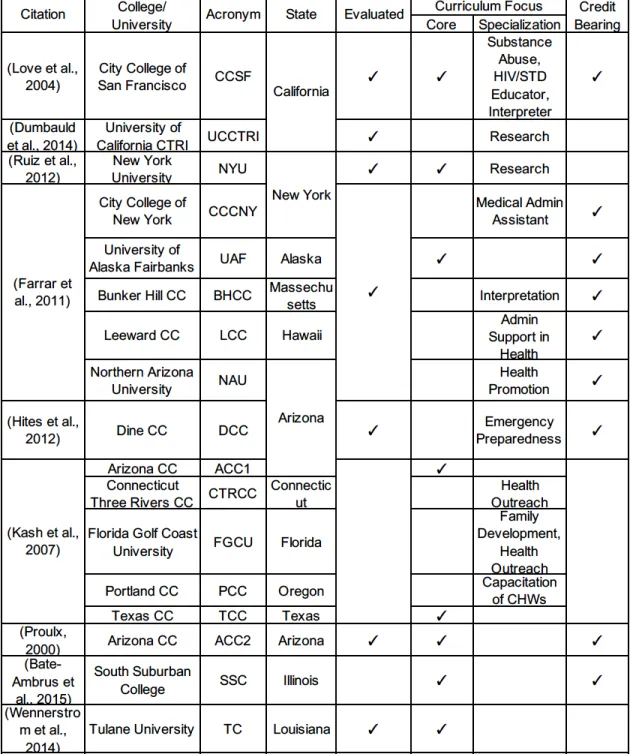
Nine articles describing and evaluating 17 such programs across the United States were identified (Table 1.1). Eight college programs developed curricula that focused on CHW core competencies (Love et al., 2004; Ruiz et al., 2012; Farrar et al., 2011; Kash et al., 2007; Proulx, 2000; Bate-Ambrus et al., 2015; Wennerstrom et al., 2014), and nine provided training specific to a given setting (e.g. emergency
preparedness, Hites et al., 2012) or skill (e.g. research skills, Dumbauld et al., 2014). While CHWs and allies prefer training that provides college credit, only four of eight programs delivering core competency training also offered college credit (Love et al., 2004; Farrar et al., 2011; Proulx, 2000; & Bate-Ambrus et al., 2015). All four credit-bearing programs were administered at community colleges, while the other four non-credit programs were administered through 4-year institutions (Ruiz et al., 2012; Kash et al., 2007; Wennerstrom et al., 2014).
Table 1.1. Systematic review of college delivered CHW training programs
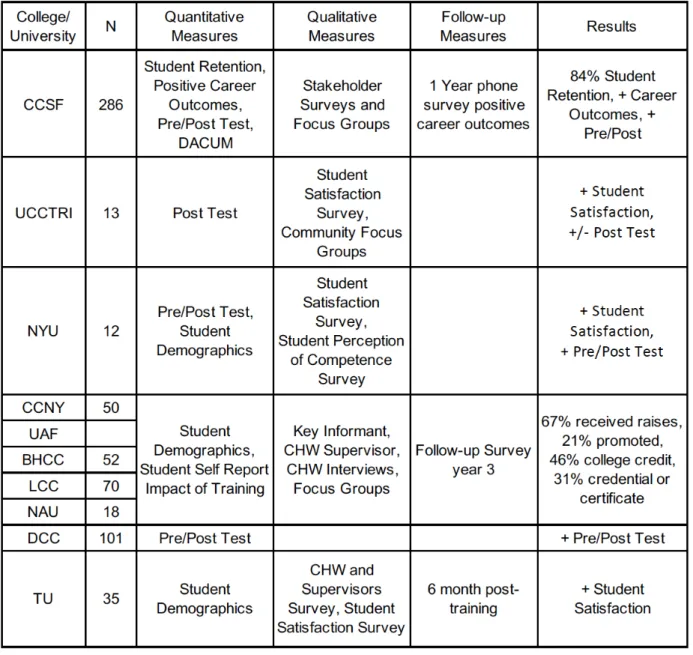
Evaluation outcomes were reported for 10 of the 17 training programs (Table 1.2), and all utilized non-experimental research designs. Evaluators most commonly used pre/posttests to measure knowledge acquisition (n=4, Love et al., 2004; Dumbauld et al., 2014; Ruiz et al., 2012; Hites et al., 2012), followed by participant satisfaction with the training (n=3, Dumbauld et al., 2014; Ruiz et al., 2012; Wennerstrom et al., 2014),
and participant confidence in applying knowledge and skills taught (n=3, Ruiz et al., 2012; Hites et al., 2012; Wennerstrom et al., 2014). Questionnaires were the most commonly utilized method of data collection, followed by individual interviews and focus groups.
Table 1.2. Evaluation results of college programs reviewed
All four studies that utilized pre/posttests to measure knowledge acquisition reported statistically significant improvement in posttest scores, and their samples sizes ranged from 12 to 286 participants. Evaluators reported positive outcomes for all 10 programs, including improved self-efficacy, increased CHW knowledge and skills,
promotions and raises, and increased confidence in participating in future college courses.
The career outcomes of students were measured in two of the ten studies (Love et al., 2004; Farrar et al., 2011). The City College of San Francisco (CCSF)
administered phone surveys one year following graduation from the program (Love et al., 2004). The second study reported on the implementation and impact of 5 separate CHW training programs involved in the Jobs to Careers initiative. Training participants completed a written survey at the beginning and end of a three-year grant period (Farrar et al., 2011). Common measures taken across both studies included wage increases and promotions for incumbent (already employed) workers, job placement, and continuing as a college student. The Jobs to Careers study also conducted individual interviews with employers of training participants and reported barriers and facilitators to college-delivered CHW training (Farrar et al., 2011).
Programs that utilized quantitative data (e.g., student pre/posttests) alongside qualitative data (e.g., employer interviews) were able to triangulate outcomes, providing the most compelling evidence of the quality and impact of CHW training programs on students and employers. Overall, the literature review found that college-developed, delivered, and evaluated CHW training programs yielded promising results.
Several colleges included in the review developed training programs with consideration for the unique characteristics of the CHW workforce. CHWs tend to be members of minority and disenfranchised groups that are less likely to attend and/or succeed in college. Individual (e.g., English language proficiency) and environmental (e.g., transportation) challenges to student success were identified and used to inform teaching and assessment strategies. While colleges have historically assessed student learning through traditional methods such as standardized multiple-choice tests, non-traditional students perform poorly on these measures. Two programs reviewed were reported to assess students’ ability to apply the attitudes, skills and knowledge of the CHW profession through performance-based assessment tools, such as case-based scenario exams (Hites et al., 2012) and performance-based mock interviews (Love et al., 2004). These teaching and assessment strategies appear to have benefited the non-traditional CHW students in programs reviewed. Introducing college coursework
through programs that consider the unique needs of the CHW population appears to open a door to higher education for some which might not occur otherwise. Considering the recommendations made by the IOM for a more diversified health care workforce (Committee on Understanding and Eliminating Racial and Ethnic Disparities in Health Care, 2003), college CHW training programs may fill an important need in attracting diverse populations to pursue career pathways in health care.
Despite the encouraging returns reported from programs included in this
systematic review, it is not clear if this accurately reflects the quality, content, pedagogy and development of the majority of programs across the nation. In addition, this review found a wide variation in the quality of data collected for program evaluation, with 5 out of 10 programs judged to have poor program evaluation designs. This indicates a need to increase the quantity and quality of published peer-reviewed articles evaluating college CHW training programs.
The University of Hawaiʻi Maui College CHW Certificate Program
Through support from a Trade Adjustment Assistance Community College Career Training (TAACCCT) round IV grant, in 2015 the University of Hawaiʻi Maui College (UHMC) initiated the development of a CHW Certificate Program (UHMC-CHW) to be offered in Maui County and later disseminated to three other University of Hawaiʻi Community College campuses. The certificate is made up of 5 courses: CHW
Fundamentals, Counseling & Interviewing, Case Management, Health
Promotion/Disease Prevention (HPDP), and a Capstone Practicum. The certificate can be completed in one year, although students move through the program at their own pace. Students earn 15 college credits, which can ladder to UHMC’s Associates in Human Services and a planned Kapiolani Community College Associates in Public Health. The courses follow a progression of the core attitudes, skills, and knowledge of the CHW profession, from basic understanding of the core competencies taught in CHW Fundamentals (e.g. ethics and cultural humility), to the Capstone Practicum, where students are placed in clinical and community-based agencies, to apply knowledge and skills learned in class to the field. CHW Fundamentals and HPDP are courses specific to the UHMC-CHW in content and participants, while the other three courses within the certificate are generalized to the UHMC Human Services Associate in Science.
Two resources critical to the initial development of the UHMC-CHW included the CHW-National Education Collaborative (CHW-NEC) guidebook (Arizona Area Health Education Centers Program Community Health Worker National Education
Collaborative, 2008), and the CHW Core Consensus Report (C3) (Rosenthal et al., 2016). In 2004, a grant from the U.S. Department of Education’s Fund for the
Improvement of Postsecondary Education was awarded to the University of Arizona Area Health Education Centers Program to “explore the best approaches for college-supported CHW-responsive education” (Arizona Area Health Education Centers
Program Community Health Worker National Education Collaborative, 2008, preface p. 2). The CHW-NEC was formed to complete the grant aims and included 15 adapter colleges and 6 supportive technical assistance colleges. A guidebook for developing college-supported CHW education programs was published in 2008 that outlined promising practices for curriculum development and pedagogical design. According to their recommendations, programs should engage local employers, stakeholders, and experienced CHWs during curriculum development to assure the content reflects the needs of the community. Programs need to eliminate barriers to program admission, including college prerequisites. The curriculum should address the core competencies of the profession, and students should be evaluated using a performance-driven assessment process. Programs should be student-centered, with courses offered at times and in locations that meet the needs of participants, develop prior learning for credit, and use popular education/adult learning instructional approaches (Arizona Area Health Education Centers Program Community Health Worker National Education Collaborative, 2008). CHW-NEC’s recommendations served as a blue print for creating a college delivered training program at UHMC that is responsive to the unique needs of CHWs in Hawai‘i (Table 1.3).
Table 1.3. CHW-NEC recommendations utilized in UHMC-CHW development
Program Development
Engaging active/ experienced CHWs and employers as advisors to program development
Starting with an entry-level basic certificate program
Avoiding pre-requisite requirements for admission to an entry-level basic course of study
Curriculum Design
Evaluating existing college courses to support the CHW curriculum Integrating a performance-driven assessment process
Instructional Approaches
Using flexible scheduling like block scheduling and weekend classes Providing instruction which is student-centered
Integrating popular education/adult learning approaches into instruction Assessing prior learning for credit
The C3 is acknowledged by CHWs and stakeholders nationwide, and describes the qualities, roles and skills that make up the core competencies of the CHW
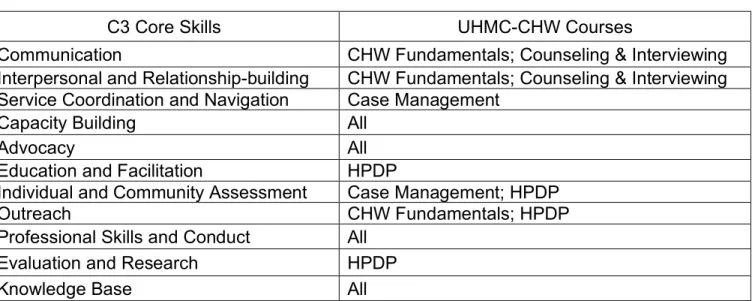
profession (Rosenthal et al., 2016). The UHMC-CHW is designed to teach the 11 core skills outlined in the C3 Core Consensus Report (Table 1.3).
Table 1.4. C3 core skills addressed in UHMC-CHW courses
C3 Core Skills UHMC-CHW Courses
Communication CHW Fundamentals; Counseling & Interviewing
Interpersonal and Relationship-building CHW Fundamentals; Counseling & Interviewing
Service Coordination and Navigation Case Management
Capacity Building All
Advocacy All
Education and Facilitation HPDP
Individual and Community Assessment Case Management; HPDP
Outreach CHW Fundamentals; HPDP
Professional Skills and Conduct All
Evaluation and Research HPDP
Knowledge Base All
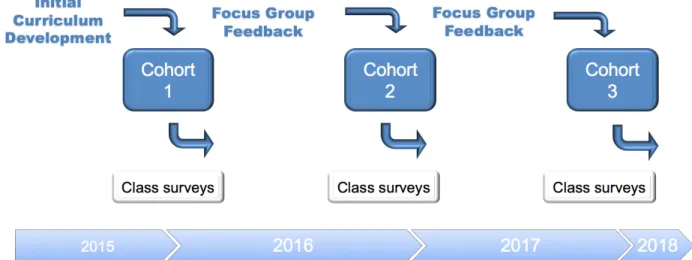
UHMC-CHW development began in the spring of 2015, and course offerings started in the fall 2015. Figure 1.1 outlines the iterative process of refining the
curriculum across three cohorts through regular feedback from students in the form of weekly class surveys and interviews and focus groups with employers and incumbent
CHWs. Information collected led to several program improvements, including refining pedagogical approaches, recruiting greater numbers of incumbent workers, increasing community practicum sites, adding more course content in advocacy, and incorporating more community guest speakers.
Figure 1.1. UHMC-CHW Program Development Process
Research Goals
My long-term goal is to contribute to the increased integration and utilization of CHWs in healthcare and social services through the dissemination of a statewide, standardized CHW training program. The objective of this dissertation was to evaluate the effectiveness of the UHMC-CHW in providing core competency training for CHWs. The central hypothesis was that CHW training developed and delivered from a process grounded in the promising practices of other programs, along with ongoing input and support from the community, would provide effective core competency training to CHWs in Hawaiʻi that would be accepted by CHWs and stakeholders (Figure 1.2).
Conceptual Framework
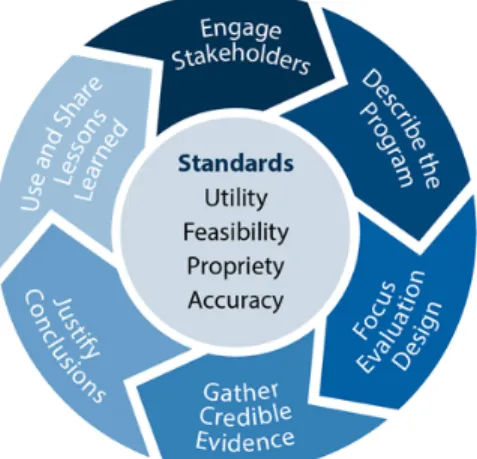
The Center for Disease Control’s Framework for Program Evaluation in Public Health (CDC-FPEPH) provided a comprehensive guide to planning, implementing, and utilizing evaluation as a tool for program improvement across the range of public health practice (U.S. Department of Health and Human Services Centers for Disease Control and Prevention, 2011). To assure comprehensive and meaningful evaluation results, this evaluation addressed the 6 steps outlined in the CDC-FPEPH (Figure 1.3). The first two steps, Engaging Stakeholders, and Describing the Problem are discussed in the Introduction section, while methods to Focus the Evaluation, Gather Credible Evidence,
Justify Conclusions, and Use and Share Lessons Learned are reported in the following methods sections of the three planned studies.
Figure 1.3. CDC-FPEPH (Centers for Disease Control and Prevention, Program Performance and Evaluation Office, 2016)
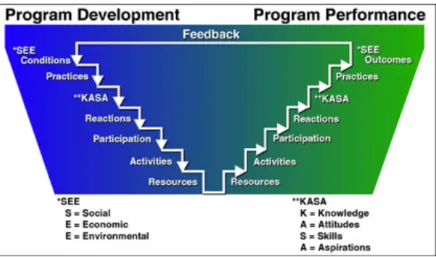
A second conceptual framework, Targeting Outcomes of Programs (TOP), informed the incorporation of program evaluation into program development and
planning processes (Figure 1.4). This is a hierarchal model that conceptualizes program development and performance (i.e. implementation) as mirror images of each other, allowing for the identification and targeting of outcomes across both stages of a program (Rockwell, Albrecht, Nugent, & Kunz, 2012).
Figure 1.4. TOP Model (Rockwell & Bennett, 2004)
A program logic model provides a picture of the critical components (i.e. inputs and outputs) assumed necessary to achieve the desired outcomes and impacts of a program. This model represents the sequence of activities that build upon each other to reach intended objectives (Tolley, Ulin, Robinson, Mack, & Succop, 2016). By placing TOP within a logic model framework (Figure 1.5), one can see the progression of steps taken to develop the curriculum and recruit participants (Inputs), implement the program and gather participant/employer feedback (Outputs), and measure anticipated proximal (Learning and Action) and distal (Impact) outcomes expected to occur as a result of programs activities. Environmental factors outside the program can serve to either help or hinder student success. These barriers and facilitators can exist within the larger college system, employers, and students’ personal life.
Each of the three studies in this dissertation focused on different stages of the logic model. Combining these results produced an evaluation of both the
implementation of program activities and the impact those activities have had on participants.
Figure 1.5. Logic Model – Adapted from the TOP Evaluation Model (Barkman, 2002)
Study 1 utilized a pre/posttest survey to measure participants’ satisfaction of the program in meeting their professional needs (Figure 1.5 Reactions) and the
effectiveness of the UHMC-CHW courses to teach core roles and skills and improve their confidence in applying these in the field (Figure 1.5 Learning). Participant
satisfaction was determined at posttest based on four Likert-scored items. Knowledge acquisition was measured by comparing students’ pretest and posttest performances on a 15-item multiple choice knowledge test. Changes in confidence was measured by students’ responses to a five-item, Likert-scored scale asking them to estimate change in confidence from the start and end of the course (i.e. retrospective posttest).
Study 2 explored CHW employer perspectives of the effectiveness of the UHMC-CHW in preparing new and incumbent UHMC-CHWs for the workforce in Hawaiʻi (Figure 1.5
Action). A qualitative analysis was conducted on data collected from individual interviews with practicum supervisors of certificate students and supervisors of
incumbent workers participating in the certificate program, to determine the degree to which the training adequately prepared students for the profession.
Study 3 utilized a quantitativeonline survey to measure the impact the training had on the careers of certificate completers, including career advancement, increased professional recognition and skills improvement (Figure 1.5 Impact).
Community Partners
To assure the UHMC-CHW is relevant and effective in meeting the needs of CHWs in Hawai‘i, and in accordance with the CDC-FPEPH, community involvement has been central in developing and evaluating the program. Several community partners emerged from the initial stages of development and have continued through evaluation. Lāna‘i CHC and Na Pu‘uwai (Molokai’s Native Hawaiian Health Center) are designated community partners in the TAACCCT IV grant. They have supported the program through initial and ongoing feedback on the curriculum, as well as providing practicum placements for certificate students.
Before launching the certificate program in Fall 2015, Program Specialist, Selene LeGare, contacted agencies in Maui County to determine which of the 11 C3 skills were most important for local CHWs. Key informant interviews were conducted with
supervisors and directors from 24 organizations in clinical, community-based and
government settings. Employers were asked a series of questions, including the number of CHWs employed in their agencies, the title of these positions, and the skills essential to performing the CHW role. Interviews were recorded using written notes taken by the interviewer and then entered into an Excel spreadsheet for analysis. A report was
generated that ranked the C3 skills in order of importance to employers (LeGare, 2016), and this provided the basis for the prioritization of skills taught in the curriculum. During this process, a number of agencies expressed interest in participating in ongoing
curriculum feedback activities and offering student practicum placements, including Mālama I Ke Ola (Maui’s Community Health Center), Hui No Ke Ola Pono (Maui’s Native Hawaiian Health Center), the Maui District Health Office, Maui Family Support Services, Mālama Family Recovery Center (gender-based residential substance abuse treatment center), and the Family Life Center (homeless shelter). These agencies remained engaged and supportive of the program and its students.
Community feedback regarding the development and evaluation of the program was collected from a number of formal activities. First, upon completing the first cohort
of classes in the Spring 2016, community feedback was collected from employer and CHW focus groups during the Summer 2016. Employers provided feedback on Study 2
interview questions, and students helped design the final draft of the survey for Study 3. Program feedback collected from incumbent CHW study participants in Studies 1 & 3
and from CHW employers in Study 2 assured community members were primary evaluators of the program. A summary of findings from this program evaluation will be shared with community partners, CHWs, and stakeholders in print and presentation formats.
CHAPTER 2
A SURVEY OF STUDENT SATISFACTION, LEARNING AND CONFIDENCE
Abstract
In the U.S., health disparities persist, with whites significantly outliving most minority groups (Committee on Understanding and Eliminating Racial and Ethnic Disparities in Health Care, 2003). CHWs improve health outcomes for minority patients (Swider, 2002), yet the lack of standardized training hampers efforts to fully integrate them in the healthcare system. This study measured student knowledge and confidence gained after participating in courses provided through a competency-based, credit-bearing, CHW certification program at the University of Hawai‘i Maui College (UHMC). Results indicated that, on average, students significantly improved knowledge of and confidence in applying core CHW competencies. Additionally, the program was able to recruit and retain students from ethnic minority groups that mirrored the community of patients served by Hawai‘i CHWs.
Introduction
In the U.S., health disparities persist, with whites significantly outliving most minority groups (Committee on Understanding and Eliminating Racial and Ethnic Disparities in Health Care, 2003). CHWs improve health outcomes of minority patients by increasing access to needed healthcare services (Swider, 2002) and improving communication between patient and provider (National Center for Chronic Disease Prevention and Health Promotion, 2013). There is increasing interest among providers, healthcare systems, and governmental agencies to further integrate CHWs into the healthcare system. The lack of standardized training hampers efforts to include CHWs in formalized healthcare services, a critical step in sustainable funding. Programs that are evaluated to be effective in teaching the CHW core competencies outlined by the C3 report provides a standard that the healthcare system can more readily support.
In searching the peer reviewed literature evaluating college-delivered CHW training programs, five articles provided evaluation outcomes on ten programs (Table 1.2). The most common program evaluation tool utilized was pre/posttests measuring student learning (n=4, Love et al., 2004; Dumbauld et al., 2014; Ruiz et al., 2012; Hites
et al., 2012), and these authors found significant improvement in posttest scores utilizing paired t-test analysis. The next most common measurement tool was the
student satisfaction survey (n=3, Dumbauld et al., 2014; Ruiz et al., 2012; Wennerstrom et al., 2014), and students in all of these studies were found to be satisfied with the training. Two programs (Wennerstrom et al., 2014; Ruiz et al., 2012) identified
increased levels confidence among some participants in applying the knowledge and skills taught. However, these data were collected through post course interviews with students, rather than surveys. No evaluations were found to report quantitative
measures of student self-rated improvement of confidence in applying the knowledge and skills taught.
Following the logic model discussed in Chapter 1, and prior CHW training program evaluations, this study administered a quantitative survey to UHMC-CHW students to measure their satisfaction with the training (Figure 1.5 Reactions), and change in knowledge of the core knowledge and skills taught in certificate courses (Figure 1.5 Learning). Additionally, missing from the previous evaluations reviewed, this survey attempted to quantify confidence gains in applying newfound knowledge and skill to the field (Figure 1.5 Learning). Based on Bandura’s construct of self-efficacy (1997), confidence is a critical element in learning and performance. Nursing students who reported increased confidence in applying new skills also demonstrated improved performance in the field (Harder, 2010).
Thus, my study addressed the following research questions: Do UHMC-CHW certificate courses improve student knowledge of and confidence in applying the CHW core roles and skills taught in class? How satisfied are students with these courses to fulfill their professional training needs?
Methods Study Design
This study used a quantitative pre-experimental, one-group design. Through the use of an online survey, knowledge acquisition was measured from questions given to students prior to the start of (pretest) and after completion of (posttest) two CHW
intervention survey, asking students to rate their confidence retrospectively (at the beginning of the course) and in the present (at the end of the course). A series of student satisfaction items were also included in the posttest survey (Figure 2.1).
Participant exposure to the CHW Certificate courses was the independent variable, and the three dependent variables were change in knowledge, change in confidence, and post-course satisfaction.
An online survey was chosen over a written format for three reasons. First, classes were held in a room where students had individual access to a computer, making it easy for students to access and complete. Second, response accuracy and completeness were improved by allowing only one response per knowledge question and requiring students to answer each question before moving on. Third, it is believed that students would feel more confident in their anonymity, because students did not turn in paper surveys to the front of the class and there were no hand written qualitative answers, both reducing the risk that the instructor could link answers to a specific student. The survey was created and administered using the online service, Survey Monkey, for its ease of use and inclusion of the features necessary to assure anonymity of responses.
The use of a control group was considered in the design of this study to provide a comparison to those completing the training. In reviewing 9 published studies evaluating CHW training programs, it was discovering that none used control groups in their
design, likely due to the practical challenges posed in recruiting control group
participants when piloting small, time-constrained, grant-funded curricula. This study ultimately opted not to use a control group due to time and resource limitations and ethical concerns in denying the CHW training to control group participants. The impact of this decision is discussed in the Limitations section.
Sample
Survey participants were recruited from the population of students who
completed CHW Fundamentals in the Fall 2017 (n=27) and Health Promotion / Disease Prevention (HPDP) in the Spring 2017 (n=22). Participants were unique across courses,
and the completion rate of both pre- and posttest surveys among all students finishing these courses was 94% (n=49 of 52).
Measures
The online pre/posttest survey was designed (Figure 2.1) to collected data on variables in 3 logic model domains (Figure 1.5), including Participants (demographics),
Reaction (student satisfaction) and Learning (i.e. knowledge acquisition, confidence). Pre- and posttests administered in CHW Fundamentals and HPDP courses can be found in Appendix A.
Figure 2.1. Pre/Posttest Survey Design
Participants/demographics. Multiple choice questions collected participants’ age (18-29, 30-39, 40-49, 50-59, 60+), ethnicity [Hawaiian, White/Caucasian (including European, German, Irish, Italian, English), Chinese (including Taiwanese), Filipino, Japanese (including Okinawan), Korean, Vietnamese, Asian Indian, Other Asian (including Laotian, Thai, Malaysian), Samoan/Tongan, Guamanian/Chamorro, Other Pacific Islander (including Polynesian, Micronesian, Fijian), Black/African American, Native American/Aleut/Eskimo/Inuit, Puerto Rican, Mexican, Portuguese,], education [High school degree or equivalent (e.g., GED), some college but no degree, Associate degree, or Bachelor degree)], and years of CHW Work experience (0, <1, 1-3, or 3+).
Reaction/student satisfaction. Four items measured this construct at posttest: 1) How satisfied are you with this course in meeting your professional training needs?, 2) How satisfied are you with the way the instructor taught this course?, 3) Overall, how satisfied are you with this course?, and 4) How likely is it that you would recommend this course to a friend or colleague? Each was measured on a 5-point Likert Scale, from
1=not at all satisfied (likely) to 5=extremely satisfied (likely). An overall satisfaction score was calculated by adding all 4 items, with a possible range from 4=not at all satisfied on all items to 20=extremely satisfied on all items.
Learning/knowledge acquisition. There were 15 multiple choice (1=correct, 0=incorrect) items specific to each course (Appendix A) that measured student knowledge acquisition. The C3 established a comprehensive list of the 10 core roles and accompanying 11 skills of the CHW profession that are widely accepted across CHWs and stakeholders nationwide (Rosenthal et al., 2016). This list was central in the development of the CHW Certificate courses and informed the content of the survey knowledge measures. Questions were in multiple-choice format, which is consistent with educational assessments found in prior college CHW training evaluations.
Following the CHW-NECs recommendations to adapt material to meet the needs of adult learners (Arizona Area Health Education Centers Program Community Health Worker National Education Collaborative, 2008), several questions were contextualized within a scenario. For example, instead of asking participants to choose the correct definition of “professional boundaries”, they are asked to determine how a CHW should respond to a situation (i.e. John is a CHW who has established a close relationship with a patient. The patient requested to friend (i.e. add) him on Facebook. John should...). Items in this section were summed to create a knowledge score for pre/posttest comparison. Unanswered items were scored as incorrect. A composite knowledge score, calculated by adding the number of correct items, had a possible range of 0=no correct answers to 15=all correct answers.
Confidence. Included in the posttest were 5 items that measured participants’ confidence in their ability to apply knowledge and skills taught during the course.
Specifically, participants were asked to self-rate, along a 5 interval Likert scale (1=not at all confident to 5=completely confident), their confidence prior to, and after completing the course to: 1) Explain who CHWs are and what they do; 2) Practice cultural humility when working with people of other cultural backgrounds; 3) Help someone in your community understand health insurance; 4) Identify the social determinants of health that affect individuals in your community; and 5) Maintain healthy boundaries with those
you help. Pre- and posttest items were summed to create a confidence Likert scale score with a possible range of 5=not at all confident, to 25=completely confident.
These items were adapted from the University of Southern Mississippi Self-Efficacy/Behavior Instrument for Objectives of CHAN Training Survey included in the
Community Health Worker Evaluation Toolkit (The University of Arizona Rural Health Office and College of Public Health, 2000). However, unlike Southern Mississippi’s tool, this survey utilized a retrospective pretest design, where students were asked to rate their confidence retrospectively (prior to the course) and presently (at the end of the course). This design was chosen in an effort to avoid a phenomenon known as the
response-shift effect, where participation in an intervention changes the frame of reference for participants (Lamb, 2005). Primary to educational interventions, students are expected to learn unfamiliar terms and concepts. Confidence items in this survey referred to terms, such as cultural humility, that participants were not likely to have fully understood prior to taking the course. Answering these items prior to taking the course would have elevated the potential for an inaccurate self-rating score. The decision to ask for pre-intervention confidence scores after participants have been exposed to the course stemmed from the belief that increased understanding of the material would increase the validity of baseline confidence scores.
Procedures
At the start of the first class, students were asked if they were willing to consent to participate in this study by completing a 15-minute survey. A Consent to Participate
statement was included at the beginning of the survey (Appendix A). To assure anonymity, participants created a unique identifier. This coding system allowed for anonymity of responses while also allowing for this researcher to match pretests and posttests for analysis. Students participated in the online pretest survey during the first 15 minutes of the first course (HPDP, 1/11/17; CHW Fundamentals, 8/24/17) and the posttest surveys during the last 15 minutes of the last class (HPDP, 4/27/17; CHW Fundamentals, 12/07/17). This study was approved by the University of Hawai‘i Institutional Review Board.
Data Analysis
Data was managed and analyzed using Microsoft Excel and SPSS (version 23.0; SPSS, Inc., Chicago, IL). Individual responses were downloaded from Survey Monkey
in Excel format. Pre/posttest knowledge and confidence composite scores were calculated in Excel prior to transferring data to SPSS for further analysis. To evaluate the ability of the program to reach all student groups, the five original demographic categories were conflated into the following dichotomous variable to allow for comparison: 1) Age (18-39, 40+), 2) Ethnicity (NHOPI, non-NHOPI), 3) College (no degree, degree), 4) CHW work experience (<1y., >1 y.), and 5) Course (Fundamentals, HPDP). A Chi-squared test was calculated to determine if there were significant
associations between these characteristics, for example, if the age and education distributions were similar in the two courses – CHW Fundamentals and HPDP. Paired t
test scores were estimated to determine statistically significant improvement in knowledge and confidence scores for students as a whole and by selected student characteristics, for example, prior CHW work experience and prior college experience. Lastly, a simple linear regression was performed to see if improvements in knowledge and confidence and post-course satisfaction held after controlling for differences across students in age, prior CHW work experience, and prior college experience.
Results
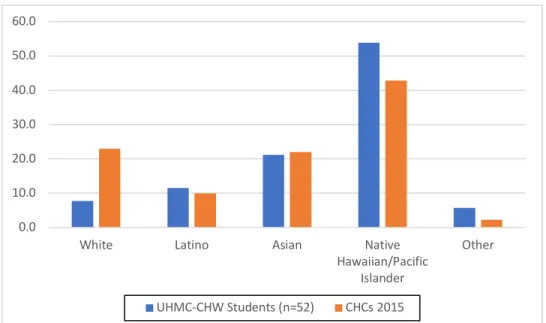
The findings include data from the 49 students who completed pre- and posttest surveys (Fundamentals, n=27; HPDP, n=22) over the course of the study. As shown in Figure 2.2, the ethnic makeup of students closely mirrors that of the state’s CHC population (Hawai‘i Primary Care Association, 2016), which demonstrates cultural concordance between those being trained as CHWs and the population they will serve.
Figure 2.2. UHMC-CHW Student & Hawai‘i CHCs 2015 Population Ethnic Comparison Further detail on student demographic characteristics are shown in Table 2.1. Females represented the vast majority of students (n=45, 91.8%). Students tended to be under the age of 40 (57.1%), without a college degree (75.5%), and evenly split between new (51.0%) and experienced CHWs, and of NHOPI (51.0%) and non-NHOPI ancestry. According to a Chi-squared test all categories were independent of each other, except that Fundamentals students were more likely to be <40y.o. and not have a college degree, compared to HPDP students.
0.0 10.0 20.0 30.0 40.0 50.0 60.0
White Latino Asian Native
Hawaiian/Pacific Islander
Other
Table 2.1. Characteristics of students completing pre/posttests
Knowledge and Confidence
According to paired t-test knowledge score calculations (Table 2.2), all students taken together had statistically significant improvement in knowledge scores (p<.01). Although students in all subgroups made gains, some groups’ gains were significant at the p<.01 level (e.g., those who were age 40 or older, non-NHOPI, those with no college degree, and those with < 1 year of work experience), while others were significant at levels between .05 and .10. Students in both courses showed statistically significant improvement in knowledge scores.
Regression was used to see if any of these characteristics were associated with change in knowledge, controlling for differences in student characteristics. These findings suggest that student age was a significant predictor of knowledge change (in addition to participation in the course) in that older students (age 40+) were more likely to show gains that younger students (p<.05).
Table 2.2. Knowledge and confidence pre/post comparisons
*p<.05 **p<.01
Mean posttest confidence scores for students as a whole and for all ten
subgroups significantly improved (p<.01). On the whole, students improved 8.26 points, from somewhat/moderately to very/extremely confident. New CHWs (<1y. work
experience) made the greatest confidence gains (10.64), while experienced CHWs (>1y. work experience) reported the least gains (5.79). Regression analysis findings suggest that work experience was a predictor of student confidence gains (p<.01), in that students with < 1 year of work experience gained more than students with > 1 year of work experience.
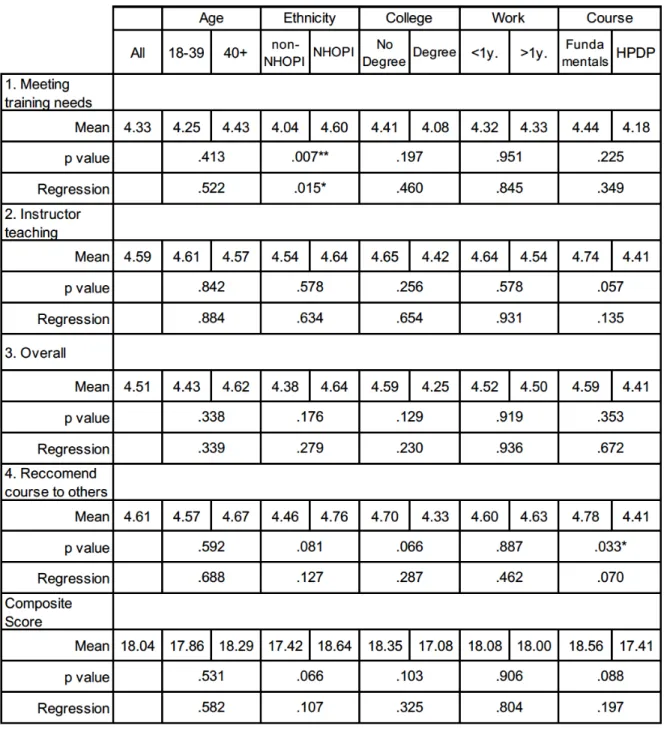
Table 2.3. Student Satisfaction
*p<.05 **p<.01
Student Satisfaction
Students as a whole reported a high level of satisfaction, with a mean item score of 4.51 (very to extremely satisfied/likely). By subgroup, composite scores ranged from 18.64 for NHOPI students, to 17.08 for those with a college degree. The only subgroup difference was for the item “How satisfied are you with this course in meeting your professional training needs?” with NHOPI having statistically higher scores.
Discussion
Based on the findings of this study, this CHW training program appears to be attracting students that reflect the ethnic make-up of communities they will serve. Data also suggest that collectively students significantly improved their knowledge and confidence in applying the CHW core competencies taught in the Fundamentals and HPDP certificate courses. Students were satisfied with instructors and the courses meeting their training needs, and were likely to recommend the course to a friend or colleague. Program courses appeared to be effective in teaching the CHW core
competencies, and raising the level of confidence students have in using their newfound knowledge and skills in the field.
The CHW Fundamentals and HPDP courses addressed different core competencies and were taught by different instructors, offering an opportunity to
compare outcomes of knowledge, confidence, and satisfaction scores. Students in both courses scored significantly higher on mean posttest knowledge and confidence scores, and reported high levels of satisfaction, despite different instructors. It should be noted these instructors worked closely together to develop and implement the curriculum, and this appears to have provided a consistent student experience.
Student knowledge gains demonstrated in pre/posttest analysis and satisfaction with the program are consistent with prior program evaluations. Noteworthy is the
significant increase students experienced in their confidence in applying what they have learned in the field. Believing in one’s abilities has long been linked to improved
performance (Bandura, 1977). According to their own self-report, students finished courses with the confidence to effectively execute the core skills and roles of the CHW profession in their community. To the best of this researcher’s knowledge, this is the
first reported quantitative measure of student confidence gains in a college delivered CHW training program.
Differences in Outcomes Among Student Characteristics
Age, ethnicity, and college and work experience all appeared to play a role in student performance on knowledge tests. For example, students with less college and work experience made more gains in knowledge and confidence than students with more experience. At the same time, the older students had greater gains than younger students, and non-NHOPI had greater gains than NHOPI students. However, these bivariate differences were attenuated in the regression analysis, with older age (40+) associated with greater knowledge gains and new CHWs (< 1 year of CHW work experience) associated with greater confidence gains. The latter finding is
understandable, considering the significantly lower baseline confidence reported by individuals with no prior CHW experience. Program courses appear to have resulted in the inexperienced “catching up” to veteran CHWs. The overall classroom experience (i.e. classroom activities, assignments, student interaction, etc.) of both groups appears to have significantly contributed to increased confidence in performing the CHW role for both groups, with new CHWs experiencing the greatest benefit.
Limitations
First, the sample was small. Although an effort was made to test for differences among subgroups of students, dividing students into subgroups further reduced the sample sizes for analysis.
Second, the validity of the conclusions drawn from this study rests on the ability of the pre/posttest surveys to measure the intended targets (i.e. student knowledge, confidence gains, and satisfaction). As noted, the general question structure for the confidence measure were adapted from the University of Southern Mississippi Self-Efficacy/Behavior Instrument for Objectives of CHAN Training Survey. However, psychometrics for this survey were not reported in the Community Health Worker Evaluation Toolkit (The University of Arizona Rural Health Office and College of Public Health, 2005), and could not be located by this researcher. Additionally, the knowledge
survey items included in the survey for this study, while developed with the CHW population in mind, were also not tested for validity or reliability.
Third, this study did not utilize a traditional experimental design, in which an experimental group is compared to a control group. This limits the strength upon which conclusions can be drawn, with a plethora of potential errors explaining away positive results. First, pretest effect has been widely documented, in which participants tend to improve upon taking a test more than once. This effect is more pronounced when the pre- and posttests are given in intervals of less than one month (Kim, & Willson, 2010). Since this study separated pre- and posttest surveys by four months, the effect was not likely significant, yet without a control group to compare against, this error could not be effectively estimated. Second, other potential confounders caused by history and maturation could have affected student scores. Improvements in scores could have been influenced by other trainings attended by participants that are not part of the course being evaluated. Throughout the semester, incumbent workers participating in this study were exposed to learning opportunities from their daily work, supervision, and collegial contact. Qualitative data from Study 2 provided a measure of validation and support for both knowledge acquisition and improved confidence findings in this study, discussed further in Chapter 5.
Conclusion
Overall, the program reached minority students, and these students gained knowledge and confidence in CHW core competencies and were satisfied with the courses. In comparing student characteristics, including age, ethnicity, education and CHW experience against course evaluation measures, some variation was seen in subgroups, for example, with students with < 1 year of work experience showing greater gains in confidence. These outcomes support the program’s aim to effectively train the variety of community members who make up the current and future CHW workforce.
CHAPTER 3
EMPLOYER PERCEPTIONS OF THE UHMC-CHW
Abstract
Employer feedback serves a critical role in determining the effectiveness of workforce training. Study 2 used qualitative methods to collect CHW employer
perspectives on the effectiveness of the UHMC-CHW in preparing new and incumbent CHWs for the workforce in Hawaiʻi. Employers reported student participation in the program improved self-confidence and performance in the field.
Introduction
Racial and ethnic minorities in the United States and in Hawaiʻi experience greater mortality and morbidity than non-minorities from many chronic conditions, including heart disease, cancer, and diabetes (Centers for Disease Control and Prevention, 2011; Centers for Disease Control Division for Heart Disease and Stroke Prevention, 2015; Pobutsky et al., 2011). One approach to combating health disparities involves the use of Community Health Workers (CHWs).
Despite the promise of CHWs to improve access to and quality of health care, especially for underserved minorities, development of the workforce has been
hampered by unsustainable short-term grant funding (U.S. Department of Health and Human Services Health Resources and Services Administration Bureau of Health Professions, 2007). Consensus is growing among CHWs and stakeholders that standardized CHW training will lead to increased health care integration of and more stable funding for CHWs (Dower et al., 2006; May et al., 2005).
Employer feedback serves a critical role in determining the effectiveness of workforce training. According to the Center for Disease Control’s Framework for
Program Evaluation in Public Health (CDC-FPEPH), stakeholders should be engaged in all phases of the evaluation process (Centers for Disease Control and Prevention, 1999). Logically, employers are stakeholders in the evaluation of workforce training, as they are the people for whom the training program is developing workers.
In a review of the literature, nine articles were found that evaluated college-delivered CHW programs using employer feedback. This feedback was solicited during the curriculum development process through focus groups (n=3, Love et al., 2004;
Farrar et al., 2011; Dumbauld et al., 2014), and surveys (n=4, Love et al., 2004; Wennerstrom, et al., 2014; Ruiz et al., 2012; Dumbauld, et al., 2014).
One study utilized employer interviews to identify the barriers and facilitators to implementing a college delivered training to incumbent CHWs. Farrar et al. (2011) evaluated college delivered-training for incumbent CHWs in five CHCs through the Jobs to Careers healthcare workforce initiative. Researchers conducted individual interviews with several administrative staff in each CHC (e.g., the director, human resources personnel, supervisor) to identify barriers and facilitators to implementation. They found workers were challenged to find the time and financial resources to attend classes, and they lacked educational readiness, experiencing barriers in the form of entrance exams and prerequisite courses. Employers found it difficult to manage patient care while workers attended classes, and some supervisors were resistant to initiating the training, creating additional tension between workers and supervisors. For CHCs located in rural areas, workers struggled to find transportation to courses and access reliable internet access to complete assignments. Initial findings were shared with employers, leading to facilitating initiatives such as offering courses onsite, tuition waivers, educational
release time, and increased collaboration between educational program and direct supervisors. Organizational changes were seen as crucial to the ultimate success of this training program. Since employer interviews focused on program implementation, little was reported on employer perspectives of the impact the training had on training
participants and agencies. However, the most valuable outcome of the training program identified by employers was that employees were more engaged at work and willing to take on increased levels of responsibility. Employers linked this outcome to increased confidence in skills and knowledge employees gained from participating in the training program. The Jobs to Careers evaluation also included a student survey measuring the impact of the training on their careers, which will be discussed in Chapter 4. (Farrar et al., 2011).
In the following study, employers and practicum supervisors were asked to evaluate the impact the UHMC-CHW has had on their agencies and the students participating in the training. They were also asked to identity agency and system
barriers to job creation, raises, and promotions for local CHWs. Results from this study provide a crucial stakeholder voice to college delivered CHW training literature.
Following the CDC-FPEPH of engaging stakeholders throughout the process (U.S. Department of Health and Human Services Centers for Disease Control and Prevention, 2011), CHW employer feedback was solicited during program development and evaluation design stages of the UHMC-CHW. This study provided an additional round of feedback in addressing the following research questions: From the perspective of employers and practicum supervisors, does the UHMC-CHW effectively prepare new and incumbent CHWs for the workforce in Hawaiʻi? What changes could be made to the program to better meet agency and community needs? What impact has the program and its students had on their agencies? What agency and system barriers, if any, exists to advancing individual CHW careers?
Methods Study Design
This was a qualitative study, carried out through individual interviews with employers and practicum supervisors of UHMC-CHW students. A series of interview questions were developed and asked in a semi-structured format. Following the CDC-FPEPH, which recommends researchers engage stakeholders in study design (Centers for Disease Control and Prevention, Program Performance and Evaluation Office, 2016), feedback on the study design was collected from telephone conversations with three CHW employers. These conversations validated the need to recruit employers and practicum supervisors from both clinical and community-based practice settings, and provided helpful feedback on the content and wording of interview questions.
To capture valid responses from participants, several design features were incorporated. First, individual interviews, as opposed to focus groups, were chosen to allow employers and site supervisors a safe space to be candid about employee/student performance. To encourage honesty, candidness, and constructive criticism about the program itself, the individual conducting these interviews had no prior history with the program. A primary goal of this study was to collect critical feedback to improve the program, and this goal was noted in the opening script in the Interview Guide and
participants that their responses would be de-identified prior to being released to program staff and future publication.
Sample
A purposive, heterogeneous sample of 8 employers and practicum supervisors was recruited from a pool of 18 clinical and community-based agencies identified as either employing, or providing practicum placements for students. For certificate students that were currently employed as CHWs (i.e., incumbent workers), their
supervisors (i.e., employers) were recruited to participate. Those students who did not have prior CHW field experience completed a semester-long practicum placement in the community, and agency personnel responsible for supervising the students (i.e., the practicum supervisor) was recruited to participate in the study. In Maui County, CHCs and Native Hawaiian health centers are primary clinical settings, while community-based agencies include a variety of settings such as homeless shelters, aging support agencies, language access and health education programs, and child and family support service agencies. The program generated a list of 18 agencies known to employ and/or provide a practicum placement to students in UHMC-CHW program cohorts 1 and 2. These students were at various stages of completing the program, with some having taken only 2 or 3 courses (out of 5) that comprise the CHW certificate.
The list of potential interview participants was prioritized to assure even
distribution between employers/site supervisors, and clinical/community settings. The interviewer phoned the prioritized list until a heterogeneous sample of eight was
reached. Table 3.1 provides a breakdown of the role and practice setting of participants. Based on an initial analysis of the transcripts from these interviews, the interviewer and researcher agreed this sample of supervisors of incumbent/non-incumbent CHWs from clinical/community-based agencies provided a rich and diverse range of perspectives and experiences on the impact the program had on certificate students.