Predicting the Compositionality of Multiword Expressions
Using Translations in Multiple Languages
Bahar Salehi♣♥and Paul Cook♥ ♣NICTA Victoria Research Laboratory
♥Department of Computing and Information Systems The University of Melbourne
Victoria 3010, Australia
[email protected], [email protected]
Abstract
In this paper, we propose a simple, language-independent and highly effective method for predicting the degree of compositionality of multiword expressions (MWEs). We compare the translations of an MWE with the trans-lations of its components, using a range of different languages and string similarity mea-sures. We demonstrate the effectiveness of the method on two types of English MWEs: noun compounds and verb particle construc-tions. The results show that our approach is competitive with or superior to state-of-the-art methods over standard datasets.
1 Compositionality of MWEs
A multiword expression (MWE) is any combina-tion of words with lexical, syntactic or semantic idiosyncrasy (Sag et al., 2002; Baldwin and Kim, 2009), in that the properties of the MWE are not predictable from the component words. For exam-ple, withad hoc, the fact that neitheradnorhocare standalone English words, makesad hoca lexically-idiosyncratic MWE; with shoot the breeze, on the other hand, we have semantic idiosyncrasy, as the meaning of “to chat” in usages such asIt was good to shoot the breeze with you1 cannot be predicted from the meanings of the component words shoot
andbreeze.
Semantic idiosyncrasy has been of particular in-terest to NLP researchers, with research on bi-nary compositional/non-compositional MWE
clas-1
The example is taken from http://www. thefreedictionary.com
sification (Lin, 1999; Baldwin et al., 2003), or a three-way compositional/semi-compositional/non-compositional distinction (Fazly and Stevenson, 2007). There has also been research to suggest that MWEs span the entire continuum from full compo-sitionality to full non-compocompo-sitionality (McCarthy et al., 2003; Reddy et al., 2011).
Investigating the degree of MWE compositional-ity has been shown to have applications in informa-tion retrieval and machine translainforma-tion (Acosta et al., 2011; Venkatapathy and Joshi, 2006). As an exam-ple of an information retrieval system, if we were looking for documents relating to rat race (mean-ing “an exhaust(mean-ing routine that leaves no time for relaxation”2), we would not be interested in docu-ments on rodents. These results underline the need for methods for broad-coverage MWE composition-ality prediction.
In this research, we investigate the possibility of using an MWE’s translations in multiple languages to measure the degree of the MWE’s compositional-ity, and investigate how literal the semantics of each component is within the MWE. We use Panlex to translate the MWE and its components, and compare the translations of the MWE with the translations of its components using string similarity measures. The greater the string similarity, the more composi-tional the MWE is.
Whereas past research on MWE compositionality has tended to be tailored to a specific MWE type (McCarthy et al., 2007; Kim and Baldwin, 2007; Fazly et al., 2009), our method is applicable to any MWE type in any language. Our experiments
2
This definition is from WordNet 3.1.
over two English MWE types demonstrate that our method is competitive with state-of-the-art methods over standard datasets.
2 Related Work
Most previous work on measuring MWE composi-tionality makes use of lexical, syntactic or semantic properties of the MWE. One early study on MWE compositionality was Lin (1999), who claimed that the distribution of non-compositional MWEs (e.g.
shoot the breeze) differs significantly from the dis-tribution of expressions formed by substituting one of the components with a semantically similar word (e.g. shoot the wind). Unfortunately, the method tends to fall down in cases of high statistical id-iosyncrasy (or “institutionalization”): consider fry-ing panwhich is compositional but distributionally very different to phrases produced through word-substitution such assauteing panorfrying plate.
Some research has investigated the syntactic properties of MWEs, to detect their composition-ality (Fazly et al., 2009; McCarthy et al., 2007). The assumption behind these methods is that non-compositional MWEs are more syntactically fixed than compositional MWEs. For example,make a de-cisioncan be passivised, butshoot the breezecannot. One serious problem with syntax-based methods is their lack of generalization: each type of MWE has its own characteristics, and these characteristics dif-fer from one language to another. Moreover, some MWEs (such as noun compounds) are not flexible syntactically, no matter whether they are composi-tional or non-composicomposi-tional (Reddy et al., 2011).
Much of the recent work on MWEs focuses on their semantic properties, measuring the semantic similarity between the MWE and its components us-ing different resources, such as WordNet (Kim and Baldwin, 2007) or distributional similarity relative to a corpus (e.g. based on Latent Semantic Analysis: Schone and Jurafsky (2001), Bannard et al. (2003), Reddy et al. (2011)). The size of the corpus is im-portant in methods based on distributional similarity. Unfortunately, however, large corpora are not avail-able for all languages.
Reddy et al. (2011) hypothesize that the num-ber of common co-occurrences between a given MWE and its component words indicates the
de-gree of compositionality of that MWE. First, the co-occurrences of a given MWE/word are considered as the values of a vector. They then measure the Cosine similarity between the vectors of the MWE and its components. Bannard et al. (2003) presented four methods to measure the compositionality of En-glish verb particle constructions. Their best result is based on the previously-discussed method of Lin (1999) for measuring compositionality, but uses a more-general distributional similarity model to iden-tify synonyms.
Recently, a few studies have investigated using parallel corpora to detect the degree of composi-tionality (Melamed, 1997; Moir´on and Tiedemann, 2006; de Caseli et al., 2010; Salehi et al., 2012). The general approach is to word-align the source and target language sentences and analyse align-ment patterns for MWEs (e.g. if the MWE is al-ways aligned as a single “phrase”, then it is a strong indicator of non-compositionality). de Caseli et al. (2010) consider non-compositional MWEs to be those candidates that align to the same target lan-guage unit, without decomposition into word align-ments. Melamed (1997) suggests using mutual in-formation to investigate how well the translation model predicts the distribution of words in the tar-get text given the distribution of words in the source text. Moir´on and Tiedemann (2006) show that en-tropy is a good indicator of compositionality, be-cause word alignment models are often confused by non-compositional MWEs. However, this assump-tion does not always hold, especially when deal-ing with high-frequency non-compositional MWEs. Salehi et al. (2012) tried to solve this problem with high frequency MWEs by using word alignment in both directions.3 They computed backward and for-ward entropy to try to remedy the problem with es-pecially high-frequency phrases. However, their as-sumptions were not easily generalisable across lan-guages, e.g., they assume that the relative frequency of a specific type of MWE (light verb constructions) in Persian is much greater than in English.
Although methods using bilingual corpora are in-tuitively appealing, they have a number of draw-backs. The first and the most important problem
3The IBM models (Brown et al., 1993), e.g., are not
is data: they need large-scale parallel bilingual cor-pora, which are available for relatively few language pairs. Second, since they use statistical measures, they are not suitable for measuring the composition-ality of MWEs with low frequency. And finally, most experiments have been carried out on English paired with other European languages, and it is not clear whether the results translate across to other language pairs.
3 Resources
In this research, we use the translations of MWEs and their components to estimate the relative de-gree of compositionality of a MWE. There are several resources available to translate words into various languages such as Babelnet (Navigli and Ponzetto, 2010),4 Wiktionary,5 Panlex (Baldwin et al., 2010) and Google Translate.6 As we are ide-ally after broad coverage over multiple languages and MWEs/component words in a given language, we exclude Babelnet and Wiktionary from our cur-rent research. Babelnet covers only six languages at the time of writing this paper, and in Wiktionary, because it is constantly being updated, words and MWEs do not have translations into the same lan-guages. This leaves translation resources such as Panlex and Google Translate. However, after man-ually analysing the two resources for a range of MWEs, we decided not to use Google Translate for two reasons: (1) we consider the MWE out of con-text (i.e., we are working at the type level and do not consider the usage of the MWE in a particular sen-tence), and Google Translate tends to generate com-positional translations of MWEs out of context; and (2) Google Translate provides only one translation for each component word/MWE. This left Panlex.
Panlex is an online translation database that is freely available. It contains lemmatized words and MWEs in a large variety of languages, with lemma-based (and less frequently sense-lemma-based) links be-tween them. The database covers more than 1353 languages, and is made up of 12M lemmas and ex-pressions. The translations are sourced from hand-made electronic dictionaries, making it more
accu-4http://lcl.uniroma1.it/babelnet/ 5http://www.wiktionary.org/ 6http://translate.google.com/
rate than translation dictionaries generated automat-ically, e.g. through word alignment. Usually there are several direct translations for a word/MWE from one language to another, as in translations which were extracted from electronic dictionaries. If there is no direct translation for a word/MWE in the database, we can translate indirectly via one or more pivot languages (indirect translation: Soderland et al. (2010)). For example, English ivory tower has direct translations in only 13 languages in Panlex, including French (tour d’ivoire) but not Esperanto. There is, however, a translation oftour d’ivoireinto Esperanto (ebura turo), allowing us to infer an indi-rect translation betweenivory towerandebura turo.
4 Dataset
We evaluate our method over two datasets, as de-scribed below.
REDDY (Reddy et al., 2011): 90 English (binary) noun compounds (NCs), where the overall NC and each component word has been annotated for com-positionality on a scale from 0 (non-compositional) to 5 (compositional). In order to avoid issues with polysemy, the annotators were presented with each NC in a sentential context. The authors tried to achieve a balance of compositional and non-compositional NCs: based on a threshold of 2.5, the dataset consists of 43 (48%) compositional NCs, 46 (51%) NCs with a compositional usage of the first component, and 54 (60%) NCs with a compositional usage of the second component.
BANNARD (Bannard, 2006): 160 English verb particle constructions (VPCs) were annotated for compositionality relative to each of the two compo-nent words (the verb and the particle). Each annota-tor was asked to annotate each of the verb and parti-cle asyes,noordon’t know. Based on the ma-jority annotation, among the 160 VPCs, 122 (76%) are verb-compositional and 76 (48%) are particle-compositional.
Score
Panlex Components
MWE
Translate
Compare ...
...
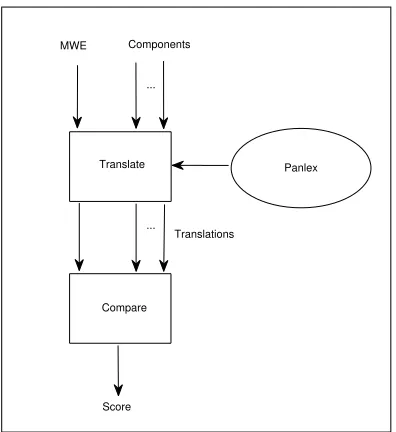
[image:4.612.330.520.58.225.2]Translations
Figure 1: Schematic of our proposed method
5 Method
To predict the degree of compositionality of an MWE, we require a way to measure the semantic similarity of the MWE with its components. Our hypothesis is that compositional MWEs are more likely to be word-for-word translations in a given language than non-compositional MWEs. Hence, if we can locate the translations of the components in the translation of the MWE, we can deduce that it is compositional. Our second hypothesis is that the more languages we use as the basis for determin-ing translation similarity between the MWE and its component words, the more accurately we will be able to estimate compositionality. Thus, rather than using just one translation language, we experiment with as many languages as possible.
Figure 1 provides a schematic outline of our method. The MWE and its components are trans-lated using Panlex. Then, we compare the transla-tion of the MWE with the translatransla-tions of its compo-nents. In order to locate the translation of each com-ponent in the MWE translation, we use string
simi-English Persian Translation kick the bucket mord
kick zad
the –
bucket satl
make a decision tasmimgereft
make sakht
a yek
decision tasmim
public service khadamaatomumi
public omumi
[image:4.612.96.294.94.310.2]service khedmat
Table 1: English MWEs and their components with their translation in Persian. Direct matches between the trans-lation of a MWE and its components are shown inbold; partial matches are underlined.
larity measures. The score shown in Figure 1 is de-rived from a given language. In Section 6, we show how to combine scores across multiple languages.
As an example of our method, consider the English-to-Persian translation ofkick the bucket as a non-compositional MWE andmake a decisionas a semi-compositional MWE (Table 1).7 By locating the translation ofdecision(tasmim) in the translation ofmake a decision(tasmim gereftan), we can deduce that it is semi-compositional. However, we cannot locate any of the component translations in the trans-lation of kick the bucket. Therefore, we conclude that it is non-compositional. Note that in this simple example, the match is word-level, but that due to the effects of morphophonology, the more likely situa-tion is that the components don’t match exactly (as we observe in the case ofkhadamaat and khedmat
for thepublic serviceexample), which motivates our use of string similarity measures which can capture partial matches.
We consider the following string similarity mea-sures to compare the translations. In each case, we normalize the output value to the range [0,1], where 1 indicates identical strings and 0 indicates completely different strings. We will indicate the translation of the MWE in a particular languagetas MWEt, and the translation of a given component in
7
languagetascomponentt
.
Longest common substring (LCS): The LCS
measure finds the longest common substring be-tween two strings. For example, the LCS bebe-tween ABABCandBABCABisBABC. We calculate a nor-malized similarity value based on the length of the LCS as follows:
LongestCommonString(MWEt,componentt) min(len(MWEt), len(componentt
))
Levenshtein (LEV1): The Levenshtein distance
calculates for the number of basic edit operations re-quired to transpose one word into the other. Edits consist of single-letter insertions, deletions or sub-stitutions. We normalize LEV1 as follows:
1− LEV1(MWE
t
,componentt
) max(len(MWEt), len(componentt
))
Levenshtein with substitution penalty (LEV2):
One well-documented feature of Levenshtein dis-tance (Baldwin, 2009) is that substitutions are in fact the combination of an addition and a deletion, and as such can be considered to be two edits. Based on this observation, we experiment with a variant of LEV1 with this penalty applied for substitutions. Similarly to LEV1, we normalize as follows:
1− LEV2(MWE
t
,componentt
) len(MWEt) +len(componentt
)
Smith Waterman (SW) This method is based on
the Needleman-Wunsch algorithm,8 and was devel-oped to locally-align two protein sequences (Smith and Waterman, 1981). It finds the optimal simi-lar regions by maximizing the number of matches and minimizing the number of gaps necessary to align the two sequences. For example, the opti-mal local sequence for the two sequences below is AT−−ATCC, in which “-” indicates a gap:
8The Needleman-Wunsch (NW) algorithm, was designed to
align two sequences of amino-acids (Needleman and Wunsch, 1970). The algorithm looks for the sequence alignment which maximizes the similarity. As with the LEV score, NW min-imizes edit distance, but also takes into account character-to-character similarity based on the relative distance between char-acters on the keyboard. We exclude this score, because it is highly similar to the LEV scores, and we did not obtain encour-aging results using NW in our preliminary experiments.
Seq1:ATGCATCCCATGAC
Seq2:TCTATATCCGT
As the example shows, it looks for the longest com-mon string but has an in-built mechanism for includ-ing gaps in the alignment (with penalty). This char-acteristic of SW might be helpful in our task, be-cause there may be morphophonological variations between the MWE and component translations (as seen above in thepublic serviceexample). We nor-malize SW similarly to LCS:
len(alignedSequence) min(len(MWEt
), len(componentt
))
6 Computational Model
Given the scores calculated by the aforementioned string similarity measures between the translations for a given component word and the MWE, we need some way of combining scores across component words.9 First, we measure the compositionality of each component within the MWE (s1ands2):
s1 = f1(sim1(w1,MWE), ..., simi(w1,MWE))
s2 = f1(sim1(w2,MWE), ..., simi(w2,MWE))
wheresimis a string similarity measure,simi
indi-cates that the calculation is based on translations in languagei, andf1is a score combination function.
Then, we compute the overall compositionality of the MWE (s3) froms1ands2usingf2:
s3 = f2(s1, s2)
Since we often have multiple translations for a given component word/MWE in Panlex, we exhaustively compute the similarity between each MWE transla-tion and component translatransla-tion, and use the highest similarity as the result ofsimi. If an instance does
not have a direct/indirect translation in Panlex, we assign a default value, which is the mean of the high-est and lowhigh-est annotation score (2.5 for REDDYand 0.5 for BANNARD). Note that word order is not an issue in our method, as we calculate the similarity independently for each MWE component.
In this research, we consider simple functions for
f1such as mean, median, product, min and max. f2
9
NC
Language Frequency Family
Czech 100 Slavic
Norwegian 100 Germanic Portuguese 100 Romance
Thai 99 Kam-thai
French 95 Romance
Chinese 94 Chinese
Dutch 93 Germanic
Romanian 91 Romance
Hindi 67 Indic
[image:6.612.331.521.59.224.2]Russian 43 Slavic
Table 2: The 10 best languages for REDDYusing LCS.
was selected to be the same asf1 in all situations, except when we use mean forf1. Here, following Reddy et al. (2011), we experimented with weighted mean:
f2(s1, s2) =αs1+ (1−α)s2
Based on 3-fold cross validation, we choseα= 0.7
for REDDY.10
Since we do not have judgements for the com-positionality of the full VPC in BANNARD (we
in-stead have separate judgements for the verb and particle), we cannot use f2 for this dataset. Ban-nard et al. (2003) observed that nearly all of the verb-compositional instances were also annotated as particle-compositional by the annotators. In line with this observation, we uses1(based on the verb) as the compositionality score for the full VPC.
7 Language Selection
Our method is based on the translation of an MWE into many languages. In the first stage, we chose 54 languages for which relatively large corpora were available.11 The coverage, or the number of in-stances which have direct/indirect translations in Panlex, varies from one language to another. In preliminary experiments, we noticed that there is a high correlation (about 0.50 for BANNARD and
10We considered values of
αfrom 0 to 1, incremented by 0.1. 11
In future work, we intend to look at the distribution of trans-lations of the given MWE and its components in corpora for many languages. The present method does not rely on the avail-ability of large corpora.
VPC:verb
Language Frequency Family
Basque 100 Basque
Lithuanian 100 Baltic Slovenian 100 Slavic
Hebrew 99 Semitic
Arabic 98 Semitic
Czech 95 Slavic
Slovak 92 Slavic
Latin 79 Italic
Tagalog 74 Austronesian
[image:6.612.101.274.61.224.2]Polish 44 Slavic
Table 3: The 10 best languages for the verb component of BANNARDusing LCS.
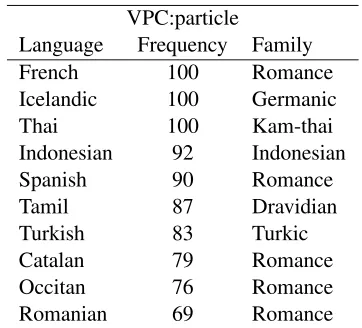
VPC:particle
Language Frequency Family
French 100 Romance
Icelandic 100 Germanic
Thai 100 Kam-thai
Indonesian 92 Indonesian
Spanish 90 Romance
Tamil 87 Dravidian
Turkish 83 Turkic
Catalan 79 Romance
Occitan 76 Romance
Romanian 69 Romance
Table 4: The 10 best languages for the particle compo-nent of BANNARDusing LCS.
about 0.80 for REDDY) between the usefulness of a language and its translation coverage on MWEs. Therefore, we excluded languages with MWE trans-lation coverage of less than 50%. Based on nested 10-fold cross validation in our experiments, we se-lect the 10 most useful languages for each cross-validation training partition, based on the Pearson correlation between the given scores in that language and human judgements.12 The 10 best languages are selected based only on the training set for each fold. (The languages selected for each fold will later be used to predict the compositionality of the items in the testing portion for that fold.) In Tables 2, 3
12Note that for VPCs, we calculate the compositionality of
[image:6.612.334.515.269.433.2]f1 sim() N1 N2 NC
Mean
SW 0.541 0.396 0.637
LCS 0.525 0.431 0.649
LEV1 0.405 0.200 0.523 LEV2 0.481 0.263 0.577
Prod
SW 0.451 0.287 0.410 LCS 0.430 0.233 0.434 LEV1 0.299 0.128 0.311 LEV2 0.294 0.188 0.364
Median
SW 0.443 0.334 0.544 LCS 0.408 0.365 0.553 LEV1 0.315 0.054 0.376 LEV2 0.404 0.134 0.523
Min
SW 0.420 0.176 0.312 LCS 0.347 0.225 0.307 LEV1 0.362 0.310 0.248 LEV2 0.386 0.345 0.338
Max
[image:7.612.90.285.59.346.2]SW 0.371 0.408 0.345 LCS 0.406 0.430 0.335 LEV1 0.279 0.362 0.403 LEV2 0.380 0.349 0.406
Table 5: Correlation on REDDY(NCs). N1, N2 and NC, are the first component of the noun compound, its second component, and the noun compound itself, respectively.
and 4, we show how often each language was se-lected in the top-10 languages over the combined 100 (10×10) folds of nested 10-fold cross valida-tion, based on LCS.13 The tables show that the se-lected languages were mostly consistent over the folds. The languages are a mixture of Romance, Germanic and languages from other families (based on Voegelin and Voegelin (1977)), with no standout language which performs well in all cases (indeed, no language occurs in all three tables). Additionally, there is nothing in common between the verb and the particle top-10 languages.
8 Results
As mentioned before, we perform nested 10-fold cross-validation to select the 10 best languages on the training data for each fold. The selected lan-guages for a given fold are then used to computes1
13Since our later results show that LCS and SW have higher
results, we only show the best languages using LCS. These largely coincide with those for SW.
f1 sim() Verb Particle
Mean
SW 0.369 0.510
LCS 0.406 0.509
LEV1 0.335 0.454 LEV2 0.340 0.460
Prod
SW 0.315 0.316 LCS 0.339 0.299 LEV1 0.322 0.280 LEV2 0.342 0.284
Median
SW 0.316 0.409 LCS 0.352 0.423 LEV1 0.295 0.387 LEV2 0.309 0.368
Min
SW 0.262 0.210 LCS 0.329 0.251 LEV1 0.307 0.278 LEV2 0.310 0.281
Max
[image:7.612.340.511.65.346.2]SW 0.141 0.288 LCS 0.268 0.299 LEV1 0.145 0.450 LEV2 0.170 0.398
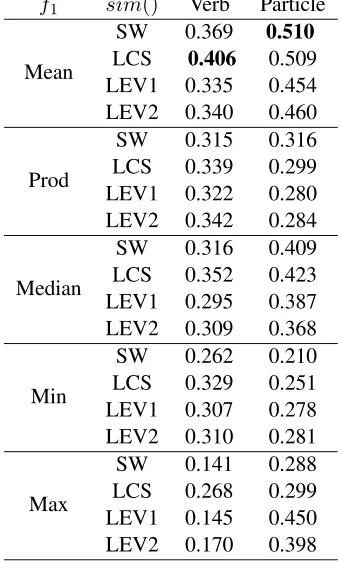
Table 6: Correlation on BANNARD(VPC), based on the best-10 languages for the verb and particle individually
ands2(ands3for NCs) for each instance in the test set for that fold. The scores are compared with hu-man judgements using Pearson’s correlation. The results are shown in Tables 5 and 6. Among the five functions we experimented with for f1, Mean per-forms much more consistently than the others. Me-dian is less prone to noise, and therefore performs better than Prod, Max and Min, but it is still worse than Mean.
For the most part, LCS and SW perform better than the other measures. There is little to separate these two methods, partly because they both look for a sequence of similar characters, unlike LEV1 and LEV2 which do not consider contiguity of match.
The results support our hypothesis that using mul-tiple target languages rather than one, results in a more accurate prediction of MWE compositionality. Our best result using the 10 selected languages on REDDY is 0.649, as compared to the best
single-language correlation of 0.350 for Lithuanian. Reddy et al. (2011) reported a correlation of 0.714 on REDDY. Our best correlation is 0.649. Note that Reddy et al. (2011) base their method on identifi-cation of MWEs in a corpus, thus requiring MWE-specific identification. Given that this has been shown to be difficult for MWE types including En-glish VPCs (McCarthy et al., 2003; Baldwin, 2005), the fact that our method is as competitive as this is highly encouraging, especially when you consider that it can equally be applied to different types of MWEs in other languages. Moreover, the computa-tional processing required by methods based on dis-tributional similarity is greater than our method, as it does not require processing a large corpus.
Finally, we experimented with combining our method (STRINGSIMMEAN) with a reimplementation
of the method of Reddy et al. (2011), based on sim-ple averaging, as detailed in Table 7. The results are higher than both component methods and the state-of-the-art for REDDY, demonstrating the
comple-mentarity between our proposed method and meth-ods based on distributional similarity.
In Table 8, we compare our results (STRINGSIMMEAN) with those of Bannard et
al. (2003), who interpreted the dataset as a binary classification task. The dataset used in their study is a subset of BANNARD, containing 40 VPCs, of which 29 (72%) were verb compositional and 23 (57%) were particle compositional. By applying a threshold of 0.5 over the output of our regression model, we binarize the VPCs into the compositional and non-compositional classes. According to the results shown in Table 6, LCS is a better similarity measure for this task. Our proposed method has higher results than the best results of Bannard et al. (2003), in part due to their reliance on VPC identification, and the low recall on the task, as reported in the paper. Our proposed method does not rely on a corpus or MWE identification.
9 Error Analysis
We analyse items in REDDYwhich have a high dif-ference (more than 2.5) between the human anno-tation and our scores (using LCS and Mean). The words arecutting edge, melting pot, gold mineand
ivory tower, which are non-compositional
accord-ing to REDDY. After investigating their translations, we came to the conclusion that the first three MWEs have word-for-word translations in most languages. Hence, they disagree with our hypothesis that word-for-word translation is a strong indicator of compo-sitionality. The word-for-word translations might be because of the fact that they have both compositional and non-compositional senses, or because they are calques (loan translations). However, we have tried to avoid such problems with calques by using trans-lations into several languages.
Forivory tower(“a state of mind that is discussed as if it were a place”)14we noticed that we have a di-rect translation into 13 languages. Other languages have indirect translations. By checking the direct translations, we noticed that, in French, the MWE is translated totourandtour d’ivoire. A noisy (wrong) translation oftour“tower” resulted in wrong indirect translations forivory towerand an inflated estimate of compositionality.
10 Conclusion and Future Work
In this study, we proposed a method to predict MWE compositionality based on the translation of the MWE and its component words into multiple lan-guages. We used string similarity measures between the translations of the MWE and each of its compo-nents to predict the relative degree of composition-ality. Among the four similarity measures that we experimented with, LCS and SW were found to be superior to edit distance-based methods. Our best re-sults were found to be competitive with state-of-the-art results using vector-based approaches, and were also shown to complement state-of-the-art methods. In future work, we are interested in investigating whether alternative ways of combining our proposed method with vector-based models can lead to fur-ther enhancements in results. These models could be especially effective when comparing translations which are roughly synonymous but not string-wise similar.
Acknowledgments
We would like to thank Timothy Baldwin, Su Nam Kim, and the anonymous reviewers for their valu-able comments and suggestions.
14
sim() STRINGSIMMEAN STRINGSIMMEAN+ Reddy et al.
SW 0.637 0.735
LCS 0.649 0.742
LEV1 0.523 0.724
LEV2 0.577 0.726
Table 7: Correlation after combining Reddy et al.’s method and our method with Mean forf1(STRINGSIMMEAN). The
correlation using Reddy et al.’s method is 0.714.
Method Precision Recall F-score (β= 1) Accuracy Bannard et al. (2003) 0.608 0.666 0.636 0.600
STRINGSIMMEAN 0.862 0.718 0.774 0.693
Table 8: Results for the classification task. STRINGSIMMEANis our method using Mean forf1
NICTA is funded by the Australian Government as represented by the Department of Broadband, Communications and the Digital Economy and the Australian Research Council through the ICT Cen-tre of Excellence program.
References
Otavio Costa Acosta, Aline Villavicencio, and Viviane P Moreira. 2011. Identification and treatment of multi-word expressions applied to information retrieval. In
Proceedings of the ALC Workshop on MWEs: from Parsing and Generation to the Real World (MWE 2011), pages 101–109.
Timothy Baldwin and Su Nam Kim. 2009. Multiword expressions. In Nitin Indurkhya and Fred J. Damerau, editors, Handbook of Natural Language Processing. CRC Press, Boca Raton, USA, 2nd edition.
Timothy Baldwin, Colin Bannard, Takaaki Tanaka, and Dominic Widdows. 2003. An empirical model of multiword expression decomposability. In Proceed-ings of the ACL-2003 Workshop on Multiword Expres-sions: Analysis, Acquisition and Treatment, pages 89– 96, Sapporo, Japan.
Timothy Baldwin, Jonathan Pool, and Susan M Colow-ick. 2010. Panlex and lextract: Translating all words of all languages of the world. InProceedings of the 23rd International Conference on Computational Lin-guistics: Demonstrations, pages 37–40.
Timothy Baldwin. 2005. The deep lexical acquisition of English verb-particle constructions.Computer Speech and Language, Special Issue on Multiword Expres-sions, 19(4):398–414.
Timothy Baldwin. 2009. The hare and the tortoise: Speed and reliability in translation retrieval. Machine Translation, 23(4):195–240.
Colin Bannard, Timothy Baldwin, and Alex Lascarides. 2003. A statistical approach to the semantics of verb-particles. InProceedings of the ACL 2003 workshop on Multiword expressions: analysis, acquisition and treatment-Volume 18, pages 65–72.
Colin James Bannard. 2006.Acquiring Phrasal Lexicons from Corpora. Ph.D. thesis, University of Edinburgh. Peter F. Brown, Stephen A. Della Pietra, Vincent J. Della
Pietra, and Robert L. Mercer. 1993. The mathematics of statistical machine translation: Parameter estima-tion.Computational Linguistics, 19(2):263–311. Helena Medeiros de Caseli, Carlos Ramisch, Maria das
Grac¸as Volpe Nunes, and Aline Villavicencio. 2010. Alignment-based extraction of multiword expressions.
Language Resources and Evaluation, 44(1):59–77. Afsaneh Fazly and Suzanne Stevenson. 2007.
Dis-tinguishing subtypes of multiword expressions using linguistically-motivated statistical measures. In Pro-ceedings of the ACL 2007 Workshop on A Broader Per-spective on Multiword Expressions, pages 9–16. Afsaneh Fazly, Paul Cook, and Suzanne Stevenson.
2009. Unsupervised type and token identification of idiomatic expressions. Computational Linguistics, 35(1):61–103.
Su Nam Kim and Timothy Baldwin. 2007. Detecting compositionality of english verb-particle constructions using semantic similarity. InProceedings of the 7th Meeting of the Pacific Association for Computational Linguistics (PACLING 2007), pages 40–48.
Dekang Lin. 1999. Automatic identification of non-compositional phrases. In Proceedings of the 37th annual meeting of the Association for Computational Linguistics on Computational Linguistics, pages 317– 324.
on Multiword expressions: analysis, acquisition and treatment-Volume 18, pages 73–80.
Diana McCarthy, Sriram Venkatapathy, and Aravind K Joshi. 2007. Detecting compositionality of verb-object combinations using selectional preferences. In
Proceedings of the 2007 Joint Conference on Empir-ical Methods in Natural Language Processing and Computational Natural Language Learning (EMNLP-CoNLL), pages 369–379.
I. Dan Melamed. 1997. Automatic discovery of non-compositional compounds in parallel data. In Pro-ceedings of the Fifth Workshop on Very Large Cor-pora. EMNLP.
Begona Villada Moir´on and J¨org Tiedemann. 2006. Identifying idiomatic expressions using automatic word-alignment. InProceedings of the EACL 2006 Workshop on Multi-wordexpressions in a multilingual context, pages 33–40.
Roberto Navigli and Simone Paolo Ponzetto. 2010. Ba-belnet: Building a very large multilingual semantic network. In Proceedings of the 48th Annual Meet-ing of the Association for Computational LMeet-inguistics, pages 216–225, Uppsala, Sweden.
Saul B Needleman and Christian D Wunsch. 1970. A general method applicable to the search for similarities in the amino acid sequence of two proteins.Journal of molecular biology, 48(3):443–453.
Siva Reddy, Diana McCarthy, and Suresh Manandhar. 2011. An empirical study on compositionality in com-pound nouns. InProceedings of IJCNLP, pages 210– 218.
Ivan Sag, Timothy Baldwin, Francis Bond, Ann Copes-take, and Dan Flickinger. 2002. Multiword ex-pressions: A pain in the neck for nlp. In Proceed-ings of the 3rd International Conference on Intelligent Text Processing Computational Linguistics (CICLing-2002), pages 189–206. Springer.
Bahar Salehi, Narjes Askarian, and Afsaneh Fazly. 2012. Automatic identification of Persian light verb con-structions. InProceedings of the 13th International Conference on Intelligent Text Processing Computa-tional Linguistics (CICLing-2012), pages 201–210.
Patrick Schone and Dan Jurafsky. 2001. Is knowledge-free induction of multiword unit dictionary headwords a solved problem. InProceedings of the 6th Confer-ence on Empirical Methods in Natural Language Pro-cessing (EMNLP 2001), pages 100–108.
TF Smith and MS Waterman. 1981. Identification of common molecular subsequences.Molecular Biology, 147:195–197.
Stephen Soderland, Oren Etzioni, Daniel S Weld, Kobi Reiter, Michael Skinner, Marcus Sammer, Jeff Bilmes,
et al. 2010. Panlingual lexical translation via proba-bilistic inference. Artificial Intelligence, 174(9):619– 637.
Sriram Venkatapathy and Aravind K Joshi. 2006. Us-ing information about multi-word expressions for the word-alignment task. InProceedings of the Workshop on Multiword Expressions: Identifying and Exploiting Underlying Properties, pages 20–27.