Prediction of Student Performance in Engineering Programs
A Case Study Using Entrance Information
K. Kelly1 Assistant Professor
School of Engineering, Trinity College Dublin Dublin, Ireland
E-mail: [email protected]
C. Patrocínio
Coordinator of Núcleo de Estatística e Prospectiva Instituto Superior Técnico
Lisboa, Portugal
E-mail: [email protected]
C. Marshall Researcher
School of Engineering, Trinity College Dublin Dublin, Ireland
E-mail: [email protected]
Conference Topic: Engineering Education Research
Keywords: student performance, recruitment, retention, entrance mechanisms.
INTRODUCTION
National and European debate consistently recognises the need for Europe to produce greater numbers of highly-skilled graduates in engineering and technology fields in order to improve our competitiveness in the global economy. Despite the importance of this being frequently stressed in policy discussions and the media, both applicant and graduate numbers in these fields are not increasing quickly enough to keep up with demand from industry and academia [1].
Targets have been set both by individual countries and on a Europe-wide level, and in many cases these are not being met. A task force established to examine the issue in Ireland reported that a 6-7 per cent annual increase in supply would be required, but noted that this would prove “very difficult in the current climate of falling numbers of entrants to third-level courses in engineering and IT” [2].
1
K. Kelly
Part of the difficulty in recruiting students may be due to the fact that engineering has been said to be “hampered by a reputation that deters many students, especially the ones with a broad range of interests (including women)” [1]. The reality is that an engineering education can be a good basis for a broad range of careers, but is not consistently perceived in this way. This paper describes studies of entrant students in both Ireland and Portugal, and how student data available at the time of entry can be used to predict the success of students in their first year of studies. Similarities and differences between the countries are drawn and attention is drawn to the structural differences which make such cross-country comparison difficult. Some previous work has been reported in the literature, both internationally [3], [4] and nationally [5], [6], [7]. Specifically in the case of Ireland however, the nature and extent of the investigations carried out are unprecedented in the literature. Moran and Crowley’s seminal work [7] examined 924 students across a range of academic faculties, but for only 1 entrance cohort, of whom 110 were engineering students. Furthermore there have been substantial changes to the high school examination and university entrance mechanisms in the intervening period (their data is from 1976). Somers studied the engineering entrants in Trinity College in 1988 with a total sample size of 107 and also a single entrance cohort. 1 ENROLMENT TRENDS
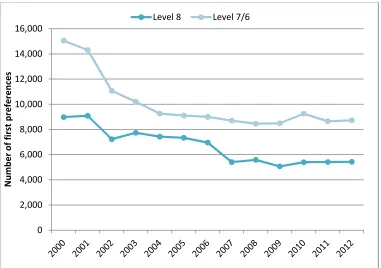
[image:2.595.108.489.379.647.2]Enrolment trends in many European countries show static or declining numbers of people entering engineering dropped programmes. In Ireland, the numbers of new entrant students selecting engineering as their first choice by 40% between 2000 and 2012 [8].
Fig. 1. Trends in number of students selecting engineering programmes as their first
choice in Ireland
In order to consider increasing the number of engineering students it is essential to examine the measures that may be excluding potential entrants. This paper presents some of the results of the ATTRACT project, which has examined the formal barriers standing in the way of entry to engineering. Issues relating to prior student achievement both in engineering-relevant
0 2,000 4,000 6,000 8,000 10,000 12,000 14,000 16,000
N
u
m
b
e
r
o
f
fi
rs
t
p
re
fe
re
n
ce
s
subjects and other areas are examined to assess whether or not alternative procedures could be used to admit more, but still highly-qualified, students.
1.1 Complexity in drawing comparisons between different countries
Comparisons are made between Ireland and Portugal, countries that share certain similarities in terms of the need to increase engineering graduates, but also significant differences in relation to context. Inevitable complexities arise when comparing complex systems across national boundaries. What may appear to be an identical barrier in two countries is nonetheless operating within an entirely different framework in each. As a result, understanding the implications of existing barriers beyond their particular context, or attempting to infer how a practice from one country may translate to another, can be challenging.
1.2 Education systems and entry mechanisms in Ireland and Portugal
The difficulties in cross-country comparison can be seen clearly when investigating the impact of current entry requirements in Ireland and Portugal. Both national systems admit students to university on the basis of their results in secondary school (specifically final high-school certificate exams in the case of Ireland, and a combination of these exams and continuous assessment in Portugal). In both countries Mathematics is set as an entry requirement for engineering, and in Portugal Physics and Chemistry are also required. However, despite the additional requirements operating in Portugal, a far greater number of school-leavers are eligible for entry than is the case in Ireland. 38% of Portuguese high-school students meet the set criteria, while in Ireland this figure is only 12%. If Physics and Chemistry were to be added to the list of requirements this number would likely shrink still further. Clearly, then, the problem of attracting students is further complicated by the fact that only a limited pool meets the demands of prior achievement set by the universities.
Given this circumstance, it is extremely useful to examine the performance of students at university in relation to their prior achievement in a much broader range of areas in order to determine what impact these really have on their subsequent success. This provides a practical way of testing the effectiveness of those set requirements. The purpose of this paper is to explore this question and to reveal the factors which can be proven to impact on student performance.
2 DATA
2.1 Portugal
The sample in IST study includes 1253 students admitted in that institution in 2004/05 by the national contest for access to higher education.
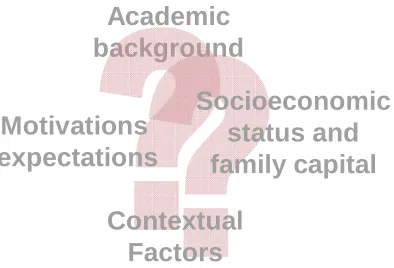
One of the questions posed in the Portuguese national context is the framework of knowledge that higher education institutions have of their new students, and how that information may (or not) weigh on is performance. Currently, when a student enters the Portuguese Higher Education carries a wide range of information, largely quantitative, on their previous path. IST also collects some information about the new entrants through a survey, essentially aspects related with socioeconomic status, family capital, motivations and expectations, and other general topics.
years prior to entry into Higher Education, reflecting a background of previous formative experiences; Frequency of Physics in secondary education which indicates that, in part, the vocation of the course taken in high school, which could translate the ability to attend courses related to Science and Technology [9].
Fig. 2. Dimensional axis of analysis on student level
The socioeconomic status and family capital dimension aims to assess the contribution of social and cultural heritage bequeathed by the family, along with the conditions and contexts of their social origin, characterized by the following variables: Parental education level, crucial indicator for measurement of access to cultural resources and guidance school [10]; gender is a reliable indicator in predicting success [10]; Level of household income, with a particular preponderance in the characterization of the contexts and resources and recognition the life trajectories of students [10], [11].
The dimensional axis associated with motivations and expectations allows a characterization at the level of commitment to further education, here measured by the following indicators: Placement Option, which shows the result of the early decision to enrol in higher education in the desired course and can lead to a high commitment from the student if this is the first choice of course. Sometimes, this variable may not reflect the real preference of the student, as this may have been influenced by relatives or simply determined by a weak performance in secondary education; Moment of program selection and performance expectations, reflecting the moment in which the student chose the program and the expectations he has on academic performance can determine the degree of interest in pursuing a project / school path, which will translate into different levels academic performance.
Finally, the contextual dimension, incorporating the following variables: Stage of entrance, the indicator that characterizes the time the student began his academic life in the 1st year. For students placed in Stage 2 is started later than others; Student placed away from their residence, which reflects the emotional stability provided by the family environment and the contribution that this may have on academic performance [11]; Journey time, which is related to access to a transportation network facilitating the mobility and / or the proximity of the establishment of higher education and may be related to the time available for studies and time restrictions of stay in the institution.
2.2 Ireland
The subject of the study is 1,835 engineering students at Trinity College Dublin over ten years (2000-2009 inclusive). Data was also obtained for students entering other programmes during the same period giving a total sample size of approximately 21,000. However, only the analysis of the engineering student data is presented in this paper, unless otherwise specified. The factors analysed were as follows:
Academic
background
Socioeconomic
status and
family capital
• Inputs
- Fact of having taken a given subject in high school or not (binary)
- Mark achieved in each subject in high school (range: 0 – 100)
- Degree programme chosen (binary; 1 of 2 programmes available)
- Gender (binary)
- CAO points -see below (0 – 600)
- Residential status; whether student lives in family home or not (binary)
The response variable considered was whether a student successfully progressed through their first year examinations – the Irish system requires students to successfully complete all modules at the end of an academic year before progressing to the next stage of their degree. Students who fail to pass these examinations may take a ‘supplemental’ examination before the start of the new academic. Those passing this examination are allowed to proceed, while those failing it are required to repeat the entire year (all modules) – with a limit on the number of attempts allowed to repeat a year, after exceeding which students are forcibly excluded from the university (i.e. involuntary dropout).
Some subtleties arise in the entry mechanism which are worthy of clarification. Irish students have a largely free choice in the number of subjects (there are approximately 80 subjects available), the level (there are two, or even three levels available – a higher, ordinary (i.e. lower), and in the case of Mathematics, Irish and English, a ‘foundation’ level). Entry to university is based on supply and demand, occasionally augmented by certain minimum requirements specified by the university. Where supply exceeds demand, entry is decided by calculating a ‘points score’ – a process managed by a centralised unit called the Central Applications Office (CAO). Points are awarded based on the percentage achieved and the level of the examination. The minimum passing grade is 40% for which a score of 45 is awarded and the maximum score is 100 - for subjects taken at the higher level (5 and 60 respectively for subjects taken at the lower level). Students can aggregate the marks from any six subjects (giving a maximum score of 600 points). Most students will take 7 subjects, but occasionally students may elect to take 8, 9 or more subjects.
3 ANALYSIS
In the case of the Portugese data a binomial model was fitted to the cohort of students passing individual modules. Consideration was given to a multi-level model allowing for parameter variation between different high-schools, but no evidence was found to support additional benefits from this approach.
In the case of the Irish data logistic regression was performed on the data with the input variables listed above, and the response variable as a binary value representing (un-) successful progression to the next academic year. The presence of a binary indicator variable for each high school subject allows us to distinguish between those who have taken a subject and failed to achieve a passing grade (thus returning a zero score) and those who have not taken the subject. An outcome of this classification process is that all subjects will have some ‘critical score’ – i.e. an achievement level above which a benefit (in terms of increased probability of passing the examinations) is conferred and below which the opposite is the case.
4 RESULTS
4.1 Portugal
The results on the dimensional axis of analysis show us that:
• the variables regarding the academic background proved all significant, in particular the impact of the grade obtained in the secondary education in the academic achievement (40% performance improvement for every 10 points) and the frequency of Physics in Secondary (72% increase in the probability of success, compared to those who had not);
• in the socio-economic status and family income dimension, the variables gender and household income level were significant, showing that women have a higher probability of success than men (+10%) and the level of household income below the national average increases by 8% school performance (typically students with a scholarship);
• regarding the motivations and expectations, it appears that if the student doesn’t access the program they want as first choice (-16%) and the fact that the student did not anticipate to engage in all subjects expecting a good average (-9%) has a negative impact on academic achievement. The early choice of the course - before the year of admission - has a positive impact on the approval rate (+22%);
• contextually it is observed that the fact that a student is away from his usual residence exerts a negative effect on their academic performance (students’ who are away from residence decrease academic performance in 17%) and that the travel time is also reflected negatively (a student who takes more than 1h in each travel to IST decreases 10% in academic performance).
Since the prediction models of academic achievement do not go beyond the explanatory power of 30%, it appears that there are some fixed effects which are not being considered in the model because they are not known a priori or because they are not measurable. There is also the possibility of other untested data correlation sources, like the programs in which they are joining (workload, structure of the curriculum of the 1st year, the population size of the program, etc.).
4.2 Ireland
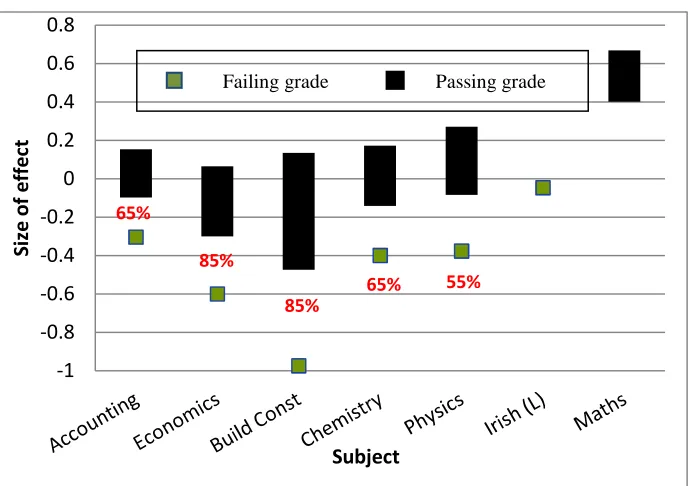
[image:6.595.126.473.471.714.2]The results of the logistic regression are shown in Fig. 3 below.
Fig. 3. Effect Size for High School Subjects -1
-0.8 -0.6 -0.4 -0.2 0 0.2 0.4 0.6 0.8
S
iz
e
o
f
e
ff
e
ct
Subject
55% 65%
85% 85%
65%
In addition to the effects shown, there is a small effect regarding student course preference. Students receiving a lower course preference (than their first choice) incur a negative effect from -0.017 for first preference to -0.171 for tenth preference (lowest possible). All effects are statistically significant at the 1% level or higher. Several interesting observations may be made from the data:
• Mathematics achievement confers the single biggest advantage to students – echoing results found in [5] and [7]. It should be noted that students are required to have a minimum of 55% in higher mathematics (score 60)
• Building construction has a significant effect. However this effect is only positive over a grade of 85%. Furthermore, only a small percentage of all students (2.5%) study this subject.
• Simply studying Irish at the lower level incurs a small penalty, irrespective of examination score.
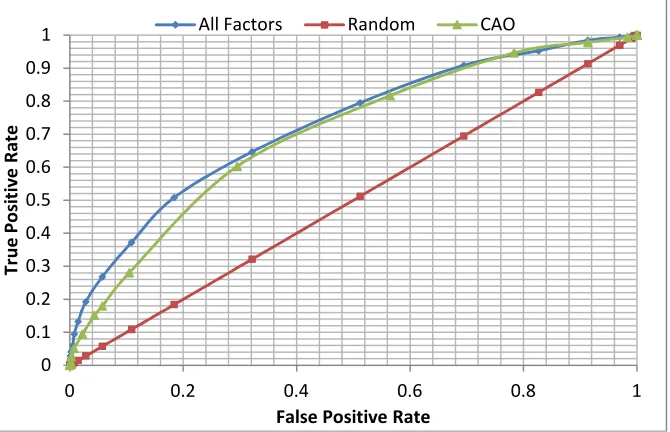
Fig. 4 shows a receiver operating characteristic based on the logistic model. True positive rate (students who are correctly predicted, above a given probability threshold, to fail to progress) is plotted versus false positive rate (those who are predicted to fail to progress but in fact succeed). The line of zero discrimination, i.e. random selection, is shown in red. Considering the overall CAO score is less predictive than using the identified factors above – the difference being significant at low false positive rates, albeit less significant at higher rates. This is relevant for planning any targeted intervention – the ability to correctly identify students likely to fail to progress using limited resources while limiting incorrectly identified students to an acceptable level.
Fig. 4. Receiver Operating Characteristic
5 CONCLUSIONS
Despite significant differences in the structure of the education system in the two countries, there are clear parallels in a number of areas for which similar entrant data was available:
• Overall academic achievement is predictive of student progress in both cases, albeit specific subjects are more valuable than the overall aggregate grade in the Irish context. This may simply be an artefact of the relatively free subject choice in the Irish system compared to the more ‘tracked’ system in Portugal.
0 0.1 0.2 0.3 0.4 0.5 0.6 0.7 0.8 0.9 1
0 0.2 0.4 0.6 0.8 1
T
ru
e
P
o
si
ti
v
e
R
a
te
False Positive Rate
[image:7.595.132.467.401.617.2]• Access to high preference choice of course is significant, albeit less so than academic grades, in both countries
• Physics confers an advantage on students in both countries with regard to progression There are areas where there is insufficient data overlap between the two countries to effect a direct comparison – these include the socio-economic and family status, the student travel time and the student expectations and motivations.
Of the remaining areas where there is data available, there are interesting divergences regarding living at home and gender. Interestingly both of these variables are significant in the Irish/Trinity College context when the entire student cohort (including Arts, Medicine, Business, Law etc) is considered, but not specifically for engineers.
REFERENCES
[1] OECD, “Changing Supply and Demand for S&T Professionals in a Globalised Economy,” OECD Publishing, 2006.
[2] Irish Academy of Engineering, “Engineering a Knowledge Island 2020,” Engineers Ireland, Dublin, 2005.
[3] J. P. Smith and R. A. Naylor, “Dropping Out of University: A Statistical Analysis of the Probability of Withdrawal for U.K. Students,” Journal of the Royal Statistical Society, vol. 164, no. 2, pp. 389-405, 2001.
[4] V. Johnston, “Why Do First-Year Students Fail to Progress to Their Second Year? An Academic Staff Perspective,” in British Educational Research Association Annual Conference, University of York, 11th–14th September 1997.
[5] O. Mooney, V. Patterson, M. O’Connor and A. Chantler, “A study of progression in Irish higher education,” Higher Education Authority, Dublin, 2010.
[6] C. Somers, “Correlates of Engineering Freshman Academic Performance,” European Journal of engineering Education, vol. 21, no. 3, pp. 317-326, 1996.
[7] M. Moran and M. Crowley, “The Leaving Certificate and First year University Performance,” Journal of the Statistical and Social Inquiry Society of Ireland, vol. 24, no. 1, pp. 231-266, 1978.
[8] “CAO Entrant Data,” [Online]. Available: www.cao.ie.
[9] G. S. J. Pike, “Does high school matter? An analysis of three methods of predicting first-year grades.,” Research in Higher Education, vol. 43, no. 2, pp. 187-207, 2002.
[10] C. Amelink, “Predicting Academic Success among First-Year, First-Generation Students,” in Ph.D. Thesis in Education Leadership and Policy Studies, Virginia Polytechnic Institute and State University, 2005.