(will be inserted by the editor)
A Logical Framework for the Representation and Verification of
Context-aware Agents
Abdur Rakib · Hafiz Mahfooz Ul Haque
Received: date / Accepted: date
Abstract We propose a logical framework for modelling and verifying context-aware multi-agent systems. We extend CT L∗ with belief and communication modalities, and the resulting logic LOCRS allows us to describe a set of rule-based reasoning agents with bounds on time, memory and communication. The set of rules which are used to model a desired system is derived from OWL 2 RL ontologies. We provide an axiomatization of the logic and prove it is sound and complete. We show how Maude rewriting system can be used to encode and verify interesting properties ofLOCRS models using existing model checking techniques.
Keywords Modal logic·Context-aware ·Multi-agent systems·Ontology·Model checking.
1 Introduction
The vision of pervasive computing technology intends to provide invisible computing environments so that a user can utilize services at any time and everywhere [28]. Context-awareness is a key concept in pervasive computing. In
context-A preliminary version of this paper appeared in the proceedings of the 2nd International Conference on Context-Aware Systems and Applications (ICCASA’13).
———————————————————————————— This work is partially supported by the Faculty of Science Pump Priming & Equipment Research Fund at the University of Nottingham Malaysia Campus.
Abdur Rakib
School of Computer Science, The University of Nottingham, Malaysia Campus
Tel.: +60389248137, Fax: +60389248018 E-mail: [email protected] Hafiz Mahfooz Ul Haque
School of Computer Science, The University of Nottingham, Malaysia Campus
E-mail: [email protected]
aware pervasive computing every user may have several com-puting devices, where information can be collected by using tiny resource-bounded devices, including e.g., PDAs, smart phones, and wireless sensor nodes [26]. These systems inter-act with human users, they often exhibit complex adaptive behaviours, they are highly decentralised and can naturally be implemented as multi-agent systems. An agent is a piece of software that requires to be reactive, pro-active, and that is capable of autonomous action in its environment to meet its design objectives. An agent is autonomous if it encapsulates its behaviour and internal state. This means that an agent it-self has control over its own actions and behaviour. When a system is composed of multiple interacting agents it is called a multi-agent system (MAS) [29]. In a MAS, agents are typi-cally communicate via message passing and co-operate with other agents in order to achieve common goals. In many cir-cumstances building centralized systems are quite imprac-tical or undesirable such as pervasive systems, where MAS technology appears to be a primary choice in producing dis-tributed information systems. In this paper, we address soft-ware reasoning agents which are capable of reasoning about their behaviour and interactions, however, an agent could be for example a robot. That is our agents are primarily viewed as doing some kind of inference over a knowledge base (KB), e.g., using forward chaining rules.
or consideration of the time required for reasoning. How-ever, in many situations the time taken to do the reasoning is of critical importance. Other issues include space require-ments for reasoning and the number of messages that are exchanged between tiny resource-bounded devices in order to achieve their goals. This is because memory space of such a device is relatively small and its life time is inversely pro-portional to the number of messages it exchanges. System-atic, formal approaches to their specification and verification can allow addressing these problems. In this research work, intended systems will not only be able to facilitate knowing whois encounteringwhatproblemwhenandwhere, but also if a system finds that someone encountering some problem in a particular place at a particular moment then whether assistance seeker will receive favoured services or not, if re-ceives then what computational (time and space) and com-munication resources must be devoted to its solution by each agent.
In the literature, various logical frameworks have been developed for modelling and verification of multi-agent sys-tems (a brief state-of-the-art survey can be found in [22, 21]). However, such frameworks may not be very suitable to model context-aware applications. This is because, most of those existing frameworks consider propositional logic as a simple knowledge representation language which is of-ten not suitable for modelling real life complex systems. For example, propositional logic cannot directly talk about properties of individuals or relations between individuals. Much research in pervasive computing has been focused on incorporation of context-awareness features into pervasive applications by adapting the semantic web technology (see e.g.,[27, 12, 23]), where description logic (DL)-based ontol-ogy languages are often used for context representation and reasoning. DLis a decidable fragment of first order logic (FOL). In [23], it has been shown how context-aware tems can be modelled as resource-bounded rule-based sys-tems using ontologies. In that paper, the resources required by the agents to solve a given problem were considered the time and communication bandwidth. But not the space re-quirements for reasoning. In this paper, we propose a log-ical framework based on the earlier work of Alechina and colleagues [4, 5, 3], and the resulting LOCRS logic allows us to describe a set of ontology-driven rule-based reasoning agents with bounds on time, memory, and communication. In addition to the incorporation of space (memory) require-ments for reasoning in [4],LOCRSalso uses first order Horn clause rules derived from OWL 2 RL ontologies. We prove that the logic is sound and complete. While the frameworks presented in [4, 5] provide a useful basis for experimenta-tion with both the logical representaexperimenta-tion and verificaexperimenta-tion of heterogeneous agents, it has become clear that a more ex-pressive logical language is required if these frameworks are to be used for real world context-aware agents. Though the
logic developed by [3] is based onFOL, memory bounds have not been imposed in that framework. The proposed framework allows us to determine how much time (mea-sured as rule-firing cycles) are required to generate certain contexts, how many messages must be exchanged among agents, and how much space (memory) is required for an agent to do the reasoning. For verification, we show how we can encode a LOCRS model using the Maude LTL model checker [11] and verify its certain interesting resource-bounded properties.
The remainder of the paper is organized as follows. In section 2, we discuss how contexts are represented using OWL 2 RL and SWRL. In section 3, we describe our model of communicating multi-agent context-aware systems. In sec-tion 4, we develop logicLOCRS, in section 5 we present an example system and experimental results, and conclude in section 6.
2 Semantic context model
We view context is any information that can be used to iden-tify the status of an entity. An entity can be a person, a place, a physical or a computing object. This context is rel-evant to a user and application, and reflects the relation-ship among themselves [10]. A context can be formally de-fined as a(subject, predicate, object)triple that states a fact about the subject where — the subject is an entity in the en-vironment, the object is a value or another entity, and the predicate is a relationship between the subject and object. According to [10],“if a piece of information can be used to characterize the situation of a participant in an interac-tion, then that information is context”. For example, we can represent contexts”Mary has Systolic Blood Pressure 120” as(Mary, hasSystolicBloodPressure, 120)and”Mary has a carer named Fiona”as(Mary, hasCarer, Fiona). Here, the caregiver of a patient is dynamically identified based on the care status of the caregiver.
including for example, possible locations,furniture equip-ment,household equipment,technical equipment, and phys-ical devices with which people can interact. By observing the scenario, some questions can be raised into the system designer’s mind, for example, who are the dwellers? how many rooms are there in the home? what is the location of TV? which devices are located at what places and how they interact with each other? and so on. Based on these kind of questions we can identify the major concepts those can be used in building the ontology. For instance,”bedroom is a room that is part of the home”is a concept that has terms with relevant semantics, this concept can be formalized us-ing first order logic as follows:
∀x·[Bedroom(x)→Room(x)∧ ∃y·[isPartOf(x, y)
∧Home(x)]]
The Web Ontology Language OWL built on RDF and RDFS is a semantic markup language for ontologies that provides a formal syntax and semantics for them [9]. OWL ontology is essentially a set of axioms and consists of classes, individuals and properties. In the aforementioned(subject, predicate, object)triplet, subjects and objects are denoted by classes (and subclasses), while predicates are typically denoted by properties. Thus contexts can be efficiently mod-elled using ontologies. There are two types of properties in OWL ontologies,object propertiesanddata properties. Ob-ject properties are binary relations which link an individual to an individual, whereas data properties link an individual to a typed data. Description logic based OWL is a good can-didate for defining ontologies where automated reasoning is required. A reasoner can infer implicit facts contained in the ontology. As an example, a simple ontology about home is represented in DL 1-3.
BedroomvRoomu ∃isPartOf ·Home (1)
Bedroomu ∃hasDoor·Door (2)
Dweller(Mary) (3)
The first two axioms define the concepts”Bedroom is a room that is part of the home”and”Bedroom has a door”, respectively, whereas the third axiom asserts the fact that ”Mary is a dweller’. A reasoner can infer that”Room has a door”which is implicit in the ontology.
For context modelling we use OWL 2 RL, a profile of the new standardization OWL 2, and based onpD∗[17] and the description logic program (DLP) [13]. We choose OWL 2 RL because it is more expressive than the RDFS and suit-able for the design and development of rule-based systems. An OWL 2 RL ontology can be translated into a set of Horn clause rules based on [13]. Furthermore, we express more complex rule-based concepts using SWRL [16] which al-low us to write rules using OWL concepts. In our frame-work, a context-aware system composed of a set of rule-based agents, and firing of rules that infer new facts may
de-termine context changes and representing overall behaviour of the system.
The following subsections show how we model contexts for smart spaces and perform context-awareness reasoning.
2.1 Ontology-design
There are several different approaches in designing ontolo-gies for a domain of interest [25]. One way to do this is to use bottom-up approach, in which ontology for smaller parts are constructed first, then using high-level abstract classes the desired ontology is developed. That is, bottom-up ap-proach starts with the leaves of the hierarchy that defines the most specific classes first, and subsequently groups these classes into more general concepts. For example, we can start by defining classes forNurseandPhysician, then cre-ate a common superclass for these two classes asFormalin turn is a subclass ofCareGiverand so on.
In contrast to the bottom-up approach, a top-down ap-proach designs the upper classes first and then develops the small parts of the hierarchy. That is, top-down approach starts with defining the most general concepts in the domain first, and subsequently specializes the concepts down to the hier-archy.
In designing our smart space ontology, we adopt a top-level shared conceptualization and on top of which lower-level (domain specific) ontologies are built. The top-lower-level ontology defines the high-level concepts that are common among different context-aware entities, independently from the application domain. Whereas the domain ontology refers to a specific domain defining the details of general concepts and their relationships. We use top-level concepts such as Location,Person,Device,Service,Activity,Time, and Med-ication. These conceptual entities specialize different con-cepts depending on the context sub-domain. For example, thePersoncontext class defines the general feature of a per-son. In our home health-care modelling domain, it may be divided intoPatient andCareGiver subclasses. The Care-Giverclass is further divided intoFormalandInformal sub-classes and so on. Our ontology-based context modelling provides physical representation of smart home (including its doors, windows, various locations, and so on), objects available in the smart home (including sensors and elec-tric appliances), and users and their various activities and characteristics. It also provides (local and remote) services including operating electrical appliances, medical consulta-tion, emergency response etc. A fragment of the ontology is depicted in Figure 1.
Fig. 1 A partial view of home environment and context ontology
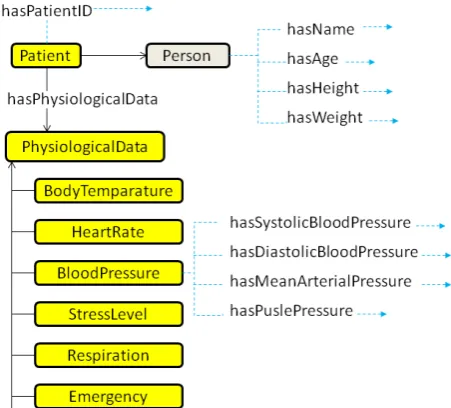
Fig. 2 A partial view of patient context ontology
(and hence Patientcontext) has person profile information such as, e.g., Name, Age, Height, andWeight, and the Pa-tientcontext hasPhysiologicalDatacontext. For the design of context ontologies we use OWL 2 RL language and the Prot´eg´e ontology editor [20].
Note that there is no unique way to model a domain of discourse and there are always viable alternatives, however, a good way to think about modelling a domain depends on the application scenario one has in mind and its possible extensions that will be anticipated. Ontologies try to model real world scenario and therefore the concepts in the desired ontology must reflect this reality. It is an iterative process and many standard terms for health care domain already exist in the literature, for example, to model our domain a
set of standard terms are obtained from SNOMED-CT [1], ICNP [15].
Fig. 3 Example SWRL rules and individualised patient ontology
[image:4.595.67.514.80.285.2] [image:4.595.48.274.323.527.2] [image:4.595.302.464.374.590.2]ontological representation of context-aware systems gives a clean ontology design based on the distinction between the static information represented using OWL 2 RL and the dy-namic aspects of the systems go into the SWRL rules.
2.2 Context-aware reasoning
We use ontology-based reasoning to determine concept sat-isfiability, subsumption relations, consistency and instance checking. That is, ontology-based reasoning infers implicit contexts from explicit contexts based on class relationships and property characteristics. For example, in our ontology, hasCareris an inverse property oftakesCareOf. From user defined explicit contexthasCarer(Mary, Fiona)which states that”Mary has a carer named Fiona”, ontology-based rea-soning can infer a new context takesCareOf(Fiona, Mary) which states that”Fiona takes care of a patient named Mary” based on the semanticsowl:inverseOf. In Figure 3 (b), an in-stance of the patient domain ontology can be, for example, ”Mary” has been shown. In this figure, we asserted some low-level contexts for a patient includinghasAge(Mary,65), hasPatientID(Mary,P0001)etc. It also includes some inferred contexts derived from context-reasoning using the DL rea-soner Pellet.
As we have mentioned before, OWL DL is strictly lim-ited to certain tree structure-like axioms and cannot be used to express arbitrary axioms, for example the relation be-tween individuals with which an individual has relations can-not be expressed using OWL DL. The SWRL rules can re-move such restrictions. Furthermore, low-level contexts can be transformed into meaningful information in terms of high-level contexts, where a set of suitable rules can exploit the real meaning of some raw values of context properties. Us-ing SWRL rules we can have a flexible reasonUs-ing mech-anism that will allow us inferring new contexts based on user defined rules. Thus, whenever certain changes are de-tected in its context, the system can be configured to change its behavior. Our aim is to build a context-aware system through distributed rule-based agents. Therefore, we trans-late OWL 2 RL ontology into a set of Horn clause rules, and the combination of these translated rules and the user de-fined SWRL rules (those are already in the Horn clause for-mat) provide foundational knowledge to design the desired distributed rule-based agents. Moreover, user annotated Horn clause rules will enable reasoning with users’ needs.
2.3 Translation of ontologies into rules
Since OWL 2 RL is based on DLP, the set of axioms and facts of an OWL 2 RL ontology can be translated to Horn clause rules [13]. In order to design an ontology-driven rule-based system, first we use the DLP framework [13] to
trans-late an ontology to a set of Horn clause rules. In OWL 2 RL, facts are described using ClassAssertion and ObjectProp-ertyAssertion/DataPropertyAssertion which correspond to DL axioms of the forma:Candha, bi:P, respectively, where aandbare individuals,Cis a class, andP is an object/data property. Note that these facts are already in the Horn clause rule format with empty bodies.
The syntax of OWL 2 RL is asymmetric, i.e., the syntac-tic restrictions allowed for subclass expressions differ from those allowed for superclass expressions. For instance, an existential quantification to a class expression ( ObjectSomeVal-uesFrom) is allowed only in subclass expressions whereas universal quantification to a class expression ( ObjectAllVal-uesFrom) is allowed only in superclass expressions. These restrictions facilitate the translation of OWL 2 RL axioms into Horn clause rules based on the DLP framework. Trans-lations of some of the OWL 2 RL axioms and facts into rules are given in Table 1. In the second column, complete DL statements are given which are constructed by the corre-sponding OWL 2 RL axioms and facts to illustrate the trans-lation. For example,ObjectIntersectionOf(u) is represented by the statementC1 vD1uD2. The translation of SWRL rules is straightforward because they are already in the Horn clause rule format.
3 Context-aware systems as MASs
We model context-aware systems as multi-agent systems and rely on decentralised reasoning services and distribute con-text description to the agents (i.e., unlike many other agent-based context-aware systems we do not store context de-scription managed by a central middleware). In our model a multi-agent context-aware system consists ofnAg(≥ 1) individual agentsAg = {1,2, . . . , nAg}. Each agenti ∈
OWL 2 Axioms and Facts DL Syntax Horn clause rule
ClassAssertions a:C C(a)
PropertyAssertion ha, bi:P P(a, b)
SubClassOf CvD C(x)→D(x)
EquivalentClasses C≡D C(x)→D(x),D(x)→C(x)
EquivalentProperties P ≡Q Q(x, y)→P(x, y)
P(x, y)→Q(x, y)
ObjectInverseOf P ≡Q− P(x, y)→Q(y, x)
Q(y, x)→P(x, y)
TransitiveObjectProperty P+vP P(x, y)∧P(y, z)→P(x, z)
SymmetricObjectProperty P ≡P− P(x, y)→P(y, x)
Object/DataUnionOf C1tC2vD C1(x)→D(x),C2(x)→D(x)
Object/DataIntersectionOf CvD1uD2 C(x)→D1(x),C(x)→D2(x)
Object/DataSomeValuesFrom ∃P.CvD P(x, y)∧C(y)→D(x)
Object/DataAllValuesFrom Cv ∀P.D C(x)∧P(x, y)→D(y)
Object/DataPropertyDomain > v ∀P−.C P(y, x)→C(y)
[image:6.595.46.540.75.303.2]Object/DataPropertyRange > v ∀P.C P(x, y)→C(y)
Table 1 Translation of OWL 2 RL axioms and facts into Horn clause rules
contextP’ (i6=j). The positions in which theAskandTell primitives may appear in a rule depends on which agent’s program the rule belongs to. Agentimay have anAsk or aTell with arguments(i, j, P)in the consequent of a rule; e.g.,P1, P2, . . . , Pn → Ask(i, j, P)whereas agentj may have an Ask or aTell with arguments(i, j, P) in the an-tecedent of the rule; e.g.,Tell(i, j, P)→Pis a well-formed rule (we call it trust rule) for agentjthat causes it to believei wheniinforms it that contextPis the case. No other occur-rences ofAskorTellare allowed. When a rule has either an Ask or aTellas its consequent, we call it a communication rule. All other rules are known as deduction rules. These in-clude rules withAsks andTells in the antecedent as well as rules containing neither anAsk nor aTell. Note that OWL 2 is limited to unary and binary predicates and it is function-free. Therefore, in the Prot´eg´e editor all the arguments of Ask andTell are represented using constant symbols and these annotated symbols are translated appropriately when designing the target system using the Maude specification.
4 The LogicLOCRS
ADLknowledge base (KB) has two components: the Ter-minology Box (TBox)T and the Assertion Box (ABox)A. The TBox introduces the terminology of a domain, while theABox contains assertions about individuals in terms of this vocabulary. TheTBox is a finite set of general concept inclusions (GCI) and role inclusions. AGCI is of the form CvDwhereC,DareDL-concepts and a role inclusion is of the formR v SwhereR,SareDL-roles. We may use C≡D(concept equivalence) as an abbreviation for the two GCIsC vD andD vC andR ≡ S (role equivalence) as an abbreviation forR v SandS v R. TheABox is a
finite set of concept assertions in the form ofC(a)and role assertions in the form ofR(a, b).
Definition 1 (Interpretation of DL-knowledge bases)An Interpretation of a DL knowledge base is a pairI =< ∆I, .I> where∆Iis a non-empty set (the domain of interpretation) and.I is a function that maps every concept to a subset of ∆I, every role to a subset of∆I×∆I, and each individual name to an element of the domain∆I.
An interpretationIsatisfies the concept assertionC(a), denoted byI |=C(a), iffaI ∈CIand it satisfies the role assertionR(a, b), denoted byI |= R(a, b), iff(aI, bI) ∈ RI, whereaandbare individuals.
set of all the ground instances of the rules occurring in<, which is obtained using g. Thus G(<) is finite. Let r¯ ∈ G(<) be one of the possible instances of a rule r ∈ <. Note thatC(a),R(a, b),Ask(i, j, C(a)),Ask(i, j, R(a, b)), T ell(i, j, C(a)), andT ell(i, j, R(a, b))are ground facts, for allC ∈ C, R∈ R. The internal languageLincludes all the ground facts and rules. Let us denote the set of all formulas byΩwhich is finite. In the modal language ofLwe have belief operatorBi for alli ∈ Ag. We assume that there is a bound on communication for each agent i which limits agent i to at mostnC(i) ∈ Z∗ messages. Each agent has a communication counter, cp=n
i , which starts at0 (cp=0i ) and is not allowed to exceed the value nC(i). We divide agent’s memory into two parts as rule memory (knowledge base) and working memory. Rule memory holds set of rules, whereas the facts are stored in the agent’s working mem-ory. Working memory is divided into static memory (SM(i)) and dynamic memory (DM(i)). TheDM(i)of each agent i ∈Ag is bounded in size bynM(i) ∈Z∗, where one unit of memory corresponds to the ability to store an arbitrary formula. The static part contains initial information to start up the systems, e.g., initial working memory facts, thus its size is determined by the number of initial facts. The dy-namic part contains newly derive facts as the system moves. Only formulas stored in DM(i) may get overwritten if it is full. Note that unless otherwise stated, in the rest of the paper we shall assume that memory meansDM(i). For con-venience, we define the following sets:CPi={cp=n
i |n=
{0, . . . , nC(i)}},CP =S
i∈AgCPi.
The syntax ofLOCRS includes the temporal operators ofCT L∗and is defined inductively as follows:
– >(tautology) andstart(a propositional variable which is only true at the initial moment of time) are well-formed formulas (wff) ofLOCRS;
– cp=n
i (which states that the value of agenti’s commu-nication counter is n) is a wff of LOCRS for alln ∈
{0, . . . , nC(i)}andi∈Ag;
– BiC(a)(agentibelievesC(a)),BiR(a, b)(agenti be-lievesR(a, b)), andBir(agentibelievesr) are wffs of LOCRS for anyC∈ C, R∈ R,r∈ <andi∈Ag; – BkAsk(i, j, C(a)),BkAsk(i, j, R(a, b)),BkT ell(i, j, C(
a)), and BkT ell(i, j, R(a, b)) are wffs of LOCRS for anyC∈ C, R∈ R,i, j∈Ag,k∈ {i, j}, andi6=j; – Ifϕandψare wffs ofLOCRS, then so are¬ϕandϕ∧ψ; – Ifϕandψare wffs ofLOCRS, then so areXϕ(in the next stateϕ),ϕ U ψ(ϕholds untilψ),Aϕ(on all paths ϕ).
Other classical abbreviations for⊥,∨,→and↔, and tem-poral operations:F ϕ ≡ >U ϕ(at some point in the future ϕ) and Gϕ ≡ ¬F¬ϕ(at all points in the futureϕ), and Eϕ≡ ¬A¬ϕ(on some pathϕ) are defined as usual.
The semantics ofLOCRS is defined byLOCRS transi-tion systems which are based onω-tree structures. Let(S, T)
be a pair whereSis a set andTis a binary relation onSthat is total, i.e.,∀s∈S· ∃s0 ∈S·sT s0. A branch of(S, T)is an ω-sequence(s0, s1, . . .)such thats0is the root andsiT si+1 for alli≥0. We denoteB(S, T)to be the set of all branches of(S, T). For a branchπ∈B(S, T),πidenotes the element siofπandπ≤iis the prefix(s0, s1, . . . , si)ofπ. ALOCRS transition systemMis defined asM= (S, T, V)where
– (S, T)is aω-tree frame
– V :S×Ag→℘(Ω∪CP); we define the belief part of the assignmentVB(s, i) =V(s, i)\CP and the com-munication counter partVC(s, i) = V(s, i)∩CP. We further defineVM(s, i) ={α|α∈D
M(i)}.V satisfies the following conditions:
1. |VC(s, i)|= 1for alls∈Sandi∈Ag. 2. IfsT s0 andcp=n
i ∈ V(s, i) andcpi=m ∈ V(s0, i) thenn≤m.
– we say that a ruler : P1, P2, . . . , Pn → P is applica-ble in a state s of an agenti ifant(¯r) ∈ V(s, i)and cons(¯r)∈/ V(s, i). The following conditions on the as-signmentsV(s, i), for alli∈Ag, and transition relation T hold in all models:
1. for alli ∈ Ag,s, s0 ∈ S, andr ∈ <,r ∈ V(s, i) iffr∈V(s0, i). This describes that agent’s program does not change.
2. for alls, s0 ∈S,sT s0holds iff for alli∈Ag, V(s0, i) =V(s, i)∪{cons(¯r)}∪{Ask(j, i, C(a))}∪{Tell(j, i, C(a)}∪{Ask(j, i, R(a, b))}∪{Tell(j, i, R(a, b)}. This describes that each agentifires a single appli-cable rule instance of a ruler, or updates its state by interacting with other agents, otherwise its state does not change.
The truth of a LOCRS formula at a pointn of a path π∈B(S, T)is defined inductively as follows:
– M, π, n|=>,
– M, π, n|=startiffn= 0, – M, π, n|=Biαiffα∈V(πn, i), – M, π, n|=cp=m
i iffcp=im∈V(πn, i), – M, π, n|=¬ϕiffM, π, n6|=ϕ,
– M, π, n|=ϕ∧ψiffM, π, n|=ϕandM, π, n|=ψ, – M, π, n|=XϕiffM, π, n+ 1|=ϕ,
– M, π, n |= ϕU ψ iff∃m ≥ n such that ∀k ∈ [n, m) M, π, k|=ϕandM, π, m|=ψ,
– M, π, n|=Aϕiff∀π0 ∈B(S, T)such thatπ0≤n=π≤n, M, π0, n|=ϕ.
agent’s memory and removing β, where αis of the form Ask(j, i, P)orTell(j, i, P), andIdlei (agentidoes noth-ing but moves to the next state). Intuitively,βis an arbitrary facts which gets overwritten if it is in the agent’s dynamic memory DM(i). If agent’s memory is full |VM(s, i)| = nM(i) then we require thatβ has to be in VM(s, i). Not all actions are possible in a given state. For example, there may not be any matching rule instances. When the counter value reaches to nC(i),i cannot perform copy action any more. Let us denote the set of all possible actions by agenti in a given statesbyTi(s)and its definition is given below:
Definition 2 (Available actions)For every statesand agent i,
1. Rulei,r,β ∈ Ti(s)iffr ∈ V(s, i),ant(¯r) ⊆ V(s, i), cons(¯r) ∈/ V(s, i),β ∈ Ω or if|VM(s, i)| = nM(i) thenβ∈VM(s, i);
2. Copyi,α,β ∈ Ti(s)iff there existsj 6=isuch thatα∈
V(s, j),α /∈ V(s, i),cp=i m ∈ V(s, i)for some m < nC(i),αis of the formAsk(j, i, P)orTell(j, i, P), and βas before;
3. Idleiis always inTi(s).
Definition 3 (Effect of actions)For eachi∈Ag, the result of performing an actionacti in a states ∈ S is defined if acti∈Ti(s)and has the following effect on the assignment of formulas toiin the successor states0∈S:
1. ifactiisRulei,r,β:V(s0, i) =V(s, i)\{β}∪{cons(¯r)}; 2. if acti is Copyi,α,β, cp=m
i ∈ V(s, i) for some m ≤ nC(i):V(s0, i) =V(s, i)\ {β, cp=m
i } ∪ {α, cp =m+1 i }; 3. ifactiisIdlei:V(s0, i) =V(s, i).
Now, the definition of the set of models corresponding to a system of rule-based reasoners is given below:
Definition 4 M(nM, nC)is the set of models(S, T, V)which satisfies the following conditions:
1. cp=0
i ∈ V(s0, i)wheres0 ∈ S is the root of (S, T), ∀i∈Ag;
2. ∀s∈Sand a tuple of actionshact1, act2, . . . , actnAgi, ifacti ∈Ti(s),∀i∈Ag, then∃s0 ∈ Ss.t.sT s0ands0 satisfies the effects ofacti,∀i∈Ag;
3. ∀s, s0∈S,sT s0iff for some tuple of actionshact1, act2, . . . , actnAgi,acti ∈Ti(s)and the assignment ins
0 sat-isfies the effects ofacti,∀i∈Ag;
4. The bound on each agent’s memory is set by the follow-ing constraint on the mappfollow-ingV:|VM(s, i)| ≤ nM(i), ∀s∈S,i∈Ag.
Note that the boundnC(i)on each agenti’s communi-cation ability (no branch contains more thannC(i) Copy actions by agenti) follows from the fact thatCopyi is only enabled ifihas performed fewer thannC(i)copy actions in the past. Below are some abbreviations which will be used in the axiomatization:
– ByRulei(P, m) =¬BiP∧cp=im∧W
r∈<∧cons(¯r))=P(Bir
∧V
Q∈ant(¯r)BiQ). This formula describes the state be-fore the agent comes to believe formulaP by theRule transition,mis the value ofi’s communication counter, P andQare ground atomic formulas.
– ByCopyi(α, m) =¬Biα∧Bjα∧cp=i m−1, whereαis of the formAsk(j, i, P)orTell(j, i, P),i, j ∈ Agand i6=j.
Now we introduce the axiomatization system.
A1 All axioms and inference rules ofCT L∗[24].
A2 V
α∈DM(i)
Biα → ¬Biβ for allDM(i) ⊆ Ω such that
|DM(i)| = nM(i) and β /∈ DM(i). This axiom de-scribes that, in a given state, each agent can store maxi-mally at mostnM(i)formulas in its memory,
A3 W
n=0,...,nC(i)
cp=n
i ,nis value of the communication counter of an agenticorresponding to itsCopyactions.
A4 cp=in → ¬cp=imfor anym6=n,
A5 Bir∧VP∈ant(¯r)BiP ∧cp=in∧ ¬Bicons(¯r)→ EX( Bicons(¯r)∧cp=n
i ),i∈Ag. This axiom describes that if a rule matches, its consequent belongs to some successor state.
A6 cp=m
i ∧ ¬Biα∧Bjα → EX(Biα∧cp =m+1
i )where
αis of the formAsk(j, i, P)orTell(j, i, P),i, j∈Ag, j 6= i, m < nC(i). This axiom describes transitions made byCopywith communication counter increased. A7 EX(Biα∧Biβ)→Biα∨Biβ, whereαandβare not of
the formAsk(j, i, P)andTell(j, i, P). This axiom says that at most one new belief is added in the next state. A8 Biα→ AXBiαfor anyα ∈ SM(i)∪ <. This axiom
states that an agent i ∈ Ag always believes formulas residing in its static memory and its rules.
A9 EX(Biα∧cp=i m)→Biα∨ByRulei(α, m)∨ByCopyi( α, m)for anyα∈ ∪Ω. This axiom says that a new belief can only be added by one of the valid reasoning actions. A10a start→cp=0i for alli∈Ag. At the start state, the agent
has not performed anyCopyactions.
A10b ¬EX start.startholds only at the root of the tree. A11 Birwherer ∈ <andi ∈Ag. This axiom tells agenti
believes its rules.
A12 ¬Birwherer /∈ <andi∈Ag. This axiom tells agenti only believes its rules.
A13 ϕ→EXϕ, whereϕdoes not containstart. This axiom describes anIdletransition by all the agents.
A14 V
i∈AgEX( V
α∈ΓiBiα∧cp
=mi
i )→EX
V
i∈Ag( V
α∈Γi
Biα∧cp=mi
i )for anyΓi⊆Ω. This axiom describes that if each agentican separately reach a state where it be-lieves formulas inΓi, then all agents together can reach a state where for eachi, agentibelieves formulas inΓi.
Definition 5 L(nM, nC)is the logic defined by the axioma-tisationA1-A14.
Theorem 1 L(nM, nC)is sound and complete with respect toM(nM, nC).
Sketch of Proof. The proof of soundness is standard. The proofs for axioms and rules included inA1are given in [24]. AxiomA2assures that at a state, each agent can store max-imally at mostnM(i)formulas in its memory. AxiomsA3 andA4force the presence of a unique counter for each agent to record the number of copies it has performed so far. In particular,A3makes sure that at least a counter is available for any agent andA4 guaranties that only one of them is present. In the following, we provide the proof forA5and A6. The proofs for other axioms are similar.
LetM = (S, T, V) ∈ M(nM, nC),π ∈ B(S, T)and n≥0. We assume thatM, π, n|=Bir∧VP∈ant(¯r)BiP∧ cp=m
i ∧ ¬Bicons(¯r), for some r ∈ <, and|VM(s, i)| ≤ nM(i). ThenP ∈V(πn, i)for allP ∈ant(¯r), andcons(¯r)∈/ V(πn, i). This means that the action performed byiisRulei,r,β. According to the definition ofM(nM, nC),∃s0∈S·πnT s0 andV(s0, i) = V(πn, i)\ {β} ∪ {cons(¯r)}. Let π0 be a branch inB(S, T)such thatπ≤n0 = π≤n andπn0+1 = s0. Then we haveM, π0, n+ 1 |= Bicons(¯r)∧cp=im. There-fore, it is obvious thatM, π, n|=EX(Bicons(¯r)∧cp=m
i ). Let us considerA6. LetM= (S, T, V)∈M(nM, nC), π∈B(S, T)andn≥0. We assume thatM, π, n|=cp=im∧
¬Biα∧ Bjα, and |VM(s, i)| ≤ nM(i). Then cp=i m ∈ V(πn, i),α /∈ V(πn, i), andα∈ V(πn, j), fori, j ∈Ag, i 6= j, and m < nC(i). This means that the action per-formed by i is Copyi,α,β. According to the definition of M(nM, nC),∃s0 ∈ S·πnT s0 andV(s0, i) = V(πn, i)\ {β, cp=im} ∪ {α, cpi=m+1}. Letπ0 be a branch inB(S, T) such thatπ≤n0 =π≤nandπn0+1=s0. Then we haveM, π0, n+ 1|=Biα∧cp=im+1. Therefore, it is obvious thatM, π, n|= EX(Biα∧cp=im+1).
Completeness can be shown by constructing a tree model for a consistent formulaϕ. This is constructed as in the com-pleteness proof introduced in [24]. Then we use the axioms to show that this model is inM(nM, nC).
Since the initial state of all agents does not restrict the set of formulas they may derive in the future, for simplic-ity we conjunctively add toϕa tautology that contains all the potentially necessary formulas and message counters, in order to have enough sub-formulas for the construction. We construct a modelM= (S, T, V)for
ϕ0=ϕ∧ ^
α∈Ω
(XBiα∨ ¬XBiα)∧
^
n∈{0...nC(i)},i∈Ag
(Xcp=n
i ∨ ¬Xcp =n i )
We then prove thatMis inM(nM, nC)by showing that it satisfies all properties listed in Definition 4. AxiomsA3
andA4show that for anyi∈Ag, there exists a uniquen∈ {0. . . nC}such that at a statesofM,cp=in ∈V(s, i).
At the roots0 of(S, T), the construction of the model implies that there exists a maximally consistent set (MCS) Γ0such thatΓ0 ⊇V(s0, i)andstart∈ Γ0. Therefore, by axiomA10, it is trivial thatcp=0
i ∈V(s0, i).
We then need to prove that∀s∈S,acti∈Ti(s), andi∈
Ag,∃s0∈S·sT s0andV(s0, i)is the result ofV(s, i)after ihas performed actionacti. Let us consider the case when actiisRulei,r,β ∈ Ti(s)for somer∈ <. SinceRulei,r,β is applicable ats, ant(¯r) ⊆ V(s, i),cons(¯r) ∈/ V(s, i). Therefore there exists a MCS Γ such that Γ ⊇ V(s, i), andV
P∈ant(¯r)BiP ∧cp =m
i ∧ ¬Bicons(¯r)∈Γ, for some m ∈ {0, . . . , nC}and|VM(s, i)| ≤nM(i). By axiomA5 and Modus Ponens (MP), EX(Bicons(¯r)∧cp=i m) ∈ Γ. Therefore, according to the construction,∃s0 ∈ S·sT s0, V(s0, i)⊆ Γ0 for someΓ0, andBicons(¯r)∧cp=m
i ∈ Γ0. ThereforeV(s0, i) = V(s, i)\ {β} ∪ {cons(¯r)}. For the Copyi,α,β ∈ Ti(s)andIdlei ∈ Ti(s)actions, the proofs are similar by using MP and axiomsA6 and axiomA13. Then, using axiomA14we can show that, for any tuple of actionshact1, act2, . . . , actnAgi,acti∈Ti(s)is applicable
ats∈S∀i∈Ag, then∃s0 ∈Ssuch thatV(s0, i)is the re-sult ofV(s, i)after performingactiatsby agenti,∀i∈Ag. Finally, we prove that ∀s, s0 ∈ S ·sT s0,∃ a tuple of actions hact1, act2, . . . , actnAgi and V(s0, i) is the result of V(s, i)when agent iperformsacti for alli ∈ Ag. By axioms A7 and A2, V(s0, i) is different from V(s, i) by at most one formula added and possibly a formula is re-moved. If no formula is added or removed, we consideracti to beIdlei. Let us now consider the case where a formula α is added. By axiom A9, if cp=m
i ∈ V(s, i) for some m ∈ {0, . . . , nC} then eithercp=imor cpmi +1 ∈ V(s0, i). Ifcp=m
i ∈ V(s0, i)then setacti to beRulei,r,β for some r∈V(s, i),α=cons(¯r)∈/ V(s, i). Ifcp=im+1 ∈V(s0, i) then setactito beCopyi,α,β. Thus, we proved the existence of the tuplehact1, act2, . . . , actnAgiforsT s
0. Therefore, M
is inM(nM, nC). 2
5 Maude encoding
Blood Pressure Management Agent
Sugar Blood
Management Agent
Heart Rate Management Agent
Patient Monitor
Communication Manager Agent
PCU Coordinator Agent
Emergency Service Agent
General Physician Agent
Agent
Nurse Agent
Relative Agent (1)
(2)
(3)
(6)
(7)
(8)
(9)
(10)
(11)
(12) Bedroom
Agent (4)
ACEInhibitor
Agent (5)
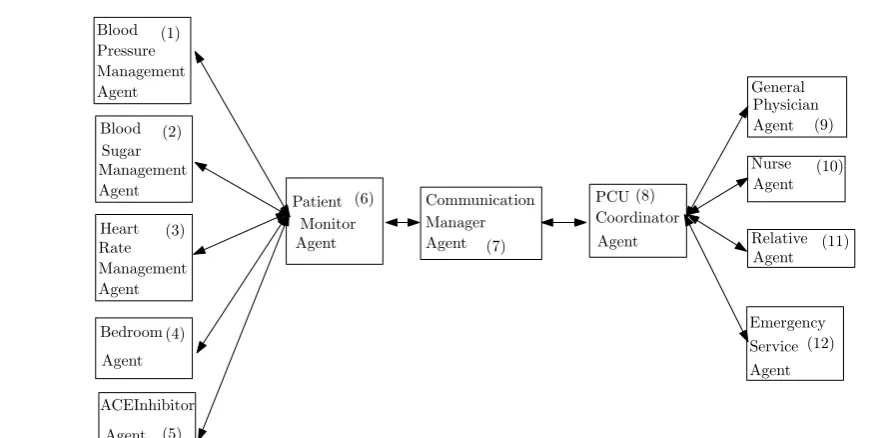
Fig. 4 Agents and their possible interactions
General Nurse (formal care giver) agent (10), Relative (in-formal care giver) Agent (11) and Emergency Service Agent (12). Some of these agents, namely,1,2,3,4,5and6are lo-cated at the smart home,7,8and12are located at the health centre, and the location of the care givers are not fixed. How-ever, by adding more agents the system designer can make the system much more complex. For the specification and verification of the system we use Maude LTL model checker. The choice of LTL is not essential, it is straightforward to encode aLOCRS model for a standard model checker. We use LTL because it is the logic supported by the Maude sys-tem used in our case study. We chose the Maude LTL model checker because it can model check systems whose states in-volve arbitrary algebraic data types. The only assumption is that the set of states reachable from a given initial state is fi-nite. Rule variables can be represented directly in the Maude encoding, without having to generate all ground instances resulting from possible variable substitutions. We omit the encoding here, however, it is similar to [23], apart from the implementation of agents memory bounds.
The measurement agents1, 2, and 3 are able to infer high-level contexts from sensed low-level contexts using Horn clause rules in their KB. They can classify current blood pressure, blood sugar, and heart rate into different categories based on their current measurement values. E.g., agent1’s KB contains rules including the following:
Person(?p), hasSystolicBloodPressure(?p, ?sbp), hasDiastolicBlood-Pressure(?p, ?dbp), greaterThan(?sbp, ’140), greaterThan(?dbp, ’90)
→hasBPCategory(?p, ’Hypertension);
Person(?p), hasSystolicBloodPressure(?p, ?sbp),
hasDiastolicBlood-Pressure(?p, ?dbp), greaterThan(?sbp, ’180), greaterThan(?dbp, ’140)
→hasBPCategory(?p, ’HypertensiveCrisis);
Person(?p), hasSystolicBloodPressure(?p, ?sbp), hasDiastolicBlood-Pressure(?p, ?dbp), greaterThan(?sbp, ’90), greaterThan(?dbp, ’60)
→hasBPCategory(?p, ’Hypotension);
Person(?p), hasSystolicBloodPressure(?p, ?sbp),
hasDiastolicBlood-Pressure(?p, ?dbp), greaterThan(?sbp, ’90), greaterThan(?dbp, ’60), lessThan(?sbp, ’120), lessThan(?dbp, ’90)→hasBPCategory(?p,
’Nor-mal);and
hasBPCategory(?p, ’Hypertension)→Tell(1,6,hasBPCategory(?p,
’Hy-pertension)).
The first rule classifies that the person has blood pres-sure categoryHypertensionif her Systolic Blood Pressure is greater than140 and Diastolic Blood Pressure is greater than90. That is, agent1may infer high-level context has-BPCategory(’Mary, ’Hypertension)from the low-level con-texts, e.g.,hasSystolicBloodPressure(’Mary, ’145), hasDi-astolicBloodPressure(’Mary, ’95), and so on. The fifth rule is a communication rule of agent1through which it interacts with agent6and passes the contexthasBPCategory(’Mary, ’Hypertension)when it believes thatMaryhasHypertension at the moment. Similar to the above, agent1has other three communication rules for other categories.
In a similar fashion, agent2may infer context hasDB-Category(’Mary, ’EstablishedDiabetes)if Blood Sugar Level Before Meal is greater than126, and agent3may infer hasHRCat-egory(’Mary, ’BelowAverage)if current Heart Rate is greater than74ft and less than80, and so on. Agent2and3’s KBs contain rules including the following:
Person(?p), hasBloodSugarLevelBeforeMeal(?p, ?bsl), greaterThan(?bsl,
’126)→hasDBCategory(?p, ’EstablishedDiabetes);and
hasDBCategory(?p, ’EstablishedDiabetes)→Tell(2,6,hasDBCategory(?p,
’EstablishedDiabetes)).
Person(?p), hasHeartRate(?p, ?hrt), greaterThan(?hrt, ’74), lessThan(
[image:10.595.51.487.81.300.2]hasHRCategory(?p,’BelowAverage)→Tell(3,6,hasHRCategory(?p, ’Be-lowAverage)).
Once these agents infer high level contexts they can in-teract with the patient monitor agent6and pass those infor-mation. Agent6’s KB contains rules including:
Person(?p), hasPatientID(?p,?pid), PatientID(?pid)→Patient(?p);
Tell(1,6,hasBPCategory(?p,’Hypertension))→hasBPCategory(?p,
’Hy-pertension);
Patient(?p), hasBPCategory(?p,’HypertensiveCrisis), hasDBCategory(?p,
’EstablishedDiabetes), hasHRCategory(?p,’Poor)→hasAlarmLevel(?p,
’VeryHigh);
Patient(?p), hasBPCategory(?p,’HypertensiveCrisis), hasDBCategory(?p,
’EstablishedDiabetes), hasHRCategory(?p,’BelowAverage)→
hasAlarm-Level(?p,’High);
hasAlarmLevel(?p,’High))→hasPrescribedDrug(?p,’ACEInhibitor);
hasPrescribedDrug(?p,’ACEInhibitor)→Tell(6,5, ACEInhibitorBox(
’SwitchedON));and
hasAlarmLevel(?p,’High)→Tell(6,7,hasAlarmLevel(?p,’High)). The first rule checks whether the person is a patient. The second rule is a trust rule for agent6that causes it to believe agent1 when agent1 informs it that context, for example, hasBPCategory(’Mary, ’Hypertension). Agent 6may infer various other contexts depending on the current contexts it has received from those measurement agents. The patient monitor agent also classifies the alarm levels based on the contexts and interacts with other agents. Using the second rule, agent6infers the context, for example, hasPrescribed-Drug(’Mary, ’ACEInhibitor)which prescribes the drug ACEIn-hibitortoMary. Using the third rule agent6interacts with agent5 and informs that the indicator of the ACEInhinitor Box must be switched on, so that patient can know she has to take ACEInhibitor at this moment. The patient monitor agent also interacts with the communication manager agent 7which is located in the health centre. Once the communica-tion manager agent receives the alarming informacommunica-tion from agent 6, it communicates with the PCU coordinator agent. Depending on the alarm level, PCU coordinator agent inter-acts with various agents including general physician, nurse, relative and emergency service. For example, if the alarm level isVeryHigh, PCU coordinator directly informs to the emergency service. If the alarm level isLow, PCU coordi-nator only informs to the relative. If the alarm level isHigh, PCU coordinator interacts with the nurse and waits for a re-sponse. If it receivesNotAvailalabeorBusyresponse, then it interacts with the general physician, and waits for a re-sponse, if it also receives NotAvailalabeorBusy response from the physician, then PCU coordinator informs the pa-tient’s alarming level to the emergency service, and so on. For the sake of brevity, we are unable to represent exam-ple rules of other agents in the system. In order to model this scenario we have derived176 Horn clause rules from the smart space ontology and distributed them to the agents as working memory facts and knowledge base rules. E.g.,
the KB of the blood pressure measurement agent contains 8rules, heart rate measurement agent is modelled using12 rules, patient monitor agent is modelled using30rules, PCU coordinator agent is modelled using36rules and so on. We verified a number of interesting resource-bounded proper-ties of the system including the following:
G(B6Tell(1,6,hasBPCategory(0Mary,0Hypertension)) ∧B6Tell(2,6,hasDBCategory(?p,0EstablishedDiabetes)) ∧B6Tell(3,6,hasHRCategory(?p,0BelowAverage)) →XnB
6Tell(6,7,hasAlarmLevel(0Mary,0High))
the above property specifies that whenever agents1,2, and 3 tell agent 6 that the blood pressure, diabetes, and heart rate categories are Hypertension, EstablishedDiabetes , and BelowAverage, respectively, of the patient Mary, withinn time steps agent6sending a classified message to agent7 that the alarm level of the patient Mary is High.
G(B8hasAlarmLevel(0Mary,0High)
∧B8Tell(9,8,hasCareStatus(0John,0NotAvailable)) →Xn B
8Tell(8,12,hasAlarmLevel(0Mary,0High))) the above property specifies that whenever alarm level of the patient Mary is High and the PCU coordinator agent has interacted the physician Dr John and received acknowl-edgement as NotAvailable, then the PCU coordinator agent informs the patient’s alarm level to the emergency service withinntimesteps.
G(B6hasAlarmLevel(0Mary,0High) →Xn B
6Tell(6,5,ACEInhibitorBox(0SwitchedON)) ∧cp6=m)
which specifies that whenever agent6 classifies that alarm level of the patient Mary is High, withinntime steps it tells agent5to switch on the indicator of the ACEInhibitor Box, so that Mary should know she has to take ACEInhibitor, while exchangingmmessages (cp6=mstates that the value of agent6’s communication counter ism).
6 Conclusions and future work
In this paper, we presented a formal logical framework for modelling and verifying context-aware multi-agent systems. Where agents reason using ontology-driven first order Horn clause rules. We considered space requirement for reasoning in addition to the time and communication resources. We extend CT L∗ with belief and communication modalities, and the resulting logicLOCRS allows us to describe a set of rule-based reasoning agents with bound on time, mem-ory and communication. We modelled an ontology-based context-aware system to show how we can encode aLOCRS model using Maude LTL model checker and formally verify its resource-bounded properties. In future work, we would like to develop a framework that will allow us to design context-aware agents considering non-monotonic reasoning. The logic developed in this paper is based on monotonic rea-soning where beliefs of an agent cannot be revised based on some contradictory evidence. We would like to extend this logic considering defeasible reasoning which is a sim-ple rule-based technique used to reason with incomsim-plete and inconsistent information [6].
References
1. SNOMED-CT Systematized Nomenclature of Medicine-Clinical Terms. http://www.ihtsdo.org/snomed-ct/ (2007)
2. Agarwal, S., Joshi, A., Finin, T., Yesha, Y., Ganous, T.: A per-vasive computing system for the operating room of the future. Journal of Mobile Networks and Applications12(2-3), 215–228 (2007)
3. Alechina, N., Jago, M., Logan, B.: Modal logics for communi-cating rule-based agents. In: Proceedings of the 17th European Conference on Artificial Intelligence A, pp. 322–326 (2006) 4. Alechina, N., Logan, B., Nga, N.H., Rakib, A.: Verifying time and
communication costs of rule-based reasoners. In: Peled, D.A., Wooldridge, M.J. (eds.) MoChArt2008,LNCS, vol. 5348, pp. 1– 14. Springer,Heidelberg (2008)
5. Alechina, N., Logan, B., Nga, N.H., Rakib, A.: Verifying time, memory and communication bounds in systems of reasoning agents. Synthese169(2), 385–403 (2009)
6. Antoniou, G., Billington, D., Governatori, G., Maher, M.J.: Repre-sentation results for defeasible logic. ACM Transactions on Com-putational Logic2(2), 255–287 (2001)
7. Bardram, J.E., , Nørskov, N.: A context-aware patient safety sys-tem for the operating room. In: Proceedings of of the 10th interna-tional conference on Ubiquitous computing, pp. 272–281 (2008) 8. Bardram, J.E.: Hospitals of the future ubiquitous computing
sup-port for medical work in hospitals. In: Proceedings of Ubi-Health’03 the 2nd international workshop on ubiquitous comput-ing for pervasive healthcare applications (2003)
9. Bechhofer, S., van Harmelen, F., Hendler, J.A., Horrocks, I., McGuinness, D.L., Patel-Schneider, P.F., Stein, L.A.: OWL Web Ontology Language Reference, World Wide Web Consortium, recommendation rec-owl-ref-20040210 (2004)
10. Dey, A., Abwowd, G.: Towards a better understanding of context and context-awareness. Technical Report GIT-GVU-99-22, Geor-gia Institute of Technology
11. Eker, S., Meseguer, J., Sridharanarayanan, A.: The maude LTL model checker and its implementation. In: Ball, T., Rajamani, S.K.
(eds.) SPIN2003,LNCS, vol. 2648, pp. 230–234. Springer-Verlag (2003)
12. Esposito, A., Tarricone, L., Zappatore, M., Catarinucci, L., Colella, R.: A framework for context-aware home-health moni-toring. International Journal of Autonomous and Adaptive Com-munications Systems3(1), 75–91 (2010)
13. Grosof, B.N., Horrocks, I., Volz, R., Decker, S.: Description logic programs: Combining logic programs with description logic. In: WWW2003, pp. 48–57. ACM Press (2003)
14. Gruber, T.: A translation approach to protable ontology specifica-tions. Knowledge Acquisition - Special issue: Current issues in knowledge modeling5(2), 199–220 (1993)
15. Hardiker, N., Coenen, A.: A formal foundation for ICNP. Journal of Stud Health Technol Inform122, 705–709 (2006)
16. Horrocks, I., Patel-Schneider, P.F., Boley, H., Tabet, S., Grosof, B., Dean, M.: SWRL: A Semantic Web rule language combining OWL and RuleML. Acknowledged W3C submission, standards proposal research report: Version 0.6 (2004)
17. ter Horst, H.J.: Completeness, decidability and complexity of en-tailment for RDF Schema and a semantic extension involving the OWL vocabulary. Web Semantics: Science, Services and Agents on the World Wide Web3(2-3), 79–115 (2005)
18. Moreno, A.: Medical applications of multi-agent systems. Com-puter Science & Mathematics Department, Universitat Rovira i Virgili ETSE. (2007)
19. Paganelli, F., Giuli, D.: An ontology-based context model for home health monitoring and alerting in chronic patient care net-works. In: Proceedings of the 21st International Conference on Advanced Information Networking and Applications Workshops, 2007, pp. 838–845 (2007)
20. Prot´eg´e: The Prot´eg´e ontology editor and knowledge-base frame-work (Version 4.1). http://protege.stanford.edu/ (2011)
21. Rakib, A.: Verifying requirements for resource-bounded agents. Ph.D. thesis, The University of Nottingham. (2011)
22. Rakib, A.: Formal approaches to modelling and verifying resource-bounded agents–state of the art and future prospects. In-form Tech Softw Eng2(4) (2012)
23. Rakib, A., Faruqui, R.U.: A Formal Approach to Modelling and Verifying Resource-Bounded Context-Aware Agents. In: P.C. Vinh et al. (Eds.) ICCASA’12, LNICST, vol. 109, pp. 86–96. Springer-Verlag (2013)
24. Reynolds, M.: An axiomatization of full computation tree logic. J. Symb. Log.66(3), 1011–1057 (2001)
25. Uschold, M., Gruninger, M.: Ontologies: Principles, Methods and Applications. Knowledge Engineering Review11(2) (1996) 26. Viterbo F, J., da G. Malcher, M., Endler, M.: Supporting the
de-velopment of context-aware agent-based systems for mobile net-works. In: Proceedings of the 2008 ACM symposium on Applied computing, pp. 1872–1873. ACM (2008)
27. Wang, X.H., Zhang, D.Q., Gu, T., Pung, H.K.: Ontology based context modeling and reasoning using owl. In: PerCom Work-shops2004, pp. 18–22 (2004)
28. Weiser, M.: The computer for the 21st century. ACM SIGMO-BILE Mobile Computing and Communications Review– Special issue dedicated to Mark Weiser3(3), 3–11 (1999)