Learning what to read: Focused machine reading
Enrique Noriega-Atala
Marco A. Valenzuela-Esc´arcega Clayton T. MorrisonMihai Surdeanu
University of Arizona Tucson, Arizona, USA
{enoriega,marcov,claytonm,msurdeanu}@email.arizona.edu
Abstract
Recent efforts in bioinformatics have achieved tremendous progress in the ma-chine reading of biomedical literature, and the assembly of the extracted biochem-ical interactions into large-scale models such as protein signaling pathways. How-ever, batch machine reading of literature at today’s scale (PubMed alone indexes over 1 million papers per year) is unfea-sible due to both cost and processing over-head. In this work, we introduce a focused reading approach to guide the machine reading of biomedical literature towards what literature should be read to answer a biomedical query as efficiently as pos-sible. We introduce a family of algorithms for focused reading, including an intuitive, strong baseline, and a second approach which uses a reinforcement learning (RL) framework that learns when to explore (widen the search) or exploit (narrow it). We demonstrate that the RL approach is capable of answering more queries than the baseline, while being more efficient, i.e., reading fewer documents.
1 Introduction
The millions of academic papers in the biomedi-cal domain contain a vast amount of information that may lead to new hypotheses for disease treat-ment. However, scientists are faced with a prob-lem of “undiscovered public knowledge,” as they struggle to read and assimilate all of this informa-tion (Swanson,1986). Furthermore, the literature is growing at an exponential rate (Pautasso,2012); PubMed1has been adding more than a million
pa-pers per year since 2011. We have surpassed our
1http://www.ncbi.nlm.nih.gov/pubmed
ability to keep up with and integrate these findings through manual reading alone.
Large ongoing efforts, such as the BioNLP task community (N´edellec et al., 2013; Kim et al.,
2012,2009) and the DARPA Big Mechanism Pro-gram (Cohen,2015), are making progress in ad-vancing methods for machine reading and as-sembly of extracted biochemical interactions into large-scale models. However, to date, these meth-ods rely either on the manual selection of relevant documents, or on the processing of large batches of documents that may or may not be relevant to the model being constructed.
Batch machine reading of literature at this scale poses a new, growing set of problems. First, access to some documents is costly. The PubMedCentral (PMC) Open Access Subset2(OA) is estimated3to
comprise 20%4of the total literature; the
remain-ing full-text documents are only available through paid access. Second, while there have been great advances in quality, machine reading is still not solved. Updates to our readers requires reprocess-ing the documents. For large document corpora, this quickly becomes the chief bottleneck in infor-mation extraction for model construction and anal-ysis. Finally, even if we could cache all reading results, the search for connections between con-cepts within the extracted results should not be done blindly. At least in the biology domain, the many connections between biological entities and processes leads to a very high branching factor, making blind search for paths intractable.
To effectively read at this scale, we need to in-corporate methods for focused reading: develop the ability to pose queries about concepts of in-terest and perform targeted, incremental search
2https://www.ncbi.nlm.nih.gov/pmc/ tools/openftlist/
3https://tinyurl.com/bachman-oa 4This includes 5% from PMC author manuscripts.
through the literature for connections between concepts while minimizing reading documents that are likely irrelevant.
In this paper we present what we believe is the first algorithm for focused reading. We make the following contributions:
(1) Present a general framework for a family of possible focused reading algorithms along with a baseline instance.
(2)Cast the design of focused reading algorithms in a reinforcement learning (RL) setting, where the machine decides if it should explore (i.e., cast a wider net) or exploit (i.e., focus reading on a spe-cific topic).
(3)Evaluate our focused reading policies in terms of search efficiency and quality of information ex-tracted. The evaluation demonstrates the effective-ness of the RL method: this approach found more information than the strong baseline we propose, while reading fewer documents.
2 Related Work
The past few years have seen a large body of work on information extraction (IE), particularly in the biomedical domain. This work is too vast to be comprehensively discussed here. We re-fer the interested reader to the BioNLP commu-nity (N´edellec et al.,2013;Kim et al.,2012,2009, inter alia) for a starting point. However, most of this work focuses onhowto read, not onwhatto read given a goal. To our knowledge, we are the first to focus on the latter task.
Reinforcement learning has been used to achieve state of the art performance in several natural language processing (NLP) and informa-tion retrieval (IR) tasks. For example, RL has been used to guide IR and filter irrelevant web content (Seo and Zhang, 2000; Zhang and Seo,
2001). More recently, RL has been combined with deep learning with great success, e.g., for improv-ing coreference resolution (Clark and Manning,
2016). Finally, RL has been used to improve the efficiency of IE by learning how to incrementally reconcile new information and help choose what to look for next (Narasimhan et al.,2016), a task close to ours. This serves as an inspiration for the work we present here, but with a critical differ-ence:Narasimhan et al.(2016) focus on slot filling using a pre-existing template. This makes both the information integration and stopping criteria well-defined. On the other hand, in our focused reading
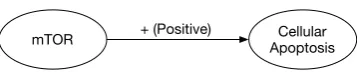
[image:2.595.326.505.59.95.2]mTOR + (Positive) ApoptosisCellular
Figure 1: Example of a graph edge encoding the relation extracted from the text: mTOR triggers cellular apoptosis.
domain, we do not know ahead of time which new pieces of information are necessarily relevant and must be taken in context.
3 Focused Reading
Here we consider focused reading for the biomed-ical domain, and we focus on binary promo-tion/inhibition interactions between biochemical entities. In this setting, the machine reading (or IE) component constructs a directed graph, where vertices represent participants in an interaction (e.g., protein, gene, or a biological process), and edges represent directed activation interactions. Edge labels indicate whether the controller entity has apositive(promoting) ornegative(inhibitory) influence on the controlled participant. Figure 1
shows an example edge in this graph.
We use REACH5, an open source IE
sys-tem (Valenzuela-Esc´arcega et al.,2015), to extract interactions from unstructured biomedical text and construct the graph above. We couple this IE sys-tem with a Lucene6 index of biomedical
publica-tions to retrieve papers based on queries about par-ticipant mentions in the text (as discussed below). Importantly, we essentially use IE as a black box (thus, our method could potentially work with any IE system), and focus on strategies that guide whatthe IE system reads for a complex informa-tion need. In particular, we consider the com-mon scenario where a biologist (or other model-building process) queries the literature on:
How does one participant (source) affect another (destination), where the connec-tion is typically indirect?
This type of queries is common in biology, where such direct/indirect interactions are observed in experiments, but the explanation of why these de-pendencies exist is unclear.
Algorithm1 outlines the general focused read-ing algorithm for this task. In the algorithm,
S, D, A, and B represent individual participants, whereS andDare thesource anddestination en-tities in the initial user query. Gis the interaction graph that is iteratively constructed during the fo-cused reading procedure, withV being the set of vertices (biochemical entities), and E the set of edges (promotion/inhibition interactions).Σis the strategy that chooses which two entities/vertices to be used in the next information retrieval iteration.
Qis a Lucene query automatically constructed in each iteration to retrieve new papers to read.
Algorithm 1Focused reading framework 1: procedureFOCUSEDREADING(S, D) 2: G← {{S, D},∅}
3: repeat
4: Σ←ENDPOINTSTRATEGY(G) 5: (A, B)←CHOOSEENDPOINTS(Σ, G) 6: Q←CHOOSEQUERY(A, B, G) 7: (V, E)←LUCENE+REACH(Q) 8: EXPAND(V, E, G)
9: untilISCONNECTED(S, D)ORSTOPCONDITIONMET(G) 10: end procedure
The algorithm initializes the search graph as containing the two unconnected participants as vertices: {S, D}(line2). The algorithm then en-ters into its central loop (lines3 through9). The loop terminates when one or more directed paths connectingStoDare found, or when a stopping condition is met: eitherG has not changed since the previous run through the loop, or after exceed-ing some number of iterations through the loop (in this work, ten).
At each pass through the loop the algorithm grows the search graph as follows:
1. The graphGis initialized with two nodes, the source and destination in the user’s informa-tion need, and no edges (because we have not read any papers yet).
2. Given the current graph, choose a strategy,
Σ, for selecting which entities to query next: explorationor exploitation(line 4). In gen-eral, exploration aims to widen the search space by adding many more nodes to the graph, whereas exploitation aims to narrow the search by focusing on entities in a spe-cific region of the graph.
3. Using strategyΣ, choose the next entities to attempt to link:(A, B)(line5).
4. Choose a query, Q: again, using explo-ration or exploitation, following the same intuition as with the entity choice strategy (line6). Here exploration queries retrieve a
wider range of documents, while exploitation queries are more restrictive.
5. Run the Lucene query to retrieve papers and process the papers using the IE system. The result of this call is a set of interactions, sim-ilar to that in Figure1(line7).
6. Add the new interaction participant entities (vertices V) and directed influences (edges
E) to the search graph (line8).
7. If the source and destination entities are con-nected in G, stop: the user’s information need has been addressed. Otherwise, con-tinue from step 2.
The central loop performs a bidirectional search in which each iteration expands the search hori-zon outward from S andD. Algorithm 1 repre-sents a family of possible focused reading algo-rithms, differentiated by how each of the functions in the main loop are implemented. In this work, ISCONNECTED stops after a single path is found, but a variant could consider finding multiple paths, paths of some length, or incorporate other criteria about the properties of the path. We next consider particular choices for the inner loop functions.
4 Baseline Algorithm and Evaluation
The main functions that affect the search behav-ior of Algorithm1are ENDPOINTSTRATEGY and CHOOSEQUERY. Here we describe a baseline focused reading implementation in which END -POINTSTRATEGY and CHOOSEQUERY aim to find any path betweenSandDas quickly as pos-sible.
For ENDPOINTSTRATEGY, we follow the intu-ition that some participants in a biological graph tend to be connected to more participants than oth-ers, and therefore more likely to yield interactions providing paths between participants in general. Our heuristic is therefore to choose new partici-pants to query that currently have the most inward and outgoing edges (i.e., highest vertex degree) in the current state ofG(disallowing choosing an en-tity pair used in a previous query).
Now that we have our candidate participants
(A, B), our next step is to formulate how we will use these participants to retrieve new papers. Here we consider two classes of query: (1) we restrict our query to only retrieve papers that simultane-ously mention bothAandB, therefore more likely retrieving a paper with a direct link betweenAand
Baseline RL Query Policy
# IR queries 573 433 25% decrease
Unique papers read 26,197 19,883 24% decrease
[image:4.595.142.453.61.104.2]# Paths recovered(out of 289) 189 (65%) 198 (68%) 3% increase
Table 1: Results of the baseline and RL Query Policy for the focused reading of biomedical literature. eitherAorB, therefore generally retrieving more
papers that will introduce more new participants (explore). For our baseline, where we are trying to find a path betweenSandDas quickly as possi-ble, we implement a greedy CHOOSEQUERY: first try the conjunctive exploitation query; if no docu-ments are retrieved, then “relax” the search to the disjunctive exploration query.
To evaluate the baseline, we constructed a data set based on a collection of papers seeded by a set of 132 entities that come from the Univer-sity of Pittsburgh DyCE7 model, a biomolecular
model of pancreatic cancer (Telmer et al.,2017). Using these entities, we retrieved 70,719 papers that mention them. We processed all papers us-ing REACH, extractus-ing all of the interactions men-tioned, and converted them into a single graph. The resulting graph consisted of approximately 80,000 vertices, 115,000 edges, and had an aver-age (undirected) vertex degree of 24. We will refer to this graph as theREACH graph, as it represents whatcanbe retrieved by REACH from the set of 70K papers. Next, we identified which pairs of the original 132 entities are connected by directed paths in DyCE. A total of 789 pairs were found. We used 289 of these entity pairs as testing queries (i.e., generating queries that aim to explain how a given pair is connected according to the literature). The other 500 pairs were held out to train the RL method described below.
We ran this baseline focused reading algorithm on each of the 289 pairs of participants, in each case attempting to recover a directed path from one to the other. The results are summarized in the middle column of Table 1. By issuing 573 queries, the baseline read 26,197 papers out of the total 70,719 papers (37% of the corpus), in order to recover 189 of the 289 paths (65%).
5 Reinforcement Learning for Focussed Reading
We analyzed the baseline’s behavior in the evalua-tion to identify the condievalua-tions under which it failed to find paths. From this, we found that some of the failures could be avoided had we used a
dif-7DynamicCellEnvironment model of pancreatic cancer.
ferent strategy for CHOOSEQUERY, i.e., the base-line chose to exploit when it should have explored more. The conditions for making different choices depend on the current state ofG, and earlier query behavior can affect later query opportunities, mak-ing this an iterative decision makmak-ing problem and a natural fit for a RL formulation.
Inspired by this observation, we consider RL for finding a better policy for CHOOSEQUERY. We’ll refer to an instance of the focused reading algo-rithm with a learned CHOOSEQUERYpolicy as the RL Query Policy. All other focus reading function-ality is the same as in the baseline. For actions, we consider a simple binary action choice: exploit (conjunctive query) or explore (disjunctive query). We represent the state of the search using a set of features that include: (f1) the current iteration of the search; (f2) the number of times a participant has been used in previous queries; (f3) whether the participants are chosen from the same connected component inG; (f4) the vertex degree of partici-pants; and (f5) the search iteration in which a par-ticipant was introduced. With the goal of recov-ering paths as quickly as possible, we provide a reward of +1 if the algorithm successfully finds a path, a reward of−1 if the search fails to find a path, and assess a “living reward” of−0.05for each step during the search, to encourage trying to finish the search as quickly as possible.
All −Iteration −Query −Same −Ranks (f4) −Particip. features number (f1) counts (f2) component (f3) intro. (f5)
Paths found 198 199 200 201 202 196
Papers read 19,883 20,918 20,531 20,463 27,708 17,936
[image:5.595.103.494.62.115.2]Queries made 433 484 484 467 469 403
Table 2: Ablation test on the features used to represent the RL state. Empty query Ungrounded Low yield
results participant(s) from IE
Error cause 12 4 2
Table 3: Error analysis on 18 queries that failed under the RL algorithm.
difference in results between the baseline and RL policy by performing a bootstrap resampling test. Our hypotheses were that the policy reads fewer papers, makes fewer queries and finds more paths. The resulting estimatedp-values for fewer papers and fewer queries was found to be near 0, and
<0.003for finding more paths. An ablation study of the state features found that features (f2) and (f5) had the largest impact on number of papers read; both model the history of the reading task (see the next section for details). This highlights that the RL model is indeed learning to model the entire iterative process.
6 Analysis
Feature Ablation Test: We performed an abla-tion test on the features that encode the RL state. The results are summarized in Table2. Similar to Section 5, we grouped the features into five dif-ferent groups, and we measured the impact of re-moving one feature group at a time. Overall, the amount of paths found doesn’t have a significant amount of variance, but the efficiency of the search (amount of papers read and number of queries made) depends on several feature groups. For ex-ample, features (f1), (f2), and (f4) have a large ef-fect on both the number of papers read and the number of queries made. Removing the feature (f5) actually reduces the number of papers read by approximately 2K with a minimal reduction in the number of paths found, which suggests that this task could benefit from feature selection.
RL Policy Error Analysis: Lastly, we analyzed the execution trace of eighteen (20% of the errors) of the searches that failed to find a path under RL. The results are summarized in Table3. The table shows that the main source of failures is receiv-ingno resultsfrom the information retrieval query, i.e., when the IR system returns zero documents for the chosen query. This is typically caused by
over-constrained queries. The second most com-mon source of failures was ungrounded partici-pants, i.e., when at least one of the selected par-ticipants that form the query could not be linked to our protein knowledge base. This is generally caused by mistakes in our NER sequence model, and also tends to yield no results from the IR com-ponent. Finally, thelow yield from IEsituation ap-pears when the the information produced through machine reading in one iteration is scarce and adds no new components to the interaction graph, again resulting in a stop condition.
7 Discussion and future work
We introduced a framework for the focused read-ing of biomedical literature, which is necessary to handle the data overload that plagues even ma-chine reading approaches. We have presented a generic focused reading algorithm, an intuitive, strong baseline algorithm that instantiates it, and formulated an RL approach that learns how to efficiently query the paper repository that feeds the machine reading component. We showed that the RL-based focused reading is more efficient than the baseline (i.e., it reads 24% fewer papers), while answering 7% more queries.
There are many exciting directions in which to take this work. First, more of the focused reading algorithm can be subject to RL, with the CHOOSEENDPOINTS policy being the clear next candidate. Second, we can expand focused read-ing to efficiently search for multiple paths between
S andD. Finally, we will incorporate additional biological constraints (e.g., focus on pathways that exist in specific species) into the search itself.
Acknowledgments
This work was partially funded by the DARPA Big Mechanism program under ARO contract W911NF-14-1-0395.
References
Kevin Clark and Christopher D Manning. 2016. Deep reinforcement learning for mention-ranking corefer-ence models. arXiv preprint arXiv:1609.08667. Paul R. Cohen. 2015. DARPA’s Big Mechanism
pro-gram. Physical Biology12(4):045008.
Jin-Dong Kim, Ngan Nguyen, Yue Wang, Jun’ichi Tsu-jii, Toshihisa Takagi, and Akinori Yonezawa. 2012. The genia event and protein coreference tasks of the bionlp shared task 2011. BMC bioinformatics
13(11):1.
Jin-Dong Kim, Tomoko Ohta, Sampo Pyysalo, Yoshi-nobu Kano, and Jun’ichi Tsujii. 2009. Overview of bionlp’09 shared task on event extraction. In
Proceedings of the Workshop on Current Trends in Biomedical Natural Language Processing: Shared Task. Association for Computational Linguistics, pages 1–9.
Karthik Narasimhan, Adam Yala, and Regina Barzi-lay. 2016. Improving information extraction by ac-quiring external evidence with reinforcement learn-ing. InProceedings of the Conference on Empirical Methods in Natural Language Processing (EMNLP 2016).
Claire N´edellec, Robert Bossy, Jin-Dong Kim, Jung-Jae Kim, Tomoko Ohta, Sampo Pyysalo, and Pierre Zweigenbaum. 2013. Overview of bionlp shared task 2013. In Proceedings of the BioNLP Shared Task 2013 Workshop. pages 1–7.
Marco Pautasso. 2012. Publication growth in biolog-ical sub-fields: patterns, predictability and sustain-ability. Sustainability4(12):3234–3247.
Young-Woo Seo and Byoung-Tak Zhang. 2000. A re-inforcement learning agent for personalized infor-mation filtering. In Proceedings of the 5th inter-national conference on Intelligent user interfaces. ACM, pages 248–251.
Richard S Sutton and Andrew G Barto. 1998. Rein-forcement learning: An introduction. MIT press Cambridge.
Don R Swanson. 1986. Undiscovered public knowl-edge. The Library Quarterly56(2):103–118. C. A. Telmer, K. Sayed, A. A. Butchy,
Kalten-meir, Michael Lotze, and N. Miskov-Zivanov. 2017. Manuscript in preparation.
Marco A. Valenzuela-Esc´arcega, Gustave Hahn-Powell, Thomas Hicks, and Mihai Surdeanu. 2015. A domain-independent rule-based framework for event extraction. InProceedings of the 53rd Annual Meeting of the Association for Computational Lin-guistics and the 7th International Joint Conference on Natural Language Processing of the Assian Fed-eration of Natural Language Processing: Software Demonstrations (ACL-IJCNLP).
Byoung-Tak Zhang and Young-Woo Seo. 2001. Per-sonalized web-document filtering using reinforce-ment learning. Applied Artificial Intelligence