An assessment of the applicability of dung count
to estimate the wild boar population density
in a forest environment
R. Plhal
1, J. Kamler
1, M. Homolka
2, J.Drimaj
11Mendel University in Brno, Faculty of Forestry and Wood Technology, Brno, Czech Republic
2Institute of Vertebrate Biology, Academy of Sciences of the Czech Republic, Brno, Czech Republic
ABSTRACT:Wild boar is a native species in the fauna of the Czech Republic. It is becoming a problematic game species both in the Czech Republic and in other European countries due to its harmful impacts. So far no suitable method of its sustainable management has been devised. Yet, a correct abundance estimate is essential for proper management, field crop damage prevention and proper hunting planning. This paper employed faecal pellet group count to estimate the wild boar density in a forest environment. The research was conducted in a study area covering 12.83 km2, which is surrounded by farmland. The count was done under ideal conditions in early spring, after snow had melted. The study area was organised into several differing environments in which different dung densities were expected. The presence of feeding sites, where wild boars concentrated, was taken into account. The conducted count confirmed differences in the utilization of different habitats within the study area. The resulting wild boar abundance was estimated at 64.3 (± 8.9; 95% CI) indd·km–2.
Keywords: accumulation; defecation; distribution; faeces; Sus scrofa
Supported by the Mendel University in Brno, Project No. 47/2012, and by the Ministry of Education, Youth and Sports of the Czech Republic, Project No. CZ 1.07/2.3.00/20.0267) co-financed by the European Social Fund and national budget of the Czech Republic
JOURNAL OF FOREST SCIENCE, 60, 2014 (4): 174–180
The wild boar (Sus scrofa) is an indigenous part
of the Czech Republic’s fauna, and its population density has changed markedly over the last cen-turies. Due to the increased number of wild boars and favourable climatic conditions, a targeted re-duction is necessary to protect agricultural land (Hladíková et al. 2008; Braga et al. 2010). Af-ter the World War II the wild boar started recol-onisation of the Czech Republic and its steadily growing population presents a serious economic, ecological and social threat across central Europe (Frank 2008; Kirschning et al. 2008). The most serious consequences of the increase in wild boar density are damage to agricultural crops, road ac-cidents, transmission of infectious diseases and the destruction of managed green space in populated areas (Geiser 1998; Brauer et al. 2006; Herrero et al. 2006; Acevedo et al. 2007).
popula-tion control (Merli, Meriggi 2006) and for this reason, improved methods to determine wild boar numbers are crucial in the management of this spe-cies. Density of wild boar has been estimated by modifications of direct observation (Focardi et al. 2002); by repeated counting of marked individuals (Waithman et al. 1999); by counting of tracks on snow cover (Fonseca et al. 2007) or by photo-traps combined with marked individuals (Sweitzer et al. 2000; Hebeisen et al. 2008; Huckschlag 2008; Morimando et al. 2008).
The objective of this study was to evaluate the suitability of faecal pellet group (FPG) counting for estimation of the wild boar population in winter. FPG counting is often used for estimation of wild ruminants, but data on its applicability to wild boar has not been proved.
MATERIAL AND METHODS
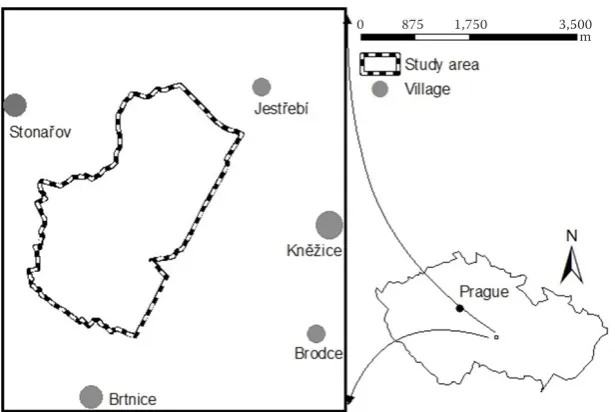
Study area. The study area covering 12.83 km2 is situated in the Czech Moravian Highlands, 11 km south of the town of Jihlava in the south-ern part of the Czech Republic ‒ 49°15'52.643''N, 15°37'46.266''E (Fig. 1). It is fully forested and surrounded by farmland to a great extent. Its el-evation ranges between 550 and 660 m a.s.l. The mean annual temperature is 6.8°C. Forest stands in the study area encompass primarily Norway
spruce (Picea abies) stands regenerated through
natural regeneration, which is highly successful in this area. Broadleaved stands, particularly beech (Fagus silvatica), ash (Fraxinus excelsior), maple (Acer pseudoplatanus) and alder (Alnus glutinosa) stands, were established artificially. On the whole,
however, broadleaved stands in the study area rep-resent max. 5%. Owing to the forest management used in the area and the predominance of Norway spruce, the species composition of the herb layer is very poor and more herbaceous species can be found only in places where forest regeneration is taking place.
A total of 15 feeding sites, where wild boars are fed throughout the year, are situated in the study area. Feeding is more intensive during the hunting season and in wintertime. Larger amounts of infe-rior quality feed are often available at the feeding sites. Apart from the studied game species (wild boar), the area houses other ungulate game
spe-cies as well, notably roe deer (Capreolus capreolus)
and migrating mouflon (Ovis musimon). No large
predators occur in this area. The wild boar popu-lation in the study area is stable in wintertime. Its migration is limited particularly by the neighbour-ing farmland and adjoinneighbour-ing roads (Špinar, personal communication).
[image:2.595.64.372.550.756.2]Field data collection. The FPG count was con-ducted in the study area on March 23–25, 2012. Three basic types of habitats, where significantly different defecation densities were expected, were identified in the study area. We assumed that in an environment where no other food sources ex-cept the feeding sites can be found, the wild boar distribution will be affected by cover availability. The first habitat type represented an environment which wild boar could use for cover and as rest-ing place. It consisted of young dense saplrest-ings of the predominantly natural regeneration origin up to the stage of first pruning (19% of the study area). The second habitat type consisted of an environ-ment where wild boar did not stay permanently, as
Fig. 1. Location of the study area
it did not provide any cover (49% of the study area). This consisted of mature forest stands with no un-dergrowth or sporadic clearings after harvesting. The third type of habitat consisted of stands which provided wild boar with only partial cover (32% of the study area). This included particularly thinned young forest stands, but also mature stands with sporadic or low natural regeneration. The ratios of individual habitat types within the study area were determined on the basis of forest management records and field assessments of the vegetation condition.
Wild boar abundance was determined based on a faecal standing crop approach (FSC) count in strip transects 100 m long and 2 m wide. These strips were evenly distributed throughout the en-tire study area, except for the vicinity of individ-ual feeding sites where the transect network was arranged differently. A total of 516 out of feeding
site (OFS) transects (200 m2) were marked in the
individual habitat types in study area, as well as 600
feeding site (FS) transects (100 m2) in the vicinity of
feeding sites. The feeding sites (circular zone areas 200 m in diameter) were divided into three parts: the immediate vicinity – FS1 (circular zone areas 50 m in diameter – 10 sampling strips of 50 × 2 m at each of the 15 feeding sites), a more distant area – FS2 (circular zone areas of 50 and 100 m radius – 10 sampling strips) and a transition zone – FS3 (circular zone areas of 100 and 200 m radius, 20 sampling strips). The number of wild boar FPG and the respective habitat type were recorded for each transect.
Density calculation. Based on the FSC count re-sults, FPG densities in individual habitat types and in the vicinity of feeding sites were estimated and consequently converted to the number of animals according to the following formula (1):
PDi = xi × P
i (1)
(AP × DDR × TA)
PDi – population size for each habitat or circular zone, xi – average FPG density per transect,
AP – accumulation period (145 days), DDR – daily defecation rate,
TA – transect area,
Pi – habitat or circular zone area (m2).
The decomposition period of FPG was deter-mined with respect to the local climatic and natu-ral conditions as of 1.11.2009 to the count day, i.e. 144–146 days (an average of 145 days). The daily defecation rate was set at 5 FPG per day per animal. Densities in individual habitats and in the vicinity of individual feeding sites were then counted up,
thus determining the wild boar population density in the study area.
Data analysis. A difference in the mean FPG density between individual habitat types was evaluated using one-factor ANOVA (SPSS, Tulsa, USA). Data distribution was normal (good and medium cover conditions), in the “no cover” cat-egory the data distribution was not normal but the large amount of data collected (232 samples) allowed us to use the parametric test as well. Scheffe’s post hoc test was used for mutual test-ing of differences in the means of FPG between individual habitat types, as the number of samples in individual sets varied. A similar procedure was adopted for determining the average number of FPG per transect when studying the wild boar dis-tribution in the vicinity of feeding sites.
RESULTS
The average FPG density per transect (200 m2)
in all three habitat types (cover, partial cover, no
cover) varied (ANOVA, F2.513= 163.7; P < 0.001;
Scheffe’s post hoc test, P < 0.001). The highest
FPG density was in the area of good cover (16.3 ±
8.35 SD FPG·200 m–2), while the lowest number
was determined in places with no cover (4.5 ±
4.27 FPG·200 m–2). In places with partial cover, the
FPG density was similar to the mean density of the
en-tire study area (8.0 ± 6.65 and 9.0 ± 8.12 FPG·200 m–2,
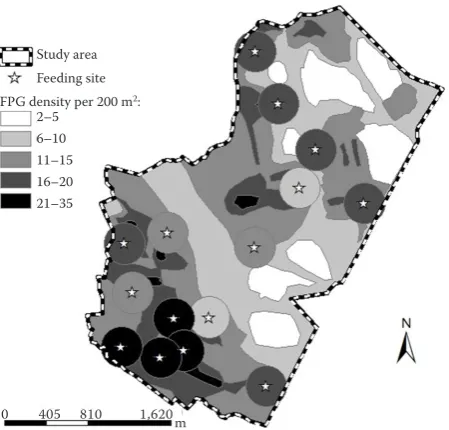
[image:3.595.307.532.508.723.2]respectively) (Fig. 2). As a result, the calculations of wild boar density had to be done for each habitat type separately.
Fig. 2. Results of the spatial distribution of wild boar FPG within the study area
2–5 6–10 11–15 16–20 21–35 Study area Feeding site
FPG density per 200 m2:
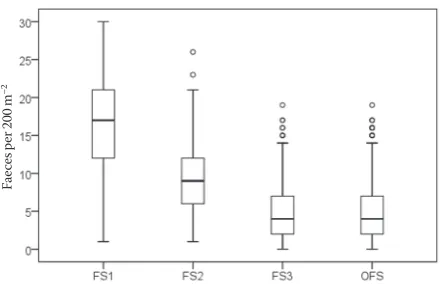
The average FPG density in the vicinity of feeding sites (FS1) was approximately double compared to
that outside of the feeding sites (17.6 FPG·200 m–2).
The wild boar distribution at individual feeding sites was relatively even, only the relatively high density at feeding site 14 (34.5 FPG) differed from
the average number of FPG per 200 m2, while
den-sities at sites 8 and 12 was low (6.1 and 9.7 FPG, respectively). FPG density at the remaining feeding
sites ranged from 12.4 to 21.3 FPG·200 m–2.
Data were analysed by the ESRI ArcMap10 soft-ware (ESRI, Redmont, USA).
Differences in FPG density between individual
zones were statistically conclusive (ANOVA, F2.597
= 272.8; P < 0.001; Scheffe’s post hoc test; P < 0.001
for all cases). Following our assumption, the wild
boar FPG density was highest (32.2 indd·200 m–2) in
the immediate vicinity of feeding sites – FS1 (up to
the distance of 50 m) and lowest (9.8 indd·200 m–2)
in the transition zone – FS3 (100–200 m from the feeding site). FPG density in the transition zone did
not differ from that in the open forest (t-test; t814=
1.359; P = 0.175) (Fig. 3).
FS1 ‒ FPG on the feeding sites within 50 m from the centre; FS2 ‒ FPG in the area of 51–100 m from the centre; FS3 – FPG in the area of 101–250 m from the centre; OFS – FPG outside of the feeding site areas.
The total of 229 ((± 47; 95% CI) wild boar individu-als in the circle zones around the feeding sites was cal-culated using means for individual feeding sites. The total of 596 wild boar (± 67; 95% CI) was calculated using FPG density means at the OFS transects in all habitats. The resulting population density in the entire study areas was thus determined at 64.3 (± 8.9;
95% CI) individuals per km2.
DISCUSSION
Considering all aspects of the results the wild boar is a very problematic species compared to
other wild-living ungulates. This is mainly due to their intensive reproduction, hidden way of life (Fernández-Llario 2004), nocturnal activ-ity (Lemel et al. 2003), migration over longer dis-tances and different feeding behaviour. In wild boar there is no sexual dimorphism, which, in other un-gulates, can be used to correct the results of the counting. For these reasons, the counting methods, commonly used in other ungulate species, require some modifications in order to eliminate potential inaccuracies ensuing from different behaviour of wild boar.
The objective of this study was to verify appli-cability of the FPG count method for estimating the population density of wild boar in a forest environment. FPG count is one of the most com-mon (Neff 1968; Hemami, Dolman 2005) and the most accurate (Barnes 2002; Campbell et al. 2004) methods estimating counts of wild animals; however, in the case of wild boar it is often left out, mainly due to the lack of data on defecation rate, seasonal migrations over long distances, until recently low population density and uneven dis-tribution of faeces in the environment (Hebeisen et al. 2008). Generally speaking, FPG count can be employed to estimate numbers of wild boar similarly like abundance of ruminants, bearing in mind its limiting conditions. In this study the use of defecation rate due to outside field experiment (unpublished data), the animals did not migrate outside of the area during winter, their density was relatively high and their faeces showed nor-mal distribution thanks to the suitably chosen size and number of the transects.
[image:4.595.66.288.54.196.2]One of the main reasons why FPG count is not so frequently used is very few results about daily def-ecation rate of wild boars. It is not possible to de-termine the daily defecation rate in wild animals. Both the quality and quantity of food accessible to wild boar will vary markedly throughout the year (Massei et al. 1996; Schley, Roper 2003); hence, the defecation rate value can also fluctu-ate. At present, however, food supply is greatly affected by additional feeding and baiting, which has an impact on the wild boar behaviour in win-ter (Hahn, Eisfeld 1998; Geisser, Reyer 2005). In the periods with limited supply of natural food, cereal grains from feeding stations can make up 90% or more of wild boar diet (Plhal et al. 2011). Using a wild boar daily defecation rate of 5.00 FPG was very similar to the value 4.5 (Tottewitz et al. 1996), mentioned in the works of Cristescu and Ion (2007) and Heinze et al. (2011). Rather higher values were reported in the work of Musial
Fig. 3. The wild boar FPG density in the study area in winter period
Fae
ce
s p
er 200 m
et al. (1999), who had determined the number of defecations in experimental dwarf pigs between 4.8 and 9.4 per individual and day. Similar re-sults (10 defecations per individual and day) were found in Iberian pigs during the autumn mast pe-riod (Rodríguez-Estévez et al. 2005). Such high values, however, may have been caused by
labora-tory environment and feeding ad libitum.
A very important condition of FPG counting for estimating the wild boar population density is the correct analysis of decomposition rate. The tech-nique is similar to the FSC method. Faecal Ac-cumulation Rate (FAR) approach could be more problematic and less effective due to the uneven distribution of faeces and higher amount of tran-sects. The values of decomposition rate can vary greatly depending on vegetation, air temperature, humidity, precipitation and dung beetle activity (Massei et al. 1998; Laing et al. 2003; Hemami, Dolman 2005). The most intensive decomposi-tion occurs during periods of full dung beetle activity in the habitats with dense ground veg-etation; in contrast, the longest decomposition has been observed in coniferous stands without ground vegetation (Tsaparis et al. 2009). Winter is an ideal period for faeces counting (Massei et al. 1998). During this season, faeces are subject to minimum decomposing factors and so they remain in the environment in almost unchanged state until the time of counting before the start of new growth of vegetation. Massei et al. (1998) determined the period of wild boar faeces disap-pearance in winter in the area of Mediterranean climate to be approx. 120–240 days in relation to the type of habitat.
The density of wild boar population that we have estimated by FPG count in the study area was
64.3 indd·km–2. This value seems to be extremely
high in comparison with the abundance of wild boar found in other works – i.e. in the Bialowieza
National Park ‒ [3.5–5.9 indd·km–2; Jedrzejewska
et al. (1994)] or in forests of other European
coun-tries [1.5–12 indd·km–2; Hebeisen et al. (2008)].
The very high population density in this area is probably due to improper game management and to the concentration of animals in the winter sea-son. Because all around the study area there are neither suitable shelters nor other available food sources for wild boar in wintertime, so wild boars have no reason to migrate away and stay here in such high population density.
The accuracy of wild boar FPG counting is sig-nificantly affected by the uneven distribution of faeces in different types of habitat. This variation
is caused by the fact that wild boars defecate less often than ruminants, they prefer places where they feel safe and in sounders they often defecate together. Putten (2000) reported that wild boars never defecate directly in the resting area, but only at a certain distance from it. The theory of uneven faeces distribution corresponds with the observation of Mussial et al. (1999) that defeca-tion of wild boar usually happens during food in-take. This is the reason why in wild boar, the dis-tribution of FPG is markedly more patchy than in ruminant ungulate species (Abaigar et al. 1994), invoking the need to monitor the population on a sufficiently large area, to define the habitat cat-egories precisely and to determine their share in the total area of the studied region. In our study area, the highest concentration of faeces was found in saplings that provided mainly a good shelter for wild boar – mean ± SD (16.3 ± 8.35
indd·200 m–2) and about four times lower in
plac-es without undergrowth (4.5 ± 4.27 indd·200 m–2).
Our results correspond with previously published data. For example, Gerard et al. (1991), Lemel et al. (2003) or Keuling et al. (2008) reported that during daylight wild boars usually seek shelter and rest in young dense stands. According to Fonse-ca (2008), during the winter in southeastern Po-land, wild boar stayed mainly in beech-hornbeam stands where they had the opportunity to feed on the beech-mast crop. Thurfjell et al. (2009) con-firmed that young boars prefer young coniferous stands to broadleaved stands in winter in condi-tions very similar to our study area, including in-tensive additional feeding except in a seed year. In our study area, there were minimum natural sources of food available at the time of data collec-tion and so the animals depended upon the food from feeding stations (Plhal et al. 2011). Due to this, most of the faeces were found in the stands close to the feeding stations that also served as resting places for the boars.
defecation rate of wild boar in relation to the type of diet and to further test the accuracy of the wild boar abundance estimation by FPG counts com-pared to other methods.
References
Abaigar T., Delbarrio G., Vericad J.R. (1994): Habitat preference of wild boar (Sus-scrofa L., 1758) in a mediter-ranean environment – indirect evaluation by signs. Mam-malia, 58: 201–210.
Acevedo P., Vicente J., Höfle U., Cassinello J., Ruiz-Fons F., Gortazar C. (2007): Estimation of European wild boar relative abundance and aggregation: a novel method in epidemiological risk assessment. Epidemiology and Infection, 135: 519–527.
Barnes R.F.W. (2002): The problem of precision and trend detection posed by small elephant populations in West Africa. African Journal of Ecology, 40: 179–185.
Braga C., Alexandre N., Fernandez-Llario P., Santos, P. (2010): Wild boar (Sus scrofa) harvesting using the Espera hunting method: side effects and management implica-tions. European Journal of Wildlife Research, 56: 465–469. Brauer A., Lange E., Kaden V. (2006): Oral immunisation
of wild boar against classical swine fever: uptake studies of new baits and investigations on the stability of lyophilised C-strain vaccine. European Journal of Wildlife Research, 52: 271–276.
Campbell D., Swanson G.M., Sales J. (2004): Comparing the precision and cost-effectiveness of faecal pellet group count methods. Journal of Applied Ecology, 41: 1185–1196. Cristescu B., Ion I. (2007): Density of ungulates at prefer-ential feeding in two hunting grounds of Vrancea County (Romania), with comparison between two study methods. Analele Stiintifice ale Universitatii „Al. I. Cuza“ Iasi, Bio-logie Animala: 245–250.
Fernández-Llario P. (2004): Environmental correlates of nest site selection by wild boar Sus scrofa. Acta Therio-logica, 49: 383–392.
Focardi S., Isotti R., Pelliccioni E.R., Iannuzzo D. (2002): The use of distance sampling and mark-resight to estimate the local density of wildlife populations. Environ-metrics, 13: 177–186.
Fonseca C. (2008): Winter habitat selection by wild boar
Sus scrofa in southeastern Poland. European Journal of Wildlife Research, 54: 361–366.
Fonseca C., Kolecki M., Merta D., Bobek B. (2007): Use of line intercept track index and plot sampling for estimat-ing wild boar, Sus scrofa (Suidae), densities in Poland. Folia Zoologica, 56: 389–398.
Frank B. (2008): Understanding the nature of human di-mensions: intergrating people in wild boar management. In: Náhlik A., Tari T. (eds): Proceedings of the 7th
In-ternational Symposium on Wild Boar (Sus scrofa) and on sub-order Suiformes. Sopron, 28.–30. August 2008. Sopron, University of West Hungary: 22.
Fruzinski B., Labudzki L. (2002): Management of wild boar in Poland. Zeitschrift für Jagdwissenschaft, 48: 201–207. Geisser H., Reyer H.U. (2005): The influence of food and
temperature on population density of wild boar Sus scrofa in the Thurgau (Switzerland). Journal of Zoology, 267: 89–96. Geisser H. (1998): The wild boar (Sus scrofa) in the Thurgau
(Northeastern Switzerland): Population status, damages and the influence of supplementary feeding on damage frequency. Gibier Faune Sauvage, 15: 547–554.
Gentle M. (2010): Alternative toxins for feral pig (Sus scrofa) management in Australia? In: Book of abstracts of the 8th international symposium on wild boar and other suids. York, 1.–4. September 2010. York, The Food and Environ-ment Research Agency: 23.
Gerard J.F., Cargnelutti B., Spitz F., Valet G., Sardin T. (1991): Habitat use of wild boar in a French agroecosystem from late winter to early summer. Acta Theriologica, 36: 119–129.
Hahn N., Eisfeld D. (1998): Diet and habitat use of wild boar (Sus scrofa) in SW-Germany. Gibier Faune Sauvage, 15: 595–606.
Hebeisen C., Fattebert J., Baubet E., Fischer C. (2008): Estimating wild boar (Sus scrofa) abundance and density using capture-resights in Canton of Geneva, Switzerland. European Journal of Wildlife Research, 54: 391–401. Heinze E., Boch S., Fischer M., Hessenmoller D., Klenk
B., Muller J., Prati D., Schulze E.D., Seele C., Socher S., Halle S. (2011): Habitat use of large ungulates in north-eastern Germany in relation to forest management. Forest Ecology and Management, 261: 288–296.
Hemami M. R., Dolman P. M. (2005): The disappearance of muntjac (Muntiacus reevesi) and roe deer (Capreolus capreolus) pellet groups in a pine forest of lowland England. European Journal of Wildlife Research, 51: 19–24. Herrero J., García-Serrano A., Couto S., Ortuno V.M.,
García-González R. (2006): Diet of wild boar Sus scrofa L. and crop damage in an intensive agroecosystem. Euro-pean Journal of Wildlife Research, 52: 245–250.
Hladíková B., Zbořil J., Tkadlec E. (2008): Populační dynamika prasete divokého (Sus scrofa) na střední Moravě (Artiodactyla: Suidae). [Population dynamics of the Wild Boar (Sus scrofa) in central Moravia, Czech Republic ( Ar-tiodactyla: Suidae).] Lynx (Praha), 39: 55–62.
Huckschlag D. (2008): A Digital infrared video camera system for recording and remote capturing. In: Náhlik A., Tari T. (eds): Proceedings of the 7th International Sympo-sium on Wild Boar (Sus scrofa) and on sub-order Suiformes. Sopron, 28.–30. August 2008. Sopron, University of West Hungary: 48–49.
protec-tion on forest structure, ungulate density and wolf preda-tion in Bialowieza Primeval Forest, Poland. Journal of Applied Ecology, 31: 664–676.
Keuling O., Stier N., Roth M. (2008): Annual and sea-sonal space use of different age classes of female wild boar Sus scrofa L. European Journal of Wildlife Research, 54: 403–412.
Killian G., Miller L., Rhyan J., Doten H. (2006): Im-munocontraception of Florida feral swine with a single-dose GnRH vaccine. American Journal of Reproductive Immunology, 55: 378–384.
Kirschning J., Unici R., Hartl G.B. (2008): Population genetics of the Wild boar in Europe. In: Náhlik A., Tari T. (eds): Proceedings of the 7th International Symposium on Wild Boar (Sus scrofa) and on sub-order Suiformes. Sopron, 28.–30. August 2008. Sopron, University of West Hungary: 66–67.
Laing S.E., Buckland S.T., Burn R.W., Lambie D., Am-phlett A. (2003): Dung and nest surveys: estimating decay rates. Journal of Applied Ecology, 40: 1102–1111. Lemel J., Truve J., Soderberg B. (2003): Variation in
rang-ing and activity behaviour of European wild boar (Sus scrofa) in Sweden. Wildlife Biology, 9: 29–36.
Massei G., Bacon P., Genov P.V. (1998): Fallow deer and wild boar pellet group disappearance in a Mediterranean area. Journal of Wildlife Management, 62: 1086–1094. Massei G., Genov P.V., Staines B.W. (1996): Diet, food
availability and reproduction of wild boar in a Mediter-ranean coastal area. Acta Theriologica, 41: 307–320. Merli E., Meriggi A. (2006): Using harvest data to predict
habitat-population relationship of the wild boar Sus scrofa in Northern Italy. Acta Theriologica, 5: 383–394.
Morimando F., Plantamura G., Galardi L., Pianigiani F. (2008): Wild boar census by extensive camera trapping: a population management approach in Tuscany (Central Italy). In: Náhlik A., Tari T. (eds): Proceedings of the 7th International Symposium on Wild Boar (Sus scrofa) and on sub-order Suiformes. Sopron, 28.–30. August 2008. Sopron, University of West Hungary: 66–67.
Musial F., Kowalski A., Enck P., Kalveram K.T. (1999): A computer-controlled, long-term recording system for studying eating, drinking, and defecation behavior in min-iature pigs. Physiology and Behavior, 68: 73–80.
Neff D.J. (1968): Pellet-group count technique for big game trend census and distribution – rewiev. Journal of Wildlife Management, 32: 597–614.
Plhal R., Kamler J., Homolka M., Adamec Z. (2011): An assessment of the applicability of photo trapping to esti-mate wild boar population density in a forest environment. Folia Zoologica, 60: 237–246.
Putten G. (2000): An ethological definition of animal wel-fare with special emphasis on pig behaviour. In: Hovi M., Trujillo R.G. (eds): Proceedings of the 2nd NAHWOA workshop. Córdoba, 8.–11. January 2000. Reading, Uni-versity of Reading: 120–134.
Rodríguez-Estévez V., Martínez A., Gomez A.G., Mata C. (2005): Feeding activity and other activities during the graz-ing journey of the iberian pig in the montanera fattengraz-ing period. In: Book of Abstracts of the EAAP – 56th Annual Meeting. European Association for Animal Production. Uppsala, 5.–8. June 2005. Wageningen, Wageningen Aca-demic Publishers: 239.
Schley L., Roper T.J. (2003): Diet of wild boar Sus scrofa in Western Europe, with particular reference to consumption of agricultural crops. Mammal Review, 33: 43–56. Sweitzer R.A., van Vuren D., Gardner I.A., Boyce W.M.,
Waithman J.D. (2000): Estimating sizes of wild pig popula-tions in the North and Central Coast regions of California. Journal of Wildlife Management, 64: 531–543.
Thurfjell H., Ball J.P., Ahlen P.A., Kornacher P., Dettki H., Sjoberg K. (2009): Habitat use and spatial patterns of wild boar Sus scrofa (L.): agricultural fields and edges. European Journal of Wildlife Research, 55: 517–523.
Tottewitz F., Stubbe C., Ahrens M., Dobias K., Gore-tzki J., Paustian K.H. (1996): Counting droppings as a method of estimating the population of ruminant game. Zeitschrift für Jagdwissenschaft, 42: 111–122.
Tsaparis D., Katsanevakis S., Ntolka E., Legakis A. (2009): Estimating dung decay rates of roe deer (Capreolus capreolus) in different habitat types of a Mediterranean ecosystem: an information theory approach. European Journal of Wildlife Research, 55: 167–172.
Waithman J.D., Sweitzer R.A., van Vuren D., Drew J.D., Brinkhaus A.J., Gardner I.A. (1999): Range expansion, population sizes, and management of wild pigs in Califor-nia. Journal of Wildlife Management, 63: 298–308. West B.C., Cooper A.L., Armstrong J.B. (2009): Managing
Wild Pigs: A Technical Guide. Human-Wildlife Interactions Monograph No. 1: 1–55.
Received for publication December 11, 2013 Accepted after corrections April 16, 2014
Corresponding author: