TRANSPLANTATION OF HUMAN PLURIPOTENT STEM CELLS OVER EXPRESSING INSULIN/ERRΓ
CAN EFFICIENTLY DECREASE THE HBA1C LEVELS OF TYPE
1, 2, 3#*Taihua Wang, 1, 2, 3, 4#Xing Chen,
3Bailing Zhang, 1, 2, 3Meidai Fan, 3Xinyi Shi,
Zhang, 1, 2Guoke Yang, 1, 2Ying Meng,
1Interventional Hospital of Shandong Red Cross Society, Room 509, 5th Floor, 2766 Yingxiu Road, Jinan, Shandong Province, Chin 2Shandong New Medicine Research Institute of Integrated Traditional and Western Medicine, Room 509, 5th Floor, 2766 Yingxiu Ro
3Cell Biotechnology Co., Ltd, Room 401, Building 10, Libin Road, Songshan Lake, Dongguan, Guan
4School of Life Sciences, Shandong Normal University, 88 Wenhua East Road, Jinan, Shandong Province, China
ARTICLE INFO ABSTRACT
Insulin is the only hormone to regulate the metabolism of insulin administration is the widely
However, the injection of insulin cannot be a sufficient method to prevent from the progression of the disease and the development of dia
investigate an efficient strategy, in which we employ human pluoripotent stem cells to overexpress human insulin or estrogen
theory, can both repair the damaged tissues and re
cells, and also synthesize and secrete human insulin into the blood, therefore, to decrease blood glucose levels of the patients via intravenous transplantation. Our preliminary data revealed that this method not on
glycosylated haemoglobin levels, but also improve the patient’s health conditions physically and mentally. Hence, it may have the potential to prevent and eventually to reverse human diabetic complications.
promising for eventually curing human diabetes mellitus.
Copyright © 2018, Taihua Wang et al. This is an open access distribution, and reproduction in any medium, provided
INTRODUCTION
Since the discovery of the glucose reduction function of insulin in 1922 (Banting et al., 1922), insulin administration widely adopted treatment for diabetes (Minami
2013). However, it was found that the only administration of insulin could not guarantee to keep blood glucose levels within the narrow physiological range, so that the
diabetic complications would inevitably occur subsequently (Minami and Seino, 2013).
*Corresponding author:1,2,3,4, *Gang Zhang, 1, 2, 3#*Taihua Wang
Interventional Hospital of Shandong Red Cross Society, Room 509, 5th Floor, 2766 Yingxiu Road, Jinan, Shandong Province, China.
2Shandong New Medicine Research Institute of Integrated Traditional and Western Medicine, Room 509, 5th Floor, 2766 Yingxiu Road, Jinan, Shandong Province, China.
3Cell Biotechnology Co., Ltd, Room 401, Building 10, Libin Road, Songshan Lake, Dongguan, Guangdong Province, China
4School of Life Sciences, Shandong Normal University, 88 Wenhua East Road, Jinan, Shandong Province, China.
ISSN: 0975-833X
Vol. 10, Issue, 10, pp.74
DOI: https://doi.org/10.24941/ijcr.
Article History: Received 24th July, 2018 Received in revised form 15th August, 2018
Accepted 29th September, 2018 Published online 31st October, 2018
Citation: Taihua Wang, Xing Chen, Xiaohui Cui, Lina Zhao, Zhenzhen Yang
insulin/ERRγ can efficiently decrease the HbA1c levels of type 2 diabetes patient (Case #2
Key words:
Directly generated human pluripotent stem cells, ERRγ, Insulin,
Glycosylated haemoglobin, Human type 2 diabetes.
RESEARCH ARTICLE
TRANSPLANTATION OF HUMAN PLURIPOTENT STEM CELLS OVER EXPRESSING INSULIN/ERRΓ
CAN EFFICIENTLY DECREASE THE HBA1C LEVELS OF TYPE 2 DIABETES PATIENT (CASE #2
Xing Chen, 1, 2, 3#Xiaohui Cui, 1, 2, 3#Lina Zhao, 1, 2, 3#Zhenzhen Yang,
Xinyi Shi, 1, 2Rongrong Li, 1, 2Qingchang Fang, 1, 2
Ying Meng, 4Shoujin Fan, 4Guiwen Yang, 4Liguo An and
Interventional Hospital of Shandong Red Cross Society, Room 509, 5th Floor, 2766 Yingxiu Road, Jinan, Shandong Province, Chin Shandong New Medicine Research Institute of Integrated Traditional and Western Medicine, Room 509, 5th Floor, 2766 Yingxiu Ro
Jinan, Shandong Province, China
Cell Biotechnology Co., Ltd, Room 401, Building 10, Libin Road, Songshan Lake, Dongguan, Guan
School of Life Sciences, Shandong Normal University, 88 Wenhua East Road, Jinan, Shandong Province, China
ABSTRACT
Insulin is the only hormone to regulate the metabolism of
insulin administration is the widely-used standard strategy for human diabetes patients. However, the injection of insulin cannot be a sufficient method to prevent from the progression of the disease and the development of dia
investigate an efficient strategy, in which we employ human pluoripotent stem cells to overexpress human insulin or estrogen-related receptor γ (ERRγ) gene. Our new method, in theory, can both repair the damaged tissues and restore the function of human pancreatic β cells, and also synthesize and secrete human insulin into the blood, therefore, to decrease blood glucose levels of the patients via intravenous transplantation. Our preliminary data revealed that this method not only can efficiently secrete human insulin, reduce glycosylated haemoglobin levels, but also improve the patient’s health conditions physically and mentally. Hence, it may have the potential to prevent and eventually to reverse human diabetic complications. Our reports suggested that this strategy is very promising for eventually curing human diabetes mellitus.
access article distributed under the Creative Commons Attribution License, the original work is properly cited.
y of the glucose reduction function of insulin administration is a Minami and Seino, the only administration of blood glucose levels within the development of would inevitably occur subsequently
Taihua Wang
Interventional Hospital of Shandong Red Cross Society, Room 509, 5th Floor,
Shandong New Medicine Research Institute of Integrated Traditional and 2766 Yingxiu Road, Jinan,
Cell Biotechnology Co., Ltd, Room 401, Building 10, Libin Road, Songshan
School of Life Sciences, Shandong Normal University, 88 Wenhua East
Furthermore, to date, no effective therapies are which can prevent from the
complications and restore the diabetes (Palmer et al., 2015). Therefore, strategies to cure diabetes efficiently
insulin-producing pancreatic β cells from human embryonic stem cells (hESCs) and induced pluripotent stem cells (hiPSCs) in vitro provides great expectations
therapy of diabetes (Pagliuca
2016), the protocols to generate pancreatic β cell both time-consuming and challenging
far, there are very few reports for successful treatment of human diabetes patients are
Recently, we investigated the efficacies of directly generated human pluripotent stem cells (
human estrogen-related receptor γ (ERRγ) treatment of human type 2 diabetes (T2D)
Yoshihara et al. found that forced expression of ERRγ confer hiPSC-derived β-like cells
International Journal of Current Research Vol. 10, Issue, 10, pp.74690-74696, October, 2018
DOI: https://doi.org/10.24941/ijcr.32767.10.2018
Taihua Wang, Xing Chen, Xiaohui Cui, Lina Zhao, Zhenzhen Yang et al. 2018. “Transplantation of human pluripotent stem cells over insulin/ERRγ can efficiently decrease the HbA1c levels of type 2 diabetes patient (Case #2-A).”, International Journal of Current Research
Available online at http://www.journalcra.com
z
TRANSPLANTATION OF HUMAN PLURIPOTENT STEM CELLS OVER EXPRESSING INSULIN/ERRΓ
2 DIABETES PATIENT (CASE #2-A)
Zhenzhen Yang, 1, 2, 3Xin Wang, 1, 2, 1, 2Xiaojuan Diao, 1, 2Limin
Liguo An and 1,2,3,4
, *Gang Zhang
Interventional Hospital of Shandong Red Cross Society, Room 509, 5th Floor, 2766 Yingxiu Road, Jinan, Shandong Province, China Shandong New Medicine Research Institute of Integrated Traditional and Western Medicine, Room 509, 5th Floor, 2766 Yingxiu Road,
Cell Biotechnology Co., Ltd, Room 401, Building 10, Libin Road, Songshan Lake, Dongguan, Guangdong Province, China School of Life Sciences, Shandong Normal University, 88 Wenhua East Road, Jinan, Shandong Province, China
Insulin is the only hormone to regulate the metabolism of glucose. Currently, exogenous used standard strategy for human diabetes patients. However, the injection of insulin cannot be a sufficient method to prevent from the progression of the disease and the development of diabetes complications. Here, we investigate an efficient strategy, in which we employ human pluoripotent stem cells to related receptor γ (ERRγ) gene. Our new method, in store the function of human pancreatic β cells, and also synthesize and secrete human insulin into the blood, therefore, to decrease blood glucose levels of the patients via intravenous transplantation. Our preliminary data ly can efficiently secrete human insulin, reduce glycosylated haemoglobin levels, but also improve the patient’s health conditions physically and mentally. Hence, it may have the potential to prevent and eventually to Our reports suggested that this strategy is very
License, which permits unrestricted use,
to date, no effective therapies are available, the development of diabetes diabetes-derived tissue damages Therefore, it is urgent to explore better efficiently. Although generation of producing pancreatic β cells from human embryonic stem cells (hESCs) and induced pluripotent stem cells great expectations for stem cell Pagliucaet al., 2014; Yoshihara et al.,
the protocols to generate pancreatic β cell-like cells are and challenging. More importantly, so very few reports for successful treatment of are available with this strategy. Recently, we investigated the efficacies of directly generated human pluripotent stem cells (dgHPSCs) overexpressing related receptor γ (ERRγ) gene for the treatment of human type 2 diabetes (T2D) (Wang et al., 2018). orced expression of ERRγ could like cells the potential of
INTERNATIONAL JOURNAL OF CURRENT RESEARCH
Transplantation of human pluripotent stem cells over expressing
responsive secretion of insulin in vitro, and glucose homeostasis in type 1 diabetes (T1D) after transplantation (Yoshihara et al.,
demonstrated that human adipose-derived stem cells (hADSCs) are multipotent stem cells with
give rise to osteogenic, adipogenic, myogenic, chondrogenic, and putative neurogenic cells (Zuk et al.,
Sun et al. successfully induced hiPSCs from hADSCs with lentivirus infection of human Oct4, Sox2, Klf4, and c genes (Sun et al., 2009). However, it is commonly accepted that using oncogene c-MYC as an inducing factor potential safety concerns for clinical application of iPSCs. Besides our previous report (Wang et al.,
investigated another T2D patient treated with our method. W transduced human insulin (INS) or ERRγ gene into dgHPSCs (termed as dgHPSCs-INS and dgHPSCs-ERRγ
via lentivirus vectors, and the overexpression of endowed dgHPSCs secrete human insulin after delivered these dgHPSCs-ERRγ or dgHPSCs T2D patient, they can reduce blood glucos glycosylated haemoglobin (HbA1c) levels method offered an efficient strategy for T2D to prevent the complications of diabetes via therapy.
MATERIALS AND METHODS
Statement of Ethical Approval: The treatments for the
patients and the use of human stem cells were approved by the Ethics Committee of Interventional Hospital of Shandong Red Cross Society (Shengjieyi 2003, No. 26) in compliance with Helsinki Declaration. The Ethics Committee of Inte
Hospital of Shandong Red Cross Society approved this clinical study and treatments. The participants provided their written confirmed consent to participate the clinical study and treatments. The Ethics Committee of Interventional Hospital of Shandong Red Cross Society approved this consent procedure. All the treatments for the patients and use of human stem cells were performed in accordance with the guidelines established in Interventional Hospital of Shandong Red Cross Society approved by the Ethics Committee. After traditional daily insulin injection, the patient agreed to try the stem cell therapy with over expression of INS or ERRγ in our hospital to control his blood glucose levels and wanted to restore his physical conditions and potential complications of T2D
pancreatic β cell functions. The stem cells used in these clinical treatments are dgHPSCs Line #1 stored at our Stem Cell Bank. All these stem cells were isolated and proliferated with the written confirmed consent of the participants and their parents (Wang et al., 2018).
Patient Case: The patient (designed as patient # S., male, born at 1965) was first diagnosed as T2D 2014 (Table 1) at the Affiliated Hospital of Tai
College (Taian, Shandong, China). After hospitalization for about a week with insulin administration and other treatments (the patient cannot remember the treatment details accurately), he restored to almost the normal health state and stop treatment (Table 1). He was decided to accept our stem cell therapy at August 7 of 2017. Before stem cell transplantation, he described that his eyes were blurred, and even could not clearly read the words on his cell phone screen and had the symptom of prophase cataract. When he was
weak, and got tired easily. His hands were very weak, and even could not unscrew the caps of mineral water bottles. He always
74691 Taihua Wang et al.Transplantation of human pluripotent stem cells over expressing insulin/errγ can efficiently decrease the hba1c levels of type 2 diabetes patient (case #2
responsive secretion of insulin in vitro, and could restore the (T1D) mouse models
et al., 2016). It is derived stem cells are multipotent stem cells with the potentials to osteogenic, adipogenic, myogenic, chondrogenic,
et al., 2002). Moreover, hiPSCs from hADSCs with human Oct4, Sox2, Klf4, and c-MYC However, it is commonly accepted inducing factor is of for clinical application of iPSCs.
et al., 2018), here, we investigated another T2D patient treated with our method. We ERRγ gene into dgHPSCs ERRγ, respectively) expression of INS and ERRγ dgHPSCs secrete human insulin after infection. After or dgHPSCs-INS into this blood glucose (GLU) and levels effectively. Our T2D with the potential prevent the complications of diabetes via human stem cell
The treatments for the patients and the use of human stem cells were approved by the Ethics Committee of Interventional Hospital of Shandong Red Cross Society (Shengjieyi 2003, No. 26) in compliance with Helsinki Declaration. The Ethics Committee of Interventional Hospital of Shandong Red Cross Society approved this clinical study and treatments. The participants provided their written confirmed consent to participate the clinical study and treatments. The Ethics Committee of Interventional Hospital of andong Red Cross Society approved this consent procedure. All the treatments for the patients and use of human stem cells were performed in accordance with the guidelines established Interventional Hospital of Shandong Red Cross Society Ethics Committee. After traditional daily insulin injection, the patient agreed to try the stem cell therapy ERRγ in our hospital to control his blood glucose levels and wanted to restore his physical T2D, including his pancreatic β cell functions. The stem cells used in these clinical treatments are dgHPSCs Line #1 stored at our Stem Cell Bank. All these stem cells were isolated and proliferated he participants and their
The patient (designed as patient #2, initials M. 5) was first diagnosed as T2D at May 14, Affiliated Hospital of Taishan Medical . After hospitalization for about a week with insulin administration and other treatments (the patient cannot remember the treatment details accurately), he restored to almost the normal health state and stop treatment ecided to accept our stem cell therapy at August 7 of 2017. Before stem cell transplantation, he described that his eyes were blurred, and even could not clearly read the words on his cell phone screen and had the symptom of prophase cataract. When he was walking, he felt weak, and got tired easily. His hands were very weak, and even could not unscrew the caps of mineral water bottles. He always
ate a lot but still had very strong sense of hunger. This patient is a glutton, he always eat freely as he wants,
his food according to the diet of diabetic patients. Even worse, he usually wants to drink China wine, almost to drink 200ml daily, and some times, even gets drunk with approximate 400 500ml wine.
Cell preparation: The preparation of
dgHPSCs Line #1 was the same as described in reference (Wanget al., 2018).
Lentivirus vector construction, production and infection
The clinical level third generation lentivirus vector and pWPI/ERRγ were constructed
12, 6] from the original vector pWPI/hPLKWT/Neo (Addgene plasmid #35385) (Visanji et al.,
procedure was described according to previous report
et al., 2018; Visanji et al., 2011). was stated in Table 2.
dgHPSCs transplantation:
dgHPSCs-INS and dgHPSCs
transplantation of the cells were the same as described in reference (Wang et al., 2018).
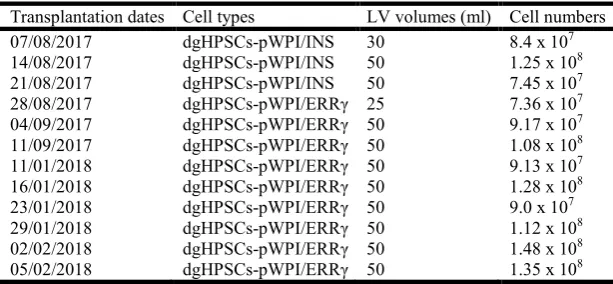
107 to 1.5 x 10⁸ cells were transplanted into the patient, and the intervals between transplantations were
respectively. Totally, 12 transplantation (Table 2).
Insulin secretion test: The insulin secreted into cell culture supernatant was tested via electrochemiluminescence method performed by Kingmed Diagnostics (Jinan, Shandong Province, China) (Wanget al.,
Clinical responses and treatment efficacy assessment
fasting venous blood glucose (GLU) ( venous blood insulin (INS) (Figure 2 3) and glycosylated haemoglobin tested by Affiliated Hospital of Tai
(Taian, Shandong, China). The fasting fingertip capillary blood glucose (FFT-CBG) was monitored daily
[image:2.595.319.550.577.770.2]Figure 4 and 5). The subjective symptoms were reported by the patient during the following-up visit.
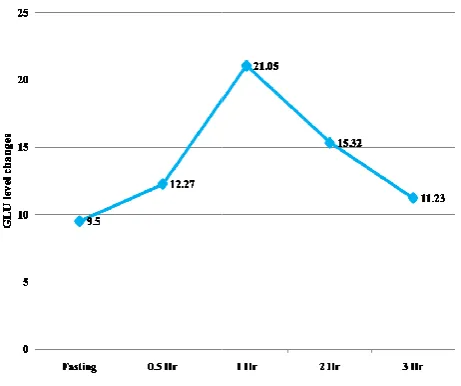
Figure 1. The glucose level changes during glucose challe (07/03/2018). Reference ranges:
ransplantation of human pluripotent stem cells over expressing insulin/errγ can efficiently decrease the hba1c levels of type 2 diabetes patient (case #2-a)
ate a lot but still had very strong sense of hunger. This patient is a glutton, he always eat freely as he wants, and never have his food according to the diet of diabetic patients. Even worse, he usually wants to drink China wine, almost to drink 200ml daily, and some times, even gets drunk with approximate
400-The preparation of ADSC-derived Line #1 was the same as described in reference
Lentivirus vector construction, production and infection:
clinical level third generation lentivirus vectors pWPI/INS constructed as stated in references [9-original vector pWPI/hPLKWT/Neo (Addgene
et al., 2011). The infection according to previous reports (Wang
2011). The detailed infection format
: The clinical treatment of s-ERRγ, and the intravenous transplantation of the cells were the same as described in ). Each time, approximately 7 x cells were transplanted into the patient, and the intervals between transplantations were about 3-7 days, transplantations were performed
insulin secreted into cell culture supernatant was tested via electrochemiluminescence method performed by Kingmed Diagnostics (Jinan, Shandong
et al., 2018).
Clinical responses and treatment efficacy assessment: The (GLU) (Figure 1 and 6), fasting Figure 2), C-peptide (C-P) (Figure glycosylated haemoglobin (HbA1c) (Figure 7) were tested by Affiliated Hospital of Taishan Medical College The fasting fingertip capillary blood was monitored daily (Table 3 and 4, ). The subjective symptoms were reported by the
up visit.
Figure 2. The INS level changes during glucose challenge test (07/03/2018). Reference ranges: F-INS (2.60
Figure 3. The C-P level changes during glucose challenge test (07/03/2018). Reference ranges: F-C-P (1.10
Figure 4. Glucose level changes during daily monitoring of CBG levels (from 05/08/2017 to 07/11/2017)
74692 International Journal of Current Research,
Figure 2. The INS level changes during glucose challenge test (2.60-24.90 µIU/ml)
P level changes during glucose challenge test (1.10-4.40 ng/ml).
Figure 4. Glucose level changes during daily monitoring of FFT-(from 05/08/2017 to 07/11/2017)
Figure 5. Glucose level changes during daily monitoring of CBG levels (from 07/01/
Figure 6. Fasting vein blood glucose level changes after human stem cell transplantations
Figure 7. HbA1c level decreases after human stem cell transplantations
International Journal of Current Research, Vol. 10, Issue, 10, pp.74690-74696, October, 2018
Figure 5. Glucose level changes during daily monitoring of FFT-(from 07/01/2018 to 06/03/2018)
Figure 6. Fasting vein blood glucose level changes after human stem cell transplantations
Figure 7. HbA1c level decreases after human stem cell transplantations
RESULTS
Both dgHPSCs-INS and dgHPSCs-ERRγ cells can secrete insulin immediately post infection
It is well established that stable overexpression transgene cell lines can be efficiently established via lentiviral vector transduction (Zhang and Wang, 2018). Therefore, it is predictable that dgHPSCs-INS cells can stably secrete human insulin into the cell culture supernatant. Our results demonstrated that dgHPSC-INS cells can secrete human insulin with the concentration of 11.61µIU/ml (Wang et al.,
2018). In addition, it was reported that forced expression of ERRγ gene enabled glucose-responsive secretion of human insulin in vitro, and ERRγ is a master regulator of β cell maturation in vivo (Yoshihara et al., 2016). We also found that dgHPSCs-ERRγ cells can efficiently secrete human insulin in the supernatant with the concentration of 30.84µIU/ml. Moreover, either dgHPSC-INS or dgHPSCs-ERRγ can secrete C-peptides into the supernatant together with the insulin secretion, and this phenomenon might be due to the secretion of insulin and C-peptide simultaneously is the feature of matured pancreatic β-cells, yet not the pluripotent state stem cells (Wang et al., 2018; Jones and Hattersley, 2013). To our knowledge, it is the first demonstration that human pluripotent stem cells over expressing ERRγ can directly produce and secrete insulin outside the cells without the need to differentiate into mature pancreatic β cells, and as a result, to avoid the complicated and time-consuming procedures to make pancreatic β cells from stem cells for stem cell and gene therapies for human diabetes (Wang et al., 2018). Therefore, our strategy using human pluripotent stem cells overexpressing insulin and ERRγ provided a powerful and promising method for curing human diabetes.
Transplantation of dgHPSCs-INS and dgHPSCs-ERRγ can efficiently decrease the blood glucose levels and HbA1c:
[image:4.595.157.439.483.614.2]HbA1c is measured primarily to identify the three-month average plasma glucose concentrations. Therefore, it is more stable than the values of daily blood glucose tests (Larsen et al., 1990). The patient was diagnosed with T2D at May 14 of 2014, and the Hb1Ac level was 9.5%. Besides this, the patient was also with other T2D symptoms, such as abnormal urine GLU, urine ketone body, and urine proteins levels, etc. (Table 1). After hospitalization with insulin administration and other treatments, the patient restored to almost the normal health state and stop treatment (Table 1). Up to August 5 of 2017, the patient blood glucose levels gradually increased to approximately 10.5mmol/L (Table 3), and he began to accept stem cell therapy at August 7 of 2017 (Table 2). Our data revealed that, after 3 times dgHPSCs-pWPI/INS and 9 times dgHPSCs-pWPI/ERRγ transplantations (Table 2), without the exogenous insulin administration, the patient’s daily FFT-CBG levels decreased gradually from 10.5mmol/L to 6.8mmol/L during August 5 to November 7 of 2017 (Table 3, Figure 3) with the first 6 transplantations (Table 2). During January 11 to February 5 of 2018, the patient accepted the second round of 6 transplantations (Table 2), and his daily FFT-CBG level decreasing was shown in Table 4 and Figure 5. Because it was during the Chinese New Year period, the patient had too many feasts and did not control his diets and eat and drink more than usually, his FFT-CBG levels decreased not as well as during August 5 to November 7 of 2017 (Table 3, 4; Figure 4, 5, 6). Surprisingly, the patient’s HbA1c levels decrease from 9.5% to 7.8% after 12 times transplantations (Table 1; Figure 7). During our follow-up visits, the patient reported that his daily FFT-CBG levels were still approximately 7-8 mmol/L to date (October of 2018). Taken together, our data demonstrated that transplantations of dgHPSCs-INS and dgHPSCs-ERRγ cells
Table 1. Diagnosis of the patient for T2D
Test 14/05/2014 21/05/2014 Reference ranges
HbA1c 9.5 3.0-6.5%
Urine GLU ++ - normal
Urine ketone body + - -
Urine vitamin C + + -
Blood GLU 8.06 3.9-6.1 mmol/L
Total cholesterol 6.23 2.33-5.69 mmol/L
Low density lipoprotein 3.94 2.07-3.30 mmol/L
Apolipoprotein B 1.36 0.6-1.1g/L
Urine protein 39 - 0-30 mg/24hr
Urine volume 3000 1000-1500 ml/24hr
24 hr urine GLU 42.99 0-1.38 mmol/24hr
Table 2. Time table of human stem cell transplantations
Transplantation dates Cell types LV volumes (ml) Cell numbers
07/08/2017 dgHPSCs-pWPI/INS 30 8.4 x 10⁷
14/08/2017 dgHPSCs-pWPI/INS 50 1.25 x 10⁸
21/08/2017 dgHPSCs-pWPI/INS 50 7.45 x 10⁷
28/08/2017 dgHPSCs-pWPI/ERRγ 25 7.36 x 10⁷
04/09/2017 dgHPSCs-pWPI/ERRγ 50 9.17 x 10⁷
11/09/2017 dgHPSCs-pWPI/ERRγ 50 1.08 x 10⁸
11/01/2018 dgHPSCs-pWPI/ERRγ 50 9.13 x 10⁷
16/01/2018 dgHPSCs-pWPI/ERRγ 50 1.28 x 10⁸
23/01/2018 dgHPSCs-pWPI/ERRγ 50 9.0 x 10⁷
29/01/2018 dgHPSCs-pWPI/ERRγ 50 1.12 x 10⁸
02/02/2018 dgHPSCs-pWPI/ERRγ 50 1.48 x 10⁸
05/02/2018 dgHPSCs-pWPI/ERRγ 50 1.35 x 10⁸
[image:4.595.144.451.656.798.2]could decrease blood glucose levels of T2D patients efficiently even after 7 months of transplantations, and potentially replace exogenous insulin administration and restore the functions of the patient’s pancreatic β cells (Wang et al., 2018). As the patient did not tested his F-INS and F-C-P levels at May 14 of 2014 when he was diagnosed with T2D, we could not compare the improvements of his pancreatic functions, such as the insulin and C-peptide secretion and levels in blood. The patient’s blood GLU, INS and C-P levels during glucose challenge test were shown in Figures 1, 2 and 3, which was performed at March 7 of 2018 about one month after the last stem cell transplantation.
[image:5.595.152.444.76.395.2]The follow-up visit of the patient: The patient reported that he had a transient fever after the first 2 transplantations. Before stem cell transplantation, he described that his eyes were blurred, and could not clearly read the words on his cell phone screen and had the symptom of prophase cataract. After the first transplantation of stem cells, his reported that his got clear at the second day and gradually became better and better with subsequent transplantations, which indicated that his prophase cataract was repaired. Before transplantation, when he was walking, he felt weak, and got tired easily. After transplantations, he felt stronger when he walked, he felt easy and powerful, even ran half an hour each day after dinner. His Table 3. Daily monitoring of FFT-CBG levels (from 05/08/2017 to 07/11/2017)
Date FFT-CBG Date FFT-CBG Date FFT-CBG
05/08/2017 10.5 09/08/2017 10.0 10/08/2017 10.2
11/08/2017 7.7 12/08/2017 9.0 13/08/2017 10.1
14/08/2017 9.5 15/08/2017 9.7 16/08/2017 10.0
17/08/2017 10.1 18/08/2017 10.8 19/08/2017 8.3
20/08/2017 10.5 21/08/2017 10.1 22/08/2017 8.9
23/08/2017 9.3 24/08/2017 9.7 25/08/2017 8.4
26/08/2017 8.4 27/08/2017 9.3 29/08/2017 7.7
30/08/2017 8.7 31/08/2017 8.1 01/09/2017 6.0
02/09/2017 9.2 03/09/2017 9.0 04/09/2017 7.4
05/09/2017 7.1 06/09/2017 7.2 07/09/2017 7.5
08/09/2017 7.2 09/09/2017 8.1 10/09/2017 6.8
11/09/2017 5.7 12/09/2017 8.0 13/09/2017 8.0
14/09/2017 7.6 15/09/2017 8.1 16/09/2017 7.6
17/09/2017 7.2 18/09/2017 6.3 19/09/2017 5.5
20/09/2017 6.1 21/09/2017 7.1 22/09/2017 6.1
23/09/2017 7.3 24/09/2017 6.1 25/09/2017 5.6
26/09/2017 5.8 27/09/2017 6.2 28/09/2017 6.6
29/09/2017 6.2 30/09/2017 7.2 02/10/2017 7.1
03/10/2017 7.8 05/10/2017 7.1 06/10/2017 7.4
07/10/2017 7.5 08/10/2017 8.2 09/10/2017 7.5
10/10/2017 7.6 11/10/2017 7.7 12/10/2017 7.1
13/10/2017 8.2 14/10/2017 6.3 15/10/2014 6.8
16/10/2017 7.3 17/10/2017 7.1 18/10/2017 8.0
19/10/2017 8.1 20/10/2017 7.8 21/10/2017 7.8
22/10/2017 8.1 23/10/2017 7.6 24/10/2017 7.2
25/10/2017 7.4 27/10/2017 7.7 28/10/2017 7.2
29/10/2017 6.4 31/10/2017 6.6 01/11/2017 7.5
02/11/2017 8.3 03/11/2017 7.0 04/11/2017 7.4
05/11/2017 7.4 07/11/2017 6.8
Table 4. Daily monitoring of FFT-CBG levels (from 07/01/2018 to 06/03/2018)
Date FFT-CBG Date FFT-CBG Date FFT-CBG
07/01/2018 8.6 08/01/2018 8.1 09/01/2018 8.1
10/01/2018 8.3 12/01/2018 9.1 13/01/2018 9.8
14/01/2018 9.1 15/01/2018 7.1 16/01/2018 6.2
17/01/2018 6.6 18/01/2018 7.9 19/01/2018 8.5
20/01/2018 7.6 21/01/2018 8.2 22/01/2018 7.2
23/01/2018 7.8 25/01/2018 8.9 26/01/2018 9.3
27/01/2018 8.1 28/01/2018 9.5 29/01/2018 8.2
30/01/2018 7.3 31/01/2018 9.2 01/02/2018 8.2
02/02/2018 7.8 03/02/2018 7.4 04/02/2018 7.6
05/02/2018 7.2 06/02/2018 7.7 07/02/2018 7.5
08/02/2018 7.3 09/02/2018 7.3 10/02/2018 7.6
11/02/2018 7.5 12/02/2018 7.8 13/02/2018 7.7
14/02/2018 8.1 15/02/2018 7.0 16/02/2018 8.2
17/02/2018 7.9 18/02/2018 7.0 19/02/2018 7.5
20/02/2018 7.8 21/02/2018 7.1 22/02/2018 6.8
24/02/2018 7.7 25/02/2018 7.1 26/02/2018 7.9
27/02/2018 7.2 28/02/2018 7.6 01/03/2018 6.9
02/03/2018 8.2 03/03/2018 7.5 05/03/2018 7.2
06/03/2018 8.5
[image:5.595.152.442.430.647.2]hands were very weak before transplantation, and even could not unscrew the caps of mineral water bottles. And after the transplantations, he felt his hands stronger and easy to unscrewing the cap of bottles, and the grip strength of his hands increased obviously. His food intake amount decreased after transplantations and did not feel hunger, yet before transplantation, he always felt hunger and eat a lot. As his long-time hobby, he still usually drinks Chinese wine as before. In summary, the patient’s overall physical and mental conditions were improved obviously after the treatments with dgHPSCs-INS and dgHPSCs-ERRγ transplantations (Wang et al., 2018).
DISCUSSION
Currently, T2D is a world-wide threat to human health, and among the population of 65 years and older, approximately 25.9% of Americans and 9.3% of other people have diabetes (Palmer et al., 2015). Besides this, T2D is also a major cause for premature onset of many age-related diseases such as renal dysfunction, cardiovascular disease, stroke, impaired wound healing, infection, depression, and cognitive decline, etc. (Anderson et al., 2001; Beckman et al., 2002). In 1922, Banting and his colleagues found that daily exogenous insulin injection can down-regulate the blood glucose levels and improve the symptoms of type I diabetes patients (Banting et al., 1922). Yet, the administration of exogenous insulin is not sufficient to control blood glucose levels properly and eventually, various diabetic complications will occur inevitably, due to daily injection of insulin cannot perfectly mimic the physiological functions of pancreatic β cells in regulating blood glucose levels (Minami and Seino, 2013). In our opinion, to cure T1D and T2D mainly contain three aspects. First of all, we need to down-regulate the blood glucose levels properly; secondly, we need to repair and restore the functions of damaged pancreatic β cells; and thirdly, we need to protect and even reverse various diabetic complications, and this is the ultimate goal for curing T1D and T2D. So far, production and transplantation of differentiated human pancreatic β cells derived from hESCs and hiPSCs have been reported in animal models, and demonstrated that it is a promising strategy for treatment of human diabetes (Pagliuca
et al., 2014; Yoshihara et al., 2016). Yet, to our knowledge, little successful reports for clinically treatment of human diabetes patients using in vitro differentiated pancreatic β cells are known till now.
In this study, we employed dgHPSCs as a carrier to over express human INS and ERRγ genes to investigate their roles in decreasing blood glucose levels and restoring patient’s pancreatic functions. It is reported that ERRγ is a master gene for β cell maturation and over expression of ERRγ in human iPS cells can force the β-like cell differentiation and make functional glucose-responsive cells in type 1 diabetic mouse models (Yoshihara et al., 2016). As reported previously, our transduced dgHPSCs-ERRγ cells could secrete insulin into cell culture supernatant, and the concentration of secreted insulin in the supernatant was 30.84µIU/ml, (Wang et al., 2018). On the other hand, the concentration of insulin secreted by dgHPSCs-INS cells was 11.61µIU/ml. In both cases, no C-P secretion was detected in the cell culture supernatant. This phenomenon might due to the dgHPSCs are in pluripotent state yet not matured pancreatic β cell state. After transplantations with dgHPSCs-INS and dgHPSCs-ERRγ (Table 2), we found that the patient’s fasting vein blood glucose levels (Figure 6),
FFT-CBG levels (Table 3 and 4, Figure 4 and 5), and HbA1c values (Table 1, Figure 7) were decreased continually. As reported from the patient, his FFT-CBG levels are still maintained around 7-8 mmol/L to date (October of 2018). Thus, transplantations of dgHPSCs-INS and dgHPSCs-ERRγ cells could decrease blood glucose levels of T2D patients efficiently after 7 months of transplantations. Because the patient did not tested his F-INS and F-C-P levels initially when he was diagnosed with T2D, we could not compare the improvements of his pancreatic functions, such as the C-P levels in blood. As we reported earlier, the transplantation of dgHPSCs-ERRγ can increase the C-P levels of the patient (Wang et al., 2018), we believe that the C-P of this patient also increases significantly. More importantly, the patient reported that, after transplantations, his prophase cataract symptom improved obviously, and this data indicated that our transplantation strategy can both decrease blood glucose and HbA1c levels and repair early stage diabetic complications. Our data demonstrated that the transplantation of dgHPSCs-INS and dgHPSCs-ERRγ cells can decrease the blood glucose levels and HbA1c values, increase the secretion of C-peptide by the pancreatic β cells, which is the hallmark for the improvement of the β cells functions (Wang et la., 2018), and furthermore, probably can protect and reverse early stage diabetic complications. Although the patient’s blood glucose and HbA1c levels are still higher than normal range, we believe that, with more transplantation, it is very promising to completely restore the normal functions of pancreatic β cells, effectively cure T2D and possibly prevent and reverse diabetic complications. As discussed previously (Wang et la., 2018), there are two milestone works in differentiating hESCs/hiPSCs into functional pancreatic β cells in vitro (Pagliuca et al., 2014; Yoshihara et al., 2016). Compared with their works, our methods have several advantages over them. First of all, our strategy can directly produce and secrete human insulin into the patient blood immediately after transplantation, therefore eliminate the complicated and time-consuming in vitro differentiation procedure. Secondly, our strategy can decrease the patient’s blood glucose levels and avoid daily insulin injection as soon as transplantation. Thirdly, our strategy can obviousl improve the patient’s conditions physically and mentally, due to repairing the aged and damaged tissues and organs, and probably preventing from the formation of diabetic complications and even reversing the existed complications potentially. Moreover, in our investigations, we directly generated human pluripotent stem cells from hADSCs without any genetic modifications. Thus, our stem cells are much safer than other reports (Pagliuca et al., 2014; Yoshihara et al.,
2016). Finally, we use our strategy to treat volunteered T2D patients, rather than animal models. To our knowledge, besides our previous report (Wang et la., 2018), this is the second report to use dgHPSCs-INS and dgHPSCs-ERRγ for treatment of human diabetes. It is very hard to describe the physical and mental improvements of the patients after stem cell transplantations in words. After transplantations, the patient’s eye sight improved and the symptom of prophase cataract decreased. He became more active in his daily life and performed more exercise including walking and running, and his muscles became stronger obviously. He ate less than before and did not feel hunger, indicating that his glucose metabolism improved. All these beneficial effects indicated the positive effects of dgHPSCs-INS and dgHPSCs-ERRγ stem cell transplantation. Therefore, our preliminary investigations laid an important foundation for stem cell therapy for treatment of human diabetes diseases (Wang et la., 2018).
Conclusion
Combined with our former report, this study proved the following conclusions (Wang et la., 2018):
A. dgHPSCs can be generated directly from HADSCs without any genetic modifications.
B. Both dgHPSCs-INS and dgHPSCs-ERRγ can secrete human INS immediately after transduction at the pluripotent state before differentiating into mature pancreatic β cells.
C. Transplantation of dgHPSCs-INS and dgHPSCs-ERRγ cells can decrease patient’s blood glucose and HbA1c levels, and replace daily insulin injections.
D. Transplantation of dgHPSCs-INS and dgHPSCs-ERRγ cells can improve the patient’s conditions physically and mentally.
E. Our strategy potentially can prevent from the development of diabetic complications and even restore and reverse the existed complications, such as prophase cataract.
At September 15 of 1925, Sir Frederick G. Banting in his Noble Lecture declared that “Insulin is not a cure for diabetes; it is a treatment.” With our preliminary investigations with dgHPSCs-INS and dgHPSCs-ERRγ cells transplantation, we circumspectly announced that our strategy might not only be a treatment, but also a cure of human diabetes potentially (Banting, 1925).
Abbreviations
hESCs: Human Embryonic Stem Cells;
hiPSCs: Human Induced Pluripotent Stem Cells;
ERRγ: Estrogen-related Receptor γ;
hADSCs: Human Adipose-derived Stem Cells;
dgHPSCs: Directly Generated Human Pluripotent Stem Cells;
F-GLU: Fasting Glucose;
F-C-P: Fasting C-peptide;
F-INS: Fasting Insulin;
HbA1c: Glycosylated Haemoglobin;
FFT-CBG: Fasting Fingertip Capillary Blood Glucose;
T1D: Type 1 Diabetes (T1D);
T2D: Type 2 Diabetes.
Declarations: Ethical Approval and Consent to participate Described in Statement of ethical approval section.
Consent for publication: All the participated patients were consent for the publication of this work.
Availability of supporting data: The datasets generated
and/or analysed during the current study are not publicly available due to the protection of the confidential information of the participated patients but are available from the corresponding author on reasonable request.
Competing Interests: The authors declare they have no
competing interests.
Authors Contributions: G Z and T W instructed and
supervised the whole experimental and clinical work. X W and X C performed the vector construction. B Z and L Z charged the lentiviral transduction. M F, X C, Z Y and X Y did the cell culture. R L, Q F, X D, L Z, G Y and Y M worked on the
clinical treatments of the cells. All the authors discussed, wrote, read and approved the final manuscripts.
Acknowledgement: The authors wish to thank the nurses in our hospital for their help and caring of the patients during the clinical treatments.
REFERENCES
Anderson RJ, Freedland KE, Clouse RE, Lustman PJ. 2001. The prevalence of comorbid depression in adults with diabetes: a
meta-analysis. Diabetes Care., 24: 1069-78.
Banting FG, Best CH, Collip JB, Campbell WR, Fletcher AA. 1922. Pancreatic extracts in the treatment of diabetes mellitus:
preliminary report. Canadian Medical Association Journal, 12:
141-6.
Banting FG. Nobel Lecture. 1925.
Beckman JA, Creager MA, Libby P. 2002. Diabetes and
atherosclerosis: epidemiology, pathophysiology, and
management. J Am Med Assoc., 287: 2570-81.
Jones AG, Hattersley AT. 2013. The clinical utility of C-peptide
measurement in the care of patients with diabetes. Diabetic
Medicine, 30: 803-17.
Larsen ML, Horder M, Mogensen EF. 1990. Effect of long-term monitoring of glycosylated hemoglobin levels in insulin-dependent
diabetes mellitus. N Engl J Med., 323: 1021-5.
Minami K, Seino S. 2013. Current status of regeneration of pancreatic
β-cells. Journal of Diabetes Investigation, 4: 131-41.
Pagliuca FW, Millman JR, Gürtler M, Segel M, Dervort AV, Ryu JH,
et al. 2014. Generation of functional human pancreatic β cells in
vitro. Cell, 159: 428-39.
Palmer AK, Tchkonia T, LeBrasseur NK, Chini EN, Xu M, Kirkland JL. 2015. Cellular senescence in type 2 diabetes: A therapeutic
opportunity. Diabetes, 64: 2289-98.
Sun N, Panetta NJ, Gupta DM, Wilson KD, Lee A, Jia F, et al. 2009. Feeder-free derivation of induced pluripotent stem cells from adult human adipose stem cells. Proc Natl Acad Sci USA, 106: 15720-25.
Visanji NP, Wislet-Gendebien S, Oschipok LW, Zhang G, Aubert I, Fraser PE, et al. 2011. Effect of Ser-129 phosphorylation on interaction of alpha-synuclein with synaptic and cellular
membranes.J Biol Chem., 286: 35863-73.
Wang T, Wang X, Zhang B, Fan M, Cui X, Zhao L, et al. 2018. Transplantation of human pluripotent stem cells overexpressing ERRγ can efficiently improve the symptoms of type 2 diabetes
patient. Adv Tissue Eng Regen Med Open Access., 4: 457-62.
Yoshihara E, Wei Z, Lin CS, Fang S, Ahmadian M, Kida Y, et al. 2016. ERRγ is required for the metabolic maturation of
therapeutically functional glucose-responsive β cells. Cell
Metabolism, 23: 622-34.
Zhang G, Tandon A. 2012. Quantitative assessment on the cloning efficiencies of lentiviral transfer vectors with a unique clone site.
Sci Rep., 2: 415.
Zhang G, Tandon A. 2013. “Combinatorial Strategy”: A highly efficient method for cloning different vectors with various clone
sites. American Journal of Biomedical Research, 1: 112-9.
Zhang G, Wang T. 2018. Efficient lentiviral transduction of different
human and mouse Cells. International Journal of Bioprocessing
and Biotechniques, IJBBT-104.
Zhang G, Zhang Y. 2016. On the “All or Half” law of recombinant
DNA. American Journal of Biomedical Research, 4: 1-4.
Zhang G. 2013. A new overview on the old topic: The theoretical analysis of “Combinatorial Strategy” for DNA recombination.
American Journal of Biomedical Research, 1: 108-11.
Zuk PA, Zhu M, Ashjian P, De Ugarte DA, Huang JI, Mizuno H, et al. 2002. Human adipose tissue is a source of multipotent stem
cells. Mol Biol Cell, 13: 4279-95.
74696 International Journal of Current Research, Vol. 10, Issue, 10, pp.74690-74696, October, 2018