COMPARATIVE STUDY OF VISUAL AND INSTRUMENTAL ANALYSES OF SHADE SELECTION
1,
*Jouhadi, EM.,
1Amzyl, FZ.,
1Department of Prosthodontics
2
Department of Pedodontics
ARTICLE INFO ABSTRACT
Introduction:
transferred to the laboratory technician. visual dental shade
matching.
third of the sound maxillary right central incisor of students using VITAPEN® classical and Vita
Tooth-The surveys
have been conducted by practitioners of the medical staff of the Prosthodontic Department. 192 visual shade selection were performed and converted to the Lab* syste
significant difference between the Vita Classic® and Vita 3D Master® shades. However, regarding occupational categories and gender, a significant difference was found.
study, the visual shade
spectrophotometric reading. The sensitivity and the specificity of visual shade kappa index, indicate that the conventional method
the study shows that the Vita 3D Master® shade guide presents more satisfactory results regarding its intrinsic validity, compared to the Vita Classic® shade guide.
Copyright © 2019, Jouhadi et al. This is an open access distribution, and reproduction in any medium, provided
INTRODUCTION
Reproducing a tooth color requires a precise shade determination, which will be thereafter transferred to the laboratory technician. Different tooth color determination techniques have evolved over time. The use of shade guides as a tool for the color transmission seems to be the most common method in dental practice. The visual color determination is influenced by multiple factors. This has led to the development of instrument shade-matching, based on
self-devices. Instrument shade-matching allows a natural tooth color determination, regardless the human and
factors, as well as an accurate communication between dentists and technicians. The purpose of this work is to evaluate the validity of the visual shade-matching in comparison with the spectrophotometric shade-matching as a Gold Standard.
MATERIALS AND METHODS
A cross-sectional descriptive study has been conducted within the fixed prosthesis department, at the Dental Treatment and Consultation Center (DTCC) of the Faculty of Dental Medicine of Casablanca (FDMC). The population of the study was composed of 16 examiners from the medical staff department. Divided into 3 professional groups; the examiners
ISSN: 0975-833X
Article History:
Received 27th December, 2018
Received in revised form
17th January, 2019
Accepted 06th February, 2019
Published online 31st March, 2019
Citation: Jouhadi, EM., Amzyl, FZ., Mahdoud, FZ., Hamza, M., Bennani, A. and Andoh, A.
of shade selection”, International Journal of Current Research
Key Words:
Visual assessement, Dental color, Shade guide.
*Corresponding author: Jouhadi, EM.
RESEARCH ARTICLE
COMPARATIVE STUDY OF VISUAL AND INSTRUMENTAL ANALYSES OF SHADE SELECTION
Amzyl, FZ.,
1Mahdoud, FZ.,
2Hamza, M.,
1Bennani, A. and
Department of Prosthodontics, Dental School of Casablanca, Hassan II University, Morocco
Department of Pedodontics, Dental School of Casablanca, Hassan II University, Morocco
ABSTRACT
Introduction: Reproducing dental color requires an accurate shade reading, that will the
transferred to the laboratory technician. Aim: The purpose of this study is to assess the validity of the visual dental shade-matching, as a conventional method, compared to the spectrophotometric shade matching. Materials and Methods: With visual analysis, 16 prosthodontists examined the middle third of the sound maxillary right central incisor of students using VITAPEN® classical and Vita - guide 3D-MASTER®. One prosthodontist examined the same teeth using a spectrophotometer. The surveys have been performed within students of Dental Medicine Faculty of Casablanca. They have been conducted by practitioners of the medical staff of the Prosthodontic Department.
192 visual shade selection were performed and converted to the Lab* syste
significant difference between the Vita Classic® and Vita 3D Master® shades. However, regarding occupational categories and gender, a significant difference was found.
study, the visual shade-matching has a low to moderate reproducibility compared to the spectrophotometric reading. The sensitivity and the specificity of visual shade
kappa index, indicate that the conventional method cannot be considered as a reliable tool. However the study shows that the Vita 3D Master® shade guide presents more satisfactory results regarding its intrinsic validity, compared to the Vita Classic® shade guide.
access article distributed under the Creative Commons Attribution License, the original work is properly cited.
Reproducing a tooth color requires a precise shade ill be thereafter transferred to the laboratory technician. Different tooth color determination techniques have evolved over time. The use of shade guides as a tool for the color transmission seems to be the most common l color determination is influenced by multiple factors. This has led to the development -lighting electronic matching allows a natural tooth color determination, regardless the human and environmental factors, as well as an accurate communication between dentists and technicians. The purpose of this work is to evaluate the matching in comparison with the matching as a Gold Standard.
sectional descriptive study has been conducted within the fixed prosthesis department, at the Dental Treatment and Consultation Center (DTCC) of the Faculty of Dental Medicine of Casablanca (FDMC). The population of the study was composed of 16 examiners from the medical staff department. Divided into 3 professional groups; the examiners
included professors, specialists and residents of fixed
prosthesis department. In order to rule out any dischromatopsy (color vision disorder), vision of all medical staff has been tested using the Farnsworth D15® test. Our population did not present any visual alteration. (Fig
was taken among dental students from the FDMC. students presenting natural maxillary
vital, with no restoration, substance loss nor dyschromia, straight in the arch, have not undergone any whitening, nor orthodontic or prosthetic treatments; were selected for the shade-matching sample. The shade determination wa
the central area of the first upper incisor’s middle third. To optimize the process, the examiners
visual survey in the same dental chair, the one closest to the window. This allowed to work under daylight conditions;
The shade selections were conducted in the middle of
the day under a slightly sunny sky.
The surrounding environment (walls) is an off
color. All the observed subjects (students) were wearing white medical coats and removed all makeup or colored ornament.
All students were given a fast polishing to avoid any
interference with the color survey.
To exploit the result of the visual shade selection using shade guides in the Delta-E equation, we converted the color values International Journal of Current Research
Vol. 11, Issue, 03, pp.2066-2071, March, 2019
DOI: https://doi.org/10.24941/ijcr.34623.03.2019
Jouhadi, EM., Amzyl, FZ., Mahdoud, FZ., Hamza, M., Bennani, A. and Andoh, A. 2019. “Comparative study of visual and instrumental analyses
International Journal of Current Research, 11, (03), 2066-2071.
COMPARATIVE STUDY OF VISUAL AND INSTRUMENTAL ANALYSES OF SHADE SELECTION
Bennani, A. and
1Andoh, A.
Casablanca, Hassan II University, Morocco
Dental School of Casablanca, Hassan II University, Morocco
Reproducing dental color requires an accurate shade reading, that will thereafter be The purpose of this study is to assess the validity of the matching, as a conventional method, compared to the spectrophotometric
shade-al anshade-alysis, 16 prosthodontists examined the middle third of the sound maxillary right central incisor of students using VITAPEN® classical and Vita MASTER®. One prosthodontist examined the same teeth using a spectrophotometer. have been performed within students of Dental Medicine Faculty of Casablanca. They have been conducted by practitioners of the medical staff of the Prosthodontic Department. Results:
192 visual shade selection were performed and converted to the Lab* system color. There was no significant difference between the Vita Classic® and Vita 3D Master® shades. However, regarding occupational categories and gender, a significant difference was found. Conclusion: According to our a low to moderate reproducibility compared to the spectrophotometric reading. The sensitivity and the specificity of visual shade-matching, as well as the be considered as a reliable tool. However, the study shows that the Vita 3D Master® shade guide presents more satisfactory results regarding its
License, which permits unrestricted use,
included professors, specialists and residents of fixed
In order to rule out any dischromatopsy er), vision of all medical staff has been tested using the Farnsworth D15® test. Our population did not present any visual alteration. (Fig.1) The color determination was taken among dental students from the FDMC. Only students presenting natural maxillary central incisors, healthy, vital, with no restoration, substance loss nor dyschromia, straight in the arch, have not undergone any whitening, nor orthodontic or prosthetic treatments; were selected for the The shade determination was taken on the central area of the first upper incisor’s middle third. To optimize the process, the examiners were asked to take their visual survey in the same dental chair, the one closest to the window. This allowed to work under daylight conditions;
The shade selections were conducted in the middle of the day under a slightly sunny sky.
The surrounding environment (walls) is an off-white color. All the observed subjects (students) were wearing white medical coats and removed all makeup or colored
All students were given a fast polishing to avoid any interference with the color survey.
To exploit the result of the visual shade selection using shade E equation, we converted the color values
OF CURRENT RESEARCH
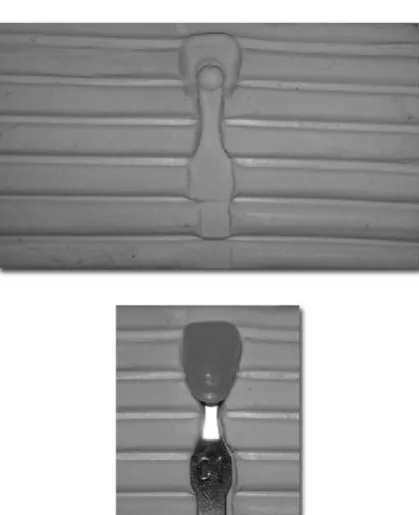
(ex: A2, B1, C2 ...) to their L*a*b* equivalent by scanning them using the Spectro Shade Micro®. The Vita Classic® and Vita 3D Master® shade guides pellets were fixed on a light gray laboratory silicone template (Fig.2). The gray color was chosen for its neutrality to avoid any color cast. Three measurements were made for each pellet. Upon the three measurements taken on the spectrophotometer, the one that is repeated at least twice was assigned to the pellet. In case of discrepancies between the three measurements, the reading is repeated until two measurements are matched. Before starting the study, a pre-survey has been conducted in order to familiarize the medical staff with the measuring instruments. One trained investigator has taken in charge the data collection from the medical staff visual surveys and the students’ spectrophotometric readings. The first step of the study was the spectrophotometric readings which was realized on all the students by the same investigator. Every daily first use, the device was calibrated according to the manufacturer's recommendations. The survey was therefore performed on the maxillary central incisor, more precisely in the center of the middle third, and repeated three times in a row. The "L*a*b*" values were collected on Microsoft Excel® spreadsheet. The second step consisted in the collection, by the same investigator, of the medical staff visual shade selections.
Fig. 1. Farnsworth® Test
Fig. 2. Pellets on a gray laboratory silicone template
They were divided to visual shade-matching using the Vita Classic® shade guide, and visual shade-matching using the Vita 3D Master®. The final step enabled to synthesize the data and to prepare it for statistical processing. Thus, the value of the Delta E (∆E), which represents the difference between two stimuli, was calculated for each participant. Visual shade-matching deviations were calculated in comparison with the spectrophotometer results. The ΔE value was calculated by the Euclidean distance between their representative points in the L*a*b* space and calculated by the Delta-E equation via the Excel spreadsheet: ΔE = ((L*1- L* 2) 2 + (a*1 - a*2) 2 + (b*1- b*2) 2) 1/2.
Referring to the literature, the ΔE thresholds were set as
follows (Choi et al., 2010)
ΔE <2: the correspondence between the two stimuli is
perfect and the two shade-maching are superimposable.
2≤ΔE≤3,7: correct and globally accepted
correspondence for the surveys.
ΔE> 3,7: the difference is visually perceptible and
signifies a discrepancy between the two stimuli.
The performance variation by gender or examiner profile (occupational status) was tested by comparing ΔE values using a Chi-square test. The comparisons of ΔE deviations means, for the different shade selection according to the gender and the examiner’s profile, were calculated using the Student test and the ANOVA (Analysis of Variance). The comparison of the ΔE deviations according to the shade-matchings was carried out using the Student test for paired samples. The statistical analysis was performed on SPSS 16.0 software.
RESULTS
Our sample consists of 5 professors, 5 specialists and 6 residents (31.25% professors, 31.25% specialists and 37.5% residents), divided into 6 men and 10 women (62.5% women and 37.5% men). All medical staff has completed a total of 192 shade selection.
DISCUSSION
The shade guides used during this work (Vita Classic® and Vita 3D Master®) were purchased from an authorized Vita supplier. With the multitude of spectrophotometric devices, we have chosen the most reliable ones described in the literature. It was decided to adopt one of the two brands; the Shadepilote of DEGUDENT® or the Spectroshade by MHT®. The two trade names originate from the same manufacturer. The one available for our study was the Spectroshade of MHT®. All the shade-matchings were undertaken in front of the same window, under a light intensity around 400 lux. The environment was neutral in color. To avoid any color modification due to plaque, a rapid dental polishing was done before the surveys.
Visual shade-matching: No significant difference was found
regarding the use of the two shade guides; Vita Classic® and
3D Master®, despite the lack of training for most practitioners
regarding the use of Vita 3D Master®. Indeed, (Hassel et al.,
2005) mentioned that the shade guide Vita classic® has some limits for practitioners when it comes to complex hues. Theoretically, its evolution to the Vita 3D Master® shifts towards a gain in performance. The Vita 3D Master® shade guide was made based on the analysis of natural tooth shades
so that it can cover the most common shades (Paravina et al.,
2002). It also covers a large color spectrum compared to the Vita Classic® shade guide. In 2002, Paravina and col. presented comparative results for both shade guides. Vita Classic® contains fewer pellets (16 pellets) compared to the Vita 3D Master® (26 pellets). This gap limits the possibilities and the consistency of the pellets regarding the tooth colorimetric tone, making the shade-matching sometimes random or even impossible. The same observation was
reported by (Analoui et al., 2004). Several studies indicate that
[image:3.595.84.508.64.117.2]the manufacture of the Vita Classic® shade guide does not
Table 1. The distribution of Vita Classic® shade guide ΔE values based on thresholds ΔE
ΔE thresholds Number %
ΔE < 2 16 16.7 %
2 < ΔE < 3.7 39 40.6 %
ΔE > 3.7 41 42.7 %
[image:3.595.88.502.143.196.2]Total 96 100 %
Table 2. The distribution of Vita 3D MASTER® shade guide ΔE values based on ∆E thresholds
ΔE thresholds Number %
ΔE < 2 11 11.5 %
2 < ΔE < 3.7 33 34.4 %
ΔE > 3.7 52 54.2 %
Total 96 100 %
Table 3. Concordance rates between VITA CLASSIC® and VITA 3D MASTER® shade guides
Vita Classic Vita 3D Master
Mean value 3.685 4.1195
Standard deviation 1.580 1.7858
[image:3.595.78.516.291.335.2]Median 3.460 3.8500
Table 4. Distribution of ΔE means among the vocational categories regard the use of Vita classic and Vita 3D Master shade guides
Vita Classic Mean (E.T) P Vita 3D Master Mean (E.T) P
Professors 3.546 (1.557) 4.055 (1.212)
Specialist doctors 3.626 (1.850) 0.719 4.264 (2.351) 0.868
[image:3.595.56.548.361.425.2]Residents 3.850 (1.373) 4.052 (1.682)
Table 5. Concordance rates of ΔE values among the vocational categories
Vita Classic ® Vita 3D Master ®
∆E 2-3.7
∆E <2
∆E >3.7
P ∆E
2-3.7
∆E <2
∆E >3.7
P
Professors 43.3% 20.0% 41.7% 0.492 46.7% 9.3% 44% 0.0488
Specialist doctors 33.3% 25.0% 36.7% 33.3% 11.1% 55.6%
Residents 42.9% 9.5% 47.6% 23.3% 13.3% 63.4%
Table 6. Distribution of ΔE averages based on gender regard the use of Vita classic® and Vita 3D Master® shade guides
Vita Classic ® Mean (SD) P Vita 3D Master® Mean (SD) P
Female 3.847 (1.442) 0.196 4.303 (2.006) 0.193
Male 3.415 (1.776) 3.812 (1.309)
Table 7. Concordance rates of ΔE values by gender
Vita Classic® Vita 3D Master®
∆E 2-3.7
∆E <2
∆E >3.7
P ∆E
2-3.7
∆E <2
∆E >3.7
P
Female 36.1% 30.66% 33.3% 0.017 31.7% 11.7% 56.70% 0.766
meet the value ranking, despite the fact to be reclassified by this term. It thus remains less suitable compared to the natural vision. By contrast, the Vita 3D Master® is a physiological shade guide, for the manufacturing was based on the value
parameter. According to the study of Alsaleh et al. (2012) , the
cause would probably be related to the multitude of pellets to be analyzed (26 pellets). Indeed, the practitioner is constrained to make several comparisons, to exceed the interval of visual effectiveness analysis. Thus, the eyestrain risk is increased. Yet, when we understand this shade guide principle and its method of operating, the survey becomes rather fast and
efficient. Many studies; such as the investigation of Fani G. et
al. in 2007 and the Paravina study in 2002, indicate that
becoming familiar with the use of 3D Master® shade guide provides the reflex of a rational protocol and the reproducibility rates calculated outperform those of the Vita Classic®.
Visual shade-matching and occupational status
For the use of the Vita 3D Master®, the difference is significant between the three professional groups. The teachers had the highest validity rate, followed by the specialists, and finally the residents. Concerning the 3D Master® shade guide result, it can be due to the experience and the familiarity of its use among professors and specialists. Unlike the residents, for the most part, the present experience was their first contact with the 3D Master® shade guide. The same observation was
disclosed in Della Bona et al. in 2009, Okubo et al. (1998) and
Corcodel N in 2012 (10). They have demonstrated the importance of clinical experience in the shade-matching protocol, especially regarding the use of Vita 3D Master shade guide. However, several studies within the literature confirm that there is no correlation between professional experience
and the reproducibility shade-matching rate. AlSaleh et al. in
2012, have shown in their study that experience did not have a key role in colorimetric perception; students and specialists have all had an identical reproducibility rate of 34%. Haddad
et al. (2009) have been even able to show that students with
little or no experience have achieved similar results as dental
experts. Hassel et al. (2005) also have compared color
perception between patients and practitioners, and there was no significant difference when it comes to professional status. The "Professional experience" factor, though, does not seem to provide better results. Nevertheless, the influence of professional experience when combined with practitioner’s age
remains controversial (Esan et al., 2006). Physiological
changes, eyestrain and vision deficiencies are intertwined with age and experience. Despite the experience gained by years of prosthetic restorations, it seems that the parameters relative to aging decompensate the gain in experience. It remains very difficult to appreciate the effects of each factor isolated. Studies of practitioners age and experience are then compromised by inconsistencies and bias that are too important, which makes it difficult to reliably predict the
influence of one or another (Haddad et al., 2009).
Visual color survey and gender
Regarding the use of Vita Classic® shade guide, the difference was significant among users from both genders. However, there was no significant difference between the two sexes concerning the use of Vita 3D Master® shade guide. In the literature, the results are controversial. Studies like
(Haddad et al., 2009) indicate that there is no significant
difference between both genders. On the other hand, rare
investigations like Donahue et al. in 1991 and Esan in 2006
have shown different results, with a high reproducibility rate for men compared to women. Most conducted studies, such as
the one carried out by Capa et al. in 2010 and the study of
Rodriguez et al. (2008), report though that women perform
better in colorimetric perception than men, which corroborate the results of our study. According to the literature, there is a difference between genders in terms of impaired color visions and this is even correlated to the genetic. Mollo, in 2005 have indicated that men are basically trichromatic, and since women are heterozygous on one of the photo-pigments, they are consequently tetra-chromatic, which is advantageous for women in color vision. The deficiency of color vision is a hereditary recessive disease, transmitted on chromosome X. Women can be carriers and not reached in the majority of cases, while men will have this disease.
This explains why 8% men in overall population have this disorder, compared with only 0.5% to 2% of women,
according to the studies ( Curd et al., 2006; Hammad, 2003).
Other studies like Barrett et al. 2002 have confirmed that there
is no significant difference between the sexes when it comes to visual shade-matching, theoretically, under an optimal daylight. Studies excluding women and men with visual impairment, and women heterozygous carriers (about 15% of the general population), however, have not been able to demonstrate a significant difference between the sexes
(Haddad et al., 2009). These studies recommended that, when
performing a shade-matching, neither sex should be favored,
but rather, to screen clinicians for any color vision defect.By
contrast, the ability to distinguish colors is equal between men and women who have a normal eyesight; it is then concluded that gender is not a factor of variation in dental shade-matching
(Capa et al., 2010).
Other factors affecting the visual shade-matching
The lighting
Described as the most important environmental factor that
influences the shade-matching protocol. Choi et al. in 2010
recommended comparing color under stable and balanced lighting, not only to avoid eyestrain that would reduce the practitioner visual qualities, but especially to ensure observation of the multiple characteristics of the teeth. A stated balanced lighting must associate several types of light or bulbs. In 1970, the company Gamain® was the pioneer of the lighting called "balanced daylight (D65)", which facilitates color distinction without affecting the retinal cell performance.
The environment
The literature highlights the impact of surrounding colors; clothes, ornaments, make-up, walls and the environment, generally speaking, on the visual perception, especially when these colors are contrasted, through the phenomena of
simultaneous and successive contrast. In Lasserre et al. (2011)
presented a comparative study between the visual
shade-matching under ambient conditions, and the
spectrophotometric shade-matching; that is independent of the environment. The results confirm the influence of the environment on the accuracy of tooth color determination.
Other studies. (Chen et al., 1985), comparing conventional
techniques of shade-matching with the instrument ones, mentioned the direct effect of environmental factors on visual matching. They have shown that instrument shade-matching using a spectrophotometer provides the most precise and accurate shade outcomes.
Dental polishing
Habits such as a systematic prophylactic polishing, despite the fact that it is strongly recommended before tooth shade determination, do not seem to be part of practitioner’s habits. According to Llena in 2011only 14.29% of practitioners undertake regular polishing before the tooth shade
determination in (Chu et al. 2010). Have shown (Analoui et
al., 2004) that dental polishing finds all its interest in
shade-matching protocol. It has been demonstrated that tartar deposits, surface stains and bacterial plaque interfere with the tooth shade by modifying the light behavior on the tooth surface.
From one operator to another
The Tooth shade determination is inconstant and remains operator-dependent. Indeed, the same shade-matching can be perceived differently from one operator to another, and for the
same operator from one moment to another. In Meireles et al.
(2008) have proved the difference in visual shade-matching
between several examiners. Gomez et al. in 2013 have
mentioned that the color perception is personal, referring to the experiences and the learning curve or the pathophysiology (color-vision deficiency, aging of the eye, etc). It is, therefore, the complex result of overlapping phenomena; physiological, psychological and emotional.
With the same operator
Mood and stress frequently affect the discernment.
Furthermore, they cause an internal tension which considerably modifies the eye functioning and its muscles
Eyestrain
Consumption of certain medicines
Successive and simultaneous contrast phenomena
Repetition, even with the same operator, is deleterious
causing retinal saturation (Capa et al., 2010; Chu et al.,
2010).
Conclusion
The visual shade-matching is certainly the most common method for tooth color determination. Yet, it remains very sensitive to many environmental and human factors that can
make it completely inaccurate and sometimes useless. In contrast, the instrument method, via spectrophotometers, allows a reliable and objective shade-matching, regardless ambient lighting, environmental factors and human conditions. The present study has evaluated the reproducibility and the validity of the visual shade-matching at the DTCC fixed prosthesis department of the FDMC, in comparison with the « Gold standard » spectrophotometric shade-matching. The results have shown a low to moderate reproducibility for the conventional visual method, compared to the spectrophoto metric shade-matching, under the usual conditions of
daylighting within the department. The sensitivity and
specificity of the visual shade-matching, as well as the kappa index, indicate that the conventional method can not be considered as a reliable tool. However, the study has demonstrated that Vita 3D Master® shade guide presents more satisfactory results regarding its intrinsic validity compared to
Vita Classic® shade guide. Further studies are needed to
improve the lighting conditions within the department, as well as the methods commonly used, for an optimal shade-matching that meets the patient needs.
REFERENCES
Alsaleh, S., Labban, M., AlHariri, M. and Tashkandi, E. 2012. Evaluation of self shade matching ability of dental students
using visual and instrumental means. J Dent., juill 40 Suppl
1:e82-87.
Analoui, M., Papkosta, E., Cochran, M. and Matis, B. 2004.
Designing visually optimal shade guides. J Prosthet Dent.,
92(4):371‑6.
Barrett, AA., Grimaudo, NJ., Anusavice, KJ. and Yang, MCK. 2002. Influence of tab and disk design on shade matching
of dental porcelain. J Prosthet Dent., déc 88(6):591‑7.
Capa, N., Malkondu, O., Kazazoglu, E. and Calikkocaoglu, S. 2010. Evaluating factors that affect the shade-matching
ability of dentists, dental staff members and laypeople. J
Am Dent Assoc., 1939. janv 141(1):71‑6.
Chen, H., Huang, J., Dong, X., Qian, J., He, J., Qu, X., et al.,
2012. A systematic review of visual and instrumental
measurements for tooth shade matching. Quintessence Int
Berl Ger., 1985. 43(8):649‑59.
Choi, J-H., Park , J-M., Ahn, S-G., Song, K-Y., Lee, M-H.,
Jung, J-Y., et al., 2010. Comparative study of visual and
instrumental analyses of shade selection. J Wuhan Univ
Technol-Mater Sci Ed., févr 25(1):62‑7.
Chu, SJ., Trushkowsky, RD. and Paravina, RD. 2010. Dental color matching instruments and systems. Review of clinical
and research aspects. J Dent., 38 Suppl 2:e2-16.
Corcodel, N., Karatzogiannis, E., Rammelsberg, P. and Hassel, AJ. 2012. Evaluation of two different approaches to
learning shade matching in dentistry. Acta Odontol Scand.,
janv 70(1):83‑8.
Curd, FM., Jasinevicius, TR., Graves, A., Cox, V. and Sadan, A. 2006. Comparison of the shade matching ability of
dental students using two light sources. J Prosthet Dent.,
déc 96(6):391‑6.
Della Bona, A., Barrett, AA., Rosa, V. and Pinzetta, C. 2009. Visual and instrumental agreement in dental shade selection: three distinct observer populations and shade
matching protocols. Dent Mater Off Publ Acad Dent
Donahue, JL., Goodkind, RJ., Schwabacher, WB. and Aeppli, DP. 1991. Shade color discrimination by men and women.
J Prosthet Dent., Mai, 65(5):699‑703.
Esan, TA., Olusile, AO. and Akeredolu, PA. 2006. Factors influencing tooth shade selection for completely edentulous
patients. J Contemp Dent Pract., 1 nov 7(5):80‑7.
Fani, G., Vichi, A. and Davidson, CL. 2007.
Spectrophotometric and visual shade measurements of
human teeth using three shade guides. Am J Dent., juin
20(3):142‑6.
Gómez-Polo, C., Gómez-Polo, M., Celemin-Viñuela, A. and Martínez Vázquez De Parga, JA. 2014. Differences between the human eye and the spectrophotometer in the
shade matching of tooth colour. J Dent., juin 42(6):742‑5.
Haddad, HJ., Jakstat, HA., Arnetzl, G., Borbely, J., Vichi, A.,
Dumfahrt, H., et al., 2009. Does gender and experience
influence shade matching quality? J Dent., 37 Suppl
1:e40-44.
Hammad, IA. 2003. Intrarater repeatability of shade selections
with two shade guides. J Prosthet Dent., janv 89(1):50‑3.
Hassel, AJ., Koke, U., Schmitter, M., Beck, J. and Rammelsberg, P. 2005. Clinical effect of different shade guide systems on the tooth shades of ceramic-veneered
restorations. Int J Prosthodont., 18(5):422‑6.
Laserre jean-F. and Pineau, S. 2008. Le relevé de la couleur :
Quelles sont les évolutions instrumentales ? Fil Dent., nov
_37_(14).
Lasserre, J-F., Pop-Ciutrila, I-S. and Colosi, H-A. 2011. A comparison between a new visual method of colour matching by intraoral camera and conventional visual and
spectrometric methods. J Dent., déc;39 Suppl 3:e29-36.
Llena, C., Lozano, E., Amengual, J. and Forner, L. 2011. Reliability of two color selection devices in matching and
measuring tooth color. J Contemp Dent Pract., 1 janv
12(1):19‑23.
Meireles, SS., Demarco, FF., dos Santos I da, S., Dumith, S de, C. and Bona, AD. 2008. Validation and reliability of visual
assessment with a shade guide for tooth-color
classification. Oper Dent., avr;33(2):121‑6.
Mollon, J. 2006. Monge: The Verriest lecture, Lyon, July
2005. Vis Neurosci. août 23(3‑4):297‑309.
Okubo, SR., Kanawati, A., Richards, MW. and Childress, S. 1998. Evaluation of visual and instrument shade matching.
J Prosthet Dent., déc 80(6):642‑8.
Paravina, RD. 2002. Evaluation of a newly developed visual
shade-matching apparatus. Int J Prosthodont., déc
15(6):528‑34.
Paravina, RD., Powers, JM. and Fay, R-M. 2002. Color
comparison of two shade guides. Int J Prosthodont., févr
15(1):73‑8.
Rodríguez-Carmona, M., Sharpe, LT., Harlow, JA. and Barbur, JL. 2008. Sex-related differences in chromatic sensitivity.
Vis Neurosci., Juin, 25(3):433‑40.