AGENT BASED FRAUD DETECTION
*
Sirorei
School of Computing
ARTICLE INFO ABSTRACT
Procurement fraud remains endemic in most modern economies. E in various ways,
documents. A procurement officer may be induced, through bribe, to favor a particular supplier. For protection against procurement fraud, organizations have tried to impleme
hoping to discourage fraud that is directed on institutions. Complex fraud does not revolve around the breaching of controls, but bypassing them. We set out to design and implement an e
fraud detection tool for public
contributions from various government employees who were interviewed, literature reviewed and publications that indicate the presence of fraud in public offices attributable to procurement proces A prototype of an e
This provides the implementation environment for the agent detection is then simulated using rule set to determine su procurement system. The agent
fraud in situations where inflation of unit cost of items at requisition level and further upward adjustments
orders after requisition approval is also picked as fraud by the agent detection tool. This is a scenario that requires approvals from approvers who may be compromised or f
discrepancies. The proceeds from such fraud may be paid to the participants in the procurement chain as kickbacks (bribes).
Copyright © 2018, Sirorei James K. and Elisha Opiyo
permits unrestricted use, distribution, and reproduction
INTRODUCTION
E-procurement is the deployment of Information Communication Technologies to support the entire Procure Pay process from requirements identification to the payment for goods, services or works including managing contracts (Davila et al., 2003). Public Electronic Procurement is the use of e-Government infrastructure and electr
(internet and web applications) to purchase products and services from suppliers to organization’s buyers.
fraud is endemic in most Third World countries where the line between extending hospitality and bribing is very slim. E Procurement fraud do manifest in various ways, from collusion by cartels to fiddling with procurement or payment documents. Often, an employee in the procurement chain may be bribed so as to look the other side or extend favors to a particular supplier. The continued dominance of e-procurement due to digitization and automation raises the question of how this development continues to affect the openings available for perpetuating procurement fraud.
*Corresponding author: Sirorei James K.,
School of Computing and Informatics, University of Nairobi
ISSN: 0975-833X
Vol. 10, Issue,
Article History:
Received 22nd August, 2018 Received in revised form 06th September, 2018 Accepted 02nd October, 2018 Published online 29th November, 2018
Citation: Sirorei James K. and Elisha Opiyo Omulo
Current Research, 10, (11), 75077-75081.
Key Words:
Agents, Multi-Agents, E-Procurement, Fraud in E-Procurement, Fraud Detection, Agent Based Fraud Detection, Public-E-Procurement.
RESEARCH ARTICLE
DETECTION AND REPORTING IN PUBLIC
E-Sirorei James K. and Elisha Opiyo Omulo
Computing and Informatics, University of Nairobi
ABSTRACT
Procurement fraud remains endemic in most modern economies. E
in various ways, including collusion by parties involved in procurement as well as falsification of documents. A procurement officer may be induced, through bribe, to favor a particular supplier. For protection against procurement fraud, organizations have tried to impleme
hoping to discourage fraud that is directed on institutions. Complex fraud does not revolve around the breaching of controls, but bypassing them. We set out to design and implement an e
fraud detection tool for public entities using multi-agent technologies. This is informed by contributions from various government employees who were interviewed, literature reviewed and publications that indicate the presence of fraud in public offices attributable to procurement proces A prototype of an e-procurement system is developed with the complete procure
This provides the implementation environment for the
agent-detection is then simulated using rule set to determine suspicious activities and transactions in the e procurement system. The agent-based e-procurement fraud detection tool is able to detect and report fraud in situations where inflation of unit cost of items at requisition level and further upward adjustments are done while raising purchase orders. Upward adjustment of quantities on purchase orders after requisition approval is also picked as fraud by the agent detection tool. This is a scenario that requires approvals from approvers who may be compromised or f
discrepancies. The proceeds from such fraud may be paid to the participants in the procurement chain as kickbacks (bribes).
Omulo. This is an open access article distributed under the Creative
in any medium, provided the original work is properly cited.
procurement is the deployment of Information to support the entire Procure-to-Pay process from requirements identification to the payment for goods, services or works including managing contracts Public Electronic Procurement is the use Government infrastructure and electronic resources (internet and web applications) to purchase products and services from suppliers to organization’s buyers. Procurement fraud is endemic in most Third World countries where the line between extending hospitality and bribing is very slim.
E-ocurement fraud do manifest in various ways, from collusion by cartels to fiddling with procurement or payment documents. Often, an employee in the procurement chain may be bribed so as to look the other side or extend favors to a particular procurement due to digitization and automation raises the question of how this development continues to affect the openings available for
Computing and Informatics, University of Nairobi.
As a preventive measure against fraud in procurement, organizations have put in place certain controls and procedures, believing such would make it hard to circumvent thereby reducing fraud within their e
complex frauds do not revolve around the flouting of these controls, but their circumvention. In the strategic plan of Public Procurement Oversight Authority (PPOA) in Kenya for the period 2010-2014, it is highlighted that implementat use of a reliable public procurement system would enable the Government achieve its goals by: facilitating timely delivery of goods, works and services, ensure value for money, minimize loss of funds through procurement and optimize resource allocation for prioritized projects. Further, a reliable and efficient public e-procurement system would yield benefits such as: reduced spending in government, discourage fraud, as well as promote accountability in public procurement. It follows then that money will be available to fund other Government projects hence contribute to social
development and improve the living standards of the people. The Kenyan Government, despite having deployed ICT and a public e-procurement system to manage procurement
fraud is still being perpetuated.
International Journal of Current Research Vol. 10, Issue, 11, pp.75077-75081, November, 2018
DOI: https://doi.org/10.24941/ijcr.33013.11.2018
Omulo. 2018. “Agent based fraud detection and reporting in public e-procurement
Available online at http://www.journalcra.com
z
-PROCUREMENT
Nairobi
Procurement fraud remains endemic in most modern economies. E-Procurement fraud may manifest including collusion by parties involved in procurement as well as falsification of documents. A procurement officer may be induced, through bribe, to favor a particular supplier. For protection against procurement fraud, organizations have tried to implement some control measures, hoping to discourage fraud that is directed on institutions. Complex fraud does not revolve around the breaching of controls, but bypassing them. We set out to design and implement an e-procurement agent technologies. This is informed by contributions from various government employees who were interviewed, literature reviewed and publications that indicate the presence of fraud in public offices attributable to procurement processes. procurement system is developed with the complete procure-to-pay functionality. -based fraud detection tool. Fraud spicious activities and transactions in the e-procurement fraud detection tool is able to detect and report fraud in situations where inflation of unit cost of items at requisition level and further upward are done while raising purchase orders. Upward adjustment of quantities on purchase orders after requisition approval is also picked as fraud by the agent detection tool. This is a scenario that requires approvals from approvers who may be compromised or fail to take note of the discrepancies. The proceeds from such fraud may be paid to the participants in the procurement chain
Creative Commons Attribution License, which
As a preventive measure against fraud in procurement, organizations have put in place certain controls and procedures, believing such would make it hard to circumvent thereby reducing fraud within their entities. Far from it, complex frauds do not revolve around the flouting of these controls, but their circumvention. In the strategic plan of Public Procurement Oversight Authority (PPOA) in Kenya for 2014, it is highlighted that implementation and use of a reliable public procurement system would enable the Government achieve its goals by: facilitating timely delivery of goods, works and services, ensure value for money, minimize loss of funds through procurement and optimize resource tion for prioritized projects. Further, a reliable and procurement system would yield benefits such as: reduced spending in government, discourage fraud, as well as promote accountability in public procurement. It will be available to fund other Government projects hence contribute to social-economic development and improve the living standards of the people. The Kenyan Government, despite having deployed ICT and a procurement system to manage procurement process, fraud is still being perpetuated.It means, therefore, that there
INTERNATIONAL JOURNAL OF CURRENT RESEARCH
are loopholes in the current implementation that lead to fraud and that ICT infrastructure and system in its current state, is not effective in detecting, preventing or reporting fraud.
Related work: It has been noted that public procurement fraud
is a widespread problem with serious negative effects in developing countries. Some of the negative effects are: hindrance to creation of wealth, increase in government operational cost, wear-out of the social structure and trust in government, and altering the ratio of government spending significantly increasing recurrent expenditure. To overcome fraud related concerns in government e-procurement, technology can serve to inhibit fraud and promote good governance (Bertot, Jaeger and Grimes, 2010). It was published on the newspapers (Daily Nation, 2016) that the government of Kenya was looking at risk management on the Integrated Financial Management Information System (IFMIS), possibly having triggers in place so that fraud can be detected before any funds are lost. This came when the 2015 Cyber Security Report stated that Kenya lost Sh15 billion through cyber-crime with the public sector being the most affected.
In the same article it was reported that in mid 2015 there had been an attempt to siphon Sh800 million from the National Youth Service (NYS) using stolen IFMIS passwords. Transparency International (TI) report released in January 2016 ranked Kenya among the most corrupt countries in the world, at position 139 out of 168 countries with majority of the fraud related deals resulting from weaknesses in public procurement systems. The price of corruption/fraud includes loss of public funds through misallocation, high expenditure, poor quality of goods and services, and works (OECD, 2015). The people paying bribes attempt to get back their money by exaggerating prices, generating bills for work not done, performing sub standard work, diluting quality of work and supplying inferior goods/material.
Corruption in public procurement distorts competition, restricts the market and discourages foreign investors. It is not surprising, therefore, that many firms are demanding improved public procurement procedures. The 2014 Business and Industry Advisory Committee (BIAC) to the OECD Economic Survey shows that improving efficiency and transparency in public procurement is key in public sector reforms where there are integrity risks occurring in each of the stages in the procurement process. During the year 2014/2015, a number of Ministries incurred expenditure amounting to Sh14 billion which value for money could not be established. With no value in return, it is deemed to have been wasted (Auditor-General Report, 2014/2015). The National Integrity Survey (2002, 2006) reveals that there is limited detection of fraud due to high private return from the act and little or no negative consequences when fraud is detected. As a result, many public servants are motivated to act corruptly on matters related to procurement. The World Bank (1998) revealed that over 90 percent of the corruption complaints received by the Inspector General of Government (IGG) in Uganda relate to procurement. It is, therefore, noted that e-procurement systems do not eliminate fraud on their own. It requires integrity on the part of every system user who plays a role in the procurement process.
E-procurement: A decrease in fraud in traditional
procurement can be improved through adoption of
E-government procurement (Siriluck Rotchanakitumnuai, 2013). This was cited in a Thai survey that was conducted on public managers working in e-government procurement. Siriluck states ways on how to enhance governance in procurement. They include transparent processes, dedicated public officers, honest vendors, and adoption of specific policy guidelines and regulations. There are advantages that accrue from a transparent e-procurement process. Such benefits include reducing collusion among suppliers of goods and services, good governance, cost effectiveness and being more accountable. Vendor honesty can determine the extent of collusion. There should be policy guidelines and regulations so as to make the law enforceable, realize cost effectiveness and accountability.
It is, therefore, noted that good governance can be realized by applying best practices in e-government procurement. ADB (2004) defines good governance as both a structure and process that ensures prudent use and administration of resources. It is focused on transparency and maximization of benefits to the nation and its people. Public sector procurement is the avenue for fraud between private entities and public sector (Warsta, 2004). As part of this research, an e-procurement system was simulated and an agent prototype developed and embedded with fraud detection capability. This was necessary because it is not possible to develop and run fraud detection agents on a live public e-procurement system due to authorization and security.
Agents: Agent-based computing is a new software engineering
paradigm that uses agent-oriented software engineering (AOSE). Agents can play a critical role when successfully deployed to detect and report fraud. Russel and Norvig (1995) define agents as objects in the environment that perceive and react to states in the environment.
An agent-based system is one that is developed using agent approaches. It may be made up of a single agent or multi-agents. An agent-based system has the following features: Autonomy where agents can make independent decisions on what to do based on their internal states without a direct user input/influence, Reactivity which defines the ability of agents to sense the environment and respond quickly to the changes that happen, Pro-activeness defining the agents’ ability to exhibit some goal-directed behavior by initiating some action, social ability of agents to interact with other agents using an agent-communication language and participate in social activities like cooperation to negotiate or solve a problem so as to meet some goals. Agents-based systems are a new paradigm in software engineering because they are a natural metaphor. This means the agents can be conceived to be made-up of interacting, active and purposeful objects e.g. software agents that support online trading. Such software participants involved in online transactions as semi-autonomous agents. The overall control of an agent is distributed on several computers that may be geographically dispersed. They should be able to autonomously interact with each other.
The approach: MAS-Common KADS was used as the
requirements and come up with models, design phase that uses both bottom-up and top-down approach in design to develop new components or reuse others based on agent environment. It uses analysis models to transform them into specifications for implementation. It also determines the internal and network structure of the agent. Development and testing phase involves the actual development and testing of agents.
[image:3.595.41.279.157.288.2]High level design architecture
Figure 1. High level e-Procurement design model with agents
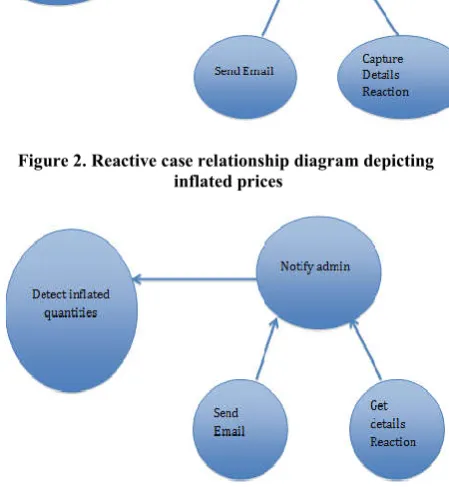
Figure 2. Reactive case relationship diagram depicting inflated prices
Figure 3. Reactive case relationship diagram depicting inflated quantities
We used both primary and secondary data sources. Primary sources include literature review, interviews and observation, while secondary sources is input of data into the prototype to demonstrate the working of the system. Data collection was done using Interviews, observation, questionnaires and prototyping. Oral interviewing of national government employees was done in order to get the weak points of the Integrated FinancialManagement System (IFMIS) that could beexploitedasavenuesforfraud.Thekeyemployeesinclude: accountants, supply chain management officers (SCMO), internal auditors, IFMIS systemrequesters and ICT Officers. Observation of the way information flow in the IFMIS system
was done in order to understand the kind of data that is collected and stored on the IFMIS database. A prototype systemwasdevelopedsinceit was notpossible orpractically feasibletogetauthorizationtoexperimentontheactualonline IFMIS system. This ensured there was no cause for worry over security breaches since all data used was test data. Questionnaires were administered to test the fraud detection agent so as to get feedback on its effectiveness at detecting and reporting fraud. It also captured suggestions on what shouldbeimprovedoraddedonapracticalpointofview.
Agent-based fraud detection as a solution: The objective of
the research was to develop an agent prototype that can demonstrate that agents can be proactively used to detect and report fraud in public e-procurement systems. This was, to a large extent, achieved. The possible fraud avenues in public e-procurement systems were identified using research tools such as questionnaires, observation, interviews and literature review. It was noted that inflation of unit cost of items at requisition level and further upward adjustments could be done while raising purchase orders. Upward adjustment of quantities can also be done after requisition approval by raising a differing higher figure on purchase orders. This, however, requires approvals from the various approval levels (approvers) who may be compromised or fail to take note of the discrepancies. The proceeds from such fraud may be paid to the participants in the procurement chain as kickbacks (bribes). Most of the deals are as a result of loopholes in the public procurement systems.
Agent-based fraud detection system overview: The success
of any fraud detection agent depends, to a large extent, on a proper definition of rules that determine a suspicious event. The research focused on a proactive fraud detection mechanism. It demonstrates that an agent-based technology can be used to detect and stop fraud in public entities thereby deriving maximum value for taxpayers’ money. Agent-based fraud detection using multi-agent technology is event-driven and therefore as transactions take place on the e-procurement system, the agents perform checks against a set of rules to determine suspicious actions that could amount to fraud. Agents will assist governments (both national and county governments) to tackle the issue of procurement fraud in a manner that goes beyond the deployment of ICT to automate processes. With the help of agents, it is possible to detect and report fraud cases at various levels of the procurement process even before money is lost. A measure of integrity can also be drawn from the number of fraud cases reported on a particular individual. An e-procurement system prototype was simulated with the entire procure to pay process functions. Test data was developed and applied on the e-procurement system.
The critical phases that were captured are: Requisition level, Purchase order level, Receiving of goods/services level, Invoicing level and Payment of goods/services level. The fraud agent prototype was finally designed and deployed to identify the fraudulent entries that had been captured on the procurement system. The agent was able to scan through the e-procurement database and pick out all entries that had significant variance from the base price or approved quantities at requisition level. Where the agent was able to detect fraud, a report was sent to an email address to serve as notification to authorities who should take immediate action to stop the fraud or recover the lost money.
[image:3.595.49.274.368.612.2]Initial user assessment: For analyzing the data in the simulated IFMIS databases, SQL commands are used and a comparison of the variance in estimated unit cost of items and actual prices was done. Activity of users in the simulated system is checked and tracked to help detect frau
data were captured onto the simulated public e
system. The variation in unit price and quantities at various stages in the procurement process were used to test the effectiveness of the fraud detection agent in picking out such malpractices and sending out notification to that effect. System testing was done in one national government ministry among existing IFMIS users who were willing to run and observe the behavior of the agent-based fraud detection system. Users were asked to give feedback in the form of a questionnaire highlighting positive and negative aspects of the agent program.
They were also asked to suggest aspects that they think could be included to improve the fraud detection agent in future developments. The first reaction was a positive evaluation of the system as being able to detect fraud relating to item price variations on both Purchase Orders and Invoices where authorization had been given on different unit costs at requisition level. There was also a positive
quantity variations beyond what had been initially authorized. Item code Description
AS20000 205 Digital Camera
AS34300 HP ProLiant DL740 - Xeon MP 3 GHz
AS35400 MS Exchange Email Server
AS44400 President Model Desktop PC AS54111 Sentinel Standard Desktop f11000 Desk - Capitalizable, taxable item CM00056 Battery Backup (DA-130) CM00057 Battery Backup (DA-290)
CM08512 RAM - 512MB
CM10009 512 MEMORY
CM20571 Inks - Cartridge
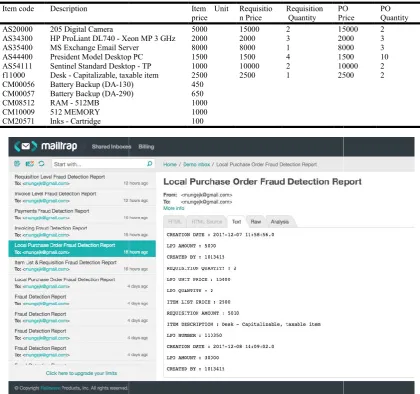
Figure 4. Email sent by mailer agent to notify on fraud
For analyzing the data in the simulated IFMIS databases, SQL commands are used and a comparison of the variance in estimated unit cost of items and actual prices was done. Activity of users in the simulated system is checked and tracked to help detect fraud. The above data were captured onto the simulated public e-procurement system. The variation in unit price and quantities at various stages in the procurement process were used to test the effectiveness of the fraud detection agent in picking out such practices and sending out notification to that effect. System testing was done in one national government ministry among existing IFMIS users who were willing to run and observe the based fraud detection system. Users were ve feedback in the form of a questionnaire highlighting positive and negative aspects of the agent
They were also asked to suggest aspects that they think could be included to improve the fraud detection agent in future eaction was a positive evaluation of the system as being able to detect fraud relating to item price variations on both Purchase Orders and Invoices where authorization had been given on different unit costs at requisition level. There was also a positive evaluation for quantity variations beyond what had been initially authorized.
The system was tested using a simulated e
where users where given an opportunity to requisition for items and attempt to commit fraud on the simulated system by excessively altering prices and quantities along the procurement process. The agent was able to connect to the simulated system and continuously and autonomously scan for variations and entries that were suspect.
Conclusion
Through research, it is demonstrated that agent based technology can be used to detect and stop fraud/corruption in public entities thereby deriving maximum value for taxpayers money. Agent-based fraud detection using multi technology is event-driven and therefore as transactions take place on the e-procurement system, the agents perform checks against a set of rules to determine suspicious actions that could amount to fraud. Agents can be linked to external databases to help in verification and validation of suppliers by checking their actual existence or registration on company databases held by the registrar of societies, or checking tax compliance by linking to tax agencies. Deployment of agent software can assist governments (both nat
[image:4.595.86.507.70.464.2]governments) to tackle corruption in a manner that goes beyond the deployment of ICT to automate processes. It is
Table 1. E-Procurement System Test Data
Item Unit price
Requisitio n Price
Requisition Quantity
PO Price
5000 15000 2 15000
Xeon MP 3 GHz 2000 2000 3 2000
MS Exchange Email Server 8000 8000 1 8000
President Model Desktop PC 1500 1500 4 1500
Sentinel Standard Desktop - TP 1000 10000 2 10000
Capitalizable, taxable item 2500 2500 1 2500
130) 450
290) 650
1000
1000
100
Email sent by mailer agent to notify on fraud at LPO level
The system was tested using a simulated e-procurement system where users where given an opportunity to requisition for to commit fraud on the simulated system by excessively altering prices and quantities along the procurement process. The agent was able to connect to the simulated system and continuously and autonomously scan for variations and entries that were suspect.
Through research, it is demonstrated that agent based technology can be used to detect and stop fraud/corruption in public entities thereby deriving maximum value for taxpayers based fraud detection using multi-agent driven and therefore as transactions take procurement system, the agents perform checks against a set of rules to determine suspicious actions that could amount to fraud. Agents can be linked to external databases to ion and validation of suppliers by checking their actual existence or registration on company databases held by the registrar of societies, or checking tax compliance by linking to tax agencies. Deployment of agent software can assist governments (both national and county/devolved governments) to tackle corruption in a manner that goes beyond the deployment of ICT to automate processes. It is
PO Price
PO Quantity
15000 2
2000 3
8000 3
1500 10
10000 2
2500 2
possible to detect and report fraud cases at various levels of the procurement chain even before money is lost.
REFERENCES
ADB 2004. Inter American Development Bank. World Bank. Strategic Electronic Government Procurement – Strategic Overview: An Introduction for Executives, Asian Development Bank, available at: www.unpcdc.org/../ strategic%20electronic%20government%20procurement.pd f (accessed August 2017).
Bertot, J. C., Jaeger, P. T. and Grimes, J. M. 2010. Using ICTs to create a culture of transparency: E-government and social media as openness and anti-corruption tools for societies.
BIAC, 2014 Business and Industry Advisory Committee to the OECD (BIAC).
Carlos A. Iglesias, Mercedes Garijo 2005. The Agent-Oriented Methodology MAS-Common KADS.
Daily Nation 2016. Govt audits online procurement system to cut fraud: http://www.nation.co.ke/business/Govt-audits- online-procurement-system-to-cut-fraud/996-3060438-yjlss2/index.html
Davila, A., Gupta, M. and Palmer, R. 2003. “Moving procurement systems to the internet: the adoption and use of e-procurement technology models”, European Management Journal, Vol. 21 No. 1, pp. 11-23.
Dike, V. E. 2005. Corruption in Nigeria: A new paradigm for effective control. Africa Economic Analysis. Accessed
September 21, 2011, from http://www.
africaeconomicanalysis.org/articles/gen/-corruptiondikehtm.html.
Jon Hayton 2000. Procurement Fraud in E-business: Dispute analysis and investigation by Price WaterHouse Coopers. Kenya Gazette supplement no. 207 2015. “The Public
procurement and asset disposal act, 2015.”
PPOA 2009. Corruption Prevention Guidelines in Public Procurement (March 2009). Public Procurement Oversight Authority and Kenya Anti Corruption Commission. Russel and Norvig 1995. Artificial Intelligence A Modern
Approach.
Siriluck Rotchanakitumnuai, 2013. "The governance evidence of e-government procurement", Transforming Government: People, Process and Policy, Vol. 7 Iss 3 pp. 309 – 321. Stewart Robinson 2004. Simulation: The Practice of Model
Development and Use.
Transparency International, 2016. Transparency International
(TI) report released in January 2016:
https://www.transparency.org.
Warsta, M. 2004. Corruption in Thailand, International Management: Asia, Swiss Federal Institute of Technology, Zurich, April 22, available at: http://aceproject.org/ero-en/regions/asia/TH/Corruption_in_Thailand.pdf (accessed November 2012).
Wooldridge M, Ciancarini P. 2000. Agent-Oriented Software Engineering: The State of the art. Department of Computer Science, University of Liverpool.
World Bank Institute and EBRD. 2000. Business environment and enterprise performance survey.http://info.worldbank. org/governance/beeps/.
75081 International Journal of Current Research, Vol. 10, Issue, 11, pp.75077-75081, November, 2018