COMPARISON OF ZETA POTENTIAL AND HA
MATURE, GOOD QUALITY SPERM
*,1,2
Sreejaya, P.,
2Nirmala
1
AlBaraka Fertility Hospital, Adliya, Bahrain
2Nehru Arts and Science College, Coimbatore, India
ARTICLE INFO ABSTRACT
This study was aimed to
PICSI in terms of motility, morphology and DNA fragmentation. Study was performed in 42 semen samples from men with suspected infertility. Both techniques were used in each sample and eva % of motility, % of morphology and % of DNA fragmentation. Mean % of motility, morphology and DNA fragmentation were 73.31, 78.44, and 75.91 with standard deviation of 6.35, 7.31, and 9.21 respectively with Zeta potential. The PICSI yielded the valu
deviation of 5.19, 6.74, and 8.42 respectively. Wilcoxon signed ranked test showed significant difference in the results of motility, morphology and DNA fragmentation with p
The Zeta potentia
results in motility and morphology.
method to select mature sperms with acceptable motility, morphology and less D
So Zeta potential is comparable to PICSI and it is less time consuming, economic and can be used for all normal semen samples especially with suspected high oxidative stress.
Copyright © 2015 Sreejaya et al. This is an open access
distribution, and reproduction in any medium, provided the original work is properly cited.
INTRODUCTION
Male infertility refers to a male’s inability to cause pregnancy in a fertile female. In human it accounts for 40
infertility (Brugh and Lipshultz, 2004; Hirsh, 2003;
2008). Current routine sperm selection procedures or techniques are not adequate in the selection of sperms on the basis of necessary quality parameters which includes motility, morphology, viability, DNA integrity, apoptosis and maturity. Since the sperm carrying all the genetic information for the future developments, more care must be taken in the selection of sperms with high DNA integrity. Several advanced sperm selection methods like, Magnetic activated cell sorting (MACS), electrophoresis- surface charge
potential method, and Hyaluronic acid (HA) binding method were introduced to improve the quality of embryo and ICSI outcome (Ralf, 2012; Nasr et al., 2012; Morrell and Rodriguez, 2011; Ebner et al., 2012). These methods aim at isolating mature, structurally intact, non apoptotic spermatozoa with high DNA integrity. Among these methods, Zeta potential and
*Corresponding author: Sreejaya, P. AlBaraka Fertility Hospital, Adliya, Bahrain
ISSN: 0975-833X
Article History:
Received 15th April, 2015
Received in revised form 24th May, 2015
Accepted 05th June, 2015
Published online 31st July,2015
Key words:
Zeta potential, HA binding, PICSI, Motility, Morphology, DNA fragmentation.
Citation: Sreejaya, P., Nirmala, P., Abdulla, M. A., Barakat, (PICSI) method in the selection of mature, good quality sperm
RESEARCH ARTICLE
COMPARISON OF ZETA POTENTIAL AND HA-BINDING (PICSI) METHOD IN THE SELECTION OF
MATURE, GOOD QUALITY SPERM
Nirmala, P.,
1Abdulla, M. A.,
1Barakat, A. and
1Ahmed
AlBaraka Fertility Hospital, Adliya, Bahrain
Nehru Arts and Science College, Coimbatore, India
ABSTRACT
This study was aimed to compare two sperm preparation techniques zeta potential vs. HA based PICSI in terms of motility, morphology and DNA fragmentation. Study was performed in 42 semen samples from men with suspected infertility. Both techniques were used in each sample and eva % of motility, % of morphology and % of DNA fragmentation. Mean % of motility, morphology and DNA fragmentation were 73.31, 78.44, and 75.91 with standard deviation of 6.35, 7.31, and 9.21 respectively with Zeta potential. The PICSI yielded the values of 78.88, 78.77 and 80.2 with standard deviation of 5.19, 6.74, and 8.42 respectively. Wilcoxon signed ranked test showed significant difference in the results of motility, morphology and DNA fragmentation with p
The Zeta potential was found to be better in terms of DNA fragmentation but PICSI yielded better results in motility and morphology. This study results showed that Zeta potential is an effective method to select mature sperms with acceptable motility, morphology and less D
So Zeta potential is comparable to PICSI and it is less time consuming, economic and can be used for all normal semen samples especially with suspected high oxidative stress.
is an open access article distributed under the Creative Commons Attribution License, which distribution, and reproduction in any medium, provided the original work is properly cited.
Male infertility refers to a male’s inability to cause pregnancy in a fertile female. In human it accounts for 40-50 % of Brugh and Lipshultz, 2004; Hirsh, 2003; Farhi et al., ). Current routine sperm selection procedures or techniques are not adequate in the selection of sperms on the basis of necessary quality parameters which includes motility, morphology, viability, DNA integrity, apoptosis and maturity. ying all the genetic information for the future developments, more care must be taken in the selection of sperms with high DNA integrity. Several advanced sperm selection methods like, Magnetic activated cell sorting surface charge method, Zeta potential method, and Hyaluronic acid (HA) binding method were introduced to improve the quality of embryo and ICSI Morrell and Rodriguez, ). These methods aim at isolating e, structurally intact, non apoptotic spermatozoa with Among these methods, Zeta potential and
HA binding methods shows significant improvement in ICSI outcome (Tamer and Said, 2011;
Kheirollahi-Kouhestani, 2009;
et al., 2013). By using these two methods in the selection of mature sperms with low DNA fragmentation, controversial study reports were published (
et al., 2010). This study was aimed to compare Zeta potential method and HA bounded method (PICSI
cytoplasmic sperm injection) method in the selection of mature sperms with motility, normal morphology and
fragmentation.
MATERIALS AND METHODS
A. Design of study and sampling method
This study was conducted at Al
Bahrain during the period of Jan 2014 to May 2014. This study was carried out in 42 infertile patients with a history of recurrent abortions and unknown infertility. Ethical committee approval was taken before starting the sample collection for the study. Semen samples were collected after taking the informed
Available online at http://www.journalcra.com
International Journal of Current Research
Vol. 7, Issue, 07, pp.18160-18164, July, 2015
INTERNATIONAL
Sreejaya, P., Nirmala, P., Abdulla, M. A., Barakat, A. and Ahmed, M. M. 2015. “Comparison of zeta potential and ha (PICSI) method in the selection of mature, good quality sperm”, International Journal of Current Research
z
BINDING (PICSI) METHOD IN THE SELECTION OF
Ahmed, M. M.
compare two sperm preparation techniques zeta potential vs. HA based PICSI in terms of motility, morphology and DNA fragmentation. Study was performed in 42 semen samples from men with suspected infertility. Both techniques were used in each sample and evaluated % of motility, % of morphology and % of DNA fragmentation. Mean % of motility, morphology and DNA fragmentation were 73.31, 78.44, and 75.91 with standard deviation of 6.35, 7.31, and 9.21 es of 78.88, 78.77 and 80.2 with standard deviation of 5.19, 6.74, and 8.42 respectively. Wilcoxon signed ranked test showed significant difference in the results of motility, morphology and DNA fragmentation with p-values less than 0.05. l was found to be better in terms of DNA fragmentation but PICSI yielded better This study results showed that Zeta potential is an effective method to select mature sperms with acceptable motility, morphology and less DNA fragmentation. So Zeta potential is comparable to PICSI and it is less time consuming, economic and can be used for all normal semen samples especially with suspected high oxidative stress.
ribution License, which permits unrestricted use,
HA binding methods shows significant improvement in ICSI Tamer and Said, 2011; Nasr-Esfahani, 2011;
Kouhestani, 2009; Parmegiani, 2010; Worrilow . By using these two methods in the selection of mature sperms with low DNA fragmentation, controversial
ere published (Zahedi et al, 2013; Razavi . This study was aimed to compare Zeta potential
method and HA bounded method (PICSI- Preselected intra cytoplasmic sperm injection) method in the selection of mature
, normal morphology and low DNA
MATERIALS AND METHODS
gn of study and sampling method
This study was conducted at Al-Baraka fertility hospital, Bahrain during the period of Jan 2014 to May 2014. This study was carried out in 42 infertile patients with a history of recurrent abortions and unknown infertility. Ethical committee aken before starting the sample collection for the study. Semen samples were collected after taking the informed
INTERNATIONAL JOURNAL OF CURRENT RESEARCH
Comparison of zeta potential and ha-binding
consent of the patients. Initially samples were analyzed for routine parameters and divided into two- One for Zeta potential method and second for PICSI method.
B. Sperm selection methods and procedure
The sperm selection methods and procedure were as follows:
(i) Zeta potential method
The Zeta potential method of sperm selection is based on the negative electro kinetic potential of the sperm. For this study, the Zeta potential method was carried out as per the procedure described by Chan et al. (2006). Immediately after semen liquefaction, the sample was washed in a sterile centrifuged tube with media containing serum. The supernatant was then discarded so that the tube was only with the minimum amount of serum containing medium. After this the pellet was mixed with 1 ml of serum free media. The medium was then exposed to a positive surface charge as follows: the tube was placed inside a latex glove up to the cap. The tube was then grasped by the cap, rotated two or three turns and rapidly removed from the glove. Each tube was kept at room temperature for 1 min to allow adherence of the charged sperm to the tube wall and then centrifuged at 200g for 5 min. The medium and pellet were then discarded in order to eliminate any non-adhering sperm and other cells. Centrifugation does not alter the net charge on the tube. The tube surface was washed with 200 micro liters of media containing serum in order to neutralize the charge on the tube wall and to detach adhering sperm. The collected medium at the bottom of each tube was used to rinse the wall of the same tube several times in order to increase sperm recovery. Sperm parameters were then examined under microscope.
(ii) Hyaluronic acid sperm binding (PICSI) method
PICSI is a method based on the HA binding of sperms. The presence of HA binding sites on sperm outer membrane is regarded as a sign of sperm maturity, and constitutes the basic principle for a sperm binding assay (Attila et al., 2005). HA is a natural occurring compound present in cervical mucus, cumulus cells and follicular fluid, the binding method is considered to have minimal bio safety risks for both the
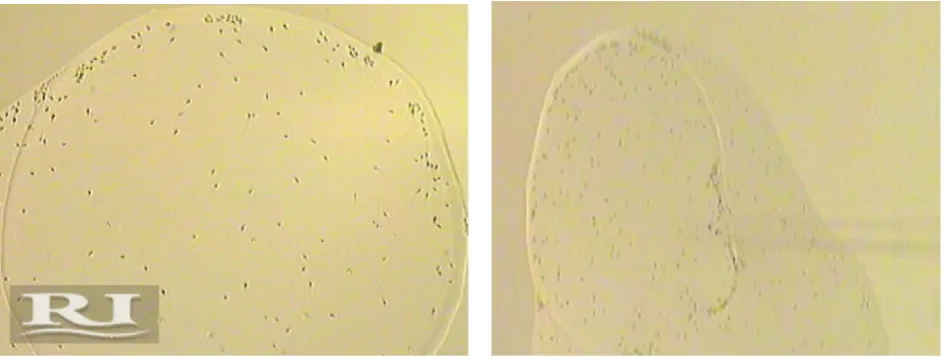
embryo and the patient (Nicolás et al., 2012). For this study we used PICSI dishes from ORIGIO Mid Atlantic Devices Inc (Mt Laurel, NJ, USA). Each PICSI dish contains three microdots of hyaluronan in a polystyrene culture dish. Washed semen sample was added into the dish and the sample was allowed it to interact with the surface coating of HA for 15 minutes. The sperm attached to the dish was picked up with the ICSI pipette and this was subjected for analysis. Figure 1 shows the microscopic view of the PICSI dish.
(C) Outcome Measures
After processing, each sample was subjected for analysis to assess the motility, morphology and DNA fragmentation. The details of tests were as follows.
(i) Motility test
To determine the motility, Makler counting chamber (Sefi Medical Instruments, Israel) was used. After liquefaction 10 micro liter of the semen sample was loaded into the counting chamber. Then the sample was allowed to settle for 1 minute. Objective lens magnification was at 20x. Sperm count was then carried out in 10 squares. The entire grid was counted only if the sperm concentration was less than ten sperm per row. Semen concentration was expressed in millions/milli liter. Then the total count was calculated as per the following formula.
Total count = motile sperm + immotile sperm in 100squares of Makler counting chamber divided by 10.
The sperm motility was assessed in at least 100 sperm and expressed as percent of motile sperm (sum of rapid progression plus slow progression sperm). The following formula was used.
% Motility = (motile sperm/Total count) x 100
(ii)Morphology test (% normal sperms)
Sperm morphology was assessed by Diff quick staining (Cryo lab international) method. In this 10 micro liter of semen
Figure 1. (a) Mature sperms bounded at the HA spot and immature sperms moves freely in the dish (b)picking of mature HA bounded sperm using injection needle
[image:2.595.66.538.435.614.2]sample was taken on a slide and smear was prepared. This was kept for air drying and the slides were immersed in fixative for 15 seconds and drained the excess solution by placing slides vertically on absorbent paper. The slides were immersed sequentially in diff quick stain-1(Eosin) for 10 seconds and dipped in Diff quick stain-2 (Methylene Blue) for 5 seconds. Then the slides were rinsed briefly in tap water to remove excess stain and kept for air dry. Each slide was examined with oil immersion at 1000x magnification in bright field microscopy. Tygerberg strict criterion was used
et al., 1990). The sperm morphology was categorized into normal and abnormal. Abnormal sperms were again sub divided based on the site of abnormality- head
extra residual cytoplasm (ERC). As per the strict criteria, the sperm was classified as normal when the head was oval with the acrosome occupying 40–70% of the head, absence of mid piece and tail defects, and absent or small cytoplasmic d with the appropriate head dimensions. The percentage of sperm with strict normal morphology was calculated by the formula as follows.
Normal Forms (%) = normal sperms / the total number of sperms evaluated x 100.
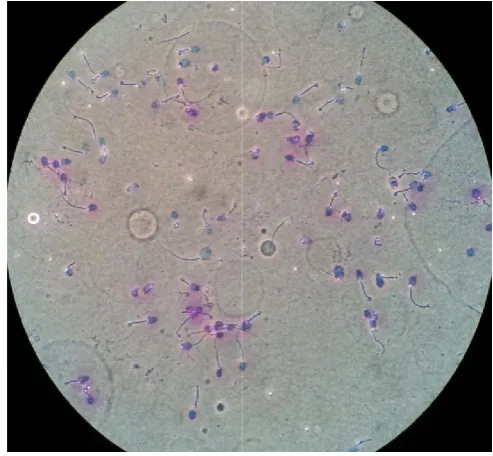
[image:3.595.309.556.364.592.2]A specimen was classified in the normal sperm morphology category when the percentage of strict normal morphology was over 4%. Figure 2 shows the sperm with normal and abnormal morphology.
Figure 2. Slide with normal and abnormal sperm morphology
(iii) DNA fragmentation test
For DNA fragmentation study, the Halo sperm
Dna, SL) was used. The test procedure was based on the sperm chromatin dispersion (SCD) test (Fernandez et al
As an initial step, the lysis solution was kept at room
temperature of 22oC. The semen sample was diluted in culture
medium to a concentration of 5-10 million per milliliter. The agarose gel was then dissolved by melted in a microwave or in
water for 5minutes at 90-100oC. The agarose eppendorf was
transferred to a water bath where temperature was maintained
at 37oC and left it for 5minute until temperature became even.
25 micro liter of semen sample was added to agarose eppendorf
18162 International Journal of Current Research,
sample was taken on a slide and smear was prepared. This was kept for air drying and the slides were immersed in fixative for 15 seconds and drained the excess solution by placing slides vertically on absorbent paper. The slides were immersed 1(Eosin) for 10 seconds and 2 (Methylene Blue) for 5 seconds. Then the slides were rinsed briefly in tap water to remove excess stain and kept for air dry. Each slide was examined with agnification in bright field
microscopy. Tygerberg strict criterion was used (Menkveld The sperm morphology was categorized into
normal and abnormal. Abnormal sperms were again sub head, mid piece, tail As per the strict criteria, the sperm was classified as normal when the head was oval with 70% of the head, absence of mid piece and tail defects, and absent or small cytoplasmic droplets with the appropriate head dimensions. The percentage of sperm with strict normal morphology was calculated by the formula
Normal Forms (%) = normal sperms / the total number of
A specimen was classified in the normal sperm morphology the percentage of strict normal morphology was 2 shows the sperm with normal and abnormal
Figure 2. Slide with normal and abnormal sperm morphology
For DNA fragmentation study, the Halo sperm kit (Halotech Dna, SL) was used. The test procedure was based on the sperm et al., 2003, 2005). As an initial step, the lysis solution was kept at room C. The semen sample was diluted in culture 10 million per milliliter. The agarose gel was then dissolved by melted in a microwave or in C. The agarose eppendorf was transferred to a water bath where temperature was maintained left it for 5minute until temperature became even. 25 micro liter of semen sample was added to agarose eppendorf
and mixed well.14-20 micro liter of cell suspension was taken from agarose eppendorf on to the treated slides and covered with glass cover slip. Care was taken to avoid air bubbles. The slides were kept in horizontal position throughout the process. Then the slides were placed on the cold surface in refrigerator
at 4oC and left the sample 5minute to become gel form. Then
acid denaturation (AD) solution was prepared
80microliter of AD was added to 10milli liter of distilled water and the resultant mixture was placed in the incubation tray. The slides cover was then removed by sliding it of gently with the help of lancet. After this, imme
immersed into AD solution and left to incubate for 7minutes. Afterwards, placed this in another incubation tray containing 10ml of lysis solution and kept it for incubation for 25minutes. Then slides were kept horizontally into a tr
abundant distilled water in order to wash lysis solution. This was kept for incubation of 5minutes. The slides were then placed horizontally into a tray with 70% ethanol (2min) followed by 90% ethanol (2min) and finally 100% ethanol (2min). Kept the slides for air dry at room temperature followed by diff quick staining. After staining, slides were visualized to analyze the DNA fragmentation. Sperm with big halo and medium halo shows no DNA fragmentation (violet color). With small halo or witho
[image:3.595.40.289.387.573.2]sperm with DNA fragmentation (blue color). represents a slide with halo and non halo sperms.
Figure 3. Slide shows sperms with
(Violet color) and with DNA fragmentation (Blue color)
(D) Statistical analysis
For the data analysis, statistical tests were performed. Basic descriptive statistics (mean ± standard
calculated for different parameters such as total motility, normal sperm morphology and DNA fragmentation.
signed rank test was performed to find out the significance in above parameters while comparing Zeta potential vs. HA binding (PICSI) method. A P
statistically significant.
International Journal of Current Research, Vol. 7, Issue, 07, pp.18160-18164, July, 2015
20 micro liter of cell suspension was taken from agarose eppendorf on to the treated slides and covered . Care was taken to avoid air bubbles. The slides were kept in horizontal position throughout the process. Then the slides were placed on the cold surface in refrigerator C and left the sample 5minute to become gel form. Then lution was prepared. For this, 80microliter of AD was added to 10milli liter of distilled water and the resultant mixture was placed in the incubation tray. The slides cover was then removed by sliding it of gently with the . After this, immediately the slides were immersed into AD solution and left to incubate for 7minutes. Afterwards, placed this in another incubation tray containing 10ml of lysis solution and kept it for incubation for 25minutes. Then slides were kept horizontally into a tray containing abundant distilled water in order to wash lysis solution. This was kept for incubation of 5minutes. The slides were then placed horizontally into a tray with 70% ethanol (2min) followed by 90% ethanol (2min) and finally 100% ethanol ept the slides for air dry at room temperature followed by diff quick staining. After staining, slides were visualized to analyze the DNA fragmentation. Sperm with big halo and medium halo shows no DNA fragmentation (violet color). With small halo or without halo degenerated shows sperm with DNA fragmentation (blue color). Figure 3 represents a slide with halo and non halo sperms.
Slide shows sperms with no DNA fragmentation (Violet color) and with DNA fragmentation (Blue color)
For the data analysis, statistical tests were performed. Basic descriptive statistics (mean ± standard deviation) were calculated for different parameters such as total motility, normal sperm morphology and DNA fragmentation. Wilcoxon signed rank test was performed to find out the significance in above parameters while comparing Zeta potential vs. HA binding (PICSI) method. A P-value < 0.05 was considered
Figure 4. Scatter diagram shows percentage of motility vs. sample Number in Zeta and PICSI method
Figure 5. Scatter diagram shows percentage of morphology vs. sample Number in Zeta and PICSI method
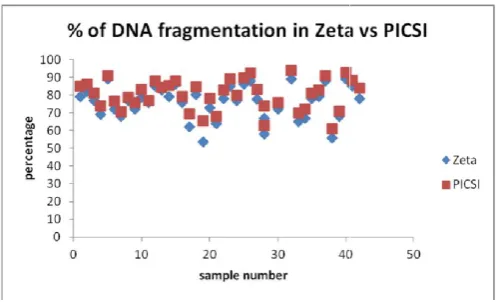
Figure 6. Scatter diagram shows percentage of DNA fragmentation vs. sample number in Zeta and PICSI method
RESULTS
In the comparison, the mean % of total motility, morphology and DNA fragmentation were 73.31, 78.44, and 75.91 with standard deviation of 6.35, 7.31, and 9.21 respectively with Zeta potential method. At the same time HA bounded PICSI yielded the values of 78.88, 78.77, and 80.2 with standard deviation of 5.19, 6.74, and 8.42 respectively. Figure4, 5 and 6 shows the test results in scatter plot form for motility,
18163 Sreejaya et al. Comparison of zeta potential and ha
Scatter diagram shows percentage of motility vs. sample Number in Zeta and PICSI method
Scatter diagram shows percentage of morphology vs. Number in Zeta and PICSI method
Scatter diagram shows percentage of DNA sample number in Zeta and PICSI method
In the comparison, the mean % of total motility, morphology and DNA fragmentation were 73.31, 78.44, and 75.91 with standard deviation of 6.35, 7.31, and 9.21 respectively with Zeta potential method. At the same time HA bounded PICSI 78.88, 78.77, and 80.2 with standard deviation of 5.19, 6.74, and 8.42 respectively. Figure4, 5 and 6 shows the test results in scatter plot form for motility,
morphology and DNA fragmentation respectively. Wilcoxon signed ranked test showed significant d
[image:4.595.40.290.452.603.2]of motility, morphology and DNA fragmentation with p of less than 0.05 as shown in Table
Table 1. Comparison Zeta potential method vs. HA binding (PICSI) method in terms of total motility, normal sperm
morphology and DNA
Parameter Mean +/ Zeta potential
method Motility % 73.31±6.35 Morphology % 78.44±7.31 DNA fragmentation % 75.91±9.21
DISCUSSION
Recent studies indicate that, basic sperm selection parameters are not adequate in the selection of good quality sperms since they are not able to identify a mature sperm with low chromosomal aneuploidies and DNA fragmentation (Said et al., 2011). Due to this reason many studies were focused to identify a better sperm selection technique to choose sperm with less DNA fragmentation, high motility and morphology. Among the sperm selection methods, the Zeta potential and HA binding methods became more popular due to their easiness to perform, less time consumption and to select sperm with less DNA fragmentation. Moreover,
useful in patients with reduced motility and morphology, in patients with history of recurrent abortion or miscarriage, poor fertilization, poor development of embryos, sperms collected by PESA and Frozen or cryo-preserved samples.
Mohammad et al. (2009) published his study results that Zeta method may be more efficient to select sperm
fragmentation than HA binding method.
compared HA binding and zeta method and found that method can more efficiently select sperm
morphology. Presently the comparison studies are limited to trace out a conclusion in order to choose a suitable technique to enhance the clinical outcome. Our study result
DNA fragmentation is less in zeta method but the motility and morphology are better is PICSI. Mild higher results of motility and morphology in PICSI can be due to high efficiency of PICI dish with hyluronan media to capture mature sperms.
PICSI dishes are costlier compared to the expense of zeta potential method. Zeta potential can be performed in a normal andrology lab with less expensive consumables. So it can be utilize for all patients with normal count, especially in suspected cases of high oxidative stress.
potential method is that, it needs experience in order to avoid the discharge or loss of electric potential which is imparting to the mature, less DNA fragmented sperms during the time of sperm processing. Although the Zeta potential method yielded many advantages, some studies indicated that the zeta method gives less number of sperms (Ishijima
limitation of Zeta potential method to use for low count patients. Another study indicates that, in Zeta potential method, there can be a chance of selecting X
Comparison of zeta potential and ha-binding (PICSI) method in the selection of mature, good quality sperm
morphology and DNA fragmentation respectively. Wilcoxon signed ranked test showed significant difference in the results of motility, morphology and DNA fragmentation with p-values
0.05 as shown in Table 1.
Comparison Zeta potential method vs. HA binding (PICSI) method in terms of total motility, normal sperm
morphology and DNA fragmentation
Mean +/- SD P-Value (using Wilcoxon signed rank test) HA binding
(PICSI) method
73.31±6.35 78.88±5.19 0.00 78.44±7.31 78.77±6.74 0.00 75.91±9.21 80.2±8.42 0.00
Recent studies indicate that, basic sperm selection parameters are not adequate in the selection of good quality sperms since they are not able to identify a mature sperm with low
chromosomal aneuploidies and DNA fragmentation (Said ., 2011). Due to this reason many studies were focused to
identify a better sperm selection technique to choose sperm with less DNA fragmentation, high motility and morphology. Among the sperm selection methods, the Zeta potential and HA inding methods became more popular due to their easiness to perform, less time consumption and to select sperm with less DNA fragmentation. Moreover, both techniques are highly useful in patients with reduced motility and morphology, in ry of recurrent abortion or miscarriage, poor fertilization, poor development of embryos, sperms collected
preserved samples.
(2009) published his study results that Zeta method may be more efficient to select sperm with low DNA
fragmentation than HA binding method. Naser et al. (2010)
zeta method and found that HA method can more efficiently select sperm with normal Presently the comparison studies are limited to trace out a conclusion in order to choose a suitable technique to enhance the clinical outcome. Our study results showed that DNA fragmentation is less in zeta method but the motility and morphology are better is PICSI. Mild higher results of motility and morphology in PICSI can be due to high efficiency of PICI dish with hyluronan media to capture mature sperms.
PICSI dishes are costlier compared to the expense of zeta potential method. Zeta potential can be performed in a normal andrology lab with less expensive consumables. So it can be utilize for all patients with normal count, especially in of high oxidative stress. Disadvantage of zeta potential method is that, it needs experience in order to avoid the discharge or loss of electric potential which is imparting to the mature, less DNA fragmented sperms during the time of hough the Zeta potential method yielded many advantages, some studies indicated that the zeta method Ishijima et al., 1991). This is the Zeta potential method to use for low count patients. Another study indicates that, in Zeta potential method, there can be a chance of selecting X- bearing sperm
due to their higher net negative charge compared to Y- bearing sperm (Kaneko et al., 1984, Cartwright et al., 1993). PICSI also has disadvantages. One study reported that there can be chance of injecting non-bounded sperm in ICSI and it can cause aneuploidies and DNA fragmentation in conceptus (Parmegiani et al., 2010).
Conclusion
This study results showed that Zeta potential is an effective method to select mature sperms with acceptable motility, morphology and less DNA fragmentation. So Zeta potential is comparable to HA binding PICSI and it is less time consuming, economic and can be used for all the normal semen samples especially with suspected high oxidative stress.
REFERENCES
Attila J., Denny S., Elena D., Sevil C., Ertug K.,a David W., Alberto R. and Gabor H. Intracytoplasmic sperm injection: a novel selection method for sperm with normal frequency of chromosomal aneuploidies, Fertility and Sterility,2005 December , Vol. 84, No. 6.
Brugh VM, Lipshultz LI. "Male factor infertility". Medical Clinics of North America. 2004; 88 (2): 367–85.
Cartwright EJ, Harrington PM, Cowin A, Sharpe PT. Separation of bovine X and Y sperm based on surface differences. Mol Reprod Dev 1993; 34: 323–8.
Chan P J, Jacobson J D, Corselli J U, Patton W c ., A simple zeta method for sperm selection based on membrane charge. Fertile Steril. 2006 Feb; 85(2): 481-6
Ebner T, Filicori M, Tews G, Parmegiani L. A plea for a more physiological ICSI. Andrologia.2012; 44:2–19.
Farhi J, Ben-Haroush A, Dresler H, Pinkas H, Sapir O, Fisch B. Male factor infertility, low fertilisation rate following ICSI and low number of high-quality embryos are associated with high order recurrent implantation failure in young IVF patients. Acta Obstet Gynecol Scand. 2008;87:76–80. Fernandez, JL., Muriel, L., Rivero MT., Goyanes, V., Vázquez,
R.,& Alvarez, JG. The sperm chromatin dispersion test: a
simple method for the determination of sperm DNA
fragmentation. J Androl. 2003;24: 59–66.
Fernandez, J.L., Muriel, L, Goyanes, V., Segrelles, E., Gosálvez, J., Enciso, M., LaFromboise, M. & De Jonge C. Simple determination of human sperm DNA fragmentation with an improved sperm chromatin dispersion test. Fertil Steril. 2005; 84:833-842.
Hirsh A. "Male subfertility". BMJ. 2003; 327 (7416): 669–72. Ishijima SA, Okuno M, Mohri H. Zeta potential of human X-
and Y-bearing sperm. Int J Androl., 1991; 14: 340–7. Kaneko S, Oshio S, Kobayashi T, Iizuka R, Mohri H. Human
X- and Y-bearing sperm differ in cell surface sialic acid content. Biochem Biophys Res Commun 1984; 124: 950–5. Kheirollahi-Kouhestani M., Razavi. S, Tavalaee. M, Deemeh.
M. R, Mardani. M, Moshtaghian. J and Nasr-Esfahani. M. H, Selection of sperm based on combined density gradient and Zeta method may improve ICSI outcome, Human Reproduction. 2009,Vol.1, No.1 pp. 1–8.
Menkveld, R., Stander, FSH., Kotze, TJVW., Kruger, TF., &
Van Zyl JA. The evaluation of morphological
characteristics of human spermatozoa according to stricter criteria. Hum Reprod . 1990; 5:586-92.
Mohammad Reza Deemeh, Mohammad Hossein Nasr-Esfahani, Shahnaz Razavi, Habibollah Nazem, Mahnaz Shayeste Moghadam, Marziye Tavalaee, The Comparison of HA Binding and Zeta Methods Efficiency in Selection of Sperm with Normal Morphology and Intact Chromatin, Journal of Isfahan Medical School. 2009; Vol 27, No 92. Morrell JM, Rodriguez-Martinez H. Practical applications of
sperm selection techniques as a tool for improving reproductive efficiency. Vet Med Int. 2011.
Naser Esfahani M H, New era in sperm selection for ICSI procedure. International journal of Fertility and Sterility Summer 2010 , Vol 4 :34-35.
Nasr-Esfahani MH, Deemeh MR, Tavalaee M., New era in sperm selection for ICSI., Int J Androl., 2012 Aug;35(4):475-84
Nasr-Esfahani M. H, Razavi. S, Vahdati. A. A, Fathi. F, Tavalaee. M Evaluation of sperm selection procedure based on hyaluronic acid binding ability on ICSI outcome. J Assist Reprod Genet, 2008;25:197-203.
Nicolás M. Ortega and Pablo Bosch. Methods for Sperm Selection for In Vitro Fertilization, In Vitro Fertilization - Innovative Clinical and Laboratory Aspects, Prof. Shevach Friedler (Ed.), 2012; ISBN: 978-953-51- 0503-9.
Parmegiani L, Cognigni GE, Bernardi S, Troilo E, Ciampaglia W, Filicori M, ‘Physiologic ICSI’: hyaluronic acid (HA)
favors selection of spermatozoa without DNA
fragmentation and with normal nucleus, resulting in improvement of embryo quality. Fertil Steril 2010 ;93:598-604.
Parmegiani L, Cognigni GE, Filicori M . Risks in injecting hyaluronic acid non-bound spermatozoa. Reprod Biomed Online 2010;20:437-438.
Razavi SH, Nasr-Esfahani M. H,Deemeh MR,Shayesteh M, Tavalaee M, . Evaluation of zeta and HA-binding methods for selection of spermatozoa with normal morphology, protamine content and DNA integrity. Andrologia 2010;42:13-19.
Ralf Henkel, Sperm preparation: state-of-the-art—
physiological aspects and application of advanced sperm preparation methods, Asian J Androl., Mar 2012; 14(2): 260–269.
Said TM, Land JA. Effects of advanced selection methods on sperm quality and ART outcome: a systematic review. Hum Reprod Update. 2011 Nov-Dec; 17(6):719-33.
Tamer M. Said and Jolande A. Land, Effects of advanced selection methods on sperm quality and ART outcome: a systematic review, Oxford Journals Medicine & Health Human Reproduction Update, Volume 17, Issue 6 Pp.2011; 719-733.
Worrilow. K.C, Eid.S, Woodhouse. D, Perloe. M, Smith.S, Witmyer. J, Ivani. K, Khoury. C, Ball. G D, Elliot.T, and Lieberman. J, Use of hyaluronan in the selection of sperm for intracytoplasmic sperm injection (ICSI): significant
improvement in clinical outcomes—multicenter,
doubleblinded and randomized controlled trial. Human Reproduction, 2013; Vol.28, No.2 pp. 306–314.
Zahedi A, Tavalaee M, Deemeh MR, Azadi L, Fazilati M, Nasr-Esfahani MH. Zeta potential vs apoptotic marker: which is more suitable for ICSI sperm selection? J Assist Reprod Genet. 2013 Sep;30(9):1181-6.